
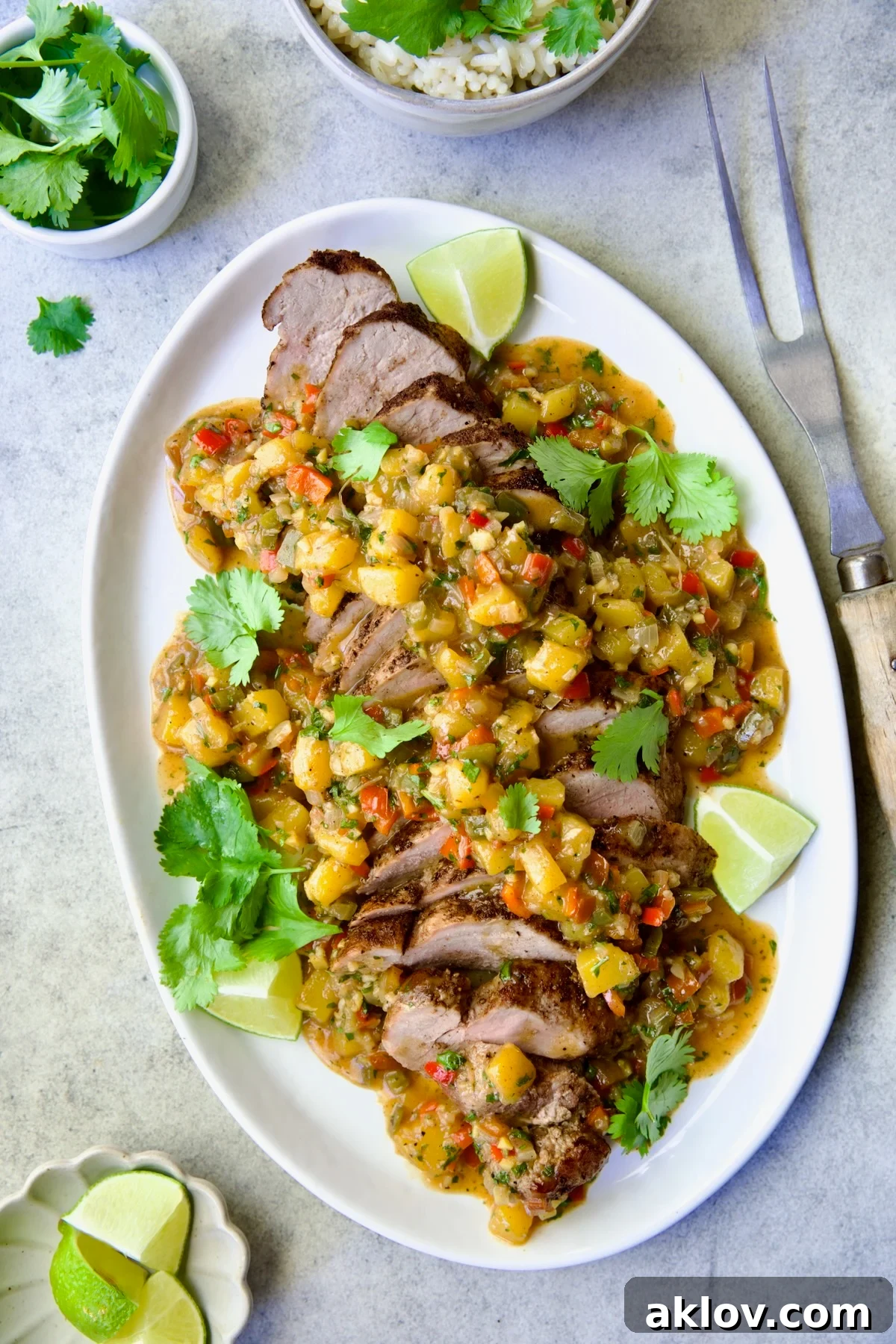
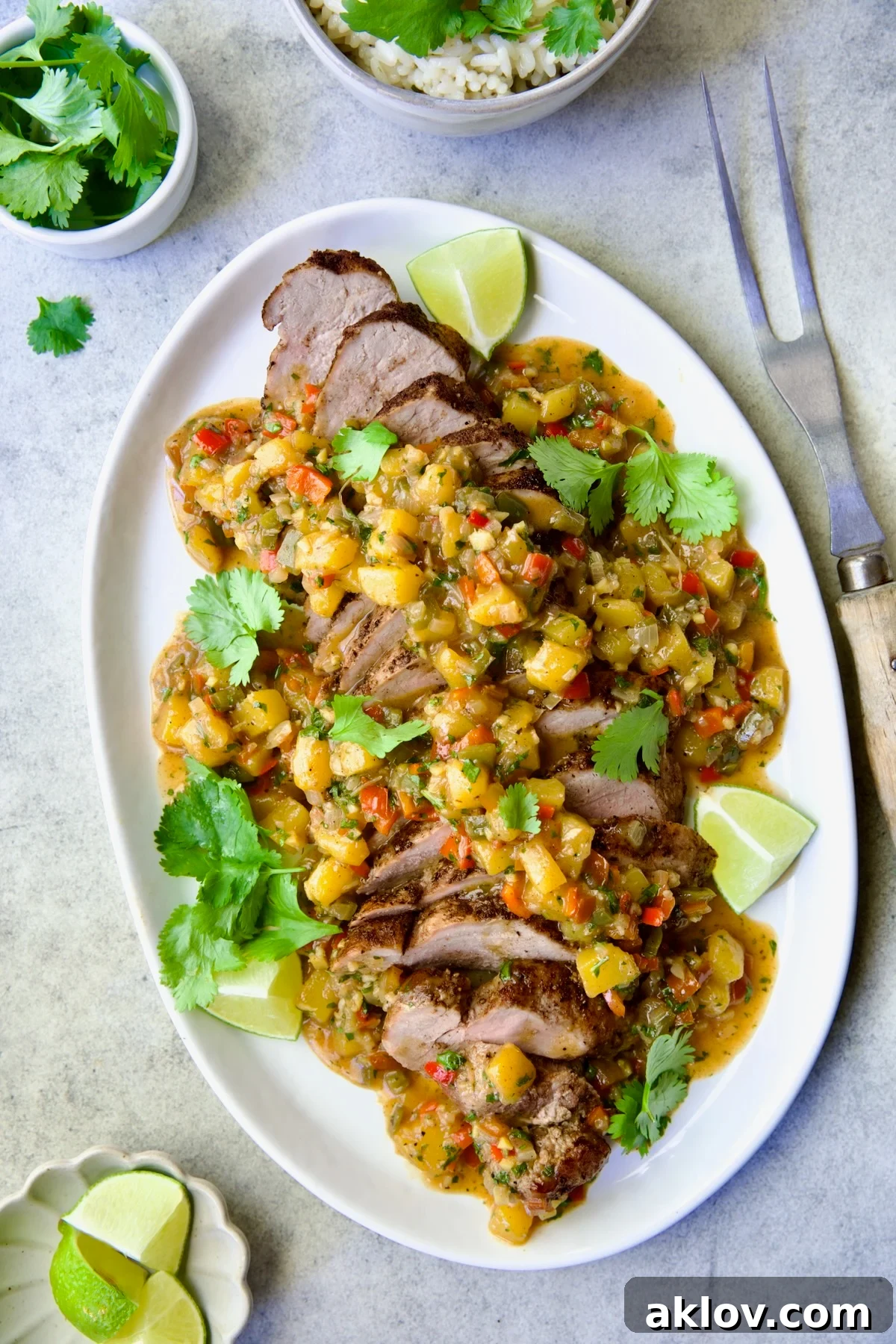
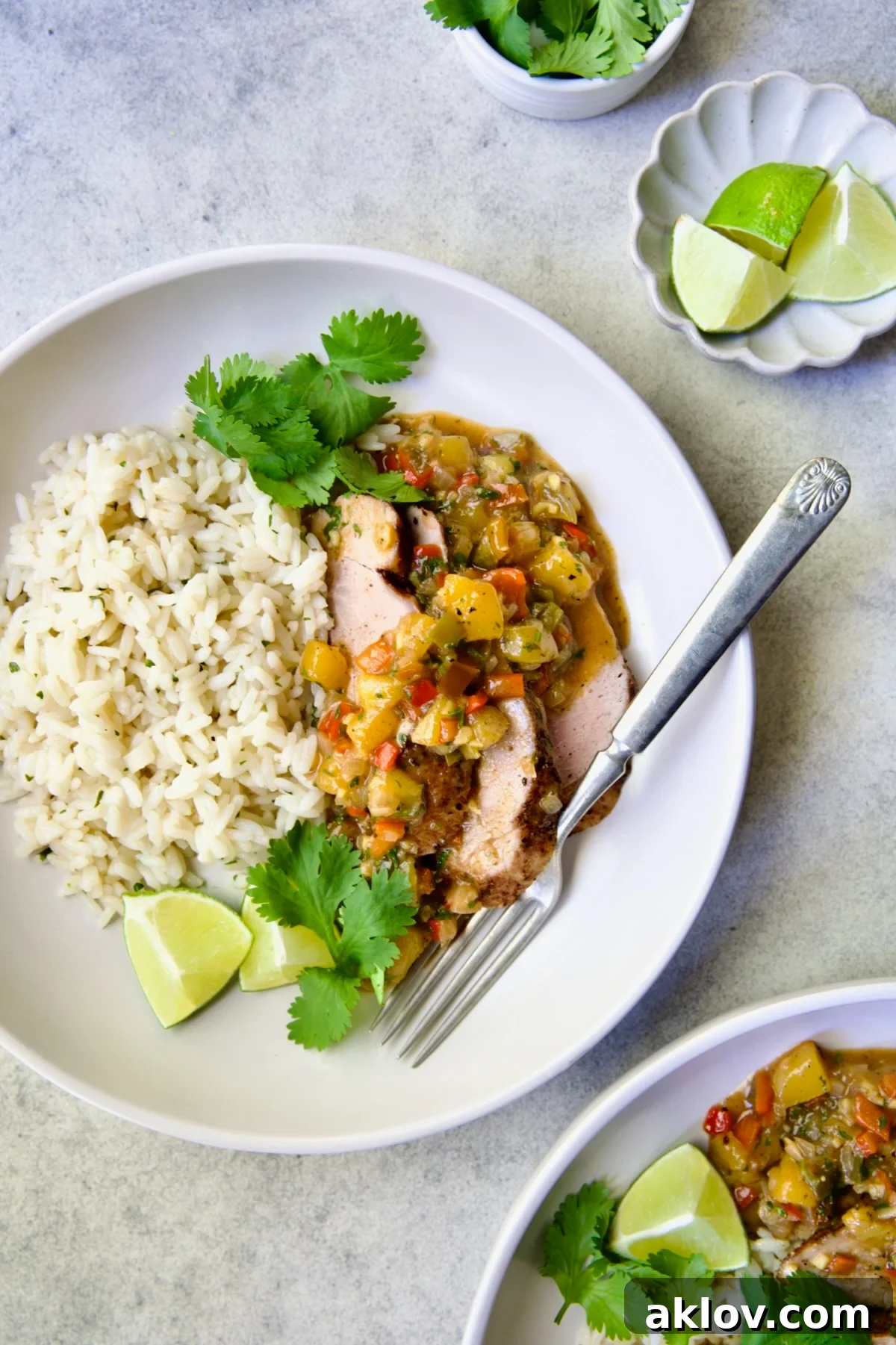
Welcome to a culinary journey that transports your taste buds straight to the sun-drenched shores of the Caribbean! This exquisite Pork Tenderloin with Mango Sauce recipe is more than just a meal; it’s an invitation to experience the vibrant, aromatic flavors of island cuisine right in your own kitchen. Imagine succulent, perfectly cooked pork tenderloin, infused with the smoky warmth of authentic jerk seasoning, then generously draped in a glistening, golden mango sauce that is both sweet and tangy, with just the right kick of spice. Every bite is a mini tropical vacation, a harmonious blend of bold and refreshing notes that will undoubtedly elevate your dinner table.
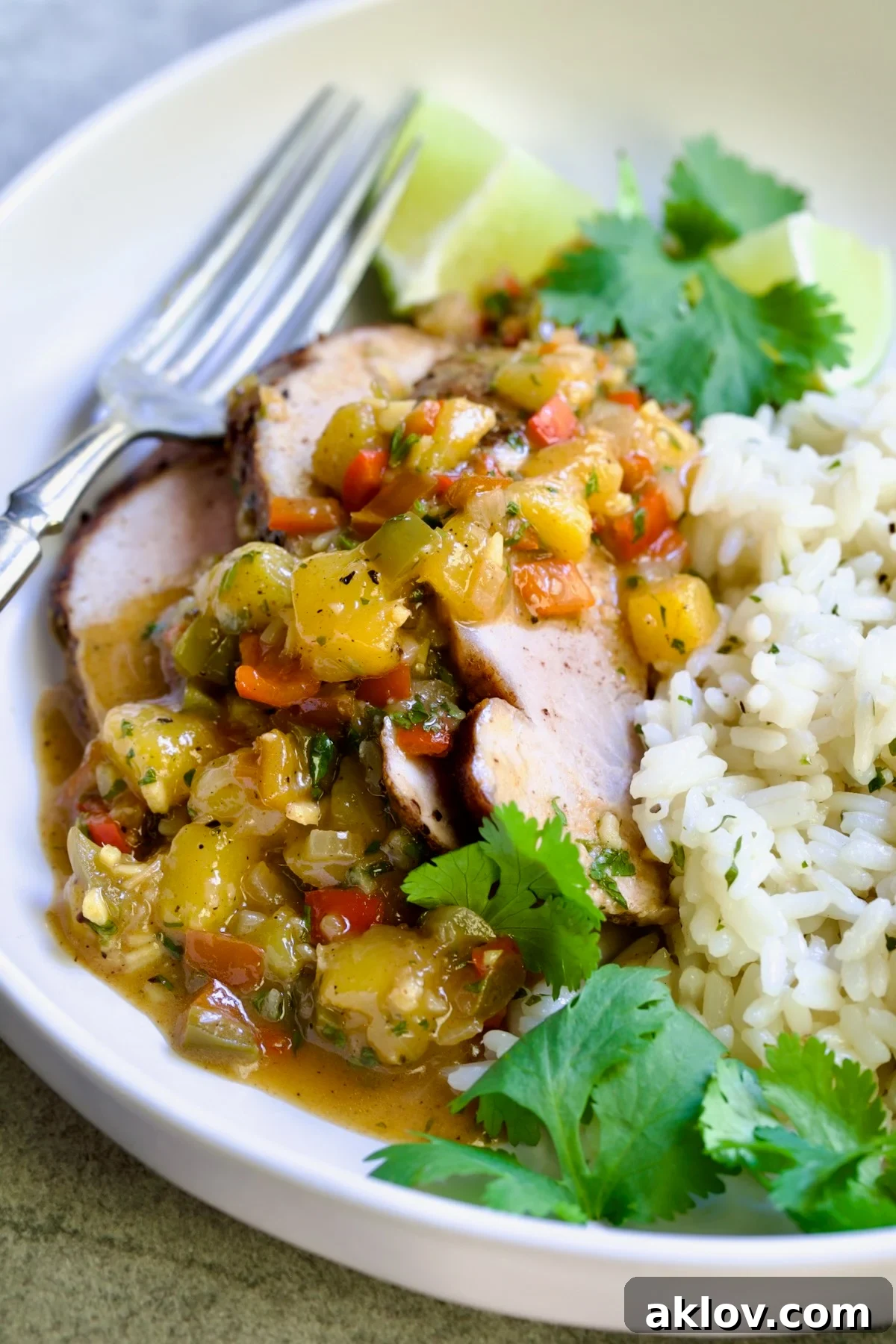
Whether you’re hosting a special gathering or simply seeking an exciting weeknight dinner, this Caribbean-inspired dish promises an unforgettable experience. Its balanced flavor profile, combined with a relatively straightforward preparation, makes it a favorite for both novice and experienced cooks. Serve this vibrant creation alongside classic fluffy rice, a healthier cauliflower rice, or explore other complementary sides to create a complete and delightful tropical feast.
Why This Caribbean Pork Tenderloin with Mango Sauce Recipe is a Keeper!
When it comes to unforgettable flavors, Caribbean cuisine truly delivers. This particular recipe masterfully blends bold spices with refreshing tropical fruits, offering a taste of paradise in every forkful. Beyond its incredible taste, there are several compelling reasons why this Pork Tenderloin with Mango Sauce will become a staple in your recipe collection:
- Effortless Elegance: Despite its gourmet appearance and complex flavors, this recipe is surprisingly easy to prepare. Once your ingredients are prepped, the cooking process comes together quickly, allowing you to serve a delicious, tropical-inspired dish in about 45 minutes. Simply season the tenderloin, sear it to a beautiful golden brown, and finish it in the oven. While the pork rests, you’ll whip up the star of the show – the warm mango sauce.
- Surprisingly Light and Healthy: Pork tenderloin is celebrated as one of the leanest cuts of pork, boasting a fat and calorie content comparable to boneless, skinless chicken breast. This makes it an excellent choice for a healthy yet satisfying meal, allowing you to indulge in rich flavors without heavy guilt. Proper trimming of the “silverskin” further enhances its lean qualities.
- Excellent for Make-Ahead Preparation: For those busy weeknights or when entertaining, the versatile mango sauce can be prepared 1 to 2 days in advance. Simply refrigerate it, then gently reheat on the stovetop while your pork tenderloin cooks. This flexibility greatly reduces last-minute stress, making entertaining a breeze.
- Remarkable Versatility: The mango sauce is incredibly adaptable. While divine served warm, its vibrant ingredients also shine as a fresh, cold salsa. Imagine grilling the jerk-seasoned pork tenderloin in the summer and topping it with a chilled, chunky mango salsa – a completely different yet equally delightful experience!
- A Symphony of Tropical Flavors: This dish truly captures the essence of the islands. The combination of sweet mango, fiery jalapeño, aromatic ginger, bright lime, and the intricate spice blend of jerk seasoning creates a mouthwatering profile. It’s a perfect balance of sweet, spicy, and tangy notes that will leave you craving more.
Crafting Your Tropical Masterpiece: How to Make Pork Tenderloin with Mango Sauce
Embarking on this culinary adventure is straightforward. Here’s a detailed look at the ingredients you’ll need and a step-by-step guide to bringing this Caribbean delight to your table.
Essential Recipe Ingredients:
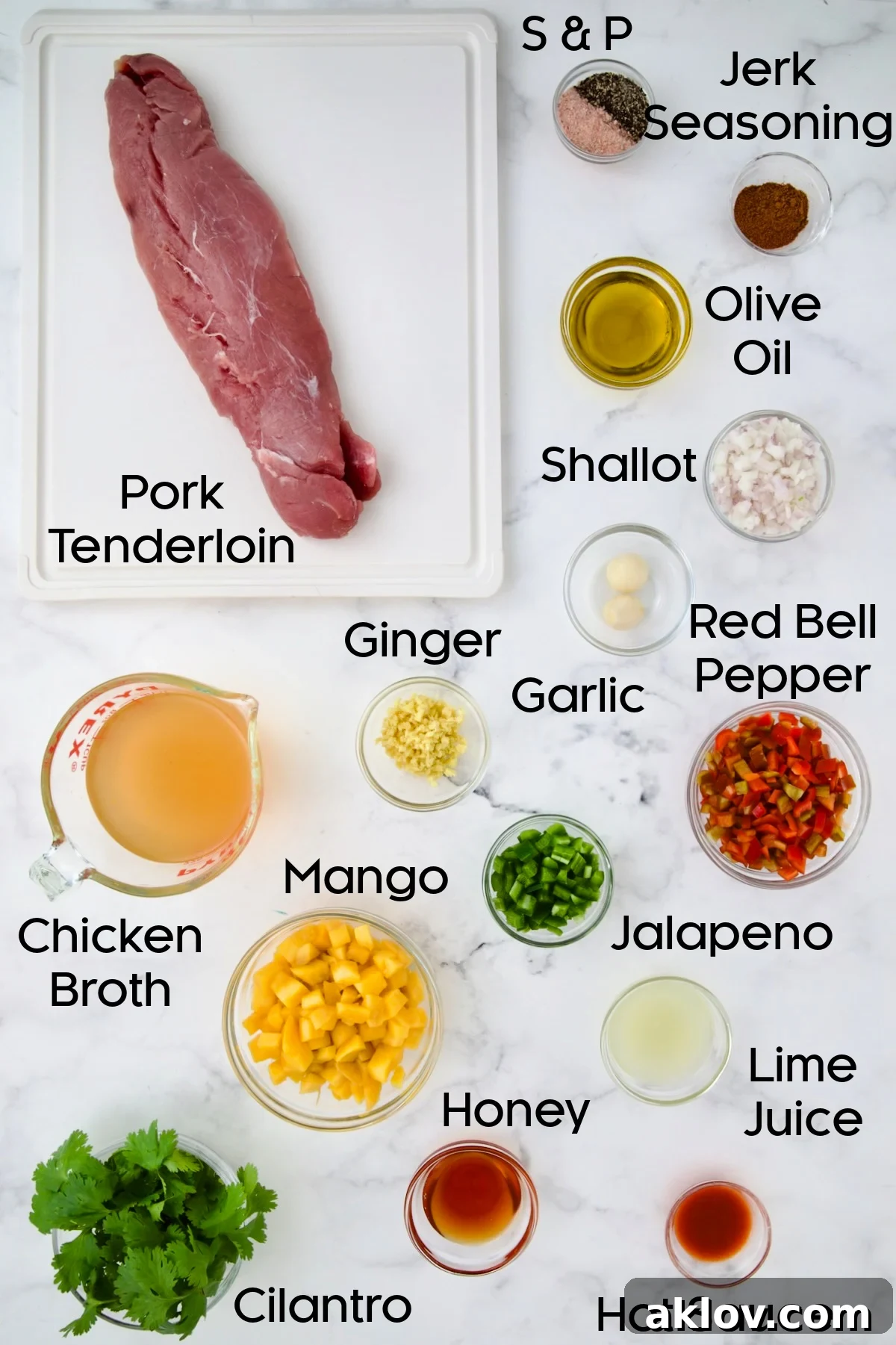
Gathering your ingredients before you start cooking, known as “mise en place,” is key to a smooth and enjoyable cooking experience. Below is a comprehensive list of everything required for this easy pork tenderloin recipe. Exact quantities can be found in the recipe card at the end of this article.
Ingredient Spotlight: Tips for Best Results & Substitutions:
- Pork Tenderloin: This cut is celebrated for its leanness and mild flavor, making it incredibly versatile. It runs along the pig’s backbone and is often sold in packs of two. It’s crucial not to confuse it with pork loin, which is a much larger, tougher cut. The most important step for a tender result is removing the “silverskin” – a thin, silvery membrane that, if left on, cooks up tough and chewy. If pork isn’t an option for you, boneless, skinless chicken breasts or turkey tenderloins make excellent substitutes, though cooking times may vary slightly.
- Jerk Seasoning: This iconic spice blend is a cornerstone of Jamaican cuisine and is beloved across the Caribbean. While pre-made blends are convenient, you can also create your own using a mix of allspice, cloves, cinnamon, nutmeg, thyme, brown sugar, and salt. The blend provides a smoky, aromatic, and subtly spicy depth to the pork, truly transporting you to the islands. Look for high-quality, authentic jerk seasoning for the best flavor.
- Shallots: Preferred over regular onions for their milder, more delicate flavor, shallots offer a peppery note when raw that mellows and sweetens beautifully upon cooking. They contribute an aromatic base to the mango sauce without overpowering the other tropical ingredients. If unavailable, a very small amount of finely minced red onion can be used, but keep in mind its stronger flavor.
- Ginger: For the freshest and most potent flavor, always opt for fresh gingerroot, finely minced. Ginger powder simply cannot replicate the bright, zesty, and slightly pungent notes that fresh ginger brings to this sauce. It’s a crucial component for that authentic Caribbean zest.
- Mango: The star of the sauce! Use a ripe, fresh mango for the best texture and flavor. Ripe mangoes will yield slightly to gentle pressure and have a fragrant aroma near the stem. If fresh mangoes are out of season or difficult to find, frozen diced mango can be a good alternative, especially when making a warm sauce. However, if you’re aiming for a fresh salsa, stick to fresh. Diced pineapple is another fantastic tropical fruit substitute that offers a similar sweet-tangy profile.
- Jalapeño: This pepper provides a pleasant warmth and subtle heat to the sauce. You can easily adjust the spice level to your preference by seeding the jalapeño to reduce its heat or leaving some seeds and membranes in for more fire. Remember, hot sauce is also added, so taste and adjust cautiously. For a milder touch, use a bell pepper, or for more heat, a habanero (with caution!).
- Chicken Broth: Used to create the base of the sauce, chicken broth adds savory depth and helps achieve the desired consistency. Vegetable broth can be used as a vegetarian alternative.
- Lime Juice: Freshly squeezed lime juice is essential! It provides a bright, zesty acidity that cuts through the sweetness of the mango and balances the richness of the pork, enhancing all the other flavors. Bottled lime juice will work in a pinch but lacks the vibrancy of fresh.
- Honey: A touch of honey complements the natural sweetness of the mango and helps to thicken the sauce slightly, adding a lovely glaze. Maple syrup or agave nectar can be used as alternatives.
- Hot Sauce: A dash of your favorite hot sauce reinforces the Caribbean heat profile. Choose one that you enjoy and adjust the amount to suit your spice tolerance.
- Unsalted Butter (Optional): Stirring in a knob of unsalted butter at the end of the sauce preparation adds a beautiful sheen and a silky texture, enriching the overall mouthfeel. It’s an optional step but highly recommended for an extra touch of decadence.
- Fresh Cilantro: Chopped fresh cilantro is added at the end for a burst of fresh, herbaceous flavor and a vibrant green garnish. If you’re not a fan of cilantro, fresh parsley or mint can offer a different but still refreshing note.
Step-By-Step Instructions:
Follow these detailed steps to create a show-stopping Caribbean Pork Tenderloin with Mango Sauce that will impress everyone at your table.
- Prepare for Success: Begin by gathering all your ingredients and performing all necessary chopping and mincing. This “mise en place” ensures a smooth cooking process. Preheat your oven to 350°F (175°C) and line a rimmed baking sheet with parchment paper for easy cleanup.
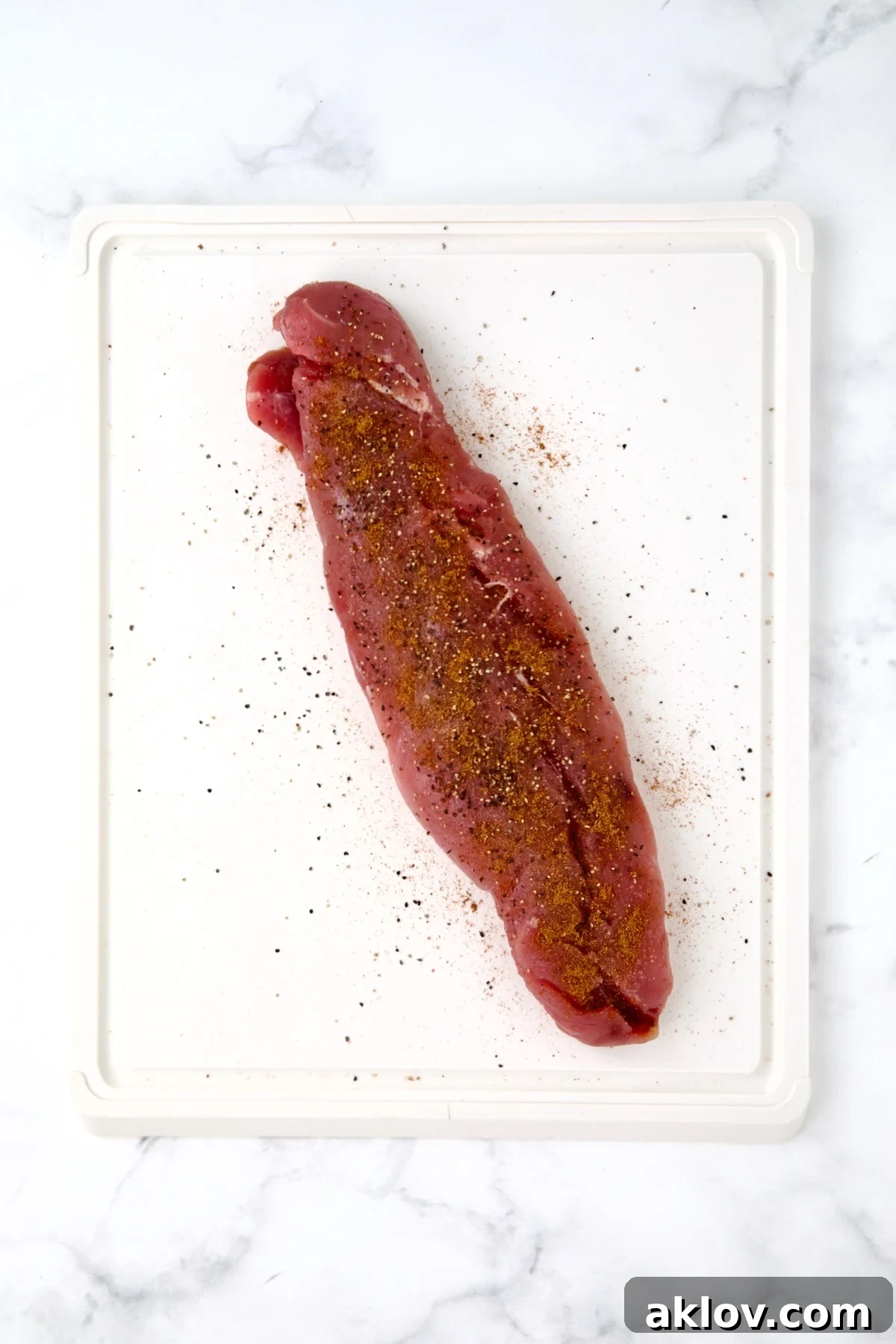
- Season the Pork: Pat the pork tenderloin dry with paper towels. Season generously with salt, freshly ground black pepper, and half of the jerk seasoning. Ensure the seasoning adheres well to all sides of the meat.
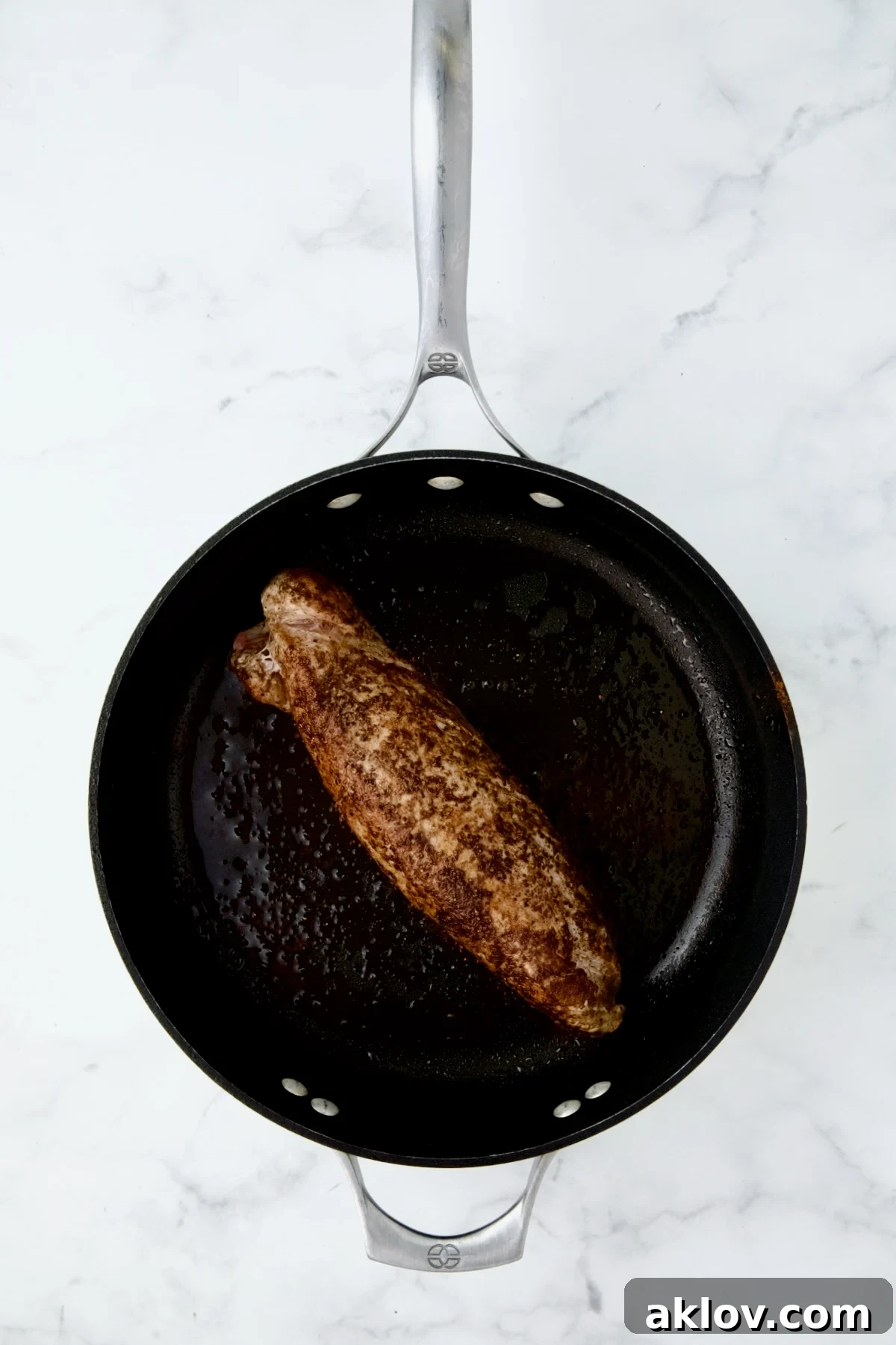
- Sear the Pork: Heat 1 tablespoon of olive oil in a nonstick skillet or sauté pan over medium-high heat until shimmering. Carefully add the seasoned pork tenderloin to the hot pan. Reduce the heat to medium and sear for 2 to 3 minutes per side, turning with tongs, until a beautiful golden-brown crust forms on all surfaces. This searing locks in juices and develops rich flavor.
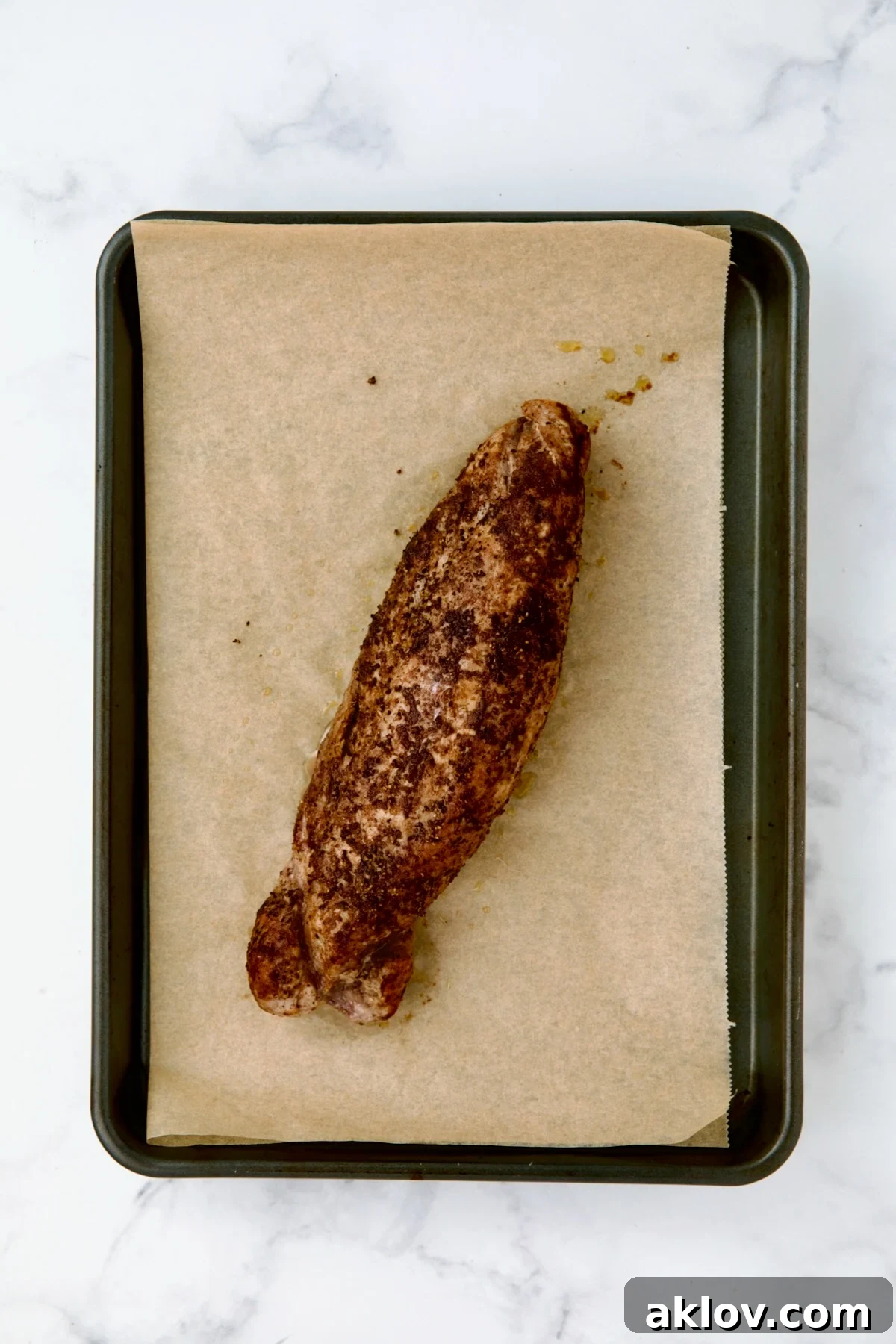
- Finish in the Oven: Transfer the seared pork tenderloin to the prepared parchment paper-lined baking sheet. Bake for 12 to 15 minutes, or until an instant-read thermometer inserted into the thickest part of the tenderloin registers 145°F (63°C). Once cooked, remove from the oven, tent loosely with foil, and let it rest for at least 5-10 minutes. This resting period is crucial for the juices to redistribute, ensuring a tender and juicy result.
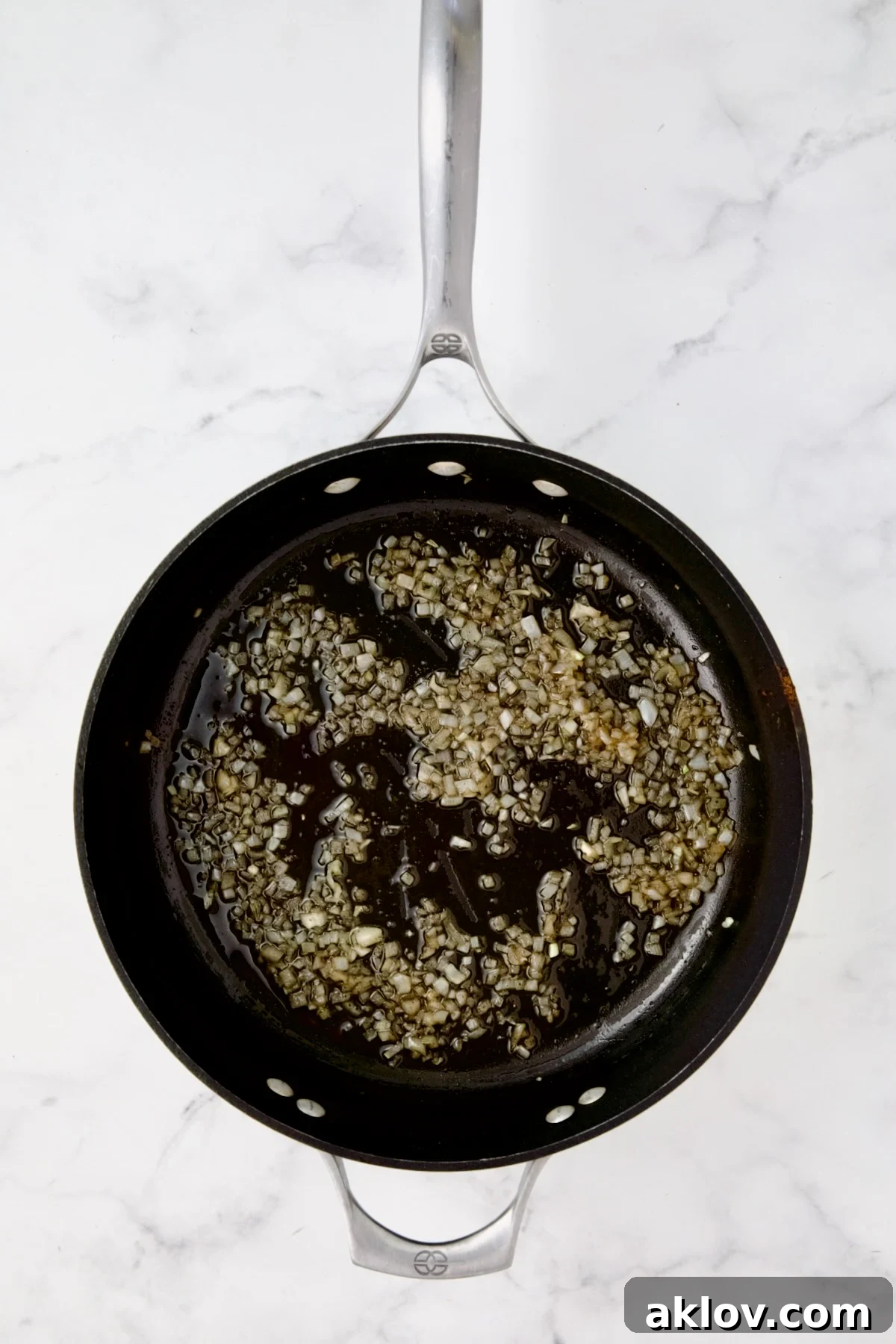
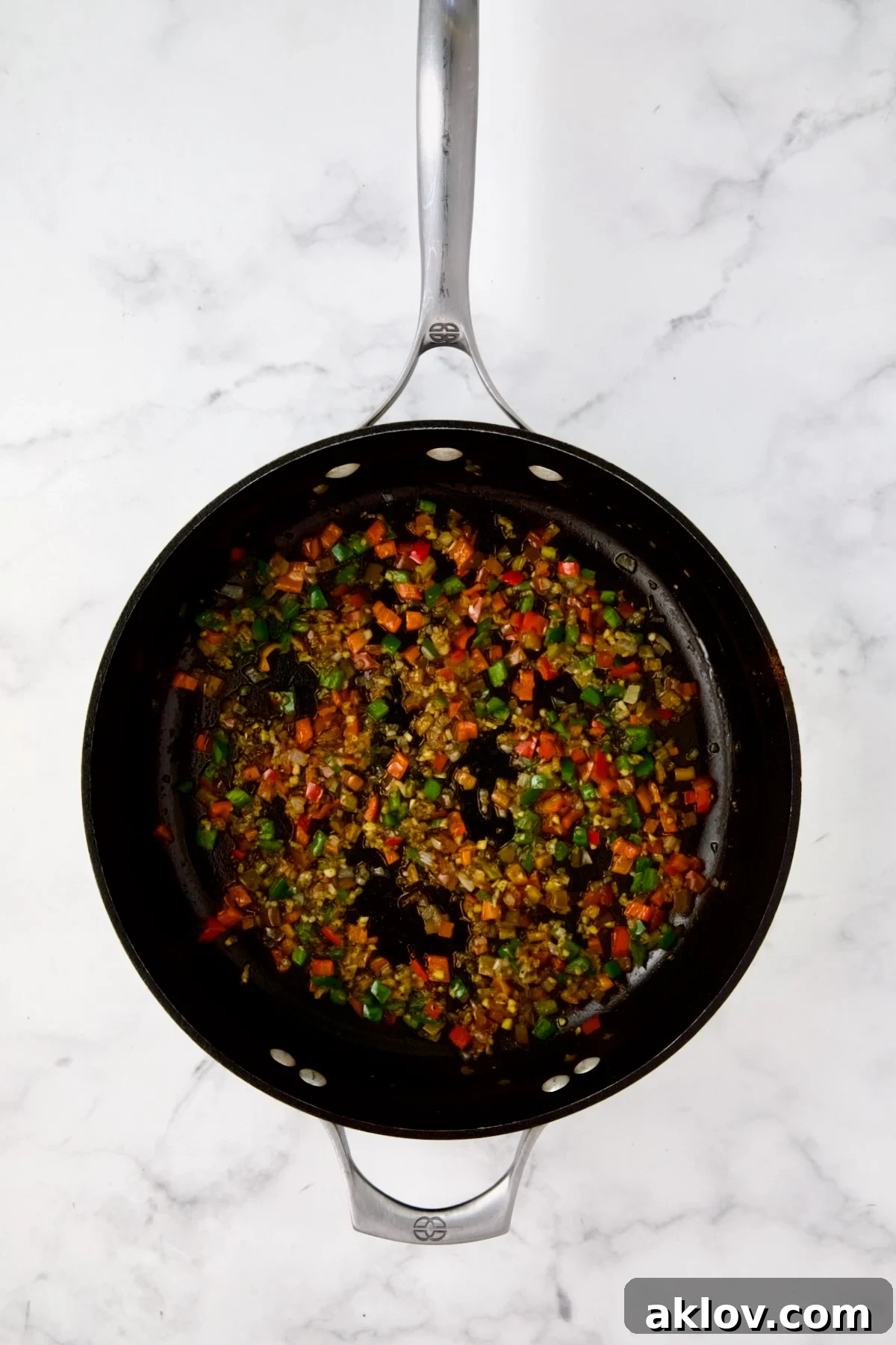
- Sauté Aromatics for the Sauce: While the pork tenderloin finishes cooking and rests, begin preparing the vibrant mango sauce. Heat the remaining 1 tablespoon of olive oil in the same skillet you used to brown the pork (no need to clean it, those bits add flavor!) over medium heat. Add the finely chopped shallot and cook for 1 to 2 minutes, stirring occasionally, until it softens and becomes translucent.
- Add Peppers, Ginger, and Garlic: Stir in the chopped red bell pepper, finely chopped jalapeño pepper, minced fresh ginger, and minced garlic. Continue to cook for another 2 to 3 minutes, stirring regularly, until the vegetables have softened and become fragrant, but not browned.
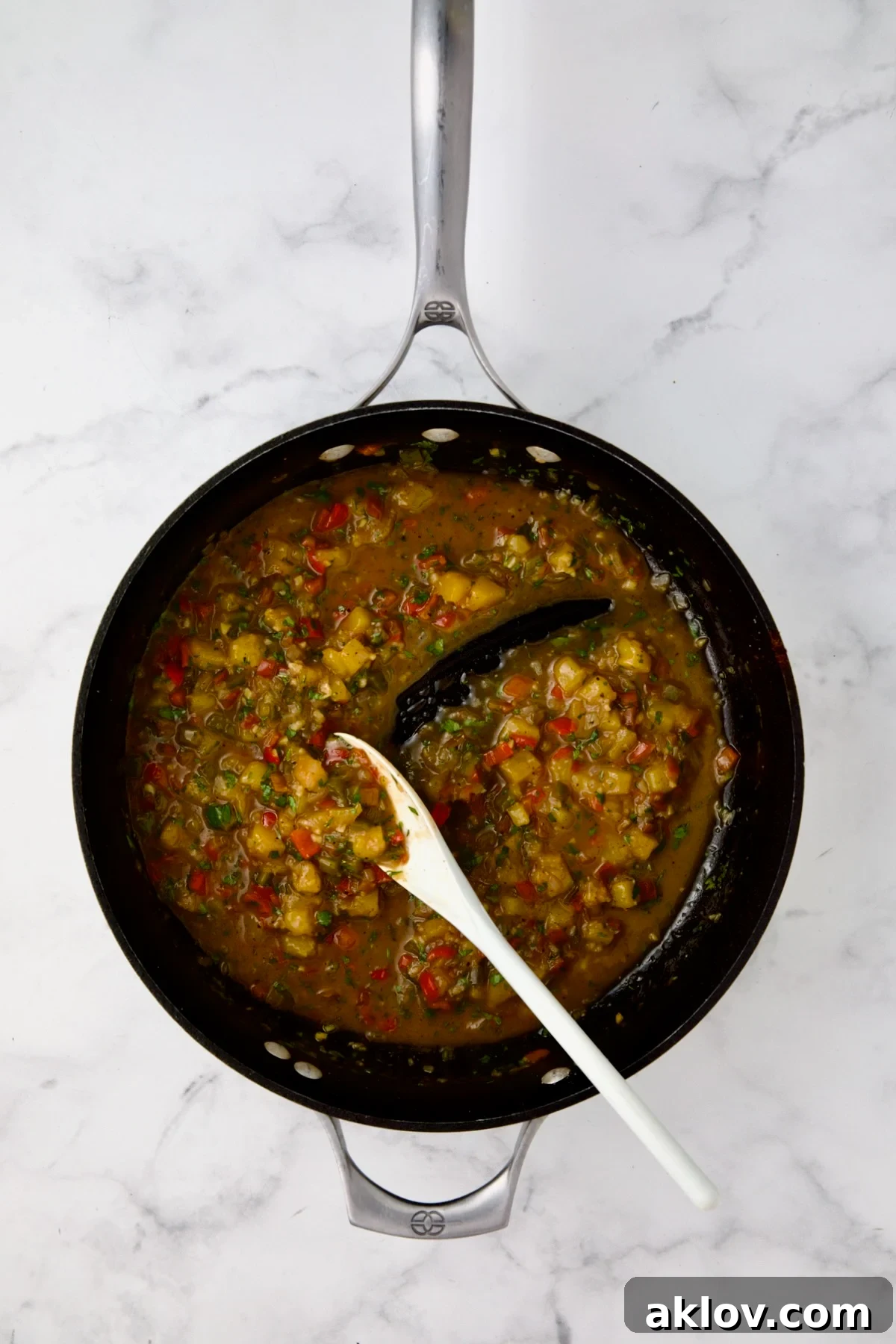
- Build the Sauce Base: Pour in the chicken broth, lime juice, honey, and hot sauce. Add the diced fresh mango. Stir everything together to combine.
- Simmer and Thicken: Bring the sauce mixture to a gentle boil. Reduce the heat to medium-high and let it simmer for 5 to 6 minutes. The sauce will gradually reduce and thicken slightly, concentrating its wonderful tropical flavors. Stir occasionally to prevent sticking.
- Finish the Sauce: If using, stir in the tablespoon of unsalted butter until it melts and incorporates, adding a glossy finish. Finally, fold in the chopped fresh cilantro and taste the sauce, adjusting seasoning with salt and black pepper as needed.
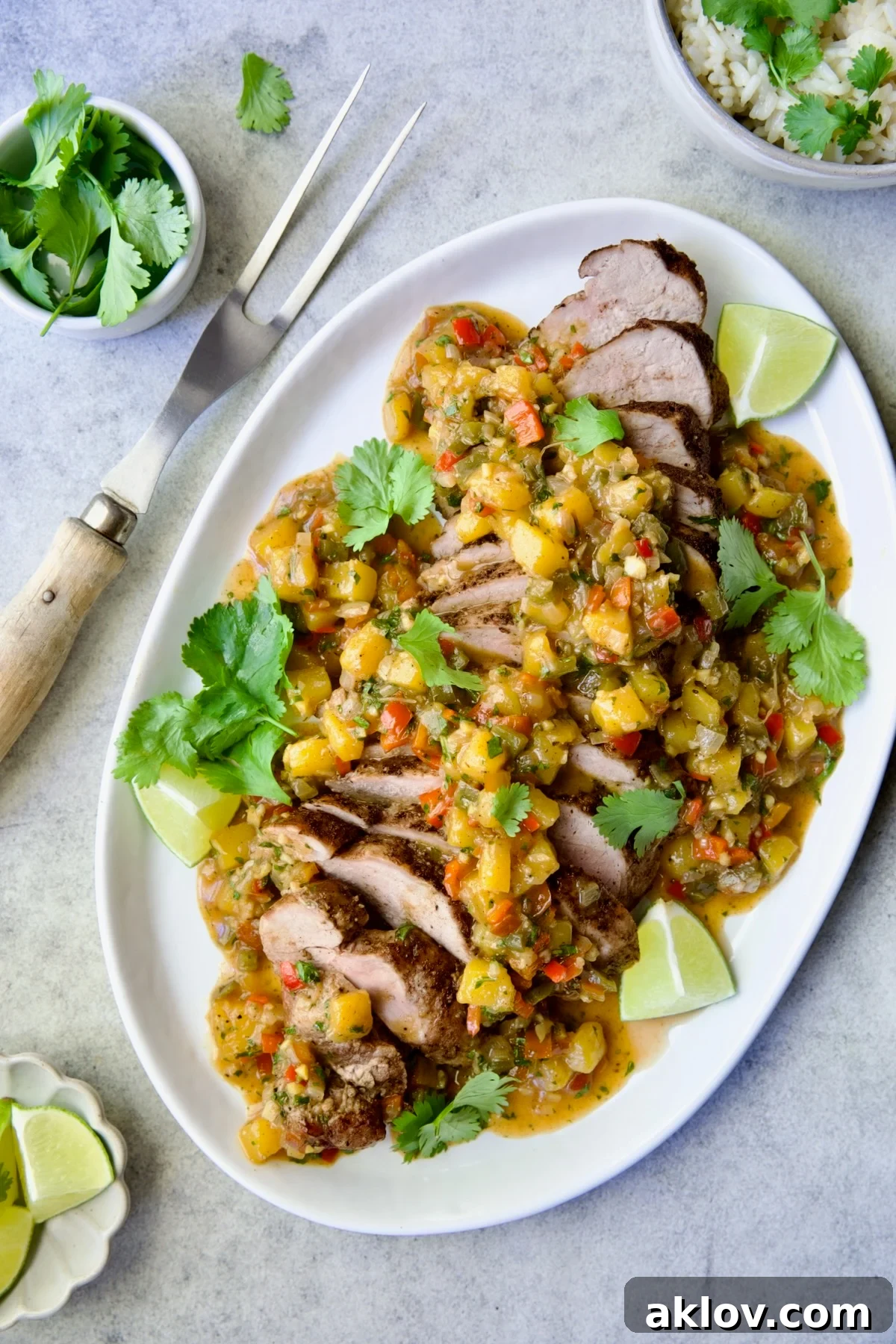
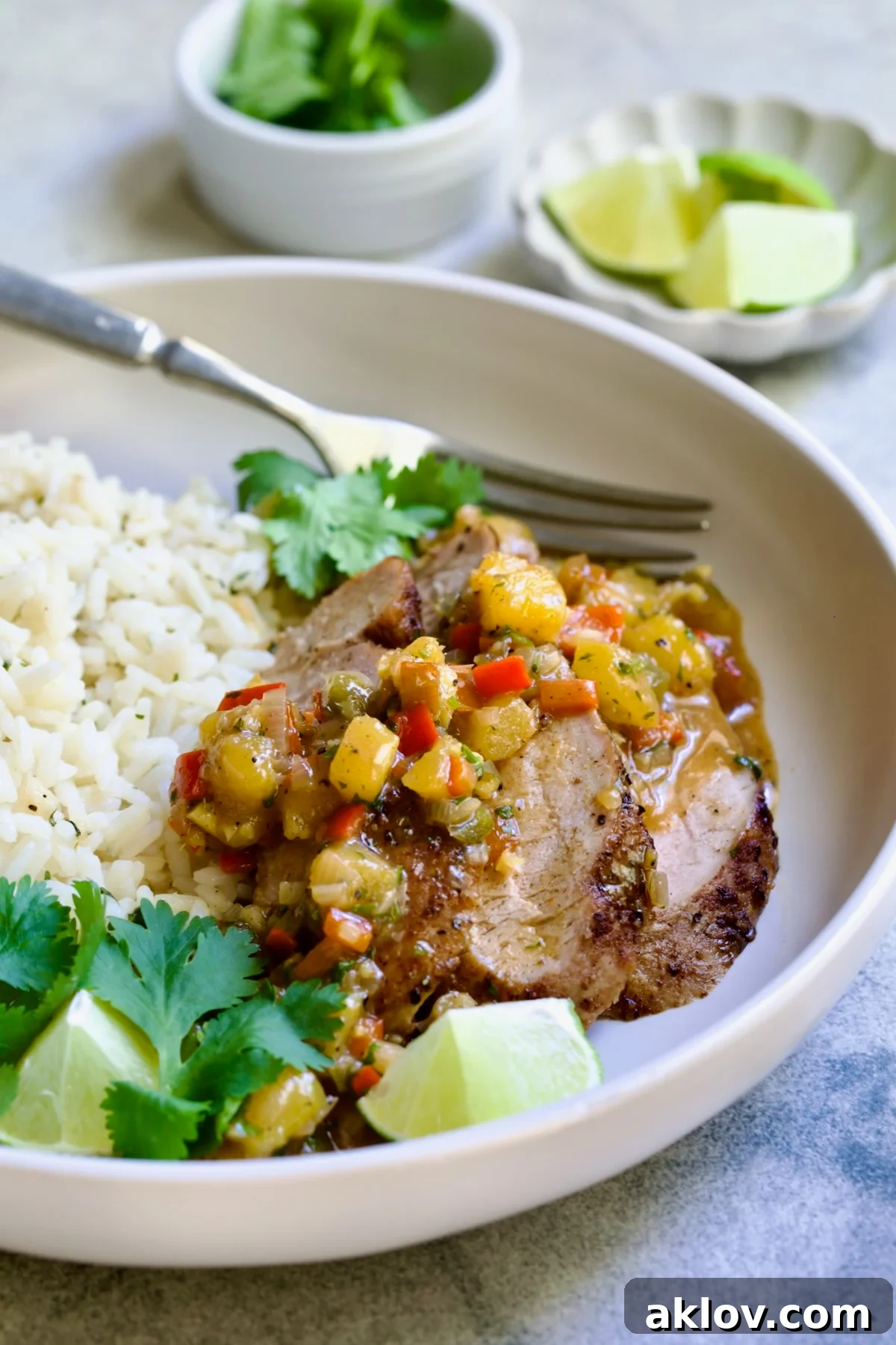
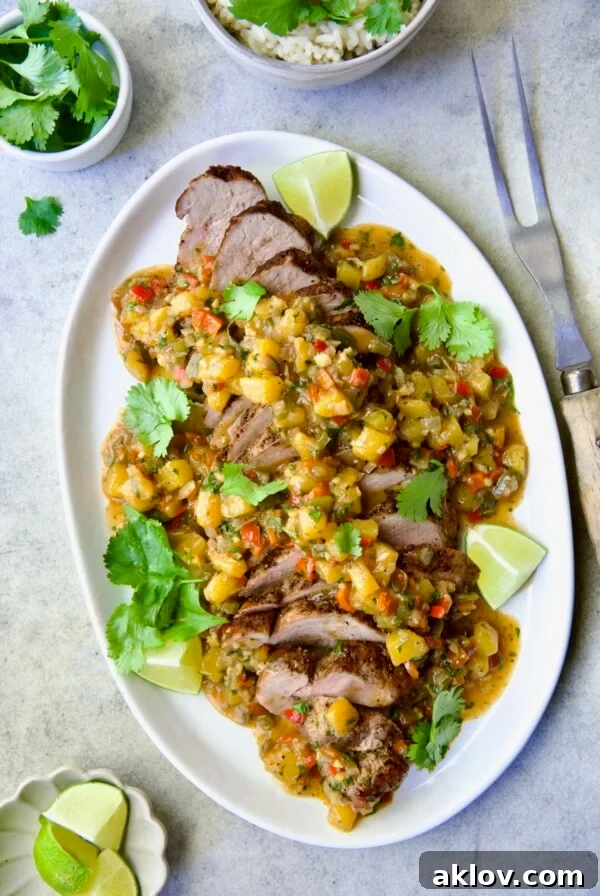
- Slice and Serve: Once rested, slice the pork tenderloin into thick medallions across the grain. Arrange the slices attractively on a platter. Generously spoon the warm, sweet, and tangy mango sauce over the pork.
- Garnish and Enjoy: Garnish with fresh cilantro sprigs and serve immediately. Offer lime wedges on the side for an extra burst of citrus if desired. This tropics-inspired recipe is delightful year-round and pairs wonderfully with black beans, a Spicy Black-Eyed Pea Salad, rice, or tender braised greens.
Expert Chef Tips and Tricks for the Best Caribbean Pork Tenderloin
- The Importance of Trimming Silverskin: The “silverskin” is a tough, connective membrane often found on pork tenderloin. It won’t break down during cooking and will result in a chewy texture. To remove it, slide a sharp, thin knife (like a fillet knife) under one end of the silverskin, angling the blade slightly upwards. Hold the silverskin firmly with your other hand and gently slide the knife along its length, separating it from the meat.
- Freezing Extra Tenderloin: Pork tenderloin often comes in packages of two. If your recipe only calls for one, trim the other tenderloin of any silverskin and excess fat. Place it in a gallon-size freezer bag, squeeze out as much air as possible, and freeze. You’ll have a perfectly prepped tenderloin ready for another quick and easy meal!
- Mastering Mango Dicing: Peeling and dicing a mango can seem tricky, but it’s simple with this method. Stand the mango upright on a cutting board. Slice down along the flat side of the pit on both sides to create two large halves. Take one half, score the flesh in a checkerboard pattern without cutting through the skin. Then, scoop out the diced flesh with a spoon. Repeat with the other half. For the flesh around the pit, carefully slice it off and dice it.
- Year-Round Enjoyment with a Grill Option: This Caribbean Pork Tenderloin recipe is wonderfully adaptable for all seasons. In warmer months, consider grilling the pork tenderloin instead of searing and roasting. Season the pork as directed, then grill over medium heat until it reaches an internal temperature of 145°F (63°C). For the sauce, you can easily convert the warm mango sauce ingredients into a refreshing, chunky fresh salsa by finely dicing all the ingredients and tossing them together without cooking.
- Don’t Rush the Rest: After cooking, letting your pork tenderloin rest is non-negotiable. This 5-10 minute period allows the muscle fibers to relax and reabsorb the juices, ensuring every slice is incredibly moist and flavorful. Skipping this step can lead to dry pork.
- Adjusting Spice Levels: The beauty of this recipe lies in its adaptability. If you prefer less heat, remove all seeds and membranes from the jalapeño, and start with just a few drops of hot sauce, tasting as you go. For more spice, leave some jalapeño seeds in, or increase the hot sauce quantity slightly.
- Perfect Sides for the Tropics: Enhance the island experience by serving your pork tenderloin with complementary sides. Think coconut rice, black beans and rice, a crisp green salad with a lime vinaigrette, or roasted plantains.
Frequently Asked Questions (FAQs) About Pork Tenderloin with Mango Sauce
Absolutely! The mango sauce is an excellent make-ahead component. Prepare it 1 to 2 days in advance, allow it to cool completely, then store it in an airtight container in the refrigerator. When ready to serve, gently reheat the sauce on low heat on the stovetop in a small saucepan. The pork tenderloin itself is best cooked fresh, but its quick cooking time makes it manageable even on busy days.
For the safest and most delicious results, pork tenderloin should be cooked to an internal temperature of 145°F (63°C) as measured by an instant-read thermometer inserted into the thickest part of the meat. After allowing it to rest for 3 to 5 minutes, the temperature may rise slightly. At 145°F, the pork will still have a slight pink hue in the center, ensuring it remains incredibly juicy and tender. If you prefer no pink, you can cook it to 155°F (68°C); it will still be tender, though slightly less pink.
Yes, grilling is a fantastic option, especially during warmer weather! Season the pork tenderloin with salt, pepper, and jerk seasoning as directed in the recipe. Preheat your grill to medium heat and grill the tenderloin, turning occasionally, until it reaches an internal temperature of 145°F (63°C). The warm mango sauce can easily be converted into a fresh, uncooked salsa for a lighter, summery accompaniment to the grilled pork.
For the best flavor and texture, choose ripe, firm mangoes such as Ataulfo (honey mango), Kent, or Tommy Atkins. Ataulfo mangoes are particularly sweet and creamy, while Kent and Tommy Atkins are readily available and have a good balance of sweetness and tang. Ensure the mango is ripe but not overly soft or bruised.
If cilantro isn’t to your taste, you can easily substitute it with fresh parsley (flat-leaf Italian parsley works best) or even a small amount of fresh mint for a different, but still refreshing, herbaceous note.
Storage and Reheating
Should you be lucky enough to have any leftovers of this delectable dish, store them promptly in an airtight container in the refrigerator for up to 3-4 days. To reheat, gently warm the pork and sauce in a 350°F (175°C) oven or in a skillet over medium-low heat until heated through, taking care not to overcook the pork, which can dry it out.
Perfect Pairings: What to Serve with Your Caribbean Pork Tenderloin
Complete your tropical feast with these delicious side dish suggestions:
- Baked Sweet Potato Wedges with Cilantro-Cashew Sauce for a sweet and savory complement.
- Patatas Bravas Chilenos (Chile Potatoes) for a spicy potato side.
- Lemony Braised Greens for a fresh, zesty vegetable component.
- Simple white rice or coconut rice with saucy black beans for a classic Caribbean combination.
- A vibrant corn and black bean salsa or a simple green salad with a tropical fruit dressing.
Explore More Delicious Easy Pork Recipes You’ll Love!
If you’ve enjoyed this pork tenderloin recipe, you’re sure to love these other fantastic pork dishes:
- Mojo-Marinated Pork Tenderloin Skewers
- Cajun-Smothered Pork Medallions
- Cuban Pork Tenderloin
- Pecan-Crusted Pork Tenderloin with Bourbon Mustard Sauce
- Grilled Pork Chops with Peach Salsa
Discover all my incredible pork creations at Pork Recipes – From A Chef’s Kitchen.
Pork Tenderloin with Mango Sauce
By: Carol | From A Chef’s Kitchen
This Pork Tenderloin with Mango Sauce recipe captures the essence of island cuisine, where every bite tastes like a mini tropical vacation! Juicy pork tenderloin, smoky jerk seasoning, and a warm, sweet and tangy mango sauce combine for a mouthwatering balance of flavors to elevate your next meal!
Prep Time: 20 mins
Cook Time: 25 mins
Total Time: 45 mins
Servings: 4
Equipment
- Wusthof Chef Knife
- Cutting Board
- Nonstick Skillet
- Rimmed Sheet Pan
Ingredients
- 1 (1-pound) pork tenderloin, trimmed of excess fat and silverskin
- Salt and freshly ground black pepper (to taste)
- 2 teaspoons jerk seasoning, divided
- 2 tablespoons olive oil, divided
- 1 large shallot, finely chopped
- 1 small red bell pepper, seeded and membranes removed, chopped
- 1 large jalapeño pepper, seeded if desired, finely chopped
- 1 tablespoon minced fresh ginger
- 2 cloves garlic, minced
- 1 cup chicken broth
- 2 tablespoons lime juice, or to taste
- 1 tablespoon honey
- 1 teaspoon hot sauce
- 1 large mango, pitted, peeled and diced
- 1 tablespoon unsalted butter, optional
- 1/4 cup chopped fresh cilantro
- Lime wedges, for serving, optional
Instructions
- Preheat oven to 350°F (175°C). Line a rimmed baking sheet with parchment paper.
- Season the pork tenderloin with salt, black pepper, and half the jerk seasoning.
- Heat 1 tablespoon olive oil in a nonstick skillet or sauté pan over medium-high heat. Add the pork tenderloin, reduce the heat to medium, and brown for 2-3 minutes per side. Transfer to the parchment paper-lined baking sheet and bake for 12-15 minutes or until an instant-read thermometer registers 145°F (63°C). Tent to keep warm.
- While the pork tenderloin finishes in the oven, heat the remaining 1 tablespoon olive oil in the same skillet over medium heat.
- Add the shallot and cook for 1-2 minutes or until it softens.
- Add the red bell pepper, jalapeño pepper, ginger, and garlic. Cook for 2-3 minutes or until softened.
- Add the broth, lime juice, honey, hot sauce, and mango.
- Bring to a boil. Reduce heat to medium-high and simmer for 5-6 minutes or until the sauce reduces and thickens slightly.
- Stir in the butter if using. Add the chopped cilantro and season to taste with salt and black pepper.
- Slice the pork tenderloin across/against the grain and place on a platter.
- Top with the mango sauce. Garnish with cilantro sprigs. Serve with lime wedges if desired.
Notes
SUBSTITUTIONS:
- If you don’t consume pork, you can also use chicken breasts or a turkey tenderloin in this recipe.
- Diced pineapple is a great substitute for mango.
TIPS:
- Trimming the “silverskin” from the pork tenderloin is essential. This strip of membrane cooks up tough and chewy.
- Because pork tenderloin is often sold two to a pack, trim the other one and place it in a gallon-size zipper-top bag, then freeze. You’ll have another pork tenderloin ready to roll for another meal!
- This Caribbean Pork Tenderloin recipe is perfect year-round. Rather than searing and roasting the pork tenderloin, place it on the grill and make a salsa with the ingredients rather than a warm sauce.
MAKE AHEAD:
- The mango sauce can be made 1 to 2 days ahead. Cool and refrigerate.
- Reheat on low heat on the stovetop in a small saucepan. Sear and bake the pork tenderloin as directed.
Nutrition
Serving: 1
Calories: 257kcal
Carbohydrates: 17g
Protein: 2g
Fat: 10g
Saturated Fat: 3g
Polyunsaturated Fat: 1g
Monounsaturated Fat: 6g
Trans Fat: 0.1g
Cholesterol: 9mg
Sodium: 287mg
Potassium: 219mg
Fiber: 2g
Sugar: 13g
Vitamin A: 1635IU
Vitamin C: 51mg
Calcium: 21mg
Iron: 1mg
Nutritional values are automatically calculated using unbranded products and are estimates only. Actual results may vary based on ingredients used and portion sizes. Adjust as needed for dietary restrictions, allergies, or health concerns.