
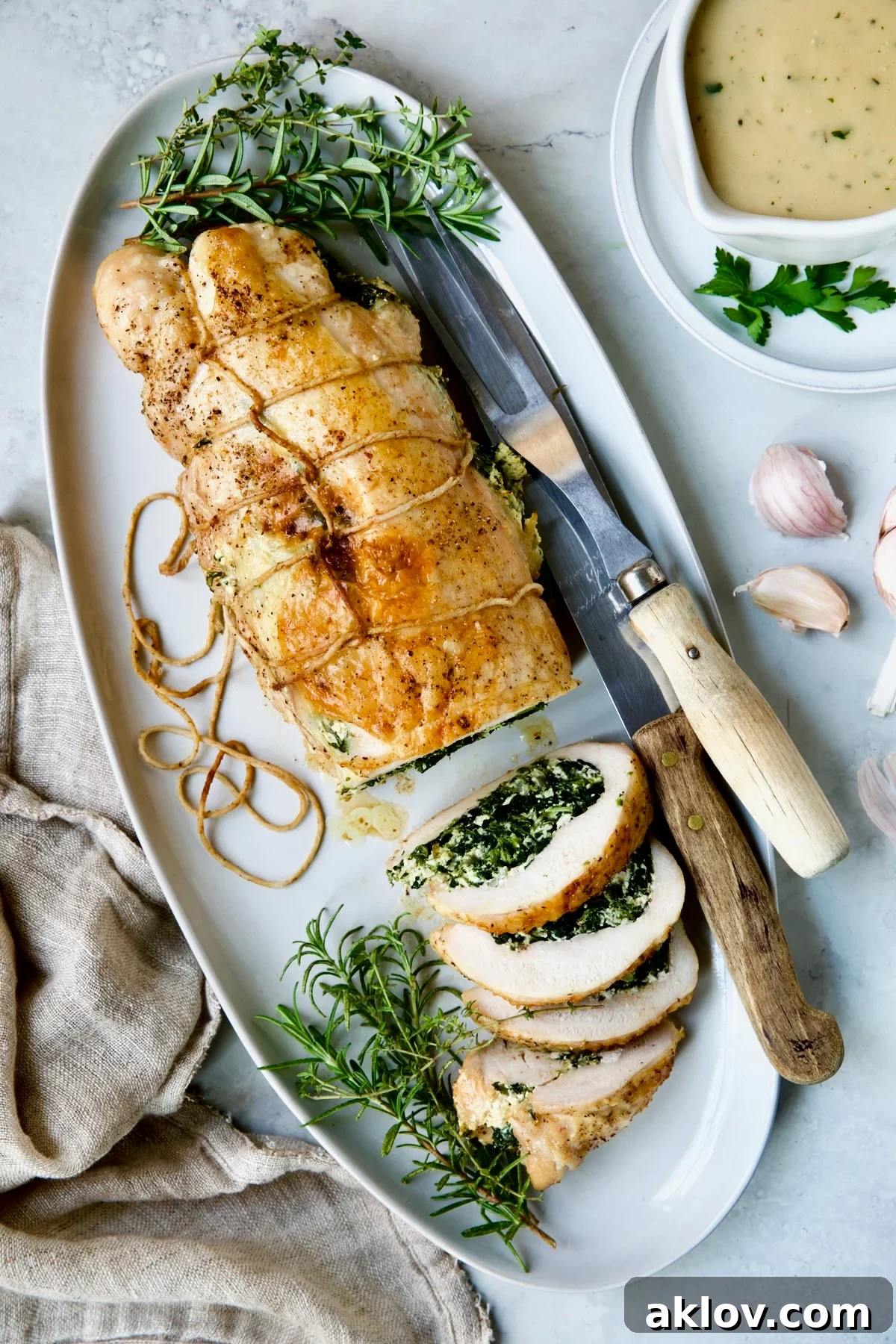
Elegant Spinach and Ricotta Stuffed Turkey Breast with Garlic Herb Sauce: Your Perfect Make-Ahead Holiday Meal
Transform your dining experience with this exquisite Spinach and Ricotta Stuffed Turkey Breast, beautifully complemented by a rich Garlic Herb Sauce. This recipe offers a sophisticated yet surprisingly simple solution for holiday gatherings, intimate family dinners, or any occasion deserving of a special touch. Forget the stress of a whole roasted turkey; this dish is designed for ease, elegance, and the convenience of being entirely make-ahead. It pairs wonderfully with classic Make-Ahead Mashed Potatoes and can be followed by delightful Mini Pumpkin Cheesecakes for a complete and memorable feast.
“It was delicious! … So much better than the dry roast turkey we often get at Thanksgiving!”
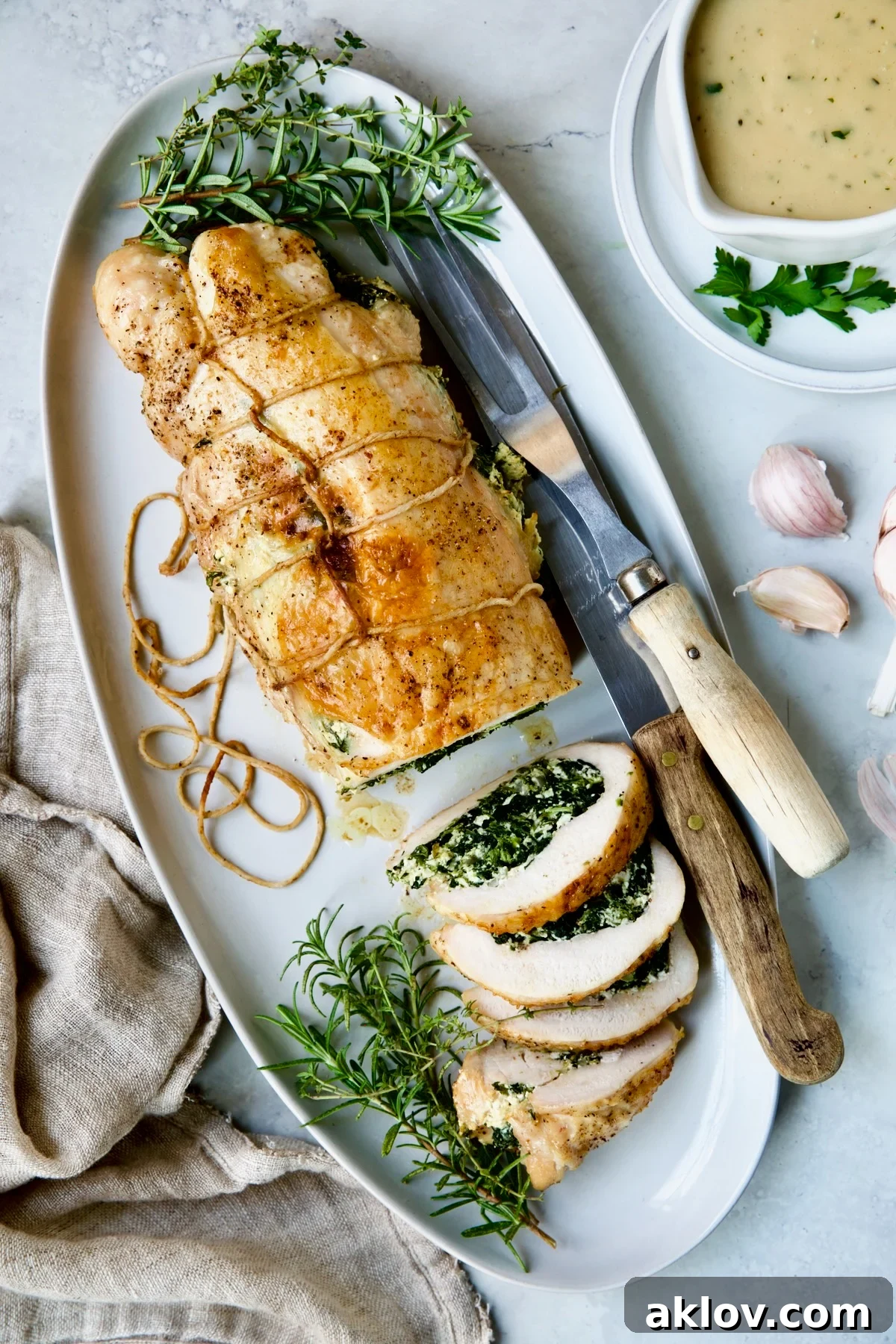
Why This Stuffed Turkey Breast is a Must-Try for Any Occasion
Are you contemplating a more intimate Thanksgiving or Christmas celebration this year? Or perhaps you’re simply seeking a show-stopping dish that doesn’t demand an entire day in the kitchen?
While a full roast turkey can be a magnificent centerpiece for large gatherings, it often proves to be too much for smaller groups. This elegant Spinach and Ricotta Stuffed Turkey Breast recipe provides the perfect solution, serving four to six people generously, often leaving you with delightful leftovers. It offers all the grandeur of a holiday meal without the overwhelming scale.
Having prepared this specific Spinach and Ricotta Stuffed Turkey Breast recipe for numerous clients throughout my career as a personal chef, I can attest to its consistent popularity. It’s frequently requested time and again, primarily because it delivers a sophisticated flavor profile that stands apart from traditional “Thanksgiving-style” turkey dishes. It’s a refreshing alternative that brings a unique culinary experience to your table.
This stuffed turkey breast, featuring a rich, savory spinach and cheese filling encased in tender turkey meat and drizzled with an aromatic garlic and herb sauce, is:
- Effortlessly Elegant: Impress your guests with a dish that looks as good as it tastes, perfect for special occasions.
- Remarkably Fuss-Free: The creamy filling comes together quickly, requiring no pre-cooking, simplifying your prep process.
- Completely Make-Ahead: Prepare this dish in advance, allowing you to relax and enjoy your company when it’s time to dine.
- Consistently Moist: The brining and stuffing techniques ensure a juicy, tender turkey breast every time, banishing dry holiday turkey memories.
- Versatile & Adaptable: While ideal for holidays, it’s equally suited for a regular family dinner, offering a gourmet touch any day of the year.
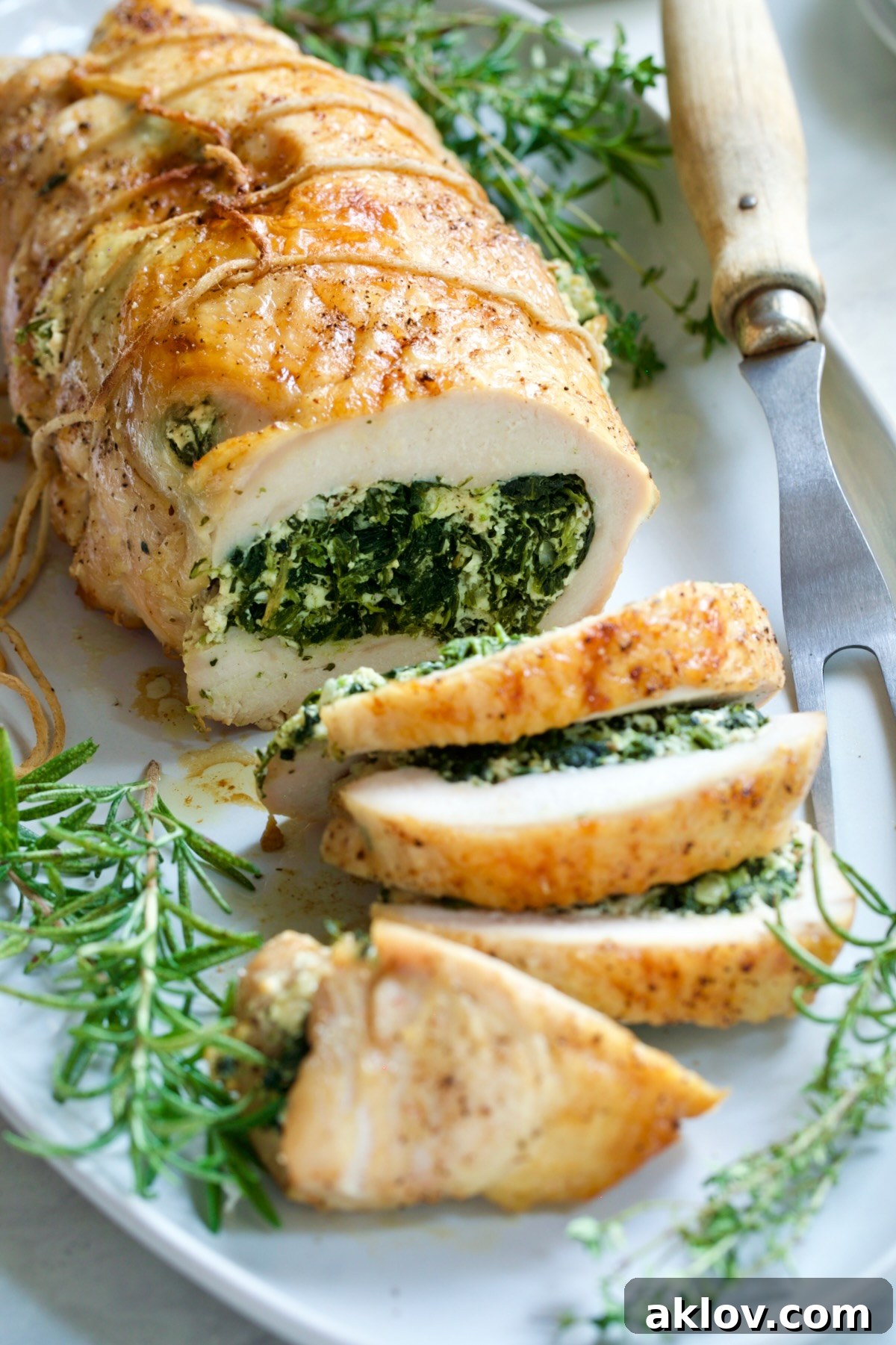
Mastering the Stuffed Turkey Breast: A Step-by-Step Guide
Creating this delicious Spinach and Ricotta Stuffed Turkey Breast with Garlic Herb Sauce is a rewarding culinary journey. Below, we’ll walk through the essential ingredients and detailed instructions to ensure your success, delivering a dish that is both impressive and incredibly flavorful.
Essential Ingredients for Your Stuffed Turkey Breast
Gathering all your ingredients before you begin ensures a smooth and enjoyable cooking process. Here’s a detailed look at what you’ll need to create this succulent turkey and its accompanying aromatic sauce:
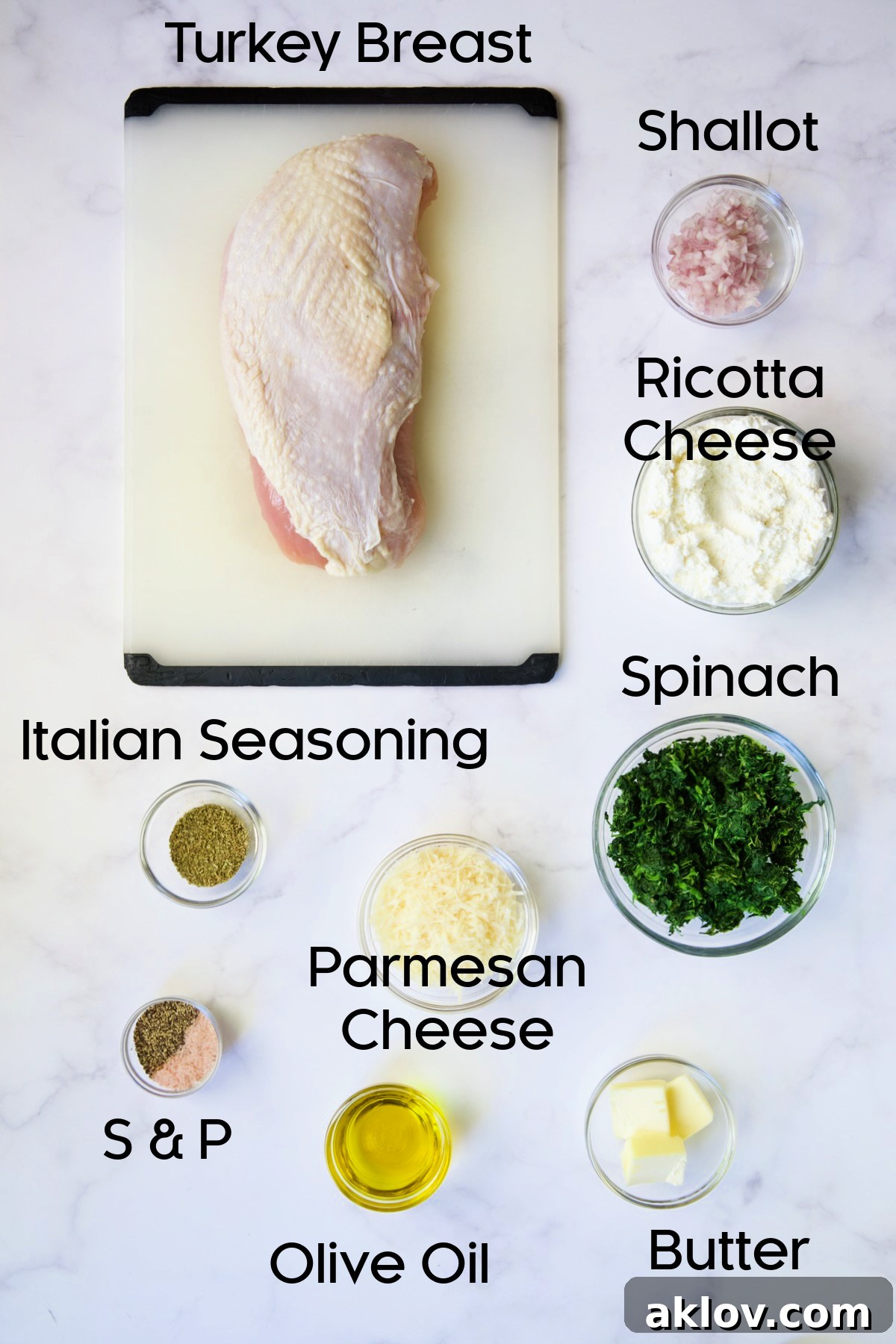
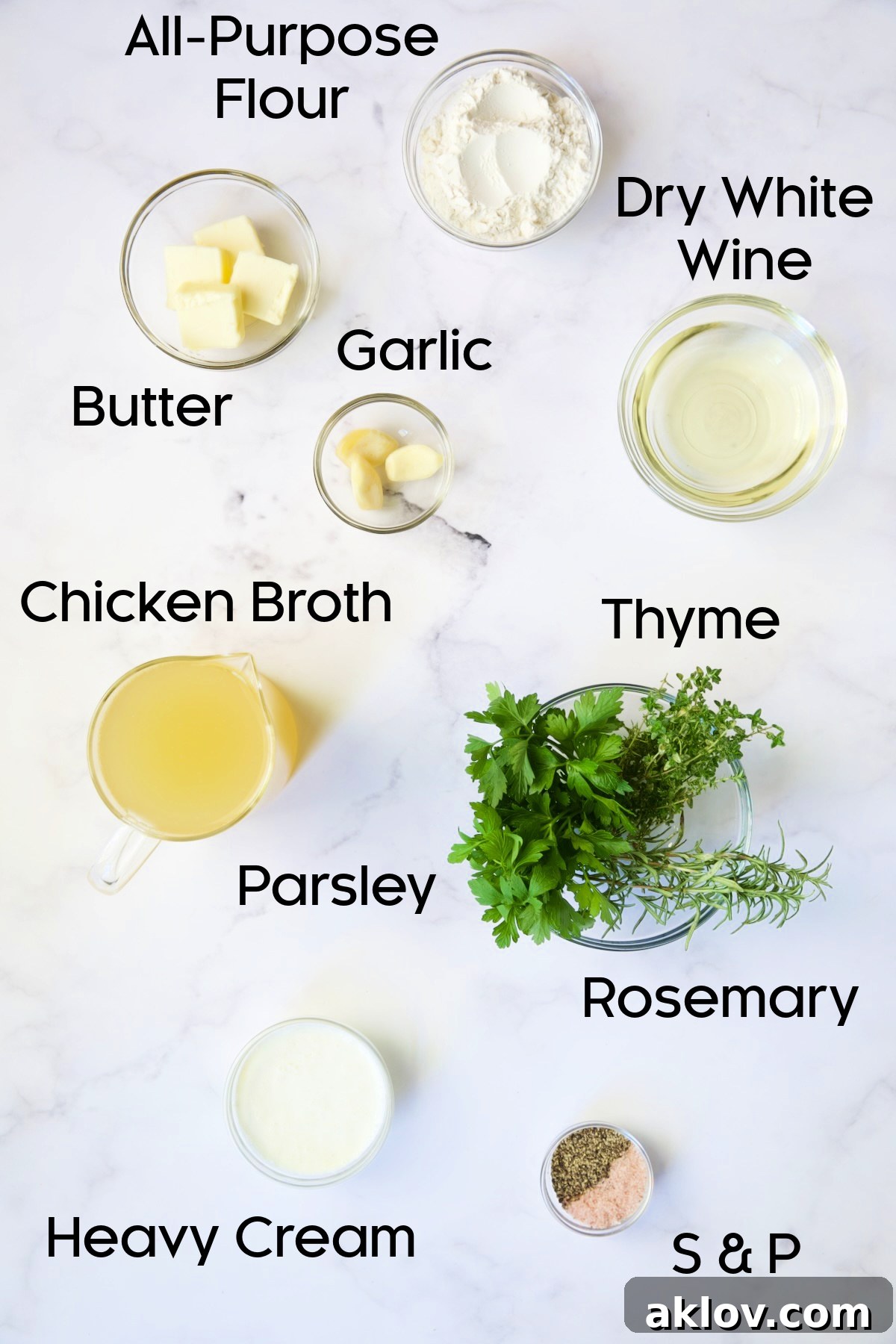
Key Ingredients & Smart Substitutions: Crafting the Perfect Flavor
- Turkey Breast Half (2 to 2 1/2 pounds, boneless, with skin if desired, butterflied): This specific cut is ideal for stuffing and rolling, ensuring an even cook. Turkey breast halves are typically available at full-service meat counters in specialty grocery stores like The Fresh Market or Whole Foods. If you buy a whole breast on the bone (which includes two halves), you can easily double this recipe for two stuffed breasts or freeze one for a future meal. The skin helps retain moisture and adds a crispy texture.
- Shallot (1 small, finely chopped): Shallots, members of the onion family, offer a milder, sweeter onion flavor with subtle hints of garlic. They provide a delicate aromatic base for the filling. If shallots are unavailable, a small amount of finely minced yellow onion can be used as a substitute, though the flavor will be slightly more pungent.
- Ricotta Cheese (1 cup, whole milk or part-skim): The quality of your ricotta cheese significantly impacts the creaminess and flavor of the stuffing. Opt for a high-quality, whole milk ricotta for the best results, such as brands like Murray’s or Calabro. Avoid generic store brands, as they often contain more water and less flavor, which can lead to a watery filling.
- Frozen Chopped Spinach (1 bag, 12-ounce, thawed and squeezed of excess moisture): Frozen chopped spinach is a fantastic convenience product here, as it’s already cooked and pre-chopped. This saves time and ensures a consistent texture in your filling. If using fresh spinach (about 1-1.5 pounds), be sure to cook it down first, then drain and squeeze out as much moisture as possible. Excess moisture from spinach is the enemy of a firm, flavorful stuffing, so don’t skip the squeezing step!
- Parmesan Cheese (1/2 cup, freshly grated): Freshly grated Parmesan adds a salty, umami depth to the filling. For a different but equally delicious flavor profile, you can substitute with freshly grated Asiago or Romano cheese.
- Dry White Wine (1/2 cup for sauce): A good quality dry white wine (like Sauvignon Blanc, Pinot Grigio, or Chardonnay) is crucial for the sauce. Use a wine you would enjoy drinking, as cooking concentrates its flavors, making any undesirable notes more prominent.
- NON-ALCOHOLIC SUBSTITUTE for Wine: For an alcohol-free alternative, you can use an alcohol-free white wine or substitute with extra chicken broth combined with one to two teaspoons of white wine vinegar to mimic the acidity.
- Other Sauce Ingredients: Unsalted butter, all-purpose flour (to create a roux for thickening), chicken broth, heavy cream (for richness), minced garlic, and a blend of fresh parsley, rosemary, and thyme (for aromatic complexity).
Detailed Step-By-Step Instructions: Crafting Your Stuffed Turkey Breast
Follow these comprehensive instructions to prepare and roast your delectable stuffed turkey breast and create the accompanying garlic herb sauce. Precision in each step ensures a truly outstanding result.
- Prepare Your Workspace and Ingredients: Before you begin, gather all your ingredients and necessary equipment. This “mise en place” approach makes the cooking process much more efficient and enjoyable.
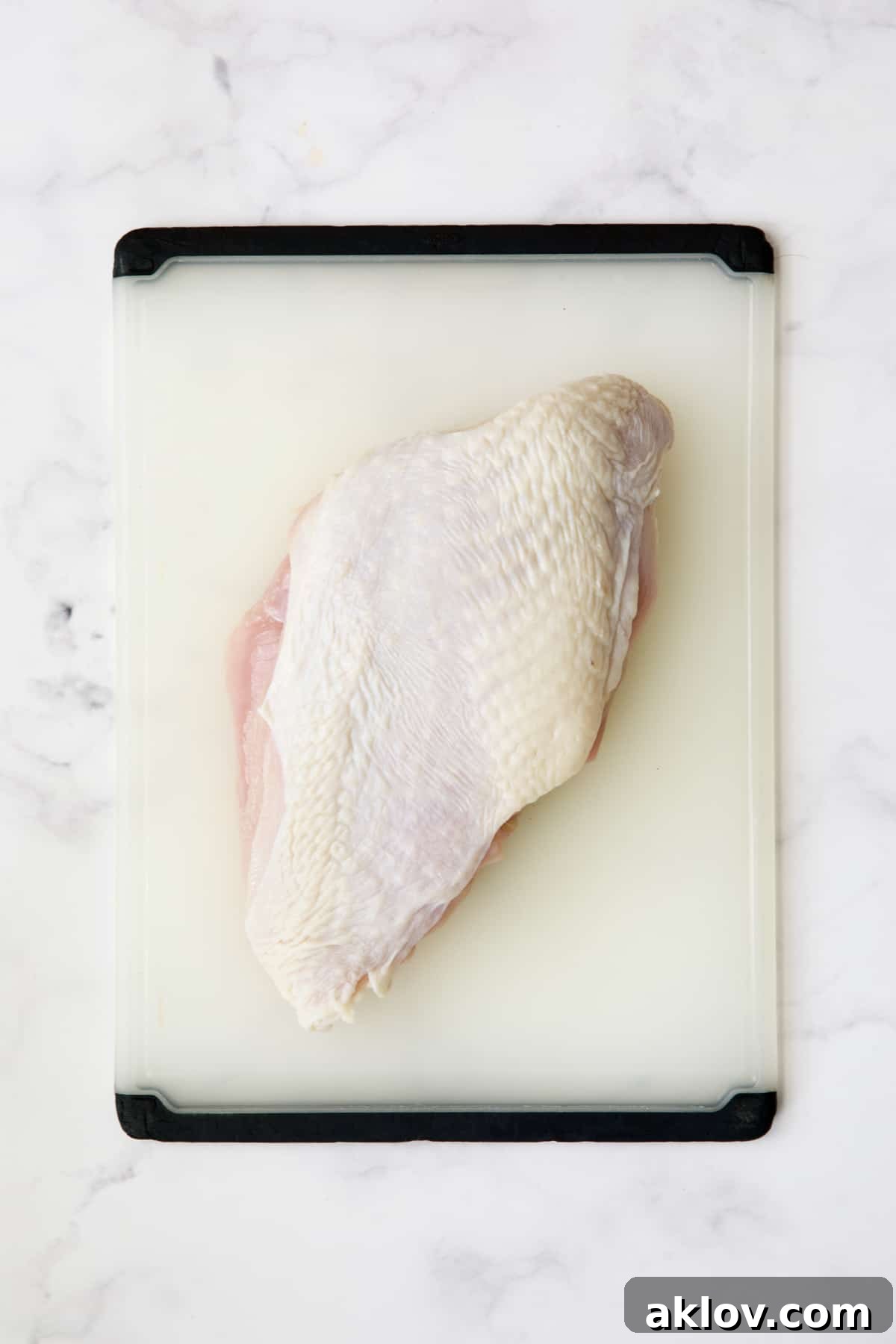
- Butterfly the Turkey Breast: This crucial step creates a uniform thickness, allowing for even cooking and easy stuffing. Start on the thick, rounded side of the boneless turkey breast. Carefully make a horizontal cut through the middle, working towards the other side but stopping about one inch short. The goal is to open the breast like a book without cutting all the way through, forming a large, flat piece of meat. Take care not to create any holes, as these could allow the stuffing to escape. If your turkey breast comes with skin, consider leaving it on and smoothing it over the top of the rolled breast to help retain moisture during roasting. If you’re unsure about butterflying, ask your butcher to do it for you!
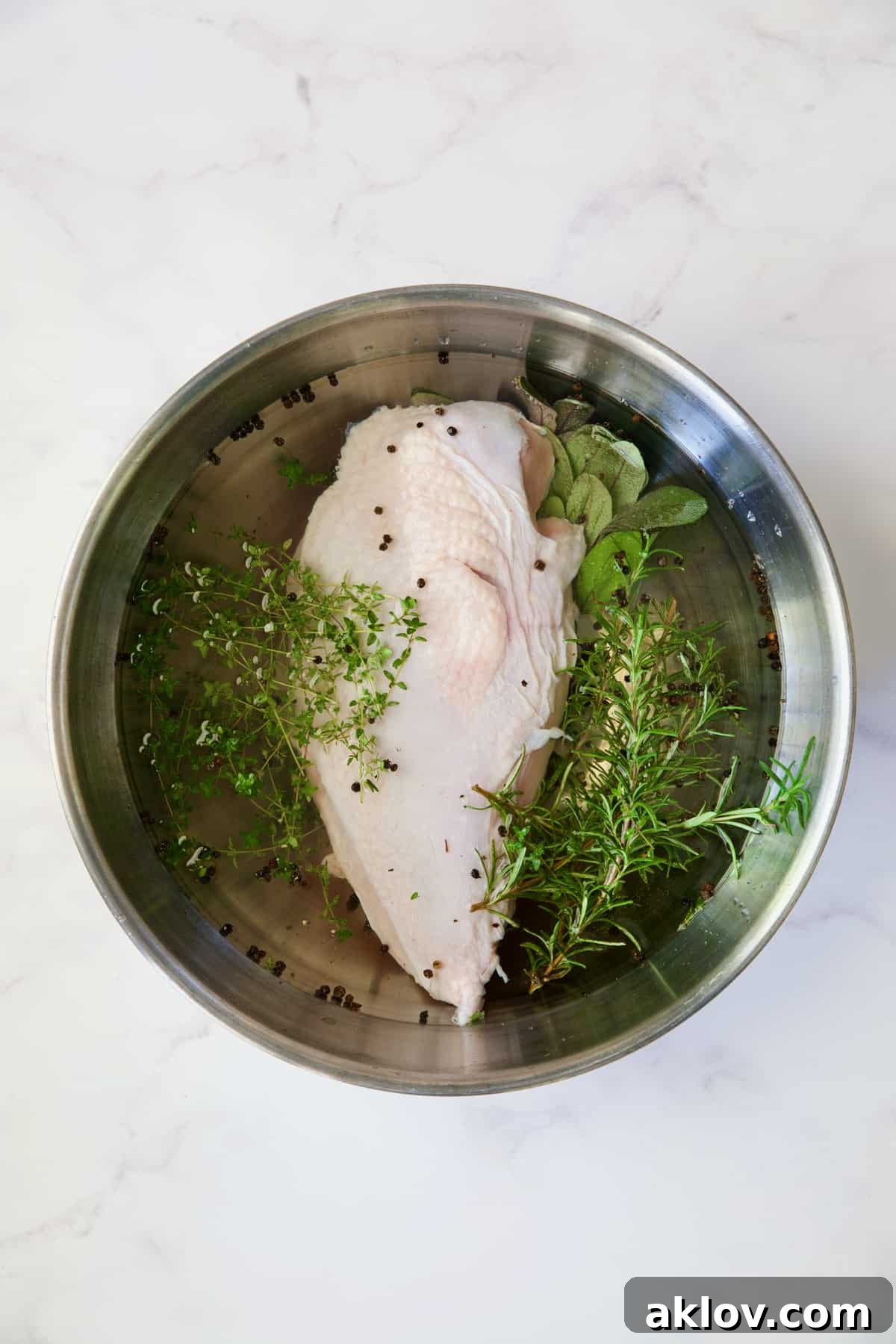
- Brine for Ultimate Juiciness: White turkey meat can be prone to drying out, which is why brining is highly recommended. Brining infuses the meat with moisture and flavor, resulting in a noticeably juicier and more tender final product. Ensure your turkey breast has not been pre-treated or injected with any solutions. To prepare the brine, combine 6 cups of hot tap water, 1/2 cup of sugar, and 1/2 cup of kosher salt in a large bowl. Stir until the sugar and salt are completely dissolved and the water clears. Submerge the butterflied turkey breast in the brine and refrigerate for 4 to 6 hours. This simple step makes a significant difference! For a more detailed guide on brining, you can refer to an easy turkey brine recipe.
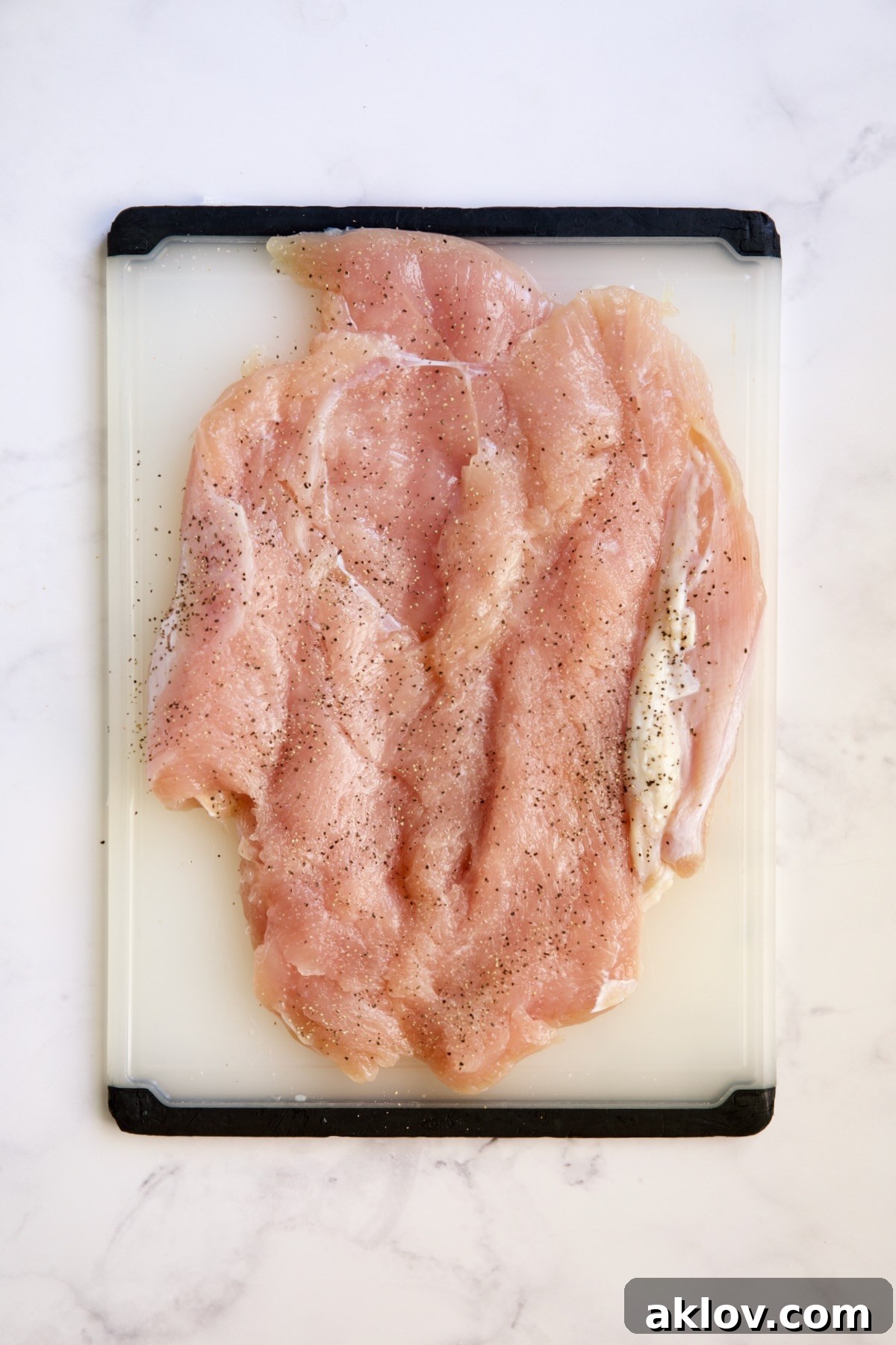
- Preheat Oven and Prepare Turkey: Once brined, preheat your oven to 350 degrees Fahrenheit (175 degrees Celsius). Remove the turkey breast from the brine and pat it thoroughly dry with paper towels. A dry surface promotes crispy skin. Spread the butterflied breast out flat on a clean cutting board. Gently pound it even further to achieve a consistent thickness of about 1/2 to 3/4 inch. This ensures uniform cooking and a perfectly shaped roll. Season the flattened turkey breast generously with salt and freshly ground black pepper.
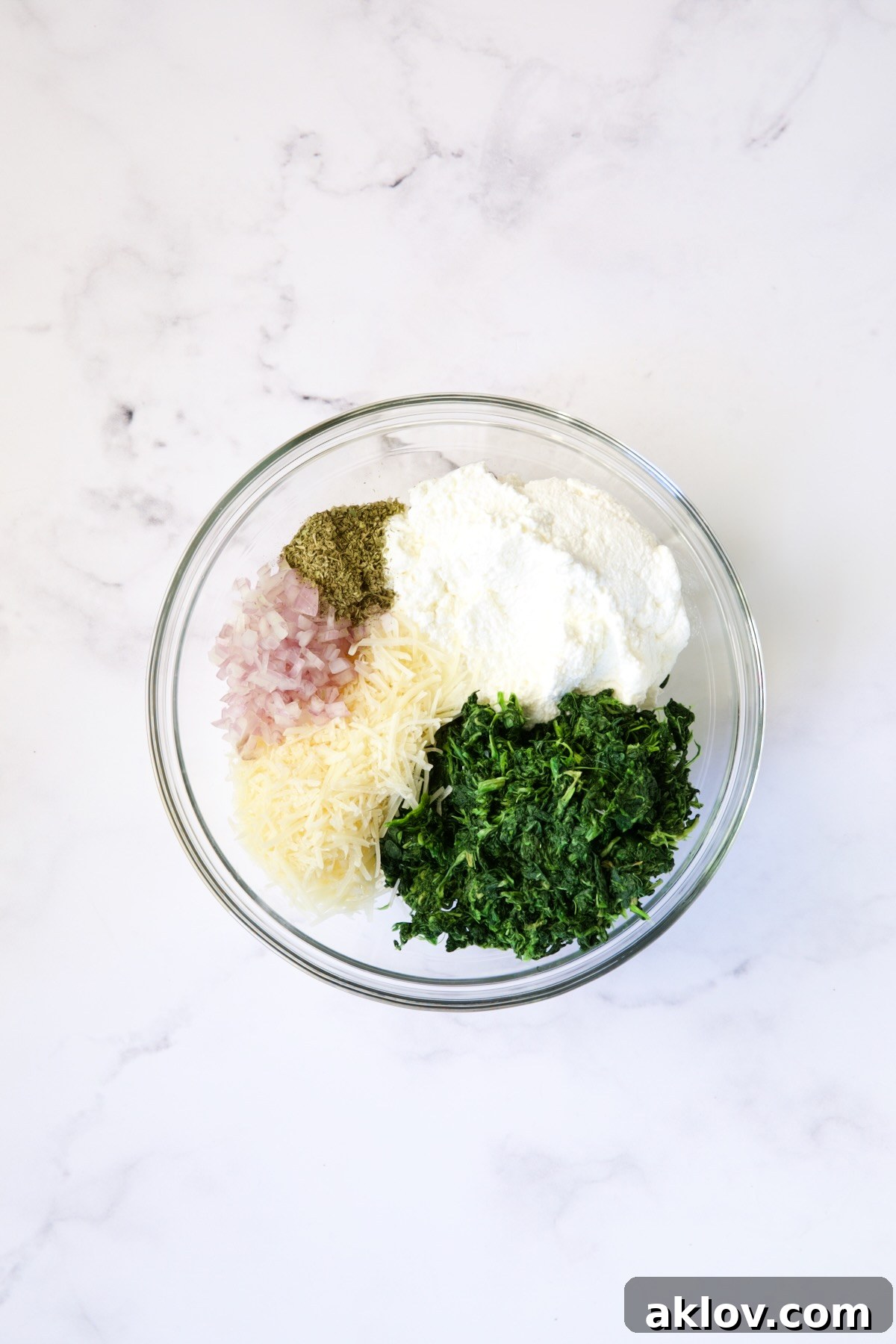
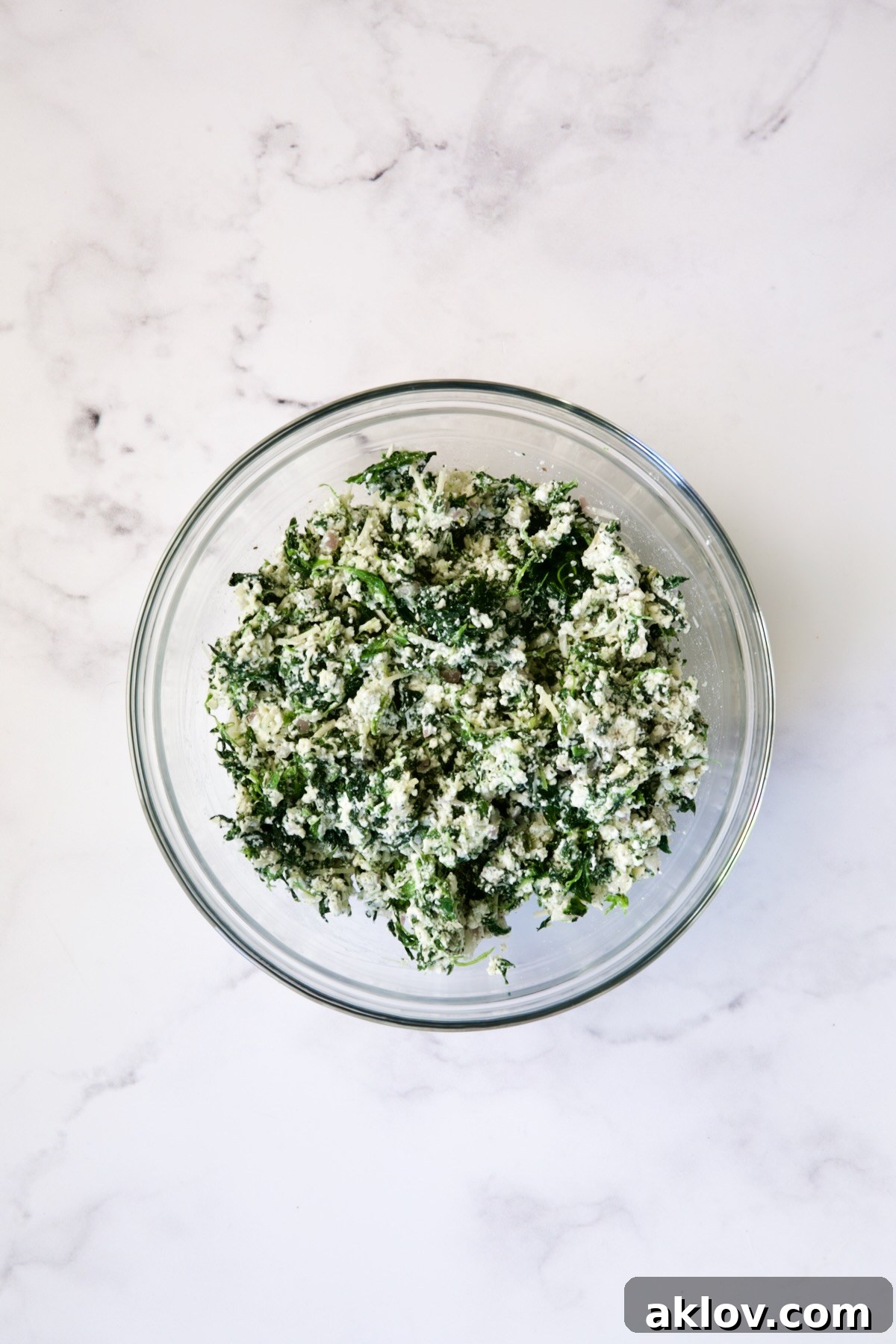
- Prepare the Spinach and Ricotta Filling: In a small mixing bowl, combine the finely chopped shallot, creamy ricotta cheese, freshly grated Parmesan cheese, the thoroughly squeezed thawed chopped spinach, Italian seasoning, and salt and freshly ground black pepper to taste. Mix these ingredients until they are well incorporated. The key here is ensuring the spinach is as dry as possible to prevent a watery filling that could make the turkey soggy.
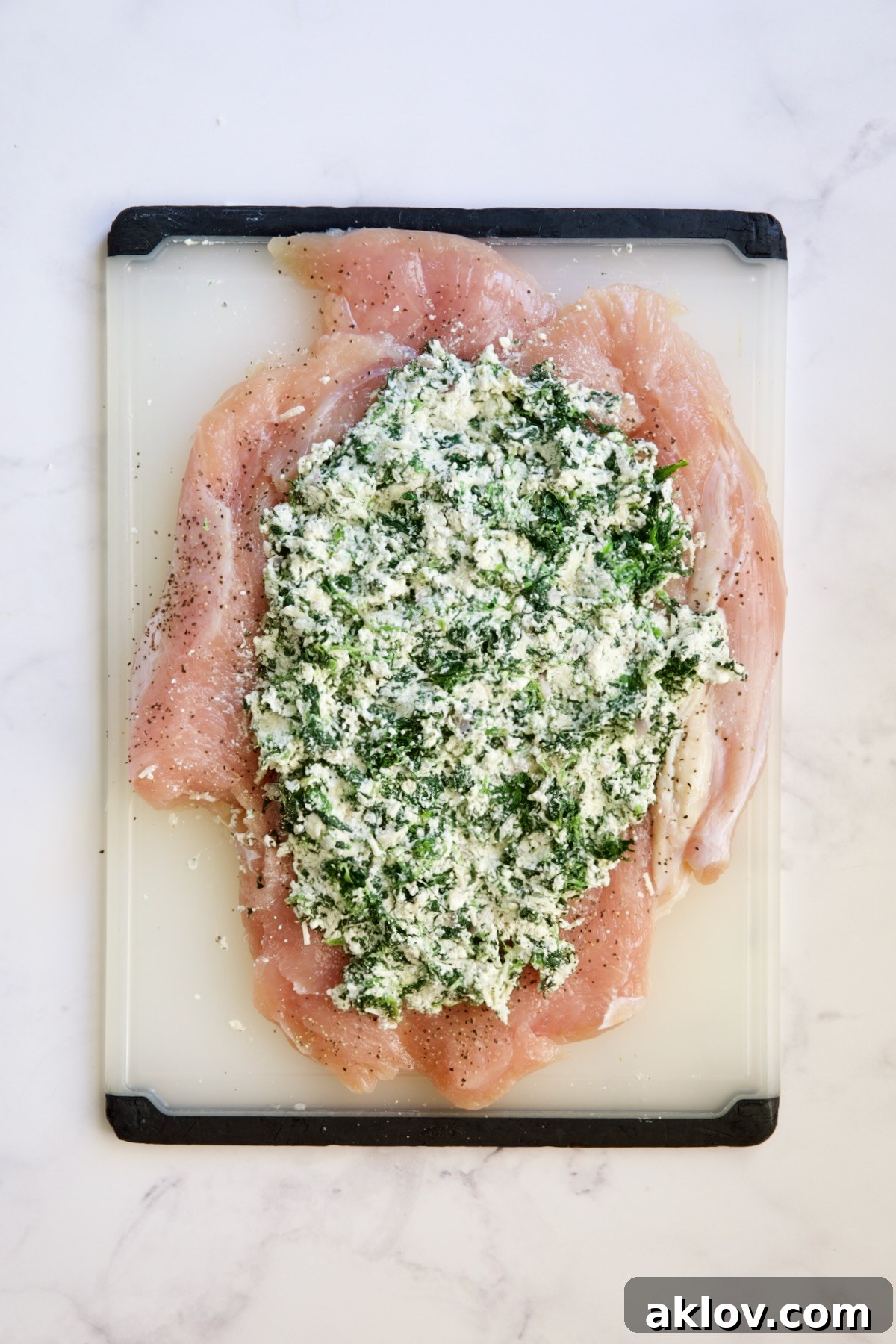
- Stuff and Roll the Turkey Breast: Spread the prepared spinach and ricotta filling evenly over the entire inside surface of the butterflied turkey breast, leaving a 1-inch border around the edges. This border helps contain the filling when you roll the meat. Carefully roll up the turkey breast from one of the long sides, creating a tight, uniform cylinder. If the turkey has skin, gently smooth it over the top of the rolled breast.
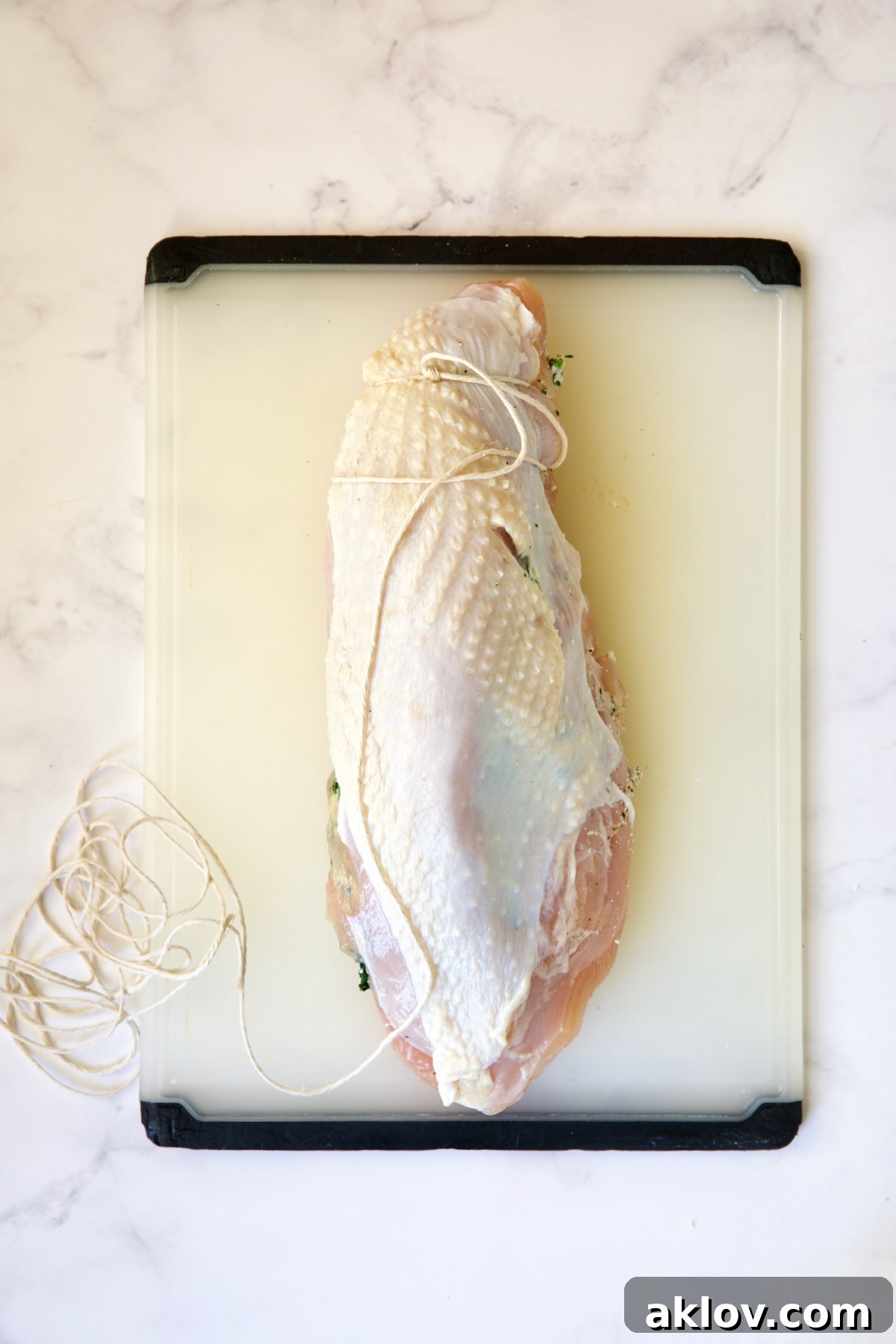
- Secure the Roll: To ensure the turkey maintains its shape and the filling stays intact during roasting, secure the roll with butcher’s twine. You can either make several individual ties along the length of the breast or use a continuous looping method, threading the twine through a loop to create a series of secure bindings. This not only keeps the shape but also helps with even cooking.
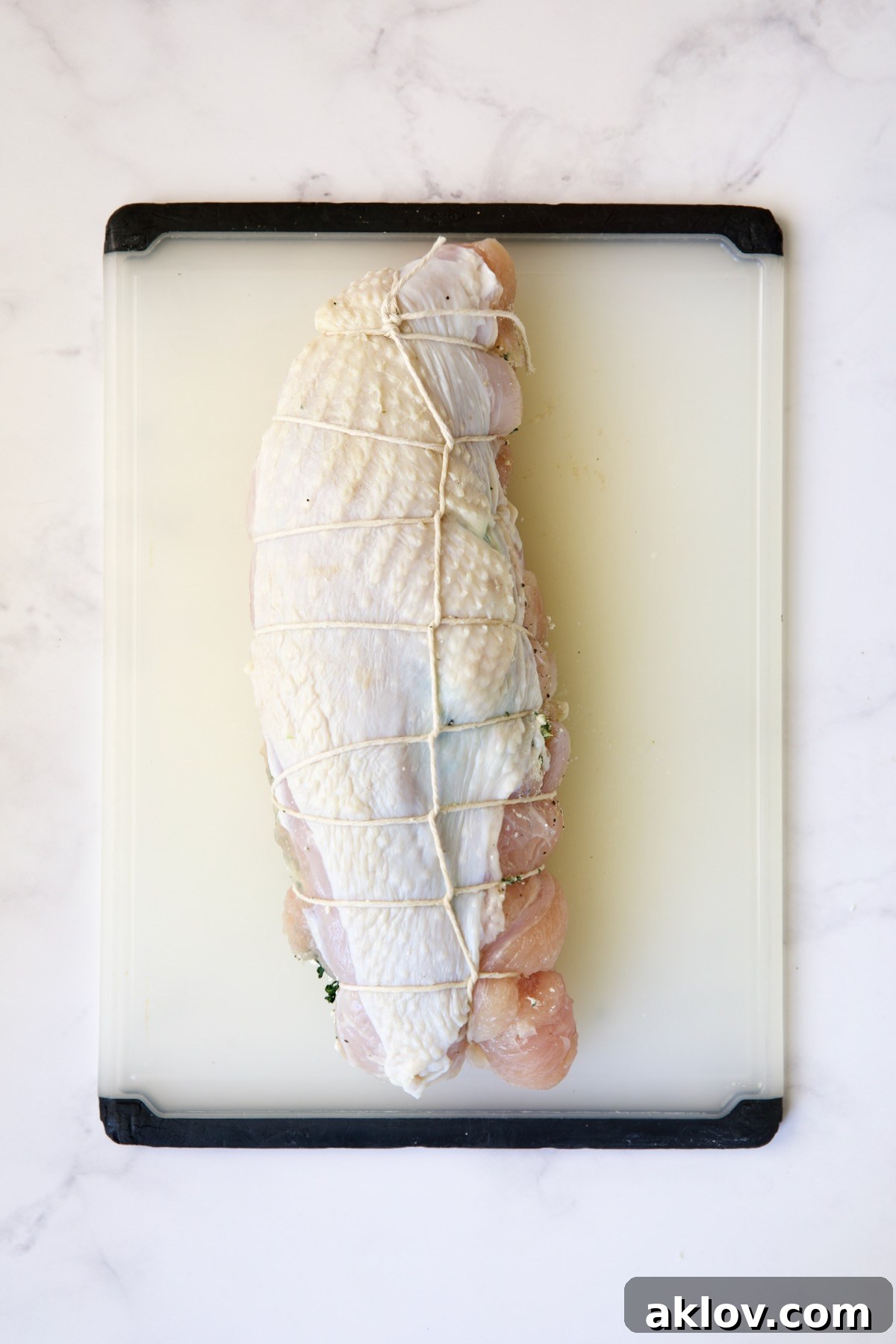
- Prepare for Roasting: Place the tied turkey breast in a sturdy roasting pan. Dot the top generously with butter, then drizzle with olive oil. This combination helps create a beautifully golden and crispy skin. Season the exterior once more with a pinch of salt and black pepper.
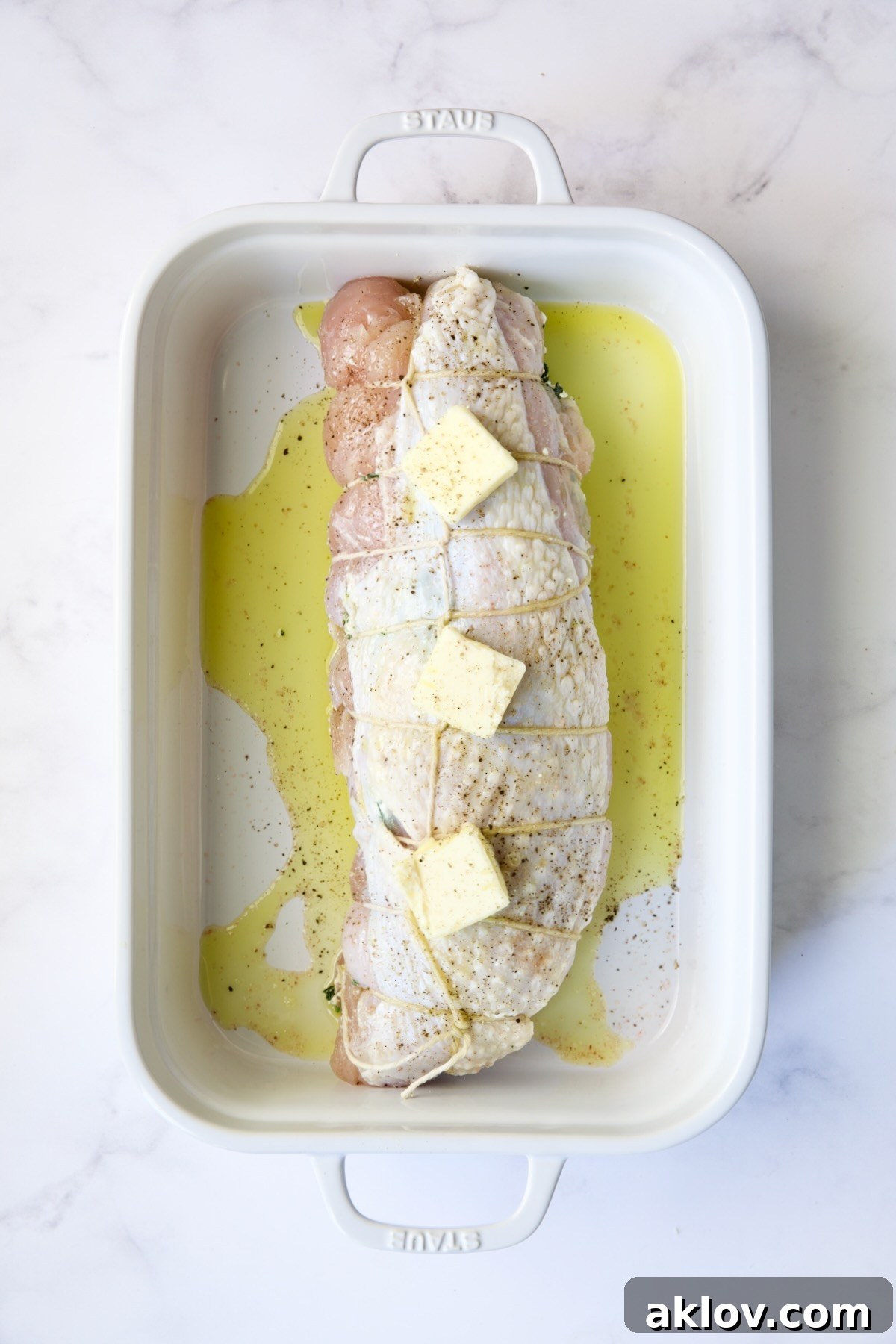
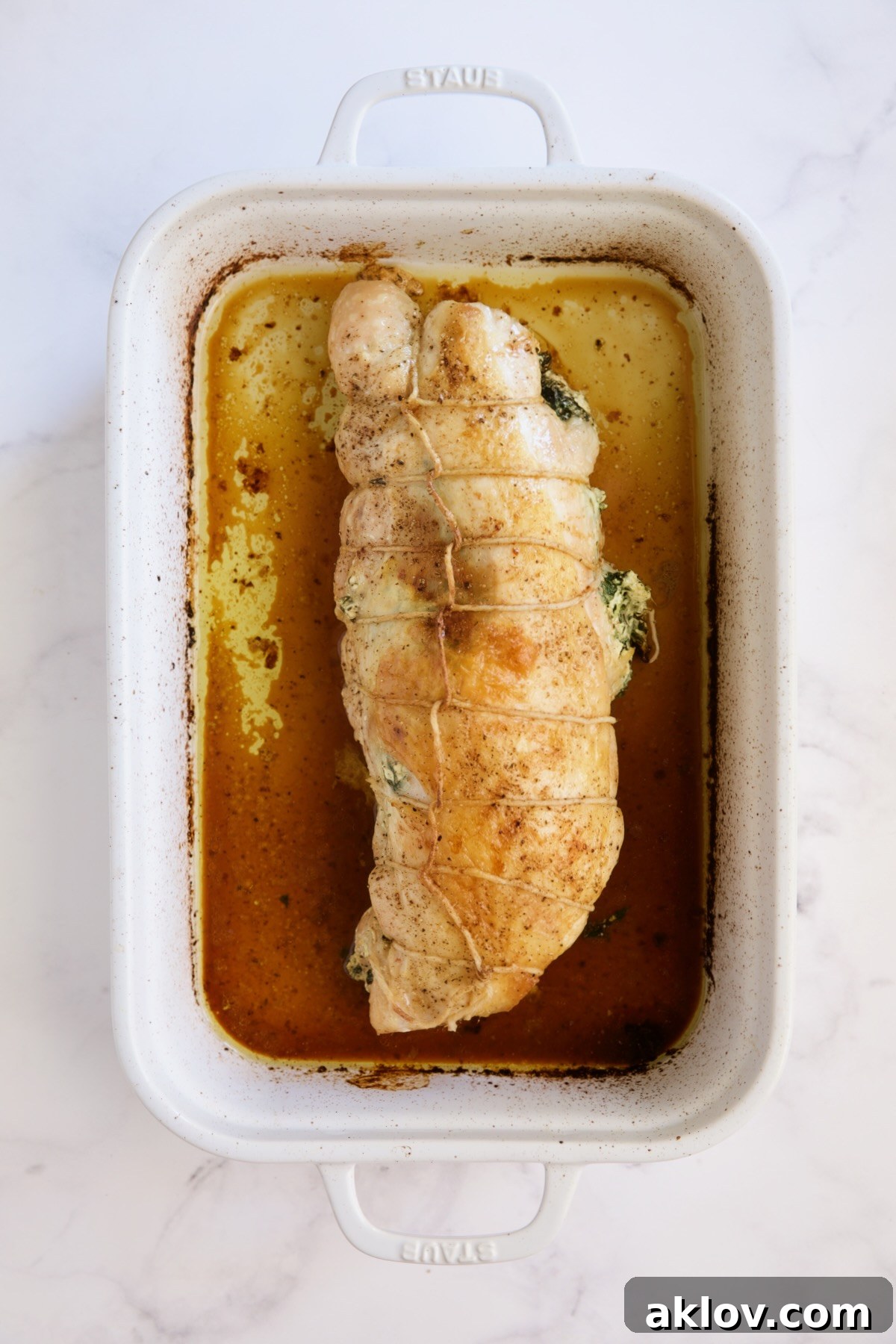
- Roast to Perfection: Bake the turkey breast in the preheated oven for 1 to 1 1/2 hours. Cooking time can vary depending on the size and thickness of your roll, so rely on an instant-read thermometer inserted into the thickest part of the turkey (avoiding the stuffing) to indicate doneness. You’re aiming for an internal temperature of at least 160 degrees Fahrenheit (71 degrees Celsius). Throughout the baking process, baste or brush the turkey breast at least twice with the flavorful pan drippings. This helps keep the skin moist and promotes beautiful browning.
- Rest and Slice: Once the turkey reaches 160 degrees Fahrenheit, remove it from the oven. Tent it loosely with aluminum foil and allow it to rest for 5-10 minutes. This resting period is crucial; it allows the juices to redistribute throughout the meat, resulting in a more tender and flavorful turkey. During this time, the internal temperature will continue to rise to the safe temperature of 165 degrees Fahrenheit (74 degrees Celsius) due to carryover cooking. After resting, carefully remove the butcher’s twine, slice the turkey breast into 1/2-inch thick rounds, and serve immediately with the freshly prepared Garlic Herb Sauce.
Whipping Up the Aromatic Garlic Herb Sauce
While your turkey breast is roasting and resting, you’ll have ample time to prepare this luxurious and flavorful sauce that perfectly complements the rich turkey.
- Start the Roux: In a saucepan, melt 4 tablespoons of unsalted butter over medium heat. Once the butter is melted and sizzling, add 4 tablespoons of all-purpose flour. Reduce the heat to medium-low and cook for 2 minutes, whisking constantly. This creates a roux, which will thicken your sauce and prevent lumps.
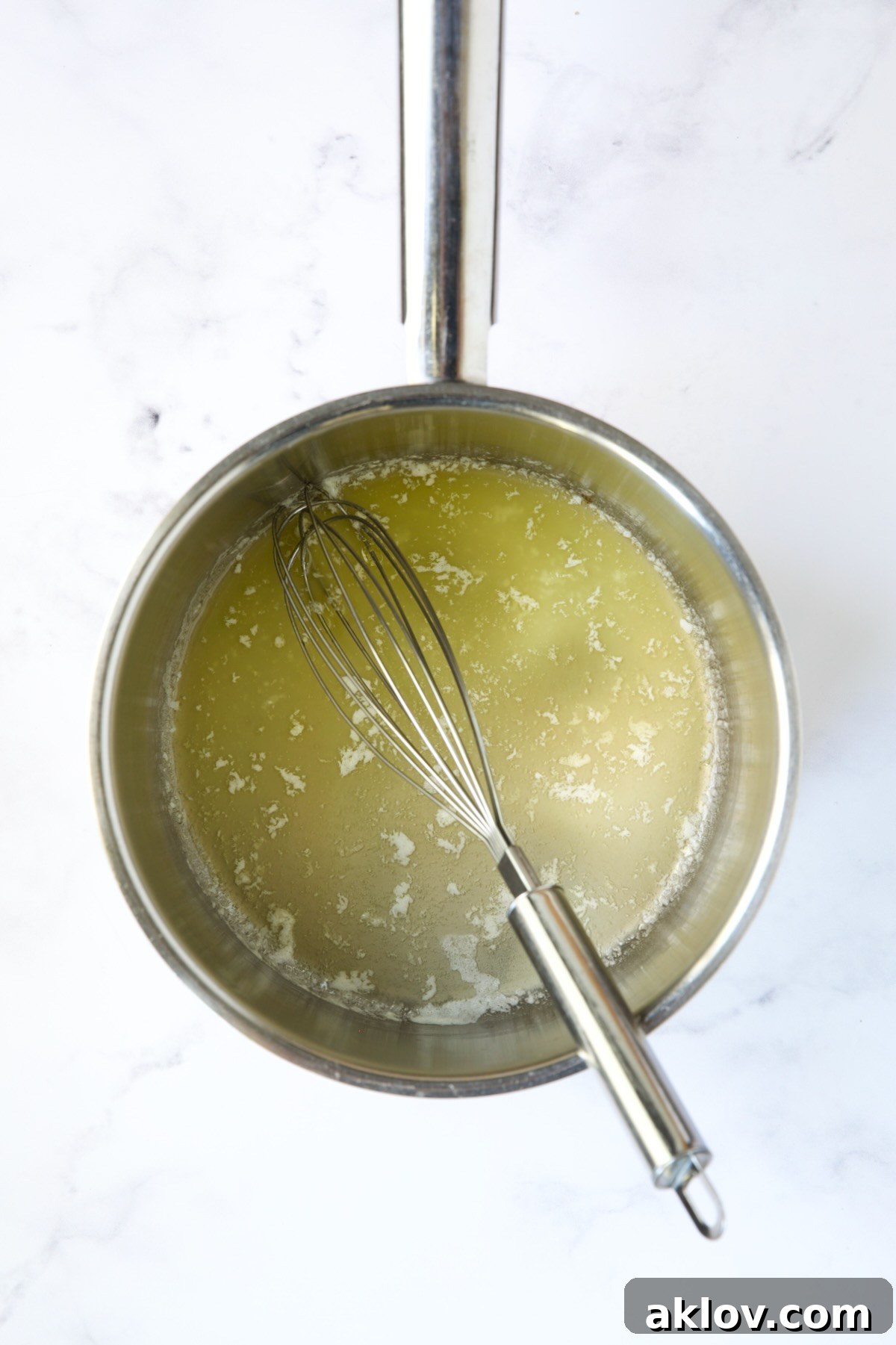
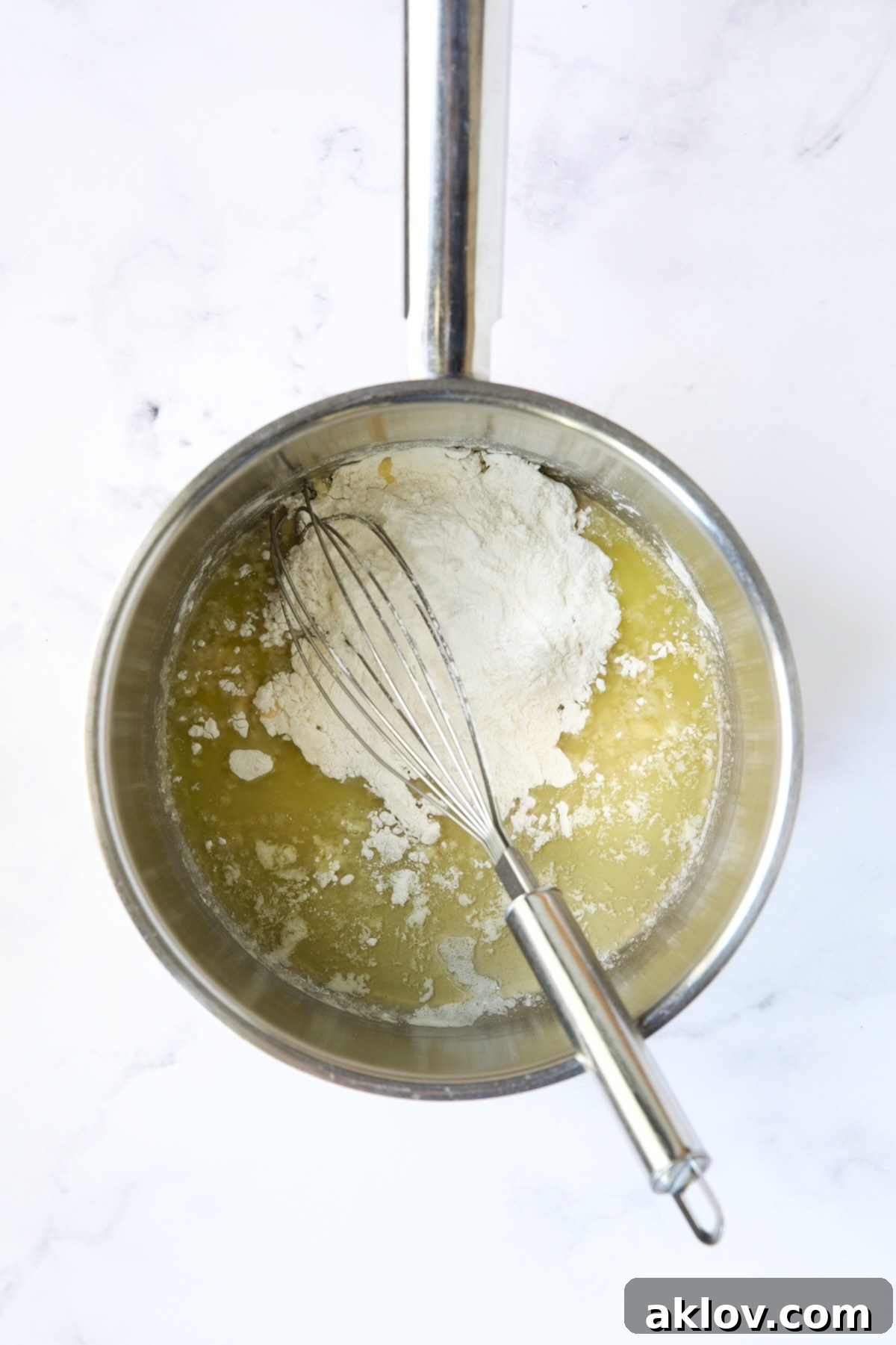
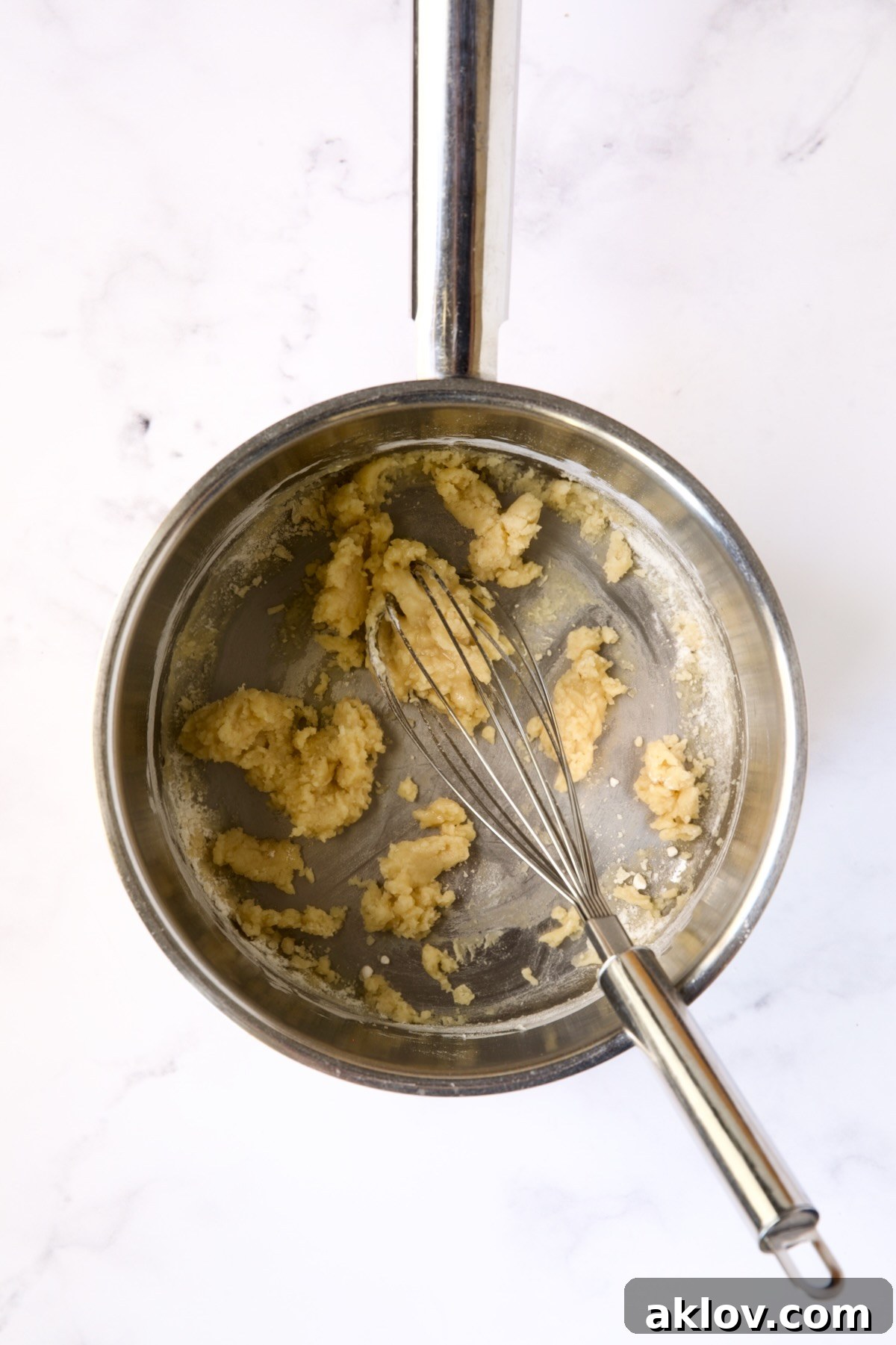
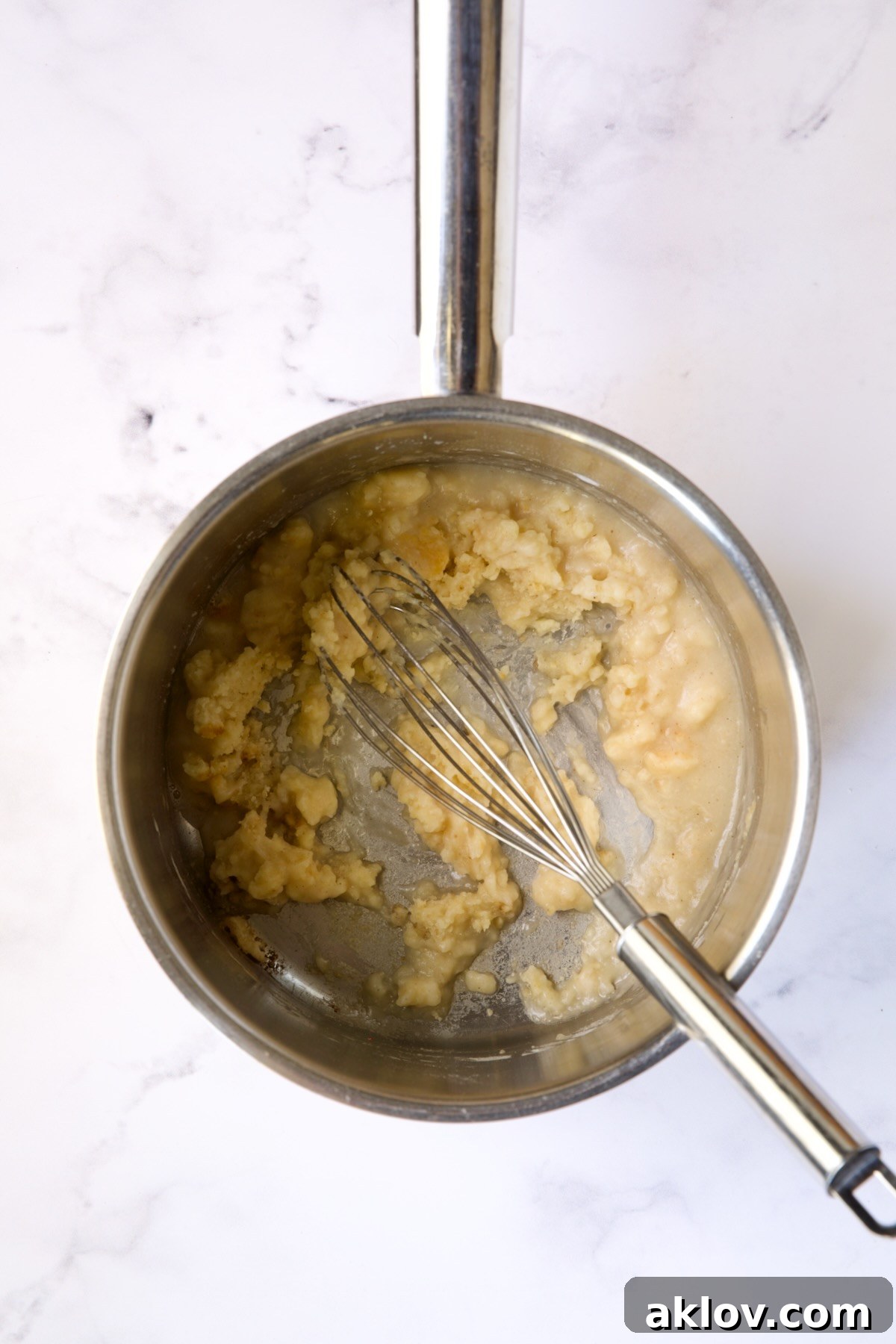
- Build the Liquid Base: Pour in 1/2 cup of dry white wine and continue whisking for 1 minute, allowing the alcohol to cook off. Gradually and slowly add 2 1/2 cups of chicken broth, whisking continuously to prevent lumps and ensure a smooth consistency. Stir in 1/4 cup of heavy cream for added richness.
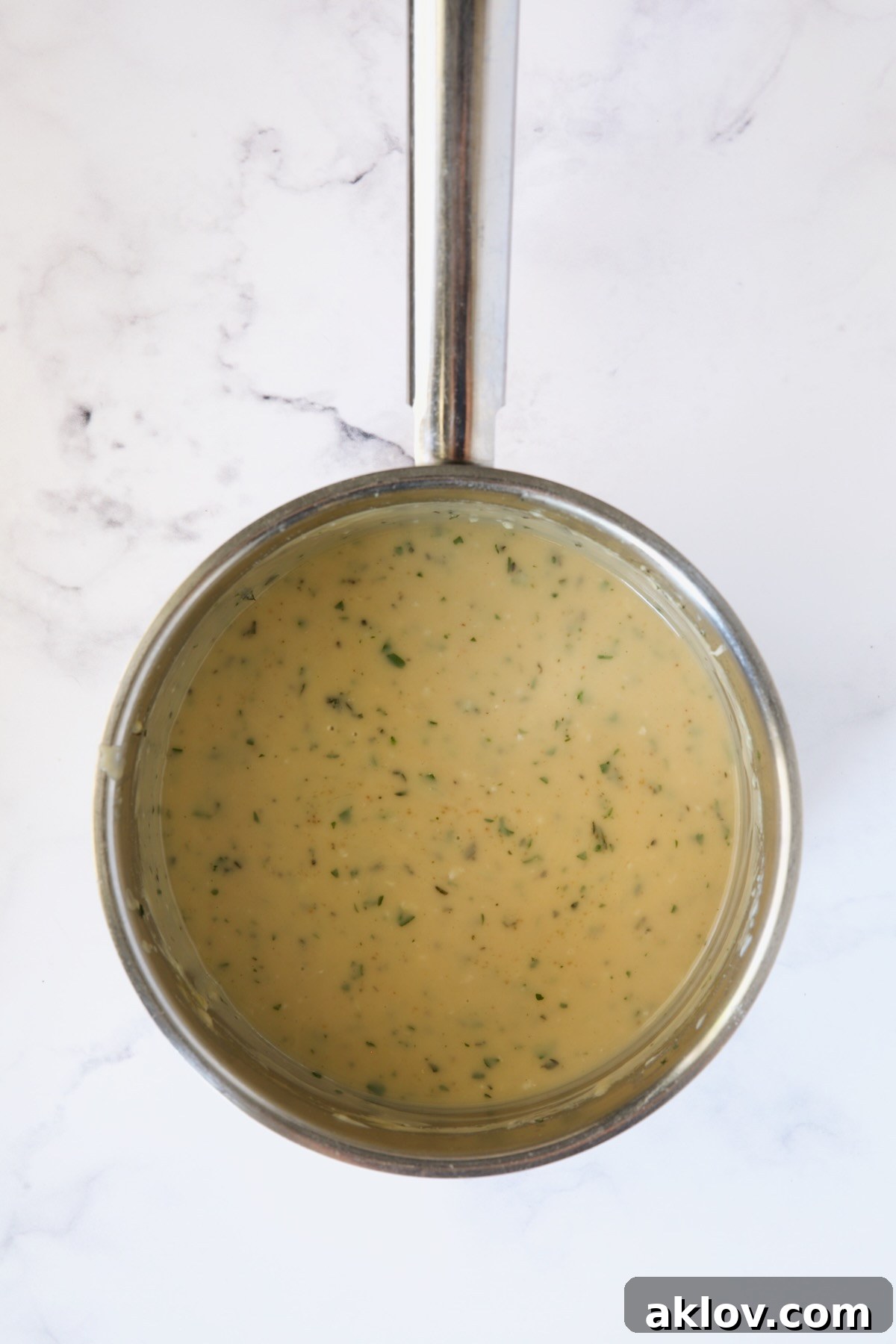
- Simmer and Thicken: Bring the sauce to a boil, then reduce the heat to low and let it simmer gently for 4 to 5 minutes, or until it has thickened to your desired consistency. The sauce should be smooth and luscious.
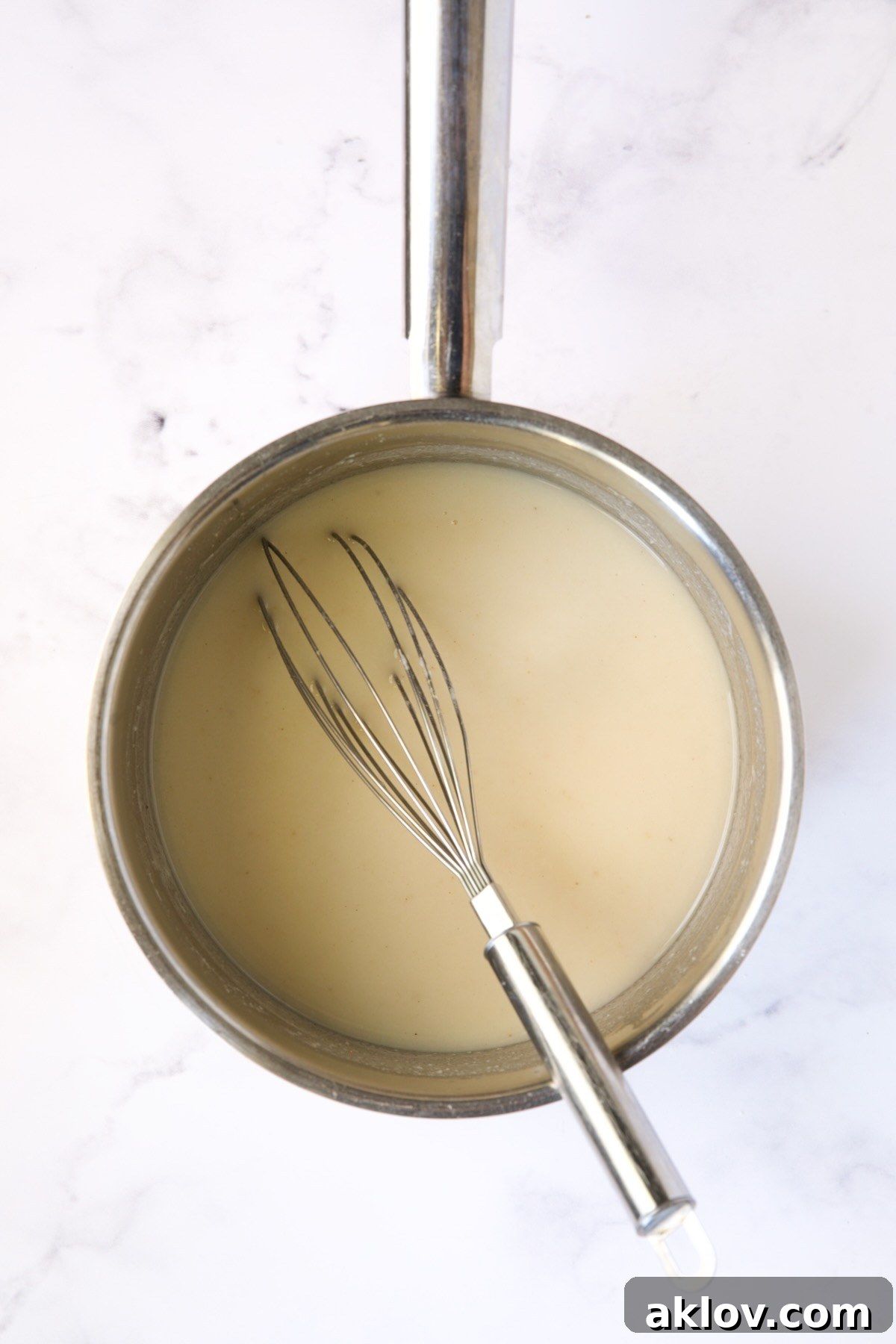
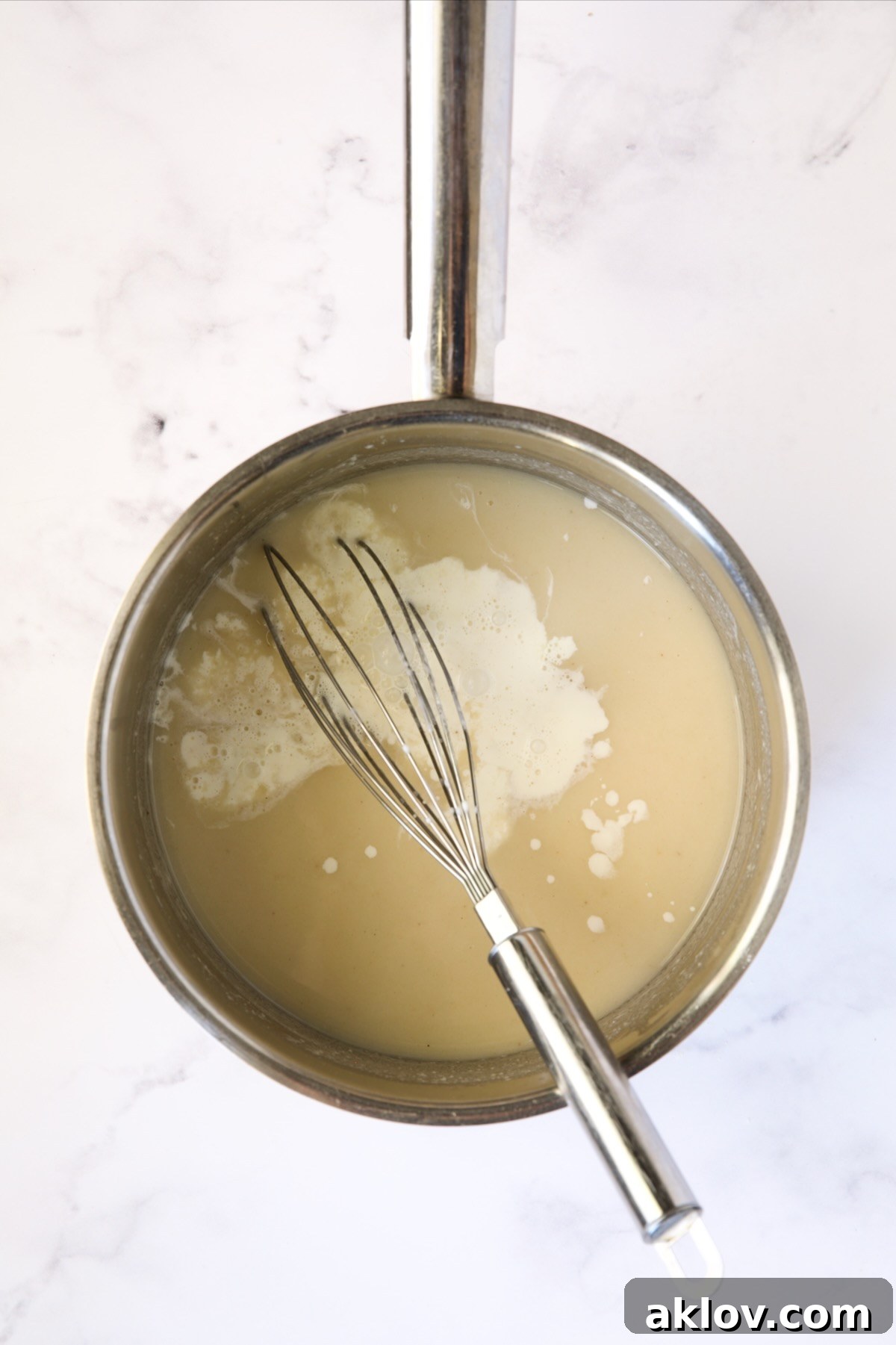
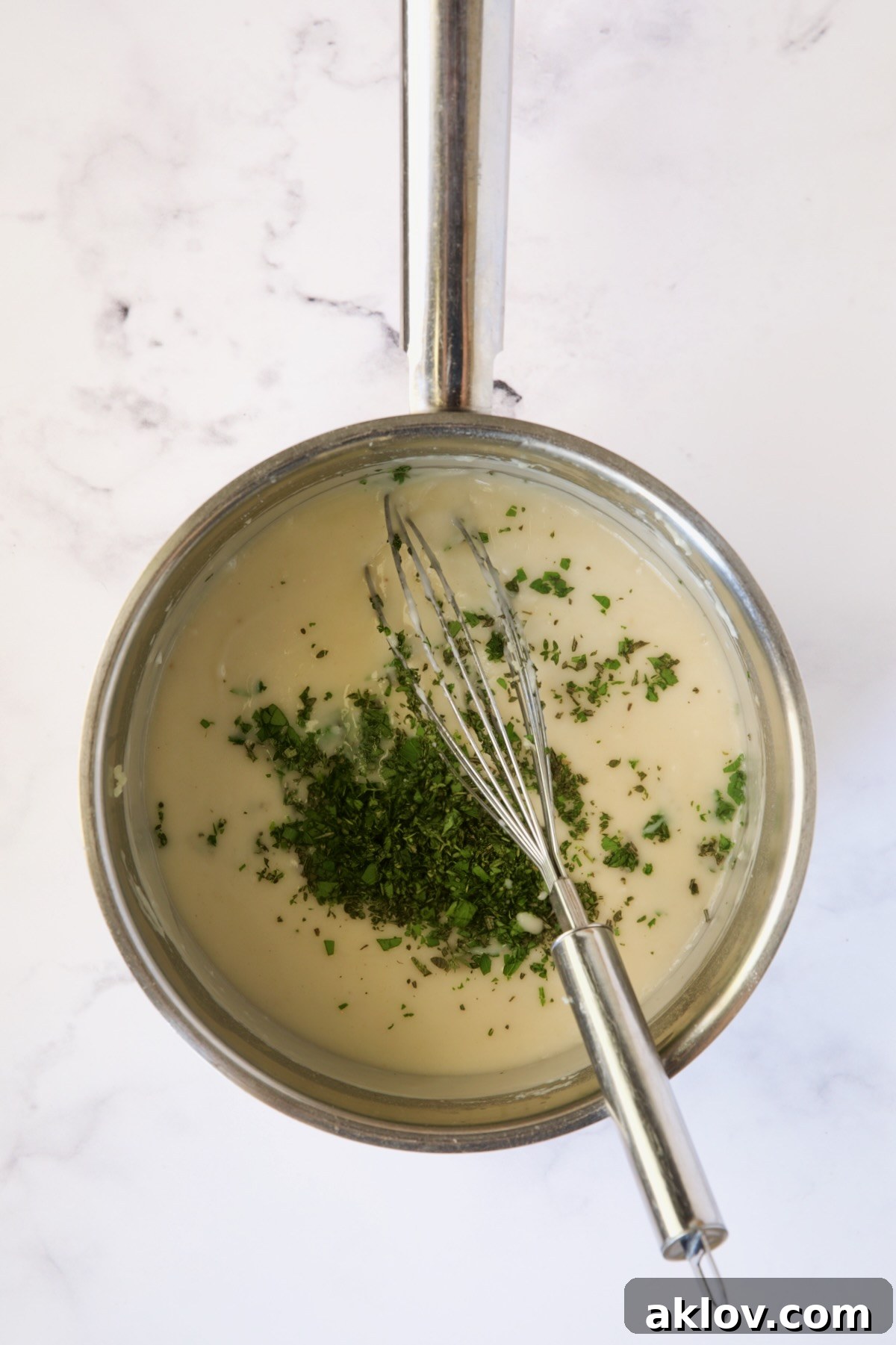
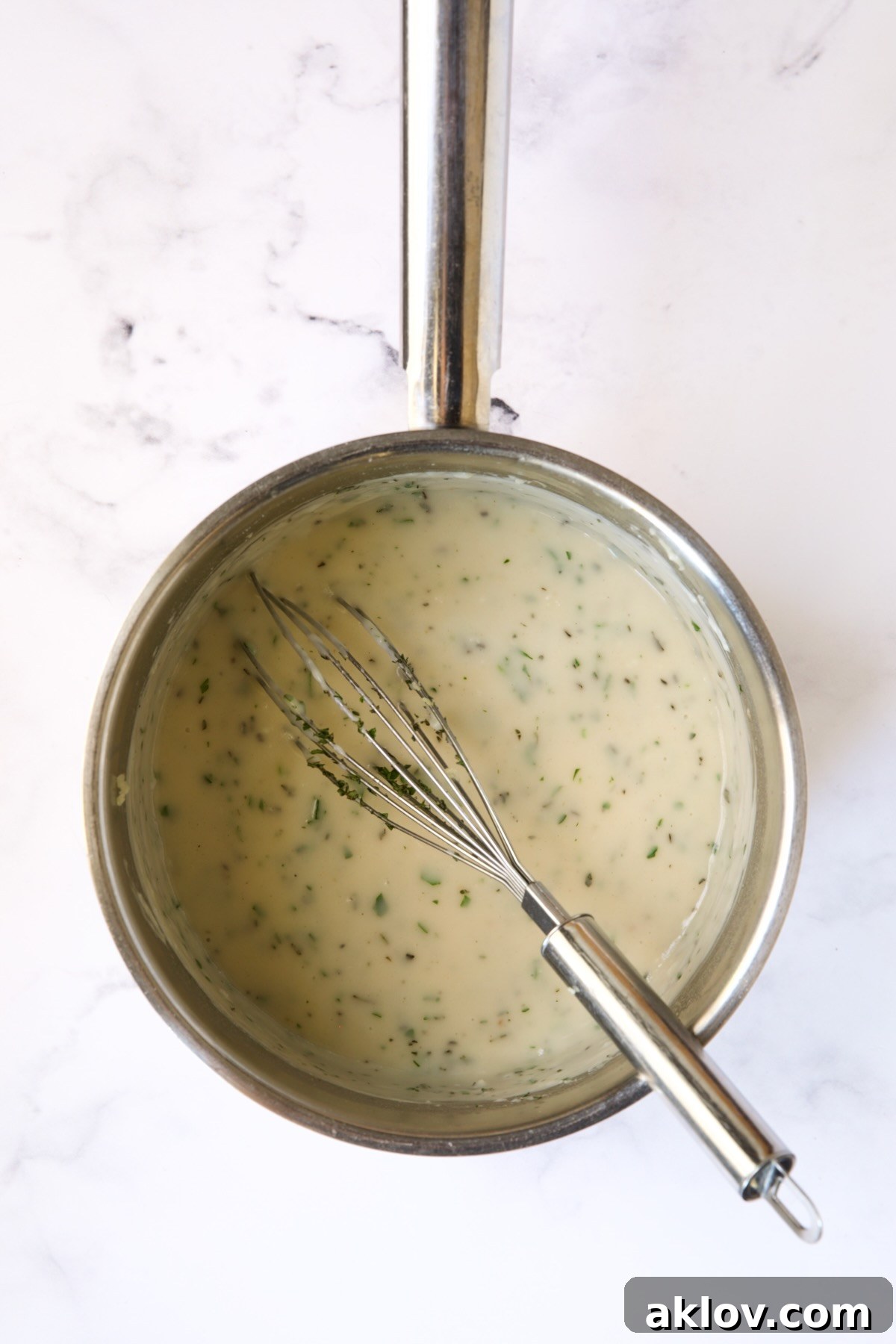
- Finish with Aromatics and Pan Drippings: Stir in the 3 cloves of minced garlic, 1 teaspoon of finely chopped fresh parsley, 1 teaspoon of finely chopped fresh rosemary, and 1 teaspoon of finely chopped fresh thyme. These fresh herbs add incredible depth and fragrance. Season the sauce to taste with salt and pepper. For an extra layer of savory flavor, scrape any pan drippings from the roasting turkey into the sauce and stir them in.
- Serve: Once the turkey has rested and is sliced, generously spoon the warm Garlic Herb Sauce over each serving. Enjoy this elegant and flavorful meal!
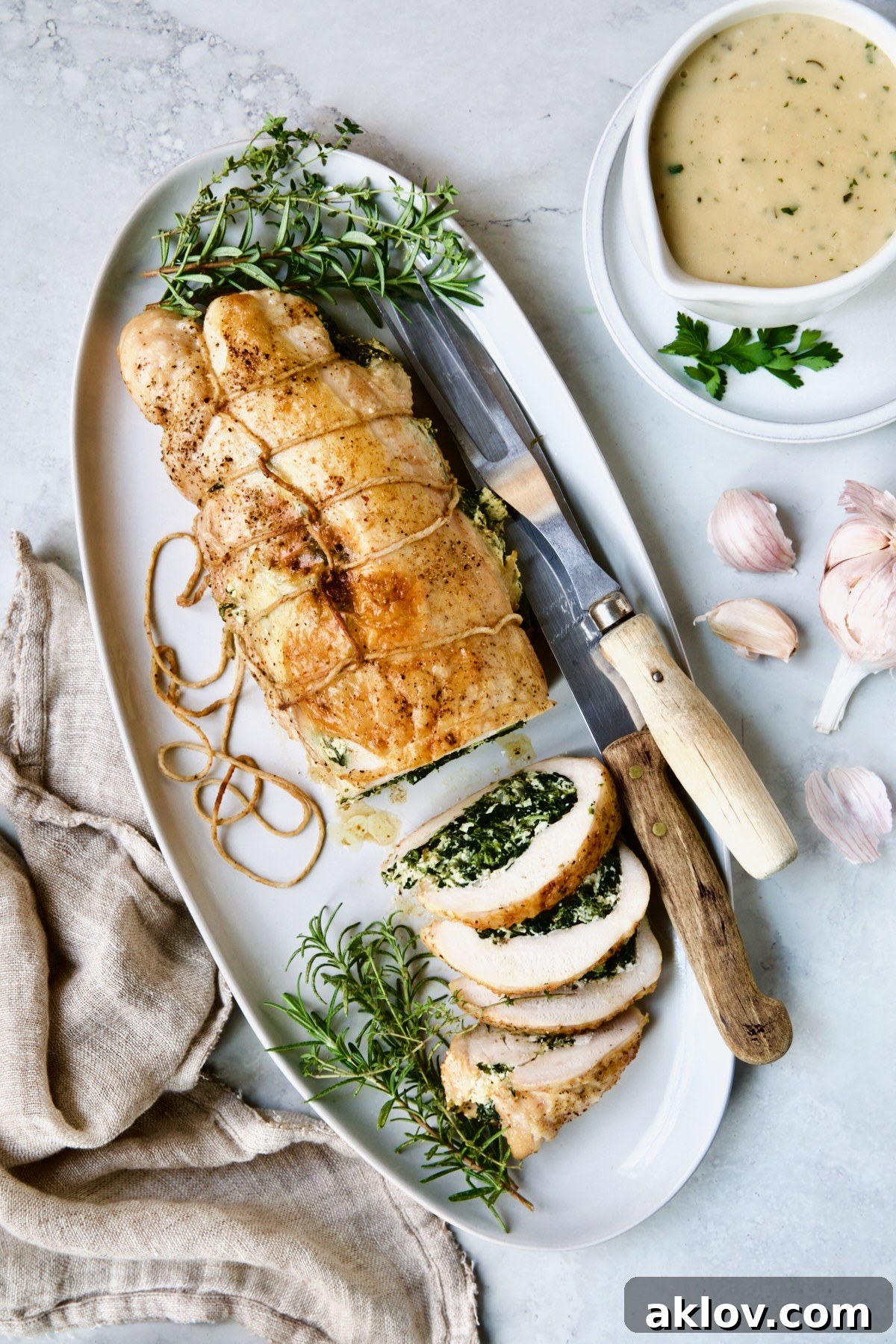
Pro Tips for a Perfect Roast Turkey
Achieving a perfectly cooked, moist, and flavorful stuffed turkey breast requires a few expert techniques. Here are some chef-approved tips to elevate your culinary results:
- Roast Low and Slow for Moisture: While roasting at a higher temperature might give you a slightly faster crisping of the skin, I find that roasting a stuffed turkey breast at a slightly lower temperature (350 degrees Fahrenheit / 175 degrees Celsius) and for a longer duration is key to maintaining maximum moisture. This gentle heat allows the turkey to cook through without drying out the delicate white meat.
- Baste Regularly for Flavor and Color: Don’t underestimate the power of basting! Brushing the turkey breast at least twice during baking with the pan drippings not only keeps the skin from becoming too dry but also infuses the surface with continuous flavor and helps it achieve a beautiful golden-brown color.
- Never Waste Pan Drippings: Those flavorful liquids at the bottom of your roasting pan are pure gold! Once the turkey is removed, be sure to scrape up all the delicious pan drippings and stir them into your Garlic Herb Sauce. They will add an incredible depth of savory flavor that cannot be replicated.
- The Essential Resting Period: This is arguably one of the most crucial steps for any roasted protein. Allowing the turkey breast to rest, loosely tented with foil, for 5 to 10 minutes after removing it from the oven allows the muscle fibers to relax. This enables the juices, which have migrated to the center during cooking, to redistribute throughout the entire piece of meat. The result is a significantly juicier, more tender, and more flavorful slice of turkey. Slicing too early will cause those precious juices to run out onto your cutting board, leaving you with drier meat.
- Ensure Proper Brining: When brining, always check the label of your turkey breast. Many commercially sold turkeys are already injected with a saline solution. If this is the case, brining further could make the meat too salty. Look for “all-natural” or “unprocessed” turkey for best brining results.
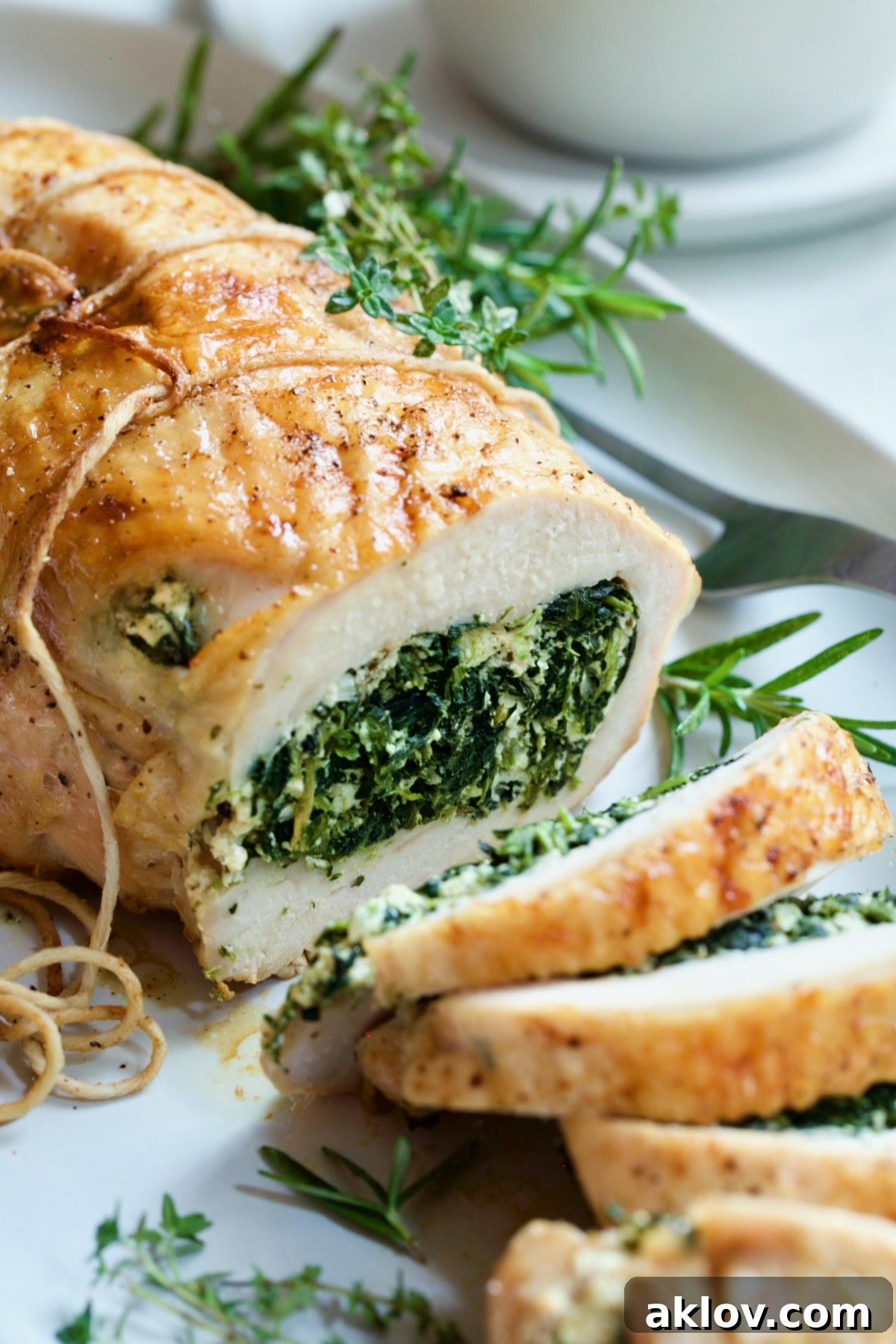
Frequently Asked Questions About Stuffed Turkey
Brining is a culinary technique that significantly enhances the juiciness and flavor of lean proteins like turkey breast, which can otherwise be prone to drying out. The process involves submerging the meat in a solution of water, salt, and often sugar and aromatics. During brining, the muscle fibers absorb liquid through osmosis, causing them to swell and become more tender. This also allows the seasoning to penetrate deeper into the meat. As a result, the turkey starts off juicier and remains juicier throughout the cooking process, provided it’s not overcooked. It’s crucial to use an “all-natural” turkey that hasn’t been pre-injected with a saline solution, as double-brining can lead to overly salty meat. The precise ratio of salt, sugar, and water, along with brining time, can vary based on the weight of the meat.
The universally accepted safe internal temperature for all poultry, including turkey, is 165 degrees Fahrenheit (74 degrees Celsius). However, when cooking larger pieces of protein, it’s important to account for “carryover cooking.” This phenomenon means that the internal temperature of the meat will continue to rise even after it’s removed from the heat source. For a stuffed turkey breast, I highly recommend removing it from the oven when an instant-read thermometer registers at least 160 degrees Fahrenheit (71 degrees Celsius) in the thickest part (avoiding the stuffing). The residual heat will continue to cook it, bringing it up to the safe 165 degrees Fahrenheit during the resting period. To be considered safely cooked, the turkey breast should maintain a temperature of 165 degrees Fahrenheit for at least 15 seconds.
The cooking time for a turkey breast roll or roulade largely depends on its size, thickness, and whether it’s stuffed. For a 2 to 2 1/2-pound stuffed turkey breast, roasted in a 350-degree Fahrenheit (175 degrees Celsius) oven, you can expect it to take approximately 1 to 1 1/2 hours. Always use an instant-read thermometer to check for doneness, inserting it into the thickest part of the meat, being careful to avoid the stuffing. Remember to remove the turkey from the oven when it reaches at least 160 degrees Fahrenheit (71 degrees Celsius) and allow it to rest. Carryover cooking will then bring it to the safe internal temperature of 165 degrees Fahrenheit (74 degrees Celsius).
For those seeking a different yet equally delicious stuffing experience, consider stuffing your roast turkey breast with my savory Sausage Stuffing with Fennel and Leeks, offering a robust flavor alternative.
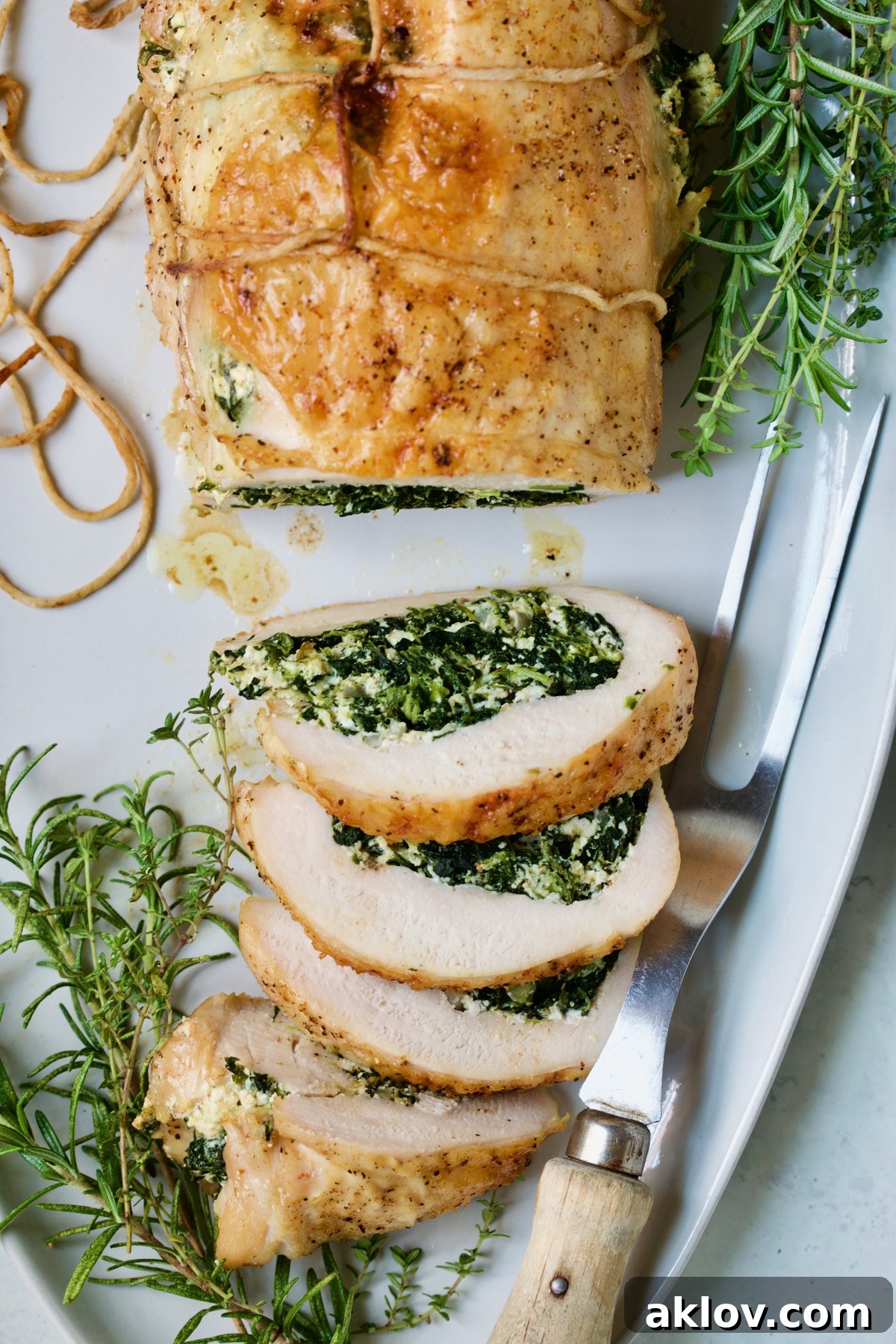
Storage Solutions for Leftovers & Make-Ahead Convenience
This Spinach and Ricotta Stuffed Turkey Breast is not only delicious freshly made but also excellent for enjoying as leftovers or preparing in advance. Proper storage ensures its quality and safety.
- Refrigerator Storage: Store any leftover cooked turkey breast in an airtight container in the refrigerator. For the best taste and quality, consume leftovers within 4 to 5 days.
- Freezing Cooked or Uncooked: Both cooked and uncooked stuffed turkey breasts can be frozen. To freeze, wrap the breast securely in plastic wrap, then an additional layer of aluminum foil, or place it in a freezer-safe bag to prevent freezer burn. It can be stored in the freezer for 1 to 2 months.
- Thawing Frozen Turkey: Always thaw frozen turkey breast in the refrigerator overnight or for a full 24-48 hours, depending on its size. Never thaw at room temperature.
- Freezing Cooked Slices: If you’re freezing cooked, sliced turkey breast, layer the slices in airtight freezer containers and drizzle them with some of the Garlic Herb Sauce. This helps to keep the meat moist and flavorful upon reheating.
Creative Serving Suggestions for Your Stuffed Turkey Breast
This versatile stuffed turkey breast pairs beautifully with a wide array of side dishes, from hearty potato preparations to vibrant vegetable options. Here are some of my favorite recommendations to complete your meal:
- Spinach Parmesan Ranch Twice Baked Potatoes with Parmesan Crumb Topping: A rich and comforting potato dish that adds a creamy texture.
- Sweet Potato Souffle: A slightly sweet and incredibly fluffy side that balances the savory turkey.
- Brussels Sprouts Gratin: A decadent gratin featuring earthy Brussels sprouts, rich Brie, and crispy bacon.
- Cauliflower White Bean Puree: A light and velvety alternative to mashed potatoes, offering subtle flavor.
- Parmesan Crusted Crushed Turnips: A unique and flavorful root vegetable side with a crispy Parmesan crust.
- Baked Cabbage Wedges: Simple yet elegant, these roasted cabbage wedges offer a tender and slightly sweet counterpoint.
- Roasted Cauliflower Steaks with Mustard Caper Brown Butter: A sophisticated vegetable side with bright, tangy notes.
- Roasted Brussels Sprouts with Brown Butter and Almonds: A classic combination that brings nutty depth and texture.
- Or explore any one of these 30 Best Thanksgiving Sides for more inspiration!
Exciting Recipe Variations to Explore
While the classic Spinach and Ricotta Stuffed Turkey Breast is undeniably delicious, don’t hesitate to experiment with these creative variations to customize the flavors to your liking:
- Add Feta for a Greek Twist: Incorporate crumbled feta cheese into the ricotta and spinach filling. The tangy, salty notes of feta will add a wonderful Mediterranean flair, creating a brighter, more assertive flavor profile.
- Experiment with Other Greens: Instead of spinach, consider using other hearty greens like finely chopped kale or Swiss chard in the filling. Just remember to cook and thoroughly drain them to remove excess moisture before mixing with the cheese.
- Introduce Artichoke Hearts: For an extra layer of savory flavor and texture, chop up some canned or jarred artichoke hearts (well-drained and patted dry) and mix them into the filling. They pair beautifully with spinach and cheese.
- Spice It Up: If you enjoy a bit of heat, add a pinch of red pepper flakes to the filling or the garlic herb sauce.
- Herb Variations: While the garlic herb sauce features a classic blend, feel free to adjust the herbs based on your preference. Fresh sage, marjoram, or even a touch of tarragon could offer interesting new dimensions.
More Delicious Turkey Creations You’ll Love!
If you’ve enjoyed this stuffed turkey breast, you might be looking for more ways to incorporate lean, flavorful turkey into your meal rotation. Explore these other fantastic turkey recipes from my kitchen:
- Roast Turkey Breast with Traditional Stuffing: A timeless classic that brings all the comforting flavors of a holiday meal.
- Moroccan Turkey Breast and Lentils (Slow Cooker Recipe): An exotic and hearty slow cooker dish packed with warming spices.
- Pecan-Crusted Turkey Cutlets with Red Onion Marmalade: A sophisticated and flavorful meal, perfect for a special weeknight dinner.
- Turkey Scallopini in Sherry Cream Sauce with Mushrooms and Artichokes: A rich and elegant dish with tender turkey and a creamy sauce.
Discover even more inspiring ideas for entertaining and holidays at: Holiday Ideas – From A Chef’s Kitchen
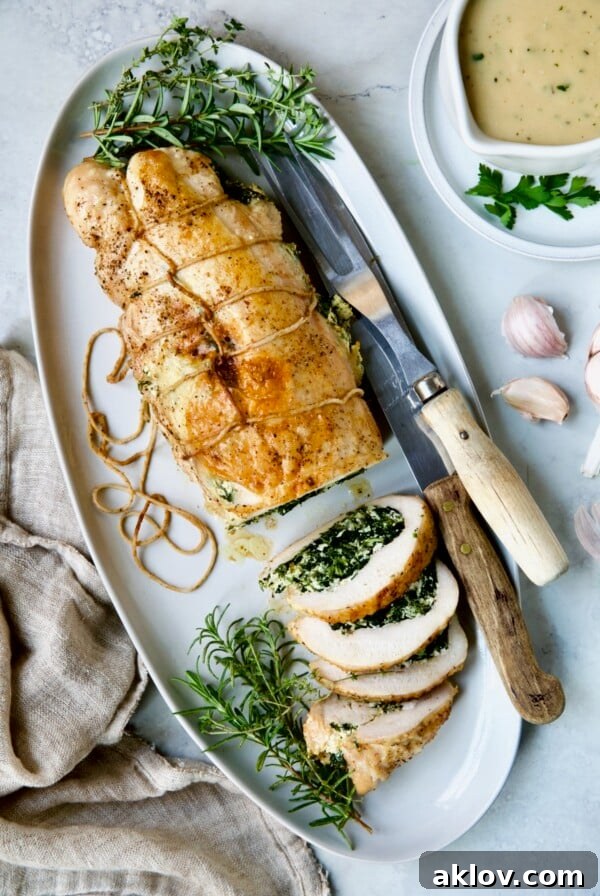
Spinach and Ricotta Stuffed Turkey Breast with Garlic Herb Sauce
Carol | From A Chef’s Kitchen
Spinach and Ricotta Stuffed Turkey Breast with Garlic Herb Sauce is perfect for a small-scale holiday or a nice family dinner any day of the year. Best of all, it’s easy and totally make-ahead!
6 hrs 30 mins
1 hr 30 mins
8 hrs
4
Equipment
-
Stainless Steel Mixing Bowls
-
Wusthof Boning Knife
-
Butcher’s Twine
-
Roasting Pan with Rack
-
Saucepan
Ingredients
Turkey Breast
- 6 cups hot tap water
- 1/2 cup sugar
- 1/2 cup kosher salt
- 1 (2 to 2 1/2 pound) boneless turkey breast half, with the skin if desired, butterflied
- 1 small shallot, finely chopped
- 1 cup ricotta cheese, whole milk or part-skim
- 1/2 cup freshly grated Parmesan cheese
- 1 bag (12-ounce) frozen chopped spinach, thawed and squeezed of excess moisture
- 2 teaspoons Italian seasoning
- Salt and freshly ground black pepper, to taste
- 3 tablespoons butter
- 3 tablespoons olive oil
Garlic Herb Sauce
- 4 tablespoons unsalted butter
- 4 tablespoons all-purpose flour
- 1/2 cup dry white wine
- 2 1/2 cups chicken broth, or as needed
- 1/4 cup heavy cream
- 3 cloves garlic, minced
- 1 teaspoon finely chopped fresh parsley
- 1 teaspoon finely chopped fresh rosemary
- 1 teaspoon finely chopped fresh thyme
- Salt and freshly ground black pepper, to taste
Instructions
Turkey
- Butterfly the turkey breast. Start on the thick rounded side and make a horizontal cut through the middle to within one inch of the other side. Try not to create any holes.
- Brine the turkey breast. Combine hot tap water, sugar and kosher salt in a large bowl. Mix well and wait for the water to clear and the sugar and salt to dissolve. Place turkey breast in the brine and refrigerate for 4-6 hours.
- Preheat oven to 350 degrees Fahrenheit (175 degrees Celsius).
- Remove turkey from the brine, pat dry and spread out flat. Gently pound it out to flatten it some more. Season with salt and black pepper.
- Combine shallot, ricotta, Parmesan, spinach, Italian seasoning, salt and black pepper to taste in a small bowl.
- Spread stuffing ingredients over the inside of turkey breast to within 1-inch of the edge.
- Roll up to enclose the filling. Smooth the skin over the top of the breast. Secure with butcher’s twine.
- Place the turkey breast in a roasting pan. Dot the top with butter and drizzle with olive oil. Season with salt and black pepper.
- Bake for 1 to 1 1/2 hours or until an instant-read thermometer registers at least 160 degrees Fahrenheit (71 degrees Celsius) in the center. Baste or brush the turkey breast at least twice with the pan drippings while it’s baking.
- Tent and let rest 5-10 minutes. Slice into 1/2-inch slices and serve with sauce.
Garlic Herb Sauce
- Melt the butter over medium heat. Add flour, reduce heat to medium-low and cook for 2 minutes, whisking constantly.
- Add wine and continue whisking 1 minute.
- Slowly add the chicken broth, cream and garlic. Bring to a boil, reduce heat to low and simmer for 4 to 5 minutes or until thickened.
- Add the herbs. Season to taste with salt and pepper. Add any pan drippings from roasting the turkey to the sauce.
- Serve sauce with turkey breast.
Notes
SUBSTITUTIONS AND VARIATIONS:
- Add feta cheese for a Greek twist!
- Use other greens such as kale in place of the spinach.
- Add artichokes to the filling.
TIPS:
- Although roasting at a higher temperature will help brown the skin better, roasting a little lower and slower at 350 degrees Fahrenheit (175 degrees Celsius) helps keep the meat moist.
- Baste the turkey breast twice while baking with the drippings.
- Don’t waste those pan drippings! Pour them into the sauce for more flavor!
- It’s best to allow proteins to rest for 5 to 10 minutes before slicing. When the protein rests, juices redistribute and get absorbed back into the meat fibers.
MAKE AHEAD:
- Turkey can be brined and assembled 1 day ahead of time. Refrigerate until needed then bake as directed.
FREEZER-FRIENDLY:
- Cooked or uncooked stuffed turkey breasts can be frozen. Wrap securely and freeze for 1 to 2 months.
- Thaw in the refrigerator. If freezing cooked slices, place them in airtight freezer containers and drizzle with some of the Garlic Herb Sauce to keep the meat moist.
Nutrition
Calories: 575kcal
Carbohydrates: 38g
Protein: 15g
Fat: 39g
Saturated Fat: 19g
Polyunsaturated Fat: 2g
Monounsaturated Fat: 15g
Trans Fat: 0.5g
Cholesterol: 91mg
Sodium: 15071mg
Potassium: 216mg
Fiber: 1g
Sugar: 28g
Vitamin A: 1035IU
Vitamin C: 2mg
Calcium: 356mg
Iron: 2mg
Nutritional values are automatically calculated using unbranded products and are estimates only. Actual results may vary based on ingredients used and portion sizes. Adjust as needed for dietary restrictions, allergies, or health concerns.
 Like this? Leave a comment below!