
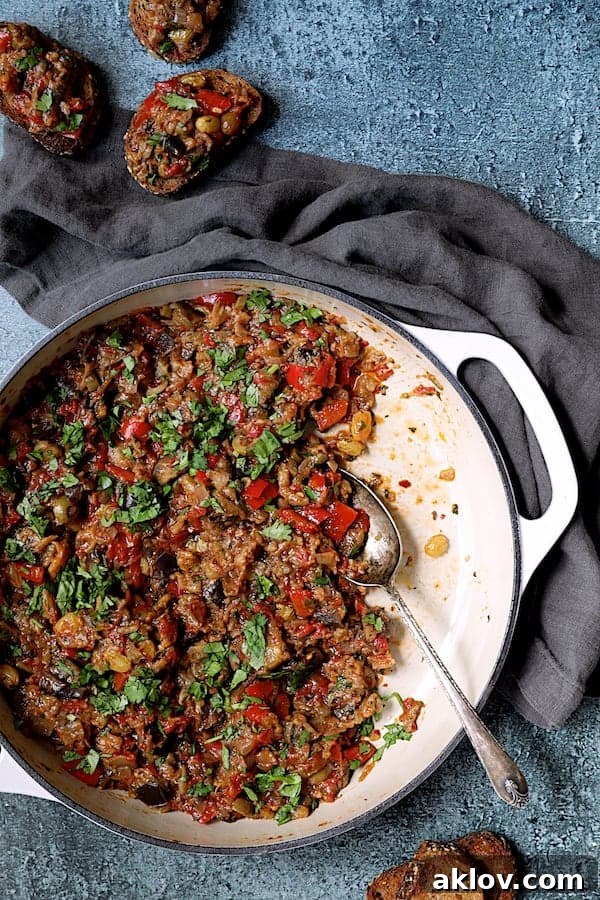
Journey with us to the sun-drenched landscapes of Morocco as we reimagine a timeless Sicilian classic. This Moroccan-Spiced Caponata takes the beloved late-summer vegetable medley and infuses it with an exotic, comforting warmth, offering a truly unique twist on the traditional sweet-and-sour staple. It’s a vibrant, flavorful dish perfect for sharing or savoring on your own. For those who adore versatile eggplant appetizers, be sure to explore my Eggplant Caviar, another delightful way to enjoy this incredible vegetable.
“This was outstanding! Such a great way to use what’s ready to be picked in the garden. … Will definitely make again!”
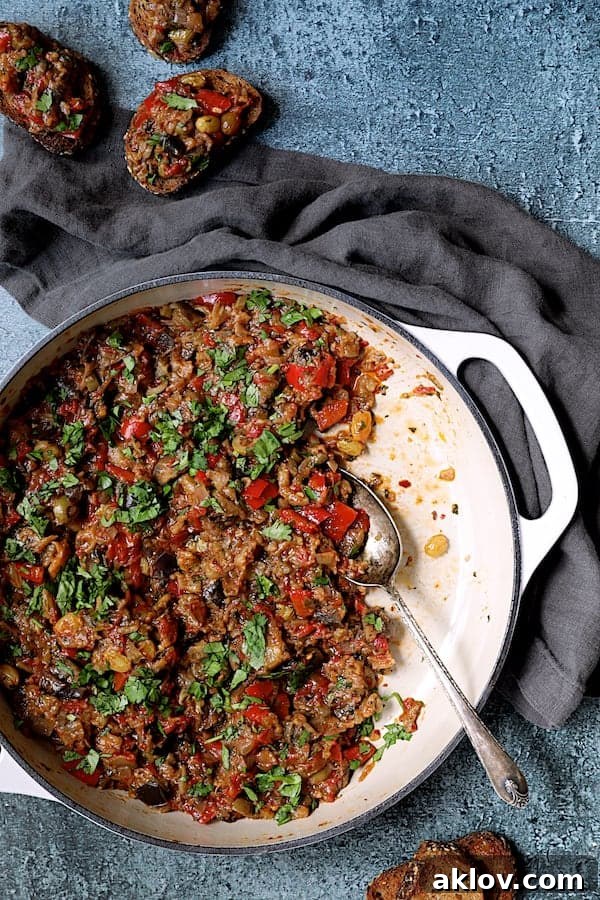
Prepare to be delighted by a caponata recipe that transcends expectations. While retaining the heart of its Sicilian origins, this version introduces a captivating blend of North African spices that elevates it to an entirely new level. Before we dive into the flavorful details, let’s establish a foundational understanding of what caponata truly is.
What is Caponata? A Sicilian Delicacy Reimagined
At its core, caponata is a traditional Sicilian vegetable dish renowned for its distinctive sweet and sour flavor profile. Often served as an appetizer, a light meal, or even a vibrant side salad, it shares conceptual similarities with the classic French ratatouille but boasts its own unique character. Historically, it was a staple in Mediterranean kitchens, utilizing the bounty of summer harvests. Its versatility allows it to be enjoyed warm, at room temperature, or even chilled, making it a fantastic make-ahead option for any occasion.
The foundation of any good caponata invariably includes eggplant, typically accompanied by celery, fresh herbs, and other seasonal vegetables like ripe tomatoes and sweet peppers. However, the beauty of caponata lies in its adaptability; depending on regional variations and personal preferences, you might also find additions such as zucchini, carrots, fennel, or even potatoes. The hallmark sweet-sour element, known as “agrodolce,” traditionally comes from a thoughtful combination of green olives, plump raisins, briny capers, and a splash of red wine vinegar. This balance of flavors is what makes caponata so incredibly addictive.
In this particular Moroccan-spiced rendition, while capers are a traditional caponata ingredient that I generally adore, I found they created a flavor clash with the complex North African spices. The existing interplay of Moroccan spices, olives, and other ingredients was already rich and harmonious, so adding capers proved to be an unnecessary distraction. Rest assured, I wouldn’t steer you wrong – omitting them here allows the unique Moroccan essence to truly shine.
Crafting the Perfect Moroccan-Spiced Caponata: A Step-by-Step Guide
Creating this flavorful Moroccan-Spiced Caponata is a straightforward process, primarily involving careful preparation and gentle cooking to coax out the best from each ingredient. Follow these steps to achieve a truly memorable dish:
Preparing the Star Ingredient: Eggplant
- Begin with two beautiful, ripe, medium-sized eggplants. Look for firm, shiny eggplants that feel heavy for their size, indicating freshness.
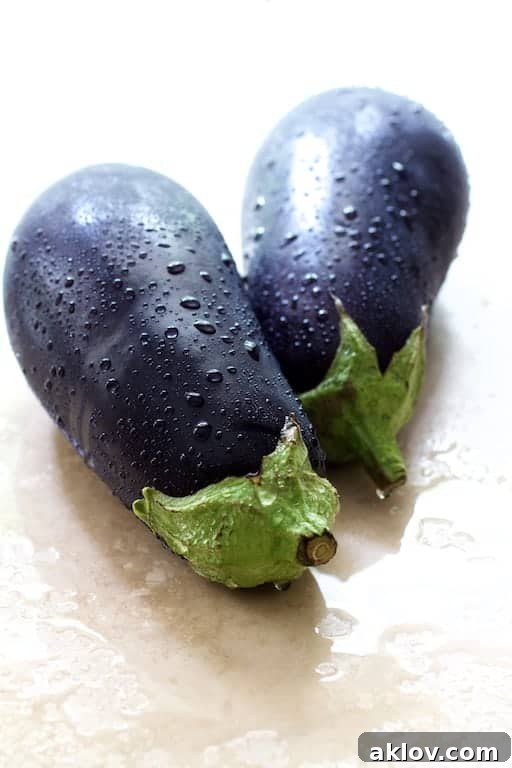
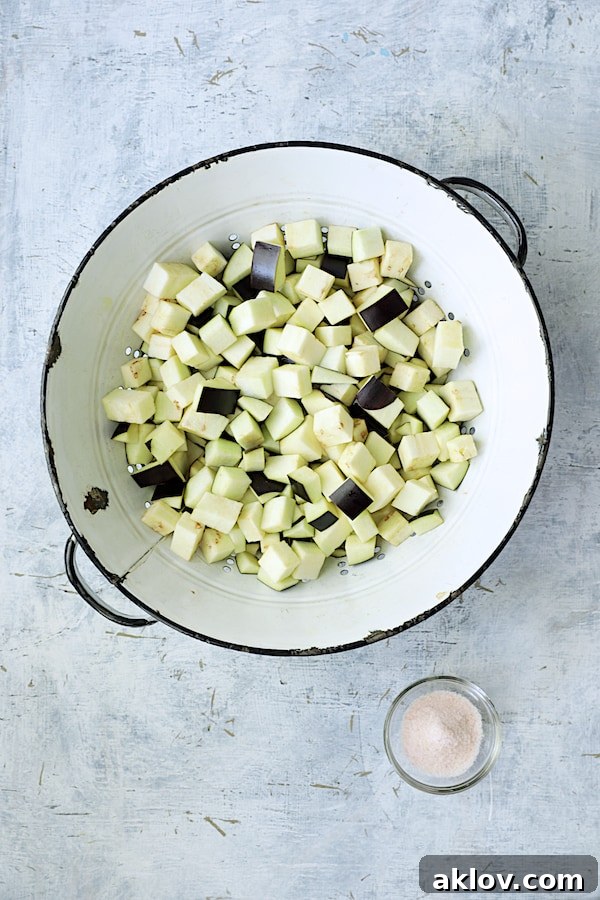
- Cut the eggplants into uniform 1/2-inch to 3/4-inch cubes. This size ensures they cook evenly and integrate well into the dish. Place the cubed eggplant into a colander and generously salt it with about 2-3 teaspoons of salt. The salting process, often called “degorging,” is crucial: it draws out excess moisture and some of the bitterness from the eggplant, resulting in a creamier texture and preventing the eggplant from absorbing too much oil during cooking. Let it drain in the sink for 30-45 minutes, then pat it thoroughly dry with paper towels to remove both the moisture and excess salt. This step significantly improves the final texture and flavor of your caponata.
Prepping Your Fresh Vegetables
- While the eggplant is draining, efficiently prep your other fresh ingredients to streamline the cooking process:
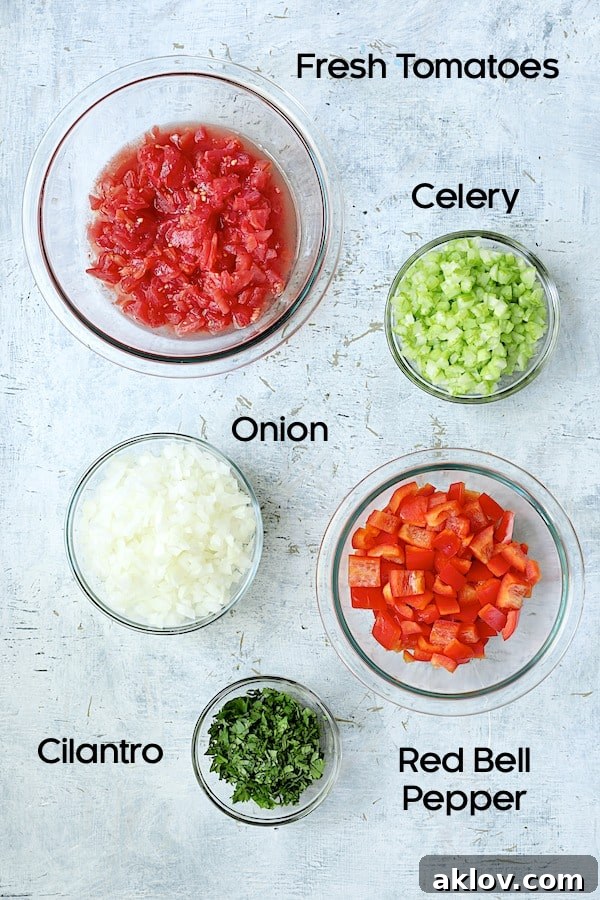
- **Chopped fresh tomatoes:** For the best flavor, aim for about 1 pound of ripe, fresh tomatoes, skinned, seeded, and chopped. Alternatively, a 15-ounce can of diced canned tomatoes (undrained) offers a convenient and equally delicious option, especially when fresh tomatoes are out of season.
- **Chopped celery:** Two stalks (ribs) of finely chopped celery will add a subtle crunch and aromatic depth to the dish.
- **Chopped onion:** One medium onion, finely chopped, will form the savory base of your caponata, caramelizing to create a rich flavor.
- **Red bell pepper cut into large chunks:** Two red bell peppers, cut into 1/2-inch to 3/4-inch pieces, will provide sweetness, vibrant color, and a tender texture when cooked.
- **Chopped fresh cilantro:** Half a cup of freshly chopped cilantro is essential for that distinctive Moroccan aromatic finish.
Gathering Your Pantry Staples and Spices
- Next, gather all your pantry ingredients. This “mise en place” step ensures you have everything at hand when you begin cooking, preventing frantic searching mid-recipe:
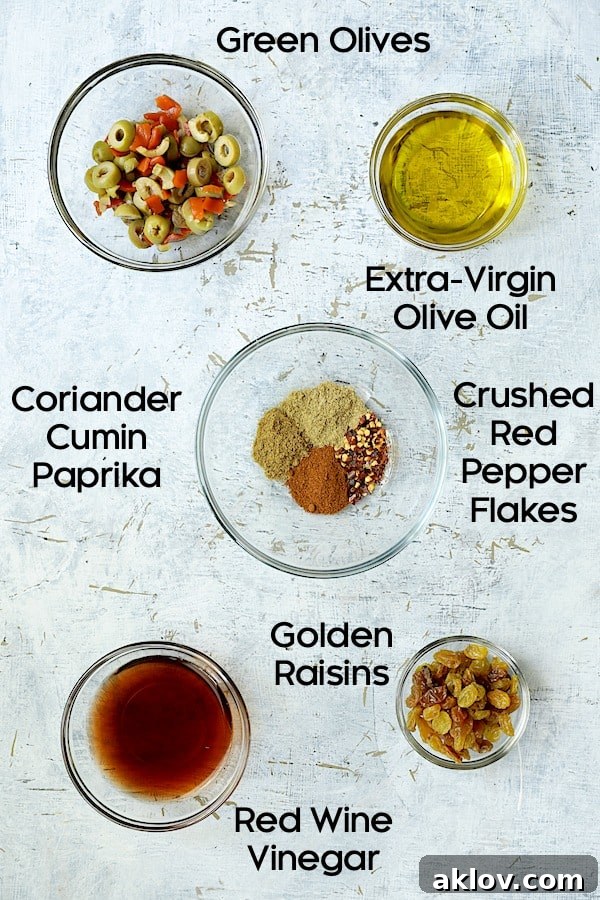
- **Sliced green olives:** One-third cup of sliced green olives contributes a briny, salty counterpoint to the sweetness of the raisins and vegetables.
- **Extra-virgin olive oil:** A quarter cup of good quality extra-virgin olive oil is key for sautéing and building the flavor base.
- **Ground coriander:** Half a teaspoon of ground coriander adds a warm, citrusy, and slightly sweet note that is characteristic of Moroccan cuisine.
- **Ground cumin:** Half a teaspoon of ground cumin provides an earthy, robust, and slightly smoky flavor, a cornerstone of North African spice blends.
- **Paprika:** Half a teaspoon of Hungarian paprika is highly recommended. It offers a more pungent and flavorful profile compared to milder sweet paprika, adding depth and a beautiful reddish hue.
- **Crushed red pepper flakes:** Half a teaspoon of crushed red pepper flakes introduces a gentle warmth and subtle heat, balancing the dish without overpowering it. Adjust to your preferred spice level.
- **Golden raisins:** A quarter cup of golden raisins is crucial for the “sweet” component of the agrodolce, softening and plumping during cooking to release their natural sugars.
- **Red wine vinegar:** A quarter cup of red wine vinegar provides the essential “sour” element, cutting through the richness and brightening all the flavors.
Time to Cook! Assembling Your Caponata
- Now, with all your ingredients prepped, it’s time to bring your Moroccan-Spiced Caponata to life in a large, heavy skillet, preferably enameled cast iron for even heat distribution.
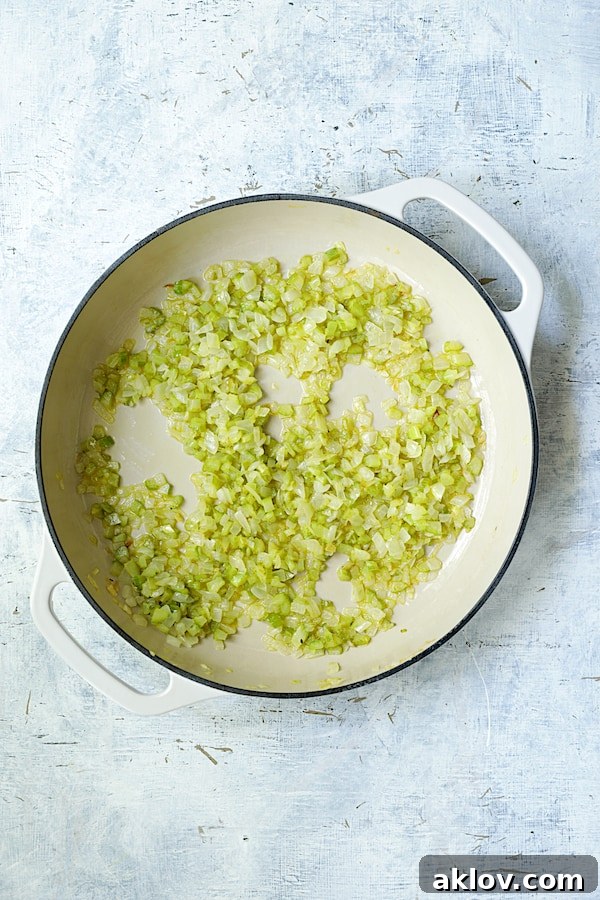
- Heat the olive oil over medium-high heat. Add the chopped onion and celery to the skillet. Reduce the heat to medium-low and cook, stirring frequently, for 5-7 minutes, or until the onions begin to soften and become translucent. Continue cooking until both the onions and celery are wonderfully “melty soft,” developing a sweet, tender base that will enrich the entire dish.
- Remember to blot the eggplant thoroughly dry with paper towels to remove any residual moisture and salt. Add the prepared eggplant to the skillet. Cook, stirring occasionally, until it begins to soften, typically about 3-4 minutes. The eggplant should start to turn translucent and yield slightly to pressure.
- Next, add the red bell pepper to the skillet. Continue cooking until the bell pepper also begins to soften, another 3-4 minutes. Its vibrant color and sweet flavor will infuse into the developing mixture.
- Now, introduce the fresh tomatoes (or canned diced tomatoes), along with the ground cumin, ground coriander, Hungarian paprika, and crushed red pepper flakes. Give everything a good stir to ensure the spices are evenly distributed and begin to bloom in the hot oil.
- Finally, stir in the red wine vinegar, sliced green olives, and golden raisins. Bring the mixture to a gentle simmer, then cover the skillet, reduce the heat to low, and let it simmer for 10-12 minutes. This simmering period allows all the flavors to meld beautifully, creating a rich, complex, and harmonious profile.
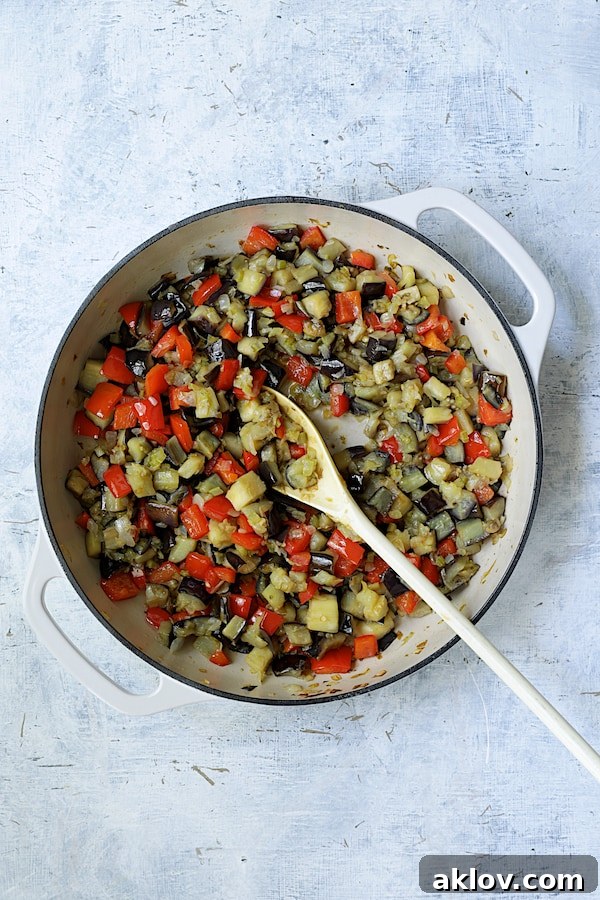
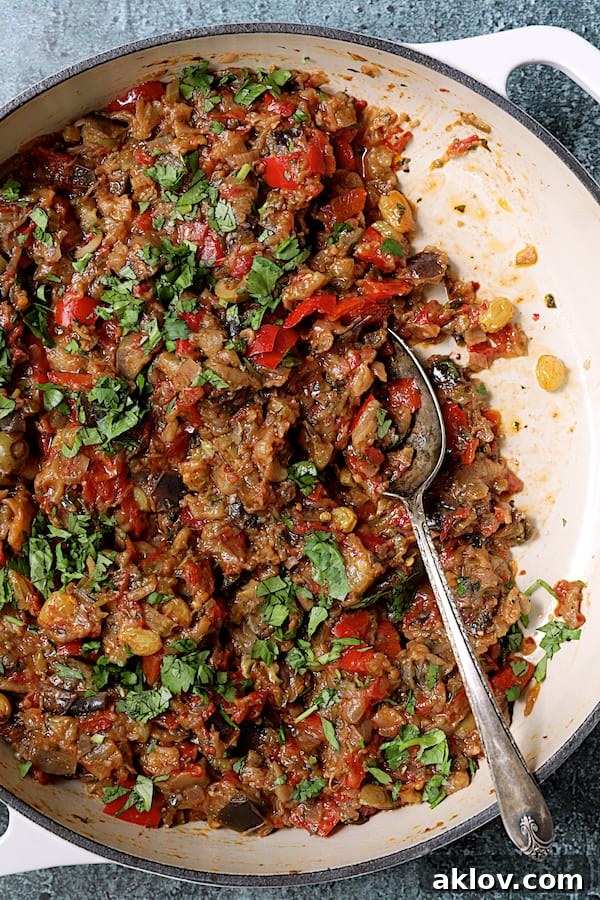
- Continue to cook until all the vegetables are beautifully tender, “melty soft,” and the entire dish is jam-packed with incredible flavor – almost like a savory jam! The consistency should be thick and cohesive, with vegetables still holding their shape but easily yielding.
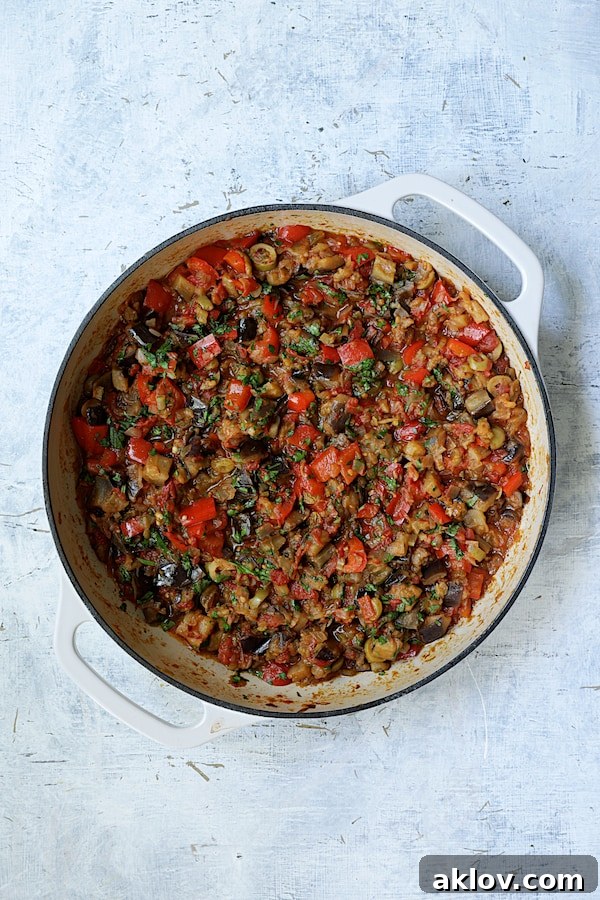
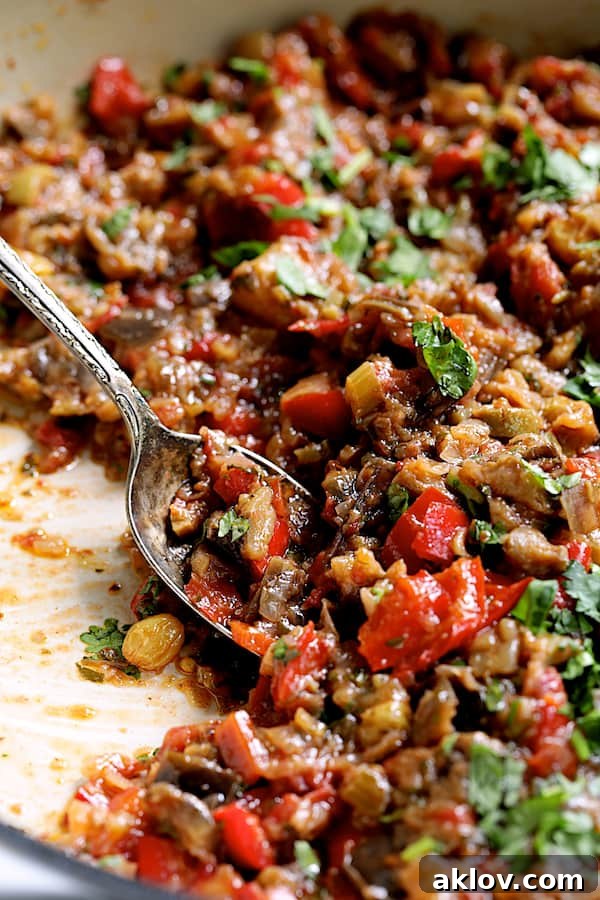
- Once cooked, stir in the fresh cilantro and season generously to taste with additional salt and freshly ground black pepper. This final seasoning step is crucial to bring all the flavors into perfect balance.
- While garlic isn’t always found in traditional caponata recipes, it can certainly enhance the Moroccan flavor profile. Feel free to add 2-3 cloves of minced garlic with the onions and celery if you desire an extra layer of aromatic richness.
Serving Your Moroccan-Spiced Caponata
- To truly appreciate its flavors, allow the caponata to cool slightly to room temperature before serving. This resting period allows the spices to further meld and deepen.
- Prepare some hearty, rustic bread. Toasting or grilling slices of whole-grain crusty bread provides the perfect vehicle for scooping up this delectable vegetable medley.
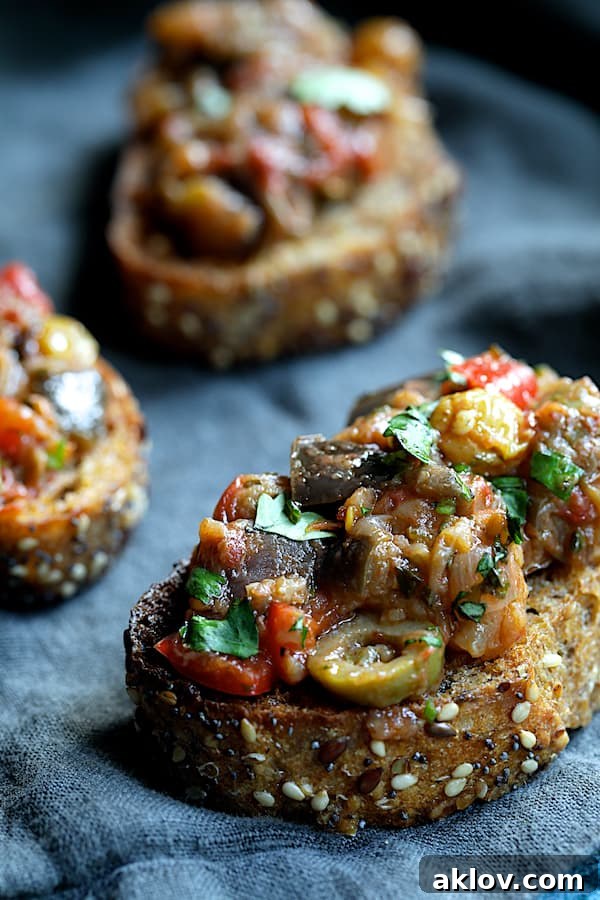
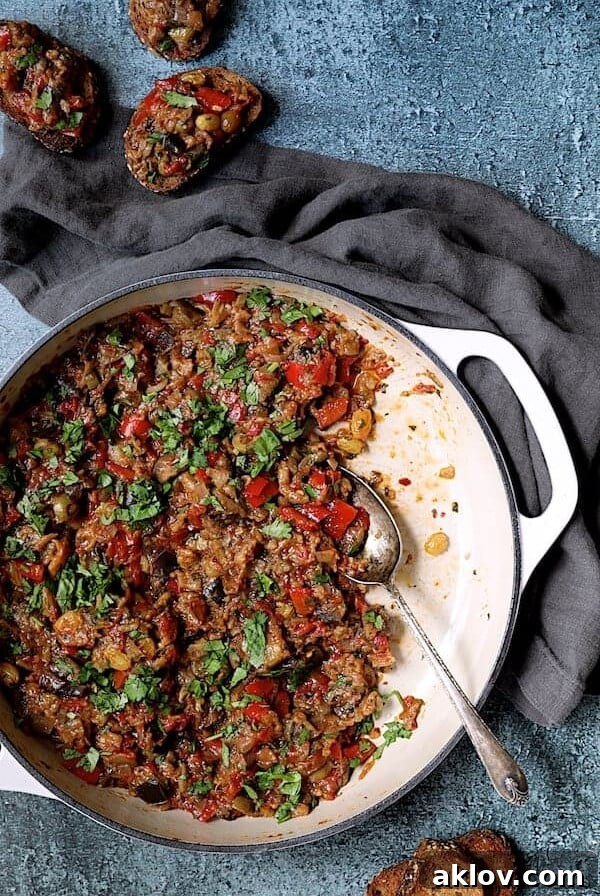
- Serve it simply, right out of the pan, allowing guests to help themselves to the rustic charm of the dish.
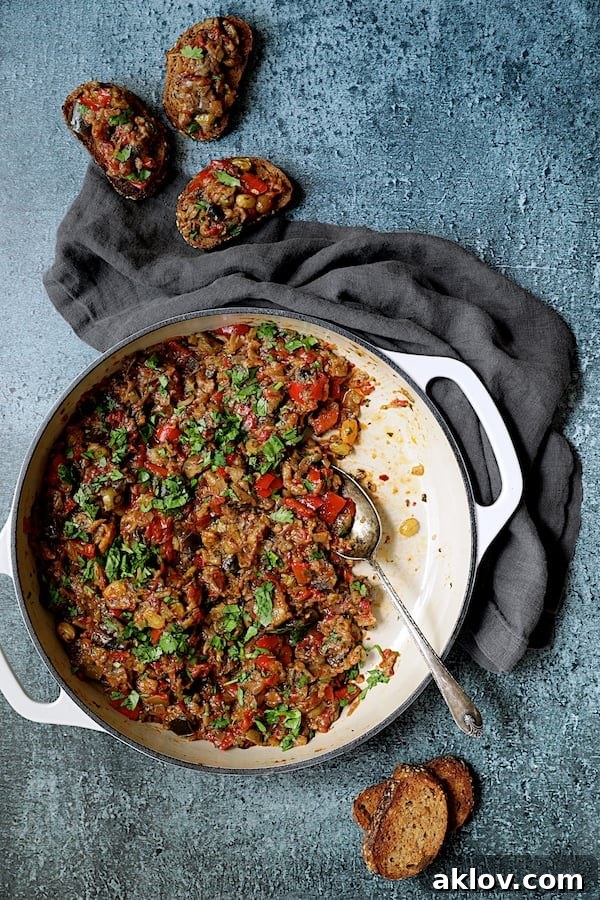
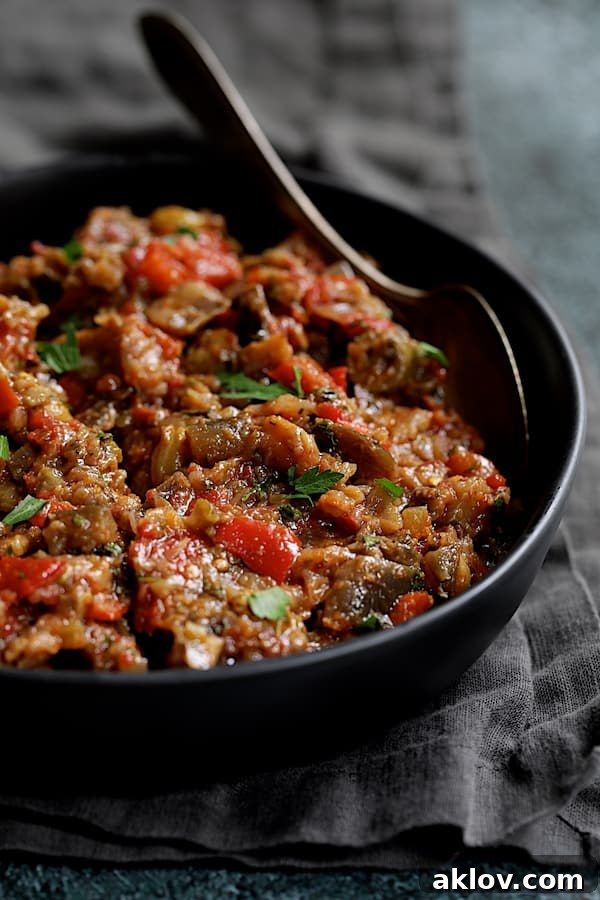
- …Or, if you’re entertaining, elevate the presentation by carefully spooning it into an elegant serving bowl.
Either way, your guests are sure to be captivated by this exotic and comforting appetizer!
Storage and Make-Ahead Magic: How Long Does Caponata Keep?
One of the many wonderful qualities of Moroccan-Spiced Caponata, and indeed any caponata, is that its flavor actually deepens and improves with a little time. This makes it an absolutely perfect make-ahead dish, ideal for entertaining or for preparing healthy meals throughout the week. You can prepare it 1-2 days in advance, allowing the spices to fully marry and the sweet and sour notes to harmonize even further. Stored in an airtight container, it will keep beautifully in the refrigerator for 5-7 days. Beyond this period, the quality may begin to diminish, and food safety concerns can arise, so it’s best to enjoy it within this timeframe.
Should you find yourself with any delicious caponata leftovers, consider freezing them! Portion the caponata into small, freezer-safe containers. When you’re ready to enjoy it again, simply thaw it in the refrigerator overnight or use the microwave for a quicker defrost. This allows you to have a quick, healthy, and flavorful lunch or snack on hand, perhaps spread generously over crusty bread or as a vibrant addition to other dishes.
Beyond the Bread: Endless Uses for Caponata
The versatility of caponata knows no bounds! While it shines as a classic appetizer served with crusty bread, its rich, savory-sweet profile makes it a fantastic addition to a multitude of dishes. Get creative and explore these delicious uses for caponata:
- **Elevate Your Sandwiches:** Spread caponata generously onto a sandwich or wrap for an instant burst of Mediterranean and North African flavor. It pairs wonderfully with roasted vegetables, grilled halloumi, or even leftover chicken.
- **Pair with Proteins:** Serve it warm or at room temperature alongside grilled chicken, baked fish (especially flaky white fish like cod or halibut), or as a vibrant topping for a lamb burger. The caponata’s bold flavors complement and enhance a variety of meats and seafood.
- **Grain & Pasta Power-Up:** Toss caponata with warm couscous, fluffy rice, earthy farro, nutritious quinoa, or any other grain for a satisfying and complete vegetarian meal. It also makes an excellent sauce or topping for pasta, particularly short pasta shapes like penne or rigatoni.
- **Flavorful Side Dish:** Serve it as a robust side dish for a barbecue, picnic, or family dinner, bringing exotic flair to any meal.
- **Bruschetta & Crostini:** Beyond plain bread, use it as a topping for elaborate bruschetta or crostini, perhaps finished with a sprinkle of feta or a drizzle of balsamic glaze.
- **Egg Dishes:** Spoon a dollop over scrambled eggs, an omelet, or a frittata for a unique and savory breakfast or brunch.
Discover More Eggplant Recipes You’ll Love!
If you’ve fallen in love with the humble eggplant after trying this Moroccan-Spiced Caponata, you’re in luck! This versatile vegetable is a star in many cuisines around the world. Here are a few more eggplant-centric recipes that promise to tantalize your taste buds and inspire your culinary adventures:
- Eggplant Parmesan Stacks: A lighter, elegant take on the classic Italian comfort food.
- Healthier Turkish Eggplant Casserole – Imam Bayildi: A stunning, flavorful vegetarian dish featuring baked eggplant in a rich tomato and onion sauce.
- Summer Vegetable Parmigiana: A delicious casserole showcasing layers of seasonal vegetables, perfect for a garden harvest.
- Provencal Vegetable and Goat Cheese Tart: A sophisticated tart bursting with Mediterranean flavors and creamy goat cheese.
- Loaded Roasted Eggplant Dip (Baba Ganoush): A smoky, creamy Middle Eastern dip that’s perfect for dipping pita bread or fresh vegetables.
Moroccan-Spiced Caponata
Carol | From A Chef’s Kitchen
15 mins
1 hr
45 mins
2 hrs
8
Equipment
-
Wusthof Chef Knife
-
Cutting Board
-
Colander
-
Enameled Cast Iron Skillet
Ingredients
- 2 medium eggplants, cut into 1/2-inch to 3/4-inch pieces
- Salt
- 1/4 cup olive oil
- 1 medium onion, chopped
- 2 stalks (ribs) celery, finely chopped
- 2 red bell peppers, cut into 1/2-inch to 3/4-inch pieces
- 4 large tomatoes, approximately 1 pound, skinned, seeded and chopped –OR– 1 can (15-ounce) diced canned tomatoes, undrained
- 1/2 teaspoon ground cumin
- 1/2 teaspoon ground coriander
- 1/2 teaspoon Hungarian paprika
- 1/2 teaspoon crushed red pepper flakes
- 1/4 cup red wine vinegar
- 1/3 cup sliced green olives
- 1/4 cup golden raisins
- 1/2 cup chopped fresh cilantro
- Additional salt, to taste if desired
- Freshly ground black pepper, to taste
- Toasted or grilled rustic bread
Instructions
-
Place the cubed eggplant in a colander and salt it generously with approximately 2-3 teaspoons. Let it drain in the sink or over a plate or bowl for approximately 45 minutes. Pat it dry thoroughly with paper towels to remove excess moisture and salt.
-
Heat the olive oil in a large heavy skillet over medium-high heat. Add the onion, reduce heat to medium-low, and cook for 5-7 minutes or until the onion begins to soften.
-
Add the celery and continue cooking, stirring frequently until both are very soft and translucent.
-
Add the dried eggplant to the skillet and cook until it begins to soften, approximately 3-4 minutes, absorbing some of the flavors.
-
Add the red bell pepper. Cook until it begins to soften (3-4 minutes), then add the tomatoes (fresh or canned).
-
Stir in the cumin, coriander, paprika, and crushed red pepper flakes. Cook for 1 minute, stirring constantly, to bloom the spices.
-
Add the red wine vinegar, sliced green olives, and golden raisins to the skillet.
-
Bring the mixture to a simmer, then cover, reduce heat to low, and simmer gently for 10-12 minutes, allowing the flavors to meld and deepen.
-
Stir in the fresh cilantro and season to taste with additional salt and freshly ground black pepper.
-
Let the caponata cool to room temperature before serving over crusty or grilled bread for the best flavor experience.
Notes
The uses for caponata are endless!
- Add it to a sandwich or wrap for a flavorful boost.
- Serve over grilled chicken, baked fish, or a lamb burger.
- Toss it with couscous, rice, farro, quinoa, or other pasta for a complete meal.
- Use as a topping for bruschetta or crostini.
MAKE AHEAD:
- Can be made 1-2 days ahead for enhanced flavor.
- Let stand at room temperature for 30 minutes before serving if chilled.
FREEZER-FRIENDLY:
- Cool thoroughly and store in an airtight container for up to 3 months. Thaw in the refrigerator or microwave.
Nutrition
Serving:
1
Calories:
144
kcal
Carbohydrates:
17
g
Protein:
3
g
Fat:
8
g
Saturated Fat:
1
g
Polyunsaturated Fat:
1
g
Monounsaturated Fat:
6
g
Sodium:
100
mg
Potassium:
615
mg
Fiber:
6
g
Sugar:
11
g
Vitamin A:
1907
IU
Vitamin C:
54
mg
Calcium:
34
mg
Iron:
1
mg
Nutritional values are automatically calculated using unbranded products and are estimates only. Actual results may vary based on ingredients used and portion sizes. Adjust as needed for dietary restrictions, allergies, or health concerns.
 Like this? Leave a comment below!