
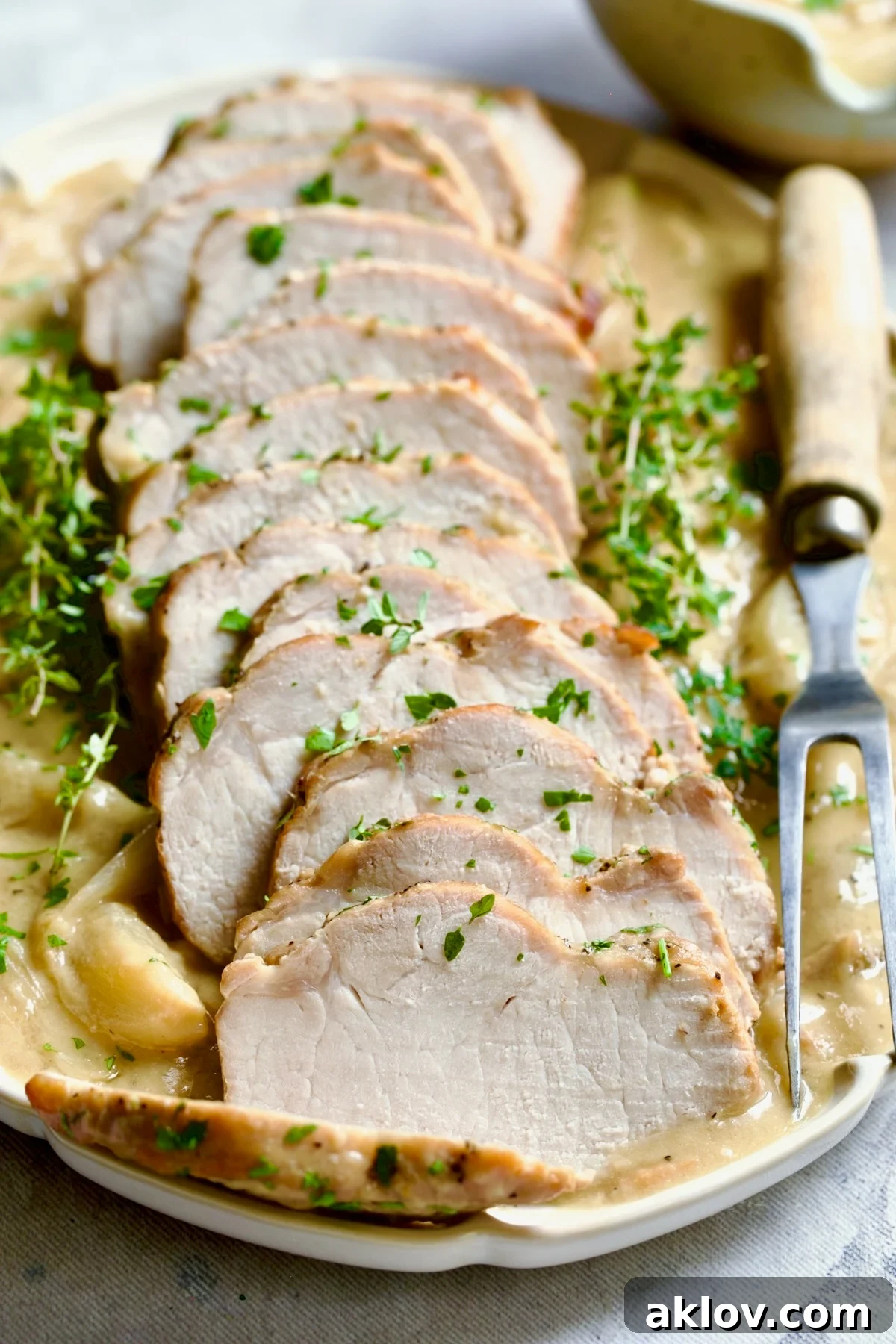
Welcome to a culinary journey where affordability meets the timeless charm of French cuisine in this delightful braised pork loin with Dijon mustard sauce. This dish embodies the essence of comfort food, presenting a meal that is both elegant enough to impress dinner guests and effortlessly simple for a relaxed Sunday evening. With just a few staple ingredients, you can create a truly tender, flavorful, and melt-in-your-mouth experience, all within the convenience of a single pot.
“This recipe is EPIC!”
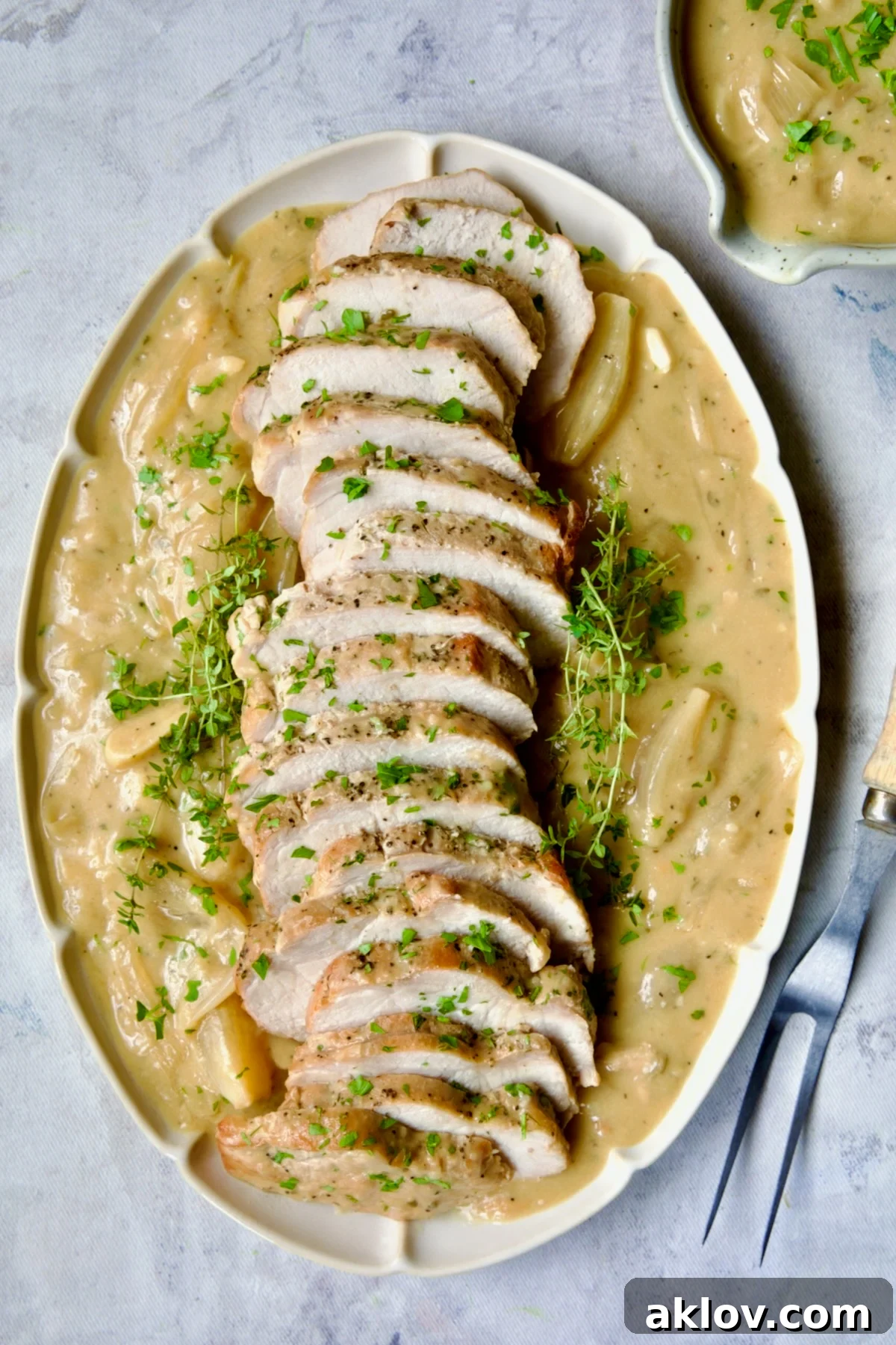
Why This Braised Pork Loin Recipe Will Become a Family Favorite!
Having perfected this recipe over two decades for discerning personal chef clients, I can confidently say it’s been rigorously tested and consistently adored. The secret lies in its simplicity and the remarkable depth of flavor achieved with minimal effort. This Braised Pork Loin Roast in Dijon Mustard Sauce offers a sophisticated dining experience that belies its straightforward preparation.
Imagine pantry staples like rich chicken broth, a splash of dry white wine, and robust Dijon mustard harmoniously blending with fresh herbs, delicate shallots, and aromatic garlic. These simple ingredients come together to transform a lean cut of pork into a succulent masterpiece. Here’s why this recipe deserves a permanent spot in your culinary repertoire:
- Effortless French Elegance: This dish captures a rustic bistro ambiance, offering a timeless comfort that feels both elegant and unpretentious. It’s French-inspired cooking made accessible for every home cook.
- Impressive Yet Approachable: Achieve restaurant-quality taste and presentation without requiring complex culinary skills. The techniques involved are simple to master, ensuring a stunning outcome every time.
- Budget-Friendly, High Reward: Pork loin is an economical protein, but through the magic of braising, it transforms into an incredibly tender and indulgent meal. The flavorful sauce ensures every bite is a luxurious experience.
Whether you’re planning an intimate family dinner or hosting a special gathering, this Braised Pork Loin Roast in Dijon Mustard Sauce consistently delivers classic, comforting flavors with surprising ease. It’s a testament to the fact that elegant, French-inspired cuisine doesn’t have to be complicated or time-consuming. This recipe proves that sophistication can indeed be simple, bringing warmth and gourmet taste to your table with minimal fuss.
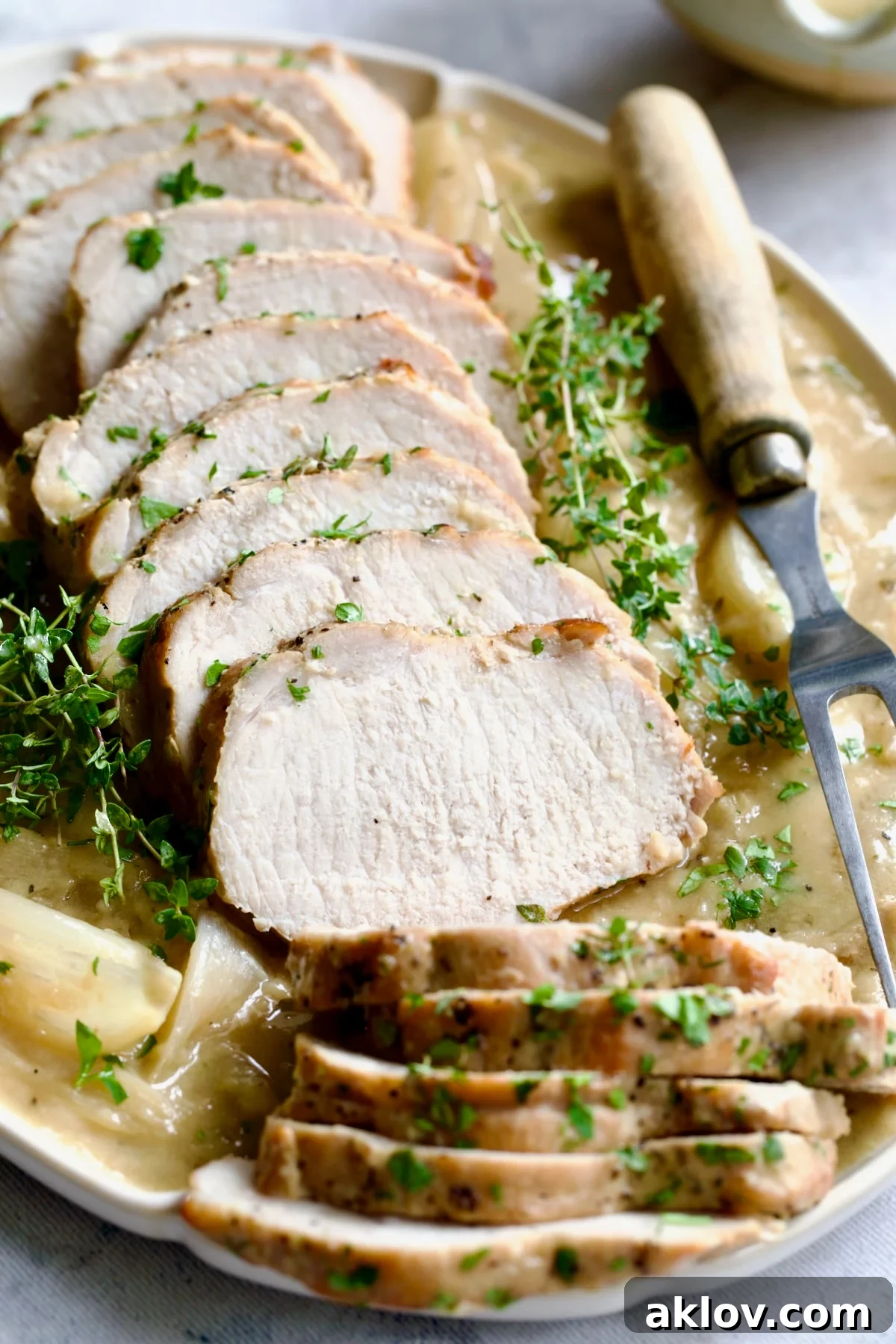
Mastering Braised Pork Loin Roast in Dijon Mustard Sauce: A Step-by-Step Guide
Braising is a culinary technique involving searing meat at a high temperature, then slowly cooking it in a covered pot with liquid, allowing the flavors to meld and the meat to become incredibly tender. This method is perfect for pork loin, ensuring it remains moist and succulent despite its lean nature. Follow this guide to create an unforgettable meal.
Essential Ingredients for Your Braised Pork Loin
Gathering your ingredients before you begin ensures a smooth cooking process. Here’s everything you’ll need to prepare this exquisite braised pork loin roast. For precise measurements, refer to the detailed recipe card below.
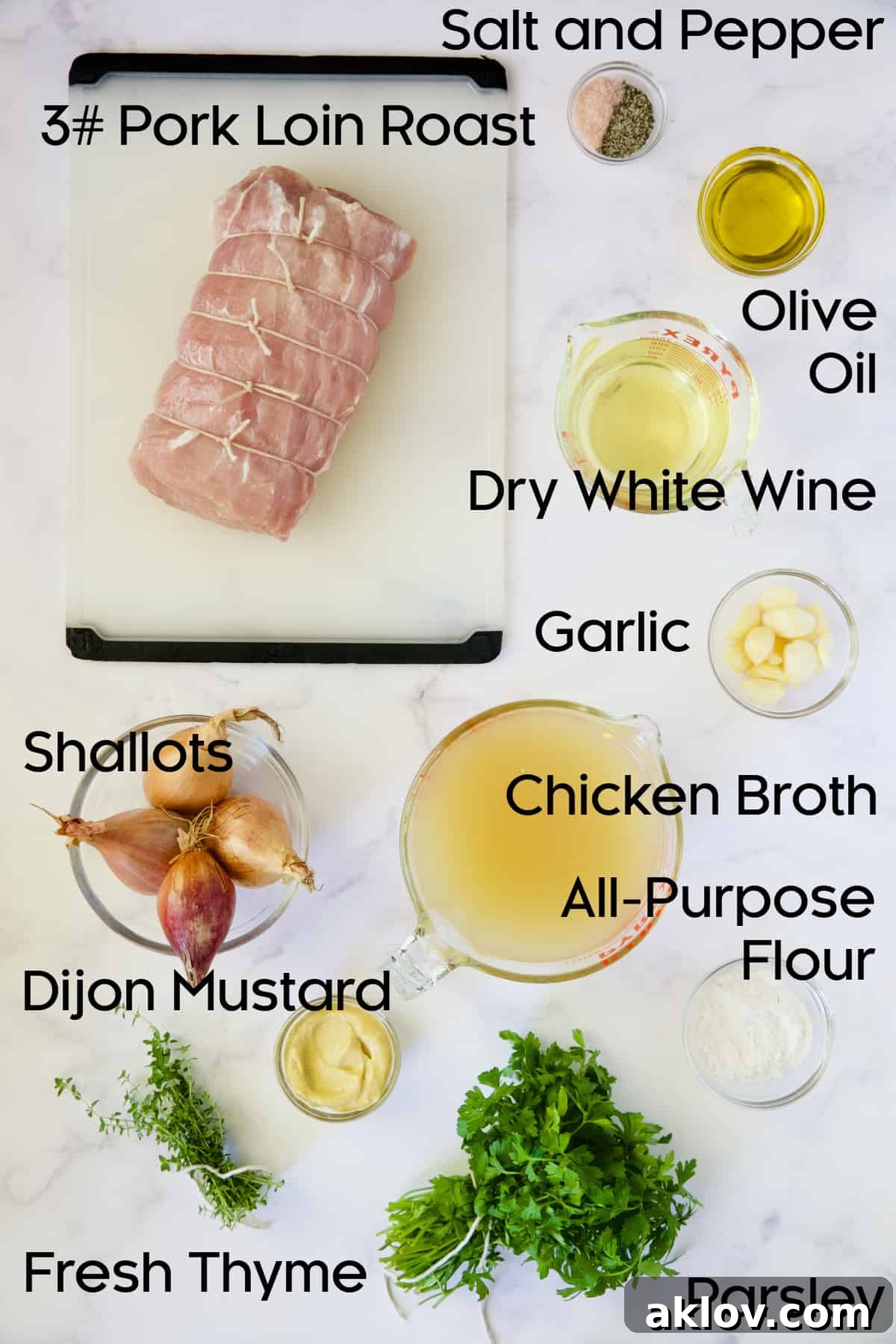
Ingredient Notes and Expert Substitutions
- Pork Loin: This recipe specifically calls for pork loin, which can be found boneless or bone-in, originating from the animal’s back. It is crucial not to confuse it with pork tenderloin. These two cuts are distinctly different and are not interchangeable in this recipe. Pork tenderloin, a long, narrow, and boneless cut from the muscle along the backbone, cooks very quickly and should never be braised. In contrast, pork loin is broader and flatter, making it far more versatile and ideally suited for the slow, moist heat of braising, which prevents it from drying out and ensures maximum tenderness.
- Shallots: A cornerstone of French cuisine, shallots are a mild, delicate member of the onion family. They grow in clusters, similar to garlic but with fewer cloves, offering a nuanced flavor profile often described as a gentle fusion of onion and garlic. Their subtle sweetness and aromatic qualities are indispensable for building the rich foundation of our sauce.
- Dry White Wine: The choice of wine is critical here. While you don’t need your most expensive bottle, it should absolutely be a wine you would enjoy drinking on its own. Wines like Sauvignon Blanc, Pinot Grigio, or even an unoaked Chardonnay work wonderfully. Avoid cheap “cooking wines,” as their inferior flavor will concentrate during the long braising process and can negatively impact the entire dish. For a NON-ALCOHOLIC SUBSTITUTE: Replace the wine with an additional cup of chicken broth and a tablespoon of white wine vinegar. The vinegar provides a touch of acidity that mimics the wine’s effect, and the trace alcohol content is negligible. Alternatively, you can use a high-quality alcohol-free wine.
- Dijon Mustard: The quality of your Dijon mustard makes a significant difference in this sauce. Opt for a good, high-quality brand to ensure a smooth, tangy, and robust flavor without any unpleasant bitterness. Grey Poupon, famously originating in Dijon, France, in the 1800s, is a widely available and reliable choice, despite now being owned by Kraft Heinz. Maille is another excellent, albeit pricier, option that delivers authentic French taste. The sharp, pungent notes of Dijon are essential to balancing the richness of the pork and braising liquid, creating a truly exceptional sauce.
- Chicken Broth: While store-bought chicken broth is perfectly acceptable, a low-sodium option allows you more control over the seasoning. If you have homemade chicken stock, it will elevate the flavor even further, adding incredible depth to your braising liquid.
- Fresh Thyme: Fresh herbs are key to French cooking. Tying the thyme sprigs into a bundle makes them easy to remove at the end of cooking, ensuring you get all the aromatic benefits without stray sprigs in your finished sauce.
Detailed Step-By-Step Braising Instructions:
- Preparation is Key: Begin by gathering and carefully prepping all your ingredients. Preheat your oven to 350 degrees Fahrenheit (175 degrees Celsius).
- Prepare the Pork: Trim any excessive fat from the pork loin roast. While fat adds flavor, for braising, the fat cap isn’t strictly necessary as the liquid provides moisture. If your butcher hasn’t already done so, tie the pork roast securely in 4 to 5 places with butcher’s twine. Tying ensures the meat maintains a uniform shape, promoting even cooking throughout and a more aesthetically pleasing final presentation.
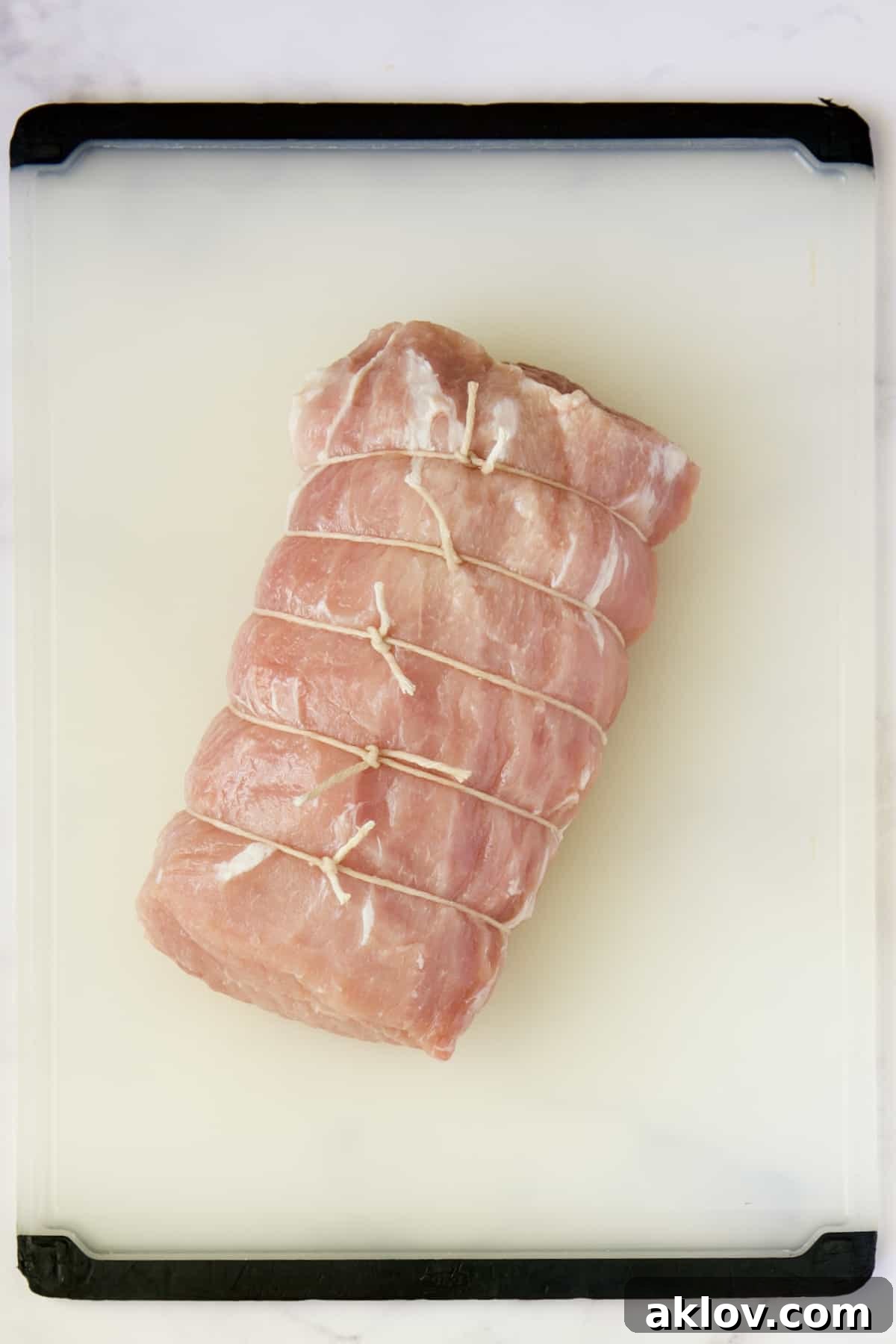
- Sear for Flavor: Heat the olive oil in a heavy-bottomed Dutch oven over medium-high heat until shimmering. Season the pork loin roast generously on all sides with salt and freshly ground black pepper. Carefully place the seasoned roast into the hot Dutch oven and sear it vigorously on all sides until deeply golden brown. This crucial step, known as the Maillard reaction, develops a rich crust and locks in moisture and flavor, adding incredible depth to your final dish.
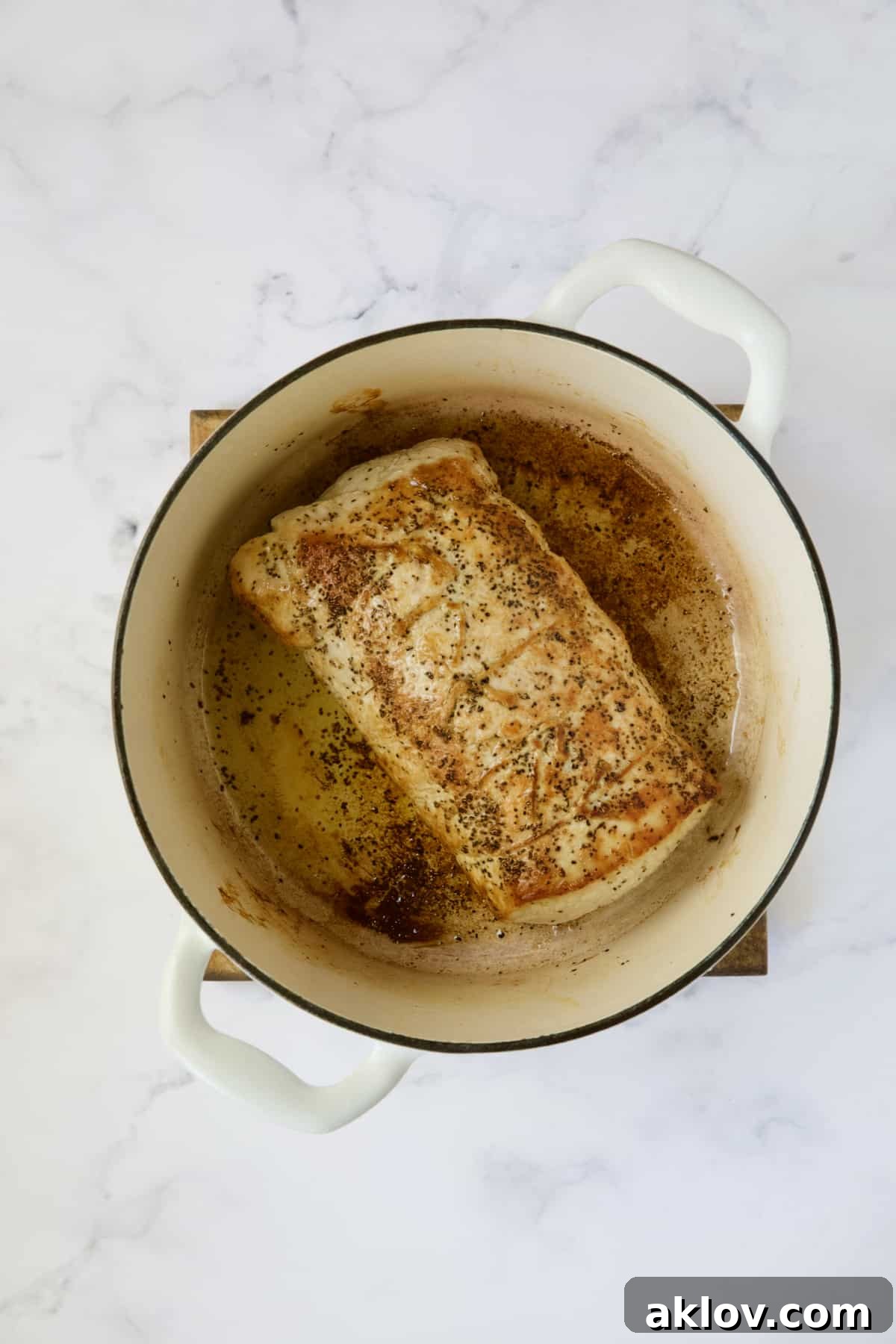
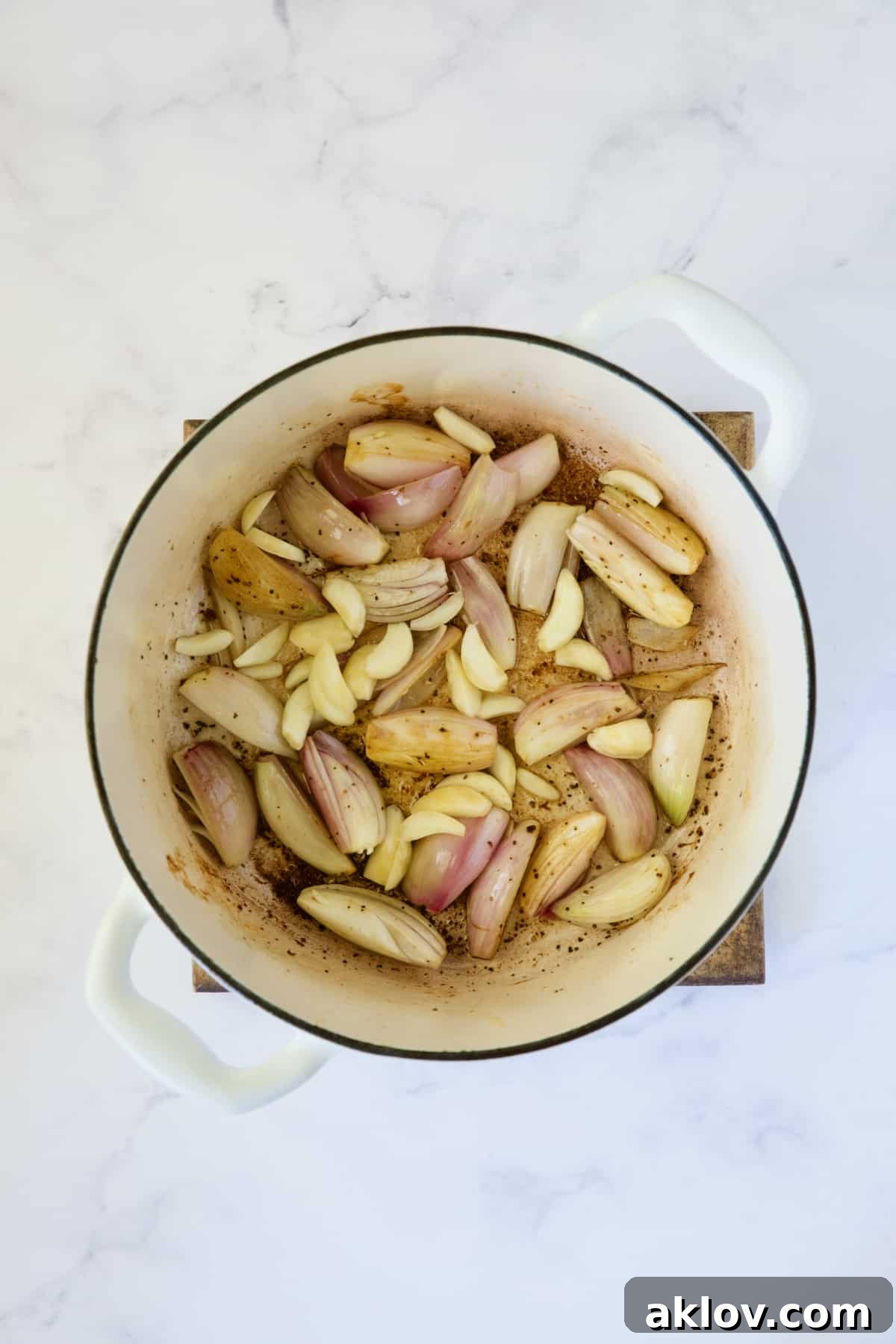
- Sauté Aromatics: Once browned, transfer the pork roast to a plate and set aside. Reduce the heat slightly, then add the quartered shallots and sliced garlic to the Dutch oven. Sauté them for a few minutes, stirring occasionally, until they soften and become fragrant. This step infuses the pot with sweet and savory notes, building a robust flavor base for your sauce.
- Deglaze the Pot: Pour in the dry white wine, bringing it to a rapid boil. Use a wooden spoon or spatula to scrape up all the flavorful browned bits (fond) from the bottom of the pot. These bits are packed with concentrated flavor and will significantly enrich your sauce. Continue to boil for 1-2 minutes to cook off some of the alcohol and reduce the liquid slightly.
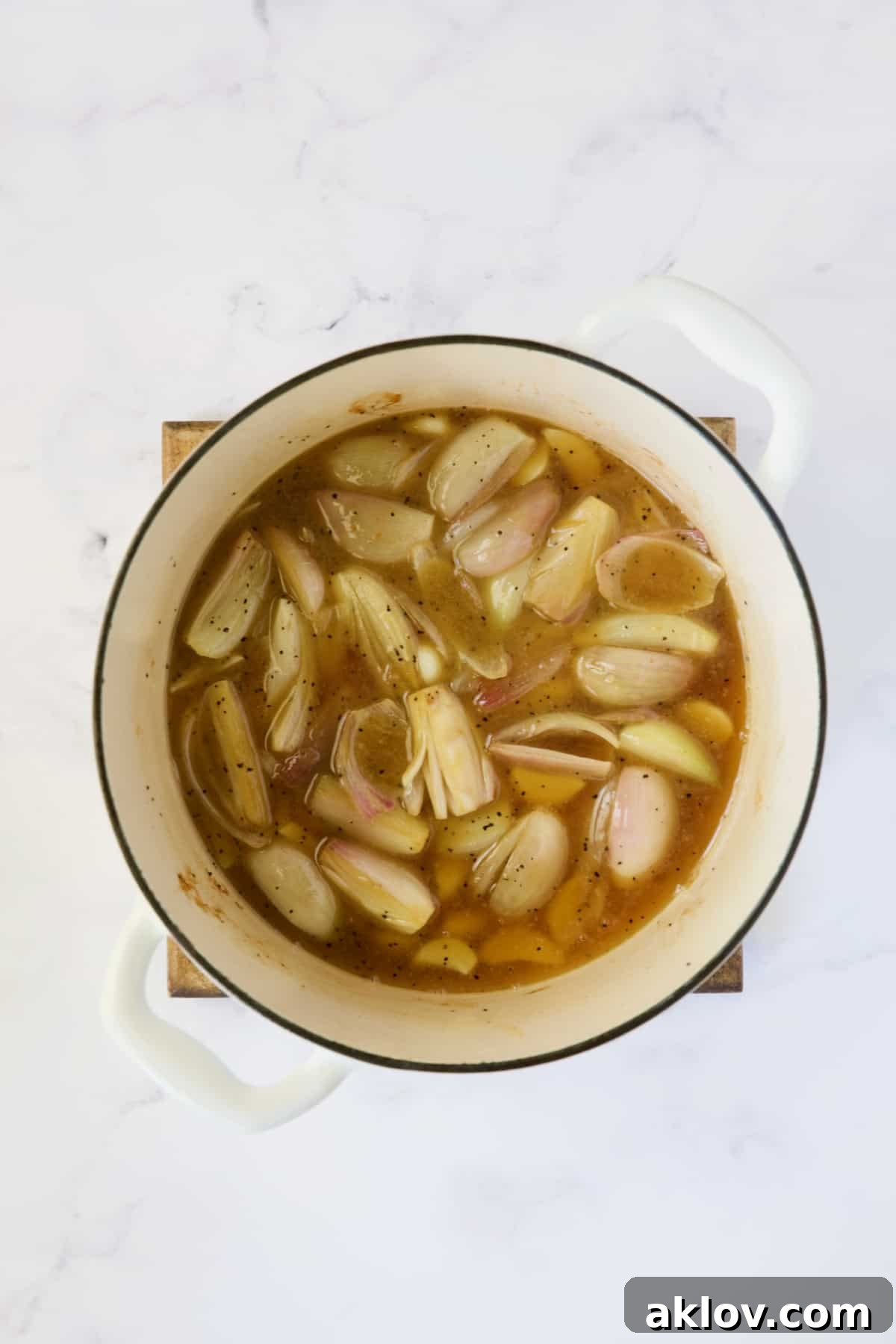
- Braise to Perfection: Add the chicken broth, Dijon mustard, and the tied bundle of fresh thyme to the Dutch oven, stirring to combine. Bring the liquid to a gentle simmer. Carefully place the browned pork loin roast back into the Dutch oven, ensuring it is partially submerged in the liquid. Cover the pot with its lid, leaving it slightly ajar to allow for some evaporation and flavor concentration. Transfer the Dutch oven to your preheated oven.
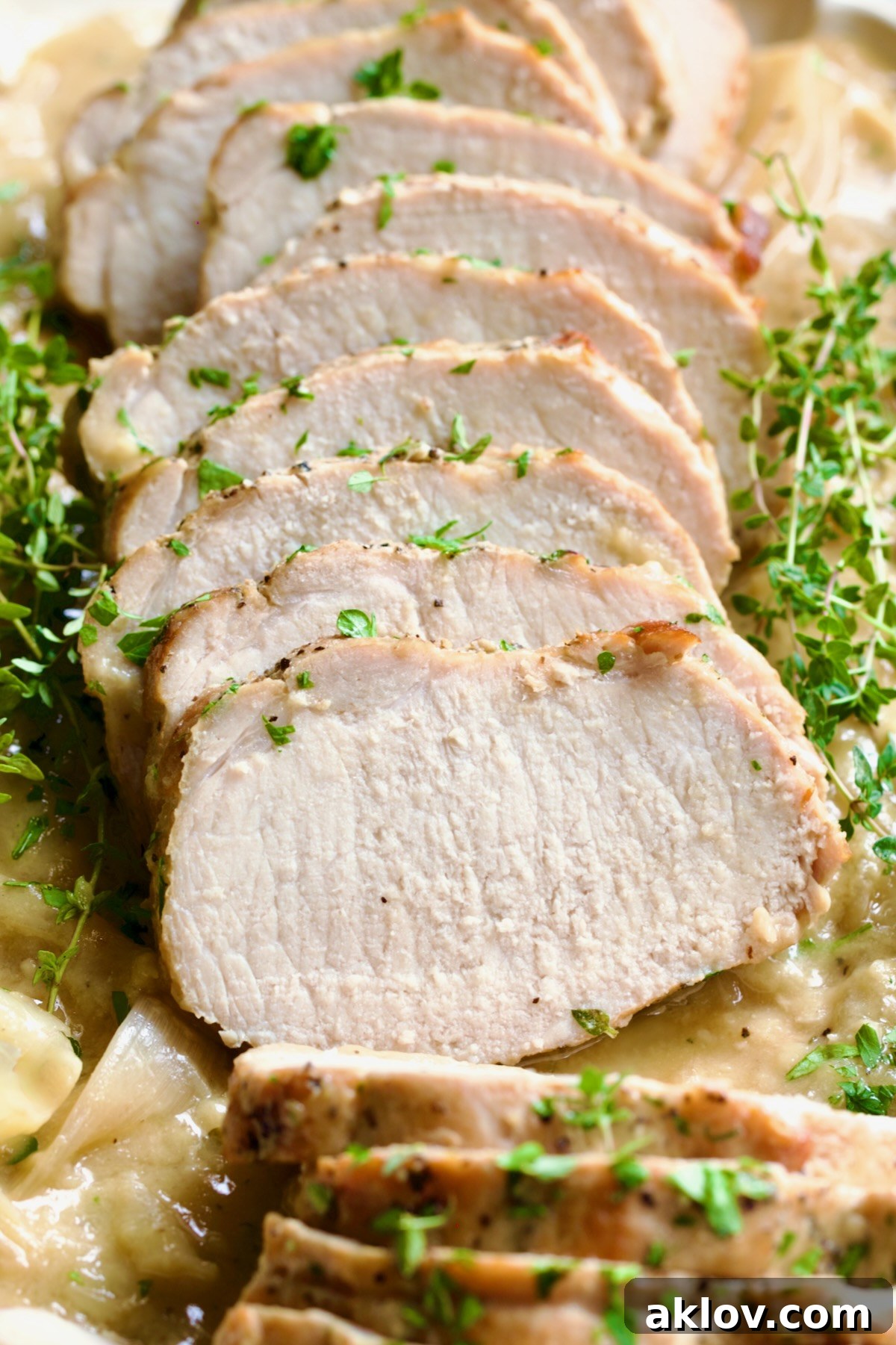
- Braising Time: Cook for 30 minutes. After this initial period, use a meat thermometer to check the internal temperature of the pork. Gently turn the pork roast over to ensure even cooking and moisture distribution. Continue cooking for an additional 20 to 30 minutes, or until the internal temperature of the thickest part of the roast reaches at least 145 degrees Fahrenheit (63 degrees Celsius).
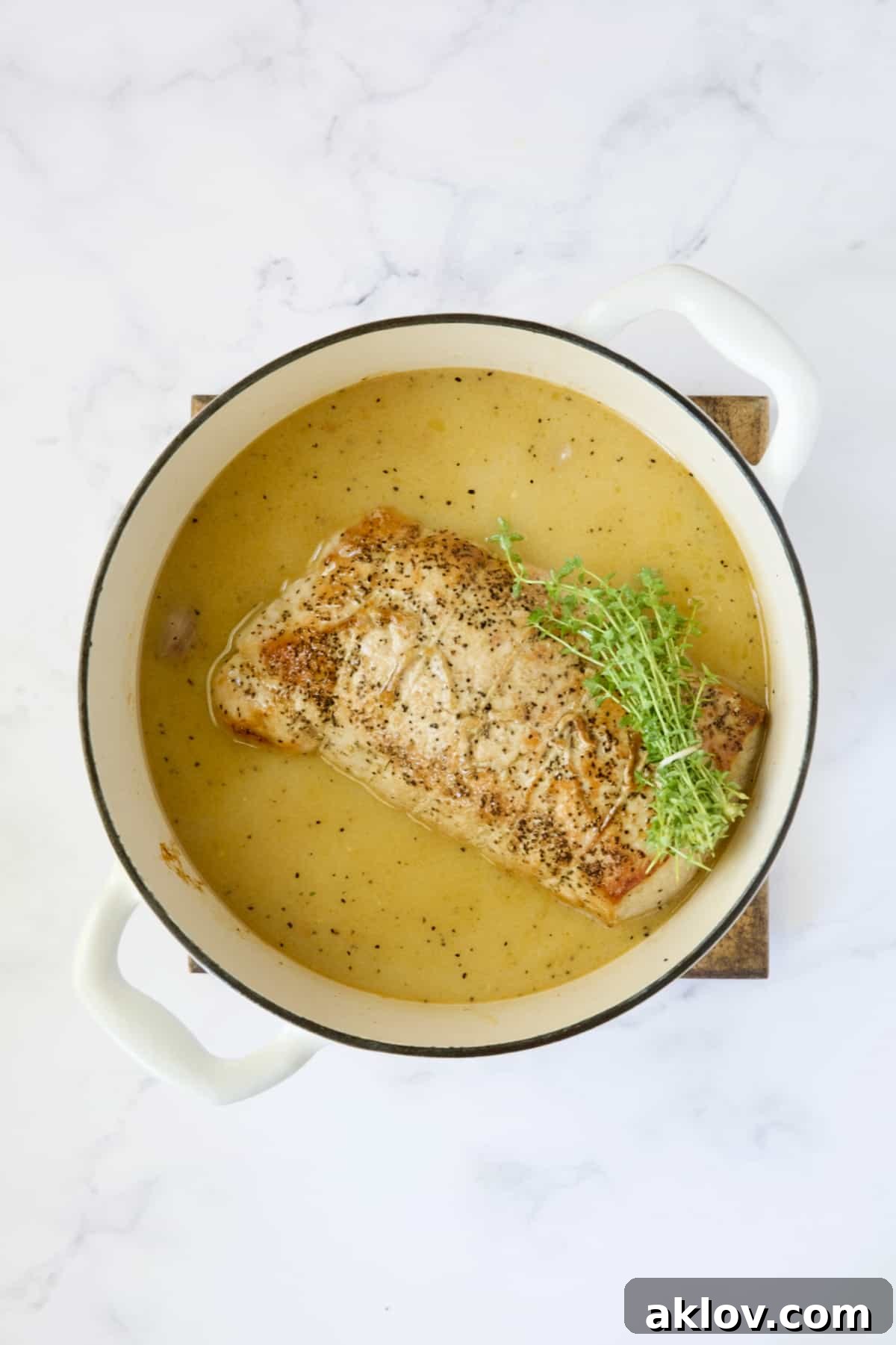
- Rest and Thicken: Once the pork reaches the desired internal temperature, carefully remove the Dutch oven from the oven and place it on your stovetop. Transfer the cooked pork roast to a serving platter and tent it loosely with foil to keep it warm. Allow the meat to rest for at least 10-15 minutes; this allows the juices to redistribute, resulting in a more tender and flavorful slice. While the pork rests, discard the thyme bundle from the braising liquid.
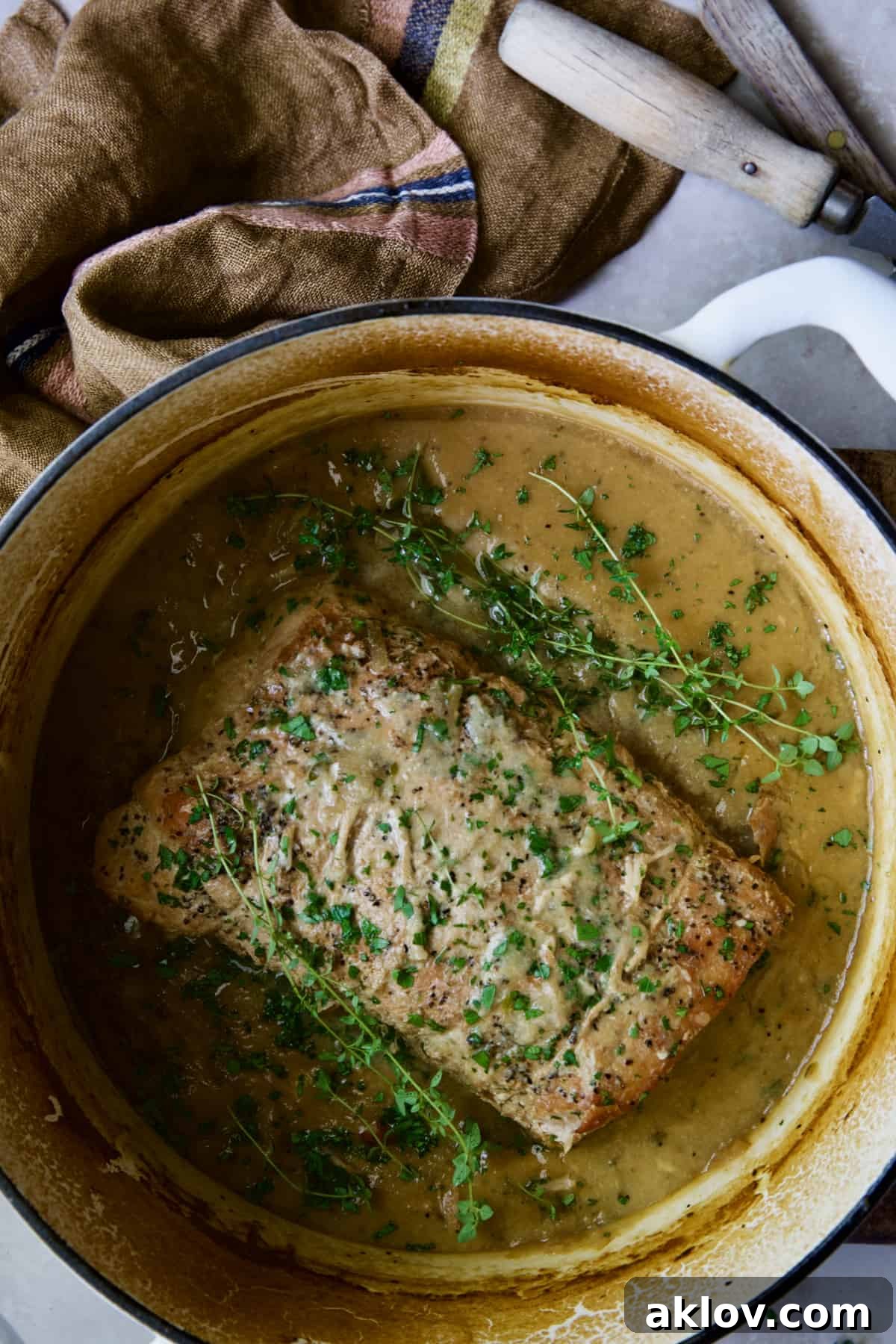
- Prepare the Dijon Mustard Sauce: In a small, heat-proof bowl, place the all-purpose flour. Ladle about half a cup of the hot braising liquid from the Dutch oven into the bowl with the flour. Whisk vigorously until a smooth, lump-free slurry forms. This method prevents lumps in your sauce.
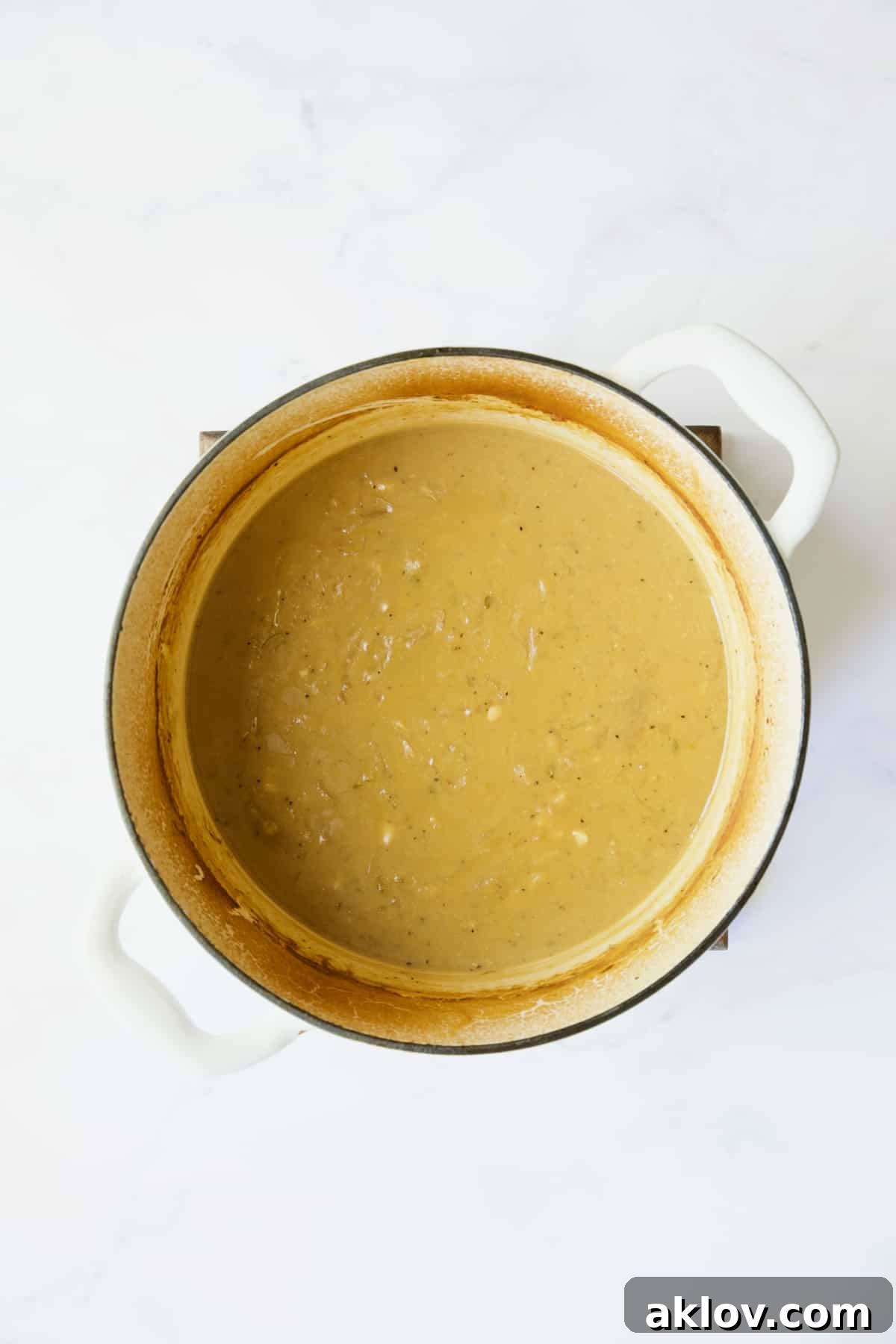
- Thicken the Sauce: Pour the flour slurry into the simmering braising liquid in the Dutch oven, whisking constantly to ensure it blends seamlessly. Bring the sauce to a gentle simmer and cook for three to four minutes, or until it has thickened to your desired consistency. The sauce will continue to thicken slightly as it cools. Taste and adjust seasoning with salt and pepper as needed.
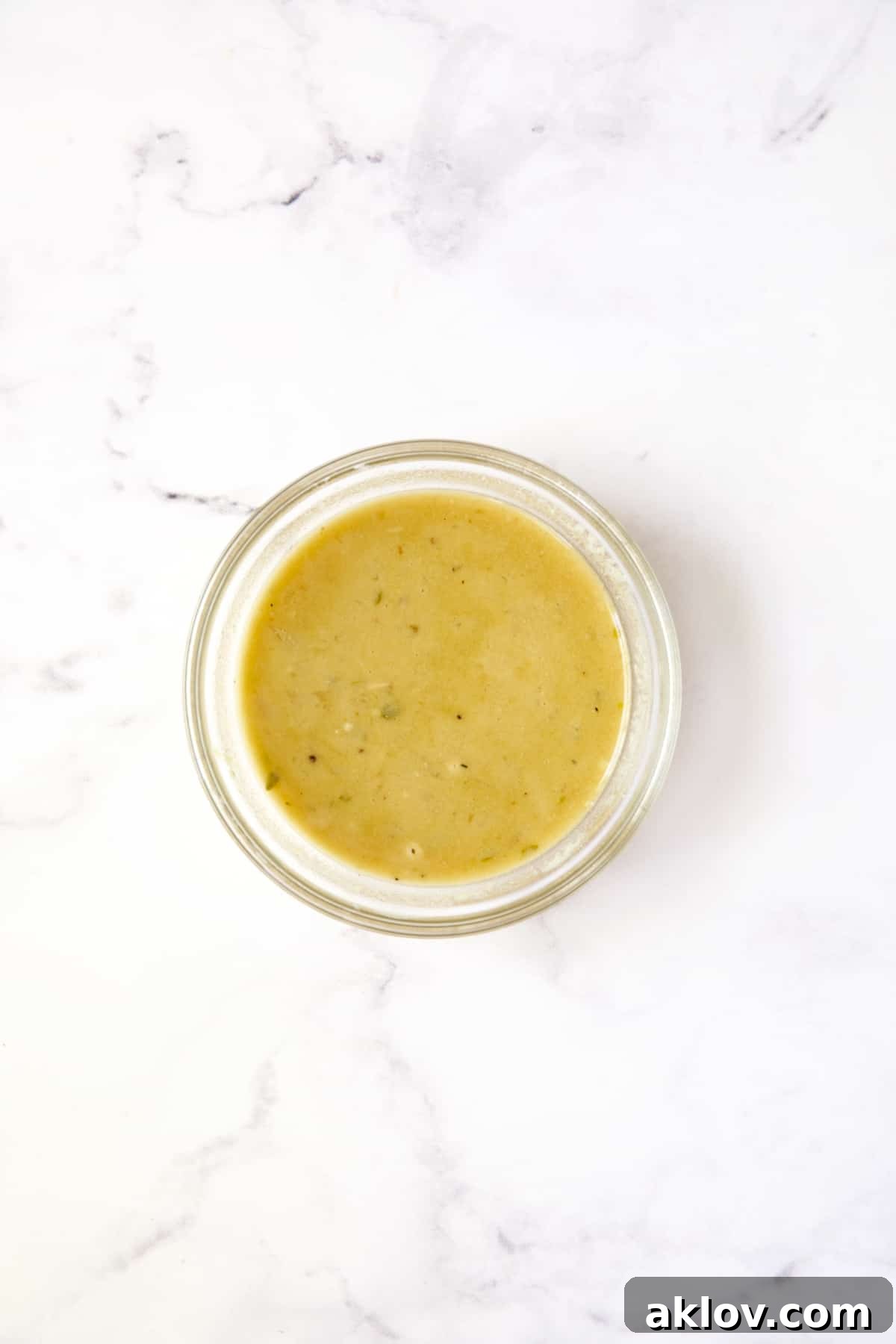
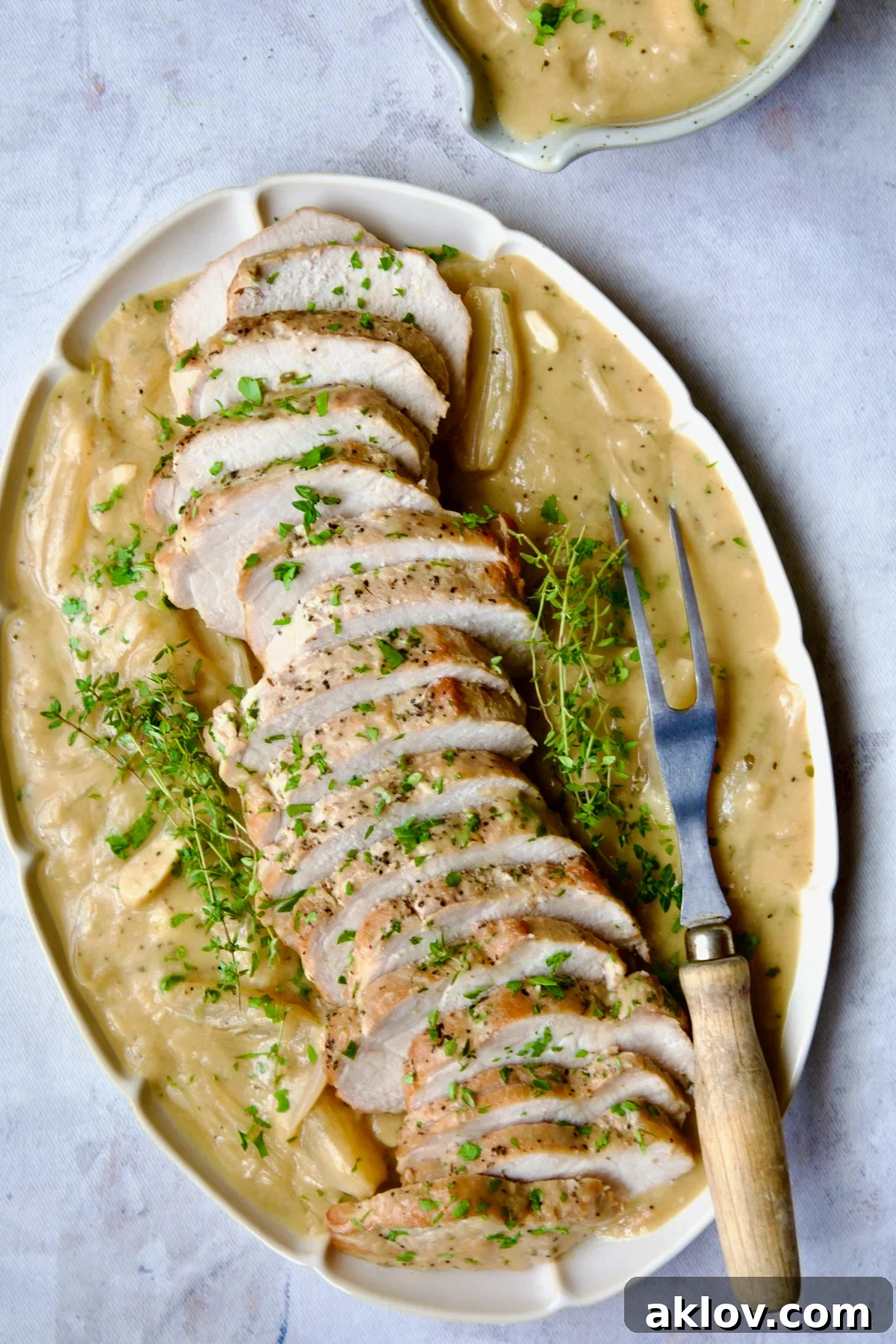
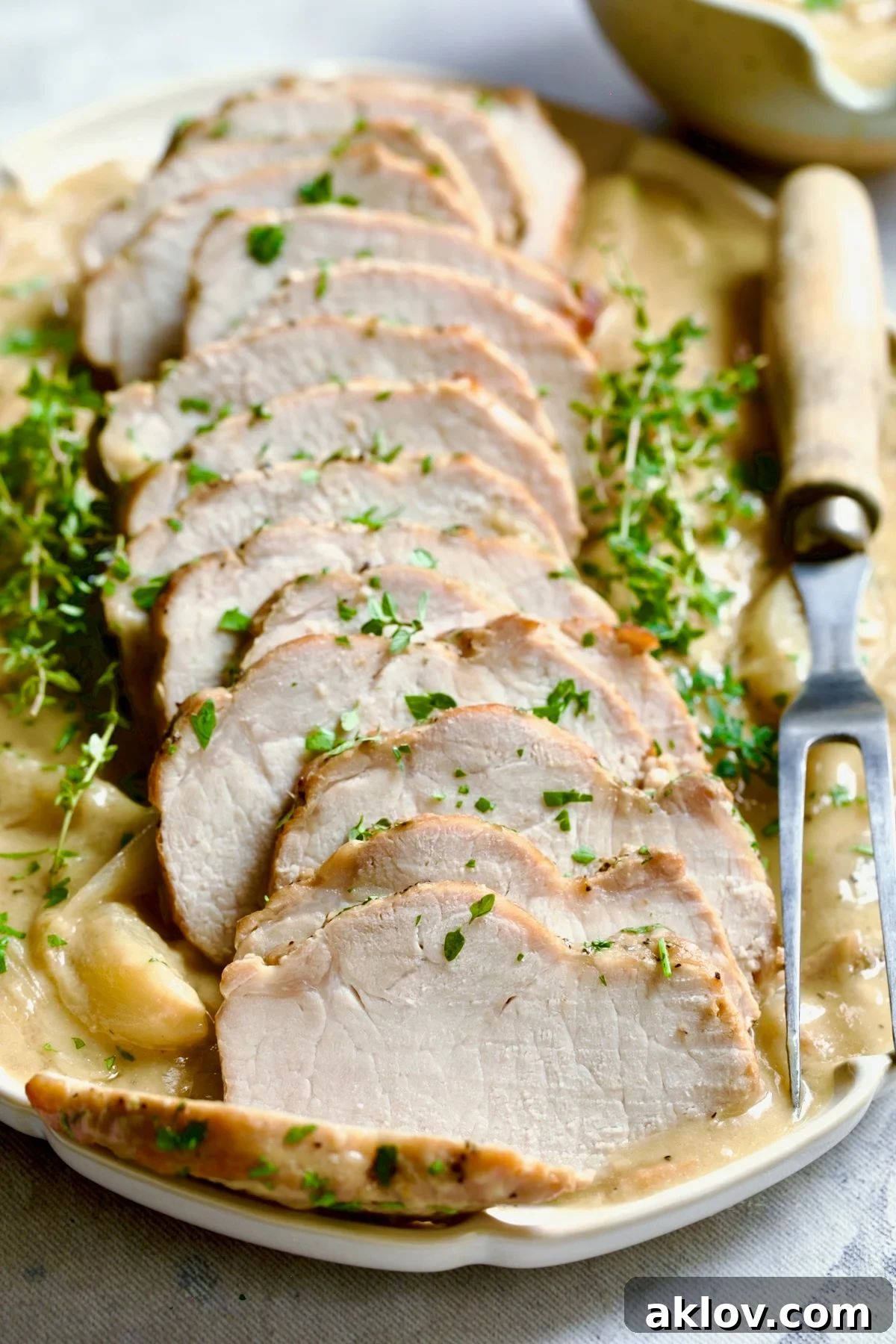
- Serve with Flair: Remove the butcher’s twine from the rested pork loin. Slice the roast into elegant 1/2-inch thick slices, or your preferred thickness, and arrange them on your serving platter. Drizzle a generous amount of the warm, savory Dijon mustard sauce over the sliced pork. For a fresh finish and a pop of color, garnish with a sprinkle of freshly chopped parsley. Serve the remaining sauce on the side, allowing everyone to add more as they desire.
Chef’s Insider Tips and Tricks for Perfect Braised Pork Loin:
- Smart Pot Usage: To minimize cleanup, instead of transferring the seared roast to a separate dirty plate, try this clever trick: if your Dutch oven lid has a flat handle, simply turn the lid upside down. Place the seared pork loin on the inverted lid while you sauté the shallots and garlic and deglaze the pot. This keeps everything contained and saves you from washing an extra dish.
- Concentrated Flavors: For a more intensely flavored and slightly thicker sauce, keep the Dutch oven lid slightly ajar while the roast is braising in the oven. This allows for controlled evaporation, concentrating the delicious flavors of the braising liquid and deepening the sauce.
- Adjusting Sauce Thickness: If, after adding the initial flour slurry, your Dijon mustard sauce isn’t as thick as you prefer, don’t worry. Simply create a second, smaller slurry by whisking one additional tablespoon of all-purpose flour with a tablespoon or two of cold water until smooth. Whisk this into the simmering sauce and cook for another minute or two until it reaches your desired consistency. Remember that the sauce will naturally thicken a bit more as it cools.
- Meat Thermometer is Your Friend: Always use a reliable meat thermometer to ensure your pork loin is cooked to perfection. For lean cuts like pork loin, reaching an internal temperature of 145°F (63°C) followed by a short rest is key to maintaining juiciness. Overcooking will result in dry, tough meat.
- Resting the Meat: Do not skip the resting period! Allowing the pork loin to rest for 10-15 minutes after it comes out of the oven allows the muscle fibers to relax and reabsorb their juices. This ensures that when you slice into the roast, the juices remain within the meat, making every bite incredibly tender and moist.
Braised Pork Loin FAQs: Your Questions Answered
For this braised pork loin recipe, removing the fat cap is generally recommended. While fat certainly adds flavor, in a braising context, where the meat is submerged in liquid, the fat cap isn’t essential for keeping the roast moist. It would primarily melt into the sauce, potentially making it overly greasy. If you were dry-roasting the pork loin with just a seasoning rub, leaving the fat cap on would be crucial to baste the meat and keep it from drying out. But for braising, feel free to trim it off if you prefer to reduce the overall fat content in your dish.
Tying a pork roast (or any large, irregularly shaped cut of meat) with butcher’s twine before cooking serves a couple of important purposes. Firstly, it helps the meat maintain a more uniform, compact shape. This ensures that the roast cooks evenly throughout, preventing some parts from being overcooked while others are still undercooked. Secondly, a neatly tied roast presents beautifully on the serving platter, giving your dish a professional, finished look.
Absolutely! While pork loin is preferred for its lean profile and elegant presentation, a pork shoulder roast (also known as pork butt) works beautifully for braising. Pork shoulder has more connective tissue and fat, which breaks down during the long braising process to yield incredibly rich, fall-apart tender, and “buttery” results. Just be aware that because of these characteristics, you’ll likely need to add an additional hour or two of cooking time to achieve that desired tenderness. The sauce will also be richer from the melted fat.
Yes, this recipe adapts wonderfully to a slow cooker! To prepare, follow the initial steps of seasoning the pork, searing it in a skillet or the slow cooker’s sear function, and sautéing the shallots and garlic. Then, deglaze the pan with wine (if using) and add the broth, mustard, and thyme. Transfer the seared pork and liquid to your slow cooker. Cook on HIGH for 4-5 hours or on LOW for 7-8 hours, or until the pork is fork-tender. You can thicken the sauce on the stovetop after removing the pork, just as instructed in the oven method.
Delicious Variations for Your Braised Pork Loin
While the pork loin is fantastic, don’t hesitate to experiment with other cuts of meat or flavor profiles:
Another excellent option for this recipe is to use a pork butt roast (also known as pork shoulder). This cut contains significantly more connective tissue and intramuscular fat compared to pork loin. During the slow braising process, this connective tissue breaks down, resulting in exceptionally tender, almost “buttery” meat that will melt in your mouth. You will have more rendered fat to contend with, which can be skimmed off if desired, and depending on the size of your pork butt, you’ll need to increase the cooking time by an additional hour or two to achieve optimal tenderness. The robust flavor of pork butt also stands up beautifully to the rich Dijon mustard sauce.
For those who prefer not to consume pork, or simply wish for a different twist, I have successfully prepared this recipe with a beef eye-of-round roast. While beef has a different flavor profile, the braising method and Dijon mustard sauce complement it remarkably well. The cooking time might vary slightly, but the principles remain the same: sear, braise, and enjoy a tender, flavorful roast.
Perfect Accompaniments: What to Serve with Braised Pork Loin
This rich and savory Braised Pork Loin in Dijon Mustard Sauce pairs beautifully with a variety of side dishes that absorb the exquisite sauce and provide textural contrast. Consider these delectable options to complete your meal:
- Make-Ahead Mashed Potatoes (Mashed Potato Casserole): Creamy mashed potatoes are an ideal canvas for soaking up every drop of that luscious Dijon sauce. The “make-ahead” aspect is a bonus for easy entertaining.
- Cheesy Brussels Sprouts and Wild Rice Casserole: For a hearty and flavorful side, this casserole offers a delightful textural contrast with the tender pork, combining nutty wild rice and savory Brussels sprouts with a cheesy richness.
- Cauliflower White Bean Puree: A lighter, yet still creamy alternative to mashed potatoes, this puree is subtle enough to let the pork shine while still being a satisfying accompaniment.
- Celery Root Puree (Celeriac): Embrace more French flair with a delicate and earthy celery root puree. Its unique flavor profile complements the mustard sauce wonderfully.
- Cider Vinegar Braised Cabbage Wedges: The tang of cider vinegar in braised cabbage provides a lovely acidic counterpoint to the richness of the pork and its sauce, cutting through the richness beautifully.
- Sweet and Sour Red Cabbage: A vibrant and flavorful side that offers a balance of sweet and tart, enhancing the overall dining experience with its complex notes.
Explore More Delicious Pork Recipes!
If you’ve enjoyed this elegant pork loin dish, you’ll love exploring other versatile and flavorful pork recipes from my kitchen. Pork is an incredibly adaptable meat, capable of taking on a myriad of global flavors. Here are some more of my favorite pork dishes that are sure to inspire your next meal:
- Sicilian Stuffed Pork Chops with White Wine and Caper Sauce: A flavorful dish featuring tender pork chops filled with a savory stuffing and draped in a bright, zesty sauce.
- Pecan-Crusted Pork Tenderloin with Bourbon Mustard Sauce: A truly special recipe combining the crunch of pecans with succulent pork tenderloin and a rich, sweet-savory bourbon mustard sauce.
- Cuban Pork Tenderloin: Experience the vibrant, citrusy flavors of a traditional Cuban mojo marinade with tender pork tenderloin, perfect for a taste of the Caribbean.
- Cajun-Smothered Pork Medallions: Dive into the soulful flavors of Cajun cuisine with these tender pork medallions simmered in a rich, spicy, and aromatic sauce.
- Asian Pork Chops: A quick and easy recipe featuring pork chops infused with classic Asian sweet and savory flavors, ideal for a weeknight meal.
Discover these and many more culinary inspirations by visiting my complete collection of pork recipes at Pork Recipes – From A Chef’s Kitchen.
Rating: 4.58 out of 5 stars based on 19 votes
Braised Pork Loin Roast in Dijon Mustard Sauce
By Carol | From A Chef’s Kitchen
Budget-friendly meets French elegance in this easy braised pork loin dish. It’s the kind of cozy, comforting meal that feels fancy enough for guests but easy enough for a lazy Sunday dinner. Just a few simple ingredients come together in one pot for something melt-in-your-mouth tender and full of flavor.
Equipment
- Wusthof Chef Knife
- Cutting Board
- Butcher’s Twine
- Dutch Oven
- Tongs
- Whisk
Ingredients
- 1 (3 to 3 1/2 pound) pork loin roast, tied so it keeps its shape
- Salt and freshly ground black pepper, to taste
- 3 tablespoons olive oil
- 8 large shallots, quartered
- 12 cloves garlic, sliced
- 1 cup dry white wine
- 4 cups chicken broth
- 1/4 cup Dijon mustard, plus more to taste if desired
- 1 bunch fresh thyme, tied together
- 3 tablespoons all-purpose flour
- 2 tablespoons chopped fresh parsley, for garnish
Instructions
- Preheat oven to 350 degrees Fahrenheit (175 degrees Celsius).
- Season the pork loin roast generously with salt and black pepper on all sides.
- Heat the olive oil over medium-high heat in a Dutch oven until shimmering.
- Sear the pork roast for 2-3 minutes per side, or until golden brown on all sides. Adjust heat as necessary to prevent the oil from smoking. Transfer the seared roast to a plate or inverted Dutch oven lid.
- Place the quartered shallots and sliced garlic in the Dutch oven and cook for 3-4 minutes, stirring, until they begin to brown and soften slightly.
- Add the white wine to the Dutch oven and bring to a boil. Boil for 1-2 minutes, vigorously scraping up any browned bits from the bottom of the pot with a wooden spoon.
- Stir in the chicken broth, Dijon mustard, and the bundled fresh thyme. Bring the liquid to a gentle simmer. Carefully place the pork roast back into the Dutch oven, ensuring it is partially submerged. Cover the Dutch oven with its lid slightly ajar, then transfer it to the preheated oven.
- Cook for 30 minutes. After 30 minutes, check the internal temperature of the pork. Turn the roast over and continue cooking for another 20-30 minutes, or until the internal temperature reaches at least 145 degrees Fahrenheit (63 degrees Celsius).
- Carefully remove the Dutch oven from the oven and place it on your stovetop. Transfer the cooked pork roast to a platter, tent it loosely with foil to keep warm, and allow it to rest for 10-15 minutes. Discard the thyme bundle from the braising liquid.
- While the pork rests, prepare the sauce thickener. Place the all-purpose flour in a small, heat-proof bowl. Remove approximately 1/2 cup of the hot braising liquid from the Dutch oven and gradually whisk it into the flour until a smooth, lump-free slurry is formed.
- Pour the flour slurry into the simmering braising liquid in the Dutch oven, whisking constantly to incorporate. Bring the sauce to a simmer and cook for 3-4 minutes, or until it has thickened to your desired consistency. Stir in the chopped parsley and taste, adjusting seasoning with salt and black pepper if needed.
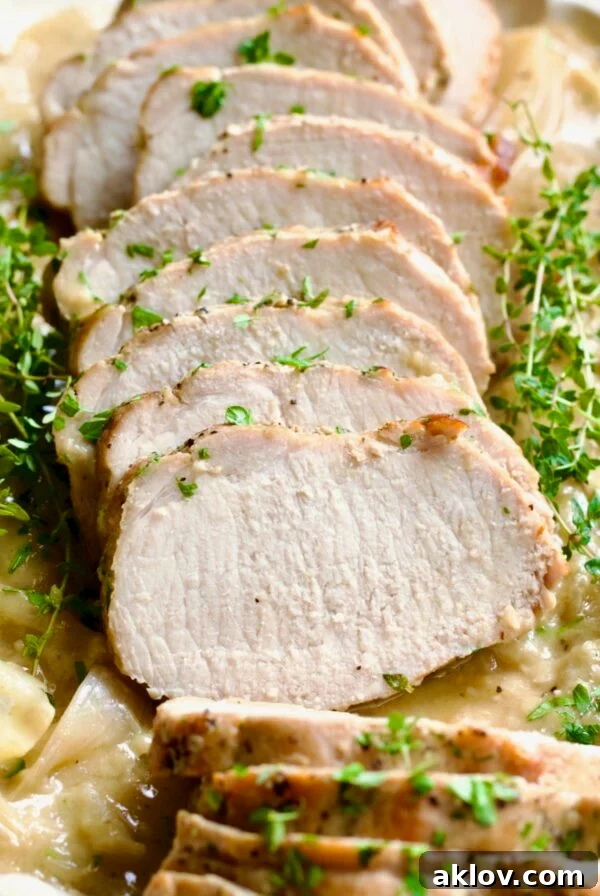
- Remove the butcher’s twine from the rested pork roast. Slice the roast into approximately 1/2-inch thick slices and arrange them elegantly on a serving platter. Pour a generous amount of the savory Dijon mustard sauce over the sliced pork, and serve the remaining sauce on the side for guests to enjoy.
Notes
VARIATION:
- Another excellent option for this recipe is to use a pork butt roast, which has much more connective tissue than a pork loin. This connective tissue will break down for super, buttery results. You’ll have more fat to deal with, and depending on the size, you’ll need to add another hour or two of cooking time.
SUBSTITUTIONS:
- As mentioned above, I’ve made this recipe numerous times with a beef eye-of-round, so if you don’t consume pork, substitute that instead.
- If using a pork shoulder roast, add an hour of roasting time to ensure it reaches optimal tenderness.
- NON-ALCOHOLIC SUBSTITUTE: For the dry white wine, use an extra cup of chicken broth and add 1 tablespoon of white wine vinegar (which has trace alcohol content). You can also opt for a high-quality alcohol-free wine.
TIPS:
- Rather than making a plate dirty after searing the roast, turn your Dutch oven cover upside down if the lid handle has a flat side. Place the roast on that while browning the shallots, garlic, and deglazing the Dutch oven.
- I keep the lid slightly ajar when the roast is in the oven so the sauce can reduce and the flavors concentrate.
- If the sauce is not as thick as you would like, you can repeat the thickening process with 1 more tablespoon of flour mixed with a small amount of cold water to form a slurry. Keep in mind the sauce naturally thickens upon standing.
MAKE AHEAD:
- You can get everything prepped and browned a day ahead of time. Store the seared pork and the braising liquid separately in the refrigerator.
- Place in the oven when ready to braise. You will need to increase the cooking time if starting with cold ingredients directly from the refrigerator.
FREEZER-FRIENDLY:
- This recipe freezes beautifully. For best results, slice the pork, then nap (coat) the slices generously with the Dijon mustard sauce.
- Freeze the entire roast with sauce in an airtight container or freeze individual portions.
- Thaw frozen portions overnight in the refrigerator. Reheat in a 350-degree Fahrenheit (175 degrees Celsius) oven until thoroughly heated through, ensuring the pork remains moist.
REHEATING LEFTOVERS:
- Reheat individual portions in a 350-degree Fahrenheit (175 degrees Celsius) oven until heated through. You can also gently reheat on the stovetop over low heat, adding a splash of broth if the sauce has become too thick.
Nutrition Information
Serving: 1
Calories: 641 kcal
Carbohydrates: 13g
Protein: 85g
Fat: 23g
Saturated Fat: 6g
Polyunsaturated Fat: 2g
Monounsaturated Fat: 11g
Trans Fat: 0.002g
Cholesterol: 234mg
Sodium: 883mg
Potassium: 1591mg
Fiber: 2g
Sugar: 4g
Vitamin A: 156 IU
Vitamin C: 7mg
Calcium: 63mg
Iron: 3mg
Nutritional values are automatically calculated using unbranded products and are estimates only. Actual results may vary based on ingredients used and portion sizes. Adjust as needed for dietary restrictions, allergies, or health concerns.
 Like this? Leave a comment below!