

Craving a meal that’s both deeply comforting and bursting with flavor, yet surprisingly simple to prepare? Look no further than Eggs in Purgatory with Italian Sausage. This delightful twist on a southern Italian classic is your perfect answer for any meal of the day – be it a hearty breakfast, a leisurely brunch, a satisfying lunch, or a cozy dinner. Imagine perfectly poached eggs nestled in a rich, spicy tomato sauce, complemented by savory Italian sausage and tender vegetables. This easy, one-skillet dish comes together in about an hour, promising a culinary experience you’ll want to revisit again and again.
“This was great. My family loved it! It’s quickly become a favorite in our home.”

Why This Spicy Italian Sausage and Egg Dish Will Become Your Go-To
This version of Eggs in Purgatory with Italian Sausage isn’t just a recipe; it’s a culinary treasure you’ll want to keep in your repertoire. It offers a satisfying and comforting meal experience that adapts effortlessly to any time of day, making it incredibly versatile for busy weeknights or relaxed weekend gatherings.
My inspiration for this particular rendition struck during a memorable meal at a charming restaurant in Boulder, Colorado. The flavors were so captivating, the combination of a fiery tomato sauce, savory sausage, and perfectly runny yolks so utterly delicious, that I felt compelled to recreate it in my own kitchen. Every bite was savored, and I nearly licked the skillet clean – a true testament to its irresistible appeal!
At its heart, this dish features tender eggs with gloriously runny yolks, gently poached within a robust and spicy tomato sauce. Infused with the rich flavors of hot Italian sausage, sweet onions, crisp bell peppers, and aromatic fennel, each ingredient plays a vital role in creating a symphony of tastes. To complete this extraordinary experience, a generous dusting of good quality Parmesan cheese is essential, along with plenty of toasted crusty bread. This bread serves as the perfect vessel for soaking up every last drop of the spicy, flavorful sauce and dipping into those luscious yolks.
Perhaps one of the most appealing aspects of this culinary creation is its simplicity: everything cooks up beautifully in a single skillet, minimizing cleanup and maximizing enjoyment. This ease of preparation, combined with its incredible depth of flavor, ensures that Eggs in Purgatory with Italian Sausage will quickly become a cherished favorite in your kitchen.

Mastering Eggs in Purgatory with Italian Sausage: A Step-by-Step Guide
Essential Recipe Ingredients for Perfect Eggs in Purgatory
Crafting this flavorful dish begins with selecting the right ingredients. Below is a comprehensive list of everything you’ll need. For precise measurements, be sure to check the full recipe card towards the end of this article.
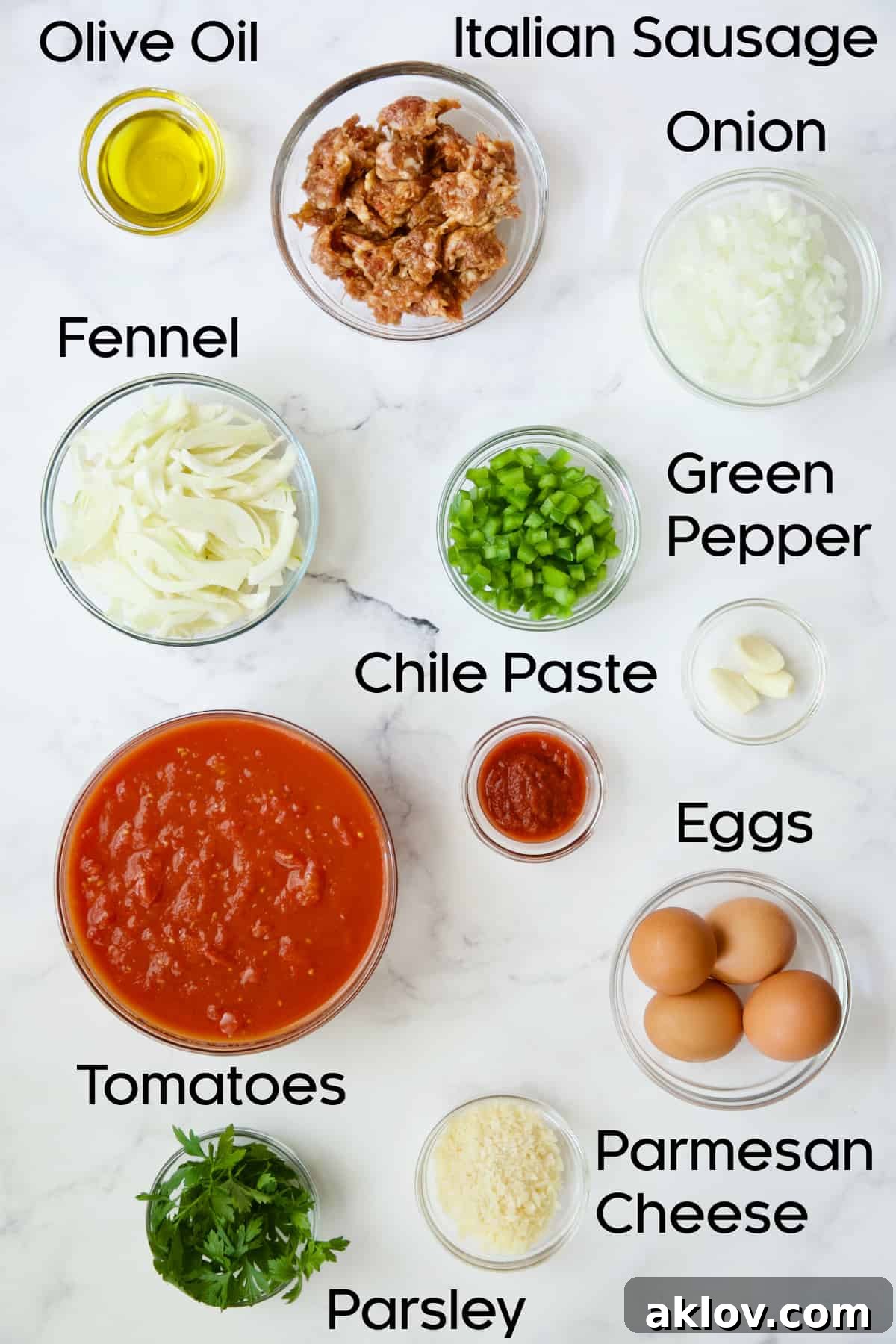
Detailed Ingredient Notes and Savvy Substitutions
- Italian Sausage: The foundation of our “flavor party” is hot Italian sausage, preferably pork-based for its rich taste and succulent texture (brands like Johnsonville are excellent). However, if you prefer a leaner option or are avoiding pork, chicken or turkey Italian sausage can be wonderful substitutes, just ensure they are seasoned well. The heat level is adjustable – use mild Italian sausage if you prefer a less spicy dish.
- Fennel: This often-underestimated vegetable is native to the Mediterranean and holds a special place in Italian cuisine. A member of the carrot family, fennel grows above ground, offering a distinctive mild anise or licorice flavor. While this flavor is more pronounced when eaten raw, it wonderfully mellows and sweetens into a subtle, aromatic note when cooked, adding an intriguing layer of complexity to the sauce.
- Tomatoes: Given that tomatoes are the heart and soul of the purgatory sauce, using the highest quality you can find is paramount. I highly recommend imported Mutti canned cherry tomatoes, which I simply chop directly in the can with kitchen shears for convenience and optimal texture. Their baby Roma tomatoes are another fantastic choice for their sweetness and rich flavor. If you’re fortunate enough to have home-canned or frozen summer tomatoes, these will elevate the dish to an even higher level of freshness and taste. Crushed San Marzano tomatoes are also an excellent premium option.
- Chile Paste: For that authentic, deep heat and complex flavor profile, Calabrian hot chile paste is my secret weapon. Its smoky, fruity notes perfectly complement the tomatoes and sausage. If Calabrian paste is hard to find, a good quality crushed red pepper flakes will certainly do the trick, allowing you to adjust the spice level to your preference. Start with a smaller amount and add more if you like things extra spicy!
- Eggs: Fresh, large eggs are key for the best results. You can comfortably fit up to six eggs in a standard 12-inch skillet. For perfectly runny yolks and set whites, choose eggs that are at room temperature, as they cook more evenly.
- Olive Oil: A good quality extra virgin olive oil is essential for sautéing the vegetables and building the foundational flavors of the sauce.
- Garlic, Onion, Green Bell Pepper: These aromatic vegetables form the classic Italian flavor base (soffritto) that adds depth and sweetness to the spicy tomato sauce. Freshly minced garlic is always preferred for its vibrant aroma.
- Fresh Parsley: Used for both flavor within the sauce and a fresh garnish, parsley adds a bright, herbaceous note that cuts through the richness of the dish.
- Parmesan Cheese: Freshly grated Parmesan or Pecorino Romano cheese is a non-negotiable finishing touch, adding a salty, umami-rich counterpoint to the spicy sauce.
- Crusty Bread: Essential for dipping and soaking up the glorious sauce and runny egg yolks. A good Italian-style baguette or ciabatta works perfectly.
Detailed Step-By-Step Instructions for Culinary Success
Follow these easy steps to create your own unforgettable Eggs in Purgatory with Italian Sausage:
- Begin by gathering and precisely prepping all your ingredients. This mise en place will ensure a smooth and enjoyable cooking process.
- Preheat your oven to 300 degrees Fahrenheit (150 degrees Celsius). This lower temperature allows the eggs to gently poach to perfection without overcooking the whites or yolks.
- In an oven-safe skillet (see our “Chef Tips” below for pan selection), cook the Italian sausage over medium heat. Break up the sausage with a spoon as it cooks until it’s no longer pink and is beautifully browned. Once cooked, transfer the sausage to a paper towel-lined plate to drain any excess fat, then wipe out the skillet to prepare it for the next step.
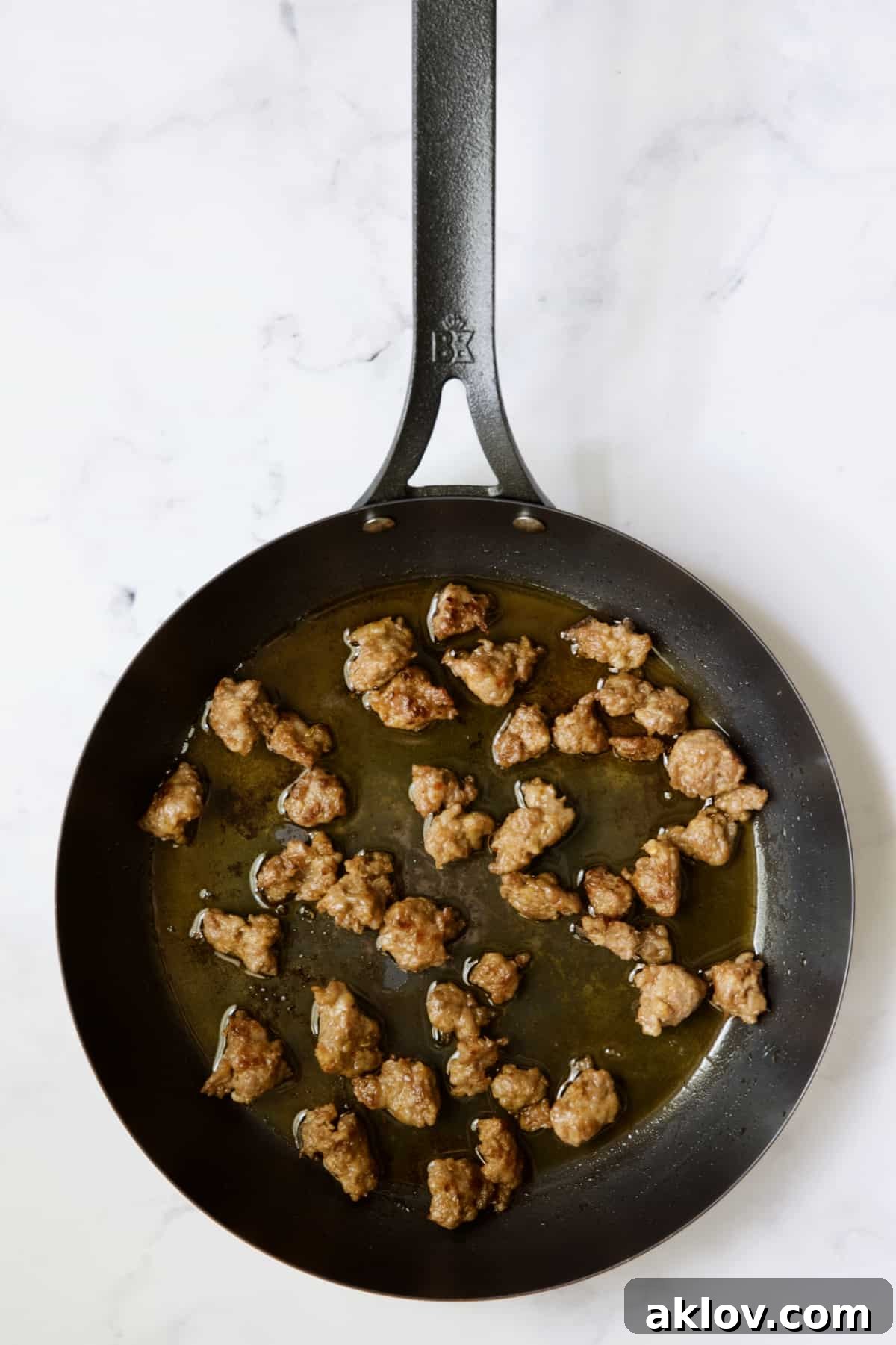
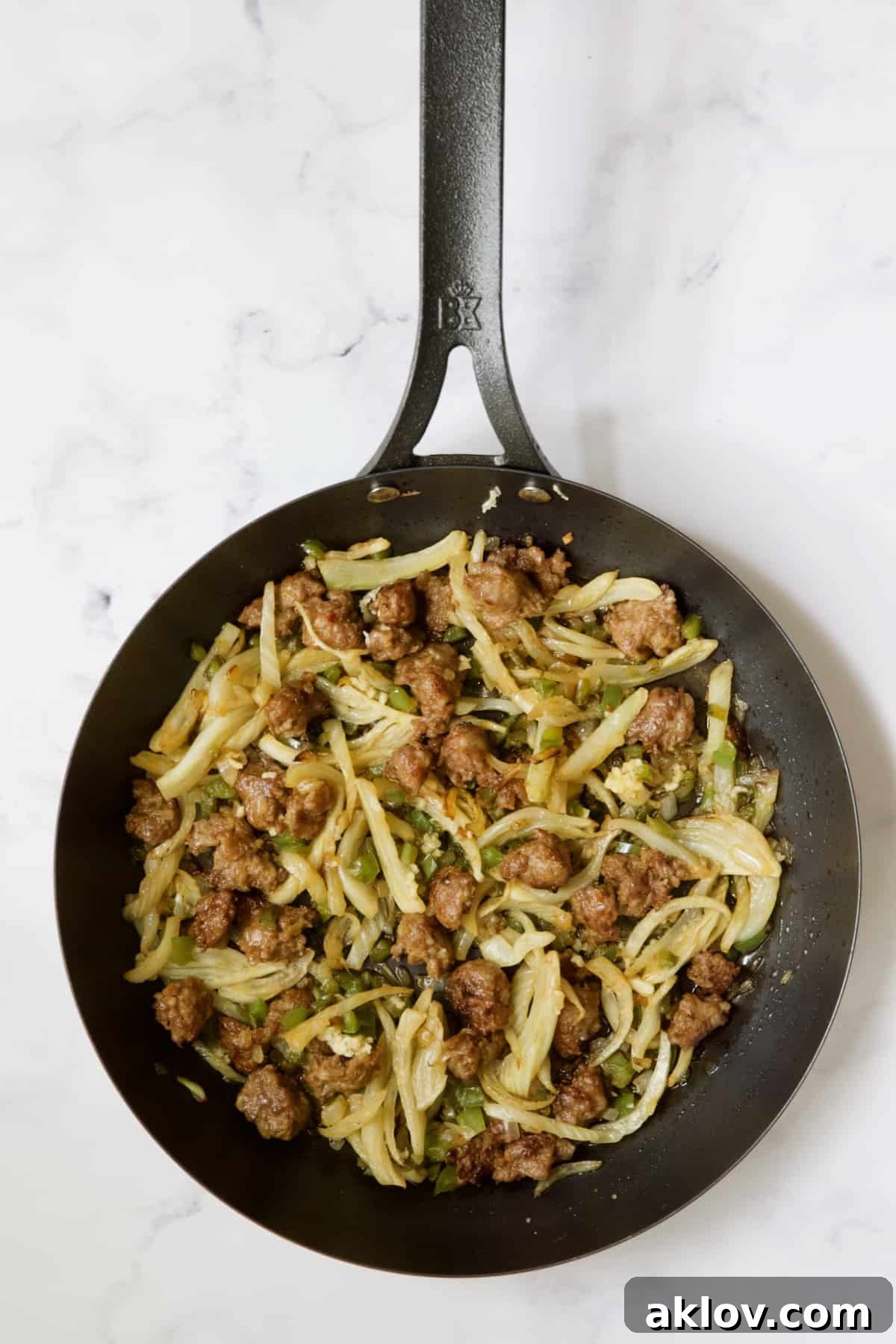
- Return the skillet to medium heat and add the olive oil. Once shimmering, add the thinly sliced fennel, chopped onion, and green bell pepper. Sauté, stirring frequently, for 5-6 minutes, or until the vegetables have softened and become translucent, releasing their sweet aromas.
- Add the cooked sausage back into the skillet with the softened vegetables. Stir everything together, then add the minced fresh garlic. Cook for just 10-15 seconds until the garlic is fragrant, being careful not to burn it.
- Pour in the canned tomatoes, along with all their flavorful juices. Incorporate the hot chili paste (or crushed red pepper flakes) at this stage. Stir well to combine all the ingredients and bring the purgatory sauce to a gentle but steady simmer.
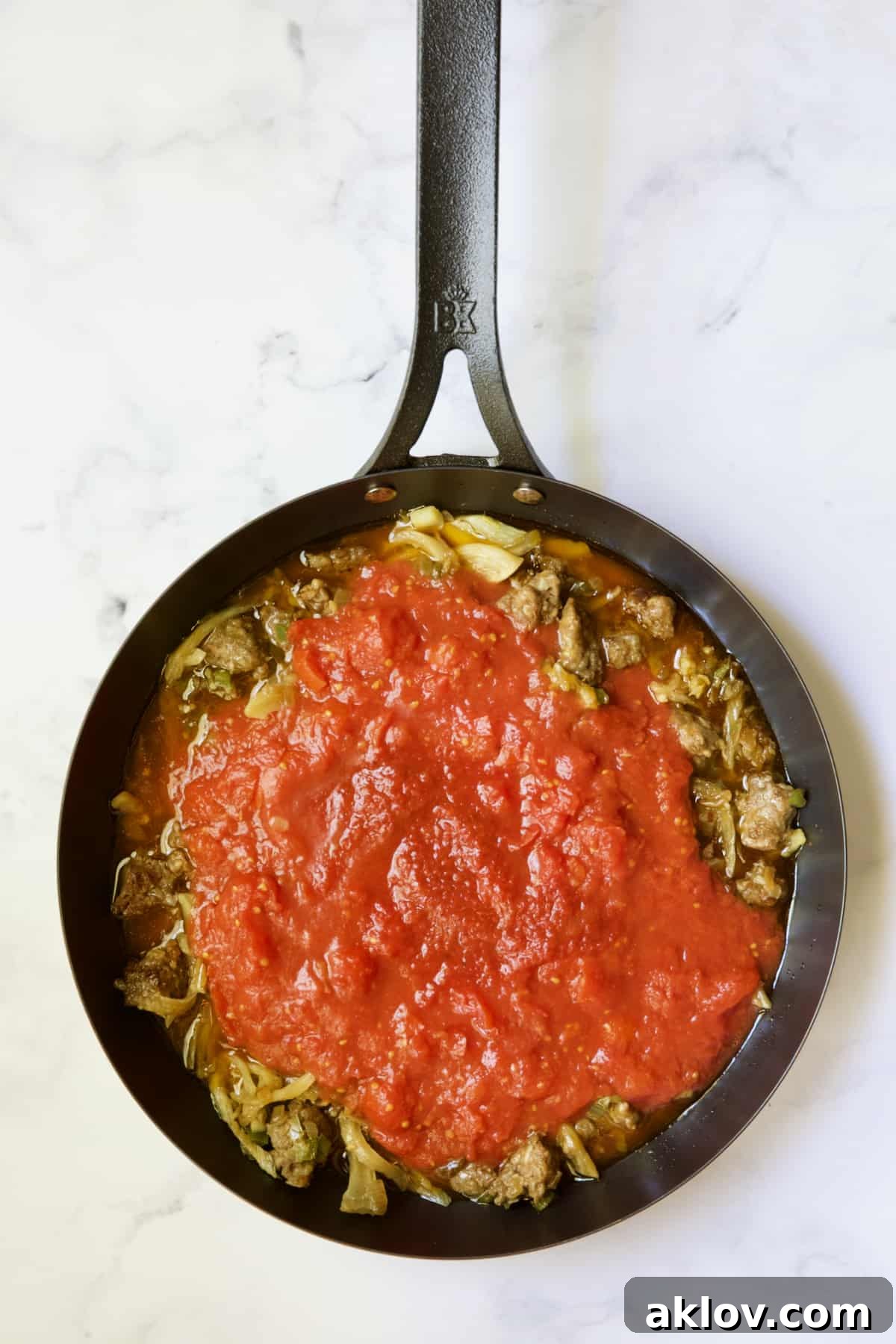
- Continue to simmer the sauce for 10-12 minutes, allowing it to thicken slightly and reduce, concentrating its rich flavors. The longer it simmers, the more depth it will develop.
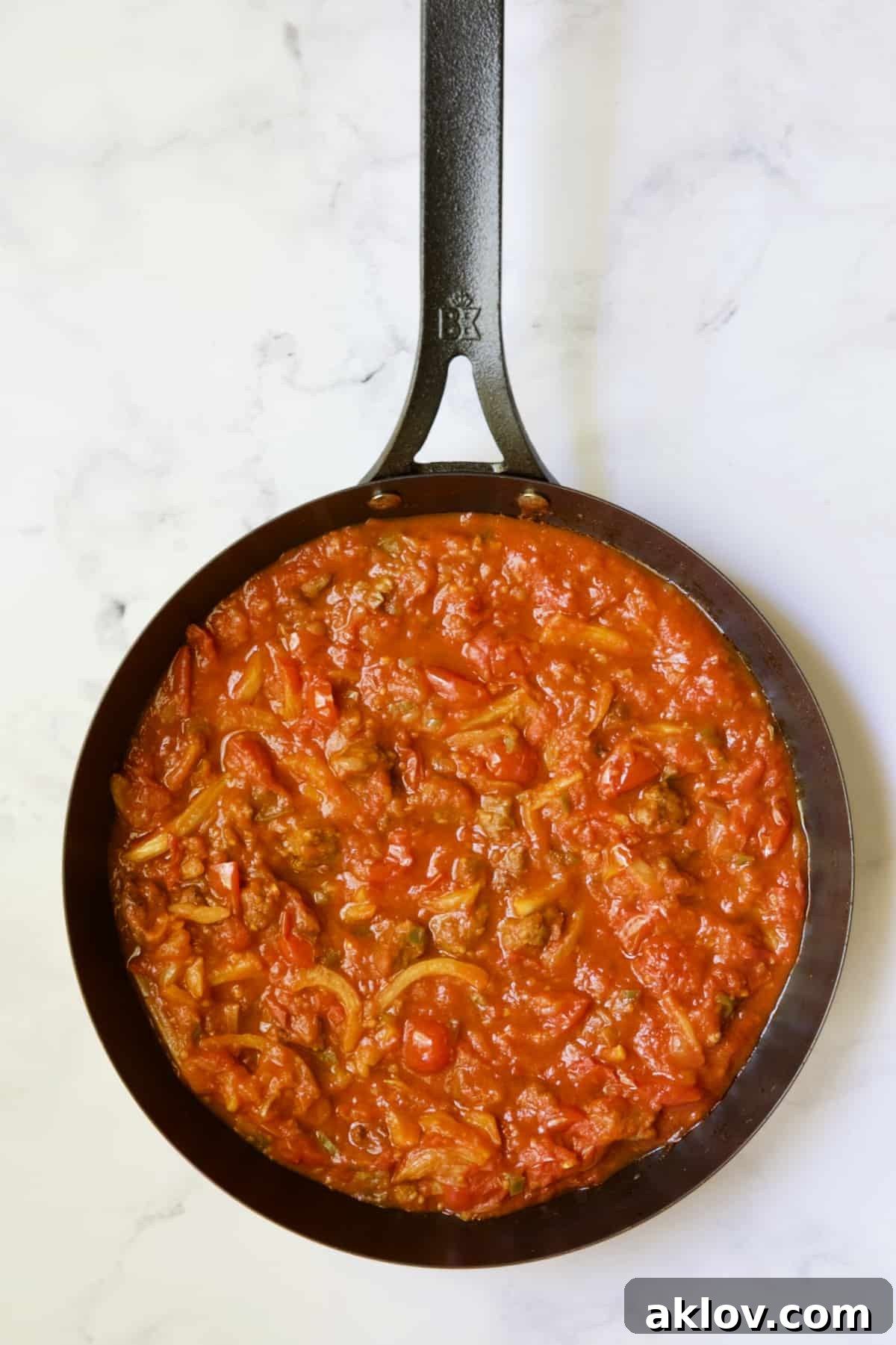
- Remove the skillet from the heat. Stir in half of the chopped fresh parsley, which adds a bright, herbaceous note. Taste the sauce and season generously with salt and freshly ground black pepper to your preference. Remember, proper seasoning is crucial for a truly delicious dish.
- Using the back of a spoon, create four evenly spaced wells in the purgatory sauce mixture. These depressions will gently cradle each egg.
- Crack each egg individually into a small bowl or ramekin before carefully transferring it into one of the prepared wells in the skillet. This technique allows you to easily remove any stray eggshell pieces and inspect the egg’s quality before adding it to the dish, ensuring a flawless presentation.
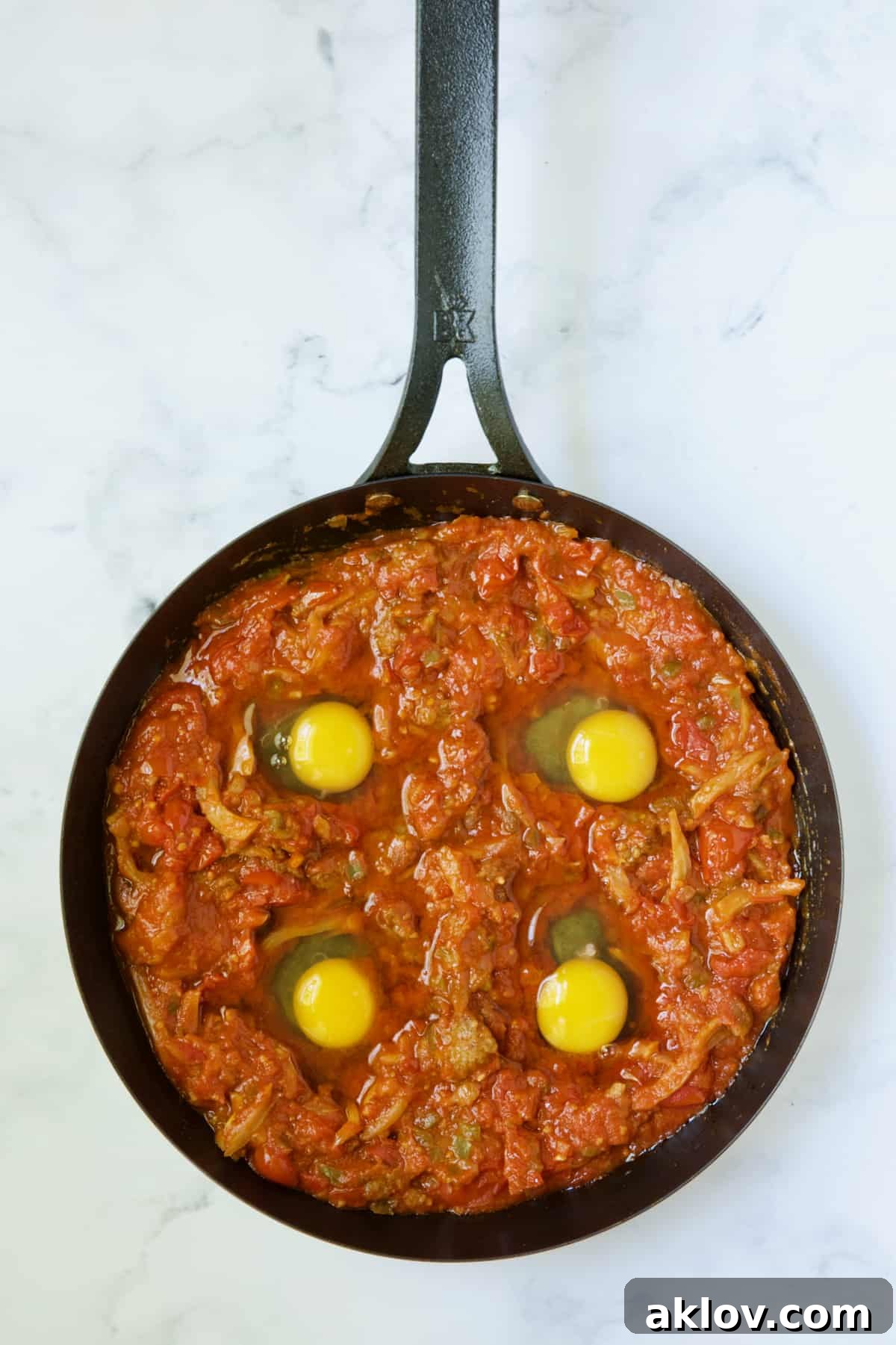
- Carefully transfer the skillet to the preheated oven. Bake for 8-12 minutes, or until the egg whites are just set but the yolks remain beautifully runny. Adjust the baking time according to your personal preference for egg doneness.
- Once baked, remove the skillet from the oven. Generously sprinkle the remaining fresh parsley and freshly grated Parmesan cheese over the top. For an extra kick, a dash of additional crushed red pepper flakes can be added if desired.
- Serve immediately, either directly from the skillet or portioned onto plates. It’s absolutely crucial to serve this with plenty of toasted crusty bread to dip into the rich sauce and glorious runny yolks. Mwaaaaahhhhh! This is a truly satisfying and darn good replication of the memorable dish I enjoyed in Boulder. Enjoy every single bite!

Chef’s Secrets: Expert Tips for Your Eggs in Purgatory
- The Art of Cracking an Egg: For a clean break and to avoid shell fragments in your food, always crack an egg on a FLAT surface – like your countertop or a cutting board – never on the edge of a bowl. Cracking on an edge can push pieces of the shell inward. Give the egg a firm, decisive tap that creates a clean crack without crushing the shell. Then, use your thumbs to gently pull the shell apart over your small bowl.
- Selecting the Perfect Pan: Your choice of skillet is crucial, especially since this dish finishes in the oven.
- Nonstick Skillet: If opting for a nonstick pan, absolutely ensure it is oven-safe and that its handle can withstand oven temperatures. Most modern nonstick skillets made after 2013 are safe for moderate oven temperatures (typically up to 350-400°F or 175-200°C). Since we’re baking at only 300°F (150°C), you should be fine, but always double-check the manufacturer’s guidelines. High heat can damage the nonstick coating over time.
- Cast Iron or Carbon Steel Skillet: These pans offer excellent heat retention and can go directly from stovetop to oven. However, due to the acidity of tomatoes, it is imperative that your cast iron or carbon steel skillet is extremely well-seasoned to prevent the sauce from reacting with the metal, which can lead to off-flavors and potential damage to your seasoning. Enameled cast iron is an outstanding choice here, as the enamel coating provides a non-reactive surface.
- Stainless Steel Pans: A reliable and versatile option, stainless steel pans are generally oven-safe and non-reactive, making them a consistently good choice for this recipe.
- Achieving Perfect Egg Doneness: The beauty of Eggs in Purgatory lies in its runny yolks. For this, cook until the whites are just set but still slightly jiggly, and the yolks are warm and liquid. For firmer yolks, simply extend the baking time by a few minutes, checking frequently.
- Customizing the Heat: The amount of chili paste or red pepper flakes can be adjusted to your family’s preference. For a milder dish, use less; for a truly fiery experience, feel free to add a bit more. You can always pass extra flakes at the table.
- Bread is a Must: Don’t underestimate the importance of crusty bread. It’s not just a side; it’s an integral part of the experience, essential for scooping up every last bit of the delicious sauce and creamy yolk.

Frequently Asked Questions About Eggs in Purgatory
This classic dish, with its numerous cultural variations (such as Shakshuka in the Middle East), carries a name steeped in rich tradition and metaphor. The Italian version of Eggs in Purgatory is believed to have originated in Naples, in southern Italy, as a humble dish for the less fortunate. In Catholic theology, purgatory is described as a state or place of purification where souls are cleansed of their sins before entering heaven. It’s widely speculated that the “purgatory” in the dish’s name refers either to the intensely bubbling, fiery red tomato sauce in which the eggs are gently poached, or to the “fire” (heat) imparted by the chile paste or crushed red pepper flakes that infuse the sauce with its characteristic spice. Both interpretations evoke the imagery of a cleansing, intense warmth, making the name both evocative and fitting for this vibrant dish.
Absolutely! The beauty of this recipe is its adaptability. You can prepare the flavorful purgatory sauce – including the cooked Italian sausage and vegetables – one to two days in advance. Simply cook the sauce up to the point where you would add the eggs, then allow it to cool completely. Transfer the cooled sauce to an airtight storage container and refrigerate it. When you’re ready to serve, bring the sauce back to a gentle simmer in an oven-safe skillet on the stovetop. Once heated through, create the wells and proceed with adding the eggs and baking as directed. This makes it an ideal choice for entertaining or busy mornings.
While the dish is best enjoyed fresh due to the delicate nature of poached eggs, if you’re as dedicated to minimizing food waste as I am, reheating is possible with a few caveats. The eggs will likely cook further and lose their runny yolk consistency, becoming firmer. To reheat, I suggest placing the leftovers in a small skillet on the stovetop. Cover the skillet and reheat over very low heat until everything is warmed through. Avoid high heat, which can overcook the eggs and dry out the sauce.
The versatility of Eggs in Purgatory truly knows no bounds, making the sky the limit for creative variations. You can keep it deliciously simple and traditional by just cooking the eggs in a basic marinara sauce or crushed tomatoes, omitting the sausage and vegetables. For a hearty meatless version, consider adding chickpeas, cannellini beans, or lentils to boost protein and texture. If you have leftover cooked pasta, stir it into the sauce for a complete and satisfying meal. You can also experiment with different vegetables like spinach, kale, zucchini, or mushrooms. Varying the type of sausage (e.g., chicken, turkey, or even a spicy chorizo) or adding a pinch of smoked paprika can also introduce exciting new flavors. This dish is incredibly forgiving and encourages improvisation with whatever ingredients you have on hand.
The most essential accompaniment is crusty bread, such as Italian bread, ciabatta, or a baguette, perfect for soaking up the delicious sauce and runny yolks. Beyond that, a simple green salad with a light vinaigrette can provide a refreshing contrast. A side of roasted potatoes or polenta can also make the meal even heartier, especially for dinner. For brunch, a fresh fruit salad would offer a lovely balance.
More Delicious Breakfast & Brunch Recipes to Explore!
If you’ve enjoyed this recipe, you’ll love exploring other vibrant and flavorful dishes from my kitchen. Here are a few recommendations to expand your breakfast and brunch horizons:
- Spicy Baked Denver Omelet
- Shakshuka with Red Lentils and Feta Cheese
- Spinach Leek and Feta Cheese Frittata
- Crustless Quiche with Sausage Bacon and Ham
Discover all my delectable breakfast and brunch creations at Breakfast and Brunch Recipes – From A Chef’s Kitchen.

Print Recipe
Eggs in Purgatory with Italian Sausage
Carol | From A Chef’s Kitchen
25 mins
35 mins
1 hr
4
Equipment
-
Wusthof Chef Knife
-
Cutting Board
-
Oven-Safe Skillet (e.g., Nonstick, Enameled Cast Iron, or Stainless Steel)
-
Calabrian Hot Chile Paste
-
Mutti Canned Cherry Tomatoes
Ingredients
- 2 links hot Italian sausage, casings removed
- 2 tablespoons olive oil, plus more for toasting the bread if desired
- 1 small fennel bulb, thinly sliced vertically
- 1/2 small onion, finely chopped (approximately 1 cup)
- 1/2 small green bell pepper, chopped
- 3 cloves garlic, minced
- 1 can (28-ounce) whole tomatoes, preferably San Marzano (Roma, baby Roma or cherry), hand crushed or chopped with kitchen shears
- 1 tablespoon Calabrian hot chili paste, or 1 teaspoon crushed red pepper flakes, to taste
- 1/4 cup chopped fresh parsley, divided
- Salt, to taste
- Freshly ground black pepper, to taste
- 4 large eggs, (or up to 6, depending on skillet size)
- 1/4 cup freshly grated Parmesan cheese
- Crusty Italian-style bread, optional, brushed with olive oil and lightly toasted
Instructions
-
Preheat your oven to 300°F (150°C). This gentle heat is ideal for poaching eggs without overcooking them.
-
Place the Italian sausage, with casings removed, into a heavy 12-inch ovenproof skillet. Heat to medium and cook, stirring and breaking it up with a spoon, for 4-5 minutes until it is browned and thoroughly cooked. Transfer the cooked sausage to a paper towel-lined plate to drain excess fat. Wipe out any remaining fat from the skillet.
-
Return the skillet to medium heat and add the 2 tablespoons of olive oil. Once the oil is shimmering, add the sliced fennel, chopped onion, and green bell pepper. Sauté, stirring frequently, for 5-6 minutes until the vegetables have softened and become tender.
-
Stir in the minced garlic and cook for an additional 10-15 seconds until it becomes fragrant. Be careful not to let the garlic brown or burn.
-
Add the canned whole tomatoes, including all their juice (hand crush them or chop with kitchen shears if not already crushed), along with the hot chili paste or crushed red pepper flakes. Bring the sauce to a good simmer, then reduce the heat slightly and cook for 10-12 minutes, allowing the sauce to thicken and its flavors to meld beautifully. Remove the skillet from the heat.
-
Stir half of the chopped fresh parsley into the sauce. Taste the sauce for seasoning and adjust with salt and freshly ground black pepper as needed.
-
Using the back of a spoon, create four distinct wells within the tomato, sausage, and vegetable mixture in the skillet. Crack each egg into a small bowl first before carefully placing it into one of the prepared wells. This ensures no shells get into the dish and allows for easy removal of any chalaza if desired.
-
Carefully transfer the skillet to the preheated oven. Bake for 8-12 minutes. The cooking time will vary depending on how firm you prefer your egg yolks. For runny yolks, aim for the shorter end of the cooking time, ensuring the whites are set.
-
Once baked, remove from the oven. Sprinkle the remaining fresh parsley and the freshly grated Parmesan cheese over the eggs and sauce.
-
Serve immediately, directly from the skillet, with lightly toasted crusty Italian-style bread for dipping.
Notes
A standard 12-inch skillet can comfortably fit up to six eggs, allowing you to easily adjust servings.
TIP:
- For a clean break and to avoid eggshell fragments, always crack eggs on a FLAT surface like your countertop or cutting board, not on the edge of a bowl. A good, decisive tap—neither too hard nor too gentle—is key.
MAKE AHEAD:
- The delicious tomato, meat, and vegetable mixture can be prepared 1-2 days in advance. Once cooked, allow it to cool completely before transferring to a non-reactive, airtight container and refrigerating.
- When ready to serve, simply bring the sauce mixture back to a gentle simmer on the stovetop in an oven-safe skillet before adding the eggs. Then, proceed with baking as directed in the recipe.
Nutrition
- Serving:
- 1
- Calories:
- 384kcal
- Carbohydrates:
- 9g
- Protein:
- 18g
- Fat:
- 31g
- Saturated Fat:
- 10g
- Polyunsaturated Fat:
- 4g
- Monounsaturated Fat:
- 15g
- Trans Fat:
- 1g
- Cholesterol:
- 233mg
- Sodium:
- 615mg
- Potassium:
- 533mg
- Fiber:
- 2g
- Sugar:
- 1g
- Vitamin A:
- 758IU
- Vitamin C:
- 23mg
- Calcium:
- 154mg
- Iron:
- 2mg
Nutritional values are automatically calculated using unbranded products and are estimates only. Actual results may vary based on ingredients used and portion sizes. Adjust as needed for dietary restrictions, allergies, or health concerns.

Enjoyed this recipe? Leave a comment or share your experience below!