
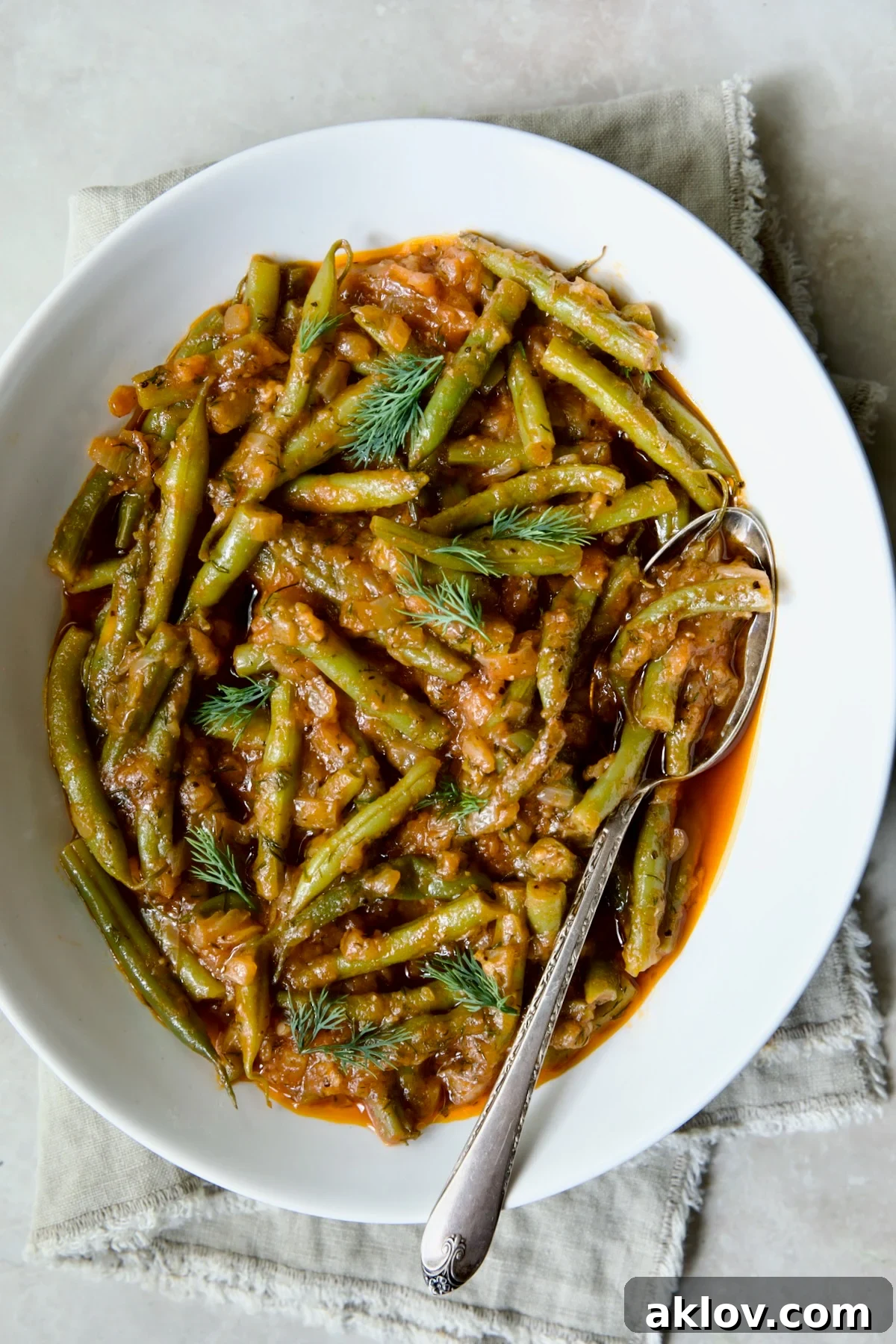
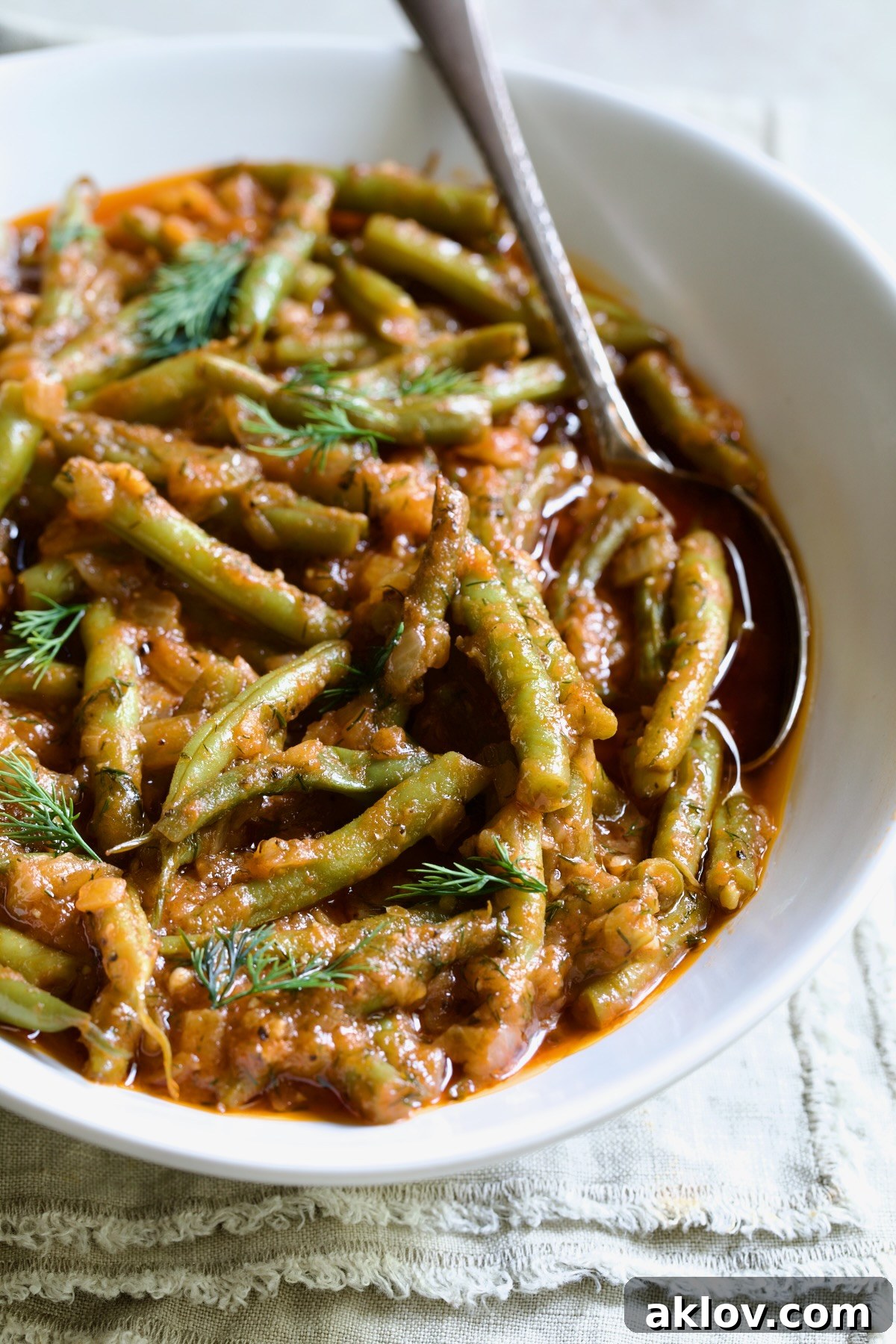
Discover the delightful simplicity and profound flavors of Greek Green Beans, known in Greece as Fasolakia Lathera. This quintessential Mediterranean dish features fresh green beans slowly braised in a rich, tangy tomato sauce, infused with fruity olive oil, aromatic dill, and savory garlic until they achieve a melt-in-your-mouth, buttery tenderness. It’s a recipe that promises both comforting familiarity and vibrant, fresh taste, making it an ideal companion to a variety of meals.
“Absolutely delicious! I’ve made them several times and they’re always a hit!”
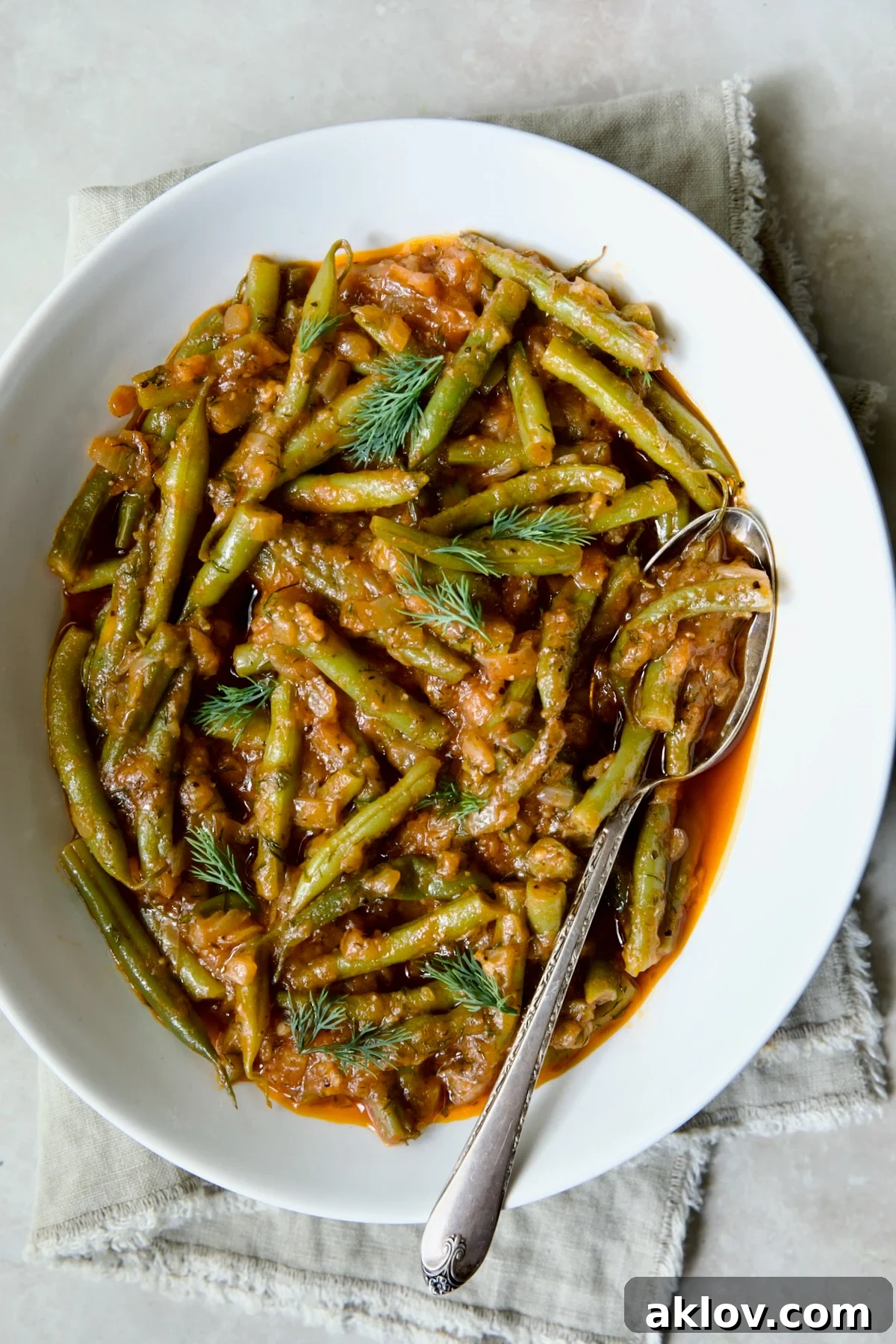
Why This Braised Green Bean Recipe is a Culinary Treasure
Slow-braised green beans in a tomato-based sauce are a culinary cornerstone across many Mediterranean cultures, celebrated for their ability to transform humble vegetables into a profoundly flavorful experience. Much like Turkish-inspired Mediterranean Braised Green Beans, or even the vibrant Roasted Green Beans with Tomato-Caper Relish, this Greek version stands out with its unique blend of traditional herbs and slow-cooking method.
My journey to perfecting this Greek Green Beans recipe began at a local Greek Orthodox church’s annual “Greekfest.” There, amidst a feast of authentic flavors, I first tasted this incredible green bean dish. Its deep, layered flavors compelled me to purchase one of their community cookbooks, a treasure trove of cherished family recipes. This specific recipe quickly became a beloved staple in my own kitchen, and I’m thrilled to share its magic with you.
This Fasolakia Lathera recipe offers numerous advantages:
- Effortlessly Simple: Requiring minimal active preparation, this dish relies on slow cooking to develop its rich flavor, making it perfect for busy weeknights or relaxed weekend cooking.
- Unforgettably Delicious: The combination of tender green beans, savory garlic, tangy tomato, and bright dill creates a harmonious flavor profile that is both rustic and refined. Dill, in particular, is a match made in heaven for green beans, elevating their natural sweetness.
- Ideal for Any Green Bean: Whether you have tender young beans or larger, tougher late-season varieties, the slow braising process tenderizes them beautifully, absorbing all the wonderful flavors of the sauce. It’s a fantastic way to use up garden-fresh produce.
- Freezer-Friendly Convenience: Prepare a larger batch and freeze portions for quick, healthy side dishes whenever you need them. The flavors deepen even further after freezing and reheating.
- Remarkably Versatile: Elevate this side dish into a hearty vegetarian main course by adding potatoes, transforming it into the classic Greek dish, Fasolakia Lathera me Patates. You can also experiment with other vegetables like zucchini or carrots.
Mastering Greek Green Beans: A Step-by-Step Guide
Essential Recipe Ingredients:
Gathering the right components is the first step to creating authentic and flavorful Greek Green Beans. Here’s what you’ll need for this delicious side dish. Specific quantities are detailed in the recipe card further down the page.
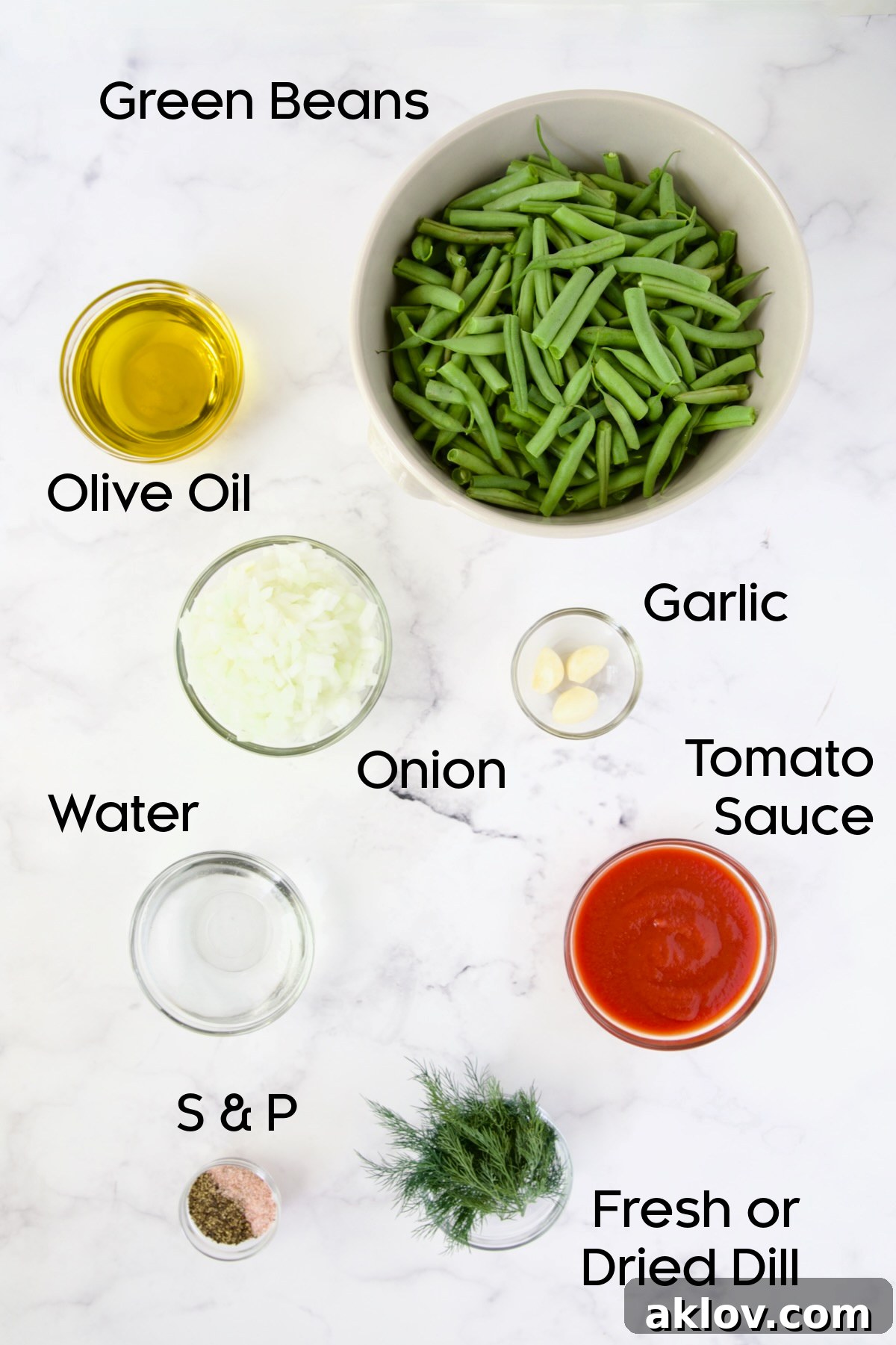
Ingredient Insights and Smart Substitutions:
- Green Beans: The beauty of this Greek Green Beans recipe lies in its forgiving nature. Because the beans undergo a slow, tender braise in a rich tomato and olive oil mixture, it’s perfectly suited for any variety of green beans. While regular “string” beans are common, don’t hesitate to use yellow wax beans or broader Romano beans. This method is particularly excellent for those larger, more fibrous late-season beans that might otherwise seem tough, transforming them into succulent, flavorful morsels.
- Olive Oil: As the backbone of many Mediterranean dishes, a good quality extra-virgin olive oil is crucial here. Its fruity notes are essential to the dish’s depth of flavor. While you don’t need a premium “finishing” oil, choose one that offers a pleasant aroma and taste. For an alternative, avocado oil can also be used, offering a neutral flavor profile.
- Tomato Sauce: I typically use an 8-ounce can of standard tomato sauce for its convenience and subtle seasonings that enhance the overall taste of the Greek Green Beans. If an 8-ounce can isn’t readily available, or you prefer not to open a larger one for a small quantity, a simple substitution works: mix one level tablespoon of concentrated tomato paste into one cup of water. This yields a similar consistency and depth of tomato flavor.
- Dill: Fresh dill is highly recommended for this recipe. Its bright, herbaceous, slightly citrusy flavor truly elevates the dish, creating that authentic Greek taste. I’ve tested this recipe with both fresh and dried dill, and the fresh version consistently delivers a superior, more vibrant result. Fresh herbs typically retain their delicate flavor best when added towards the end of cooking. If dried dill is your only option, ensure you add it early in the cooking process to allow it ample time to rehydrate and “bloom,” releasing its full aroma and softening its texture.
Detailed Step-By-Step Instructions:
Follow these straightforward steps to create your perfect batch of Greek Green Beans:
- Begin by gathering and precisely prepping all your ingredients as listed. This ensures a smooth cooking process.
- In a spacious skillet or a sturdy sauté pan, heat the olive oil over medium-high heat. Allow it to shimmer gently, indicating it’s ready.
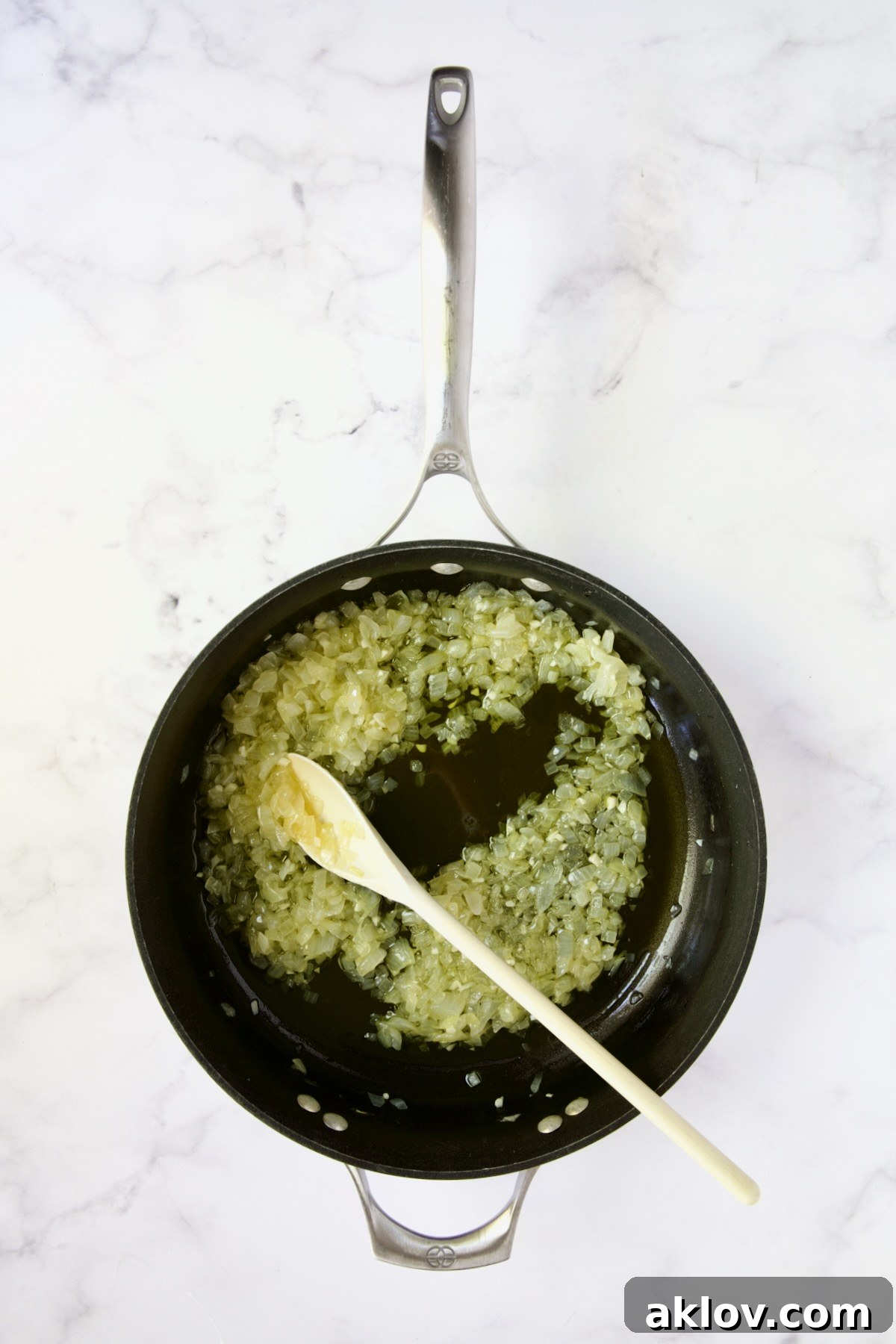
- Add the chopped onion to the heated oil. Reduce the heat to medium-low and cook for about 8 to 10 minutes. Stir occasionally until the onion softens considerably and becomes beautifully translucent, forming a sweet, aromatic base for the dish.
- Introduce the minced garlic to the pan. Sauté it briefly, just 5 to 10 seconds, until it becomes wonderfully fragrant, being careful not to let it brown, which can make it bitter.
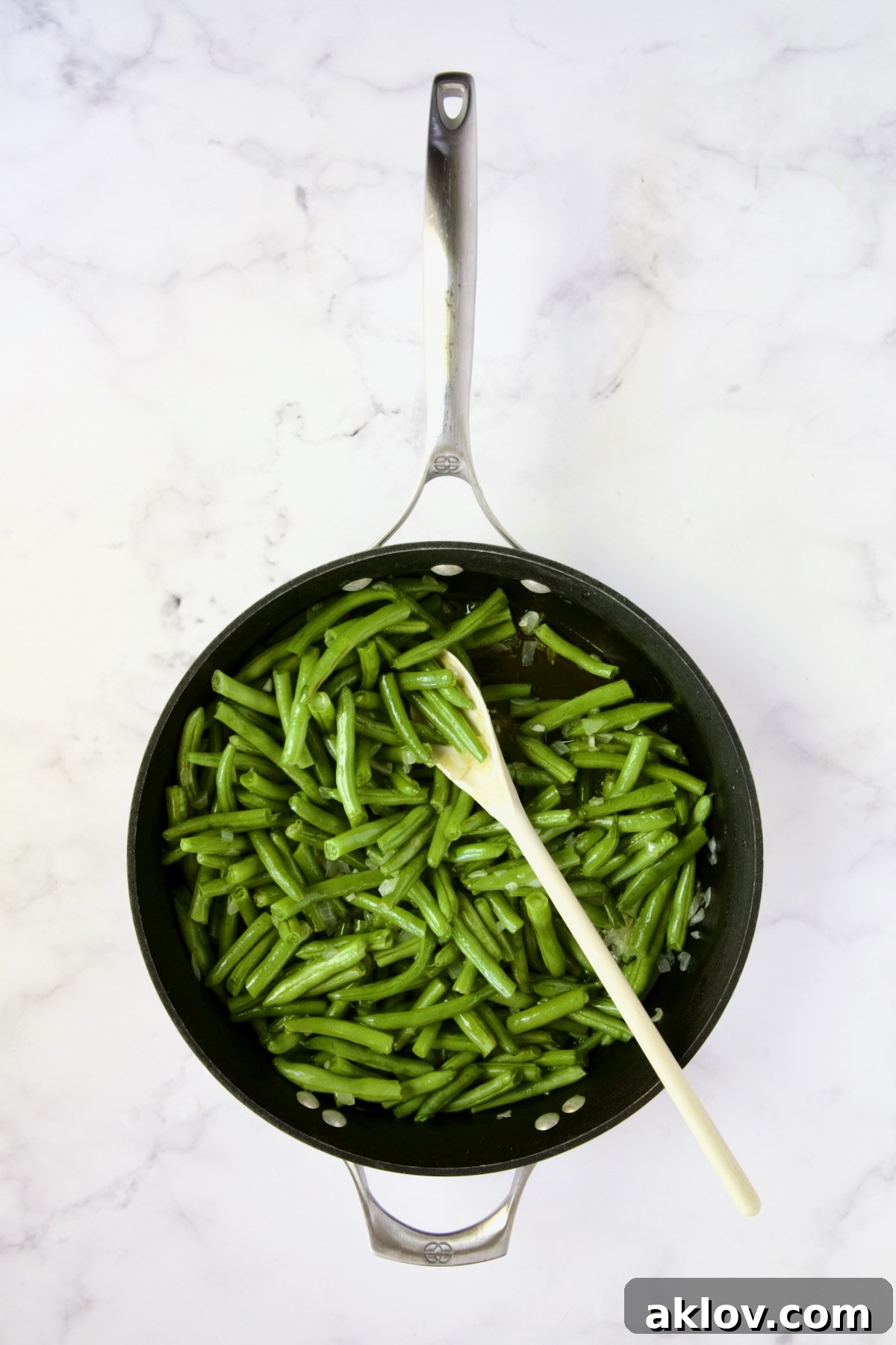
- Add the trimmed green beans to the pan with the softened onions and garlic. Stir them briefly to coat them in the fragrant oil mixture, allowing them to absorb the initial flavors.
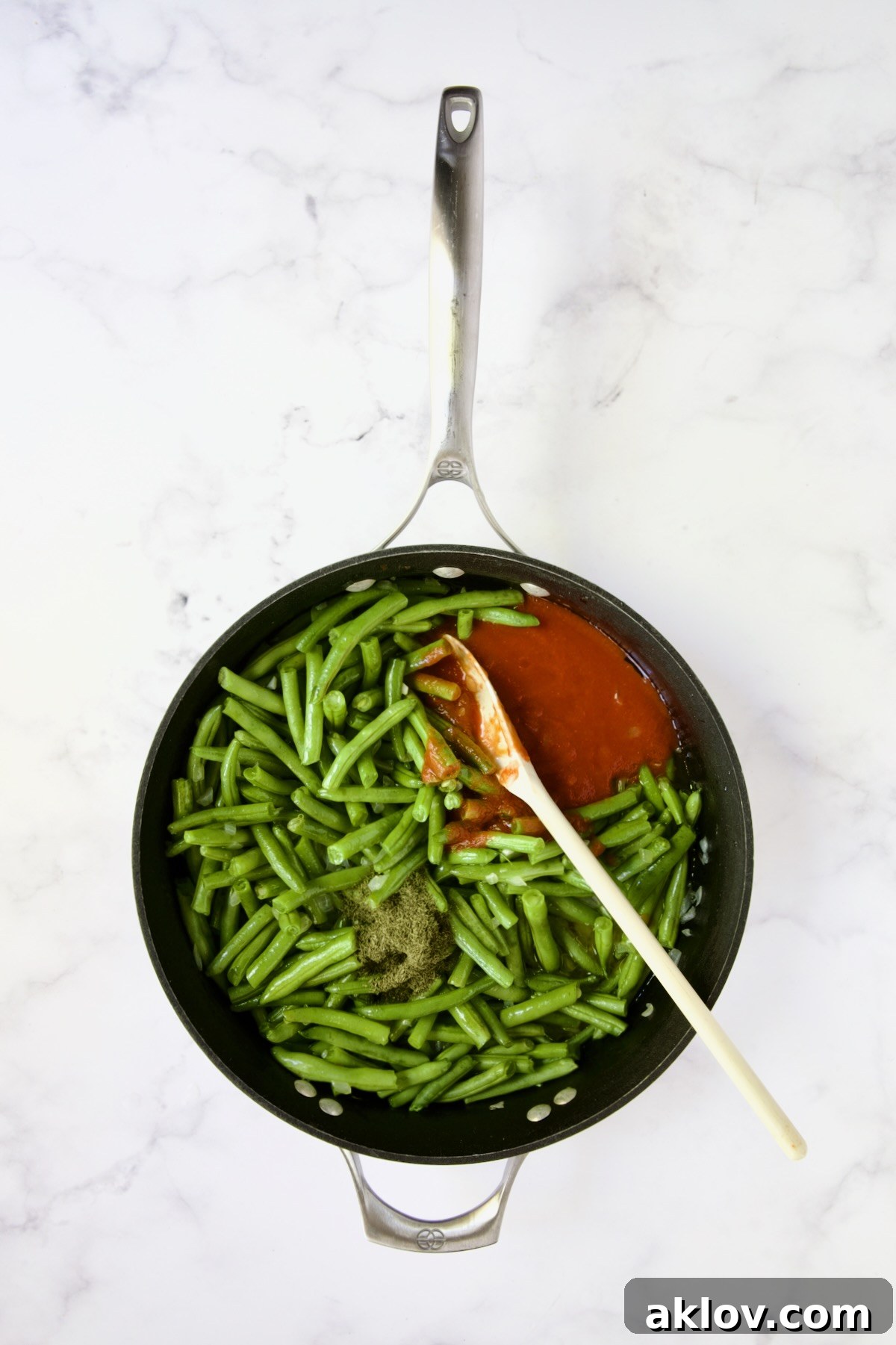
- Pour in the tomato sauce, followed by the water or broth. If you are using dried dill, add it at this stage. Stir everything together gently to combine all the ingredients thoroughly, ensuring the beans are well coated in the savory liquid.
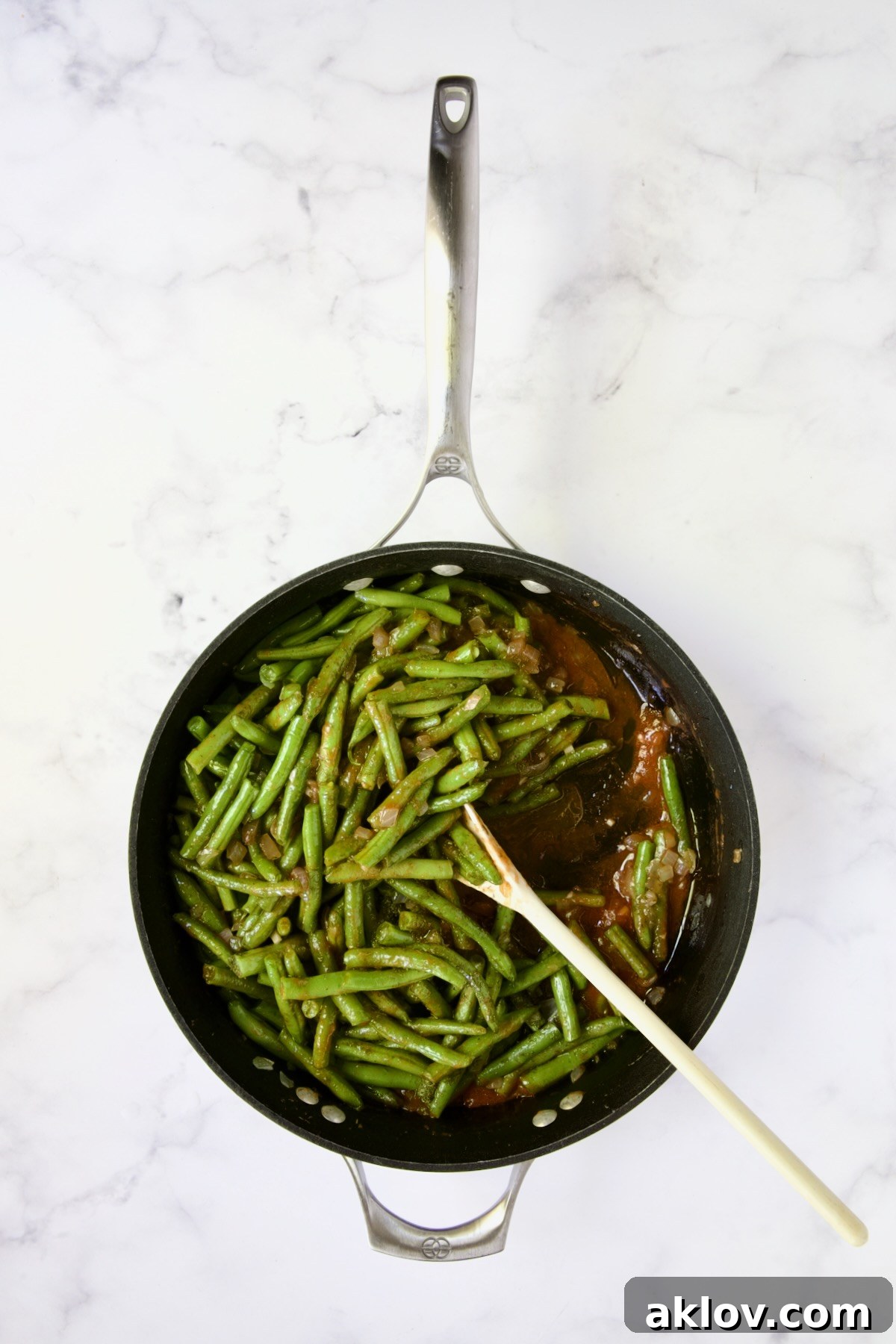
- Bring the mixture to a gentle simmer. Once simmering, reduce the heat to low, cover the pan, and let the Greek Green Beans braise for 30 to 35 minutes. Continue cooking until the beans are exquisitely tender and practically melt in your mouth. If you opted for fresh dill, stir it in during the final minute or two of cooking to preserve its vibrant flavor and color.
- Taste the finished dish and season generously with salt and freshly ground black pepper to your preference.
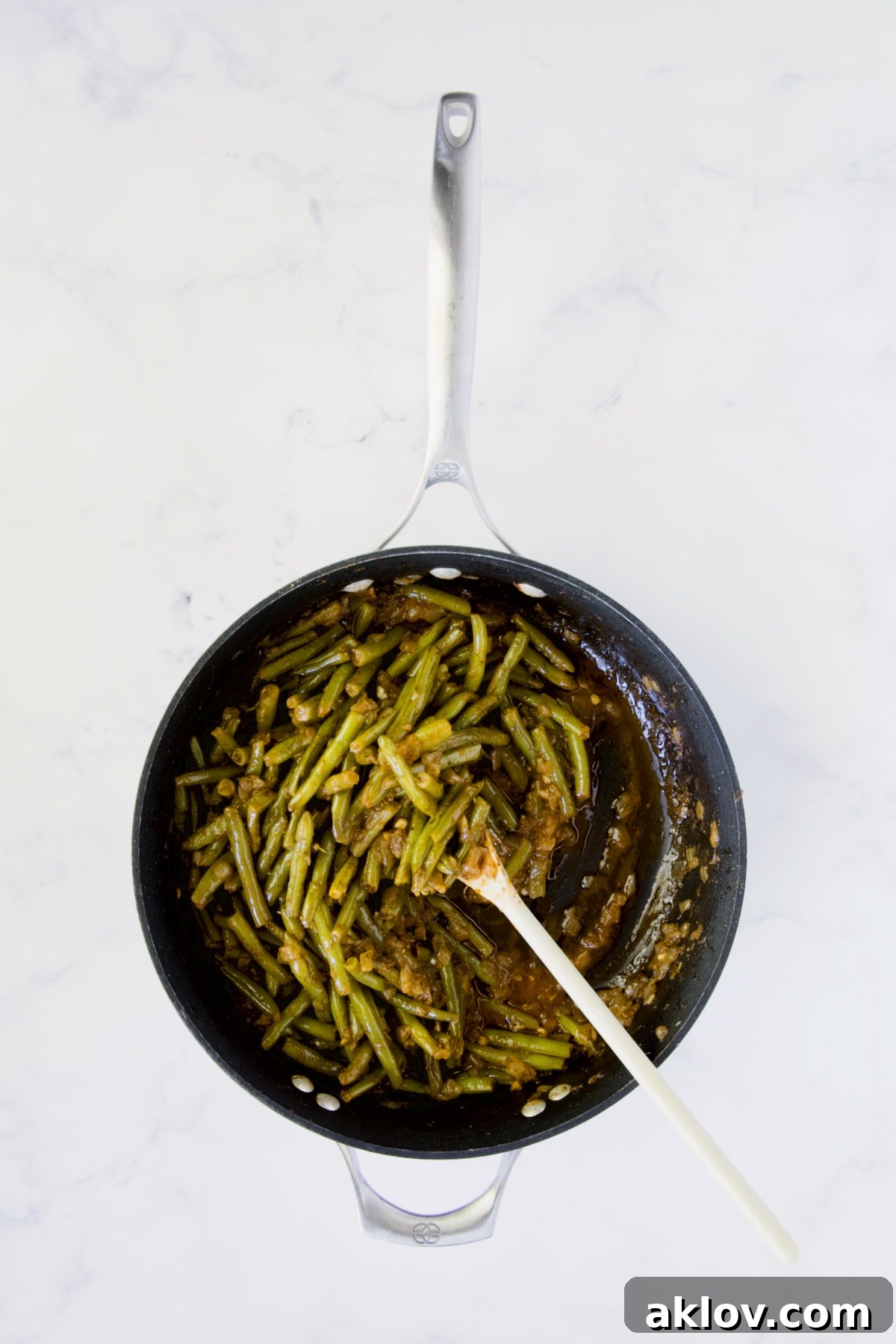
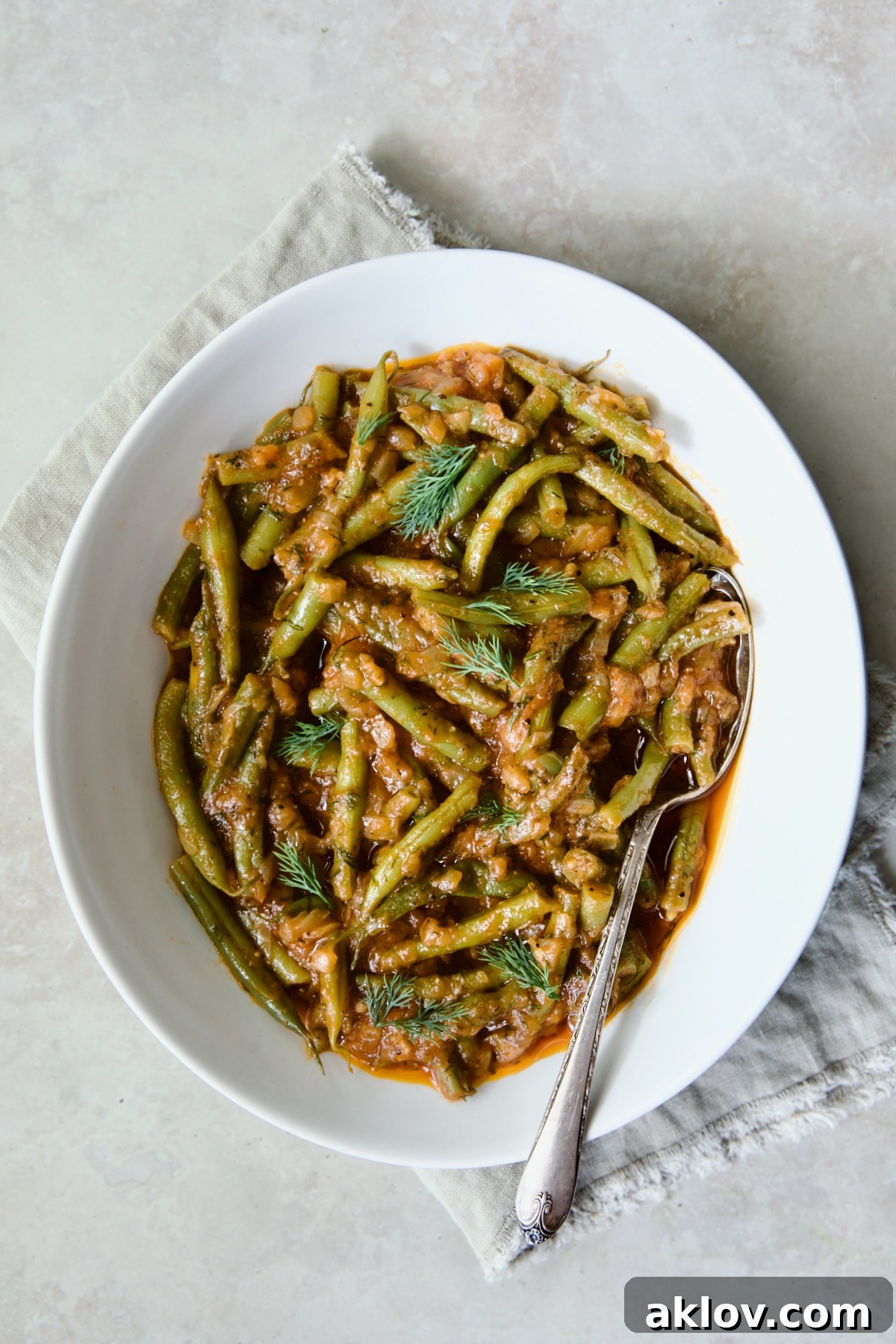
- And just like that, your luxurious, slow-braised Greek-style green beans are ready! This side dish is a guaranteed winner, offering incredible depth of flavor and tender texture. Serve them with a side of crusty bread to soak up the delicious sauce, enjoy them as part of a traditional Greek mezze platter, or pair them alongside your favorite Greek-inspired entrée.
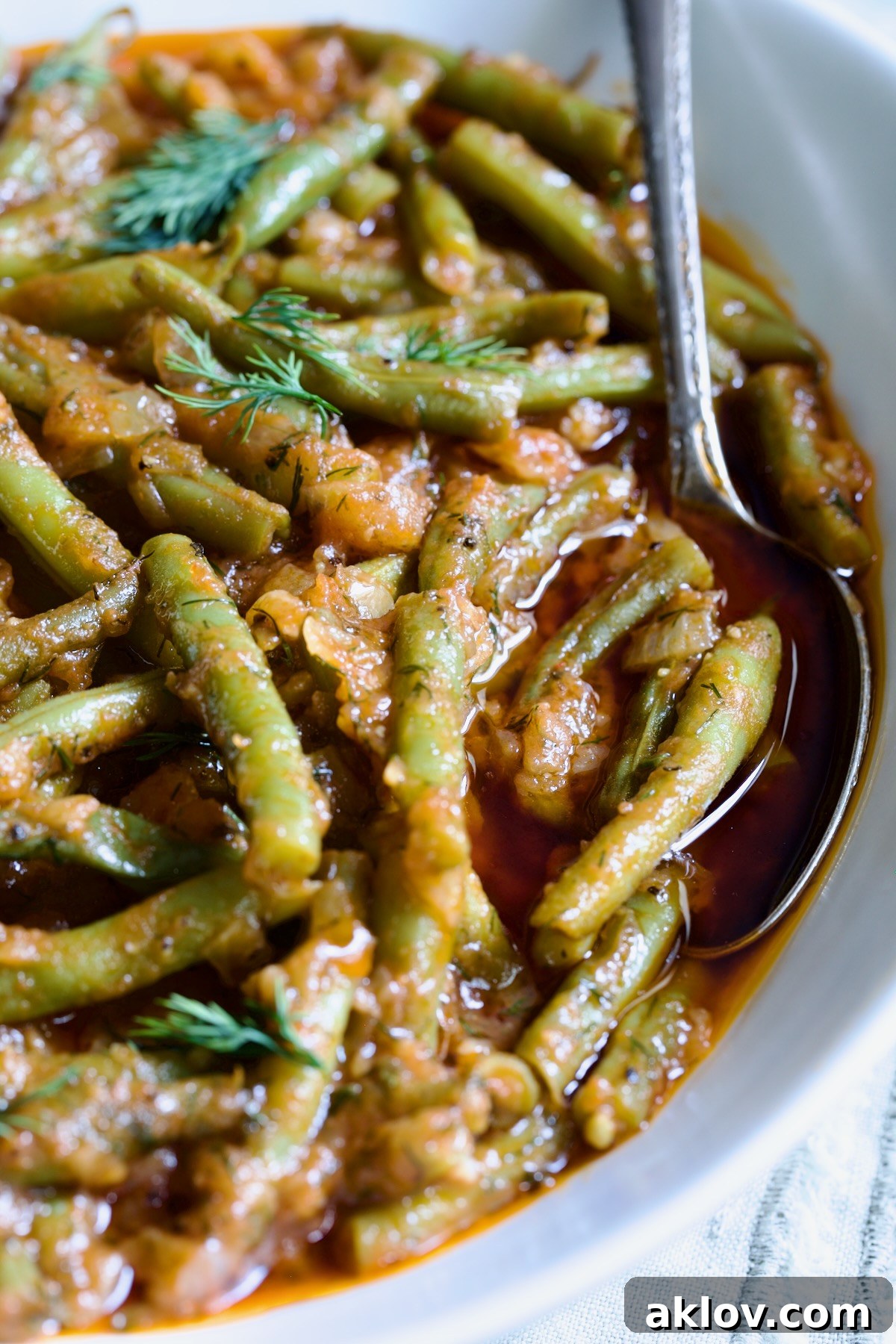
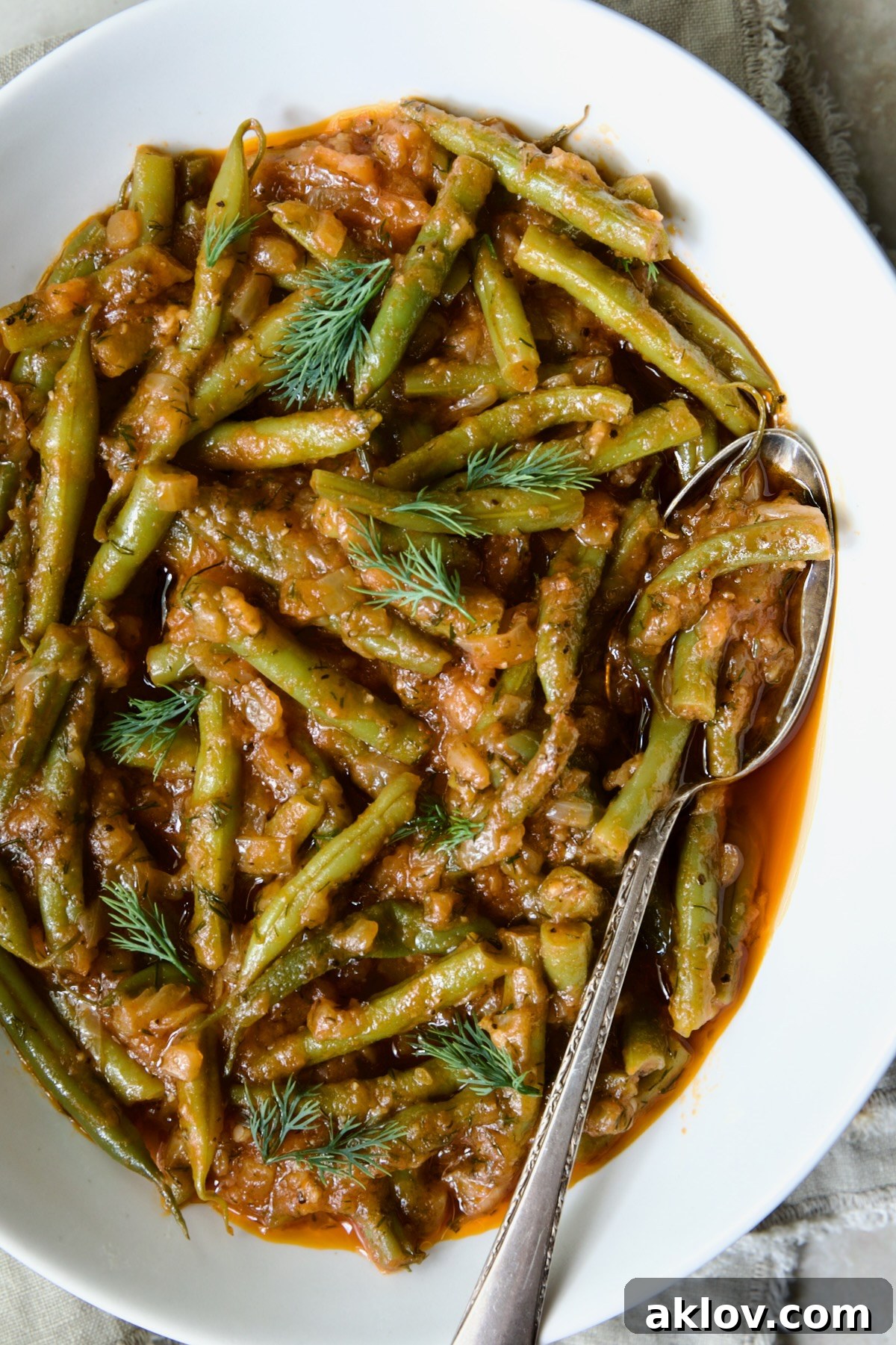
- It’s natural for the green beans to turn a slightly olive or army green color during the long cooking process. This is a normal result of extended heat exposure and doesn’t affect their flavor or texture. For a burst of fresh color and aroma upon serving, consider garnishing with a sprinkle of fresh dill sprigs or chopped parsley.
Chef’s Secrets: Tips and Tricks for Perfect Greek Green Beans
- Over my many years as a personal chef, I’ve experimented with countless methods to streamline the process of trimming green beans. While there’s no truly magical shortcut, remember that only the tough stem end needs to be removed. The tapered bottom tip is perfectly edible and tender. Here are a few practical approaches to make this task more efficient:
- Embrace the Zen: For a mindful approach, simply trim them one by one. It can be surprisingly therapeutic.
- The Batch Method: Line up several green beans on a cutting board, aligning their stem ends, and slice them off with a sharp knife. While effective, I sometimes find the alignment process a bit time-consuming.
- The Snap Technique: Grab two or three beans in one hand and use your other hand to quickly snap off the stem ends. This method is often the quickest for smaller batches.
- Kitchen Shears Power: For even greater speed, grasp a small bundle of beans with visible stem ends and use kitchen shears to snip them off efficiently.
- When it comes to herbs, a good rule of thumb distinguishes between fresh and dried varieties. Dried herbs, such as dried dill, benefit from being added earlier in the cooking process. This allows them time to rehydrate and “bloom,” fully releasing their concentrated flavors into the dish. Conversely, fresh herbs like fresh dill or parsley are best incorporated towards the end of cooking, or even as a garnish. This preserves their delicate aromatics, bright color, and vibrant flavor, which can diminish with prolonged heat.
Frequently Asked Questions About Greek Green Beans
Absolutely! In fact, these Greek Green Beans often taste even better the next day as the flavors have more time to meld and deepen. You can prepare them up to two days in advance. Simply cook them according to the recipe, allow them to cool completely, then store them in an airtight container in the refrigerator. To reheat, you can use the microwave or gently warm them in a saucepan on the stovetop with a splash of water, covered, until heated through. They can also be reheated in a covered casserole dish in a moderate oven.
Yes, Greek Green Beans freeze exceptionally well, primarily because the slow cooking process already makes the beans wonderfully silky and soft, preventing them from becoming mushy upon thawing. Cook the dish as directed, ensure it’s fully cooled, then transfer it into airtight, freezer-safe containers or bags. They can be stored in the freezer for up to three months. To enjoy, thaw them in the refrigerator overnight or use the defrost setting on your microwave, then reheat gently until warmed through.
While common green beans (string beans) are traditional, this recipe is quite adaptable. You can successfully use other varieties such as tender yellow wax beans, which offer a slightly sweeter profile, or broad, flat Romano beans, which hold their shape well and absorb the rich tomato sauce beautifully.
Storage and Reheating for Maximum Enjoyment
- Refrigerator Storage: Any leftover Greek Green Beans should be stored in an airtight container in the refrigerator. They will maintain their delicious flavor and texture for up to five days. Reheat them gently in the microwave or on the stovetop. When reheating on the stovetop, add a tablespoon or two of water to prevent drying out and ensure they warm evenly.
- Freezer Storage: For longer storage, cooked and cooled green beans can be placed in an airtight, freezer-safe container or heavy-duty freezer bag. They can be kept in the freezer for up to three months. Thaw in the refrigerator before reheating, or reheat directly from frozen on a lower heat setting with a little added liquid.
Perfect Pairings: What to Serve with Greek-Style Green Beans
These flavorful Greek Green Beans make a versatile side dish that complements a wide array of main courses. Here are some suggestions to create a complete and satisfying meal:
- Greek Lamb Chops: The rich, savory lamb is beautifully balanced by the tangy, herbaceous green beans.
- Grilled Marinated Skirt Steak with Peperonata: The robust flavors of grilled steak find a refreshing contrast in the tender green beans.
- Shrimp Cakes with Roasted Red Bell Pepper Mayonnaise: A lighter seafood option that pairs wonderfully with the bright notes of the beans.
- Zucchini Quiche with Feta Cheese and Brown Rice Crust: For a vegetarian meal, the green beans add a hearty, flavorful element.
- Skillet Spanakopita (Greek Spinach and Feta Pie): Enhance your Greek feast with another classic, complemented by the tender green beans.
- Vegetarian Dolma Recipe for Swiss Chard Leaves (with Tzatziki): A traditional vegetarian delight that harmonizes perfectly with the slow-cooked green beans.
Explore More Fantastic Green Bean Recipes You’ll Love!
- Skillet Charred Green Beans with Goat Cheese and Chipotle Butter: A smoky, cheesy, and spicy twist on green beans.
- Thai Green Beans: For an exotic, sweet, and savory flavor adventure.
- Lasagna with Pesto Green Beans and Potatoes: An unexpected and delightful combination in a comforting pasta dish.
- Cheesy Green Bean Casserole: A classic comfort food with a decadent, cheesy upgrade.
For an abundance of vegetable inspiration, explore all my vegetable side dish recipes at Side Dishes – Vegetables – From A Chef’s Kitchen.
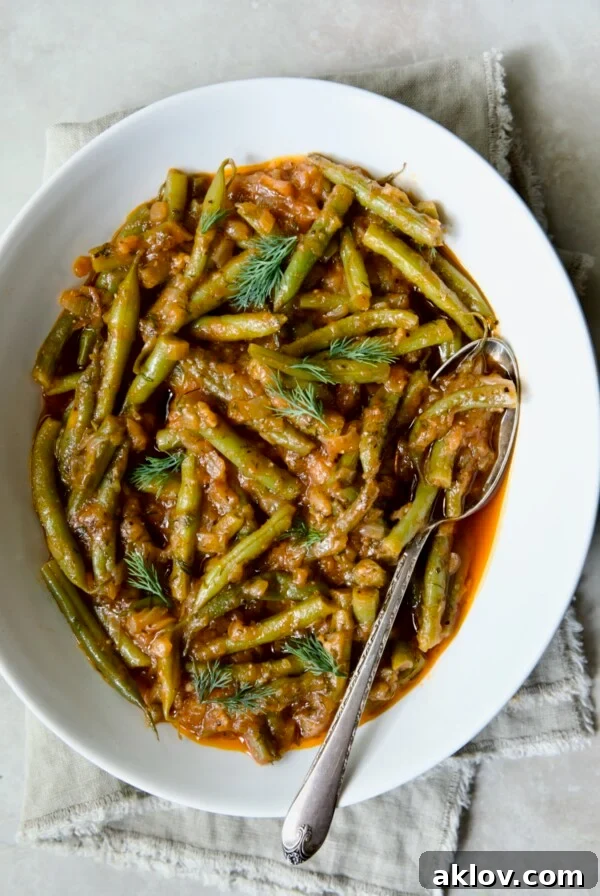
Greek Green Beans
Green beans are braised in tangy tomato sauce and fruity olive oil until buttery soft and tender in this easy Greek-inspired recipe. Greek Green Beans have an element of comfort yet sing with vibrant flavor!
Equipment
-
Wusthof Chef Knife
-
Cutting Board
-
Colander
-
Nonstick Skillet
Ingredients
- 1/2 cup olive oil
- 1 medium onion, chopped
- 3 cloves garlic, chopped
- 1 1/2 pounds green beans, ends trimmed and cut into approximately 2-inch pieces
- 1 can (8-ounce) tomato sauce, or 1/2 of a 15-ounce can
- 1/2 cup water, or broth
- 2 teaspoons dried dill, or 1 tablespoon chopped fresh dill
- Salt and freshly ground black pepper, to taste
- Chopped fresh parsley or dill sprigs, optional, for garnish
Instructions
-
Heat the olive oil over medium-high heat in a large skillet or sauté pan.
-
Add the onion, reduce heat to medium-low and cook for 8-10 minutes or until softened and translucent.
-
Add the garlic and cook briefly, 5-10 seconds or until fragrant.
-
Add the green beans and stir briefly.
-
Add the tomato sauce, water or broth and dried dill (if using dried).
-
Bring to a simmer, reduce heat to low, cover and simmer for 30-35 minutes or until the beans are extremely tender. If using fresh dill, add it and cook another 1 to 2 minutes.
-
Season to taste with salt and black pepper.
Notes
SUBSTITUTES:
- Use avocado oil in place of olive oil.
- Substitute one level tablespoon of tomato paste mixed into a cup of water for the tomato sauce.
TIP:
- If using dried dill, add it early in the cooking process as directed. If using fresh, add it near the end of cooking.
MAKE AHEAD:
- Can be made up to two days ahead. Cook as directed, cool then refrigerate.
- Reheat in the microwave or return to a saucepan with just a little water, cover, and simmer until heated through.
- Can also be reheated in a covered casserole dish in the oven.
FREEZER-FRIENDLY:
- Cook as directed, cool, place in airtight containers, and freeze for up to three months.
- Thaw in the refrigerator or the microwave, then heat through.
Nutrition
Serving: 1
Calories: 205kcal
Carbohydrates: 10g
Protein: 2g
Fat: 18g
Saturated Fat: 3g
Polyunsaturated Fat: 2g
Monounsaturated Fat: 13g
Sodium: 11mg
Potassium: 284mg
Fiber: 3g
Sugar: 4g
Vitamin A: 803IU
Vitamin C: 16mg
Calcium: 56mg
Iron: 1mg
Nutritional values are automatically calculated using unbranded products and are estimates only. Actual results may vary based on ingredients used and portion sizes. Adjust as needed for dietary restrictions, allergies, or health concerns.
 Like this? Leave a comment below!