
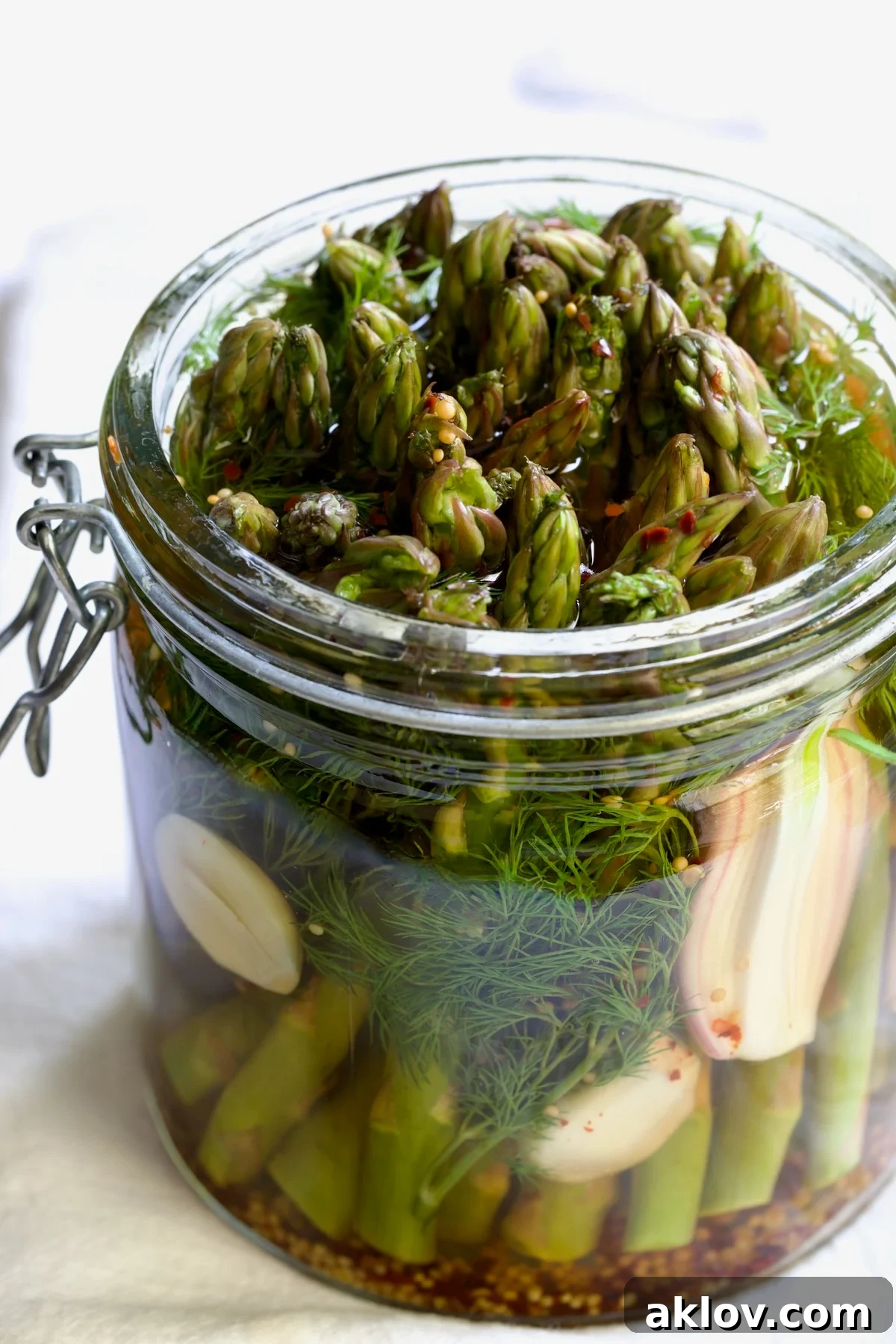
As spring unfurls its vibrant tapestry, fresh asparagus emerges as one of its most anticipated culinary gifts. Its tender spears and distinct flavor are a true delight, but its season, alas, is fleeting. What if you could capture that elegant taste and crisp texture, preserving it to enjoy long after spring has passed? With this incredibly simple and satisfying Pickled Asparagus recipe, you can! Forget the complexities of traditional canning; this quick pickling method demands only a few common pantry ingredients and minimal effort. The reward is a batch of bright, tangy asparagus spears, perfect for enhancing your next gourmet charcuterie board, adding a sophisticated touch to a relish tray, or serving as the ultimate garnish for a classic Bloody Mary. They even make a delightful accompaniment to an elegant Chicken Salad. Prepare to fall in love with the art of simple, homemade preserving!
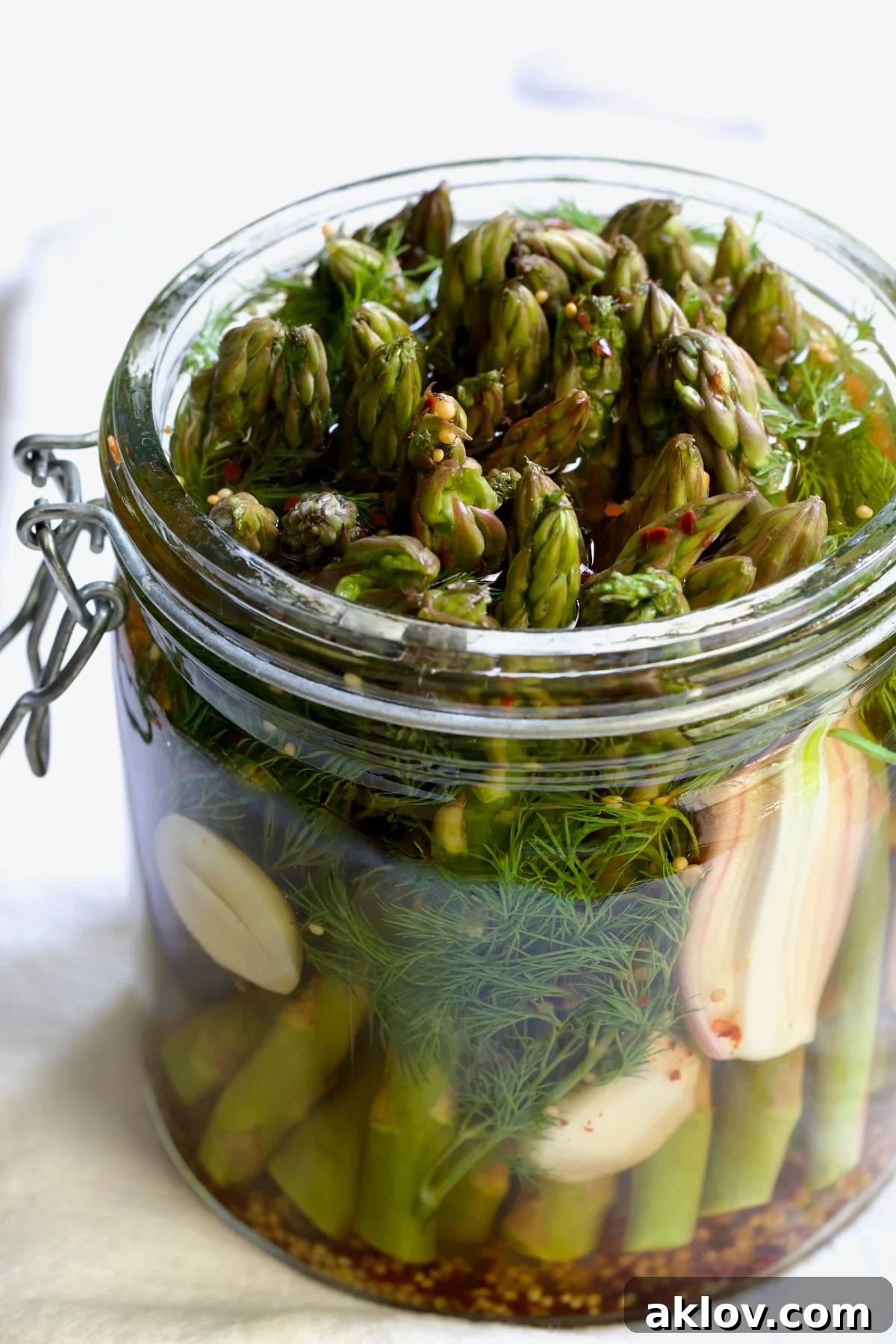
Unlock the Flavor: Why This Pickled Asparagus Recipe is a Must-Try
For culinary enthusiasts and home cooks alike, the joy of a perfectly executed pickled vegetable is undeniable. I confess, I’m an ardent admirer of all things pickled – from the vibrant crunch of quick pickled Brussels sprouts to the earthy sweetness of dill-infused beets, and the robust, savory medley of classic giardiniera. My pantry is often stocked with an array of tangy delights. Yet, when it comes to the hierarchy of pickled vegetables, pickled asparagus truly ascends to the rank of crème de la crème. Its delicate flavor, coupled with a satisfying snap, makes it an unparalleled gourmet treat.
Beyond its exquisite taste, these zesty asparagus spears are incredibly versatile in the kitchen. Envision them as the focal point of your next sophisticated charcuterie spread, offering a bright, acidic counterpoint to rich cheeses and savory cured meats. They shine when arranged elegantly on a relish tray, transforming a simple appetizer into something special. For brunch aficionados, they serve as a sophisticated, flavorful garnish for a spicy Bloody Mary. Beyond formal settings, they can elevate a humble sandwich, or simply provide a quick, refreshing snack when your palate yearns for a vibrant, tangy kick. Their ability to adapt to so many culinary roles makes them a true kitchen hero.
What truly sets this particular pickled asparagus recipe apart is its remarkable simplicity and accessibility. There’s no need for specialized canning equipment, extensive sterilization processes, or lengthy kitchen sessions. This quick pickling method streamlines the entire experience. You simply select fresh, ideally medium-width, asparagus spears and trim them to fit comfortably into your chosen jars. These are then packed tightly with aromatic additions like pungent garlic, delicate shallots, and fragrant fresh dill. The magic happens with a quick and easy brine, expertly concocted from basic kitchen staples, which is then poured over the prepared vegetables. The most challenging aspect? A modest amount of patience! These flavorful spears require just a day or two to steep in the zesty brine, allowing them to fully absorb all the wonderful, nuanced flavors.
This quick pickled asparagus recipe is more than just a set of instructions; it’s an invitation to savor the season’s finest produce and enjoy vibrant, complex flavors with minimal fuss. Here’s why this recipe deserves a permanent, cherished spot in your personal recipe collection:
- Effortlessly Easy & Beginner-Friendly: If you possess the ability to boil water and perform basic vegetable chopping, you have all the skills necessary to master this recipe. It’s an ideal entry point for anyone eager to explore the rewarding world of home preserving without intimidation.
- Economical & Sustainably Smart: Springtime often blesses us with an abundance of fresh asparagus, sometimes more than we can reasonably consume before it loses its peak freshness. Pickling offers a brilliant, budget-conscious solution to extend the shelf life of this seasonal vegetable, effectively preventing food waste. It transforms a fleeting spring delight into a consistent pleasure you can enjoy for weeks.
- An Explosion of Dynamic Flavor: This isn’t merely plain pickled asparagus. Our expertly crafted tangy brine is deeply infused with a delightful pungency from whole mustard seeds, delivering a subtle yet satisfying warmth from crushed red pepper flakes. The fresh dill contributes an essential herbaceous brightness, creating a complex and utterly irresistible taste profile that will keep you reaching for “just one more.”
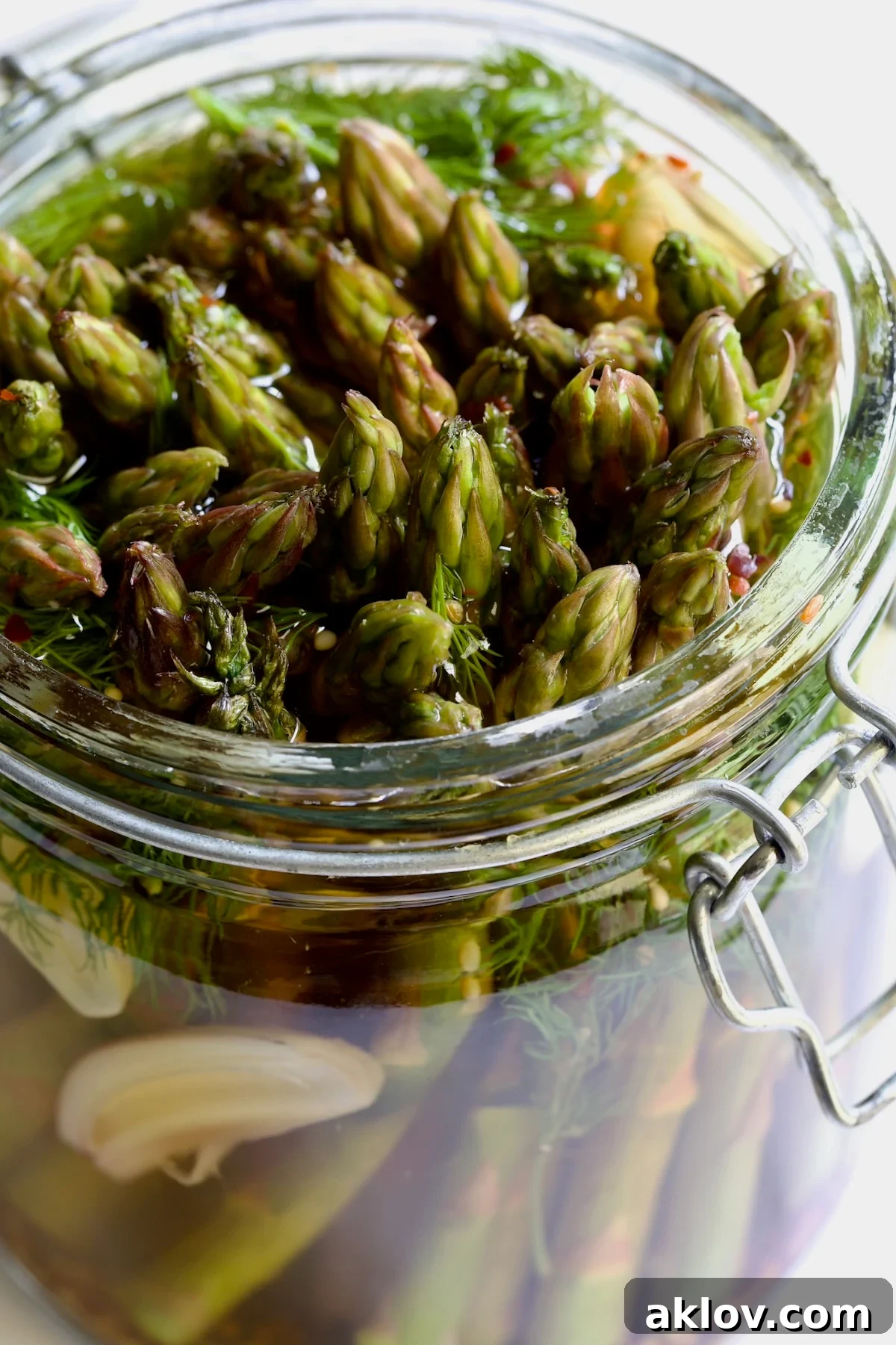
Crafting Your Own Pickled Asparagus: A Simple Guide
Essential Ingredients for Perfect Pickled Asparagus:
The journey to creating these delightful pickled treats begins with gathering your essential ingredients. The precise quantities for each item are meticulously detailed in the comprehensive recipe card found further down this page. For now, let’s explore the components you’ll need to ensure your pickled asparagus recipe is a resounding success.
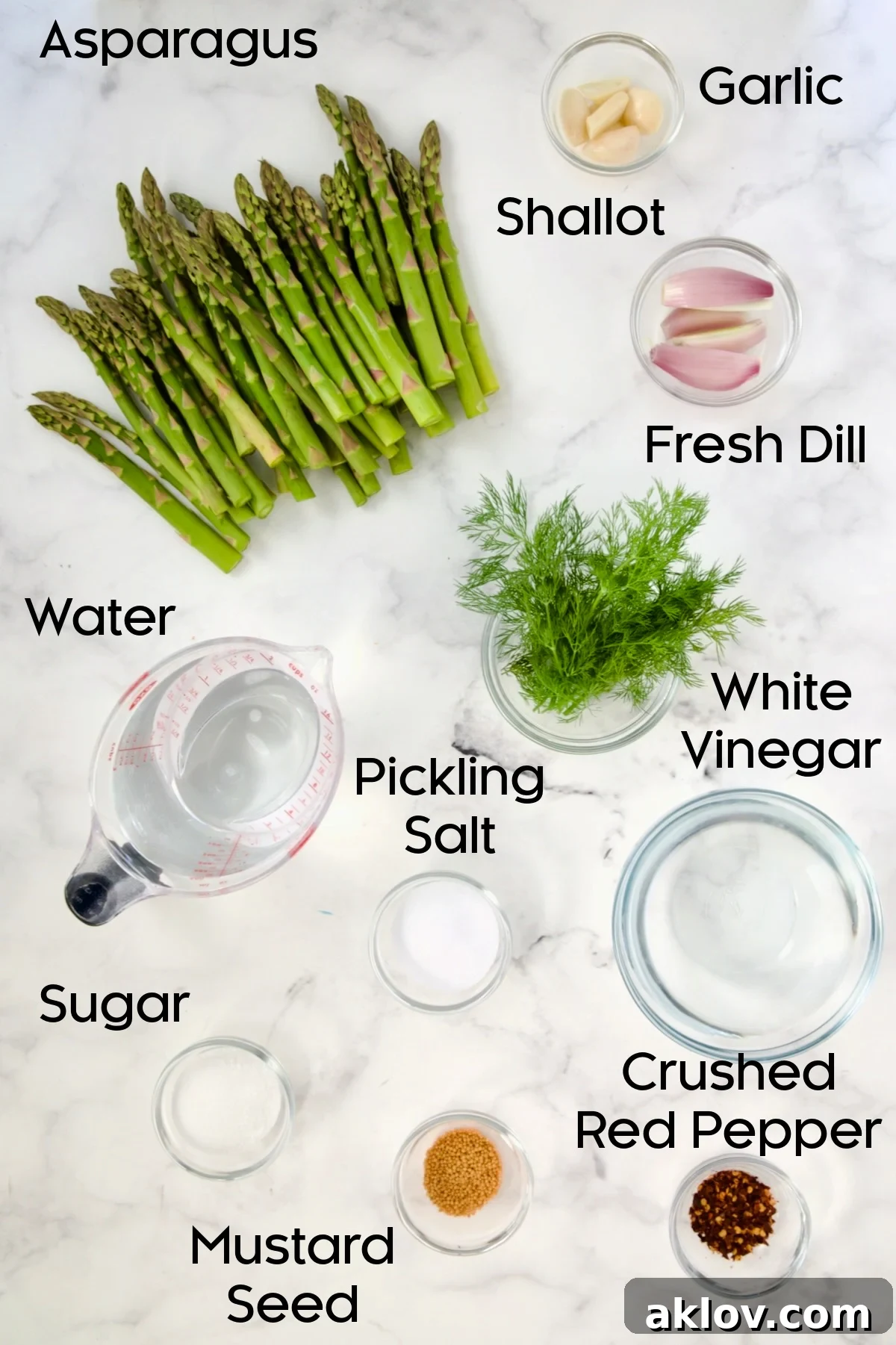
Ingredient Deep Dive: Tips for Success & Smart Substitutions:
- Asparagus: The undisputed star of our pickling endeavor! For achieving the optimal crisp texture and appealing visual presentation, it is highly recommended to use at least medium-width asparagus spears. Thicker spears possess a denser structure, allowing them to retain their satisfying crunch much better throughout the pickling process. Conversely, very thin spears can sometimes become overly soft or limp. Always select asparagus that appears bright green, feels firm to the touch, and has tightly closed tips, indicating peak freshness.
- Shallot: A distinguished member of the onion family, shallots are a staple in sophisticated French cooking. They characteristically grow in small clusters or “heads,” reminiscent of garlic but with a more refined growth pattern. Their flavor profile is a delicate and harmonious blend: distinctly oniony, yet with an elegant hint of garlic, offering a far more nuanced and less aggressive taste than a conventional onion. This makes them perfectly suited for contributing a gentle, aromatic depth to your pickled asparagus without ever overpowering its subtle, natural flavor.
- Dill: To achieve that quintessential, clean, and herbaceous pickle flavor, fresh dill is absolutely essential and highly recommended over its dried counterpart. While dried dill can be a substitute in a pinch, it simply cannot replicate the vibrant, crisp aroma and bright, lively taste that fresh dill provides. When purchasing, look for feathery, bright green fronds that appear lively and unwilted.
- Pickling Salt: Also widely recognized as canning salt, pickling salt is a pure form of sodium chloride distinguished by its fine texture. This fine granularity ensures it dissolves rapidly and completely into brines, guaranteeing an even distribution of salt throughout the pickling liquid. Critically, pickling salt is formulated without anti-caking agents, iodine, or other additives typically found in standard table salt. These additives can unfortunately react with the vegetables or vinegar, potentially leading to a cloudy or discolored brine, which detracts from the visual clarity of your finished pickles. If pickling salt is unavailable, pure Kosher salt (verify it is additive-free) serves as an excellent, equally pure substitute. Avoid using iodized table salt.
- Mustard Seed: These small, spherical seeds, harvested from various mustard plants, are a fundamental component in a myriad of pickling recipes. They contribute a pronounced pungency and a subtle, earthy warmth that are indispensable for developing the brine’s complex and intriguing flavor profile. You have the flexibility to use either brown or yellow mustard seeds in this particular recipe; both varieties will impart wonderful, complementary flavors to your pickled asparagus.
- White Distilled Vinegar: This is the traditional choice for quick pickling. Its neutral flavor ensures the delicate asparagus taste shines through, and its clear color keeps the brine visually appealing. It also provides the essential acidity required for a safe and flavorful pickle. While other vinegars like white wine vinegar can be used for a slightly fruitier note, white distilled vinegar is recommended for a classic, clean taste.
- Granulated Sugar: A small amount of granulated sugar plays a crucial role in balancing the sharp acidity of the vinegar. It doesn’t make the pickles overtly sweet but rather rounds out the flavor profile, creating a more harmonious and palatable brine.
- Crushed Red Pepper Flakes: For those who appreciate a gentle warmth and a subtle kick, crushed red pepper flakes introduce a mild spice to the pickled asparagus. This adds another layer of complexity to the flavor experience. Feel free to adjust the quantity according to your personal preference for heat.
Easy Step-By-Step Instructions for Quick Pickled Asparagus:
Creating these delightful pickled asparagus spears is a remarkably straightforward and rewarding process that consistently yields impressive results. By diligently following these simple steps, you’ll soon have a batch of tangy, crunchy, and utterly delicious goodness ready to elevate your meals and snacks.
- 1. Prepare Your Asparagus: Begin by gathering and meticulously prepping all the necessary ingredients. The initial and most crucial step involves trimming the tough, woody ends from your asparagus spears. A simple and effective method is to take a single stalk of asparagus and gently bend it near its base; it will naturally snap at the precise point where the tough, fibrous portion transitions into the tender, edible stalk. Utilize this naturally trimmed spear as your guide to uniformly cut the remaining asparagus in the bunch, ensuring all spears will fit vertically into your clean pickling jar(s).
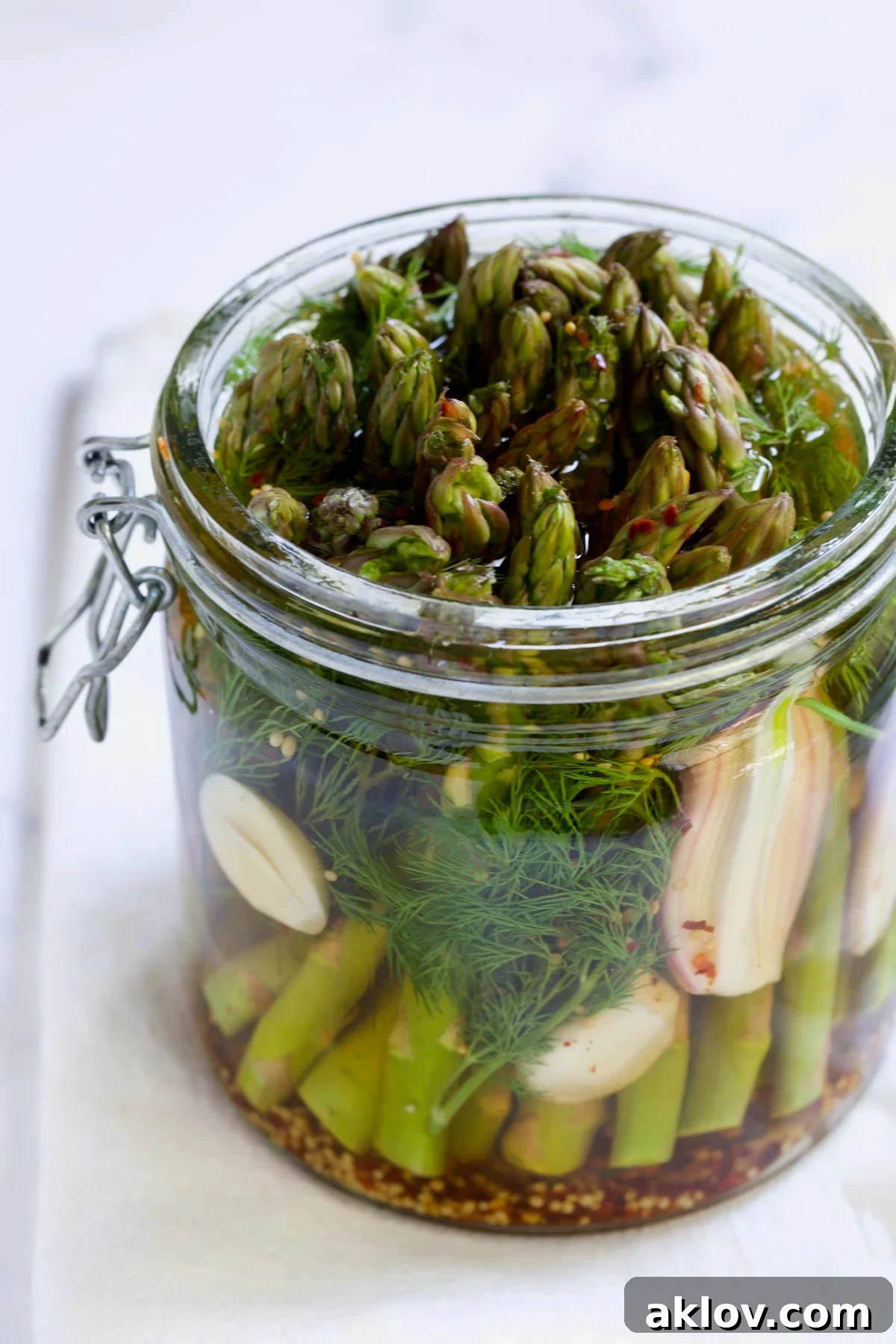
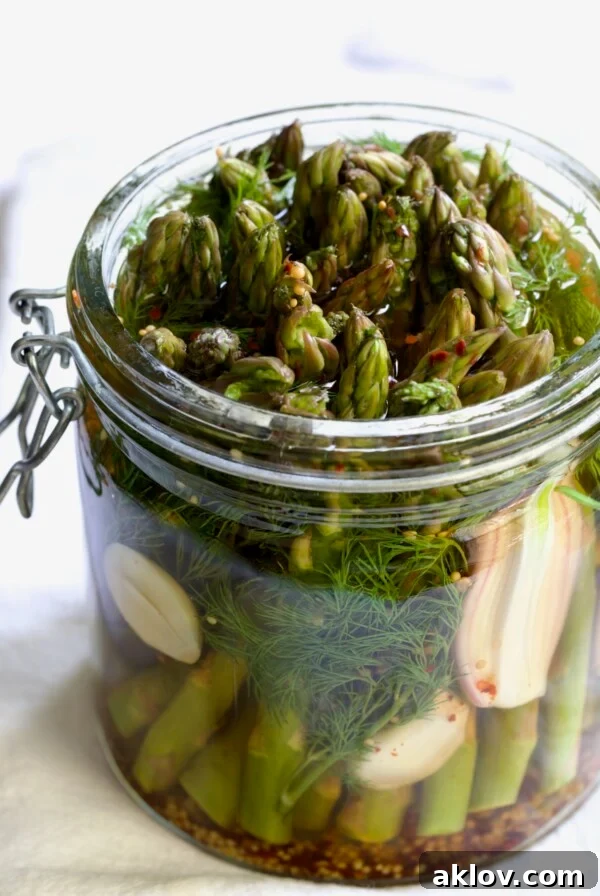
- 2. Layer the Aromatics: Once your asparagus is perfectly trimmed, carefully begin placing the spears into your clean jar(s). Arrange them somewhat tightly to maximize the space, but avoid forcing them, which could cause breakage. Evenly distribute the quartered shallot pieces, halved garlic cloves, and fresh dill sprigs among the asparagus spears within the jar(s). These aromatic additions are vital, as they will slowly infuse the asparagus with their wonderful, complementary flavors during the pickling process.
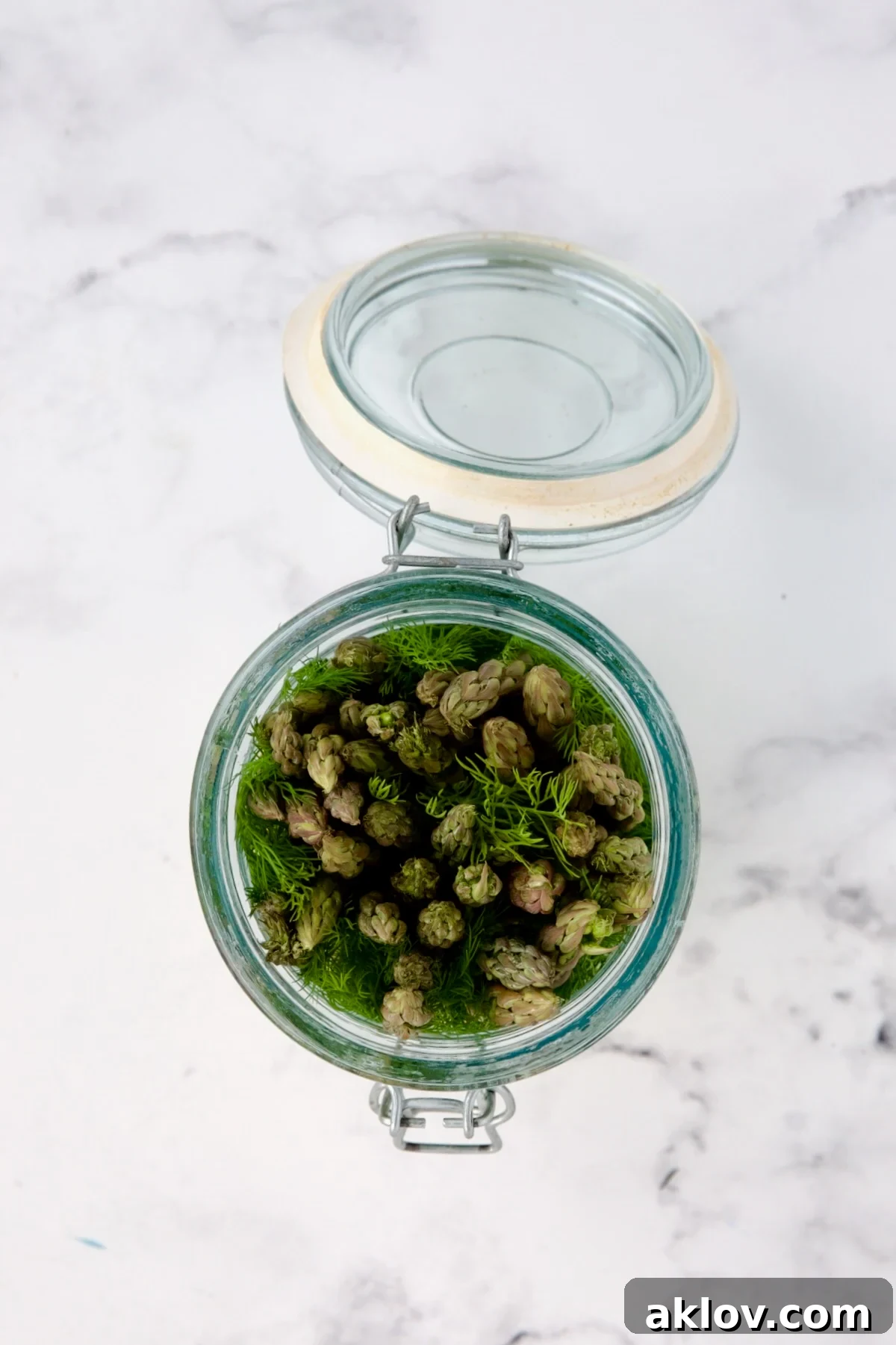
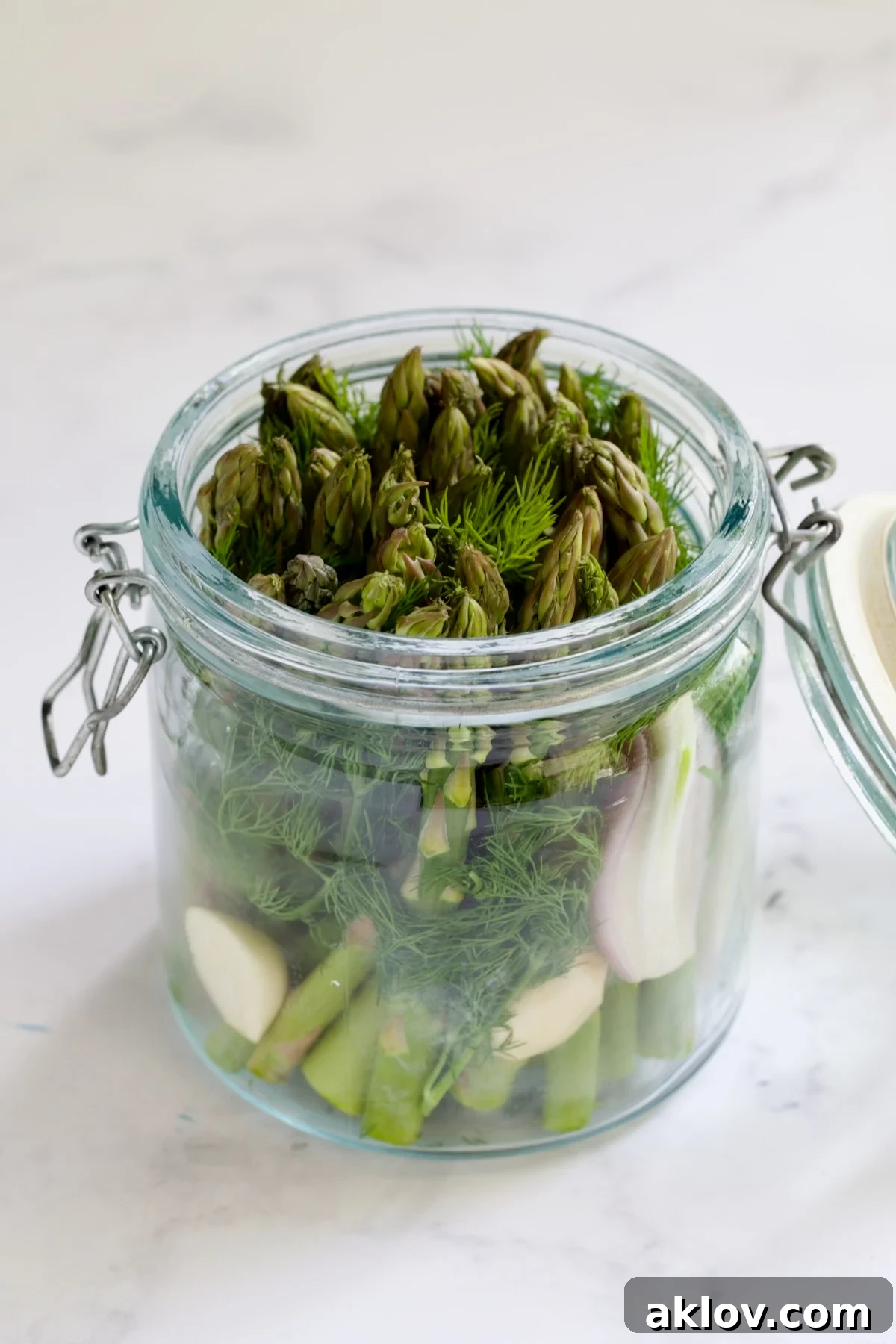
- 3. Prepare the Brine: In a medium-sized, non-reactive saucepan, carefully combine the white distilled vinegar, water, pickling salt, granulated sugar, crushed red pepper flakes, and whole mustard seeds.
- 4. Boil and Dissolve: Place the saucepan over medium-high heat and bring the brine mixture to a robust, rolling boil. Stir continuously and thoroughly until both the granulated sugar and the pickling salt have completely dissolved into the liquid. This critical step ensures a perfectly balanced, consistently flavored, and clear brine.
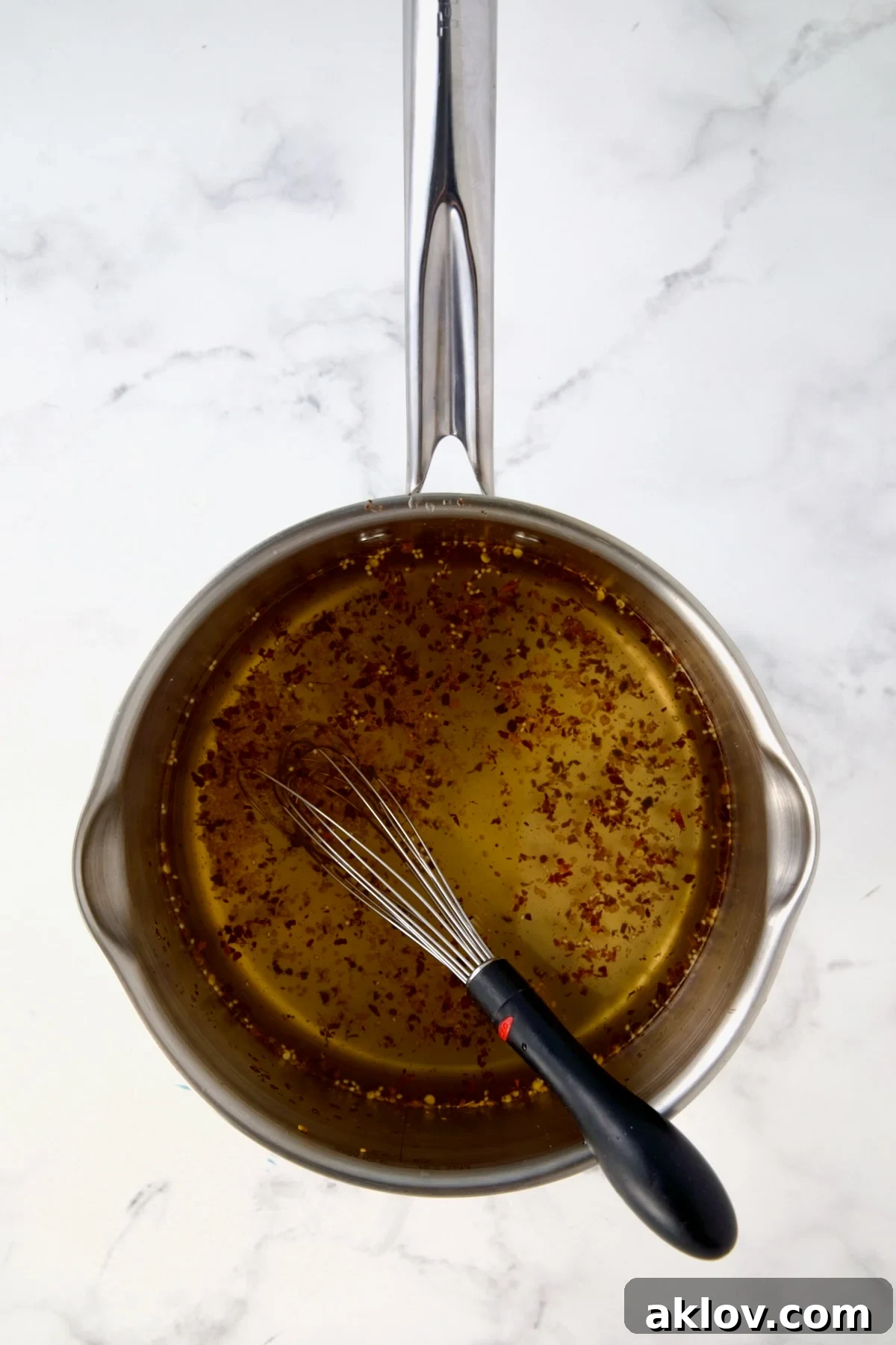
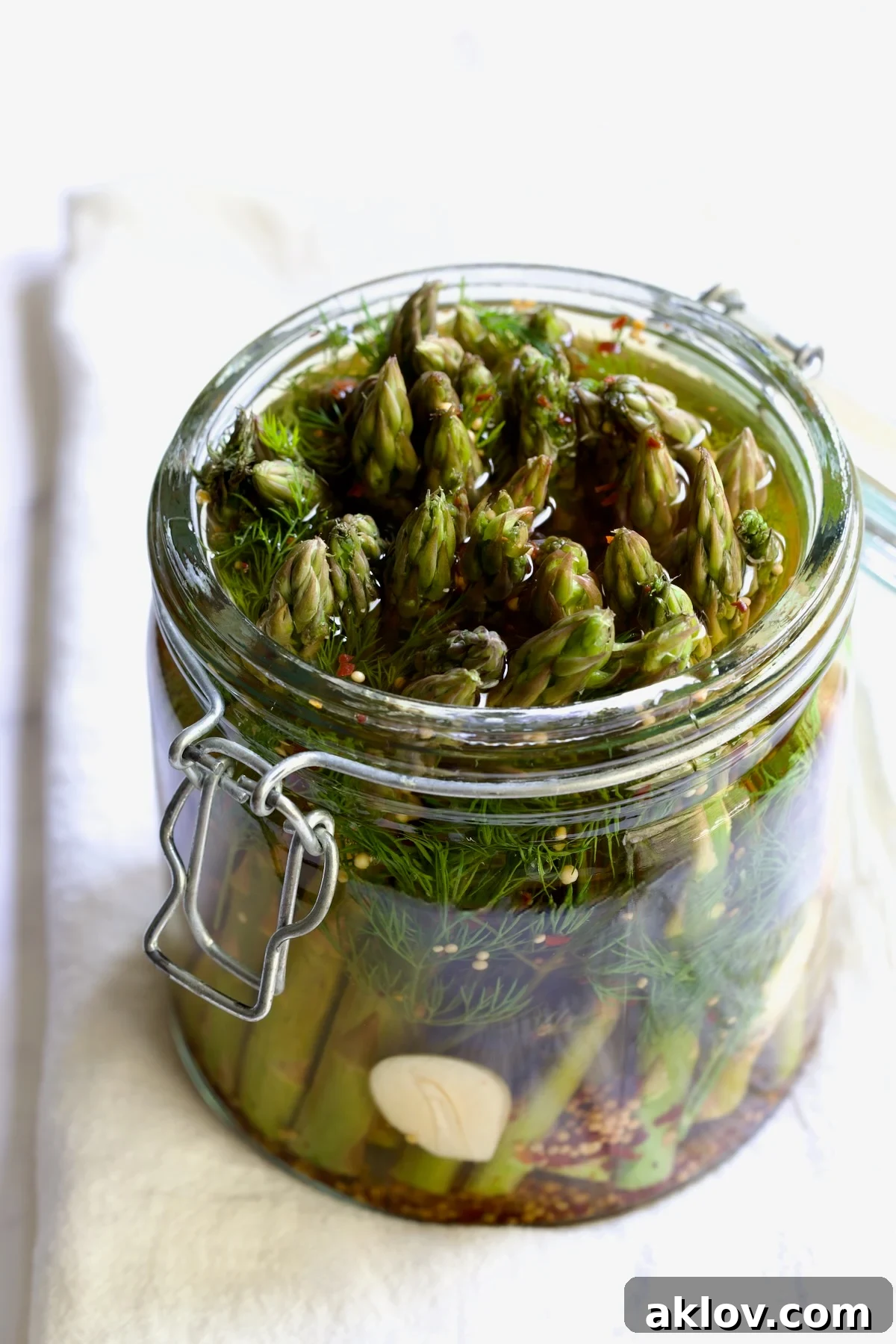
- 5. Pour the Brine: With utmost care, slowly and steadily pour the hot brine directly over the packed asparagus and aromatics in the jar(s). It is absolutely essential to ensure that all the asparagus spears are completely submerged in the liquid. If any spears float to the top, you might need to gently press them down using a small glass fermentation weight or even a clean piece of parchment paper to keep them fully immersed.
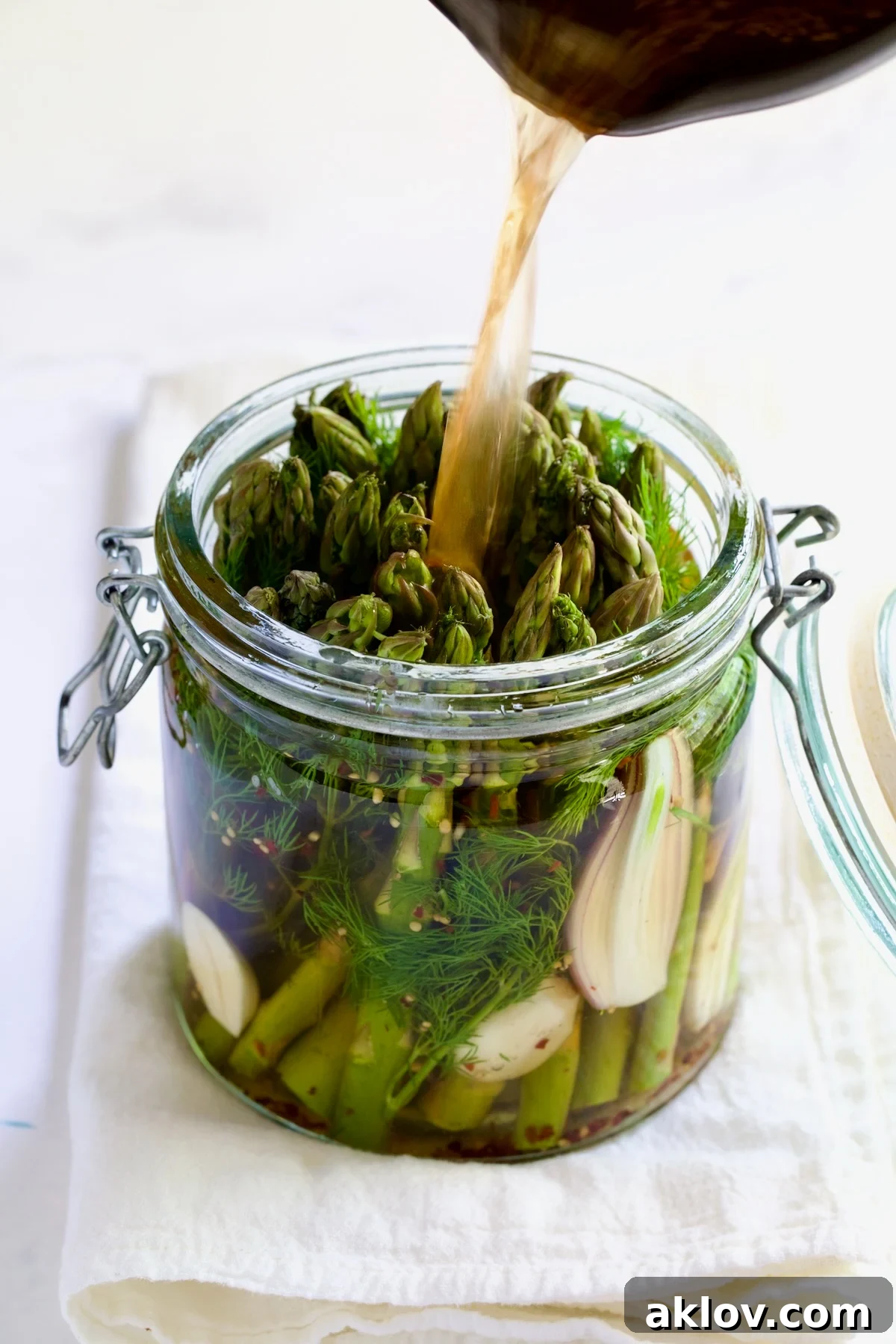
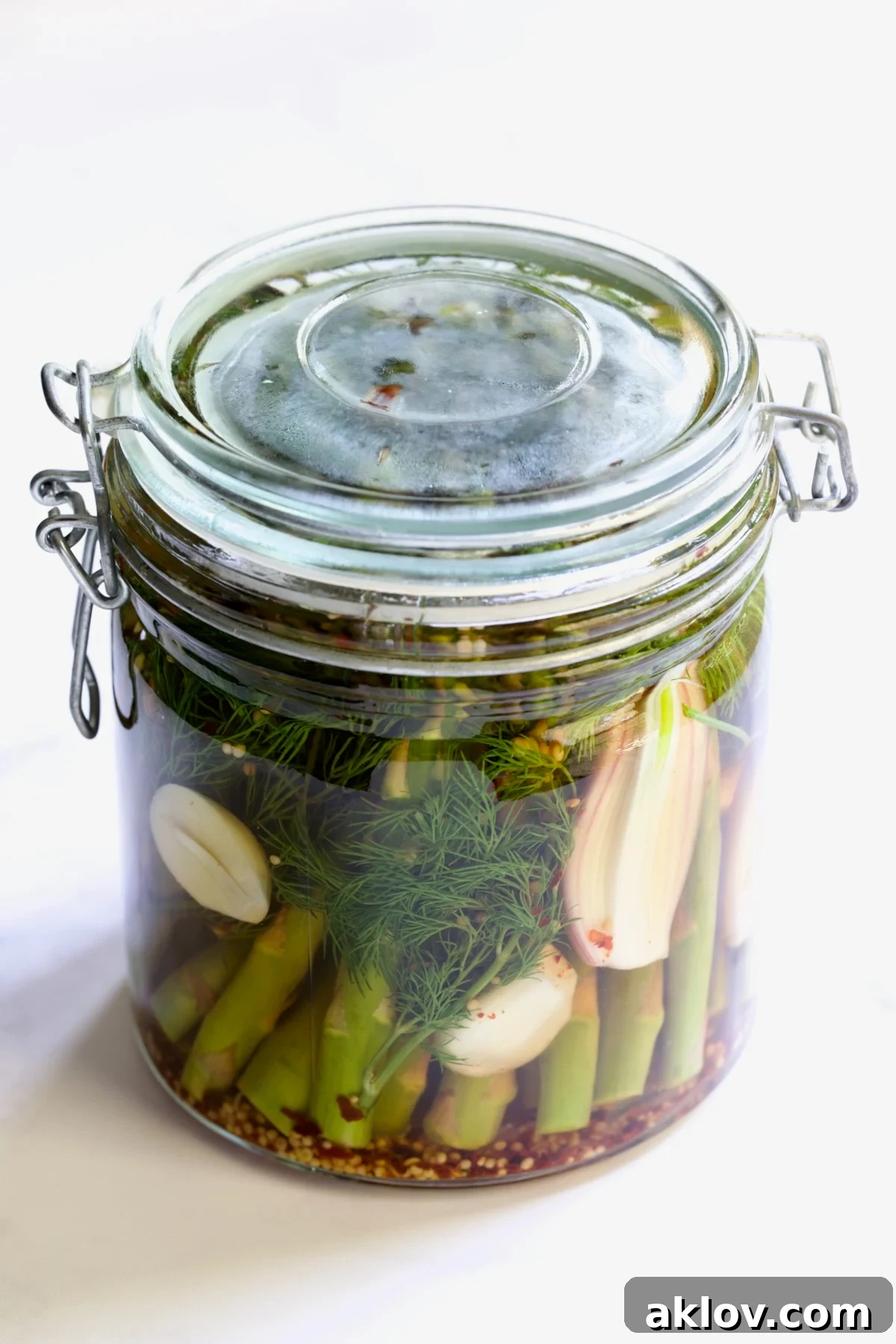
- 6. Cool and Refrigerate: Allow the jar(s) containing your freshly pickled asparagus to cool down completely to room temperature on your kitchen countertop. Once they have cooled, securely cover the jar(s) with their respective lids and promptly transfer them to the refrigerator. For the most profound and delicious flavor development, it is highly recommended to let them steep overnight, or ideally for a minimum of 24 to 48 hours.
- 7. Enjoy Your Pickled Asparagus! And just like that, you’ve created a batch of homemade pickled asparagus! As the asparagus continues to sit and marinate in the refrigerator, you may observe a subtle color transformation; they will transition to a more muted, appealing olive green hue. This change is entirely normal and expected. Rest assured, your pickled asparagus will retain its delightful crispness and boast a wonderfully zesty, undeniably delicious flavor.
Chef’s Secret: The Perfect Asparagus Trim Every Time
- Achieving perfectly tender asparagus spears without encountering any tough, woody ends is simple with this clever trick. Take one stalk of asparagus and gently bend it near its bottom. It will naturally snap at the precise point where the tough, fibrous base gives way to the tender, edible stalk. This “natural break point” serves as your ideal guide. Use this expertly trimmed spear to measure and cut the remaining asparagus in the bunch. Since asparagus stalks harvested together typically share a similar growth rate, they will generally have corresponding breakpoints, ensuring uniform tenderness throughout your batch. This method is far more reliable than arbitrarily cutting all stalks at a fixed length and effectively prevents you from inadvertently wasting the delicious, edible portions of the spear.
Frequently Asked Questions About Pickled Asparagus:
No, for this specific quick pickling method, blanching asparagus beforehand is not necessary. In this recipe, the hot brine, which is directly poured over the raw asparagus, skillfully provides a gentle “blanching” effect. This process lightly cooks the spears while simultaneously preserving their desired crisp texture and vibrant flavor. This efficient approach not only simplifies the entire process but also ensures maximum flavor absorption from the brine.
When stored correctly in an airtight container within the refrigerator, your homemade quick pickled asparagus is at its peak flavor and crunch for approximately two weeks. However, it can generally be safely and enjoyably consumed for up to one month. To ensure optimal preservation and quality, always verify that the asparagus spears remain fully submerged in the pickling brine.
Absolutely! While fresh dill and mustard seeds are iconic and yield a classic flavor, feel free to unleash your culinary creativity. You might consider experimenting with additions such as a few black peppercorns, a delicate bay leaf, a pinch of aromatic coriander seeds, or even a sprig of fresh thyme or rosemary to introduce different and exciting flavor profiles. Just be mindful that certain strong herbs can sometimes overpower the subtle, delicate taste of the asparagus.
Any clean, heat-proof glass jars equipped with tight-fitting lids will perform perfectly for quick pickling. Mason jars are a widely favored choice due to their proven durability, excellent sealing capabilities, and wide availability. It is crucial to ensure that your chosen jars are thoroughly cleaned and ideally sterilized before use to prevent any potential spoilage and ensure the safety of your pickles.
Limp pickled asparagus can occur for several reasons. Possible culprits include overcooking the asparagus before the brine is added, utilizing excessively thin spears that naturally have less structural integrity, or pouring brine that is too hot over the delicate vegetables, causing them to cook excessively. For the best crisp result, aim for medium-width asparagus. While a hot brine is essential for quick pickles to slightly cook and sterilize, allowing the jars to cool completely to room temperature before transferring them to the refrigerator is a key step in preserving that satisfying crunch.
Proper Storage for Lasting Freshness:
- Always keep your freshly prepared pickled asparagus refrigerated. The consistently cold temperature is absolutely crucial for maintaining its optimal freshness, delightful crispness, and, most importantly, its safety for consumption.
- Under no circumstances should you freeze pickled asparagus. Freezing can severely alter the delicate cellular structure of the asparagus spears, causing them to become mushy and undesirable upon thawing, ruining their signature texture.
- It is vital to ensure that the asparagus spears remain fully submerged in the pickling brine at all times. This immersion actively prevents exposure to air, which can lead to spoilage and a degradation of their flavor and texture. If you notice any spears floating, you can use a small glass fermentation weight or even a clean piece of parchment paper to gently keep them submerged.
- Before serving any portion of your stored pickled asparagus, always conduct a quick visual and olfactory check for any signs of spoilage. Look for mold growth, off-smells, or any unusual discoloration. Although rare with proper quick pickling techniques, it’s a good practice for food safety.
Elevate Your Meals: Creative Ways to Serve Pickled Asparagus:
Pickled asparagus is an incredibly versatile ingredient, capable of imparting a delightful tangy zing and crisp texture to a wide variety of dishes. Here are some of our favorite creative ways to incorporate them into your culinary repertoire:
- Classic Side Dish & Salad Enhancer: Serve them alongside hearty, comforting meals like a traditional German Potato Salad or a refreshing Cool Creamy Potato Cucumber Salad for a perfectly balanced meal. They also make a fantastic addition, chopped or whole, to any green salad or grain bowl, adding a bright burst of flavor and texture.
- Sandwich & Wrap Upgrade: Slice them into small rounds and add them to a classic Reuben sandwich, or serve them whole alongside a robust Reuben Casserole for an extra layer of tang. Their crunch and acidity are a welcome complement to any deli sandwich, wrap, or even a burger.
- Gourmet Appetizer & Savory Snack: Enjoy them straight from the jar as a healthy, low-calorie, and satisfyingly tangy snack. For an elegant appetizer, wrap individual pickled spears in a slice of prosciutto or thinly sliced ham for a quick and impressive bite.
- Ultimate Cocktail Garnish: The vibrant flavor and crisp texture of pickled asparagus make it the quintessential and most sophisticated garnish for a Bloody Mary or other savory cocktails.
- Grilling & Roasting Companion: Offer them as a vibrant, acidic counterpoint to rich grilled meats, pan-seared fish, or even other roasted and grilled vegetables. Their tang cuts through richness beautifully.
- Cheese Board Star: A must-have on any cheese or charcuterie board, providing a zesty contrast to creamy cheeses and savory cured meats.
Explore More Tangy Delights: Other Great Pickled Recipes You’ll Love!
If you’ve enjoyed the simplicity and delicious results of making your own pickled asparagus, you’re in for a treat! The expansive world of quick pickling offers an endless array of possibilities to explore. Diversify your pantry and tantalize your taste buds with these equally delicious and rewarding pickled creations:
- Pickled Ramps Recipe: A truly unique seasonal delicacy for enthusiasts of wild garlic and pungent flavors.
- Giardiniera Recipe (Italian Pickled Vegetables): A vibrant, zesty medley of crisp, tangy vegetables, making it the perfect accompaniment for sandwiches or as an essential component of antipasti platters.
- Pickled Cherry Tomatoes: Bursting with bright, acidic flavor, these are fantastic when added to salads, pasta dishes, or enjoyed simply as a savory, pop-in-your-mouth snack.
For a comprehensive collection of delightful preserves, relishes, and pickles to expand your culinary skills, be sure to explore all my pickle and relish recipes at Pickle and Relish Recipes – From A Chef’s Kitchen.
Pin Recipe
Print Recipe
Pickled Asparagus
Equipment
-
Wusthof Chef Knife
-
Cutting Board
-
Saucepan
-
Mason Jars
Ingredients
- 2 bunches asparagus, medium width, approximately 1 1/2 pounds
- 1 large shallot, quartered
- 3 cloves garlic, halved
- 1 small bunch fresh dill, (like what you get in the plastic packages in the produce department)
- 1 cup white distilled vinegar
- 2 cups water
- 1 1/2 tablespoons pickling salt, or to taste
- 1 tablespoon granulated sugar
- 1 teaspoon crushed red pepper flakes
- 1 teaspoon whole mustard seed, brown or yellow
Instructions
- Trim the woody ends from the asparagus spears to the length in which they’ll fit vertically in the jar(s) you’re using.
- Place the asparagus spears, shallot, garlic, and dill in the jar(s) you’re using.
- Combine the vinegar, water, pickling salt, sugar, crushed red pepper flakes and mustard seed in a saucepan.
- Bring to a boil, stirring until the sugar and salt are dissolved.
- Slowly pour the brine over the asparagus, making sure the asparagus are fully submerged.
- Let cool to room temperature. Cover and refrigerate overnight.
Notes
Nutrition
- Serving: 1
- Calories: 41 kcal
- Carbohydrates: 7g
- Protein: 3g
- Fat: 0.3g
- Saturated Fat: 0.1g
- Polyunsaturated Fat: 0.1g
- Monounsaturated Fat: 0.1g
- Sodium: 1319mg
- Potassium: 252mg
- Fiber: 3g
- Sugar: 4g
- Vitamin A: 935 IU
- Vitamin C: 7mg
- Calcium: 37mg
- Iron: 3mg
Nutritional values are automatically calculated using unbranded products and are estimates only. Actual results may vary based on ingredients used and portion sizes. Adjust as needed for dietary restrictions, allergies, or health concerns.

Like this? Leave a comment below!