

Craving a meal that effortlessly transitions from a hearty breakfast to a satisfying dinner? Look no further than Eggs in Purgatory with Italian Sausage! This delightful twist on the classic southern Italian comfort food offers a perfect blend of rich flavors and comforting warmth. Imagine perfectly poached eggs nestled in a vibrant, spicy tomato sauce, infused with savory Italian sausage and fresh vegetables. It’s an inviting dish that comes together in about an hour, promising to become a cherished staple in your culinary repertoire.
“This was great. My family loved it!”

Why This Spicy Italian Sausage and Eggs Skillet is a Must-Try
Some recipes simply stand out, becoming instant favorites that you return to time and again. This particular rendition of Eggs in Purgatory with Italian Sausage is precisely that kind of dish. It’s a satisfying, comforting, and incredibly versatile meal that can grace your table at any time of day – be it a leisurely brunch, a quick lunch, or a cozy dinner.
My inspiration for this vibrant recipe comes from a memorable culinary experience at a charming Boulder, Colorado restaurant. The moment I tasted their rendition, I knew I had to recreate it. Every single bite was a revelation, a perfect harmony of spice, richness, and fresh ingredients. I can honestly say I almost licked the skillet clean, and I’m thrilled to share a version that captures that unforgettable flavor and experience.
This dish features perfectly runny yolks — or cooked to your preference — bathed in a fiery, robust tomato sauce. The sauce is brimming with tender, spicy Italian sausage, aromatic onions, sweet bell peppers, and the unique, subtle sweetness of fennel. Each component is gently simmered before the eggs are carefully poached directly in the skillet. To elevate this Italian masterpiece, a generous sprinkle of high-quality Parmesan cheese is essential, as is plenty of crusty bread. The bread isn’t just a side; it’s a vehicle for soaking up every drop of that irresistible, flavorful sauce, ensuring no delicious morsel goes to waste.
One of the greatest advantages of this take on the classic southern Italian recipe is its sheer simplicity and convenience. It all cooks up beautifully in a single skillet, which means less cleanup and more time to savor your culinary creation. This one-pan wonder truly streamlines the cooking process without compromising on depth of flavor.
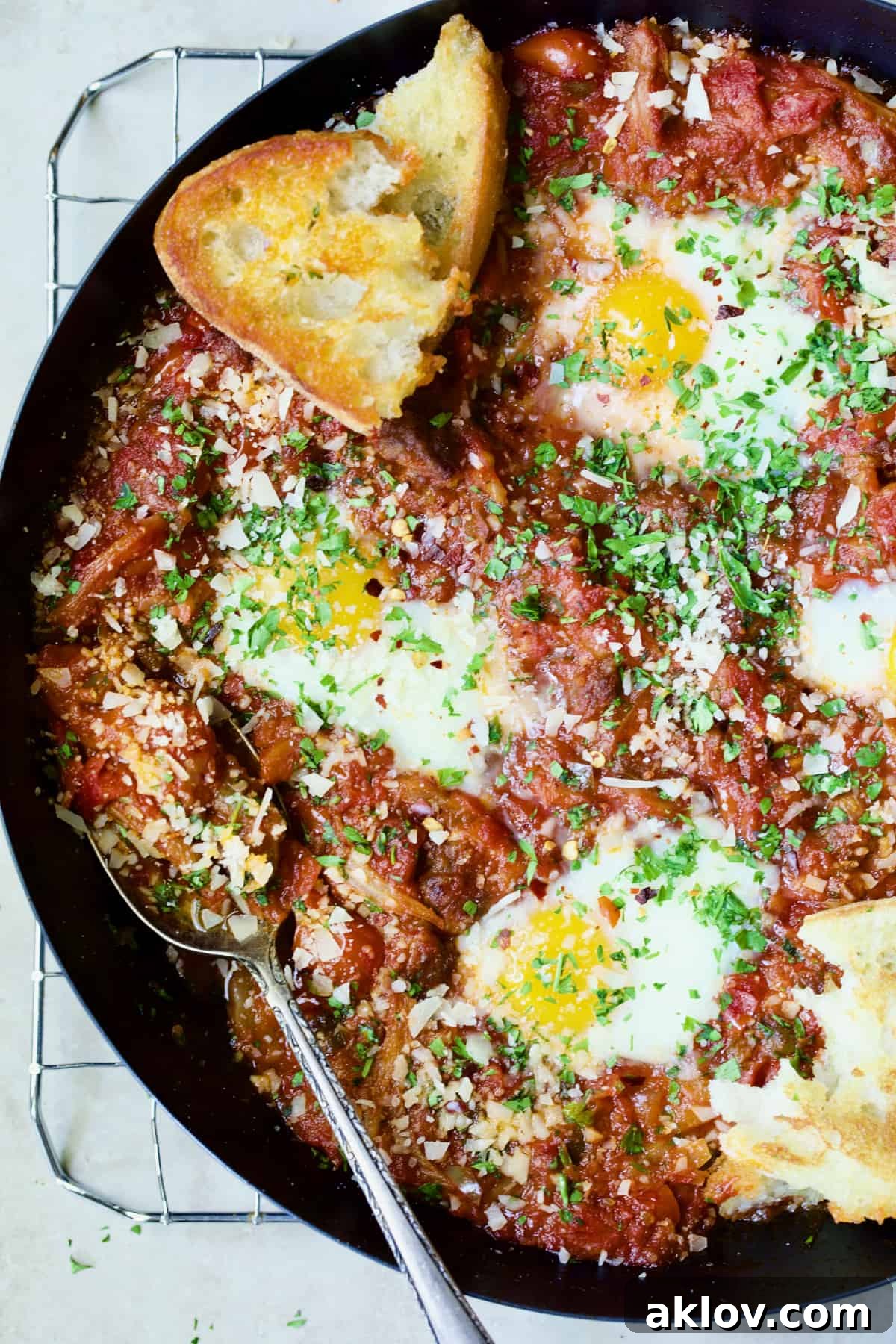
Crafting Your Own Eggs in Purgatory with Italian Sausage: A Step-by-Step Guide
Essential Recipe Ingredients:
To embark on this flavorful journey, you’ll need a selection of fresh, high-quality ingredients. Each component plays a vital role in building the robust and satisfying profile of this dish. Below is a comprehensive list of everything you’ll need. For precise quantities, refer to the detailed recipe card at the end of this article.
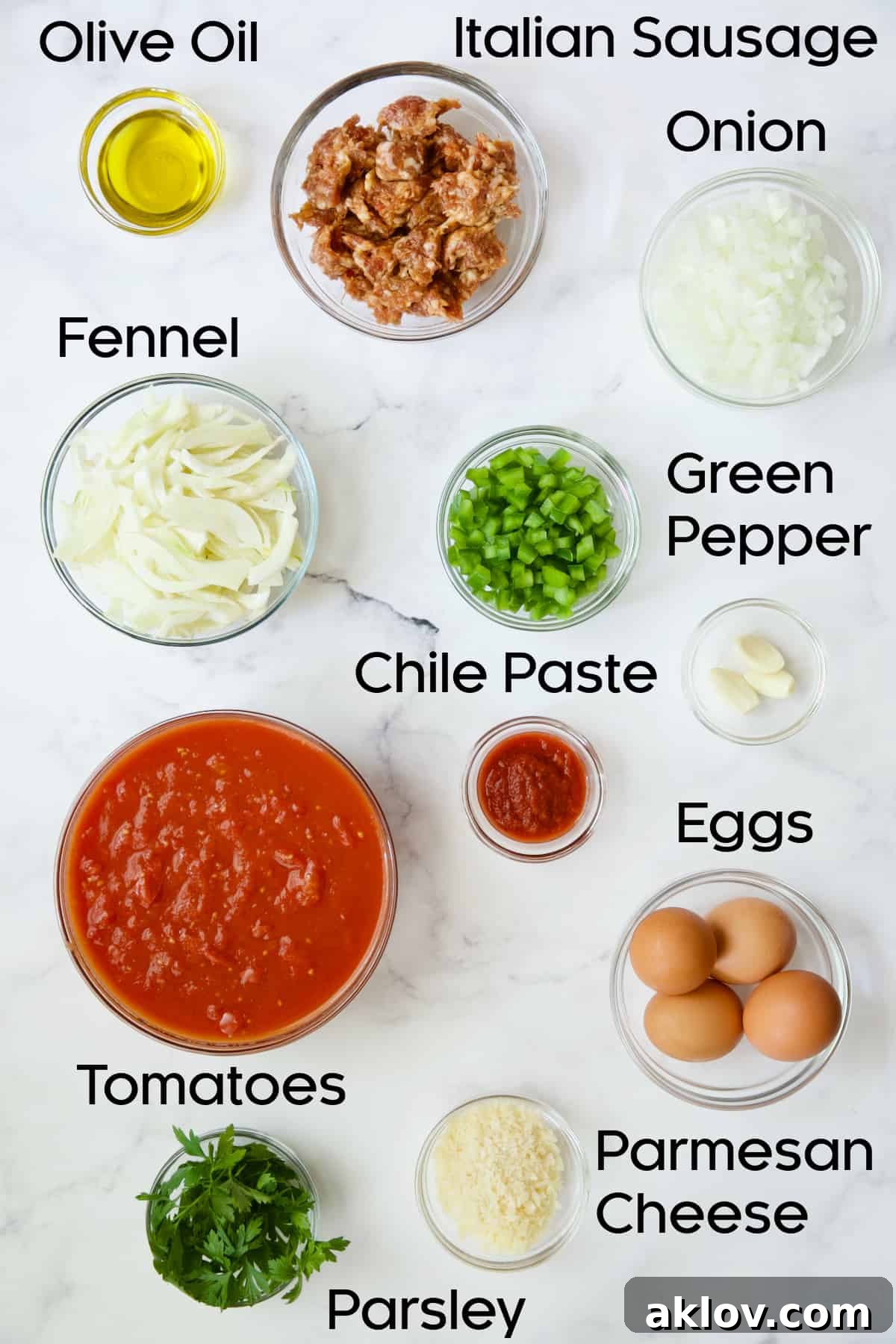
Ingredient Spotlight: Notes and Thoughtful Substitutions:
- Italian Sausage: The foundation of this dish’s savory depth. I prefer hot Italian pork sausage, such as Johnsonville, for its incredible flavor and gentle heat. However, for a lighter alternative, feel free to use chicken or turkey Italian sausage. Just ensure the casings are removed so you can easily break up the meat as it cooks, allowing it to meld beautifully with the sauce.
- Fennel: A true gem from the Mediterranean, fennel is a beloved vegetable in Italian cuisine. Despite being a member of the carrot family, it grows above ground and boasts a mild, delicate anise or licorice flavor. This distinctive taste is more pronounced when raw but mellows and sweetens wonderfully when cooked, adding an unexpected layer of aromatic complexity to the tomato sauce.
- Tomatoes: The heart and soul of the “purgatory” sauce. The quality of your tomatoes profoundly impacts the final flavor. I highly recommend using the best canned tomatoes you can find. Imported Mutti canned cherry tomatoes are my top choice, which I simply chop in the can with kitchen shears to retain all their rich juices. Their baby Roma tomatoes are also an excellent option. If you have any home-canned or frozen summer tomatoes, this is the perfect opportunity to let their vibrant flavor shine.
- Chile Paste: For that essential fiery kick, Calabrian hot chile paste is my secret weapon. Its unique, smoky heat and nuanced flavor add incredible depth. If you don’t have access to Calabrian paste, a classic alternative is crushed red pepper flakes. Adjust the quantity to your preferred spice level – a little goes a long way to awaken the palate!
- Eggs: The stars of the show! A standard 12-inch skillet can comfortably accommodate four large eggs, but if you’re serving a larger crowd or simply love eggs, you can fit up to six. The goal is perfectly poached whites and delightfully runny yolks, ready to burst and enrich the spicy sauce.
Step-By-Step Culinary Journey:
- Begin by meticulously gathering and prepping all your ingredients. This mise en place ensures a smooth and enjoyable cooking process.
- Preheat your oven to 300 degrees Fahrenheit (150 degrees Celsius). This moderate temperature will gently finish cooking the eggs without overdoing them.
- In a sturdy, oven-safe skillet, cook the Italian sausage over medium heat, breaking it apart with a spoon as it browns. Continue until no pink remains, typically 4-5 minutes. Once cooked, transfer the sausage to a paper towel-lined plate to drain any excess fat. This step ensures the sauce isn’t overly greasy.
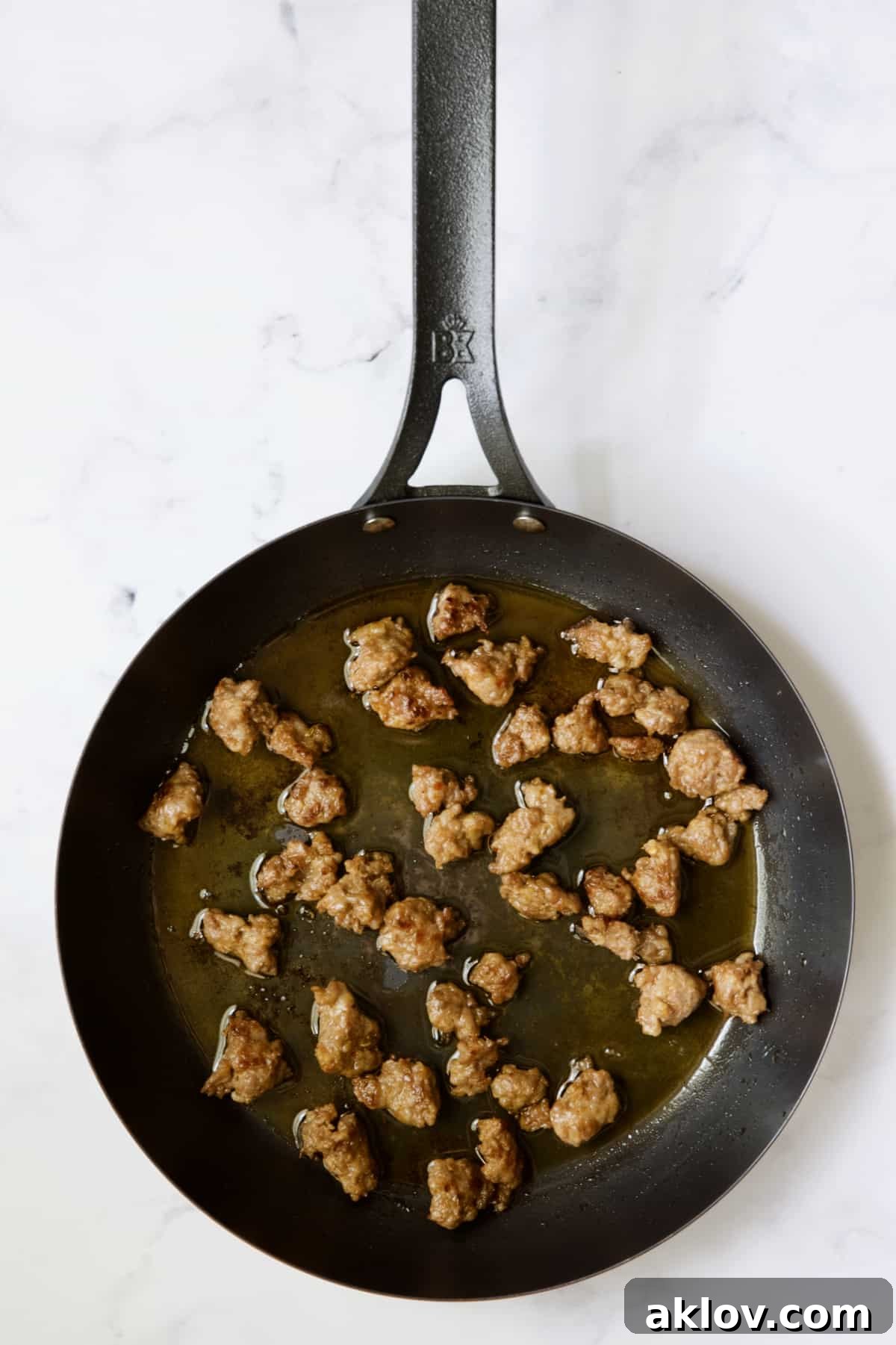
- Return the skillet, now wiped clean of excess fat, to medium heat and add the olive oil. Allow it to shimmer gently, indicating it’s ready for the vegetables.
- Add the thinly sliced fennel, chopped onion, and green bell pepper to the hot olive oil. Sauté, stirring frequently, for 5-6 minutes until the vegetables soften and become fragrant. Their natural sweetness will begin to emerge. Then, return the cooked sausage to the skillet, add the minced fresh garlic, and stir everything together for another minute until the garlic is fragrant and thoroughly heated through.
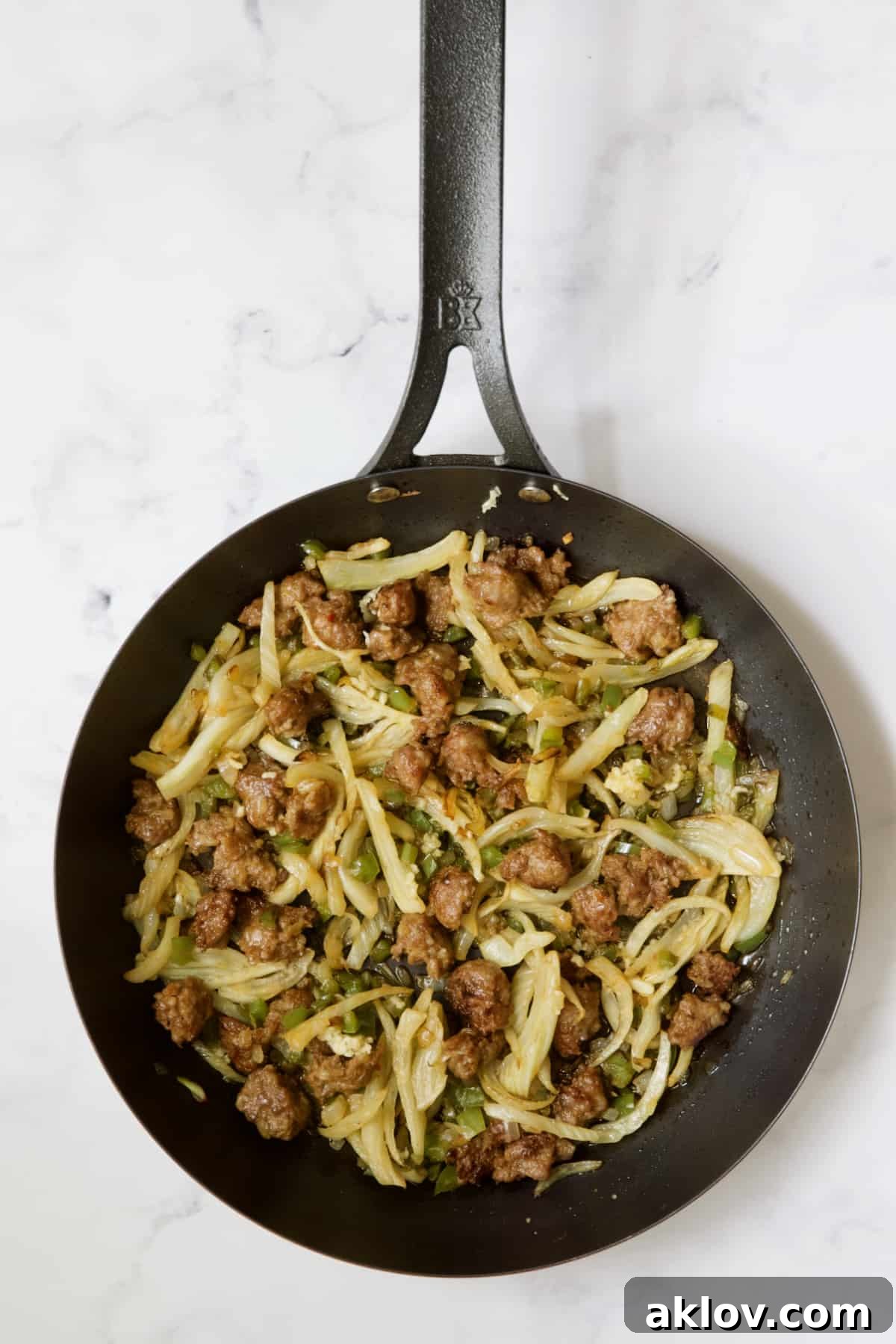
- Pour in the chopped tomatoes (with all their delicious juices) and stir in the Calabrian hot chili paste or crushed red pepper flakes. The vibrant red color will instantly announce the “purgatory” sauce.
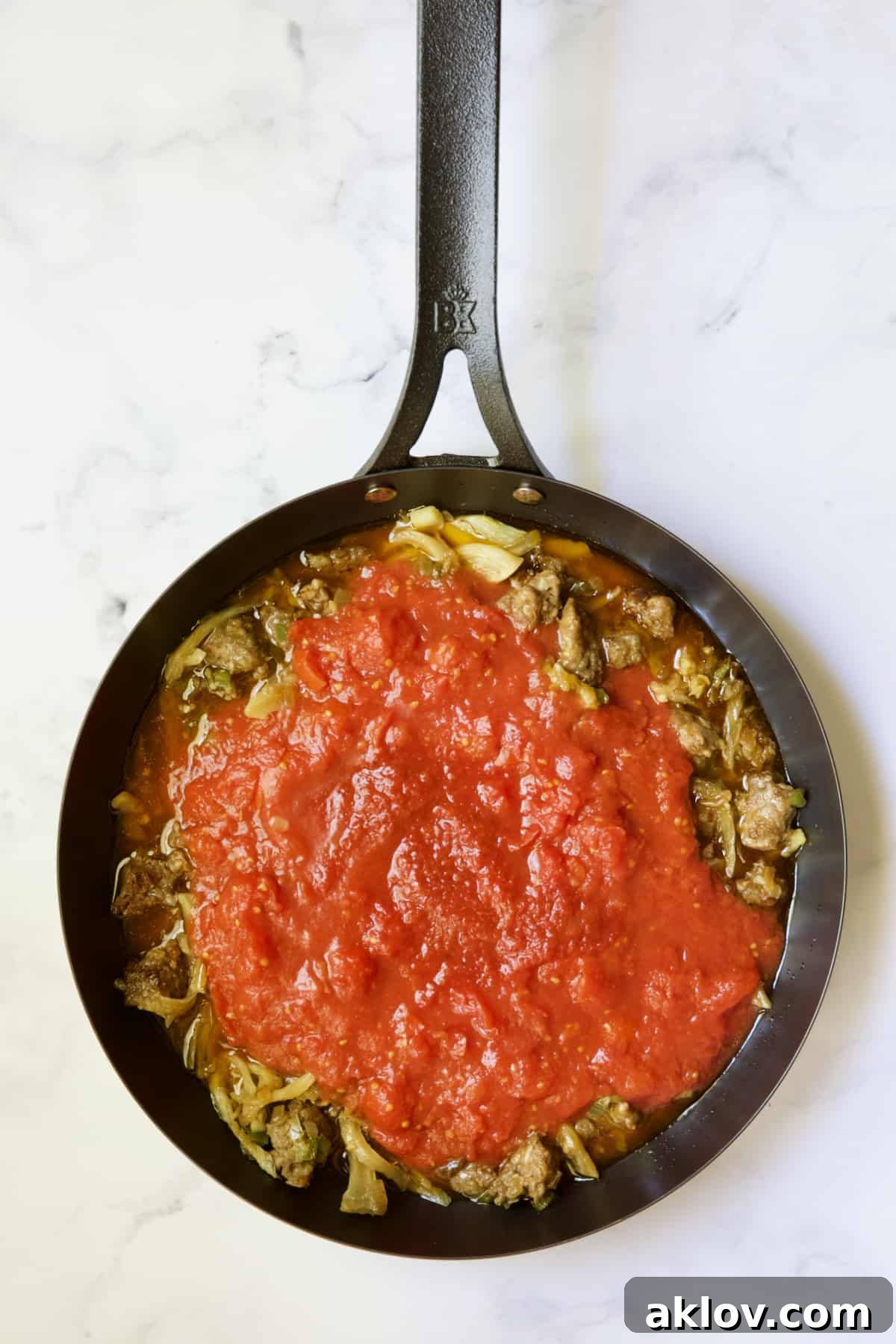
- Bring the purgatory sauce to a gentle but steady simmer. Allow it to cook for 10-12 minutes, stirring occasionally, until it has thickened and slightly reduced. This process concentrates the flavors and creates a rich base for the eggs.
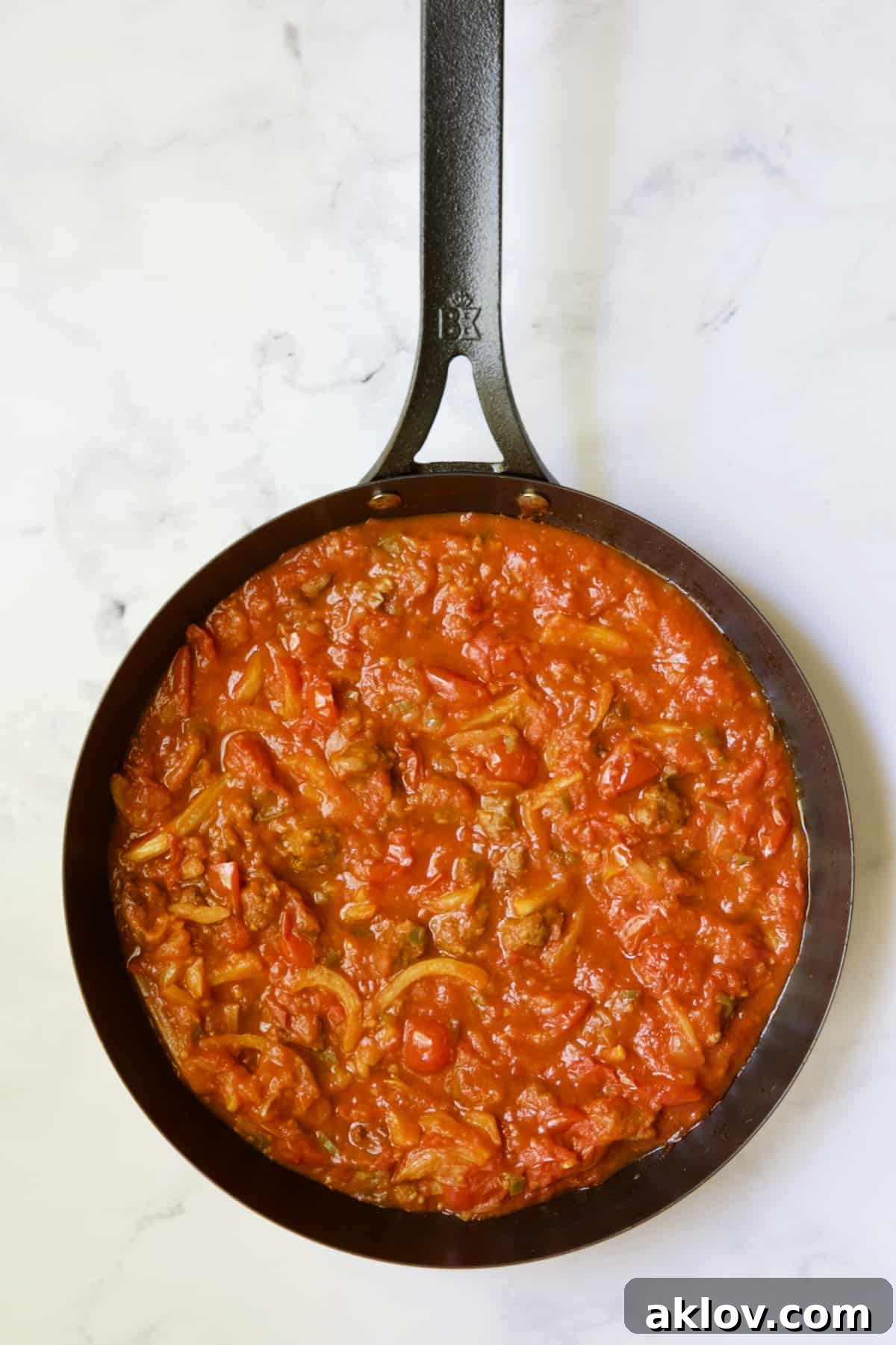
- Remove the skillet from the heat. This prevents the sauce from over-reducing while you prepare the eggs.
- Stir in half of the fresh, chopped parsley. Taste the sauce for seasoning and adjust with salt and freshly ground black pepper as needed. This is your chance to fine-tune the flavor profile.
- Carefully create four (or up to six) distinct wells within the warm tomato, sausage, and vegetable mixture. These indentations will be the cozy nests for your eggs.
- Crack each egg individually into a small bowl before gently transferring it into one of the prepared wells in the skillet. This technique ensures no unwelcome shell fragments make their way into your dish and allows you to easily remove the chalaza if desired.
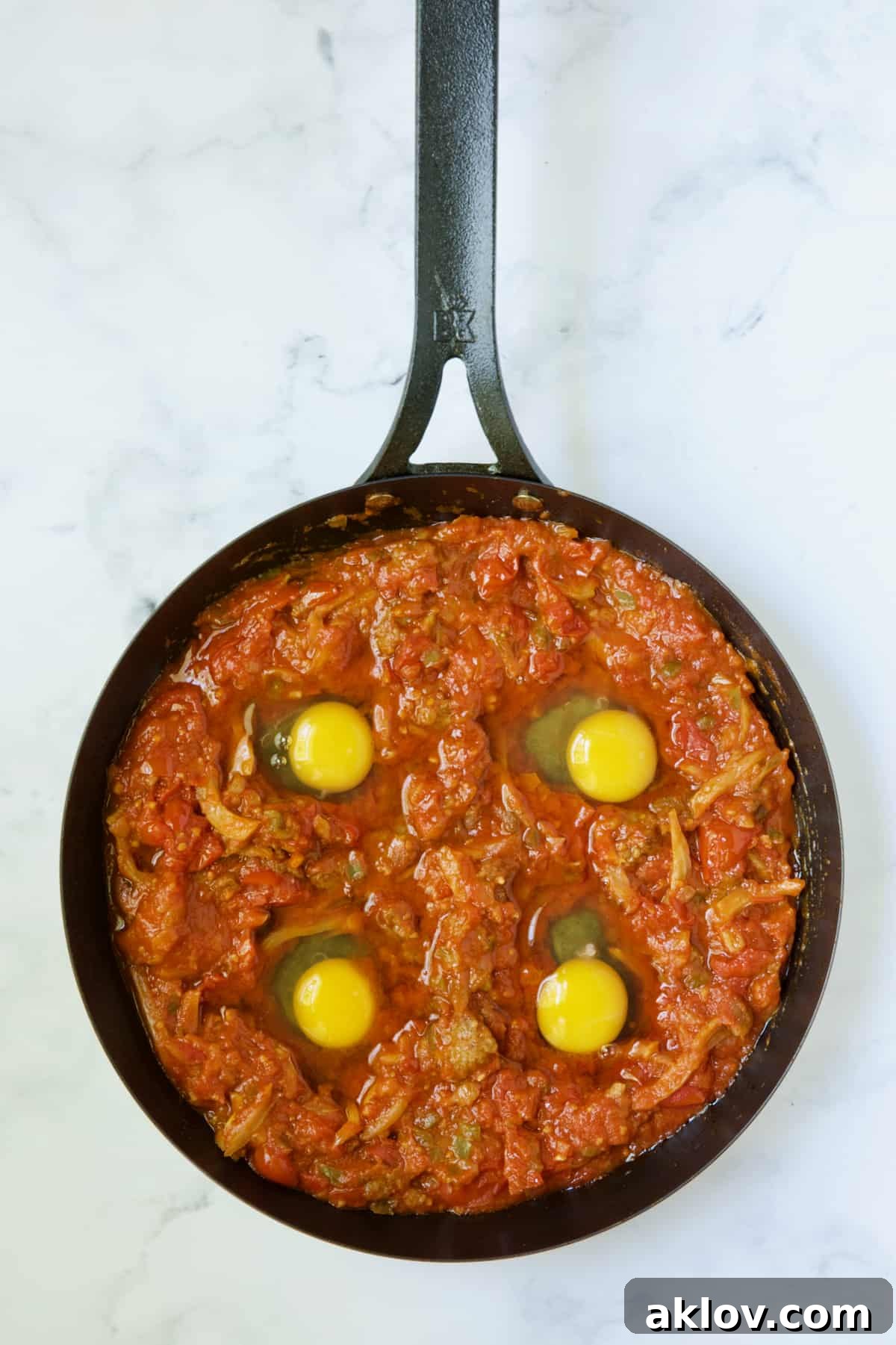
- Carefully place the skillet into the preheated oven. Bake for approximately 8-12 minutes, or until the egg whites are just set and opaque, while the yolks remain wonderfully runny. Adjust baking time based on your personal preference for egg doneness.
- Once out of the oven, generously sprinkle the remaining fresh parsley, a good helping of freshly grated Parmesan cheese, and an extra dash of crushed red pepper flakes if you crave more heat.
- Serve immediately, ideally with slices of toasted crusty Italian-style bread. Use the bread to scoop up the luscious eggs and mop up every last bit of that incredible, spicy sauce. This dish is truly a darn good replication of the one I savored in Boulder! Enjoy every glorious bite!

Chef’s Insights: Tips & Tricks for Perfect Eggs in Purgatory
- The Art of Cracking an Egg: For a clean break and to avoid unwanted shell fragments, always crack an egg on a flat surface like your countertop or cutting board, never on the sharp edge of a bowl. A firm, decisive tap that is neither too hard nor too gentle will create a clean crack, allowing you to open the egg easily without sending bits of shell into your ingredients.
- Choosing the Right Skillet: The success of this one-pan dish hinges on using an appropriate oven-safe skillet:
- Nonstick Skillets: If opting for a nonstick pan, confirm it’s rated for oven use and that its handle is heatproof. Most modern nonstick skillets manufactured after 2013 can withstand moderate oven temperatures (like the 300°F required here). However, always double-check the manufacturer’s instructions. Exceeding recommended temperatures can damage the nonstick coating.
- Cast Iron or Carbon Steel: These pans are excellent for heat retention and even cooking, but they require careful consideration due to the acidity of tomatoes. They must be *extremely well-seasoned* to prevent the acidic sauce from reacting with the metal, which could impart a metallic taste or damage the pan’s seasoning. Enameled cast iron skillets are a superb alternative, offering the benefits of cast iron without the reactivity concerns.
- Stainless Steel Pans: A universally reliable choice for this recipe. Stainless steel is non-reactive, durable, and handles both stovetop searing and oven baking with ease, making it a consistently good option.
- Spice Level Customization: The heat from the chile paste or red pepper flakes is crucial for the “purgatory” experience. If you prefer a milder dish, start with half the recommended amount and add more to taste. For a bolder kick, don’t hesitate to increase the quantity slightly. You can even offer extra red pepper flakes at the table for individual customization.
- Adding Fresh Herbs: While parsley is traditional, consider experimenting with other fresh herbs like basil or oregano. Stirring them in during the final minutes of simmering the sauce or sprinkling them fresh at the end can add another layer of aromatic complexity.
- Serving Suggestions Beyond Bread: While crusty bread is paramount for soaking up the sauce, this versatile dish also pairs beautifully with other accompaniments. Consider serving it over creamy polenta, alongside fluffy couscous, or even with a side of roasted potatoes to make it an even heartier meal.

Frequently Asked Questions About Eggs in Purgatory
This ancient and beloved dish boasts countless variations across different cultures, with its Middle Eastern cousin famously known as Shakshuka. The Italian version, often referred to as Eggs in Purgatory (Uova in Purgatorio), is believed to have originated in Naples, Southern Italy, as a humble, nourishing meal for the less affluent. The intriguing name draws a parallel from Catholic theology, where Purgatory is a transitional state of purification before entering heaven. The exact symbolic connection to the dish remains a delightful culinary mystery. Some speculate it refers to the eggs being “cleansed” in the bubbling, fiery red tomato sauce, while others believe it alludes to the inferno-like heat from the chile paste or crushed red pepper flakes that give the sauce its characteristic kick. Either way, the name adds a captivating allure to this deeply flavorful dish.
Absolutely! The flavorful purgatory sauce, including the Italian sausage and vegetables, can be prepared 1-2 days ahead of time. This makes it an ideal candidate for meal prep, saving you precious time when you’re ready to serve. Once the sauce has simmered and thickened, simply allow it to cool completely, then transfer it to an airtight storage container and refrigerate. When you’re ready to enjoy, gently bring the sauce back to a gentle simmer in an oven-safe skillet on the stovetop, then proceed with adding and poaching the eggs as directed in the recipe. It’s a fantastic way to enjoy a delicious, homemade meal with minimal effort on busy days.
While this dish is undeniably best enjoyed fresh, straight from the oven with gloriously runny yolks, reheating leftovers is certainly possible, especially if you, like me, are averse to food waste. The poached eggs will inevitably cook further and firm up upon reheating, altering the texture. However, to minimize this change and still enjoy a satisfying meal, I recommend transferring any leftovers to a small skillet on the stovetop. Cover the skillet and reheat it gently over very low heat until it’s warmed through. This method provides a more even reheat compared to a microwave and helps retain some moisture.
The beauty of Eggs in Purgatory lies in its incredible versatility. The sky truly is the limit when it comes to customizing this dish to your taste or what you have on hand. You can keep it exquisitely simple and traditional by just poaching eggs in a rich marinara sauce or crushed tomatoes. For a meatless but equally satisfying option, swap the Italian sausage for hearty beans (like cannellini or chickpeas) to boost the protein content. Have some leftover cooked pasta? Stir it into the sauce for an even more substantial meal. Other popular additions include various cheeses beyond Parmesan, different types of bell peppers, spinach, or even olives. Experiment with different spices and herbs to discover your own favorite purgatory permutation. This dish truly invites culinary creativity!
Discover More Irresistible Breakfast and Brunch Recipes!
If you’ve fallen in love with the comforting flavors and easy preparation of Eggs in Purgatory, you’re in for a treat! Explore more delightful morning and midday meals that are perfect for any occasion:
- Baked Denver Omelet: A classic omelet transformed into an easy-to-serve baked casserole, perfect for feeding a crowd.
- Shakshuka with Red Lentils and Feta Cheese: Experience the vibrant flavors of the Middle East with this hearty, spiced tomato and egg dish, enhanced with lentils and tangy feta.
- Spinach Leek and Feta Cheese Frittata: A light yet satisfying Italian egg dish, bursting with fresh greens, savory leeks, and salty feta.
- Crustless Quiche with Sausage Bacon and Ham: All the deliciousness of a quiche without the fuss of a crust, packed with your favorite breakfast meats.
Find all these and many more inspiring ideas for your morning meals and weekend brunches at Breakfast and Brunch Recipes – From A Chef’s Kitchen.

Eggs in Purgatory with Italian Sausage
Equipment
-
Wusthof Chef Knife
-
Cutting Board
-
Nonstick Skillet (Oven Safe)
-
Calabrian Hot Chile Paste (Optional)
-
Mutti Canned Cherry Tomatoes (Optional)
Ingredients
- 2 links hot Italian sausage, casings removed
- 2 tablespoons olive oil, plus more for toasting the bread if desired
- 1 small fennel bulb, thinly sliced vertically
- 1/2 small onion, finely chopped (approximately 1 cup)
- 1/2 small green bell pepper, chopped
- 3 cloves garlic, minced
- 1 can (28-ounce) whole tomatoes, preferably San Marzano (Roma, baby Roma or cherry), hand crushed or chopped with kitchen shears
- 1 tablespoon Calabrian hot chili paste, or 1 teaspoon crushed red pepper flakes
- 1/4 cup chopped fresh parsley, divided
- Salt, to taste
- Freshly ground black pepper, to taste
- 4 large eggs, (or up to 6)
- 1/4 cup freshly grated Parmesan cheese
- Crusty Italian-style bread, optional, brushed with olive oil and lightly toasted in a nonstick skillet
Instructions
-
Preheat oven to 300 degrees Fahrenheit (150 degrees Celsius).
-
Place the Italian sausage in a heavy 12-inch ovenproof skillet. Heat to medium and cook, stirring and breaking it up with a spoon as you go, for 4-5 minutes or until browned and cooked through. Transfer the cooked sausage to a paper towel-lined plate to drain excess fat, then wipe out the skillet.
-
Heat 2 tablespoons of olive oil over medium heat in the same skillet used to cook the sausage. Add the fennel, onion, and green bell pepper. Cook, stirring often, for 5-6 minutes or until the vegetables have softened and become aromatic.
-
Add the minced garlic to the skillet and cook for another 10-15 seconds until fragrant. Be careful not to burn the garlic.
-
Return the cooked sausage to the skillet. Then, add the whole tomatoes (with all their juices, hand-crushed or chopped) along with the hot chili paste or crushed red pepper flakes. Bring the mixture to a gentle simmer. Cook for 10-12 minutes, stirring occasionally, until the sauce has thickened and reduced slightly. Remove the skillet from the heat.
-
Stir in half of the chopped fresh parsley. Taste the sauce and season generously with salt and freshly ground black pepper to taste.
-
Carefully create four wells in the tomato, sausage, and vegetable mixture within the skillet. Crack each egg individually into a small bowl, then gently slide each egg into one of the prepared wells. This helps ensure no shells enter the dish.
-
Place the skillet in the preheated oven and bake for 8-12 minutes, or until the egg whites are set and the yolks are still wonderfully runny. Adjust baking time based on your desired level of egg doneness.
-
Once out of the oven, sprinkle the remaining fresh parsley and the freshly grated Parmesan cheese over the top.
-
Serve immediately with lightly toasted crusty Italian-style bread, allowing everyone to scoop up the delicious eggs and soak up the flavorful sauce. Enjoy this delightful one-pan meal!
Notes
Chef’s Tip for Cracking Eggs:
- Always crack an egg on a FLAT surface (like your countertop or cutting board), not on the edge of a bowl. This technique creates a cleaner break and significantly reduces the chance of shell fragments falling into the egg. A good, firm tap that’s neither too aggressive nor too gentle is key.
Make Ahead Instructions:
- The delicious tomato, sausage, and vegetable mixture (the “purgatory sauce” base) can be prepared 1-2 days in advance. After cooking, ensure it cools completely, then store it in a non-reactive, airtight container in the refrigerator.
- When you’re ready to serve, transfer the stored mixture back to an oven-safe skillet and gently bring it to a simmer on the stovetop. Once simmering, proceed with adding the eggs and baking as directed in the recipe instructions.
Nutrition
Calories: 384kcal
Carbohydrates: 9g
Protein: 18g
Fat: 31g
Saturated Fat: 10g
Polyunsaturated Fat: 4g
Monounsaturated Fat: 15g
Trans Fat: 1g
Cholesterol: 233mg
Sodium: 615mg
Potassium: 533mg
Fiber: 2g
Sugar: 1g
Vitamin A: 758IU
Vitamin C: 23mg
Calcium: 154mg
Iron: 2mg
Nutritional values are automatically calculated using unbranded products and are estimates only. Actual results may vary based on ingredients used and portion sizes. Adjust as needed for dietary restrictions, allergies, or health concerns.
 Like this? Leave a comment below!