
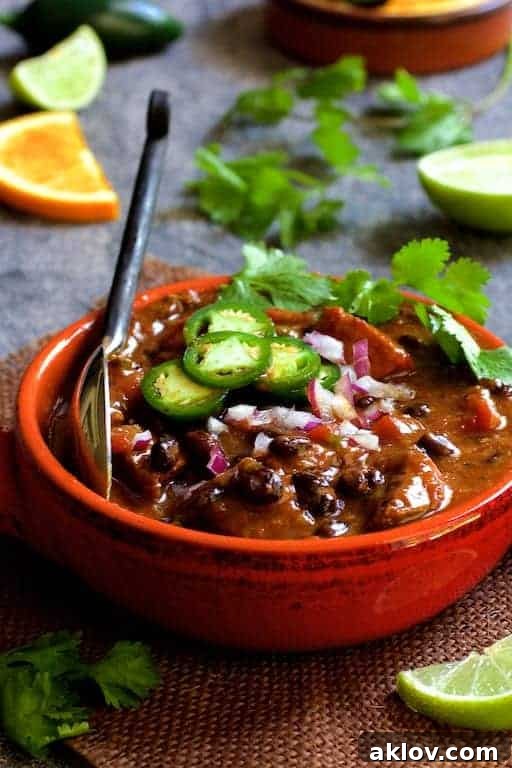
Feijoada: A Culinary Journey into Brazil’s National Dish (Simplified & Speedy)
Feijoada, widely celebrated as Brazil’s national dish, is a hearty, flavorful stew that embodies the rich culinary heritage of this vibrant South American nation. Traditionally, preparing an authentic Feijoada is a labor of love, often requiring a full day or even two to meticulously prepare the various cuts of salted and smoked meats and soak the black beans. While that classic rendition is undoubtedly a masterpiece, many modern home cooks seek a more accessible approach without compromising on the deep, satisfying flavors. This particular version offers a brilliant compromise: it may not be 100% authentic in every historical detail, but it’s remarkably easy to make and utilizes ingredients readily available at your local grocery store. For those eager to savor this Brazilian icon without the extensive time commitment, an electric pressure cooker transforms this traditional long-cooked dish into a convenient and much faster weeknight meal.
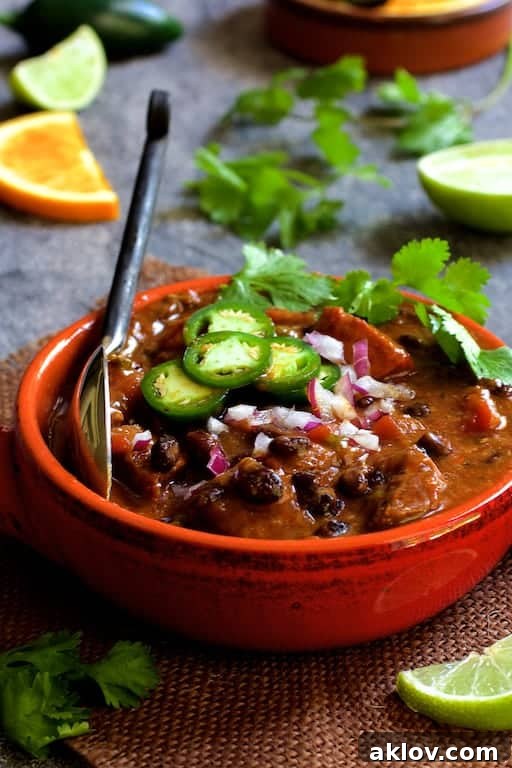
Exploring Brazilian Cuisine: Beyond Feijoada
Brazil’s gastronomic landscape is as vast and diverse as its geography, shaped by indigenous, African, and European influences. While many associate Brazilian food with its incredible array of meats, the cuisine is far more nuanced. Meals are often centered around staple ingredients like rice, beans, and manioc flour (farofa), forming the foundation of many dishes. My husband, having traveled extensively there on business, recounts many fond food memories. He often speaks of the quintessential Brazilian experience of a churrascaria, an all-you-can-eat steakhouse where skilled waiters continuously circulate, serving sizzling, freshly grilled meats directly from skewers tableside. It’s an unforgettable experience where one can truly “hurt themselves” by indulging in an endless parade of perfectly cooked beef, pork, lamb, and chicken. But beyond the vibrant churrascarias, typical Brazilian meals often feature a balanced combination of proteins, starches, and fresh vegetables, showcasing regional specialties that vary from the seafood-rich dishes of the coast to the hearty stews of the interior. Discovering dishes like Beef Tips in Beer Sauce offers another glimpse into the country’s love affair with robust meat preparations.
What Defines Feijoada: Ingredients and Flavor Profile
Feijoada, at its core, is a rich and savory black bean stew traditionally simmered with various cuts of pork and beef. Historically, it emerged from the kitchens of enslaved people, who ingeniously transformed discarded cuts of meat from their masters into a deeply nourishing and flavorful meal, alongside the readily available black beans. This humble origin story underscores its significance as a symbol of Brazilian resilience and culinary ingenuity. While the “authentic” Feijoada can incorporate an extensive list of cured, smoked, and fresh meats – from pork ribs and bacon to dried beef and sausages – the one constant, the soul of the dish, is always black beans. My recent trip to Portugal even revealed their own fascinating rendition, which leaned heavily into the black bean component, offering a slightly different but equally delightful experience.
Our interpretation, inspired by a recipe from Cuisine at Home magazine, aims to capture the essence of this South American classic while making it practical for the modern kitchen. This recipe strategically foregoes the multi-day preparation and obscure ingredients often found in traditional versions, yet it delivers a remarkably similar depth of flavor and comforting appeal. We achieve this by featuring readily available ingredients such as tender cubed chuck roast, providing a robust beefy base. Smoky kielbasa steps in to offer that essential cured, savory profile without the need for multiple obscure pork cuts. A surprising yet delightful touch of fruitiness comes from orange juice, which not only tenderizes the meat but also adds a subtle brightness that cuts through the richness. The spark of red wine vinegar introduces a welcome tang, balancing the flavors, while a generous helping of chili powder infuses the stew with a warm, inviting heat. The result is a flavor-packed, deeply satisfying stew that pays homage to Feijoada’s heritage, all made with ingredients you can find at your local market.
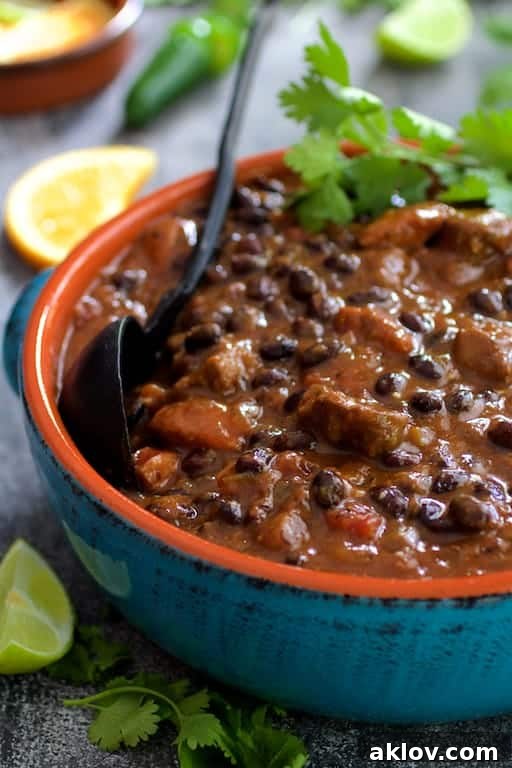
Mastering Feijoada: Simplified Cooking Techniques
Crafting a truly memorable Feijoada, even a simplified one, involves a few key steps that ensure optimal flavor and texture. For this rendition, we harness the power of an electric pressure cooker to transform a typically long-simmered dish into a super-simple, quick, and efficient cooking experience. If you haven’t yet discovered the magic of an electric pressure cooker, dear reader, you’re truly missing out on a culinary game-changer! These modern kitchen marvels allow you to achieve the succulent tenderness of slow-cooked meats in a fraction of the time. What makes them so convenient is that they don’t require constant monitoring; simply lock the lid, set the timer, and you’re free to attend to other tasks while your delicious stew cooks itself. My Cuisinart electric pressure cooker, for instance, has proven to be an indispensable workhorse in my kitchen, consistently delivering fantastic results with minimal effort.
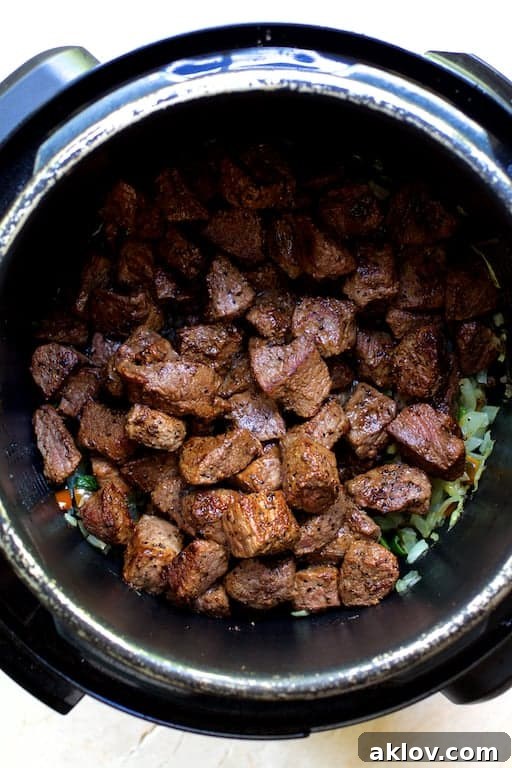
Before the pressure cooker takes over, the crucial first step is to properly brown the beef. While most electric pressure cookers feature a “saute” or “brown” setting, the heat generated is often not high enough, and the pot’s high sides can hinder the proper caramelization of the meat. For a truly deep, rich sear that locks in flavor and creates beautiful crust, I highly recommend browning the beef on the stovetop in a separate, wide skillet. This process, known as the Maillard reaction, is essential for developing complex, savory notes that are fundamental to any good stew.
- To achieve the best browning results, use as little oil as you can manage – just enough to coat the bottom of the pan and prevent sticking.
- Critically, avoid overcrowding the pan. When too much meat is added at once, the temperature of the pan drops significantly, causing the meat to steam rather than sear. This results in gray, unappealing meat instead of beautifully caramelized pieces. Brown the beef in batches if necessary, ensuring each piece has enough space to make direct contact with the hot surface.
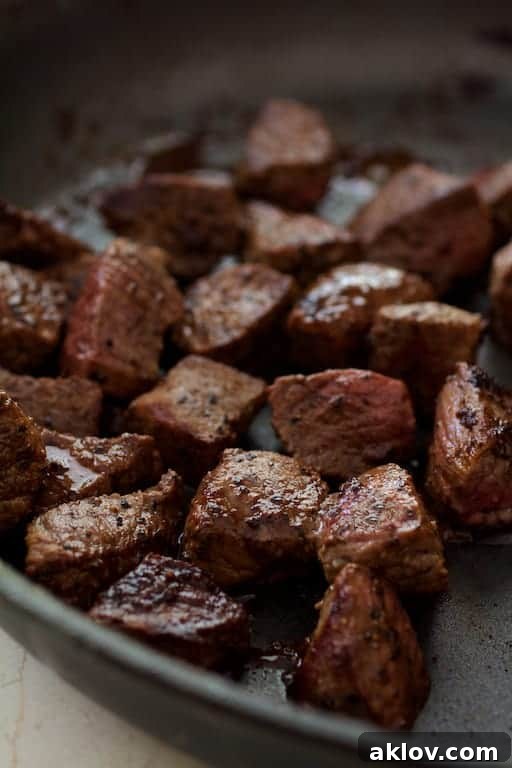
Once your beef is beautifully browned and caramelized, it’s ready to be transferred to your pressure cooker, carrying all that fantastic flavor with it into the stew. This initial step is key to building a robust foundation for your Feijoada.
- It’s important to understand the distinctions between different types of pressure cookers. Electric pressure cookers, such as Instant Pots, typically operate at a lower pressure, usually around 10-12 psi (pounds per square inch). Stovetop pressure cookers, on the other hand, can reach higher pressures, often up to 15 psi. This difference in pressure directly impacts cooking times, so you’ll need to adjust accordingly depending on the model you’re using. For a deeper dive into the science behind this amazing cooking method, you might find this excellent article from Fine Cooking Magazine incredibly informative: The Science of Pressure Cookers.
- For those who prefer traditional cooking methods or don’t own a pressure cooker, this stew can absolutely be made the old-fashioned way. You can simmer it gently in a heavy-bottomed pot on the stovetop or braise it in a 325-degree F (160-degree C) oven until the beef is fork-tender. It’s also an excellent candidate for a slow cooker, allowing flavors to meld beautifully over several hours with minimal supervision.
- Once the stew is cooked to perfection in the pressure cooker, the method of releasing pressure is critical for maintaining the meat’s tenderness. It’s vital to release the pressure as gradually as possible. A rapid, quick release can cause the meat fibers to contract and seize up, resulting in a tougher texture. To ensure a slow release, I often use a damp kitchen towel to carefully hold the pressure release valve open, allowing the steam to escape slowly and gently.
- After the pressure has been safely released, incorporate the canned black beans (make sure they are drained and thoroughly rinsed to remove excess sodium and liquid). To achieve the perfect, luscious consistency, stir in a cornstarch slurry – a simple mixture of cornstarch and water. Bring the stew back to a gentle simmer for a few minutes, allowing it to thicken. Then, turn off the pressure cooker and let the stew rest for at least 5-10 minutes. This resting period is important as the stew will continue to thicken as it stands, developing a richer, more cohesive sauce.
Perfect Pairings: What to Serve with Feijoada
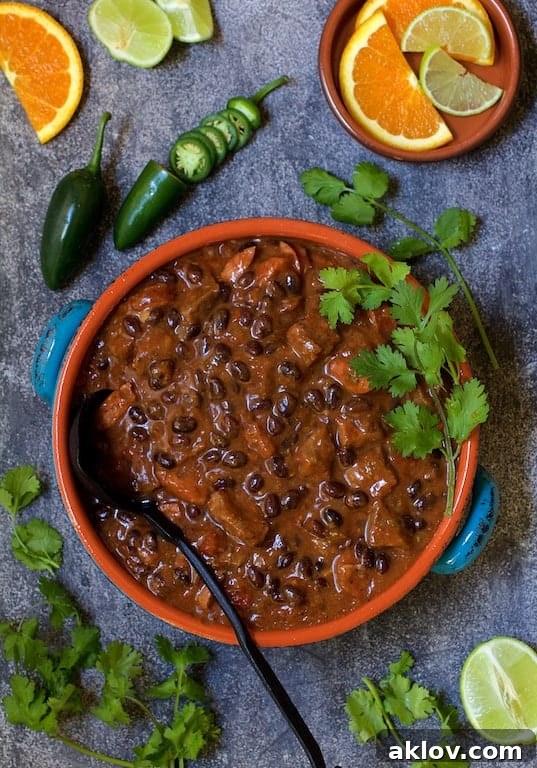
This rich, saucy Feijoada is a complete meal in itself, but it truly shines when served with traditional Brazilian accompaniments that complement its robust flavors and add textural contrast. The most classic pairing is fluffy brown rice, which serves as an excellent base to soak up the savory stew. Beyond the rice, an array of fresh garnishes elevates the dish, adding brightness and a welcome zing.
Consider serving your Feijoada with:
- Fresh Orange and Lime Slices: These citrus wedges are not merely decorative; squeezing them over the stew just before eating adds a crucial burst of acidity and freshness that cuts through the richness of the meats and beans, brightening every bite.
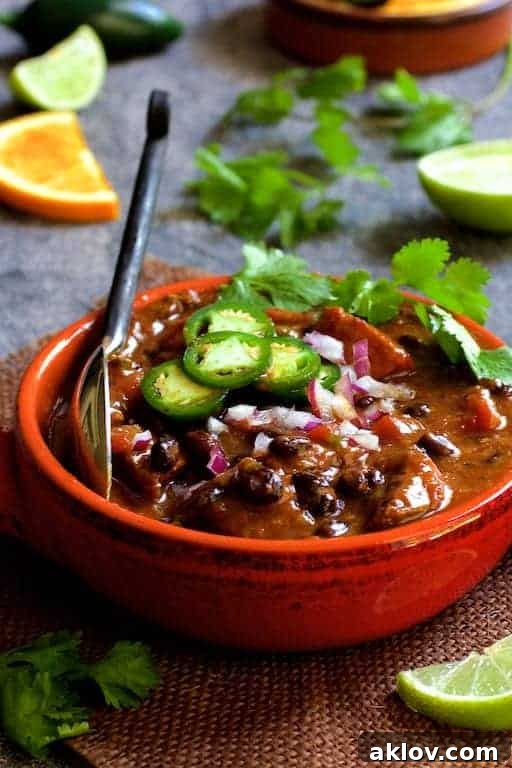
- Sliced Fresh Jalapeno: For those who appreciate an extra kick, thinly sliced fresh jalapenos provide a vibrant, spicy counterpoint that enhances the stew’s chili powder notes.
- Diced Red Onion: The sharp, pungent bite of finely diced red onion offers a raw, refreshing crunch that contrasts beautifully with the tender stewed ingredients.
- Cilantro Sprigs: A generous scattering of fresh cilantro sprigs adds a vibrant, herbaceous aroma and a pop of green color, enhancing the overall presentation and flavor.
- Farofa (optional): For a truly authentic experience, serve with farofa, a toasted manioc flour mixture often flavored with bacon or butter. It adds a unique nutty, smoky, and slightly crumbly texture, perfect for absorbing the stew’s delicious juices.
- Sautéed Collard Greens (optional): Many traditional Feijoada preparations include lightly sautéed collard greens, often with garlic, offering a slight bitterness and tender texture that harmonizes wonderfully with the hearty stew.
With these thoughtfully chosen accompaniments, your simplified Feijoada transforms into a comprehensive and deeply satisfying meal that transports your taste buds straight to Brazil. Let’s eat and enjoy this incredible dish!
Explore More Hearty Beef Stew Recipes
If you’ve enjoyed the rich flavors and comforting warmth of this Brazilian Beef Stew, you’ll be delighted to explore more of our favorite hearty beef stew creations. Each recipe offers a unique culinary journey, transforming humble beef into extraordinary meals. Be sure to try these other fantastic beef stew recipes from our kitchen:
- Mom’s Moroccan Beef Stew: Aromatic spices and tender beef create an exotic and comforting dish.
- Pressure Cooker Indian Curry Beef Stew: Experience the vibrant flavors of India with this quick and easy curry.
- Beef and Chorizo Chili: A smoky and robust chili featuring savory beef and spicy chorizo.
Print Recipe
Feijoada (Brazilian-Style Beef Stew)
Carol | From A Chef’s Kitchen
20 minutes
30 minutes
50 minutes
6
Equipment
-
Wusthof Chef Knife
-
Cutting Board
-
Wusthof Boning Knife
-
Nonstick Skillet
-
Cuisinart Electric Pressure Cooker
Ingredients
-
4
tablespoons
canola oil,
or vegetable oil, divided -
1
large
onion,
chopped -
2
large
Poblano peppers,
seeded and chopped -
12
large cloves
garlic,
sliced -
2 1/2
pounds
chuck stew meat - Salt and freshly ground black pepper
-
1
package (14-ounce)
kielbasa,
or smoked sausage, halved and sliced -
1
cup
orange juice -
3
cups
beef broth -
1
can (15-ounce)
diced canned tomatoes,
undrained -
2
tablespoons
red wine vinegar,
or to taste -
2
tablespoons
hot chili powder -
2
cans (15-ounce)
black beans,
drained and rinsed -
4
tablespoons
corn starch,
mixed with 3 tablespoons water (for slurry) -
Brown rice,
for serving (optional) -
Jalapeno slices,
for garnish -
Finely chopped red onion,
for garnish -
Orange and lime wedges,
for garnish -
Cilantro sprigs,
for garnish
Instructions
-
Prepare Aromatics: Heat 2 tablespoons of canola or vegetable oil in your electric pressure cooker set to the “sauté” function (or in a large pot on the stovetop over medium heat). Add the chopped onion and poblano pepper and cook, stirring occasionally, until they begin to soften, which should take approximately 5 minutes. Incorporate the sliced garlic and cook for an additional minute until fragrant, being careful not to burn it. Turn the pressure cooker off (if using).
-
Brown the Beef: Heat 1 tablespoon of oil in a large skillet or sauté pan over medium-high heat. Season the chuck stew meat generously with salt and freshly ground black pepper. Brown the beef in small batches to avoid crowding the pan; this ensures a proper sear and delicious caramelization. Add the remaining 1 tablespoon of oil as needed for subsequent batches. Once each batch is nicely browned, transfer it to the pressure cooker (or large pot if cooking stovetop/oven).
-
Combine Ingredients: Add the sliced kielbasa (or smoked sausage), orange juice, beef broth, undrained diced canned tomatoes, red wine vinegar, and hot chili powder to the pressure cooker (or large pot) with the browned beef and aromatics. Stir everything gently to combine all the ingredients thoroughly.
-
Pressure Cook: Secure the lid on your electric pressure cooker. Set the pressure cooker to “High Pressure” and cook for 21 minutes. (Adjust time for stovetop pressure cookers or other methods as noted in the tips section).
-
Finish and Thicken: Once cooking is complete, release the pressure as slowly as possible (refer to tips for slow-release method). Carefully open the lid. Stir in the drained and rinsed black beans and the prepared cornstarch slurry. Set the pressure cooker to “simmer” or return to medium heat on the stovetop, and simmer gently, stirring occasionally, until the stew has thickened to your desired consistency, usually a few minutes. Turn the heat off and let the stew rest for at least 5 minutes; it will continue to thicken further as it stands.
-
Serve: Ladle the hearty Feijoada over a bed of brown rice (if using). Garnish generously with fresh jalapeno slices, finely chopped red onion, vibrant orange and lime wedges, and fresh cilantro sprigs. Serve warm and enjoy!
Notes and Alternate Cooking Methods
ALTERNATE COOKING METHODS:
SLOW COOKER METHOD:
- Step 1: Sauté the onion, poblano pepper, and garlic in a skillet as directed in Instruction #1. Transfer these aromatics to your slow cooker.
- Step 2: Brown the beef in batches in the same skillet as directed in Instruction #2, then add the browned beef and sliced kielbasa to the slow cooker.
- Step 3: Add the orange juice, beef broth, undrained diced tomatoes, red wine vinegar, and hot chili powder to the slow cooker. Stir to combine.
- Step 4: Cook on HIGH for 4 hours or on LOW for 8 hours, or until the beef is very tender.
- Step 5: Near the end of the cooking time, stir in the cornstarch slurry. If possible, remove the lid and increase the slow cooker to HIGH (or transfer to a stovetop pot) and simmer uncovered until the stew thickens to your liking.
- Step 6: Stir in the drained and rinsed black beans and heat through for about 15-20 minutes before serving.
STOVETOP METHOD:
- Step 1: Follow Instruction #1 and #2, sautéing aromatics and browning beef in a large, heavy-bottomed pot or Dutch oven. Keep all ingredients in this pot.
- Step 2: Add kielbasa, orange juice, beef broth, tomatoes, vinegar, and chili powder to the pot. Bring the mixture to a gentle simmer.
- Step 3: Reduce heat to low, cover the pot, and simmer for approximately 2 to 2 1/2 hours, or until the beef is fork-tender. Stir occasionally to prevent sticking.
- Step 4: Stir in the drained and rinsed black beans and the cornstarch slurry. Continue to simmer gently, uncovered, until the stew thickens to your preference.
OVEN BRAISE METHOD:
- Step 1: Preheat your oven to 325 degrees F (160 degrees C). Follow Instruction #1 and #2, sautéing aromatics and browning beef in an oven-safe Dutch oven or heavy pot.
- Step 2: Add kielbasa, orange juice, beef broth, tomatoes, vinegar, and chili powder to the pot. Stir to combine.
- Step 3: Cover the pot securely with a lid (or foil if your lid isn’t tight-fitting) and braise in the preheated oven for 2 to 2 1/2 hours, or until the beef is incredibly tender.
- Step 4: Remove from the oven. Stir in the drained and rinsed black beans and the cornstarch slurry. Return the pot to the stovetop over medium heat and simmer gently, uncovered, until the stew has thickened.
IMPORTANT COOKING TIPS:
- Browning Beef: When browning the beef, use minimal oil and ensure the pan is not overcrowded. Overcrowding will cause the meat to steam rather than brown, resulting in a less flavorful, gray color. Brown in batches for best results.
- Pressure Cooker PSI: Electric pressure cookers (like Instant Pot) operate at a lower PSI (10-12 psi) than stovetop models (up to 15 psi). Adjust your cooking times accordingly to achieve the desired tenderness.
- Gradual Pressure Release: To prevent the meat from seizing and becoming tough, always release pressure from your pressure cooker as gradually as possible. Using a damp kitchen towel to slowly open the valve is an effective technique for a controlled release.
MAKE AHEAD & FREEZER-FRIENDLY:
- Make Ahead: Prepare the Feijoada as directed. Allow it to cool completely before transferring to an airtight container and refrigerating for up to 3-4 days. Reheat gently on the stovetop or in the oven, stirring frequently, until heated through.
- Freezer-Friendly: Feijoada freezes beautifully! Once completely cooled, package the stew in airtight, freezer-safe containers or heavy-duty freezer bags in desired portion sizes. Freeze for 2-3 months. To serve, thaw overnight in the refrigerator, then reheat on the stovetop or in the oven, stirring until thoroughly warmed.
Nutrition Information (Estimated)
Serving: 1 serving
Calories: 837kcal
Carbohydrates: 37g
Protein: 80g
Fat: 42g
Saturated Fat: 13g
Polyunsaturated Fat: 28g
Trans Fat: 1g
Cholesterol: 246mg
Sodium: 1401mg
Fiber: 6g
Sugar: 11g
Nutritional values are automatically calculated using unbranded products and are estimates only. Actual results may vary based on ingredients used and portion sizes. Adjust as needed for dietary restrictions, allergies, or health concerns.
 Like this? Leave a comment below!