

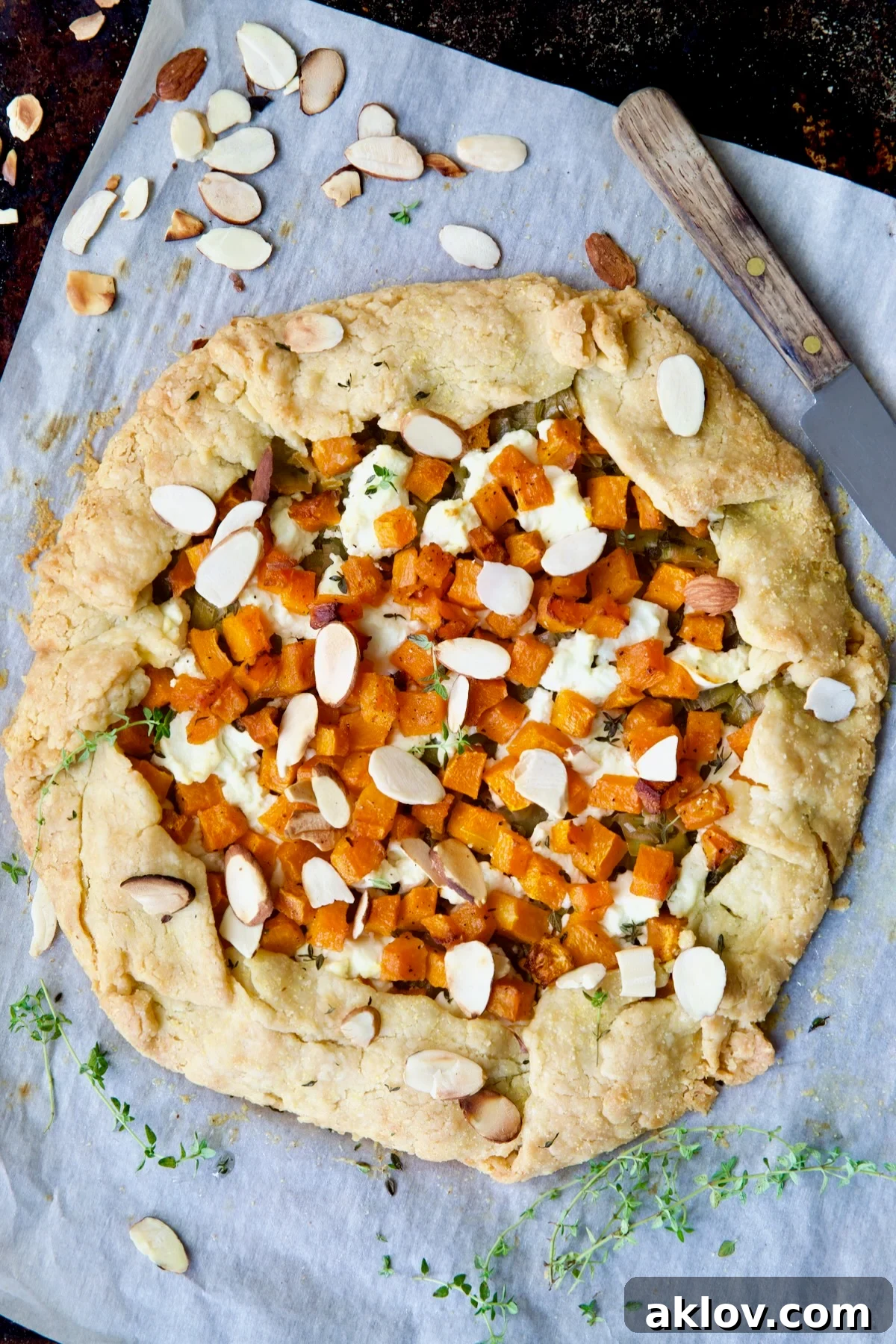
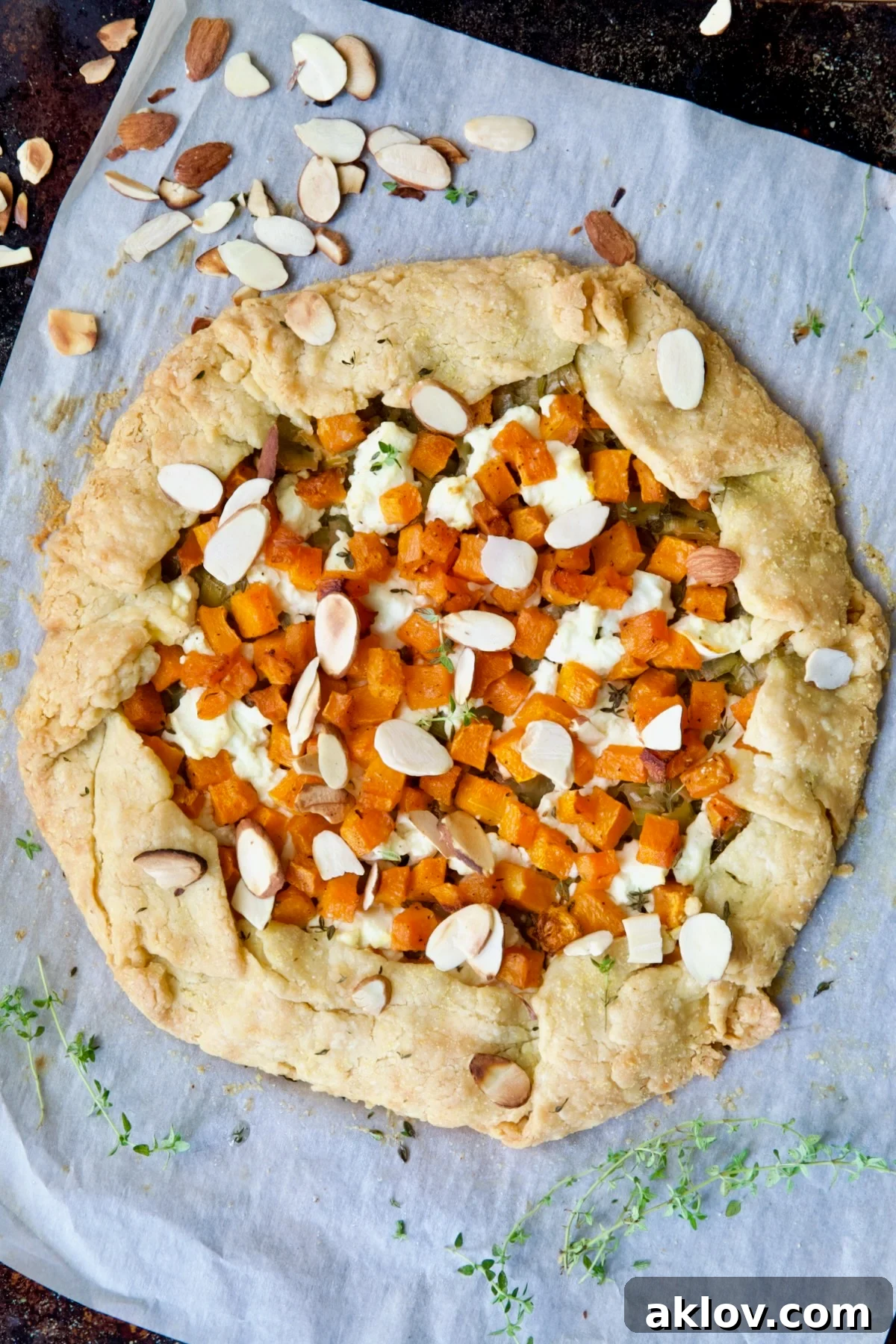
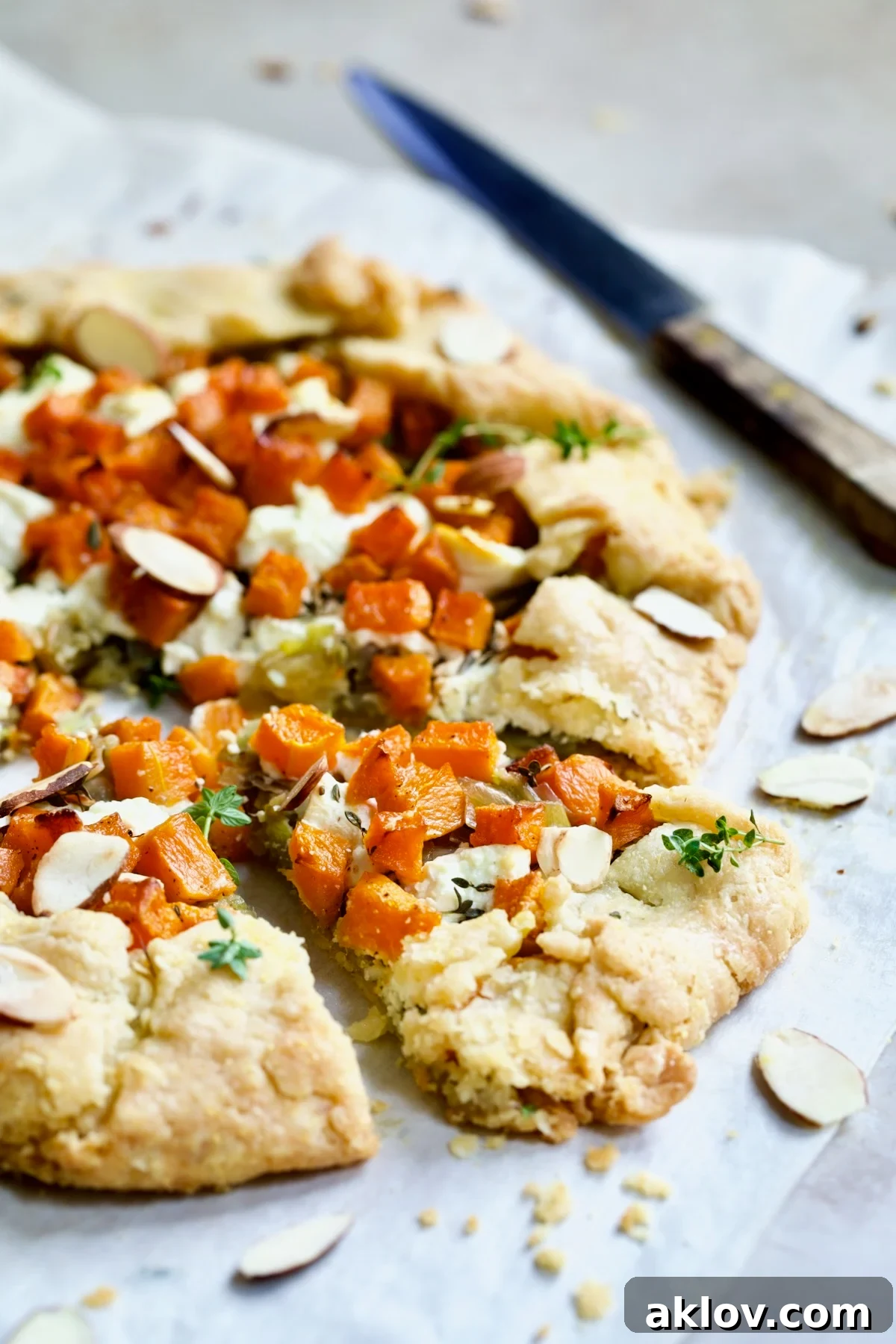
Imagine a culinary masterpiece where a tender, buttery, and irresistibly flaky pastry cradles a vibrant filling of perfectly roasted butternut squash, sumptuously soft, caramelized leeks, and the delightful tang of creamy goat cheese. This French-inspired, free-form tart, known as a galette, is more than just a dish; it’s an experience. This rustic yet undeniably elegant Butternut Squash, Leek and Goat Cheese Galette effortlessly transforms any meal into a special occasion. It makes a magnificent starter for an autumnal dinner party, a show-stopping centerpiece for your holiday celebration, or a comforting yet refined light supper when paired with a classic French Onion Soup or a crisp, fresh green salad. Its harmonious blend of sweet, savory, and tangy notes, encased in a golden, flaky crust, truly makes it a dish to remember.
“Hard to trust a 5-star recipe when there are only a handful of reviews, but this one deserves it. The flavor combination is spot on!”

Why This Butternut Squash Galette Will Become Your Go-To Recipe!
If you’ve yet to discover the joy of making a galette, prepare to fall in love with its effortless charm and impressive results! This isn’t just another recipe; it’s a gateway to simple, elegant baking that offers incredible versatility and undeniable flavor. The Butternut Squash, Leek, and Goat Cheese Galette perfectly encapsulates why this free-form tart deserves a permanent spot in your culinary repertoire.
A galette, by its very nature, is wonderfully rustic and forgiving. Unlike more structured pies or quiches that demand specific pans or custard-type fillings, a galette embraces imperfection. Its free-form design means no crimping edges, no complex lattice work – just a simple fold of the crust over the filling, creating a beautifully artisanal look. This ease of preparation makes it less intimidating for novice bakers while still delighting seasoned cooks with its inherent elegance.
The beauty of a galette lies in its adaptability. It can be exquisitely sweet, filled with seasonal fruits like berries or apples, creating a perfect sweet ending to any meal. However, its savory side is equally compelling. When filled with an abundance of seasonal vegetables, like this Butternut Squash, Leek, and Goat Cheese Galette or my popular Mediterranean Vegetable Galette, it transforms into a hearty and flavorful dish. It’s ideal for a satisfying lunch, an upscale brunch, a light and comforting supper, or an elegant appetizer to kick off a more formal dinner menu.
This particular savory galette is a symphony of autumnal flavors. It’s generously filled with tender, roasted butternut squash, sweet and “melty soft” leeks, and the distinct, creamy tang of goat cheese, which binds all the elements together with its rich texture. The optional sprinkle of toasted almonds adds a subtle crunch and another layer of sophisticated flavor, enhancing the overall experience. While making your own buttery crust is a rewarding process, for those times when you’re short on time, a good quality purchased refrigerated pie crust works beautifully, proving that deliciousness doesn’t always require hours in the kitchen.
How to Craft a Delicious Butternut Squash, Leek and Goat Cheese Galette: A Detailed Guide
Essential Recipe Ingredients:
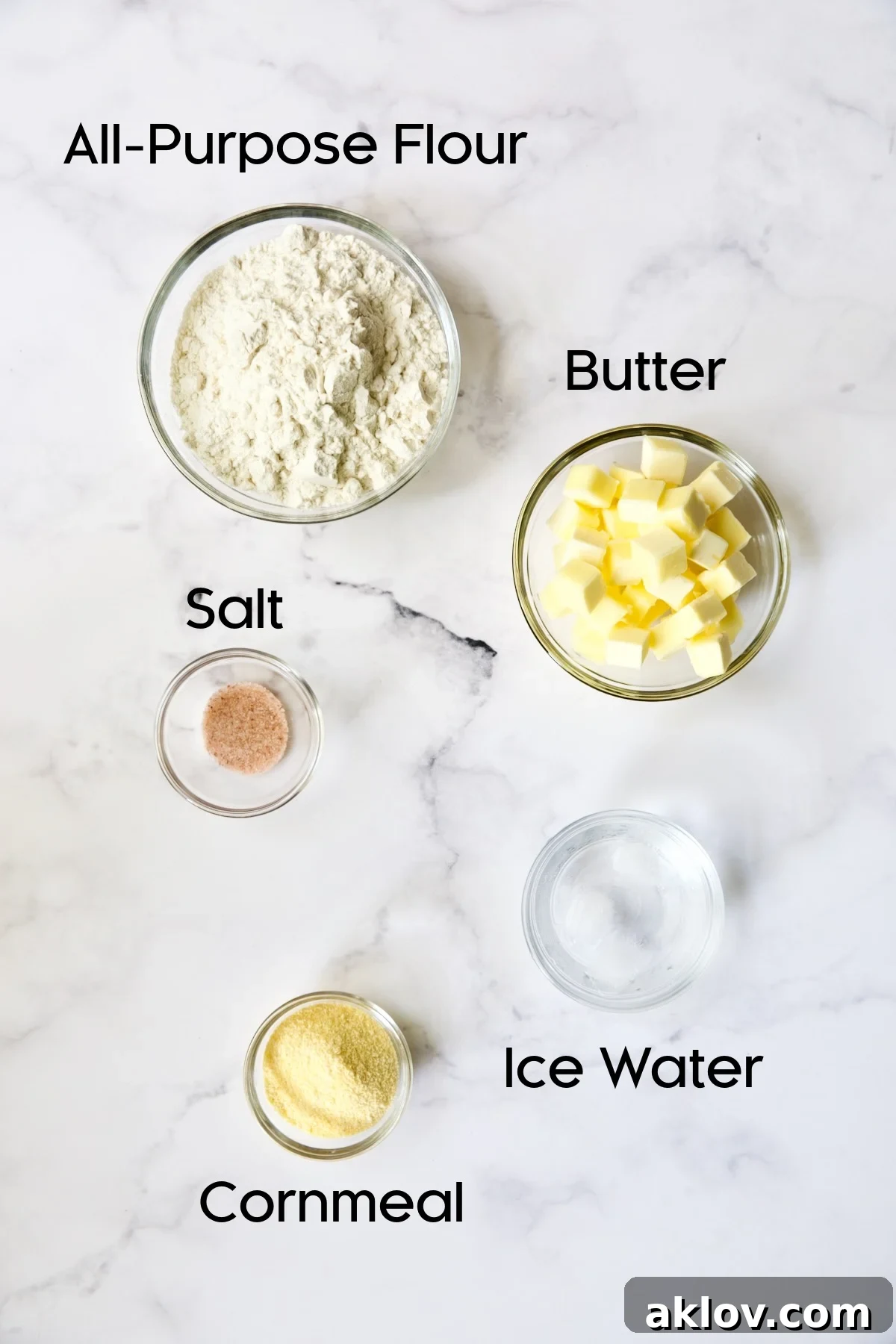
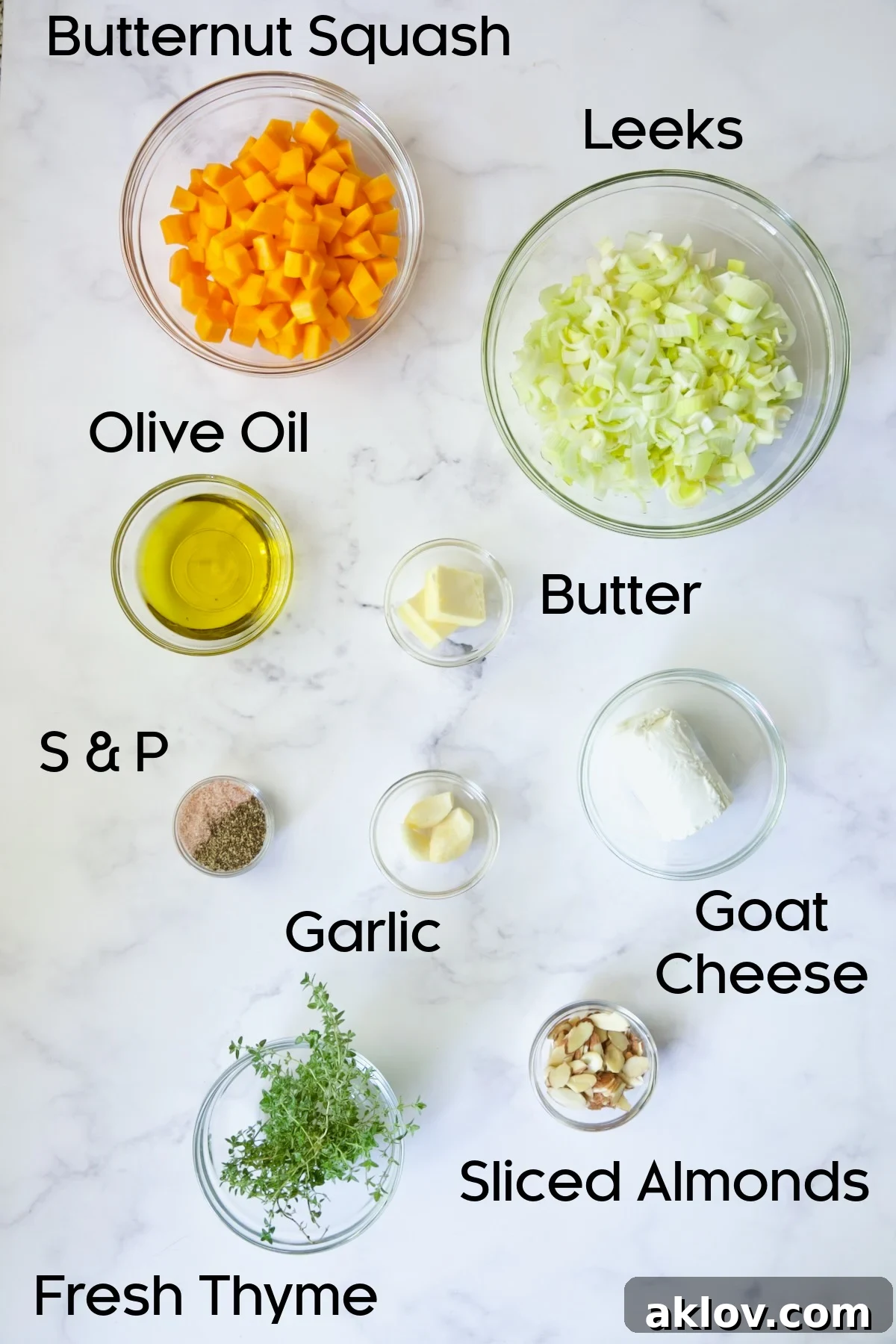
Crafting this delightful galette begins with selecting the right ingredients. Below is a comprehensive list of everything you’ll need. For precise measurements, please refer to the detailed recipe instructions provided further down the page.
The synergy between the sweet butternut squash, the mild, earthy leeks, and the sharp, creamy goat cheese is what truly elevates this dish. Each ingredient plays a crucial role in creating a balanced and memorable flavor profile.
Ingredient Notes and Smart Substitutions for Your Galette:
Understanding your ingredients and their potential substitutions can greatly enhance your cooking experience and ensure a perfect galette every time. Here are some detailed notes to guide you:
- All-Purpose Flour: Whether you choose bleached or unbleached all-purpose flour, both will work effectively for your galette crust. I personally prefer to use unbleached all-purpose flour as it typically avoids the trace preservatives that can sometimes be found in bleached varieties, offering a purer taste to the pastry.
- Butter: Always opt for unsalted butter in your baking and cooking. This allows you complete control over the salt levels in your final dish, ensuring it’s seasoned exactly to your preference. Cold butter is key for a flaky crust.
- Cornmeal: This often-overlooked ingredient is a secret weapon for galettes. The cornmeal is not incorporated into the galette dough itself; instead, it’s sprinkled onto your baking sheet. Its purpose is to create a non-stick surface, preventing the dough from adhering to the pan and making it significantly easier to transfer and move the dough and the finished galette. If you choose to use parchment paper, which also provides a non-stick surface, you can safely omit the cornmeal.
- Butternut Squash: Butternut squash is a fantastic choice due to its sweet flavor and availability. When selecting, look for a squash that is firm, heavy for its size, and has a deep, even color. While butternut is readily available and highly recommended, you can certainly experiment with other delightful varieties of winter squash, such as Delicata or Acorn squash. If you’re using these alternatives, remember to seed them and slice them thinly to ensure even cooking. This recipe is also a brilliant way to utilize the bottom, seedy portion of a large butternut squash that might be leftover from another recipe, as approximately 2 cups of cubed squash are needed. This helps reduce food waste beautifully!
- Goat Cheese: The distinct tanginess of goat cheese is a perfect counterpoint to the inherent sweetness of both the roasted butternut squash and the gently cooked leeks, creating a beautifully balanced flavor profile. Its creamy texture also adds a luxurious mouthfeel to the galette. However, if goat cheese isn’t to your taste, a wonderful alternative is Gruyere cheese. Gruyere offers a rich, nutty flavor that, while different from goat cheese, also complements the sweetness of the squash and leeks exceptionally well. For an even creamier texture, you could also consider a soft brie or camembert.
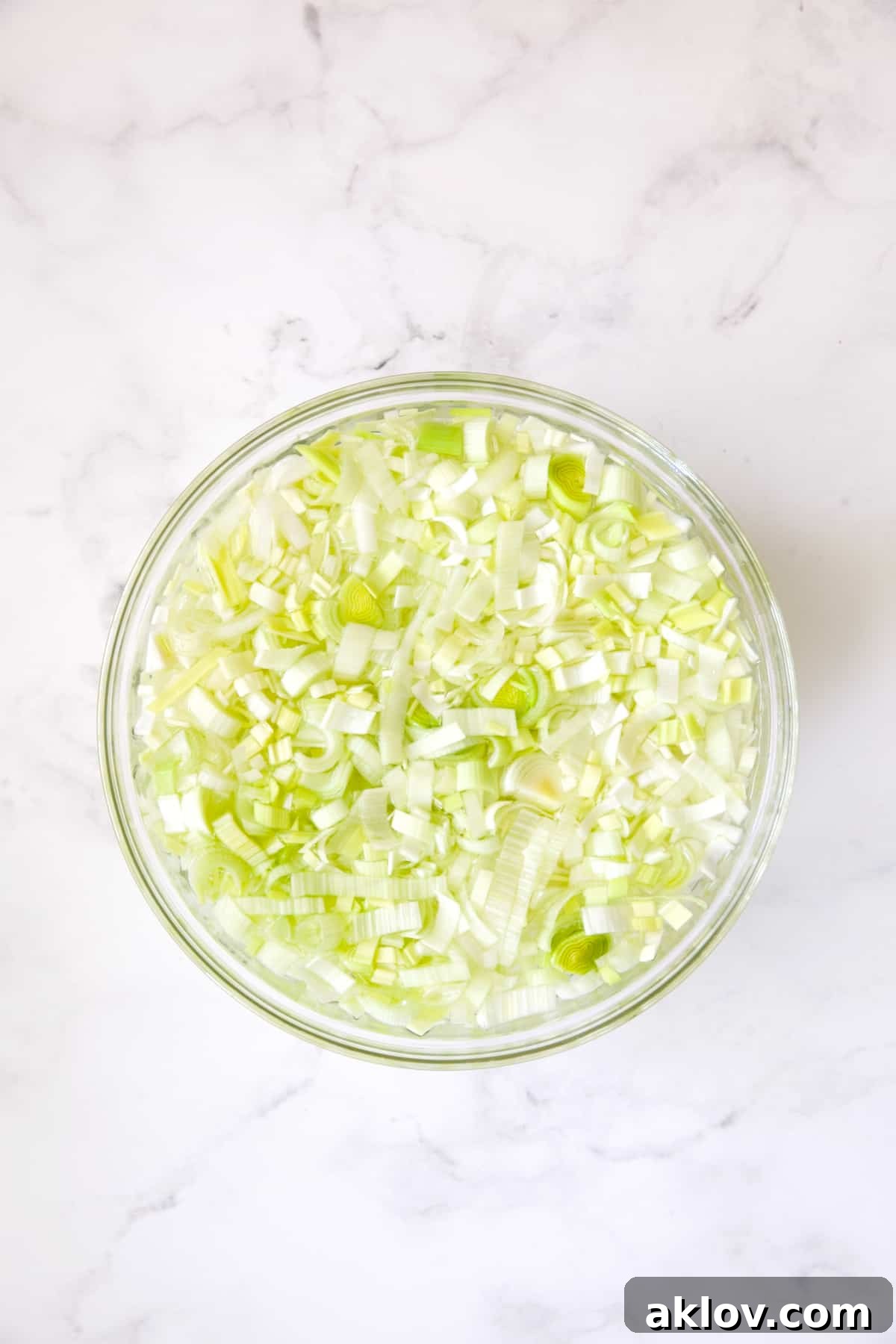
- Leeks: These elegant members of the onion family resemble giant scallions and are renowned for their delicate, sweet, and mild onion flavor. Proper cleaning is paramount, as dirt and grit can often hide between their many layers. To clean them thoroughly, begin by cutting the leeks in half lengthwise, then thinly slice them into crescent shapes. Submerge the sliced leeks in a large bowl of cold water and vigorously swish them around. Any hidden dirt will readily sink to the bottom of the bowl. Use a slotted spoon or a fine-mesh sieve to scoop out the clean leeks, leaving the gritty water behind.
Detailed Step-By-Step Instructions for Your Galette:
Follow these clear, concise steps to create your exquisite Butternut Squash, Leek, and Goat Cheese Galette. Precision and patience will lead to a truly delightful result.
- Begin by gathering and thoroughly prepping all your ingredients. This mise en place will ensure a smooth and enjoyable cooking process.
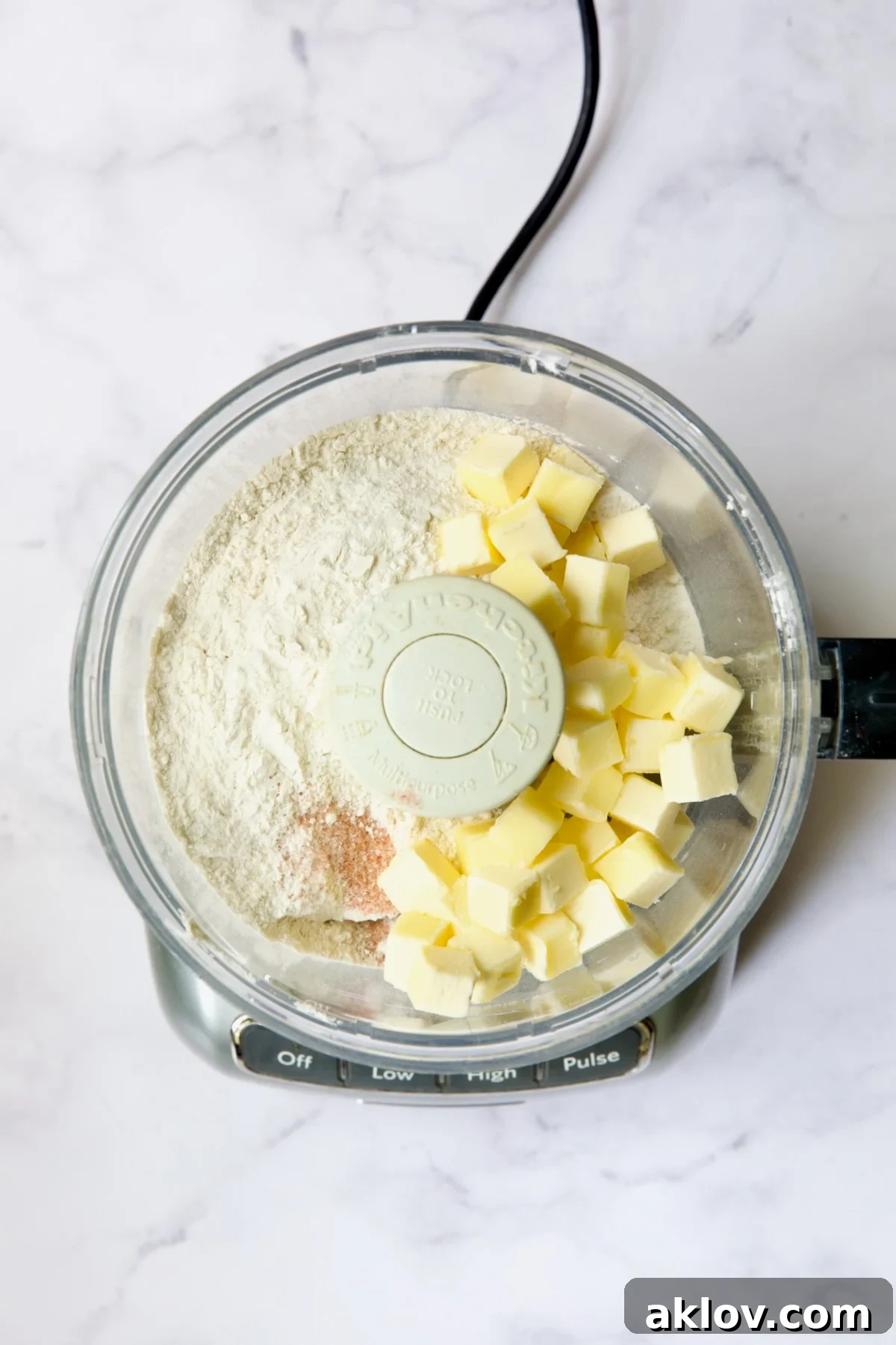
- MAKE THE GALETTE DOUGH: In the bowl of a food processor, combine the all-purpose flour, cubes of cold unsalted butter, and salt.
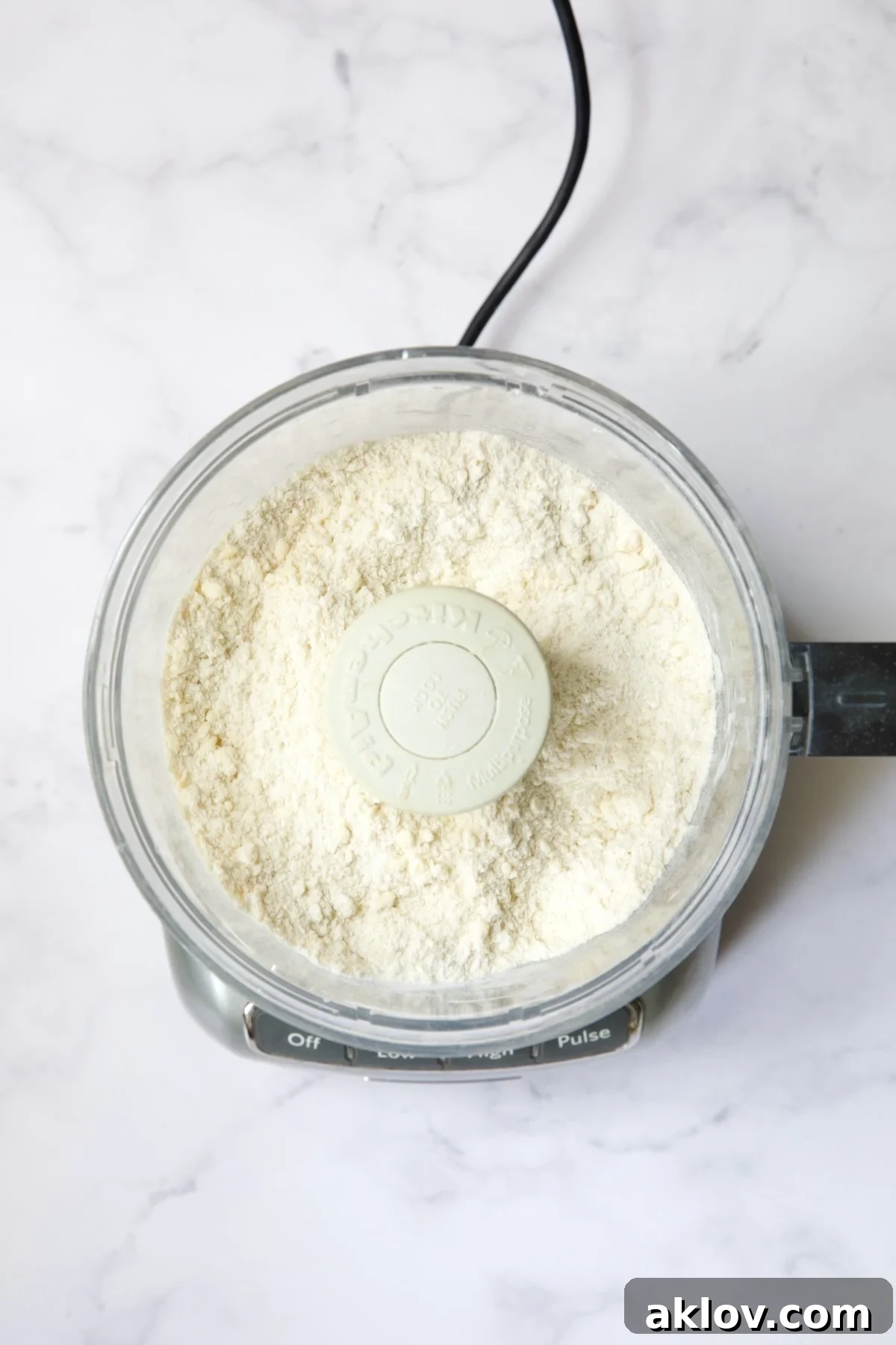
- Pulse the mixture repeatedly in short bursts until the butter is fully incorporated into the flour and the mixture takes on the texture of a coarse meal, with small, pea-sized pieces of butter still visible.
- Add 3 tablespoons of ice water to the flour and butter mixture. Pulse again until the mixture just begins to come together. Test the dough by pinching a small amount between your fingers; if it holds together, it’s ready. If it’s still too crumbly, add 1 more tablespoon of ice water, pulsing briefly until it forms a cohesive dough. Be careful not to overmix.
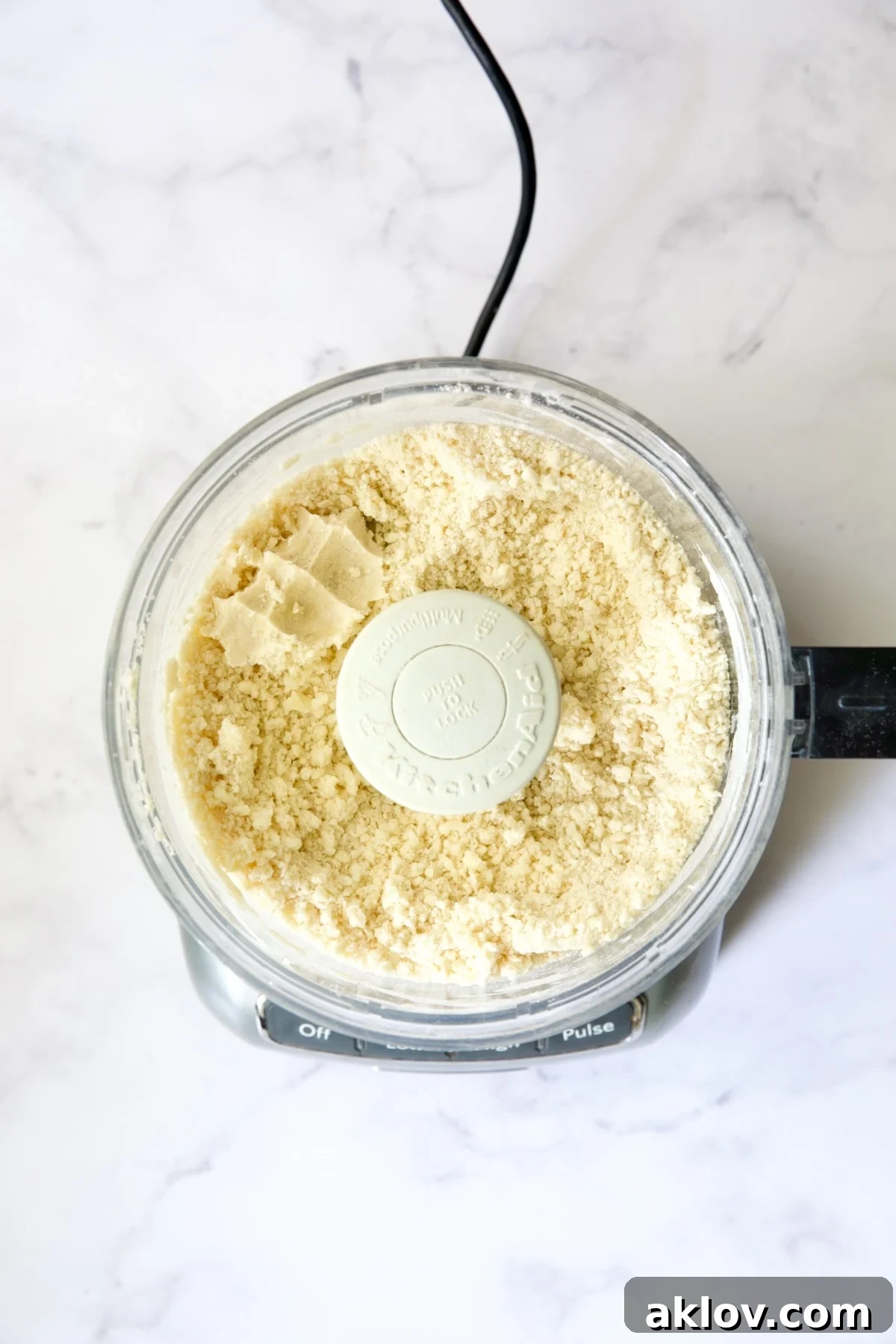
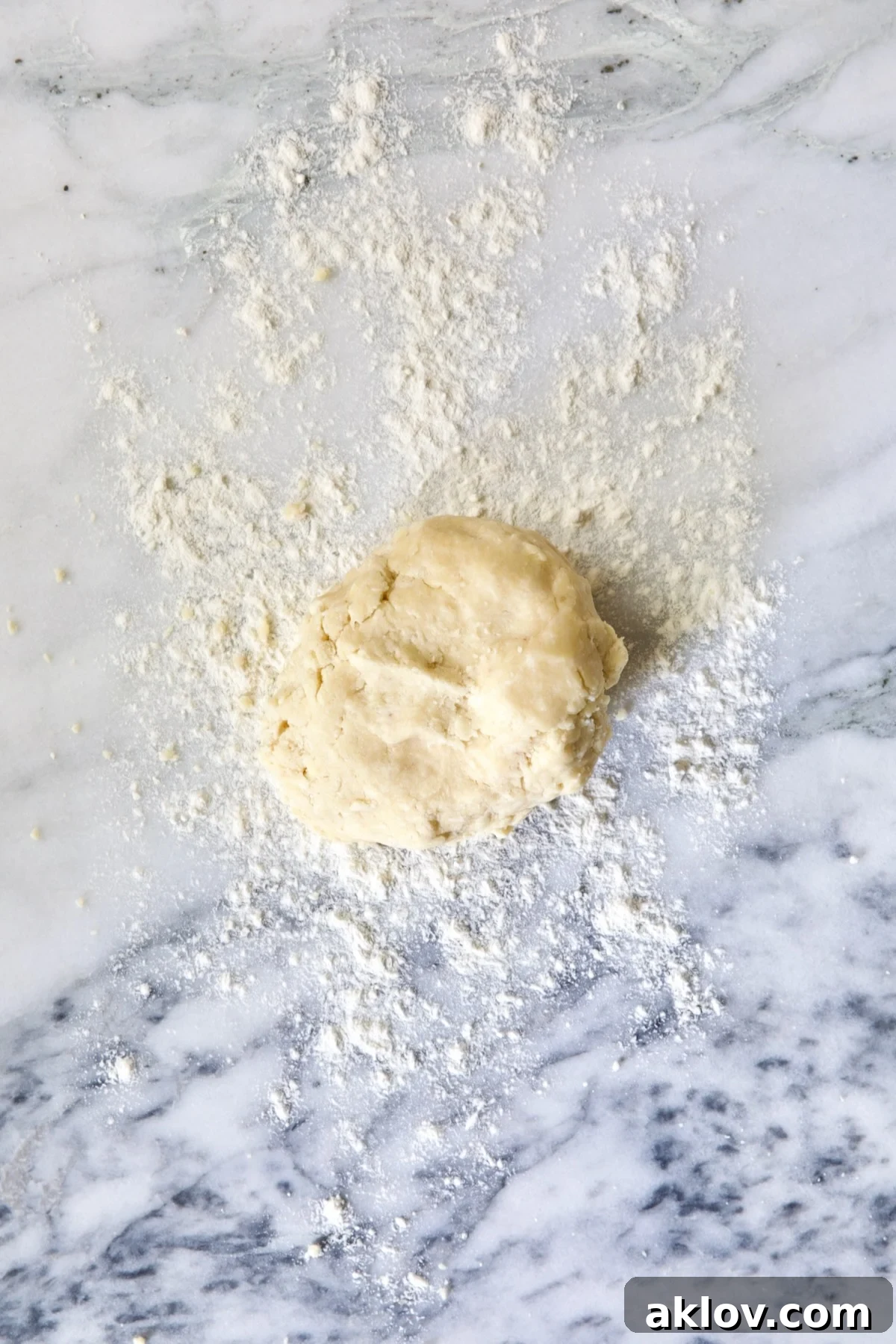
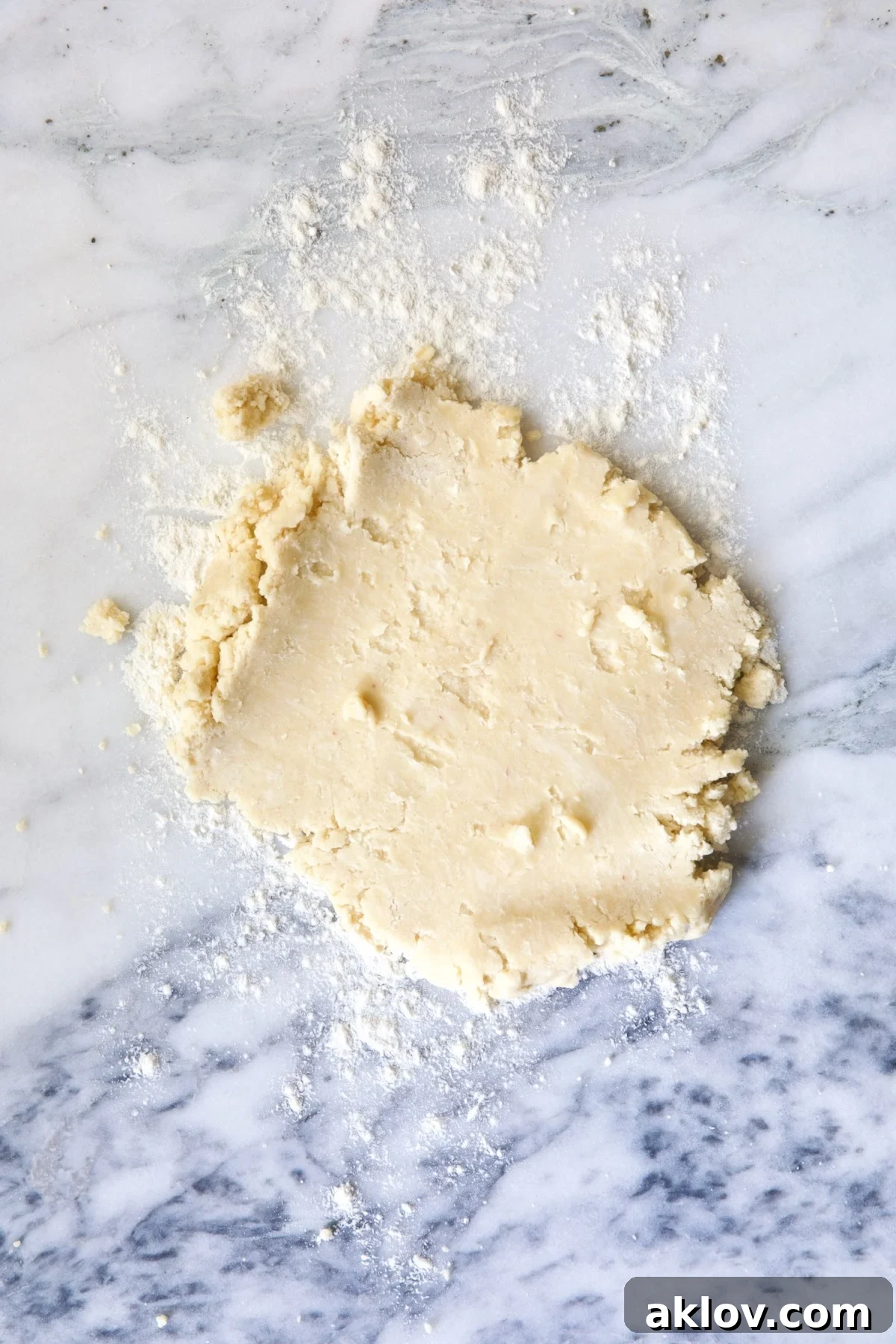
- Carefully empty the crust mixture onto a clean, lightly floured flat surface. Gently bring the dough together with your hands, forming it into a flat disc. It’s crucial not to knead or overwork the dough at this stage, as this can develop the gluten too much, resulting in a tough crust instead of a tender, flaky one.
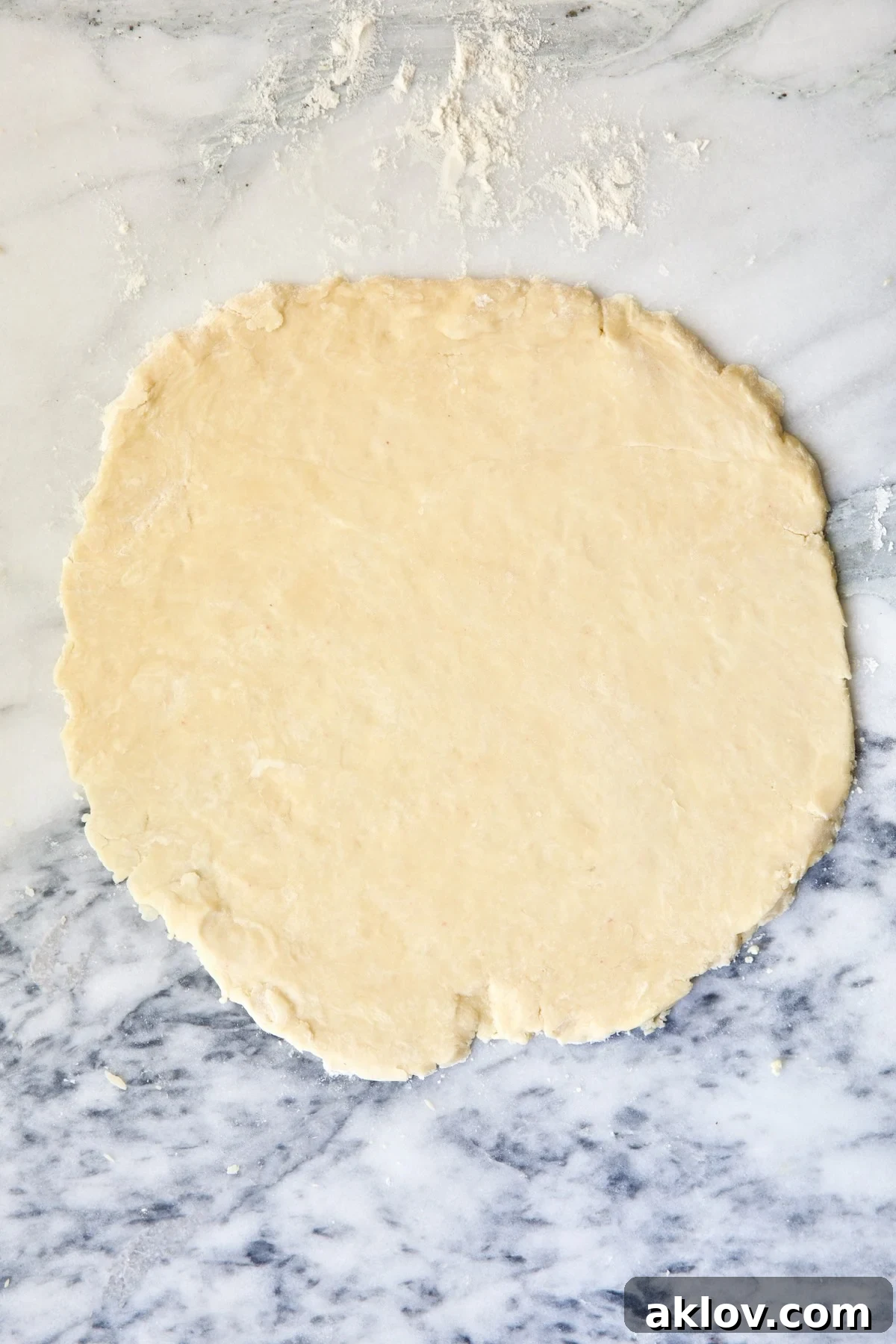
- Using a rolling pin, roll the dough out into a roughly 12-14 inch circle on your lightly floured surface. Aim for an even thickness.
- Once rolled, cover the dough disc loosely with plastic wrap or a clean kitchen towel and refrigerate it. This chilling period is important as it allows the gluten to relax and the butter to firm up, both contributing to a flakier crust. Keep it refrigerated while you prepare the squash and leeks.
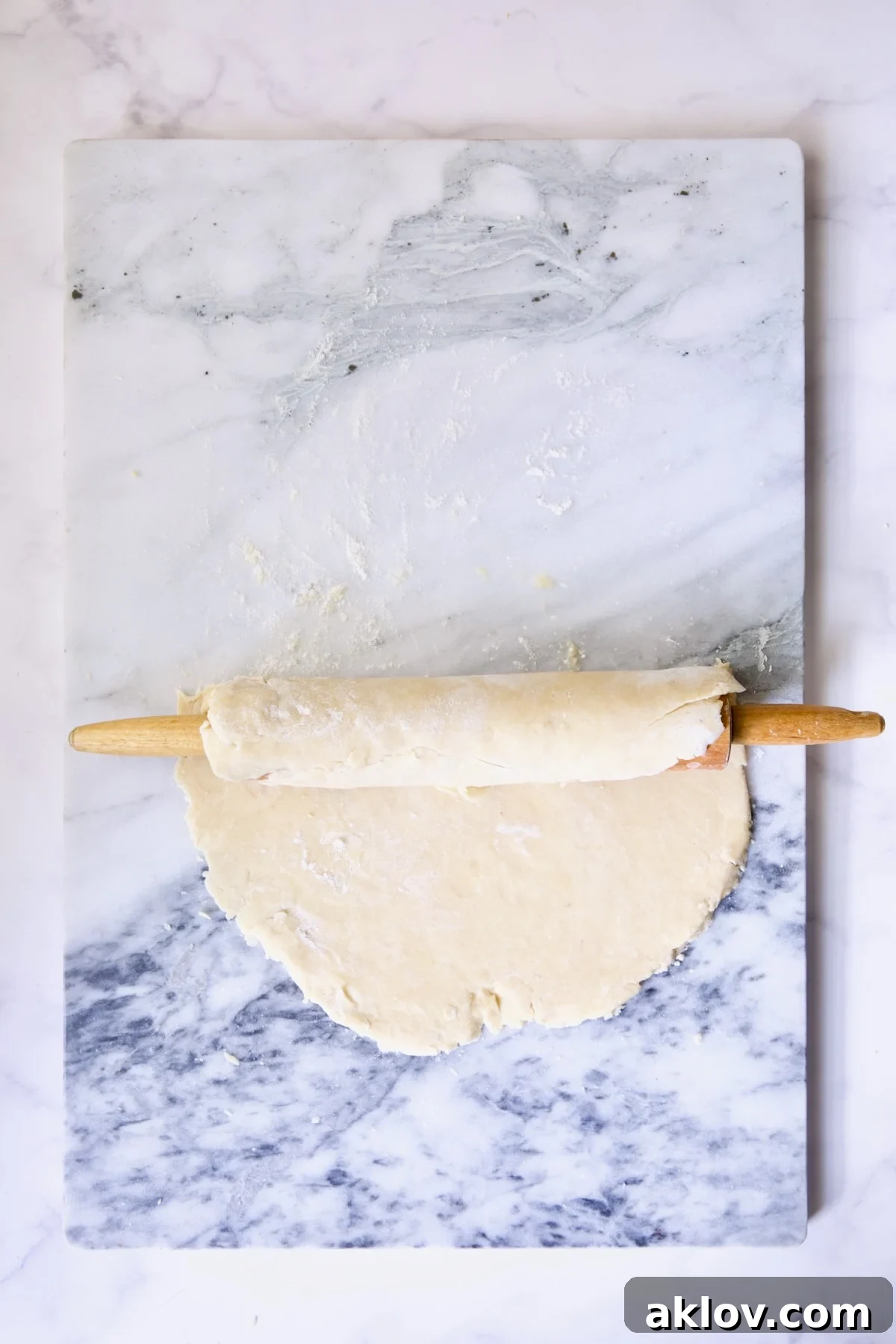
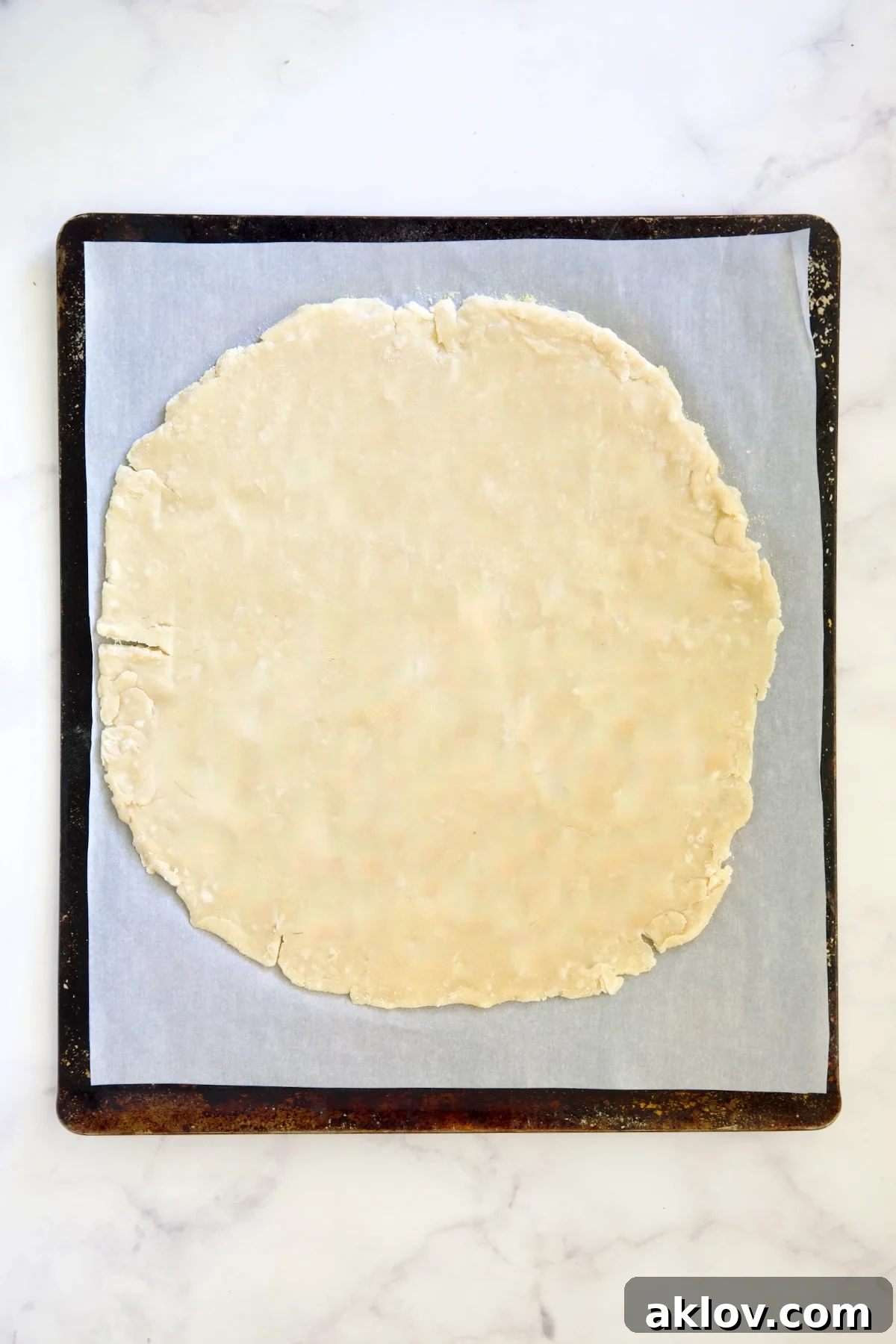
- To prepare for baking, lightly sprinkle cornmeal onto a nonstick baking sheet. Alternatively, line your baking sheet with parchment paper, and then sprinkle the cornmeal over the parchment. Carefully transfer the rolled galette dough to the prepared baking sheet. A helpful trick is to gently roll the dough around your rolling pin, then unroll it onto the baking sheet.
- MAKE THE FILLING: Preheat your oven to a precise 375 degrees Fahrenheit (190 degrees Celsius). This ensures the oven is at the correct temperature for roasting.
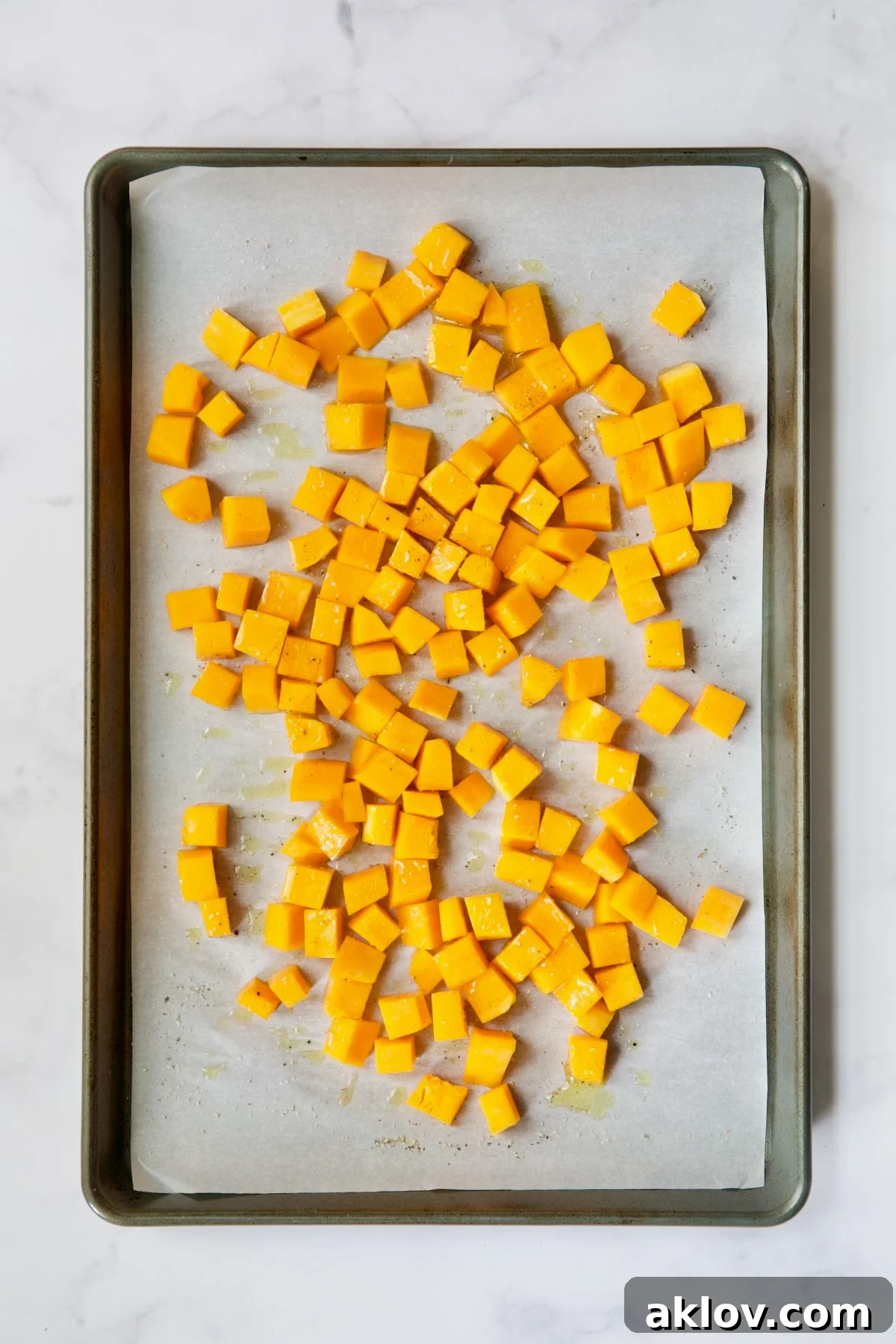
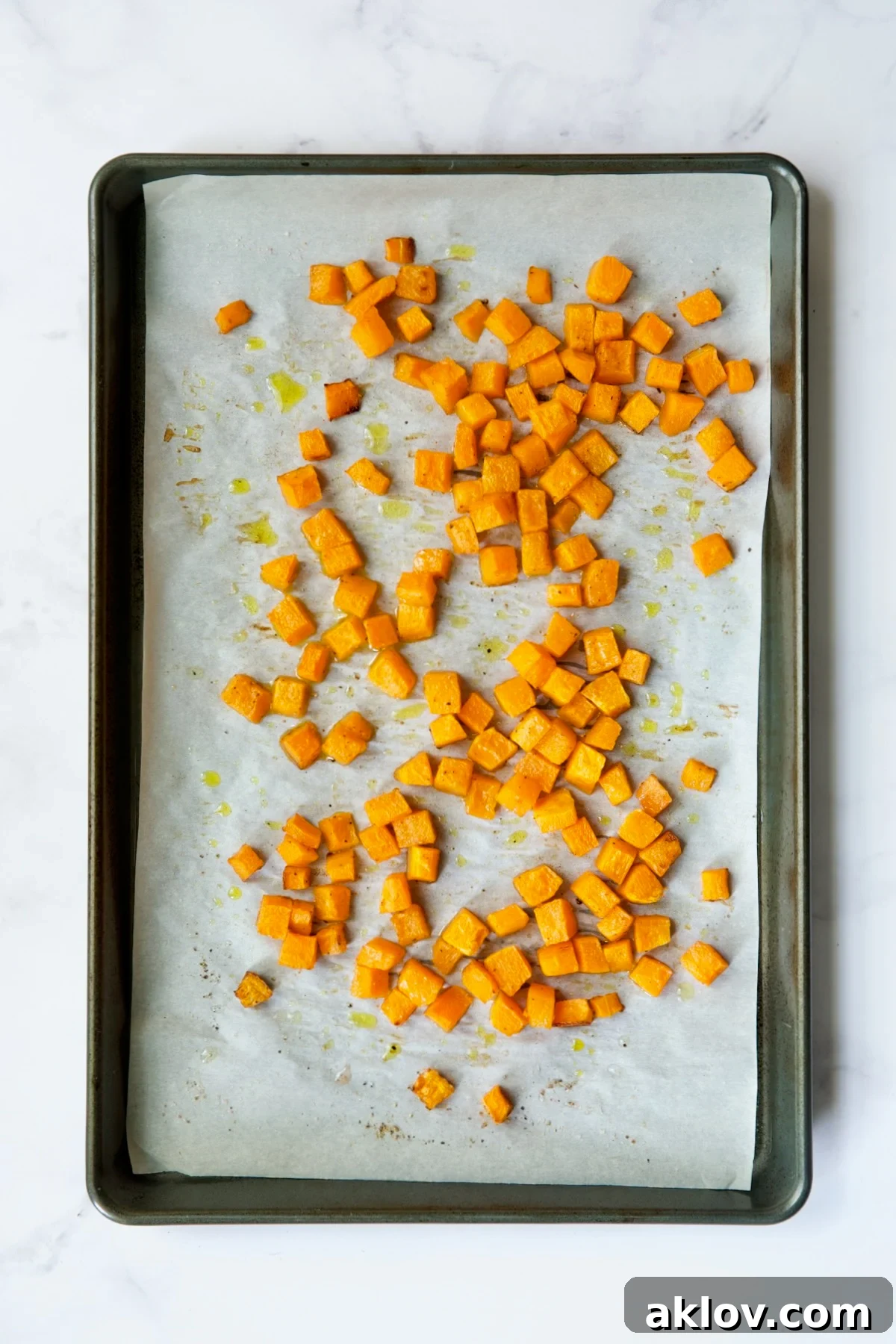
- In a medium bowl, toss the butternut squash cubes with 2 tablespoons of olive oil. Season generously with salt and freshly ground black pepper. Spread the seasoned squash in an even single layer on a baking sheet. Roast in the preheated oven for approximately 25 minutes, or until the squash is tender and easily pierced with a knife. For even cooking and a lovely caramelization, remember to shake the pan or stir the squash cubes halfway through the roasting process. Once tender, remove from the oven, allow to cool slightly, and drain off any excess oil.
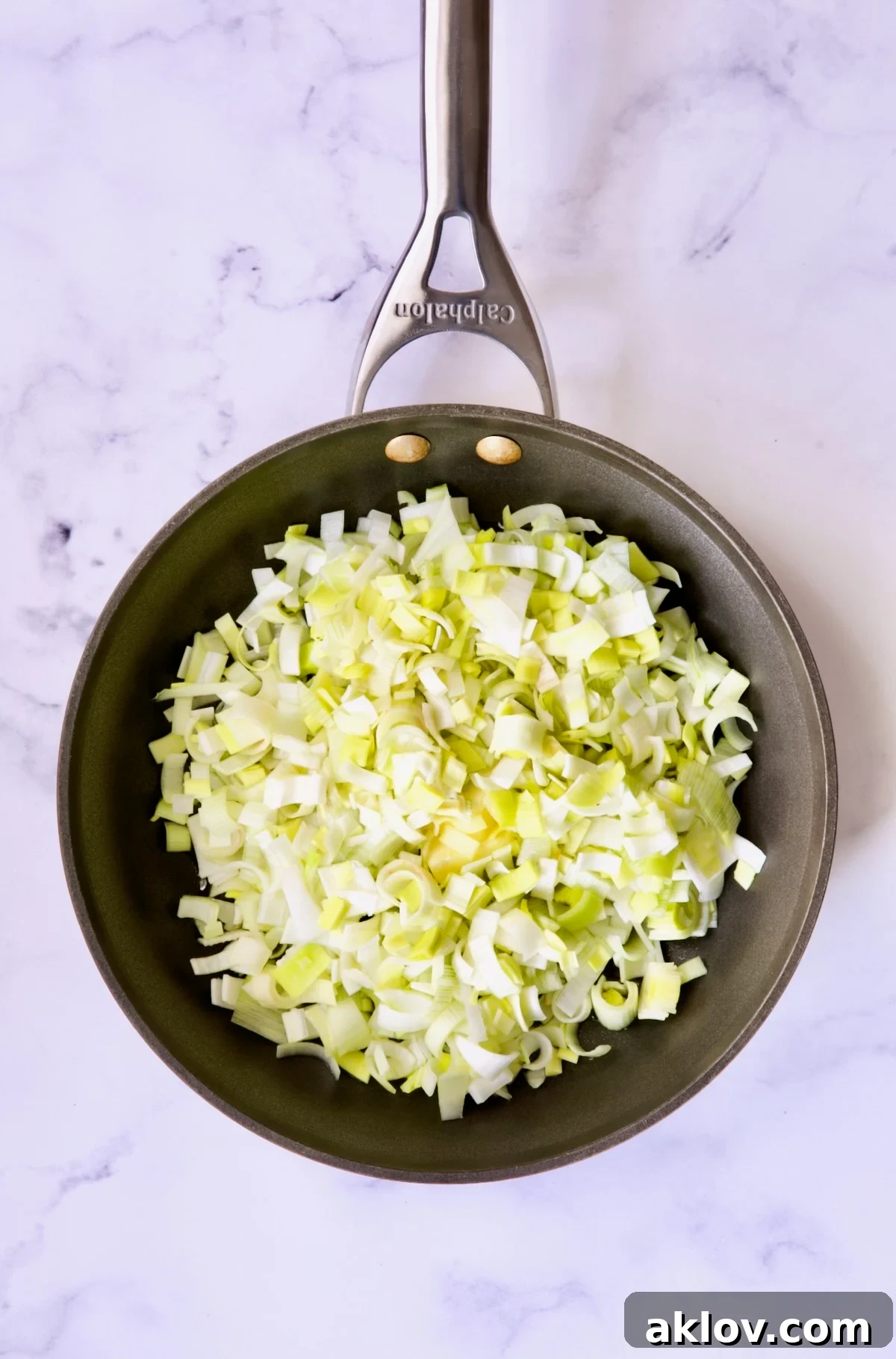
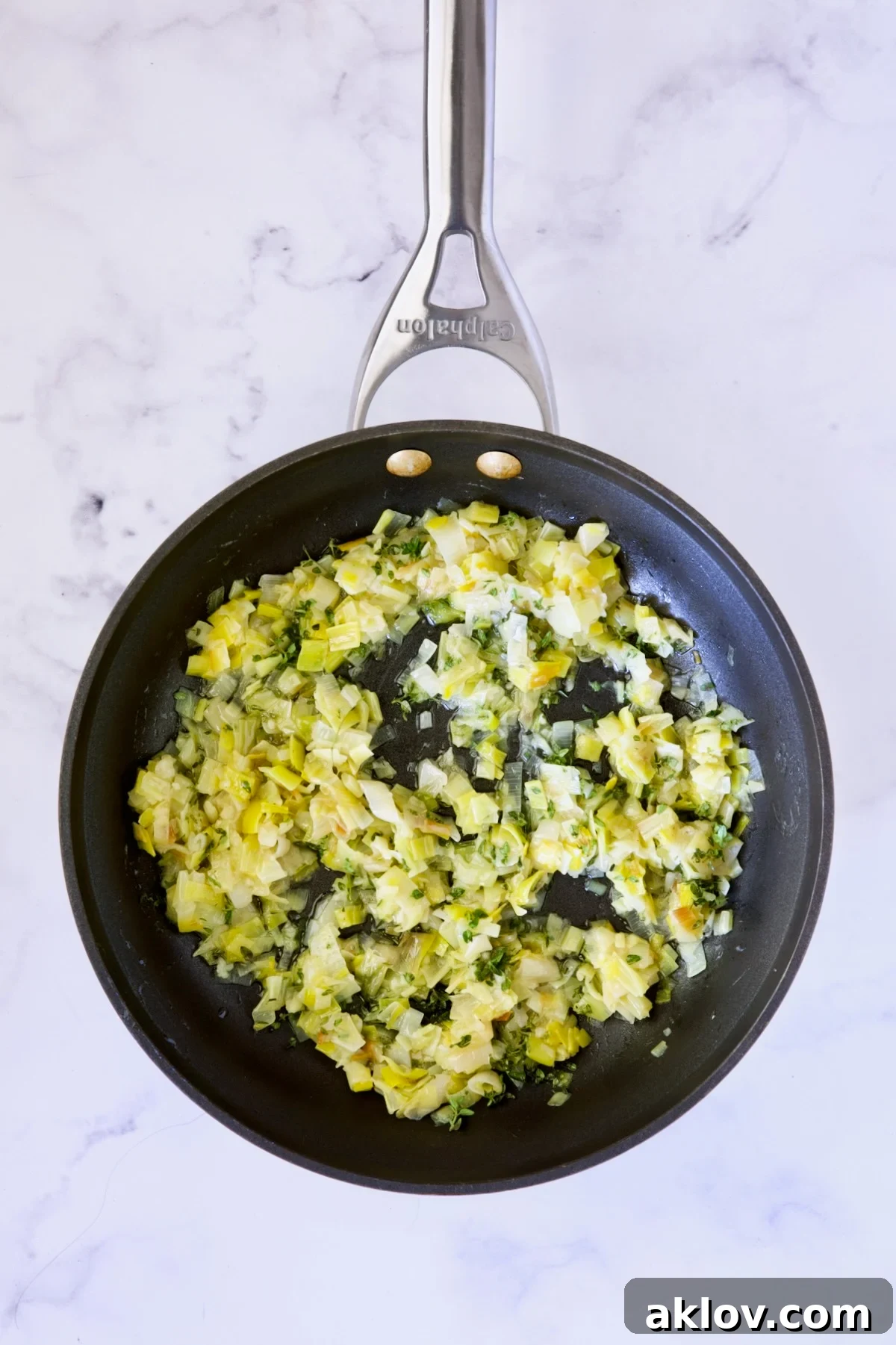
- Meanwhile, heat the remaining 2 tablespoons of olive oil and the butter in a large nonstick skillet or sauté pan over medium-high heat. Once the butter is melted and shimmering, add the cleaned and sliced leeks. Reduce the heat to medium-low and cook the leeks, stirring frequently, until they become incredibly soft and tender, which typically takes about 20 minutes. It’s crucial to prevent them from browning; if they start to look dry or stick to the pan, add a tablespoon or two of water to help them soften without coloring.
- Stir in the minced garlic and fresh thyme leaves, cooking for just another minute until fragrant. Remove the leek mixture from the heat, allow it to cool, and then drain off any excess fat before assembling your galette.
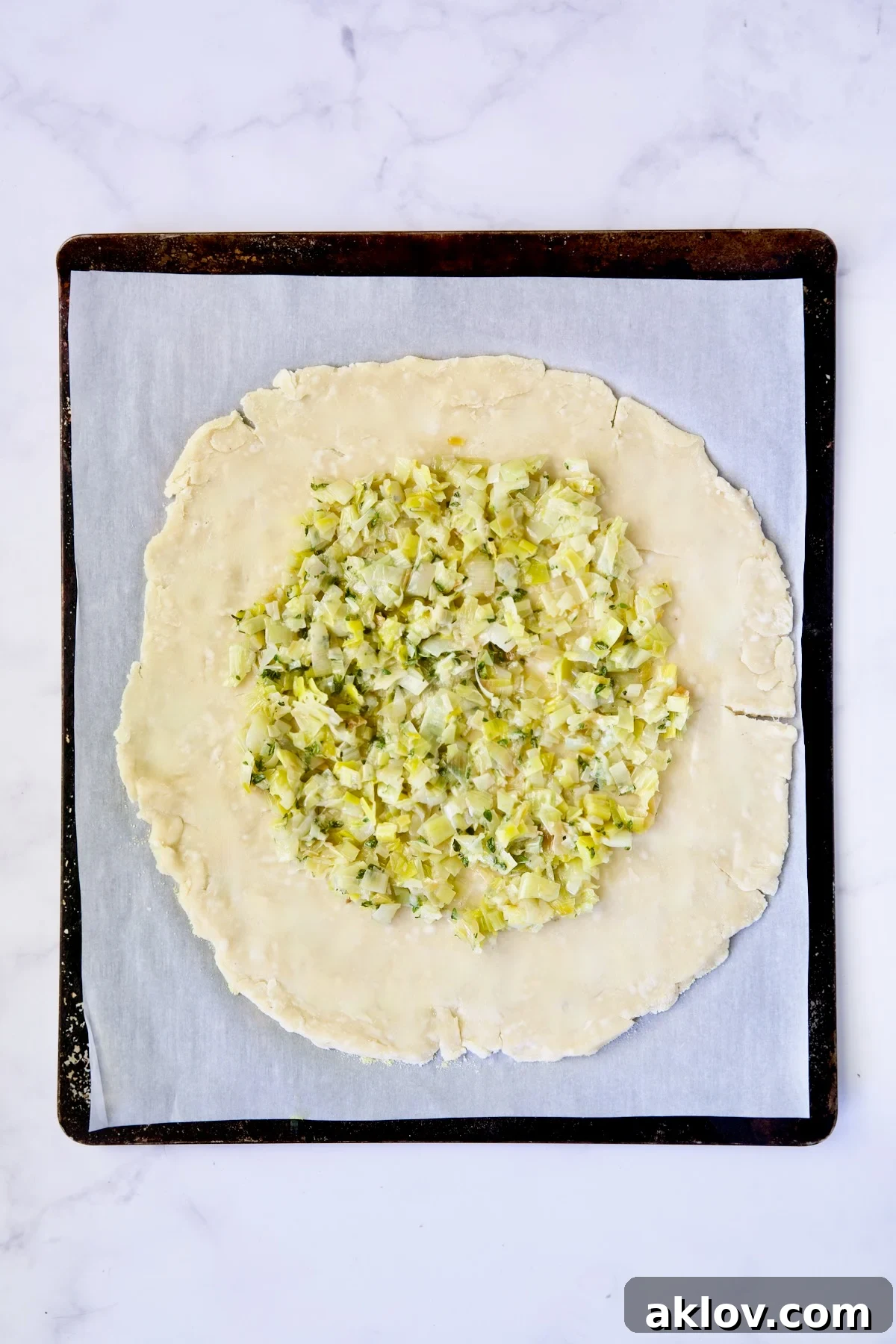
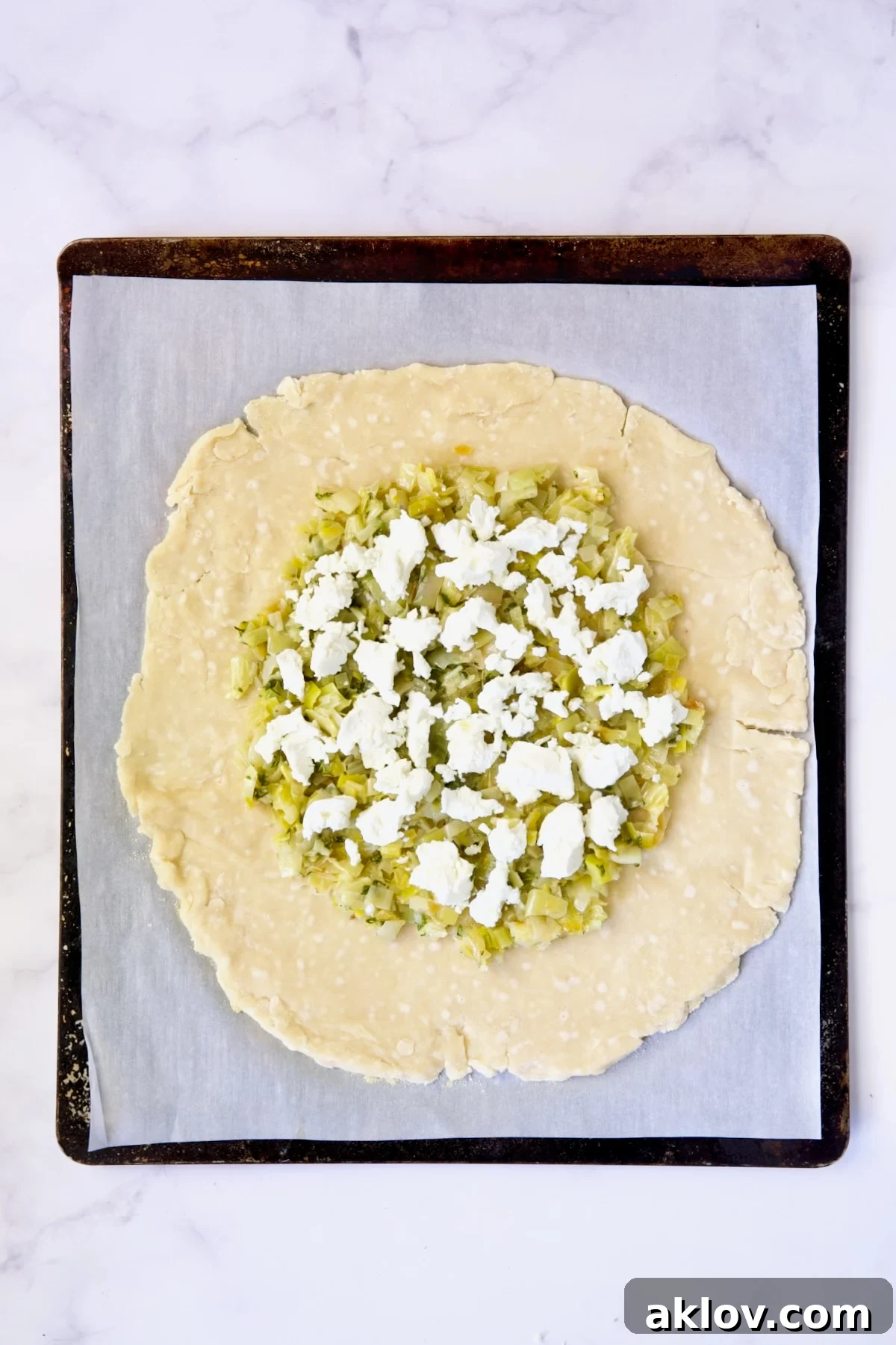
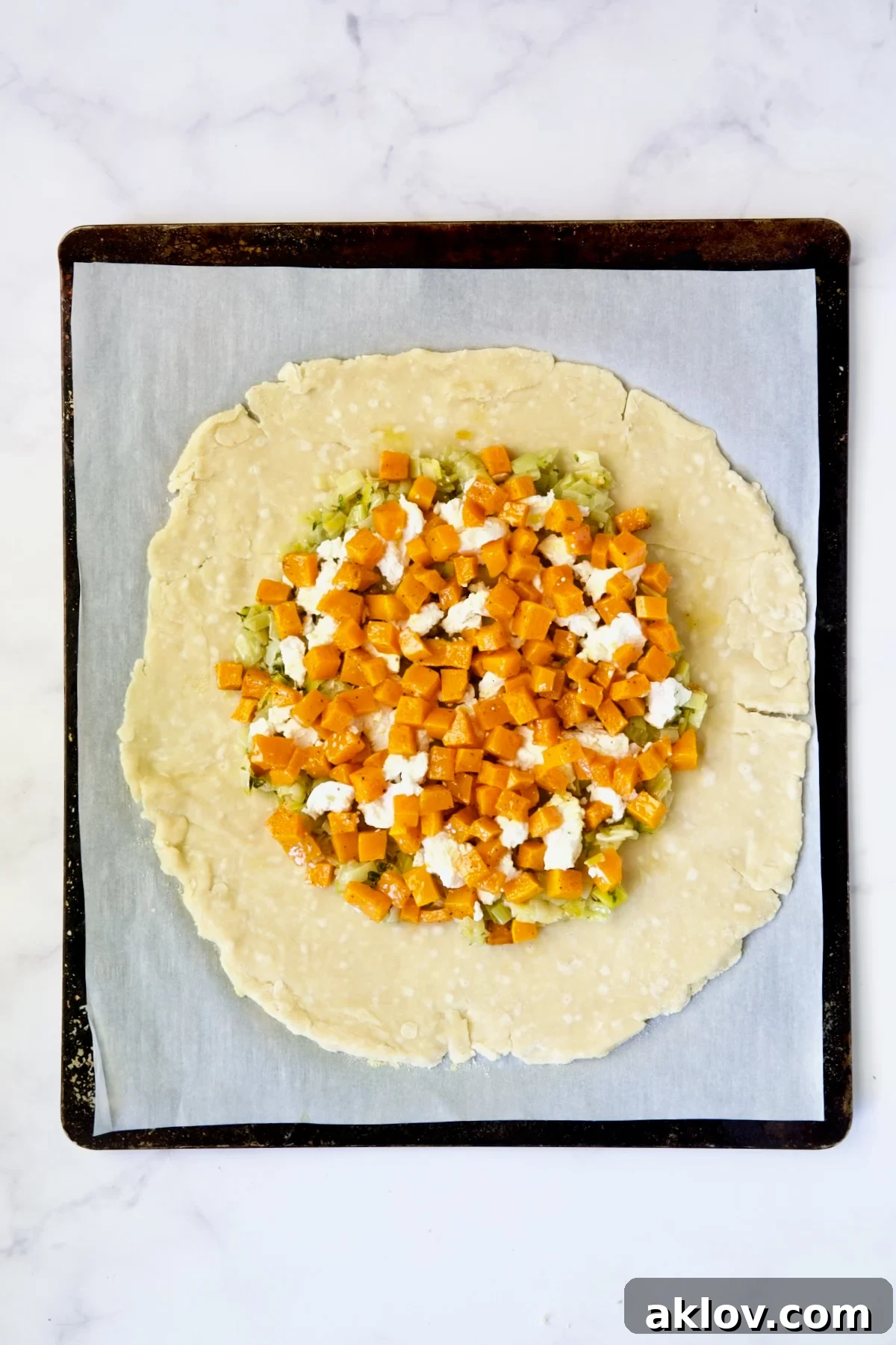
- Now, it’s time to assemble your galette. Carefully spread the cooled leek mixture evenly over the chilled dough, leaving a generous 2-inch border around the edge. Next, dot spoonfuls of the creamy goat cheese over the leek layer. Finally, arrange the roasted butternut squash cubes artfully on top of the leeks and goat cheese.
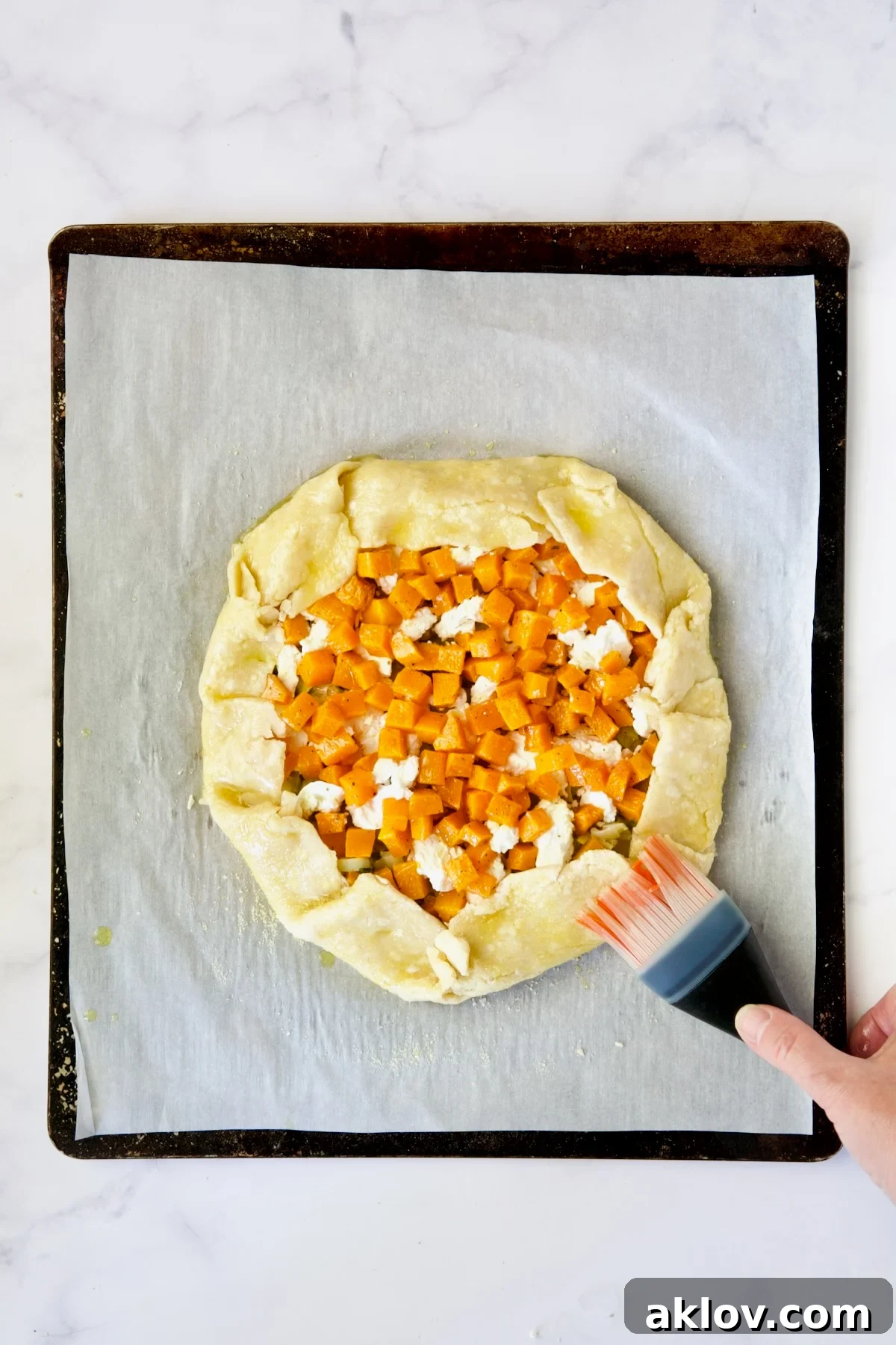
- To create the signature free-form look of the galette, gently pull the edges of the pastry crust up and over the outer edge of the filling, folding and pleating it as you go. Leave the center of the galette uncovered, showcasing the beautiful filling. If you used cornmeal, gently brush off any excess from the exposed crust. Finally, brush the entire exposed crust with a little extra olive oil; this will help it achieve a beautiful golden brown color during baking.
- Bake the galette in your preheated oven for 30-35 minutes, or until the crust is a rich, golden brown and the filling is heated through and bubbly. Once baked, remove it from the oven. If desired, garnish the warm galette with a sprinkle of toasted sliced almonds for added texture and nutty flavor. Serve your magnificent galette hot or warm to fully appreciate its harmonious flavors and flaky crust.

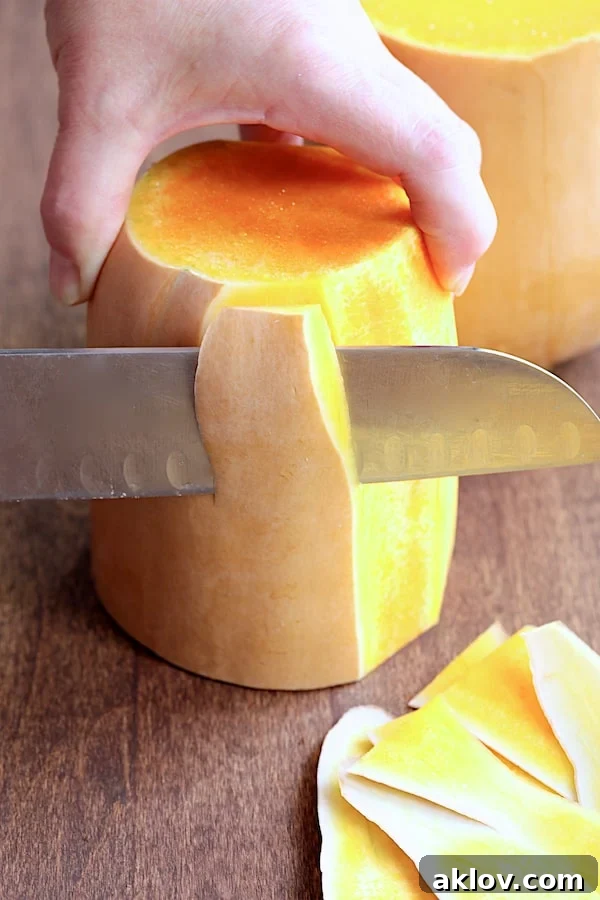
Chef’s Expert Tips for Effortlessly Peeling Butternut Squash:
Peeling a butternut squash can sometimes seem daunting, but with these chef-approved techniques, you’ll find it surprisingly easy and safe. A well-peeled squash is the first step to perfectly roasted cubes for your galette.
- First, when selecting your butternut squash, try to choose one with a nice long, straight neck. This shape makes the peeling process much simpler.
- Using a sharp, sturdy chef’s knife, carefully slice the neck of the squash into approximately 3-inch lengths. This creates manageable sections for peeling.
- Place one of the cut squash sections flat-side down on a stable cutting board. This provides a secure base and prevents the squash from rolling.
- With a sharp knife, start at the top and slice downward towards your cutting board, following the curve of the squash to remove the thick outer peel. Rotate the squash as you go, carefully removing all the skin.
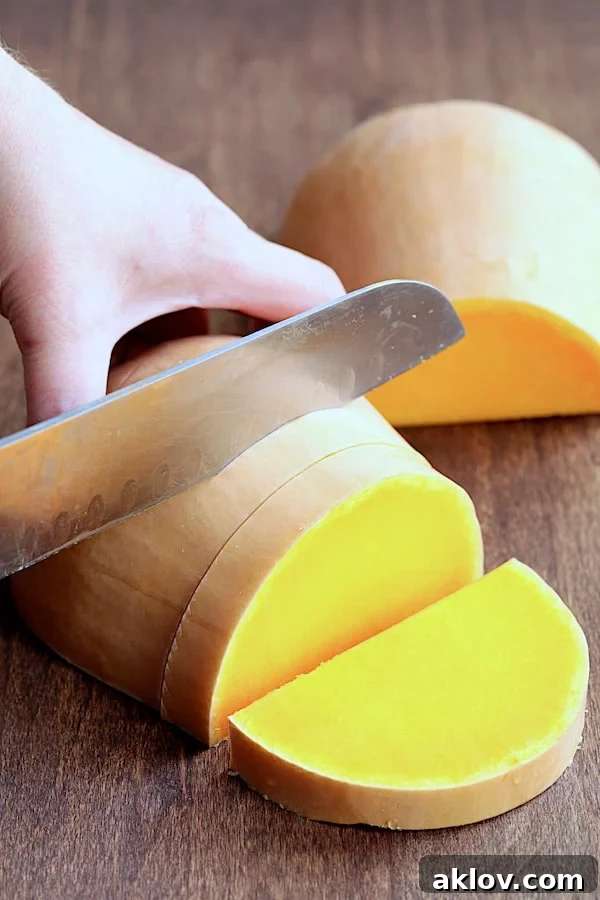
- Next, to tackle the bottom, rounder portion of the squash (which contains the seeds), slice it in half from the top down, exposing the fibrous seed cavity.
- Place the seed-side down on your cutting board. Then, slice this half into ½ to 1-inch thick half-moon pieces.
- Using a paring knife or a spoon, carefully remove the remaining peel from the edges of each half-moon piece, along with the seeds and any fibrous interior. Once peeled and seeded, you can cube all the flesh as desired for your recipe.
Frequently Asked Questions About This Galette:
Absolutely! This galette is excellent for make-ahead preparation, allowing you to enjoy a stress-free cooking experience. You can prepare the galette dough, roll it out, cover it securely, and refrigerate it. Separately, roast the butternut squash, let it cool completely, and then refrigerate it. Cook the leeks with garlic and thyme, allow them to cool, and also refrigerate. When you are ready to serve, simply assemble the galette as directed in the recipe and bake. This makes it perfect for entertaining or busy weeknights.
The versatile galette pastry can be made up to two days in advance and stored tightly wrapped in the refrigerator. For longer storage, you can wrap it securely and freeze it for up to two weeks. Just be sure to thaw it in the refrigerator overnight before rolling and using.
Yes, certainly! While a homemade crust adds an extra layer of flavor and texture, a good quality, store-bought refrigerated pie crust is a fantastic time-saver and works absolutely wonderfully for this galette. Ensure it’s thawed according to package directions before using.
Storage and Reheating Tips:
To ensure your delicious galette remains enjoyable, follow these simple storage and reheating instructions:
- Store any leftover galette in an airtight container in the refrigerator for up to 3-4 days.
- To reheat, place slices in an oven or toaster oven preheated to 350 degrees Fahrenheit (175 degrees Celsius) until thoroughly heated through and the crust is crisp once more. Avoid using a microwave, as it can make the crust soggy.
Make it a Complete Meal with These Perfect Pairings:
This Butternut Squash, Leek, and Goat Cheese Galette is incredibly versatile and pairs beautifully with a variety of complementary dishes. Consider serving it alongside:
- Cream of Celery Leaf and Scallion Soup: A light, herbaceous soup that won’t overpower the galette.
- Creamy Cauliflower Soup with Gouda Cheese and Roasted Red Pepper Puree: A rich and savory soup that enhances the creamy notes of the galette.
- Cream of Green Vegetable Soup: A vibrant and fresh option to balance the richness.
- French Lentil Salad: A hearty yet fresh salad offering earthy flavors and satisfying texture.
- Salade Nicoise: A classic, robust salad for a more substantial meal.
For even more inspiring tart and quiche ideas, explore all my recipes at Quiche and Tart Recipes – From A Chef’s Kitchen.
Discover More Butternut Squash Recipes You’ll Adore:
If you’re a fan of the sweet, nutty flavor of butternut squash, you’ll be delighted by these other fantastic recipes that highlight this versatile vegetable:
- Butternut Squash in Fresh Green Curry: A warming and aromatic dish with an exotic twist.
- Kale Butternut Squash and Lentil Soup with Bacon: A hearty and comforting soup, perfect for colder days.
- Lemon Quinoa with Butternut Squash Almonds and Parmesan Cheese: A vibrant and healthy side dish or light meal.

Butternut Squash Leek and Goat Cheese Galette
Equipment
- Wusthof Chef Knife
- Cutting Board
- Rimmed Sheet Pan
- Nonstick Skillet
Ingredients
Crust
- 1 1/2 cups all-purpose flour
- 10 tablespoons unsalted butter, cold and cubed
- 1/2 teaspoon salt
- 3-4 tablespoons ice water
Galette Filling
- 2 heaping cups cubed butternut squash (1/2-inch cubes)
- 4 tablespoons olive oil, divided (plus more for brushing on crust)
- Salt and freshly ground black pepper, to taste
- 2 tablespoons butter
- 2-3 medium-large leeks, white and light green part only, halved and thinly sliced (approximately 2 cups)
- 3 cloves garlic, minced
- 1 tablespoon chopped fresh thyme leaves
- 2 tablespoons cornmeal (for dusting baking sheet)
- 1 log (4-ounce) goat cheese, crumbled or dabbed
- Toasted sliced almonds, optional, for garnish
Instructions
Crust Preparation
- Combine the flour, cold butter, and salt in a food processor. Pulse several times until the mixture resembles a coarse meal with small butter pieces. Add 3 tablespoons of ice water and pulse until the mixture just comes together. If it’s too crumbly, add 1 more tablespoon of ice water and pulse again.
- Transfer the dough mixture onto a lightly floured surface. Gently bring the dough together with your hands to form a flat disc, being careful not to overwork it.
- Roll the dough out into a circular shape, approximately 12-14 inches in diameter, on the floured surface.
- Lightly sprinkle cornmeal onto a nonstick baking sheet or a parchment paper-lined baking sheet. Carefully transfer the rolled dough onto the prepared baking sheet. Cover the dough and refrigerate while you prepare the filling.
Galette Filling and Assembly
- Preheat your oven to 375°F (190°C).
- In a bowl, toss the butternut squash cubes with 2 tablespoons of olive oil, salt, and black pepper. Spread them on a baking sheet and roast for about 25 minutes, or until tender when pierced with a knife. Stir halfway through. Let cool and drain any excess oil.
- Meanwhile, in a nonstick skillet, heat the remaining 2 tablespoons of olive oil and 2 tablespoons of butter over medium-high heat. Add the cleaned and sliced leeks, reduce heat to medium-low, and cook, stirring frequently, for about 20 minutes until very soft. Add a tablespoon or two of water if they become dry. Ensure they do not brown.
- Stir in the minced garlic and chopped fresh thyme. Cook for 1 minute more until fragrant. Let the leek mixture cool and drain any excess fat.
- Retrieve the chilled galette crust from the refrigerator. Spread the cooled leek mixture over the dough, leaving a 2-inch border. Dot with pieces of goat cheese, then evenly arrange the roasted butternut squash on top.
- Gently pull and fold the edges of the dough over the filling, creating a rustic, free-form tart with the center open. Brush off any excess cornmeal from the crust. Brush the exposed crust generously with a little extra olive oil.
- Bake for 30-35 minutes, or until the crust is golden brown and the filling is heated through.
- Garnish with toasted sliced almonds, if desired. Serve the galette hot or warm.
Notes
HOW TO PEEL BUTTERNUT SQUASH:
- Choose a squash with a long neck for easier peeling.
- Slice the neck into approximately 3-inch lengths.
- Place the cut side down on a cutting board, then slice downward along the curve to remove the thick peel, rotating as you go.
- For the bottom, seeded portion, slice it in half lengthwise. Place seed-side down, then slice into ½ to 1-inch half-moons. Remove the peel, seeds, and fibrous interior with a paring knife, then cube the flesh.
MAKE AHEAD:
- Prepare the galette dough, roll it out, cover securely, and refrigerate.
- Roast the butternut squash, cool completely, and refrigerate.
- Cook the leeks with garlic and thyme, cool, and refrigerate.
- When ready to serve, assemble the galette as directed and bake.