
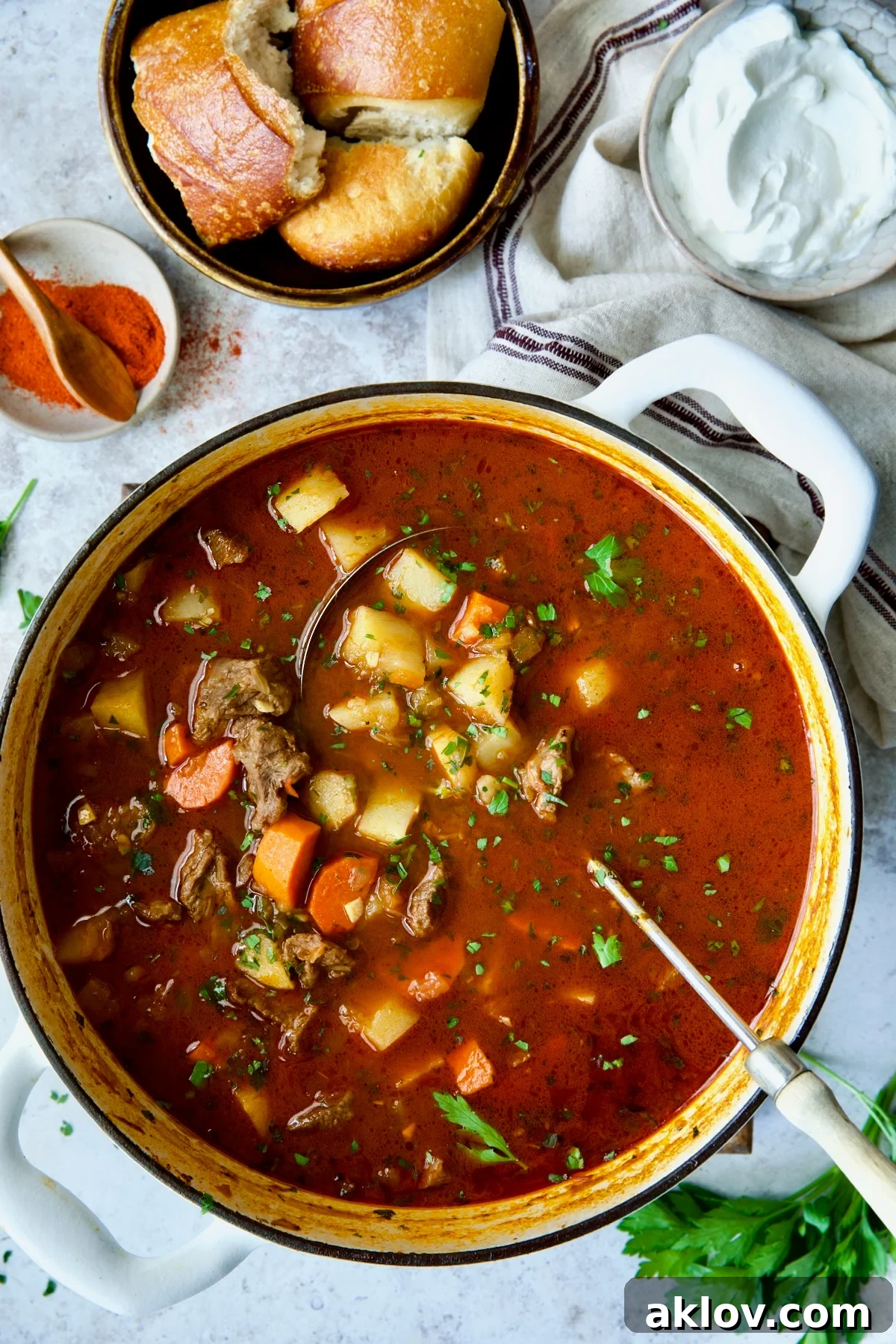
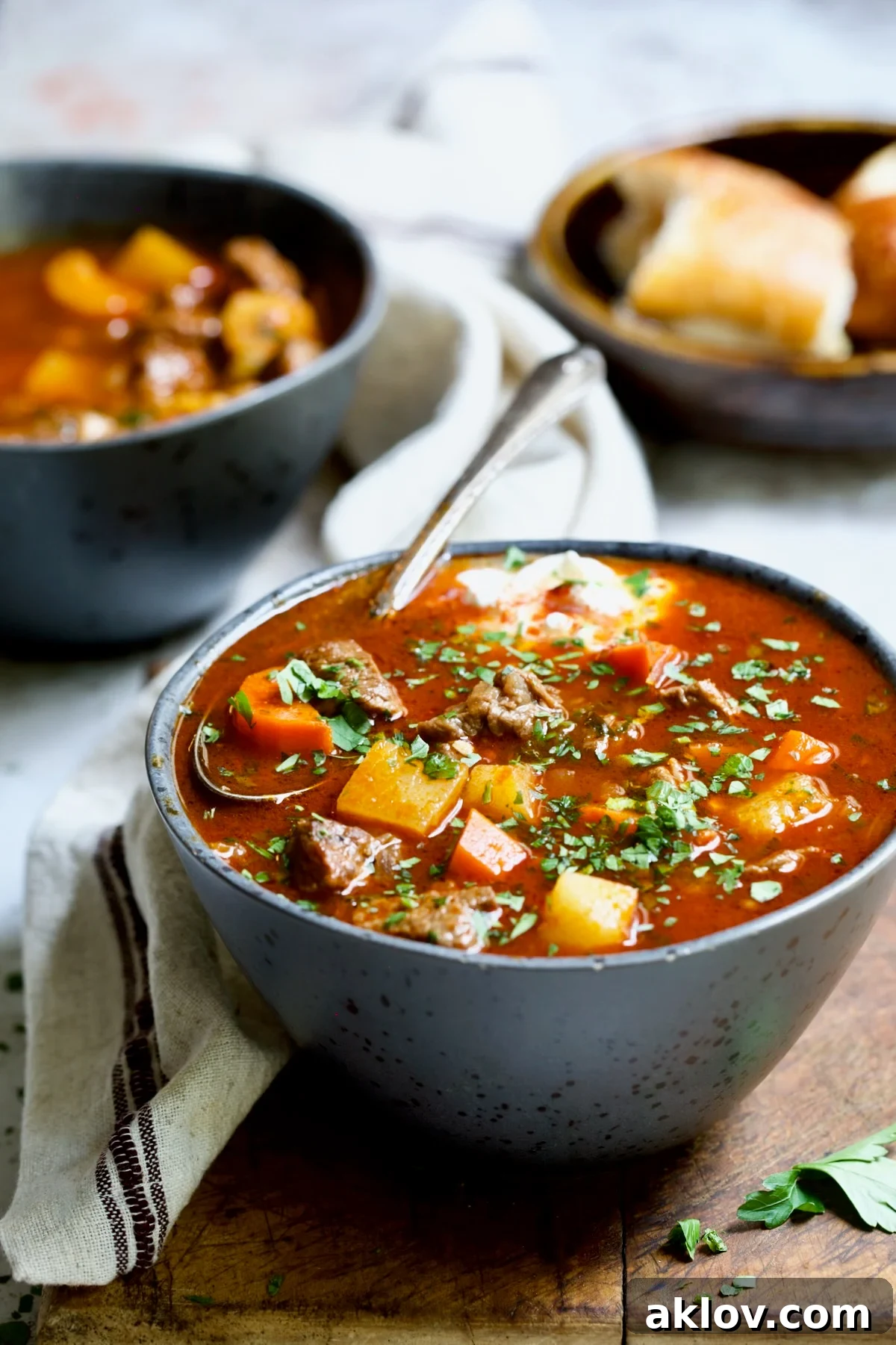
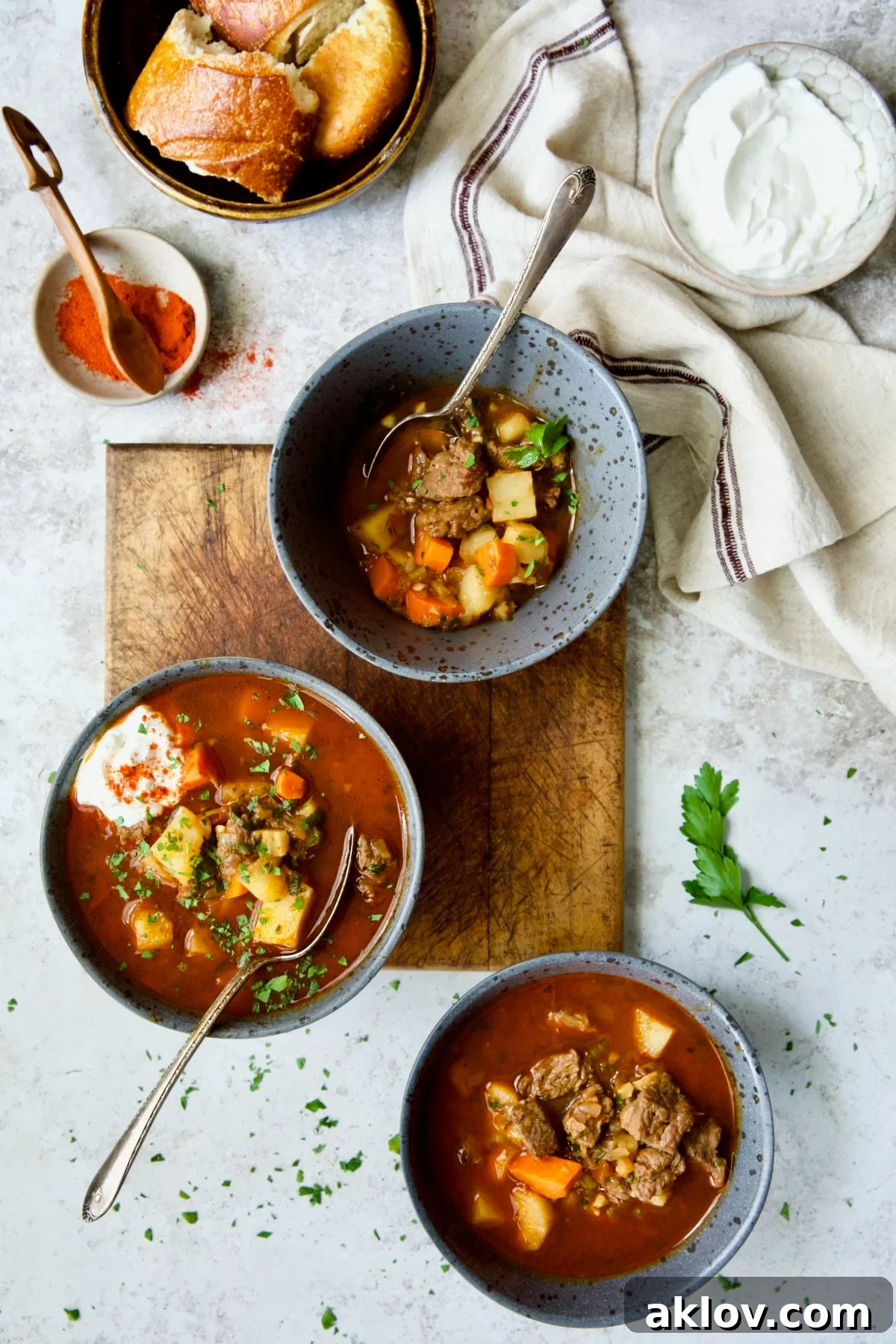
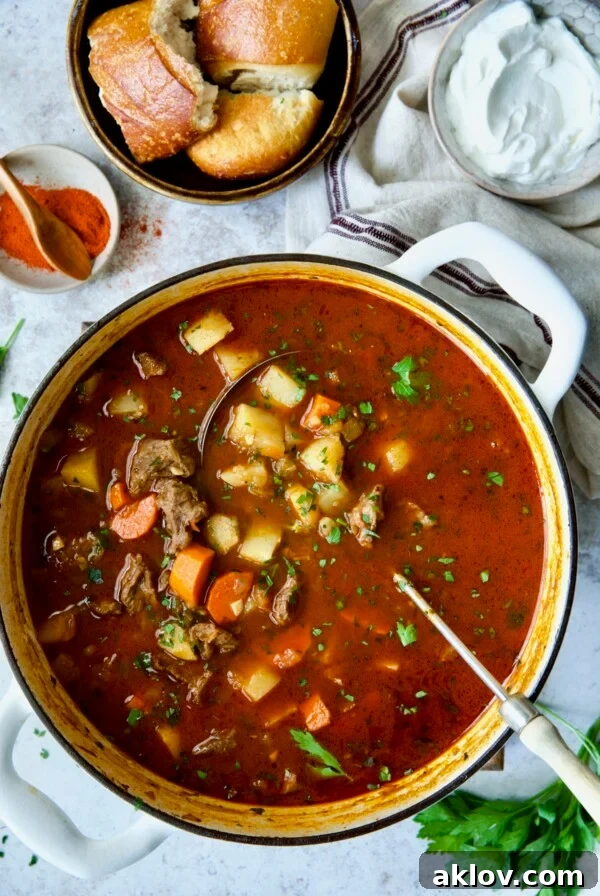
Indulge in the heartwarming embrace of a truly authentic **Traditional Hungarian Goulash Recipe**, a culinary masterpiece featuring buttery-tender pieces of beef, earthy root vegetables, and a profoundly rich broth infused with the distinctive aroma of premium Hungarian paprika. This iconic stew transcends a mere meal; it’s an experience, a journey to the heart of Hungarian cuisine, promising ultimate warmth and comfort. Perfect for chilly evenings, family gatherings, or any time you crave a profoundly satisfying dish, it pairs beautifully with crusty bread, fluffy noodles, or even a side of sweet pumpkin muffins.
“This tastes like my favorite goulash soup from Budapest Restaurant in Toronto! It’s the ultimate comfort food for a cold day.”
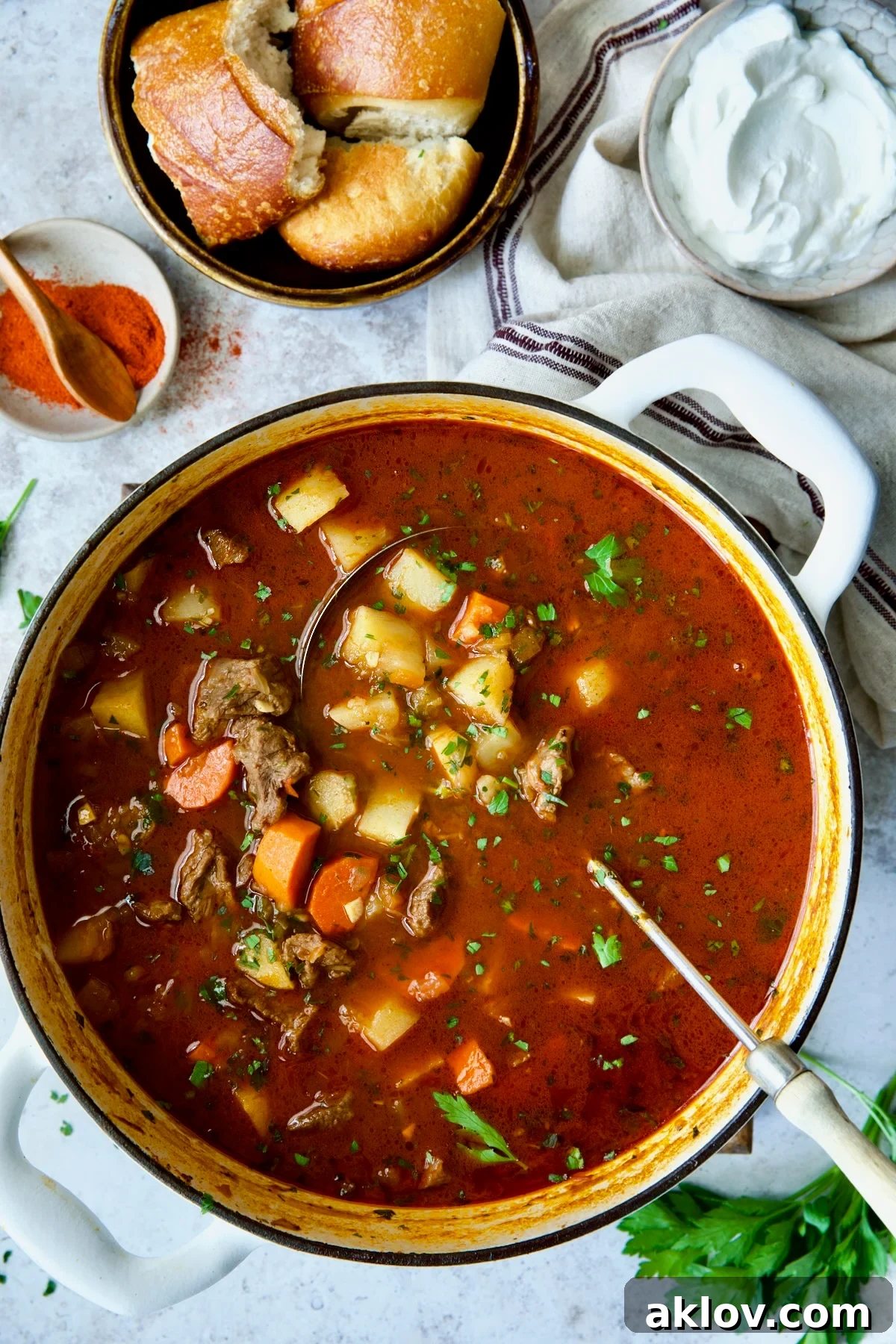
What Exactly is Traditional Hungarian Goulash?
Authentic Hungarian Goulash, known as *gulyás* in Hungary, is much more than a simple soup or stew. It’s a national treasure, a culinary emblem characterized by its meat (typically beef), an array of fresh vegetables, and its undeniable star ingredient: paprika. Tracing its origins back to the 9th century, this hearty dish was first prepared by Hungarian herdsmen who cooked their stew in a cauldron over an open fire, a method that imbued the meat with incredible flavor and tenderness. The word “gulyás” itself is derived from “gulya,” meaning ‘herd of cattle,’ and “gulyás” referring to the ‘herdsman’ or ‘cowboy’ who tended them.
While often enjoyed as a robust soup in Hungary, goulash takes on various forms across Central and Eastern Europe, including the Balkans. Some iterations feature generous chunks of beef swimming in a rich, savory broth, while others incorporate a medley of vegetables like potatoes, carrots, parsnips, and even bell peppers or green beans. What unites these diverse versions, however, is the captivating, slightly pungent, and deeply aromatic flavor of high-quality Hungarian paprika – the soul of any true goulash.
Unlike its American counterpart, which often includes ground beef and macaroni, traditional Hungarian goulash is a slow-simmered stew, where the beef breaks down beautifully, creating a silky texture and profound depth of flavor. It’s a dish that speaks of history, tradition, and the comforting essence of home cooking.
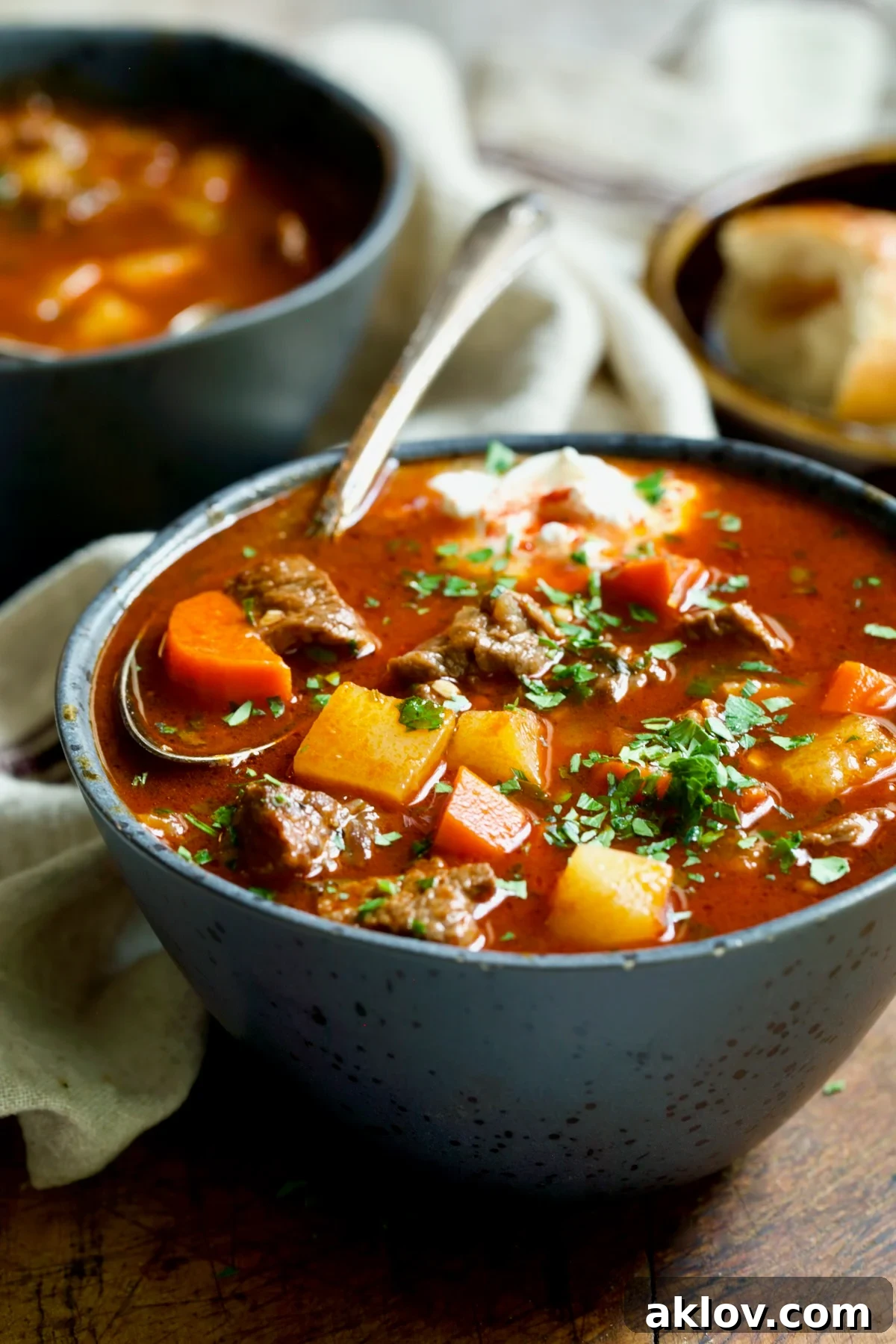
Why This Authentic Hungarian Goulash Recipe Deserves a Spot in Your Kitchen!
My journey to perfecting this Traditional Hungarian Goulash Recipe began with a deep fascination during my travels through Germany and the Czech Republic, an interest that truly blossomed into an obsession after a memorable trip to Budapest, Hungary. The vibrant culture and incredible flavors I encountered there fueled a quest to recreate that authentic taste at home.
This passion led me to acquire several Hungarian cookbooks, only to discover that even within Hungary, goulash recipes vary significantly from one household to another, and even among professional chefs. Each version carries its own unique charm and secret touches. My personal quest was to distill the best elements of these authentic traditions into a single, accessible recipe that anyone could master.
The result is this definitive Traditional Hungarian Goulash Soup recipe, a harmonious blend inspired by two cherished Hungarian cookbooks I brought back from Budapest, coupled with practical adaptations from trusted online sources. It utilizes readily available ingredients found in most grocery stores, making genuine Hungarian flavor attainable for every home cook. This particular **beef goulash recipe** is a true standout because it is:
- **Absolutely Delicious:** Every spoonful delivers a rich, complex flavor that is both deeply satisfying and incredibly comforting. The slow simmering process allows all the ingredients to meld into a symphony of taste.
- **Perfect for Making Ahead:** Like many stews, this goulash reheats beautifully. In fact, the flavors often deepen and become even more pronounced the next day, making it an ideal meal prep option for busy weeks.
- **Conveniently Freezer-Friendly:** This recipe freezes exceptionally well, allowing you to enjoy a taste of Hungary whenever the craving strikes. Simply thaw and reheat for a quick, wholesome meal.
- **Authentic Yet Accessible:** It captures the true essence of Hungarian goulash without requiring obscure ingredients or overly complicated techniques.
- **Hearty and Wholesome:** Packed with tender beef and nutritious root vegetables, it’s a complete meal that warms you from the inside out.
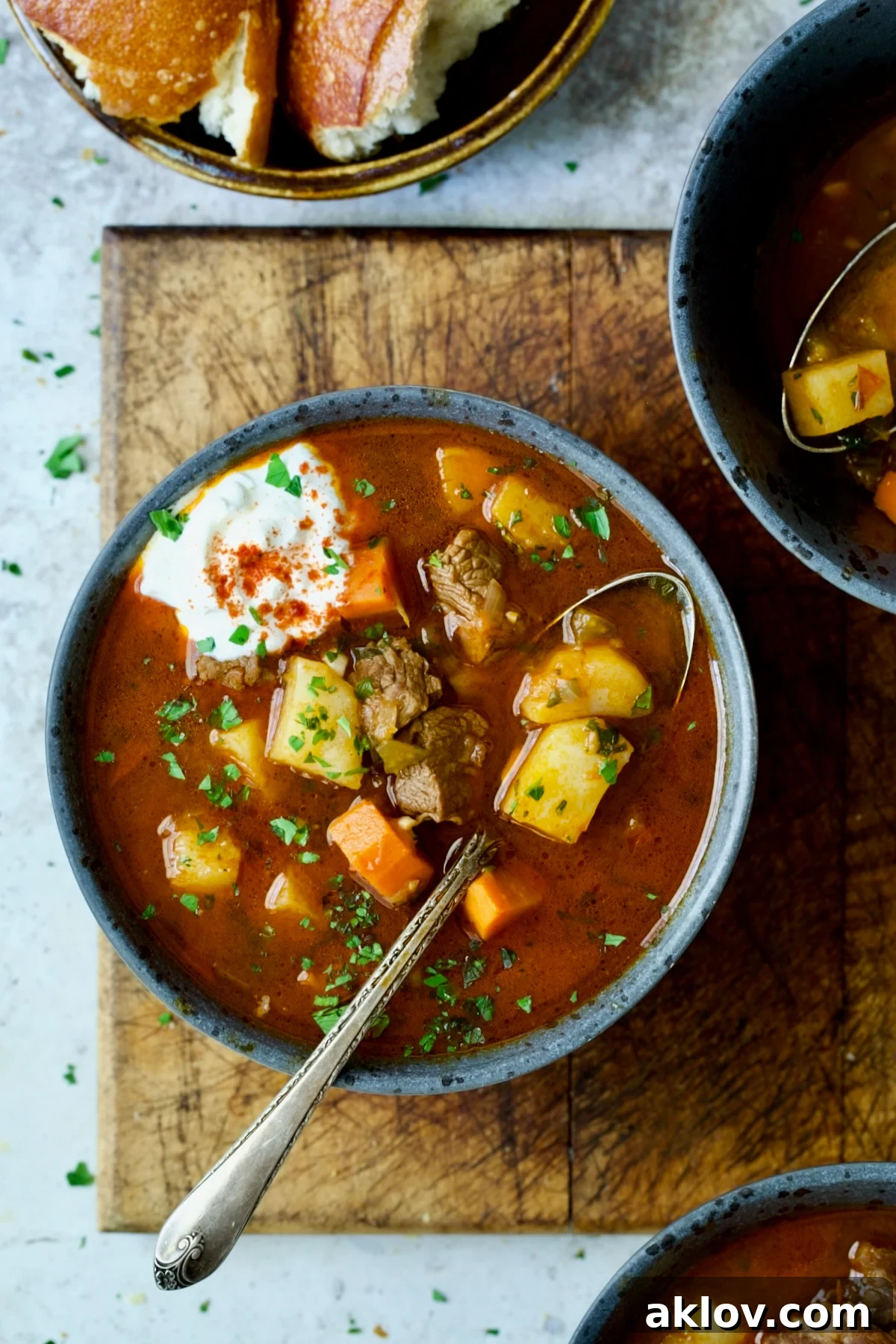
Crafting Your Own Traditional Hungarian Goulash Soup: A Step-by-Step Guide
Embark on a culinary adventure to create this truly remarkable **Hungarian Goulash Soup**. The process, while requiring patience for slow simmering, is straightforward and immensely rewarding. Below, you’ll find everything you need to know, from selecting the finest ingredients to mastering each cooking stage.
Essential Recipe Ingredients:
To ensure the most authentic and flavorful Traditional Hungarian Goulash, quality ingredients are key. Here’s a comprehensive list of what you’ll need. For precise quantities and measurements, please refer to the detailed recipe card provided at the end of this article.
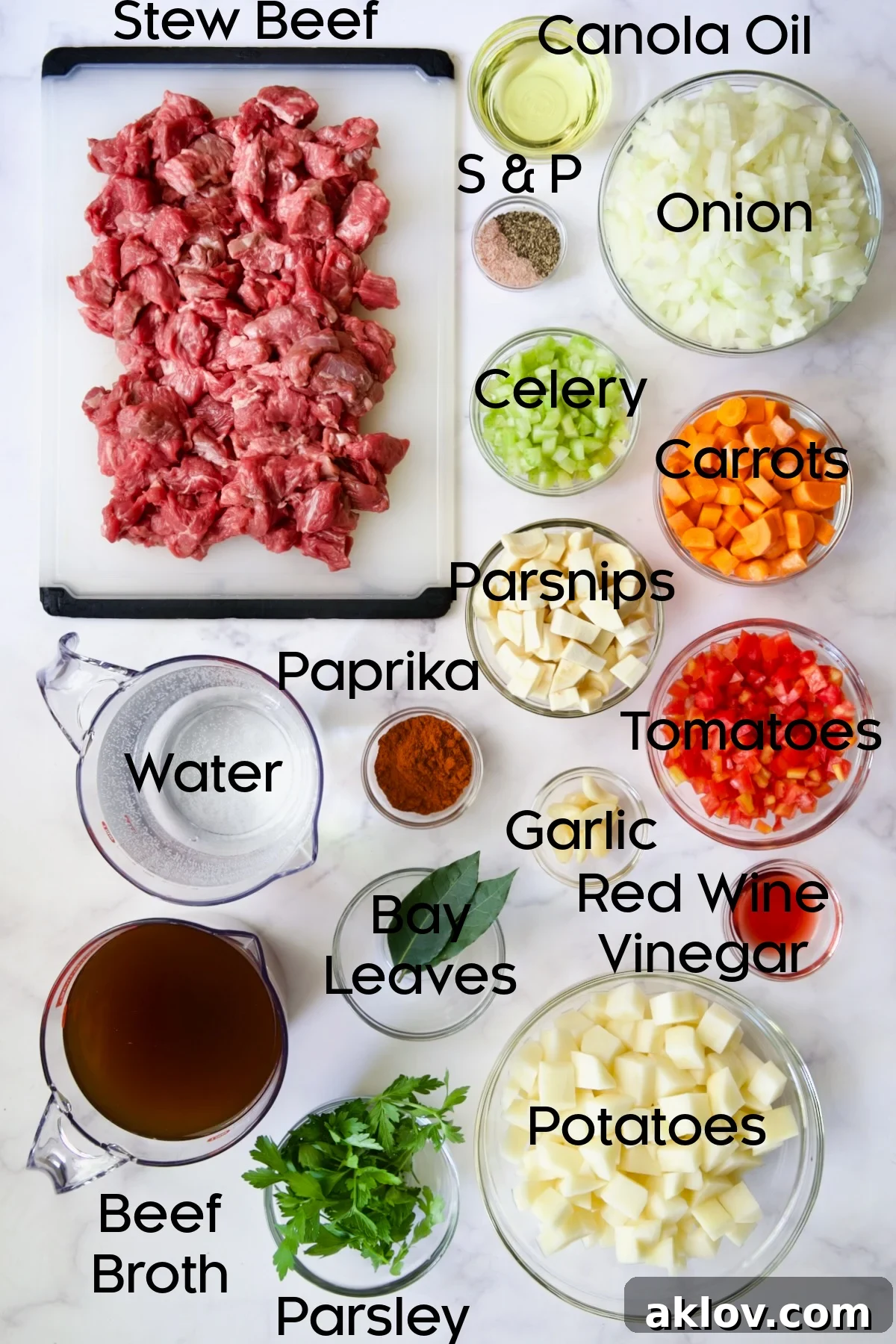
Ingredient Notes and Expert Substitutions:
Understanding each ingredient’s role and potential alternatives is crucial for perfecting your **paprika-spiced stew**.
- Beef: The choice of beef is paramount for achieving that signature buttery tenderness. While leaner cuts can be used, I highly recommend a 3-pound chuck roast. I meticulously hand-trim and cut it into approximately 1/2-inch to 3/4-inch pieces, yielding just under 2 1/2 pounds of stew-ready meat. Chuck roast is exceptional for stews and soups due to its abundant connective tissue. When subjected to a slow, consistent cooking process, this tissue breaks down into gelatin, resulting in incredibly succulent and tender beef. Be wary of pre-packaged “stew beef,” as it can often comprise various, tougher remnants that may remain chewy regardless of cooking time. Opting for a whole chuck roast allows for better quality control and ensures superior results in your **hearty beef goulash**.
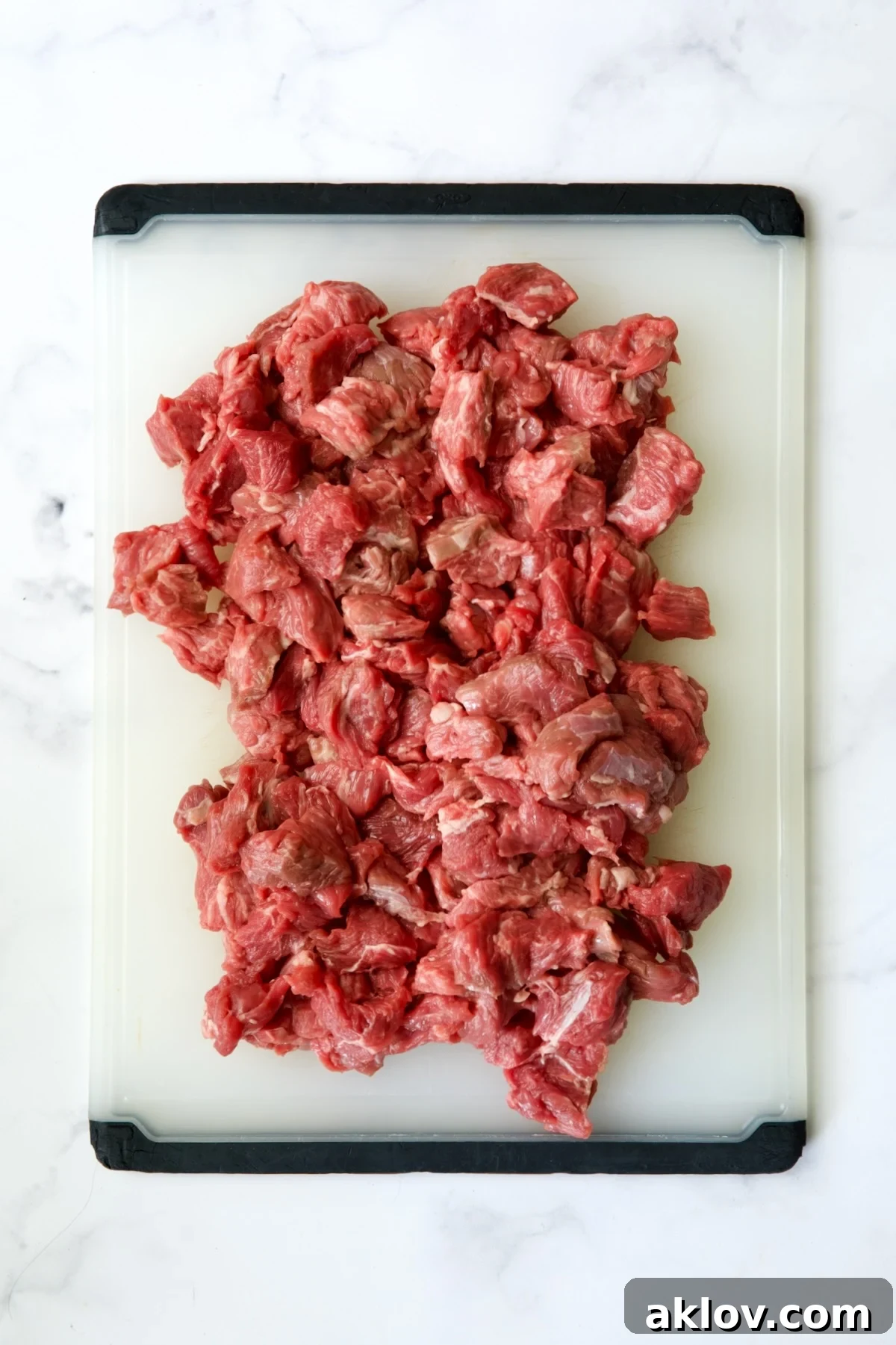
- Canola Oil: I used canola oil primarily because it was readily available in my pantry. However, for a truly traditional and deeply flavorful approach, I wholeheartedly encourage the use of lard or high-quality bacon grease. These fats contribute an unparalleled richness and authentic taste that elevates the entire dish.
- Parsnips: These creamy-white root vegetables are members of the carrot and parsley family. While they bear a visual resemblance to carrots, their flavor profile is distinctively sweeter, offering nutty and earthy undertones. They add a wonderful complexity and depth to the goulash. If parsnips are difficult to find, you can increase the amount of carrots or potatoes, though the unique flavor will be slightly altered.
- Tomatoes: Fresh, ripe, diced tomatoes impart a bright, natural acidity that balances the richness of the beef and paprika. I prefer using fresh when they are in season. If fresh tomatoes are not at their peak, high-quality petite diced canned tomatoes are an excellent and convenient substitute, offering consistent flavor and texture.
- Paprika: This is the cornerstone of **Hungarian cuisine** and arguably the most critical ingredient in this goulash recipe. Investing in good quality Hungarian paprika is non-negotiable, as it profoundly impacts the depth, color, and overall flavor of the dish. Hungarian paprika is crafted from specially cultivated and toasted peppers, then carefully blended to produce various grades. While all varieties share a rich, sweet red pepper flavor, they differ in pungency and heat. For this traditional goulash, a “Noble Sweet” (édesnemes) or “Delicate” (csemege) paprika is often preferred for its vibrant color and balanced sweetness, with a hint of warmth. Hot paprika (csípős) can be added to taste for an extra kick.
- Bay Leaves: Fresh bay leaves provide an aromatic, slightly floral, and subtly herbal note that complements the other flavors beautifully. If you can source fresh bay leaves, their superior aroma and flavor will genuinely enhance your goulash. If not, high-quality dried bay leaves are a perfectly acceptable alternative, just ensure they are relatively fresh for maximum potency.
- Water / Beef Broth / Beef Stock: Interestingly, many “authentic” Hungarian goulash recipes traditionally call for water rather than beef broth or stock. The belief is that the rich flavor should develop purely from the meat and vegetables. However, to achieve a more robust and immediate flavor depth while still honoring tradition, I recommend a 50/50 split of water and good quality beef broth or stock. This approach provides a solid flavor foundation without overshadowing the distinctive taste of the other ingredients.
- Potatoes: Russet potatoes are a common choice for their starchiness, which helps thicken the stew slightly. However, waxy varieties like Yukon Gold or red potatoes also perform exceptionally well. In fact, if you intend to freeze this **classic goulash**, Yukon Gold or red potatoes are often a better choice as they tend to hold their shape and texture more reliably after thawing and reheating, becoming less mealy than Russets.
Detailed Step-By-Step Instructions for Perfect Goulash:
Follow these steps carefully to create a rich and tender **Traditional Hungarian Goulash** that will impress every time.
- Begin by gathering and precisely prepping all your ingredients. This practice, known as “mise en place,” ensures a smooth cooking process.
- Generously season your cubed chuck roast with both salt and freshly ground black pepper. Don’t be shy with the seasoning at this stage, as it builds the foundational flavor of the meat.
- Heat 1 tablespoon of canola oil, or ideally, lard or bacon drippings, in a large Dutch oven or other heavy-bottomed soup pot over medium-high heat. The key here is proper browning. Working in small batches to avoid overcrowding, brown the beef thoroughly on all sides. Overcrowding will cause the meat to steam rather than sear, preventing the development of a rich, flavorful crust (the Maillard reaction). Transfer the beautifully browned beef to a plate and repeat the process until all pieces are seared. Add more oil as needed between batches, but only just enough to coat the bottom of the pot.
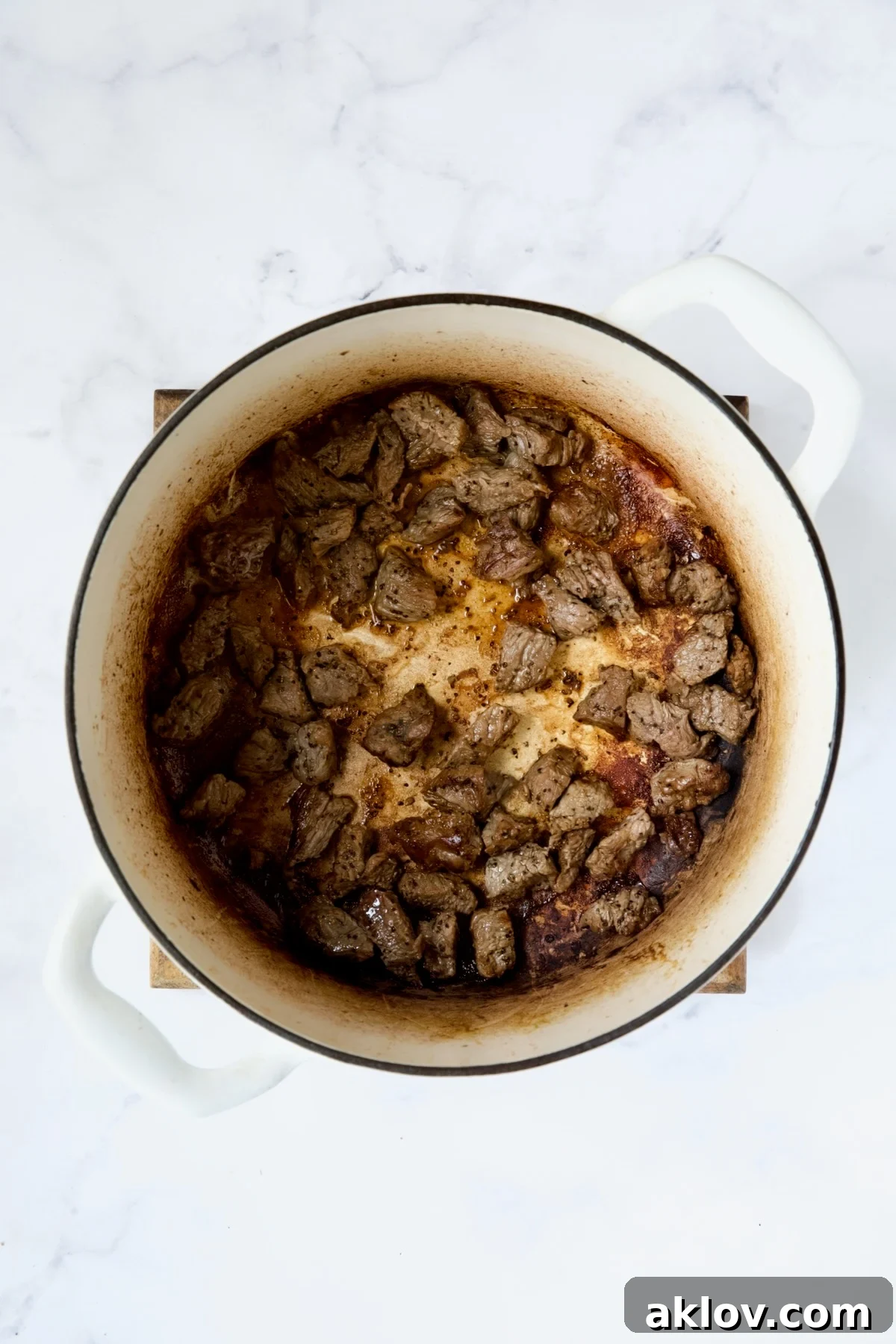
- If necessary, refresh the oil in the pot with another tablespoon or two, scraping up any browned bits from the bottom. Add the chopped onions and celery. Reduce the heat to medium and cook for 7 to 8 minutes, or until the vegetables have softened and become translucent, releasing their sweet aromas. This slow sautéing is vital for building a deep flavor base.
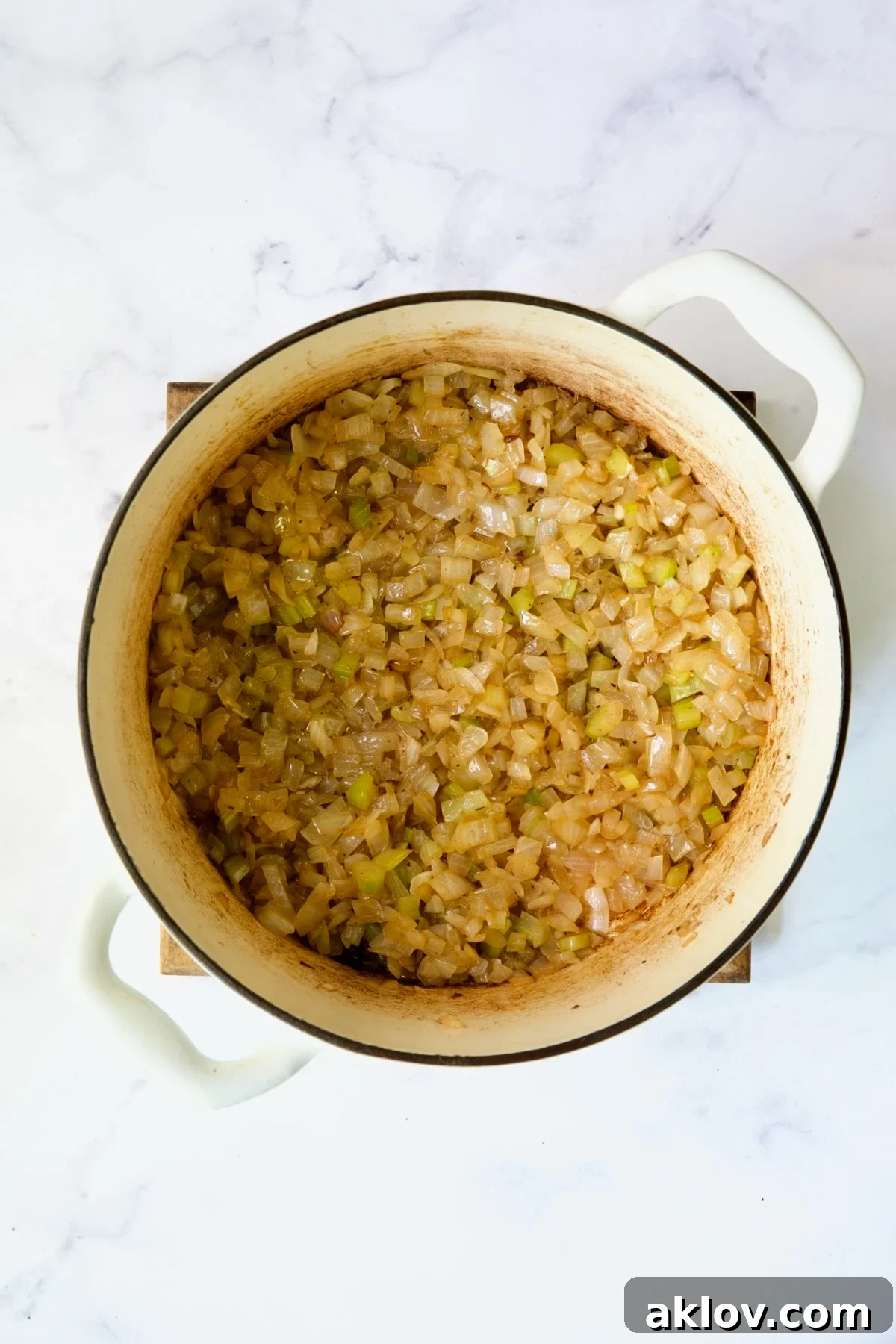
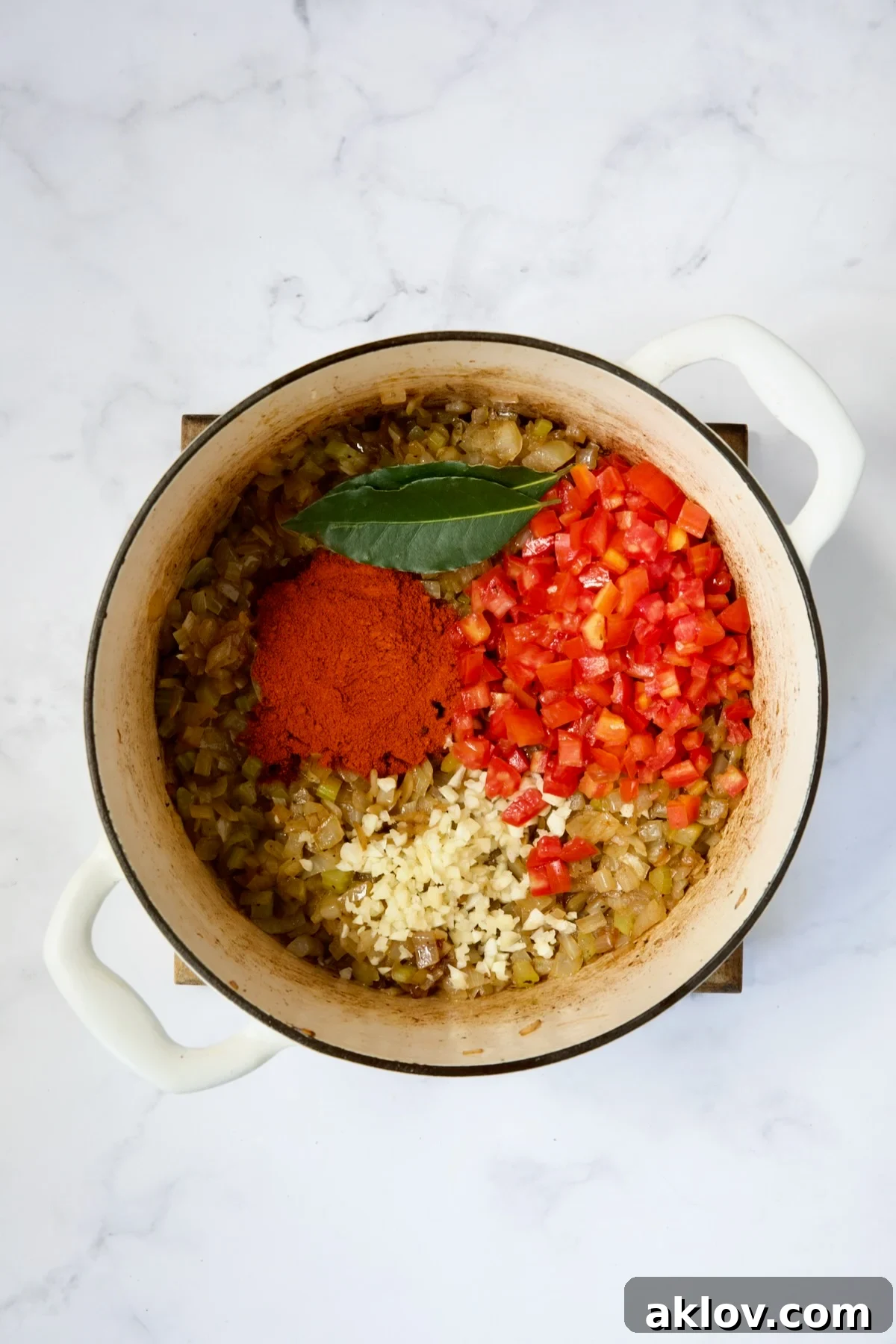
- Stir in the minced garlic, diced tomatoes, the star Hungarian paprika, and fresh bay leaves. Give everything a brief stir and cook for just about 10 seconds. This short cooking time allows the garlic to become aromatic and gently “blooms” the paprika, intensifying its color and flavor without burning it. Paprika can turn bitter if cooked too long at high heat.
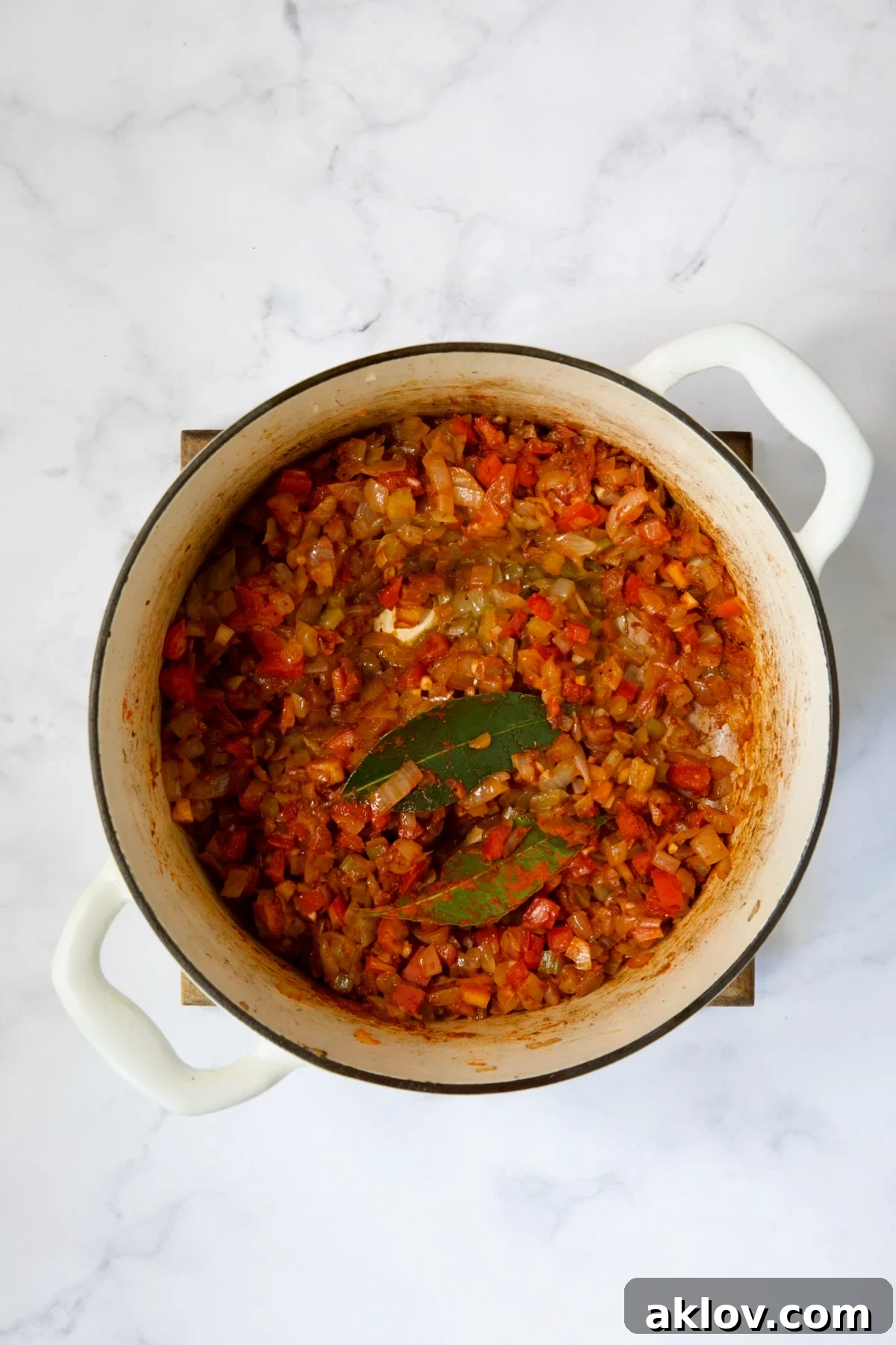
- Return the browned beef to the pot, tossing it gently to ensure all pieces are coated with the aromatic spice mixture.
- Pour in the beef broth and water. Bring the mixture just to a boil, then immediately reduce the heat to low. Cover the pot with the lid slightly ajar to allow some steam to escape, and let it simmer for 30 minutes. This initial simmer begins the tenderizing process for the beef.
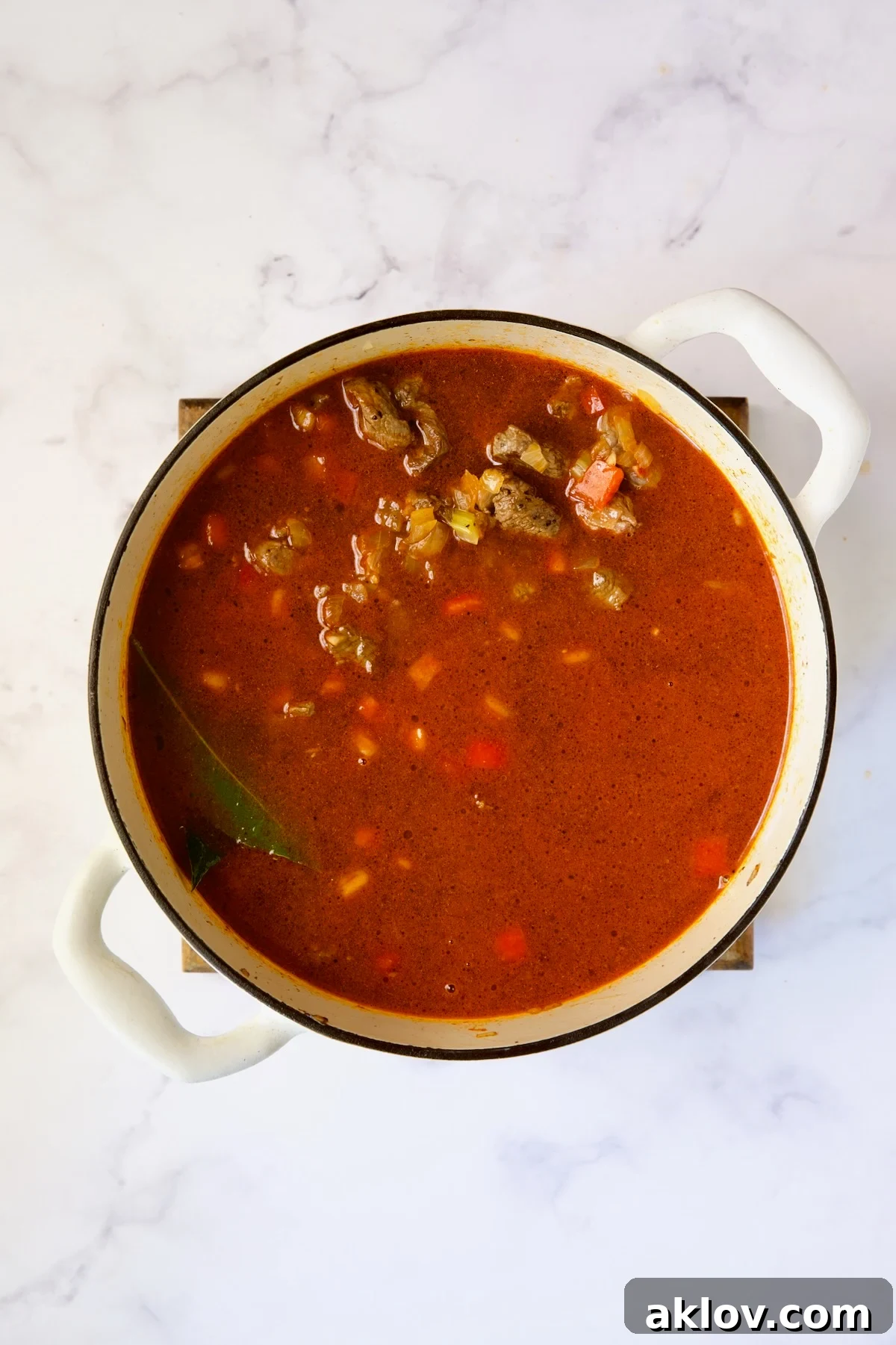
- Add the carrots and parsnips to the pot. These root vegetables require a bit more cooking time than potatoes. Bring the goulash back to a gentle simmer and continue to cook for another 10 to 12 minutes.
- Finally, add the potatoes. Bring the pot back to a simmer once more and cook for an additional 20 to 25 minutes, or until all the vegetables—potatoes, carrots, and parsnips—are fork-tender, and the potatoes can be easily pierced with a knife. The beef should also be incredibly tender by this point.
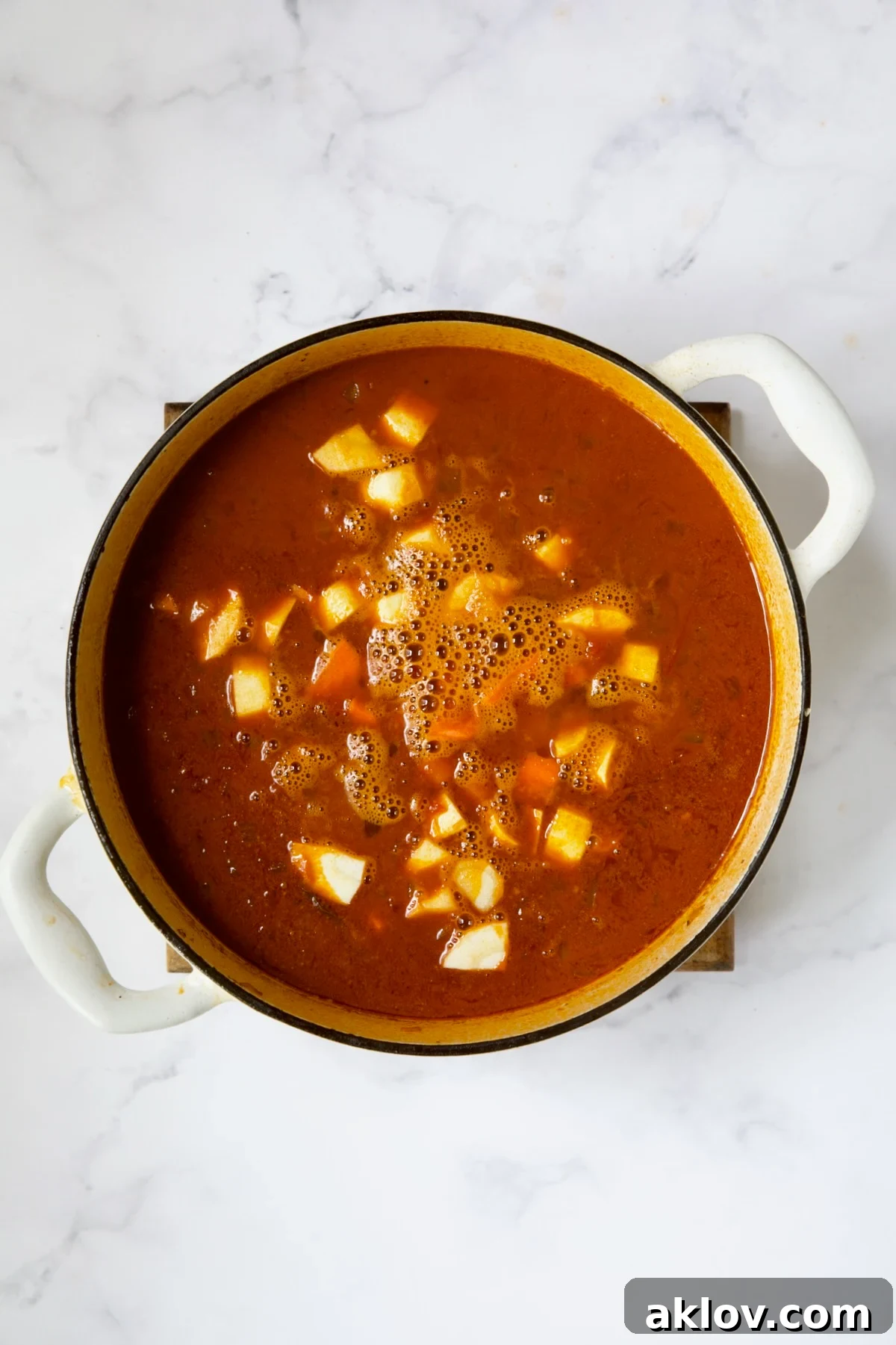
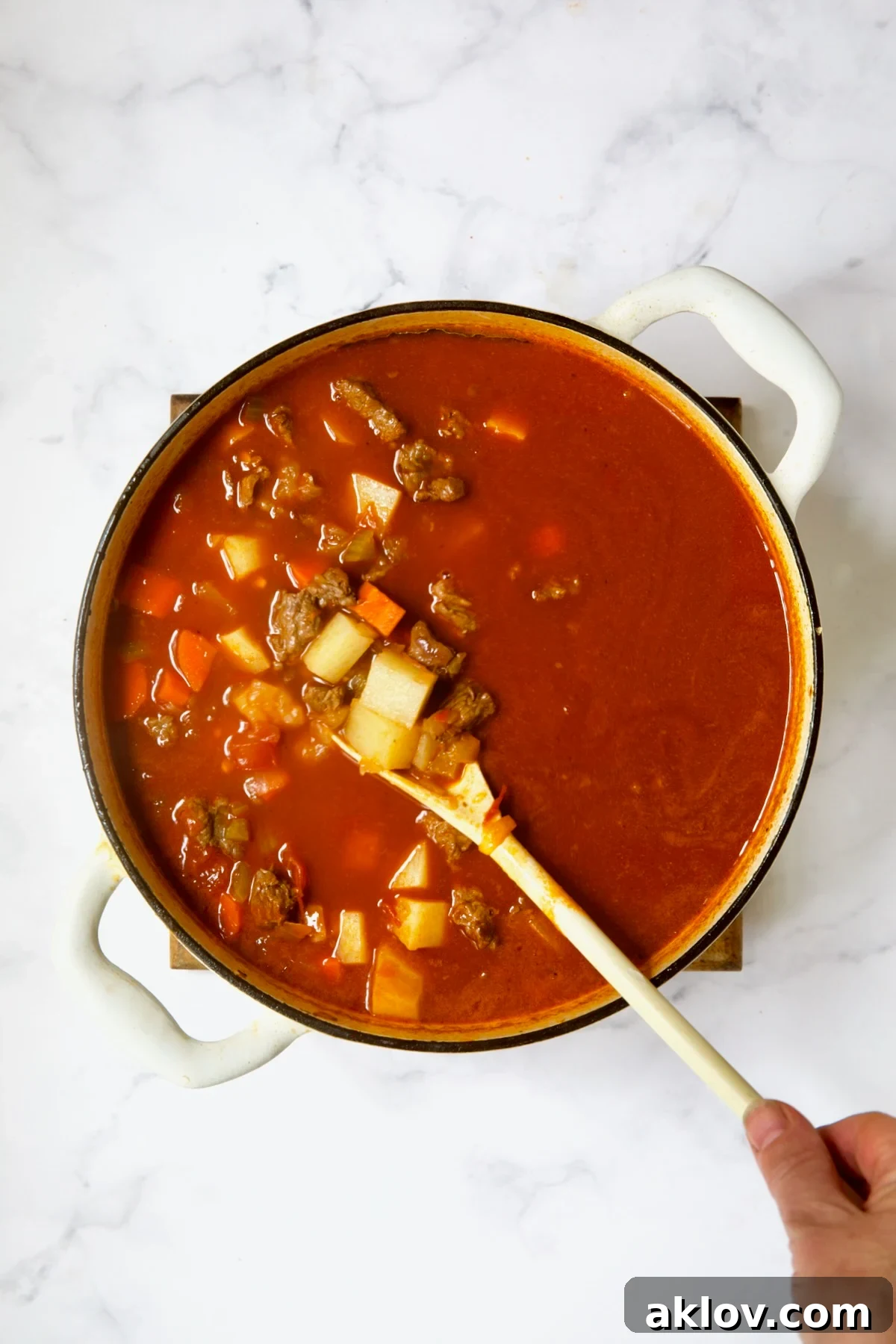
- Stir in the red wine vinegar. A touch of vinegar at the end brightens the flavors and adds a subtle tang that cuts through the richness of the stew.
- Crucially, allow the goulash soup to “rest” off the heat for at least 15 minutes before serving. This resting period allows the flavors to truly meld and deepen, creating a more harmonious and delicious experience. Before serving, stir in chopped fresh parsley or celery leaves for a burst of freshness and color. Taste and adjust seasoning with additional salt and black pepper if needed.
- **MAKE AHEAD:** If preparing in advance, cool the goulash completely before refrigerating. Reheat gently on the stovetop when ready to serve. As noted, the flavor often improves overnight!
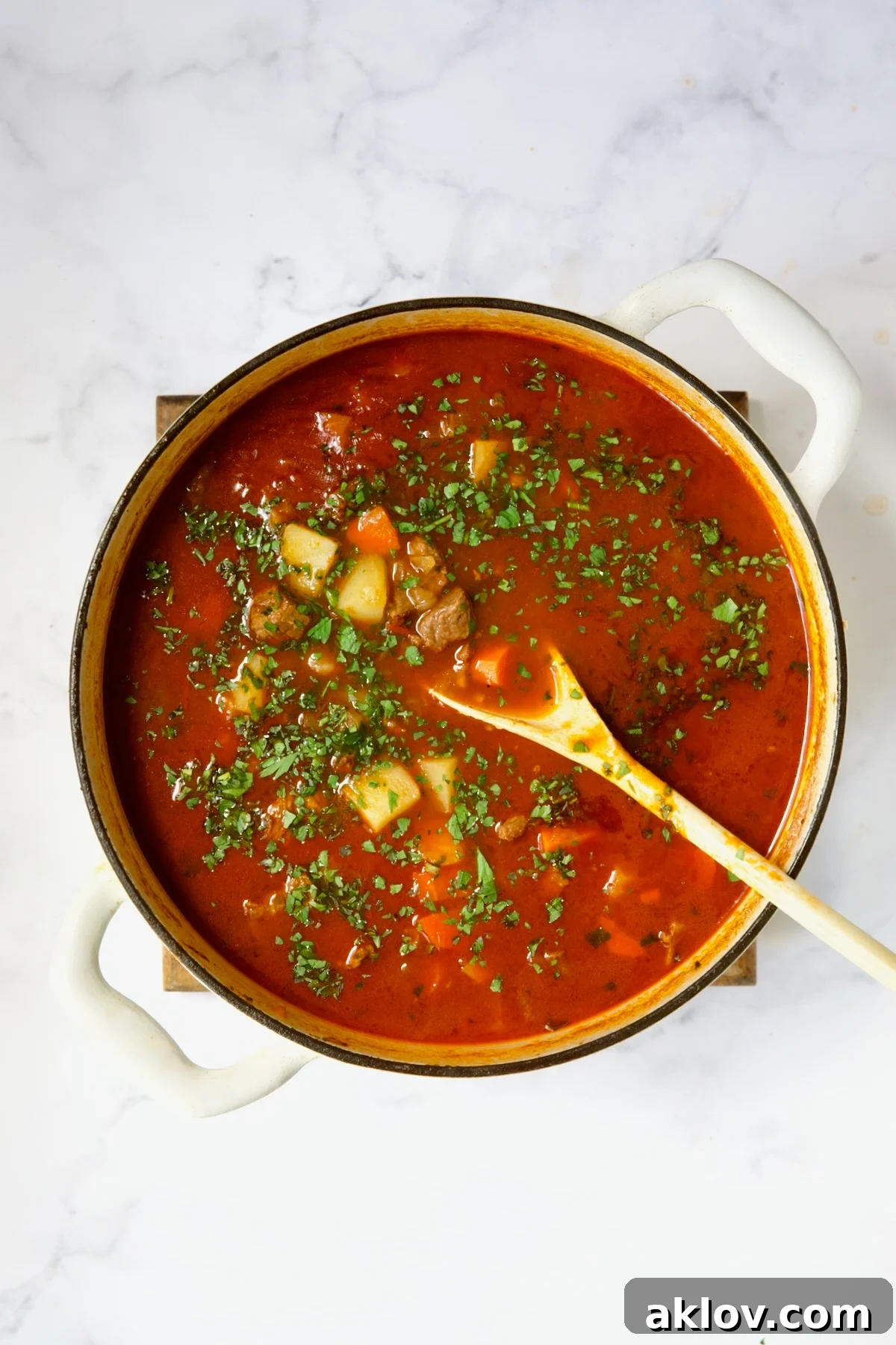
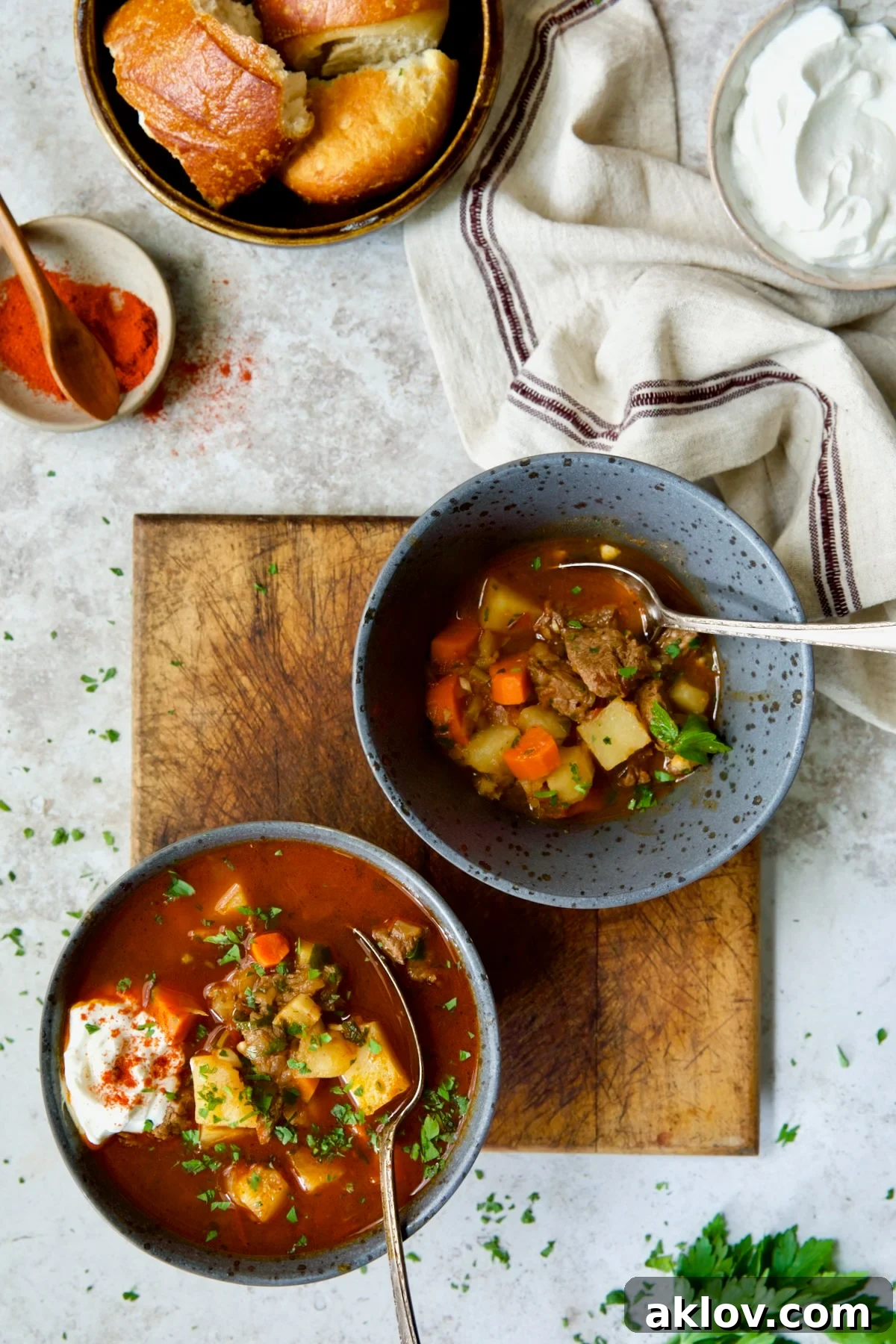
- For serving, garnish each bowl with a dollop of cool sour cream, more fresh chopped parsley, and a dab of Hungarian hot pepper paste if you enjoy a little heat. These garnishes add layers of flavor and texture, enhancing the overall experience of this incredible **beef goulash**.
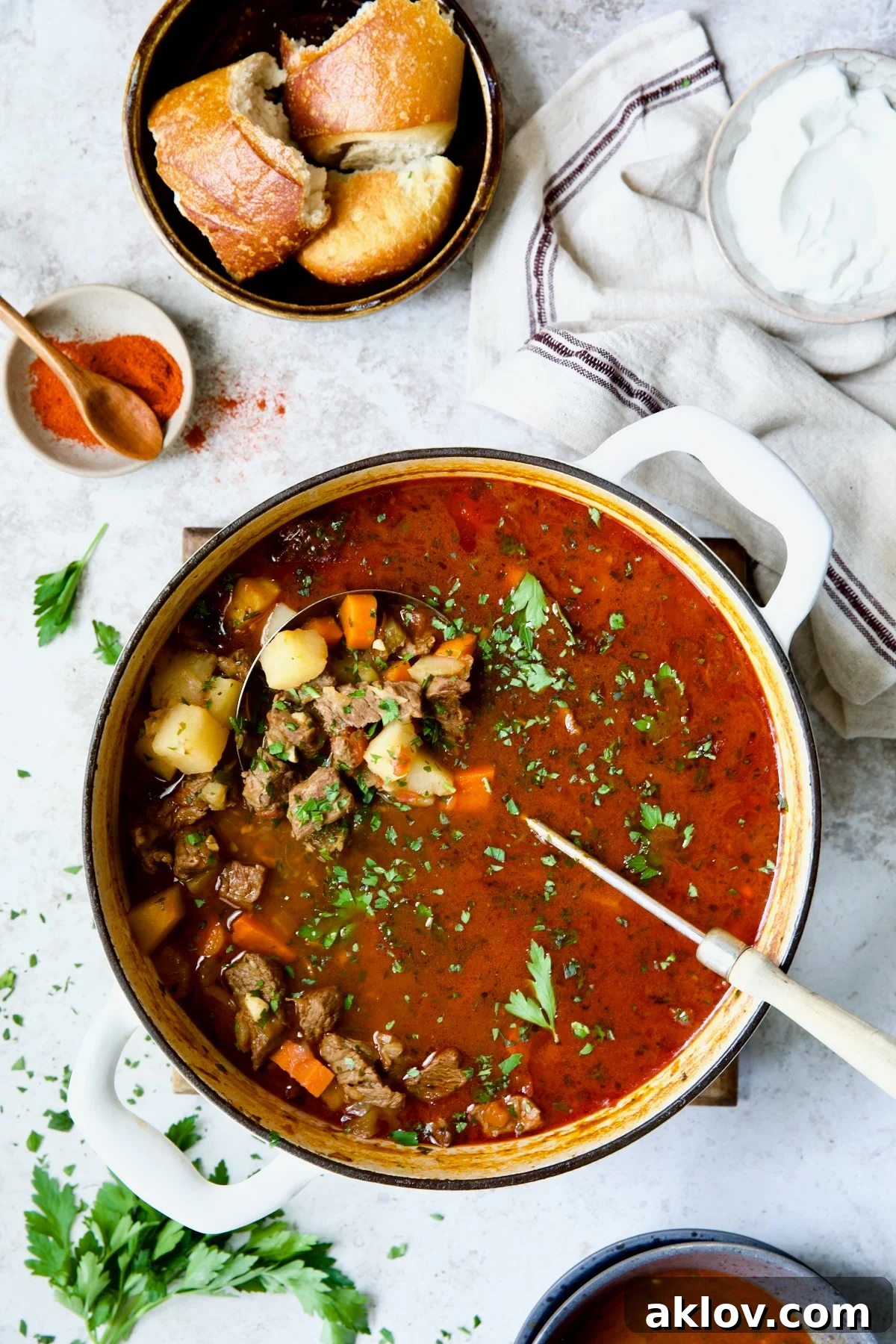
And there you have it – your magnificent Traditional Hungarian Goulash Soup is ready! Let’s eat and savor every comforting spoonful!
Chef Tips and Tricks for the Best Hungarian Goulash:
Elevate your **Traditional Hungarian Goulash** to professional standards with these tried-and-true chef’s secrets:
- **Browning the Beef Correctly:** This is a crucial step! Using too much oil initially or overcrowding the pot when browning the beef will cause the meat to steam rather than develop a beautiful, rich crust. Steamed beef will be gray or tan and lack the deep, complex flavors that result from proper searing (the Maillard reaction). Start with a modest amount of oil and always work in batches, ensuring there’s plenty of space between the beef pieces in the pan. Only add more oil if the beef begins to stick or if the pan becomes dry.
- **The Importance of Resting:** I always advocate for letting soups and stews “rest” for 15 to 20 minutes before serving. Beyond simply allowing the dish to cool to an edible temperature, this resting period is a magical moment where all the flavors, which have been cooking for so long, truly have a chance to meld and deepen. It transforms a good stew into a magnificent one, creating a more cohesive and profound taste experience.
- **Creative Leftover Transformation:** Leftover goulash is a treasure on its own, reheating beautifully for another comforting meal. However, if you’re feeling adventurous and want to get creative, consider transforming it! Thicken the leftover goulash with a slurry of flour or cornstarch, then transfer it to a baking dish. Top it with a homemade or store-bought puff pastry crust, and bake until golden brown and bubbly. You’ll have an utterly amazing **goulash pot pie** – a delightful twist on a classic comfort food!
- **Seasoning in Layers:** Don’t just season at the beginning and end. Taste your goulash at various stages (after browning beef, after adding aromatics, after simmering liquids) and adjust seasonings. This layered approach ensures a well-balanced flavor profile throughout the dish.
- **Deglazing for Depth:** After browning the beef and sautéing the aromatics, deglaze the pot with a splash of beef broth or water before adding the main liquid. Scrape up all those delicious browned bits from the bottom of the pan; these are packed with flavor and will add immense depth to your stew.
Traditional Hungarian Goulash Recipe FAQs:
The name “goulash” originates from the Hungarian word *gulya*, which translates to ‘herd of cattle.’ Consequently, *gulyás* refers to the ‘herdsman’ or ‘cowboy’ who tended these cattle on the vast plains of Hungary. Historically, goulash began as a humble dish prepared by these herdsmen. Over time, the name evolved to *gulyáshús* (goulash meat), signifying the savory meat dish they cooked, eventually becoming the familiar “goulash” we know today. It reflects the dish’s pastoral origins and its status as a hearty, sustenance-providing meal.
The distinction between Hungarian Goulash and American Goulash is quite significant. Authentic **Traditional Hungarian Goulash** is fundamentally a slow-cooked meat and vegetable stew, generously seasoned with the signature flavor of Hungarian paprika. It focuses on tender chunks of beef and root vegetables simmered in a rich, flavorful broth. In stark contrast, American Goulash, sometimes called American Chop Suey, is a much quicker, one-pot meal. It typically features ground beef, a tomato-based sauce, various herbs and spices, and most notably, elbow macaroni. While both are comforting, their ingredients, preparation methods, and flavor profiles are distinctly different, with the Hungarian version being a deeply flavorful, slow-simmered stew.
Absolutely! **Traditional Hungarian Goulash** is an ideal dish for making ahead of time. In fact, many home cooks and chefs agree that goulash, like many robust stews, often tastes even better the day after it’s prepared. This is because allowing it to rest overnight in the refrigerator gives all the wonderful flavors a chance to fully meld, deepen, and “get to know each other.” You can prepare this goulash up to 2 to 3 days in advance. Simply ensure it cools down completely to room temperature before refrigerating it in an airtight container. When you’re ready to serve, gently reheat it on the stovetop over low to medium heat until warmed through, stirring occasionally to prevent sticking.
Yes, **Hungarian Goulash** freezes, thaws, and reheats exceptionally well, making it a fantastic meal to prepare in larger batches. While the potatoes might become slightly softer in texture after freezing and thawing, the overall quality and flavor of the stew remain excellent. For the best results when freezing, consider using a waxier potato variety like Yukon Gold or red potatoes, as they tend to hold up better and maintain their integrity compared to starchier Russets. To freeze, allow the goulash to cool completely, then transfer it into airtight, freezer-safe containers or heavy-duty freezer bags in desired portion sizes. It can be stored in the freezer for up to 3 months. When you’re ready to enjoy it, thaw the goulash in the refrigerator overnight, then reheat it gently on the stovetop or carefully in the microwave until piping hot.
Storing Your Delicious Hungarian Goulash:
Proper storage ensures you can enjoy the rich flavors of your **Traditional Hungarian Goulash** for days to come, or even months!
- **Refrigeration:** Store any leftover goulash in an airtight container in the refrigerator. It will maintain its excellent quality and flavor for up to five days. Reheat gently on the stovetop over low heat until thoroughly warmed through, stirring occasionally to prevent sticking.
- **Freezing:** For longer storage, goulash freezes beautifully. Allow the soup to cool completely to room temperature. Transfer it to freezer-safe airtight containers or heavy-duty freezer bags. Label with the date and freeze for up to 3 months. To serve, thaw overnight in the refrigerator, then reheat on the stovetop or in the microwave until hot.
Perfect Pairings: What to Serve with Hungarian Goulash Soup:
This hearty **beef goulash** is a meal in itself, but a few complementary sides can truly enhance the experience and round out your Hungarian feast. Here are some delightful suggestions:
- Roasted Cabbage Steaks with Mustard Vinaigrette: The slight bitterness and tender crispness of roasted cabbage provide a lovely contrast to the rich goulash.
- Roasted Red Cabbage Steaks with Balsamic Vinaigrette and Goat Cheese: A colorful and tangy side that adds visual appeal and a bright, acidic counterpoint.
- Quick Pickled Beets with Dill: The sweet and sour notes of pickled beets offer a refreshing palate cleanser.
- Creamy Cucumber Salad with Yogurt: A cool, creamy, and refreshing salad to balance the warmth and richness of the stew.
- Radish Greens Salad with Hot Bacon Dressing: A vibrant salad with a peppery kick, enhanced by a warm, savory dressing.
- Roasted Hasselback Beets with Dill Dressing: An elegant and flavorful side, offering earthy sweetness and a beautiful presentation.
- **Crusty Bread or Noodles:** Don’t forget a substantial accompaniment like crusty bread for soaking up every last drop of the rich paprika-infused broth, or soft egg noodles (nokedli or spaetzle are traditional Hungarian options) to serve alongside.
Explore more comforting creations! Get all my soup and stew recipes at: Soup and Stew Recipes – From A Chef’s Kitchen
Discover More Delicious Beef Stew Recipes You’ll Adore!
If you’ve fallen in love with the depth of flavor in this **Hungarian Goulash**, you’ll surely enjoy these other comforting and hearty beef stew creations from around the world:
- Pressure Cooker Indian Curry Beef Stew: A fragrant and tender stew bursting with exotic Indian spices, made quickly and efficiently in a pressure cooker.
- Feijoada (Brazilian Beef Stew): A rich and savory Brazilian classic, typically featuring black beans, various cuts of beef, and pork, simmered to perfection.
- Moroccan Beef Stew: An aromatic and warming stew, infused with North African spices, sweet dried fruits, and tender beef.
- Boneless Short Ribs Recipe (Bourguignon Style): A French-inspired, elegant stew featuring incredibly tender beef short ribs braised in red wine, mushrooms, and pearl onions.
Pin
Traditional Hungarian Goulash Soup Recipe
Equipment
-
Wusthof Chef Knife
-
Vegetable Peeler
-
Cutting Board
-
Dutch Oven
Ingredients
- 2 to 2 1/2 pounds trimmed and cubed chuck roast, (1/2 to 3/4-inch cubes)
- Salt and freshly ground black pepper
- 1/4 cup canola oil, lard or bacon drippings, or as needed, divided
- 2 large onions, (3/4 pound) chopped
- 1 large rib celery, chopped
- 6 cloves garlic, chopped
- 4 plum tomatoes, or 2 round tomatoes, seeded and chopped
- 3 tablespoons Hungarian paprika
- 2 large bay leaves, preferably fresh
- 4 cups beef broth
- 4 cups water
- 2 large carrots, or 3 medium carrots, peeled and cut into 1/2-inch pieces
- 2 large parsnips, or 3 medium parsnips, peeled and cut into 1/2-inch pieces
- 4 medium Russet potatoes, peeled and cut into 1/2-inch cubes
- 1 tablespoon red wine vinegar
- Chopped fresh parsley or celery leaves
- Sour cream, optional
- Hot pepper sauce, optional
Instructions
-
Generously season the cubed chuck roast with salt and black pepper.
-
Heat 1 tablespoon of canola oil, lard or bacon drippings in a large Dutch oven or other heavy soup pot over medium-high heat. Working in batches, brown the beef well on all sides. Add oil as needed being careful not to use too much or crowd the beef because it will steam rather than brown. Transfer browned beef to a plate. Repeat until all the beef is browned.
-
Refresh oil as needed. Add the onions and celery. Reduce heat to medium and cook for 7-8 minutes or until softened.
-
Add the garlic, tomatoes, paprika and bay leaves. Give that a stir and cook briefly, 10 seconds or so, until the garlic is aromatic.
-
Add the beef back to the pot and stir to coat.
-
Add the beef broth and water. Bring just to a boil then reduce heat to low and simmer with the lid slightly ajar for 30 minutes.
-
Add the carrots and parsnips. Bring back to a simmer and cook 10-12 minutes.
-
Add the potatoes, bring back to a simmer and cook for 20-25 minutes or until the potatoes, carrots and parsnips are tender and the potatoes can be easily pierced with a knife.
-
Add the vinegar.
-
Let the goulash soup “rest” for 15 minutes or so. Add chopped parsley or celery leaves. Season with additional salt and black pepper to taste if needed.
-
Garnish with a dollop of sour cream, more chopped parsley and hot pepper sauce if desired.
Notes
- If you have lard or bacon grease, by all means, use it, as those are more traditional.
TIPS:
- Use a chuck roast and cut and trim the meat yourself. Beef labeled “stew beef” could be various cuts of beef that the butcher or market is trying to sell the remnants of.
- Stir in a dollop or two of sour cream at the end for another dimension of flavor.
- If you want to get creative with the leftovers, thicken the goulash with flour or cornstarch, place it in a baking dish then top it with homemade or purchased pastry for an amazing goulash pot pie.
MAKE AHEAD:
- Can be made 2-3 days ahead of time.
- Cool the goulash down completely, refrigerate and reheat on the stovetop when ready to serve.
FREEZER-FRIENDLY:
- If you’re planning to freeze the goulash, cool it down completely then place in airtight containers in the quantity desired and freeze it for up to 3 months. Thaw in the refrigerator then reheat on the stovetop or gently in the microwave.
- The potatoes may end up being a bit softer. A waxy potato such as Yukon Gold or red potatoes will hold up better to frozen, thawed and reheated.
Nutrition
Nutritional values are automatically calculated using unbranded products and are estimates only. Actual results may vary based on ingredients used and portion sizes. Adjust as needed for dietary restrictions, allergies, or health concerns.
 Like this? Leave a comment below!