
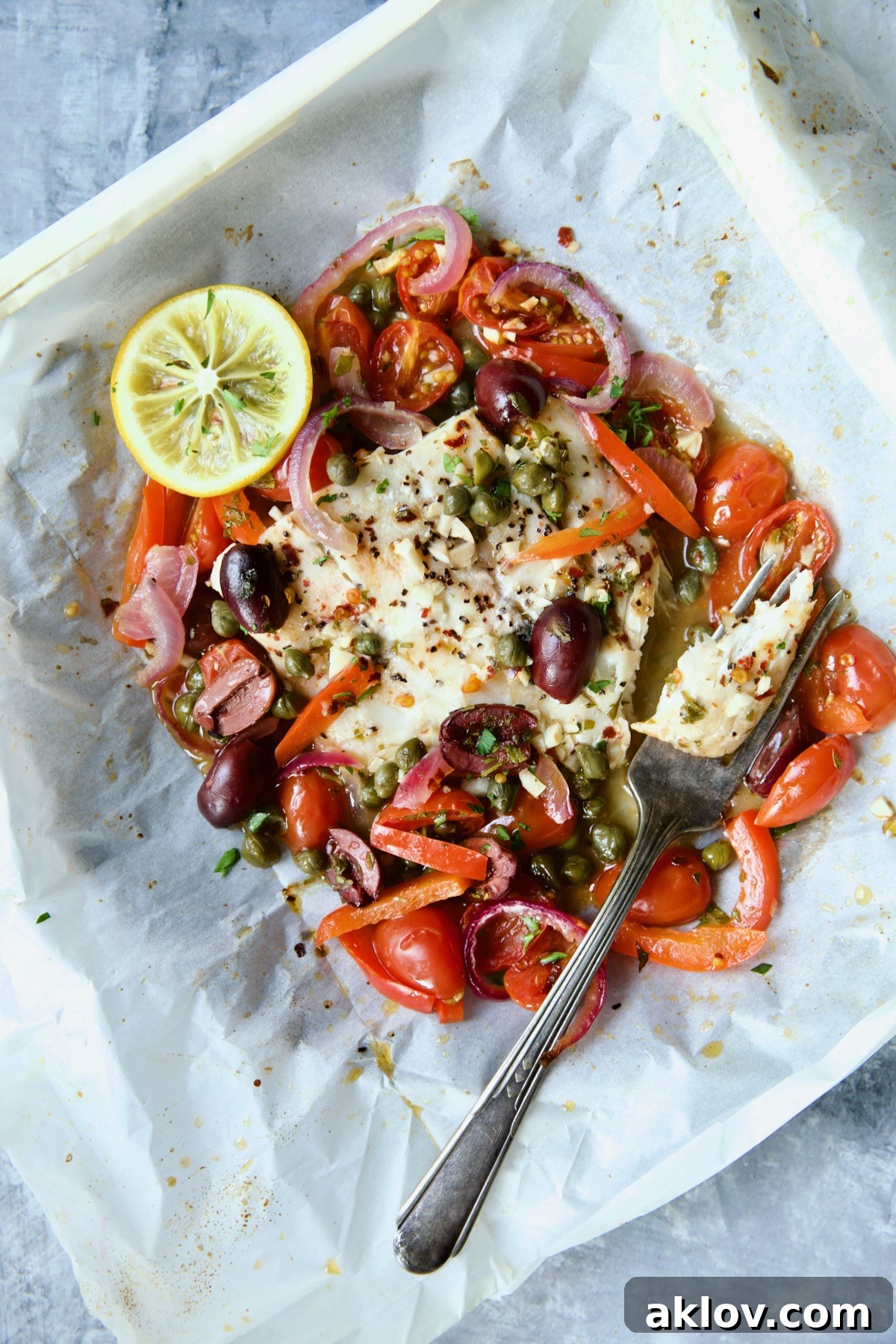
Effortless Mediterranean Fish en Papillote: A Healthy and Flavorful Dinner Delight
Discover the true essence of Mediterranean cuisine with this incredible fish en Papillote recipe. It’s a culinary journey that brings together vibrant, classic flavors from the sun-drenched region, all wrapped in a simple parchment paper parcel. Imagine tender fish infused with the sweetness of juicy cherry tomatoes, the briny punch of Kalamata olives, the piquant zest of capers, aromatic garlic, rich olive oil, a splash of white wine, and a refreshing squeeze of lemon. This method delivers a no-fuss, no-mess, and exceptionally healthy dinner that will impress without demanding hours in the kitchen. For a complete and authentic experience, consider serving it alongside a vibrant Mediterranean Grilled Zucchini!
“Absolutely one of the best fish recipes I’ve ever tried. I used fresh tilapia fillets and it was just amazing.”
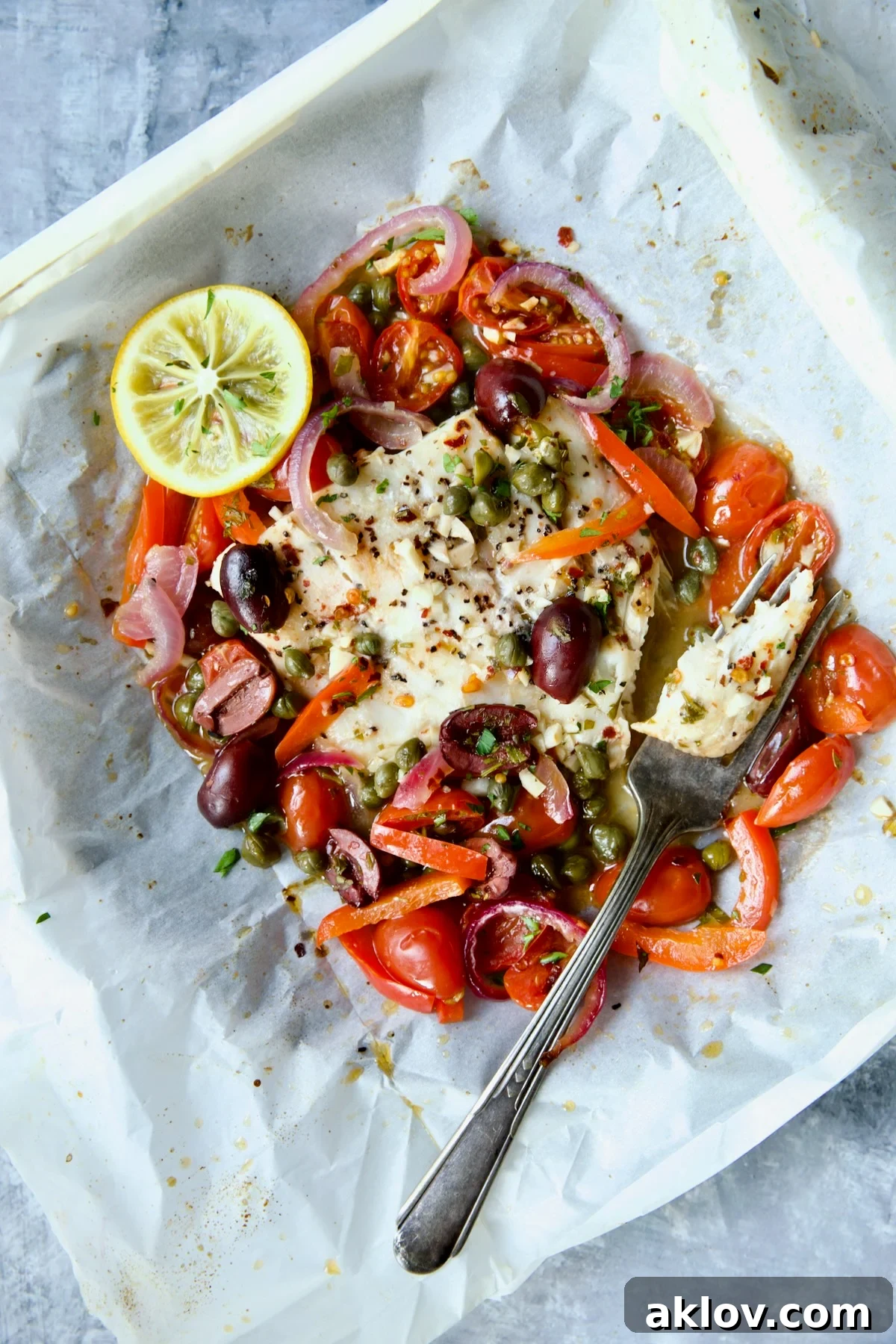
What is En Papillote? Unlocking the Secret to Perfectly Cooked Fish
The term “en Papillote” is a French culinary phrase that elegantly translates to “in paper,” most commonly referring to parchment paper. This exquisite cooking technique involves sealing ingredients, such as delicate fish, succulent seafood, or fresh vegetables, within a folded parcel of parchment paper (or sometimes foil). The magic happens inside this sealed pouch: as it heats, the natural moisture from the ingredients, along with any added liquids like wine or broth, creates a steamy, aromatic environment. The food gently cooks in its own juices and the infused flavors of the herbs and seasonings, resulting in an incredibly moist, tender, and intensely flavorful dish. Because the ingredients essentially steam, very little added fat is required, making it an inherently healthy cooking method. While chicken or other proteins can also be prepared this way, fish and seafood are particularly well-suited to en Papillote due to their delicate textures and quick cooking times, ensuring they remain succulent and never dry out.
This traditional French technique, while sounding sophisticated, is remarkably simple and offers a host of benefits beyond just flavor. It minimizes cleanup, locks in nutrients, and provides a delightful “unwrapping” experience at the table, enhancing the meal’s presentation and sensory appeal. It’s truly a chef’s secret weapon for achieving restaurant-quality results at home with minimal effort.
Why This Mediterranean Fish en Papillote Recipe Deserves a Permanent Spot in Your Repertoire
Embracing a healthier lifestyle, especially one aligned with the beneficial Mediterranean diet, becomes effortless when you master the art of cooking en Papillote. This classic French method, despite its fancy name, is far less complicated than it sounds and is an absolute game-changer for preparing almost any Mediterranean-inspired fish recipe. The enchantment of this technique lies in how it transforms simple ingredients into an extraordinary meal.
You’ll be genuinely astonished by the incredibly flaky, moist, and utterly delicious fish that emerges from these parchment paper parcels. Each bite is bursting with the concentrated flavors of the Mediterranean, from sun-ripened tomatoes to briny olives, all mingling harmoniously. This specific Mediterranean Fish en Papillote recipe is a true standout because it is:
- Effortlessly Easy: With minimal prep and straightforward steps, it’s perfect for weeknight dinners or when you want a gourmet meal without the fuss.
- Remarkably Mess-Free: Cooking and serving in the same parcel means virtually no dishes to wash, making cleanup an absolute breeze.
- Incredibly Healthy: Low in fat and rich in lean protein, fresh vegetables, and heart-healthy olive oil, it aligns perfectly with a nutritious eating plan. The steaming method also helps retain vital nutrients.
- Simply Delicious: The sealed environment locks in every drop of flavor, creating a symphony of tastes and aromas that will delight your palate.
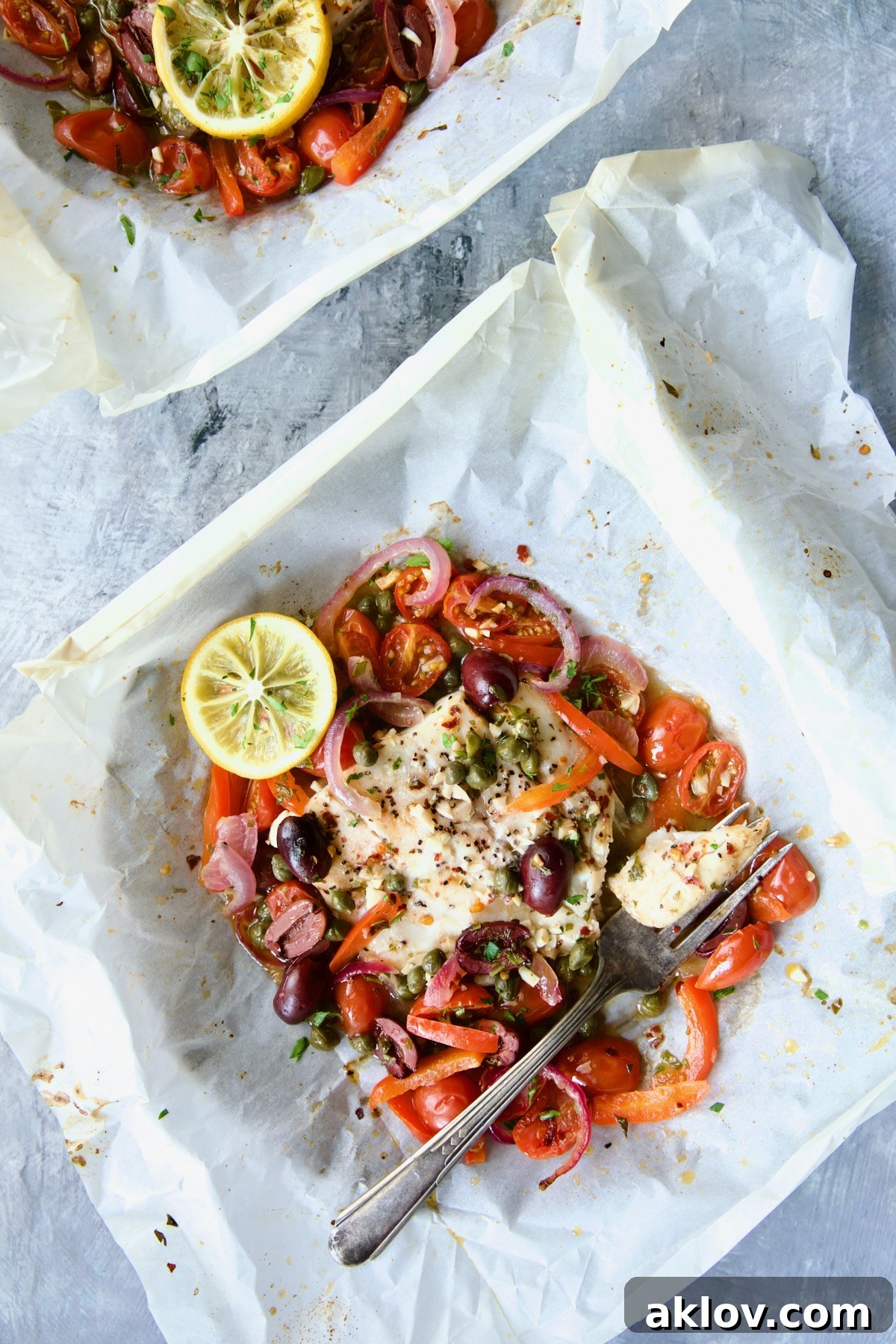
Crafting Your Culinary Masterpiece: Step-by-Step Mediterranean Fish en Papillote
Recipe Ingredients: The Foundation of Mediterranean Flavor
Gathering your ingredients is the first step to creating this delightful Mediterranean fish en Papillote. Below is a comprehensive list of what you’ll need. For precise quantities, refer to the detailed recipe card at the end of this article.
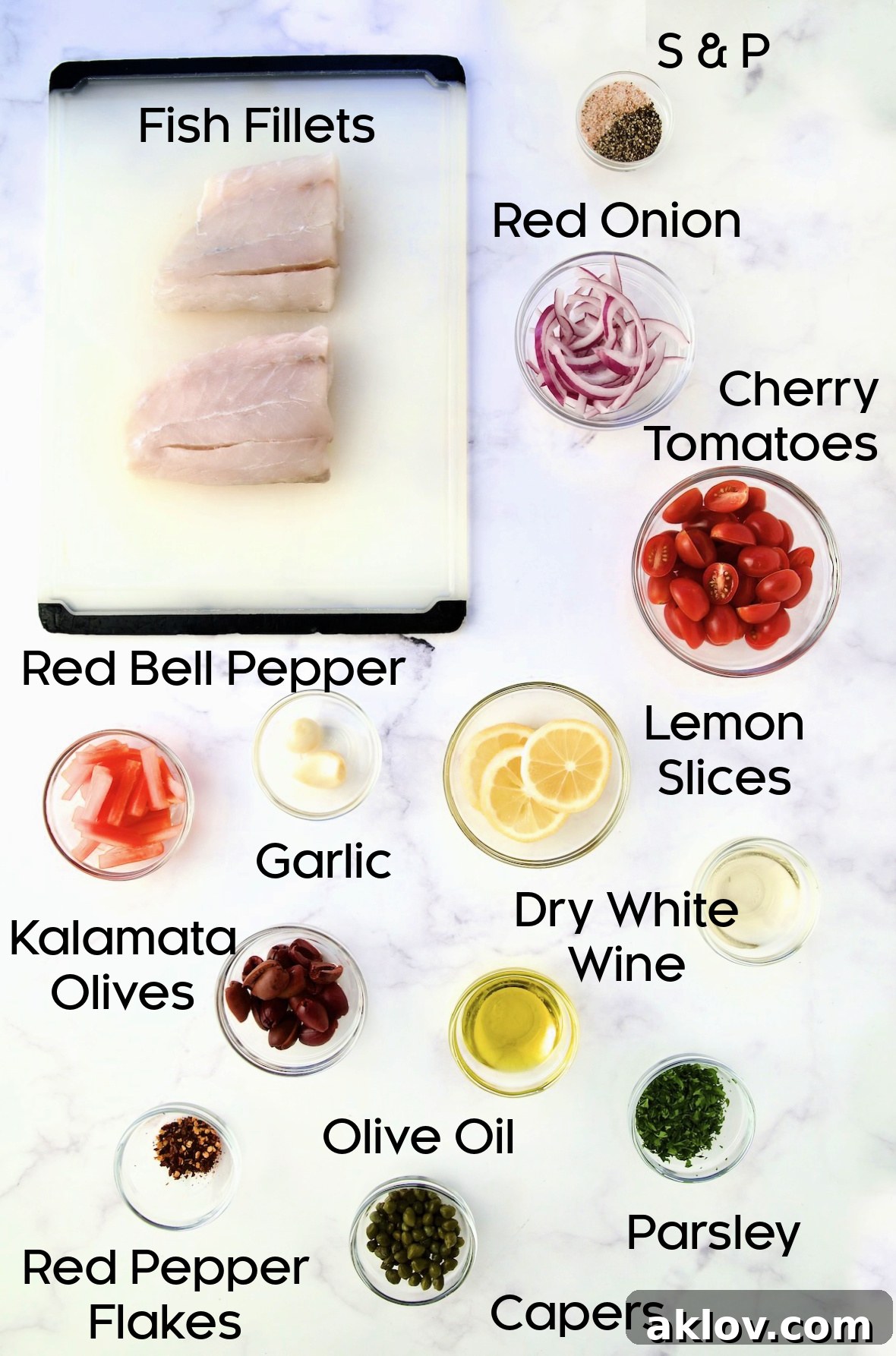
Ingredient Notes and Expert Substitutions: Tailoring Your Dish
- Fish Fillets: The beauty of this recipe is its versatility. Almost any firm, white fish fillet will yield excellent results. While we used barramundi, you can confidently opt for halibut, sea bass, cod, mahi-mahi, tilapia, or even salmon for a richer flavor profile. Thicker fillets may require a few extra minutes of cooking time.
- Cherry Tomatoes: These small, sweet jewels are essential for that burst of Mediterranean sunshine. Feel free to use cherry, grape, teardrop, or a colorful combination. They soften beautifully in the steam, releasing their sweet juices.
- Dry White Wine: A dry white wine, such as Sauvignon Blanc or Pinot Grigio, adds depth and acidity, enhancing the overall flavor. Choose a wine you genuinely enjoy drinking. For a NON-ALCOHOLIC SUBSTITUTE, combine 1 teaspoon of fresh lemon juice with 5 teaspoons of water or vegetable broth to achieve the desired liquid and tang.
- Kalamata Olives: These distinctive, almond-shaped olives with their deep purple-brown hue are a hallmark of Greek cuisine. They hail from the Peloponnese peninsula and offer a rich, briny, slightly fruity flavor. If using pre-pitted Kalamata olives, it’s always wise to quickly check them for any stray pit fragments before adding to your dish.
- Red Pepper Flakes: For those who appreciate a gentle warmth and a subtle kick, red pepper flakes are a fantastic addition. Adjust the quantity to your personal preference, or omit them entirely if you prefer a milder flavor.
- Capers: These small, briny green buds are the unripened flower buds of the caper bush, typically pickled. They contribute a unique tangy, salty, and slightly floral note that brightens the entire dish. You’ll usually find them in the pickled goods or condiment aisle of your grocery store.
Mastering the Technique: Step-By-Step Instructions for Perfect En Papillote
Follow these detailed instructions to create a healthy, flavorful, and incredibly easy Mediterranean fish dinner.
- Begin by gathering all your ingredients and performing any necessary prep work, such as chopping vegetables and measuring liquids. This mise en place ensures a smooth cooking process.
- Preheat your oven to a steady 400 degrees Fahrenheit (200 degrees Celsius) to ensure even and quick cooking.
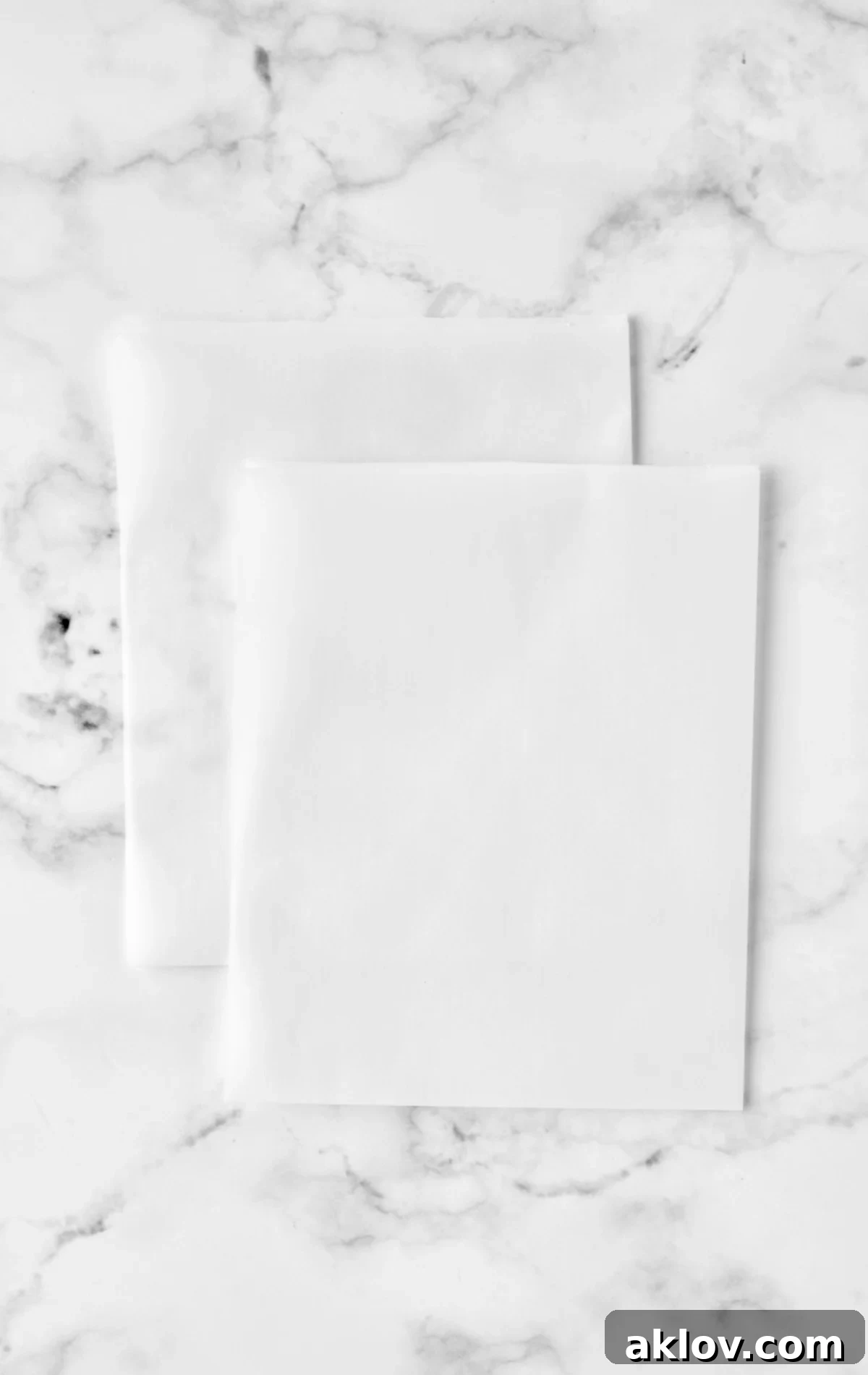
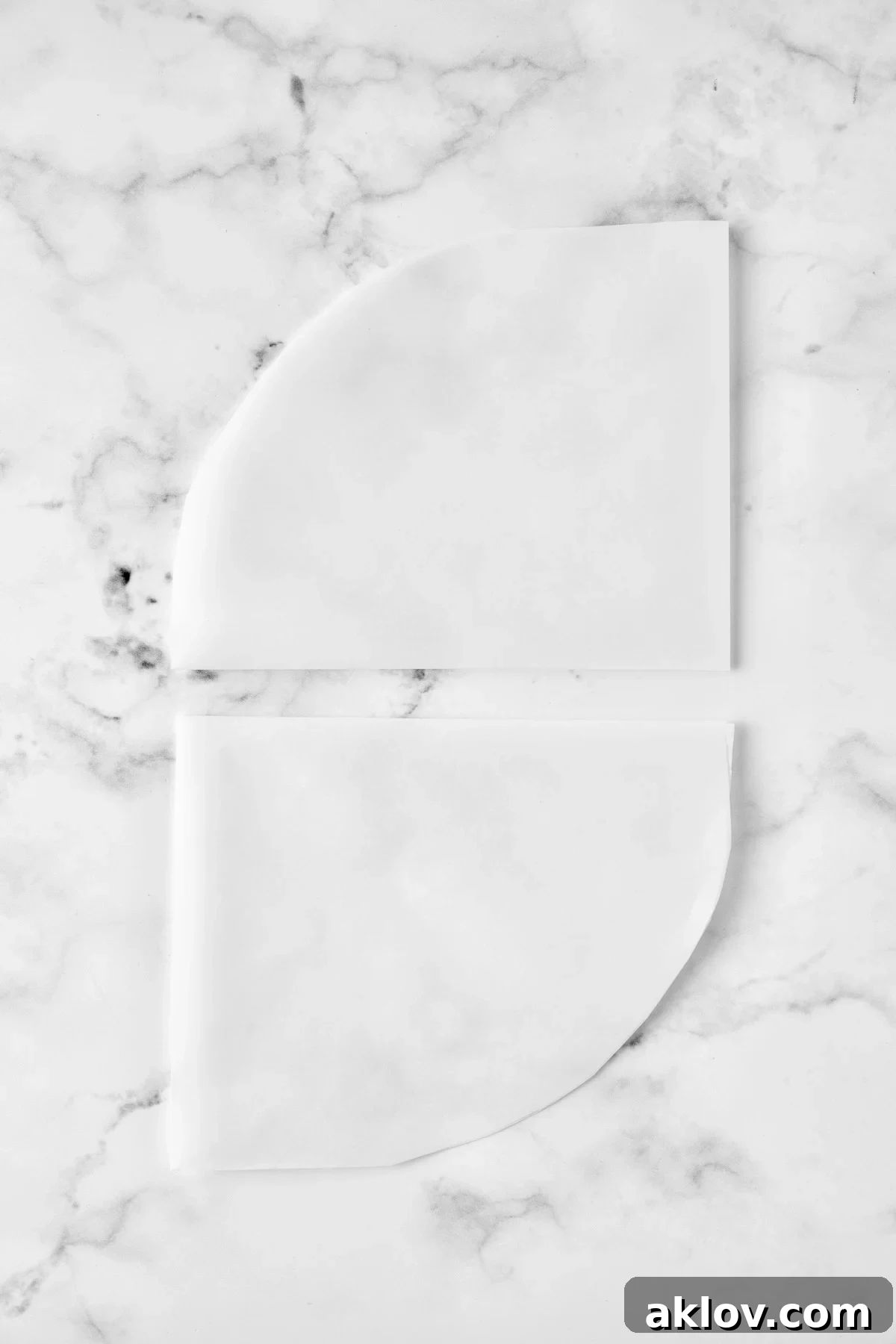
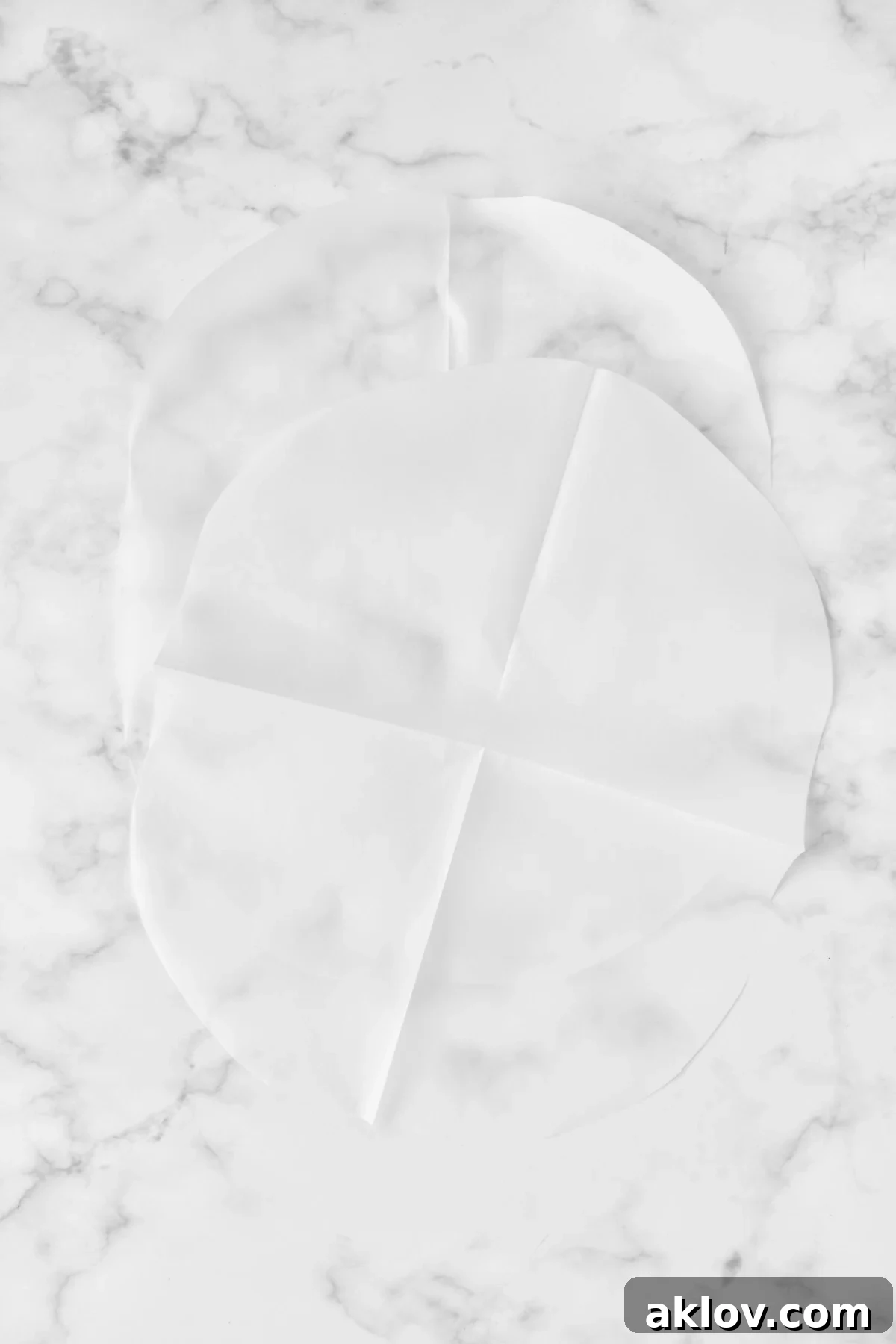
- Prepare your parchment paper parcels. Cut two pieces of parchment paper, each approximately 18 inches long. Fold each piece in half, then carefully cut a half-circle, oval, or heart shape along the folded edge. When opened, this will create a large, symmetrical shape. Lay these opened parchment shapes flat on a baking sheet.
- Gently wash your fish fillets under cold water and pat them thoroughly dry with paper towels. Season both sides generously with salt and freshly ground black pepper to taste. This initial seasoning is crucial for building flavor.
- Place one seasoned fish fillet onto one side of each opened parchment paper sheet, positioning it slightly off-center to allow ample space for sealing.
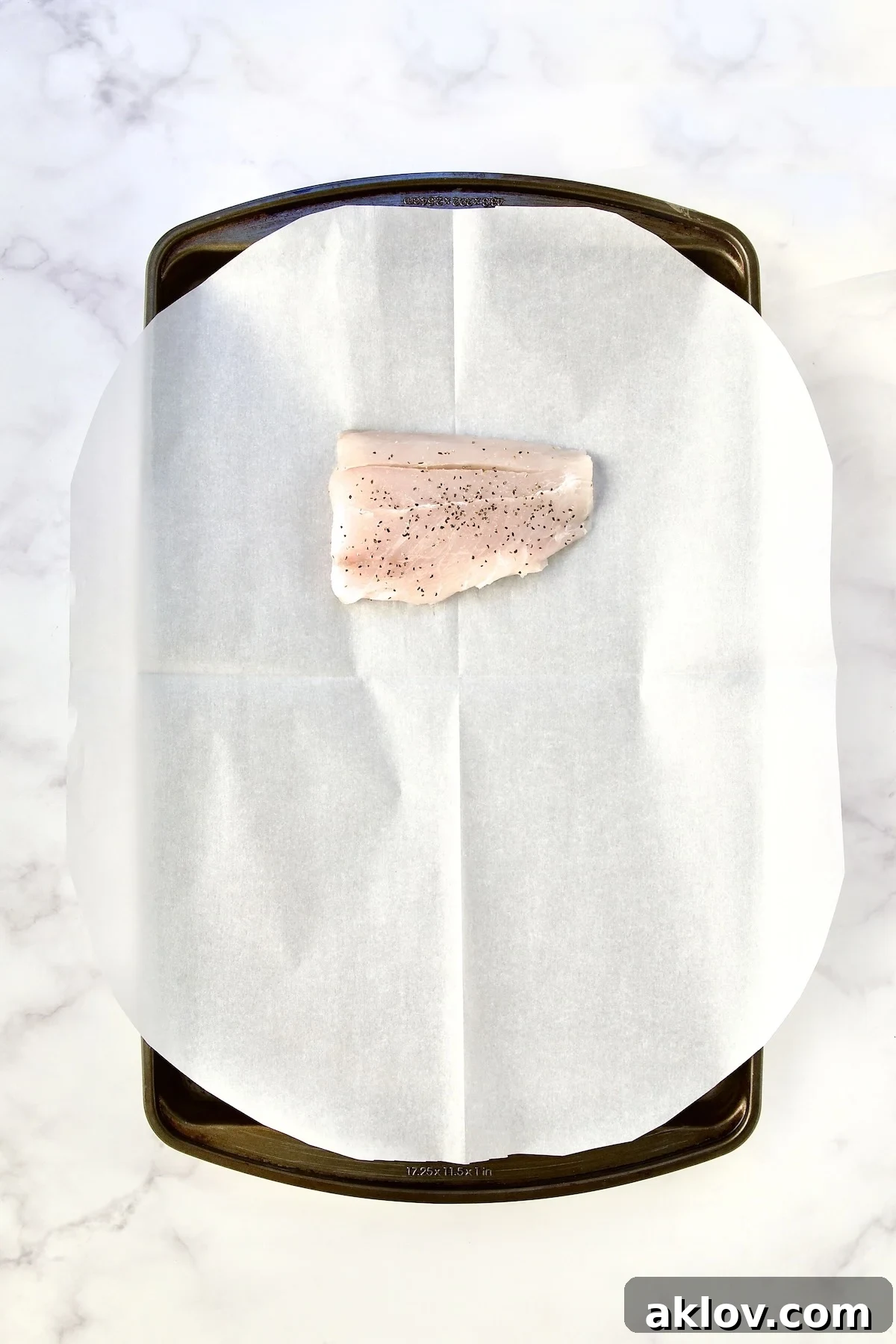
- Now, it’s time to layer on the Mediterranean goodness! Top each fillet with an equal distribution of the halved cherry tomatoes, thin slices of red onion, vibrant red bell pepper strips, finely chopped garlic, a drizzle of extra-virgin olive oil, a splash of dry white wine, and a pinch of crushed red pepper flakes (if using). Finish each parcel by placing a fresh lemon slice directly on top of the fish. If desired, sprinkle with chopped fresh parsley for an added herbaceous note and pop of color.
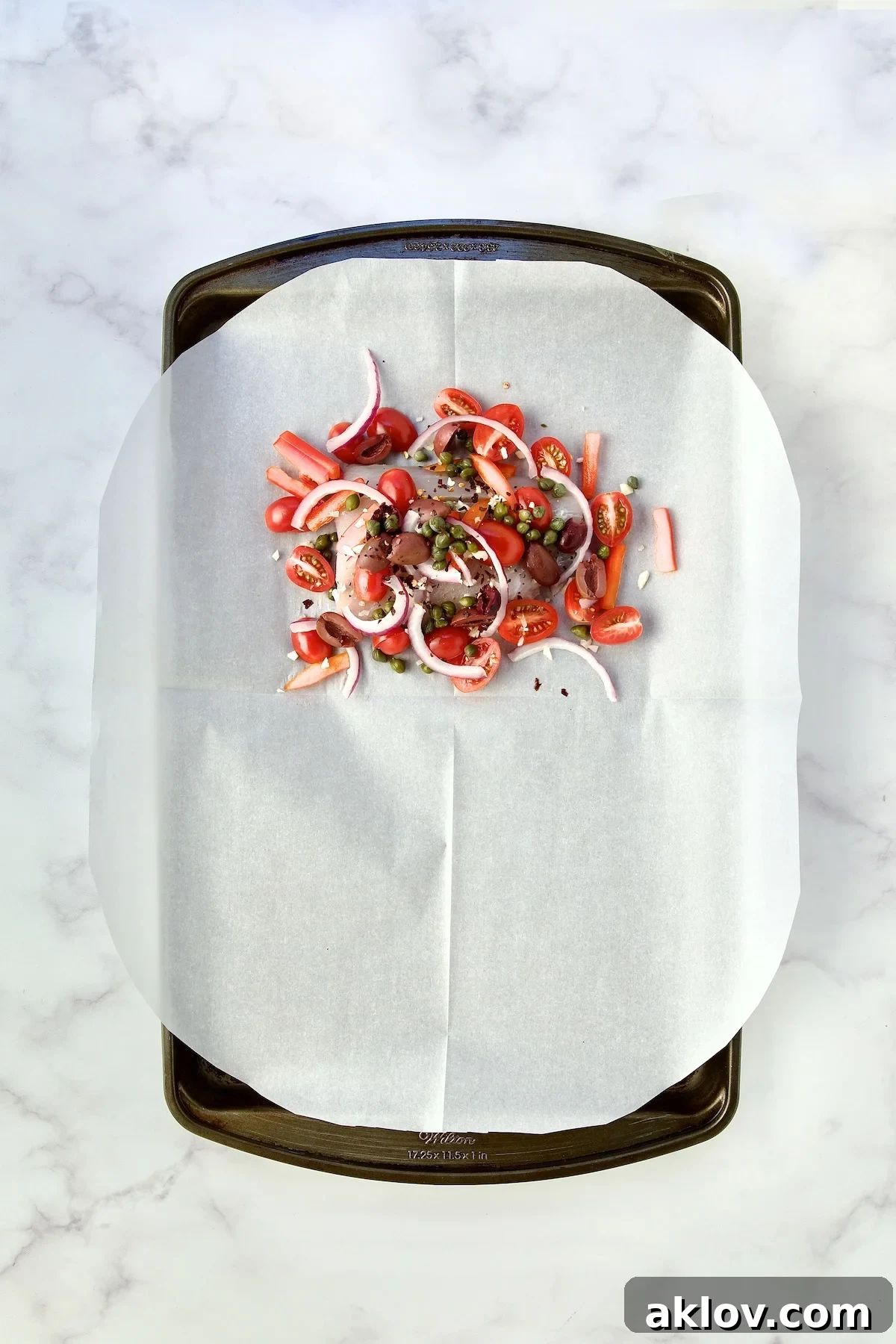
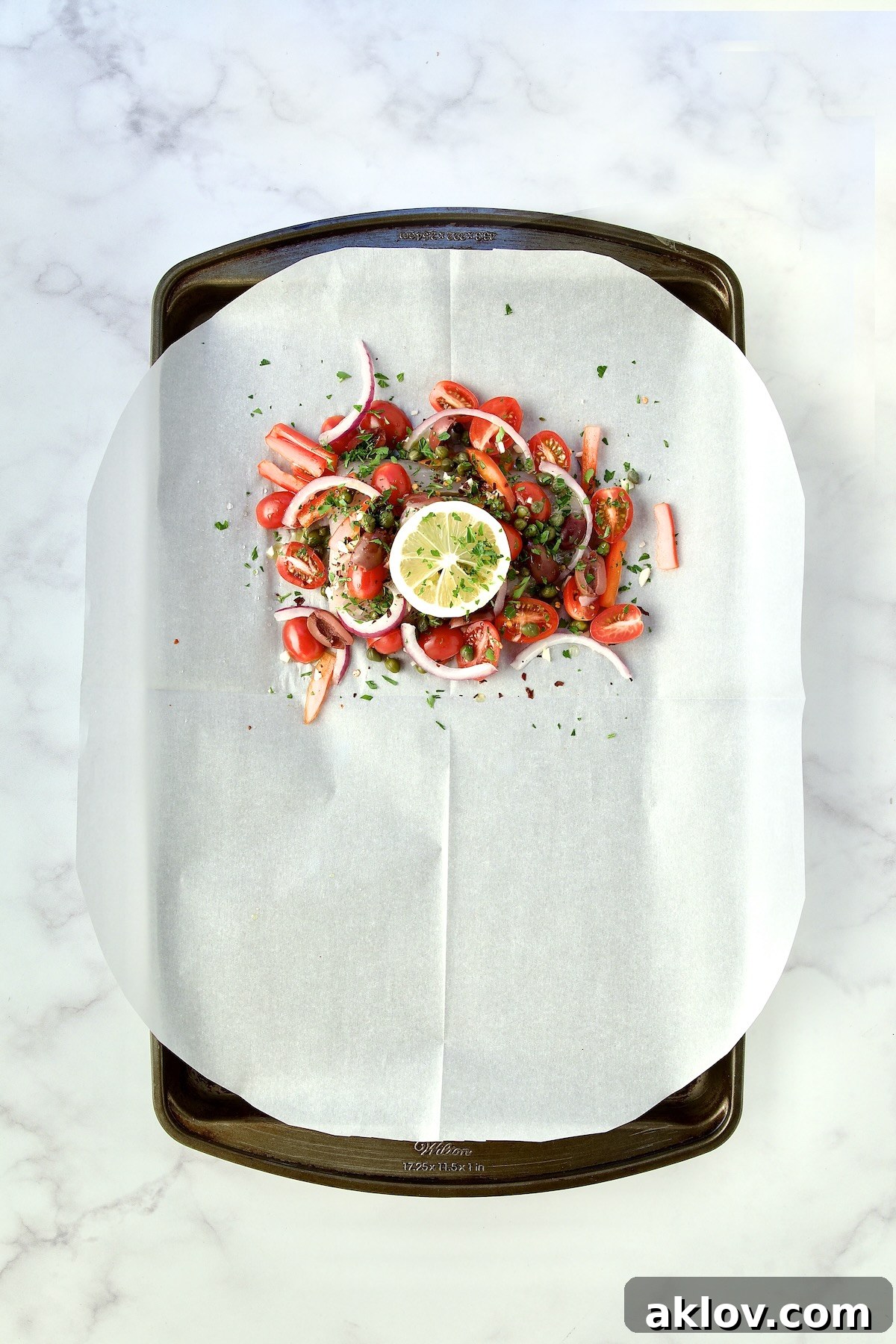
- Carefully fold the other half of the parchment paper over the fish and its toppings. Now, it’s time to seal the parcel to create the steaming environment:
- The Traditional French Method: For a classic, elegant seal, begin by folding the edges together, making small, crimped folds approximately every 1/2-inch to 3/4-inch all the way around the perimeter until the parcel is completely sealed. This creates a beautiful, tightly crimped edge.
- The “Carol Method” (Simplified Seal): For a quicker, equally effective seal, simply fold the edges together 3 to 4 times, ensuring you create a firm crease with each fold. Then, fold the corner of the packet 2 to 3 times. This method creates a robust seal, and the packet will still puff up beautifully as desired, without the more tedious work of smaller crimps.
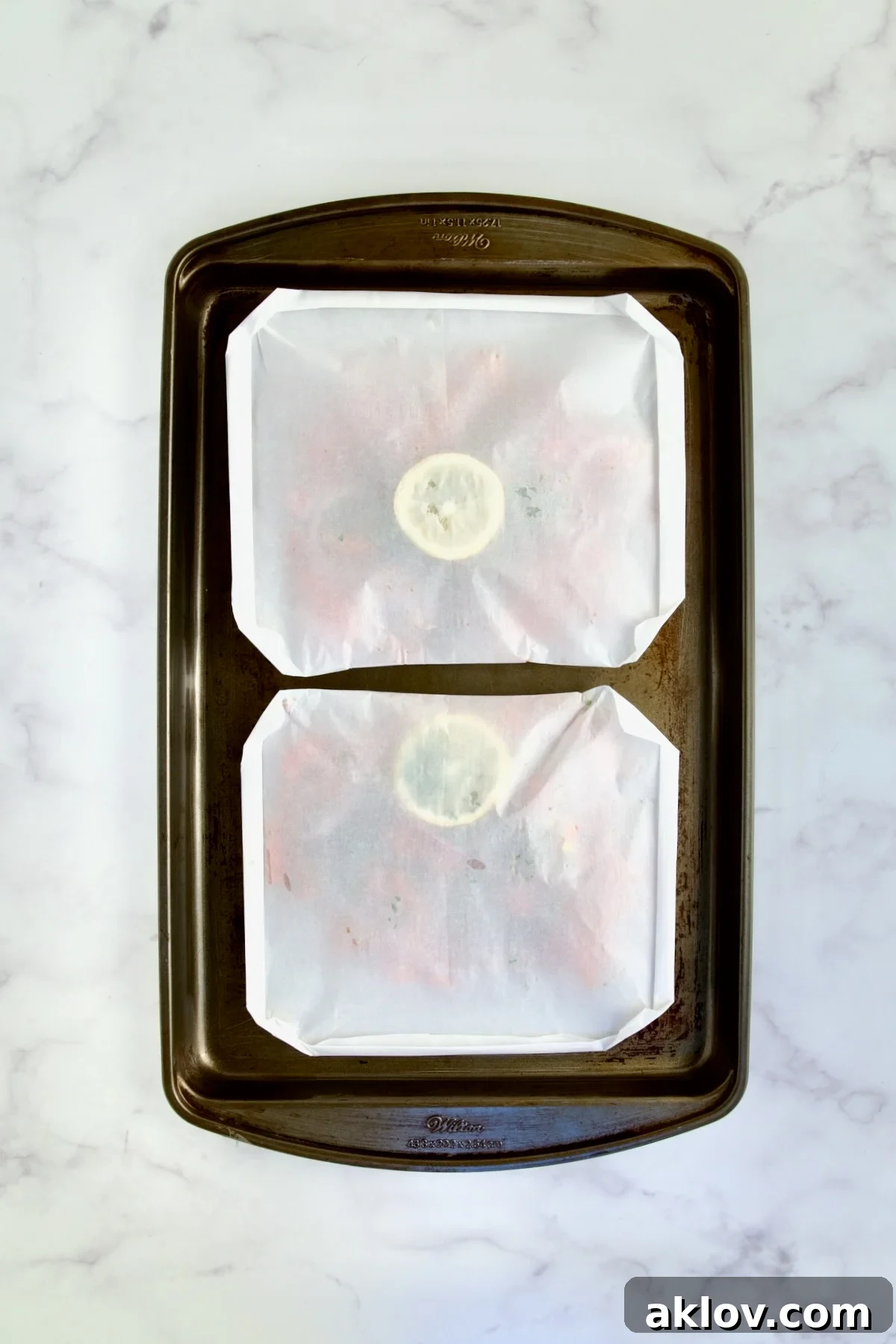
- Transfer the baking sheet with the sealed parcels to your preheated oven. Bake for approximately 16 to 18 minutes. The packets should puff up significantly as the steam builds inside, indicating that the fish is cooking.
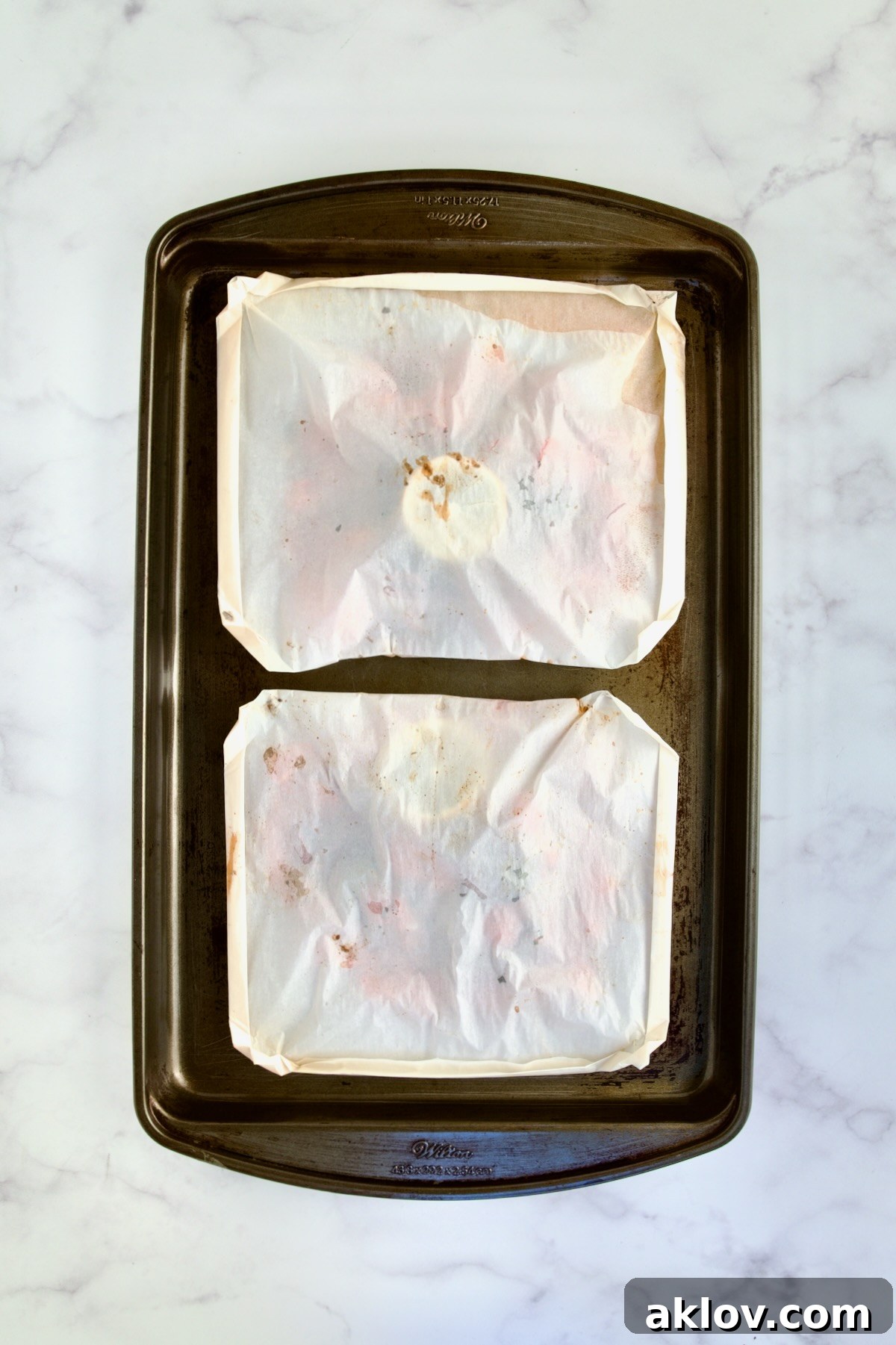
- Once baked, carefully transfer each puffed parcel to a serving plate. Using kitchen scissors, gently cut into the top of the packet. Be very cautious as a burst of hot, aromatic steam will escape! This dramatic unveiling is part of the charm of en Papillote.
And there you have it! Mediterranean-inspired, healthy fish en Papillote, brimming with flavor and yielding perfectly flaky, moist fish every time. The best part? The cleanup is virtually nonexistent!
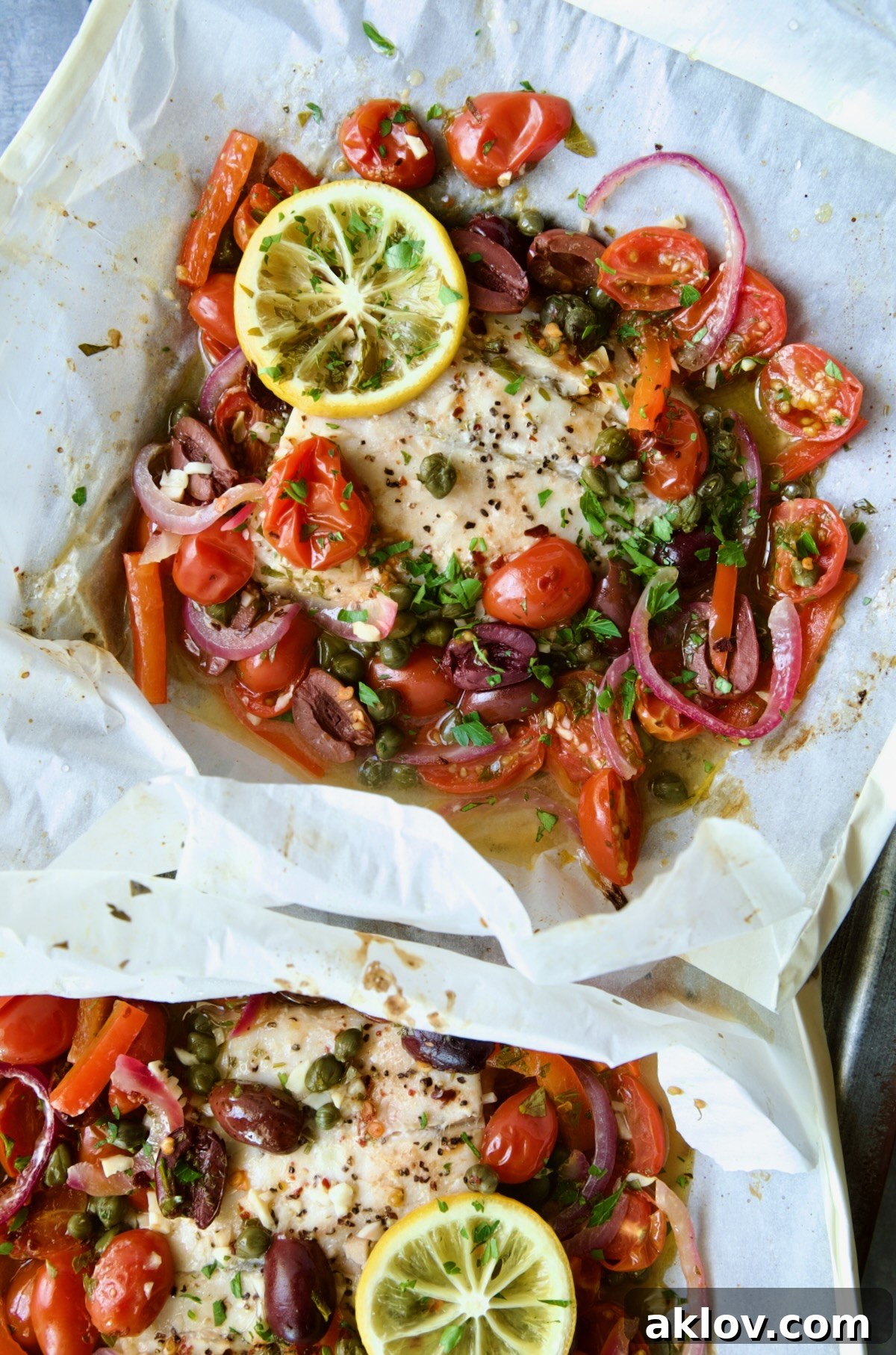
Chef’s Secrets: Tips and Tricks for En Papillote Perfection
- Mind the Liquid Content: When cooking en Papillote, the sealed environment means that very little liquid evaporates. A fair amount of moisture will be naturally produced by the ingredients themselves. Therefore, it’s crucial not to add more liquid (like wine or broth) than specified in the recipe. Excessive liquid can prevent the packet from puffing up correctly and may result in a soupy rather than perfectly steamed dish.
- Sealing the Deal – French vs. Simplified Method: As mentioned in the instructions, the traditional French method involves creating tiny, repetitive folds around the entire perimeter of the parchment paper package. While elegant, this can be quite time-consuming. My preferred “Carol Method” achieves the same effective seal much more quickly: simply fold the paper’s edges together in one long fold, then repeat this folding motion three to four more times to create a tight, robust seam. This ensures the packet puffs up beautifully without the added fuss.
- Preventing Overcooking: Fish cooks very quickly, especially in the steaming environment of an en Papillote parcel. To prevent dry, tough fish, always check for doneness at the minimum suggested cooking time. A perfectly cooked fish will be opaque throughout and flake easily with a fork.
- Customizing Your Vegetables: Don’t limit yourself to the suggested vegetables! En Papillote is highly adaptable. Consider adding thinly sliced zucchini, asparagus spears, fresh spinach, bell peppers of different colors, or even mushrooms. Ensure vegetables are cut to a similar size to promote even cooking.
- Herbs for Freshness: Fresh herbs truly elevate this dish. While parsley is a wonderful choice, experiment with fresh dill, oregano, or thyme, which also complement Mediterranean flavors beautifully. Add them just before sealing the packet to maximize their fragrant impact.
- Serving Presentation: For a delightful culinary reveal, serve the sealed parchment paper packets directly on individual plates. Guests can then cut open their own parcels, releasing a cloud of aromatic steam and revealing the colorful, perfectly cooked meal inside.
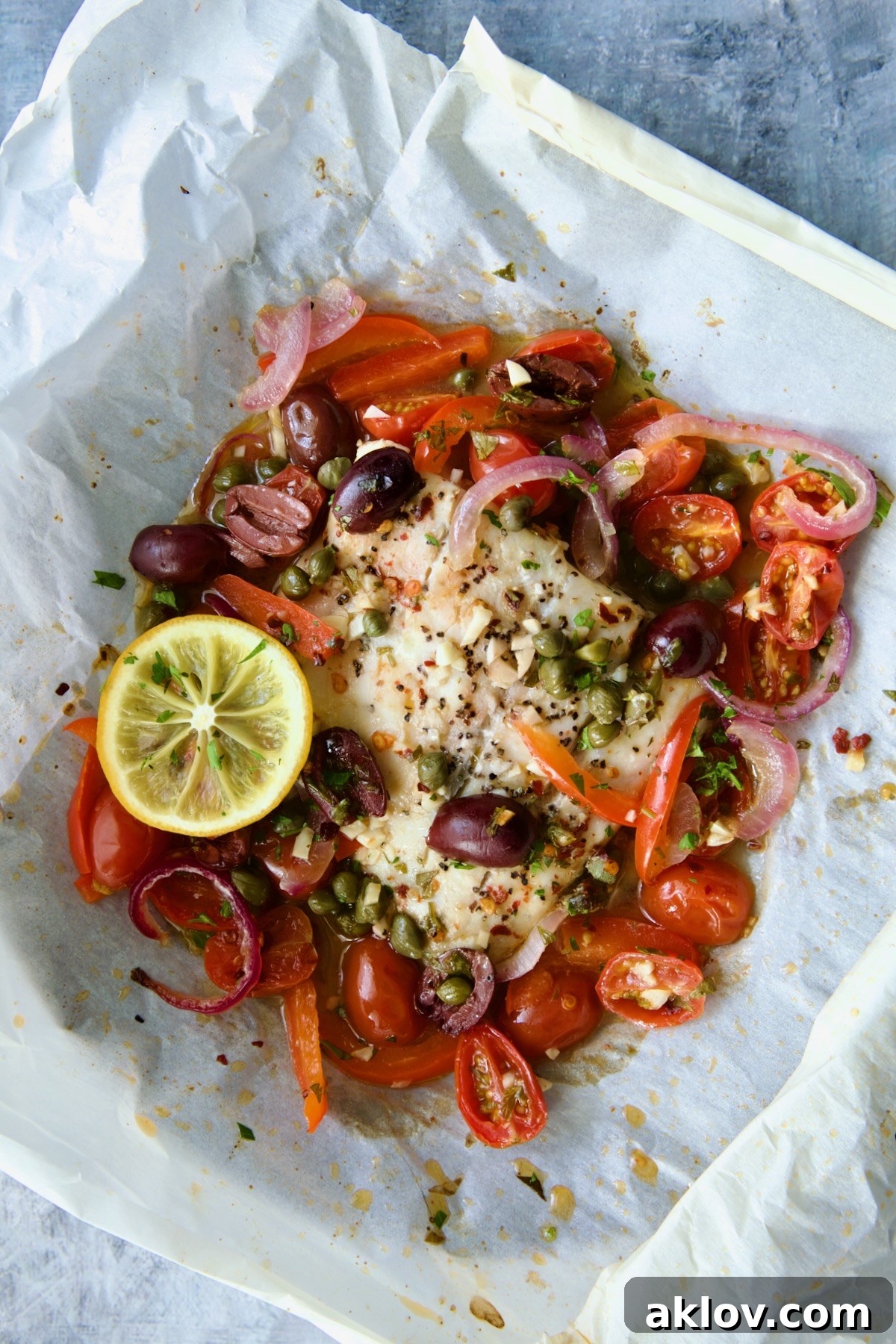
Frequently Asked Questions About En Papillote Cooking
While a fantastic method, en Papillote does have a couple of limitations. Firstly, parchment paper cannot be used directly on a grill or under a broiler due to its lower heat resistance. However, you can easily remedy this by substituting aluminum foil for parchment paper when grilling or broiling. Secondly, assembling parchment paper packets too far in advance (more than a few hours) can lead to the moisture soaking into the paper, weakening it. The best practice is to have all your ingredients prepped and ready to go, then assemble the packets just before you’re ready to bake them.
The en Papillote technique is incredibly versatile and shines with several food types:
—FISH: It is an ideal cooking method for delicate fish fillets, as it helps them retain their texture and moisture, preventing overcooking. It’s commonly used for white fish varieties like cod, halibut, grouper, or tilapia, but also yields excellent results with meatier fish such as flounder, snapper, and salmon.
—CHICKEN: Thinly sliced chicken breasts (often called cutlets) or small pieces of chicken can be beautifully cooked en Papillote, ensuring they remain tender and juicy.
—VEGETABLES: This method works exceptionally well for most vegetables. The steaming process enhances their natural flavors and ensures they are tender-crisp, not soggy. Vegetables like zucchini, asparagus, snap peas, green beans, or mushrooms are perfect candidates, absorbing the flavors of their accompanying ingredients.
For precise doneness, fish is fully cooked when it reaches an internal temperature of 145 degrees Fahrenheit (63 degrees Celsius). Testing this in an en Papillote packet would require piercing the paper, releasing steam. To tell when fish is cooked without a thermometer (which involves opening the packet for a quick check):
–It will have an opaque color. Uncooked fish is typically shiny and translucent. When it’s done, the flesh will be entirely opaque from edge to center.
–It will flake easily with a fork. Gently insert a fork into the thickest part of the fillet. If the fish is finished cooking, the layers of flesh will separate and flake apart effortlessly without any pushing or tugging. Be careful not to overcook, as this will result in tough, dry fish.
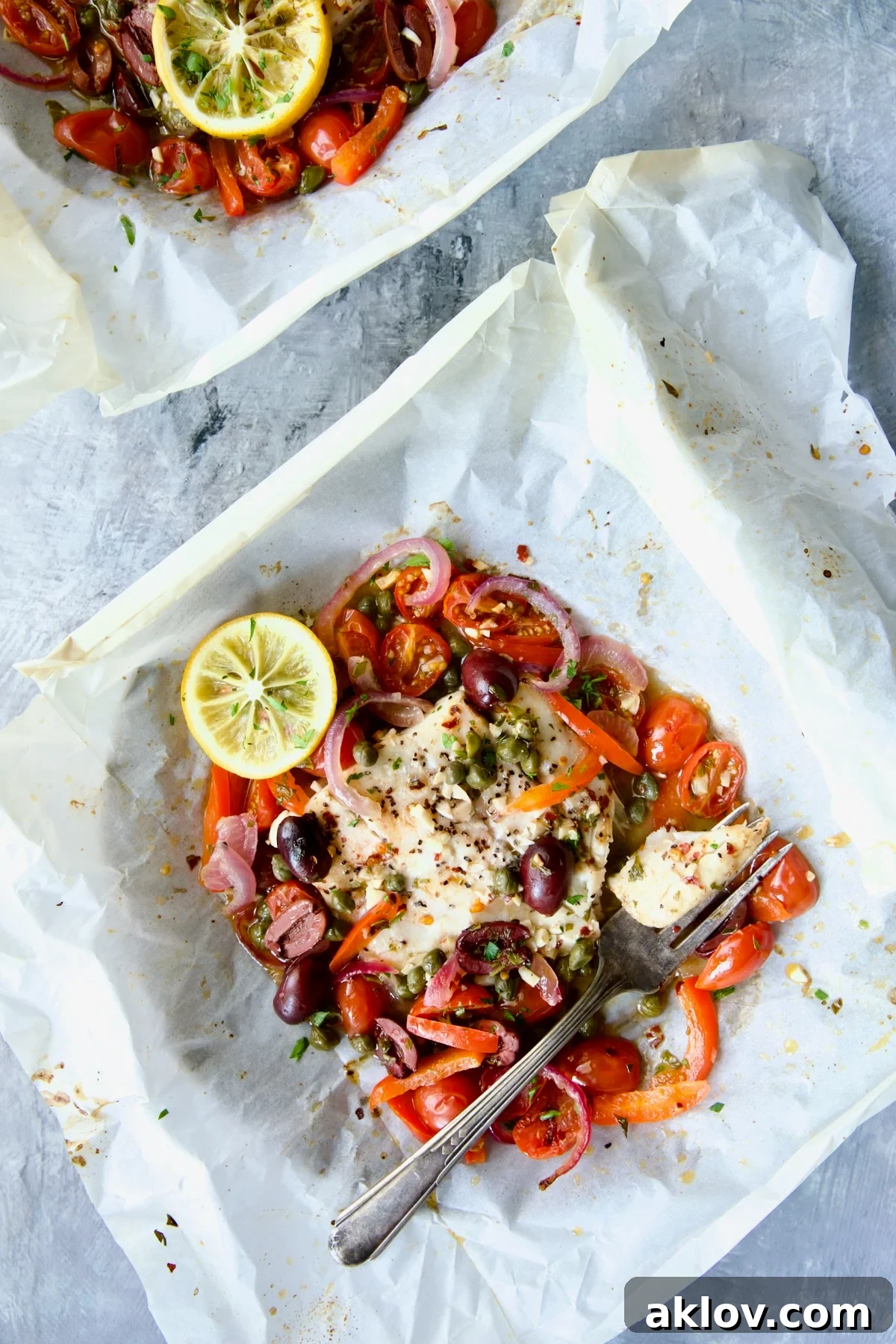
The Mediterranean Diet: A Blueprint for Health and Flavor
This Mediterranean Fish en Papillote recipe is more than just a delicious meal; it’s a prime example of the health-promoting principles of the Mediterranean diet. Emphasizing fresh, whole ingredients, this dietary pattern is consistently ranked as one of the healthiest in the world. Key components include:
- Lean Protein: Fish and seafood are staples, providing essential omega-3 fatty acids vital for heart and brain health. Cooking methods like en Papillote preserve these delicate fats and nutrients.
- Abundant Vegetables: The recipe’s generous use of tomatoes, onions, and bell peppers delivers a wealth of vitamins, minerals, and antioxidants. These plant-based foods form the foundation of Mediterranean meals.
- Healthy Fats: Extra-virgin olive oil is a cornerstone, offering monounsaturated fats known to reduce bad cholesterol levels. Its inclusion in the packet infuses the dish with robust flavor and health benefits.
- Flavorful Herbs and Spices: Instead of relying on excessive salt or unhealthy fats, the Mediterranean diet champions natural flavor enhancers like garlic, capers, and fresh herbs, making food both delicious and nutritious.
- Moderate Wine Consumption: A small amount of dry white wine not only enhances flavor but also aligns with the traditional Mediterranean custom of enjoying wine in moderation with meals.
By incorporating recipes like this one into your weekly meal plan, you can enjoy vibrant, satisfying meals that support long-term health, boost energy, and contribute to overall well-being. It’s a delicious way to nourish your body and soul.
Storage and Reheating Recommendations
- Storage: Any leftover Mediterranean Fish en Papillote should be transferred to an airtight container and stored in the refrigerator. It will keep well for up to 2-3 days. While fresh is best, leftovers are still quite enjoyable.
- Reheating: To reheat, gently place the fish (without the parchment paper if it’s soggy) in an oven-safe dish. Reheat in a preheated oven at 350 degrees Fahrenheit (175 degrees Celsius) until warmed through, usually about 10-15 minutes, or until an internal temperature of 145 degrees Fahrenheit is reached. Avoid reheating in a microwave, as it can make the fish rubbery and dry.
Perfect Pairings: What to Serve with Mediterranean Fish en Papillote
This flavorful fish dish pairs beautifully with a variety of sides, enhancing the Mediterranean theme and creating a well-rounded meal. Here are some excellent suggestions:
- Crispy Roasted Potato Wedges: A comforting and satisfying side that complements the lightness of the fish.
- Elegant Potato Galettes: Individual potato galettes offer a touch of sophistication.
- Duck Fat Roasted Fingerling Potatoes with Sausage: For a richer, more indulgent potato side.
- Rosemary Garlic Smashed Potatoes with Lemon Chive Aioli: A rustic and flavorful potato option with a bright, creamy sauce.
- Light French-Style Potato Salad: A refreshing alternative, especially for warmer weather.
- Mediterranean Braised Green Beans with Tomatoes: A perfect vegetable pairing that echoes the flavors of the main dish.
- Roasted Vegetable Rice with Garlic and Parmesan: A wholesome and flavorful grain-based side.
- A simple green salad with a lemon-herb vinaigrette also makes a wonderfully light and fresh accompaniment.
Explore More Easy and Delicious Fish Recipes!
If you’re a fan of healthy and convenient fish dishes, you’ll love these other simple yet spectacular recipes:
- Sheet Pan Thai Baked Fish with Broccolini: For an Asian-inspired twist.
- Grilled Mahi Mahi with Cilantro – Ginger Pesto: A vibrant, fresh, and zesty grilled option.
- Baked Tilapia with Spinach Pecan Pesto: A nutty and herbaceous take on baked fish.
- Prosciutto-Wrapped Halibut with Herb Caper Butter: An elegant dish with a savory, crispy crust.
- Mediterranean Fish and White Bean Skillet: A hearty one-pan meal packed with Mediterranean flavors.
Discover a treasure trove of fish and seafood creations at our dedicated section: Fish and Seafood Recipes – From A Chef’s Kitchen. For more inspiration on healthy and delicious Mediterranean fish dishes, explore our collection of 30 Best Mediterranean Fish Recipes.
Mediterranean Fish Recipe en Papillote
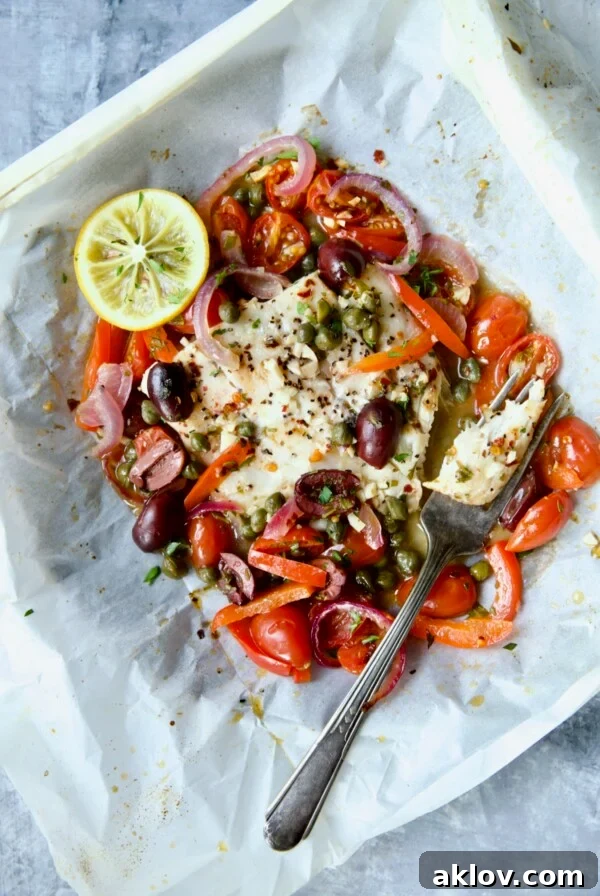
This Mediterranean Fish en Papillote recipe masterfully captures the classic, sunny flavors of the Mediterranean region. It brings together a harmonious combination of fresh ingredients, including succulent fish fillets, juicy tomatoes, briny olives, tangy capers, aromatic garlic, olive oil, a hint of wine, and refreshing lemon. All these vibrant flavors are lovingly sealed within parchment paper parcels, delivering a no-muss, no-fuss, healthy, and incredibly delicious dinner that’s perfect for any occasion.
Prep Time: 20 mins
Cook Time: 20 mins
Total Time: 40 mins
Servings: 2
Equipment
- Wusthof Chef Knife
- Cutting Board
- Rimmed Sheet Pan
- Parchment Paper
Ingredients
- 2 (6-ounce) white fish fillets, such as grouper, cod, barramundi, halibut or sea bass
- Salt and freshly ground black pepper, to taste
- 1/2 pint grape tomatoes (1 cup), halved
- 12 Kalamata olives, pitted and halved
- 2 tablespoons drained capers
- Thin slices of red onion, to taste
- Thin slices of red bell pepper
- 2 cloves garlic, finely chopped
- 2 tablespoons extra-virgin olive oil
- 2 tablespoons dry white wine
- 1/2 teaspoon crushed red pepper flakes, or to taste
- 2 lemon slices
- Chopped fresh parsley, optional, for garnish
Instructions
- Preheat your oven to 400 degrees Fahrenheit (200 degrees Celsius).
- Cut two pieces of parchment paper, each approximately 18 inches long. Fold each in half, then cut a half-circle, oval, or heart shape. Unfold them and place them flat on a baking sheet.
- Wash the fish fillets and pat them thoroughly dry. Season both sides with salt and freshly ground black pepper.
- Place one fish fillet on one side of each parchment paper shape. Evenly distribute the halved tomatoes, olives, capers, red onion slices, red bell pepper strips, finely chopped garlic, olive oil, white wine, and crushed red pepper flakes over each fillet. Top each with a lemon slice and, if desired, sprinkle with chopped fresh parsley.
- Fold the other half of the parchment paper over the fish and seal the edges. You can use the traditional French method of making small, continuous folds around the perimeter, or the simpler “Carol Method” by folding the edges 3-4 times to create a secure crease, then folding the corner 2-3 times.
- Bake for 16-18 minutes, or until the parchment paper packets are visibly puffed up and the fish is cooked through (opaque and flaky).
- Carefully transfer each packet to a plate. Using kitchen scissors, cut into the top of the packet, being mindful of the hot steam that will escape. Serve immediately.
Notes
SUBSTITUTIONS:
- This recipe is adaptable to almost any type of white fish, including tilapia, flounder, halibut, sea bass, mahi-mahi, or barramundi.
- Thicker fish fillets may require slightly longer baking times.
- Consider adding thinly sliced fennel or artichoke hearts to the vegetable mix for additional flavor and texture.
TIPS:
- Be careful not to add excessive liquid, as the steaming process will generate a fair amount of moisture within the sealed packet.
- Always check the fish for doneness at the minimum recommended cooking time to prevent overcooking, which can lead to dry fish.
MAKE AHEAD:
- You can assemble the packets 3-4 hours in advance if using aluminum foil instead of parchment paper, as foil is less prone to moisture absorption over time.
Nutrition
Nutritional values are automatically calculated using unbranded products and are estimates only. Actual results may vary based on ingredients used and portion sizes. Adjust as needed for dietary restrictions, allergies, or health concerns.
- Serving: 1
- Calories: 202 kcal
- Carbohydrates: 8g
- Protein: 2g
- Fat: 18g
- Saturated Fat: 2g
- Polyunsaturated Fat: 2g
- Monounsaturated Fat: 13g
- Cholesterol: 1mg
- Sodium: 611mg
- Potassium: 344mg
- Fiber: 3g
- Sugar: 4g
- Vitamin A: 1244 IU
- Vitamin C: 26mg
- Calcium: 36mg
- Iron: 1mg

Enjoyed this recipe? Share your thoughts and experiences by leaving a comment below!