
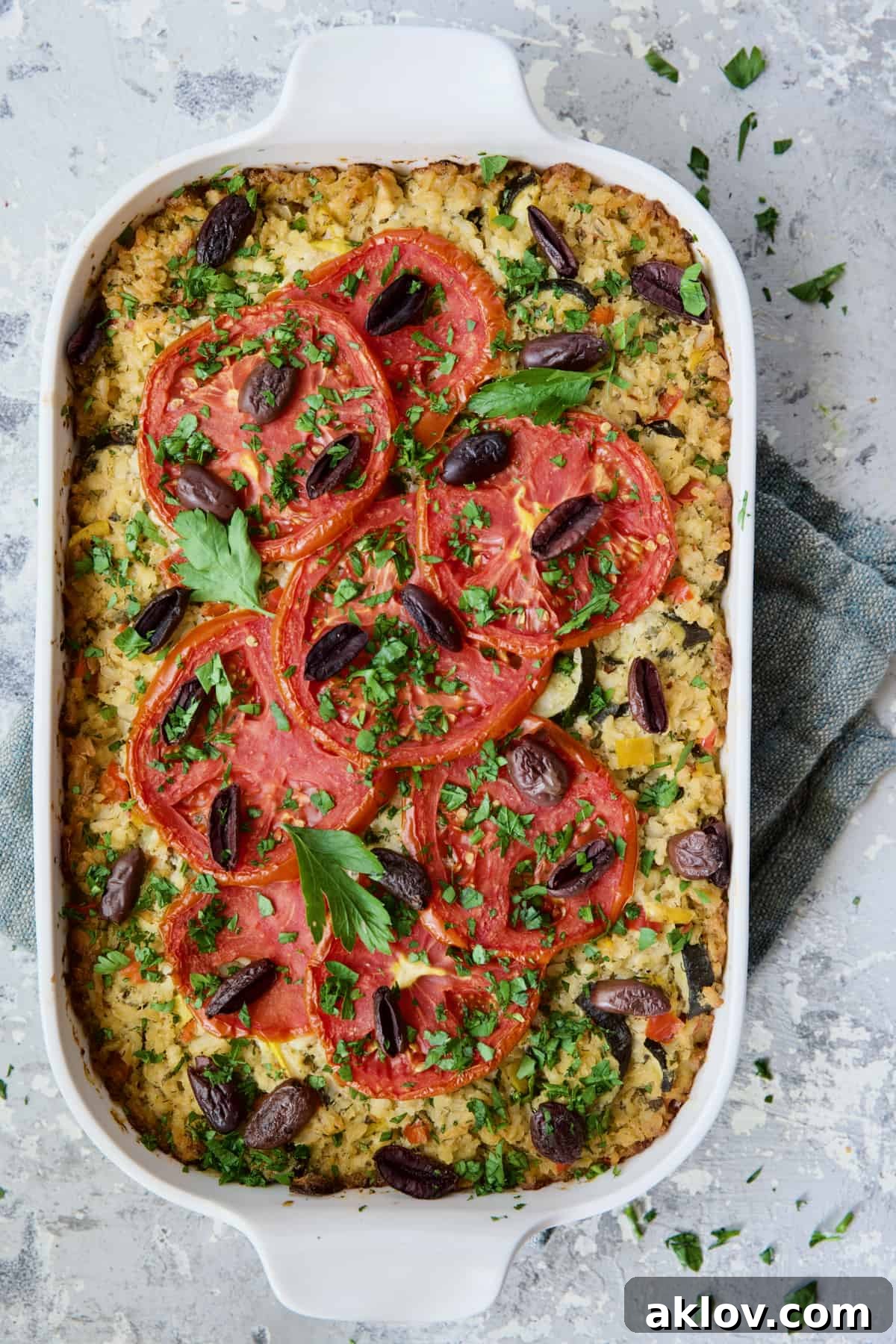
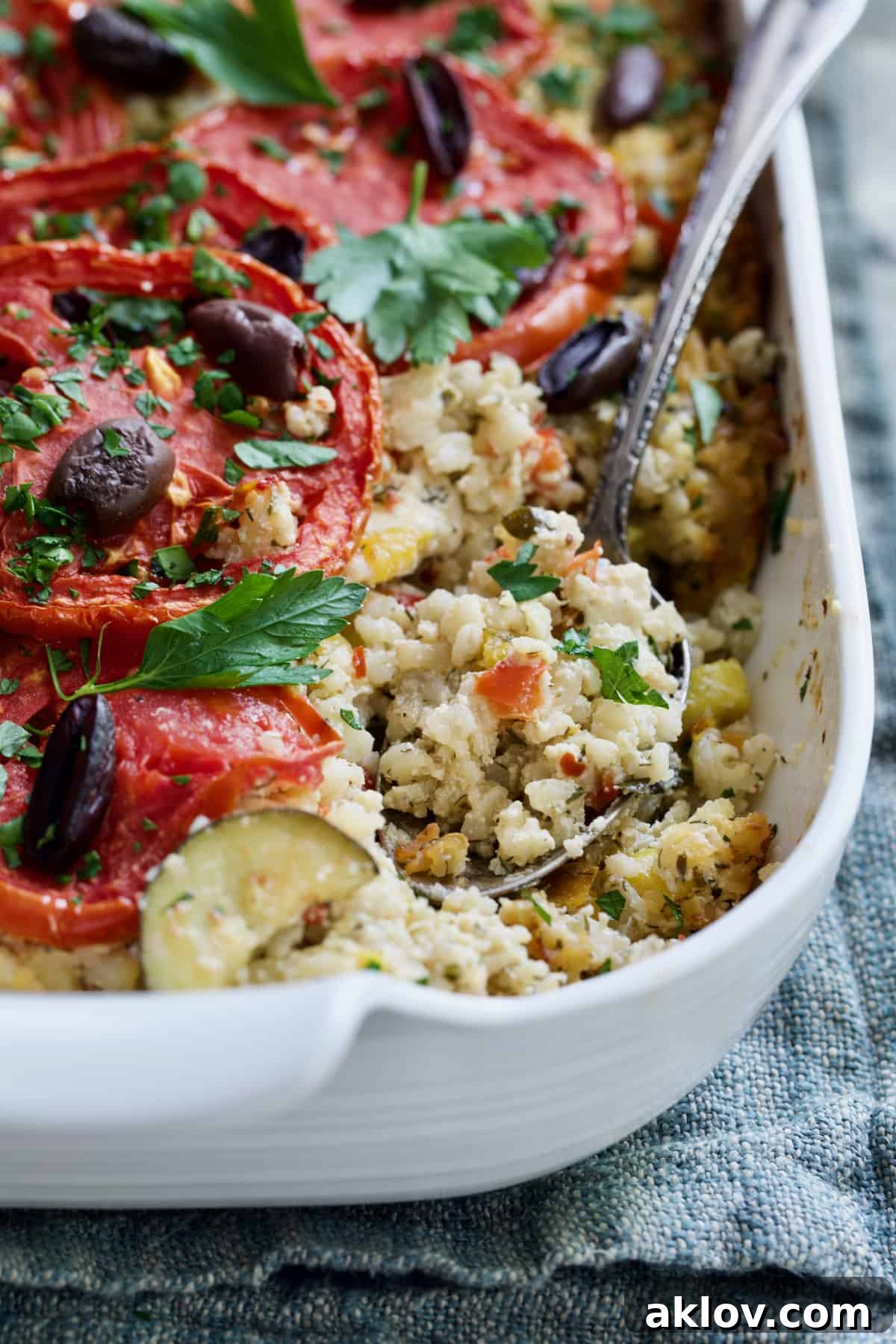
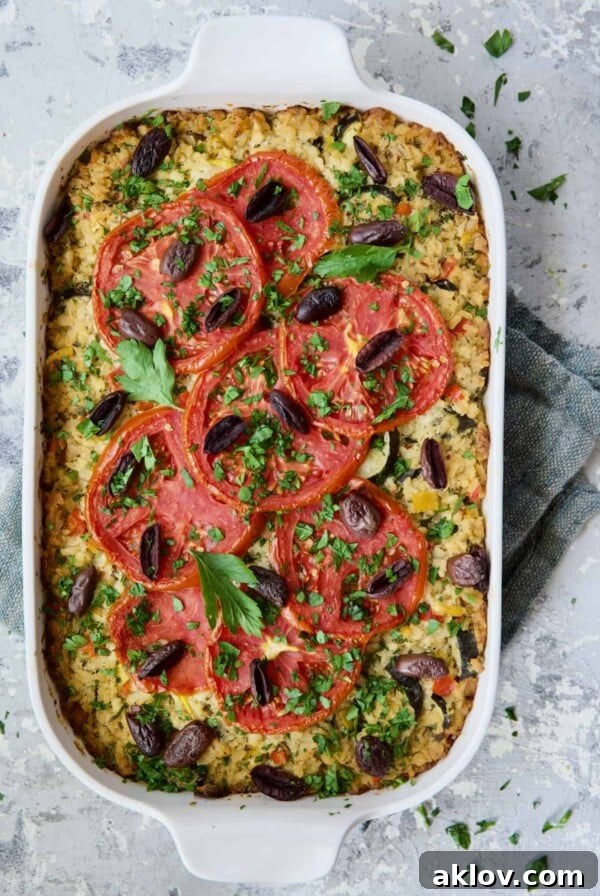
Welcome to a culinary journey that brings the vibrant flavors of the Mediterranean right to your table! This exquisite Greek Vegetable Casserole recipe transcends ordinary vegetarian fare, offering a deeply satisfying and incredibly wholesome meal that appeals to everyone. Imagine tender zucchini, sun-kissed yellow squash, colorful bell peppers, and fragrant herbs like dill and oregano, all perfectly blended with fluffy brown rice in a rich, creamy concoction of ricotta and authentic feta cheese. Crowned with fresh, juicy tomatoes and baked to golden perfection, this casserole is not just a dish, but a celebration of fresh produce and Greek culinary tradition. It’s the ultimate comfort food, hearty enough to win over even the most dedicated carnivore, and wonderfully versatile as a make-ahead solution for busy weeks.
Whether you’re hosting a dinner party, preparing a family meal, or simply looking for a delicious and nutritious option, this Vegetarian Casserole is an absolute winner. It’s naturally gluten-free and easily customizable to fit various dietary needs, making it a staple in any healthy kitchen. Prepare to impress your guests and delight your family with a meal that’s both nourishing and incredibly flavorful, embodying the essence of Mediterranean cuisine.
This delightful Greek Brown Rice Casserole pairs beautifully with a range of accompaniments, transforming into a complete and unforgettable meal. Consider serving it alongside a light, crisp green salad dressed with a lemon-herb vinaigrette, or a comforting bowl of Roasted Tomato Soup. For an authentic Greek spread, complement it with traditional sides like Mediterranean Braised Green Beans with Tomatoes or the rustic charm of Briam (Greek Roasted Vegetables). These pairings enhance the casserole’s rich flavors and create a truly immersive dining experience that will have everyone raving about your meatless masterpiece.
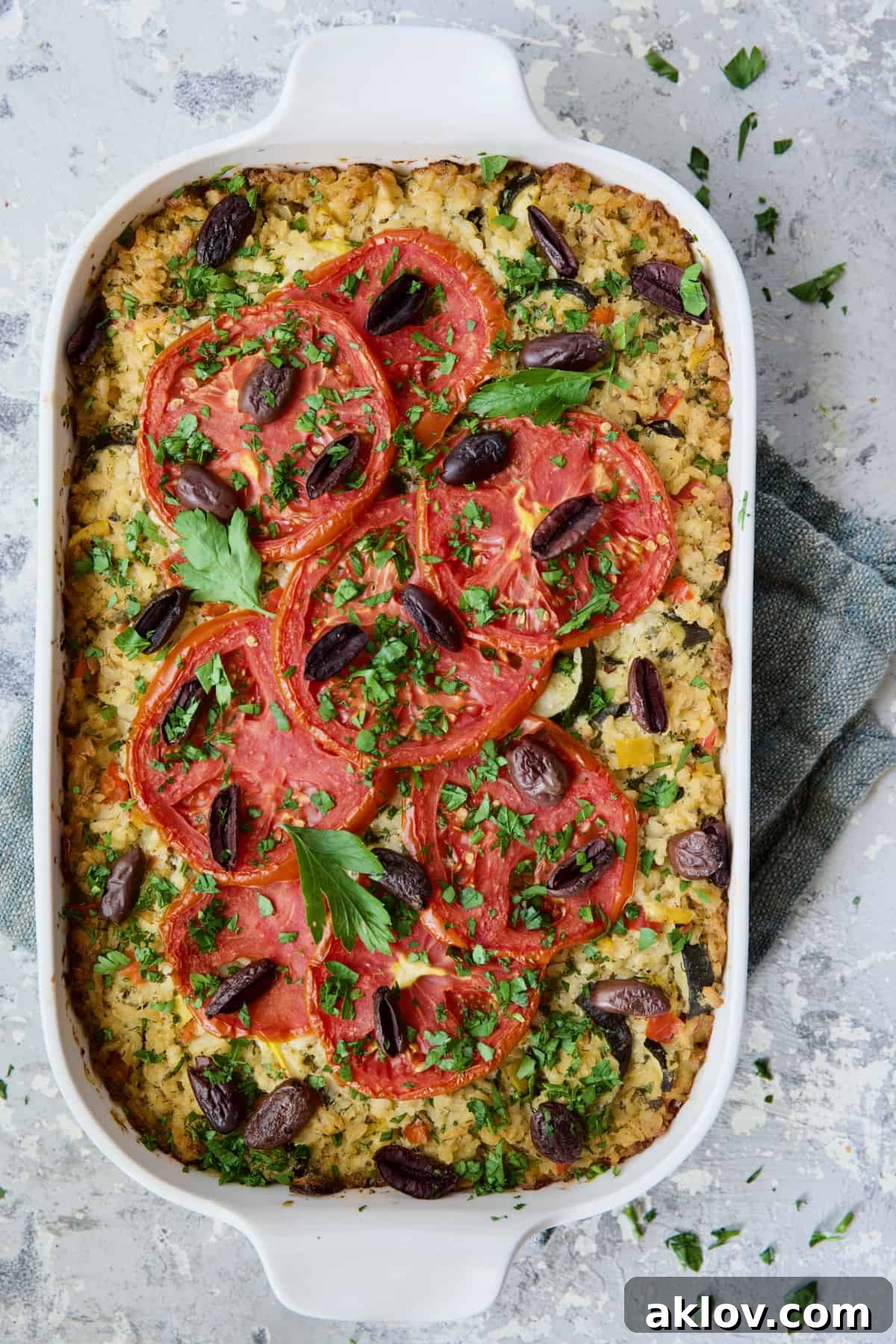
Why This Greek Vegetable Casserole Is a Keeper
This Greek Vegetable Casserole with Brown Rice holds a special place in my recipe collection, a testament to its enduring appeal and delicious versatility. For many years, it has been a personal favorite, evolving from a simple concept into the robust and flavorful dish you see today. Its origins can be traced back to an inspiration from Mollie Katzen’s iconic Moosewood Cookbook, first published in 1977 and later reissued in 1992 with lighter, more contemporary versions of her beloved dishes.
Originally, Mollie’s version was called “Bulgarian Pepper Casserole.” While undoubtedly delicious, the name proved to be a hurdle for my personal chef clients. Many found the idea of a “pepper casserole,” particularly one that suggested green bell peppers, less enticing due to concerns about their digestibility or strong flavor profile. This led me to a delicious transformation.
I reimagined the dish, focusing on a more descriptive and appealing name: “Greek Vegetable Casserole.” This change immediately piqued interest, as Greek cuisine is celebrated for its fresh, wholesome ingredients and vibrant flavors. Beyond the name, I adapted the core ingredients, swapping out a heavy reliance on green bell peppers for a delightful medley of tender zucchini, bright yellow squash, and sweeter bell peppers in various colors. This thoughtful adjustment not only broadened its appeal but also enhanced the dish’s overall texture and flavor complexity. The addition of brown rice makes it incredibly satisfying, transforming it into a complete and hearty meal.
The result was a resounding success! This revamped Vegetarian Casserole quickly became a client favorite, cherished for its rich taste, comforting texture, and the undeniable satisfaction it brings. It stands as a testament to the power of adaptation in the kitchen, proving that a few thoughtful tweaks can elevate a good recipe to an unforgettable one. It’s a dish that truly pleases everyone, from devoted vegetarians to those who typically prefer meat-centric meals, all while being incredibly easy to prepare and enjoy.
Beyond its crowd-pleasing taste, this Healthy Casserole offers incredible convenience for modern lifestyles. It’s a fantastic make-ahead meal, allowing you to prepare it in advance and simply bake when ready, perfect for busy weeknights or entertaining. Furthermore, it freezes beautifully, making it an excellent option for meal prepping. You can assemble it, freeze it, and then enjoy a homemade, wholesome Greek meal whenever a craving strikes. Its ability to satisfy diverse palates, combined with its practical make-ahead and freezer-friendly qualities, firmly cements this Greek Vegetable Casserole as a true kitchen keeper.
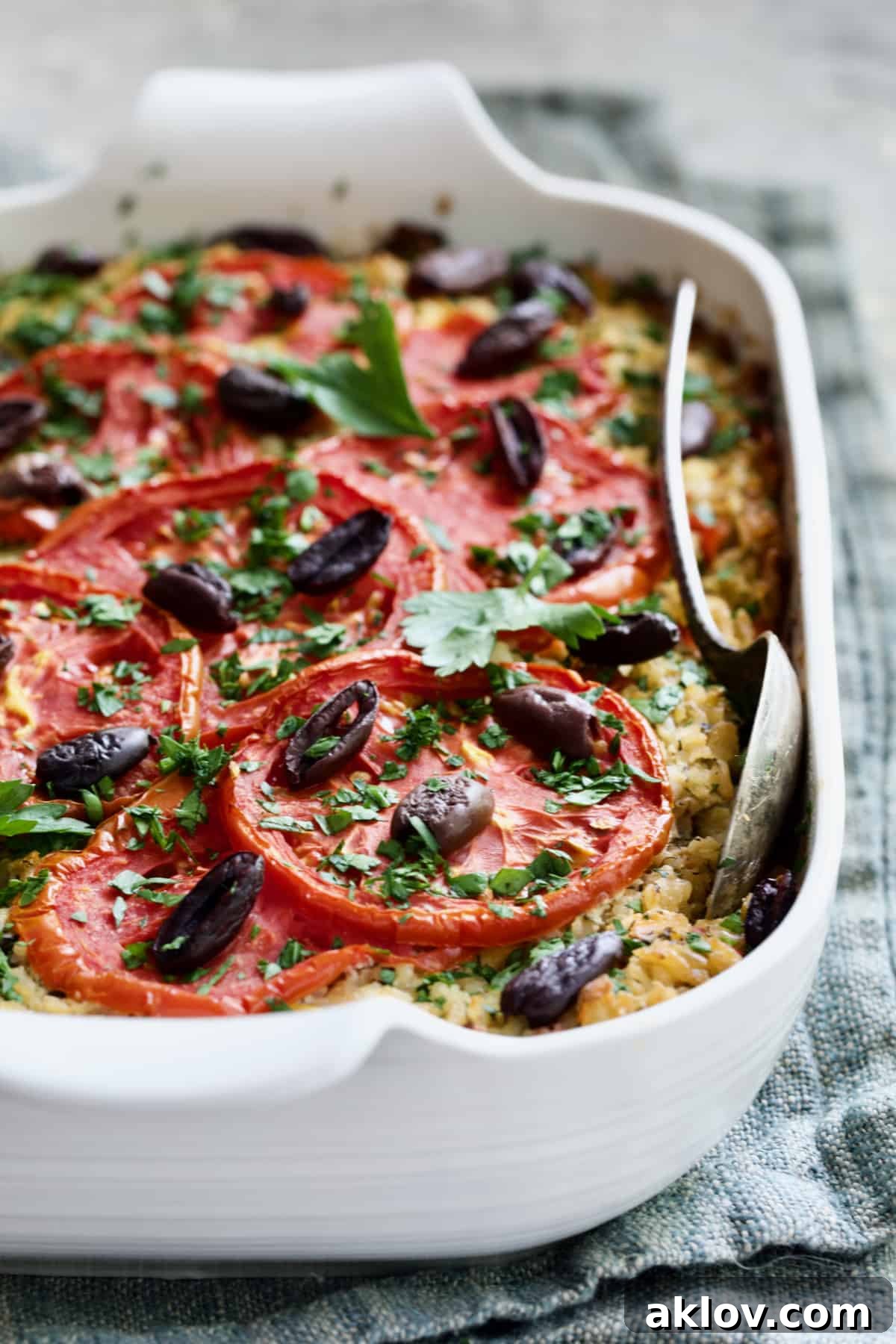
Crafting the Perfect Greek Vegetable Casserole
Essential Recipe Ingredients for Your Greek Casserole
To embark on creating this delightful Greek Vegetable Casserole, you’ll need a selection of fresh, wholesome ingredients that come together to create a symphony of Mediterranean flavors. Below is a comprehensive list of everything required to bring this vibrant dish to life. We’ll explore each component in more detail in the ingredient notes section to ensure you achieve the best possible results.
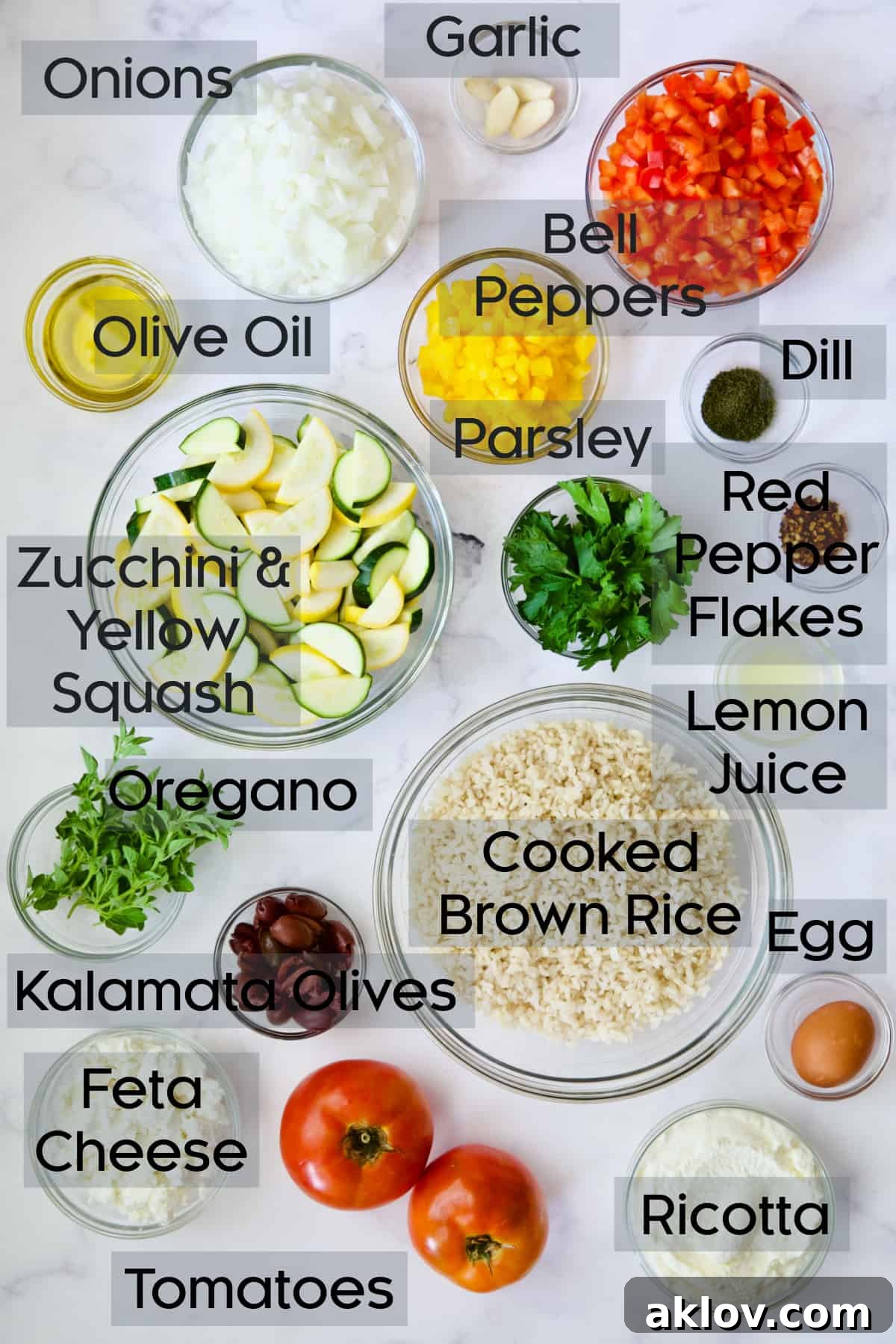
Ingredient Notes and Expert Substitutions for Your Casserole
- Onions: Onions form the savory foundation of this casserole. While fresh onions are always a great choice, feel free to use purchased frozen chopped onions to significantly cut down on prep time. A clever tip: when you find yourself chopping extra onions for another recipe, save the surplus! Place them in a quart-size freezer bag and store them in your freezer. This way, you’ll always have your own ready-to-use chopped onions on hand for future dishes.
- Bell Peppers: Bell peppers add a wonderful sweetness and vibrant color to the casserole. You have the flexibility to use any color or combination of bell peppers you prefer. Red, yellow, and orange peppers offer a sweeter flavor, while green bell peppers provide a slightly more pungent, earthy note. Don’t shy away from incorporating green peppers if you enjoy their distinct taste; they were even part of the casserole’s original inspiration.
- Zucchini and Yellow Squash: These summer squash varieties are stars in this Mediterranean-inspired dish, providing moisture and a tender texture. I typically use a combination of both zucchini and yellow squash for visual appeal and a slight variation in texture, but you can absolutely use all zucchini or all yellow squash based on availability or personal preference. During peak season, look for firm, brightly colored squash.
- Dill: Fresh dill imparts an authentic Greek flavor that is bright and herbaceous. If you are fortunate enough to find a sufficient quantity of fresh dill, it will elevate the dish beautifully. However, fresh dill can sometimes be challenging to find in abundance. In such cases, dried dill is a perfectly acceptable substitute. Remember that dried herbs are more concentrated than fresh, so adjust the quantity accordingly (typically use one-third the amount of dried herb compared to fresh).
- Oregano: Another cornerstone of Greek cuisine, oregano adds a warm, earthy depth. I prefer fresh oregano when available, especially since it grows year-round in many warmer climates like the South. Its vibrant, peppery notes are unmatched. However, good quality dried oregano is a fine alternative and will still deliver excellent flavor. Just like dill, adjust the amount when using dried vs. fresh.
- Lemon Juice: A squeeze of fresh lemon juice brightens all the flavors in the casserole, adding a essential tangy zest. While bottled lemon juice can be used in a pinch, fresh is unequivocally best. It provides a more vibrant and natural acidity that truly makes the other ingredients sing.
- Cooked Brown Rice: This casserole is an excellent way to utilize leftover brown rice, making meal prep even easier. You’ll need four cups of cooked brown rice for this recipe. If you need to cook it from scratch, remember to add at least 30 minutes to your total prep and cook time. Alternatively, many grocery stores now offer pre-cooked brown rice in their freezer sections, a convenient option for busy cooks. For a variation, nutrient-dense quinoa can be substituted for brown rice, offering a slightly different texture and similar health benefits.
- Kalamata Olives: These distinctively rich and briny Greek olives are crucial for achieving an authentic Mediterranean flavor profile. While pitting Kalamata olives can be a bit labor-intensive, they are readily available pitted in most stores. Even when purchasing “pitted” olives, I always recommend a quick check for stray pits, as mechanical pitting processes aren’t always 100% foolproof. Their salty punch perfectly complements the creamy cheese and fresh vegetables.
- Tomatoes: Fresh tomatoes add a beautiful layer of acidity, sweetness, and color to the top of the casserole. You can use round, ripe slicing tomatoes or plum tomatoes (like Roma) for this dish. Choose firm, red tomatoes that are in season for the best flavor and texture. Their juices gently meld with the cheese and vegetables as the casserole bakes, creating a wonderful moistness.
Step-By-Step Guide to Your Greek Vegetable Casserole
Follow these detailed instructions to create a perfectly balanced and flavorful Greek Vegetable and Brown Rice Casserole.
- Preparation: Begin by gathering and carefully prepping all your ingredients. This mise en place ensures a smooth cooking process. Preheat your oven to 375 degrees Fahrenheit (190 degrees Celsius) and lightly oil a 13 x 9-inch baking dish. Set the prepared dish aside.
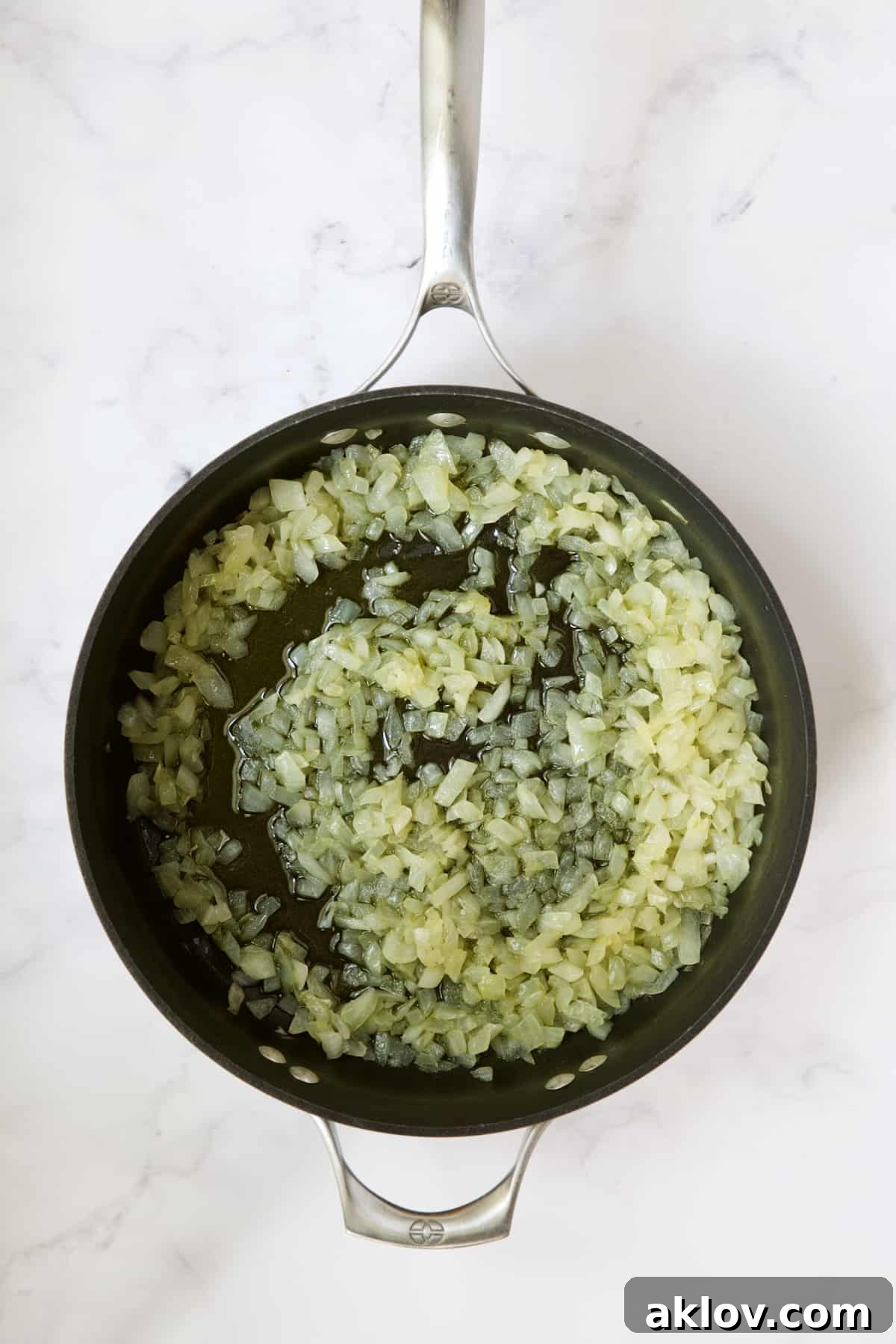
- Sautéing the Aromatics: In a large, deep skillet or Dutch oven, heat the olive oil over medium-high heat. Add the chopped onion and reduce the heat to medium-low. Cook the onion for 4-5 minutes, stirring occasionally, until it begins to soften and become translucent. This step builds a foundational layer of flavor for the casserole.
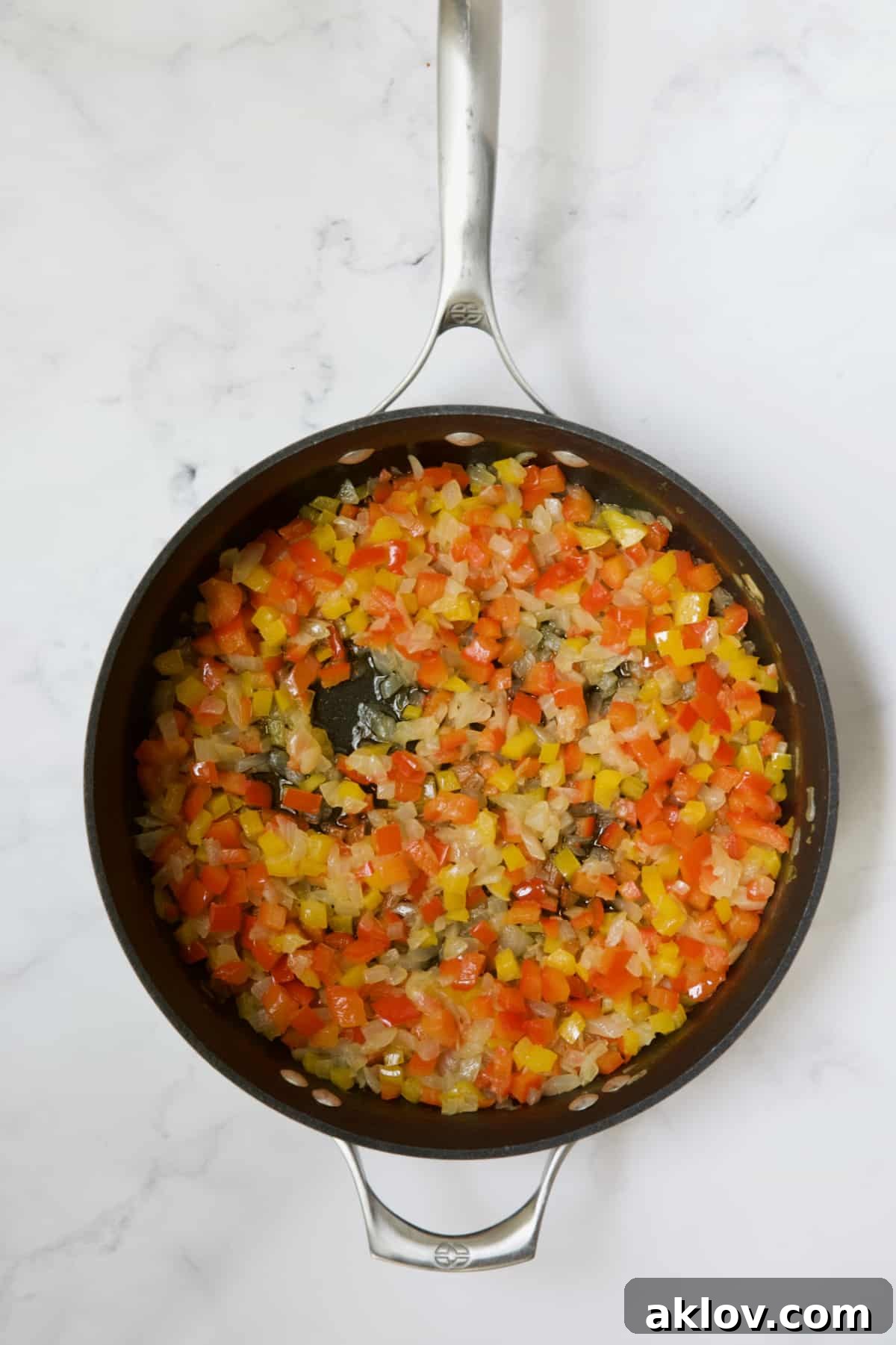
- Adding Bell Peppers: Introduce the chopped bell peppers to the skillet with the onions. Continue to cook for another 5-6 minutes, or until the bell peppers start to soften. Their vibrant colors will intensify, and their natural sweetness will begin to emerge.
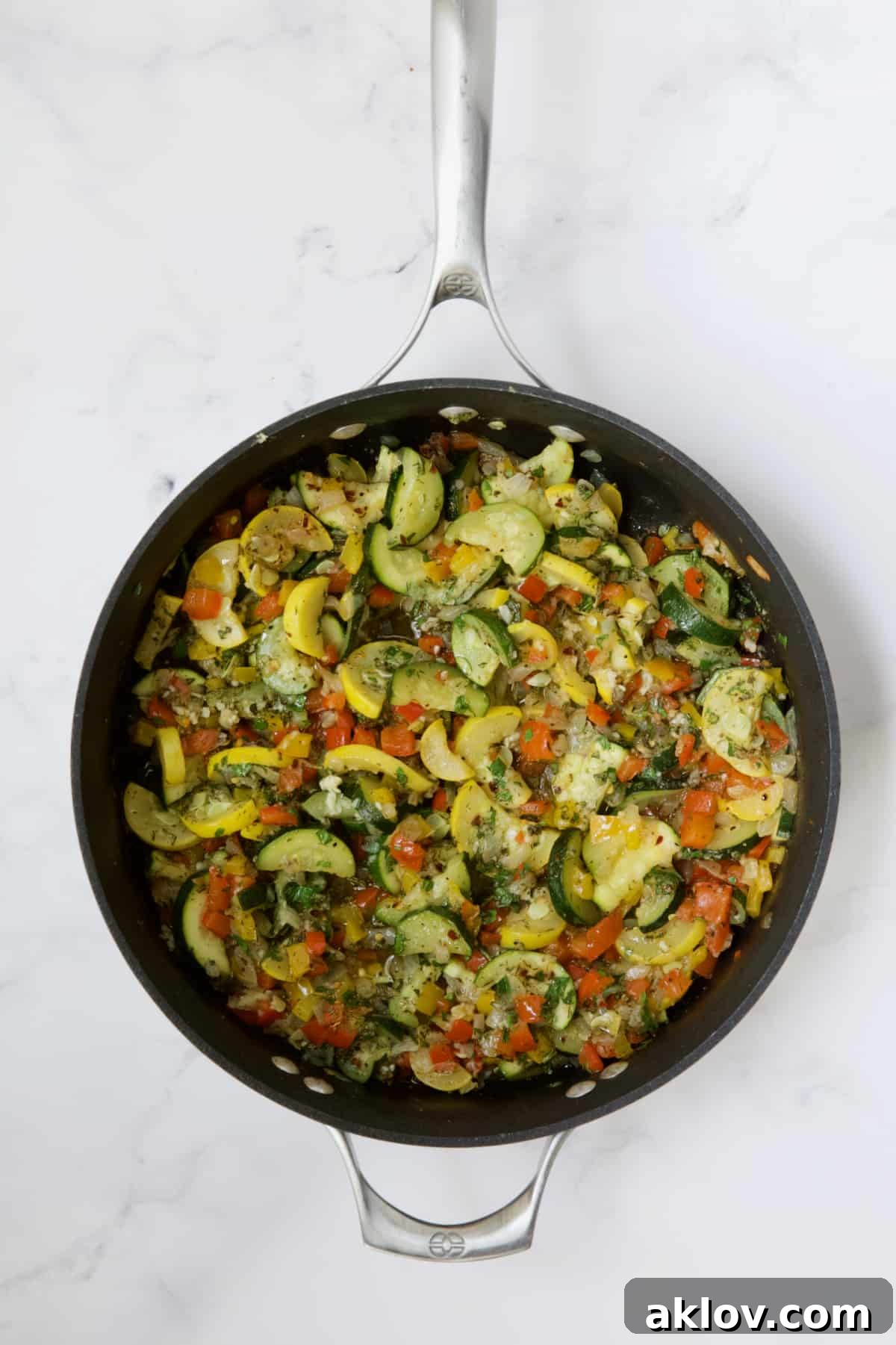
- Introducing Zucchini and Yellow Squash: Next, add the sliced zucchini and yellow squash to the pan. Cook for an additional 3-4 minutes, stirring frequently, until the squash also begins to soften. Be careful not to overcook them at this stage, as they will continue to cook in the oven.
- Infusing Herbs and Garlic: Stir in the minced garlic, 2 tablespoons of the chopped fresh parsley, fresh or dried oregano, fresh or dried dill, and the optional crushed red pepper flakes (for a touch of heat). Cook for just 1 minute more, until the garlic becomes fragrant. This brief cooking time allows the herbs to release their aromatic oils. Remove the skillet from the heat and set the sautéed vegetable mixture aside to cool slightly.
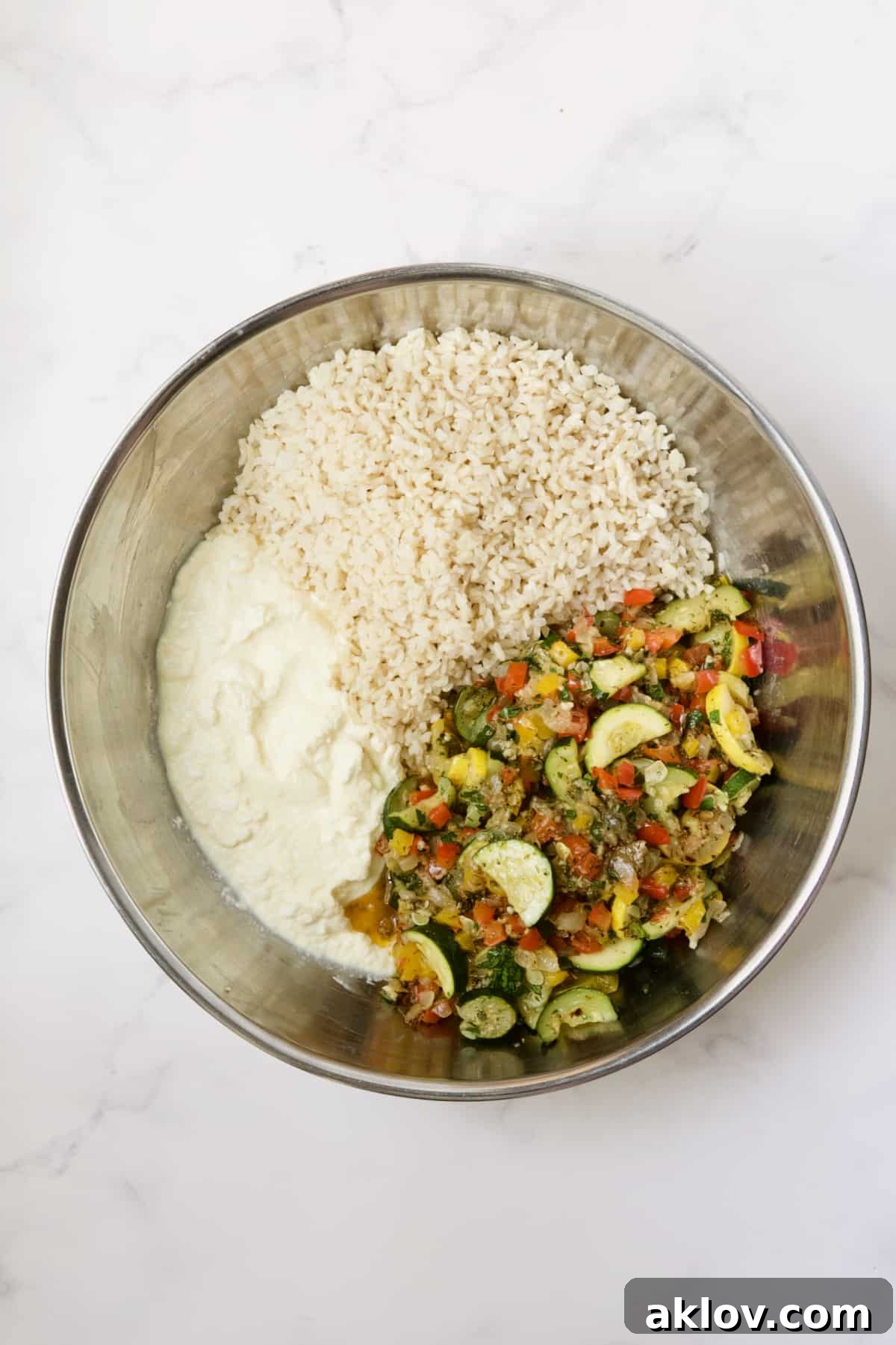
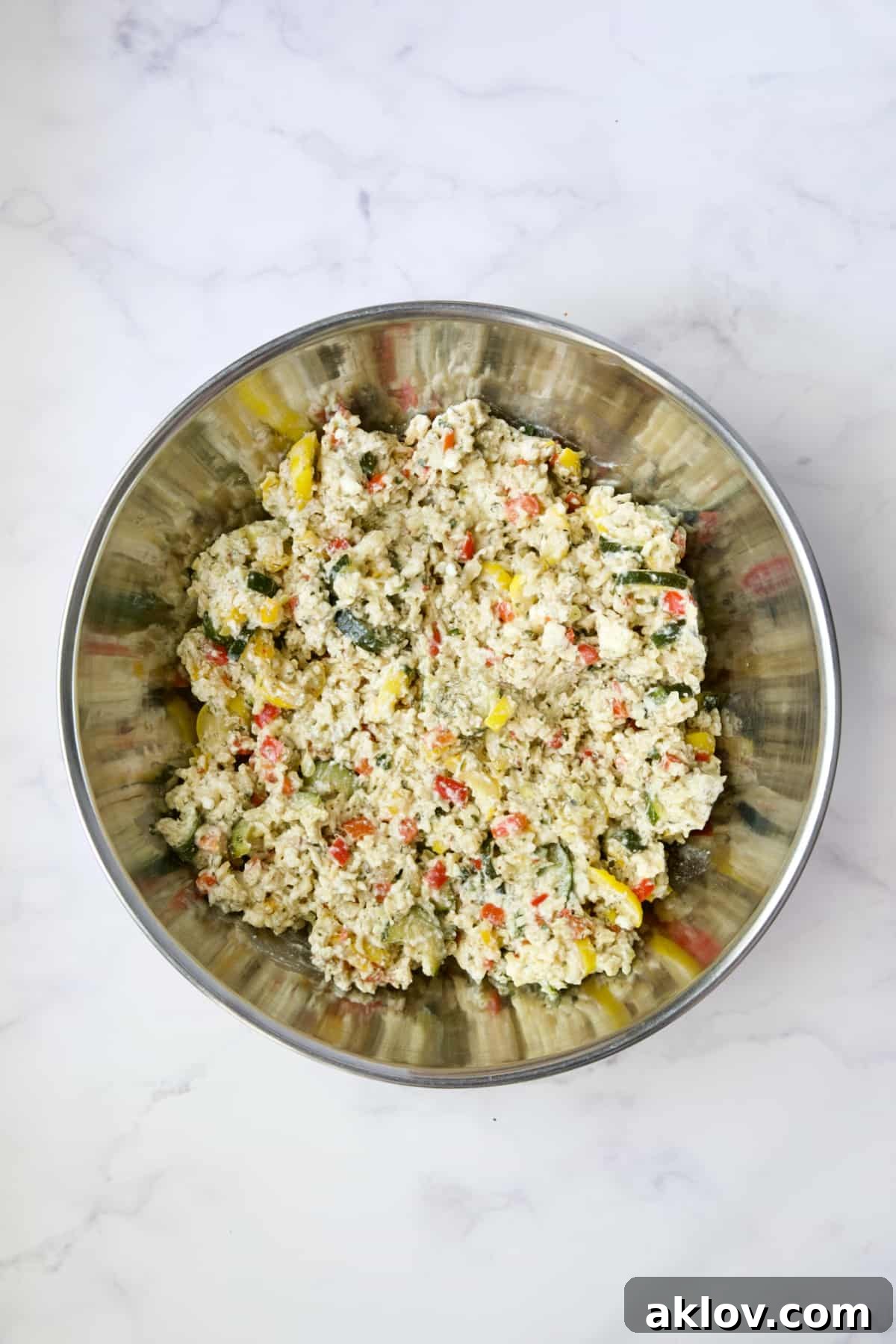
- Combining Ingredients: In a large mixing bowl, combine the cooled sautéed vegetables with the cooked brown rice, ricotta cheese, crumbled feta cheese, large egg, and fresh lemon juice. Season generously with salt and freshly ground black pepper to taste. Stir everything together thoroughly until all ingredients are well combined and the cheeses are evenly distributed throughout the mixture.
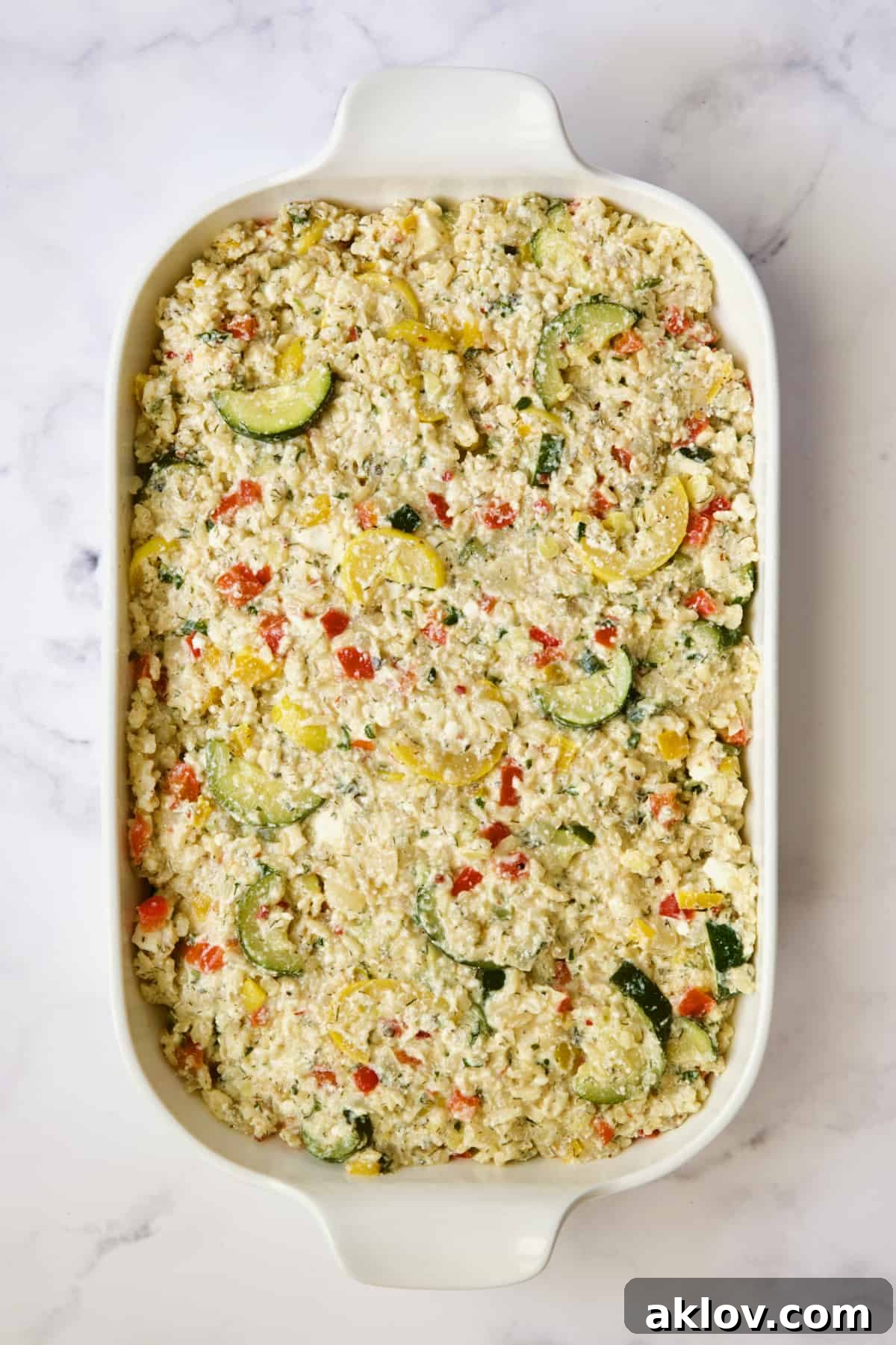
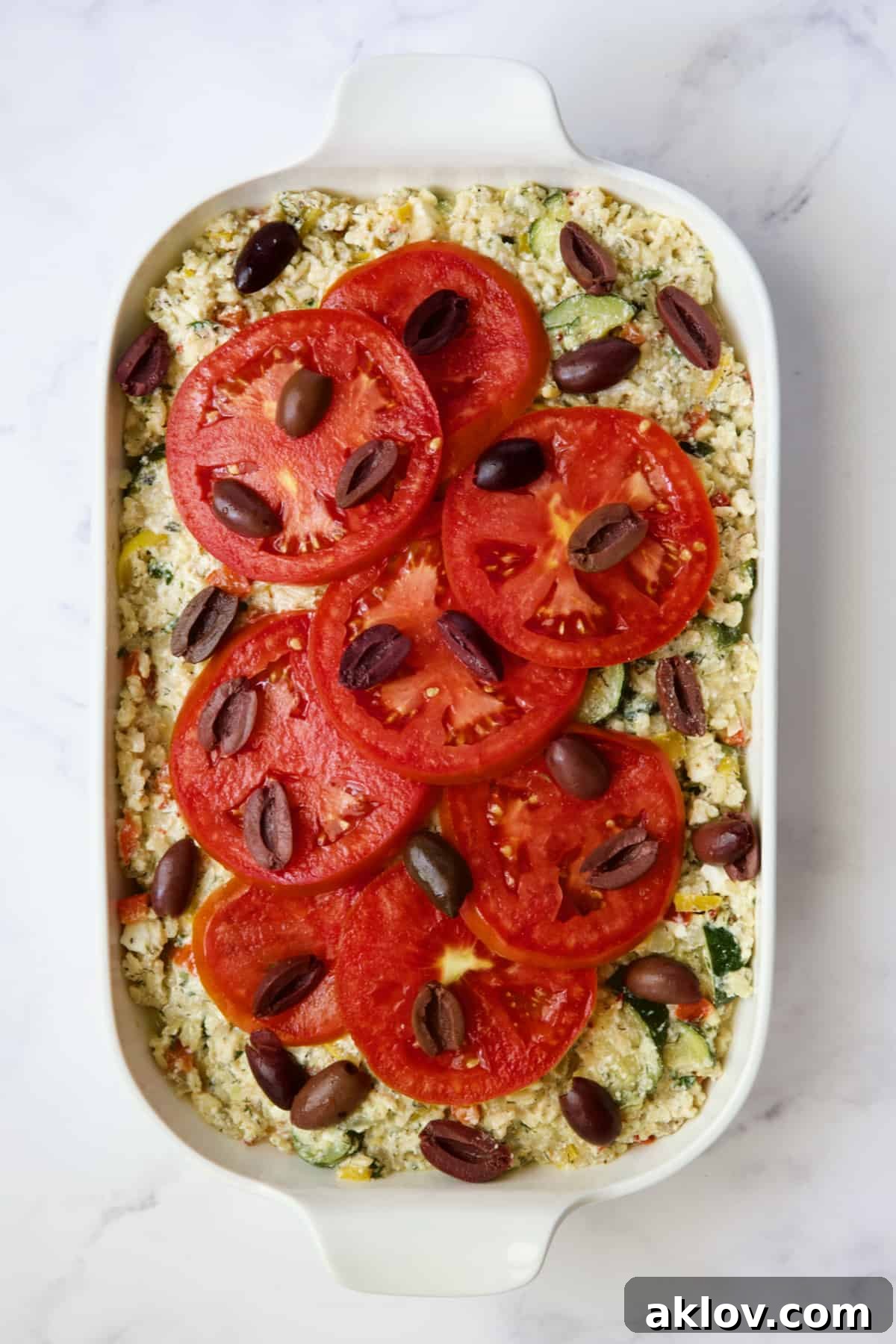
- Assembling the Casserole: Transfer the entire mixture to your lightly oiled 13 x 9-inch baking dish. Use the back of a spoon or a spatula to smooth the top evenly. Arrange the sliced fresh tomatoes over the surface of the casserole, slightly overlapping them if necessary. Finally, sprinkle the pitted and halved Kalamata olives over the tomatoes.
- MAKE AHEAD TIP: This casserole can be assembled up to this point 1-2 days in advance. If preparing ahead, do not add the fresh tomatoes and olives until just before baking, as they are best when fresh. Cover the casserole tightly with plastic wrap and refrigerate. Before baking, allow it to sit at room temperature for about 30 minutes to take the chill off. You may need to add an additional 10-15 minutes to the baking time if it’s still quite cold when it goes into the oven.
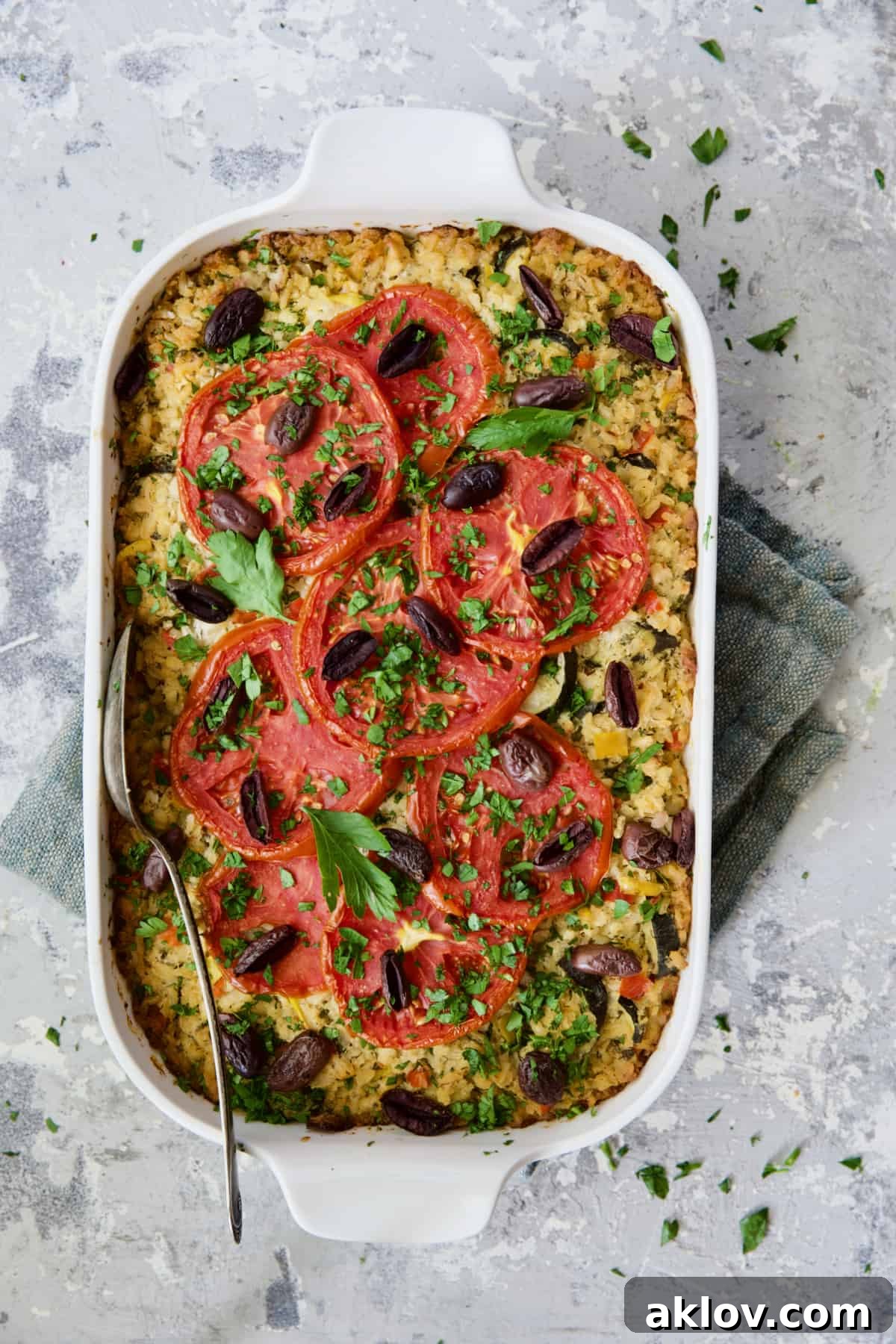
- Baking: Place the casserole in the preheated oven and bake for 45 minutes to 1 hour, or until the casserole is heated through to an internal temperature of 165 degrees Fahrenheit (74 degrees Celsius) in the center, and the edges are lightly golden and crispy. The tomatoes on top should look slightly roasted.
- Garnish and Serve: Once baked, carefully remove the casserole from the oven. If desired, sprinkle the remaining chopped fresh parsley over the top for a pop of color and fresh flavor. Serve immediately and enjoy this comforting and delicious Greek Vegetable Casserole!
Chef Tips and Tricks for a Perfect Greek Casserole
Elevate your Greek Vegetable Casserole with these expert tips and tricks, designed to make your cooking experience smoother and your final dish even more delicious.
- Mastering Brown Rice:
- The “Pasta Method” for Fluffy Brown Rice: My absolute favorite way to cook brown rice, ensuring it’s beautifully fluffy and perfectly tender every time, is to treat it much like pasta. Bring a large saucepan of salted water to a rolling boil. Add your desired amount of brown rice (no need for precise measuring, just ensure plenty of water). Boil it uncovered until it reaches your preferred tenderness, typically 25-35 minutes. Then, simply drain it thoroughly through a fine-mesh sieve. This method results in light, separate grains of brown rice that are far from sticky or gummy.
- Batch Cooking and Freezing: Whenever I cook brown rice at home, I make it a habit to prepare an extra-large batch. Once cooled, I portion it into freezer-safe bags or containers and freeze it. This way, I always have cooked brown rice readily available, saving significant time on busy cooking days.
- Pressure Cooker Method: While simply boiling brown rice like pasta is incredibly effective, you can also use an Instant Pot or other pressure cooker for hands-off cooking. The cooking time might be similar to boiling, but it offers convenience. Always refer to your specific pressure cooker’s manual for accurate water-to-rice ratios and cooking times for brown rice to ensure perfect results.
- Revitalizing Dried Herbs: If you’re using dried herbs instead of fresh, a simple trick can help them release their maximum flavor. Before adding them to your dish, place the dried herbs in the palm of your hand and rub them gently between your index finger and thumb. The warmth and friction help to crush the herb particles slightly and release their essential oils, intensifying their aroma and taste in your casserole.
- Effortlessly Pitting Kalamata Olives: If you find yourself with unpitted Kalamata olives, here’s an easy method to remove the pits. Place an olive on a sturdy, flat surface like a cutting board. Gently press down on the olive with the flat side of a chef’s knife or the bottom of a heavy glass. The pit should easily pop out. Repeat for all olives. This technique is much quicker than trying to carve the pit out with a small knife.
- Don’t Skip the Lemon Juice: While it might seem like a small addition, the fresh lemon juice is crucial. It brightens the rich flavors of the cheese and vegetables, adding a necessary zing that cuts through the creaminess and enhances the overall Mediterranean character of the casserole.
- Taste and Adjust Seasoning: Before transferring the mixture to the baking dish, always taste a small portion of the raw (but cooked rice and vegetables) mixture. This allows you to adjust the salt, pepper, and even the herbs to your preference, ensuring the casserole is perfectly seasoned before it bakes.
Frequently Asked Questions About This Greek Vegetable Casserole
Should I rinse brown rice before cooking it?
Yes, absolutely! Rinsing any grain, including brown rice, before cooking is always a good idea. This simple step helps to remove any excess starch, dust particles, or debris that might be present, leading to cleaner, fluffier rice. To rinse, simply place the brown rice in a fine-mesh sieve and run it under cool running tap water until the water runs clear. This quick process contributes to a superior texture in your final casserole.
Can I substitute quinoa for brown rice?
Yes, you absolutely can! Quinoa makes an excellent and equally nutritious substitute for brown rice in this casserole. It offers a slightly different, chewier texture and a complete protein profile. When substituting, use the same amount of cooked quinoa as you would cooked brown rice, which is 4 cups for this recipe. Ensure your quinoa is cooked and cooled before mixing it into the casserole ingredients.
I’m not a feta fan. What other cheeses can I use?
While feta cheese is key to the distinct Greek flavor profile of this casserole, you can certainly adjust it to your taste. If you’re not a fan of feta’s salty and tangy notes, you can opt for a milder, meltier cheese. Excellent alternatives include shredded Mozzarella, which will add a creamy, mild character, or Monterey Jack, offering a subtle buttery flavor and great melt. Keep in mind that the casserole will have a different, less “Greek” flair, but it will still be delicious and comforting.
I’m not a ricotta fan. What can I use instead?
If ricotta cheese isn’t to your liking, there are several great alternatives to maintain the creamy texture of the casserole. A popular substitution is cottage cheese; simply puree it in a food processor or blender until smooth to achieve a similar consistency to ricotta. For an added boost of protein and a dairy-free option, silken tofu can be pureed until smooth and used in place of the ricotta. Both options will provide a wonderful creamy element to your dish.
Perfect Pairings: What to Serve with Your Greek Vegetable Casserole
This versatile Vegetarian Casserole can be the star of your meal or a delightful side dish. Here are some inspired pairings to complete your dining experience:
- Roasted Tomato Soup: The rich, sweet flavors of roasted tomatoes and fresh basil in a creamy bisque beautifully complement the savory notes of the casserole, creating a comforting and harmonious meal.
- Cider Vinegar Braised Cabbage Wedges: The tangy, slightly sweet, and tender cabbage provides a wonderful contrast to the creamy casserole, adding a bright, earthy element.
- Easy Braised Greens Recipe: A side of tender, flavorful braised greens offers a healthy and traditional complement, balancing the richness of the cheese and rice.
- Roasted Green Beans with Tomato Caper Relish: The crisp texture of roasted green beans paired with a zesty, briny relish adds a fresh, vibrant crunch and a burst of Mediterranean flavor.
- Lemon Parmesan Crusted Brussels Sprouts: Crispy, nutty Brussels sprouts with a hint of lemon and Parmesan offer a savory and slightly bitter counterpoint, enriching the meal.
- Greek Green Beans (Fasolakia): A classic Greek vegetable side, these tender green beans simmered in a tomato sauce are a perfect authentic accompaniment, deepening the Mediterranean theme.
More Vegetable & Vegetarian Casseroles You’re Sure to Love
If you’ve enjoyed this delightful Greek Vegetable Casserole, you’ll be thrilled to discover more hearty and flavorful vegetarian casserole options from my kitchen:
- Summer Vegetable Casserole: A celebration of seasonal produce, this Italian-inspired casserole features fresh summer vegetables baked with savory herbs and cheese for a light yet satisfying meal.
- Zucchini Yellow Squash and Quinoa Casserole: This healthy and wholesome casserole combines tender zucchini and yellow squash with protein-packed quinoa, creating a nutritious and flavorful dish perfect for any day.
- Black Bean and Yellow Squash Enchilada Casserole: Experience a Southwestern twist with this comforting casserole, featuring black beans, yellow squash, and a zesty enchilada sauce, all layered for a hearty, spicy kick.
- Southwestern Lentil and Brown Rice Bake: A protein-rich and incredibly flavorful bake with hearty lentils, brown rice, and bold Southwestern spices, perfect for a warming, wholesome meal.
For a comprehensive collection of delightful plant-based dishes, explore all my wonderful vegetarian and vegan recipes at Vegetarian and Vegan Recipes – From A Chef’s Kitchen.
Greek Vegetable Casserole Recipe
Equipment
-
Wusthof Chef Knife
-
Cutting Board
-
Nonstick Skillet
-
Stainless Steel Mixing Bowls
-
13 x 9 Baking Dish
Ingredients
- 2 tablespoons olive oil, plus more for oiling the baking dish
- 1 medium onion, chopped
- 2 medium red bell peppers, chopped
- 1 medium yellow bell pepper, chopped
- 2 medium zucchini, halved lengthwise and sliced into half-moons
- 1 medium yellow squash, halved lengthwise and sliced into half-moons
- 4 cloves garlic, chopped
- 1/4 cup chopped fresh parsley, divided
- 1 tablespoon chopped fresh oregano or 1 teaspoon dried
- 1 tablespoon chopped fresh dill or 1 teaspoon dried
- 1/2 teaspoon crushed red pepper flakes, optional
- 4 cups cooked brown rice
- 1 cup ricotta cheese, light is fine
- 1 cup crumbled feta cheese, reduced fat or fat-free is fine
- 1 large egg
- 2 tablespoons lemon juice
- salt and freshly ground black pepper, to taste
- 2 medium tomatoes, or 1 large tomato, sliced
- 1/4 cup pitted and halved Kalamata olives
Instructions
-
Preheat oven to 375 degrees Fahrenheit (190°C). Lightly oil a 13 x 9-inch baking dish. Set aside.
-
Heat olive oil over medium-high heat in a large skillet. Add the onion, reduce heat to medium-low, and cook for 4-5 minutes until beginning to soften.
-
Add the chopped bell peppers and continue cooking for 5-6 minutes or until they begin to soften.
-
Add the zucchini and yellow squash and cook for 3-4 minutes more or until they begin to soften.
-
Stir in garlic, 2 tablespoons chopped parsley, oregano, dill, and crushed red pepper flakes (if using). Cook for 1 minute until fragrant. Set aside to cool slightly.
-
In a large bowl, combine the cooled vegetables, cooked brown rice, ricotta and feta cheeses, egg, lemon juice, and salt and black pepper to taste. Stir well to combine all ingredients. Transfer the mixture to the prepared baking dish and smooth the top.
-
Place the tomato slices evenly over the top, then sprinkle with the halved Kalamata olives.
-
Bake for 45 minutes to 1 hour, or until hot throughout and the edges are lightly crispy.
-
Remove from the oven and sprinkle with the remaining chopped parsley before serving.
Notes
SUBSTITUTIONS:
- Pureed cottage cheese or silken tofu can be substituted for the ricotta.
- Although the casserole won’t have the same Greek flair, a mild cheese such as Mozzarella or Monterey Jack will work in place of feta.
- Use cooked quinoa in place of the cooked brown rice for a different texture.
TIP:
- To refresh dried herbs, rub them between your index finger and thumb as you add them to your dish to release their aromatic oils.
MAKE AHEAD:
- This casserole can be assembled 1-2 days in advance without the tomatoes and olives.
- Top with tomatoes and olives right before baking. Let sit at room temperature for 30 minutes to take the chill off before baking. You may need to add additional baking time if it’s still cold.
FREEZER-FRIENDLY:
- Assemble the casserole and let it cool completely after baking. You can add the tomatoes and olives before or after freezing, depending on preference.
- To serve, thaw the frozen casserole in the refrigerator for 24-48 hours. Bake as directed, though you may need to add additional baking time if it’s still cold or partially frozen in the center.
REHEATING LEFTOVERS:
- To reheat in the oven, drizzle the casserole with a tablespoon or two of water, place it in an oven-safe container, cover, and reheat at 350 degrees Fahrenheit (175°C) until hot in the center.
- You can also reheat individual portions in the microwave until thoroughly hot.
Nutrition
Calories: 328kcal
Carbohydrates: 39g
Protein: 12g
Fat: 14g
Saturated Fat: 6g
Polyunsaturated Fat: 1g
Monounsaturated Fat: 6g
Trans Fat: 1g
Cholesterol: 56mg
Sodium: 322mg
Potassium: 561mg
Fiber: 5g
Sugar: 5g
Vitamin A: 1841IU
Vitamin C: 88mg
Calcium: 212mg
Iron: 2mg
Nutritional values are automatically calculated using unbranded products and are estimates only. Actual results may vary based on ingredients used and portion sizes. Adjust as needed for dietary restrictions, allergies, or health concerns.
 Like this? Leave a comment below!