

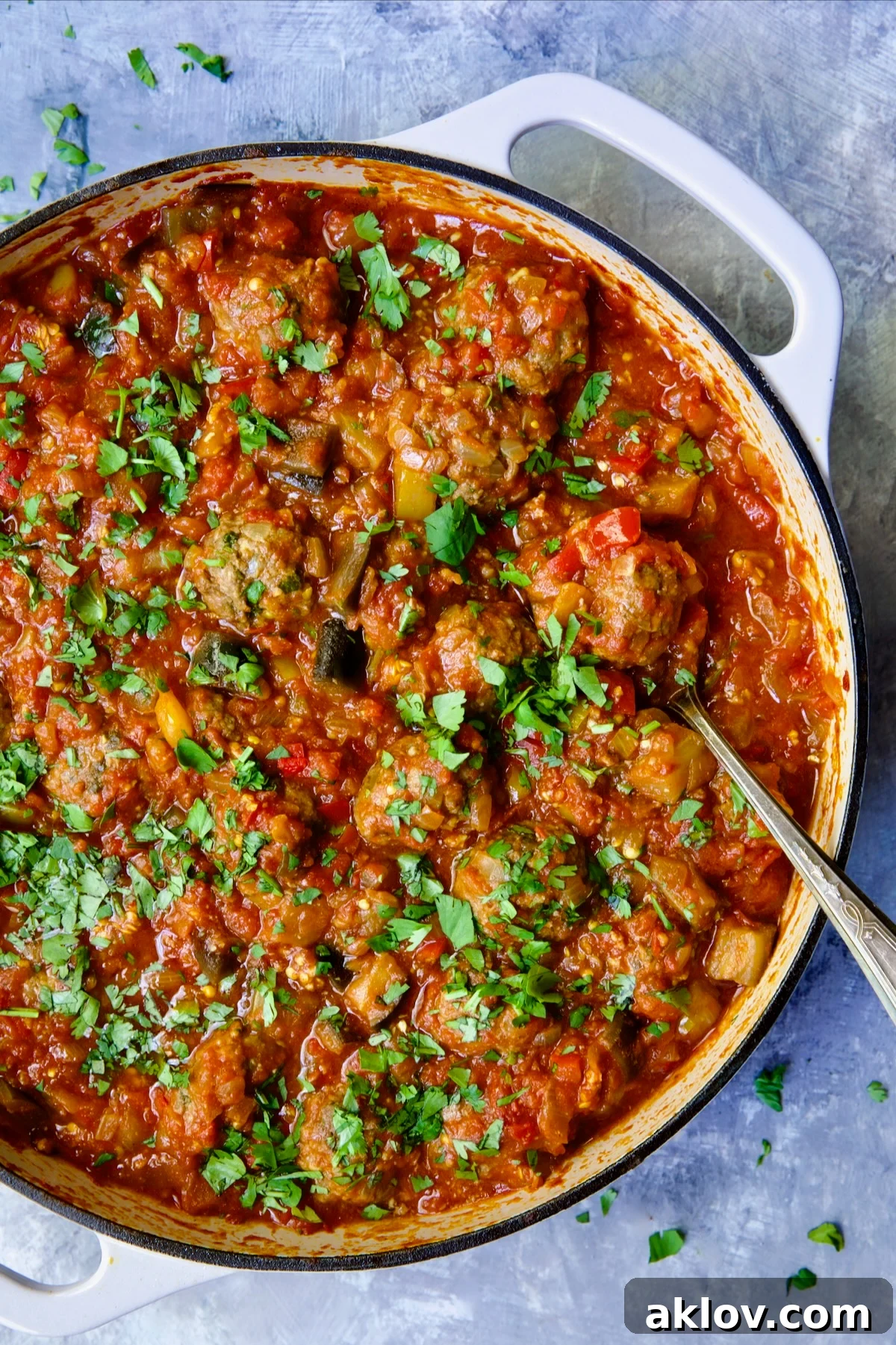
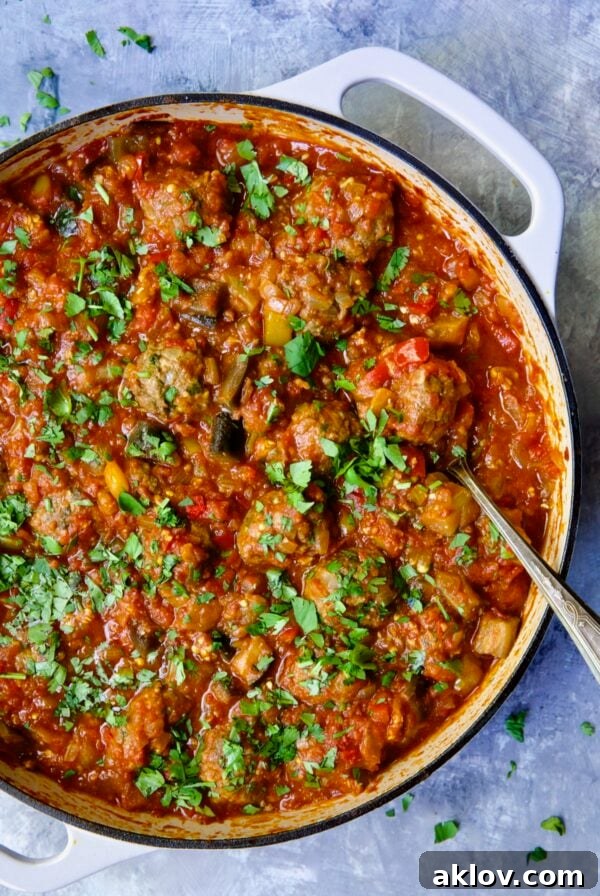
Embark on a culinary journey to North Africa with this exquisite Moroccan Meatball Stew! This vibrant dish, often referred to as a comforting kefta tagine, promises an unforgettable flavor adventure. Imagine tender, perfectly spiced beef meatballs nestled among sautéed onions, colorful bell peppers, and velvety eggplant, all generously bathed in a rich, zesty tomato sauce. It’s a hearty, visually stunning meal, brimming with layers of aromatic spices that offer both profound comfort and exotic allure in every single bite.
“This was so very good! I made extra and was so sad when it was gone. If you want a flavor explosion, this is it. Definitely making this again and again and again.”
Why This Moroccan Meatball Stew Recipe is a Must-Try!
This Moroccan-inspired meatball stew, a culinary gem sometimes known as kefta tagine, is more than just a meal; it’s an experience. It masterfully combines tender, aromatic meatballs with a medley of garden-fresh vegetables like sweet onions, vibrant bell peppers, and succulent eggplant. The result is a harmonious blend of textures and tastes that is equally perfect for a cozy weeknight dinner or an elegant gathering with friends. Here’s why this Moroccan meatballs recipe will quickly become a cherished favorite:
- A Fusion of Comfort and Exoticism: This tagine-style dish offers the heartwarming appeal of traditional comfort food while transporting your taste buds to the vibrant markets of Morocco. The carefully balanced spices create a deep, complex flavor profile that is both familiar and excitingly new.
- Guaranteed Crowd-Pleaser: Impress your guests with a meal that looks and tastes sophisticated, yet remains wonderfully approachable. Its rich flavors and colorful presentation make it ideal for entertaining, ensuring everyone at the table asks for a second helping.
- Adaptable for One-Pot Convenience: Streamline your cooking process by preparing this stew largely in a single pot. You can brown the meatballs in the same skillet where you build your rich tomato sauce, then return them to simmer and absorb all the delightful flavors. This means less cleanup and more time to enjoy your delicious creation.
- Perfect for Make-Ahead Meals: Like many stews and braises, the flavors of this Moroccan Meatball Stew only deepen and meld beautifully overnight. Prepare it a day in advance for an even more exquisite taste, making it an excellent option for meal prep or stress-free entertaining.
- Effortlessly Freezer-Friendly: Cook a larger batch and portion it out for future meals. This stew freezes and reheats wonderfully, providing a quick, flavorful solution for those busy days when you need a wholesome, homemade meal without the fuss.
- Nutrient-Rich and Wholesome: Packed with lean protein from the meatballs and an abundance of fresh vegetables, this stew is not only delicious but also contributes to a balanced diet. It’s a satisfying meal that you can feel good about serving to your family.
- Versatile Serving Options: Whether you prefer to serve it with fluffy couscous, nutty quinoa, classic rice, or warm crusty bread, this stew adapts beautifully to your favorite accompaniment.
No matter the occasion, this Moroccan Meatball Stew recipe delivers an irresistible blend of comfort, robust flavor, and a touch of adventurous spirit in every delightful spoonful!

How to Craft Your Moroccan Meatball Stew: A Step-by-Step Guide
Creating this authentic and deeply flavorful Moroccan Meatball Stew is a rewarding experience. Follow these detailed steps to bring this North African culinary masterpiece to your table.
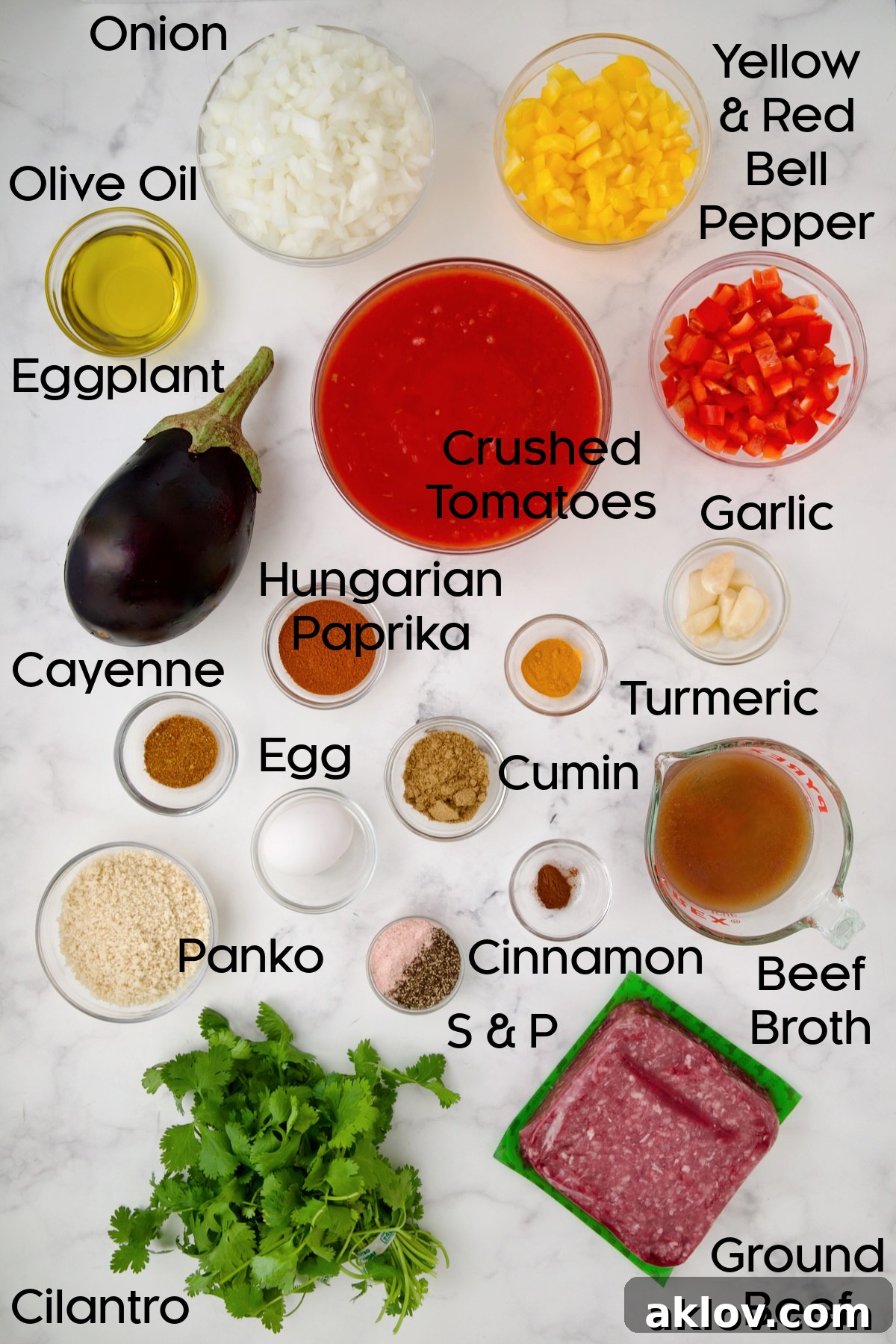
Essential Recipe Ingredients:
Below is a comprehensive list of everything you’ll need for this delicious Moroccan meatballs recipe. For precise quantities, refer to the full recipe card towards the end of this article.
Ingredient Notes and Smart Substitutions:
Understanding each ingredient’s role is key to mastering this rich stew. Here’s a closer look:
- Eggplant: Opt for one medium globe eggplant, weighing approximately one pound. When selecting, look for a shiny, smooth skin free of blemishes, and ensure it feels firm and heavy for its size. Smaller to medium-sized eggplants tend to be less seedy and bitter than their larger counterparts, yielding a superior texture and flavor in your stew. Salting the eggplant before cooking helps draw out excess moisture and can reduce any potential bitterness, leading to a silkier texture when cooked.
- Crushed Tomatoes: These are a fantastic choice, offering a balanced texture of finely diced tomatoes suspended in a rich puree. They contribute both body and a smooth consistency to the sauce, with a vibrant, fresh tomato flavor. If you only have whole canned tomatoes on hand, don’t worry! Simply use kitchen shears to chop them directly in the can as finely as possible, achieving a similar texture. Tomato paste can also be used to deepen the tomato flavor further if desired.
- Hungarian Paprika: This is a crucial spice for authentic Moroccan flavor. Unlike generic paprika, Hungarian paprika is crafted from specially toasted peppers, resulting in a spectrum of varieties ranging in pungency and heat. Its distinctive rich, sweet red pepper notes add unparalleled depth and a beautiful hue to this Moroccan Meatball Stew recipe. While you can substitute with regular paprika, the depth of flavor will be noticeably different.
- Cinnamon: While often associated with sweet dishes, just a pinch of ground cinnamon plays a vital role in savory Moroccan cuisine. It doesn’t make the stew taste sweet, but rather adds a subtle warmth and complexity that beautifully rounds out the other spices, contributing to the dish’s overall authentic profile. Don’t be tempted to skip it!
- Beef Broth: This liquid gold forms the base of your flavorful sauce. You can also use beef stock or bone broth for an even richer taste. For convenience and concentrated flavor, many chefs keep a high-quality beef base, such as Better Than Bouillon beef base, on hand, especially when only a small amount is required. Vegetable broth can be used for a lighter flavor, or if adapting to a vegetarian version.
- Ground Meat: We used 85/15 ground beef (85% lean, 15% fat), which offers a good balance of flavor and moisture. For a leaner option, choose ground beef with a higher lean-to-fat ratio like 90/10 or 93/7. Alternatively, this Moroccan Meatball Stew recipe shines beautifully with ground lamb, which adds a wonderfully rich and slightly gamey flavor profile. For an even lighter dish, ground turkey or chicken can be excellent substitutes, though they may require a bit more seasoning to compensate for their milder taste. Plant-based ground meat alternatives also work well for a vegetarian or vegan version.
- Onions and Bell Peppers: These foundational vegetables provide natural sweetness, vibrant color, and essential aromatic depth to the stew. Using both red and yellow bell peppers adds visual appeal and a slightly varied sweetness.
- Garlic: Freshly minced garlic is indispensable, infusing both the sauce and the meatballs with its pungent, aromatic essence, which is core to Moroccan cuisine.
- Cumin, Turmeric, and Cayenne Pepper: These spices complete the quintessential Moroccan flavor profile. Cumin adds an earthy warmth, turmeric contributes a beautiful golden color and mild bitterness, and cayenne pepper provides a touch of heat, which you can adjust to your personal preference.
- Panko Breadcrumbs & Egg: For the meatballs, panko breadcrumbs act as a binder, helping the meatballs hold their shape while remaining light and tender. The egg further ensures cohesion and adds moisture.
- Fresh Cilantro: This aromatic herb is added at the end to brighten the flavors of the stew and provides a fresh, herbaceous finish that is characteristic of North African dishes.
- Olive Oil: Extra-virgin olive oil is used for sautéing the vegetables, adding a fruity richness that complements the robust flavors of the stew.
Detailed Step-By-Step Instructions:
Get ready to cook! Follow these instructions carefully to create your magnificent Moroccan Meatball Stew.
- First, gather and meticulously prep all your ingredients for this Moroccan meatballs recipe. Having everything measured and chopped beforehand makes the cooking process smooth and enjoyable.
- Preheat your oven to 375 degrees Fahrenheit (190°C) as the meatballs will be baked.
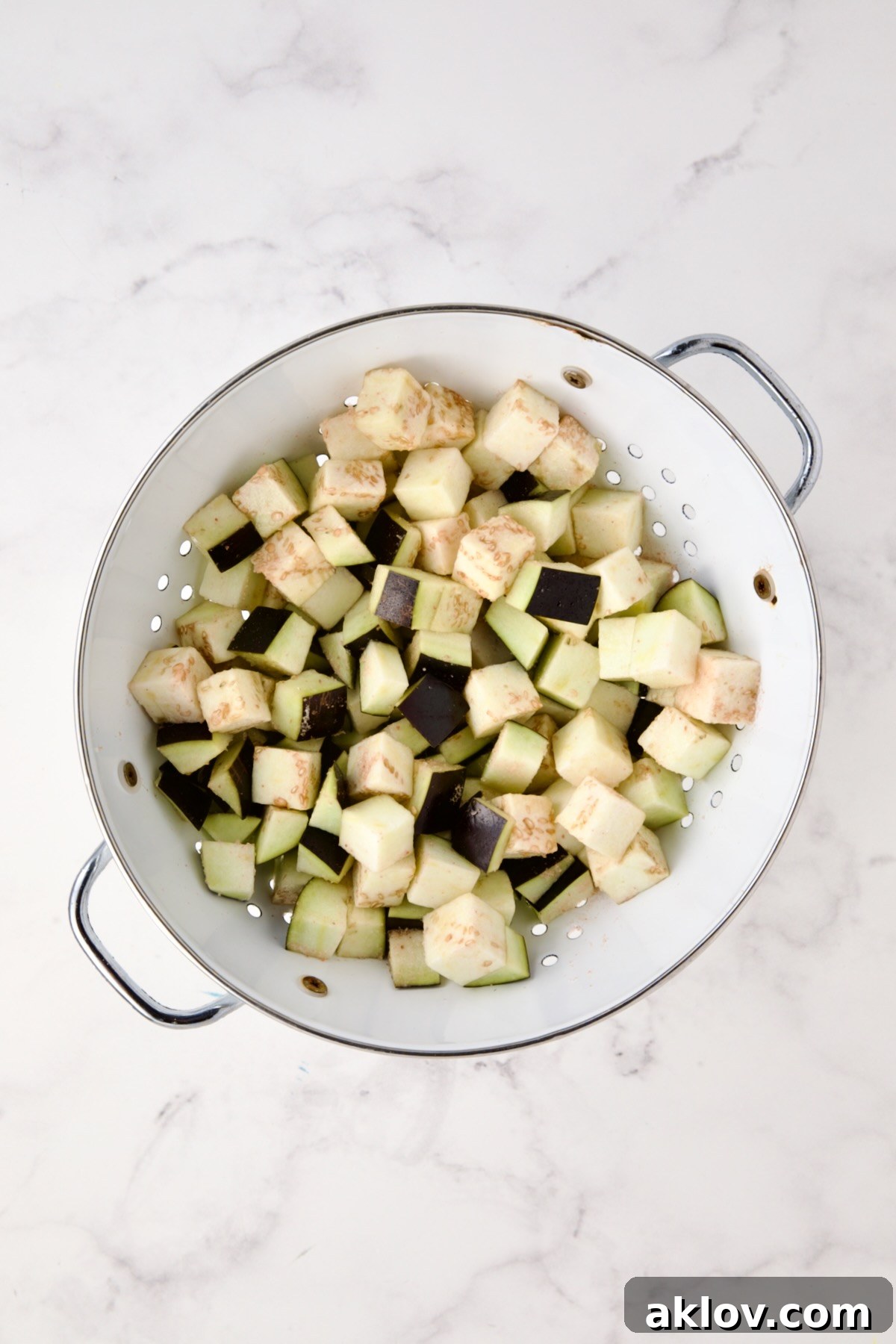
- Begin by preparing the eggplant. Place the cubed eggplant in a colander. Sprinkle it generously with two teaspoons of salt and allow it to drain for 30 minutes. This critical step helps draw out excess moisture and bitterness, resulting in a more tender and flavorful eggplant.
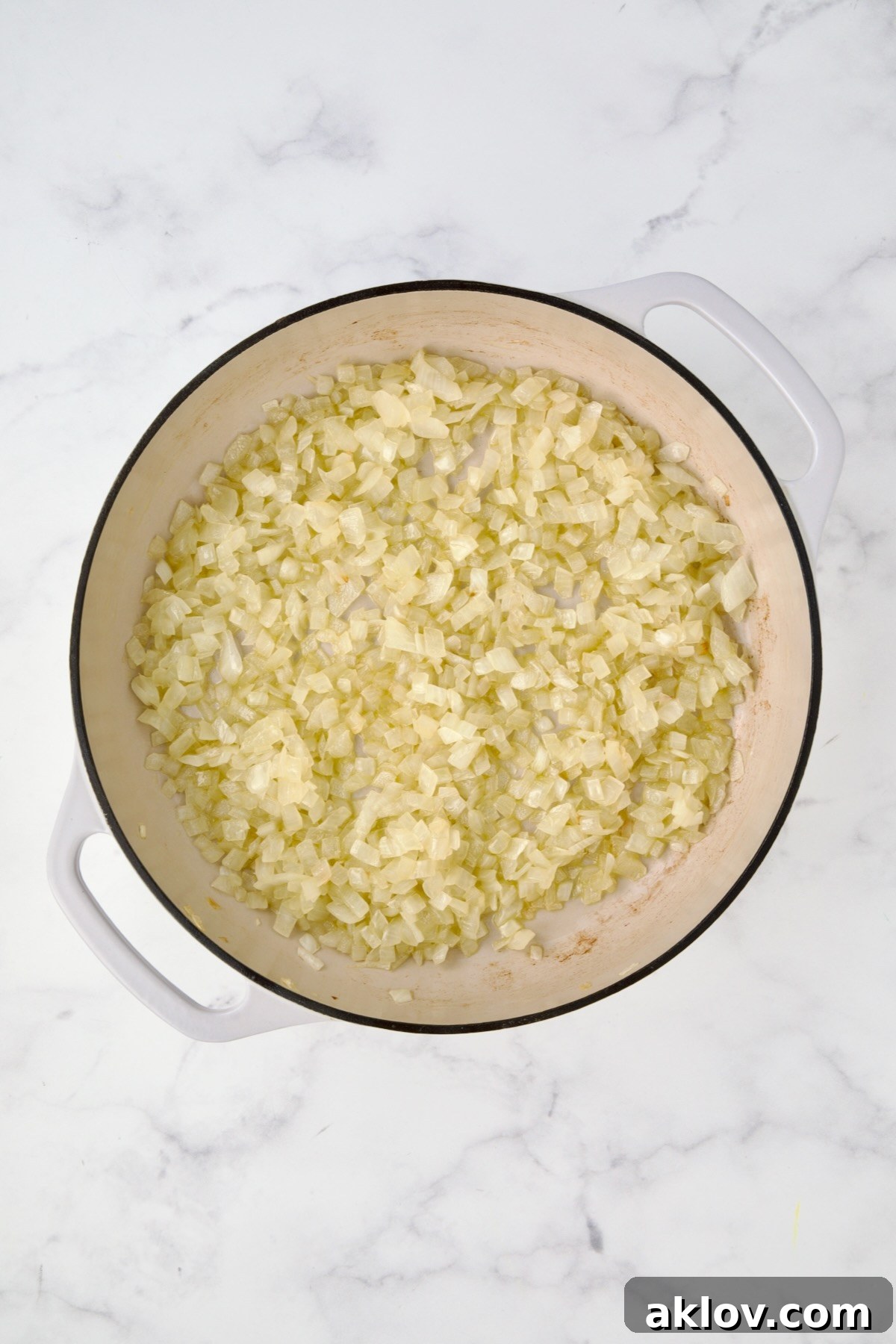
- While the eggplant is draining, heat the extra-virgin olive oil in a large skillet over medium-high heat. Add the chopped onion, then reduce the heat to medium-low and cook for 5 to 6 minutes, or until the onion begins to soften and become translucent. This gentle cooking extracts maximum sweetness.
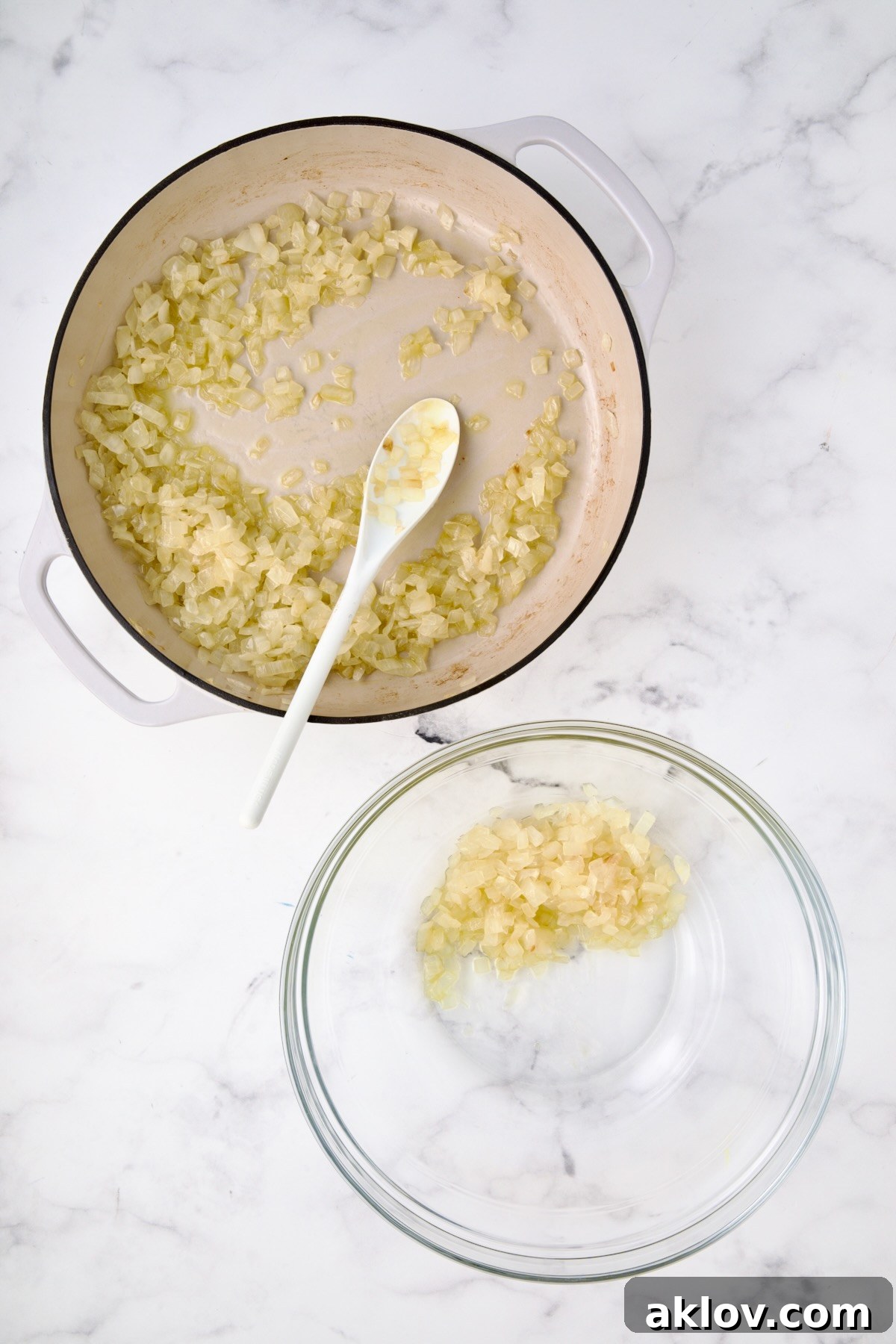
- Carefully transfer about one-third of the cooked onion to a separate bowl. This portion will be used later for the meatballs, so allow it to cool down slightly.
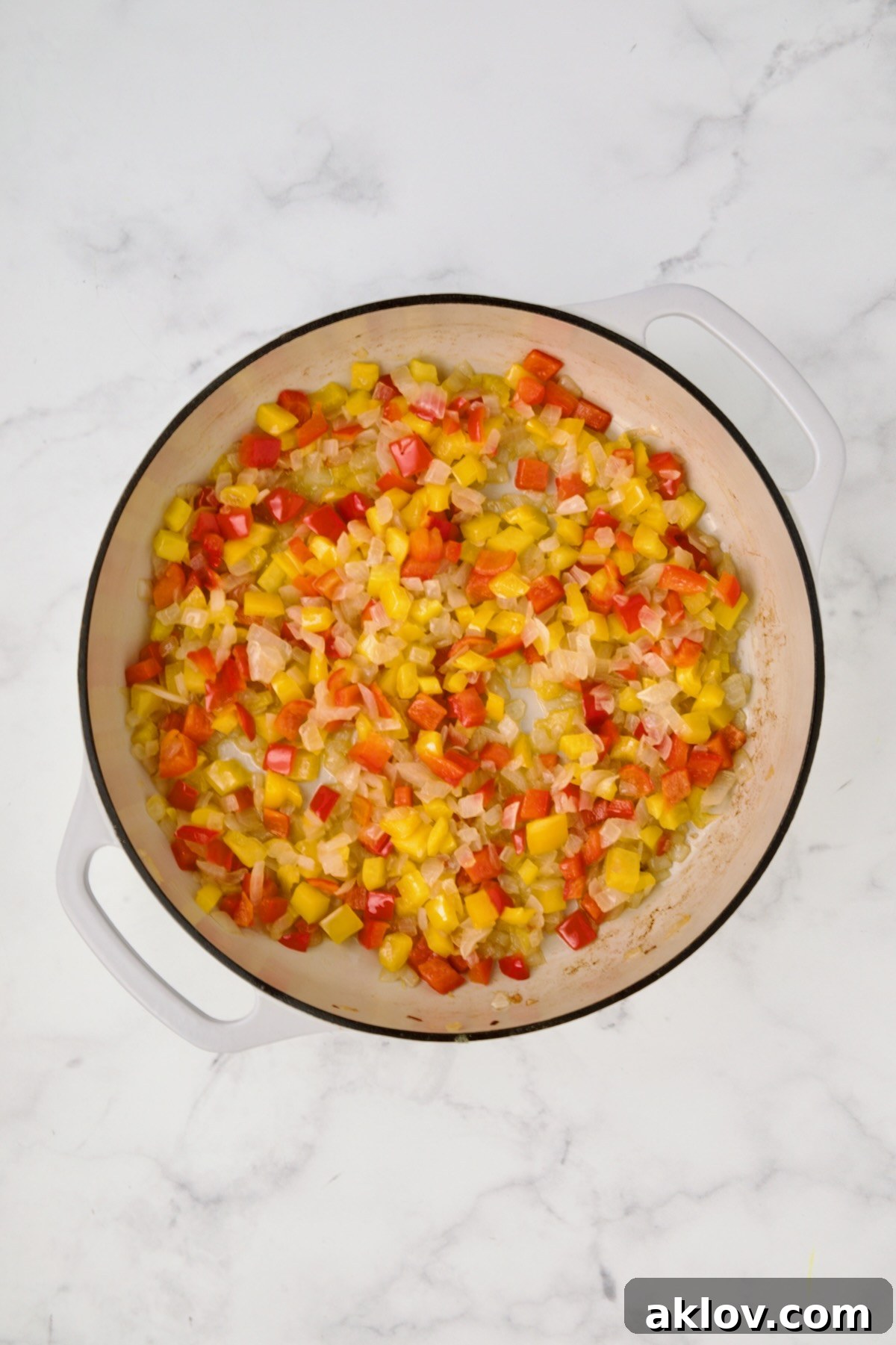
- Add the chopped yellow and red bell peppers to the skillet with the remaining onion. Continue cooking for another 3 to 4 minutes, stirring occasionally, until the bell peppers begin to soften.
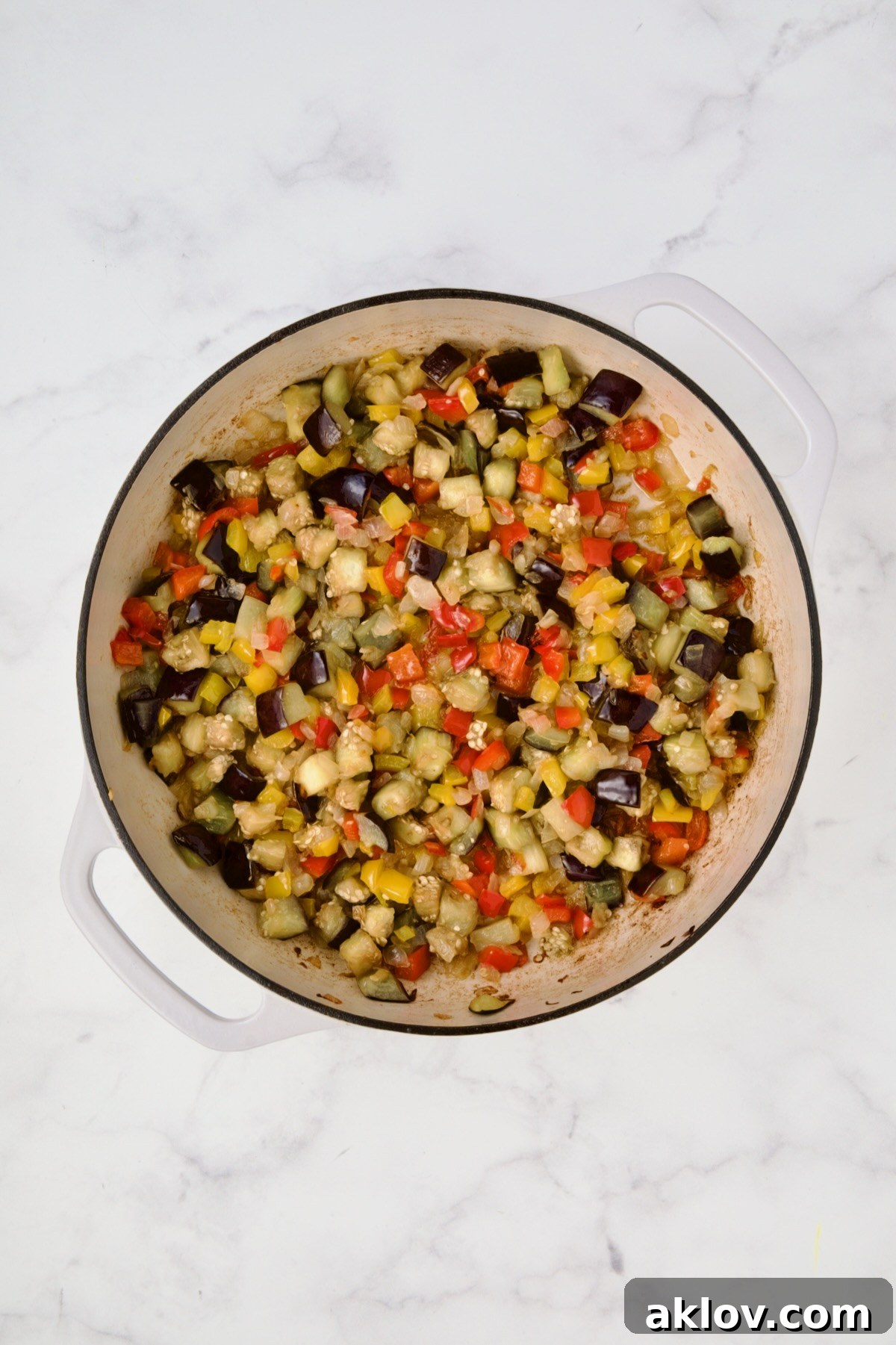
- After the eggplant has drained, pat it thoroughly dry with paper towels to remove any remaining moisture. Add the dried eggplant to the skillet with the other vegetables and cook for 7 to 8 minutes, or until it has softened and can be easily pierced with the tip of a knife.
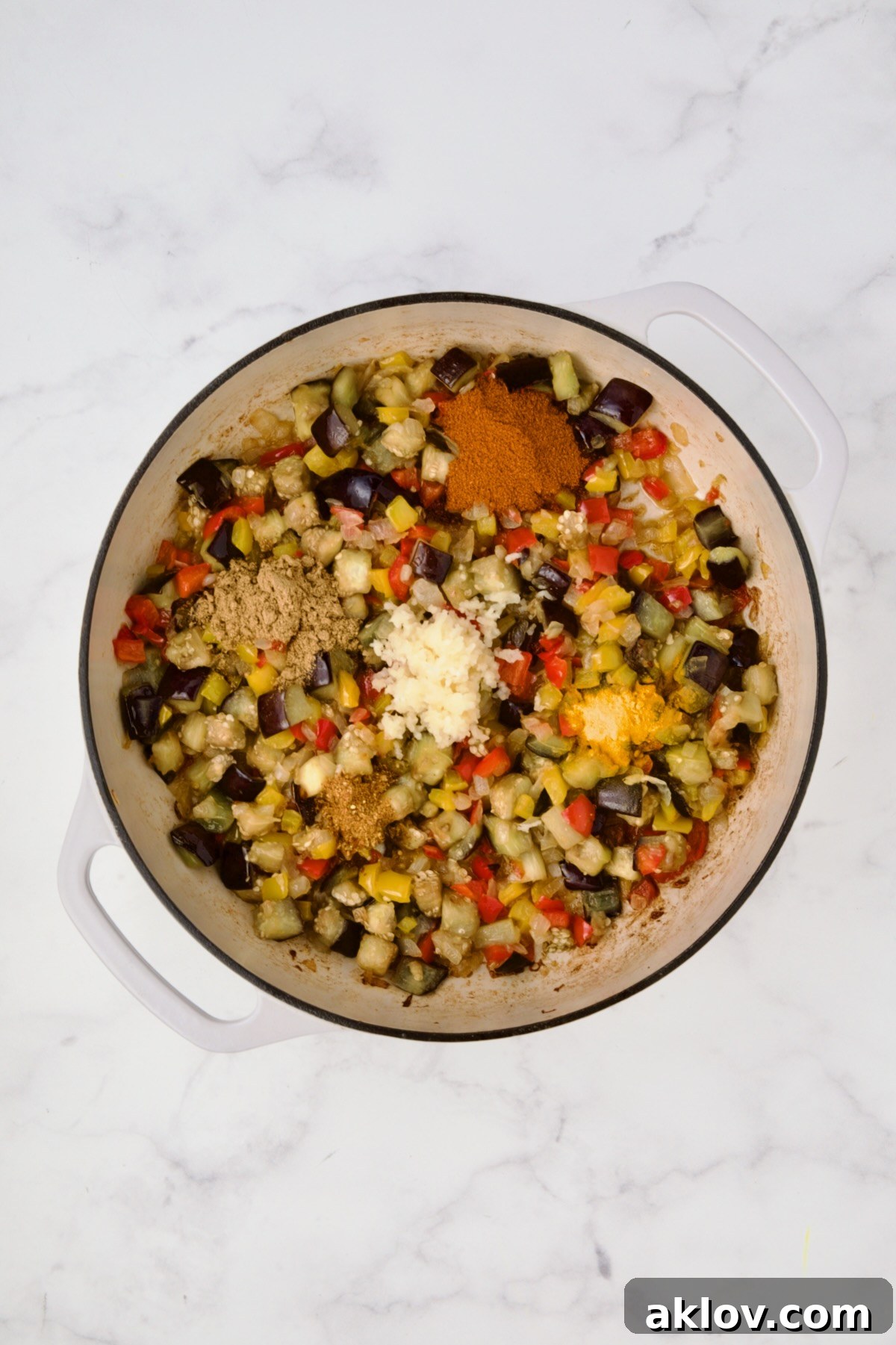
- To infuse the sauce with deep flavor, stir in the minced garlic, Hungarian paprika, ground cumin, ground turmeric, and cayenne pepper. This step allows the spices to “bloom” in the hot oil.
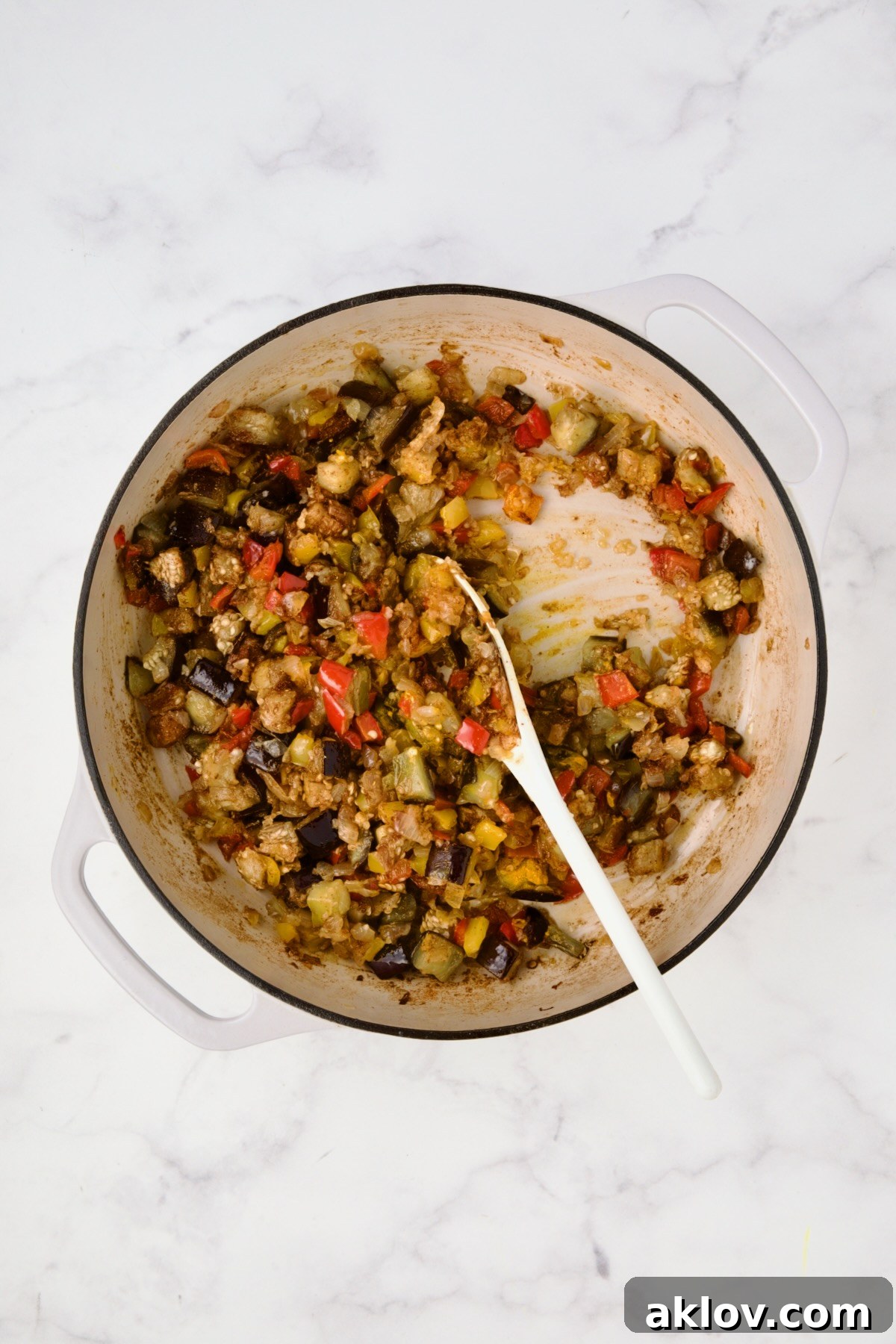
- Continue to cook the spice mixture briefly, stirring constantly, for about 15 seconds. Be careful not to burn the spices, as this can make them bitter.
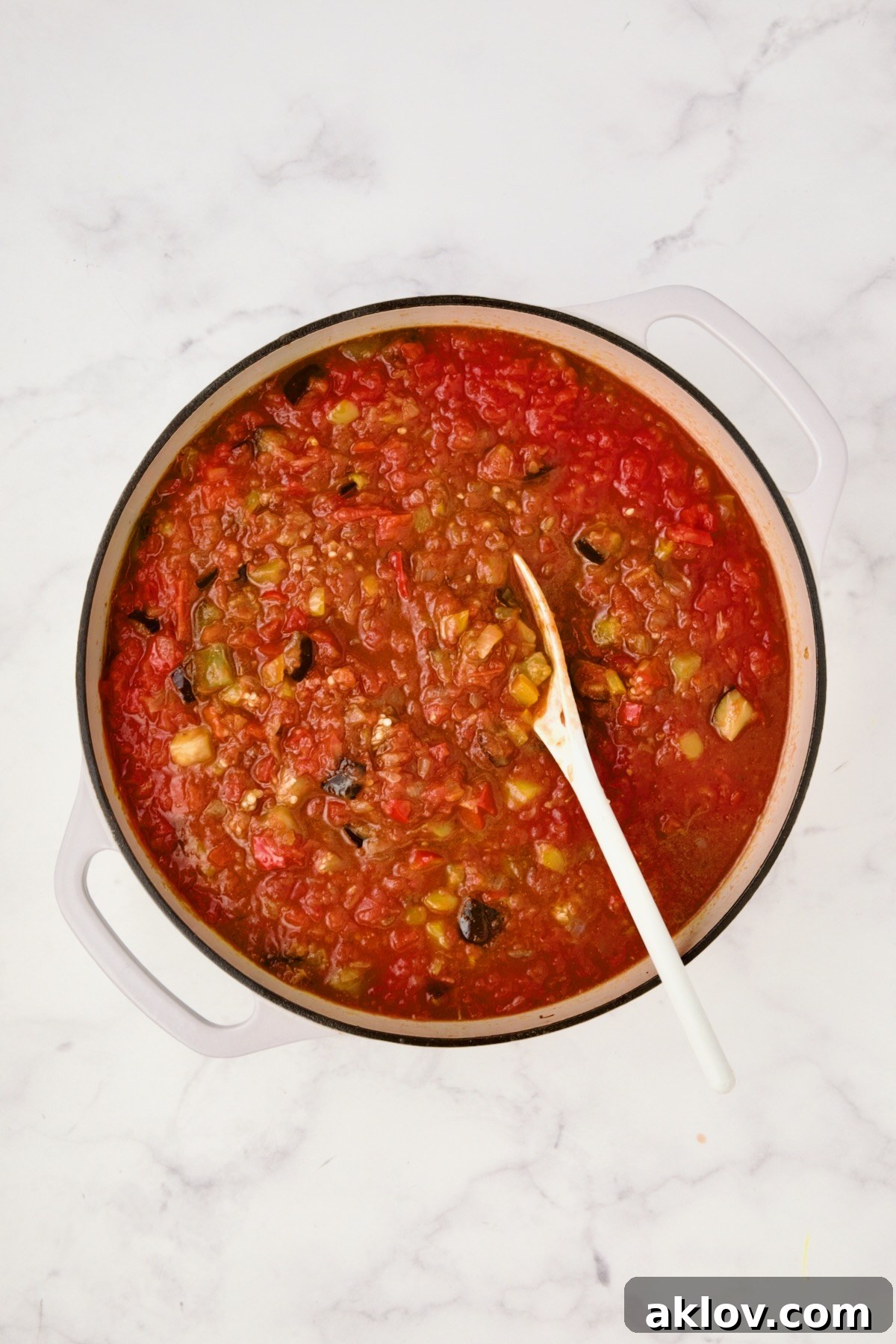
- Pour in the crushed tomatoes and beef broth. Bring the mixture to a gentle simmer and let it cook for approximately 15 minutes, allowing the sauce to thicken and the flavors to meld beautifully. Taste and season with additional salt and freshly ground black pepper as needed. Finally, stir in 1/4 cup of the chopped fresh cilantro and keep the sauce warm while you prepare the meatballs.
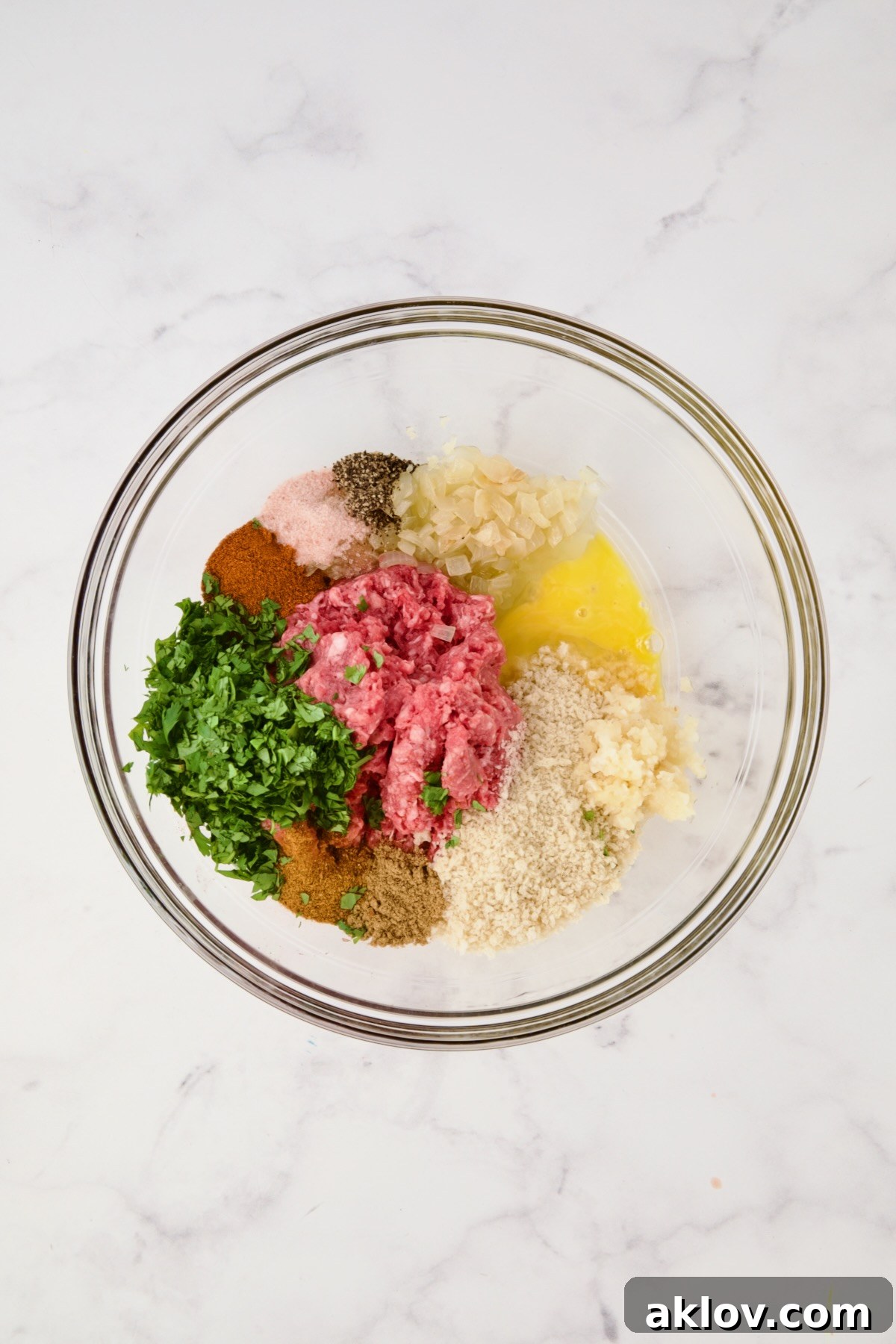
- Prepare your baking sheet: Line a rimmed baking sheet with parchment paper or nonstick aluminum foil. Now, to the bowl containing the reserved cooled onions from Step 3, add the minced garlic, Hungarian paprika, ground cumin, cayenne pepper, a pinch of ground cinnamon, salt, black pepper, panko breadcrumbs, egg, beef broth, and the remaining 1/4 cup of chopped cilantro.
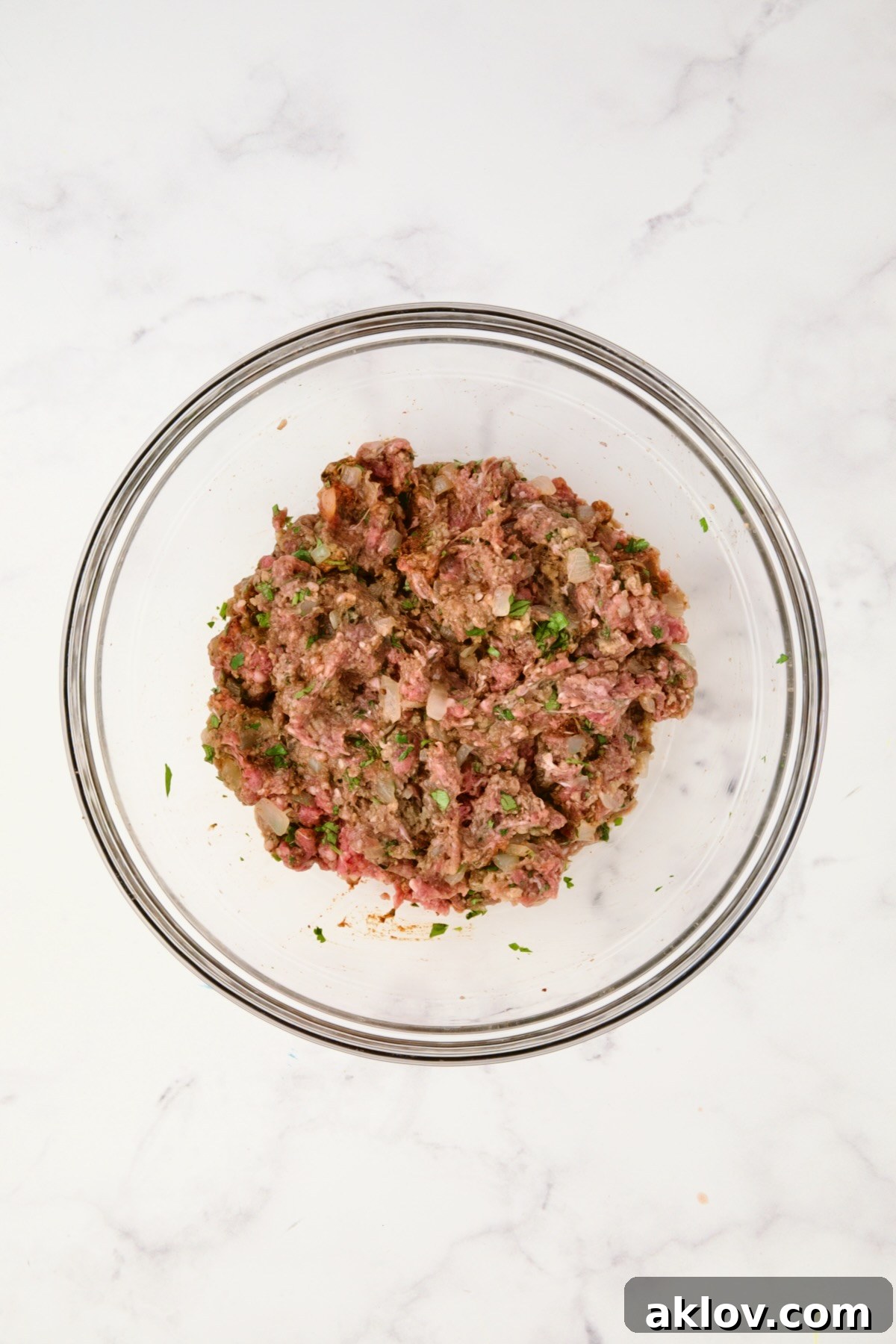
- Stir all the meatball ingredients (except the ground beef) together very well to ensure even distribution of seasonings. Then, add the ground beef and mix gently but thoroughly until just combined. Overmixing can lead to tough meatballs.
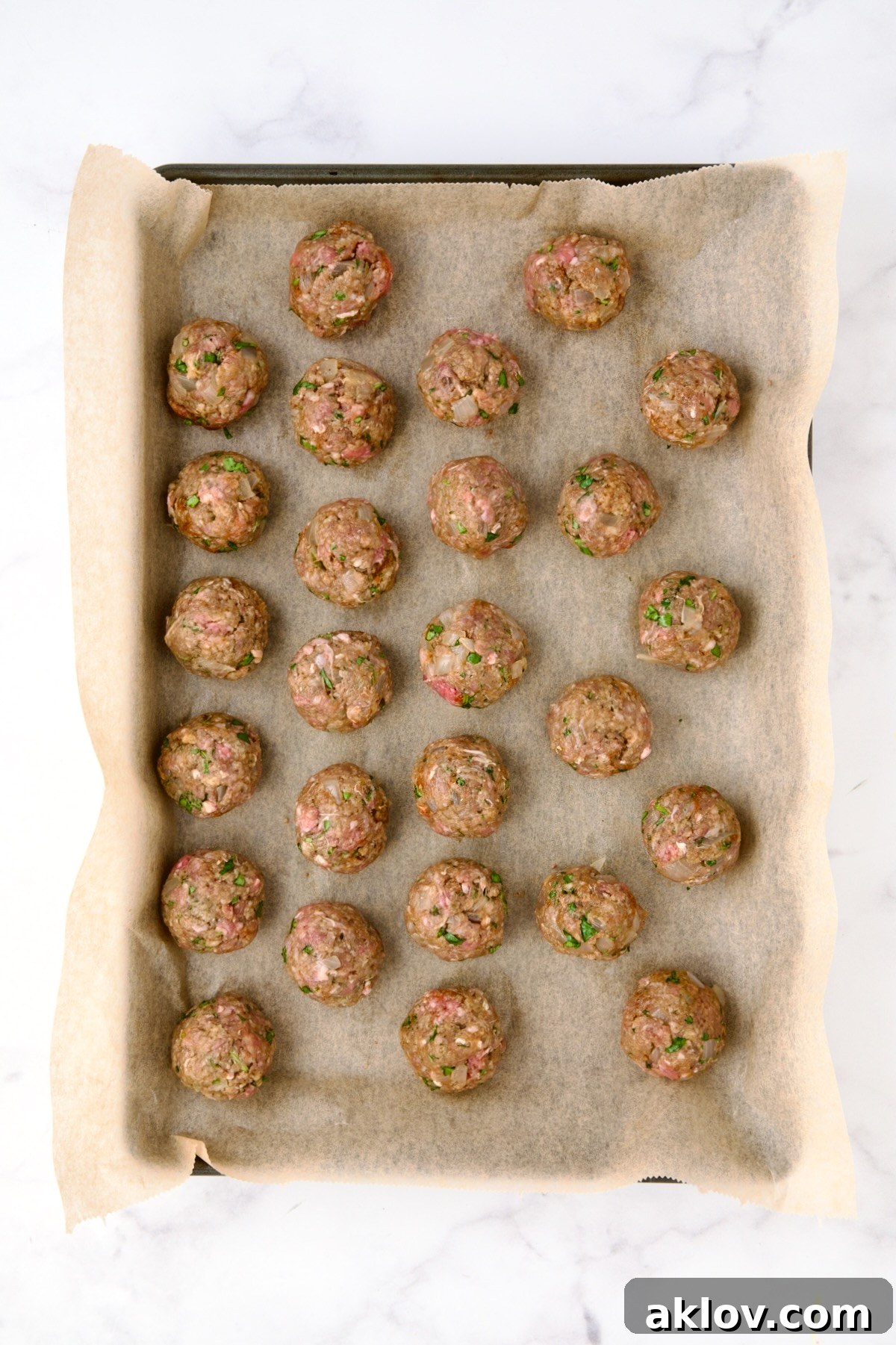
- Using a small cookie scoop or your hands, form the beef mixture into uniform 1 to 1 1/2-inch balls. Place them in a single layer on the prepared baking sheet, ensuring a little space between each meatball for even baking.
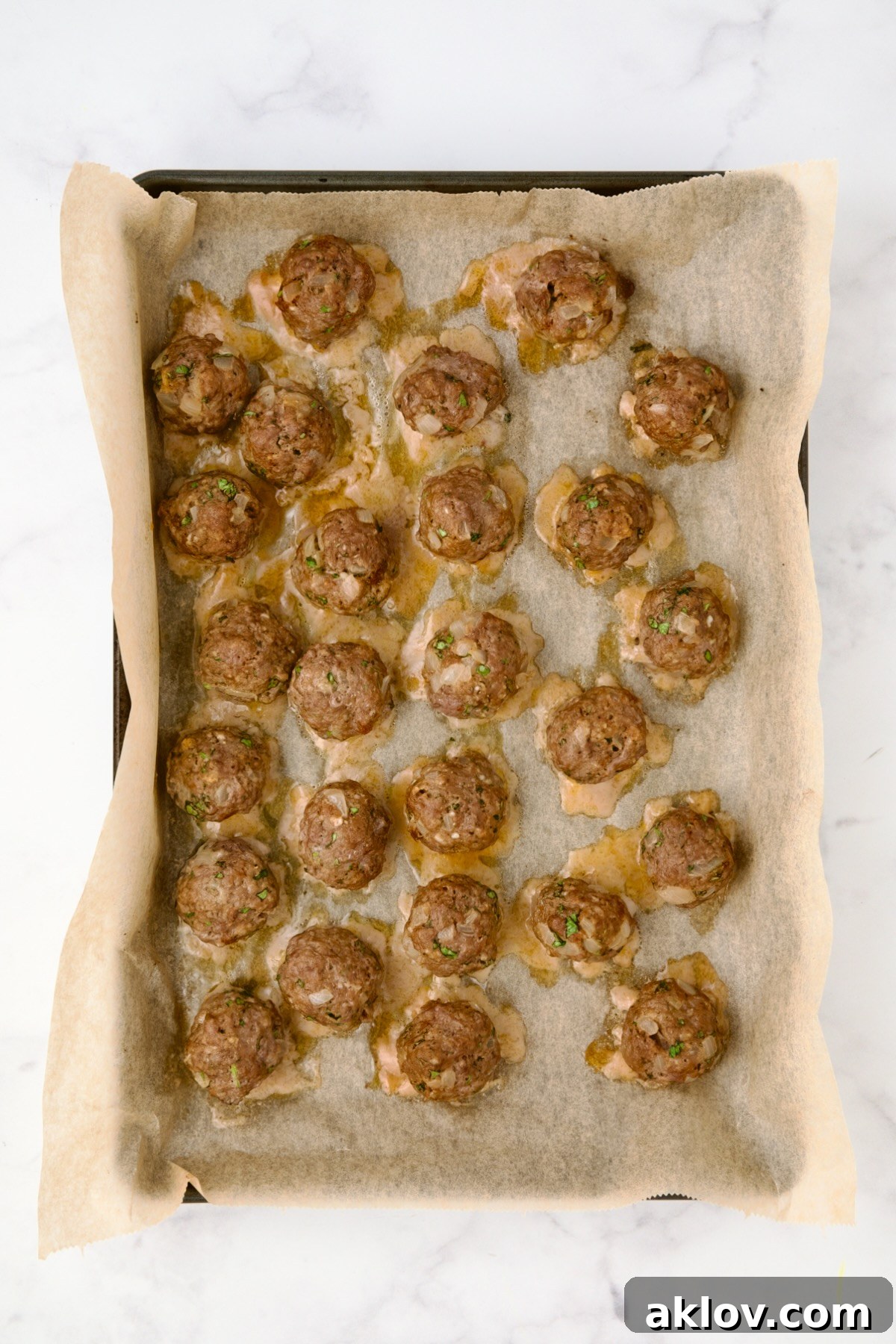
- Bake the meatballs in your preheated oven for 15 to 18 minutes, or until they reach an internal temperature of 165 degrees Fahrenheit (74°C) in the center. They should be nicely browned and cooked through.
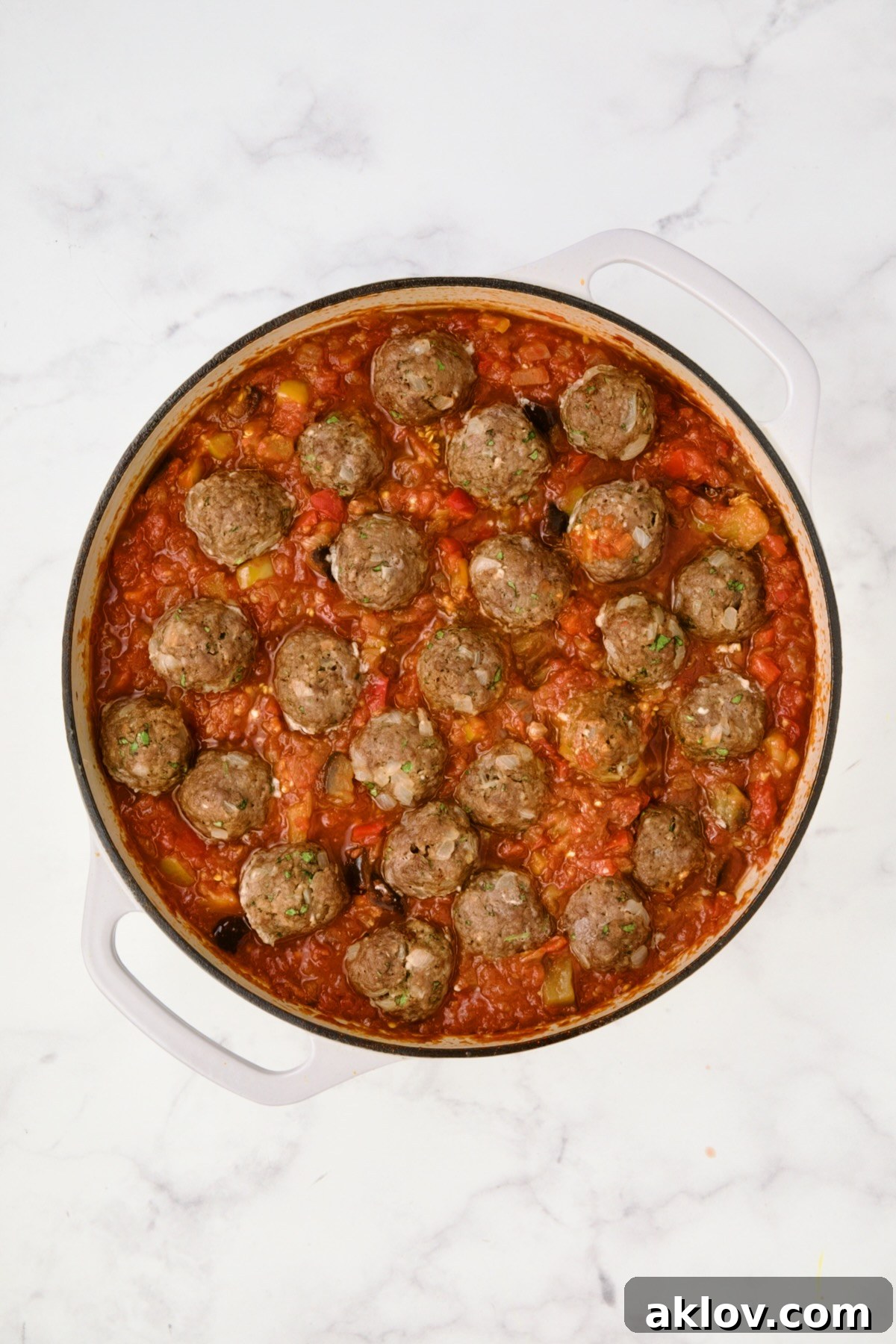
- Once baked, carefully transfer the cooked meatballs to the warm sauce in the skillet. Gently stir to ensure they are fully coated. Taste the stew again and adjust the seasoning as desired, adding more salt, pepper, or a pinch of any other spice to balance the flavors.
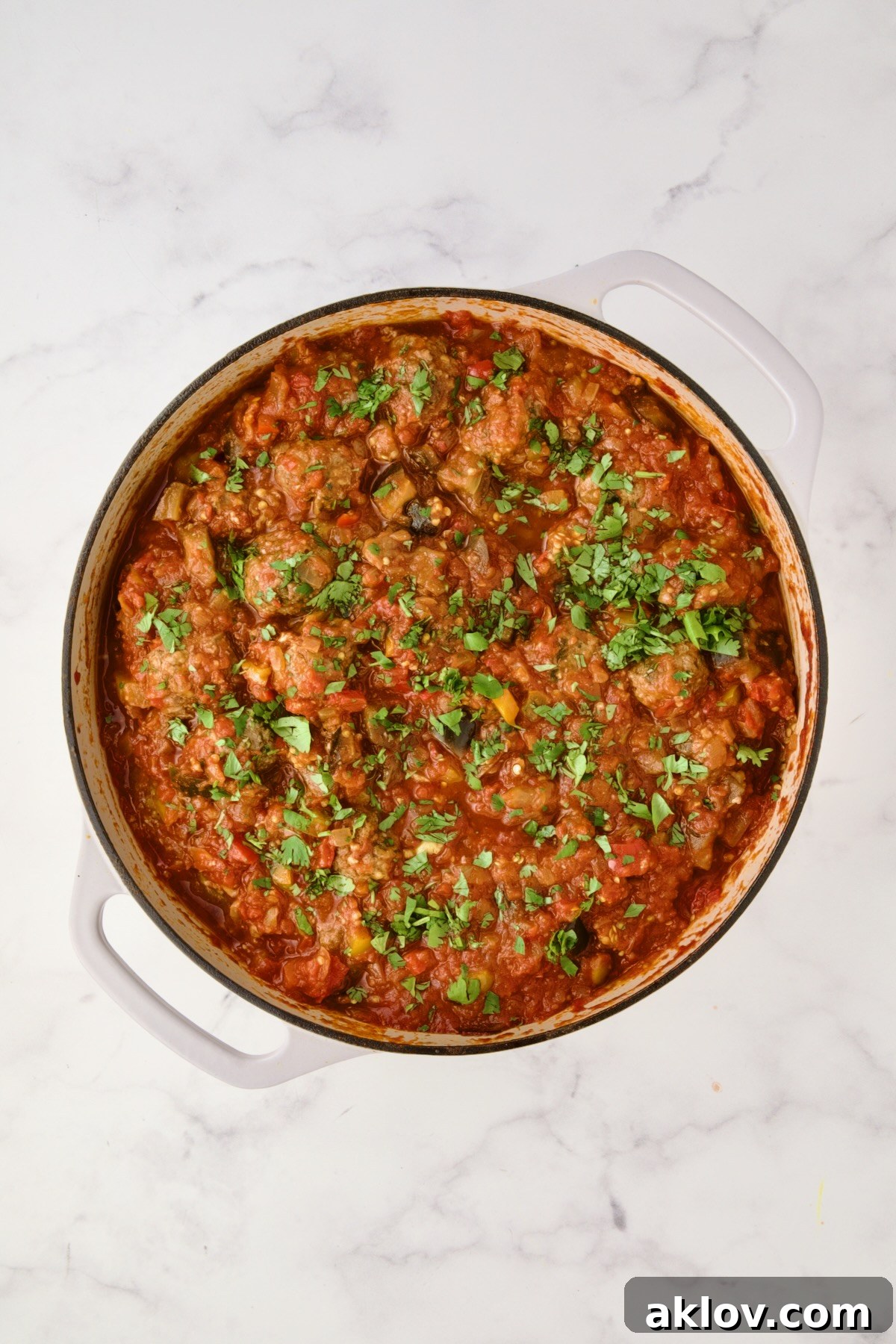
- Allow the meatballs to simmer gently in the sauce for an additional 5 to 10 minutes. This final simmering period is crucial as it allows the meatballs to absorb the rich flavors of the sauce and ensures all components are beautifully integrated. Just before serving, sprinkle with any remaining fresh cilantro for a burst of freshness and color.
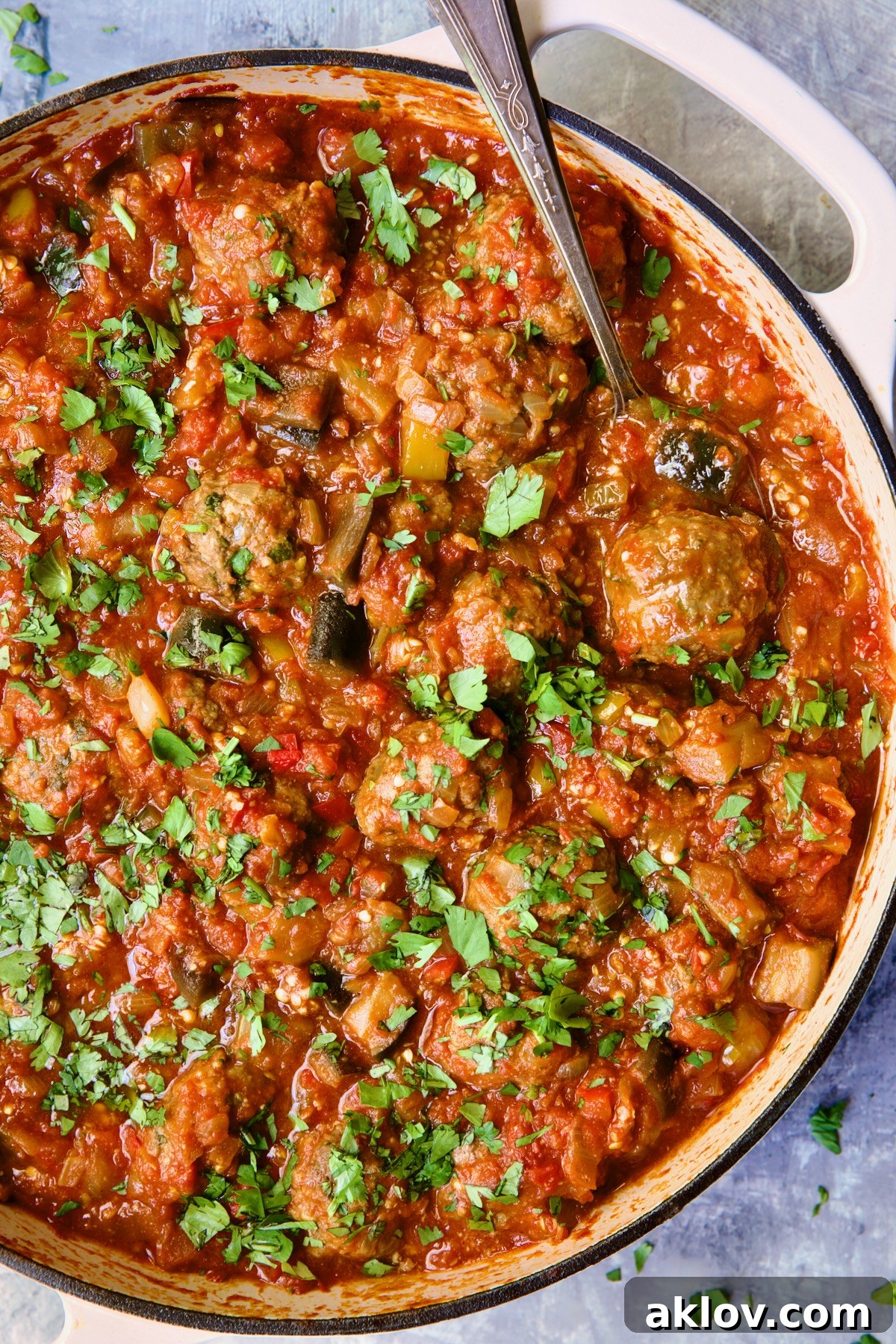
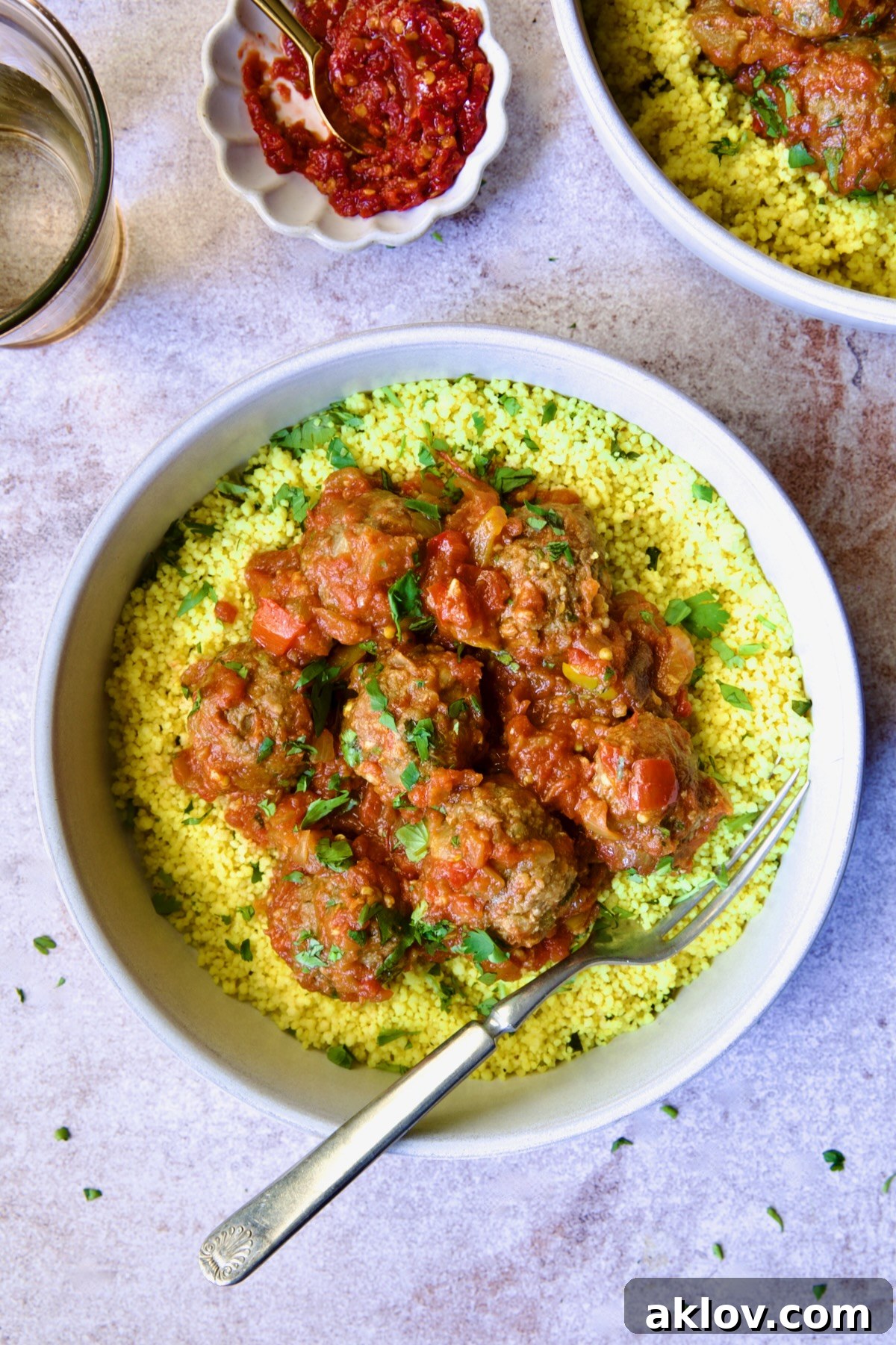
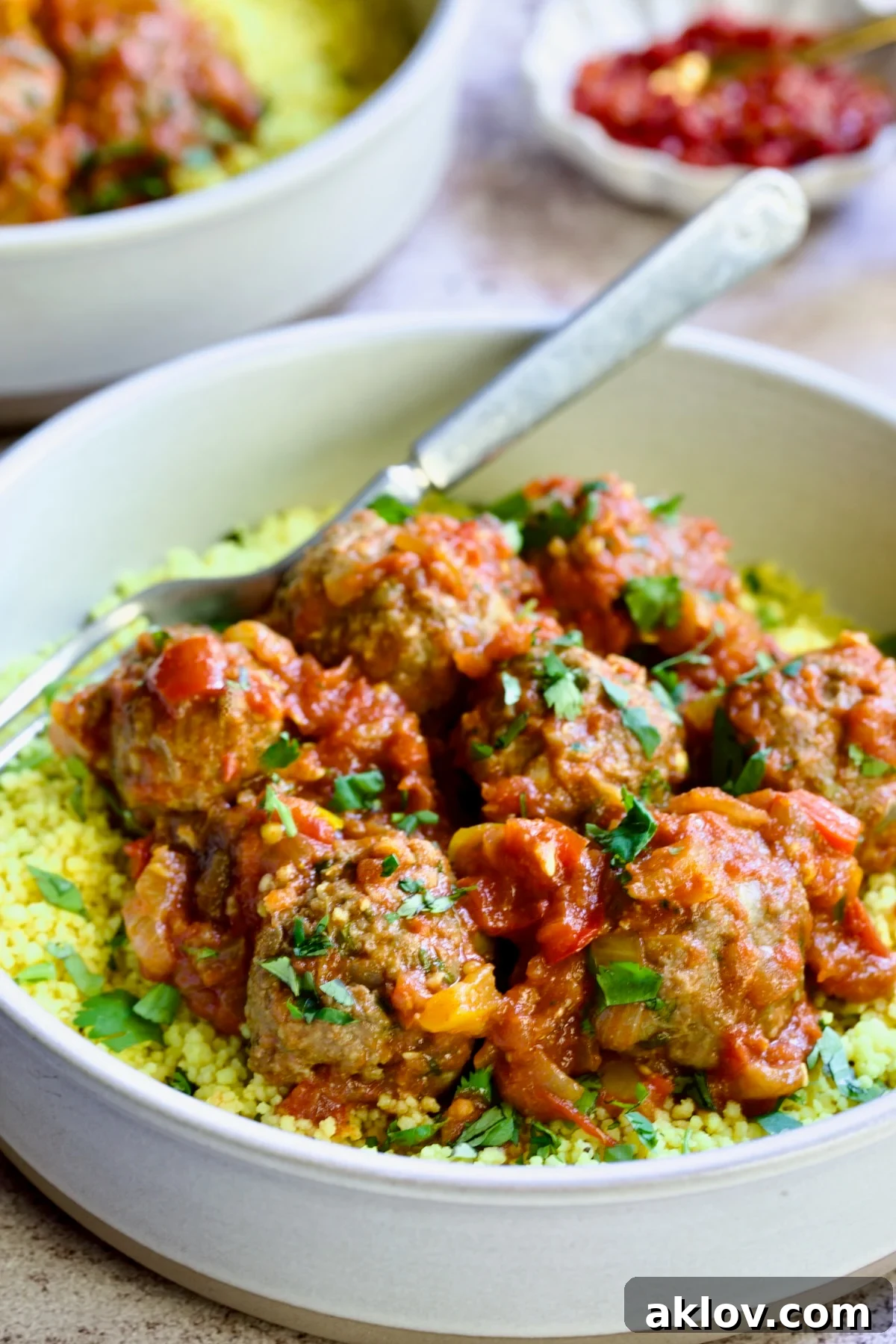
And there you have it! Your incredible Moroccan Meatball Stew is ready to be enjoyed. Serve it immediately over fluffy couscous, nutty quinoa, or a bed of fragrant rice. A simple green salad or a side of steamed green vegetables perfectly complements the richness of the stew, completing your wholesome and satisfying meal. You can also cool and refrigerate it to serve later, as the flavors only improve with time.
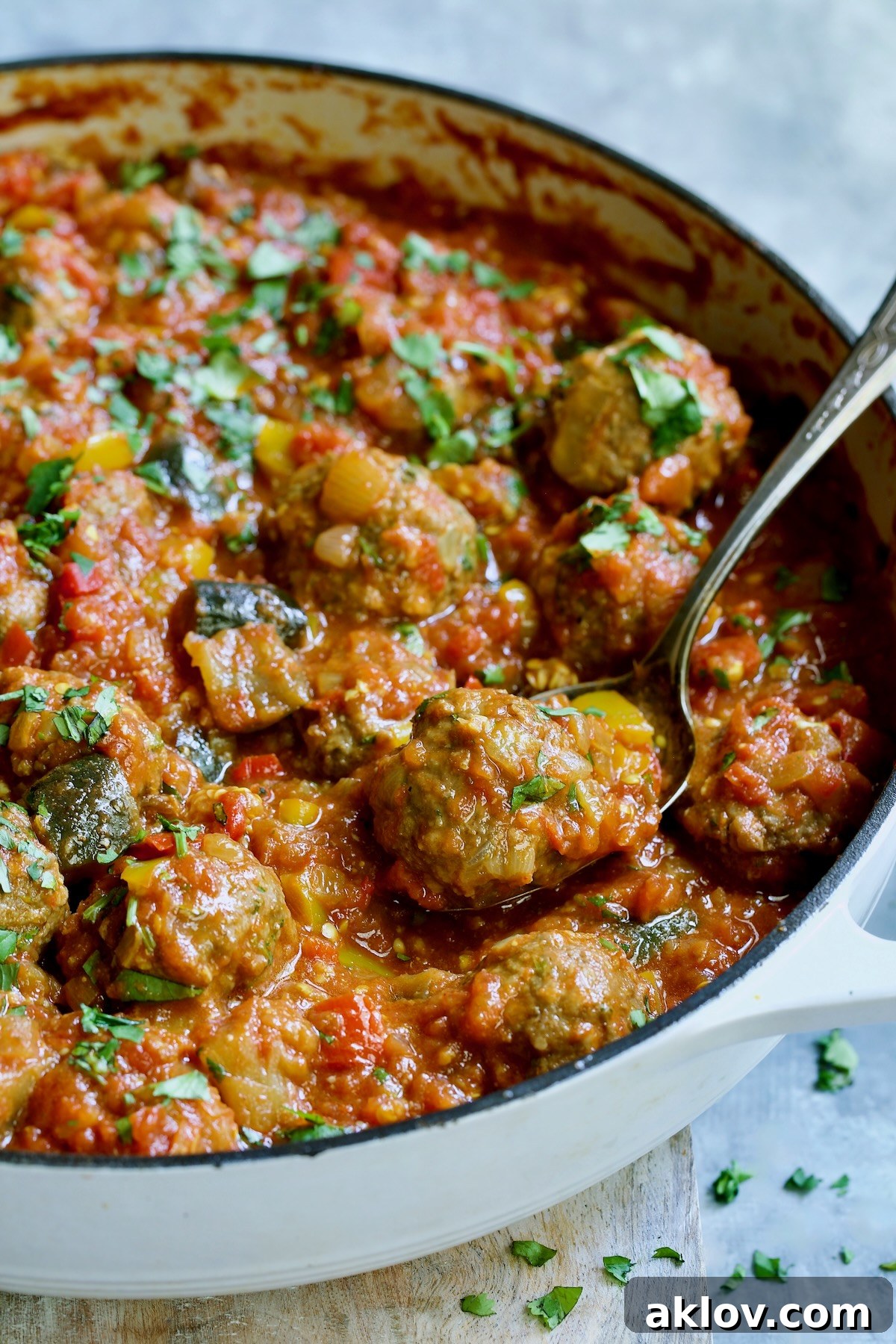
Chef Tips and Tricks for the Perfect Moroccan Meatball Stew:
Elevate your cooking with these expert insights to ensure your Moroccan Meatball Stew is consistently delicious and perfectly executed:
- Mindful Salting: Remember that the eggplant has already been seasoned with salt during its draining process, which also helps draw out bitterness. When seasoning the stew sauce, taste as you go and add salt sparingly to avoid over-salting. However, the salt in the meatball mixture is essential for properly seasoning the meat, so don’t reduce it there. Let your palate be your ultimate guide.
- Evenly Flavored Meatballs: For the most delicious and uniformly seasoned meatballs, always mix all the dry ingredients and wet binders (spices, panko, egg, broth, cilantro) together *before* adding the ground meat. This ensures that the seasonings are thoroughly distributed throughout the mixture without needing to overmix the meat, which can lead to tough meatballs. Mix just until combined.
- The One-Pot Method for Convenience: If you prefer to minimize dishes and make this a true one-pot meal, you can brown the meatballs in the same skillet before preparing the sauce. Once browned, remove them to a plate. You may need to add a little more olive oil to the pan. Then, proceed with cooking the onions and building your sauce as directed. Return the browned meatballs to the simmering sauce to finish cooking through, ensuring they reach an internal temperature of 165°F (74°C).
- “Blooming” Your Spices: Cooking the dry spices (paprika, cumin, turmeric, cayenne) briefly in the hot oil with the vegetables (about 15-30 seconds) is a technique known as “blooming.” This process gently toasts the spices, releasing their aromatic oils and significantly intensifying their flavors before liquids are added. Just be careful not to burn them.
- Quality of Ingredients: The fresher your spices and vegetables, the more vibrant the flavor of your stew. Try to use freshly ground spices whenever possible for the best aroma and taste.
- Resting Period for Flavor Development: While delicious immediately, allowing the stew to rest for 15-20 minutes off the heat before serving gives the flavors a chance to deepen and meld even further. This is especially true if you’re making it ahead of time.
- Uniform Meatball Size: Aim for consistently sized meatballs. This ensures they all cook evenly at the same rate, preventing some from being overcooked while others are still raw. A small cookie scoop can be very helpful for this.
- Garnish for Freshness: A final sprinkle of fresh cilantro or parsley before serving not only adds a beautiful pop of color but also a burst of fresh, herbaceous flavor that brightens the entire dish. A dollop of plain Greek yogurt or sour cream can also offer a lovely cool contrast.
Common Questions About This Moroccan Meatball Stew Recipe:
This recipe is incredibly versatile! You can absolutely substitute ground lamb for a richer, more authentic Moroccan flavor. Ground chicken or turkey are also excellent lean alternatives, though they may require a bit more seasoning to achieve the same depth. For a vegetarian or vegan option, plant-based meat substitutes work wonderfully to create equally delicious meatless meatballs.
Yes, absolutely! While baking offers a hands-off and less messy approach, browning the meatballs directly in the skillet before adding them to the sauce is a fantastic way to build flavor and make it a true one-pot wonder. To do this, you’ll still need to cook the portion of onions designated for the meatballs first and set them aside. Then, brown your meatballs in the hot skillet, working in batches if necessary to avoid overcrowding. Remove the browned meatballs to a plate. You might need to add a splash more oil to the pan. Then, add the reserved cooked onions back to the pan and proceed with the sauce instructions. Finally, return the browned meatballs to the simmering sauce to finish cooking through until they reach 165°F (74°C).
Yes, and we highly recommend it! This Moroccan Meatball Stew is an ideal make-ahead dish. The meatballs and sauce can be prepared up to 2-3 days in advance and stored in an airtight container in the refrigerator. In fact, many find that the flavors deepen and meld even more beautifully overnight, making it taste even better the next day. Simply reheat gently on the stovetop over medium-low heat or in a preheated oven at 350°F (175°C) until thoroughly warmed through and bubbling.
You certainly can adapt this recipe for a slow cooker! First, brown or bake your meatballs according to the recipe instructions, then place them in your slow cooker. In a separate skillet, soften the vegetables and bloom the spices as directed, then transfer this aromatic mixture to the slow cooker. Add the crushed tomatoes and beef broth. Cover and cook on LOW for 3 to 4 hours or on HIGH for 2 to 3 hours. Always ensure the meatballs reach an internal temperature of at least 165°F (74°C) in the center. To prevent the stew from becoming too watery, which can happen with slow cookers, remove the lid for the last 45 minutes to an hour (if cooking on LOW) or 20-30 minutes (if cooking on HIGH) to allow some of the liquid to evaporate and concentrate the flavors.
Absolutely! This Moroccan Meatball Stew freezes and reheats beautifully, making it perfect for convenient future meals. Allow the stew to cool completely to room temperature. Then, portion it into freezer-safe containers or heavy-duty freezer bags. It can be frozen for up to 3 to 4 months. When ready to enjoy, thaw it in the refrigerator overnight or use the defrost setting on your microwave. Reheat gently on the stovetop, in the oven at 350°F (175°C), or in the microwave until hot throughout.
The recipe includes cayenne pepper for a gentle warmth, which is characteristic of Moroccan cuisine. The amount specified provides a mild to moderate heat. If you prefer a milder stew, you can reduce or omit the cayenne pepper. For those who love more heat, feel free to increase the amount or add a pinch of red pepper flakes. You can also offer extra cayenne or a spicy harissa paste at the table for individual adjustment.
“Kefta” refers to the seasoned ground meat, often lamb or beef, used in Moroccan cuisine, while “tagine” denotes both the traditional conical clay pot in which many Moroccan dishes are slow-cooked and the stew itself. So, “kefta tagine” literally means a stew of ground meat. It’s a staple in North African cooking, known for its rich, aromatic flavors and tender, slow-cooked ingredients. Our recipe captures the essence of this traditional dish, even if not cooked in a physical tagine pot.
Yes! To make this stew vegetarian, substitute the ground beef with a high-quality plant-based ground meat alternative for the meatballs. For a vegan version, additionally ensure you use vegetable broth instead of beef broth and omit the egg from the meatballs. The rest of the ingredients are naturally plant-based, and the rich spices ensure it remains incredibly flavorful.
Exciting Variations for Your Moroccan Meatball Stew:
Once you’ve mastered the classic Moroccan Meatball Stew, feel free to get creative with these delicious variations:
- Traditional Kefta Tagine with Eggs: For a truly authentic experience, gently crack a couple of eggs directly into the simmering stew during the last 10-15 minutes of cooking. Cover the skillet and let it simmer until the egg whites are set but the yolks are still wonderfully runny. This is a common and beloved way to serve kefta tagine.
- A Touch of Sweetness: Add a handful of golden raisins or coarsely chopped dried apricots along with the crushed tomatoes. Their natural sweetness provides a delightful contrast to the savory spices, a hallmark of many North African dishes. Dried prunes or dates can also be used.
- Briny Olives and Zesty Preserved Lemon: For an extra layer of authentic Moroccan flavor, stir in a quarter cup of pitted green or Kalamata olives and a few strips of preserved lemon rind (finely chopped) during the last few minutes of simmering. These ingredients add a wonderful tangy and salty depth.
- Add Legumes: Boost the heartiness and nutritional value by stirring in a can of rinsed and drained chickpeas or lentils during the last 15 minutes of cooking. They absorb the stew’s rich flavors beautifully.
- Fresh Herb Boost: While cilantro is essential, a mix of fresh parsley and mint alongside cilantro can add an even fresher, brighter dimension to the stew, especially as a final garnish.
- Spicy Kick: If you enjoy more heat, consider adding a teaspoon of harissa paste along with the other spices, or offer it as a condiment on the side for individual preference.
Perfect Pairings for Your Moroccan Meatball Stew:
Enhance your meal with these delightful side dishes that perfectly complement the rich flavors of this stew:
- Couscous, Rice, or Quinoa: These are classic choices for soaking up the flavorful sauce. Fluffy couscous is particularly traditional.
- Garlic Green Beans: A simple yet flavorful green vegetable that adds freshness and a nice crunch.
- Cauliflower Rice: A low-carb alternative that still provides a great base for the stew.
- Lemony Braised Greens: The brightness of lemon and earthy greens cut through the richness of the stew beautifully.
- Tunisian Salad Platter: A refreshing, vibrant salad with fresh vegetables and herbs offers a light contrast.
- Warm Pita or Crusty Bread: Perfect for scooping up every last bit of that delicious sauce.
Discover More Irresistible Meatball Recipes!
If you’re a fan of flavorful meatballs, explore these other fantastic recipes that are sure to become family favorites:
- Meatballs in Spicy Curry: A rich and aromatic curry infused with tender meatballs.
- Asian Chicken Meatballs: Savory and sweet, perfect for a lighter meal or appetizer.
- Asian Pork Meatballs: Glazed with a delicious hoisin sauce and served with noodles.
- Chicken Marsala Meatballs: A classic Italian-American dish reimagined with tender chicken meatballs.
For even more inspiring beef dishes, visit our collection of Beef Recipes – From A Chef’s Kitchen.
Print Recipe
Moroccan Meatball Stew
Equipment
-
Wusthof Chef Knife
-
Cutting Board
-
Colander
-
Stainless Steel Mixing Bowls
-
Cookie Scoop Set
-
Rimmed Sheet Pan
-
Large Skillet (Cast Iron or Stainless Steel)
Ingredients
For the Sauce
- 1 medium eggplant, (approximately 1 pound) cut into 1/2 to 1-inch cubes
- 2 teaspoons salt, plus more for sauce
- 1/4 cup extra-virgin olive oil, or as needed
- 1 large onion, chopped (3 cups)
- 1 large yellow bell pepper, seeded, membranes removed and chopped
- 1 large red bell pepper, seeded, membranes removed and chopped
- 5 cloves garlic, minced
- 1 tablespoon Hungarian paprika
- 2 teaspoons ground cumin
- 1/2 teaspoon ground turmeric
- 1/2 teaspoon cayenne pepper, or to tolerance
- 1 can (28-ounce) crushed tomatoes
- 3/4 cup beef broth
- Freshly ground black pepper, to taste
- 1/4 cup chopped fresh cilantro
For the Meatballs
- 3 cloves garlic, minced
- 2 teaspoons Hungarian paprika
- 1 teaspoon ground cumin
- 1/2 teaspoon cayenne pepper
- Pinch ground cinnamon
- 1 teaspoon salt
- 1/4 teaspoon Freshly ground black pepper
- 1/2 cup panko breadcrumbs
- 1 large egg
- 1/4 cup beef broth
- 1/2 cup chopped fresh cilantro, divided (1/4 cup for sauce, 1/4 cup for meatballs)
- 1 pound ground beef, or ground lamb
- Cooked couscous, rice, or quinoa for serving
Instructions
Prepare the Sauce
-
Place cubed eggplant in a colander. Sprinkle with 2 teaspoons of salt and let drain for 30 minutes to remove excess moisture and bitterness.
-
While eggplant drains, heat 1/4 cup olive oil in a large skillet over medium-high heat. Add chopped onion, reduce heat to medium-low, and cook for 5-6 minutes until softened. Transfer 1/3 of the cooked onion to a bowl for the meatballs and let cool.
-
Add bell peppers to the skillet and continue cooking for 3-4 minutes until they begin to soften.
-
Pat the drained eggplant dry with paper towels. Add it to the skillet and cook for 7-8 minutes, or until softened and easily pierced with a knife.
-
Stir in 5 cloves minced garlic, 1 tablespoon paprika, 2 teaspoons cumin, 1/2 teaspoon turmeric, and 1/2 teaspoon cayenne pepper. Cook, stirring constantly, for just 15 seconds to bloom the spices.
-
Add the 28-ounce can of crushed tomatoes and 3/4 cup beef broth to the skillet.
-
Bring the sauce to a simmer and cook for 15 minutes, or until thickened. Season to taste with salt and freshly ground black pepper. Stir in 1/4 cup of chopped fresh cilantro and keep warm.
Make the Meatballs
-
Preheat oven to 375°F (190°C). Line a rimmed baking sheet with parchment paper or nonstick aluminum foil.
-
To the bowl with the reserved cooked onions: Add 3 cloves minced garlic, 2 teaspoons paprika, 1 teaspoon cumin, 1/2 teaspoon cayenne, a pinch of cinnamon, 1 teaspoon salt, 1/4 teaspoon black pepper, 1/2 cup panko, 1 large egg, 1/4 cup beef broth, and the remaining 1/4 cup chopped cilantro. Stir these ingredients together very well until combined. Then, add 1 pound ground beef (or lamb) and mix gently until just combined.
-
Form the beef mixture into 1 to 1 1/2-inch balls. Place them on the prepared baking sheet and bake for 15-18 minutes, or until they reach an internal temperature of 165°F (74°C) in the center.
To Finish and Serve
-
Transfer the baked meatballs to the warm sauce in the skillet. Gently stir to combine and adjust seasoning as desired. Simmer for 5-10 minutes to allow all the flavors to blend harmoniously.
-
Sprinkle with any additional fresh cilantro for garnish and serve your delightful Moroccan Meatball Stew hot with your favorite accompaniment.
Notes
Key Ingredient Insight: The single large onion listed in the ingredients will be divided. A portion is used for the sauce base, and another portion is reserved to be mixed into the meatballs, ensuring flavor throughout.
Substitutions:
- Feel free to use ground lamb, chicken, or turkey for the meatballs. For a plant-based option, quality meat alternatives work wonderfully.
- Beef broth can be swapped for chicken or vegetable broth depending on dietary needs or preference.
Chef’s Tips for Success:
- Always adjust the cayenne pepper to your personal spice tolerance. You can always add a pinch more at the end, but it’s harder to remove!
- Be cautious when salting the sauce, as the eggplant was pre-salted. Taste before adding more. The salt in the meatballs is crucial, however.
- Mix all meatball ingredients (except the ground meat) first to ensure even seasoning and avoid overmixing the meat, which can make meatballs tough.
- For a true one-pot experience, brown the meatballs in the skillet before making the sauce. Transfer them out, build the sauce, then add them back to finish cooking.
- Briefly cooking dried spices with the vegetables (“blooming”) helps to unlock and intensify their flavors dramatically.
Make-Ahead Instructions:
- This stew can be prepared up to 2 days in advance and stored in the refrigerator. The flavors will deepen overnight, enhancing the taste.
- Reheat in a large baking dish, covered, in the oven at 350°F (175°C) until gently bubbling, or gently on the stovetop. It can also be reheated in a slow cooker.
Freezer-Friendly Storage:
- Once completely cooled, portion the stew as desired into freezer-safe containers or bags. It freezes well for 3 to 4 months.
- Thaw overnight in the refrigerator or use the defrost setting in the microwave. Reheat gently in the microwave, oven, or on the stovetop at 350°F (175°C) until heated through.
Nutrition
Nutritional values are automatically calculated using unbranded products and are estimates only. Actual results may vary based on ingredients used and portion sizes. Adjust as needed for dietary restrictions, allergies, or health concerns.
 Like this? Leave a comment below!