
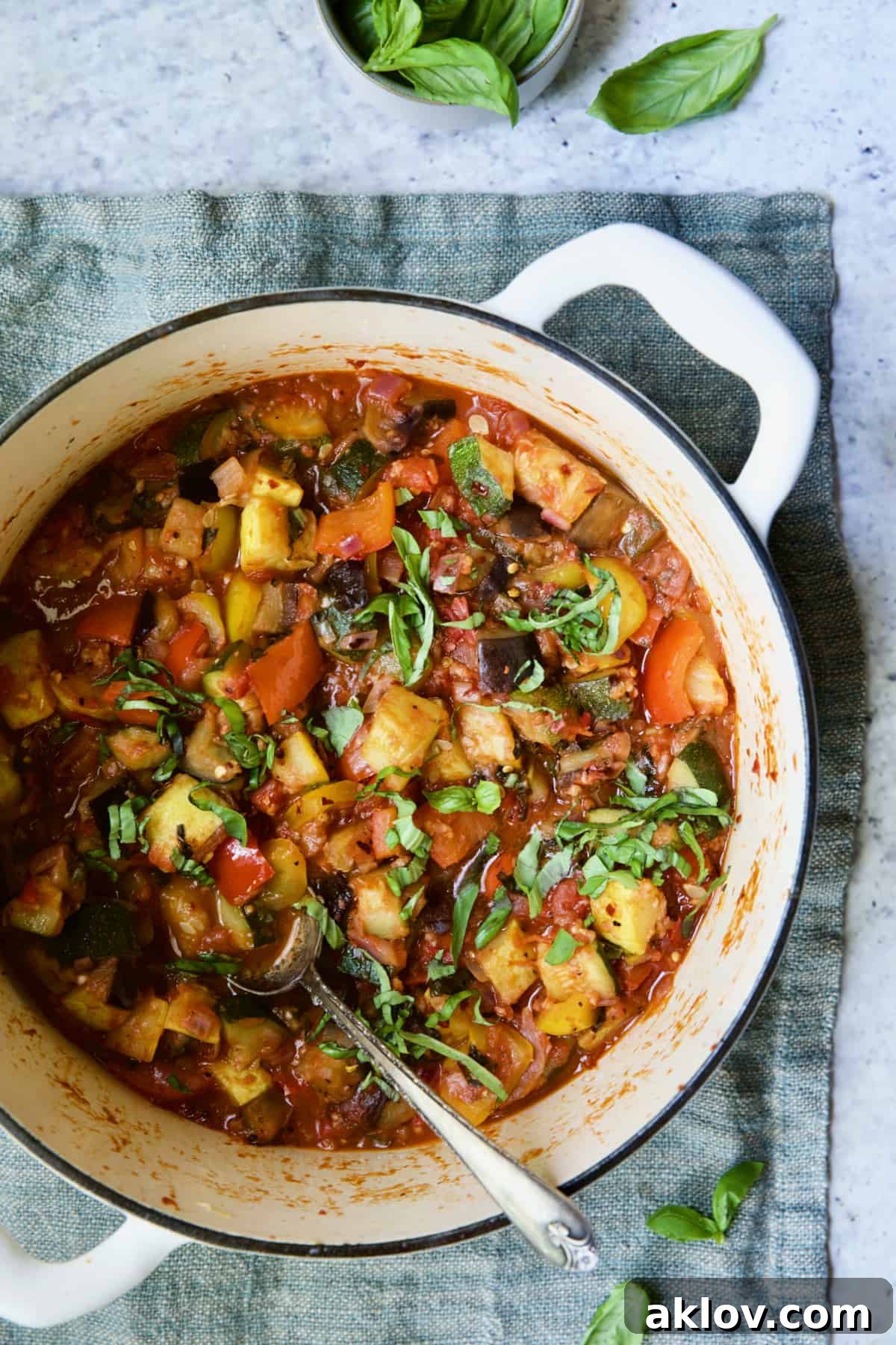
Welcome to the enchanting world of French Provencal cuisine, where the vibrant bounty of summer vegetables takes center stage in this authentic **Traditional Ratatouille Recipe**. Imagine succulent eggplant, tender zucchini, vibrant yellow squash, and sweet bell peppers, all simmered slowly in a rich, aromatic tomato sauce. This isn’t just a dish; it’s a culinary journey to the sun-drenched hillsides of Southern France, easily recreated in your own kitchen. Whether you’ve just returned from a bustling farmer’s market with an armful of seasonal produce or simply crave a taste of Mediterranean warmth, this classic ratatouille is the perfect answer, brimming with natural flavors and wholesome goodness.
“This is by far the best ratatouille recipe I’ve ever made. Second time I’ve made it. … It’s my family’s favorite. Thank you!!”
Why This Traditional Ratatouille Recipe is a Culinary Treasure
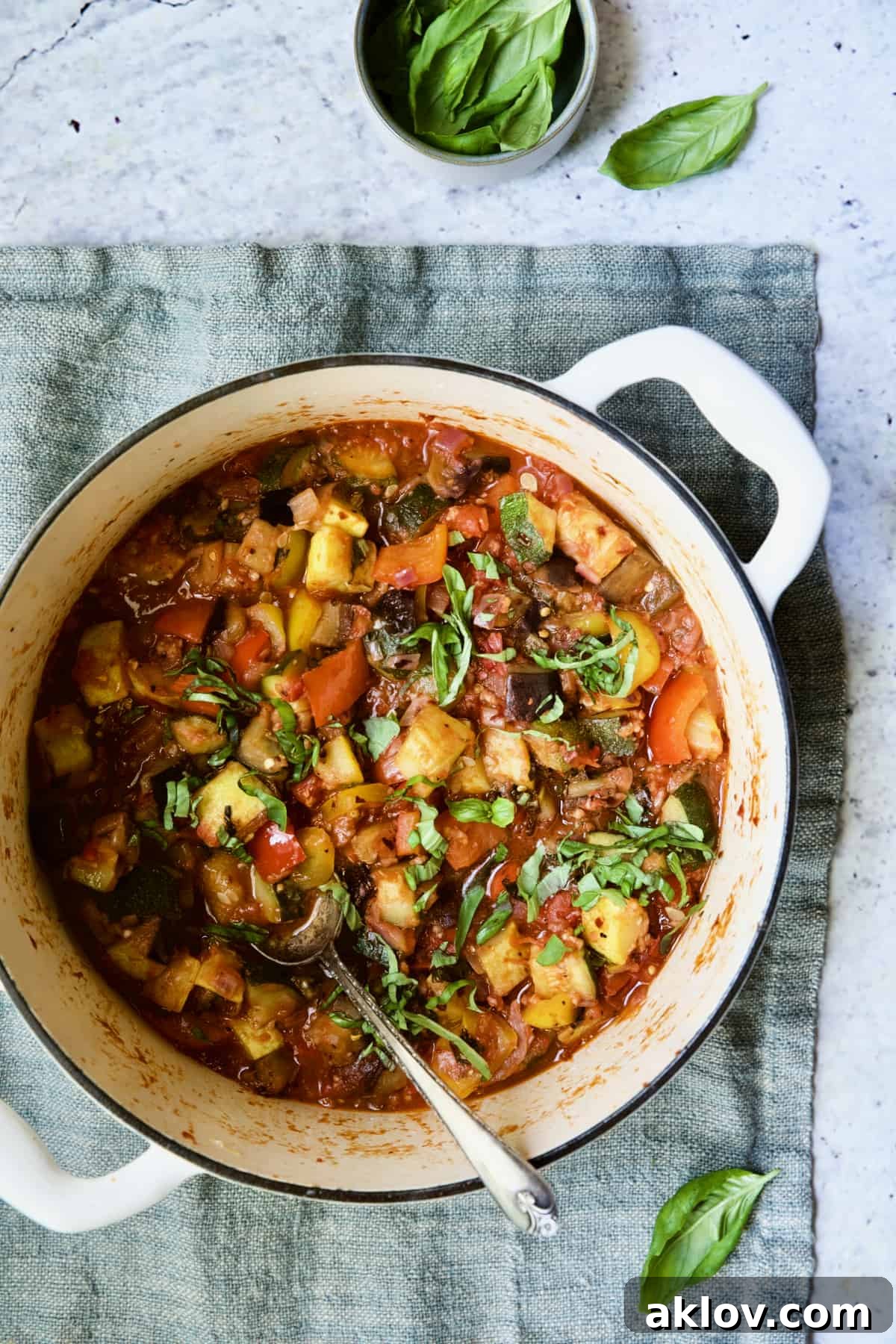
If comfort food had a seasonal signature, this traditional French Ratatouille would undoubtedly be the emblem of summer. As our gardens burst with the very best eggplant, zucchini, bell peppers, and tomatoes, my anticipation grows for making this dish. This easy ratatouille recipe is not only an excellent way to utilize an abundance of garden produce, but its flavors deepen and meld beautifully overnight, making it even more delicious the next day – a true testament to its comforting nature.
Many ratatouille recipes call for vegetables to be sautéed, browned, or roasted in separate batches on baking sheets, then combined, and finally stewed in the oven or on the stovetop. While these methods yield delicious results, I advocate for the time-honored stovetop method, which truly encapsulates the essence of traditional ratatouille. My approach involves a brief simmer on the stovetop, ensuring the vegetables retain a delightful texture, preventing them from becoming overly soft or mushy. This preserves their individual character while allowing them to harmonize in the rich tomato sauce.
While ratatouille does involve some knife work, requiring vegetables to be cut into uniform ½-inch to 1-inch pieces, this process is surprisingly quick and satisfying. It’s far less intricate than fine chopping or dicing, making it an accessible dish for home cooks of all skill levels. The rustic cuts contribute to the stew’s authentic charm.
Another remarkable quality of this classic ratatouille is its incredible versatility. It serves as a fantastic main course when paired with fluffy brown rice, earthy quinoa, or delicate couscous. For a more traditional experience, serve it alongside crusty French bread, toasted or grilled to perfection, perfect for soaking up every last drop of the flavorful sauce. It can be enjoyed warm straight from the pot, at room temperature for a lighter meal, or even chilled as a refreshing summer salad. Moreover, this dish is naturally vegan and gluten-free, making it a perfect, inclusive option for nearly any diet or dining preference, ensuring everyone at your table can savor its wholesome goodness.
What is Traditional French Ratatouille?
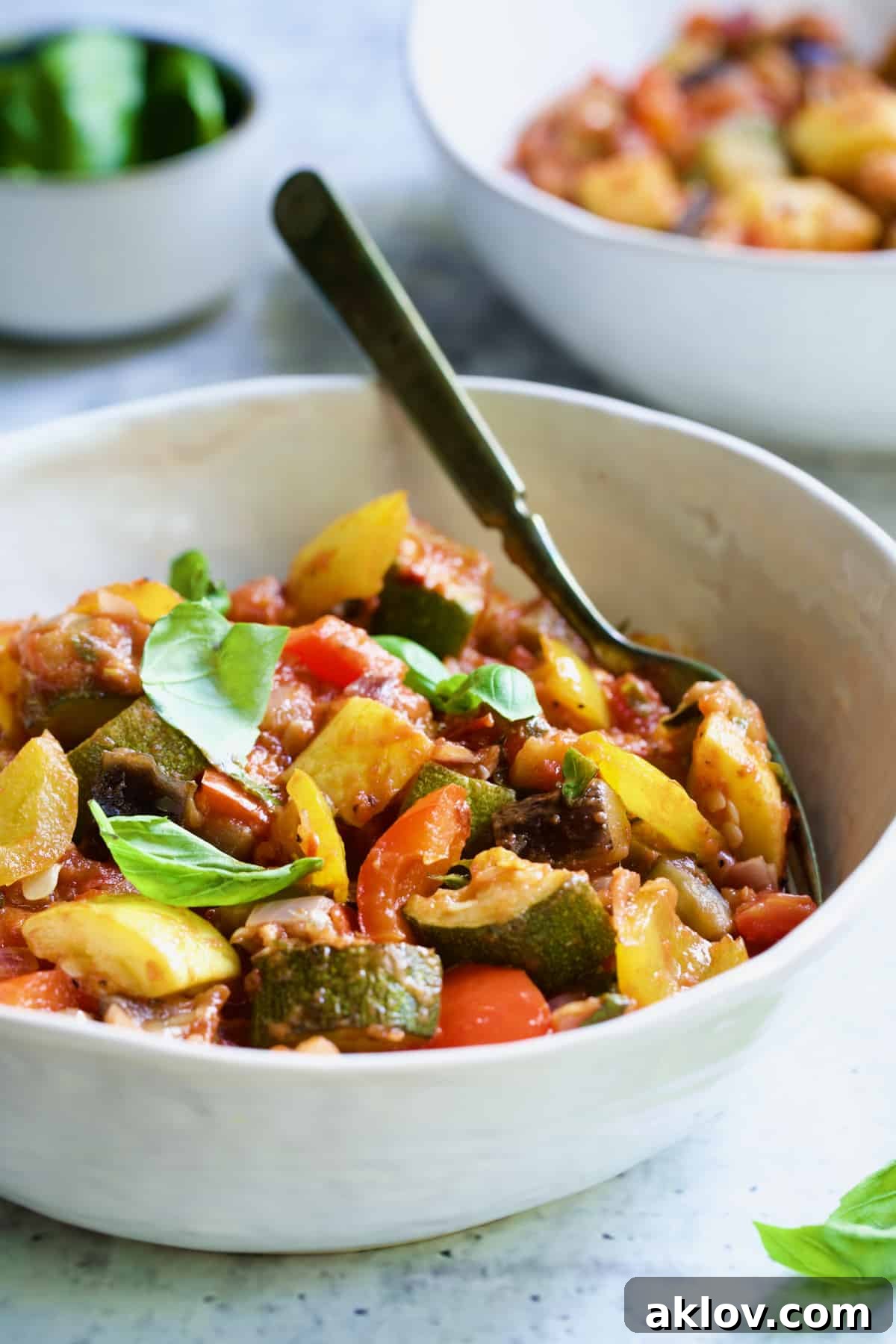
At its heart, original Ratatouille is a rustic and soulful vegetable stew originating from Nice, a vibrant city in the Provence region of Southern France. This iconic dish celebrates the peak flavors of summer, featuring a harmonious blend of eggplant, bell peppers, zucchini, summer squash, onions, and ripe tomatoes. In some interpretations, the vegetables are combined and cooked for an extended period until they achieve a delightfully tender, almost melting consistency.
Historically, ratatouille was considered a humble peasant dish. It was typically prepared with readily available, often leftover, garden vegetables and sometimes even kitchen scraps. The “rough cut” style of vegetable preparation, where pieces were not meticulously uniform, further underscored its rustic origins. Its affordability and versatility meant it could be stretched by serving it with inexpensive staples like rice, pasta, or crusty bread, making it a nourishing meal for many.
A common misconception, largely popularized by the charming 2007 Pixar film Ratatouille, is that the elegant dish served to the restaurant critic is the traditional ratatouille. In reality, the film features a beautifully arranged vegetable tian, which, while sharing some or all of the same ingredients, differs significantly in its preparation. A tian involves meticulously arranging and layering vegetables in a casserole dish before baking it to perfection. Authentic traditional Ratatouille, by contrast, is a hearty, free-form vegetable stew, characterized by its comforting, simmering preparation, not its artful arrangement. This distinction is crucial for understanding the true spirit of this classic French culinary creation.
How to Prepare a Classic Traditional Ratatouille Recipe
Creating this traditional ratatouille is a straightforward and rewarding process. Follow these steps to bring the flavors of Provence into your home.
Essential Ratatouille Ingredients:
Below is a detailed list of everything you’ll need to craft this authentic traditional Ratatouille recipe. The precise quantities can also be found in the comprehensive recipe card that follows.
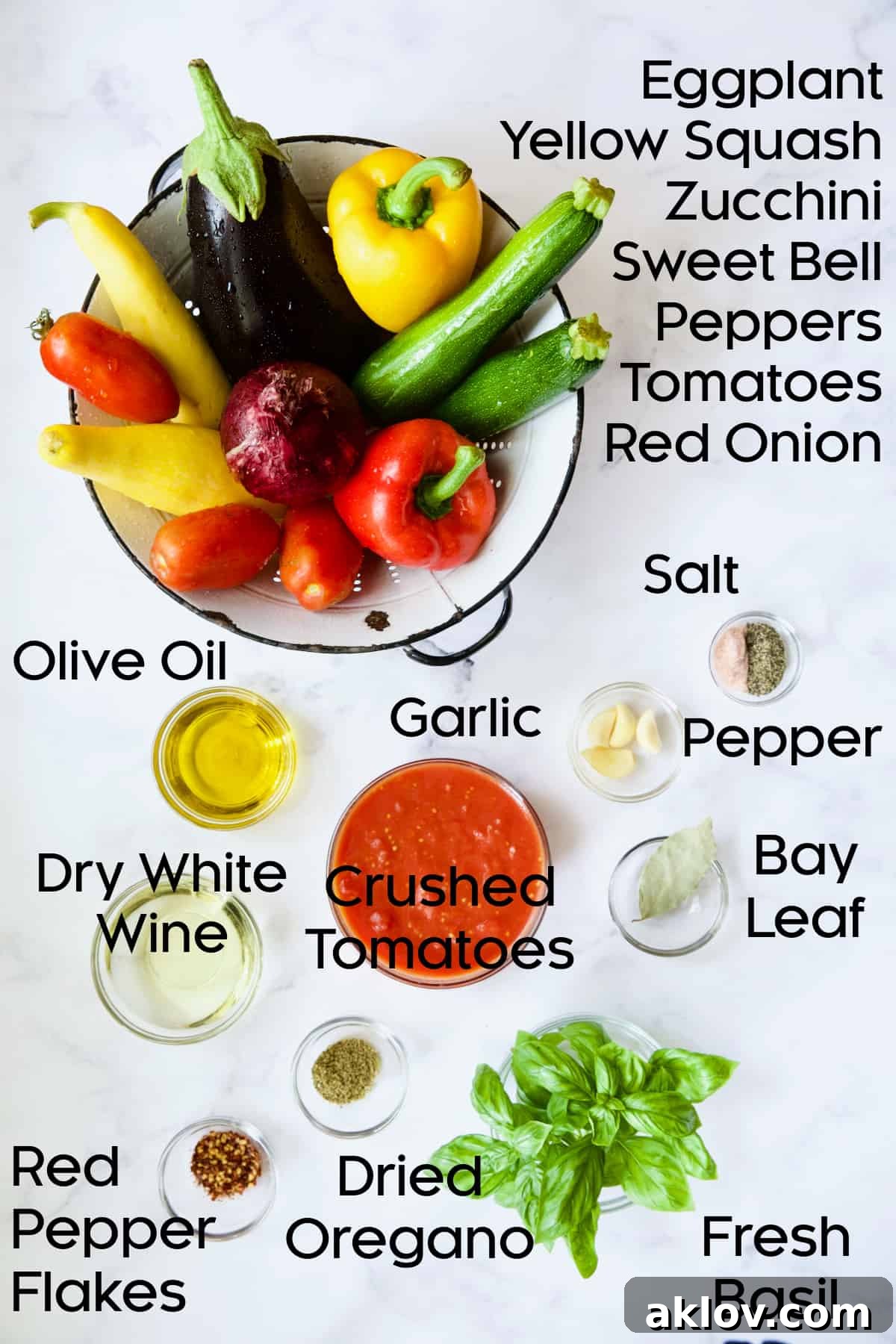
Ingredient Notes and Helpful Substitutions:
- Eggplant: A cornerstone of traditional French Ratatouille, eggplant provides a rich, meaty texture. A long-held belief suggests that eggplant must always be salted before cooking to draw out bitterness. However, eggplant naturally possesses a mild, pleasant bitterness that many find appealing. Salting becomes more of a personal preference, though it is particularly useful for larger, seedy eggplants which can develop a more pronounced bitter flavor. For this recipe, I salt the eggplant primarily because it significantly reduces the amount of oil absorbed during cooking. By extracting excess liquid, the eggplant becomes less spongy, resulting in a lighter, less oily final dish. After draining, always pat the eggplant thoroughly dry with paper towels to remove any residual moisture and salt before proceeding.
- Bell Peppers: Feel free to use any variety of sweet bell pepper or a colorful combination. Red, yellow, or orange bell peppers will all contribute to the dish’s sweetness and vibrant appearance. Green bell peppers can be used for a slightly sharper, less sweet flavor, if preferred.
- Dry White Wine: A dry white wine, such as Chardonnay or Sauvignon Blanc, adds a layer of depth and acidity that brightens the entire dish. Always select a wine that you would enjoy drinking on its own, as its flavor will concentrate in the stew. Alcohol Substitute: If you prefer to cook without alcohol, a high-quality vegetable broth makes an excellent substitute. To mimic the acidity of wine, add 1 to 2 teaspoons of white wine vinegar to the broth. Water can also be used, but broth will impart more flavor.
- Crushed Tomatoes: The foundation of our flavorful sauce. You can use good quality canned crushed tomatoes for convenience, whole peeled tomatoes that you crush yourself (for a fresher, more rustic texture), or a homemade fresh tomato sauce. My Parma-Style Tomato Sauce is a fantastic option if you have extra fresh tomatoes on hand.
- Seasonings: While ratatouille celebrates summer’s fresh bounty, I often opt for dried oregano in this recipe. Dried herbs, when simmered, release a more concentrated and profound flavor that stands up beautifully to the other robust ingredients. Fresh herbs are typically best added towards the end of the cooking process to preserve their delicate aromatics. In this instance, I found that dried oregano offers a distinct profile that doesn’t compete with the fresh basil, which is added at the very end for a burst of vibrant freshness.
Step-By-Step Instructions for Your Classic Ratatouille:
Embark on your ratatouille adventure with these detailed steps, ensuring each vegetable reaches its perfect state before melding into a symphony of flavor.
- Begin by gathering and precisely measuring all your ratatouille ingredients. The French culinary term for this vital preparatory step is mise en place, meaning “everything in its place.” This ensures a smooth and stress-free cooking experience.
- First, cube the eggplant into 1-inch pieces. Place the cubed eggplant in a colander, then generously sprinkle it with about a teaspoon of salt. Allow it to drain in the sink or over a bowl while you prepare the remaining vegetables. This crucial step draws out excess moisture and bitterness, resulting in a perfectly textured eggplant that won’t absorb too much oil.
- While the eggplant drains, take this time to chop and prepare all the remaining vegetables according to the specified sizes.
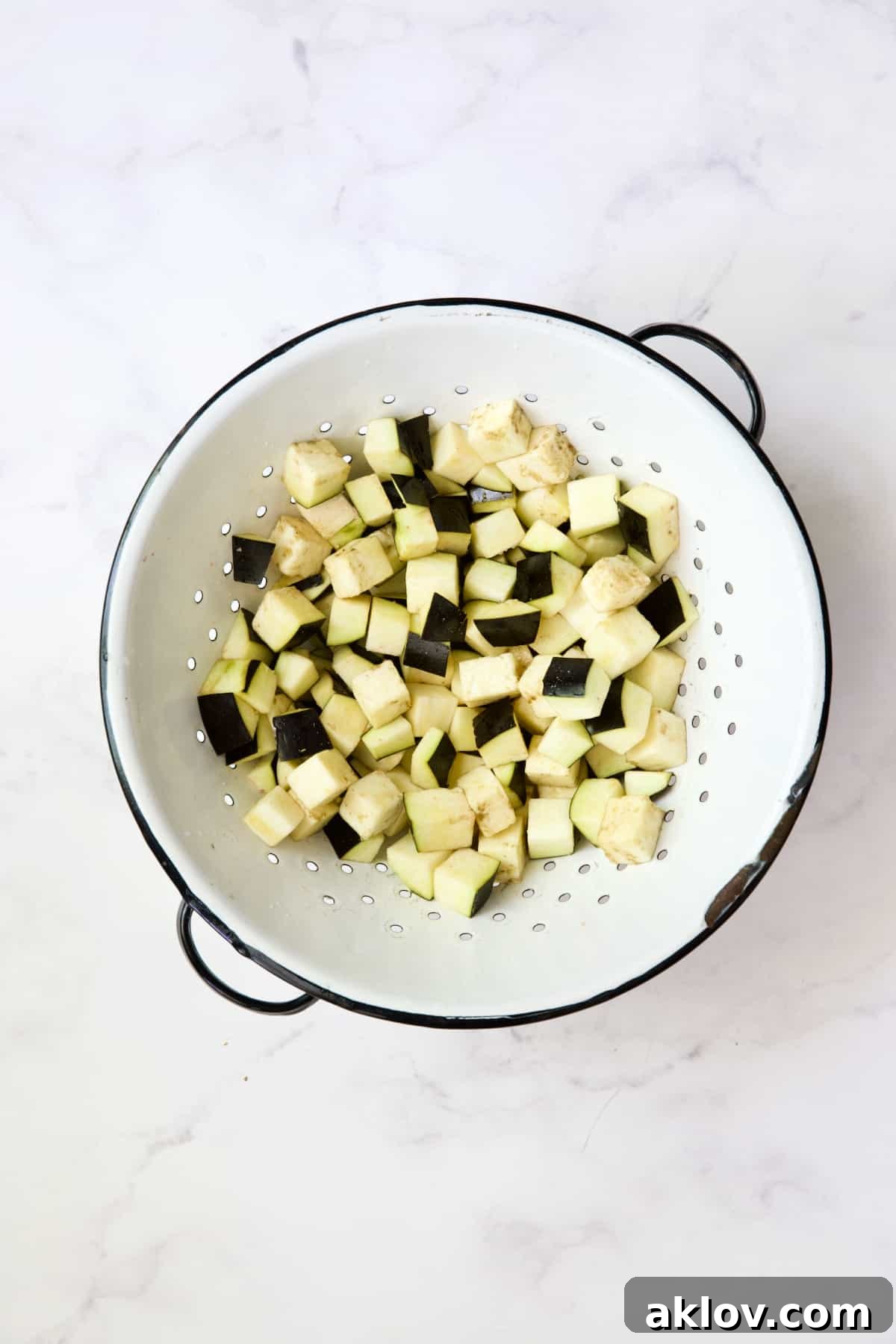
- Once the eggplant has drained sufficiently (approximately 20-30 minutes), pat it thoroughly dry with paper towels to remove any surface moisture and excess salt. This prevents splattering and promotes even browning.
- Heat a portion of the olive oil (about 2 tablespoons) in a large Dutch oven or heavy-bottomed pot over medium-high heat. Add the dried eggplant, reduce the heat to medium, and cook for 3-4 minutes, stirring occasionally, until it begins to soften and acquire a light brown hue. Transfer the browned eggplant to a separate bowl and set aside.
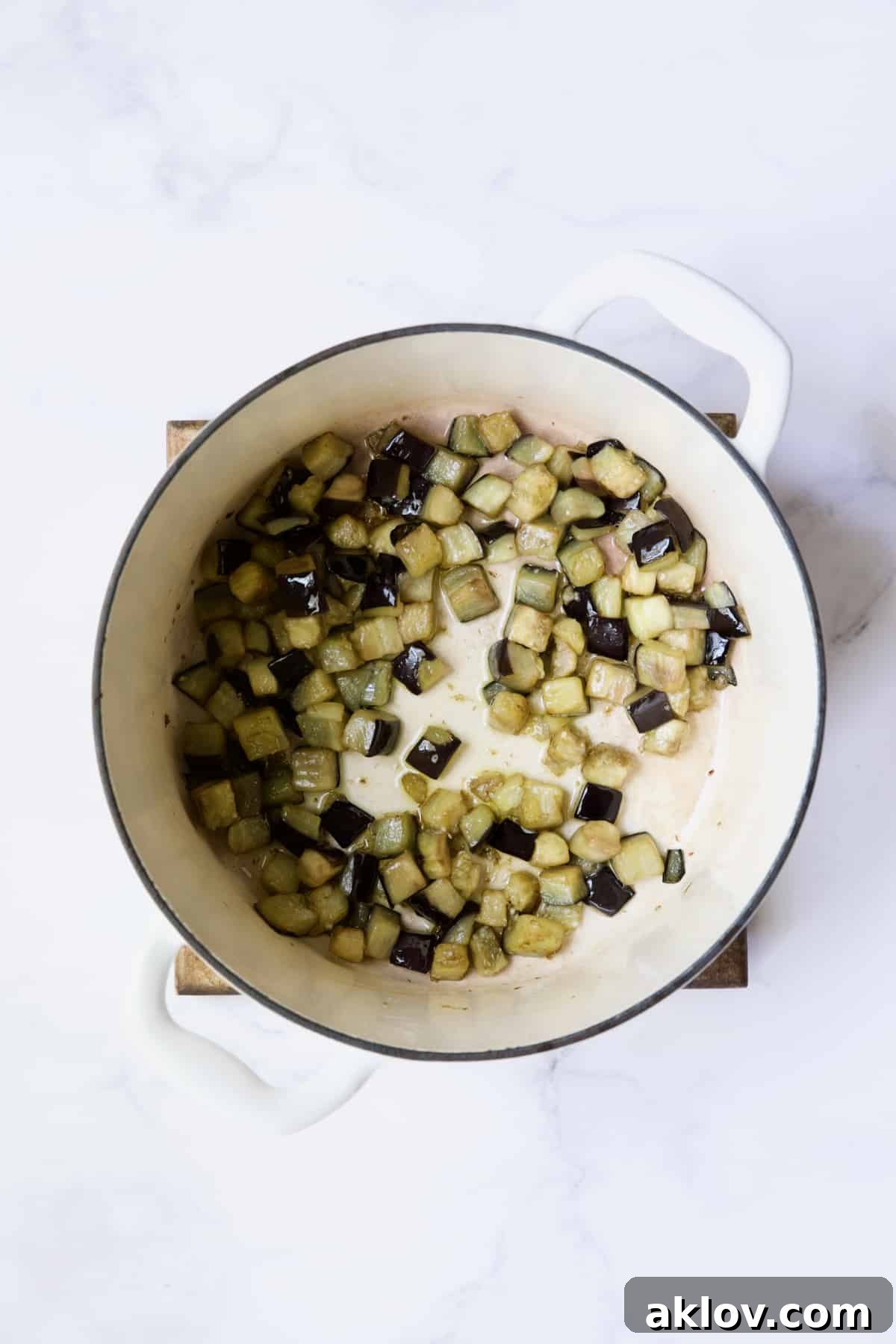
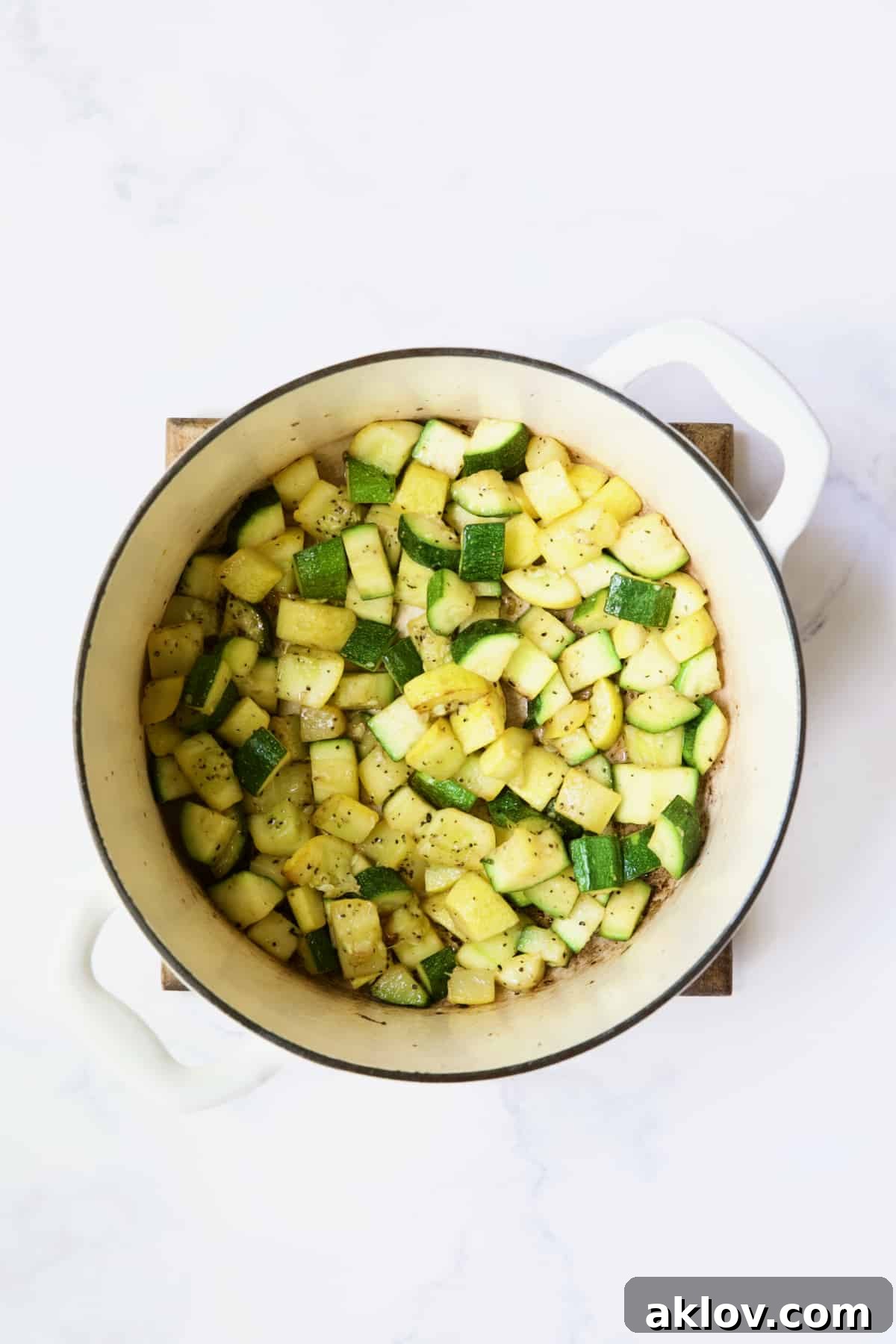
- If necessary, add a little more olive oil to the Dutch oven. Next, add the zucchini and yellow squash to the pot. Cook these for 3-4 minutes, stirring regularly, until they begin to brown and slightly soften. Transfer them to the bowl with the cooked eggplant. Cooking vegetables in stages ensures they brown properly and retain their distinct textures.
- Refresh the oil in the pot once more if needed. Add the chopped onion and cook for 4-5 minutes over medium heat, stirring until the onion softens and becomes translucent, taking care not to burn it.
- Now, introduce the bell peppers to the pot. Continue to cook them with the onions for another 3-4 minutes until they too begin to soften. Stir in the minced garlic and cook for just 1-2 minutes until it becomes fragrant; be careful not to burn the garlic, as it can quickly turn bitter.
- Pour in the dry white wine, bringing the mixture to a rapid boil. Allow it to reduce for 1 to 2 minutes. This step deglazes the pot, lifting all the flavorful browned bits from the bottom and infusing the dish with rich, complex notes.
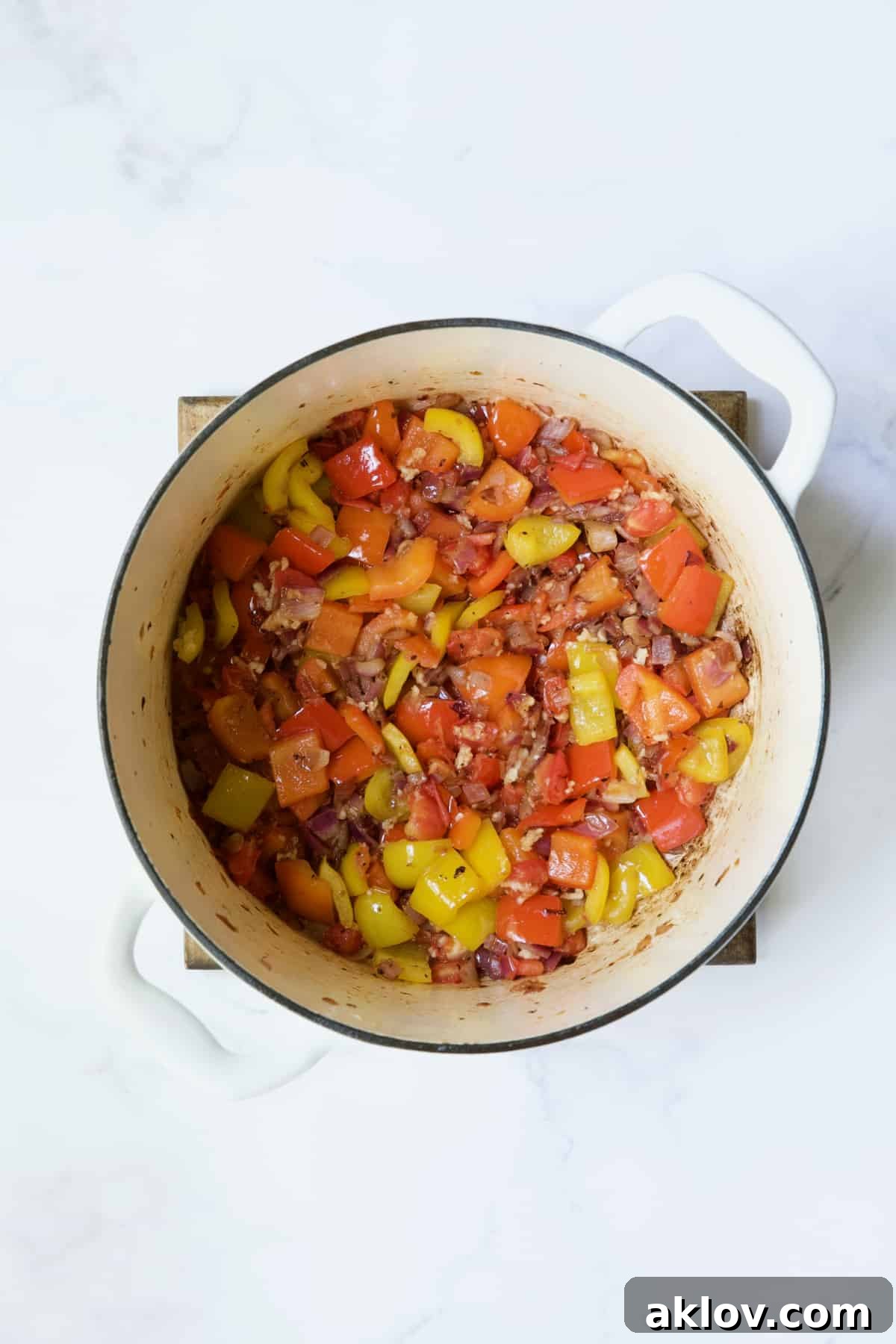
- Add the crushed tomatoes, bay leaf, dried oregano (remember to rub it between your fingers to awaken its flavor!), and crushed red pepper flakes to the pot. Stir everything together to combine the ingredients for the sauce base.
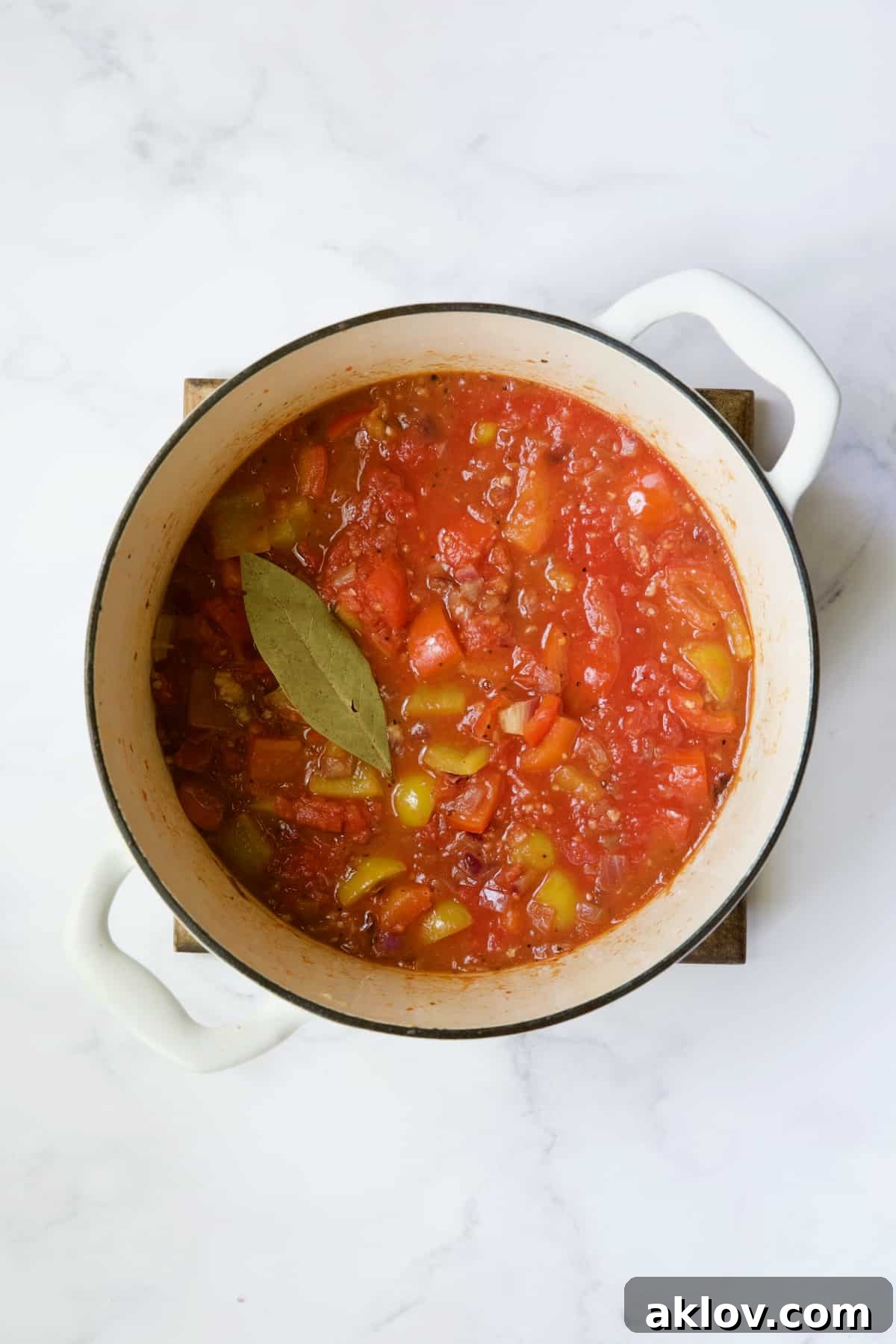
- Finally, return the previously cooked eggplant, zucchini, and yellow squash to the pot. Gently stir to incorporate them into the tomato sauce. Reduce the heat to medium-low and simmer the ratatouille, uncovered, for 20 to 25 minutes. This allows the flavors to meld beautifully and the vegetables to become tender, yet still retain a pleasing bite.
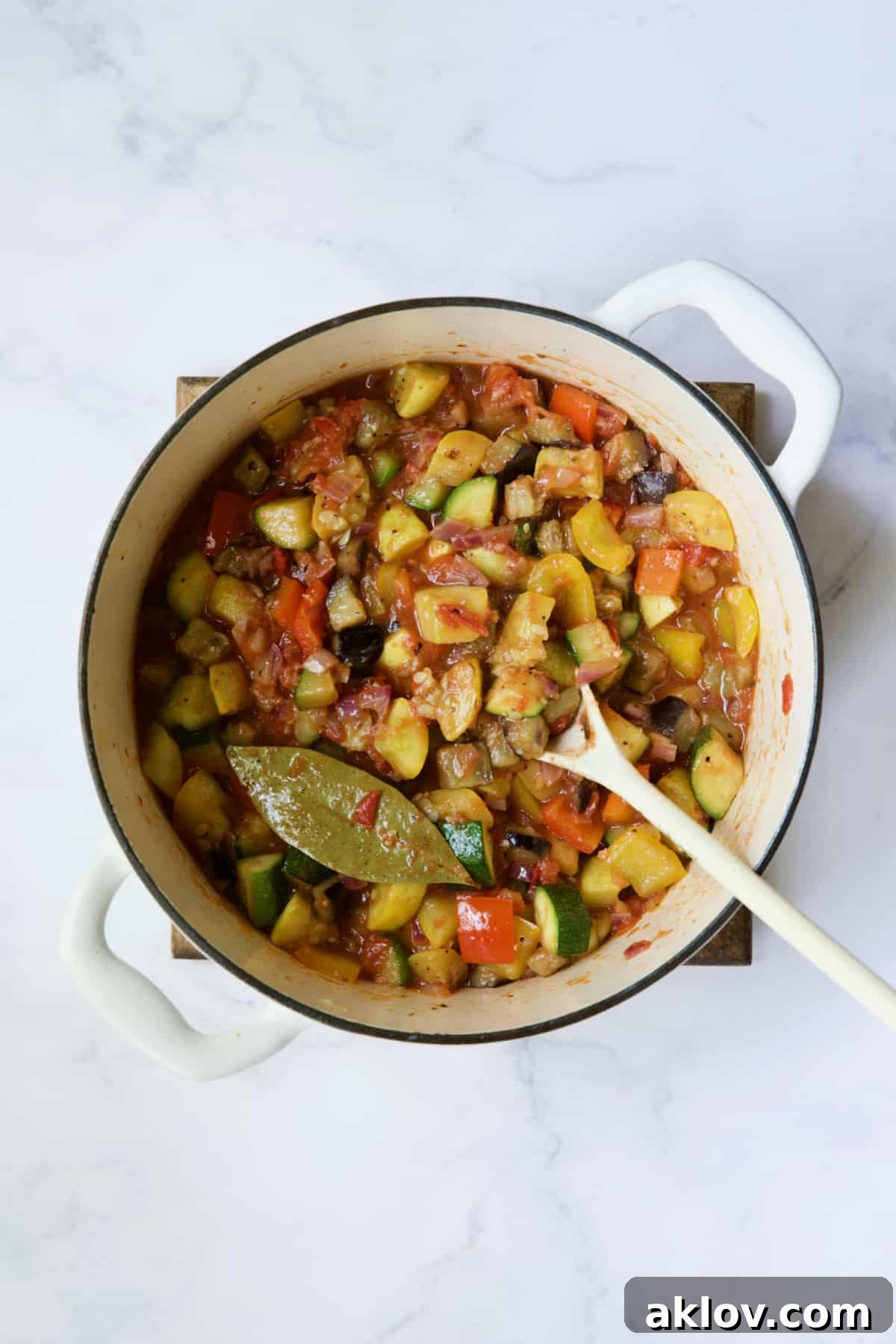
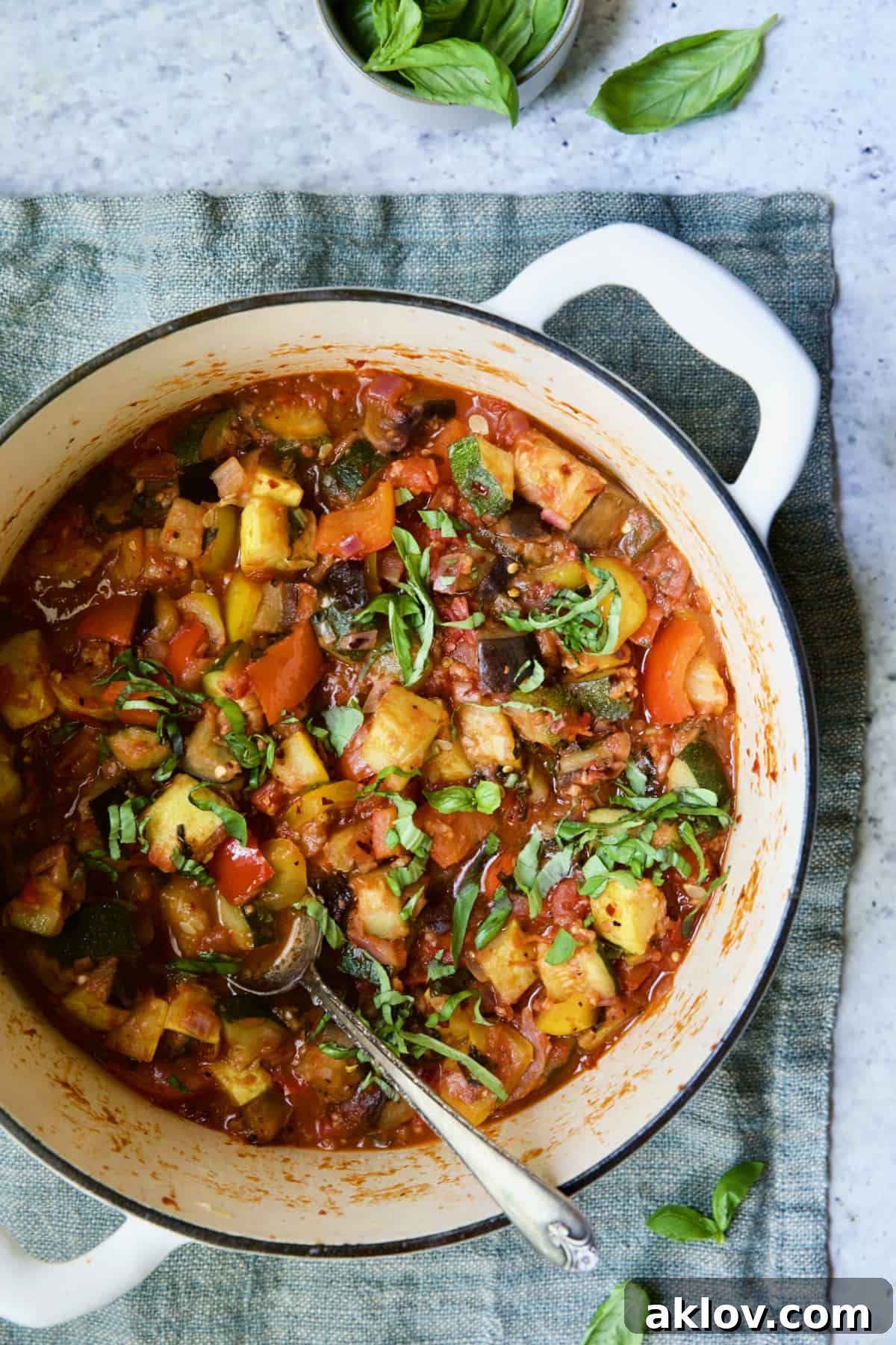
- Season the ratatouille generously with salt and freshly ground black pepper to taste. Remove the bay leaf before serving. Stir in the thinly sliced fresh basil just before serving for a burst of aromatic freshness.
- MAKE AHEAD: Ratatouille is a fantastic make-ahead dish that often tastes even better the next day. Prepare the ratatouille following all instructions up to the point of adding the fresh basil. Allow the stew to cool completely, then transfer it to an airtight container and refrigerate for 1 to 2 days for optimal flavor development. (It will safely keep in the refrigerator for 4-5 days.) When you’re ready to serve, add about ½ cup of water to the pot, stir, and gently reheat over medium-low heat until warmed through. Stir in the fresh basil just before serving to maintain its vibrant flavor and color.
Chef Tips and Expert Tricks for the Perfect Ratatouille:
- Timing is Everything for Eggplant: The eggplant requires approximately 20 to 30 minutes to properly drain in the colander after salting. Make this the very first step in your preparation. This timeframe allows you ample opportunity to chop and prepare all the other vegetables, ensuring your mise en place is complete by the time the eggplant is ready to cook.
- Minimize Oil Absorption: After browning the eggplant, yellow squash, and zucchini, it is crucial to remove them from the pot as quickly as possible. These vegetables are like sponges and can absorb excessive amounts of oil if left sitting in the hot pan, even for a short while. Prompt removal ensures a lighter, less greasy ratatouille.
- Awaken Dried Herb Flavors: When adding dried herbs, such as the oregano in this dish, gently rub them between your fingers as you sprinkle them into the pot. This simple action helps to “wake up” the essential oils and aroma compounds within the dried herbs and spices, intensifying their flavor and ensuring they fully contribute to the dish.
- Uniformity in Cutting: While traditional ratatouille embraces rustic cuts, striving for relatively uniform ½-inch to 1-inch pieces for all vegetables is beneficial. This ensures that all vegetables cook evenly and finish cooking at roughly the same time, preventing some from becoming mushy while others remain undercooked.
- Don’t Rush the Browning: Browning vegetables in stages is key to developing deep, complex flavors. Resist the urge to overcrowd the pan, as this will steam the vegetables instead of browning them. Cook in batches if necessary, ensuring each type of vegetable gets proper caramelization. This step adds immense depth that cannot be achieved by simply simmering all ingredients together.
- Taste and Adjust: Always taste your ratatouille towards the end of the simmering process. Adjust seasonings like salt, pepper, and even a splash of white wine vinegar or a pinch of sugar if the tomatoes are very acidic, to achieve a perfectly balanced flavor profile.
Common Ratatouille Recipe FAQs:
While both are delicious vegetable stews featuring eggplant, Ratatouille hails from the Provence region of France. It typically includes eggplant, tomatoes, onions, bell peppers, zucchini, garlic, and herbs, all gently simmered in olive oil. Caponata, on the other hand, is an Italian dish with Sicilian roots. It’s characterized by a more complex flavor profile, often incorporating eggplant, onions, tomatoes, anchovies, olives, pine nuts, capers, and vinegar, all cooked in olive oil. Caponata frequently features a sweet-sour (agrodolce) taste, often achieved with a touch of sugar or raisins.
Peeling eggplant is entirely optional and a matter of personal preference. I generally prefer not to peel it for several reasons: the deep purple skin contains beneficial antioxidants, and it adds a beautiful contrasting color and textural element to the finished ratatouille. If you’re concerned about texture, or if you’re using a very large, older eggplant with a thicker skin, peeling might be a good idea. However, for most common varieties, leaving the skin on is perfectly fine and contributes to the rustic charm of the dish. For more insights into the health benefits of eggplant, you can refer to information on WebMD.
Yes, absolutely! While I often choose red onion for its aesthetic appeal – its beautiful purple hue adds a visual pop to the dish – a yellow onion will work perfectly fine. Red onions tend to be slightly milder and sweeter than yellow onions, which allows the delicate flavors of the eggplant, tomatoes, zucchini, and yellow squash to truly shine through. However, a yellow onion will still provide a wonderful aromatic base for your ratatouille.
Traditional French Ratatouille is an excellent make-ahead dish; in fact, its flavors often deepen and improve considerably after a day or two in the refrigerator, making it even more delicious! Prepare the ratatouille according to the recipe instructions, stopping just before you add the fresh basil. Allow the stew to cool completely to room temperature, then transfer it to an airtight container and refrigerate for 1 to 2 days for the best quality and flavor. It will remain fresh in the refrigerator for up to 4-5 days. When you’re ready to serve, add about ½ cup of water to the pot, stir gently, and reheat over medium-low heat until warmed through. Stir in the fresh basil right before serving to capture its vibrant aroma and taste.
Ratatouille is incredibly versatile and pairs beautifully with a wide array of meats. If you’re serving it as a side dish, consider complementing it with simply prepared roasted or grilled chicken, which offers a lean protein. It’s also excellent alongside flaky white fish or heartier options like beef and pork. Its rich, savory, and slightly acidic profile helps cut through the richness of meats, creating a balanced and satisfying meal. For a plant-based meal, it’s wonderful on its own or with grains.
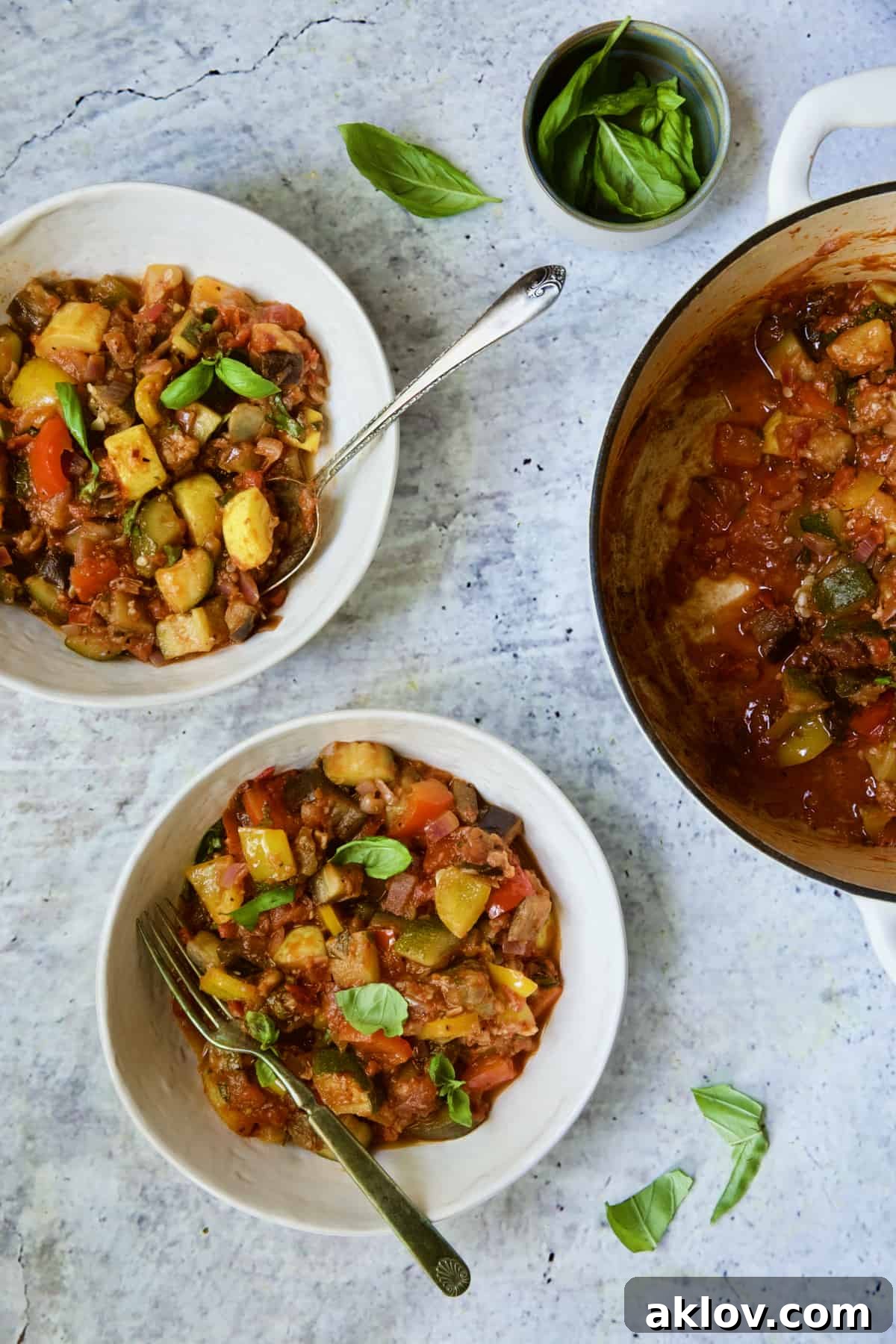
What to Serve with Your Perfect Ratatouille:
This traditional French Ratatouille is incredibly versatile, making it an ideal companion to a variety of dishes. Here are some delightful suggestions to complete your meal:
- A warm, crusty loaf of French bread or a fresh baguette is essential for soaking up every last bit of the delicious sauce.
- A simple green salad, lightly dressed with a vinaigrette made from good quality olive oil and either red wine vinegar or balsamic vinegar, provides a refreshing contrast.
- For a delightful appetizer, consider Zucchini Ricotta Fritters.
- A flavorful White Bean Artichoke Spread with Rosemary Sea Salt Flatbread Chips makes a great starter.
- Light and elegant soups like Cream of Celery Leaf and Scallion Soup or Cream of Asparagus and Leek Soup with Curry can precede the ratatouille.
- Finish your meal with a rich yet surprisingly light dessert such as Chocolate Avocado Mousse.
More Vegetarian Recipes You’ll Love!
If you’ve enjoyed the wholesome flavors of this traditional ratatouille, you’ll be delighted by these other vegetarian creations from our kitchen:
- Explore the rich, exotic notes of Moroccan-Spiced Caponata.
- Indulge in the rustic charm of a Mediterranean Vegetable Galette.
- Savor the sophisticated flavors of a Provencal Vegetable and Goat Cheese Tart.
- Enjoy the hearty warmth of Roasted Vegetable and Black Bean Stew with Polenta.
Discover a wide array of delicious plant-based dishes by visiting all my vegetarian and vegan recipes at Vegetarian and Vegan Recipes – From A Chef’s Kitchen.
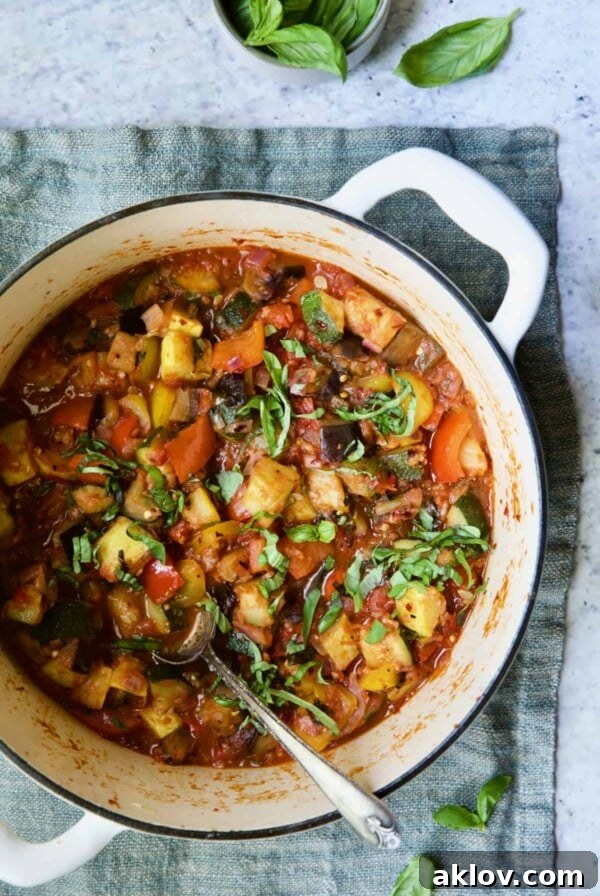
Traditional French Ratatouille Recipe
Equipment
-
Wusthof Chef Knife
-
Colander
-
Cutting Board
-
Dutch Oven
Ingredients
- 1 medium eggplant, cut into 1-inch cubes
- 1 teaspoon salt, plus more for seasoning
- 1/4 cup olive oil, or as needed, divided
- 1 medium red onion, cut into 1/2-inch pieces
- 2 red or yellow bell peppers, or a combination, cut into 1/2-inch pieces
- 2 medium zucchini, cut into 1-inch pieces
- 2 medium yellow squash, cut into 1-inch pieces
- 3 large plum tomatoes, seeded and coarsely chopped
- 4 cloves garlic, minced
- 1/2 cup dry white wine
- 1 can (15-ounce) crushed tomatoes
- 1 bay leaf
- 1 heaping teaspoon dried oregano
- 1/2 teaspoon crushed red pepper flakes
- freshly ground black pepper, to taste
- 1/4 cup thinly sliced fresh basil
Instructions
-
Place cubed eggplant in a colander, sprinkle generously with 1 teaspoon of salt, and let it drain in the sink or over a bowl for 20-30 minutes while you prep the remaining vegetables.
-
After draining, firmly pat the eggplant dry with paper towels to remove excess moisture and salt.
-
Heat 2 tablespoons of olive oil over medium-high heat in a large Dutch oven or heavy-bottomed pot. Add the dried eggplant, reduce heat to medium, and cook for 3-4 minutes, stirring occasionally, until it begins to soften and is lightly browned. Transfer the cooked eggplant to a clean bowl.
-
Add a little more olive oil to the pot if needed. Add the zucchini and yellow squash and cook for 3-4 minutes, stirring, until they begin to soften and are lightly browned. Transfer them to the bowl with the eggplant.
-
Add more olive oil if necessary. Add the chopped red onion and cook for 4-5 minutes, stirring, until it begins to soften and become translucent. Adjust heat as needed to prevent burning.
-
Add the bell peppers to the pot and continue cooking for another 3-4 minutes until they also begin to soften.
-
Stir in the coarsely chopped tomatoes and minced garlic, cooking for 1-2 minutes until the garlic is fragrant.
-
Pour in the dry white wine, bring the mixture to a boil, and let it cook for 1-2 minutes to deglaze the pot and allow the alcohol to evaporate.
-
Add the crushed tomatoes, bay leaf, dried oregano (rubbed between fingers), and crushed red pepper flakes to the pot. Stir to combine all ingredients.
-
Return the cooked eggplant, zucchini, and yellow squash to the pot. Reduce the heat to medium-low and simmer the ratatouille uncovered for 20-25 minutes, or until all vegetables are tender and the flavors have melded.
-
Season the finished ratatouille with salt and freshly ground black pepper to taste. Remove and discard the bay leaf. Stir in the thinly sliced fresh basil just before serving.
Notes
- If you prefer not to use alcohol, substitute the dry white wine with vegetable broth or water, then add 1-2 teaspoons of white wine vinegar for acidity.
TIPS:
- Rub dried herbs between your fingers as you sprinkle them into the pot to “awaken” their flavor and release their aromatic oils.
- Allowing the eggplant to drain for 20-30 minutes after salting is crucial. Do this first to give yourself ample time to prepare the other vegetables.
- Once browned, quickly remove the eggplant, yellow squash, and zucchini from the pot. These vegetables can absorb excess oil if left to sit in the pan.
MAKE AHEAD:
- Ratatouille is excellent for making ahead, as the flavors develop further overnight. Prepare the dish as directed, stopping before adding the fresh basil. Cool completely, then refrigerate in an airtight container for 1-2 days for best flavor (it will keep for 4-5 days). When ready to serve, add ½ cup water, stir, and gently reheat over medium-low heat. Stir in the fresh basil just before serving.
FREEZER-FRIENDLY:
- Cook the ratatouille as instructed, cool thoroughly, and then store in an airtight freezer-safe container for 2-3 months. Thaw in the refrigerator overnight before reheating on the stovetop or in the microwave. Please note that freezing and thawing will result in softer vegetables, which is a common characteristic of frozen vegetable stews.
Nutrition
Nutritional values are automatically calculated using unbranded products and are estimates only. Actual results may vary based on ingredients used and portion sizes. Adjust as needed for dietary restrictions, allergies, or health concerns.
 Like this? Leave a comment below!