
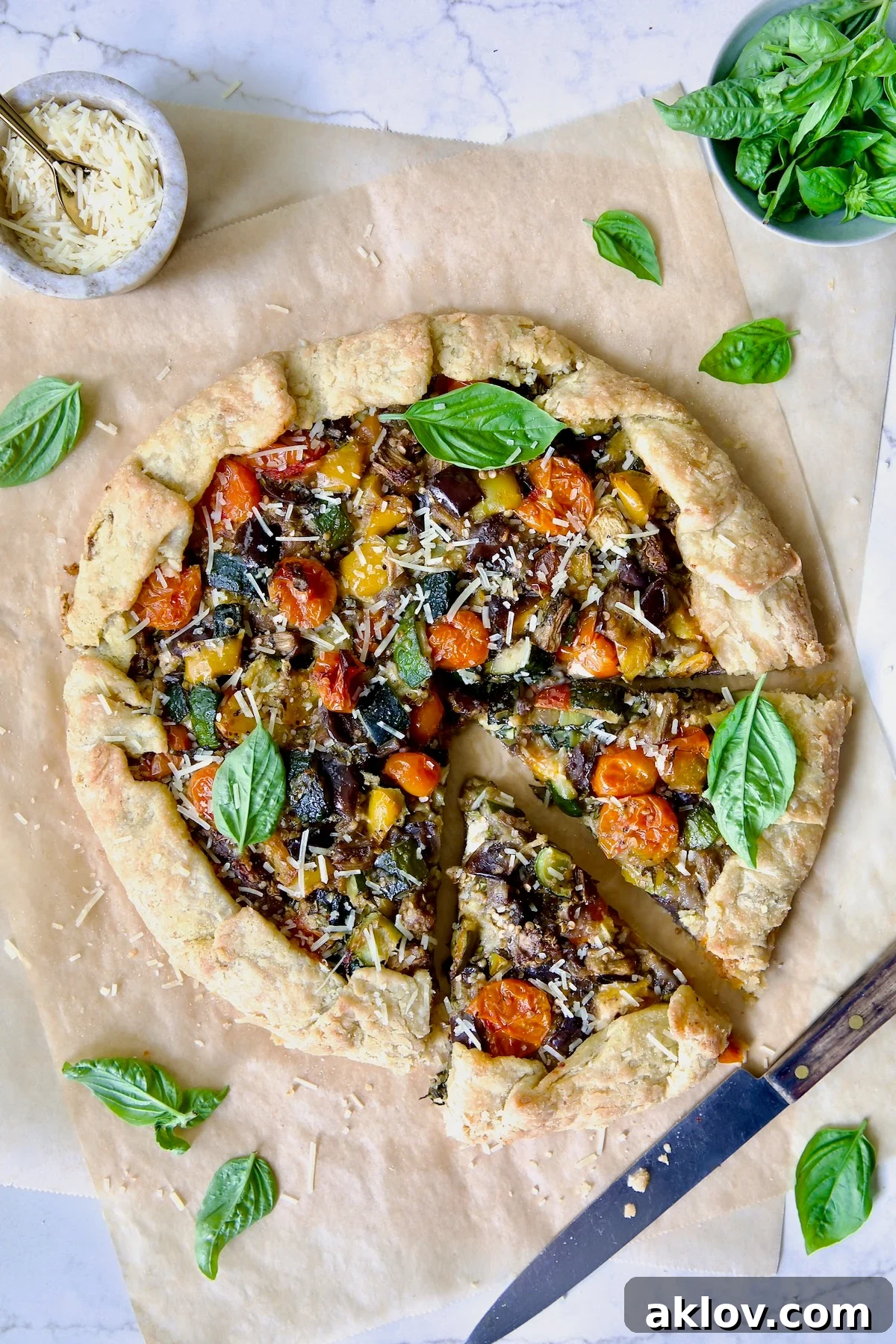
Mediterranean Vegetable Galette: A Rustic Delight with Vibrant Flavors
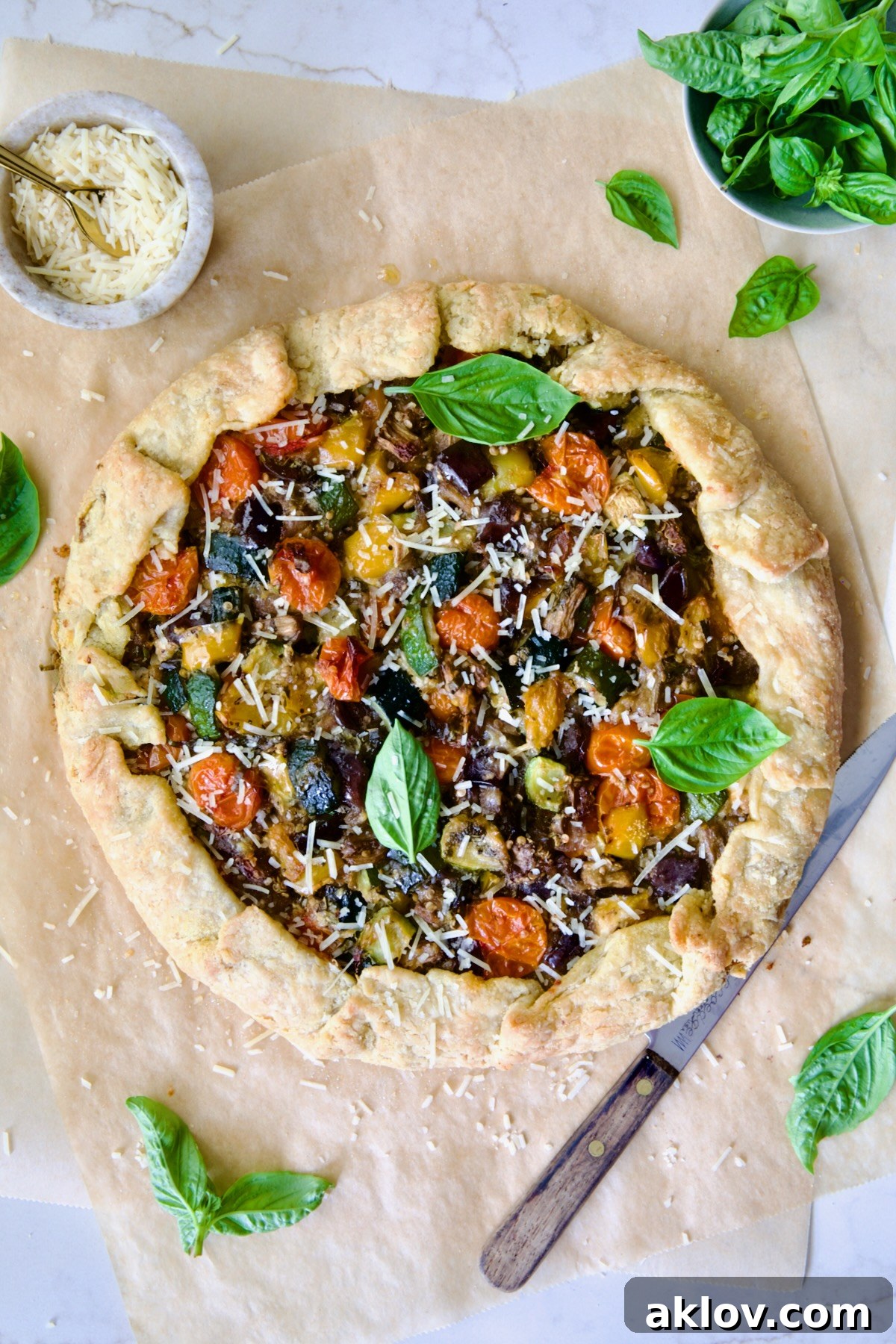
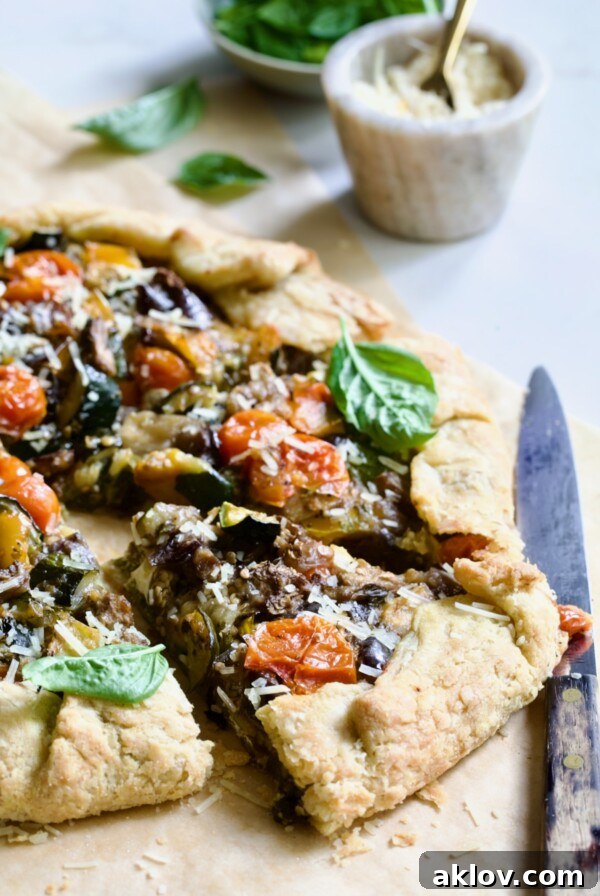
This Mediterranean Vegetable Galette is an exquisite yet effortlessly prepared dish, perfectly designed to highlight the freshest, most vibrant flavors of summer’s generous vegetable harvest. With its beautifully golden, irresistibly flaky crust and a stunning, colorful array of perfectly roasted vegetables, this savory galette is not only a feast for the palate but also a captivating visual centerpiece for any meal or gathering.
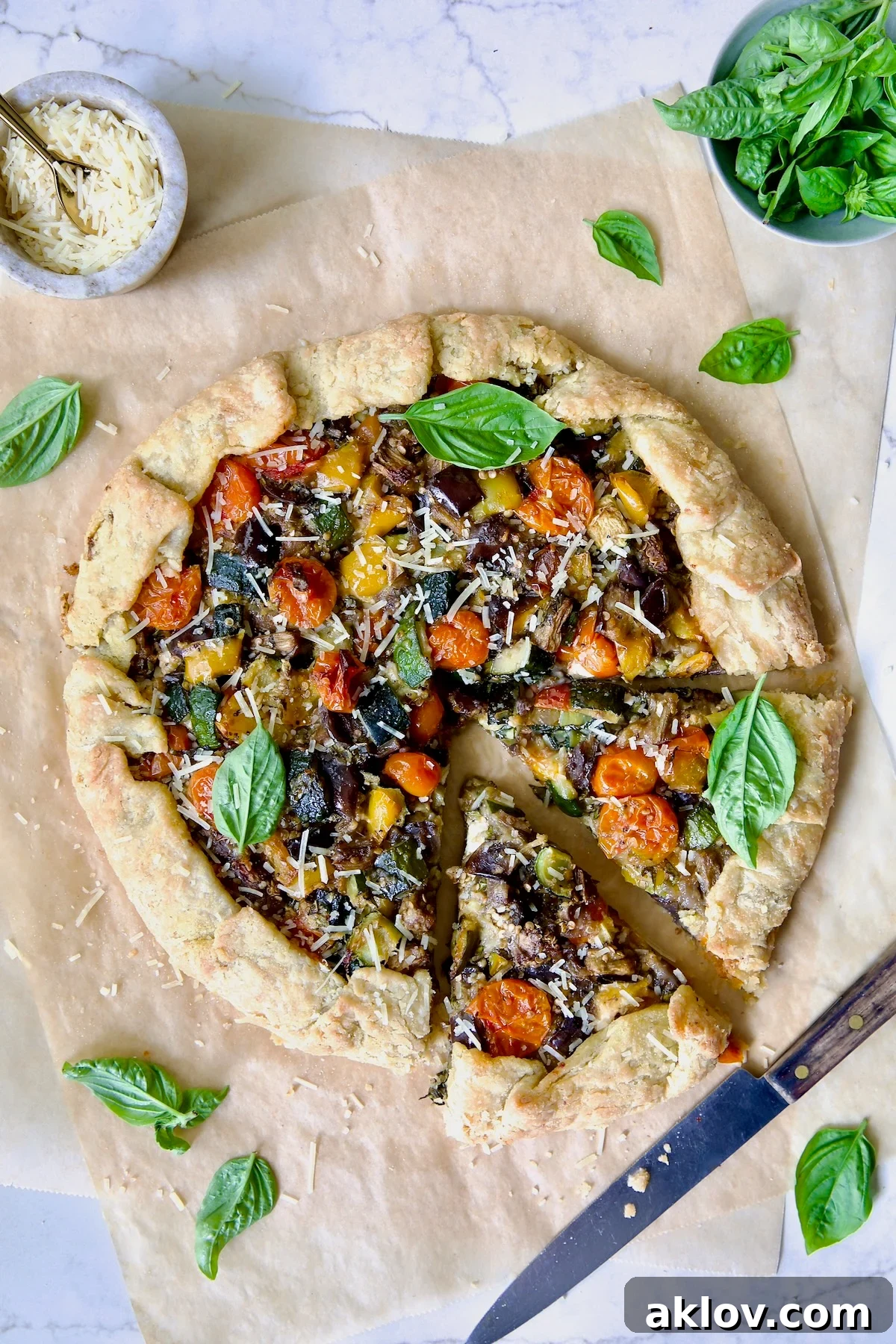
Unveiling the Galette: Simplicity Meets Culinary Elegance
Unlike its more structured cousins, the quiche or tart, a galette distinguishes itself through its rustic charm and remarkable simplicity. It doesn’t demand a precise custard filling or specialized baking pans. Instead, a galette is a free-form, open-faced tart, effortlessly shaped by hand, making it incredibly versatile and approachable for home cooks of all skill levels. Its beauty lies in its relaxed, unfussy presentation, often showcasing beautifully crimped edges that artfully fold over a bountiful filling. This particular Mediterranean version overflows with classic ingredients like tender eggplant, crisp zucchini, sweet red bell peppers, and juicy tomatoes, embodying the fresh, wholesome essence of the Mediterranean diet. While this recipe focuses on a savory vegetable filling, galettes can be sweet, savory, or even stacked, such as delightful potato galettes. This adaptability makes the galette a culinary canvas, ready to be filled with whatever fresh ingredients inspire you.
Why This Mediterranean Vegetable Galette Will Be Your New Favorite Recipe
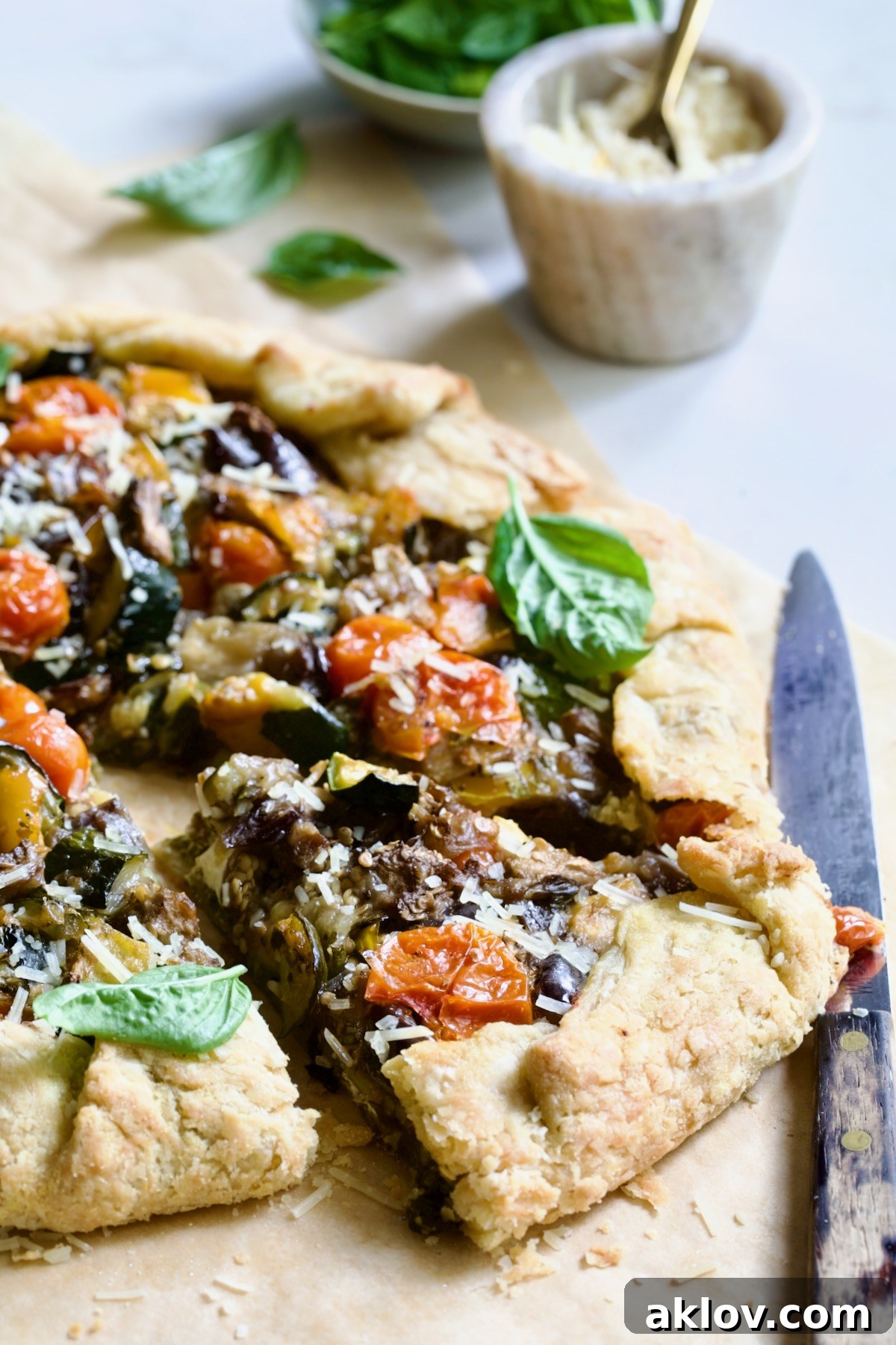
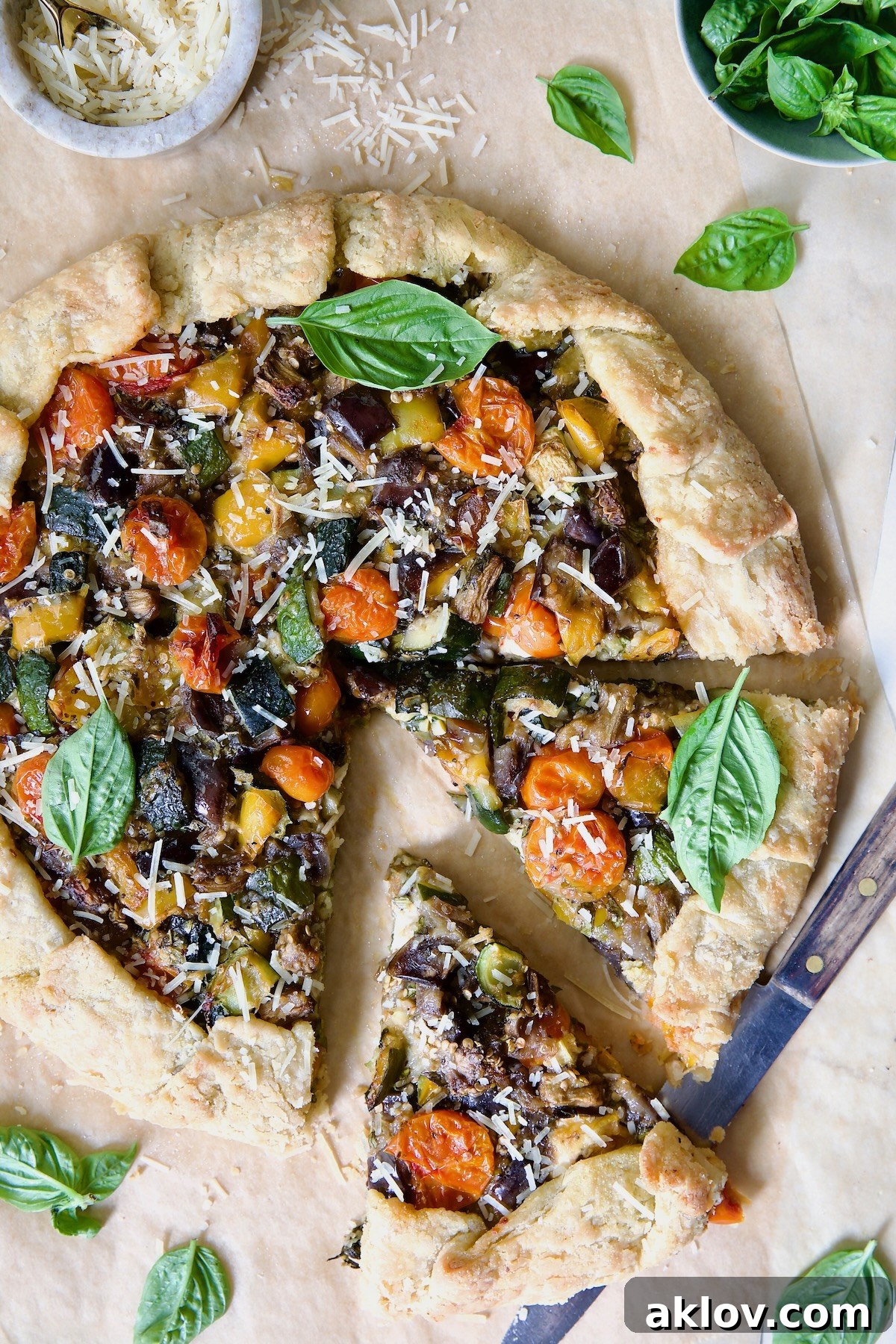
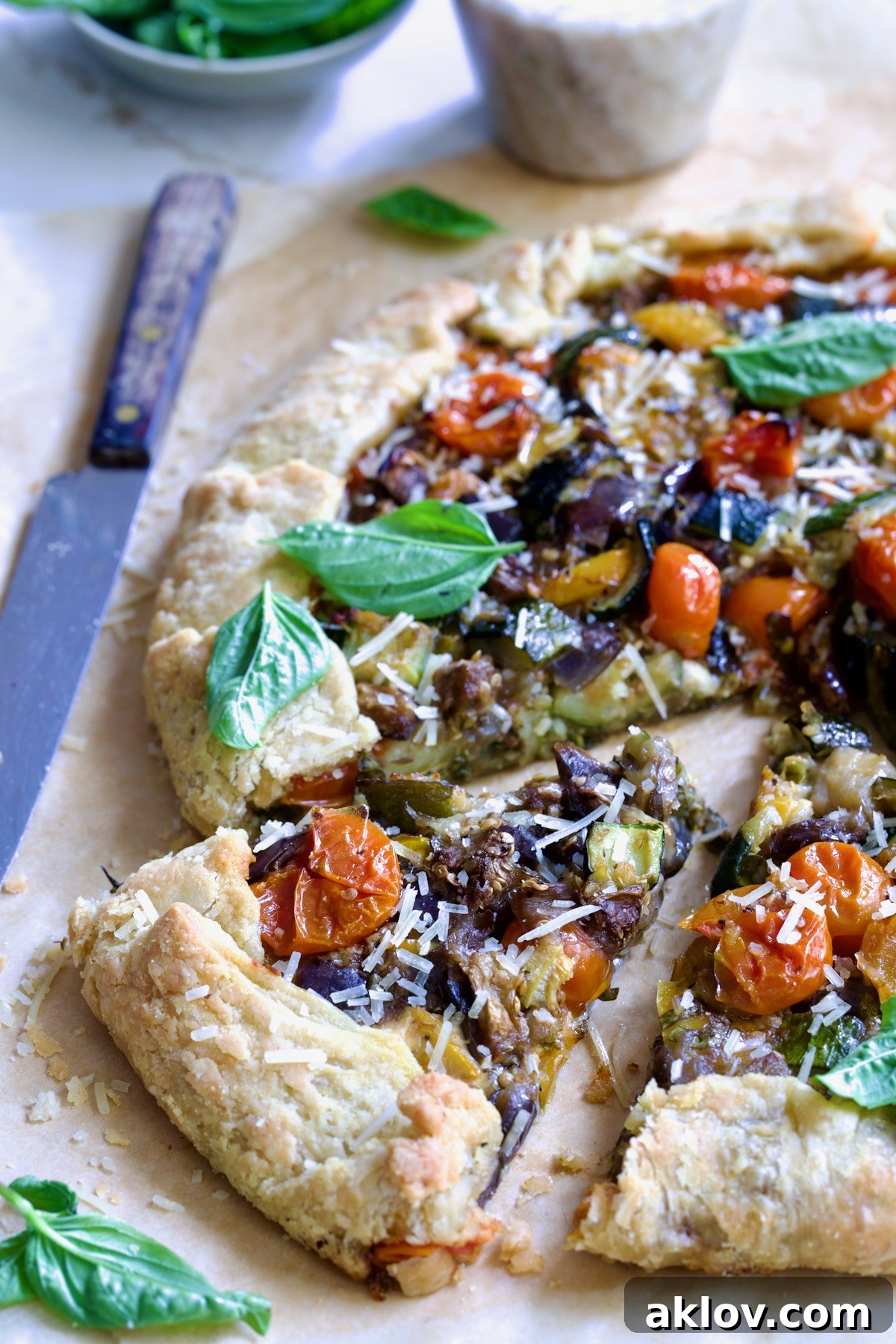
This exquisite vegetable galette truly embodies the bold, sun-kissed, and savory flavors that define Mediterranean cuisine. It’s a culinary masterpiece that seamlessly blends convenience with gourmet appeal. Imagine the rich aroma of roasted tomatoes, tender zucchini, earthy eggplant, and vibrant bell peppers, all harmoniously complemented by the creamy tang of goat cheese and the fresh zest of basil. This rustic, free-form tart is not just a treat for your taste buds but also a feast for the eyes. A luscious, buttery, and golden flaky crust gracefully encases the jewel-toned, vibrant roasted vegetables, making every slice as visually appealing as it is utterly delicious.
Despite its elegant and sophisticated appearance, a galette is surprisingly straightforward to prepare, making it an ideal choice for both culinary novices and seasoned chefs. The beauty of its free-form crust is that it requires no precise shaping or special equipment, liberating you from the stress of perfection. This fuss-free approach ensures that you can achieve stunning results with minimal effort, allowing the natural beauty of the ingredients to shine through.
This Mediterranean Vegetable Galette recipe stands out for several compelling reasons:
- Incredibly Flavorful: The magic truly begins with roasting the vegetables. This crucial step intensifies their natural sweetness, adding a deep layer of caramelized flavor that perfectly complements the rich, buttery, and flaky crust. Each bite is an explosion of savory goodness.
- Remarkably Easy to Make: Don’t let its gourmet presentation intimidate you! The luscious, buttery pastry dough comes together quickly and effortlessly in a food processor. While the dough chills to achieve that perfect flakiness, you can efficiently prepare and roast your vegetables. The assembly is just as simple: spread a layer of prepared pesto, dot with creamy goat cheese, arrange the cooled roasted vegetables, artfully fold the crust, and bake!
- Visually Stunning: This galette is simply beautiful, making it an impressive dish for entertaining or a delightful addition to your family table. Its vibrant colors and rustic form elevate it beyond a simple meal.
- Wholesome and Fresh: Crafted with simple, fresh ingredients, this recipe celebrates the goodness of seasonal produce and the health benefits of Mediterranean flavors.
- Versatile Serving: It’s absolutely lovely served warm, straight out of the oven, allowing the melted cheese and tender vegetables to truly shine. It’s equally delicious and convenient served at room temperature, making it a perfect option for potlucks, picnics, or as a make-ahead meal.
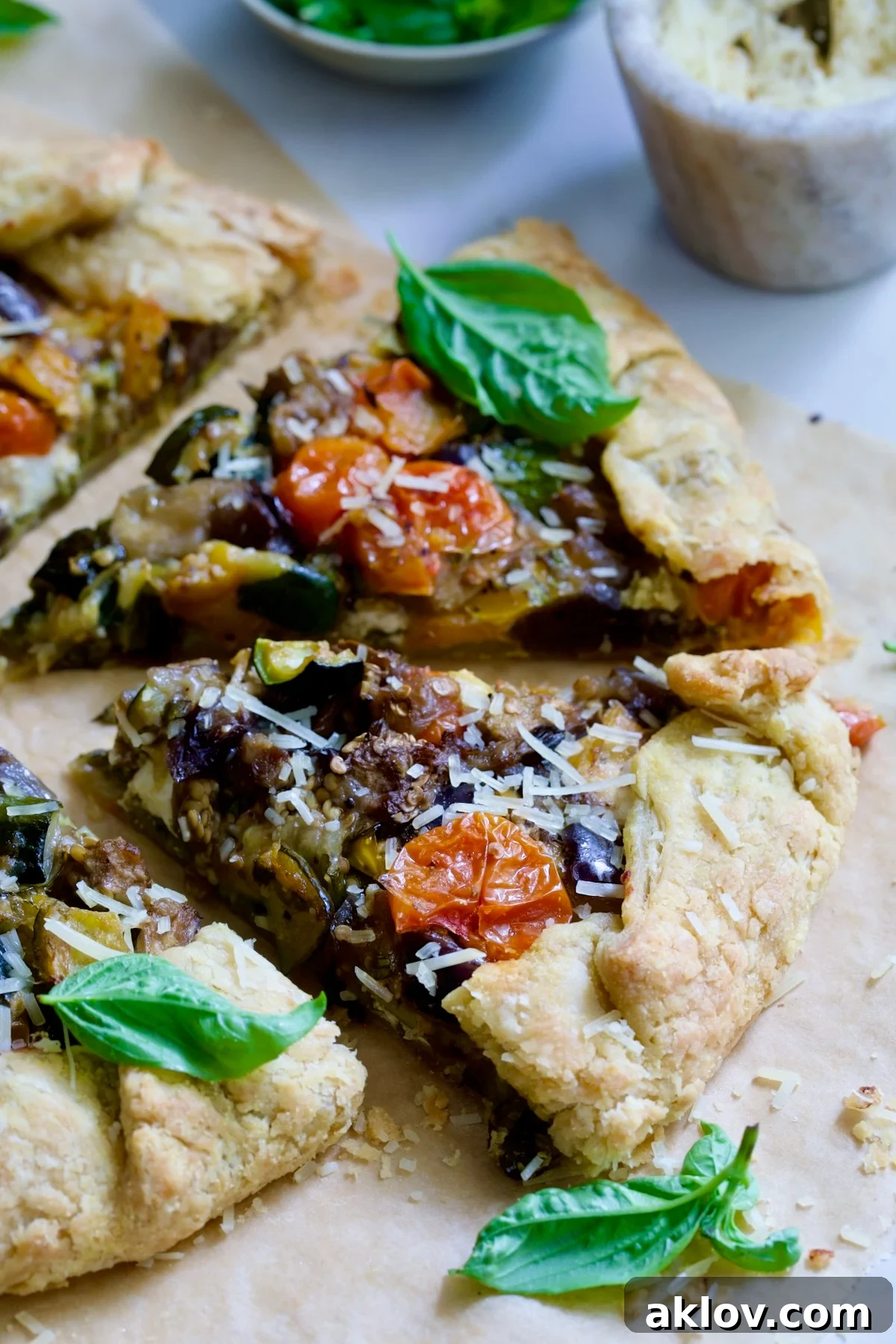
Crafting Your Mediterranean Vegetable Galette: A Step-by-Step Culinary Journey
Essential Ingredients for a Perfect Galette
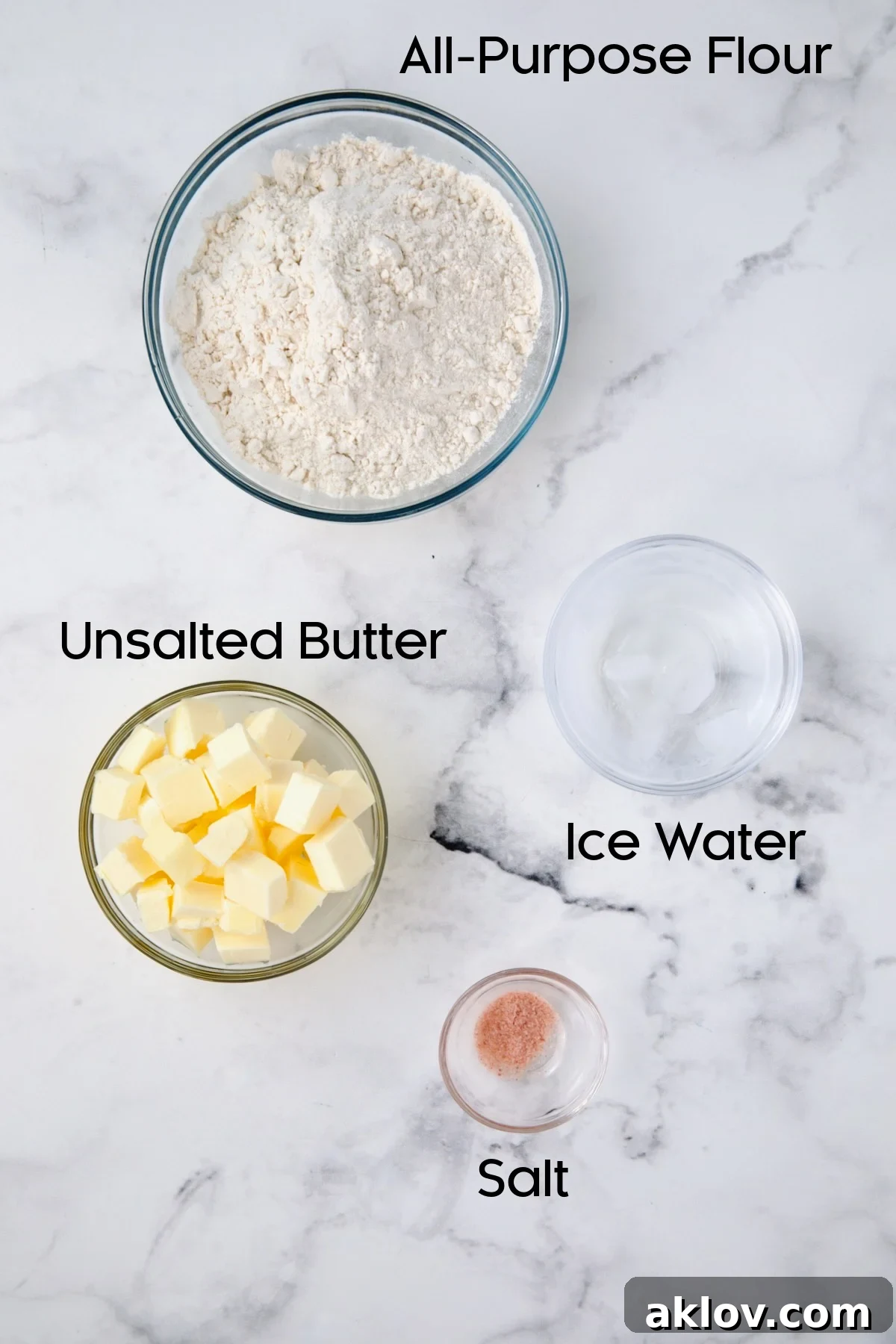
To embark on this delightful culinary adventure and create your own Mediterranean Vegetable Galette, you’ll need a selection of fresh, high-quality ingredients for both the rich, flaky dough and the flavorful filling. Here’s a comprehensive list to guide you:
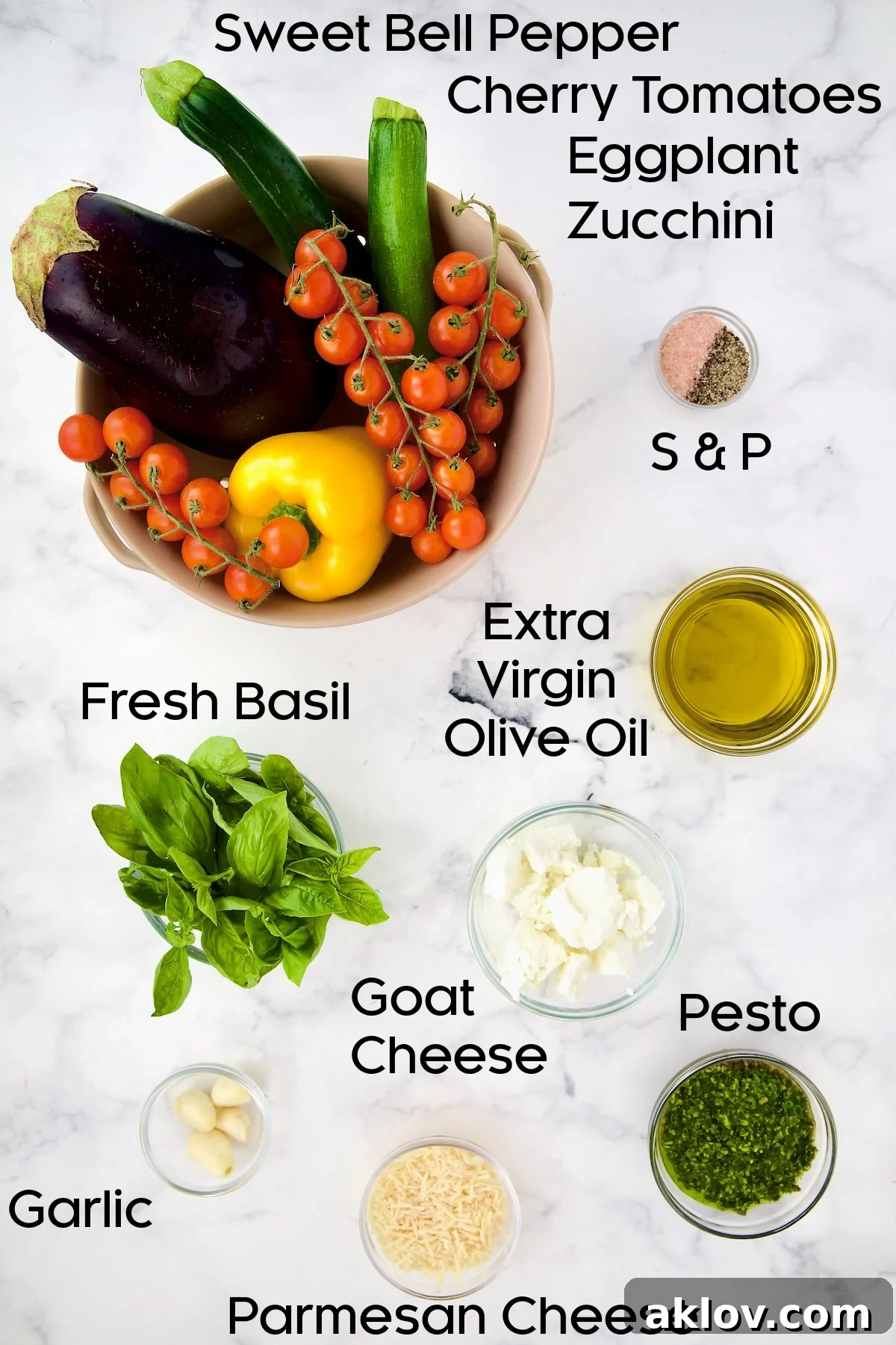
Ingredient Notes and Creative Substitutions to Enhance Your Galette
- All-Purpose Flour: For the finest results, we recommend using unbleached all-purpose flour. Unbleached flour typically has a slightly higher protein content, which can contribute to a more tender and robust crust, ensuring that perfect flaky texture.
- Unsalted Butter: Using unsalted butter is a chef’s secret for precise flavor control. It allows you to adjust the salt levels in your galette filling and dough perfectly, preventing it from becoming overly salty. If you opt for salted butter, remember to significantly reduce the amount of added salt in both the dough and the vegetable preparation. Ensure your butter is very cold and cut into small cubes for the flakiest pastry.
- The Vegetables: The beauty of this recipe lies in its adaptability! While eggplant, zucchini, red bell peppers, and tomatoes create a classic Mediterranean profile, almost any combination of fresh, seasonal Mediterranean vegetables can be used. Don’t love eggplant? Simply use more zucchini, or add some vibrant yellow squash. Swap red bell pepper for yellow or orange bell pepper for a different color and subtle flavor nuance. Consider adding thinly sliced red onion, artichoke hearts, or even mushrooms for a richer, earthier flavor. The key is to choose vegetables that roast well and contribute to a colorful, balanced filling.
- Fresh Basil: Fresh basil is an absolute must in this Mediterranean Vegetable Galette recipe. Its aromatic, slightly peppery, and sweet notes are quintessential to Mediterranean cuisine and provide an unparalleled burst of freshness that dried basil simply cannot replicate. Finely chiffonade (thinly slice) your basil just before adding for maximum fragrance and visual appeal.
- Goat Cheese: This ingredient adds a delightful tanginess and a creamy, melt-in-your-mouth element to the galette. Its characteristic flavor beautifully complements the sweetness of the roasted vegetables and the rich pesto. If goat cheese isn’t your preference, crumbled feta cheese or even dollops of ricotta can offer a similar creamy texture and salty kick.
- Pesto: We recommend using a high-quality pesto for this recipe. If you have time, making your own Pesto Genovese will elevate the flavors significantly. For store-bought options, choose a brand known for fresh ingredients. An important tip: always drain off any excess oil from your pesto before spreading it on the galette. Too much oil can seep out during baking, potentially making your crust soggy or even causing smoke in the oven.
- Parmesan Cheese: Freshly grated Parmesan cheese adds a salty, umami depth to the vegetable mixture and a lovely golden finish to the crust. For a different but equally delicious flavor profile, you can also use freshly grated Asiago or Romano cheese.
Detailed Step-By-Step Instructions for Your Mediterranean Vegetable Galette
Crafting the Flaky Galette Dough
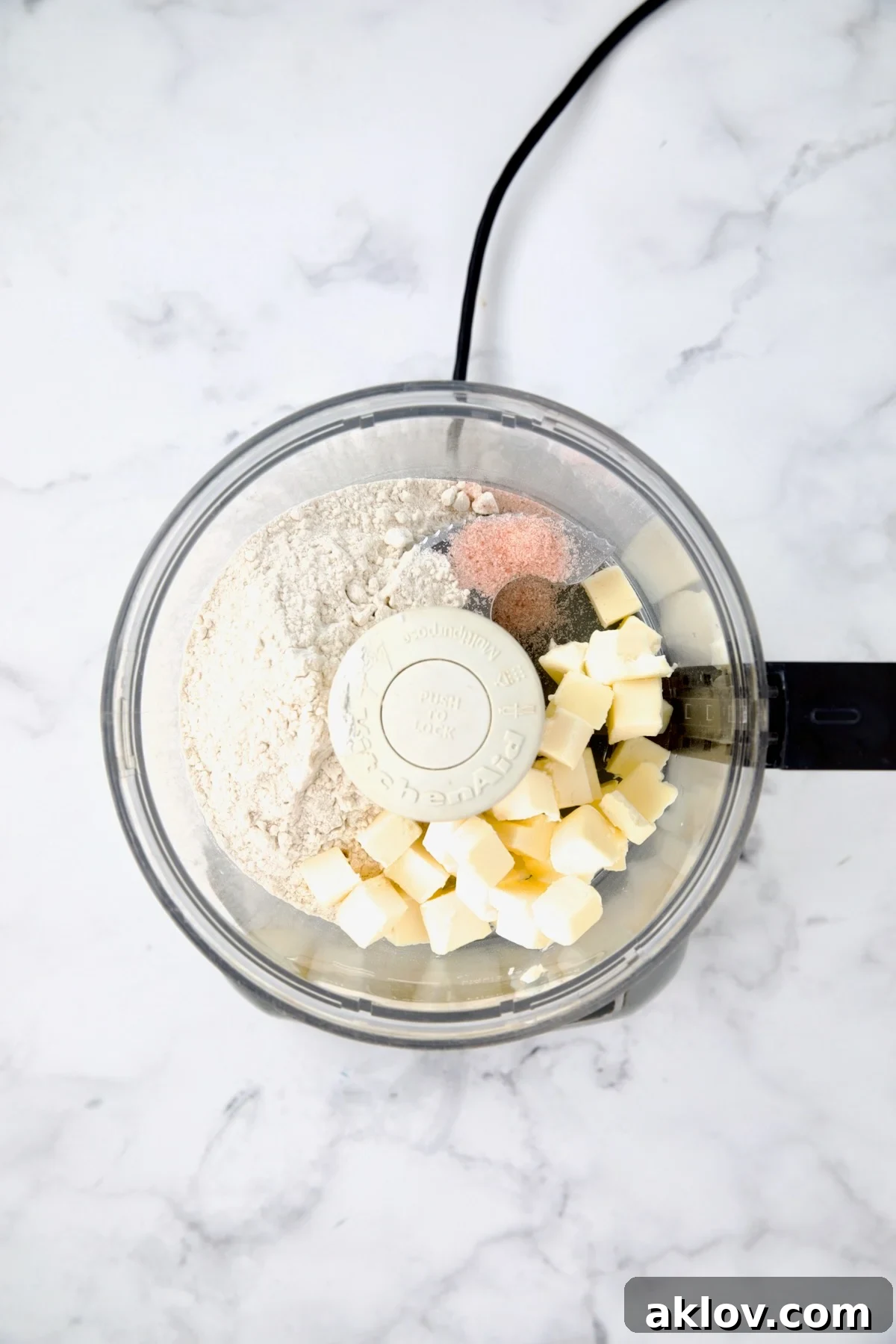
- Prepare the Dough Ingredients: Begin by gathering all your ingredients for the galette dough. In the bowl of a food processor, combine the all-purpose flour, a quarter teaspoon of salt, and the cubed, very cold unsalted butter.
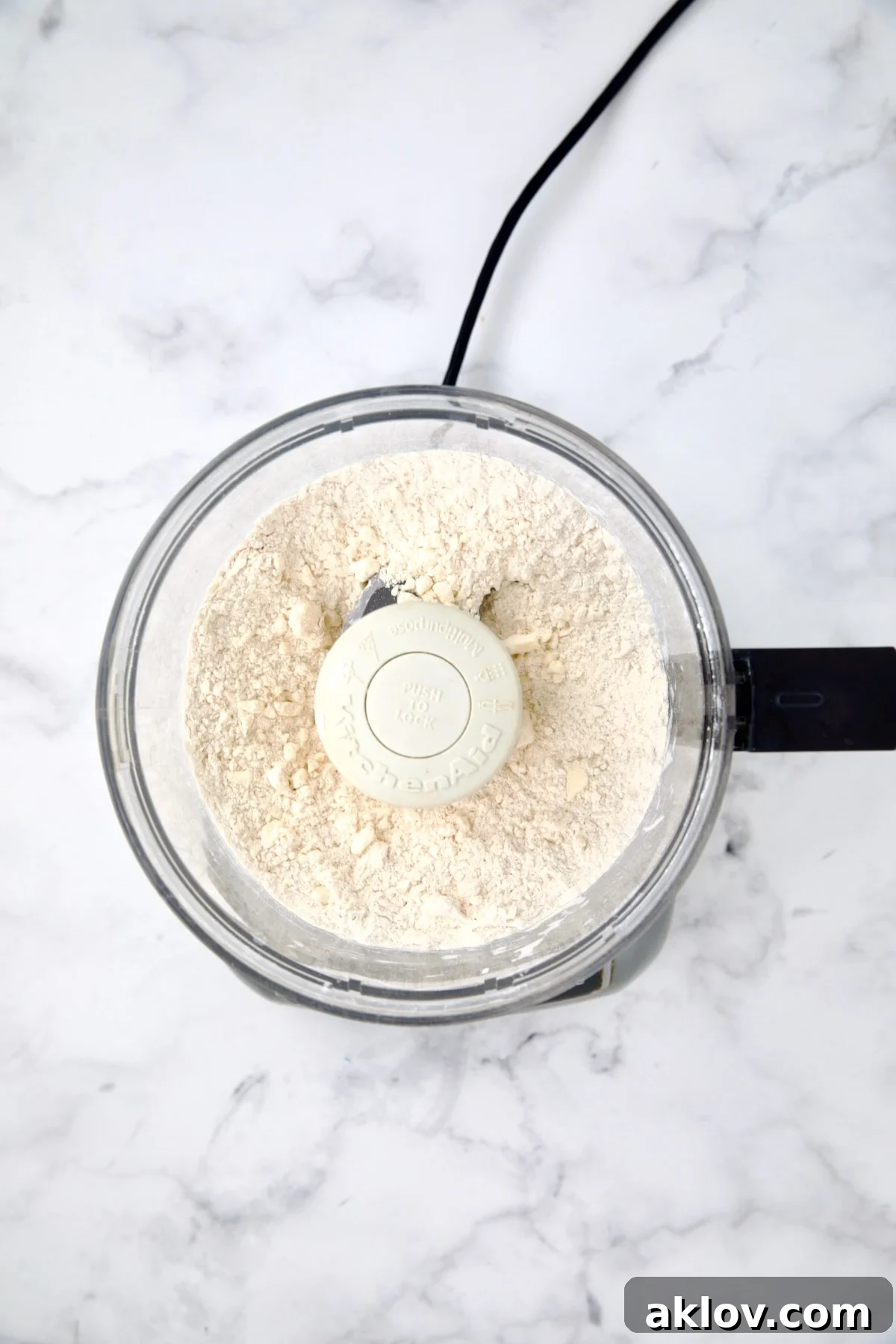
- Pulse to Coarse Crumbs: Pulse the ingredients in the food processor until the mixture resembles coarse crumbs, with some pea-sized pieces of butter remaining. This texture is crucial for achieving a flaky crust.
- Incorporate Ice Water: Add 3 tablespoons of ice water to the mixture. Pulse the food processor a few more times until the dough just begins to come together. To test consistency, gently press some of the dough against the side of the bowl (being mindful of the blade if using your hand). If it doesn’t quite hold together, add 1 to 2 more tablespoons of ice water, pulsing briefly after each addition, until it forms a cohesive mass when pressed.
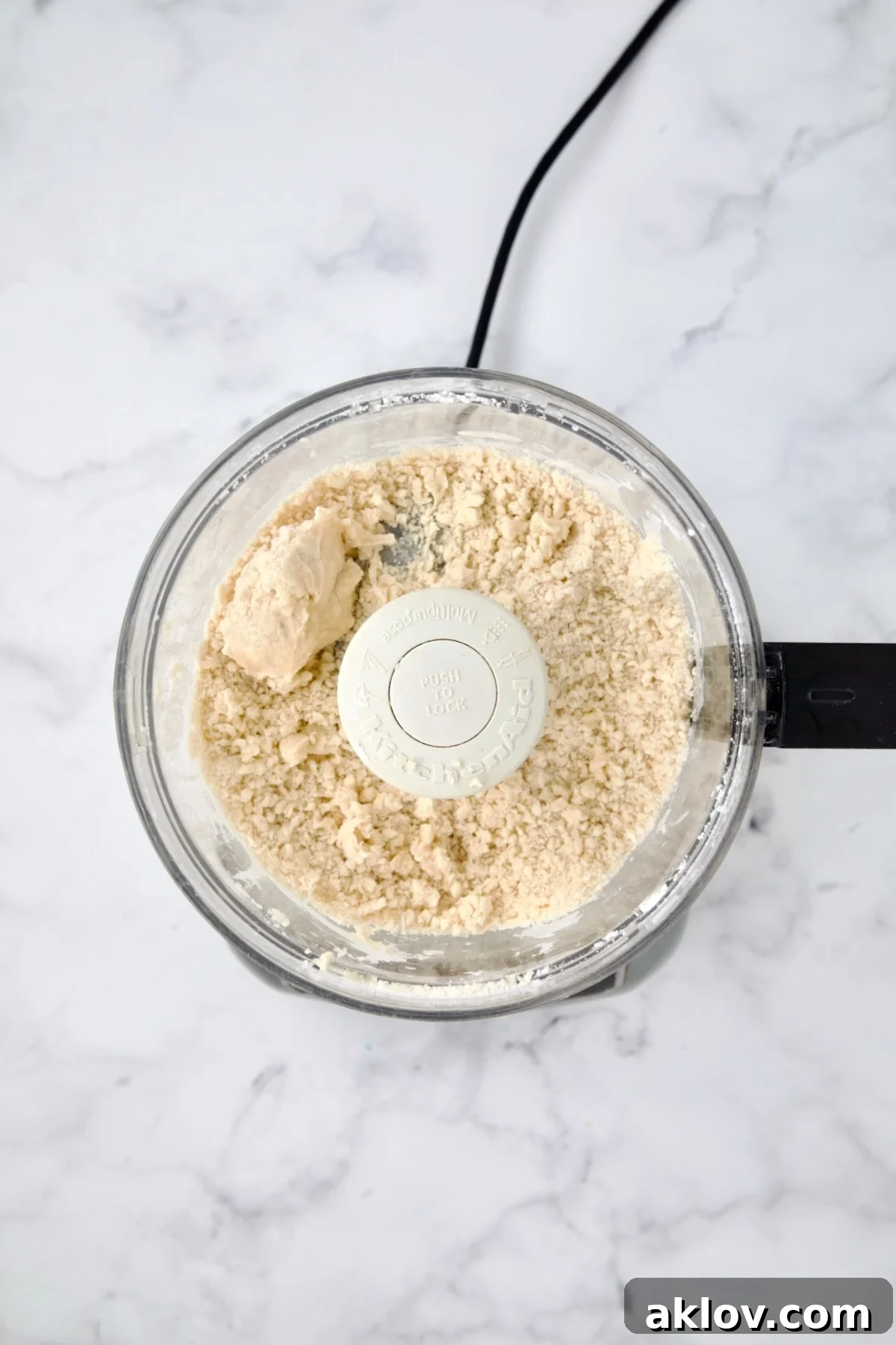
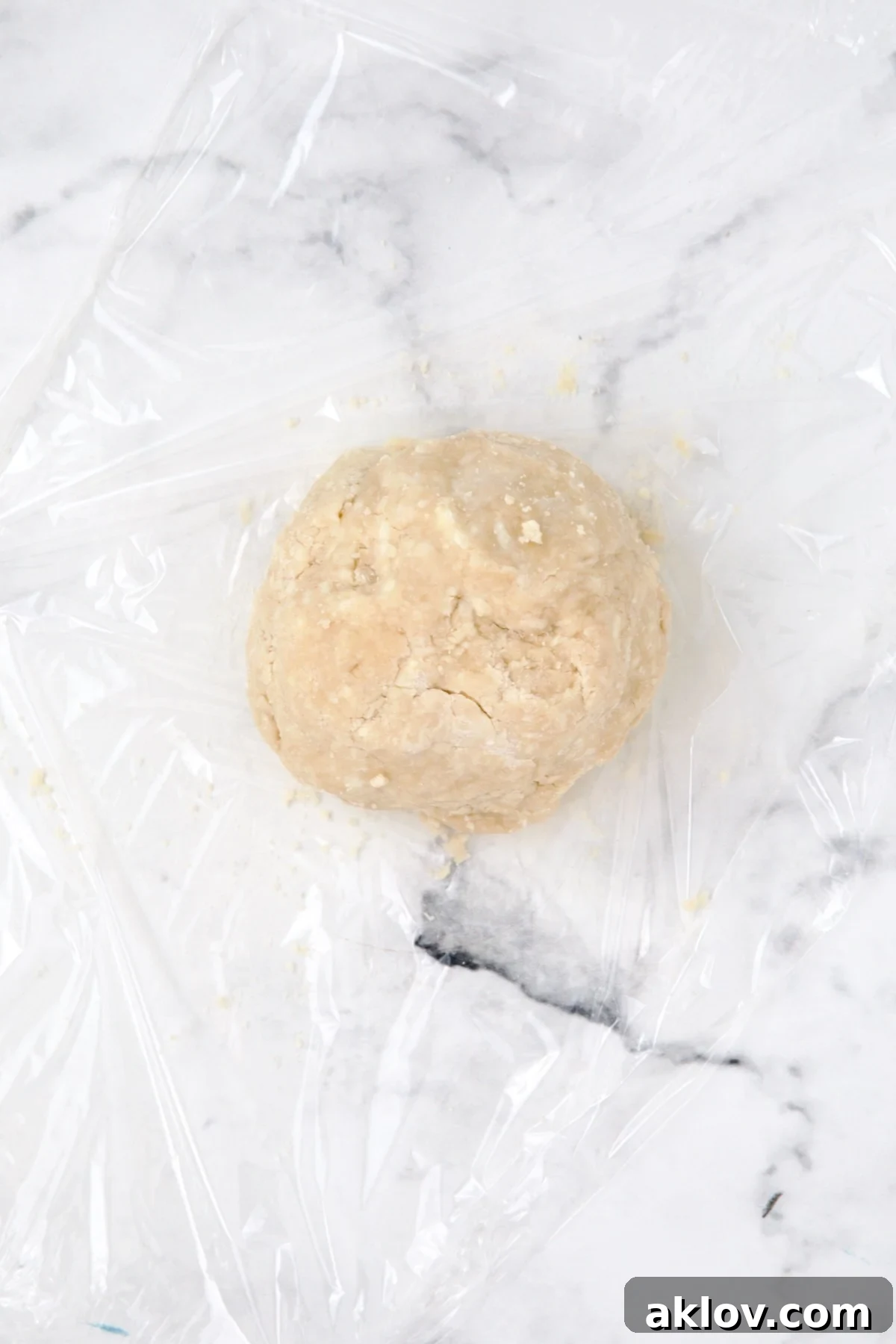
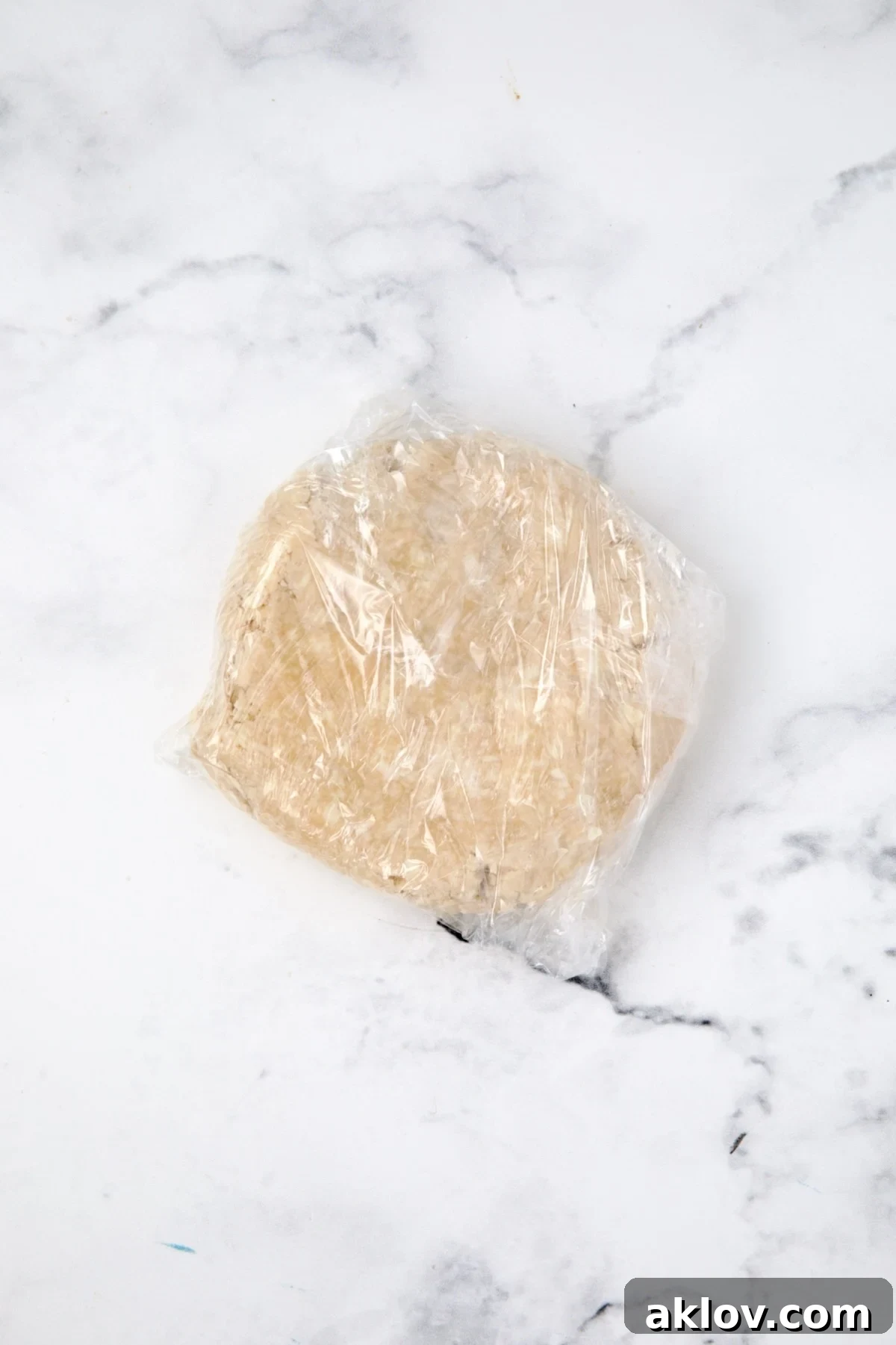
- Form and Chill the Dough: Lay a piece of plastic wrap on a clean work surface. Empty the unformed dough onto the center of the plastic wrap. Gently gather the dough and, using the plastic wrap to help, shape it into a flat disk. Wrap the disk tightly with the plastic wrap and refrigerate for at least 30 minutes. Chilling the dough is essential; it allows the butter to firm up, which is key to achieving a truly flaky and tender crust.
Preparing the Flavorful Galette Filling
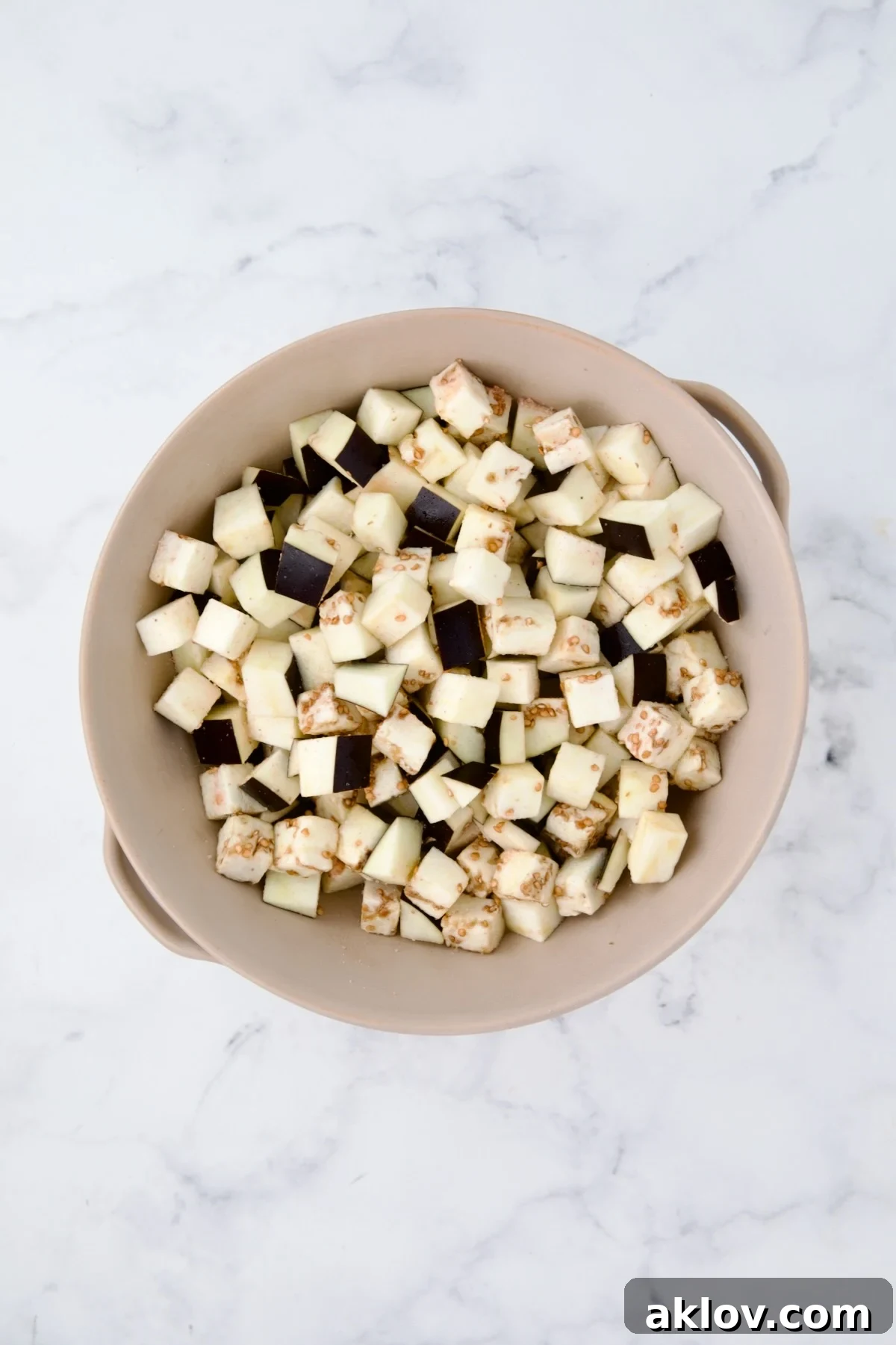
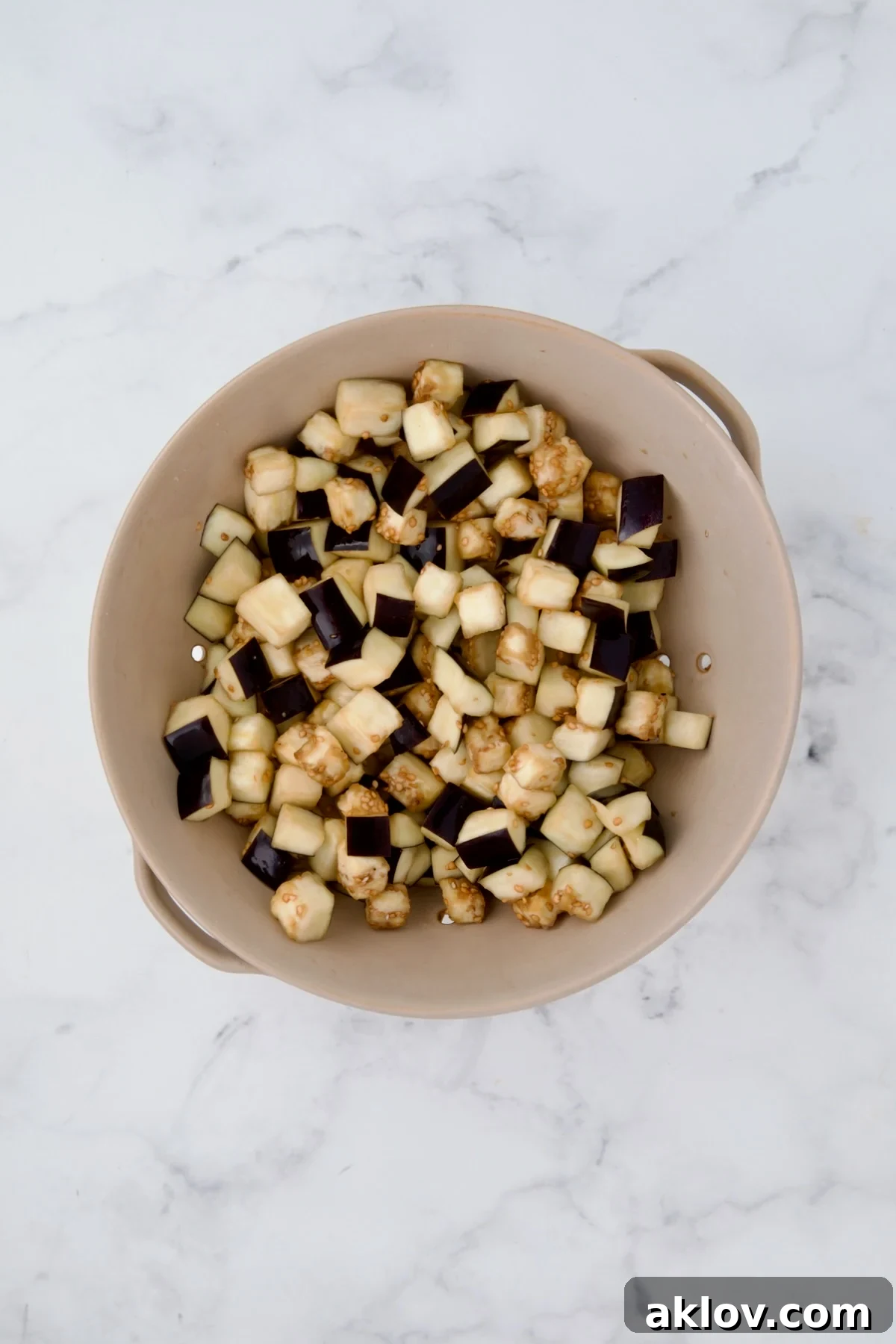
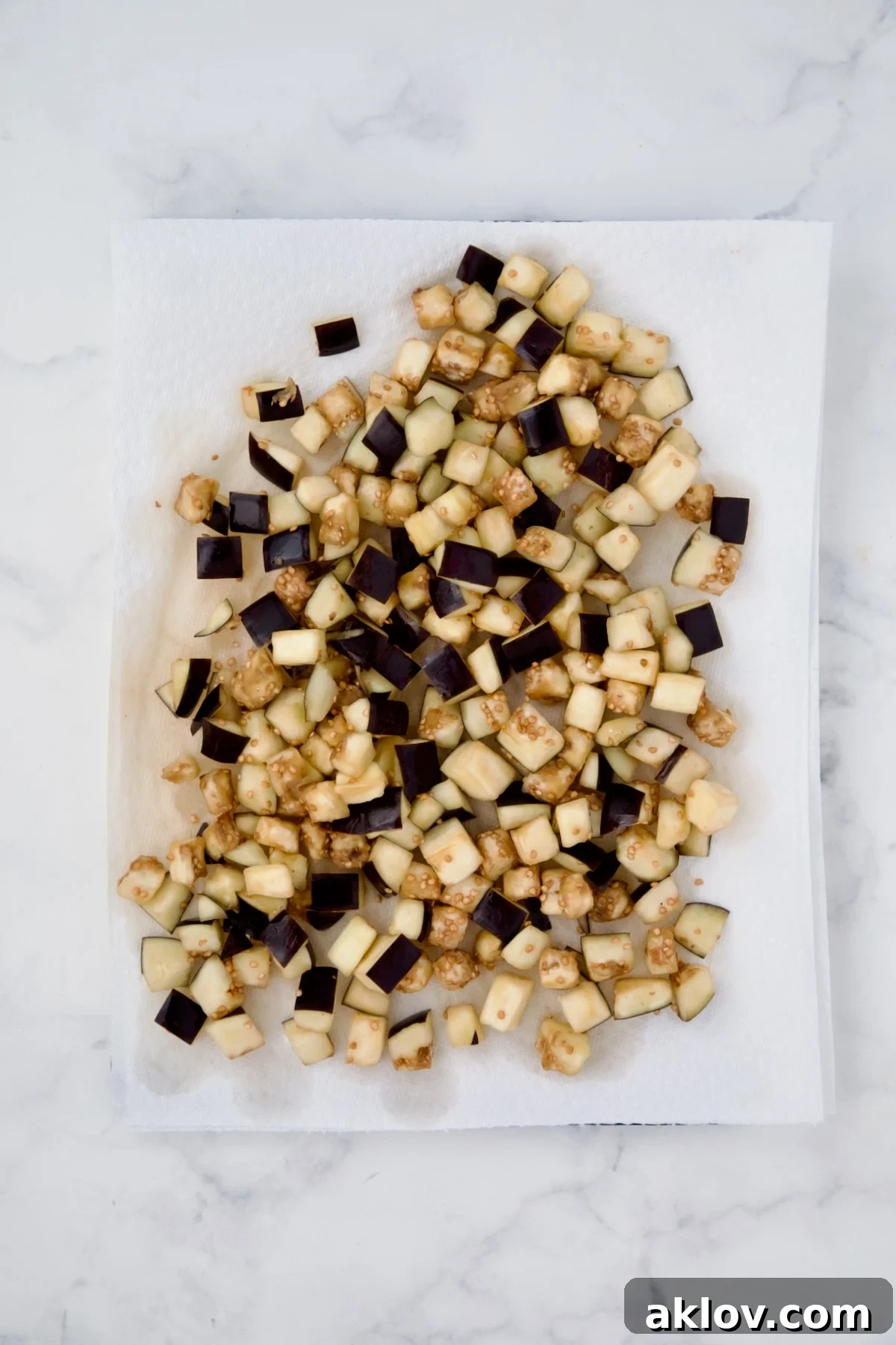
- Salt the Eggplant (Optional but Recommended): While the dough chills, prepare your eggplant. Place the cubed eggplant in a colander and toss thoroughly with approximately 2 teaspoons of salt. Allow it to drain for about 30 minutes. This process helps draw out excess moisture and some of the eggplant’s mild bitterness, ensuring a tender and less watery filling.
- Pat Eggplant Dry: After draining, gently pat the eggplant cubes thoroughly dry with paper towels. Removing as much moisture as possible is crucial for good caramelization during roasting.
- Preheat Oven for Roasting: Preheat your oven to 425 degrees Fahrenheit (220 degrees Celsius). This higher temperature is ideal for achieving a beautiful caramelization on the vegetables.
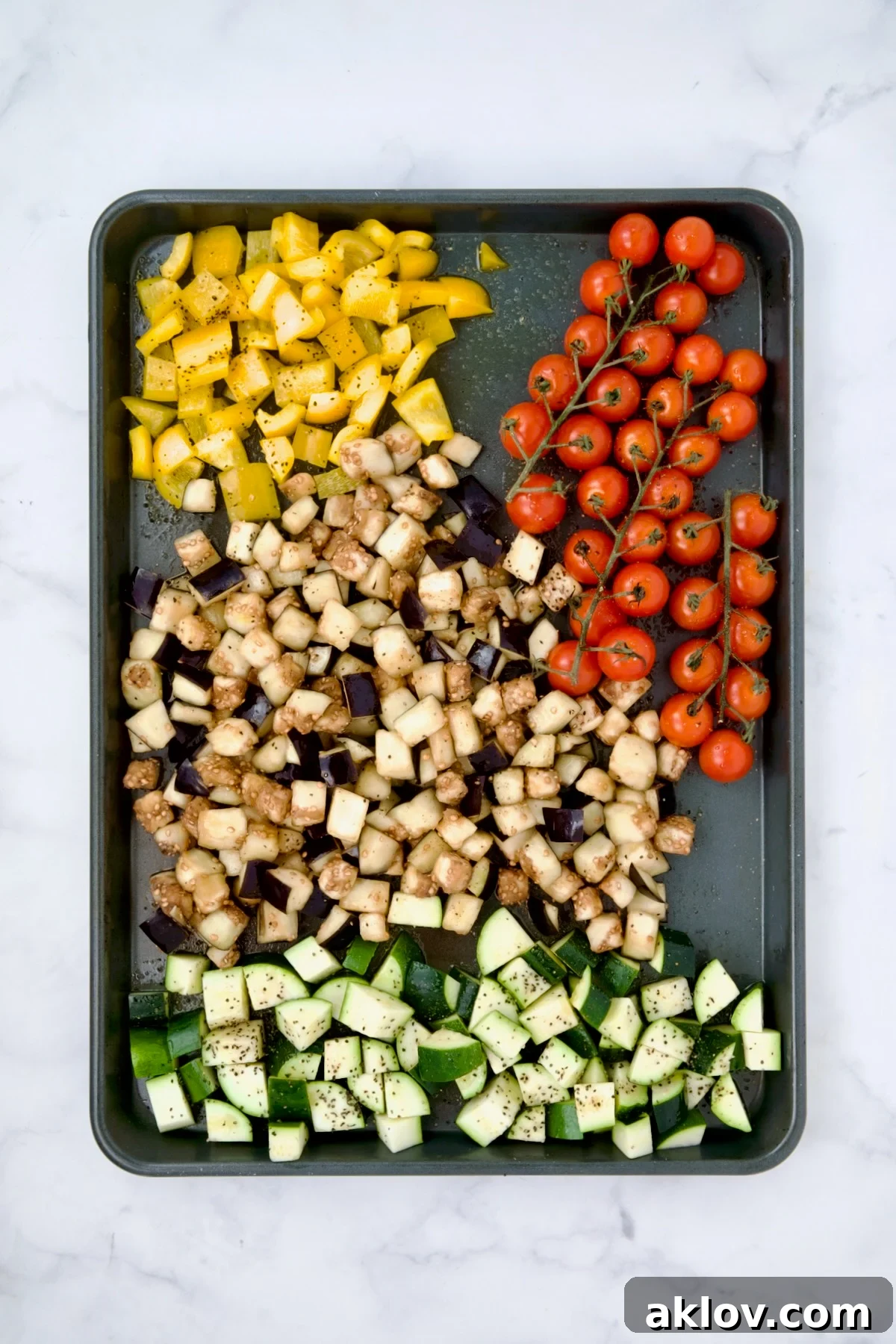
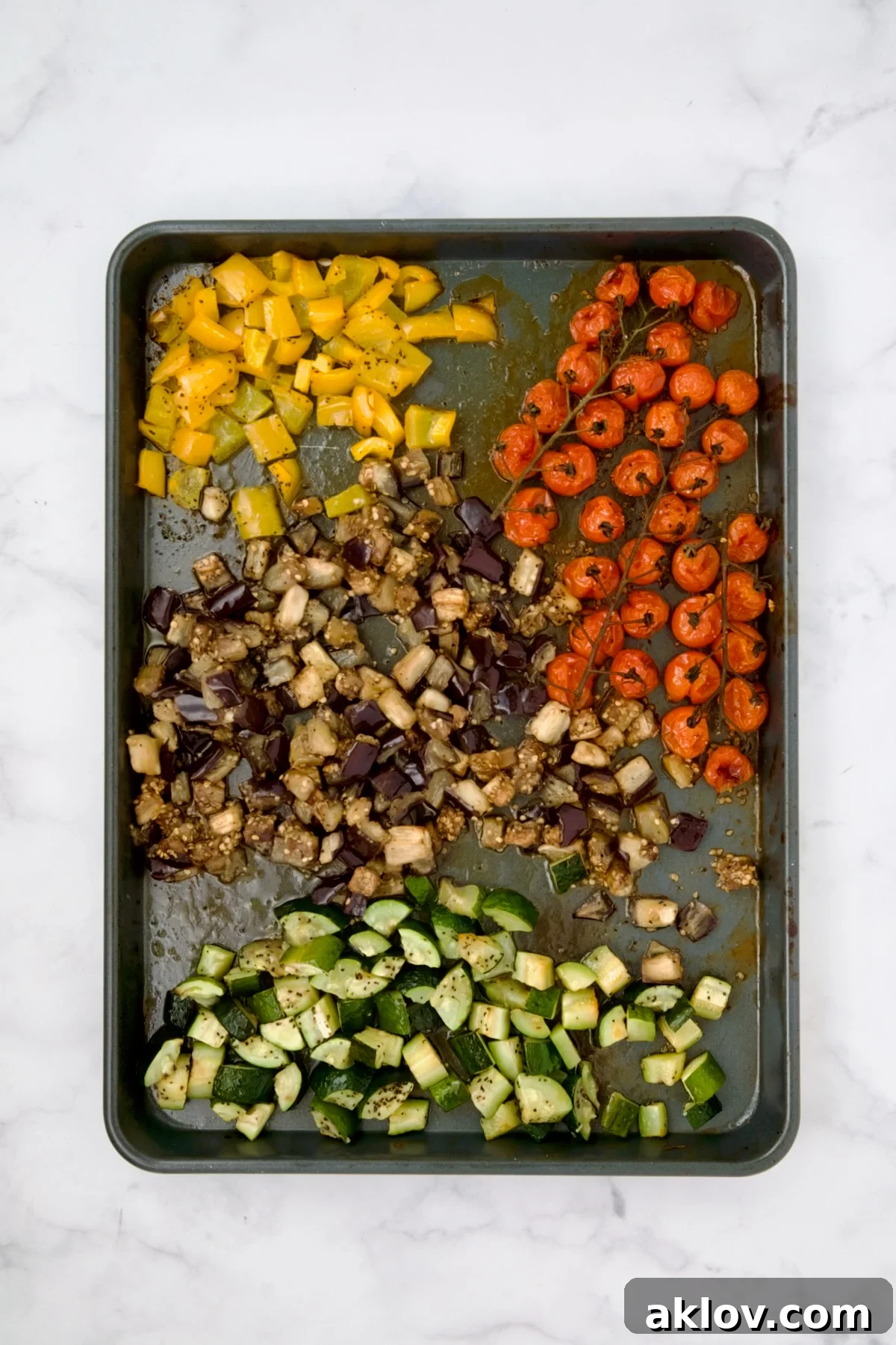
- Roast the Vegetables: On a large baking sheet, spread the prepared eggplant, cherry tomatoes, zucchini, and bell pepper in a single layer. Drizzle generously with olive oil and toss to ensure all vegetables are evenly coated. Roast in the preheated oven for approximately 15 minutes, or until the vegetables begin to brown slightly and are just becoming tender. Remember, they will cook further inside the galette, so avoid overcooking them at this stage.
- Drain and Cool Vegetables: Carefully remove the baking sheet from the oven. Tilt it slightly to allow any excess oil and liquid to drain away. This prevents a watery filling and ensures your galette crust remains crisp. Let the roasted vegetables cool completely on the baking sheet.
- Adjust Oven Temperature: Reduce the oven temperature to 400 degrees Fahrenheit (200 degrees Celsius) for baking the galette.
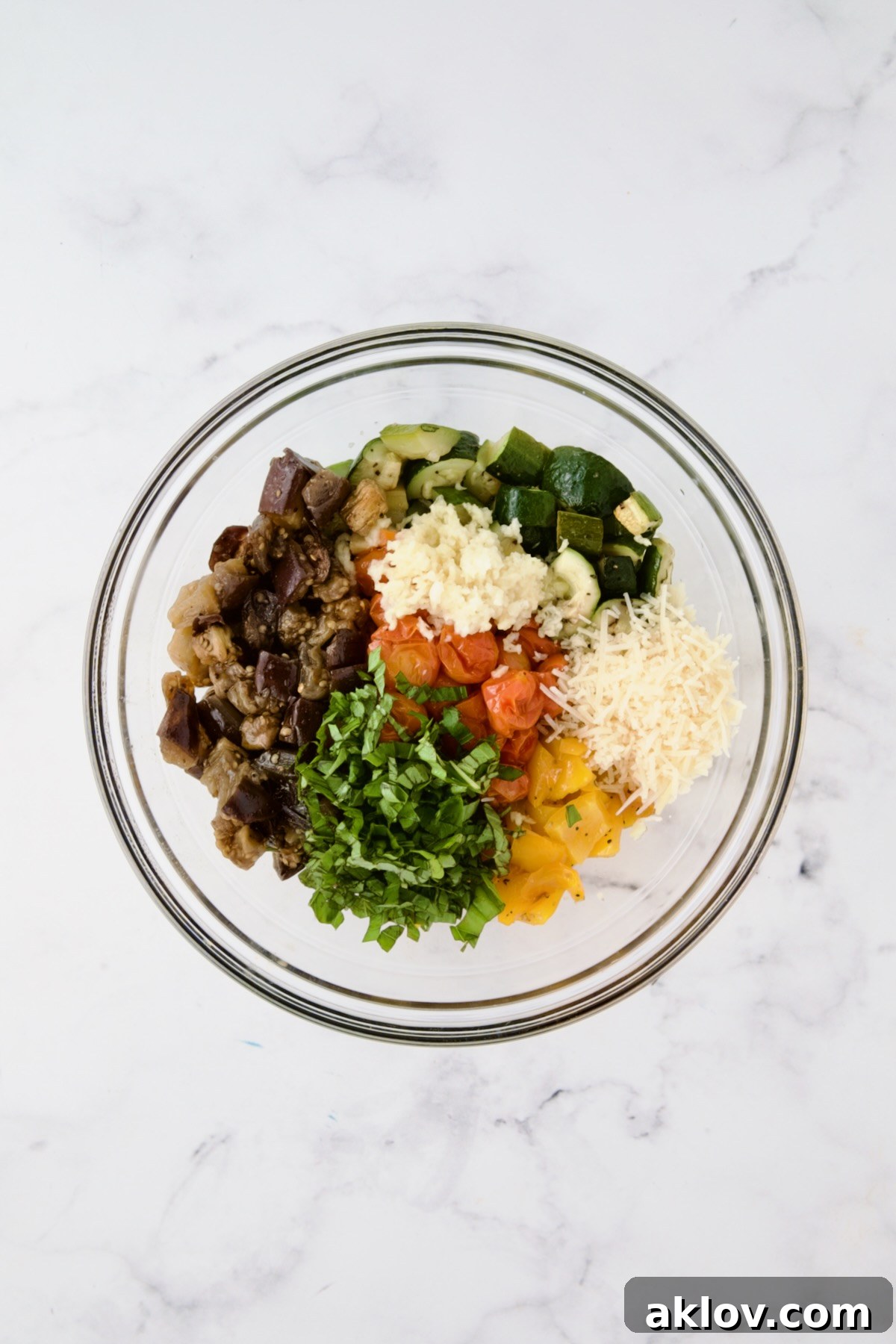
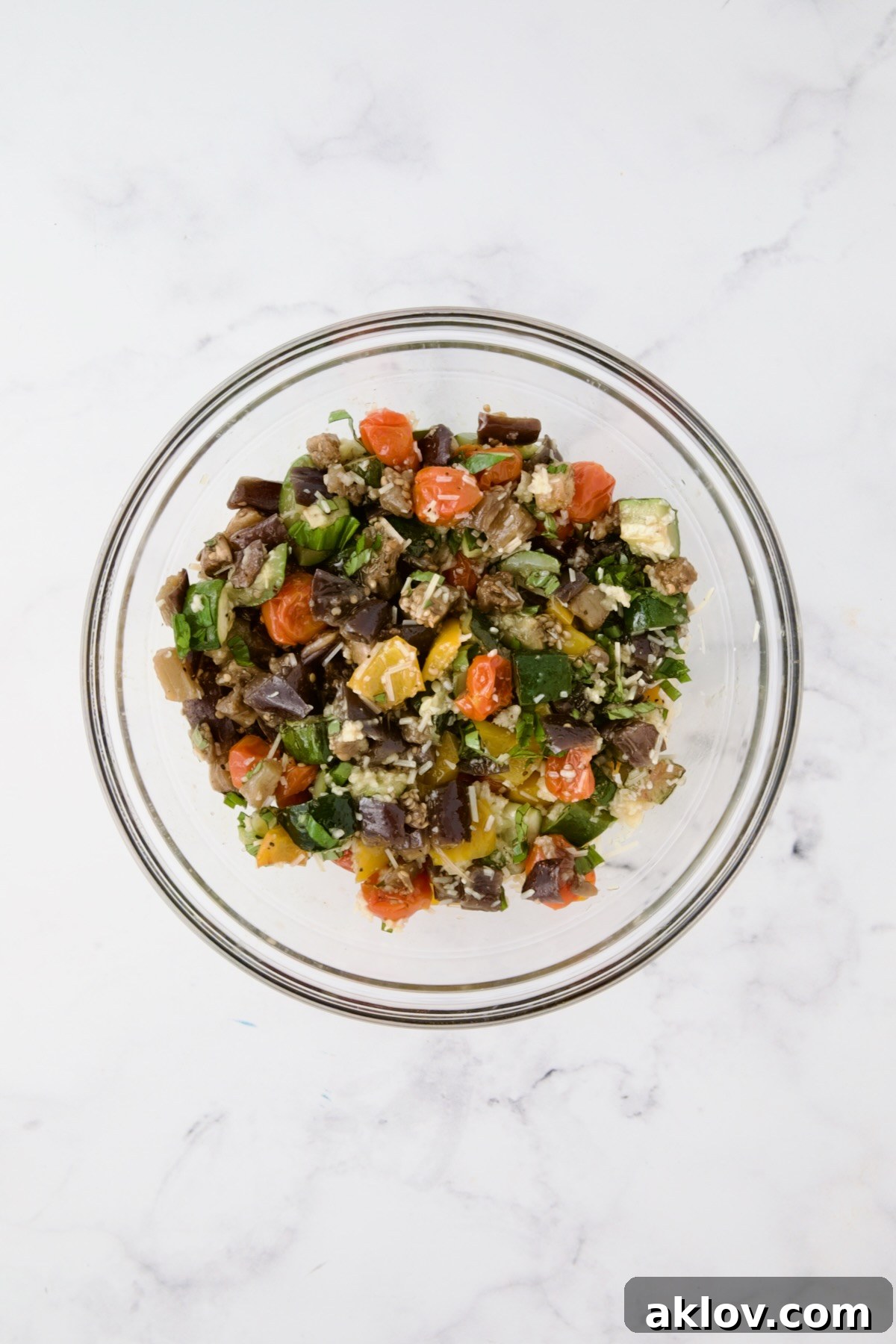
- Season the Roasted Vegetables: Once cooled, transfer the roasted vegetables to a mixing bowl. Add the minced garlic, thinly sliced fresh basil, half of the freshly grated Parmesan cheese, and season with salt and freshly ground black pepper to taste. Toss gently to combine all the flavors thoroughly.
Assembly and Baking Your Masterpiece
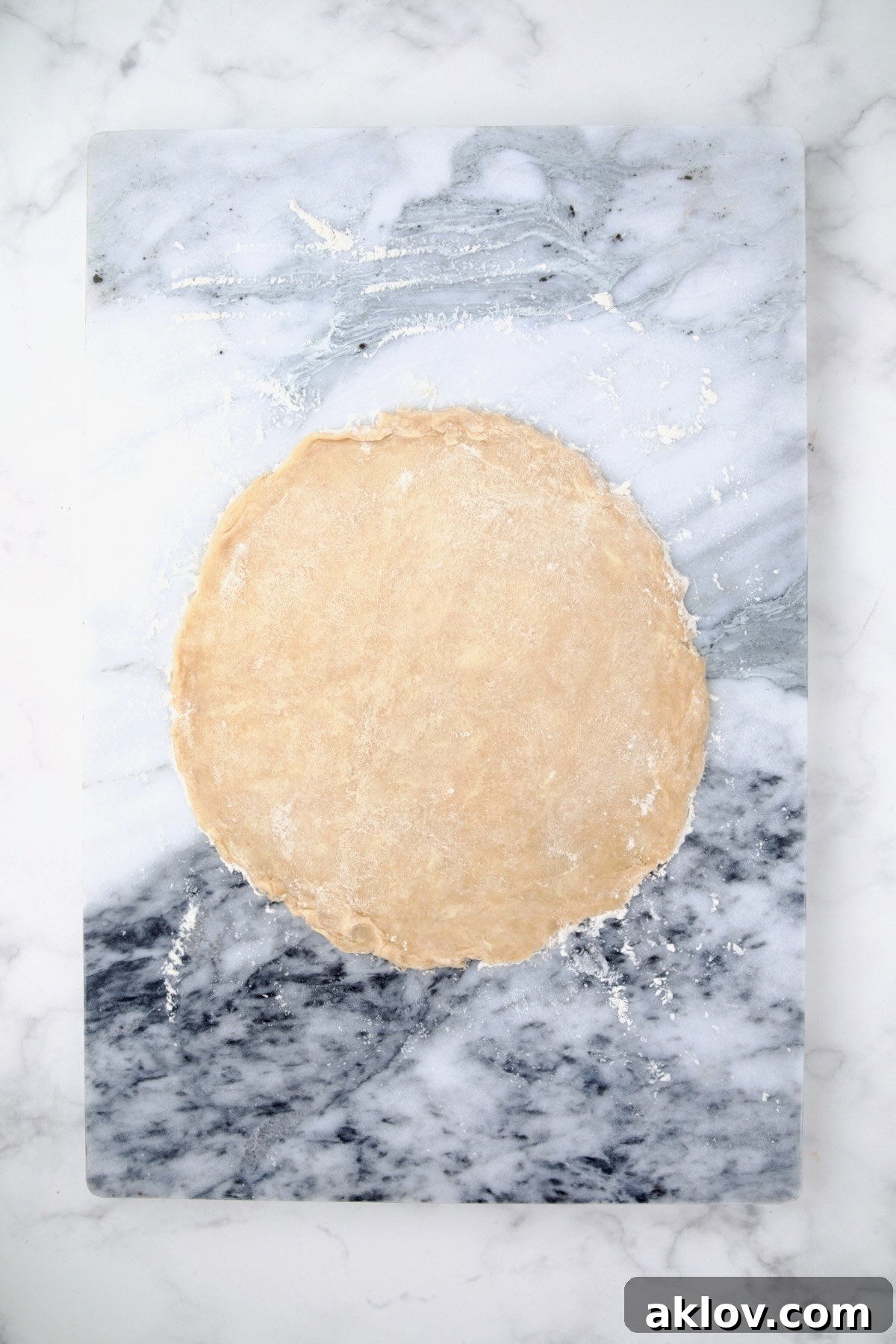
- Roll Out the Dough: Remove the chilled dough from the refrigerator. Place it on a lightly floured surface and roll it out into a circle, approximately 12 to 14 inches in diameter. Add more flour to your rolling pin or surface as needed to prevent sticking, ensuring even thickness.
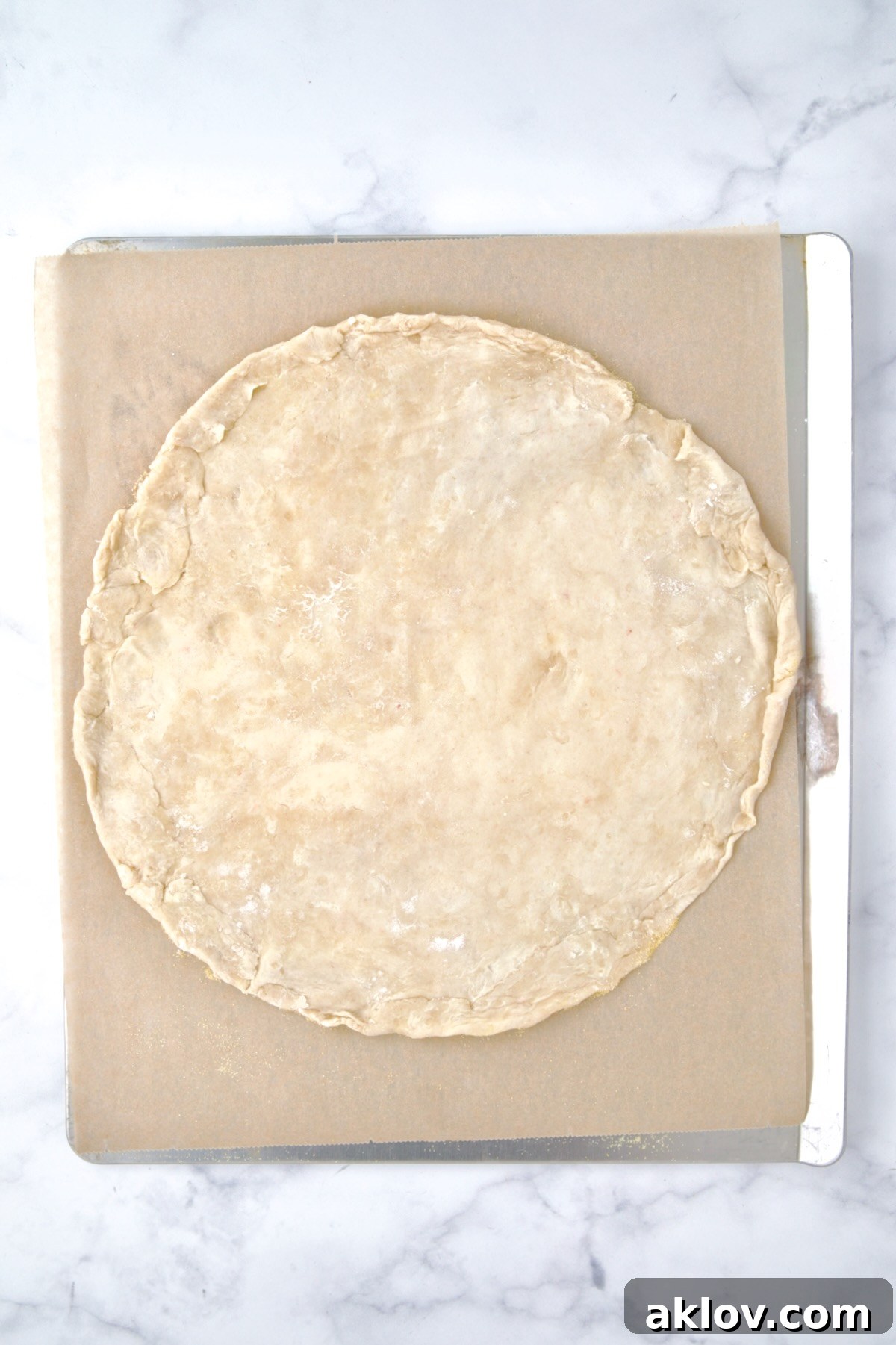
- Prepare Baking Sheet: Line a large baking sheet with parchment paper. This prevents sticking and makes cleanup a breeze. Lightly sprinkle a thin layer of cornmeal over the parchment paper. The cornmeal adds a subtle crunch to the bottom crust and helps absorb any excess moisture.
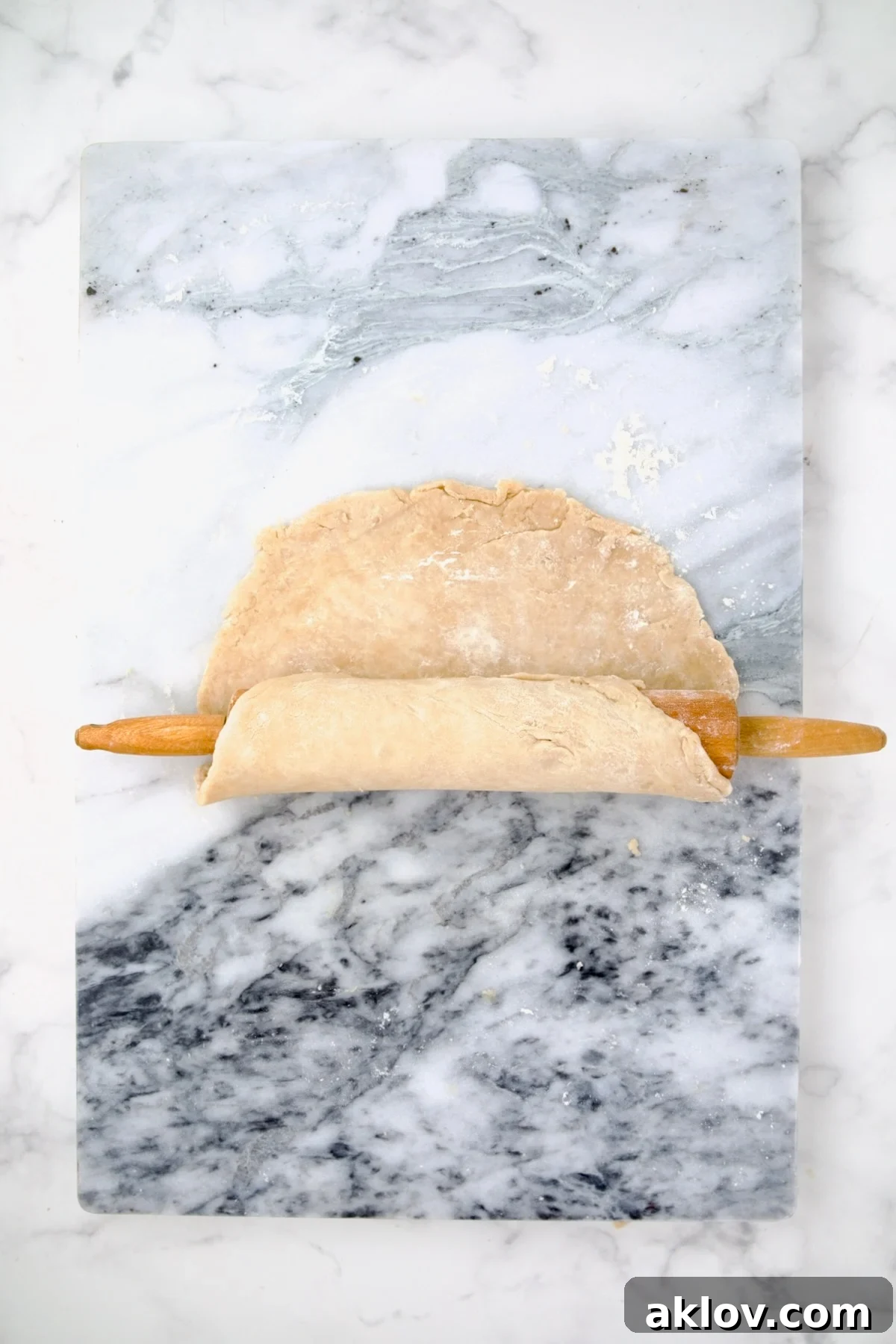
- Transfer Dough to Baking Sheet: Carefully transfer the rolled-out galette dough onto the prepared parchment paper on the baking sheet.
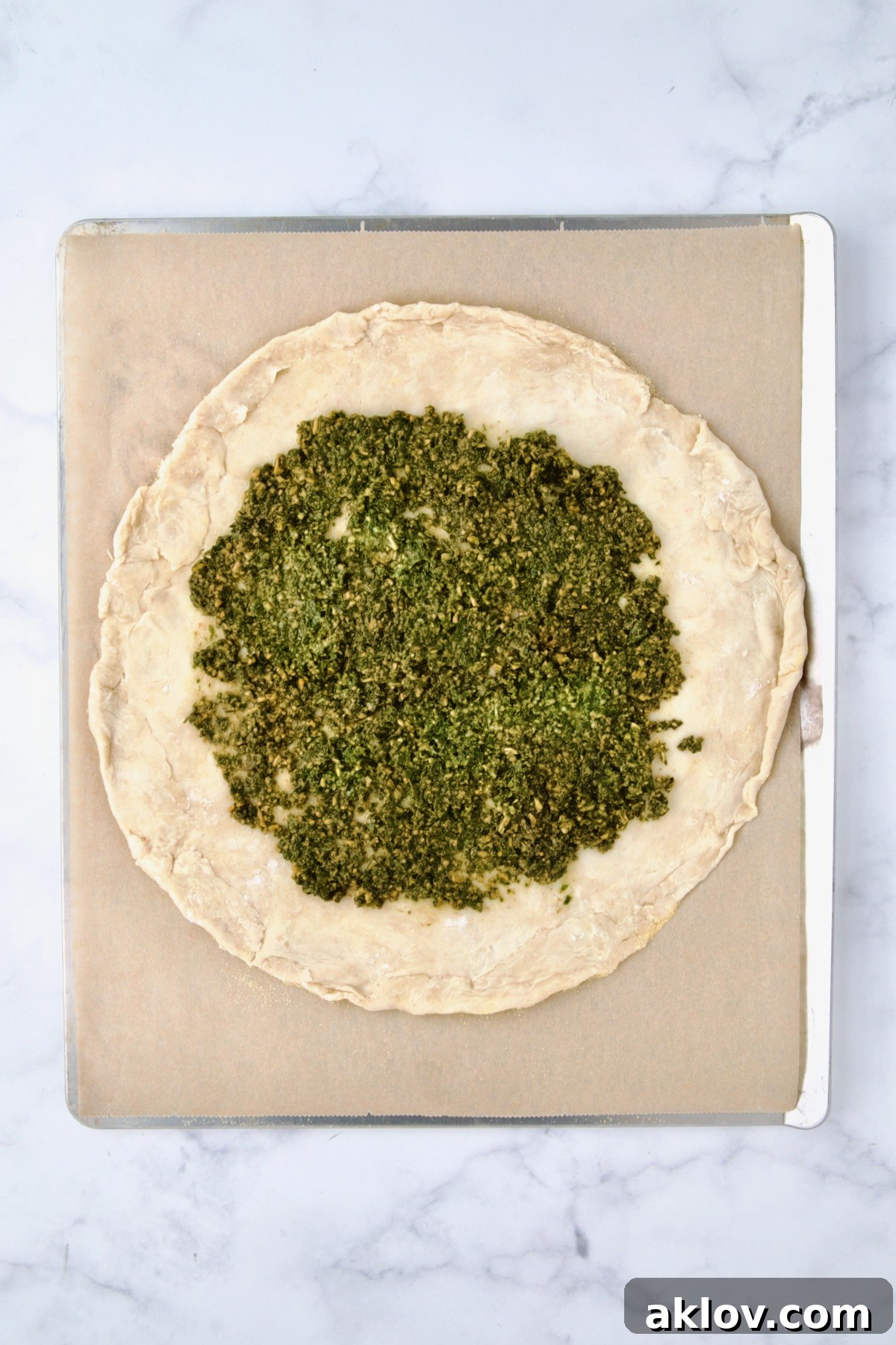
- Spread the Pesto Base: Evenly spread the drained pesto over the galette pastry, making sure to leave a clear 2 to 3-inch border around the edges. This border will be folded over to create the rustic crust.
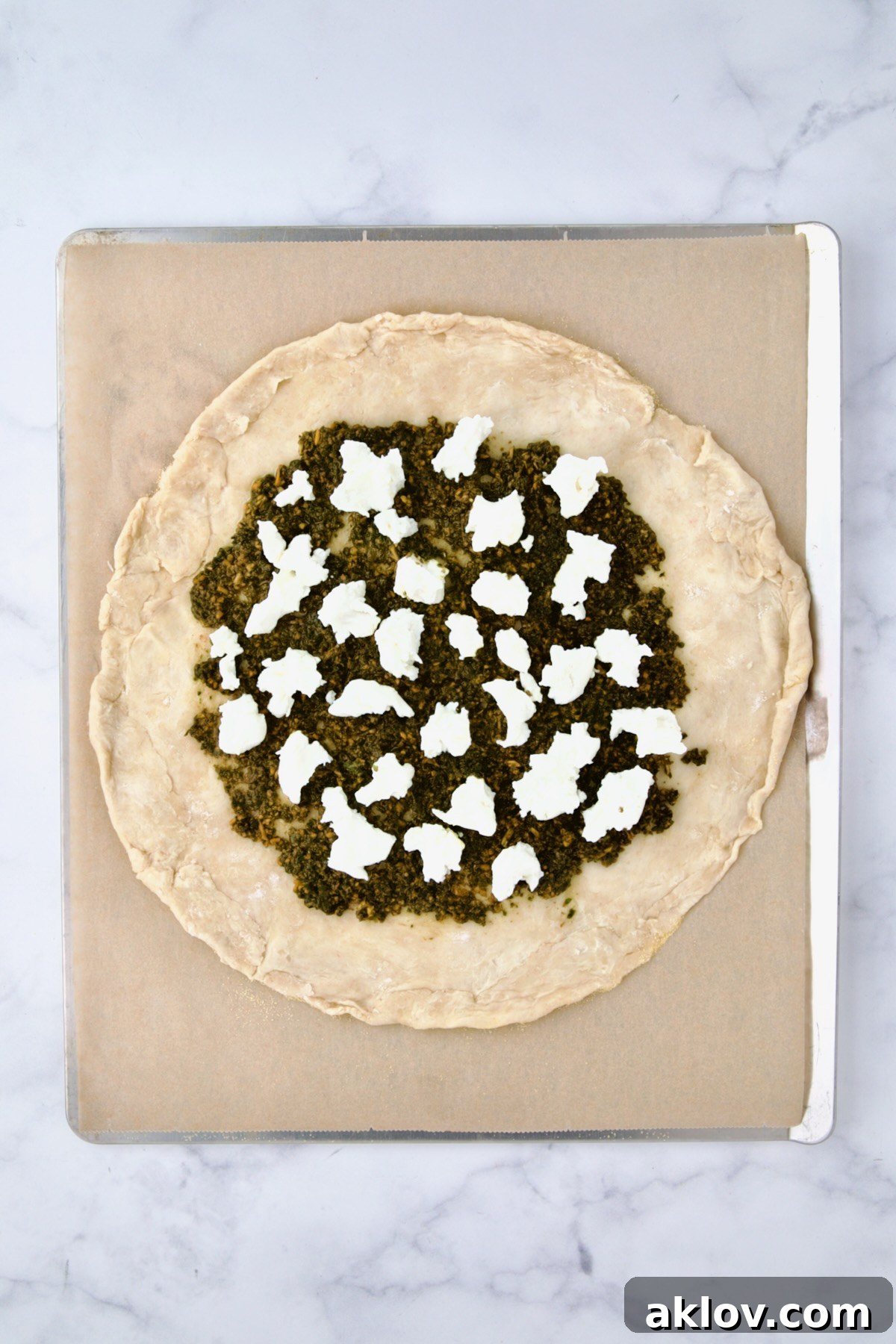
- Add Goat Cheese: Break the log of goat cheese into small, manageable pieces and dot them evenly over the pesto layer. The goat cheese will melt into creamy pockets of tangy flavor during baking.
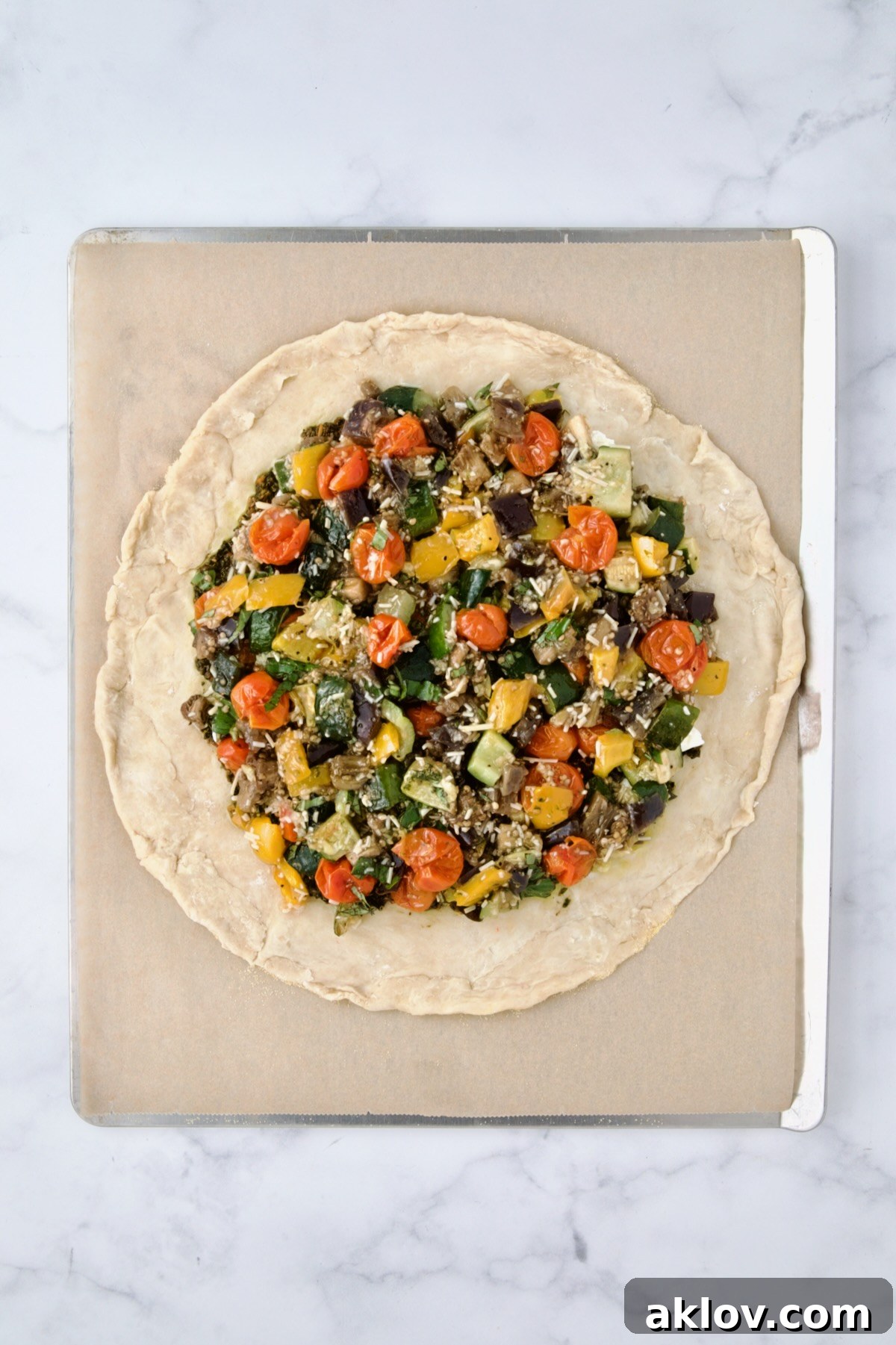
- Arrange Vegetables: Spoon the cooled, seasoned vegetable mixture onto the pie crust, again leaving a consistent 3-inch border around the perimeter. Distribute the vegetables evenly for a beautiful presentation and balanced flavor in every bite.
- Fold the Crust: Gently fold the dough border over the vegetable filling, overlapping the pastry as necessary to partially cover the filling. The goal is a rustic, free-form appearance – don’t strive for perfection, embrace the charm!
- Brush with Olive Oil: Lightly brush the exposed pastry crust with a little olive oil. This will help achieve a beautiful golden-brown color and a crisp texture.
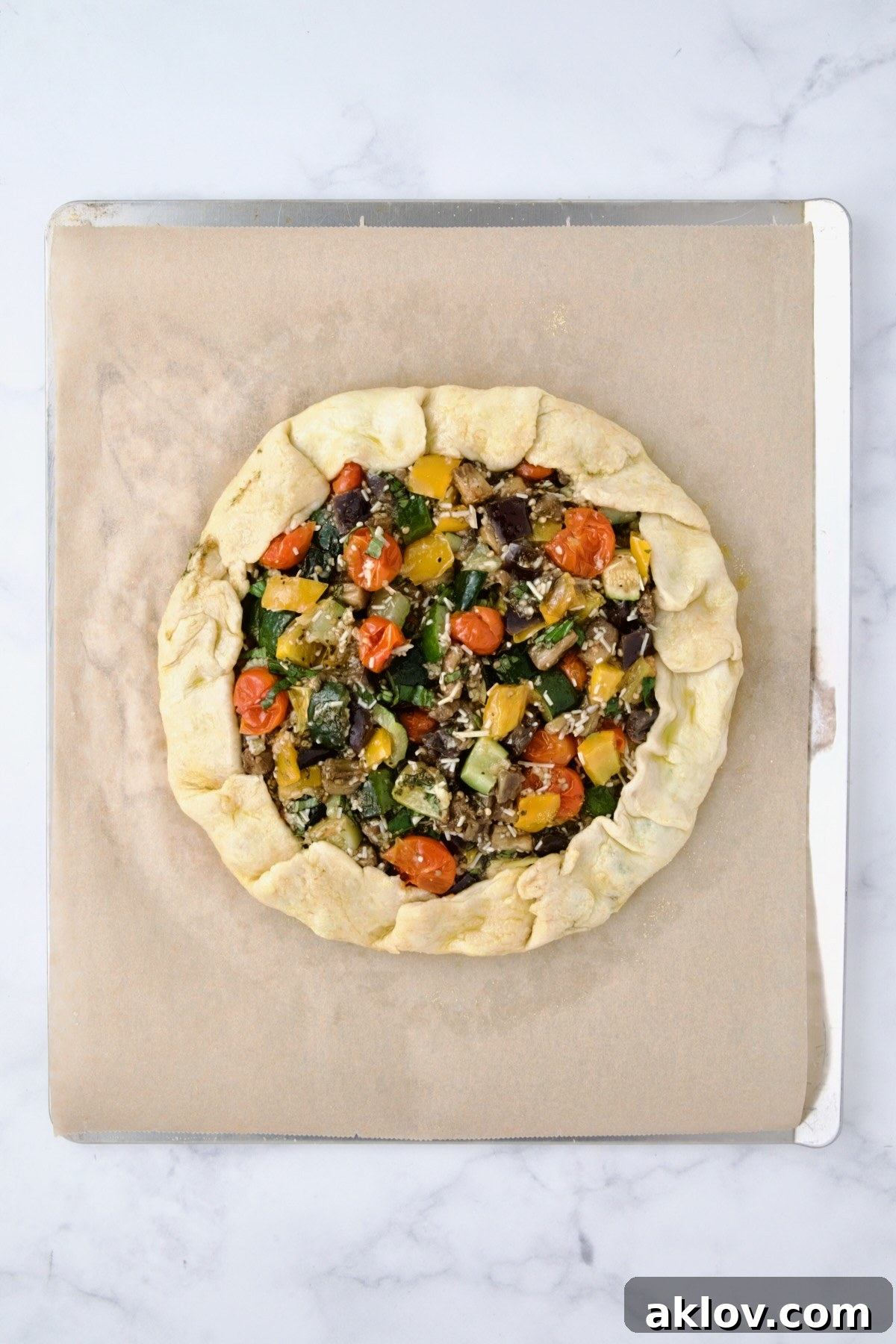
- Bake to Golden Perfection: Place the galette in the preheated 400°F (200°C) oven and bake for approximately 40 to 45 minutes, or until the crust is beautifully golden brown and the filling is bubbling and tender.
- Serve: Once baked, remove the galette from the oven. For an extra touch of flavor and elegance, sprinkle with the remaining Parmesan cheese and fresh basil. Allow it to cool for a few minutes before slicing into wedges and serving immediately, or enjoy it at room temperature.
Chef’s Secrets for an Unforgettable Galette
- Eggplant Peeling – A Matter of Preference: Peeling the eggplant before dicing is entirely optional. While some prefer to peel it for a smoother texture, we often choose to leave the skin on for most recipes, including this galette. The skin contains valuable antioxidants, contributing to the nutritional benefits of the dish. Plus, it holds its shape well and adds a pleasant, subtle chewiness.
- Salting Eggplant for Superior Flavor: Salting the eggplant before roasting is a technique that helps draw out excess moisture and can mellow some of its inherent, mildly bitter taste. While we appreciate that unique eggplant flavor and don’t always salt it, for this galette, it serves an additional purpose: it slightly softens the eggplant, ensuring it cooks more evenly with the other vegetables during roasting. If you are sensitive to salt, you can skip this step, but consider giving the eggplant a 5 to 10-minute head start in the oven before adding the other vegetables to ensure it cooks through properly.
- Preventing a Soggy Crust: After roasting your vegetables, it’s crucial to deal with any excess moisture. Once you remove the baking sheet from the oven, gently tilt it. You can prop one end up on something sturdy (like a thick cookbook) and place a damp kitchen towel or a small bowl under the other end to catch any liquid. Allowing this excess oil and vegetable juices to drain away is vital for preventing a soggy galette crust, ensuring it stays beautifully crisp and flaky.
- Pesto Precaution: Before spreading your pesto, whether homemade or store-bought, always check for and drain off any excess oil. Pesto can be quite oily, and if too much oil seeps out from the galette during baking, it can make the crust greasy, cause unwanted smoking in your oven, or even lead to an unpleasantly oily filling.
Common Questions About Making a Delicious Vegetable Galette
While it might seem like a convenient shortcut, we highly recommend making your own crust for this Mediterranean vegetable galette. A homemade crust offers an unparalleled flakiness and buttery flavor that significantly elevates the entire dish. Furthermore, a standard store-bought pie crust is typically smaller and thinner, making it challenging to roll out large enough to accommodate the generous amount of vegetables in this recipe without tearing. If you absolutely need to use a purchased pie crust, we suggest dividing the filling and making two smaller galettes to ensure proper cooking and structural integrity.
What other vegetables can go into a savory galette?
The beauty of a savory galette lies in its incredible versatility! Beyond the classic Mediterranean combination of eggplant, zucchini, bell peppers, and tomatoes, you can experiment with a wide array of vegetables. Consider adding thinly sliced asparagus, sweet potatoes (pre-roasted for tenderness), fresh spinach (sautéed to remove excess water), caramelized onions, or even hearty mushrooms. Seasonal produce like butternut squash or leeks also make excellent fillings, as seen in a butternut squash, leek, and goat cheese galette. The key is to select vegetables that roast well and complement the creamy cheese and flaky crust. Always pre-cook denser vegetables like squash or potatoes to ensure they are tender by the time the galette crust is golden.
Storage and Reheating Instructions
- Storing Leftovers: Any leftover slices of your Mediterranean Vegetable Galette should be stored in an airtight container in the refrigerator. It will keep well for up to 3-4 days.
- Reheating: To enjoy your galette again, reheat individual wedges in a 350-degree Fahrenheit (175°C) oven until thoroughly warmed through and the crust regains some of its crispness. Avoid reheating in the microwave, as it can make the crust soggy.
Complementary Dishes to Serve with Your Galette
This versatile Mediterranean Vegetable Galette can be a light main course or a stunning side dish. Here are some perfect accompaniments:
- Crisp Green Bean Salad with Tangy Mustard Vinaigrette
- Refreshing Tuscan Kale Salad with Lemon Tahini Dressing
- Cream of Celery Leaves and Scallion Soup
- Light and Flavorful Cream of Green Vegetable Soup
Discover More Delightful Quiche, Tart, and Galette Recipes
If you’ve enjoyed the rustic elegance of this Mediterranean Vegetable Galette, you’ll love exploring these other fantastic recipes from our collection:
- Summery Tomato and Corn Pie with Fresh Basil
- Quick and Easy Puff Pastry Vegetable Tart
- Classic Zucchini Quiche for Any Meal
- Decadent Caramelized Onion and Goat Cheese Tart with Thyme
Find all our inspiring quiche, tart, and galette creations at Quiche and Tart Recipes – From A Chef’s Kitchen.
Mediterranean Vegetable Galette Recipe
By Carol | From A Chef’s Kitchen
This Mediterranean Vegetable Galette is an elegant yet fuss-free dish, perfect for showcasing the vibrant flavors of summer’s vegetable bounty. With its golden, flaky crust and colorful array of roasted vegetables, this galette is as visually stunning as it is delicious.
Prep Time: 30 mins
Cook Time: 50 mins
Total Time: 1 hr 20 mins
Servings: 4
Equipment
- Wusthof Chef Knife
- Cutting Board
- Colander
- Rimmed Sheet Pan
Ingredients
Galette Dough
- 1 1/2 cups all-purpose flour, plus more for rolling out the dough
- 1/4 teaspoon salt
- 10 tablespoons unsalted butter, (1 stick plus 2 tablespoons), very cold and cubed
- 1/4 cup ice water, or as needed
Galette Filling
- 1 small eggplant, approximately 1 pound, cubed
- Salt (for eggplant and seasoning)
- 2 pints cherry tomatoes
- 2 small zucchini, total 12 ounces, cut into ½-inch cubes
- 1 medium red or yellow bell pepper, seeded and cut into 1-inch pieces
- ¼ cup olive oil, plus more for brushing pastry
- Freshly ground black pepper
- 4 cloves garlic, minced
- 1 large sprig fresh basil, thinly sliced
- 1/2 cup prepared pesto, drained of excess oil
- 1 log (4-ounce) goat cheese, crumbled
- Cornmeal, for dusting parchment paper
- 1/2 cup freshly grated Parmesan cheese, divided
Instructions
Galette Dough Preparation
- Combine flour, salt, and cold butter in a food processor bowl. Process until it resembles coarse crumbs.
- Add 3 tablespoons of ice water and pulse in the food processor. If the dough doesn’t quite hold together when pressed, add 1 more tablespoon of ice water, pulsing briefly.
- Place a piece of plastic wrap on a work surface and empty the dough onto it. Shape the dough into a disk, using the plastic wrap to assist. Wrap with the plastic wrap and refrigerate for at least 30 minutes.
Galette Filling Preparation
- Meanwhile, place cubed eggplant in a colander. Toss eggplant with approximately 2 teaspoons salt. Let drain for 30 minutes. Pat dry with paper towels.
- Preheat oven to 425 degrees Fahrenheit (220°C).
- Place eggplant, tomatoes, zucchini, and bell pepper on a large baking sheet. Drizzle with olive oil and toss to coat. Roast until beginning to brown and just becoming tender, approximately 15 minutes. (Keep in mind they’ll cook again in the galette.)
- Remove the baking sheet from the oven and tilt it slightly so that excess oil and liquid drain away. Let the vegetables cool.
- Reduce oven temperature to 400 degrees Fahrenheit (200°C).
- Toss cooled vegetables with garlic, basil, half of the Parmesan cheese, salt, and freshly ground black pepper to taste.
Assembly and Baking
- Place the chilled dough on a floured surface and roll it into a 12 to 14-inch circle, adding more flour as needed.
- Line a baking sheet with parchment paper. Sprinkle a light layer of cornmeal over the parchment paper.
- Place the rolled galette dough onto the prepared parchment paper.
- Spread the drained pesto over the pastry, leaving a 2-3 inch border.
- Break the goat cheese log into pieces and dot the pesto evenly.
- Place vegetable mixture onto the pie crust, leaving a 3-inch border.
- Fold the dough over the vegetables, overlapping as necessary to partially cover the filling. (This creates a rustic appearance.)
- Brush the exposed pastry with olive oil.
- Bake for approximately 40-45 minutes or until the crust is golden brown.
- Sprinkle with the remaining Parmesan cheese. Cut into wedges and serve warm or at room temperature.
Notes
Substitutions:
- Almost any combination of Mediterranean vegetables can be used. If you’re not an eggplant fan, use more zucchini, add yellow squash, and use red bell pepper instead of yellow, etc.
- For Parmesan cheese, you can also use Asiago or Romano.
Tips:
- If salt-sensitive, skip the eggplant salting step and start the eggplant 5 or 10 minutes ahead of the other vegetables to ensure it softens appropriately.
- Always drain off excess oil from the pesto. It can leak from the galette during baking and cause smoking in the oven or a soggy crust.
Make Ahead:
- The galette dough can be made ahead and refrigerated for up to 2 days, or frozen for longer.
- The roasted vegetables can be prepared 1 day ahead of time and refrigerated. Assemble the galette when you’re ready to bake.
Nutrition
Serving: 1
Calories: 804 kcal
Carbohydrates: 60g
Protein: 16g
Fat: 58g
Saturated Fat: 24g
Polyunsaturated Fat: 3g
Monounsaturated Fat: 18g
Trans Fat: 1g
Cholesterol: 86mg
Sodium: 898mg
Potassium: 1,079mg
Fiber: 8g
Sugar: 14g
Vitamin A: 3,859 IU
Vitamin C: 106mg
Calcium: 269mg
Iron: 5mg
Nutritional values are automatically calculated using unbranded products and are estimates only. Actual results may vary based on ingredients used and portion sizes. Adjust as needed for dietary restrictions, allergies, or health concerns.
 Like this recipe? Leave a comment below!