
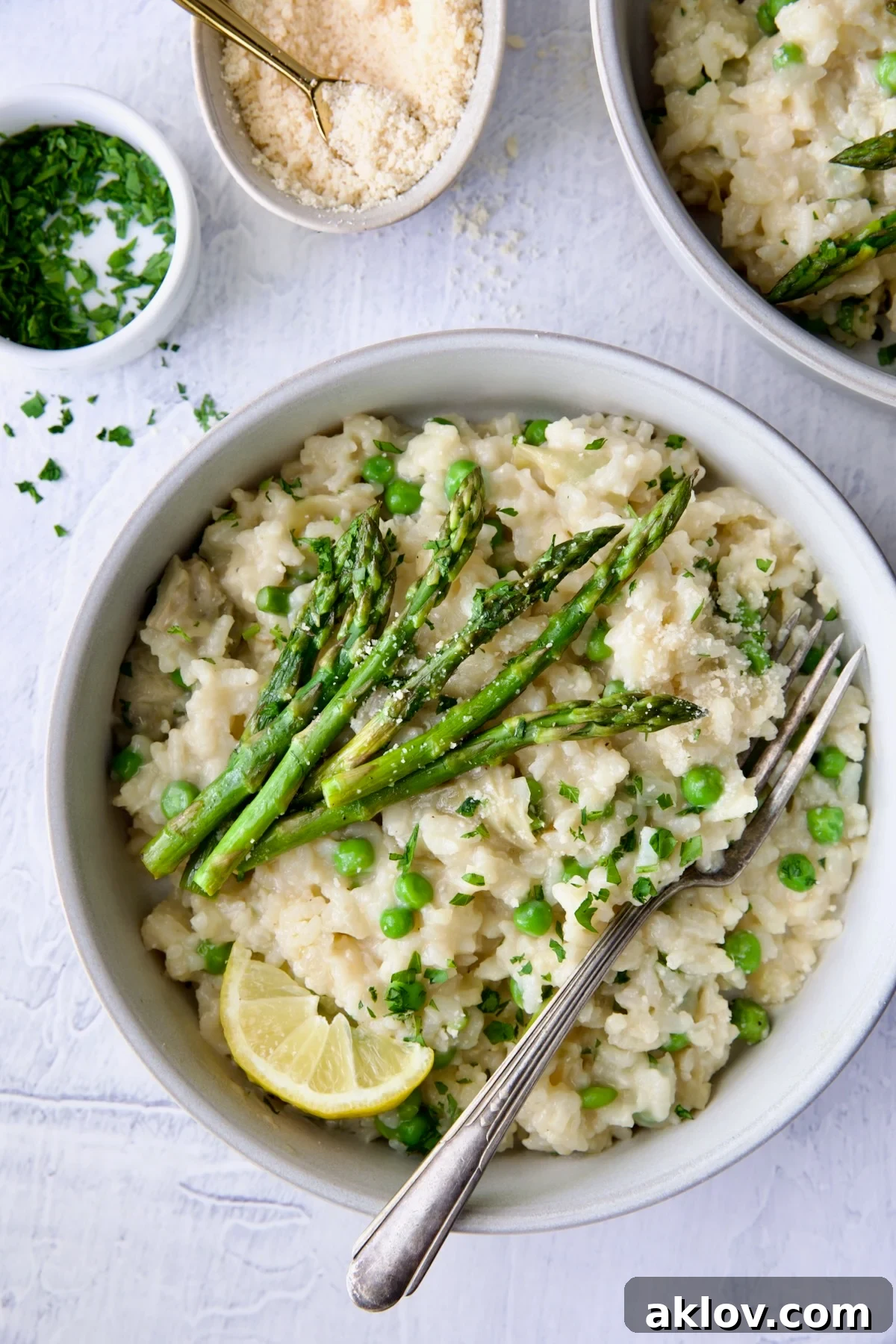
Welcome to the ultimate guide for creating a truly memorable Spring Vegetable Risotto, a dish that beautifully captures the essence of the season. Imagine tender artichokes, crisp asparagus, sweet peas, and a bright hint of lemon, all enveloped in a creamy, luscious Arborio rice. What makes this recipe truly revolutionary? You don’t need to stand over the stove, stirring continuously. This exquisite risotto bakes effortlessly in the oven, freeing you to attend to other tasks or simply relax. Perfect as an elegant side dish for a special occasion, or with a few simple additions, it transforms into a delightful vegetarian main course that will impress even the most discerning palates.
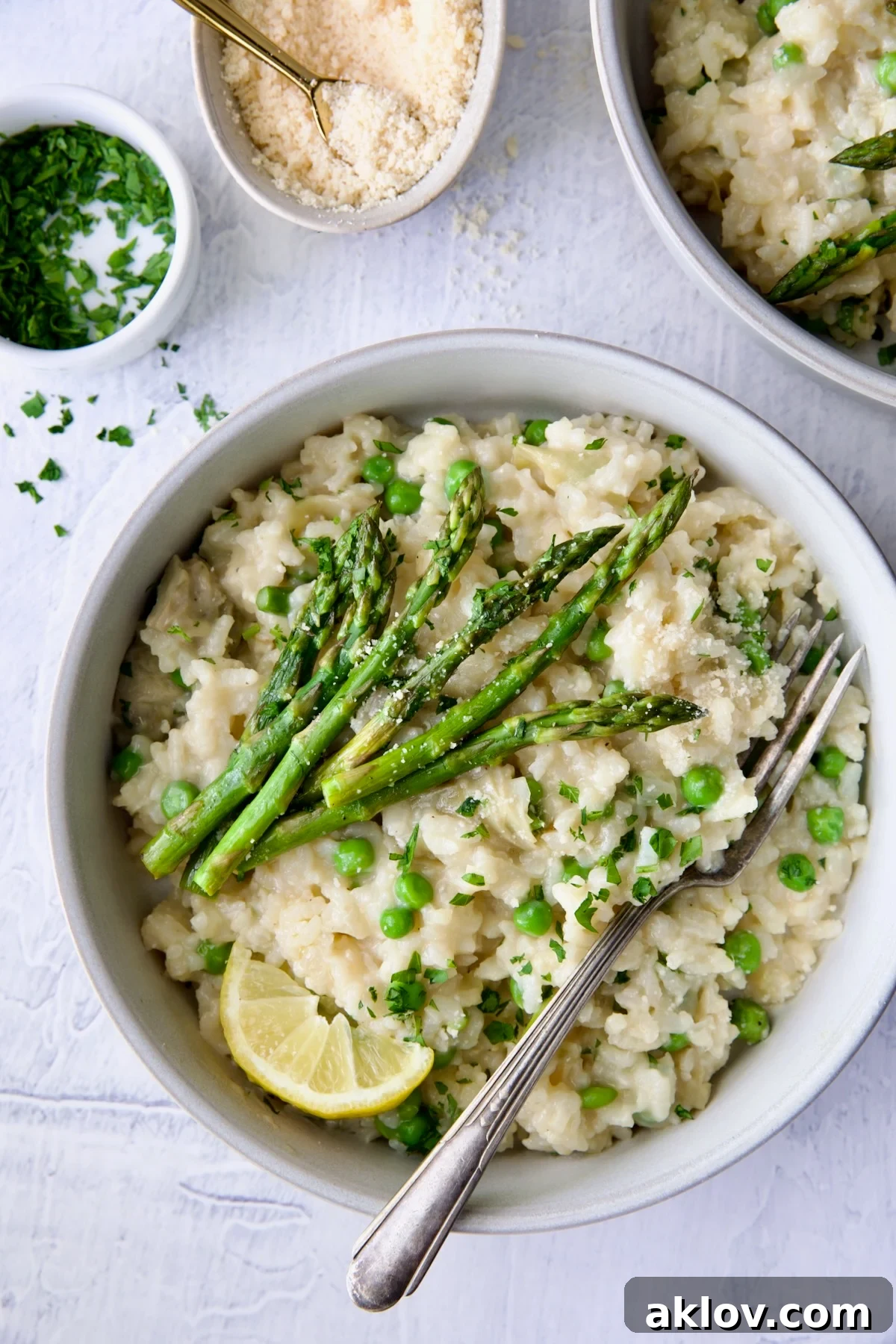
Why This Oven-Baked Risotto is a Culinary Game-Changer!
For too long, the thought of making risotto has been synonymous with endless stirring, a labor of love that often feels more like a chore. Traditional risotto preparation demands constant attention, slowly incorporating hot broth and stirring to achieve that signature creamy texture while ensuring each grain of rice cooks evenly. But what if we told you there’s a simpler, equally delicious way?
This Oven-Baked Spring Vegetable Risotto recipe revolutionizes the process. It begins with a brief sauté on the stovetop to build foundational flavors, then seamlessly transitions into your oven to finish cooking. The consistent, gentle heat of the oven takes over, perfectly cooking the Arborio rice without you needing to lift a spoon. This method not only saves you time and effort but also yields consistently perfect results every single time.
This Spring Vegetable Risotto is truly extraordinary because it’s:
- Effortlessly Easy: Say goodbye to arm-aching stirring! Our oven method makes delicious risotto accessible to everyone, from novice cooks to seasoned chefs.
- Bursting with Spring Flavors: Featuring a vibrant medley of artichokes, asparagus, sweet green peas, and a bright zest of lemon, it’s a celebration of seasonal produce.
- Incredibly Versatile: Serve it as an elegant side dish alongside roasted chicken or seared scallops, or enhance it with additional protein like grilled halloumi or white beans to transform it into a satisfying vegetarian main course.
- A Time-Saver: While your risotto bakes, you can prepare other components of your meal, set the table, or simply enjoy a glass of wine.
- Consistently Creamy: The even heat distribution of the oven ensures every grain of Arborio rice is cooked to a perfect al dente, resulting in a rich, velvety texture that’s simply irresistible.
- Perfect for Al Fresco Dining: Imagine serving this vibrant, comforting dish at your first outdoor dinner party of the season. It’s light enough for spring, yet satisfyingly rich.
Once you master this innovative oven technique, you’ll unlock a world of possibilities, adapting it with your favorite vegetables, cheeses, and proteins to create endless risotto variations throughout the year.
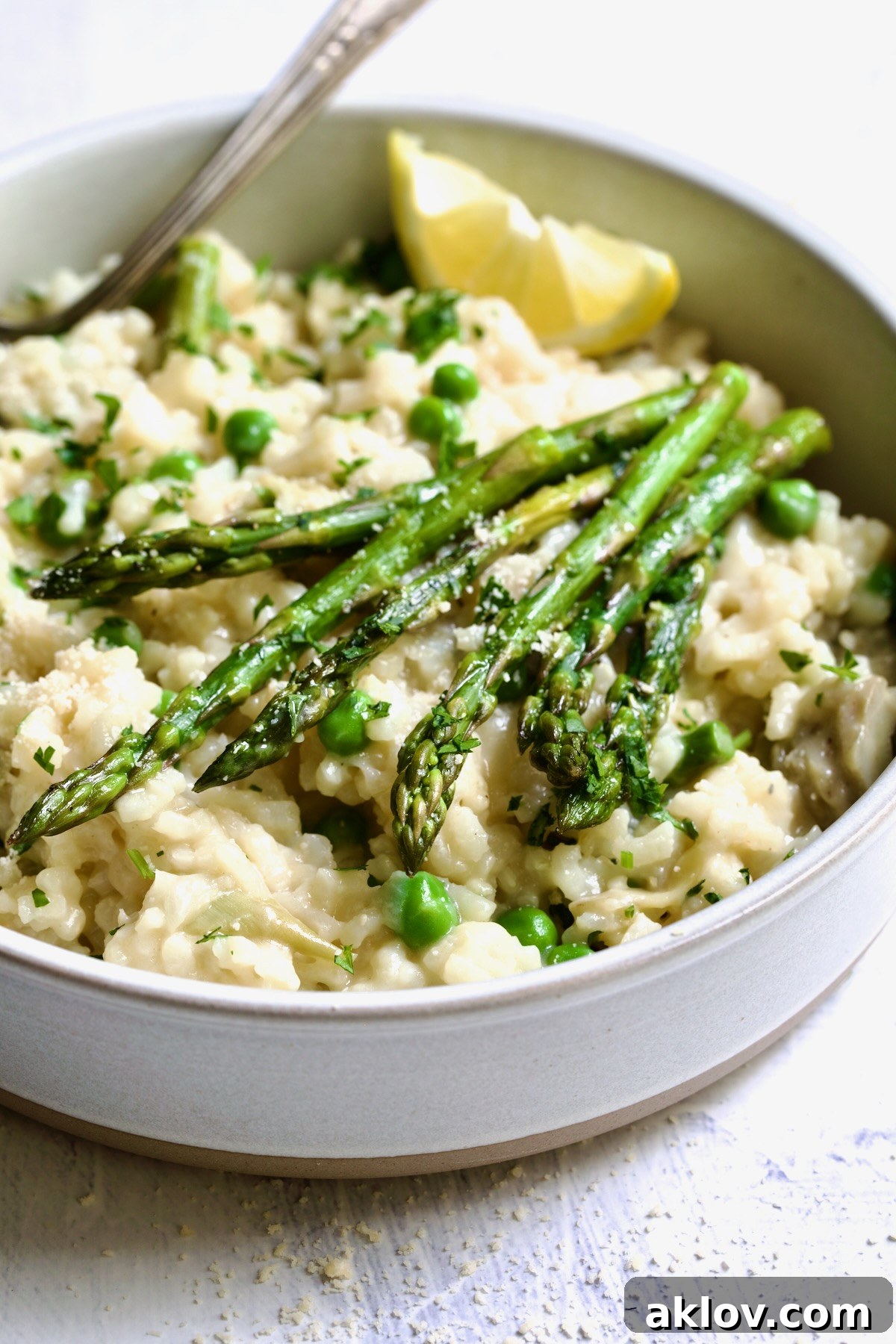
What Exactly is Risotto?
Risotto is a beloved Italian rice dish, celebrated for its uniquely creamy texture. At its heart, risotto typically uses short-grain Arborio rice, known for its high starch content. This starch is crucial because it’s released during the cooking process, binding with the cooking liquid to create a rich, velvety sauce.
Traditionally, risotto is prepared by slowly adding warm stock, one ladleful at a time, to the rice, stirring continuously until each addition is absorbed before adding more. This painstaking method ensures the starch is released gradually, leading to that characteristic creaminess and perfectly cooked, slightly chewy grains. While this method is beautiful in its own right, our oven-baked approach achieves similar, if not superior, results with significantly less effort.
Beyond Arborio, the risotto technique can be applied to other grains or small pasta varieties like barley, farro, and even orzo, each offering a distinct flavor and texture profile while maintaining the comforting richness of a classic risotto.
How to Master Spring Vegetable Risotto the Easy Way:
Recipe Ingredients: For a Flawless Risotto
Gathering and preparing your ingredients beforehand is key to a smooth cooking experience. Below is a comprehensive list of everything you’ll need for this delightful dish, along with essential preparation tips. For precise measurements, please refer to the detailed recipe card at the end of this article.
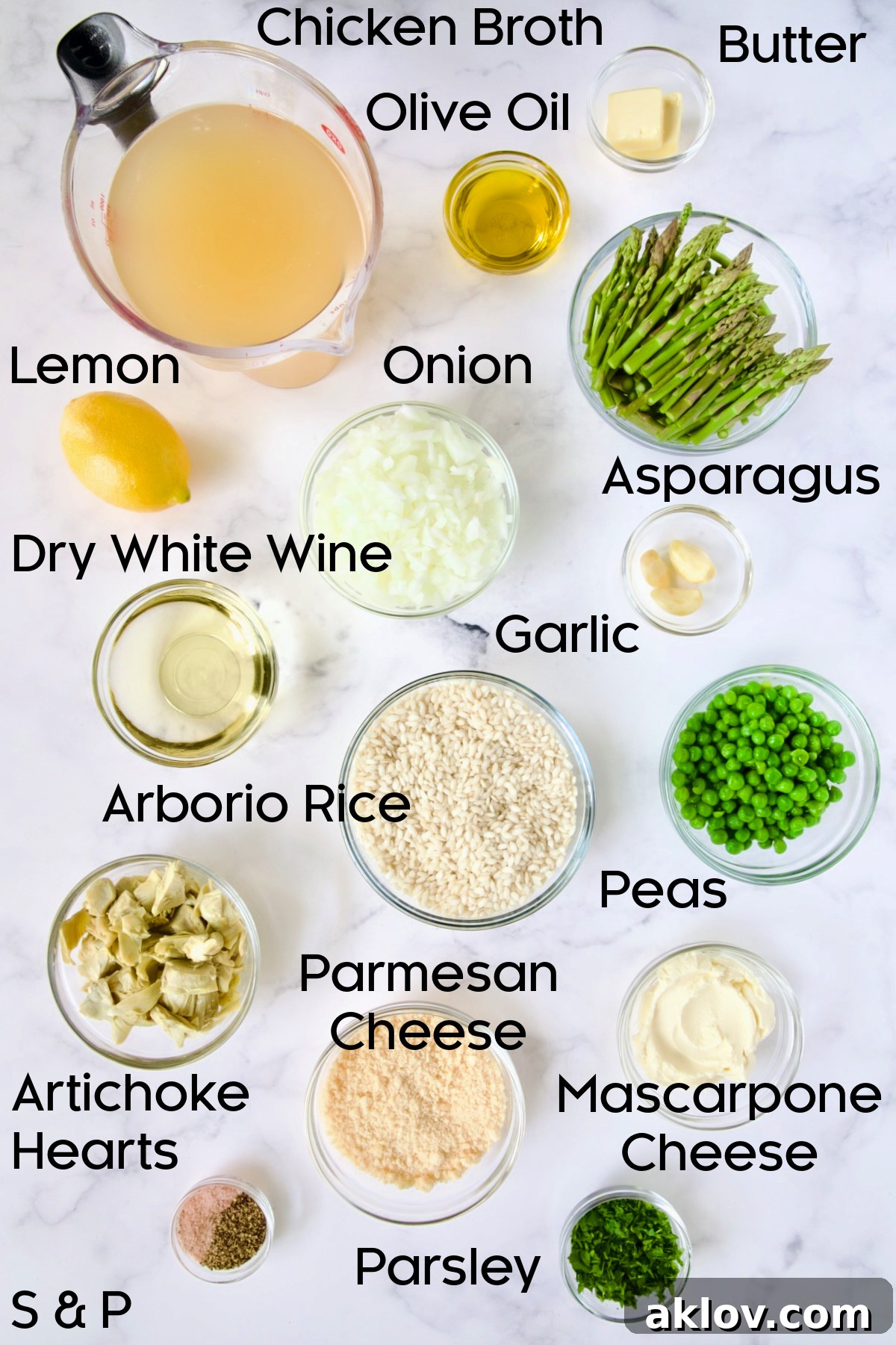
Ingredient Notes and Smart Substitutions:
- Chicken or Vegetable Broth: A high-quality, flavorful broth is the backbone of any great risotto. Homemade broth is always superior, but for convenience, opt for a low-sodium, good-quality store-bought option. For a truly vegetarian risotto, ensure you use vegetable broth and a rennet-free Parmesan cheese. Warming the broth before adding it to the rice is a crucial step; it helps maintain the cooking temperature and ensures the rice cooks evenly.
- Lemon: You’ll be using the entire lemon – both the vibrant zest and the fresh juice. The zest provides aromatic oils, while the juice adds a bright, essential acidity that cuts through the richness of the dish and enhances the spring flavors.
- Dry White Wine: Choose a dry white wine that you genuinely enjoy drinking, such as Pinot Grigio, Sauvignon Blanc, or unoaked Chardonnay. Its acidity and complex notes deepen the risotto’s flavor profile. NON-ALCOHOLIC SUBSTITUTION: If you prefer not to use alcohol, simply replace the wine with an equal amount of additional broth. You might also add a touch more lemon juice to compensate for the wine’s acidity.
- Arborio Rice: This is the star of our risotto. Arborio is a short-grain Italian rice specifically cultivated for risotto. Its unique milling process leaves much of the outer starch intact, which is gradually released during cooking to create that signature creamy texture. While it might be slightly pricier than conventional white rice, its contribution to the final dish is irreplaceable.
- Artichoke Hearts: For the best flavor and texture, prioritize frozen artichoke hearts. They tend to be less watery and have a fresher taste compared to their canned or jarred counterparts. Ensure they are thawed and well-drained before adding to the risotto.
- Parmesan Cheese: Freshly grated Parmesan cheese adds a salty, umami depth. To make this recipe suitable for vegetarians, seek out Parmesan cheese made without animal rennet.
- Mascarpone: Pronounced mahs-car-POH-nay, this rich Italian double or triple-cream cheese hails from the Lombardy region. While famously known for tiramisu, mascarpone’s incredibly high fat content makes it a luxurious addition to savory dishes. In this risotto, it melts into the rice, imparting an unparalleled creaminess and velvety mouthfeel that elevates the entire dish.
- Asparagus: Fresh asparagus spears are essential for that delicate spring crunch and vibrant green color. Trimming the tough woody ends is important for tender results.
- Green Peas: Frozen green peas are a convenient and excellent choice, adding a pop of sweetness and color. Thaw them before adding to the risotto.
Step-By-Step Instructions: For Oven-Baked Spring Risotto
Follow these simple steps to create a show-stopping risotto with minimal effort:
- Preparation is Key: Begin by gathering all your ingredients and performing all necessary prep work. This ensures a seamless cooking process.
- Preheat Oven: Set your oven to 350°F (175°C).
- Prepare Asparagus: Trim the tough, woody ends from your asparagus. Cut the stalks into 1 ½-inch pieces, reserving the delicate tips separately, keeping them approximately 3 inches long. This separation allows for different cooking times and presentation.
- Warm the Broth: Gently warm the vegetable or chicken broth in a small saucepan over low heat, or in a microwave-safe container in the microwave. The broth should be warm, not cold or simmering, to avoid shocking the rice and slowing down the cooking process.
- Sauté Asparagus: Heat 2 teaspoons of olive oil and ½ tablespoon of butter in a large oven-safe skillet or shallow Dutch oven over medium-high heat on the stovetop. Add the asparagus pieces (keeping tips separate) and cook for just 1 to 2 minutes until they turn bright green and slightly tender-crisp. Transfer the cooked asparagus to a plate to cool, keeping the tips and stems separated for later.
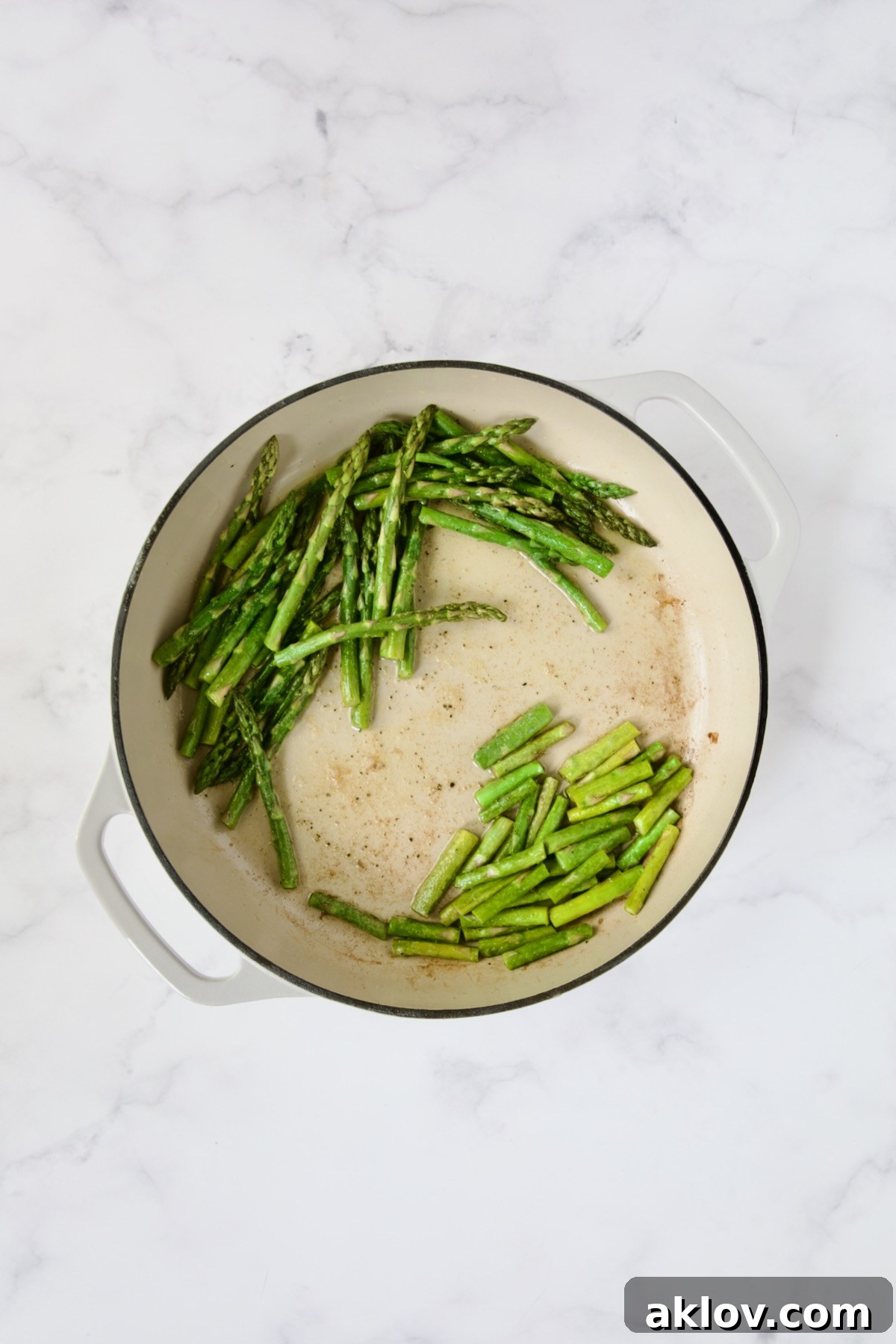
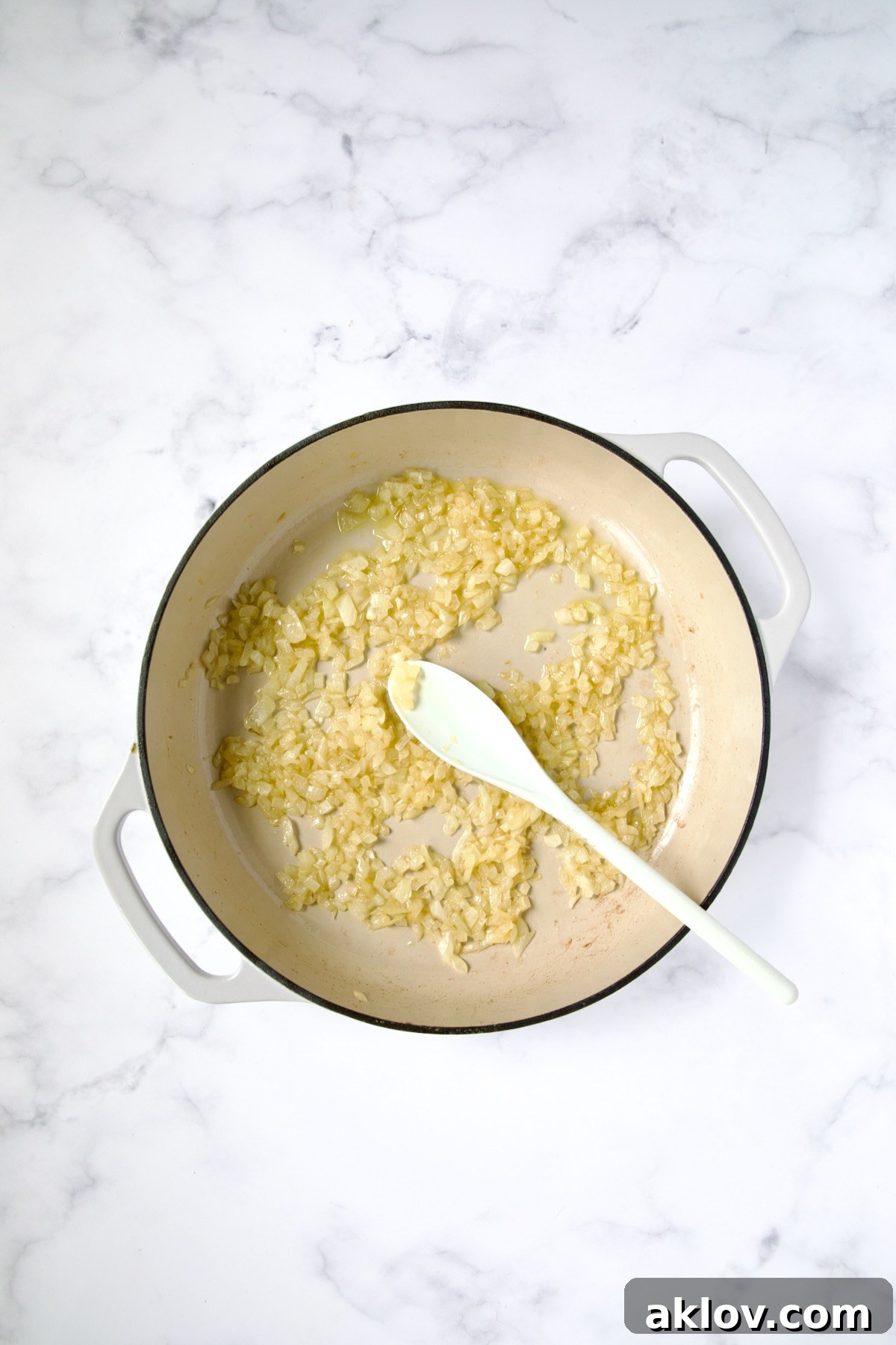
- Cook Aromatics: Add the remaining olive oil and butter to the same oven-safe skillet, maintaining medium-high heat. Add the finely chopped onion, reduce the heat to medium-low, and cook for 4-5 minutes until the onion begins to soften and become translucent. Next, add the minced garlic and cook for an additional 10-15 seconds, just until it becomes fragrant – be careful not to burn it.
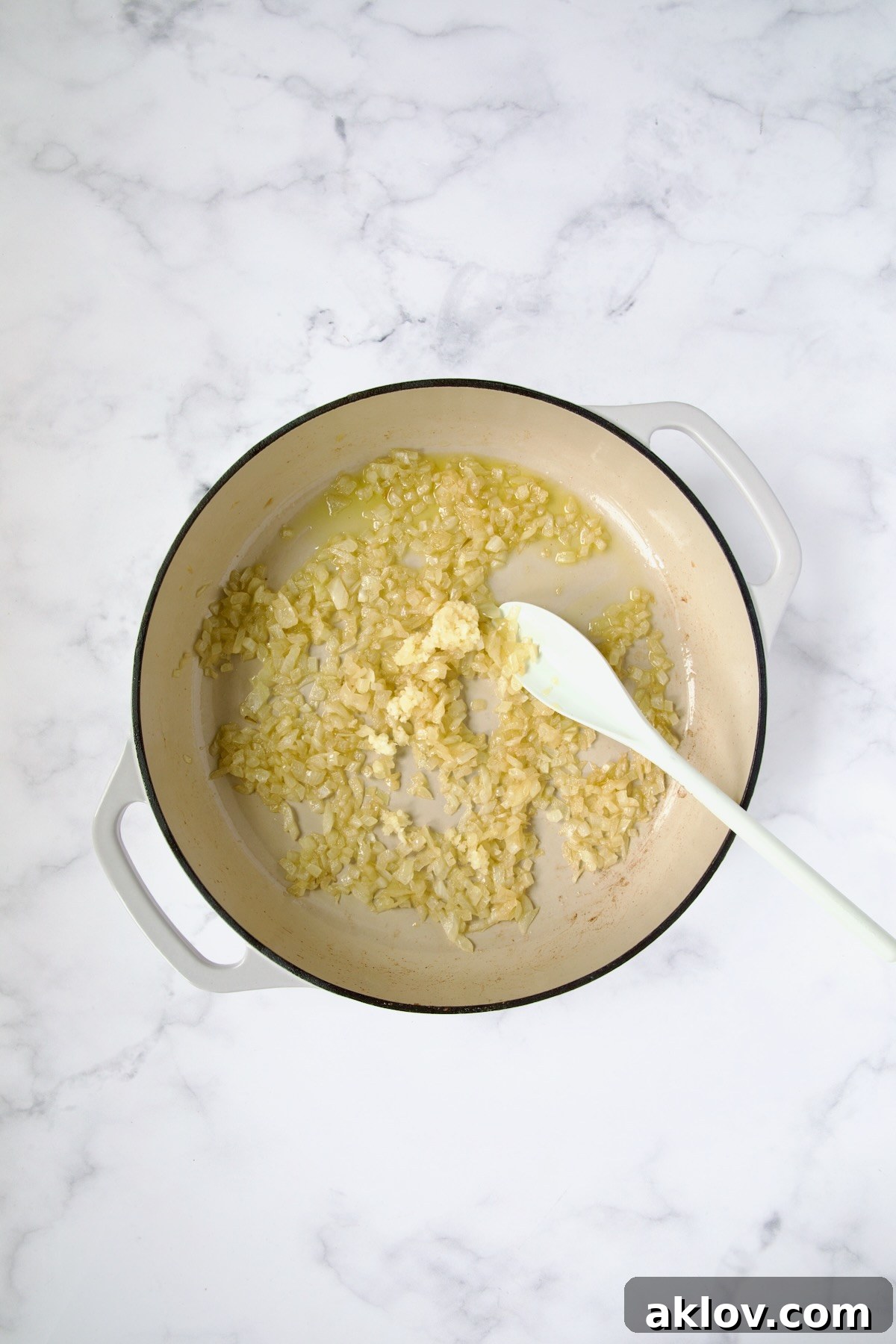
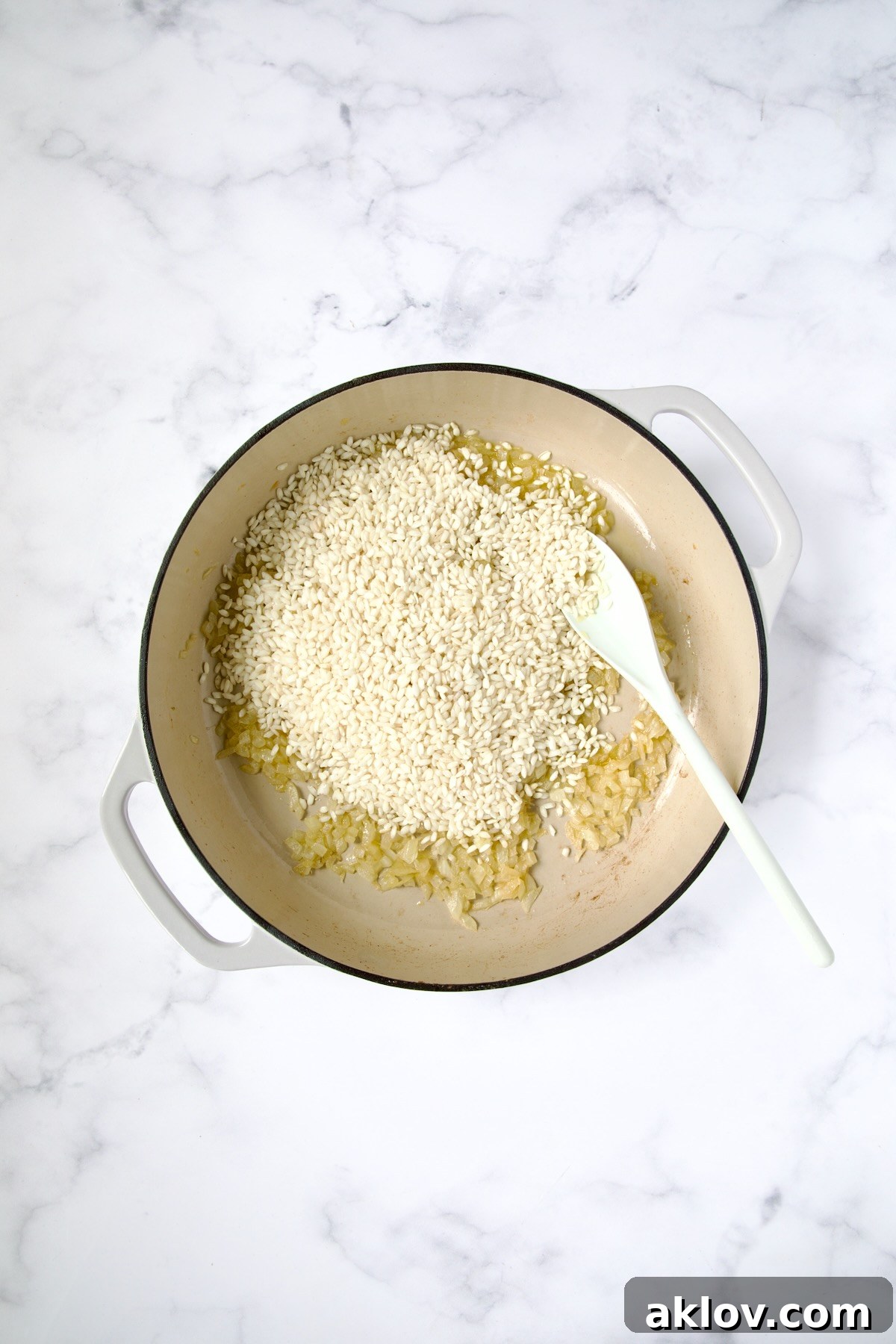
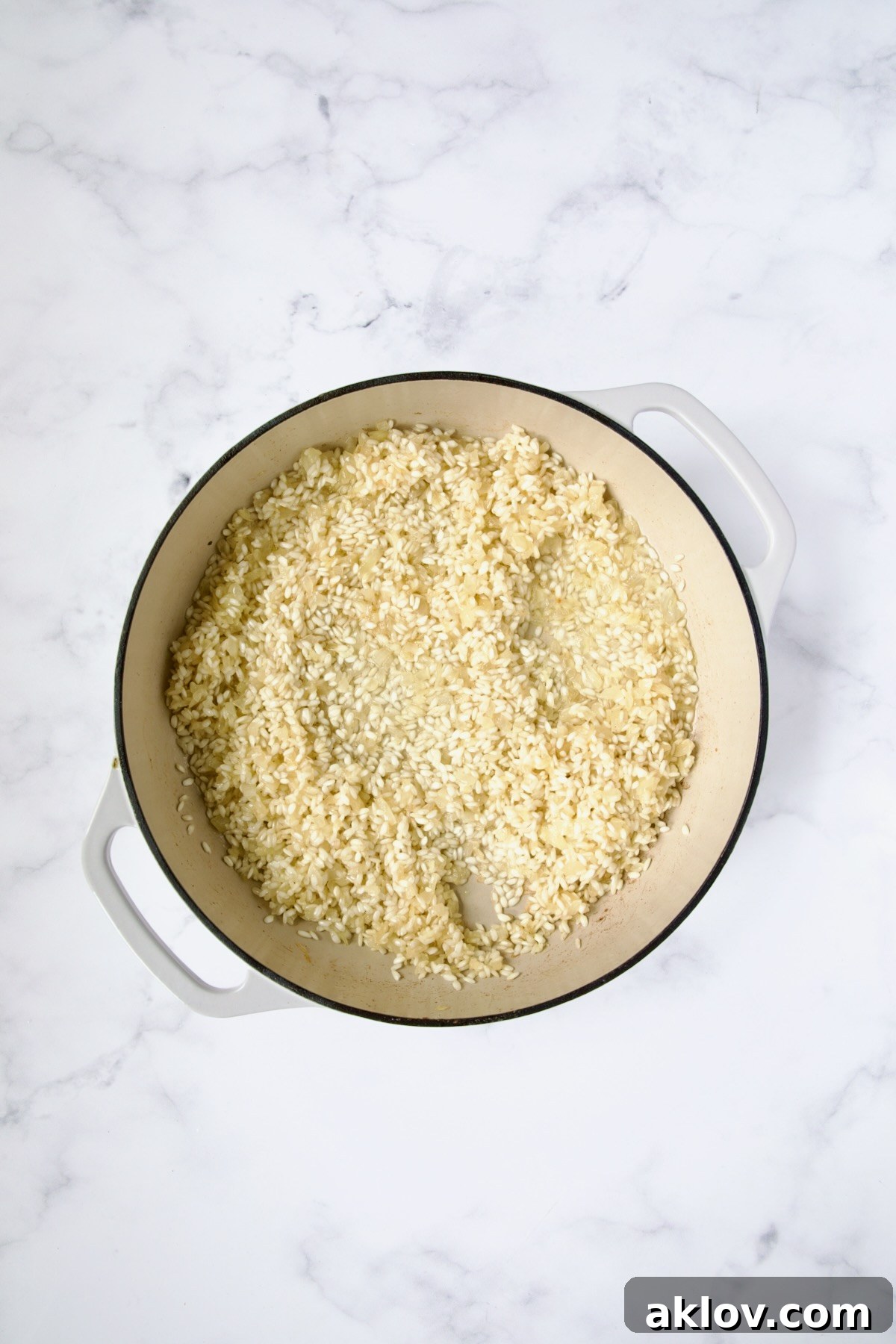
- Toast the Rice: Add the Arborio rice to the skillet with the onions and garlic. Stir frequently to ensure each grain is coated in the flavorful fat. Cook for 2 to 3 minutes, or until most of the rice grains appear translucent around the edges with a small, opaque center. This toasting step (called tostatura) is crucial for developing the nutty flavor of the rice and preventing it from becoming mushy.
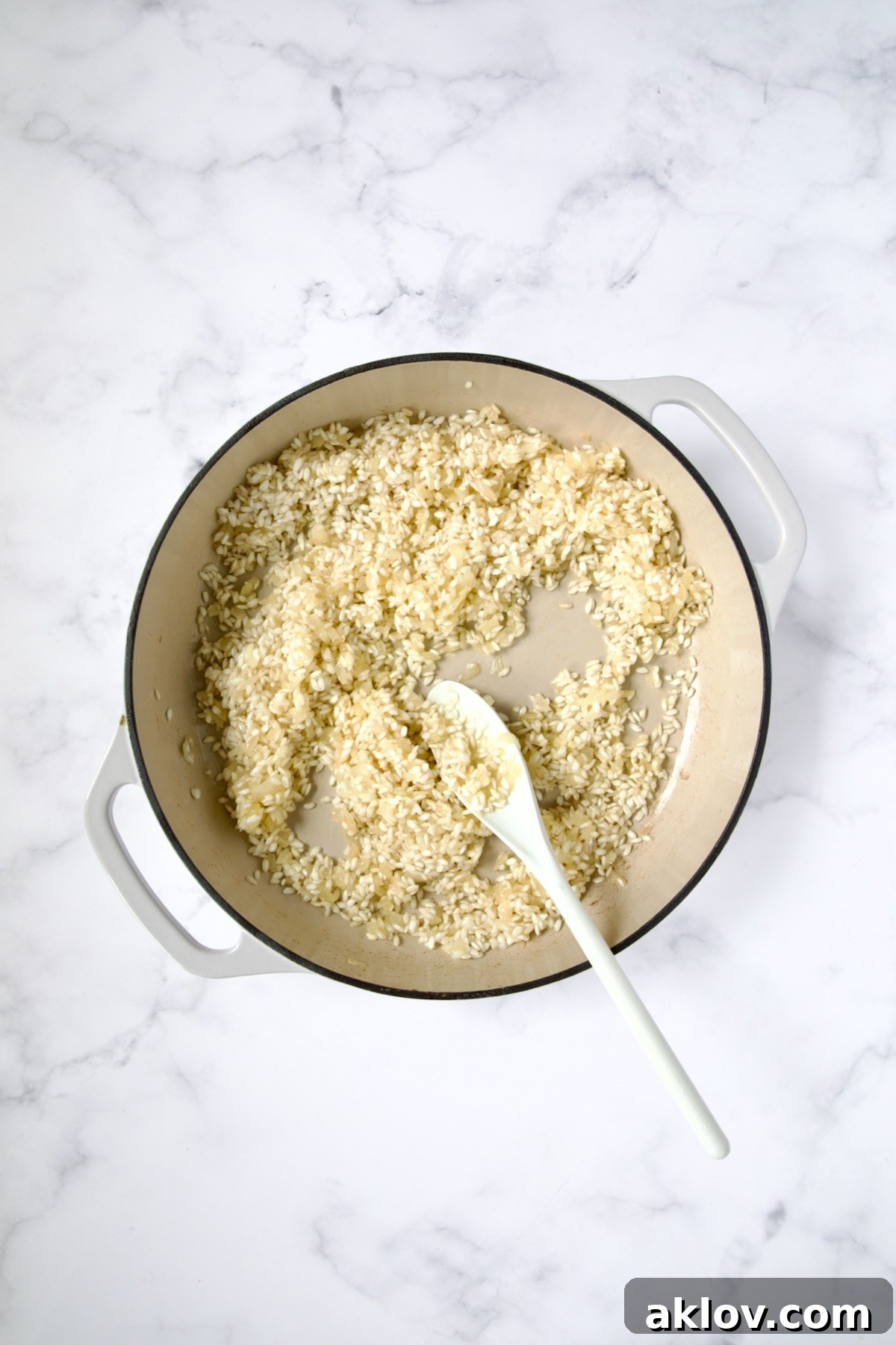
- Deglaze with Wine: Pour in the dry white wine. Bring it to a rolling boil and cook, stirring, until most of the wine has evaporated and the alcohol scent has cooked off. This step deglazes the pan, concentrating flavors, and adds depth to the risotto.
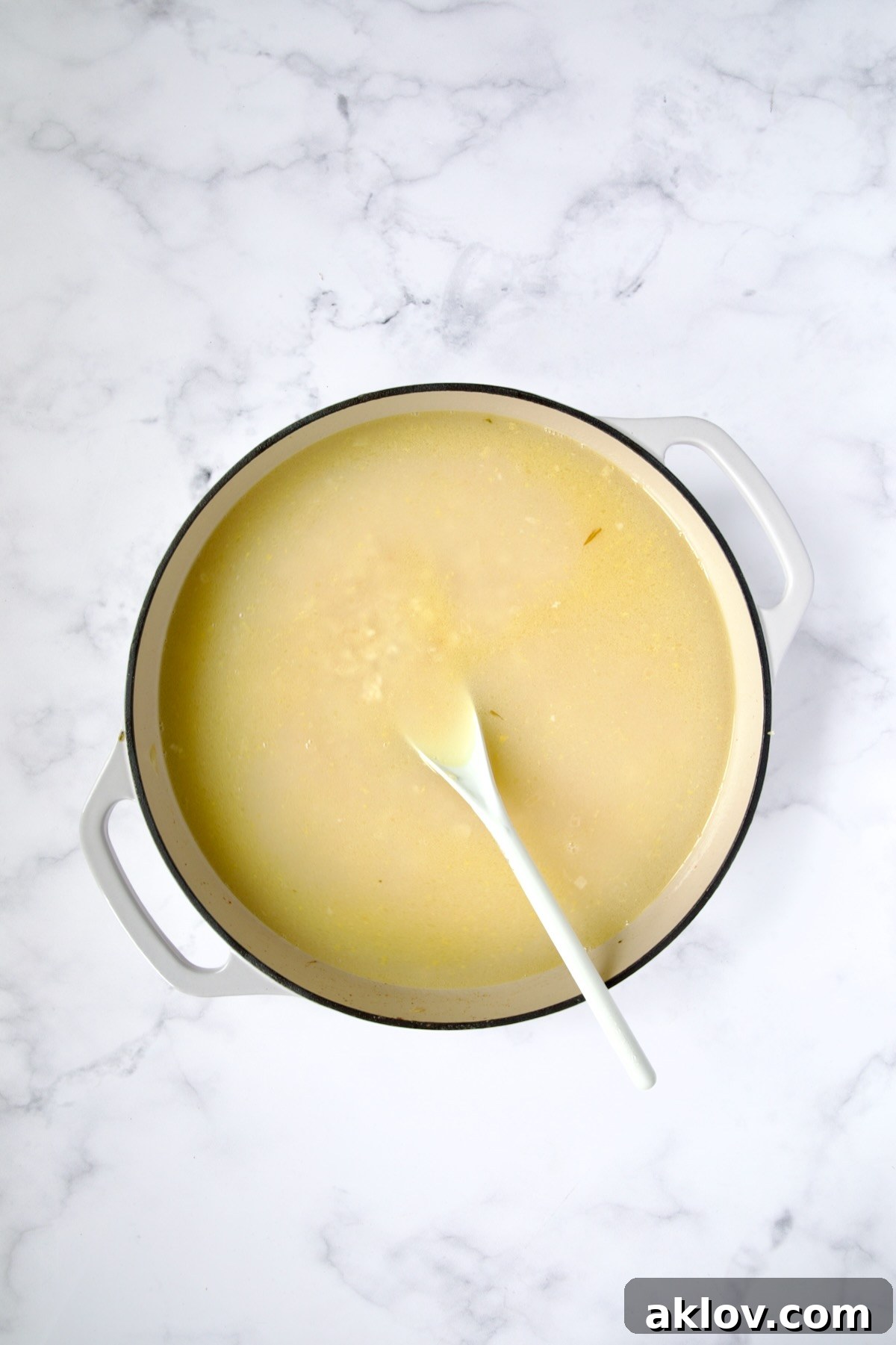
- Add Broth and Bake: Add 4 cups of the warmed broth, along with the lemon juice and zest. Bring the mixture to a boil, then immediately turn off the heat. Give it a good stir, cover the skillet tightly, and transfer it to the preheated oven.
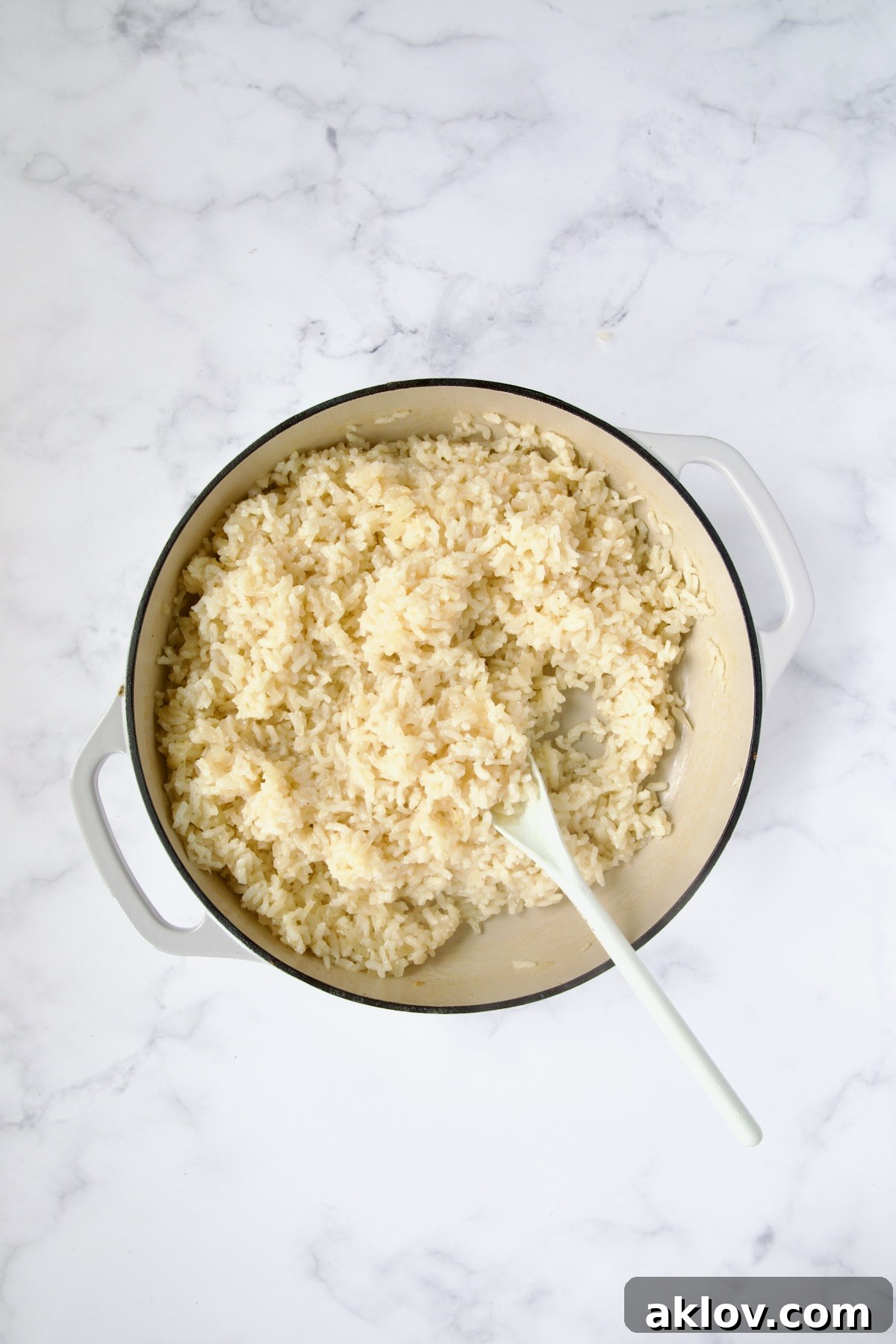
- Oven Cook: Bake for 20 minutes. At this point, the rice should be slightly underdone, or “al dente” – it will still have a slight bite to it.
- First Stir: Carefully remove the skillet from the oven and give the risotto a good stir. It might appear a bit “tight” or thick, but don’t worry. The final additions will loosen it up and make it perfectly creamy.
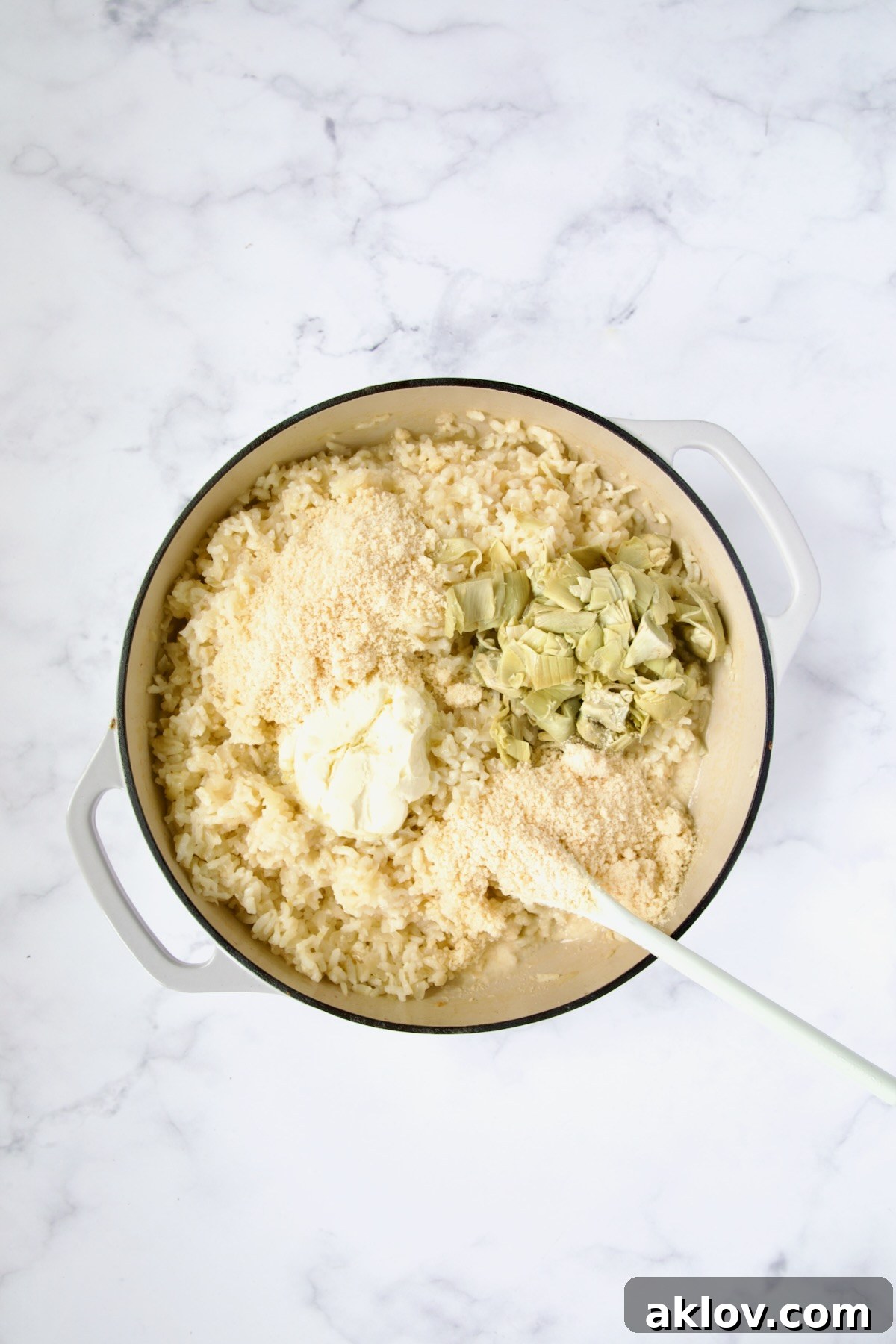
- Finishing Touches: Return the pot to the stovetop over low heat. Stir in 1 cup of the remaining warm broth (or more as needed to reach desired creaminess), the mascarpone cheese, and ¾ cup of the Parmesan cheese. Season with salt and freshly ground black pepper to taste.
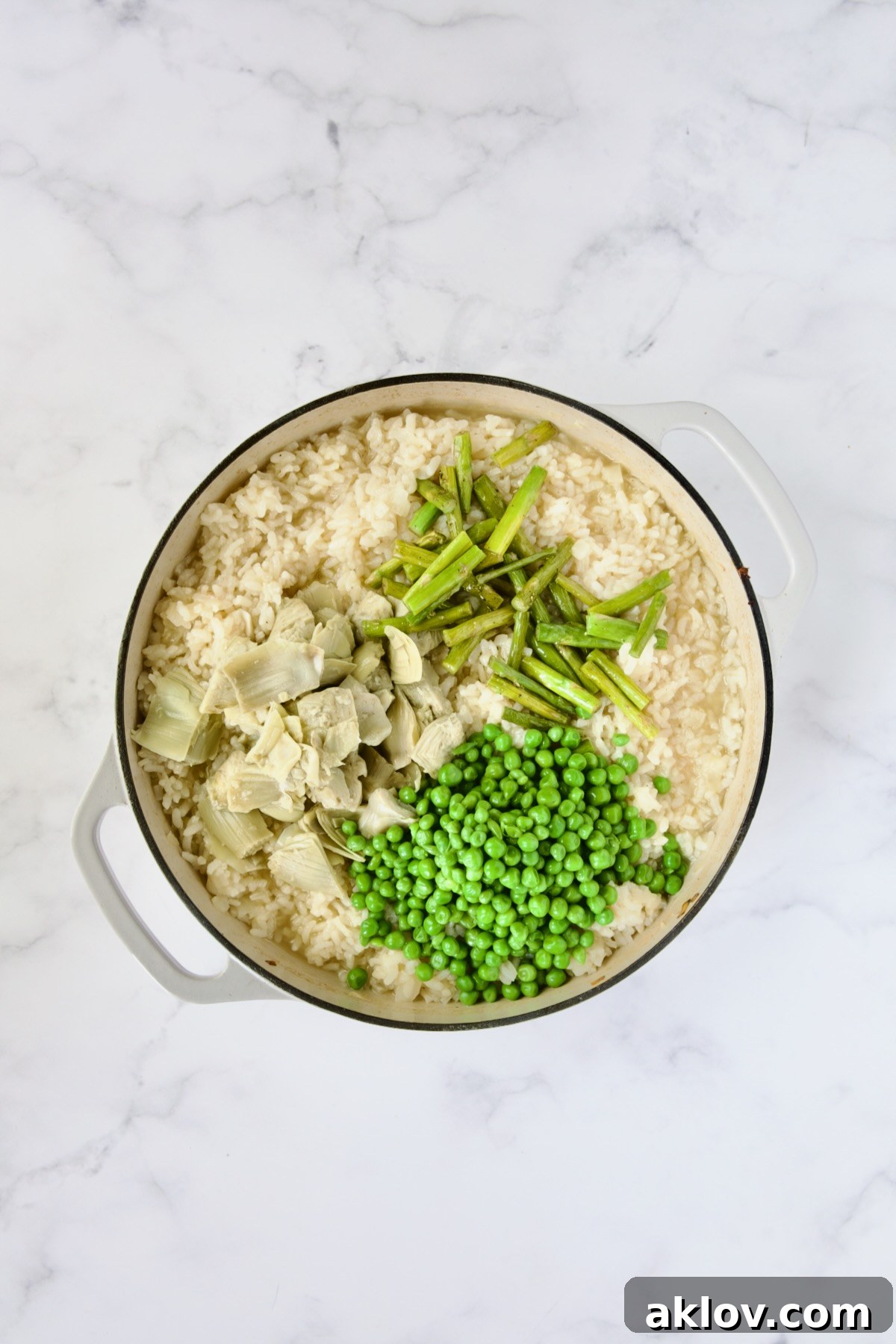
- Add Vegetables: Gently fold in the thawed artichoke hearts and the cooked asparagus stems.
- Final Mix: Add the thawed green peas. Stir gently to combine all the beautiful spring vegetables.
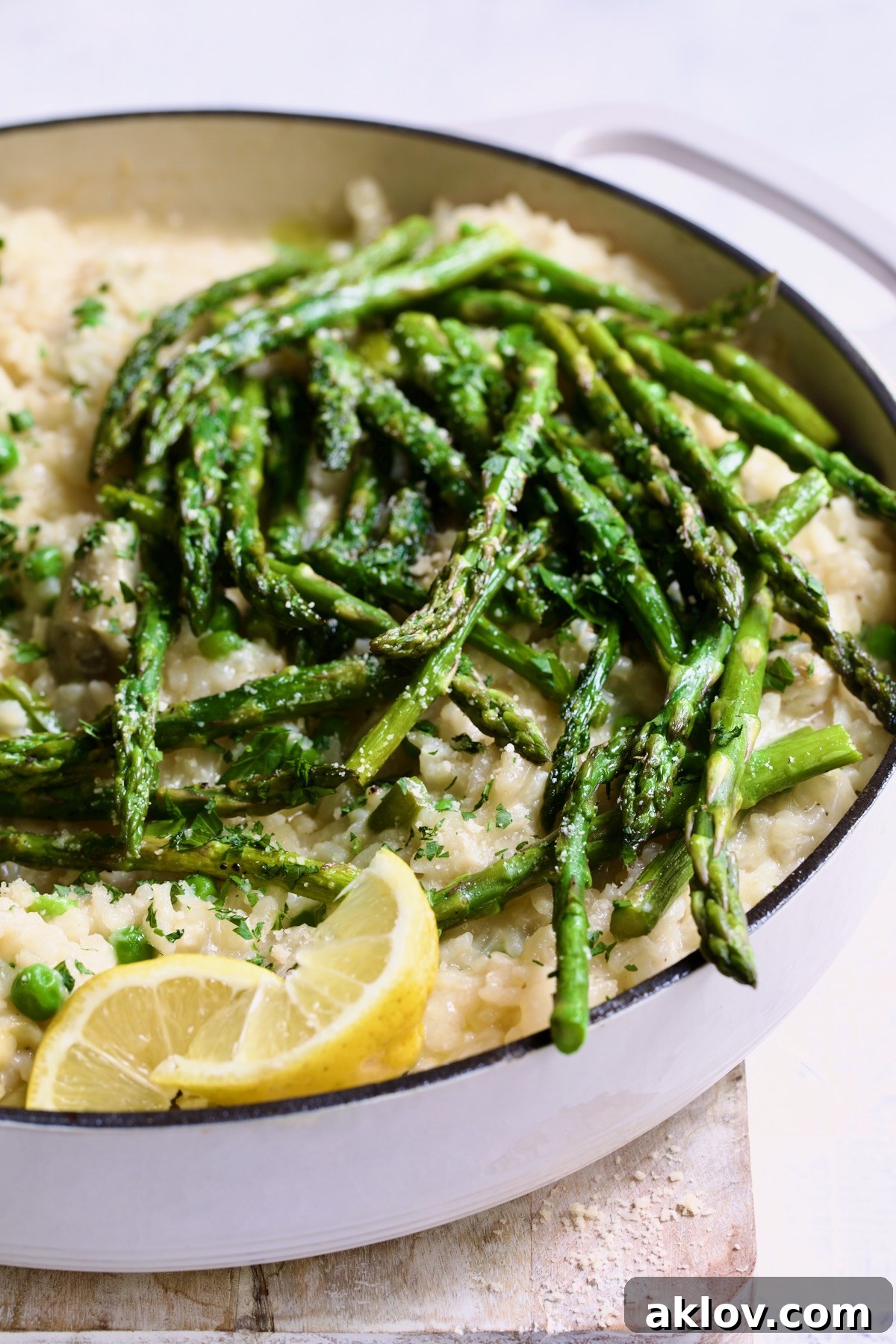
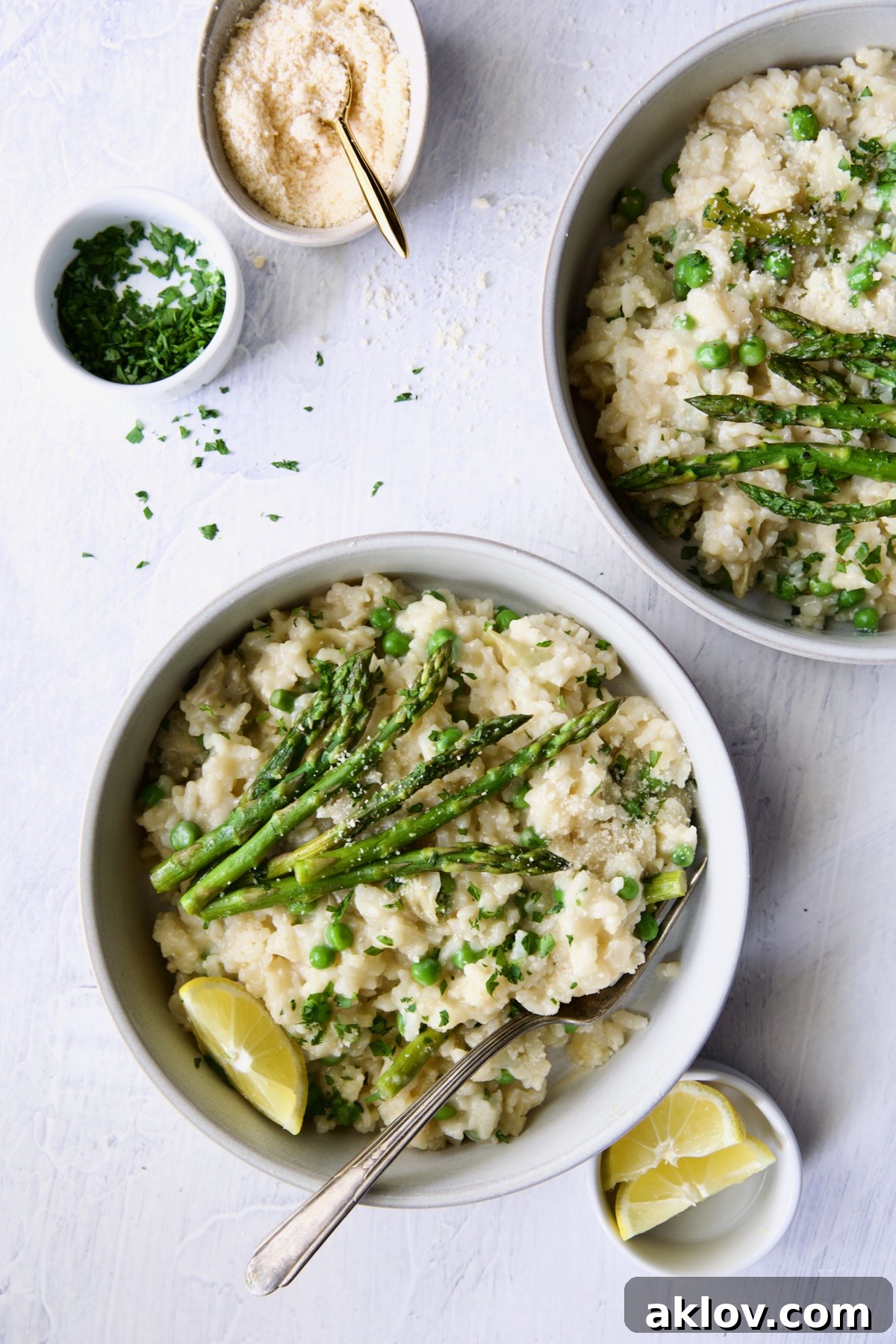
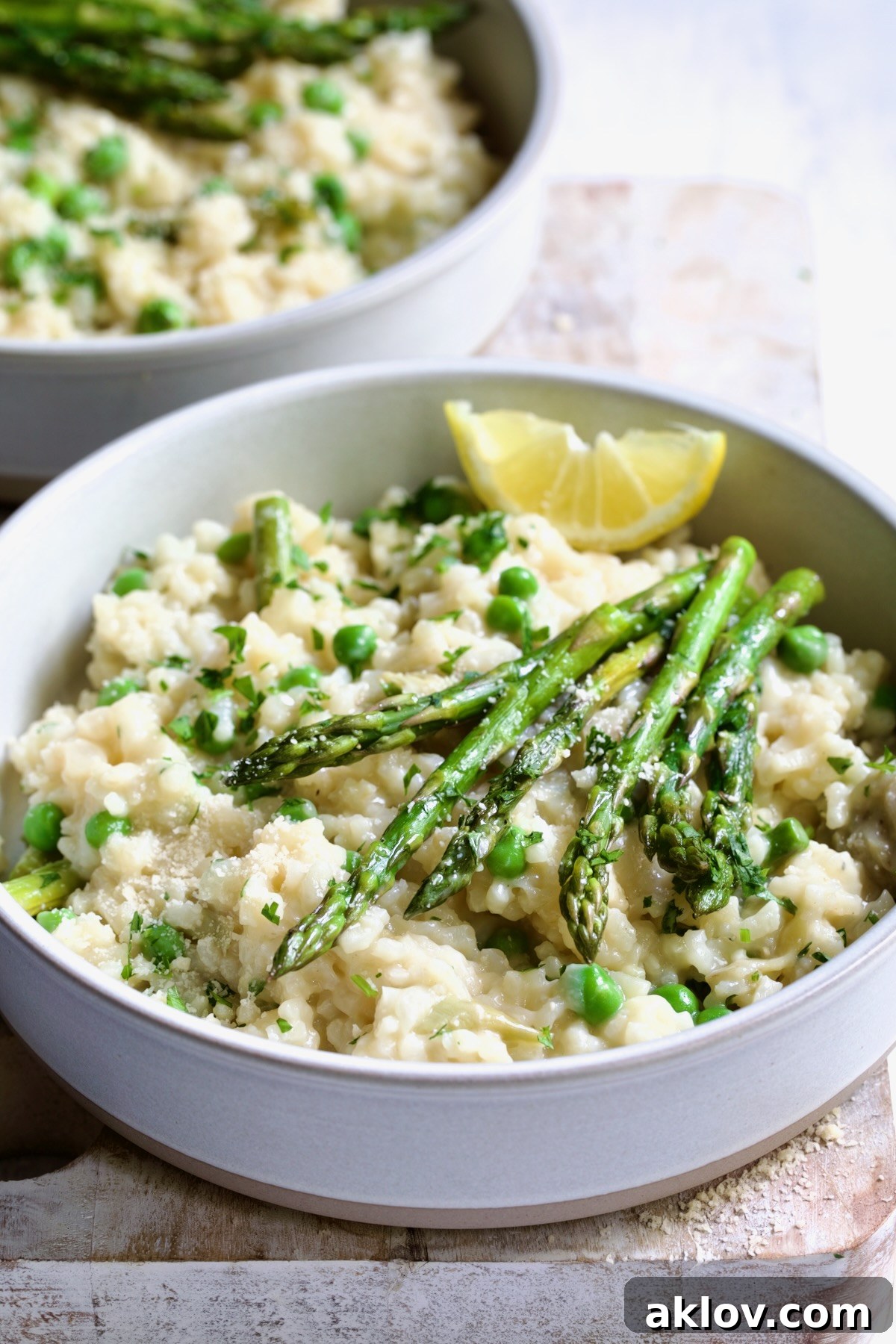
- Garnish and Serve: Top the risotto with the reserved asparagus tips and the remaining ¼ cup of Parmesan cheese. Serve immediately, garnished with additional Parmesan or a lemon wedge if desired.
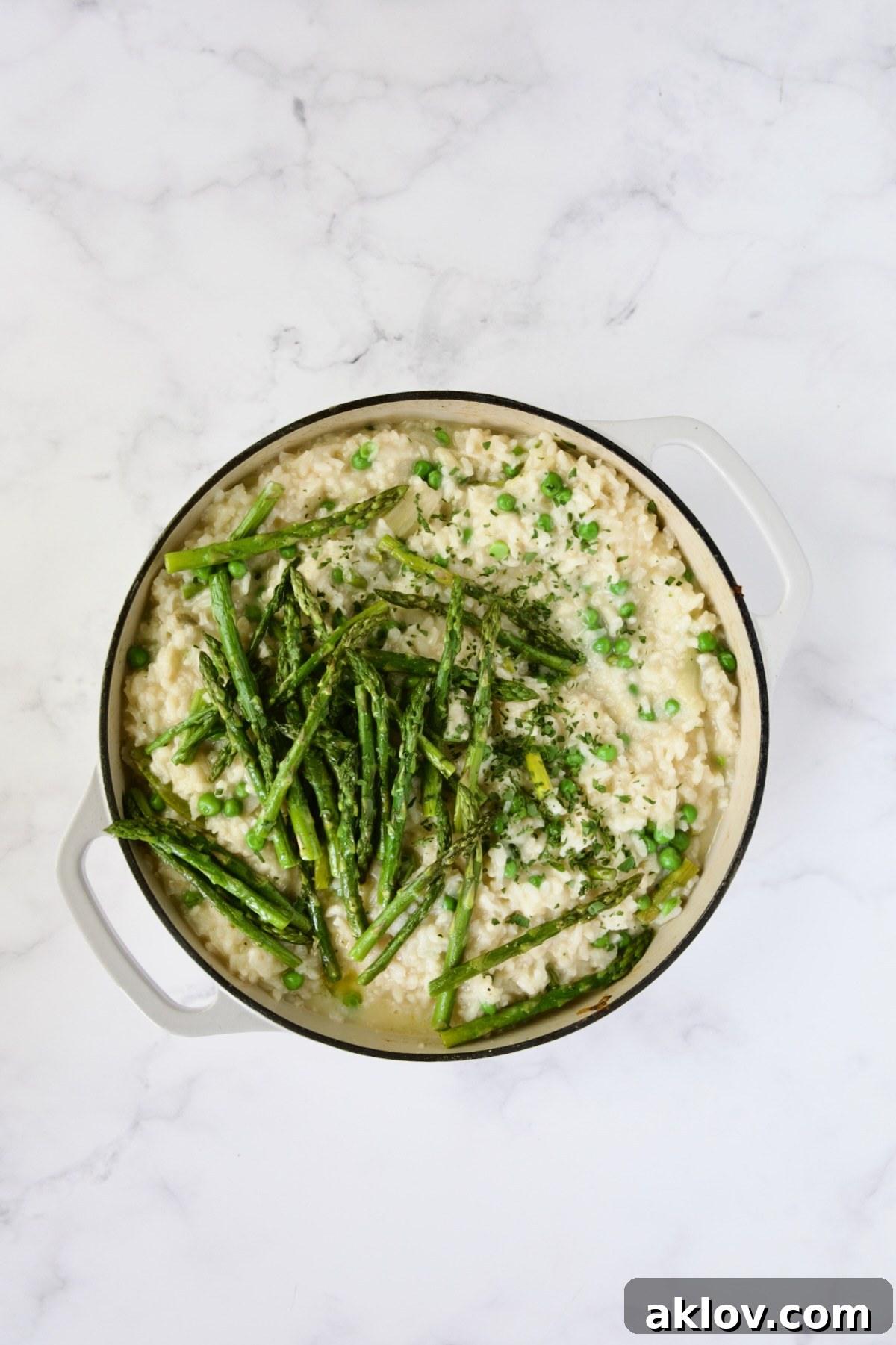
- And there you have it! A creamy, vibrant, and incredibly easy Spring Vegetable Risotto, achieved with the genius of oven baking. You’ll never go back to constant stirring again!
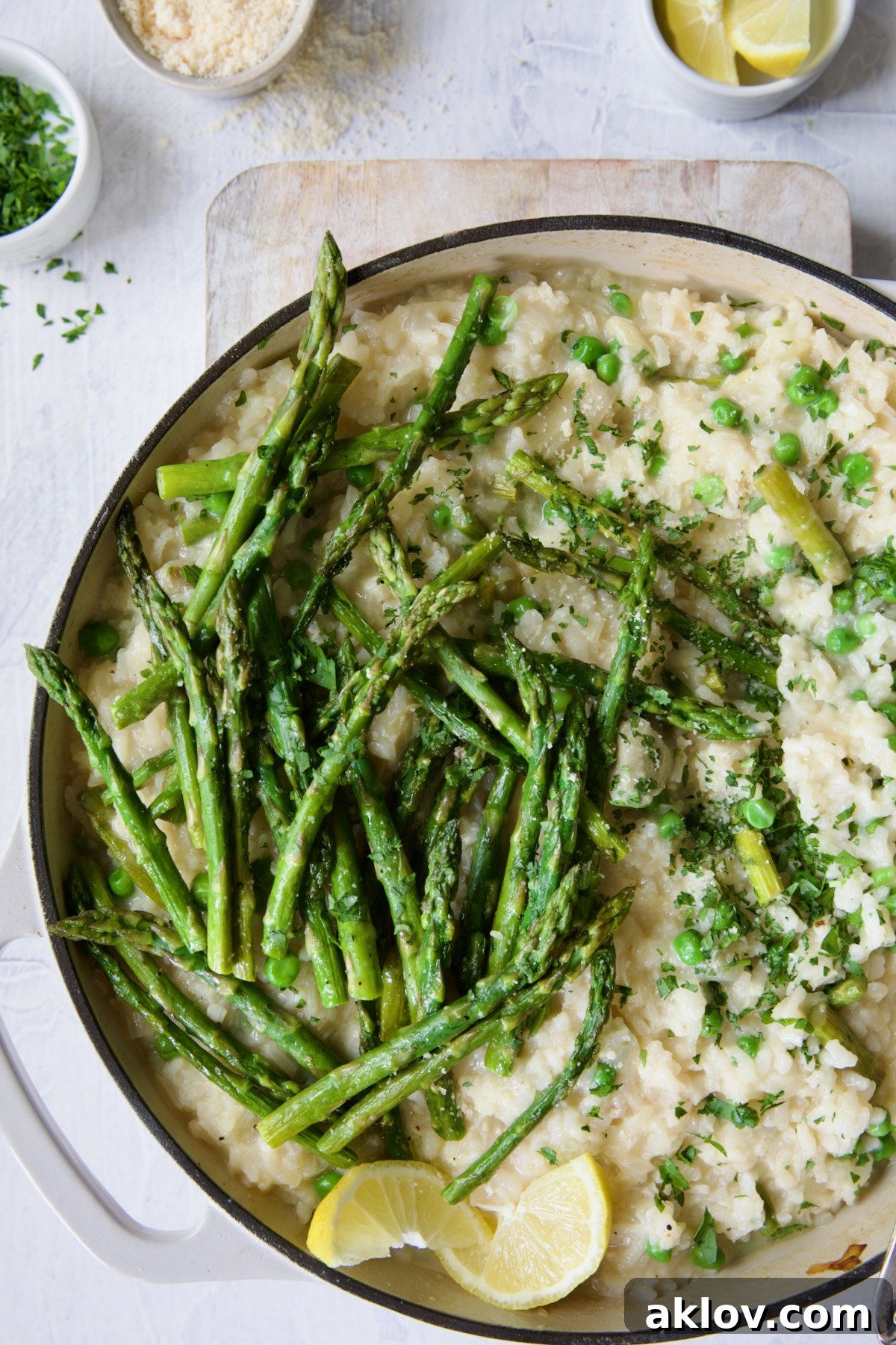
Enjoy every delightful bite!
Chef Tips and Tricks for Perfect Risotto:
- Trimming Asparagus Perfectly: To find the natural breaking point of an asparagus stalk (where the tough, woody end separates from the tender part), simply hold a stalk near the bottom and bend it. It will snap exactly where it should be trimmed. Use this as a guide for the rest of the bunch.
- Achieving Ideal Risotto Consistency: While precise measurements are provided for the initial broth addition, remember that risotto is ultimately about texture. The goal is a loose, creamy consistency, often described as a “wave” when you shake the pan. Don’t be afraid to adjust the final amount of broth as needed to achieve this perfect flow. It should not be stiff or overly soupy.
- Serving Temperature Matters: Risotto is best enjoyed immediately when it’s warm and at its creamiest. Serve your risotto in preheated bowls to help maintain its warmth and luxurious texture for longer.
- Frozen Vegetable Freshness: For vegetables like peas and artichoke hearts, using frozen can often yield better results than canned, as they are typically flash-frozen at their peak freshness. Just ensure they are properly thawed and drained.
- Freshly Grated Cheese: Always opt for freshly grated Parmesan over pre-grated varieties. Fresh Parmesan melts more smoothly and offers a superior flavor and texture.
Recipe FAQs: Your Risotto Questions Answered
Can you make risotto ahead of time?
While freshly made risotto is always ideal for its unparalleled creamy texture, you can certainly prepare it partially in advance using a clever restaurant trick. However, this method is best suited for stovetop risotto, not the oven-baked version. To do so, cook your risotto on the stovetop until it’s about 75% done – the rice grains should still have a slightly chalky, raw center, and you shouldn’t have added all the broth or any cheese, butter, or cream yet. At this stage, remove it from the heat and spread it thinly onto a chilled, rimmed baking sheet (you can place the sheet pan in the freezer beforehand to get it extra cold). Allow it to cool completely, then cover and refrigerate. When you’re ready to serve, return the rice to a pan, add hot broth, and resume cooking, stirring until it reaches the desired doneness and creaminess, then proceed with adding cheese and other finishing ingredients.
Can you freeze risotto?
Yes, risotto can be frozen, but with a caveat: the texture won’t be identical to freshly made. For the best results when freezing, undercook the risotto slightly, about 20-25% less than you normally would, so it retains a good amount of “bite.” This helps prevent it from becoming mushy upon reheating. To cool it quickly, spread the undercooked risotto evenly on a chilled baking tray. Once completely cool, divide it into individual portions and transfer them to airtight containers or freezer bags. When using freezer bags, press out as much air as possible to minimize freezer burn. Frozen risotto can be stored for up to 3 months.
How do you reheat leftover risotto?
It’s important to set expectations that reheated risotto will have a different texture than fresh. To reheat, add a small amount of water or broth to the leftover risotto to help rehydrate it and loosen its consistency. Reheat in the microwave in short bursts (30-60 seconds), stirring well between each interval, adding more liquid if needed. Alternatively, you can reheat it gently on the stovetop in a small saucepan over low heat, stirring frequently and adding broth or water until it reaches your desired creamy consistency.
Storage Tips for Risotto:
- Refrigeration: Store any leftover risotto in an airtight container in the refrigerator for up to 3-4 days.
- Freezing: For longer storage, freeze risotto in an airtight container for up to 3 months. (Refer to the FAQ section for tips on preparing risotto for freezing.)
What to Serve with This Delightful Risotto:
When served as a side dish:
This versatile Spring Vegetable Risotto makes an exquisite accompaniment to a variety of proteins.
- Seared Sea Scallops or succulent shrimp, for a gourmet seafood pairing.
- Crab-Stuffed Chicken, offering a rich and elegant combination.
- Pan-Seared Lamb Chops with Anchovy Butter, for a robust and flavorful meal.
- Parmesan and Herb-Crusted Lamb Chops, providing a delicious textural contrast.
- Grilled or roasted chicken breast, for a lighter, yet satisfying option.
When served as the main dish: A Vegetarian Feast
To elevate this risotto to a hearty main course, pair it with a refreshing salad or a light soup.
- Roasted Creamy Tomato Soup, a classic pairing that complements the risotto’s richness.
- Cream of Celery Leaf and Scallion Soup, offering a delicate and herbaceous contrast.
- Roasted Beet Salad with goat cheese and walnuts, adding earthy notes and crunch.
- Italian Kale Salad with a zesty vinaigrette, for a refreshing side.
- Easy Fresh Tomato Salad, a simple yet vibrant addition that highlights fresh flavors.
Discover More Irresistible Risotto Recipes You’ll Love!
If you’ve fallen in love with the creamy comfort of this Spring Vegetable Risotto, you’ll be thrilled to explore these other fantastic risotto variations:
- Shrimp and Corn Risotto with Bacon: A savory and satisfying combination of seafood and smoky flavors.
- Sweet Corn Risotto with Seared Sea Scallops and Basil Salsa Verde: A gourmet dish perfect for special occasions.
- Pistachio Crusted Sea Scallops with Champagne Risotto and Roasted Asparagus: An elegant and impressive meal.
- Oven Risotto with Kale Pesto and Roasted Mushrooms: Another fantastic oven-baked option with earthy, robust flavors.
- Barley Vegetable Risotto: A wholesome and hearty alternative to traditional rice risotto.
For more inspiring side dishes featuring beans, grains, and rice, be sure to visit Side Dishes – Beans, Grain and Rice – From A Chef’s Kitchen.
Print Recipe
Oven-Baked Spring Vegetable Risotto
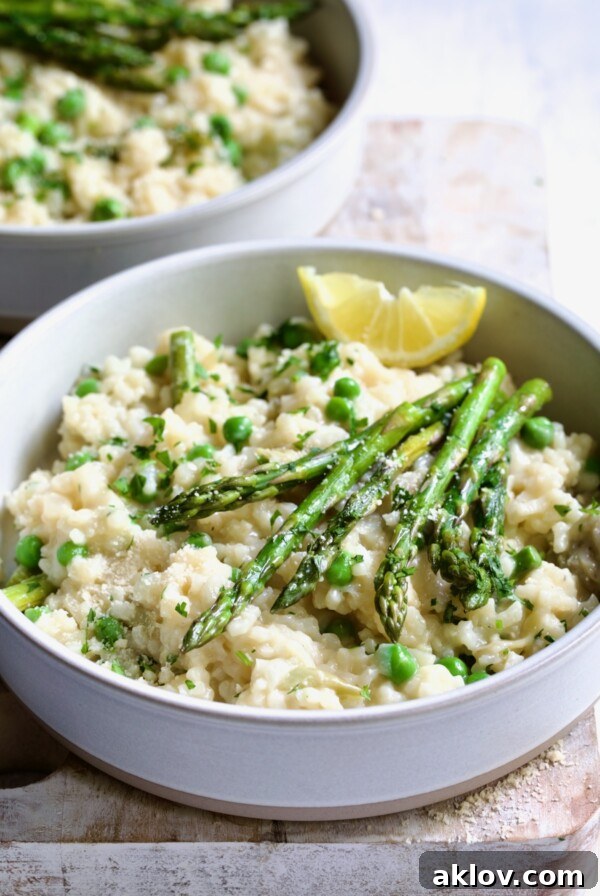
This delightful oven-baked risotto features the freshest flavors of spring – artichokes, asparagus, sweet peas, and a touch of lemon – all wrapped in a creamy Arborio rice. Best of all, it cooks hands-free in the oven, making it incredibly simple to prepare!
Equipment
-
Wusthof Chef Knife
-
Cutting Board
-
Enameled Cast Iron Skillet (oven-safe)
Ingredients
- 5-6 cups vegetable or chicken broth, or as needed, warmed
- 1 bunch asparagus, (approximately 1 pound) tough ends trimmed
- 3 tablespoons olive oil, divided
- 2 tablespoons butter, divided
- 1 small onion, finely chopped
- 3 cloves garlic, minced
- 1 ½ cups arborio rice
- ½ cup dry white wine (or additional broth for non-alcoholic)
- 1 large lemon, zested and juiced
- ½ cup mascarpone cheese
- 1 cup finely grated Parmesan cheese, divided, plus more for serving
- 1 box (10-ounce) frozen artichoke hearts, thawed, patted dry and halved widthwise
- 1 cup frozen green peas, thawed
- Salt and freshly ground black pepper, to taste
Instructions
- Preheat your oven to 350°F (175°C).
- Trim the tough ends off the asparagus. Cut the asparagus into 1 ½-inch pieces, carefully leaving the tips approximately 3 inches long and separated from the stems.
- Place the broth in a saucepan and gently warm it over low heat (it should be warm, not cold or simmering). Alternatively, heat it in a microwave-safe container in the microwave.
- Heat 2 teaspoons of olive oil and ½ tablespoon of butter in a large oven-safe skillet or shallow Dutch oven over medium-high heat on the stovetop.
- Add the asparagus stems and tips to the skillet. Sauté for 1 to 2 minutes or until they turn bright green and are slightly tender-crisp, trying to keep the tips separate. Transfer the cooked asparagus to a plate to cool, keeping the tips and stems separated.
- Add the remaining oil and butter to the oven-safe skillet, maintaining medium-high heat. Add the finely chopped onion, reduce heat to medium-low, and cook for 4-5 minutes or until it begins to soften and become translucent.
- Add the minced garlic to the skillet and cook for an additional 10-15 seconds until fragrant, being careful not to burn it.
- Add the Arborio rice to the skillet. Stir frequently for 2-3 minutes, ensuring all the grains are coated with the fat and become mostly translucent around the edges.
- Pour in the dry white wine. Bring the mixture to a boil and cook, stirring, until most of the wine has evaporated.
- Add 4 cups of the warmed broth, the lemon juice, and lemon zest. Bring the liquid back to a boil, then turn off the heat. Stir well, cover the skillet tightly, and carefully place it in the preheated oven. Bake for 20 minutes. The rice should be slightly underdone or “al dente” at this stage.
- Remove the skillet from the oven and give the risotto a good stir. It may appear a bit thick, but the final additions will create the perfect creamy texture.
- Return the pot to the stovetop over low heat. Stir in 1 cup of the remaining warm broth (or more as needed to reach desired creaminess), the mascarpone cheese, ¾ cup of the Parmesan cheese, and the asparagus stems. Add the thawed artichoke hearts and green peas.
- Top the finished risotto with the reserved asparagus tips and the remaining ¼ cup of Parmesan cheese. Serve immediately, seasoned with salt and freshly ground black pepper to taste.
Notes
SUBSTITUTIONS:
- NON-ALCOHOLIC OPTION: If you prefer to omit the wine, simply use an equal amount of additional vegetable or chicken broth. You can add a bit more lemon juice if desired for extra brightness.
TIPS FOR SUCCESS:
- Asparagus Trimming: To perfectly trim asparagus, gently bend a stalk near its bottom; it will naturally snap where the tough woody part ends. Use this as a guide for the rest of your bunch.
- Broth Consistency: While initial broth measurements are provided, the final consistency of risotto is key. Aim for a loose, creamy texture. Adjust the final broth addition as needed until it flows easily.
- Serve Warm: For the best experience, serve your risotto in preheated bowls to keep it warm and creamy longer.
MAKE AHEAD (for traditional stovetop risotto):
- While this oven method is designed for ease, if you are making a traditional stovetop risotto and wish to prepare it ahead, here’s a restaurant trick: cook the risotto until it’s about 75% done (the rice should still have a chalky, raw center). Do not add all the broth, cheese, butter, or cream. Spread the partially cooked rice onto a very cold rimmed baking sheet (you can chill it in the freezer beforehand). Let it cool completely, then cover and refrigerate. When ready to serve, return it to a pan and resume cooking with hot broth until creamy and fully cooked.
Nutrition
Serving: 1 | Calories: 482kcal | Carbohydrates: 52g | Protein: 17g | Fat: 22g | Saturated Fat: 10g | Polyunsaturated Fat: 1g | Monounsaturated Fat: 7g | Cholesterol: 31mg | Sodium: 348mg | Potassium: 441mg | Fiber: 4g | Sugar: 4g | Vitamin A: 1087IU | Vitamin C: 26mg | Calcium: 269mg | Iron: 4mg
Nutritional values are automatically calculated using unbranded products and are estimates only. Actual results may vary based on ingredients used and portion sizes. Adjust as needed for dietary restrictions, allergies, or health concerns.

Loved this recipe? Leave a comment below!