
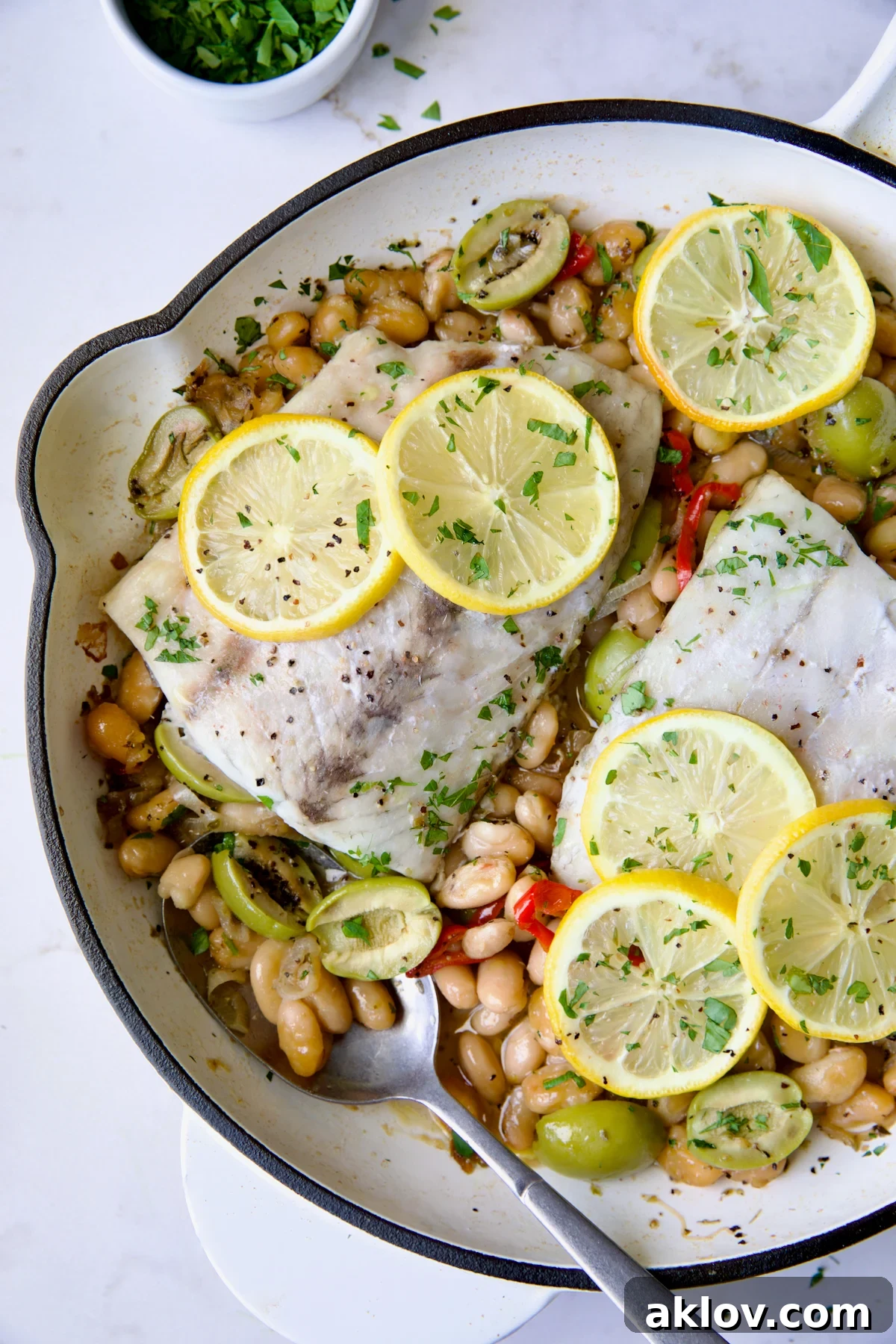
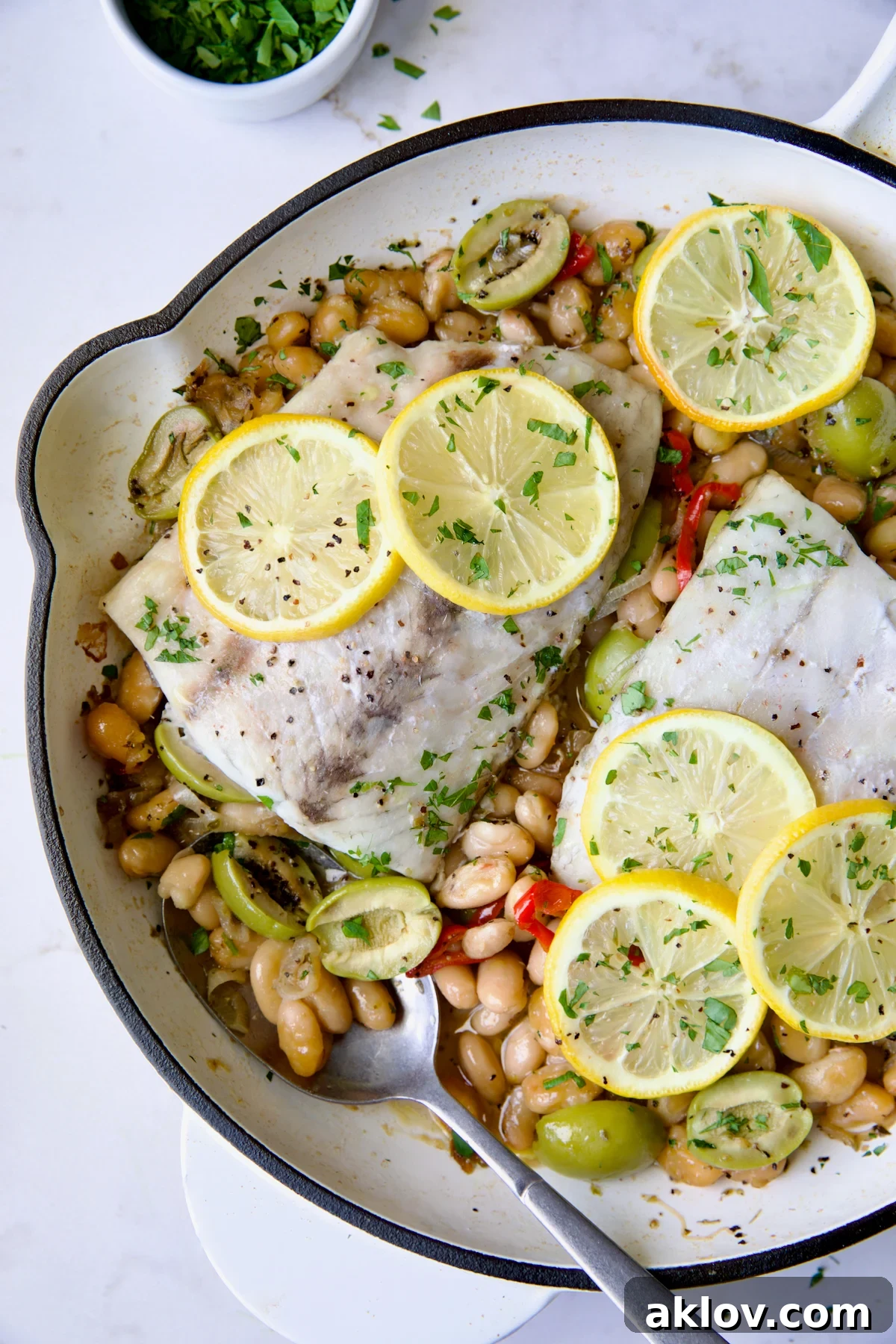
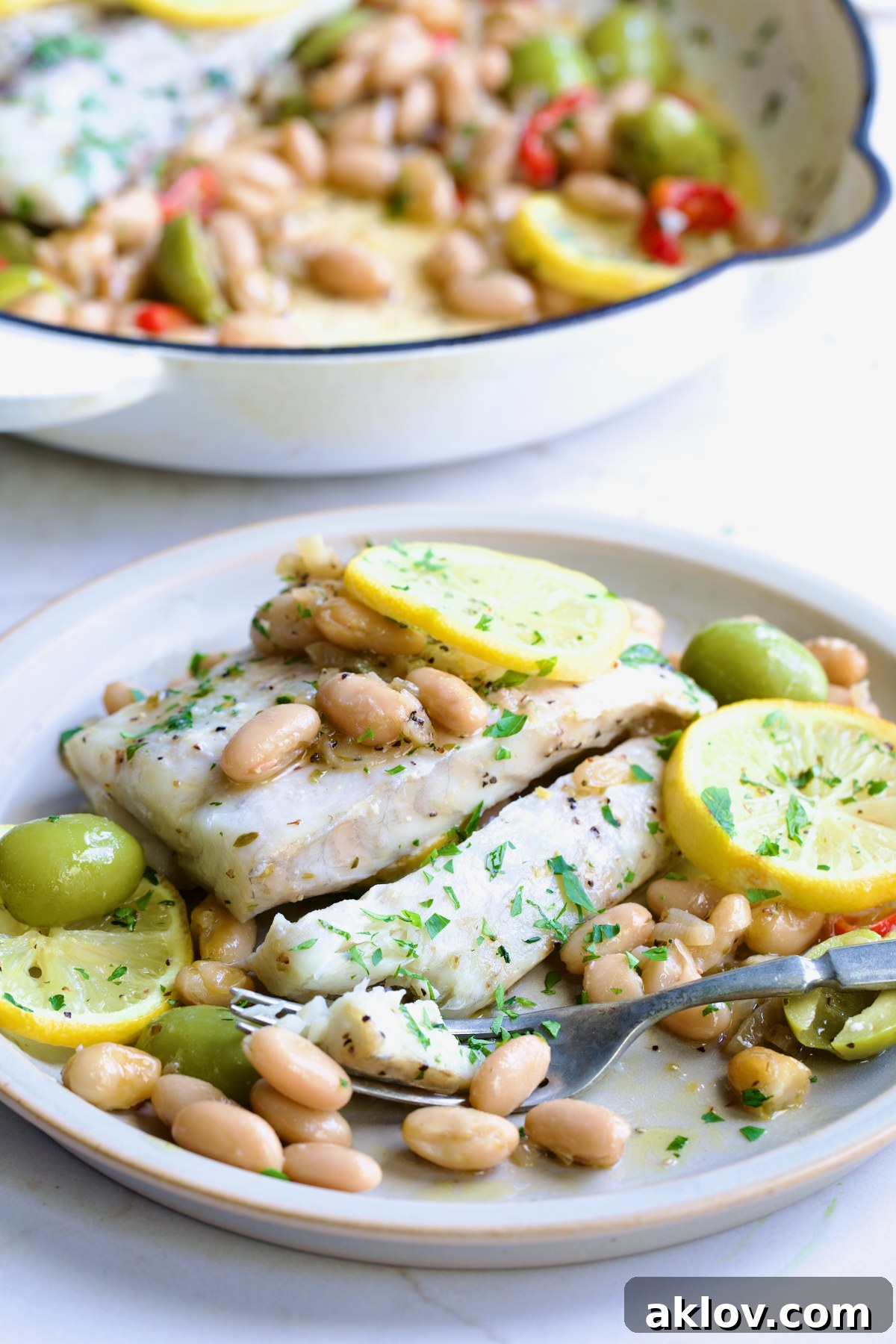
Dive into the vibrant flavors of the Mediterranean with this incredibly delicious and healthy Mediterranean Fish and White Bean Skillet! This one-pan wonder brings together the sun-drenched region’s most beloved ingredients, creating a dinner that’s both deeply satisfying and refreshingly light. Imagine flaky, perfectly baked white fish nestled among creamy cannellini beans, all infused with bright lemon, savory Castelvetrano olives, a subtle kick from Fresno chile, and aromatic oregano in a rich white wine reduction. It’s a complete meal that comes together effortlessly, making it an ideal choice for a busy weeknight or a relaxed weekend supper. This dish is not just a meal; it’s an experience, a delightful journey to the shores of the Mediterranean, perfectly complemented by sides like Mediterranean Grilled Zucchini.
“This was very good! I am a fish snob … and it was surprisingly great!”
Why You’ll Love This Mediterranean Fish and White Bean Skillet
This Mediterranean Fish and White Bean Skillet isn’t just a recipe; it’s a testament to the power of fresh, simple ingredients coming together to create something extraordinary. It embodies the essence of Mediterranean cuisine, known worldwide for its emphasis on fresh produce, healthy fats, lean proteins, and robust flavors. Here’s why this dish deserves a permanent spot in your culinary rotation:
- Unbeatably Healthy: At its core, this dish is a powerhouse of nutrition. White fish offers lean protein and essential omega-3 fatty acids, crucial for heart and brain health. Cannellini beans provide plant-based protein and dietary fiber, promoting digestive wellness and satiety. Paired with fresh vegetables and olive oil, it’s a meal that supports a balanced and vibrant lifestyle, perfectly aligning with the principles of the Mediterranean diet.
- Bursting with Flavor: The magic of Mediterranean cooking lies in its ability to extract maximum flavor from minimal, high-quality ingredients. Mild, buttery Castelvetrano olives, fragrant dried oregano, a touch of gentle heat from a Fresno chile, and the zesty brightness of fresh lemon slices all combine to create a symphony of tastes. The white wine reduction deepens these flavors, creating a complex yet harmonious profile that will tantalize your taste buds and transport you to the sun-drenched coasts.
- Effortlessly Light and Fresh: Forget heavy, complicated meals that leave you feeling sluggish. This skillet dish is designed to feel light and refreshing, making it perfect for any season. The delicate texture of the baked fish, the creamy tenderness of the beans, and the bright, acidic notes from the lemon ensure that every bite feels invigorating, leaving you satisfied without feeling weighed down.
- Incredibly Easy One-Skillet Preparation: Say goodbye to piles of dirty dishes and complicated cooking processes! This entire meal comes together in a single oven-safe skillet, moving seamlessly from stovetop to oven. This streamlined approach not only simplifies cooking but also makes cleanup a breeze, giving you more time to relax and enjoy your delicious creation rather than scrubbing pots and pans.
- Versatile and Adaptable: While the recipe provides a fantastic foundational base, it’s also highly adaptable to your pantry and preferences. You can easily swap different types of white fish, experiment with other white beans, or adjust the spice level to suit your taste. This inherent flexibility makes it a go-to recipe you can customize and enjoy again and again, ensuring it never gets boring.
From its impressive nutritional profile to its exquisite taste and simple preparation, this Mediterranean Fish and White Bean Skillet is truly a keeper for anyone seeking a wholesome, flavorful, and convenient meal that brings a taste of the Mediterranean home.
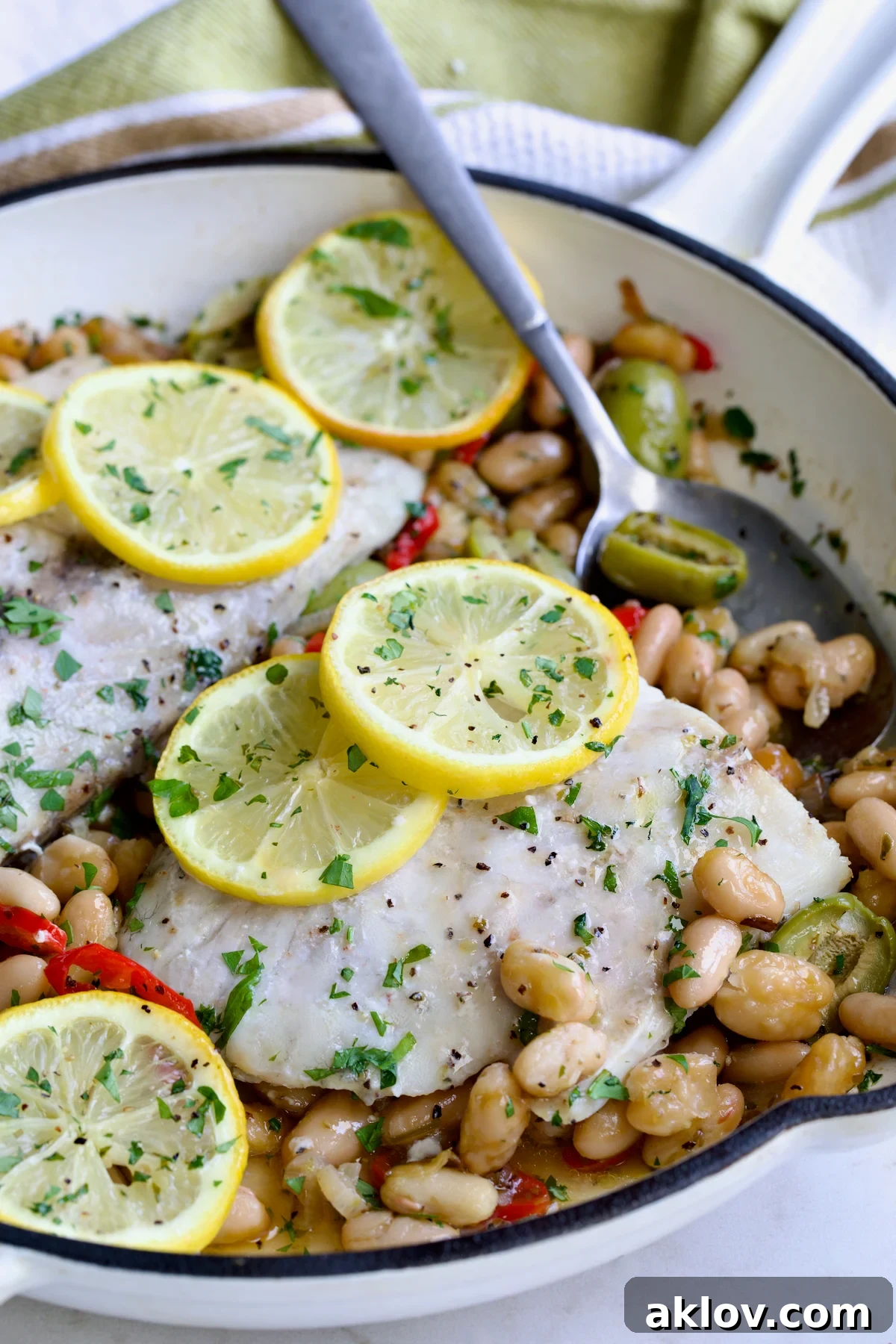
How to Make This Flavorful Mediterranean Fish and White Bean Skillet
Creating this stunning Mediterranean dish is simpler than you might think. Follow these straightforward steps to prepare a wholesome and delicious meal that will impress your family and friends with minimal fuss. For exact quantities, please refer to the detailed recipe card below.
Recipe Ingredients You’ll Need:
Gathering your ingredients ahead of time ensures a smooth and enjoyable cooking process, often referred to as “mise en place.” Here’s a visual overview of the fresh, high-quality components that make this dish shine and contribute to its authentic Mediterranean flavor.
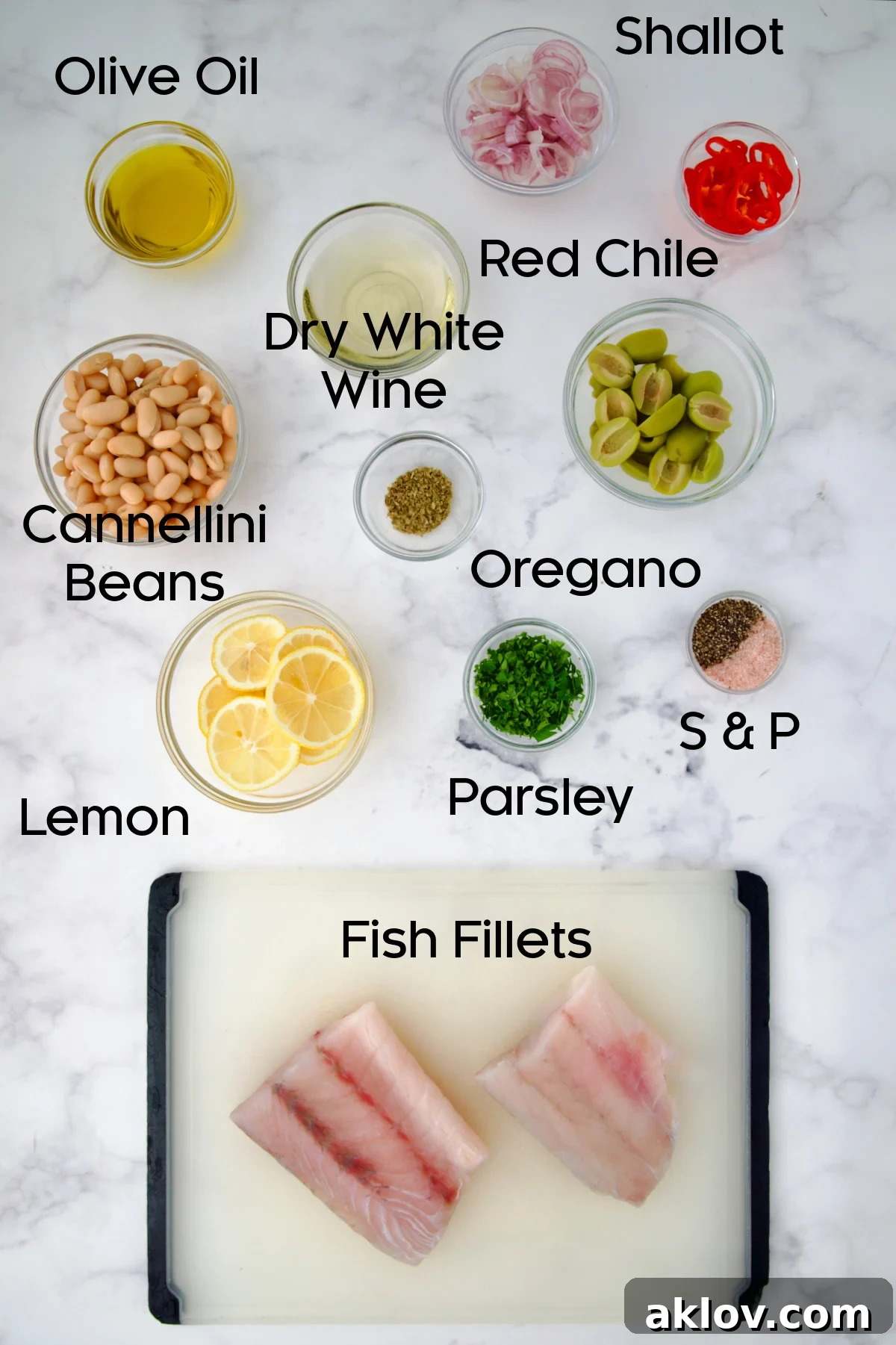
Ingredient Notes and Expert Substitutions:
Understanding each ingredient’s unique role and knowing suitable substitutions can empower you to customize this recipe to your liking or adapt it based on what you have readily available in your pantry.
- Fish Fillets: The inherent beauty of this recipe lies in its adaptability to various types of white fish. While barramundi (a delightful type of sea bass known for its mild flavor, firm yet moist texture, and excellent flaking properties) was used for its superior qualities, other excellent choices include widely available options like tilapia, cod (both Atlantic and Pacific), robust grouper, delicate halibut, or flavorful Chilean sea bass. The key is to choose a fish with good flaking ability when cooked, and remember to adjust baking time slightly for thicker fillets to ensure they cook through without drying out.
- Shallots: Often heralded as the “gourmet onion,” shallots are a cornerstone of many sophisticated cuisines, including French, and are a member of the onion family. They offer a distinctly milder, sweeter, and more delicate flavor profile than common onions, with subtle, enticing hints of garlic. Shallots typically grow in clusters or a head, resembling a small head of garlic but with fewer, larger cloves. When sautéed gently, shallots become wonderfully fragrant and soft, providing a sweet and aromatic base for the dish that enhances other delicate flavors without overpowering them. If shallots are unavailable, a small amount of finely minced yellow onion can be used as a substitute, though the flavor will be slightly stronger and less nuanced.
- Fresno Chile: This vibrant red pepper adds a pleasant warmth and a beautiful pop of color to the dish. It is generally slightly spicier than a jalapeño but possesses a fruitier undertone, introducing a gentle, balanced heat that complements the Mediterranean flavors perfectly without overwhelming the palate. If you prefer absolutely no heat, a thinly sliced sweet mini red bell pepper is a perfect, colorful, and sweet alternative. For those who enjoy a more pronounced spice level, a pinch of crushed red pepper flakes can be added to the sauce along with the oregano.
- Cannellini Beans: These classic Italian white kidney beans are prized for their creamy texture and tender consistency. They form a substantial and incredibly flavorful base for this skillet dish, as they are excellent at absorbing all the rich juices from the white wine reduction, olive oil, and other aromatic ingredients. Canned cannellini beans are a convenient choice; always remember to drain and rinse them thoroughly under cold water to remove excess sodium and improve their overall texture. If cannellini beans are difficult to find, any cooked white bean, such as Great Northern beans or navy beans, will make an excellent and equally creamy substitution.
- Castelvetrano Olives: Hailing exclusively from the Valle del Belice region of Sicily, Italy, Castelvetrano olives are a true gem. They are easily distinguished by their vibrant bright green color, uniquely mild and buttery flavor, and a firm, meaty texture that makes them exceptional for cooked dishes. Unlike many other olives that can be intensely briny or bitter, Castelvetranos offer a gentler taste profile. They are protected by a Protected Designation of Origin (PDO) seal, which guarantees their authenticity and geographical origin, contributing to their slightly higher price point. Their gentle flavor and pleasant texture are ideal for this Mediterranean fish dish, allowing the fish to shine. However, if you prefer a more pungent olive taste or are looking for a more budget-friendly option, consider using pitted Cerignola or Manzanilla olives. As a good practice, always double-check any store-bought pitted olives for lingering pit fragments.
- Dry White Wine: The inclusion of dry white wine is not merely for flavor; it plays a crucial role in deglazing the skillet, capturing all the flavorful browned bits from the shallots and chile, and creating a nuanced, aromatic sauce. Opt for a dry white wine that you genuinely enjoy drinking, such as a crisp Sauvignon Blanc, a refreshing Pinot Grigio, or an unoaked Chardonnay. While you don’t need an expensive bottle, it’s best to avoid “cooking wines” as they often contain added salt and preservatives that can detract from the dish’s overall quality. As the wine reduces, its complex flavors become wonderfully concentrated, contributing significantly to the depth and sophistication of the sauce. For a non-alcoholic alternative, a good quality vegetable broth or chicken broth with a splash of fresh lemon juice works exceptionally well to provide a similar acidic lift and savory base.
- Lemon: Fresh lemon is an indispensable ingredient in Mediterranean cuisine, celebrated for its ability to provide a burst of acidity that brightens and perfectly balances the richness of other ingredients. Both the slices placed directly under the fish and those arranged on top contribute vital flavor and moisture during the baking process, infusing the fish with a delicate citrus aroma.
- Dried Oregano: This classic Mediterranean herb adds earthy, warm, and slightly peppery aromatic notes that masterfully tie all the individual flavors of the dish together, providing an essential foundation.
- Fresh Parsley: A final garnish of freshly chopped parsley not only adds a vibrant pop of color but also introduces a fresh, herbaceous finish to the dish, enhancing its overall appeal and taste.
Step-By-Step Instructions to Create Your Skillet Meal:
Follow these simple, clear steps to bring your Mediterranean Fish and White Bean Skillet to life. Precision and attention to detail at each stage will ensure a perfectly cooked, moist, and flavorful dish that’s a joy to eat.
- Preparation and Preheat: Begin by taking a few moments to gather and meticulously prep all your ingredients. This crucial “mise en place” step ensures a seamless and stress-free cooking process. Simultaneously, preheat your oven to 350°F (175°C), preparing it for the final baking stage of our one-pan wonder.
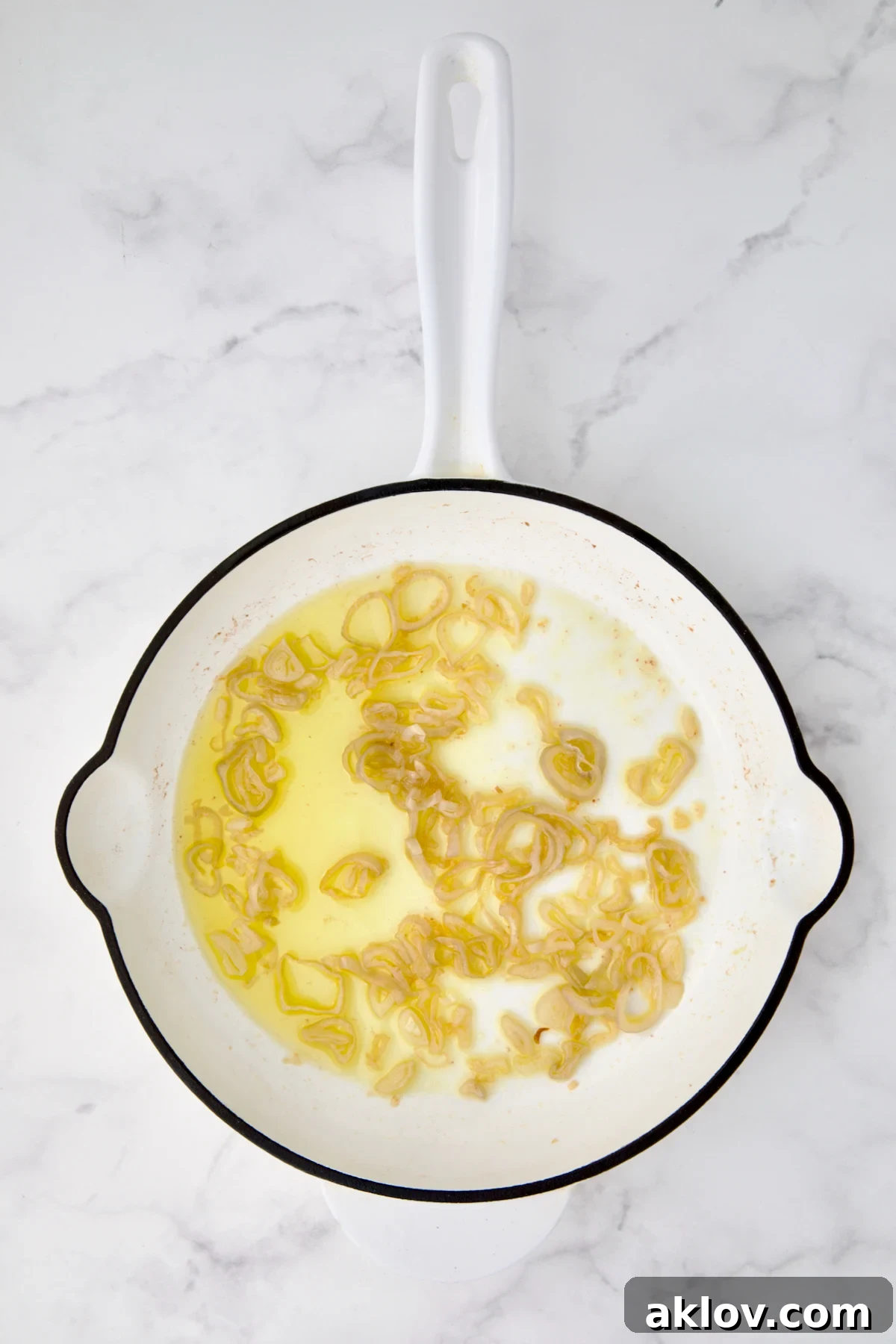
- Sauté Shallots: Heat 1/4 cup of high-quality olive oil in an oven-safe skillet (an enameled cast iron skillet works wonderfully due to its even heat distribution) over medium heat. Add the thinly sliced shallots and cook gently for 3 to 4 minutes. The objective here is to soften them until they are translucent and wonderfully fragrant, not to brown them excessively, as burnt shallots can develop a harsh, bitter flavor. Adjust the heat downward if necessary to maintain a gentle sizzle.
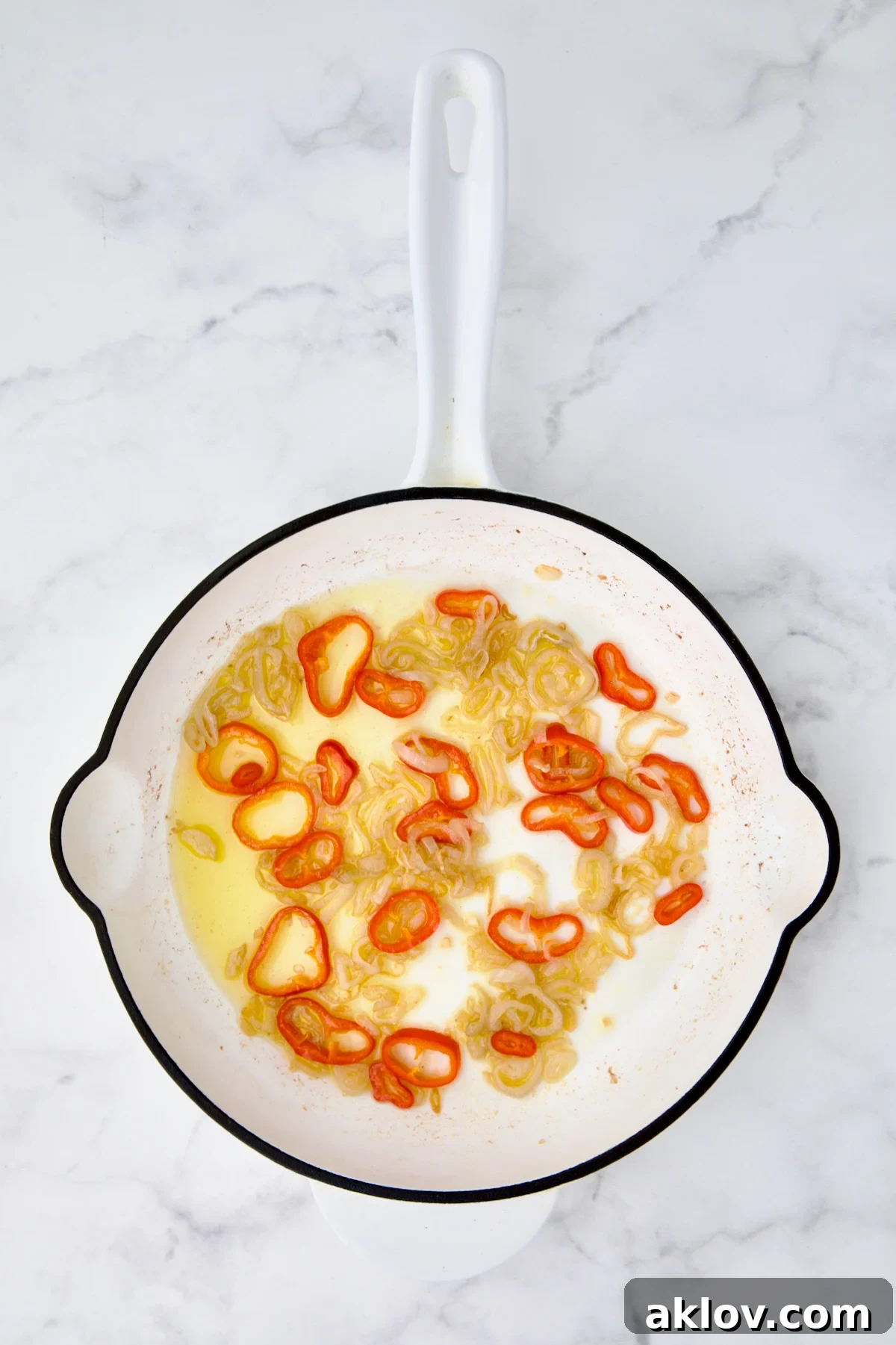
- Add Fresno Chile: Introduce the thinly sliced Fresno chile to the skillet with the softened shallots. Continue to cook for another 2 to 3 minutes, stirring occasionally. This allows the chile to soften slightly and release its subtle heat and nuanced fruity notes into the aromatic base, building layers of flavor.
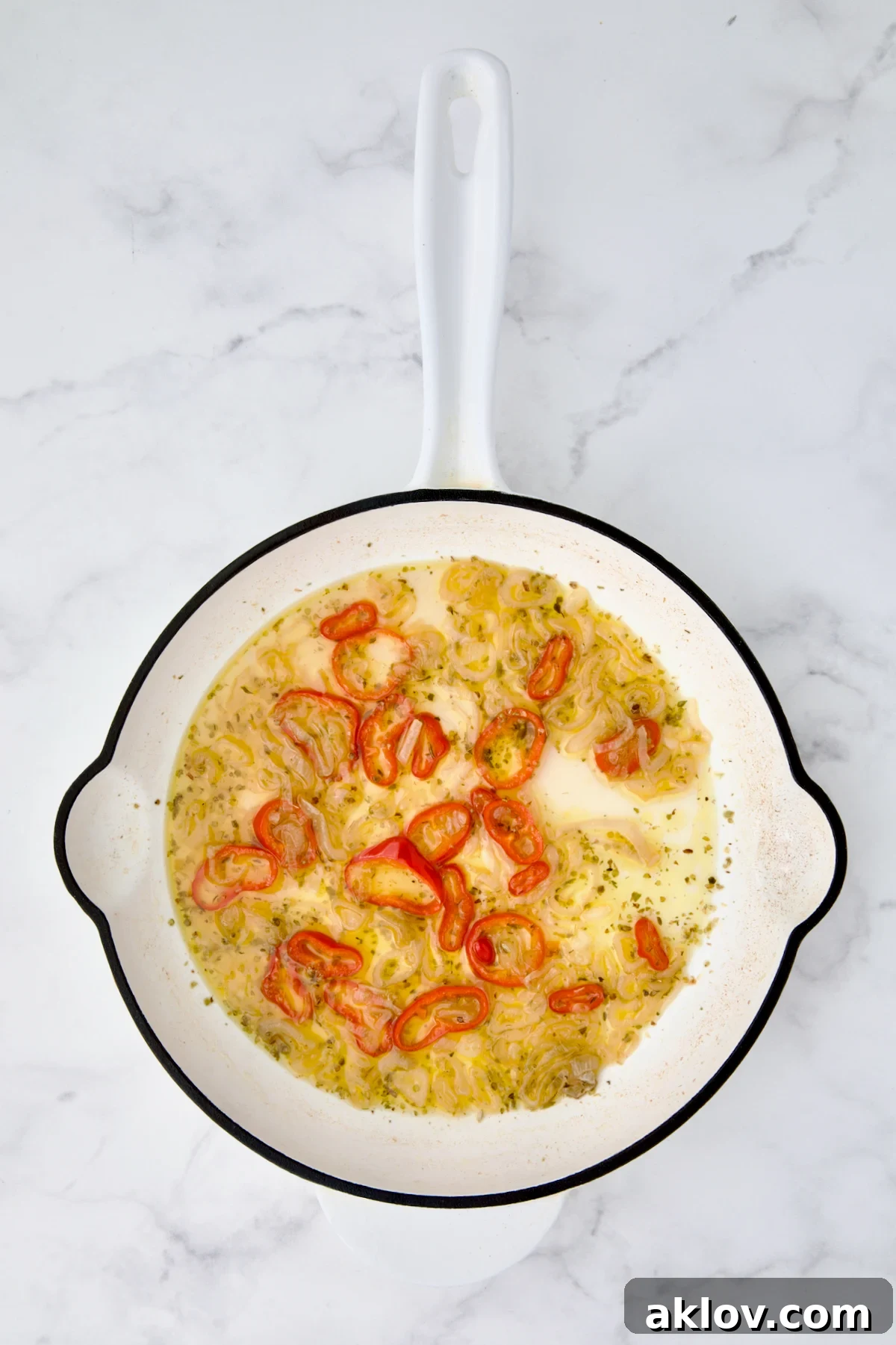
- Deglaze with Wine and Oregano: Carefully pour in the dry white wine and sprinkle in the dried oregano. Bring the mixture to a rapid boil and let it cook for approximately 1 minute. This crucial step allows the alcohol to evaporate while simultaneously concentrating the wine’s complex flavors, creating a rich, aromatic reduction that forms the vibrant heart of your sauce.
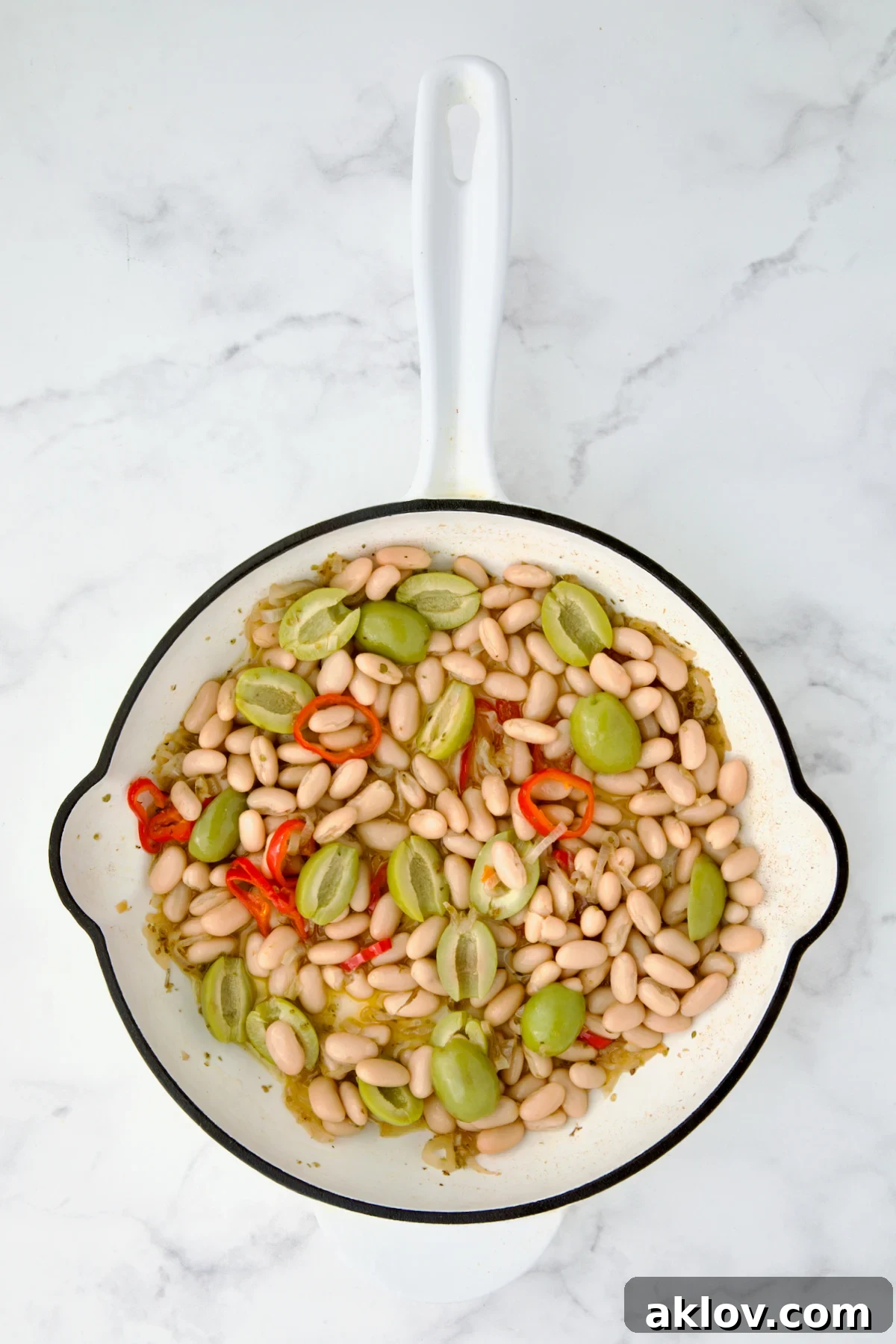
- Incorporate Beans and Olives: Stir in the thoroughly drained and rinsed cannellini beans and the halved Castelvetrano olives. Mix all the ingredients well to combine, ensuring the beans are coated in the flavorful reduction. Season generously with salt and freshly ground black pepper to taste, adjusting to your preference, ensuring the base is perfectly seasoned before introducing the fish.
- Prepare the Fish Fillets: Season your white fish fillets with a good pinch of salt and black pepper on both sides. To infuse the fish with maximum lemon flavor and moisture as it bakes, place two thin lemon slices directly under each fillet in the skillet, creating a fragrant and flavorful bed. Then, gently arrange the seasoned fish fillets atop the prepared bean and olive mixture.
- Garnish with Lemon and Oil: Crown each fish fillet with three additional thin slices of lemon. This not only adds a beautiful visual appeal but also contributes significantly to the fish’s bright, fresh flavor as it cooks. Finish this stage by drizzling the remaining 1 tablespoon of olive oil evenly over the fish, which aids in a beautiful golden finish and adds richness.
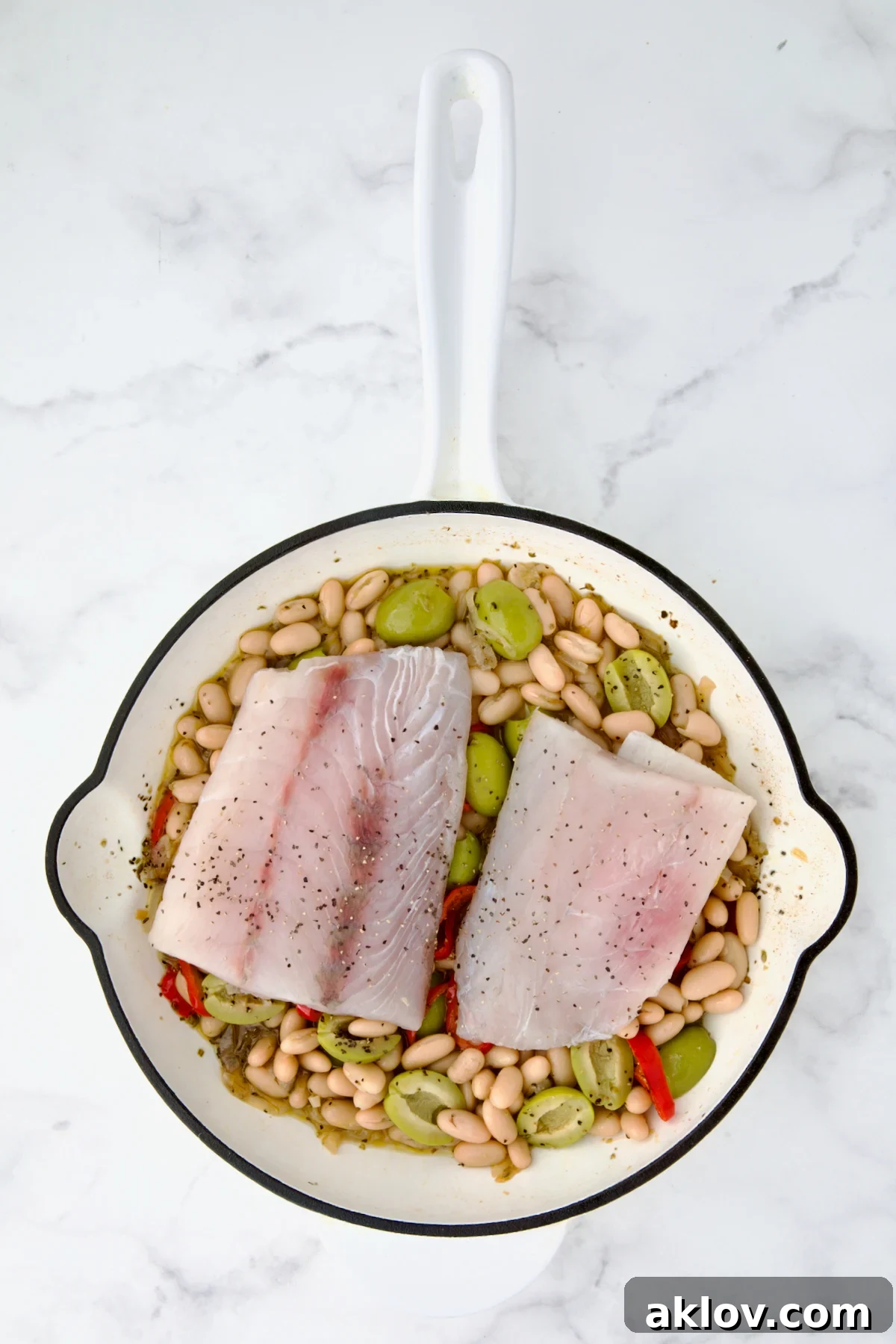
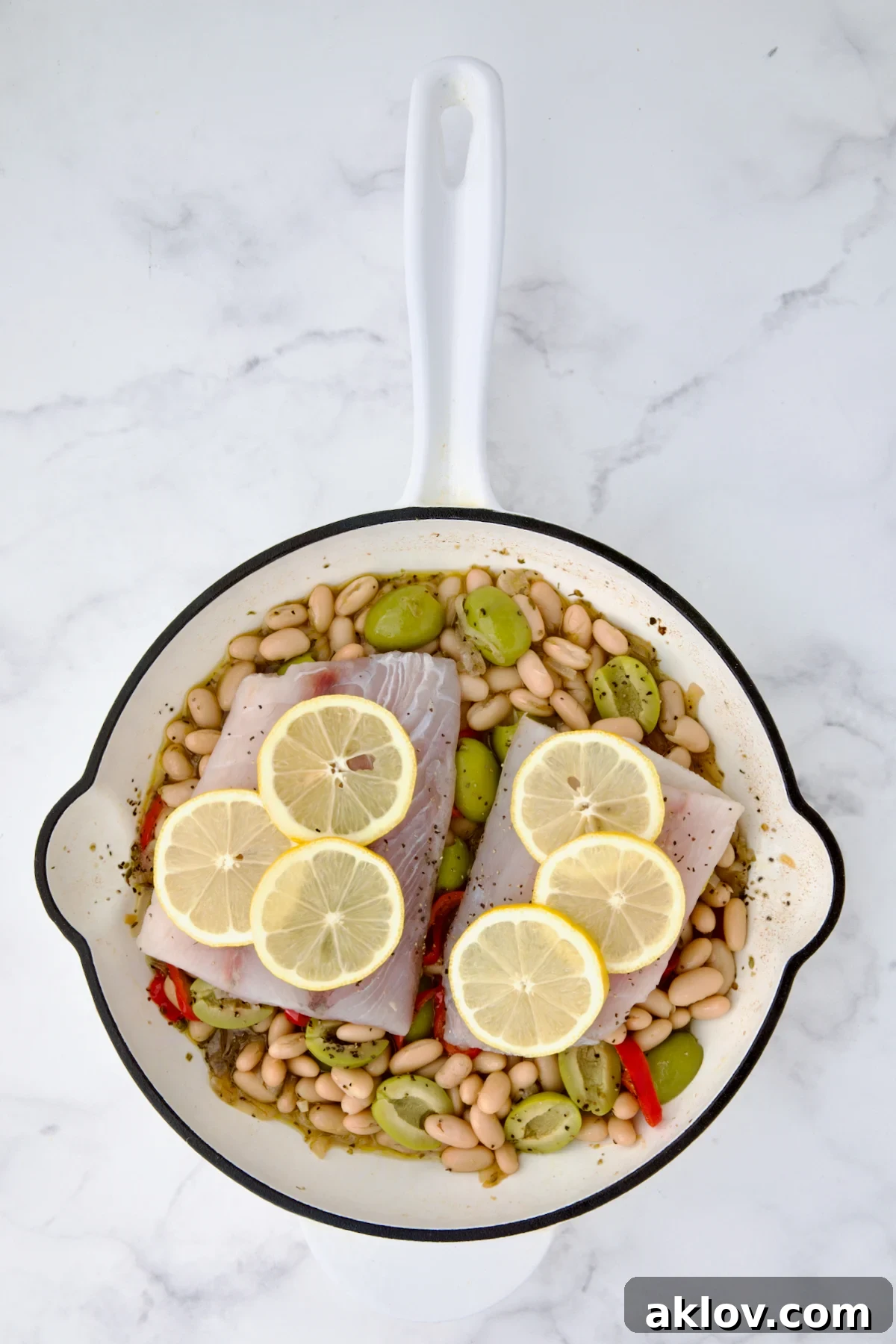
- Bake to Perfection: Loosely tent the skillet with aluminum foil. This crucial, yet simple, step creates a humid environment within the skillet, preventing the flavorful bean mixture from drying out and, more importantly, helping the delicate white fish steam gently, ensuring it remains incredibly moist and flaky. Transfer the skillet to your preheated oven and bake for 18 to 22 minutes. The fish is done when it easily flakes with a fork at its thickest point, or when an instant-read thermometer inserted into the thickest part reads an internal temperature of 145°F (63°C).
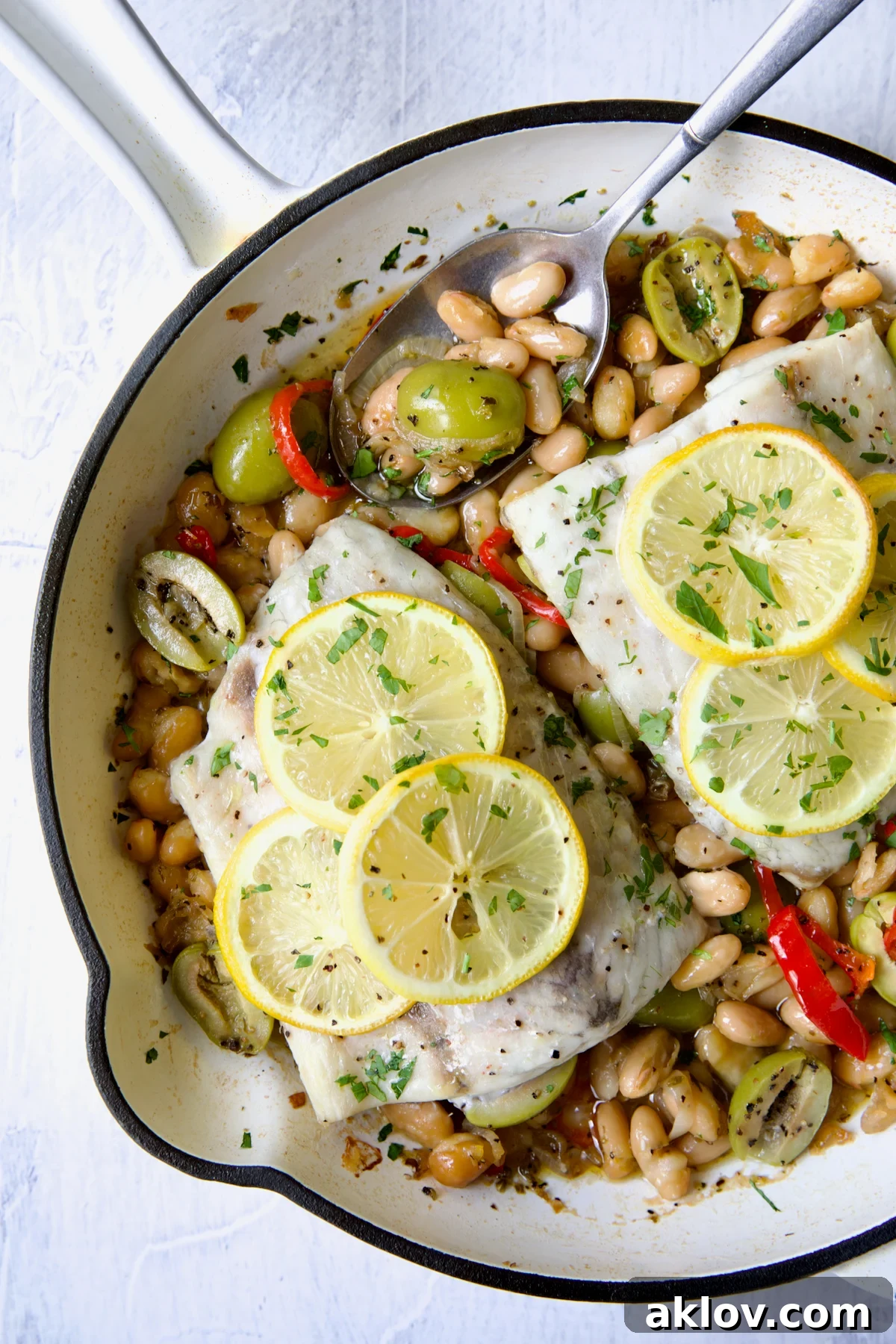
- Serve Immediately: Once baked, carefully remove the skillet from the oven. Spoon some of the flavorful pan juices and bean mixture over each fish fillet to keep it moist and enhance its taste with every bite. Finish by sprinkling generously with freshly chopped parsley for a final burst of vibrant color and herbaceous freshness. Serve immediately and savor every delicious bite of this healthy and exquisite Mediterranean delight!
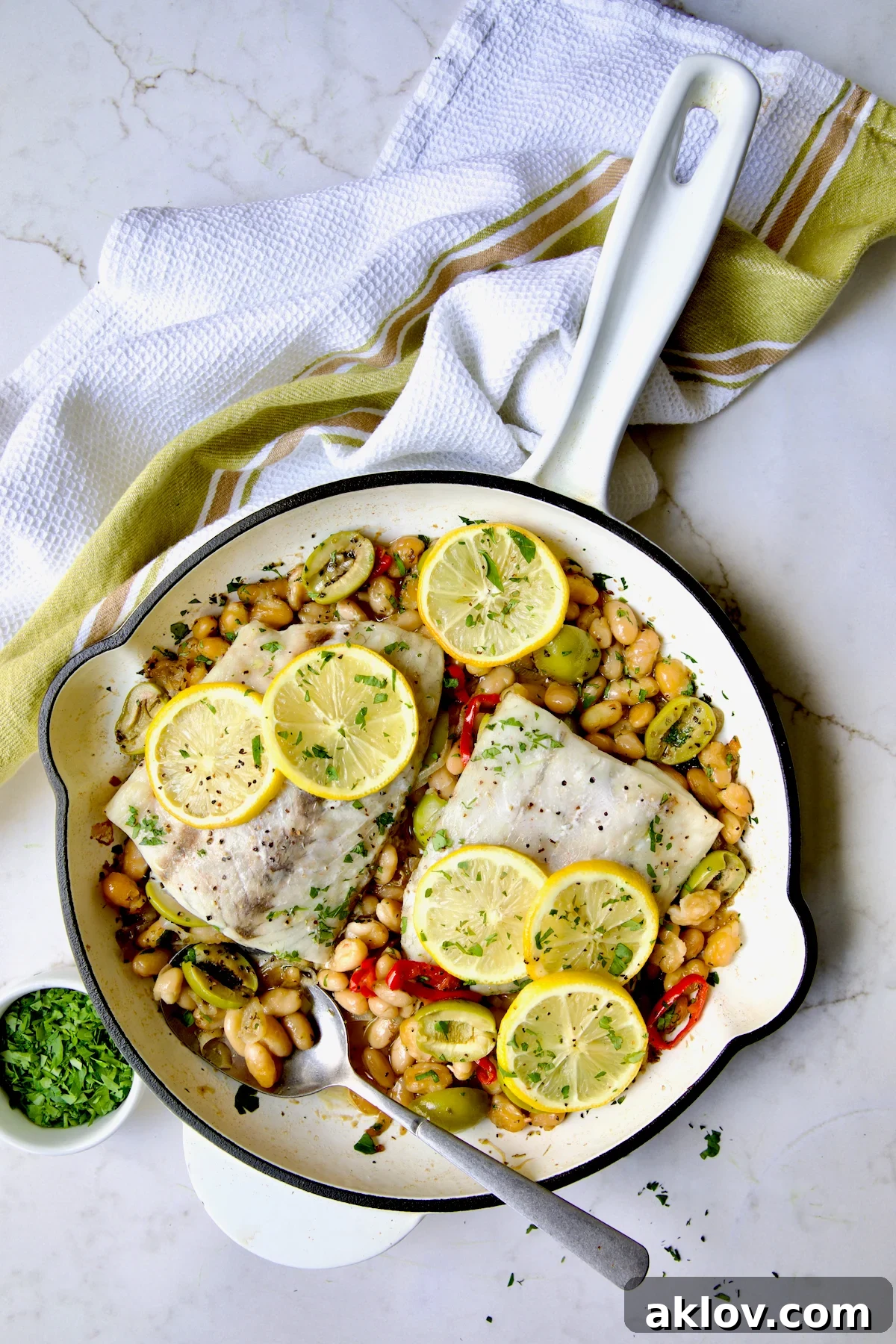
Chef’s Pro Tips for a Flawless Mediterranean Fish Skillet
Achieving culinary perfection often comes down to a few insider tricks and mindful techniques. Here are some expert tips to ensure your Mediterranean Fish and White Bean Skillet turns out exceptionally delicious and flawless every single time:
- Thoroughly Check Pitted Olives: While opting for pre-pitted Castelvetrano olives offers great convenience, it’s always a wise practice to quickly and carefully check each olive for any small, rogue pit fragments. Machine pitting, while efficient, can occasionally leave tiny pieces behind, and discovering a hard pit fragment in your otherwise tender fish dish can be an unpleasant surprise.
- Mastering Shallot Sautéing: Shallots are delicate and their flavor profile can change drastically with incorrect cooking. When sautéing them, it’s absolutely critical to use medium-low heat and cook them gently until they are softened and translucent, which typically takes about 3-4 minutes. Resist the urge to rush this step with high heat, as burnt shallots develop a distinctively harsh, bitter flavor that can unfortunately permeate and negatively impact the entire dish’s delicate balance. Watch them closely and adjust the heat as needed to prevent any browning.
- The Strategic Power of Tenting: Loosely tenting your skillet or baking dish with aluminum foil during the oven baking process is a simple yet incredibly powerful technique. This creates a slightly humid, steamy environment within the skillet, which is crucial for two reasons: it prevents the precious, flavorful olivey and winey juices from evaporating excessively, and more importantly, it helps the delicate white fish steam gently, ensuring it remains incredibly moist, tender, and flaky rather than drying out.
- Ensuring Even Fish Cooking: Fish fillets often naturally have varying thicknesses across their length. To ensure even cooking and prevent thinner portions from becoming dry and overcooked while thicker parts are still finishing, simply fold the thinner end of the fillet under itself. This strategic fold creates a more uniform thickness across the entire piece of fish, allowing it to cook evenly throughout and achieve that perfect, consistent texture.
- Do Not Overcook the Fish: White fish cooks relatively quickly, and overcooking is the most common mistake. Keep a very close eye on it during the baking process, especially towards the end of the suggested time. Overcooked fish becomes dry, rubbery, and unappetizing. The best indicator of doneness is when the fish easily flakes with a fork at its thickest part, or when an instant-read thermometer inserted into the thickest part reads an internal temperature of 145°F (63°C). Remove it from the oven immediately once it reaches this point.
Frequently Asked Questions About This Recipe
What type of white fish is best for this baked Mediterranean fish recipe?
Any mild, firm white fish works beautifully in this recipe, as the goal is a flaky, moist texture that can absorb the vibrant Mediterranean flavors. Excellent choices include barramundi (which was used in this recipe for its mild flavor and firm texture), cod (both Atlantic and Pacific), robust grouper, delicate halibut, tilapia, or any type of sea bass. Choose a fish you enjoy and that is readily available to you.
Can this baked Mediterranean fish recipe be prepared ahead of time?
You can certainly do some preparatory work in advance, but for the freshest taste and best texture, it’s ideal to cook the fish just before serving. If you plan to prepare it ahead, you can assemble the bean mixture (sautéing the shallots and Fresno chile, reducing the wine, and adding the beans and olives) up to a day in advance and store it covered in the refrigerator. However, do not add the fish or lemon slices until just before you are ready to bake. The acidity from the lemon can begin to “cook” or denature the fish protein if left for too long, potentially making the fish mushy and less appealing. If using frozen fish fillets, ensure they are thoroughly thawed before any preparation. When ready to bake, let the assembled skillet sit at room temperature for about 15-20 minutes while your oven preheats; you might need to add a few extra minutes to the baking time to compensate for starting from a colder temperature.
Can baked white fish be reheated?
While this Mediterranean fish dish is truly at its peak when served fresh from the oven, leftovers can be reheated successfully if done properly. To do so, loosely tent the skillet (or an individual serving in an oven-safe dish) with aluminum foil. Reheat in a preheated oven at 350°F (175°C) until thoroughly heated through, ensuring the internal temperature reaches at least 145°F (63°C). Reheating in the oven helps to prevent the fish from drying out and maintains a better texture compared to reheating in a microwave, which can often make fish rubbery.
What are the benefits of using a single oven-safe skillet?
Using a single oven-safe skillet (such as an enameled cast iron skillet) for this recipe is an absolute game-changer in terms of convenience and efficiency! It allows you to build the flavorful base of the dish (sautéing aromatics, deglazing, and combining beans) entirely on the stovetop, and then seamlessly transfer the entire dish directly to the oven for baking the fish. This “one-pan” approach drastically minimizes cleanup by reducing the number of pots and pans used, saving you valuable time and effort in the kitchen. It’s perfect for busy weeknights or anyone who appreciates a more straightforward cooking experience.
What if I don’t have dry white wine, or prefer not to use alcohol?
If you prefer not to use alcohol in your cooking or simply don’t have dry white wine on hand, a good quality vegetable broth or chicken broth makes an excellent and perfectly suitable non-alcoholic substitute. To mimic the subtle acidity that wine provides to the sauce, we recommend adding a tablespoon of fresh lemon juice to the broth. This combination will still yield a flavorful reduction for your beans and fish, ensuring the dish remains bright and savory without the alcohol.
Storage and Meal Prep Tips for Your Skillet Creation
Proper storage ensures your delicious leftovers remain enjoyable, and a little meal prep can make future cooking even faster.
- Storage of Leftovers: Store any leftover Mediterranean Fish and White Bean Skillet in an airtight container in the refrigerator for up to 3 days. It’s important to consume fish within this timeframe for optimal freshness and safety.
- Reheating Leftovers: When reheating, it’s best to do so gently to preserve the fish’s delicate texture and prevent it from drying out. Loosely tent individual servings with aluminum foil and reheat in a preheated oven at 350°F (175°C) until thoroughly heated through, ensuring the internal temperature reaches at least 145°F (63°C). Avoid high heat or microwave reheating if possible, as it can often result in dry, rubbery fish.
- Freezing: Freezing is generally not recommended for this dish. While the beans might fare okay, white fish tends to become dry and can develop a less desirable, tougher texture upon thawing and reheating. The overall quality of the meal will be significantly better when enjoyed fresh or from refrigeration.
Delicious Sides to Serve with This Baked Mediterranean Fish
This Mediterranean Fish and White Bean Skillet is a wonderfully complete meal on its own, offering lean protein, healthy fats, and fiber. However, pairing it with a fresh, vibrant, or complementary side dish can truly elevate the dining experience and add variety to your plate. Here are some excellent choices that harmonize beautifully with the Mediterranean flavors:
- Greek Green Beans: A classic and beloved Mediterranean accompaniment, these tender green beans are typically cooked with ripe tomatoes, fragrant garlic, and aromatic herbs, offering a delightful and savory vegetable side that perfectly complements the fish.
- Roasted Vegetable Rice with Garlic and Parmesan: For those desiring a heartier side, this dish combines wholesome rice with a medley of roasted vegetables, infused with garlic and savory Parmesan. It offers a different texture and a rich, earthy flavor profile that works well with the lightness of the fish.
- Stewed Cabbage Recipe: While perhaps an unexpected pairing, a tender and subtly sweet stewed cabbage can provide a surprising and delicious contrast to the zesty fish, offering a comforting and flavorful vegetable option.
- Roasted Green Beans with Tomato Caper Relish: Elevate simple roasted green beans with a bright and tangy relish made from fresh tomatoes and briny capers. This relish adds a wonderful pop of acidity and zest that beautifully complements the delicate flavors of the fish and beans.
- A simple crisp green salad with a light lemon-herb vinaigrette also makes a wonderfully refreshing and light accompaniment, adding fresh greens and a touch more acidity.
Explore More Light and Healthy Fish Recipes You’ll Adore!
If you’ve thoroughly enjoyed the fresh, vibrant, and healthy flavors of this Mediterranean Fish and White Bean Skillet, you’re in for a treat! The renowned Mediterranean diet places a significant emphasis on seafood, offering a myriad of creative and delicious ways to prepare nutritious fish dishes that are both simple and incredibly flavorful. Here are a few more fantastic recipes to inspire your culinary journey and expand your repertoire of healthy seafood meals:
- Fish en Papillote: Master this elegant French technique for baking fish and vegetables together in a sealed parchment paper packet. This method locks in all the moisture and flavor, resulting in incredibly tender, aromatic fish and perfectly cooked vegetables with virtually no cleanup.
- Grilled Mahi Mahi with Cilantro – Ginger Pesto: For grilling enthusiasts, this recipe offers a vibrant and zesty option. The robust mahi-mahi pairs beautifully with a fresh, punchy pesto made from cilantro and ginger, creating a delightful fusion of flavors.
- Seared Salmon with Warm Roasted Cherry Tomato Salad: Indulge in a richer fish option with beautifully seared salmon, perfectly complemented by a wholesome kale and quinotto (quinoa risotto) base and a sweet-tart warm roasted cherry tomato salad. This is a hearty yet balanced meal.
- Blackened Halibut with Mango and Avocado Salsa: Explore a delightful tropical twist with this recipe. Spicy blackened halibut is cooled and brightened by a fresh, sweet, and creamy mango and avocado salsa, creating a dynamic and flavorful meal that’s perfect for a taste adventure.
Discover a treasure trove of inspiring seafood creations and culinary ideas at Fish and Seafood Recipes – From A Chef’s Kitchen. For even more Mediterranean-inspired delights and a deeper dive into this healthy cuisine, explore the curated collection of 30 Best Mediterranean Fish Recipes.
The Complete Recipe: Mediterranean Fish and White Bean Skillet
This section provides the comprehensive details and measurements for preparing our celebrated Mediterranean Fish and White Bean Skillet. Get ready to cook!
One-Pan Mediterranean Fish and White Bean Skillet
Author: Carol | From A Chef’s Kitchen
A healthy, flavorful dinner featuring flaky white fish and creamy cannellini beans, brightened by fresh lemon, savory olives, and a rich white wine reduction, all conveniently cooked in one skillet.
Prep Time: 15 minutes
Cook Time: 30 minutes
Total Time: 45 minutes
Servings: 2
Equipment:
- Wusthof Chef Knife
- Cutting Board
- Enamel Cast Iron Skillet (oven-safe)
- Nonstick Aluminum Foil
Ingredients:
- 1/4 cup olive oil, plus 1 tablespoon, divided
- 2 medium shallots, peeled and thinly sliced into rings
- 1 Fresno chile, thinly sliced into rings (or a sweet mini red bell pepper for no heat)
- 1/2 cup dry white wine (e.g., Sauvignon Blanc, Pinot Grigio, or unoaked Chardonnay)
- 1 teaspoon dried oregano
- 1 can (15-ounce) cannellini beans, drained and rinsed (or other white bean such as Great Northern)
- 1/2 cup pitted and halved Castelvetrano olives (or Cerignola/Manzanilla for a stronger olive flavor)
- Salt and freshly ground black pepper, to taste
- 1 large lemon, thinly sliced into 10 rounds, with seeds removed
- 2 (6-ounce) pieces white fish fillets, such as barramundi, tilapia, cod, grouper, halibut, or sea bass
- 1 tablespoon chopped fresh parsley, for garnish
Instructions:
- Preheat your oven to 350°F (175°C).
- Heat 1/4 cup of olive oil over medium heat in an oven-safe skillet (like enameled cast iron). Add the sliced shallots and cook for 3-4 minutes, or until softened and translucent, being careful not to brown them to prevent bitterness.
- Add the sliced Fresno chile and cook for another 2-3 minutes, until it begins to soften.
- Pour in the dry white wine and sprinkle in the dried oregano. Bring the mixture to a boil and cook for 1 minute to allow the alcohol to evaporate and the flavors to concentrate.
- Add the drained and rinsed cannellini beans and the halved Castelvetrano olives to the skillet. Stir well to combine. Season generously with salt and black pepper to taste.
- Season the fish fillets generously with salt and black pepper on both sides. Place 2 lemon slices under each fish fillet in the skillet, then gently place the seasoned fish on top of the bean mixture.
- Top each fish fillet with three additional thin slices of lemon. Drizzle the fish with the remaining 1 tablespoon of olive oil.
- Loosely tent the skillet with aluminum foil (this crucial step prevents the beans from drying out and helps the fish stay moist and flaky).
- Place the skillet in the preheated oven and bake for 18-22 minutes, or until the fish can easily be flaked with a fork and reaches an internal temperature of 145°F (63°C) at its thickest point.
- Carefully remove from the oven. Spoon some of the flavorful pan juices over the fish to keep it moist and enhance its taste.
- Sprinkle generously with chopped fresh parsley and serve immediately.
Recipe Notes:
Substitutions:
- Fish: Any mild white fish will work beautifully, such as tilapia, cod, grouper, halibut, or Chilean sea bass. Remember to adjust cooking time slightly for thicker fillets.
- Beans: If cannellini beans are unavailable, any cooked white bean, like Great Northern beans or navy beans, can be used as a creamy alternative.
- Olives: For those who prefer a more pungent olive taste or want a different option, feel free to use varieties such as Cerignola or Manzanilla instead of Castelvetrano olives.
- Non-alcoholic Wine Substitute: If you prefer not to use alcohol, a good quality vegetable broth or chicken broth mixed with 1 tablespoon of fresh lemon juice makes an excellent non-alcoholic alternative that provides similar acidity and depth.
Tips for Success:
- When buying pitted Castelvetrano olives, always make a quick check for any small pit fragments, as machine pitting can occasionally miss some pieces.
- Be careful not to burn the shallots while sautéing; cook them over medium-low heat until just softened and translucent to avoid developing a bitter taste that can affect the entire dish.
- Tenting the skillet loosely with aluminum foil during baking is a key step. It prevents the aromatic juices from evaporating and ensures your baked white fish remains wonderfully moist and tender.
- If your fish fillets have a thinner portion, fold it under itself to create a more even thickness. This helps the fish cook uniformly and prevents the thinner parts from drying out.
- Avoid overcooking the fish! It should flake easily with a fork at its thickest point, or register an internal temperature of 145°F (63°C) on an instant-read thermometer. Remove it promptly once it reaches this stage.
Make Ahead Instructions:
- You can prepare the bean mixture (sautéing shallots, chile, reducing wine, adding beans and olives) up to a day in advance. Store it covered in an airtight container in the refrigerator.
- However, do not add the fish or lemon slices until just before baking. The acidity from the lemon can denature the delicate fish protein if left for too long, potentially leading to a mushy texture.
- When ready to bake, allow the prepared bean mixture to come to room temperature while the oven preheats, then proceed with adding the fish and lemon slices. You may need to add a few extra minutes to the baking time since the base might be cooler.
Nutrition Information (Estimate per Serving):
Serving Size: 1
- Calories: 547 kcal
- Carbohydrates: 15g
- Protein: 36g
- Fat: 35g
- Saturated Fat: 5g
- Polyunsaturated Fat: 4g
- Monounsaturated Fat: 24g
- Cholesterol: 85mg
- Sodium: 627mg
- Potassium: 825mg
- Fiber: 4g
- Sugar: 5g
- Vitamin A: 545IU
- Vitamin C: 66mg
- Calcium: 86mg
- Iron: 3mg
Nutritional values are automatically calculated using unbranded products and are estimates only. Actual results may vary based on ingredients used and portion sizes. Please adjust as needed for any dietary restrictions, allergies, or health concerns.
Enjoy this delightful Mediterranean Fish and White Bean Skillet! We would love to hear your thoughts and experiences. Please feel free to leave a comment below to share your creation!