
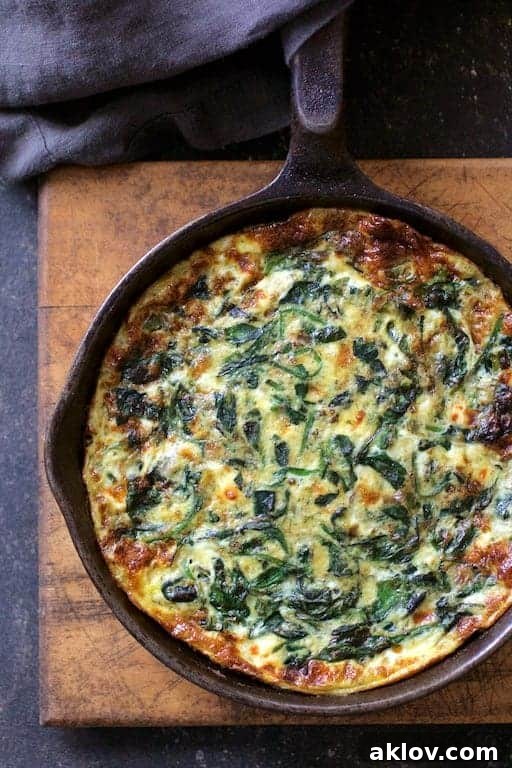
Welcome to the wonderful world of frittatas, where culinary simplicity meets exceptional flavor! Today, we’re diving into a Mediterranean-inspired delight: the Spinach, Leek, and Feta Cheese Frittata. This exquisite dish isn’t just a meal; it’s a celebration of fresh ingredients, minimal effort, and maximum satisfaction. Imagine a golden, fluffy egg base studded with vibrant green spinach, tender, sweet leeks, and salty, tangy feta cheese, all cooked to perfection in a single pan. It’s the kind of versatile dish that elevates any menu, whether you’re planning a leisurely weekend brunch, a quick weeknight dinner, or a sophisticated lunch.
Ready in about 30 minutes, this frittata offers a delightful culinary journey. It’s often described as Italy’s elegant answer to the French omelet, but with a uniquely Greek twist thanks to the inclusion of classic Mediterranean flavors like feta and dill. Unlike its French cousin, which demands swift, precise movements and a delicate fold, the frittata is far more forgiving and relaxed. It starts on the stovetop, allowing ingredients to meld beautifully, and finishes under the broiler, creating a wonderfully set top without the need for complicated flipping.
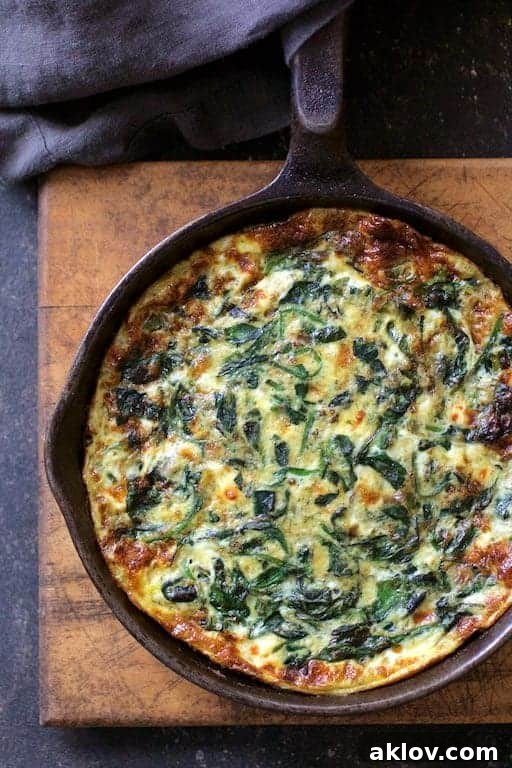
Many of us find ourselves with an unexpected surplus of eggs from time to time – perhaps after a holiday like Easter, or simply because a good sale at the grocery store was too tempting to resist. The scramble to find creative ways to use them can be real! While deviled eggs are always a crowd-pleaser, sometimes you need something a little more substantial, a little more flexible for various meal times. That’s where the frittata shines as a culinary hero, rescuing those abundant eggs from obscurity and transforming them into a wholesome, flavorful meal.
Instead of letting unused eggs linger in the refrigerator, consider the simple, yet profound, solution a frittata offers. This recipe is not just about using up ingredients; it’s about crafting a dish that’s inherently adaptable and always satisfying. Its versatility makes it a perfect fit for any meal of the day, proving that delicious and nutritious can also be incredibly convenient.
What is a Frittata? The Italian Answer to Effortless Egg Dishes
The word “frittata” comes from the Italian verb “friggere,” meaning “to fry.” Historically, it referred to any egg dish cooked in a skillet, including what we might now call an omelet. However, in modern culinary terms, a frittata has carved out its own distinct identity. It is essentially an open-faced Italian egg dish, a delightful hybrid that shares similarities with both a French omelet and a crustless quiche, yet boasts a unique character and preparation method.
Unlike a delicate French omelet, which is typically cooked quickly over high heat, filled, and then folded, a frittata begins its journey on the stovetop and concludes in the oven, usually under the broiler. This two-stage cooking process ensures a beautifully set, fluffy interior and a perfectly golden-brown top, all without the stress of flipping or folding. It allows for a thicker, more substantial egg dish that can generously accommodate a wide array of fillings, making it incredibly versatile.
Mastering the simple technique of making a frittata unlocks a world of culinary possibilities. It empowers you to pull together a quick, protein-packed meal that is suitable at any time of day – breakfast, brunch, lunch, or even a light dinner. Frittatas are, by nature, a fantastic way to utilize whatever fresh herbs, vegetables, cheeses, or even cooked meats you happen to have on hand. It’s a true “clean out the fridge” champion, ensuring those fresh eggs and other ingredients don’t go to waste. This makes it not only delicious but also incredibly economical and sustainable.
Crafting Your Delicious Spinach, Leek, and Feta Cheese Frittata: A Step-by-Step Guide
Creating this flavorful frittata is a straightforward process, relying on fresh, simple ingredients that come together harmoniously. Here’s what you’ll need to gather:
- Butter and a good quality olive oil
- One large, fresh leek
- A container of tender baby spinach
- Fresh garlic for aromatic depth
- Dill, fresh or dried, to add a bright, herbaceous note
- Crumbled feta cheese for its signature salty tang
- Farm-fresh eggs and additional egg whites for a lighter, fluffier texture
- A splash of milk to ensure richness and creaminess
A Special Note on Preparing Leeks: Ensuring Cleanliness and Flavor
Leeks are a wonderful vegetable, offering a delicate, sweet onion flavor that becomes incredibly tender when slowly cooked. However, their layered structure means they can easily trap dirt and grit, which is why proper cleaning is crucial for a pleasant dining experience. Don’t skip this step!
- To prepare leeks, begin by trimming off the dark green tough tops and the root end.
- Then, cut the leek in half lengthwise down the middle. This will allow you to easily inspect and clean the inner layers.
- Thinly slice the white and light green parts of the leek into half-moon shapes.
- Immerse the sliced leeks in a bowl of cold water.
- Using your hands, swish them around vigorously. This action helps to dislodge any trapped soil or sand, allowing it to settle at the bottom of the bowl.
- Carefully remove the cleaned leek slices from the water with a slotted spoon, leaving any sediment behind.
- Drain them thoroughly on a clean paper towel or in a colander before adding them to your hot butter and olive oil mixture. This ensures they caramelize nicely rather than steam. For more detailed guidance on handling leeks, you can refer to additional resources on vegetable preparation.
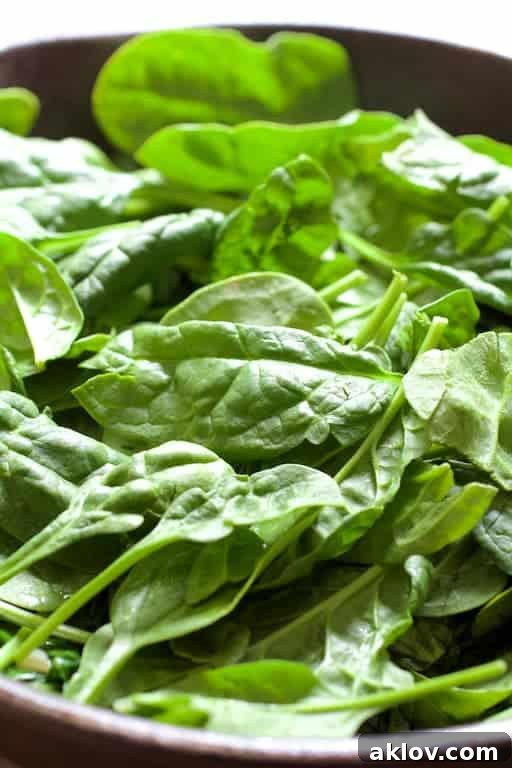
The beauty of a frittata lies in its straightforward cooking method. Unlike its often-fussier French counterpart, the omelet, frittatas require no elaborate flipping or intricate folding. They achieve their perfect consistency and appealing golden-brown top by finishing their cooking journey under the broiler in the oven.
- Begin by sautéing your chosen vegetables and any uncooked meats (like sausage or bacon, ensuring you drain any excess grease) directly in the skillet you plan to use for your frittata. This one-pan approach simplifies cleanup and infuses your frittata with deeper flavors.
- Once your ingredients are cooked to your liking – for this recipe, tender leeks and wilted spinach – spread them out evenly across the bottom of the skillet. This creates a balanced base for your egg mixture.
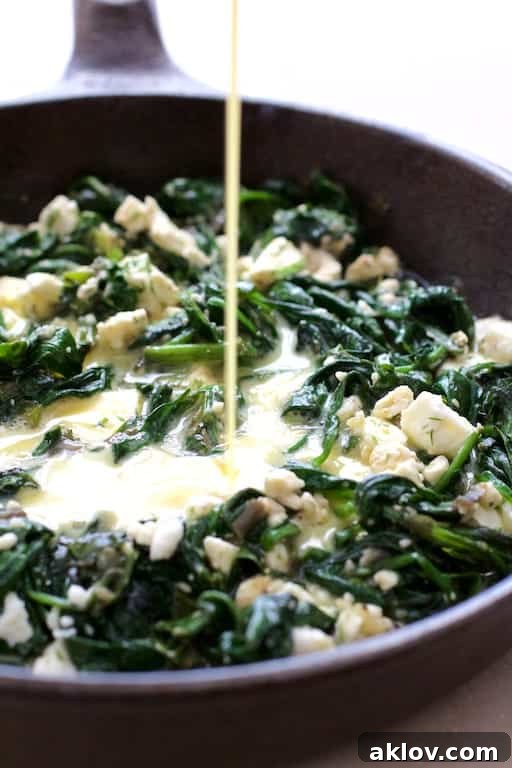
Now, let’s navigate the part where precision, though not perfect, ensures the best texture for your frittata:
- Once the whisked egg mixture has been poured into the skillet over your prepared vegetables and feta, you’ll want to gently move the eggs around. Use a heat-resistant spatula to softly push the cooked egg from the edges towards the center, allowing the uncooked egg to flow underneath. This technique helps to distribute the cooked and uncooked egg evenly, ensuring a consistent texture without scrambling the entire mixture.
- Keep an eye on the edges. When the perimeter of the frittata begins to set and hold together as you run your spatula around it, your frittata is ready for its final stage in the oven.
- At this point, if you wish to add any additional cheese on top for an extra layer of flavor and a beautiful golden crust, now is the perfect time to sprinkle it over the surface.
- Carefully transfer the skillet to the oven, placing it under the broiler. This is where patience and vigilance are key. Broilers can work very quickly, so it’s essential to watch your frittata carefully to prevent over-browning or burning. Many chefs suggest leaving the oven door ajar slightly, allowing you to keep a close eye on the browning process.
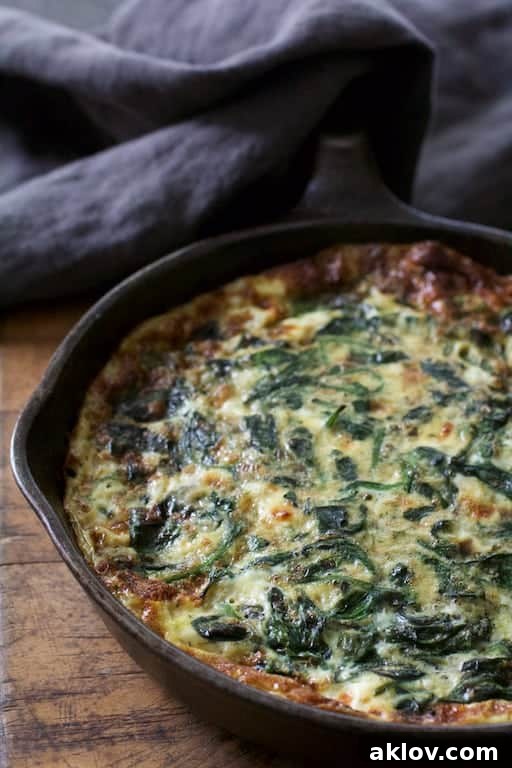
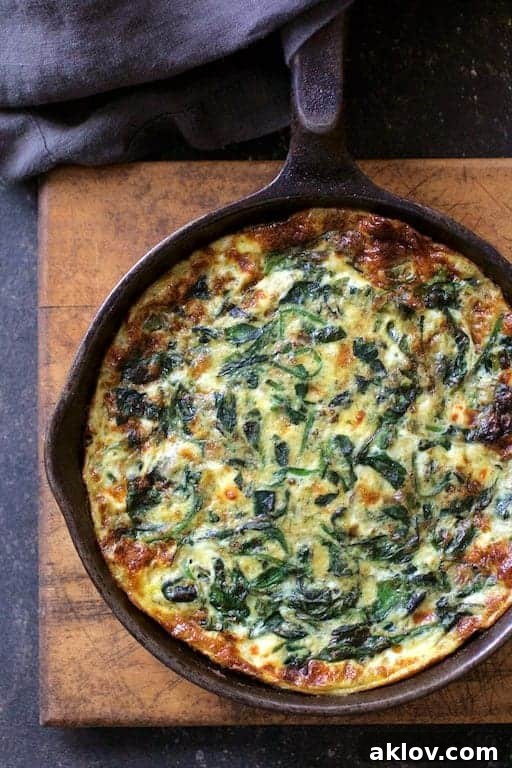
- Finishing the frittata and achieving that appealing golden-brown top will only take a few minutes, typically between 2 to 4 minutes. Once it’s puffed up and beautifully colored, remove it from the oven.
Essential Tips for Frittata Perfection and Kitchen Safety
To ensure your frittata-making experience is as smooth and enjoyable as possible, keep these helpful tips in mind:
- Preventing Eggshell Bits: To avoid those unwelcome crunchy bits of eggshell in your dish, always crack your eggs on a flat surface rather than on the sharp edge of a bowl. This creates a cleaner break and reduces the chance of shell fragments falling into your mixture.
- Hot Handle Safety: Cast iron and other oven-safe skillets retain heat for a very long time. The handle, in particular, can remain extremely hot even after the skillet has been out of the oven for a while. As soon as you remove the frittata from the oven, immediately place a towel, oven mitt, or a silicone handle cover over the hot handle. Do not just set it down and put your oven mitt away. Forgetting this crucial step can result in a severe burn. Trust us, many seasoned cooks have made this mistake, and it’s best avoided!
- Optimal Skillet Choice: A well-seasoned cast-iron skillet is ideal for frittatas as it provides even heat distribution and a natural non-stick surface. If your cast-iron skillet isn’t thoroughly seasoned, or if you prefer, a good quality oven and broiler-safe stainless steel or non-stick sauté pan will also work perfectly. Just ensure it’s rated for high heat and broiler use.
- Don’t Overcrowd the Pan: While frittatas are great for using leftovers, resist the urge to overfill your pan with too many ingredients. An overly dense frittata may not cook evenly, and the eggs might not set properly. Aim for a balanced ratio of eggs to fillings.
- Seasoning is Key: Don’t forget to season your egg mixture adequately with salt and freshly ground black pepper. Eggs can be bland without proper seasoning, and these simple additions will truly bring out the flavors of your frittata. Taste your mixture (before adding raw egg) or season generously.
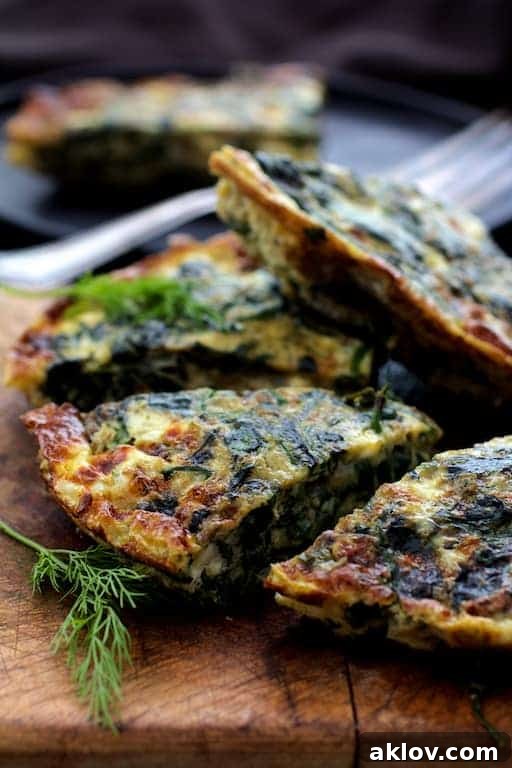
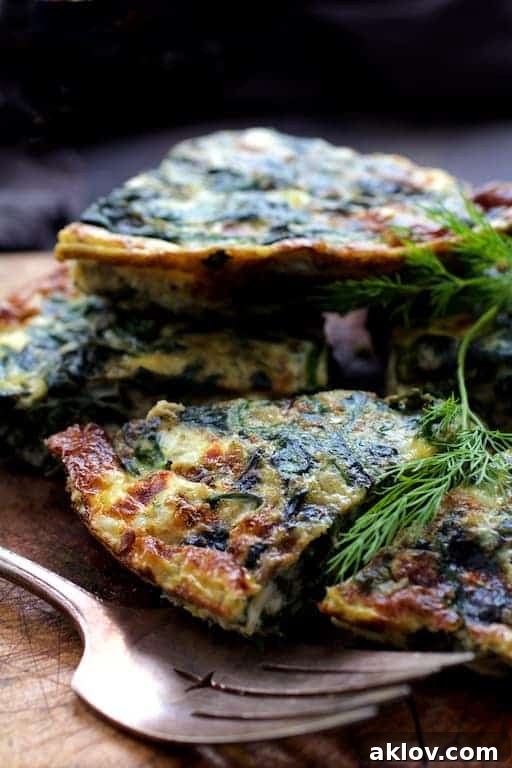
Once your Spinach, Leek, and Feta Cheese Frittata is cooked to perfection, allow it to rest for a few minutes before slicing into generous wedges. The flavors will have a chance to meld, and the frittata will be easier to cut. This dish pairs wonderfully with a simple, refreshing side. A bright, zesty tomato salad, perhaps with a touch of basil and a drizzle of balsamic glaze, offers the perfect counterpoint to the rich, savory frittata. A light green salad with a vinaigrette dressing or even a side of crusty bread would also be excellent accompaniments. Enjoy this wholesome, flavorful, and incredibly easy meal!
Explore More Delicious Breakfast & Brunch Creations
If you’ve enjoyed the simplicity and deliciousness of this frittata, you’re in for a treat! The world of breakfast and brunch offers endless opportunities for culinary creativity and satisfying meals. Here are a few more recipes that are sure to impress your palate and become new favorites in your kitchen:
- Easy Hash Brown Frittata with Pesto and Goat Cheese: A hearty, comforting frittata featuring a crispy hash brown base, rich pesto, and creamy goat cheese.
- Spaghetti Squash, Broccoli, Bacon and Cheddar Mini Quiches: Delightful individual quiches that are perfect for meal prep or entertaining, offering a nutritious twist with spaghetti squash.
- Muffin Pan Stratas with Basil and Sun-Dried Tomatoes: These individual stratas are packed with flavor from basil and sun-dried tomatoes, making them an excellent make-ahead option.
Print Recipe
Rating: 4.42 out of 5 stars (31 votes)
Spinach Leek and Feta Cheese Frittata
Equipment
-
Wusthof Chef Knife
-
Cutting Board
-
Set of Oven-Safe Skillets (e.g., Cast Iron)
-
Glass Mixing Bowls
Ingredients
- 1 tablespoon butter
- 1 tablespoon olive oil
- 1 large leek, white and light green part only, halved and thinly sliced (about 1 cup)
- 1 container (5-6 ounce) baby spinach
- 1 clove garlic, minced
- salt and freshly ground black pepper, to taste
- 1 teaspoon chopped fresh dill or 1/2 teaspoon dried dill
- 1/3 cup crumbled feta cheese
- 3 large eggs
- 3 large egg whites
- 2 tablespoons milk
Instructions
-
Position an oven rack about 6-8 inches from the broiler. Preheat your broiler.
-
Heat butter and olive oil over medium heat in an 8-inch oven and broiler-safe sauté pan (e.g., cast iron). Add the prepared leeks and reduce heat to medium-low. Cook the leeks very slowly for 15 to 20 minutes, stirring often, until they are very soft and translucent, being careful not to let them brown. This slow cooking brings out their natural sweetness.
-
Add the baby spinach and minced garlic to the pan with the leeks. Cook for just 1 to 2 minutes, stirring constantly, until the spinach has fully wilted. Stir in the salt, pepper, and dill. Distribute the leek and spinach mixture evenly over the bottom of the pan, then sprinkle with the crumbled feta cheese.
-
In a separate bowl, combine the whole eggs, egg whites, and milk. Whisk thoroughly until well blended and slightly frothy. Pour this egg mixture carefully into the sauté pan over the vegetables and feta.
-
Allow the egg mixture to cook slowly on the stovetop. Using a heat-resistant spatula, gently move the setting egg mixture from the edges towards the center, letting the uncooked egg flow underneath. Continue this gentle stirring until the edges of the frittata begin to hold together and the center is mostly set but still a bit liquid. Transfer the pan to the preheated broiler. Broil for 2 to 4 minutes, or until the top is set, puffed, and beginning to lightly brown to a beautiful golden hue. Keep a close eye on it to prevent burning.
-
Carefully remove the frittata from the oven, remembering to place a towel over the hot handle. Let it rest for a few minutes before cutting it into wedges and serving immediately.
Notes
Versatile Substitutions:
- Greens: Feel free to experiment with other leafy greens such as finely chopped kale, Swiss chard, or even peppery arugula in place of spinach.
- Cheese: Goat cheese offers a creamy, tangy alternative to feta and pairs wonderfully with the leeks and spinach. A blend of mozzarella and Parmesan can also be used for a milder flavor profile.
Flavor & Heartiness Boost:
- For added substance and flavor, consider adding leftover cooked potatoes (diced or thinly sliced) or roasted bell peppers to the frittata base along with the leeks and spinach. This is a great way to repurpose ingredients.
- A pinch of red pepper flakes can add a subtle kick if you enjoy a touch of heat.
Freezer-Friendly Instructions:
- This frittata is wonderfully freezer-friendly, making it ideal for meal prepping. Cut the cooled frittata into individual serving pieces or wedges.
- Arrange the pieces on a baking sheet and freeze until solid.
- Once frozen, transfer the solid pieces to an airtight freezer-safe container or a heavy-duty freezer bag. This prevents freezer burn and makes them easy to grab.
- To Reheat: Thaw the frozen frittata portions overnight in the refrigerator. Reheat gently in the microwave until warmed through, or wrap in foil and warm in a preheated oven or toaster oven at 300 degrees Fahrenheit (150 degrees Celsius) until thoroughly heated, about 15-20 minutes.
Nutrition
Nutritional values are automatically calculated using unbranded products and are estimates only. Actual results may vary based on ingredients used and portion sizes. Adjust as needed for dietary restrictions, allergies, or health concerns.
 Like this? Leave a comment below!