
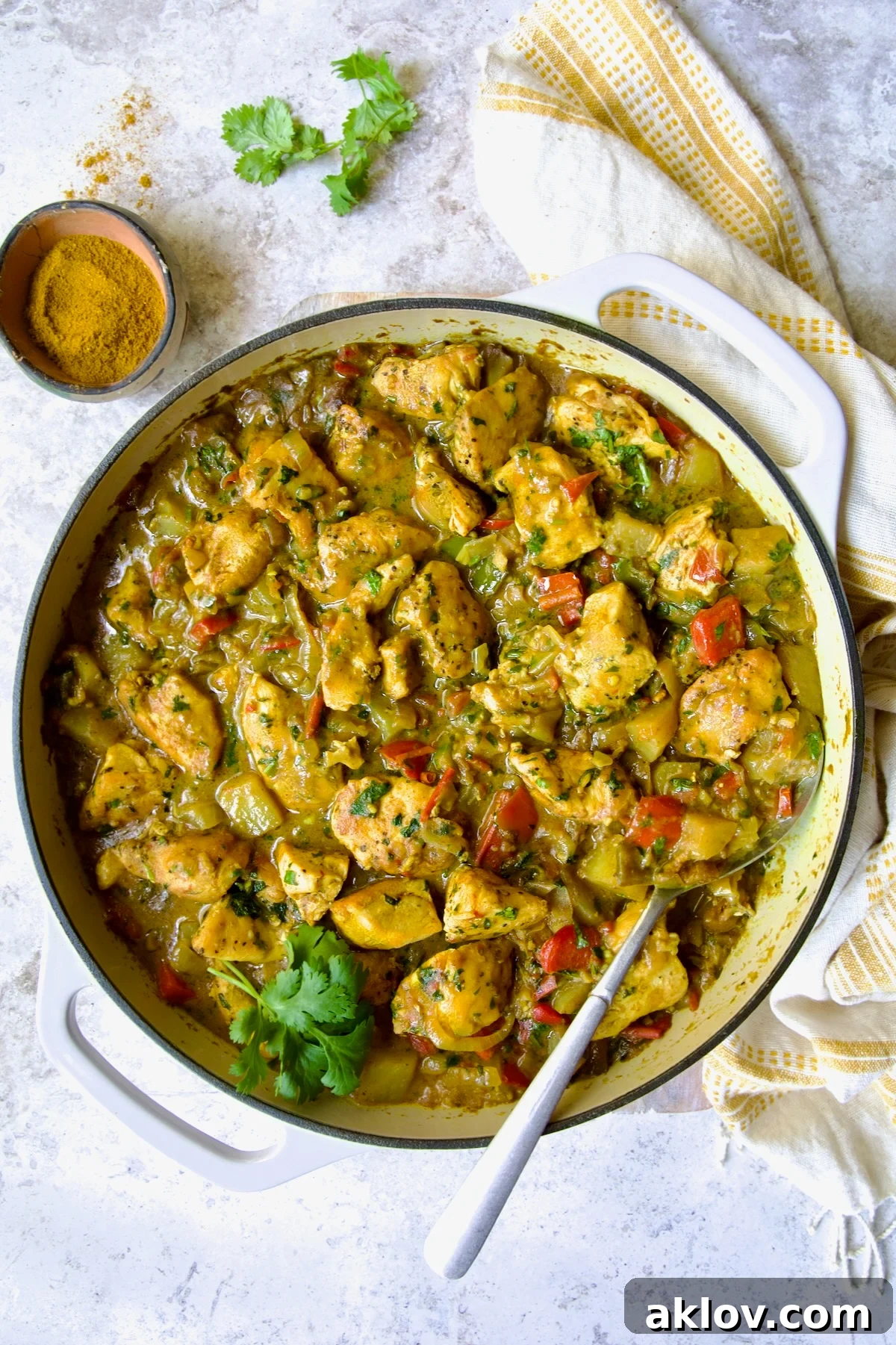
Chicken and Potato Curry is a culinary masterpiece, celebrated for its rich, complex flavor profile that tantalizes the taste buds. What makes this dish truly remarkable is its accessibility; you can whip up this aromatic delight using ingredients likely already stocked in your pantry. This warm, inviting curry chicken recipe offers a deeply satisfying experience, delivering a hearty meal in approximately an hour. If you’re a connoisseur of chicken curry, be sure to explore our popular Curry Braised Chicken Thighs for another flavorful adventure!
“This recipe was amazing. Love how it all came together. My favourite chicken curry dish by far!”
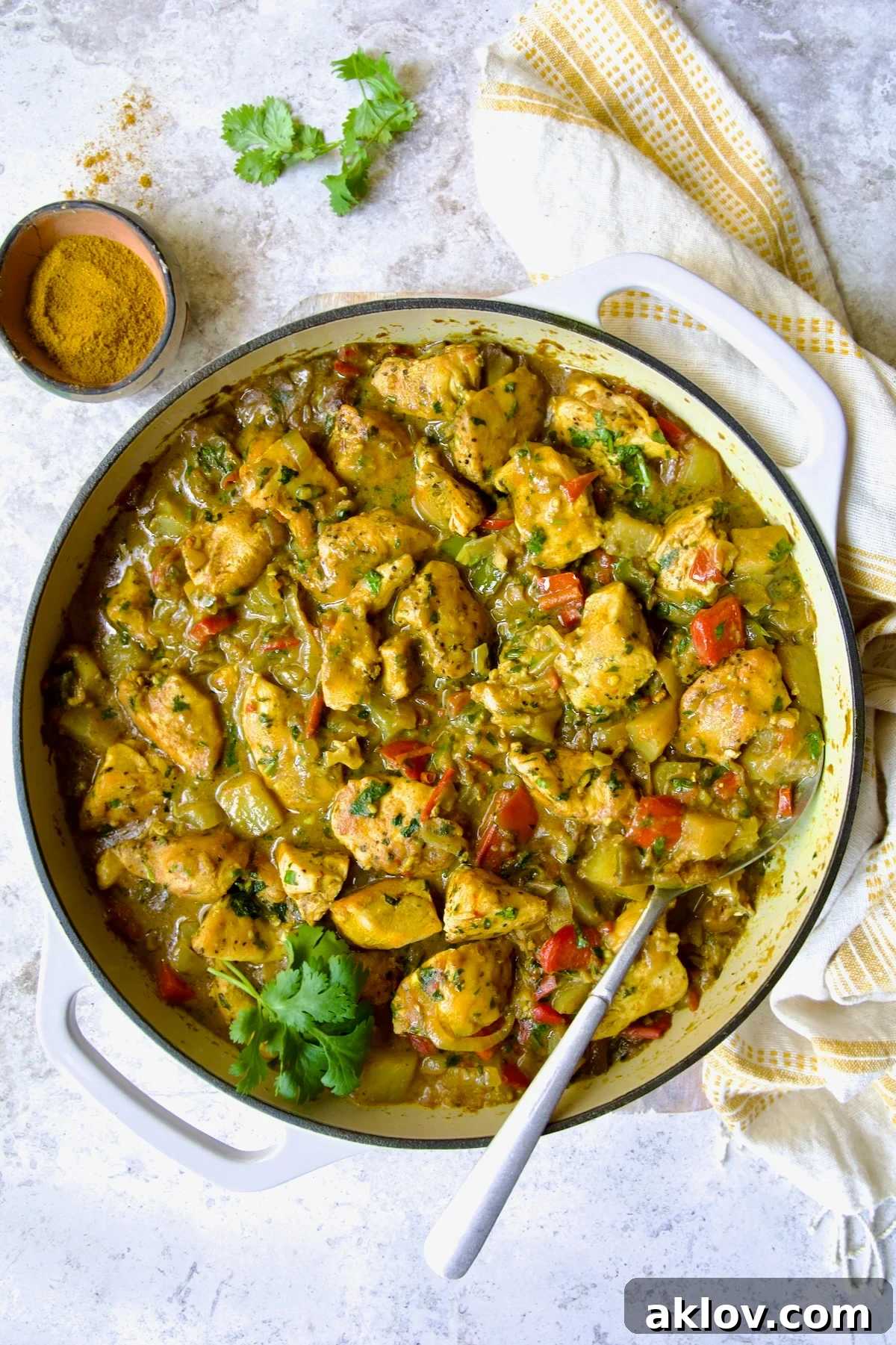
Why This Easy Chicken and Potato Curry Recipe is a Must-Try!
Embark on a culinary journey with this Indian-inspired Chicken and Potato Curry, where a symphony of spices creates an unforgettable flavor experience. The carefully selected blend, including fragrant Madras curry powder, earthy coriander, vibrant turmeric, and a kick of cayenne, culminates in a savory and subtly spicy profile that will impress even the most discerning palates. This dish isn’t just food; it’s a comforting hug in a bowl, perfect for any occasion.
Our spicy chicken curry recipe with coconut milk streamlines the cooking process by utilizing a high-quality Madras curry powder, making it wonderfully convenient without compromising on depth of flavor. To further enhance this base, we introduce additional ground coriander, imparting a bright, citrusy note that complements the richness of the curry. A generous touch of ground turmeric not only contributes to the curry’s beautiful golden hue but also boosts its earthy undertones and offers renowned health benefits. While turmeric is often present in Madras curry powder blends, a little extra ensures its distinctive flavor and healthful properties truly shine. (Source: Forks Over Knives).
This delightful Chicken and Potato Curry recipe stands out for several compelling reasons:
- Effortlessly Easy: Despite its gourmet taste, this recipe is surprisingly simple to prepare. The ingredient list might appear extensive at first glance, but chances are, many of the essential spices and staples are already comfortably residing in your kitchen pantry or spice cabinet, ready for action.
- Remarkably Versatile: This recipe serves as an excellent canvas for your culinary creativity. Feel free to customize it by adding your favorite vegetables, such as fresh spinach, sweet peas, or sliced carrots, to boost nutrition and texture. For those seeking a lower-carb option, swapping potatoes for cauliflower florets yields an equally delicious and wholesome result without sacrificing the hearty feel.
- Authentically Delicious Flavor: Every spoonful promises an explosion of authentic Indian-inspired flavors. The harmonious blend of spices, tender chicken, and soft potatoes in a creamy coconut milk base creates a truly satisfying and deeply delicious meal that tastes like it came from a high-end restaurant, all from the comfort of your home kitchen.
How to Craft Your Delicious Chicken and Potato Curry: A Step-by-Step Guide
Creating this flavorful chicken and potato curry is a straightforward process, designed for home cooks of all skill levels. By following these clear instructions, you’ll soon be enjoying a warming and satisfying meal. Pay close attention to each stage to ensure every ingredient contributes optimally to the final, rich taste.
Essential Recipe Ingredients:
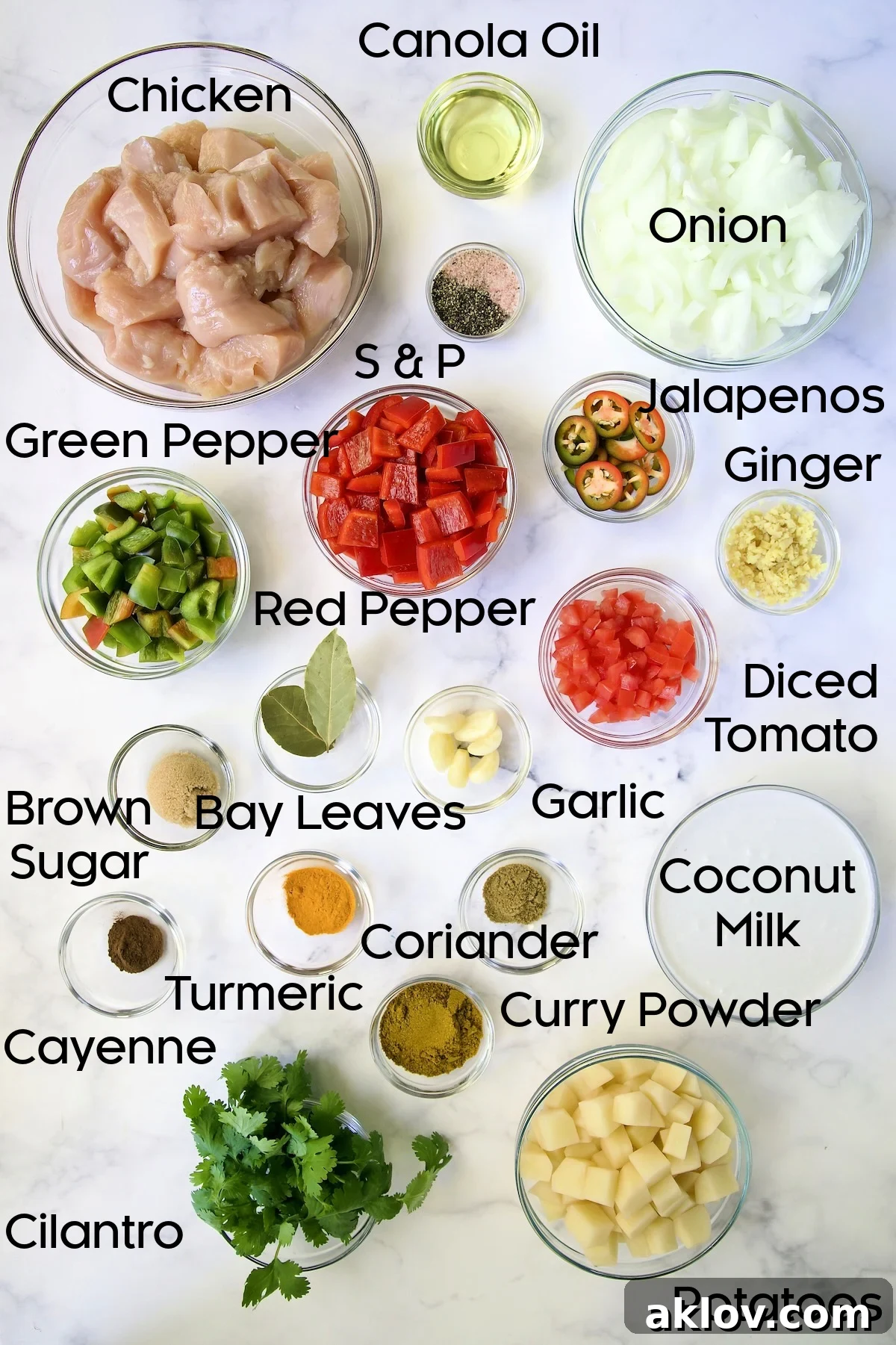
To embark on this spicy curry chicken and potatoes journey, you’ll need a collection of fresh and pantry staples. Each ingredient plays a crucial role in building the robust and aromatic flavor profile of this dish. For precise measurements, please refer to the detailed recipe card at the end of this article.
Ingredient Deep Dive: Notes and Smart Substitutions:
Understanding your ingredients is key to successful cooking. Here are some detailed insights and flexible substitution options to help you tailor this chicken potato curry to your preference and what you have on hand:
- Chicken Selection: This vibrant curry chicken recipe traditionally calls for boneless, skinless chicken breasts, which offer a lean and tender texture. However, for a more economical and often juicier alternative, boneless, skinless chicken thighs are an excellent choice. They tend to hold up beautifully during simmering and infuse the curry with even more flavor. Aim for approximately 2 pounds, cut into 1 to 1½-inch pieces for even cooking.
- Jalapeno Peppers for Heat Control: The jalapeno peppers add a wonderful layer of heat and freshness. If you prefer a milder curry, it’s highly recommended to remove the seeds and the white membranes before slicing, as these are where most of the capsaicin (the heat compound) resides. For those sensitive to spicy ingredients, wearing disposable gloves while handling hot chilies is a wise precaution to prevent skin irritation.
- Fresh Ginger Pointers: When shopping for fresh ginger, seek out roots that are firm to the touch and feel surprisingly heavy for their size. This indicates a well-hydrated rhizome, brimming with potent flavor. Fresh ginger is typically sold by weight, so feel free to break off only what you need. A robust ginger flavor is crucial for an authentic-tasting chicken curry.
- The Sweet Tang of Diced Tomato: A fresh, diced plum tomato contributes a delightful sweet and tangy counterpoint to the rich spices in this chicken curry recipe. Its acidity helps to brighten the overall flavor profile. If ripe, fresh tomatoes are unavailable, a tablespoon of concentrated tomato paste can serve as a suitable substitute, offering a similar depth of flavor.
- Demystifying Curry Powder: It’s interesting to note that “curry powder” as a blended spice mix did not originate in India but was developed by the British during their colonial rule to recreate the flavors of Indian cuisine they encountered. While crafting your own spice blend is a rewarding experience, for convenience and consistent results, we recommend using a high-quality purchased Madras curry powder. Look for blends from reputable Indian grocery stores or specialty spice shops for the best flavor.
- Creamy Coconut Milk Choice: For the most luxurious texture and profound flavor, we highly recommend using full-fat unsweetened coconut milk in this chicken curry with coconut milk. Its creamy consistency enriches the sauce beautifully. If you’re aiming to reduce the fat content, light coconut milk can be used, though it will result in a slightly thinner sauce. Alternatively, for a dairy-rich option, heavy cream can be substituted, offering a different but equally delicious creamy base.
- Potatoes – Texture and Variety: In this curry chicken recipe, Russet potatoes were initially used. While they are readily available and absorb flavors well, their starchy nature means they can sometimes break down if overcooked. For a curry that holds its shape better, consider using Yukon Gold or red potatoes, which are considered “waxy” and maintain their integrity after prolonged cooking. For an added layer of sweetness and a boost of nutrients, sweet potatoes make a fantastic and healthier substitute, pairing exceptionally well with the coconut milk base.
Detailed Step-By-Step Cooking Instructions:
Follow these meticulously outlined steps to ensure your Chicken and Potato Curry comes out perfectly every time. Precision and attention to detail at each stage will guarantee a dish bursting with flavor.
- Step 1: Preparation is Key. Begin by gathering and meticulously prepping all your ingredients. This mise en place ensures a smooth and efficient cooking process, allowing you to focus on building flavors without interruption.
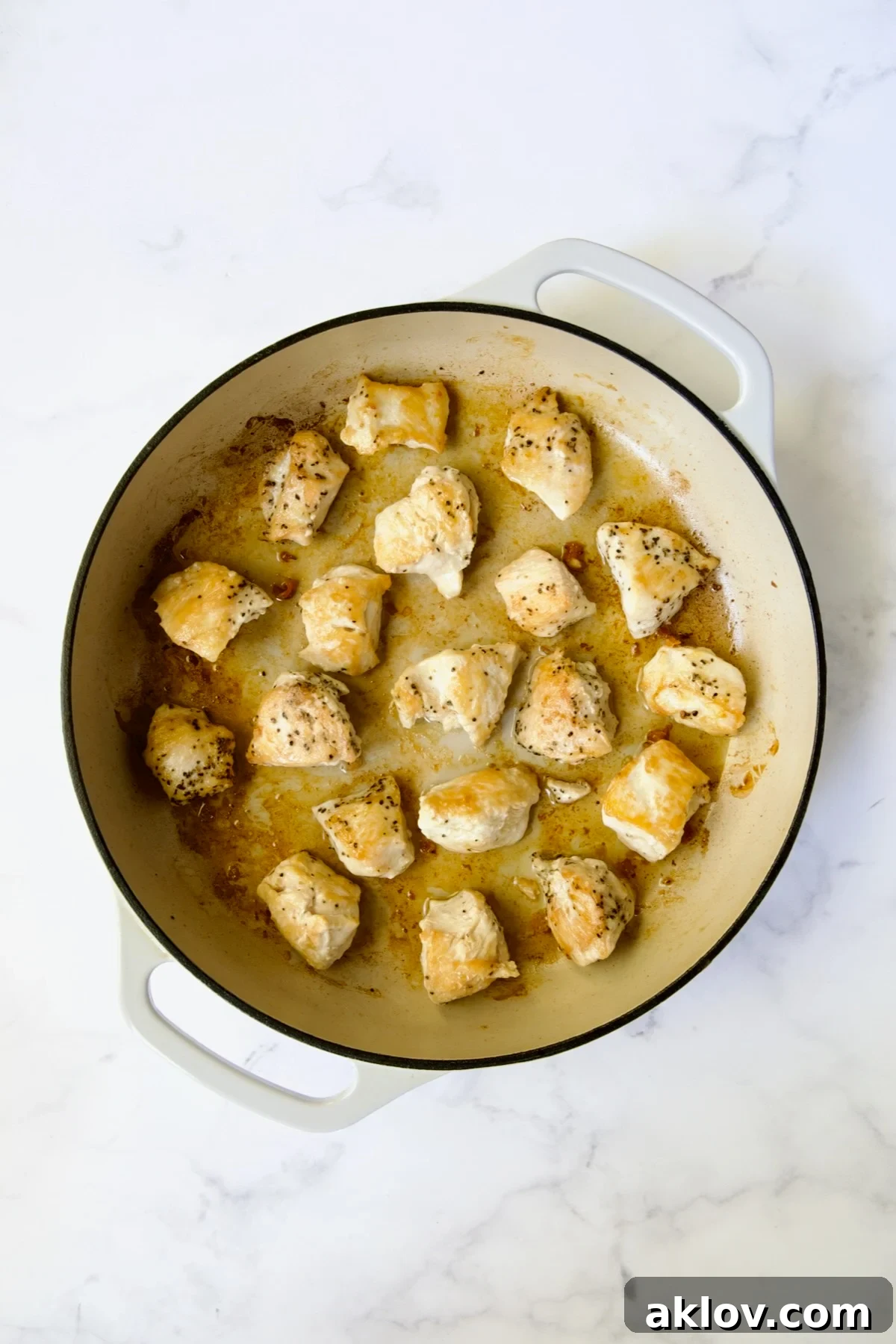
- Step 2: Brown the Chicken. Heat 1 tablespoon of canola or vegetable oil in a large, heavy-bottomed skillet (an enameled cast iron skillet works beautifully) over medium-high heat. Season your cut chicken pieces generously with salt and freshly ground black pepper. Working in small batches to avoid overcrowding the pan, brown the chicken on all sides until it develops a beautiful golden crust. This browning step is crucial for developing deep flavor. Once browned, transfer the chicken to a clean plate. Remember, the chicken will not be cooked through at this stage, it will finish cooking in the curry sauce.
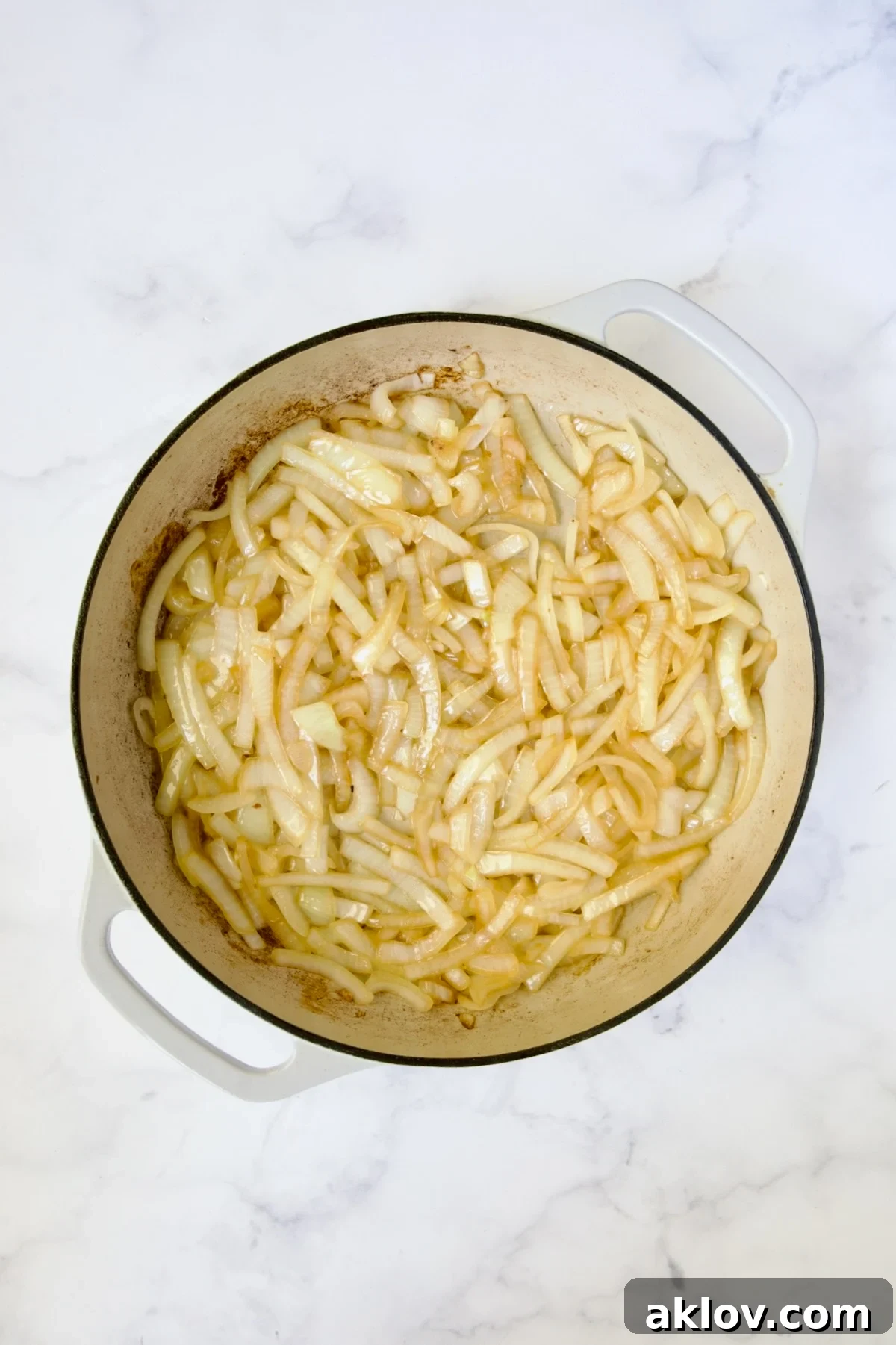
- Step 3: Sauté Aromatics. Add the remaining oil to the same skillet. Reduce the heat to medium-low. Add the sliced onions and cook for 4 to 5 minutes, stirring occasionally, until they begin to soften and become translucent. This gentle cooking allows the onions to release their natural sweetness.
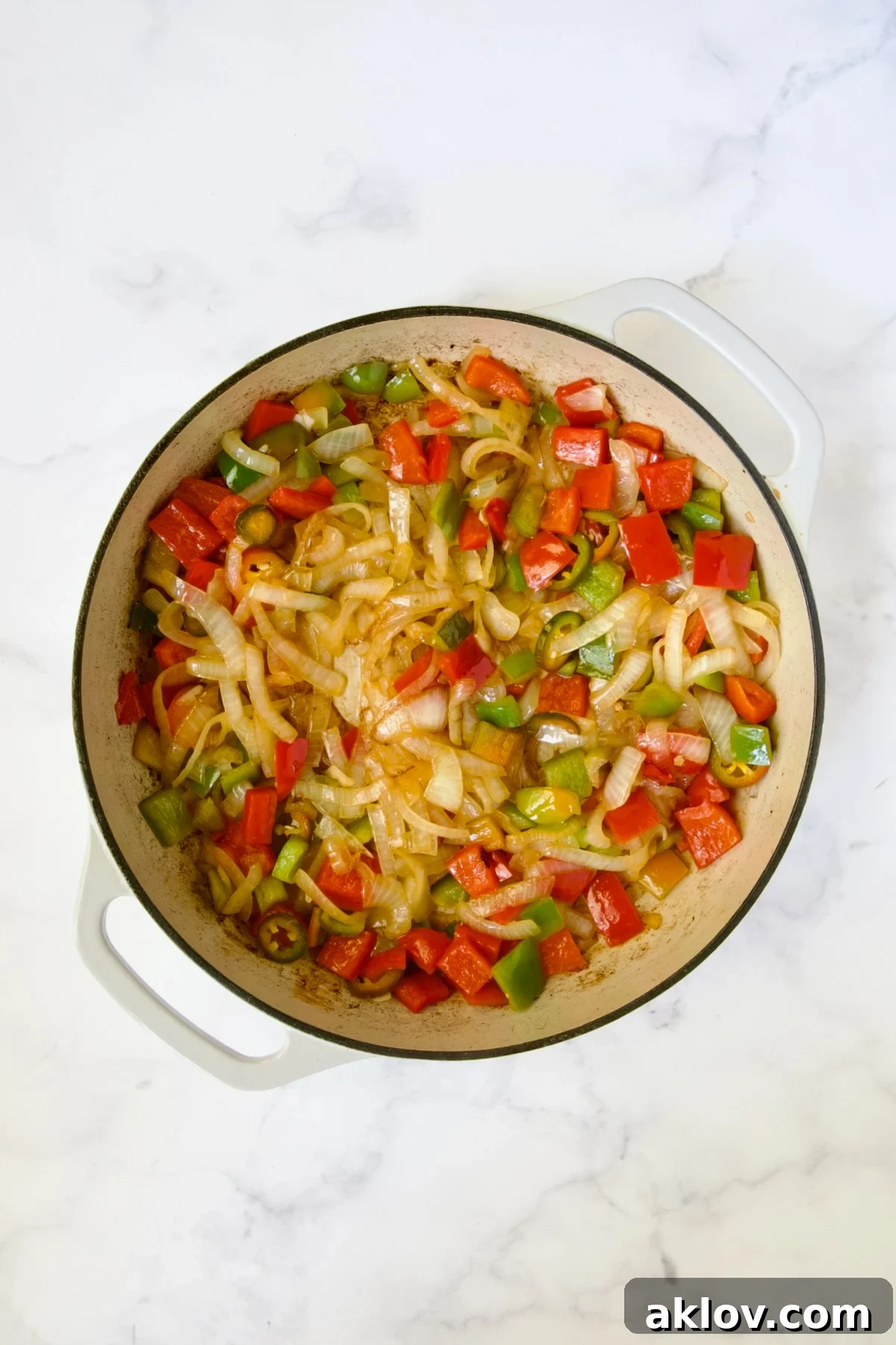
- Step 4: Introduce Bell Peppers and Jalapeno. Next, add the bell peppers (green and red) and the thinly sliced jalapeno peppers to the skillet. Continue to cook for another 2 to 3 minutes, or until these vegetables also begin to soften slightly, but still retain a hint of crispness.
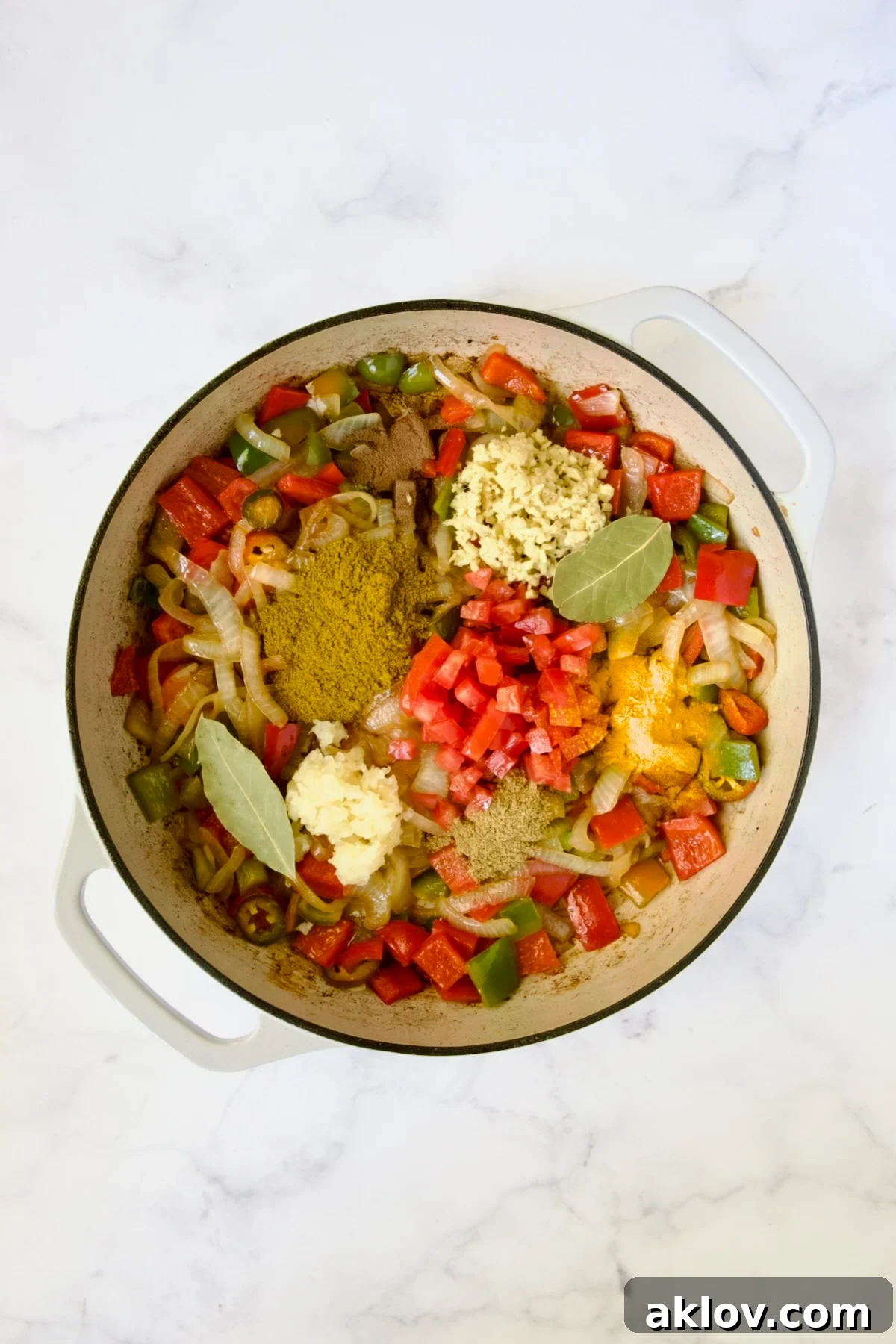
- Step 5: Bloom the Spices. Add the diced tomato, minced fresh ginger, minced garlic, curry powder, ground coriander, ground turmeric, ground cayenne, and bay leaves to the vegetable mixture. Stir vigorously to combine and cook briefly for only 10 to 15 seconds. This short period of direct heat, often called “blooming” the spices, dramatically enhances their aroma and flavor, making them more vibrant and potent. Be careful not to burn them.
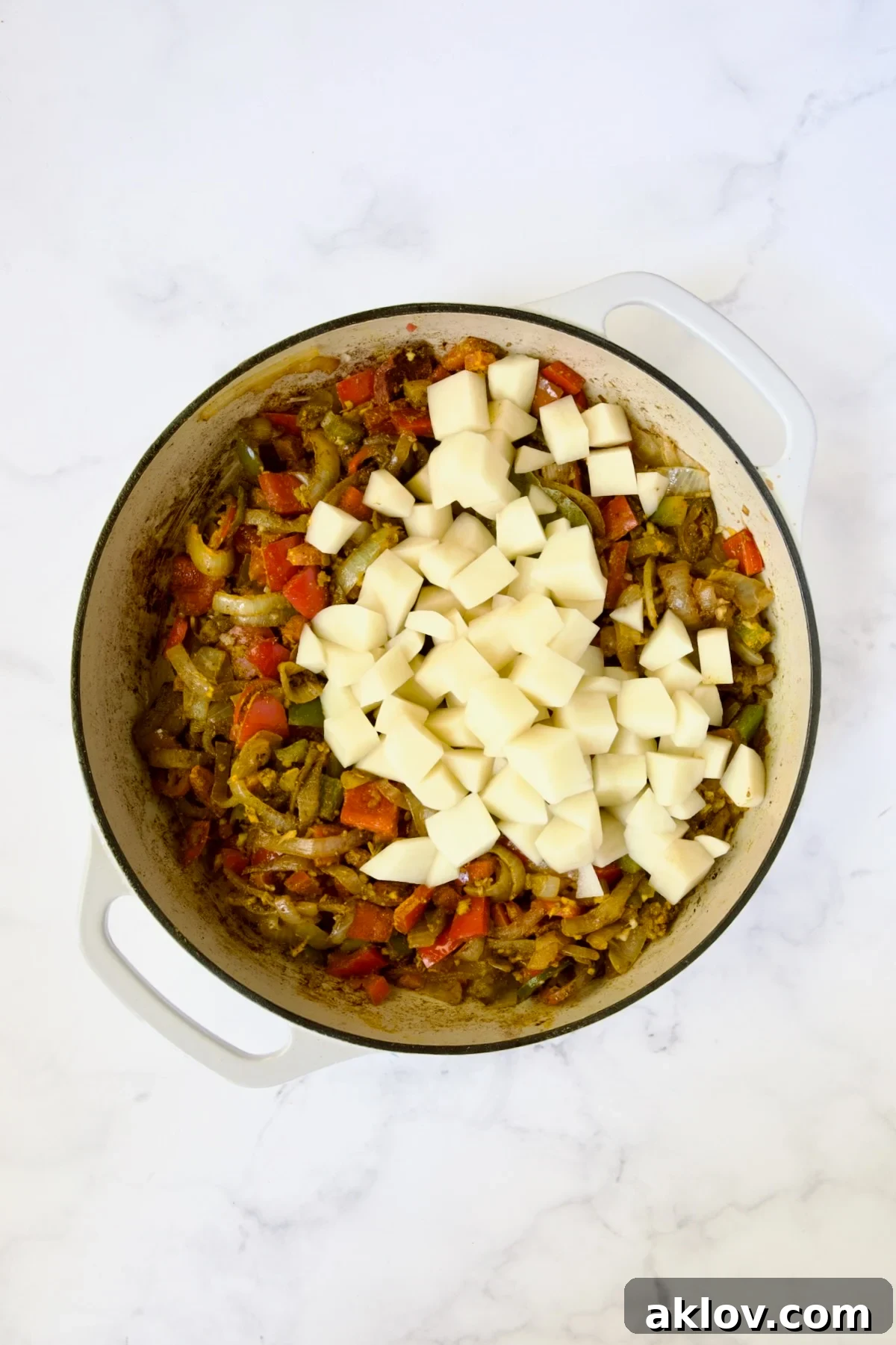
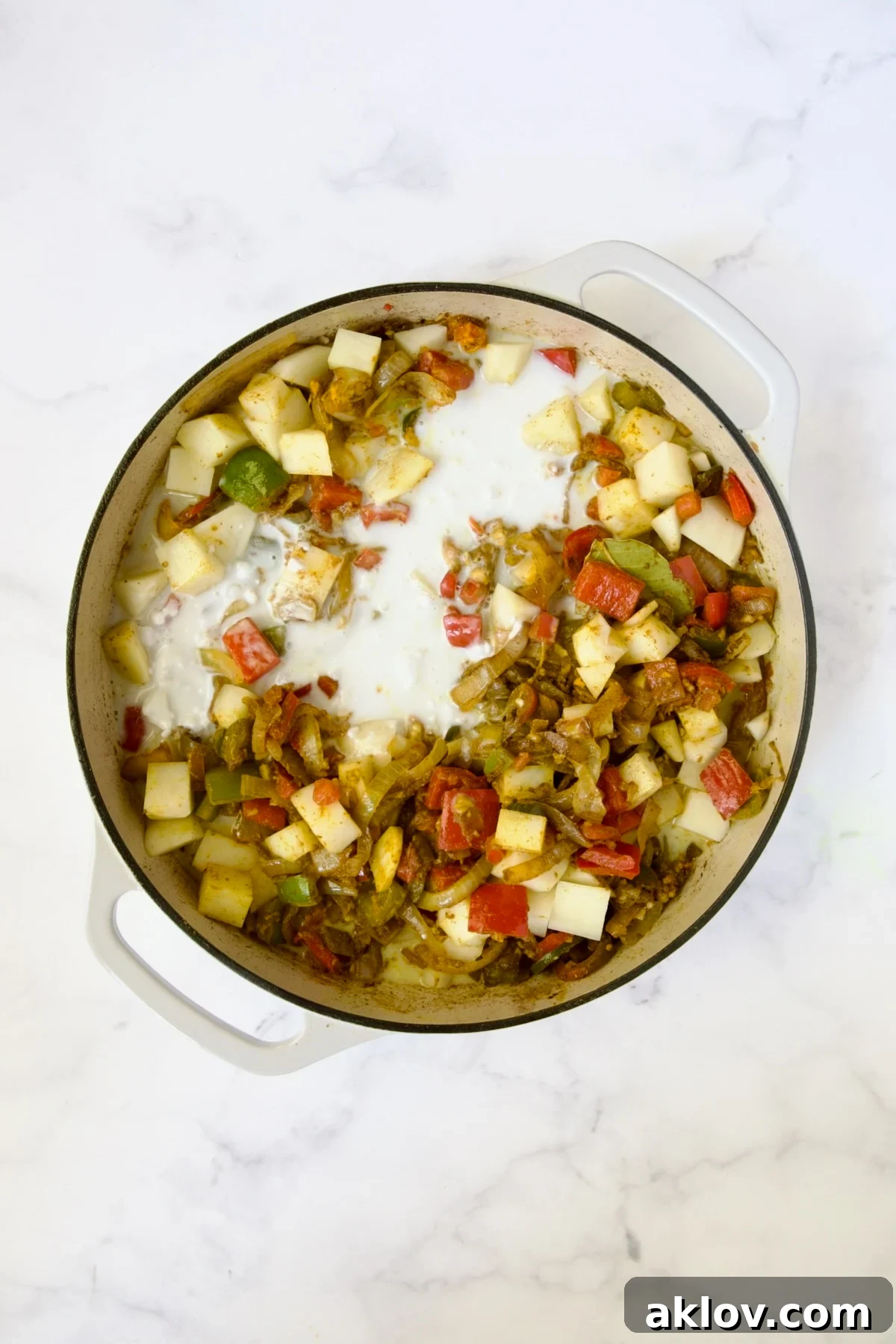
- Step 6: Integrate Potatoes and Liquid. Add the cubed potatoes to the skillet and stir well, ensuring they are thoroughly coated with the fragrant spice mixture. Pour in the full can of coconut milk, followed by ½ cup of water used to rinse out the can – this ensures no precious coconut milk is wasted and adds just the right amount of liquid for simmering.
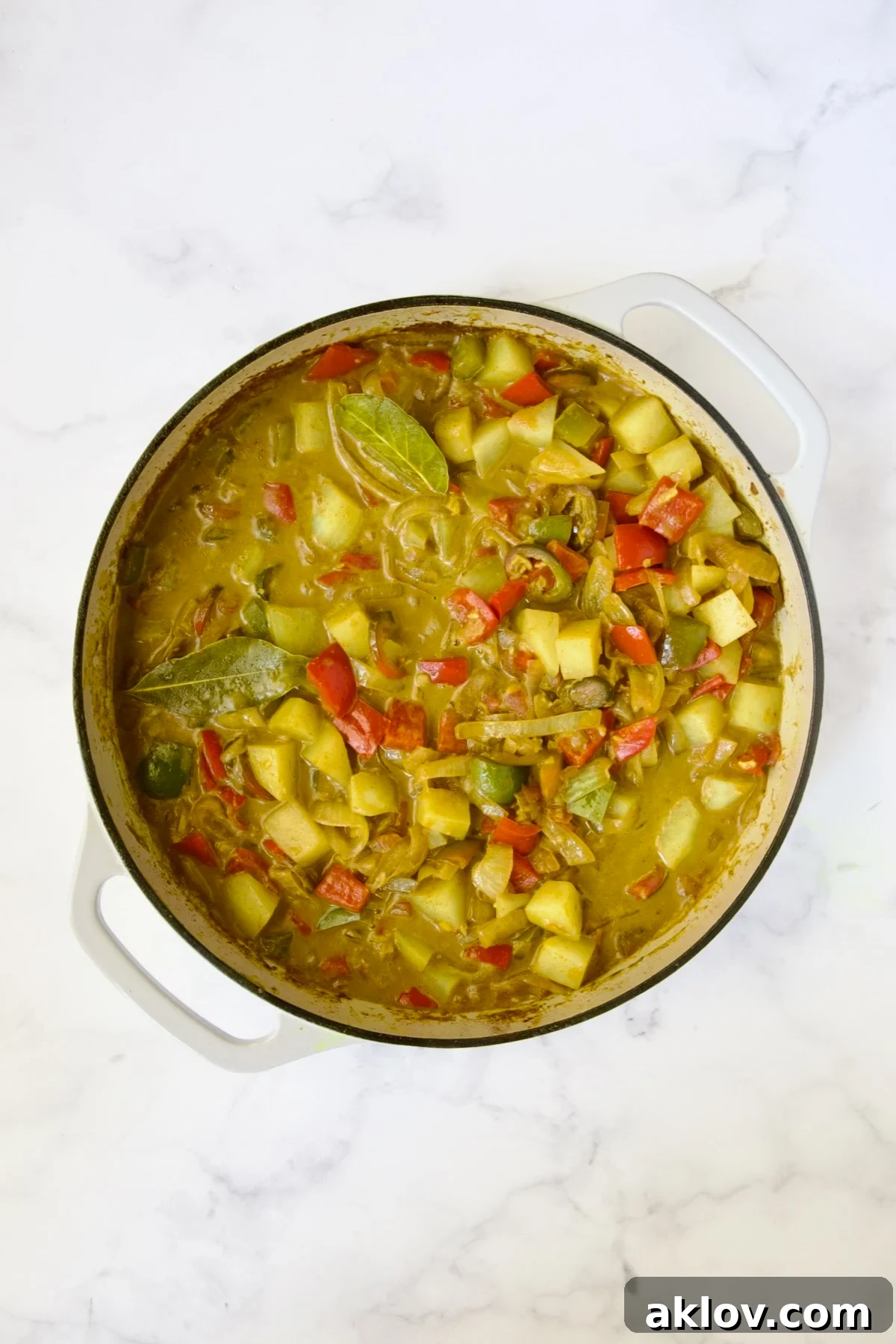
- Step 7: Simmer to Perfection. Bring the mixture to a gentle simmer. Once simmering, cover the skillet with a lid and allow it to cook for approximately 10 minutes. At this point, the potatoes should be tender enough to be pierced with a paring knife, but still offer a slight resistance, indicating they are not yet fully soft.
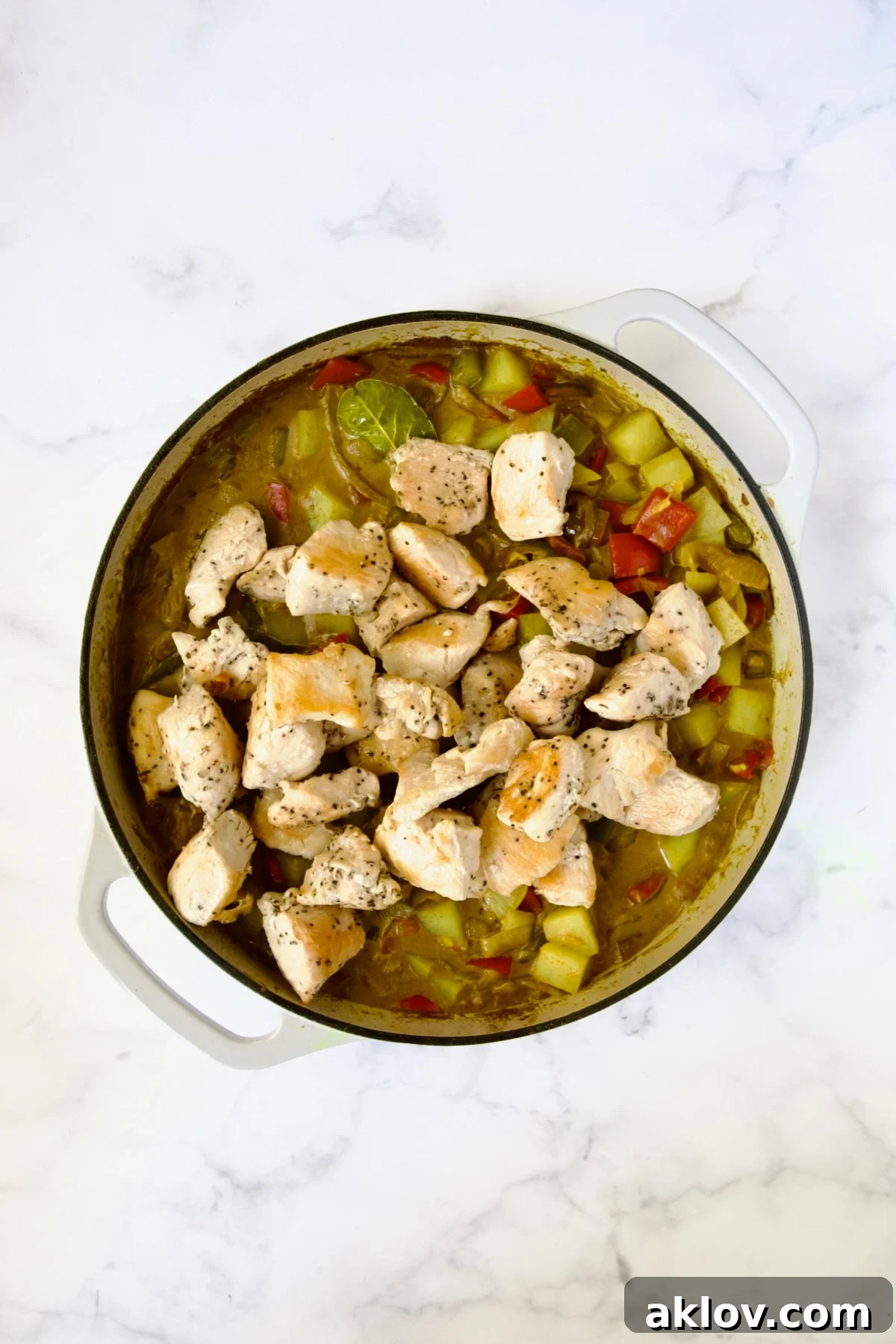
- Step 8: Final Cooking. Carefully return the browned chicken pieces to the skillet, nestling them into the simmering curry. Cover once more and continue to cook for an additional 5 to 10 minutes. The chicken should be thoroughly cooked to an internal temperature of 165 degrees Fahrenheit in the thickest part of each piece, and the potatoes should be perfectly tender. Use a meat thermometer to confirm the chicken’s doneness for food safety.
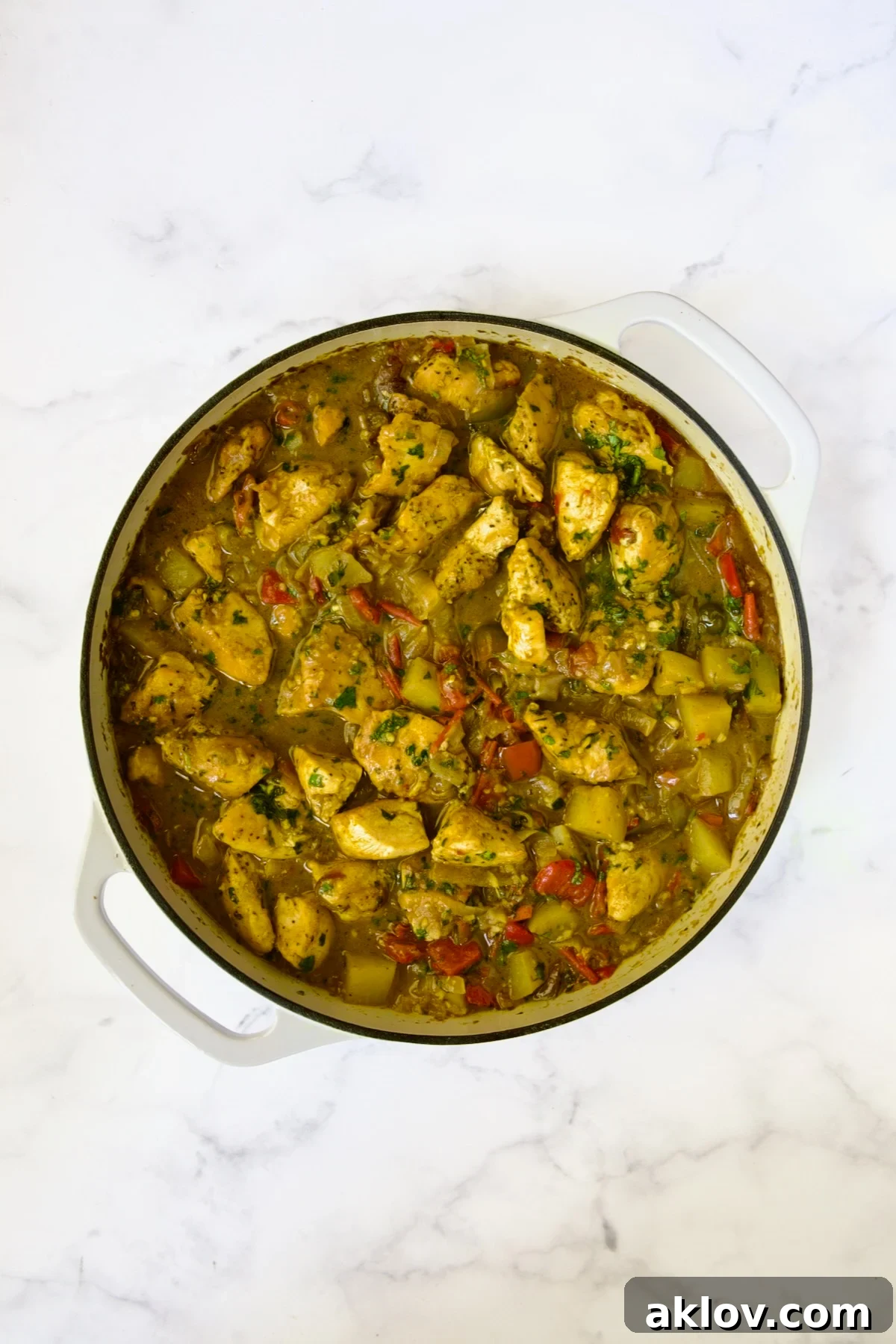
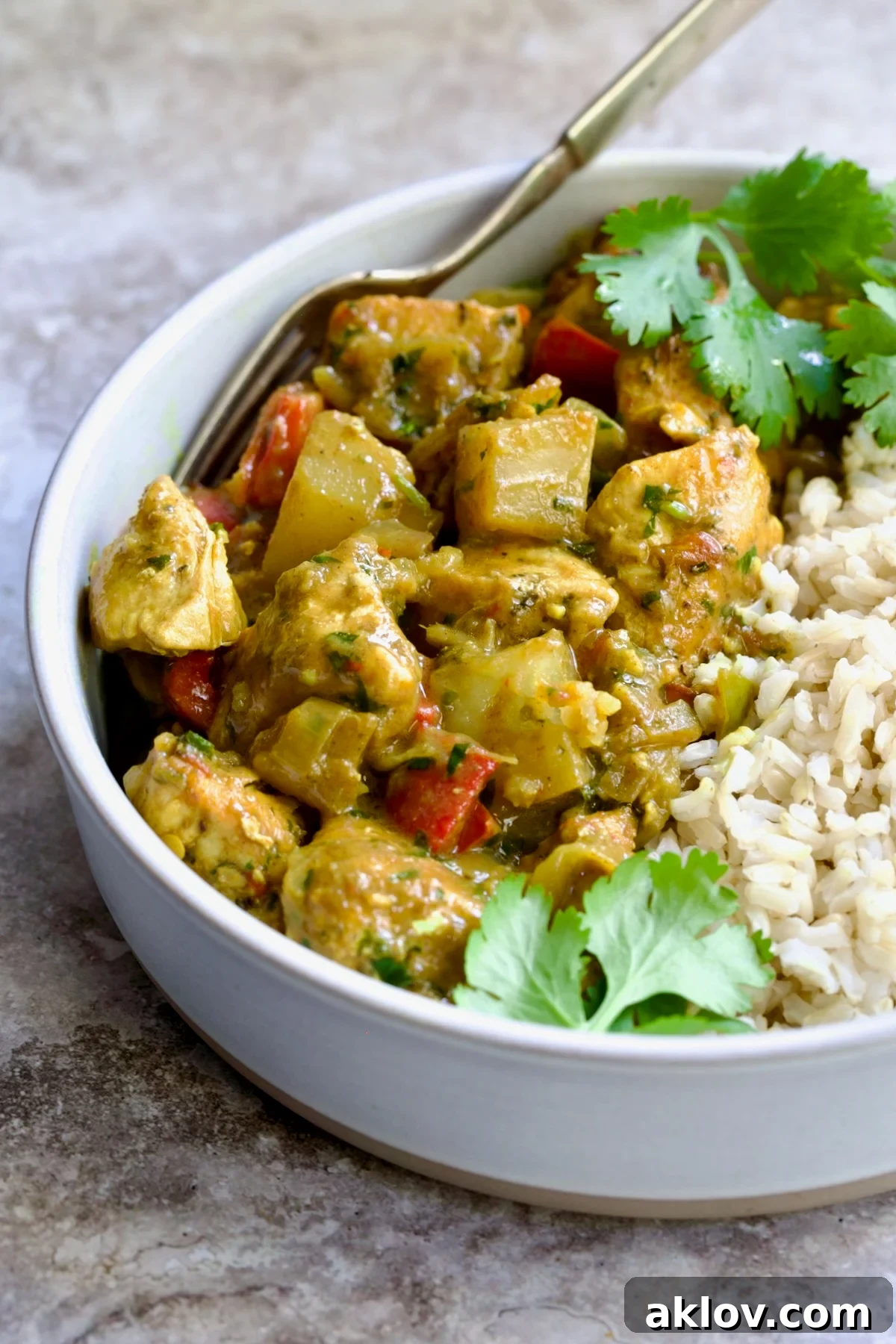
- Step 9: Final Touches and Serve. Stir in the light brown sugar, which helps to balance the flavors and add a subtle sweetness, and a generous ¼ cup of fresh chopped cilantro. The cilantro adds a burst of freshness and a beautiful aromatic finish. Serve your magnificent Chicken and Potato Curry immediately, perhaps with fluffy rice or warm naan bread.
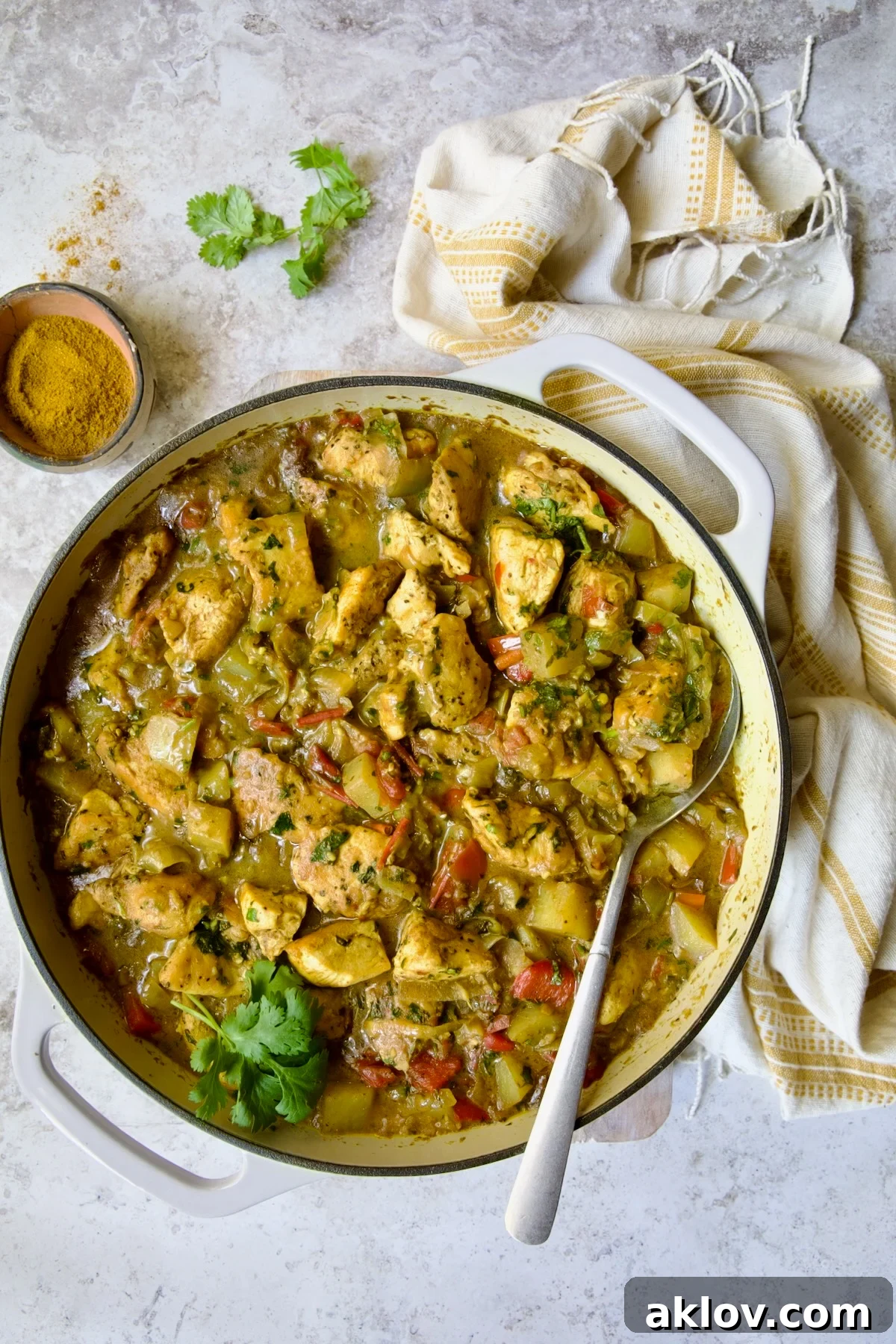
- Experience the robust, spicy, and deeply flavorful chicken and potato curry, a dish truly brimming with culinary excellence!
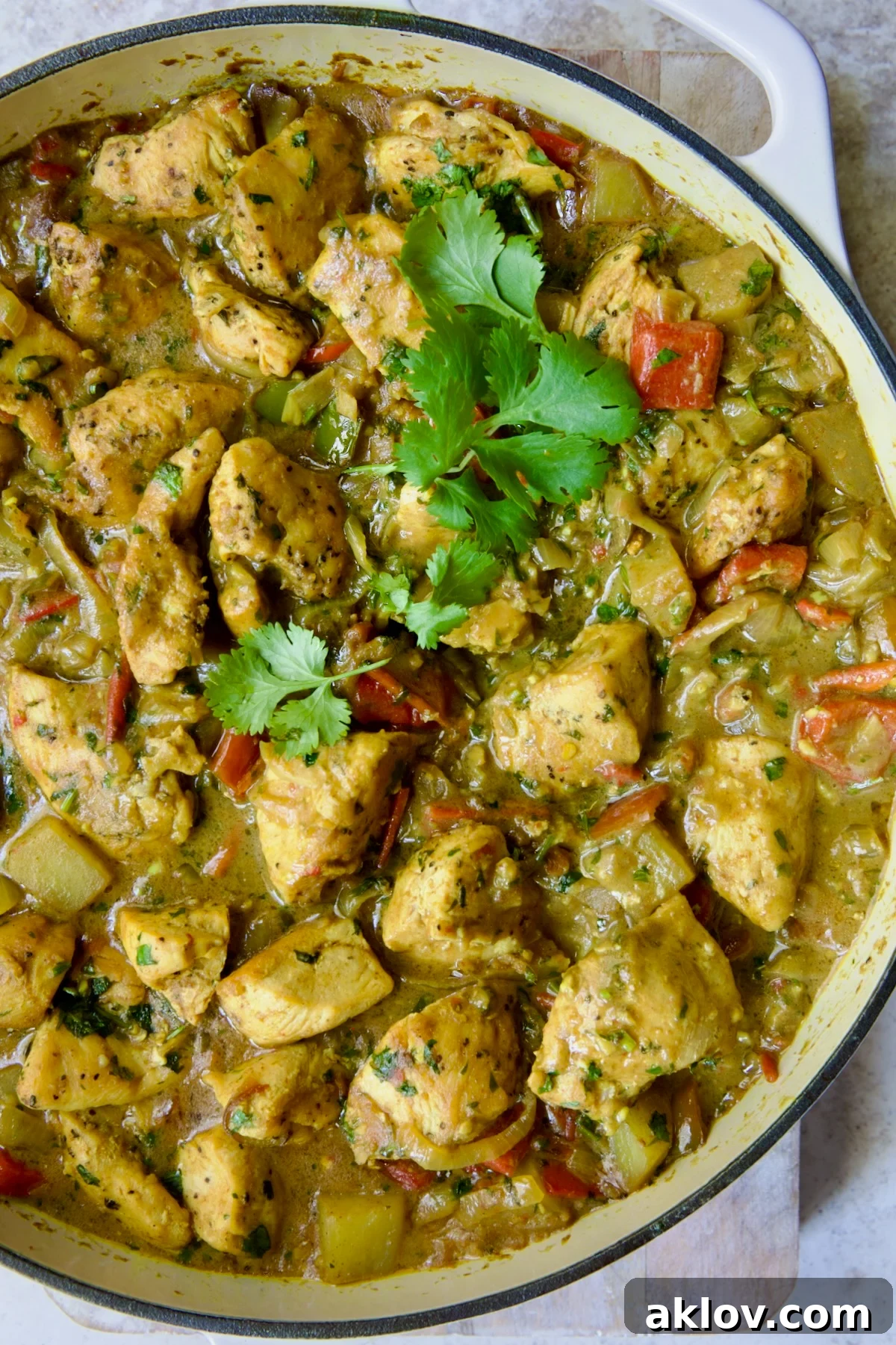
Chef’s Secrets: Expert Tips and Tricks for Perfect Curry
Elevate your Chicken and Potato Curry from great to extraordinary with these invaluable tips and tricks straight from a chef’s kitchen. These insights will help you master not just this recipe, but many other culinary endeavors.
- The Art of Browning: When searing chicken, or any protein for that matter, a common mistake is overcrowding the pan. Giving each piece adequate space is paramount. Placing too much protein into the skillet causes the temperature to drop drastically, leading the chicken to steam rather than develop that coveted golden-brown crust. Work in batches to ensure maximum flavor development and a beautiful exterior.
- Ginger Longevity: Fresh ginger is a flavor powerhouse, and you’ll want to keep it on hand. It can stay fresh in your refrigerator for several weeks if stored properly in an airtight bag or container. For longer-term storage, peel, finely chop, or grate the ginger, and then freeze it in small, portion-sized amounts. Snack-size zipper-top bags or ice cube trays are perfect for this purpose, allowing you to grab just what you need without thawing a large block.
- Blooming Your Spices: This is a crucial step for unlocking maximum flavor. In all my recipes, especially a richly spiced chicken curry recipe, I advocate for adding dried herbs and ground spices directly to the hot skillet or pot before introducing any liquid ingredients. The direct heat gently toasts the spices, awakening their essential oils and intensifying their aroma and taste. This brief “blooming” period, typically 10-15 seconds, transforms the spices, resulting in a significantly more flavorful dish. Fresh herbs, on the other hand, should generally be added toward the end of the cooking process to preserve their delicate flavors and vibrant color.
- Maximize Every Drop: When making a creamy chicken curry with coconut milk, don’t let any of that rich goodness go to waste! After pouring out the coconut milk from the can, add a small amount of water to the empty can, swirl it around, and then add this “rinse” water to your curry. This simple trick ensures you extract every last bit of flavor and richness from the can.
- Adjusting Spice Levels: The beauty of homemade curry is the ability to customize its heat. If you prefer a milder curry, reduce the amount of cayenne pepper or skip it entirely. For a spicier kick, feel free to add a pinch more cayenne or even a dash of red chili flakes. Always taste and adjust as you go!
- The Perfect Potato Texture: While Russet potatoes are fine, if you desire a curry with potatoes that hold their shape beautifully even after simmering, opt for waxy varieties like Yukon Gold or red potatoes. These have a lower starch content and are less likely to break down, giving your curry a more appealing texture.
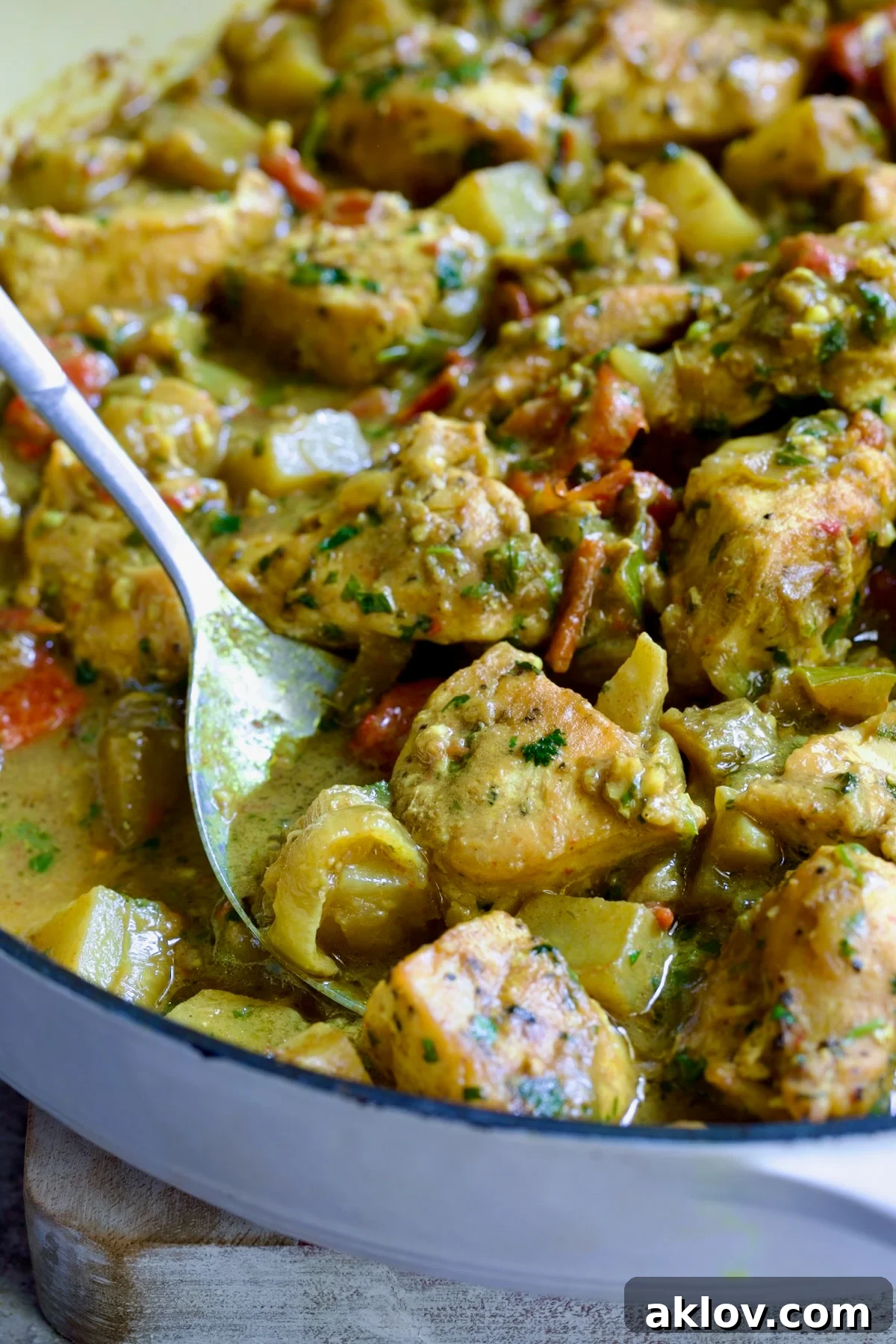
Recipe Frequently Asked Questions (FAQs):
Curry powder is a complex blend, and its composition can vary significantly between regions and brands. However, most common curry powder blends typically include foundational spices such as ground turmeric, coriander, cumin, fenugreek, and black pepper. Many also incorporate cinnamon, mustard seed, and chili powder to varying degrees, allowing for different heat levels. Some specialized blends might also feature ginger, cloves, bay leaves, and fennel for added aromatic depth. The precise amount of chili powder used is often how the heat level of a curry powder is adjusted, ranging from mild to extra hot.
Both curry powder and garam masala are popular spice blends essential to Indian-inspired cooking, used to infuse dishes with vibrant, fragrant, and sometimes zesty flavors. The primary distinction lies in their spice compositions and typical usage. Garam masala, meaning “hot spice” in Hindi, is generally considered a “warming” blend, featuring spices like cinnamon, cardamom, cloves, black pepper, and cumin. It’s often added towards the end of cooking to preserve its delicate aromas. Curry powder, on the other hand, is usually a more earthy, robust, and often spicier blend, frequently containing turmeric, coriander, cumin, and chili powder, and is typically cooked earlier in the process to build a strong flavor base.
Yes, this Chicken and Potato Curry freezes exceptionally well, making it a perfect make-ahead meal. Allow the curry to cool completely before transferring it to airtight freezer-safe containers. It can be stored in the freezer for up to 2-3 months. When ready to enjoy, thaw overnight in the refrigerator and then reheat gently.
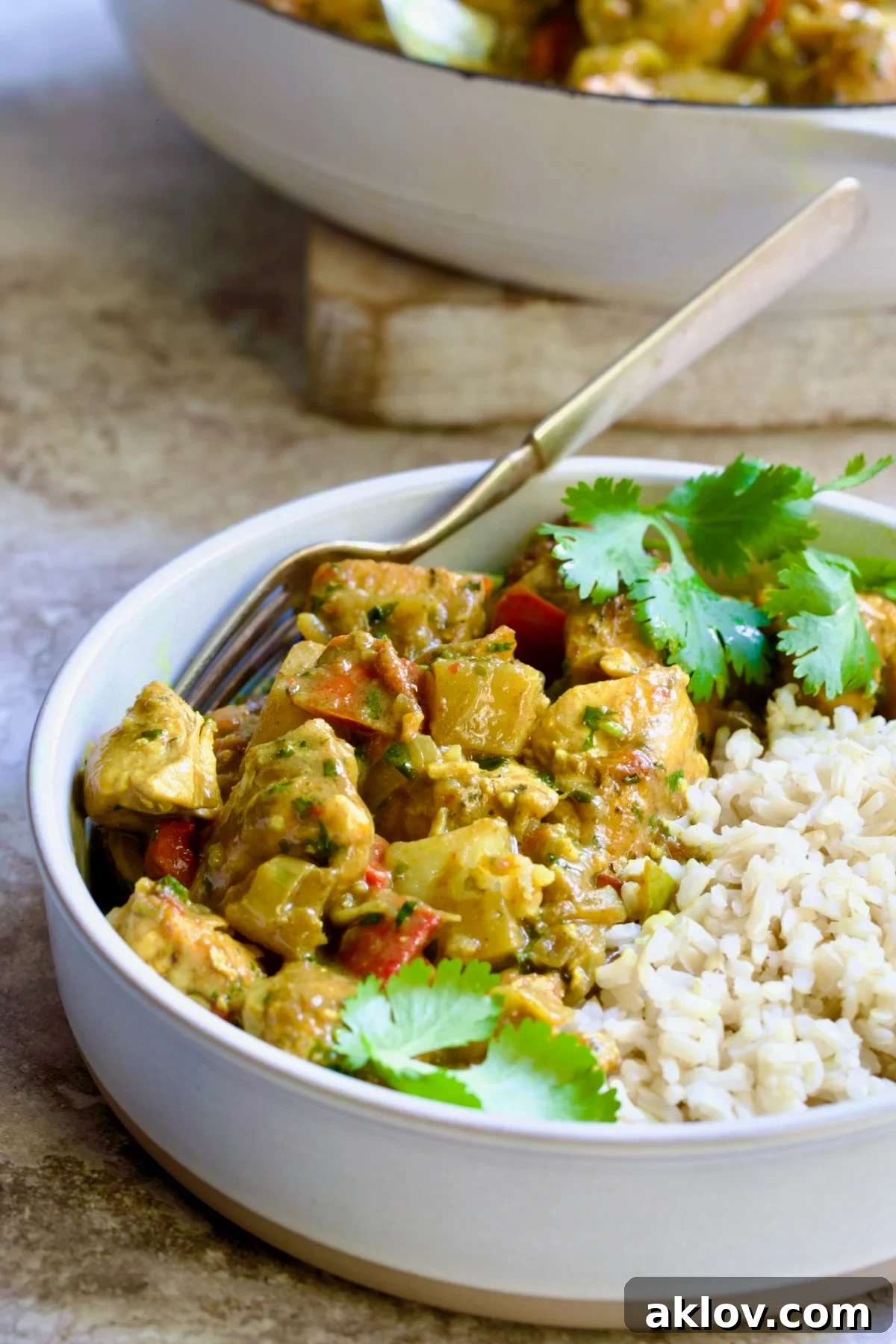
This rich and flavorful curry pairs wonderfully with a variety of sides. Classic choices include fluffy Basmati rice or fragrant jasmine rice to soak up the delicious sauce. For a healthier option, consider cauliflower rice. Warm naan bread or chapati are also excellent for scooping up every last bit of the curry. A simple cucumber raita or a fresh green salad can also provide a refreshing contrast.
Optimal Storage and Reheating Methods:
Proper storage and reheating ensure your homemade Chicken and Potato Curry remains delicious and safe to enjoy as leftovers. Follow these guidelines to maintain its quality.
- Storing Leftovers: Any remaining curry should be transferred to an airtight container and promptly stored in the refrigerator. It will keep well for 3-4 days. For longer storage, the curry can be frozen (see FAQ above).
- Reheating Instructions: To reheat, you have a couple of excellent options. For oven reheating, transfer the curry to an oven-safe dish, cover it, and bake in a preheated 350-degree Fahrenheit (175°C) oven until it is thoroughly heated through to an internal temperature of 165 degrees Fahrenheit (74°C). Alternatively, for stovetop reheating, place the curry in a saucepan, add a small amount of water or chicken broth to restore moisture, cover, and gently simmer over low heat until it reaches 165 degrees Fahrenheit. Stir occasionally to prevent sticking and ensure even heating.
Perfect Pairings: Serve this Chicken and Potato Curry with:
Enhance your dining experience by pairing your flavorful Chicken and Potato Curry with these complementary side dishes:
- Basmati Rice
- Cauliflower Rice
- Roasted Curry Cauliflower Wedges
- Cream of Asparagus Soup with Curry
- Warm naan bread or roti
Explore More Irresistible Curry Recipes You’ll Adore!
If you’ve fallen in love with the vibrant flavors of this Chicken and Potato Curry, you’re in for a treat! Discover more exciting curry-inspired dishes from our kitchen:
- Almond-Crusted Chicken Tenders with Lemon Curry Mayonnaise
- Vegan Indian Cauliflower and Chickpea Curry
- Indian Curry Beef Stew
- Cauliflower Red Lentil and Potato Curry
- Yogurt-Marinated Grilled Chicken Skewers Recipe
For a comprehensive collection of poultry-inspired dishes, explore all my chicken recipes at Chicken Recipes – From A Chef’s Kitchen.
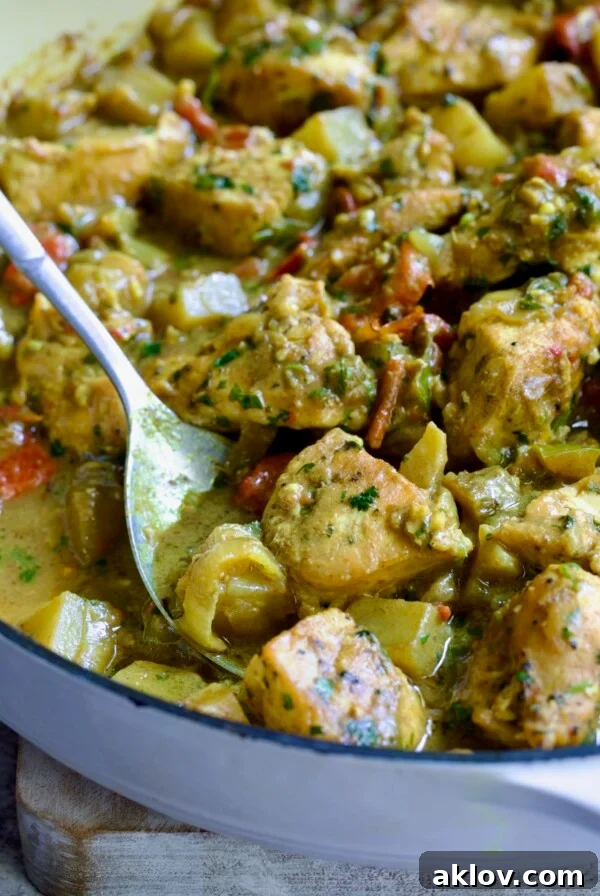
Chicken and Potato Curry
Equipment
-
Wusthof Chef Knife
-
Cutting Board
-
Enameled Cast Iron Skillet
Ingredients
- 2 tablespoons canola or vegetable oil, or as needed
- 4 medium boneless skinless chicken breast halves, or 8 boneless skinless chicken thighs (approximately 2 pounds), cut into 1 to 1 1/2-inch pieces
- Salt and freshly ground black pepper
- 1 large onion, halved and sliced
- 1 large green bell pepper, seeded, membranes removed and cut into chunks
- 1 large red bell pepper, seeded, membranes removed and cut into chunks
- 1 jalapeno pepper, seeded if desired, thinly sliced
- 1 large plum tomato, seeded and diced
- 2 tablespoons minced fresh ginger
- 6 cloves garlic, minced
- 2 tablespoons curry powder, hot or mild
- 1 teaspoon ground coriander
- 1/2 teaspoon ground turmeric
- 1/2 teaspoon ground cayenne, or to tolerance
- 2 bay leaves
- 1 pound potatoes, peeled if using Russets, cubed
- 1 can (13.5-ounce) coconut milk, plus 1/2 cup water to rinse out the can
- 1 tablespoon light brown sugar
- 1/4 cup chopped fresh cilantro
Instructions
-
Heat 1 tablespoon oil in a large skillet over medium-high heat. Season the chicken with salt and black pepper.
-
Working in batches, brown the chicken on all sides. Transfer to a plate. (The chicken will not be cooked all the way through.)
-
Add the remaining oil to the skillet. Add the onions, reduce heat to medium-low and cook for 4-5 minutes or until beginning to soften.
-
Add the bell peppers and jalapeno peppers. Cook for 2-3 minutes or until beginning to soften.
-
Add the diced tomato, ginger, garlic, curry powder, coriander, turmeric, cayenne and bay leaves. Stir and cook briefly, 10-15 seconds.
-
Add the potatoes and stir to coat with the spices.
-
Add the coconut milk and 1/2 cup water to rinse out the can.
-
Bring to a simmer, cover and cook for 10 minutes or until the potatoes can be pierced with a paring knife but still have some resistance.
-
Add the chicken back to the skillet. Cover and cook for 5-10 minutes or until the chicken is thoroughly cooked to 165 degrees in the center and the potatoes are tender.
-
Add the brown sugar and cilantro and serve.
Notes
- Use boneless skinless chicken thighs in place of chicken breast meat.
- Use light coconut milk if you want to cut down on fat.
- Heavy cream can be substituted for coconut milk.
TIPS:
- When browning chicken or any other protein, it’s important not to crowd it. Placing too much chicken into the skillet/pan causes it to steam rather than brown.
- I like to add dried herbs and spices to the skillet/pot/pan before any liquid ingredients because the direct heat starts to draw out the flavor and essential oils, resulting in a more flavorful dish.
Nutrition
Nutritional values are automatically calculated using unbranded products and are estimates only. Actual results may vary based on ingredients used and portion sizes. Adjust as needed for dietary restrictions, allergies, or health concerns.
 Like this? Leave a comment below!