
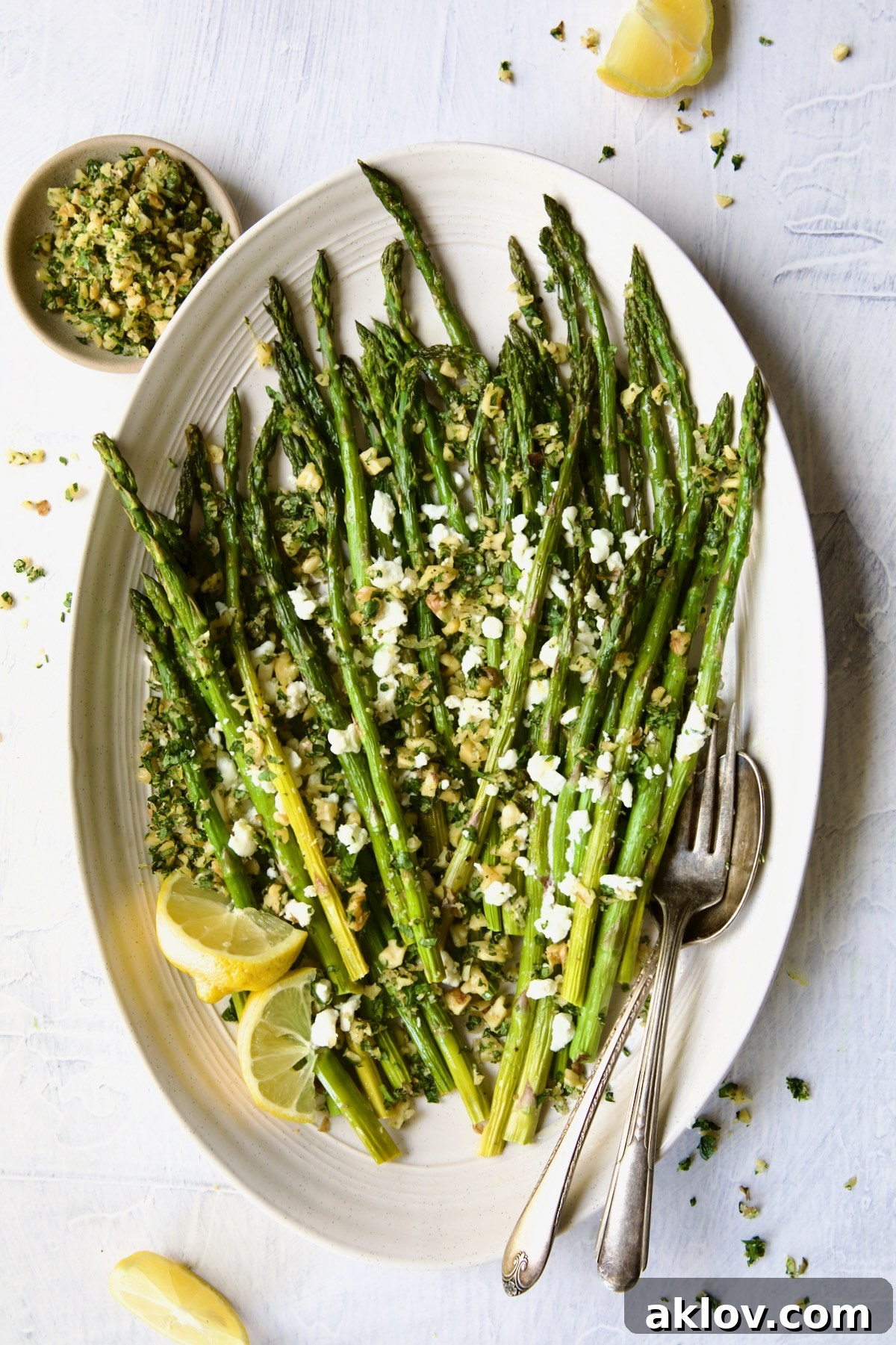
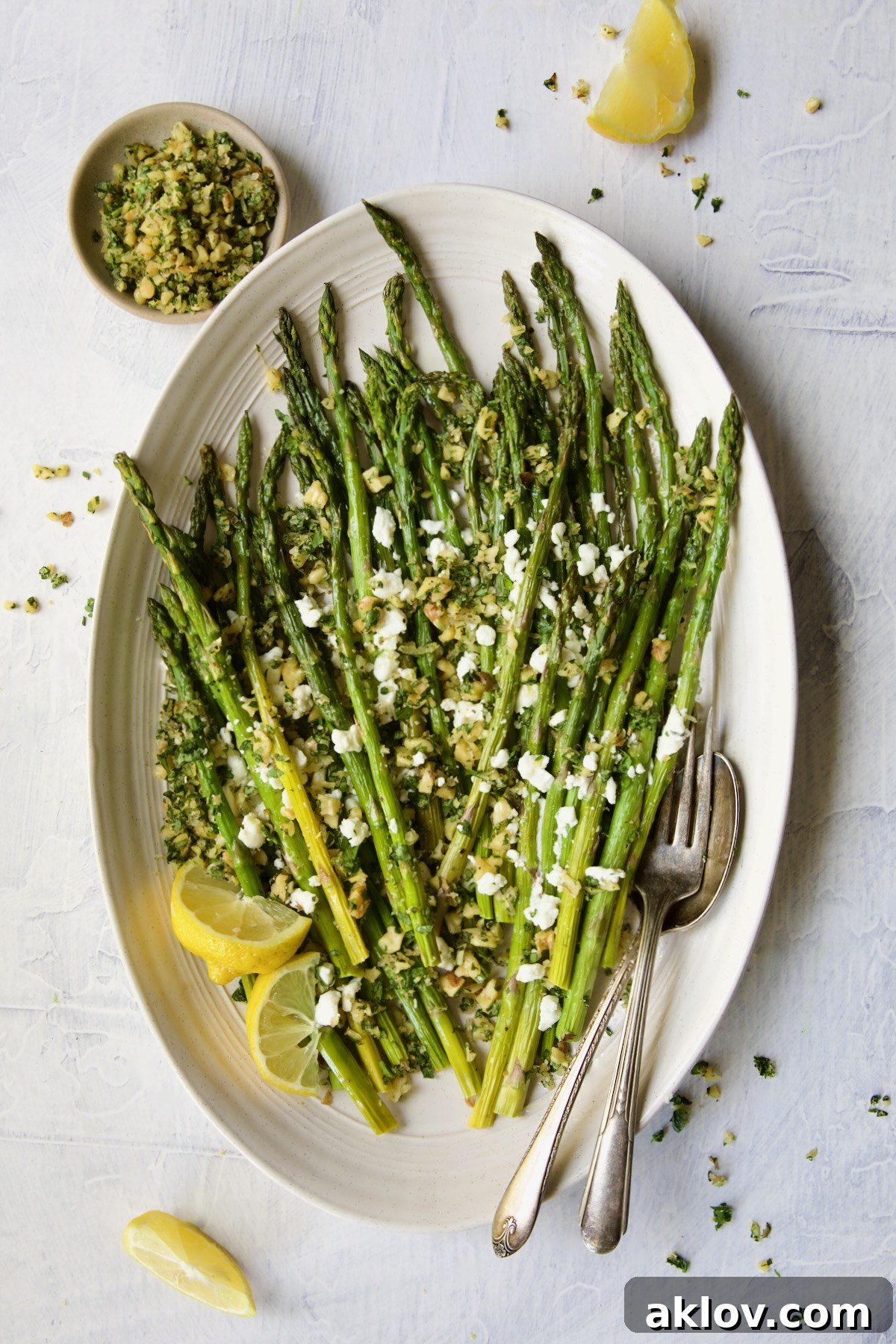
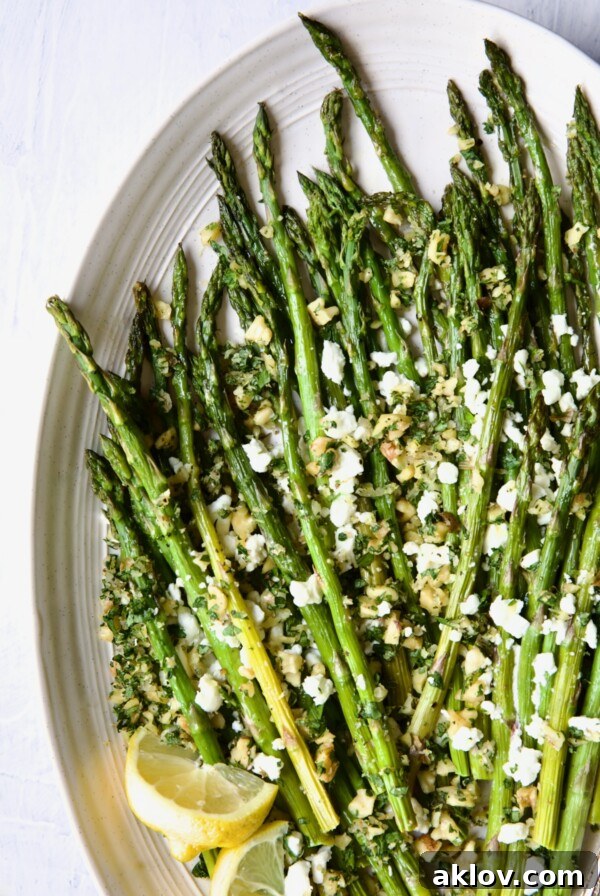
Welcome to the ultimate guide for preparing a truly spectacular side dish: Roasted Asparagus with Walnut Gremolata and Goat Cheese. This recipe isn’t just about cooking asparagus; it’s about elevating a humble spring vegetable into an elegant, flavorful showstopper perfect for any occasion, from a casual family dinner to your most sophisticated dinner party. Imagine crisp-tender asparagus spears, bright with verdant flavor, perfectly complemented by the zesty crunch of a walnut gremolata and the creamy tang of warm goat cheese. This dish is designed to impress, delight, and leave your guests asking for the recipe. Serve it alongside a delicious main like Shrimp Scampi for an unforgettable culinary experience.
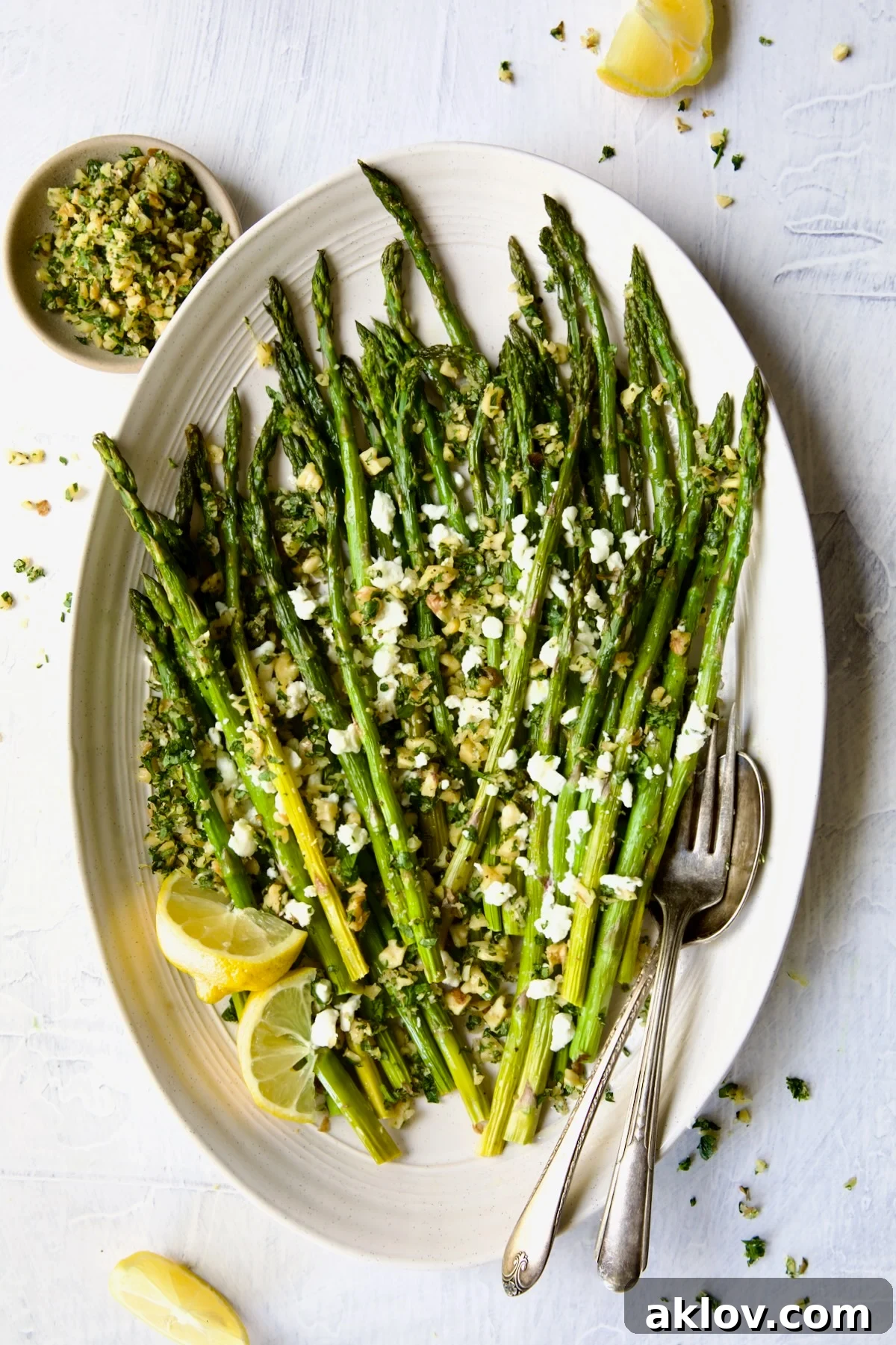
The Art of Roasting: Why This Asparagus Recipe Stands Out
Roasting is arguably the quintessential cooking method for asparagus, transforming its natural sweetness and texture in a way that other preparations simply can’t match. This simple technique brings out the very best in this beloved springtime jewel, offering a depth of flavor and a delightful textural contrast that is simply irresistible.
Unlike boiling or blanching, which can often lead to waterlogged, bland asparagus, roasting concentrates the vegetable’s inherent flavors. The dry heat of the oven encourages the natural sugars in the asparagus to caramelize, particularly at the tips, resulting in a slightly crisp exterior and a tender-crisp interior. This Maillard reaction creates complex, savory notes that enhance the asparagus’s earthy sweetness.
Furthermore, the roasting process allows some of the water content within the asparagus to evaporate. This natural dehydration further intensifies the flavor, preventing the dilution often associated with moist cooking methods. The result is perfectly cooked asparagus that is vibrant green, bursting with concentrated flavor, and possessing a satisfying bite.
What could elevate this already perfect vegetable even further? The addition of a vibrant walnut gremolata and a generous crumble of creamy goat cheese. This inspired pairing introduces layers of flavor and texture that truly make this dish unforgettable. The bright, acidic notes from the lemon in the gremolata perfectly cut through the richness, while the walnuts provide a wonderful textural crunch. The goat cheese, with its delightful tanginess and smooth texture, melts slightly to coat each spear, creating a harmonious balance of flavors and sensations. This roasted asparagus recipe is not just a side dish; it’s a celebration of spring produce, a testament to simple elegance, and a true culinary showstopper.
- Easy: Minimal prep, maximum flavor!
- Elegant: A sophisticated presentation perfect for entertaining.
- Showstopping: A unique flavor profile that will impress any palate.
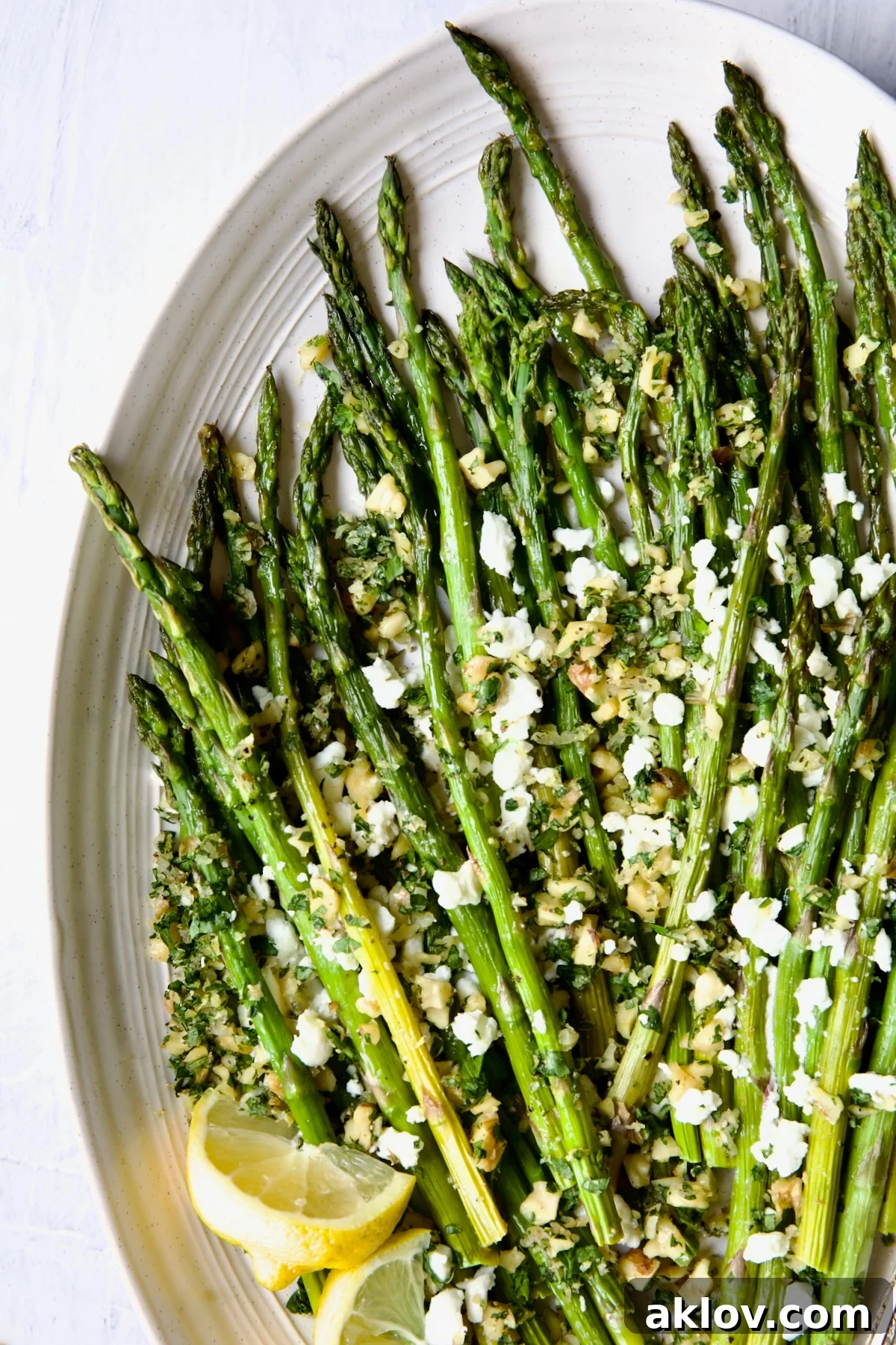
Decoding Gremolata: The Zesty Italian Herb Condiment
Gremolata, an exquisite Italian condiment, is a classic blend of fresh ingredients designed to add a vibrant burst of flavor and a refreshing finish to rich, savory dishes. Traditionally originating from Lombardy in northern Italy, it is an essential component of the iconic Osso Buco, a slow-braised veal shank dish. The bright, zesty character of gremolata acts as a perfect counterpoint to the deeply savory and often rich flavors of such preparations, cutting through their intensity and awakening the palate.
The standard gremolata is simple yet powerful, consisting of just three core ingredients: finely chopped fresh parsley, minced garlic, and the fragrant zest of a lemon. Each component plays a crucial role:
- Parsley: Provides a fresh, herbaceous base and a subtle peppery note.
- Garlic: Adds a pungent, aromatic kick that enriches the overall flavor.
- Lemon Zest: Contributes a bright, citrusy aroma and a slight bitterness that elevates the freshness.
In our roasted asparagus recipe, we take this classic concept and adapt it with a delightful twist: the inclusion of walnuts and goat cheese. These additions introduce wonderful new dimensions of flavor and texture. The walnuts bring a satisfying crunch and nutty depth, while the creamy, tangy goat cheese provides a luxurious mouthfeel and a piquant contrast that beautifully complements the roasted asparagus. This walnut gremolata with goat cheese transforms from a mere garnish into an integral part of the dish, creating a complex and balanced flavor profile that celebrates spring.
Selecting the Best: A Guide to Buying Fresh Asparagus
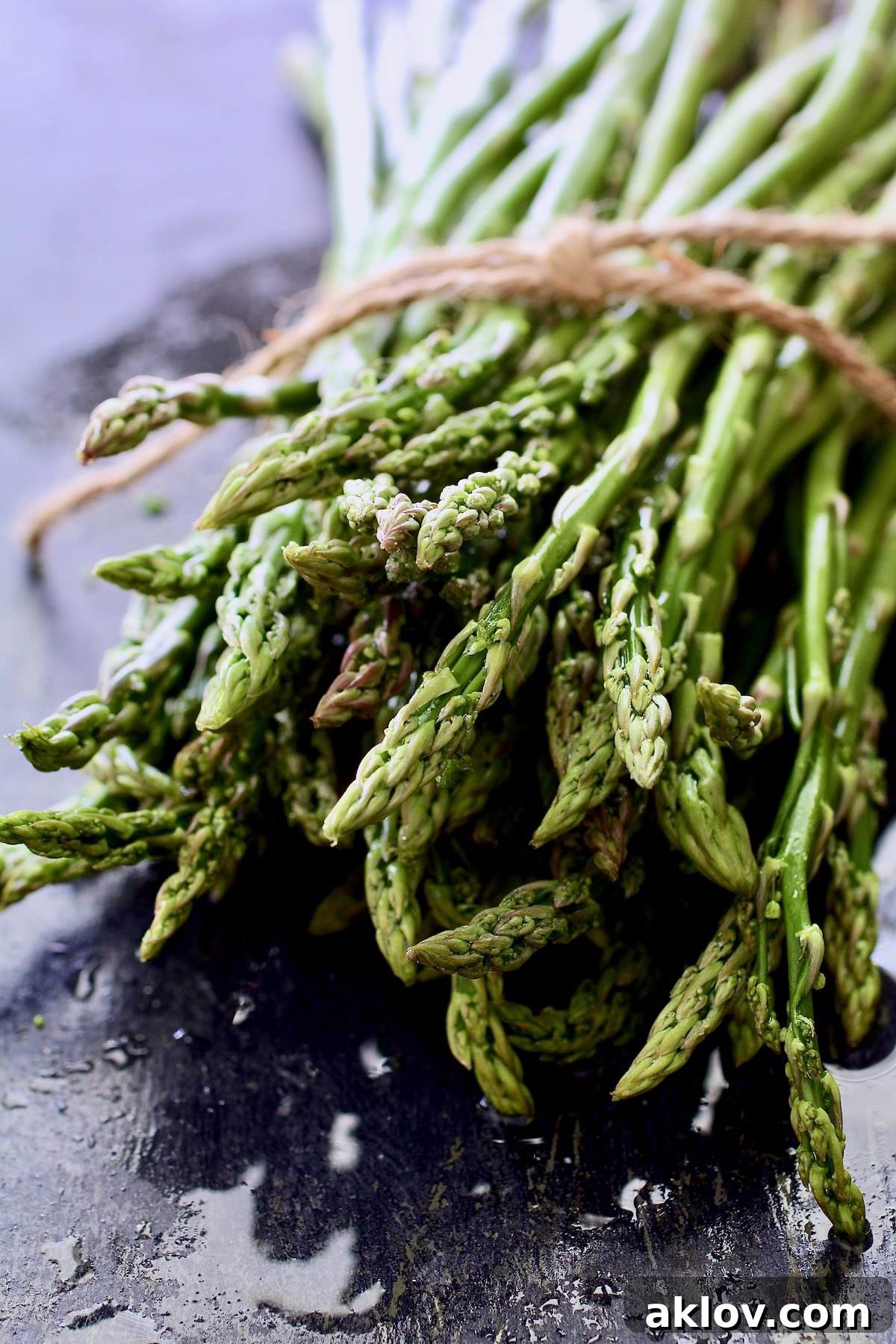
The quality of your asparagus directly impacts the success of this elegant dish. When selecting fresh asparagus at the market, paying attention to a few key details will ensure you take home the freshest, most flavorful spears:
- Color and Appearance: Look for spears that are uniformly bright green, with possibly a slight purple tint at the tips. Avoid any asparagus that appears dull, withered, or yellowing, as these are signs of age. The stalks should look firm and healthy, not limp or rubbery.
- Firmness: Asparagus should be rigid and difficult to bend. A fresh spear will snap rather than flex. If the stalks feel soft or bend easily, they are likely old and will lack flavor and crispness.
- Closed Tips: The tips of the asparagus spears should be tightly closed and compact, almost like a tiny pine cone. Open or “flowered” tips indicate that the asparagus is past its prime and will likely be fibrous and woody. Also, be wary of tips that appear mushy or deteriorated, which can happen if they’ve been excessively sprayed with water at the market.
- Ends: While the very bottom ends will be woody and need trimming, the cut ends should not be completely dried out or shriveled. A fresh, slightly moist cut indicates recent harvesting.
Once you bring your fresh asparagus home, it’s best to use it within 1 to 2 days for optimal flavor and texture. If you need to store it for a longer period, you can extend its freshness significantly with a simple trick: trim approximately ½-inch from the bottom of the stalks, then place them upright in a glass or jar with about an inch of water at the bottom. Cover the tips loosely with a plastic bag (a produce bag works perfectly) and store it in the refrigerator. This method is similar to storing cut flowers and can keep asparagus fresh for up to a week.
Crafting Culinary Excellence: How to Make Roasted Asparagus with Walnut Gremolata and Goat Cheese
This recipe is designed for simplicity without sacrificing sophistication. Follow these steps to create a truly memorable side dish.
Essential Recipe Ingredients:
Here’s everything you’ll need to make this exquisite roasted asparagus recipe. For precise measurements, please refer to the detailed recipe card below.
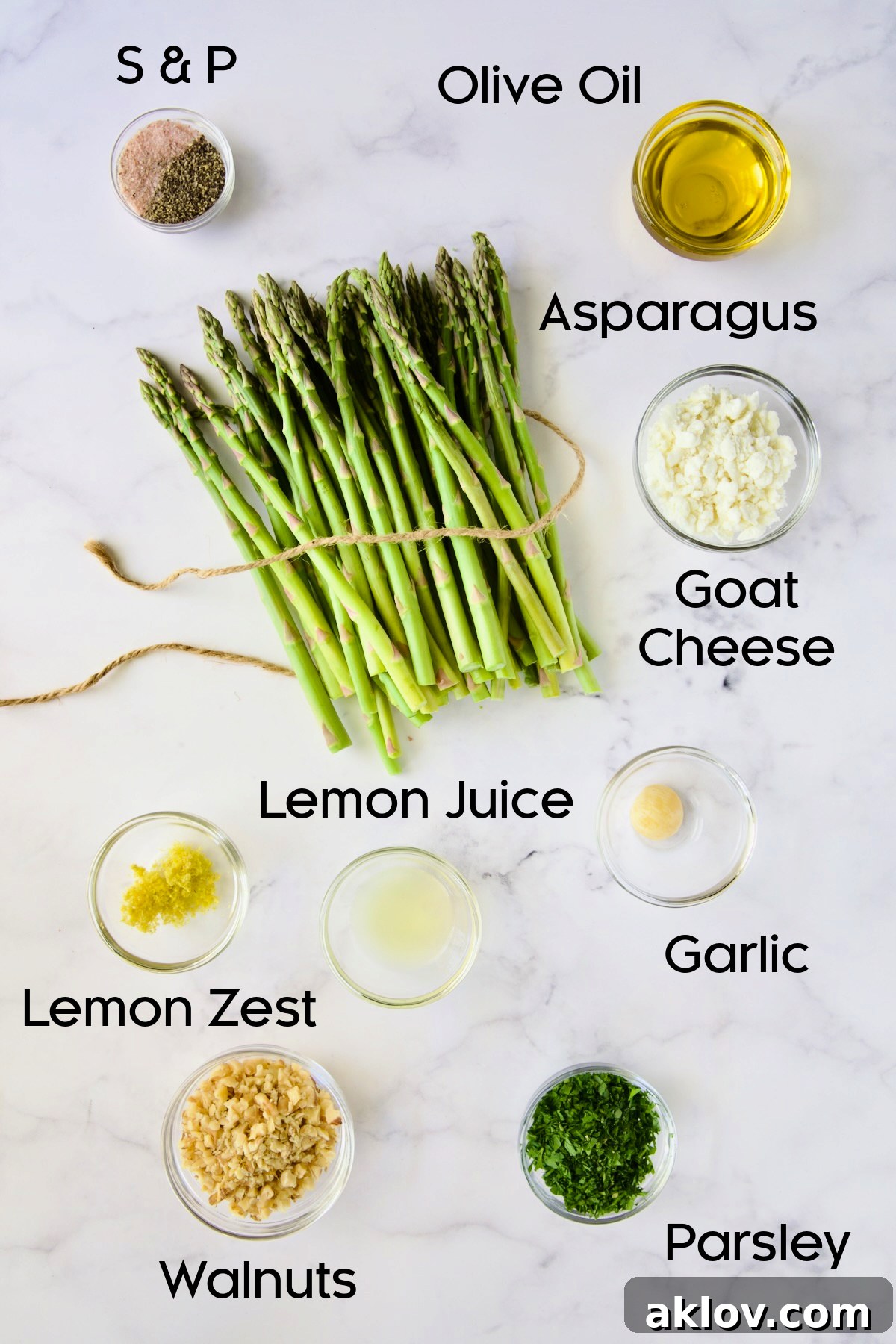
Ingredient Notes and Smart Substitutions:
- Asparagus: For this particular recipe, small to medium-width asparagus spears are ideal. They roast beautifully, achieving that perfect crisp-tender texture without becoming overly soft or remaining too fibrous. While “pencil thin” asparagus is lovely at the very beginning of the season, it can cook too quickly and become limp when roasted for this specific dish. If you can only find larger or very large spears, don’t fret! Simply use a vegetable peeler to carefully remove some of the tougher bottom stalks after trimming the woody ends. This helps ensure even cooking and a more pleasant texture. The USDA defines asparagus widths as follows:
- Very Small: Less than 5/16 inch
- Small: 5/16 to less than 8/16 inch
- Medium: 8/16 to less than 11/16 inch
- Large: 11/16 to less than 14/16 inch
- Very Large: 14/16 inch and up
- Goat Cheese: Opt for crumbled goat cheese for utmost convenience. Its soft, creamy texture and distinct tangy flavor are key to this recipe’s profile. Attempting to crumble a log of goat cheese can be challenging and messy. If you’re looking for a substitute, feta cheese can offer a similar salty, tangy crumb, though its flavor profile is distinctly different. For a milder, creamier option, fresh ricotta salata could also work.
- Walnuts: Walnuts are not only delicious but also packed with health benefits, including omega-3 fatty acids (Source: Healthline.com). They provide a wonderful crunch and earthy flavor to the gremolata. If walnuts aren’t your preference or readily available, pistachios, pine nuts, or even toasted almonds or pecans would make excellent alternatives, each contributing its own unique nuance. For a nut-free option, toasted breadcrumbs can provide a similar textural element.
- Lemon: Always use fresh lemons for both the zest and the juice. The bright acidity and aromatic oils from fresh lemon are indispensable for the vibrant gremolata and for drizzling over the hot asparagus.
- Olive Oil: A good quality extra virgin olive oil will lend a beautiful flavor to the roasted asparagus.
Detailed Step-By-Step Instructions:
Achieving perfectly roasted asparagus with a flavorful gremolata is simple with these clear steps:
- Begin by gathering and precisely prepping all your ingredients. This mise en place ensures a smooth cooking process.
- Preheat your oven to a robust 400°F (200°C). A hot oven is key to achieving that desirable crisp-tender texture in your asparagus.
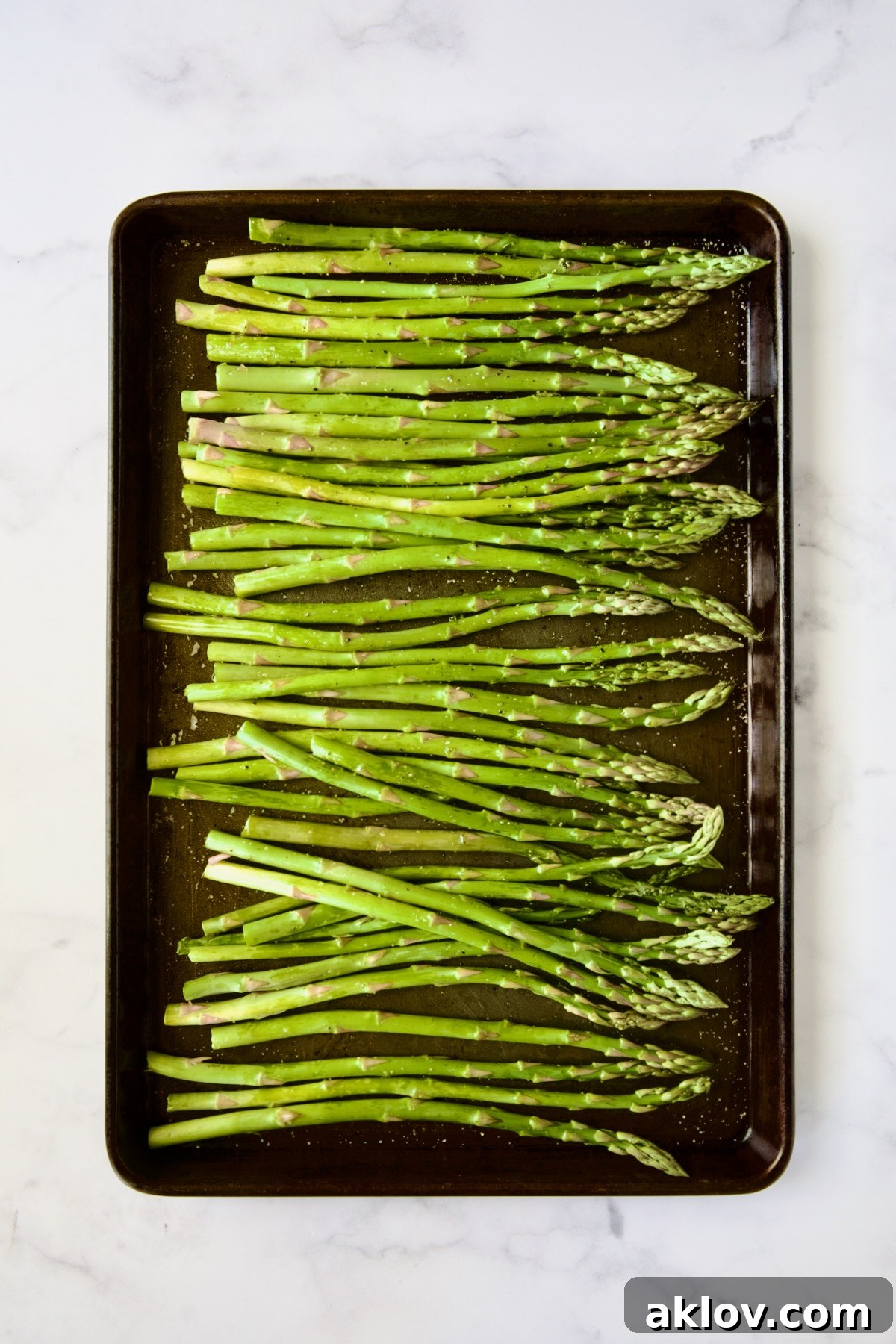
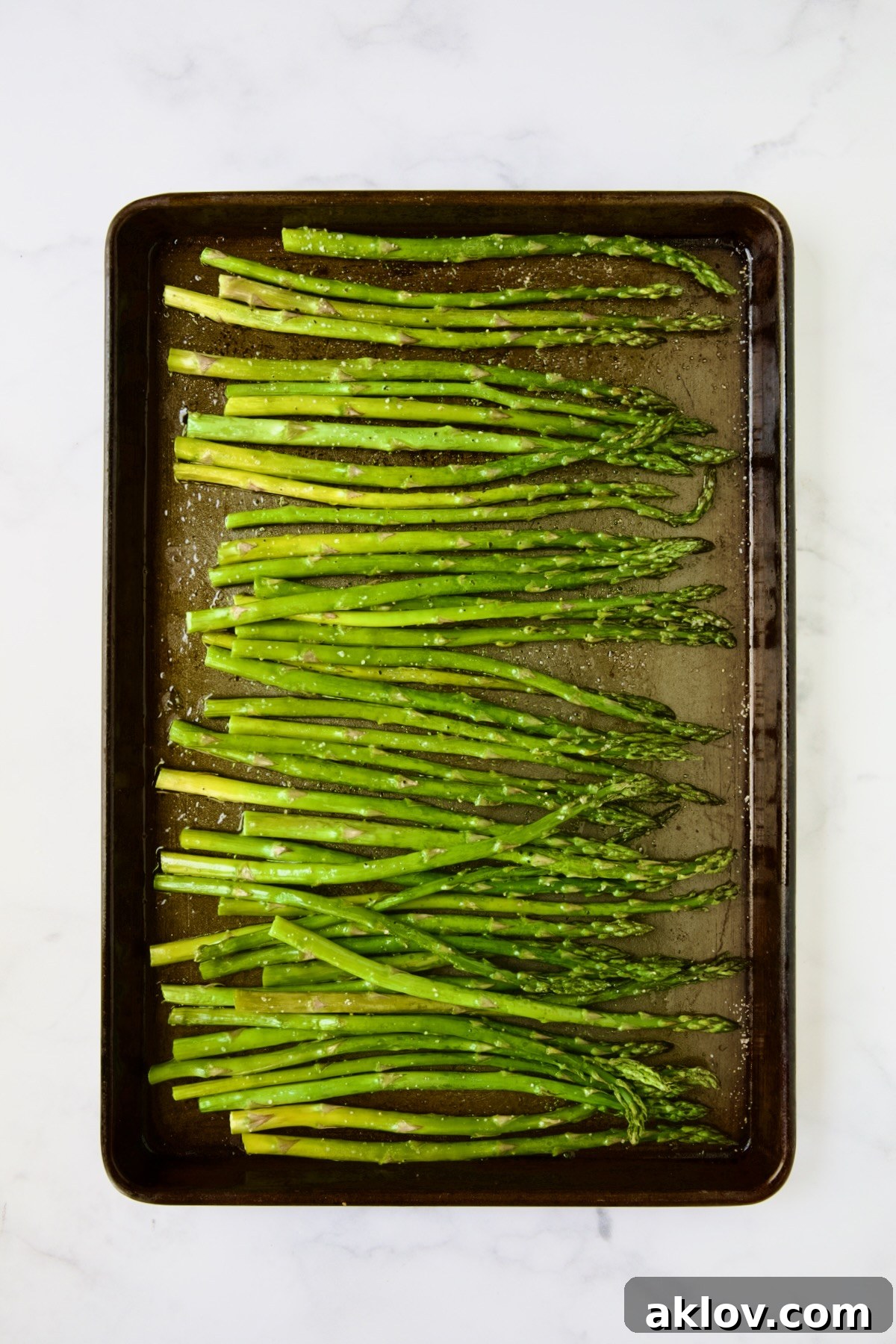
- Arrange the trimmed asparagus spears in a single layer on a sturdy baking sheet. Drizzle them generously with olive oil, ensuring each spear is lightly coated. Season to taste with salt and freshly ground black pepper.
- Roast the asparagus for approximately 10 minutes. The exact cooking time may vary slightly depending on the thickness of your asparagus and your oven’s calibration. For thicker spears, you may need a couple more minutes or a slightly higher temperature to achieve your desired doneness. The goal is bright green, tender-crisp spears.
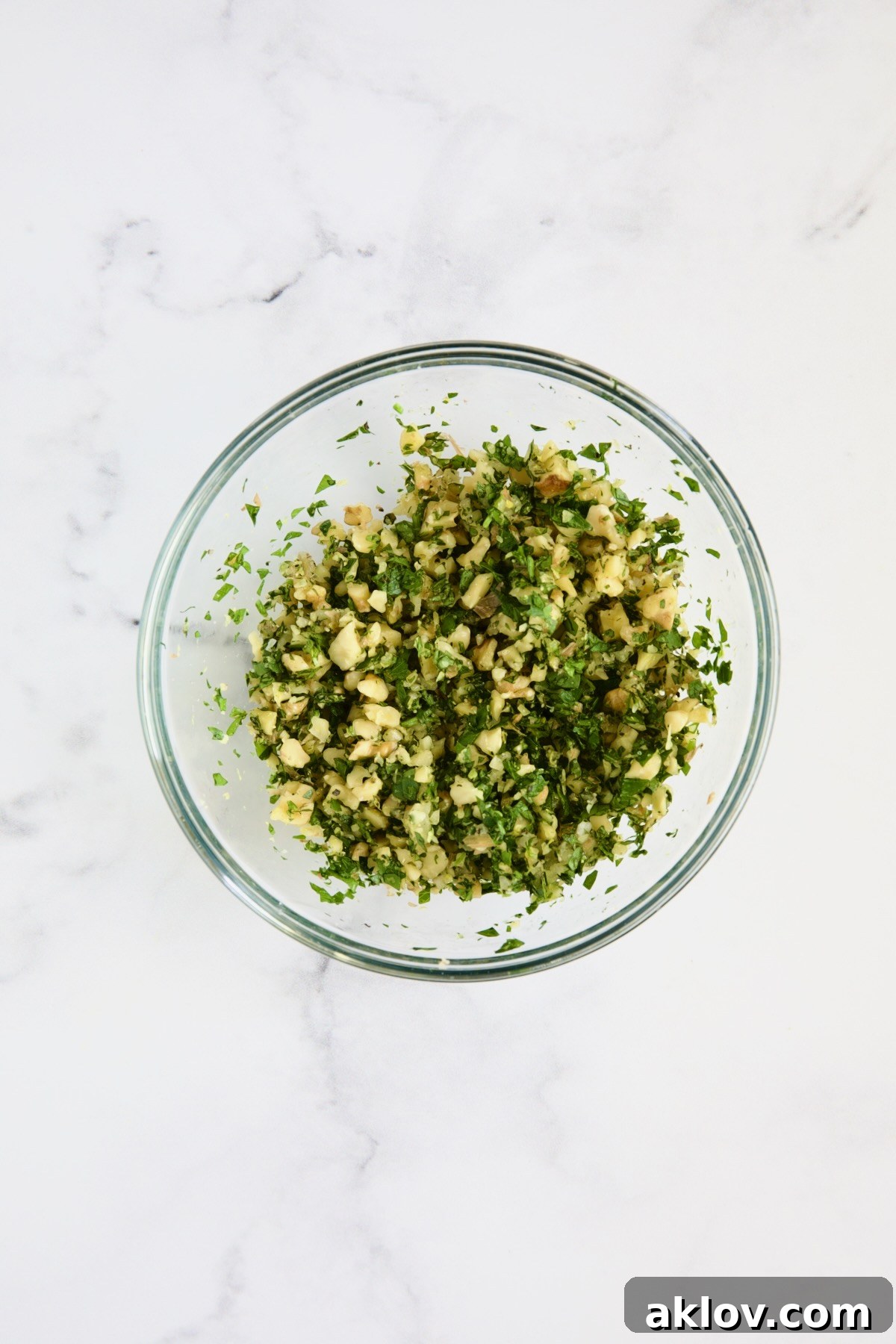
- While the asparagus is roasting, prepare your vibrant walnut gremolata. In a small bowl, combine the finely chopped walnuts, fresh parsley, fragrant lemon zest, minced garlic, and season with a pinch of salt and black pepper to taste. Mix well to combine all these delightful elements.
- Once the asparagus has reached its perfect doneness, remove it from the oven. Immediately drizzle it with fresh lemon juice to enhance its brightness, and then generously sprinkle with the crumbled goat cheese.
- Return the baking sheet to the oven for just 1 to 2 minutes. This brief period allows the goat cheese to gently warm through and soften, creating a creamy texture that beautifully clings to the asparagus.
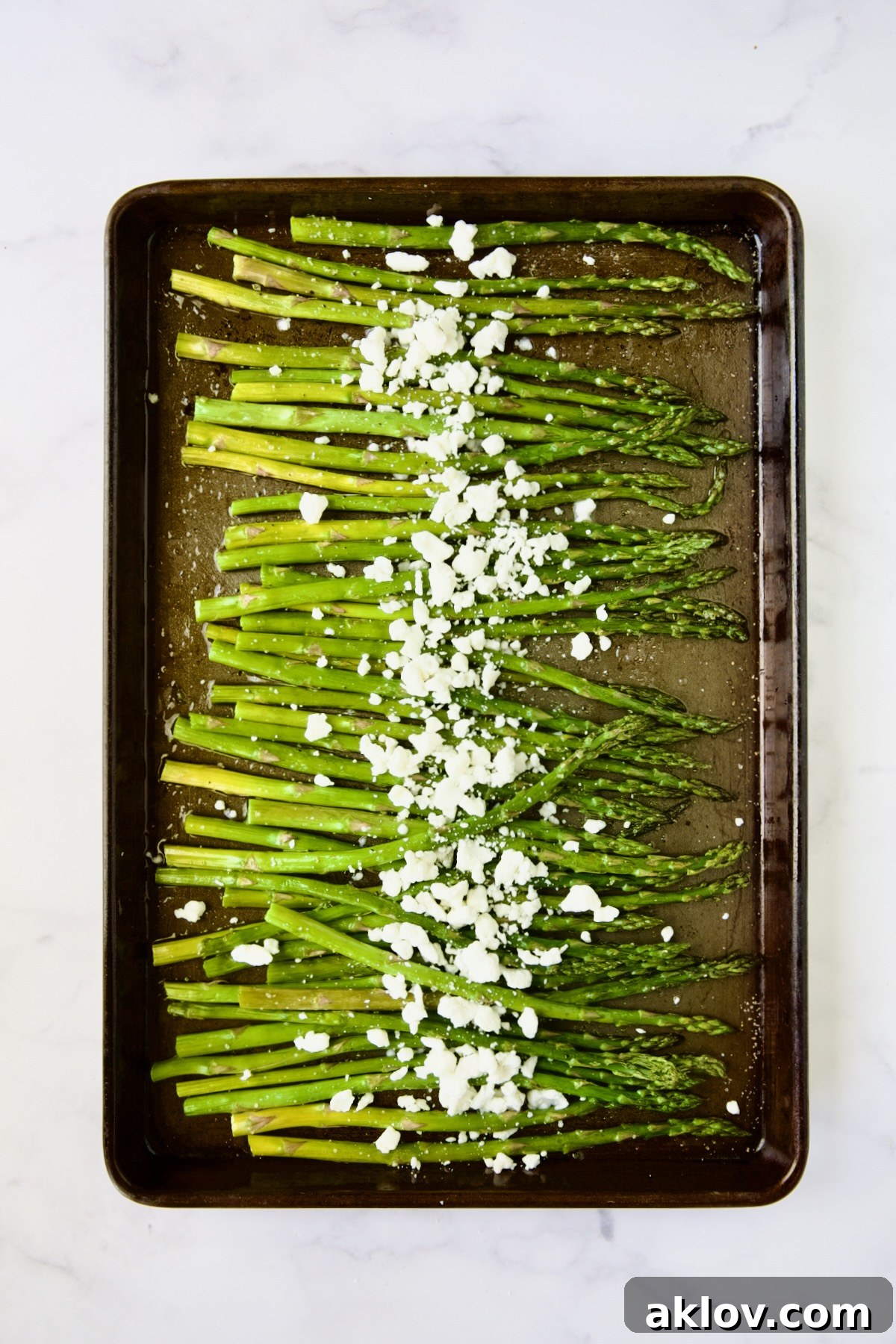
- Carefully transfer the warm asparagus to a beautiful serving platter. Crown it with a generous scattering of the homemade Walnut Gremolata. Serve immediately to enjoy its peak flavor and texture.
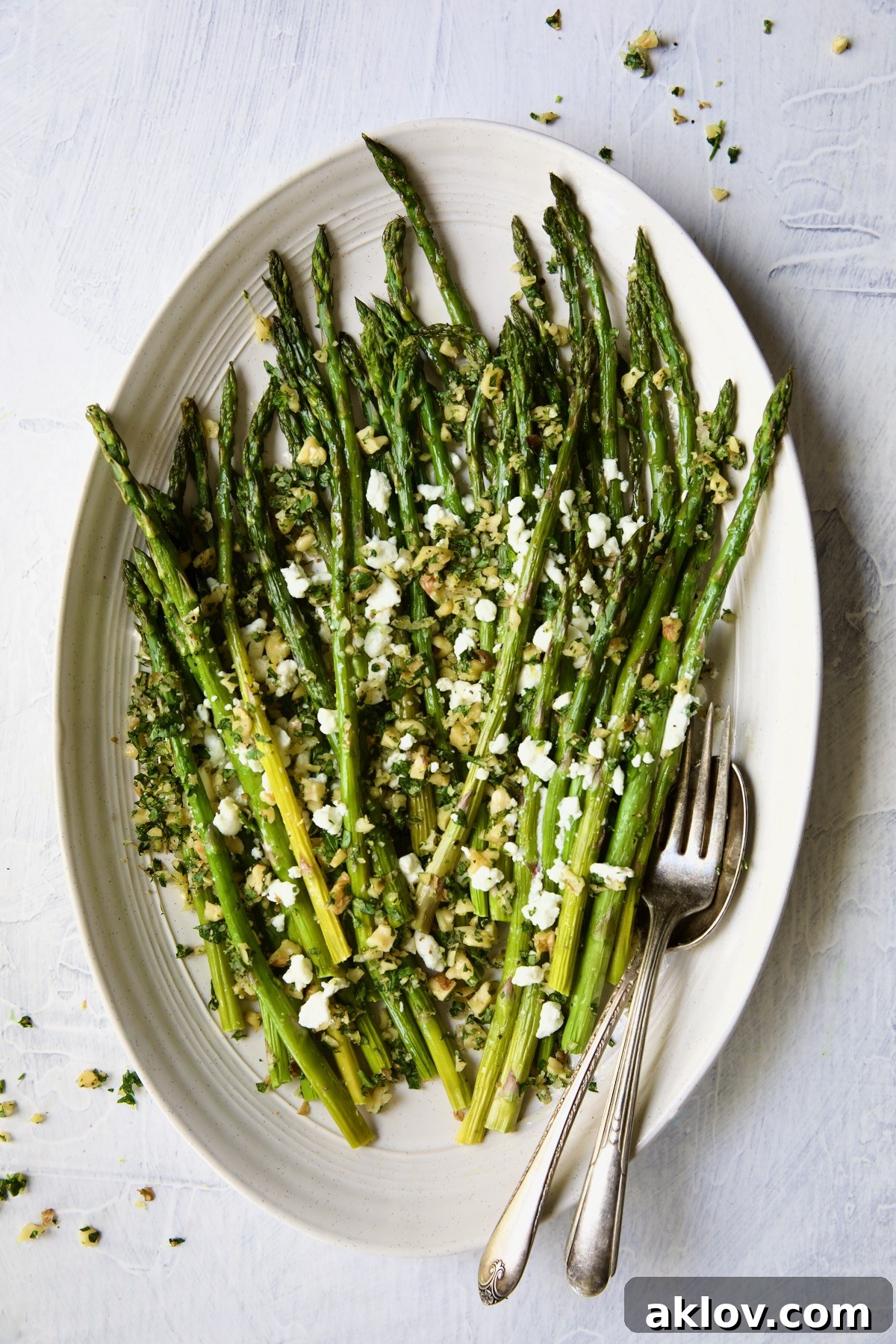
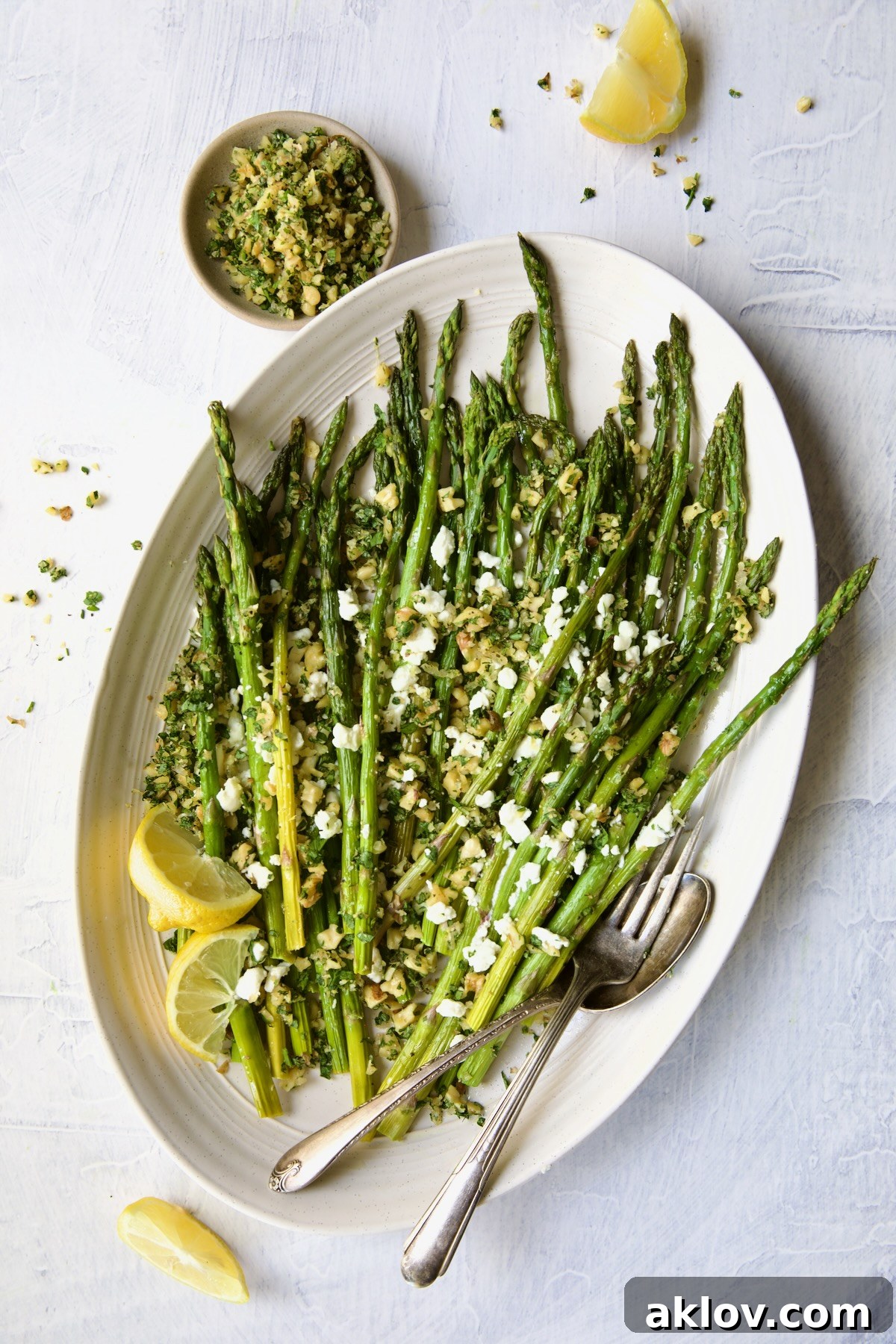
- For an extra touch of visual appeal and a burst of fresh flavor, garnish the asparagus with additional lemon wedges, allowing guests to add more citrus if they desire.
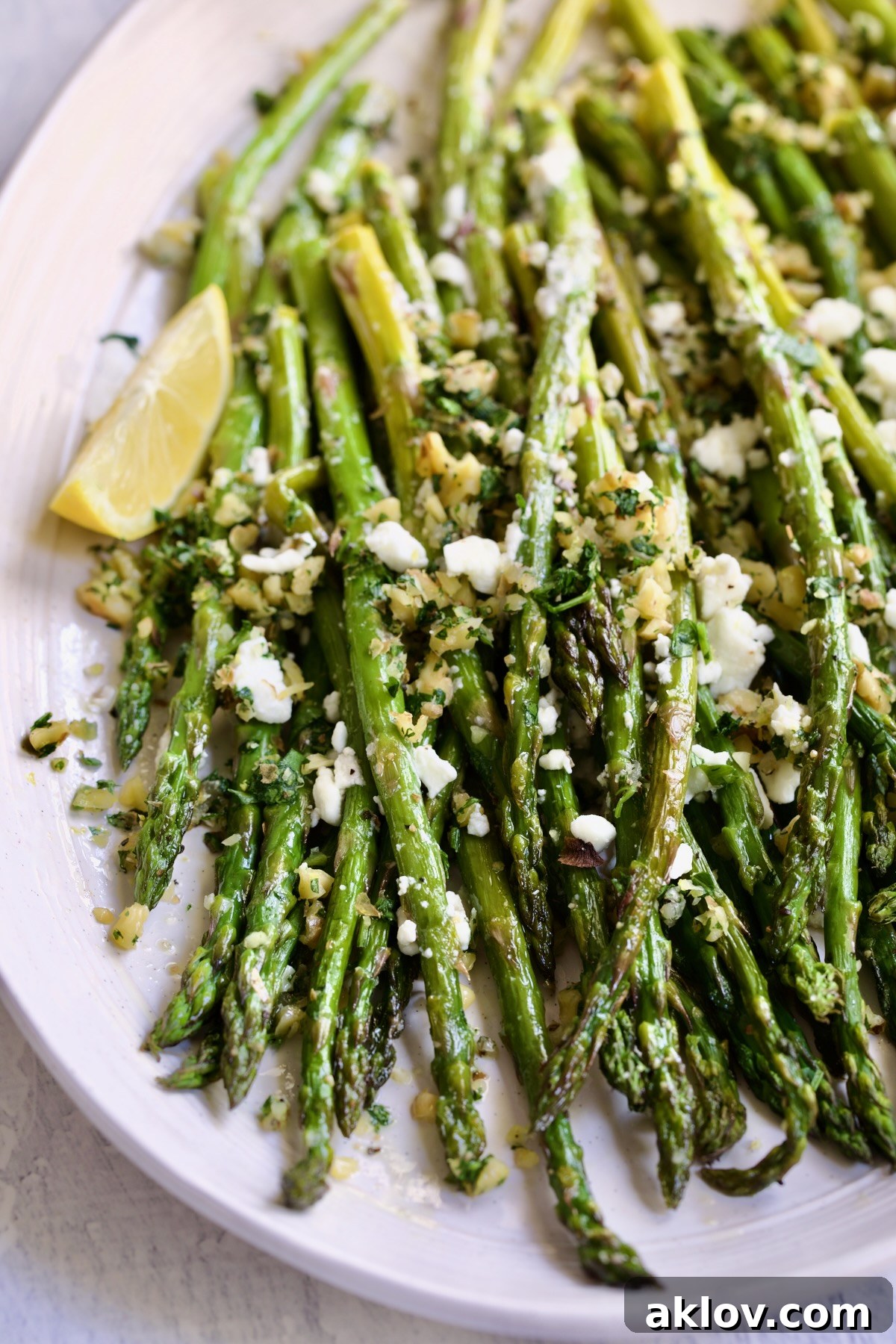
And there you have it! A truly magnificent roasted asparagus recipe, enhanced by the irresistible walnut gremolata and creamy goat cheese. It’s a dish that proves ease and elegance can, indeed, go hand-in-hand to create something utterly delicious!
Chef Tips and Tricks for Perfect Roasted Asparagus
Even the simplest dishes can benefit from a few expert insights. Here are some chef-approved tips to ensure your roasted asparagus with gremolata is absolutely perfect every time:
- Trimming Asparagus Like a Pro: To determine precisely how much of the woody end to trim, take a single asparagus stalk and gently bend it near the bottom. It will naturally snap at the point where the tough, fibrous part meets the tender, edible portion. Use this as your guide to cut the rest of the bunch. Since asparagus in a bunch typically grows to a similar size, this method ensures minimal waste and perfectly tender spears.
- Ensure Even Roasting: To prevent some spears from becoming too soft while others are still firm, arrange the asparagus in a single layer on the baking sheet without overcrowding. If your pan is too full, use two baking sheets. This allows for proper air circulation, ensuring each spear roasts evenly and achieves that desirable crisp-tender texture. Using parchment paper also prevents sticking and makes cleanup a breeze.
- Seasoning is Key: Don’t skimp on the salt and pepper! Season the asparagus adequately before roasting. A good quality flaky sea salt can add a pleasant textural crunch.
- For Speedy Prep: If you’re short on time, pre-chopped walnuts are a fantastic shortcut. You can also zest your lemon and mince your garlic ahead of time, storing them separately in the refrigerator.
- Toasting Walnuts: While optional, briefly toasting your walnuts in a dry pan or in the oven for a few minutes before chopping can significantly enhance their nutty flavor and aroma for the gremolata. Just be sure to watch them carefully to prevent burning.
Common Questions About This Roasted Asparagus Recipe
I generally do not recommend fully cooking roasted asparagus too far in advance. The roasting process is so quick that asparagus is best prepared and served shortly before you’re ready to eat. Reheating roasted asparagus can easily lead to overcooking, making it limp and losing its desired crisp-tender texture. However, you can certainly trim the asparagus and have it prepped and ready to cook, which saves valuable time just before serving.
Absolutely! The walnut gremolata is the perfect component to prepare in advance. You can combine all the ingredients (walnuts, parsley, lemon zest, garlic, salt, and pepper) and store it in an airtight container in the refrigerator. I recommend preparing it no longer than 24 hours ahead of time. While it will still be delicious, the nuts might begin to soften slightly if stored for too long, losing a bit of their crisp texture.
Yes, it’s quite simple! The only non-vegan ingredient is the goat cheese. You can easily omit the goat cheese entirely or substitute it with your favorite plant-based crumbled cheese alternative. Nutritional yeast can also be sprinkled on for a savory, cheesy flavor.
Gremolata is wonderfully versatile! While the walnut and goat cheese twist is delightful, you can experiment with different nuts like toasted pine nuts or almonds, or even a mix of seeds for a nut-free option. For herbs, consider adding fresh mint or basil for a different aromatic profile. A pinch of red pepper flakes can also add a subtle warmth if you enjoy a touch of heat.
Storage Guidelines:
- Any leftover roasted asparagus should be stored in an airtight container in the refrigerator for up to 2-3 days. While the texture won’t be as crisp as when freshly made, it will still be delicious.
Elevate Your Meal: Delicious Serving Suggestions
This elegant roasted asparagus dish is incredibly versatile and pairs beautifully with a wide range of main courses. Its bright flavors and satisfying textures make it an ideal accompaniment to both simple weeknight dinners and special occasion meals. Here are some inspired pairings:
- Easy Skillet Mediterranean Chicken: The fresh flavors of the asparagus and gremolata will complement the aromatic herbs and bright tomatoes of Mediterranean chicken perfectly.
- 40 Clove Garlic Chicken: The richness of garlic chicken finds a refreshing balance with the zesty gremolata.
- Chicken Spinach and Artichoke Puff Pastry Parcels: The light, flaky pastry and creamy chicken filling would be beautifully contrasted by the crisp asparagus.
- Chicken Cannelloni: A hearty pasta dish will feel lighter and more complete with a vibrant green side.
- Baked Tilapia with Spinach Pecan Pesto: The delicate flavors of white fish are enhanced by the freshness of the asparagus and its zesty topping.
- Braised Pork Loin Roast in Dijon Mustard Sauce: The tangy mustard sauce and tender pork will find a lovely counterpoint in the bright, crunchy asparagus.
- Sicilian Stuffed Pork Chops with White Wine and Caper Sauce: A sophisticated pork dish that would be perfectly complemented by the elegant simplicity of this asparagus.
Adore Asparagus? Discover More Beautiful Asparagus Recipes!
If you’re an avid fan of this versatile spring vegetable, you’ll love exploring these other creative and delicious asparagus-focused recipes:
- Arugula Egg and Asparagus Salad with Creamy Lemon Vinaigrette: A refreshing and hearty salad perfect for brunch or a light lunch.
- Cream of Asparagus Soup with Curry: A comforting yet exotic twist on a classic soup.
- Asparagus Cordon Bleu: An innovative way to enjoy asparagus, wrapped in savory goodness.
- Asparagus Onion and Fontina Tart: A beautiful and flavorful tart, ideal for appetizers or a light meal.
For a comprehensive collection of delightful vegetable side dish ideas, explore all my recipes at: Vegetable Side Dish Recipes – From A Chef’s Kitchen.
Print Recipe
Overall Rating: 4.55 out of 5 stars (Based on 11 votes)
Roasted Asparagus with Walnut Gremolata and Goat Cheese
Equipment
-
Wusthof Chef Knife
-
Cutting Board
-
Rimmed Sheet Pan
-
Glass Mixing Bowls
Ingredients
- 1 large bunch asparagus, approximately 1 pound, tough ends trimmed
- 2 tablespoons olive oil
- Salt and freshly ground black pepper
- 1/3 cup finely chopped walnuts, toasted if desired
- 1/4 cup chopped fresh parsley
- Zest of 1 large lemon
- 1 clove garlic, minced
- 1 tablespoon lemon juice
- 1/3 cup crumbled goat cheese
- Lemon wedges, for garnish, optional
Instructions
-
Preheat oven to 400°F (200°C).
-
Place asparagus on a baking sheet, drizzle with olive oil and season to taste with salt and black pepper. Roast for 10 minutes or to desired doneness. (If your asparagus is thick, it may take longer or require a higher temperature.)
-
While asparagus is roasting, combine walnuts, parsley, lemon zest, garlic and salt and black pepper to taste in a small bowl.
-
When asparagus is ready, immediately drizzle with lemon juice and top with goat cheese. Place back in the oven for 1-2 minutes for the goat cheese to warm through.
-
Transfer to a serving platter and top with Walnut Lemon Gremolata. Serve immediately. Garnish with lemon wedges if desired.
Notes
- To determine how much to trim asparagus, bend one of the stalks near the bottom until it breaks. It breaks where you should cut the remainder, as they’re all typically the same size in the bunch and were probably growing next to each other.
MAKE AHEAD:
- The gremolata can be made ahead of time. I recommend no longer than 24 hours ahead because the nuts will soften.
Nutrition
Nutritional values are estimated only. Actual results may vary based on ingredients used and portion sizes. Adjust as needed for dietary restrictions, allergies, or health concerns.
 Enjoyed this recipe? Leave a comment below!