
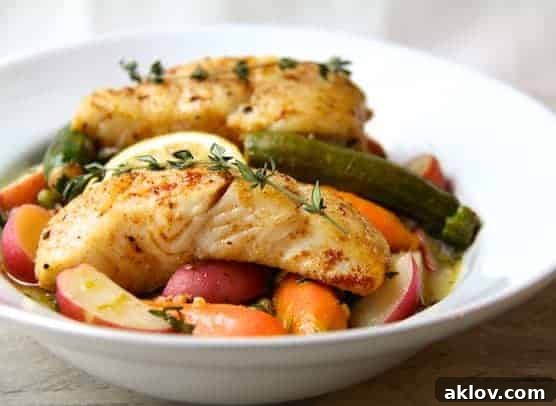
Butter-Basted Halibut with Lemon-Braised Baby Vegetables: A Perfect Spring Dish
Embrace the vibrant flavors of spring with this elegant recipe for Butter-Basted Halibut served alongside delicate Lemon-Braised Baby Vegetables. This dish is not just a meal; it’s an experience designed for a delightful dinner for two, showcasing the pristine beauty and mild, sweet flavor of halibut. Light, fresh, and irresistibly appealing, it’s the ideal way to celebrate seasonal produce and premium seafood.

Why Halibut is a Culinary Delight
Halibut, often hailed as the “king of the flatfish,” is renowned for its firm, flaky texture and remarkably mild, sweet flavor. This makes it an incredibly versatile fish, capable of absorbing and complementing a wide array of flavors without being overpowered. Whether you prefer it grilled, baked, pan-seared, or prepared using the butter-basting method featured in this recipe, halibut consistently delivers a gourmet experience. Its delicate taste makes it a favorite even among those who might be hesitant to try other types of fish, proving its universal appeal.
Beyond its exquisite taste, halibut is also a nutritional powerhouse. It’s an excellent source of lean protein, essential omega-3 fatty acids, and several vital nutrients including magnesium, phosphorus, selenium, and B vitamins. Incorporating halibut into your diet can support heart health, brain function, and overall well-being. This makes our Butter-Basted Halibut with Lemon-Braised Baby Vegetables not just a treat for your taste buds, but a wholesome choice for a balanced diet.
Tips for Choosing Sustainable Halibut
When purchasing halibut, it’s crucial to consider sustainability. Opting for Pacific or Alaskan halibut is highly recommended, as these fisheries are carefully managed and regulated. According to the Monterey Bay Aquarium’s Seafood Watch program, Pacific and Alaskan halibut are among the most sustainable seafood choices available. This ensures that you’re enjoying your meal with a clear conscience, knowing you’re supporting responsible fishing practices that help maintain healthy ocean ecosystems.
Halibut can be a premium-priced fish, reflecting its quality and careful harvesting. If you’re looking for a more budget-friendly alternative without compromising on the mild, white fish experience, feel free to substitute with other sustainable options like cod, pollock, or even tilapia. These alternatives will still yield a delicious meal when prepared with the butter-basting technique and served with the flavorful lemon-braised vegetables.
Mastering the Art of Butter Basting
The secret to perfectly cooked, moist, and flavorful fish lies in the butter-basting (also known as pan-basting) method. You might wonder why one would choose to “bathe” such a healthy protein like fish in butter. The answer lies in the incredible culinary transformation that occurs. As the butter melts and browns, it develops a rich, nutty aroma and flavor that infuses into the fish, creating an unparalleled depth of taste.
This technique also serves a crucial purpose in preventing the fish from drying out. By continuously spooning hot, clarified butter over the fillets as they cook on the stovetop, you create a moist, flavorful environment that gently cooks the fish while forming a beautiful, golden crust. A remarkable benefit of this method is that you don’t even need to flip the fish. The radiant heat from the butter and pan, combined with the continuous basting, helps to brown and crisp the side facing up, ensuring even cooking and a delightful texture throughout.
For those who prefer less butter in the final dish, you have the option to leave any excess butter behind in the pan after cooking. Simply drain the cooked halibut briefly on a paper towel before serving. However, for a truly decadent and flavorful experience, drizzling a spoonful of that golden, nutty browned butter over your finished dish is highly recommended.
Embracing the Charm of Baby Vegetables
This recipe truly shines with the inclusion of baby vegetables, which add a touch of elegance, concentrated flavor, and tender texture to the dish. It’s important to distinguish between true baby carrots and “baby cut” carrots. True baby carrots are simply young carrots, harvested early and typically sold with about an inch of their vibrant green tops still attached. They possess a sweeter, more delicate flavor and a tender bite compared to their mature counterparts.
In contrast, “baby cut” carrots, which are more widely available in supermarkets, are mature carrots that have been peeled and then whittled down into a convenient, baton-like shape. While still practical, they often lack the distinct sweetness and tenderness of truly young vegetables. You can typically find authentic baby vegetables, such as baby carrots, baby zucchini, and baby potatoes, in the specialty or organic produce sections of larger grocery stores or at farmers’ markets.
If you’re a keen gardener, harvesting your produce at the “baby” stage for this dish is a fantastic option, offering the freshest possible flavors. Beyond the suggested carrots, potatoes, and zucchini, consider experimenting with other baby vegetables. Baby pattypan or yellow squash can be a delightful substitute for zucchini, while baby lima beans can replace peas for a different earthy note. For a unique twist, baby artichokes can be used instead of potatoes, adding a sophisticated touch to the braised medley.
Don’t fret if baby vegetables aren’t readily available or if you prefer to use regular-sized produce. Simply cut your standard carrots, potatoes, and zucchini into similar-sized, bite-sized pieces to ensure even cooking and an appealing presentation. The key is to achieve consistent sizing so that all vegetables cook through at roughly the same rate and offer a harmonious texture in every forkful.

More Delicious Fish Recipes You’ll Love:
If you’re a fan of seafood and looking for more inspiring dishes, explore these other fantastic fish recipes from our kitchen:
- Sheet Pan Thai Sweet Chili – Lime Baked Fish with Garlic Broccolini
- Baked Veracruz-Style Fish (Pescado A La Veracruzana)
- Pistachio Crusted Fish with Lemon Dill Aioli
- Indian Spiced Sea Bass with Braised Red Lentils
- Asian Vegetable Noodle Broth Bowls with Pan Seared Fish
- Blackened Halibut with Mango and Avocado Salsa
- Mediterranean Fish en Papillote
- Baked Tilapia with Spinach – Pecan Pesto
- Halibut Ceviche with Mango and Avocado
Print Recipe
4.30 from 17 votes
Butter Basted Halibut with Lemon Braised Baby Vegetables
Carol | From A Chef’s Kitchen
This Butter-Basted Halibut with Lemon-Braised Baby Vegetables is the quintessential spring dinner for two! It’s refreshingly light, bursting with fresh flavors, and perfectly highlights the beautiful, delicate nature of halibut.
15 mins
30 mins
45 mins
2
Equipment
- Wusthof Chef Knife
- Cutting Board
- Saucepan
- Nonstick Skillet
Ingredients
- 2 cups chicken broth
- 1/2 cup water
- 1 large lemon, juiced (about 2 tablespoons) plus lemon slices for garnish
- 2 scallions, white and light green part only, chopped
- 8 baby carrots
- 6 baby red potatoes, quartered
- 10 baby zucchini
- 1 clove garlic, minced
- 1 tablespoon fresh thyme leaves, plus sprigs for garnish
- 1 handful Italian parsley leaves, about 1/2 cup loosely packed, rough chopped
- 1/2 cup peas, fresh or thawed if frozen
- Salt and freshly ground black pepper, to taste
- 2 fillets (8-ounce) halibut fillets, skin removed
- 1 tablespoon olive oil
- 3 tablespoons butter, softened
Instructions
-
Combine broth and water in a shallow saucepan and bring to a simmer over medium heat.
-
Add lemon juice, scallion and carrots.
-
Reduce heat to low, cover slightly and cook carrots 8 to 10 minutes or until you can just barely pierce the carrots.
-
Add potatoes, cover slightly and cook 8 to 10 minutes or until potatoes are almost tender.
-
Add zucchini and garlic. Cover slightly and cook 6 to 8 minutes or until zucchini is crisp-tender. Stir in thyme, parsley and peas. Season to taste with salt and black pepper. Keep warm.
-
Generously season halibut on both sides with salt and black pepper.
-
Heat olive oil in a nonstick skillet over medium-high heat.
-
Brown the halibut fillets for 2 to 3 minutes per side, creating a beautiful golden crust.
-
Add the butter to the pan. Once the butter melts and begins to foam, gently tilt the skillet toward you to pool the butter on one side.
-
With a large soup spoon, constantly baste the fish with the bubbling butter for 5 to 6 minutes. Periodically return the pan to a level position over the heat to ensure the pan remains evenly hot and the butter continues to foam and brown beautifully.
-
Let the fish rest for 1 to 2 minutes off the heat. This carry-over cooking will finish cooking the fish to perfection. The halibut is fully cooked when it feels firm to the touch and easily flakes with a fork. (Note: exceptionally thick pieces may require a few extra minutes in a preheated 400-degree Fahrenheit oven to ensure they are cooked through).
-
Serve the butter-basted halibut fillets over the warm lemon-braised baby vegetables. For an extra layer of richness and flavor, drizzle any remaining browned butter from the pan over the dish, if desired. Garnish with fresh lemon slices and thyme sprigs.
Notes
SUBSTITUTIONS:
- While halibut is fantastic, this butter-basting method works beautifully with almost any type of thick, firm white fish fillets. Consider cod, Chilean sea bass, grouper, mahi-mahi, or even salmon for a richer flavor profile.
- For the baby vegetables, feel free to get creative! Instead of baby zucchini, try baby pattypan squash or yellow summer squash. Baby lima beans can be a sweet and tender alternative to peas. And for a gourmet touch, consider using baby artichokes in place of the potatoes for a unique earthy flavor.
MAKE AHEAD:
- To save time, the potatoes can be cooked a day ahead, allowed to cool completely, and then refrigerated. Reheat them gently in a pan with a splash of broth before adding the other vegetables.
- The lemon-braised baby vegetables can also be prepared a few hours in advance and gently rewarmed before serving.
Nutrition
Serving: 2
Calories: 493kcal
Carbohydrates: 78g
Protein: 35g
Fat: 13g
Saturated Fat: 2g
Polyunsaturated Fat: 3g
Monounsaturated Fat: 6g
Cholesterol: 3mg
Sodium: 965mg
Potassium: 5758mg
Fiber: 20g
Sugar: 8g
Vitamin A: 11108IU
Vitamin C: 439mg
Calcium: 332mg
Iron: 12mg
Nutritional values are automatically calculated using unbranded products and are estimates only. Actual results may vary based on ingredients used and portion sizes. Adjust as needed for dietary restrictions, allergies, or health concerns.
Serving Suggestions and Wine Pairings
This exquisite Butter-Basted Halibut with Lemon-Braised Baby Vegetables is a complete meal on its own, but you can elevate the dining experience further with thoughtful accompaniments. A light, crisp green salad with a simple vinaigrette would provide a refreshing counterpoint to the richness of the butter-basted fish and the tender vegetables. For an added touch of indulgence, a sprinkle of toasted slivered almonds or fresh herbs like dill or chives over the finished dish can enhance both texture and flavor.
When it comes to wine pairings, the delicate flavors of halibut and lemon call for a crisp, high-acid white wine. A Sauvignon Blanc, with its bright citrus notes and herbaceous undertones, would beautifully complement the lemon and thyme in the dish. A dry Pinot Grigio or a light-bodied Chardonnay (unoaked, if possible) would also be excellent choices, offering a refreshing balance without overpowering the subtle flavors of the fish and vegetables.
Conclusion: A Taste of Spring on Your Plate
This Butter-Basted Halibut with Lemon-Braised Baby Vegetables recipe is more than just a meal; it’s a celebration of spring’s bounty and the simple elegance of fresh, high-quality ingredients. With its light, vibrant flavors and straightforward technique, it offers a sophisticated yet approachable dinner perfect for a special occasion or a delightful weeknight treat. We encourage you to try this recipe and savor the exquisite harmony of delicate halibut, rich butter, and tender, lemon-infused vegetables. It’s a dish that promises to impress and satisfy, leaving you with a true taste of the season.

Loved this recipe? Leave a comment below and share your culinary creations!