
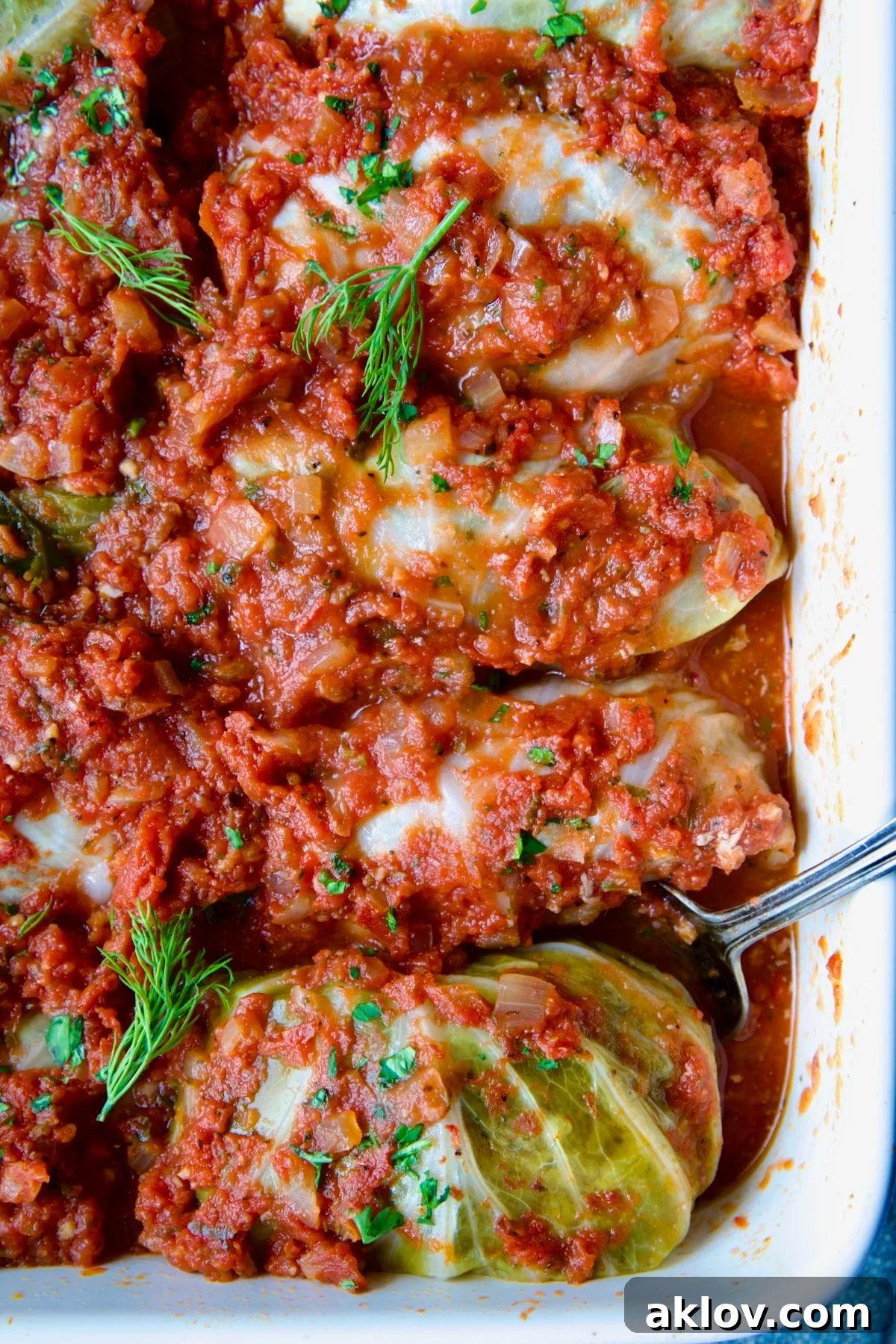
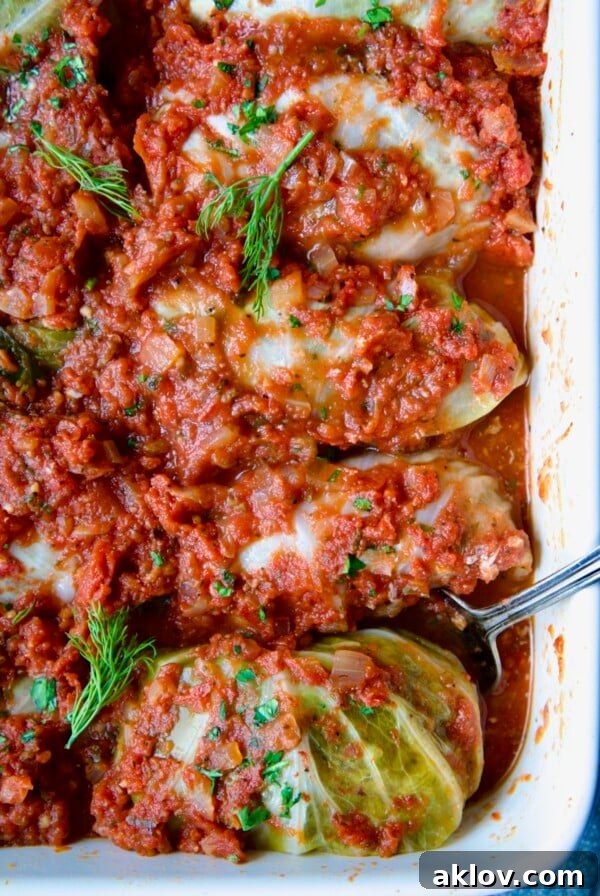
Indulge in the heartwarming embrace of homemade Polish Cabbage Rolls, known affectionately as Golumpki or Gołąbki. This authentic recipe delivers the ultimate cold-weather comfort food, transforming humble ingredients into a wholesome yet incredibly satisfying meal. As these savory rolls slow-bake in a rich, homemade tomato sauce, the cabbage leaves tenderize to a buttery perfection, practically melting in your mouth with every bite. Serve this classic Polish dish with a vibrant radish salad, sweet and earthy roasted beets, crisp Skillet Green Beans, or tender roasted baby potatoes for a complete and unforgettable dining experience.
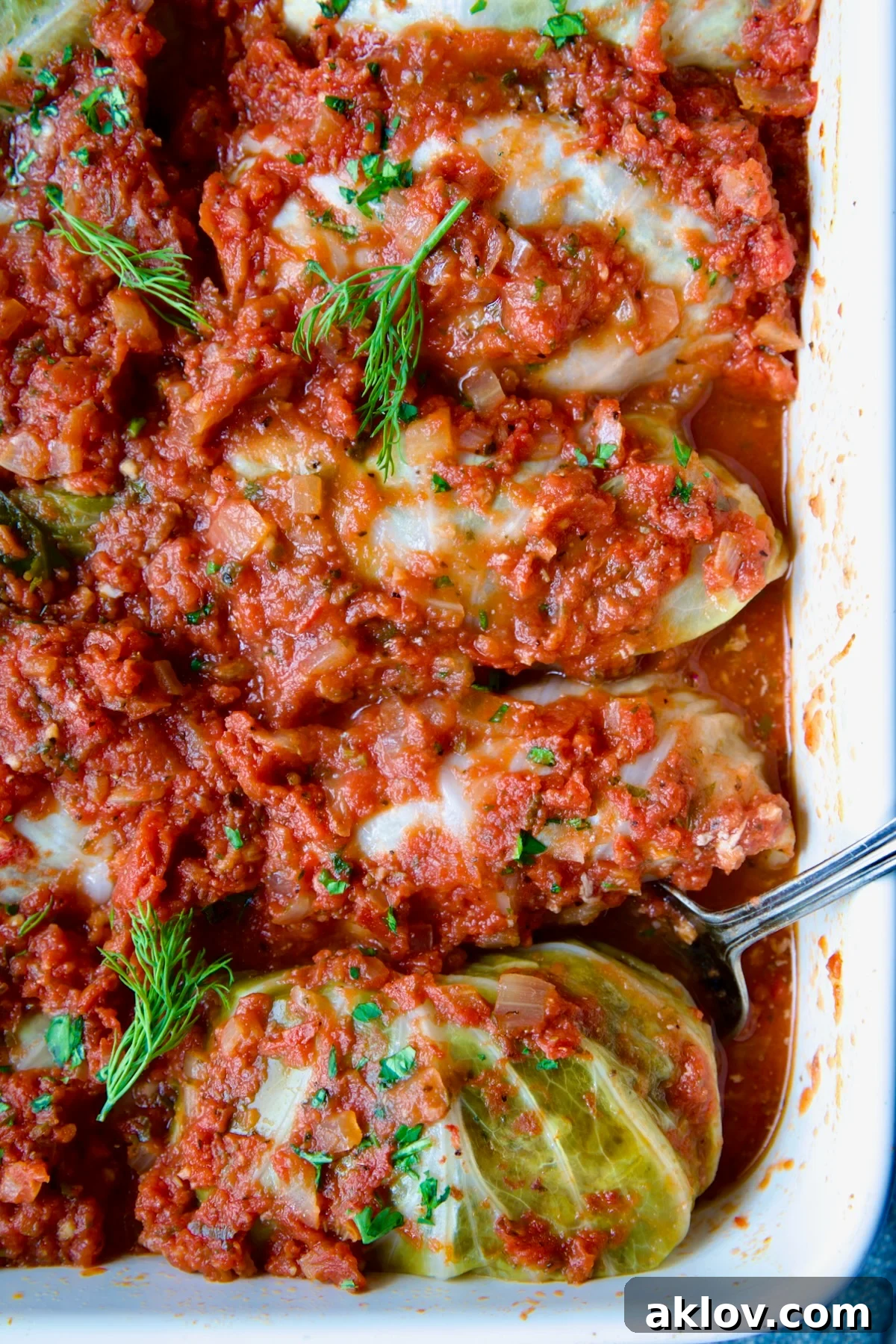
Unveiling Golumpki: The Heart of Polish Cuisine (Gołąbki)
“Golumpki” or “Gołąbki,” which charmingly translates to little pigeons, is the cherished Polish name for a delectable stuffed cabbage dish that holds a prominent place in Central and Eastern European cuisines. More than just a meal, Golumpki is a culinary tradition, a testament to resourceful cooking, and a symbol of hearty, home-cooked goodness. At its core, this dish features a savory filling of budget-friendly ground meat and rice, meticulously wrapped in tender cabbage leaves and slow-braised in a flavorful sauce.
While often associated with Poland, variations of stuffed cabbage can be found across many cultures, each with its unique twist. In Poland, the accompanying sauce is predominantly tomato-based, offering a bright and tangy counterpoint to the rich filling. However, regional variations might surprise you with a creamy mushroom-based sauce, adding an earthy depth. I recall savoring Golumpki at a quaint milk bar in Krakow, Poland, where the cabbage rolls were bathed in a delicate, buttery tomato sauce, reminiscent of a light, thinned-out tomato soup. This comforting dish is especially popular during holidays, particularly at Christmas, where it brings families together around the table, embodying the spirit of warmth and celebration.
Why This Golumpki Recipe Deserves a Place in Your Kitchen
This particular Golumpki recipe stands out for several compelling reasons, making it an absolute keeper for both novice and experienced home cooks. It simplifies the preparation of authentic Polish Cabbage Rolls, ensuring a delicious outcome without unnecessary complexity. One of its greatest advantages is its make-ahead potential; these cabbage rolls can be prepared in advance, stored, and reheated, with the flavors only intensifying over time, making it perfect for busy weeknights or entertaining guests.
The secret to the unparalleled richness and tenderness of these Golumpki lies in the thoughtfully combined filling of ground beef and pork. This blend creates a deeply satisfying flavor profile and ensures a moist, succulent texture that complements the soft cabbage leaves. As the rolls gently simmer in our homemade tomato sauce, the cabbage undergoes a magical transformation, becoming incredibly tender and buttery, almost melting on your tongue. The sauce itself is elevated by the earthy, slightly woody notes of marjoram, an herb deeply ingrained in traditional Polish cooking, adding an authentic layer of depth and aroma.
If you’re searching for a comforting family dinner recipe that utilizes ground meat and offers a delightful departure from your usual repertoire, these Polish Stuffed Cabbage rolls are an excellent choice. Their mild yet flavorful profile appeals to children, while the sophisticated blend of herbs and meats satisfies adult palates. Beyond their exceptional taste, they are surprisingly straightforward to prepare and reheat beautifully, making them a practical and versatile addition to your culinary collection.
This Golumpki recipe is celebrated for being:
- Truly Authentic: Carefully adapted from a traditional recipe found in The Food and Cooking of Poland by Ewa Michalik, guaranteeing a genuine taste of Poland.
- Incredibly Delicious & Savory: Each roll offers a harmonious blend of tender cabbage and a hearty, flavorful meat filling, creating a rich and profoundly satisfying meal.
- Budget-Friendly: An excellent way to transform economical ground beef and pork into an impressive dish.
- Freezer-Friendly & Reheats Beautifully: Ideal for meal prepping, allowing you to enjoy this comforting dish whenever a craving strikes.
Embrace the opportunity to introduce a new, exciting, and deeply satisfying dish to your table. Try this Polish cabbage rolls recipe for your next family dinner or holiday gathering – it’s sure to become a cherished favorite!
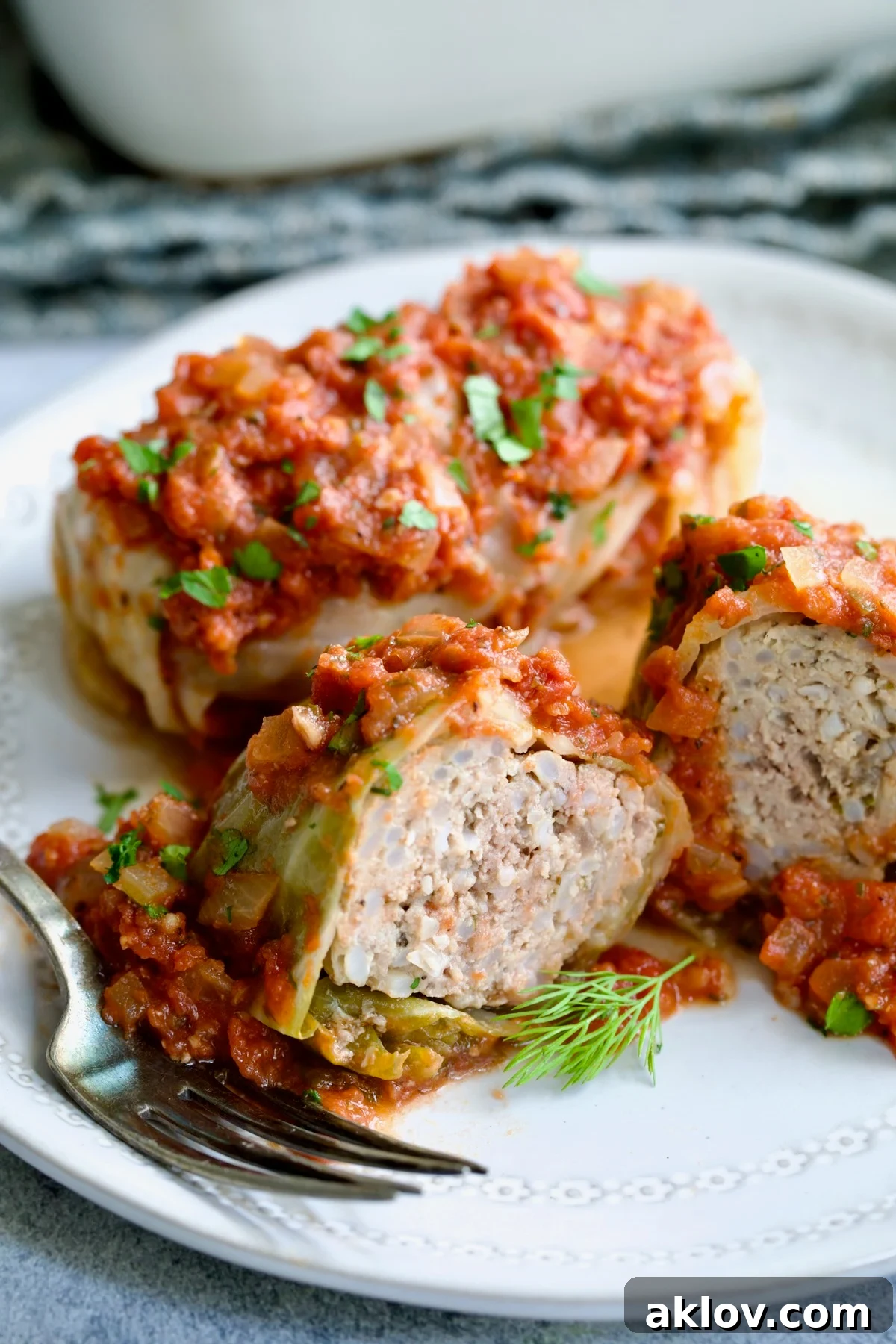
Mastering the Art of Golumpki: A Step-by-Step Guide to Polish Cabbage Rolls
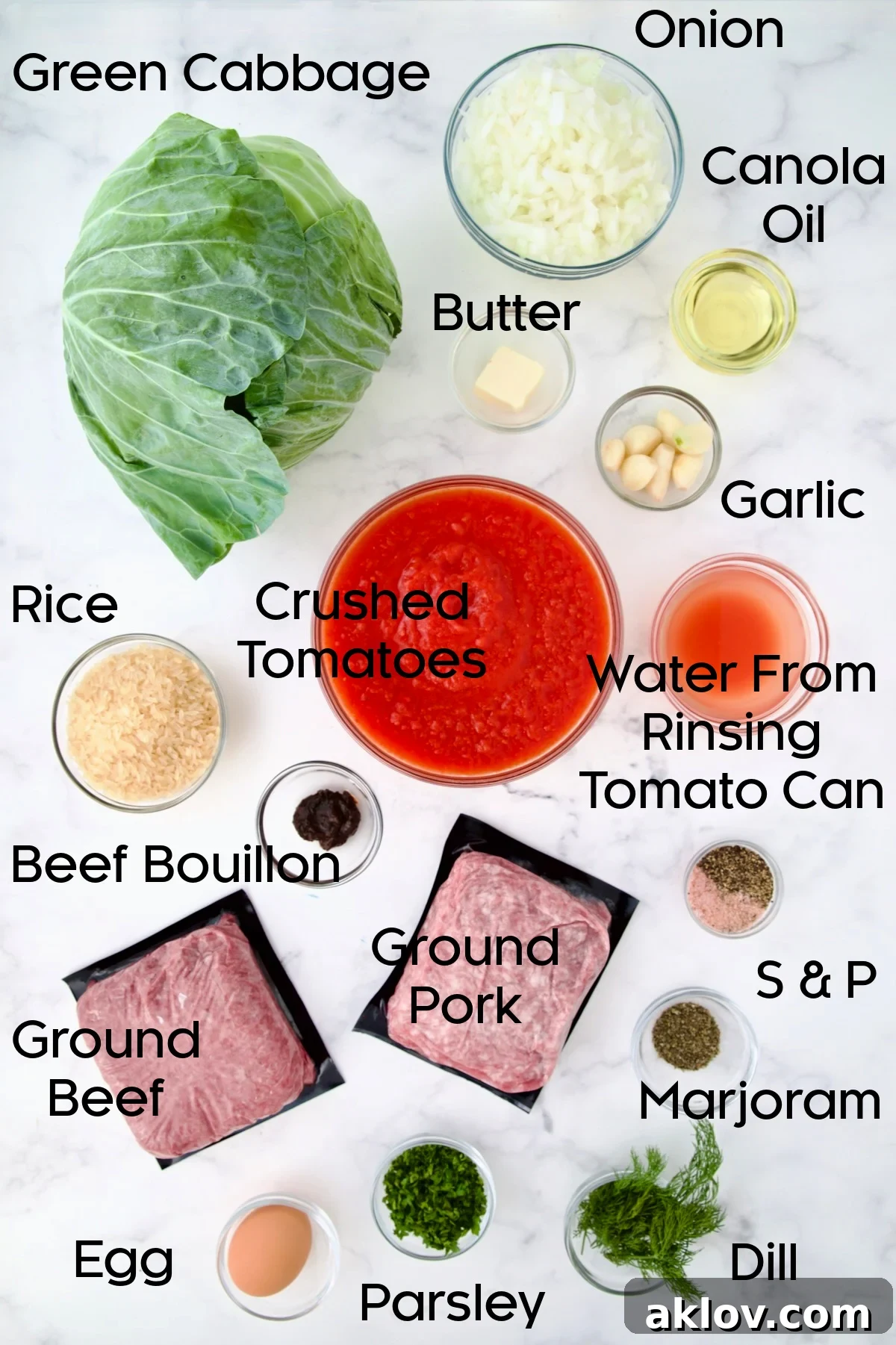
Gather Your Ingredients: The Essence of Golumpki
To embark on your culinary journey to create these delectable Polish cabbage rolls, you’ll need a selection of fresh and pantry staples. Each ingredient plays a crucial role in building the authentic flavor profile of this traditional dish. Below is a comprehensive list to guide you. For precise measurements, please refer to the detailed recipe card at the end of this article.
Ingredient Deep Dive: Notes and Smart Substitutions
Understanding your ingredients is key to culinary success. Here are some insights and substitution tips for the core components of our Golumpki recipe:
- Cabbage Selection: While classic green cabbage is the traditional choice for Golumpki, its slightly peppery flavor profile adds a characteristic zest. Alternatively, Savoy cabbage can be used for a milder, sweeter taste and a slightly more tender texture, offering a subtle variation to the dish.
- The Right Rice: I highly recommend using converted rice, also known as “parboiled” rice, for this recipe. Its unique processing ensures that the grains remain firmer and distinct even after prolonged cooking, preventing the filling from becoming mushy. This type of rice is also more nutritious than regular white rice, as it retains more vitamins and minerals from the brown rice stage. If converted rice isn’t available, regular long-grain white rice will work, but ensure it is cooked only al dente. Brown rice can also be a healthy alternative, though it will alter the texture slightly.
- Crushed Tomatoes for Richness: Crushed tomatoes are ideal for our sauce due to their chunky texture and fresh tomato-like flavor, derived from ground, peeled, and seeded tomatoes. This provides a more robust and homemade feel compared to smoother purees or sauces. You can substitute with tomato sauce if needed, but avoid canned tomato soup. While popular in Americanized versions of stuffed cabbage, it is not traditional in authentic Polish cooking and will yield a different flavor.
- The Magic of Marjoram: Marjoram is a cornerstone herb in Polish cuisine, lending an earthy, woodsy, and slightly sweet flavor that is indispensable to authentic Golumpki. It adds a warmth and depth that truly distinguishes the dish. If marjoram is unavailable, dried thyme makes a suitable substitute, offering a similar aromatic quality.
- Beef Bouillon Power: For maximum flavor with controlled salinity, I strongly advocate for using a beef bouillon concentrate, such as Better Than Bouillon, over conventional bouillon cubes. Concentrates typically offer a richer, more nuanced beef flavor and allow for better salt management. Opt for a low-sodium concentrate, especially since the sauce reduces during baking, which can intensify its saltiness.
- Ground Beef Choices: For the filling, ground chuck (typically 80% lean, 20% fat) is my preferred choice. The higher fat content contributes significantly to the tenderness, juiciness, and overall flavor of the cabbage rolls. If you’re looking to reduce the fat content, ground sirloin can be substituted, though you might notice a slight difference in moisture.
- Ground Pork for Depth: Ground pork adds a crucial layer of flavor and moisture to the filling, creating a more complex and traditional taste. However, if dietary restrictions prevent you from consuming pork, you can certainly use all ground beef for the filling.
Crafting Golumpki: Detailed Step-By-Step Instructions
Follow these instructions carefully to create perfect Polish Cabbage Rolls that will impress everyone at your table.
- Begin by gathering all your ingredients and performing any necessary prep work, such as chopping onions and garlic.
- Preheat your oven to 350°F (175°C). Lightly spray a 13 x 9-inch baking dish with cooking spray to prevent sticking.
- PREPARE THE CABBAGE: The first crucial step is to prepare the cabbage leaves for rolling. Carefully remove as much of the core from the cabbage head as possible.
- Place the cored cabbage head into a very large pot of generously salted water. Bring the water to a rolling boil and cook the cabbage for 5-6 minutes. The goal is to soften the outer leaves just enough so they can be easily peeled away without tearing. You should be able to gently remove about 12 large outer leaves with tongs. If needed, a small knife can assist in detaching stubborn leaves.
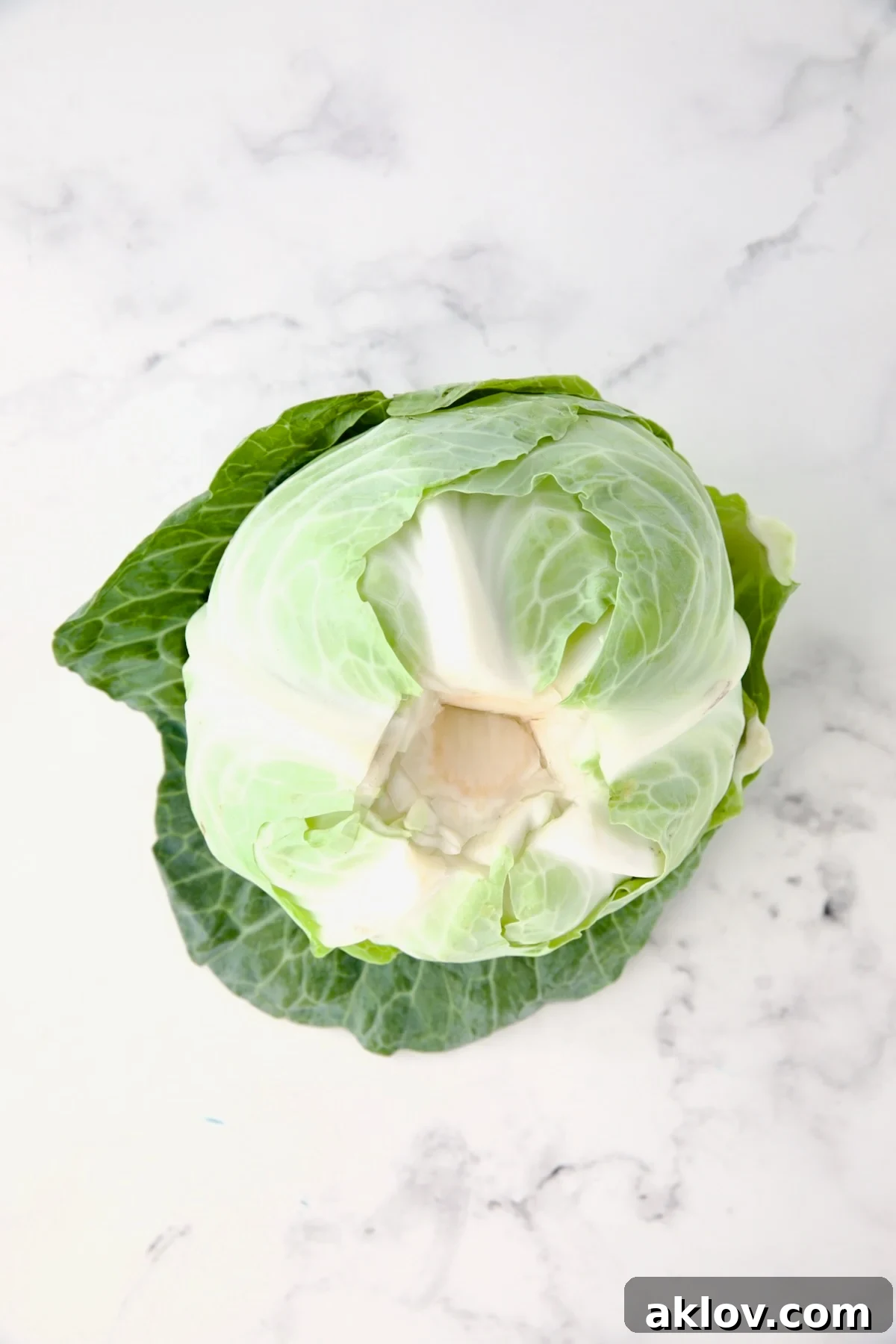
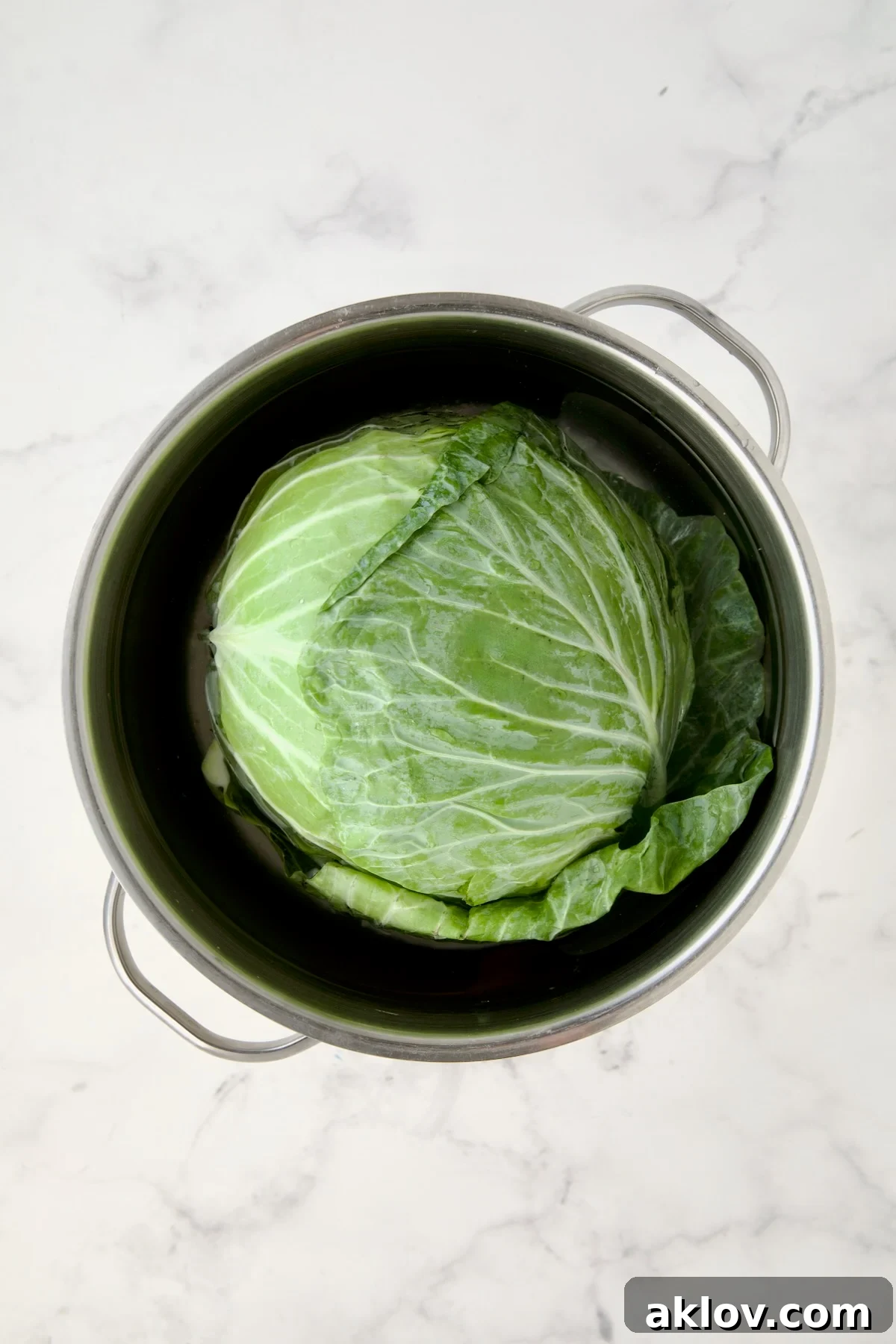
- Carefully transfer the blanched cabbage leaves to a rimmed baking sheet or a large platter to cool down.
- Once the leaves are cool enough to handle, use a sharp knife to carefully cut out the thickest part of the large center rib from each leaf. Create a shallow V-shape cut, leaving enough cabbage on both sides to serve as “flaps” for folding over the filling. This step makes the leaves much more pliable and easier to roll, ensuring the finished Golumpki lay flat.
- Set the prepared cabbage leaves aside. You can remove the remaining cabbage from the pot and set it aside to cool for another delicious use, such as this Polish-inspired Potato Cabbage Kielbasa Soup.
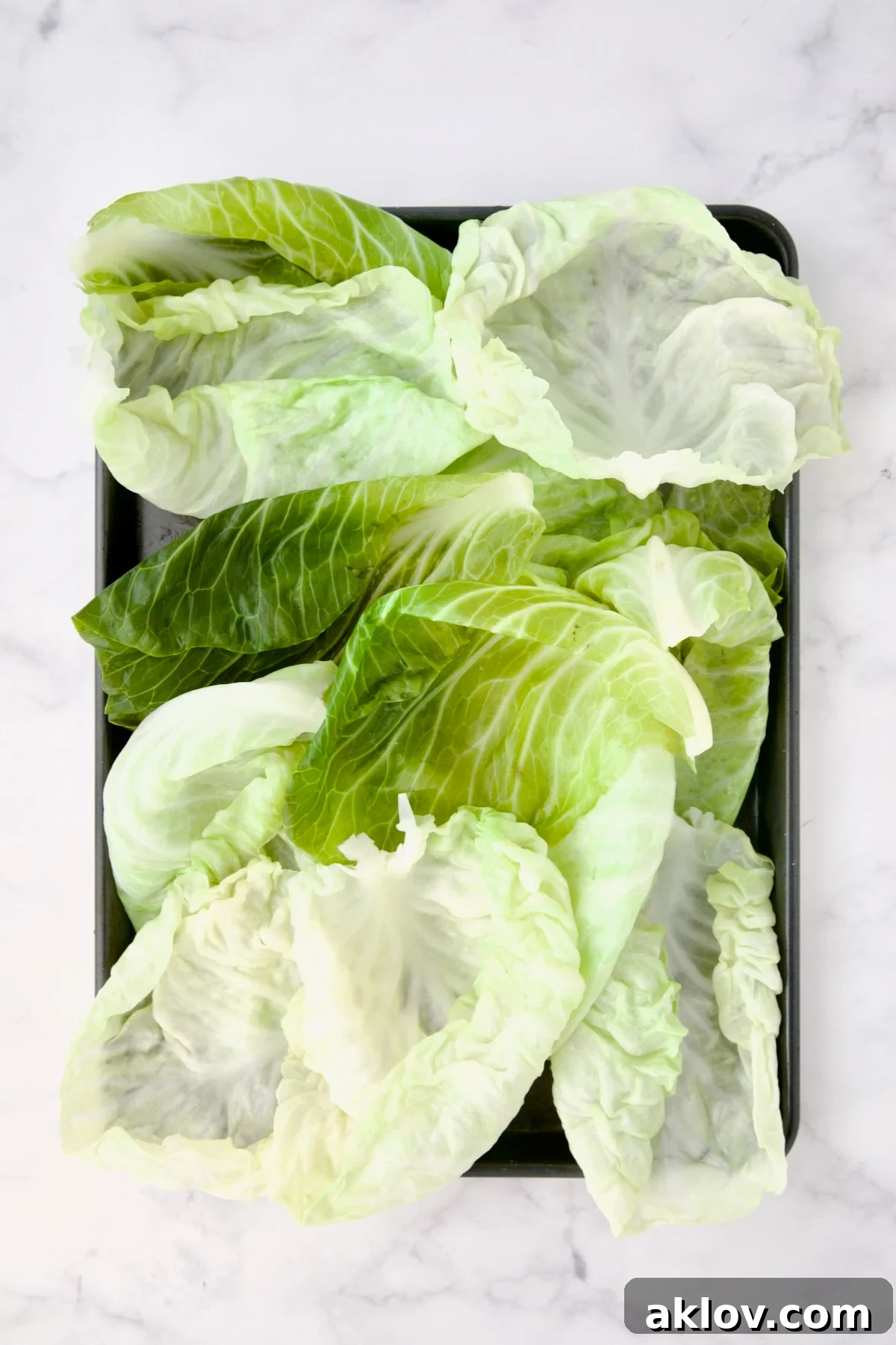
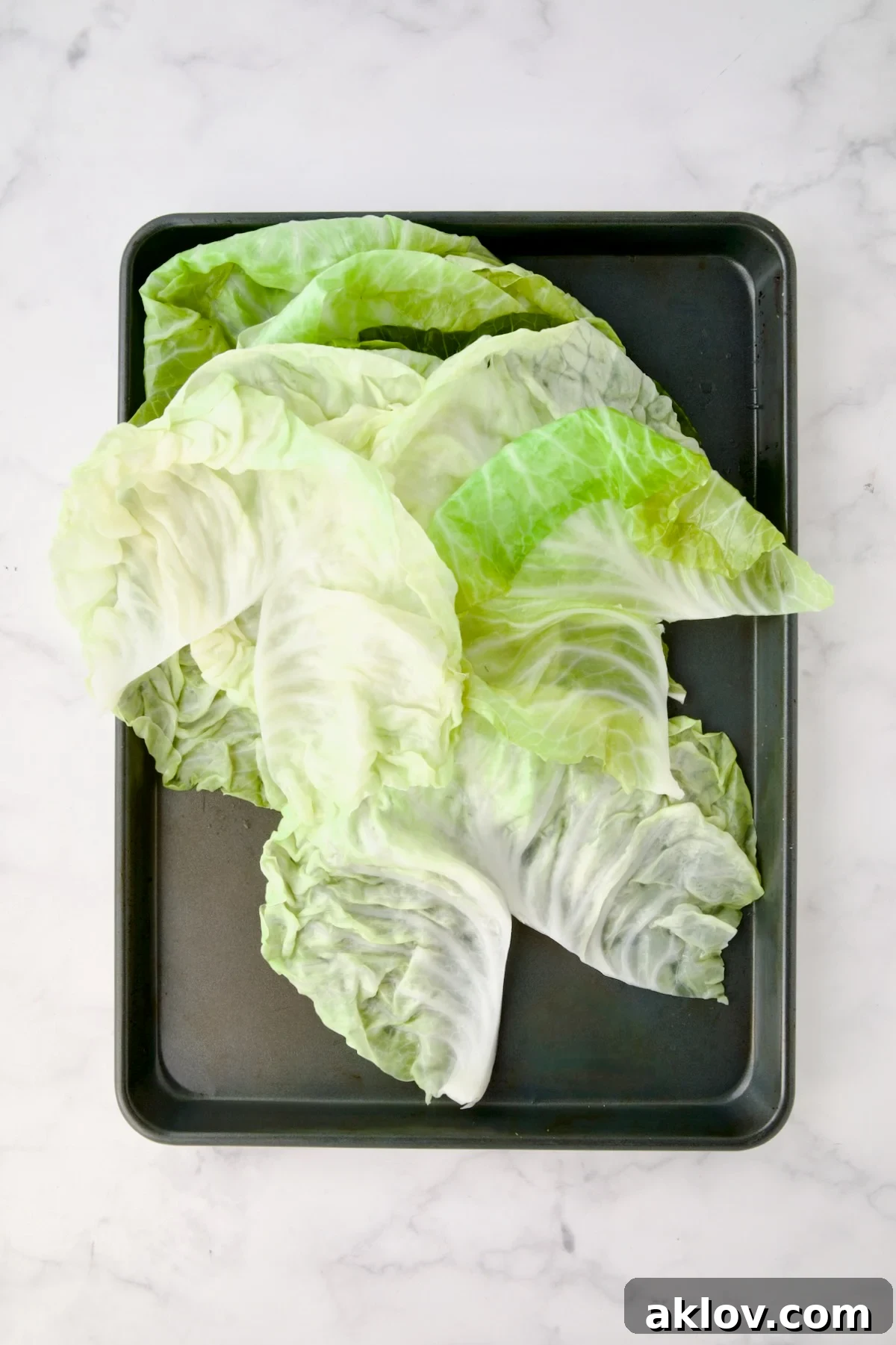
- COOK THE RICE: Utilize the same pot of salted water used for blanching the cabbage leaves. Bring it back to a boil and add the uncooked white rice.
- Cook the rice for 6 to 7 minutes, or until it is cooked al dente (meaning it still has a slight bite or resistance when chewed). It’s crucial not to overcook the rice at this stage, as it will continue to cook and absorb flavors while baking inside the cabbage rolls.
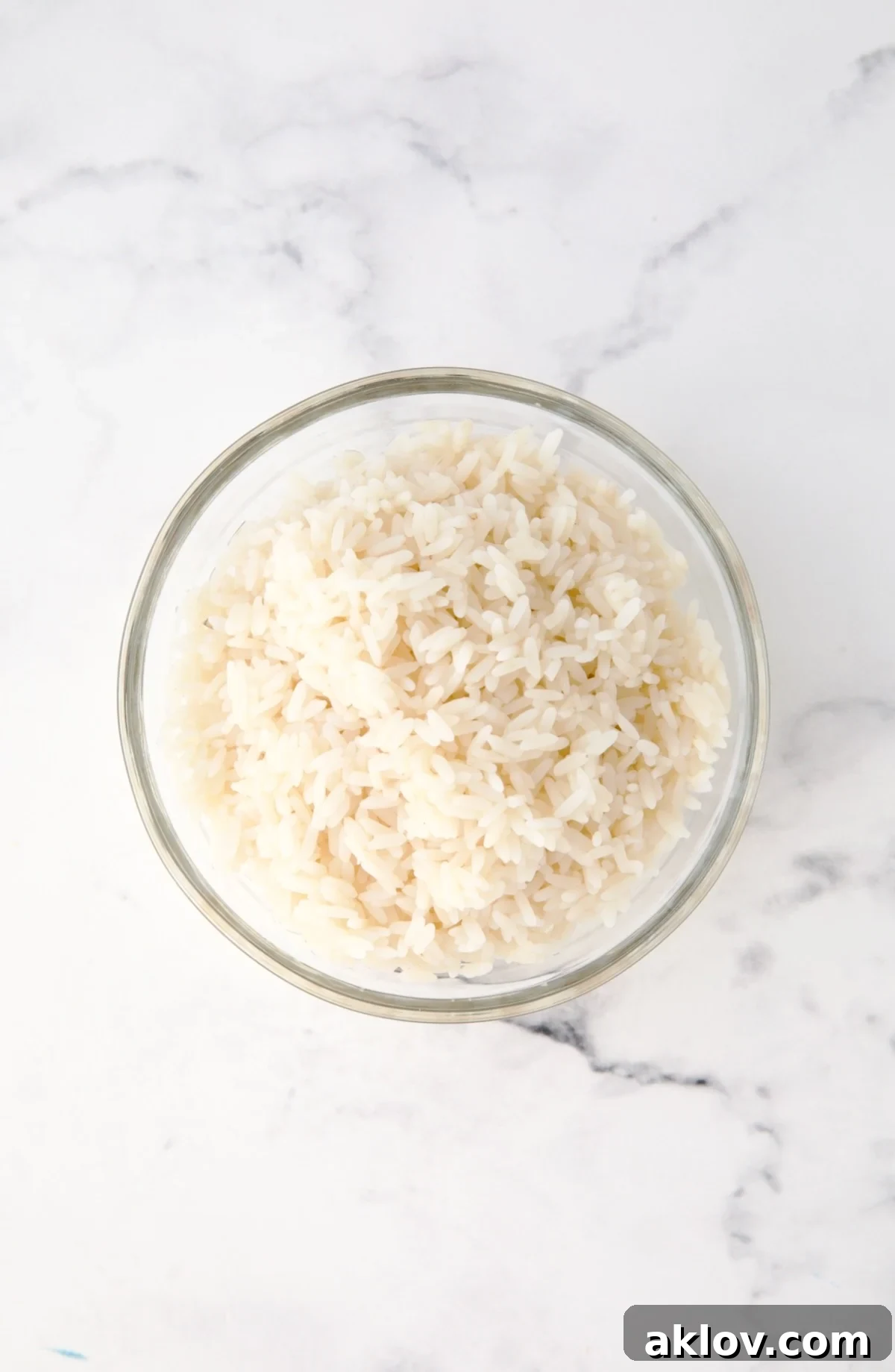
- Once al dente, drain the rice thoroughly in a fine-mesh sieve and rinse it under cold tap water to stop the cooking process and cool it down. Drain again to remove excess water. Transfer the cooled rice to a large mixing bowl and set it aside.
- PREPARE THE SAUCE: In a large saucepan, heat the canola oil over medium-high heat.
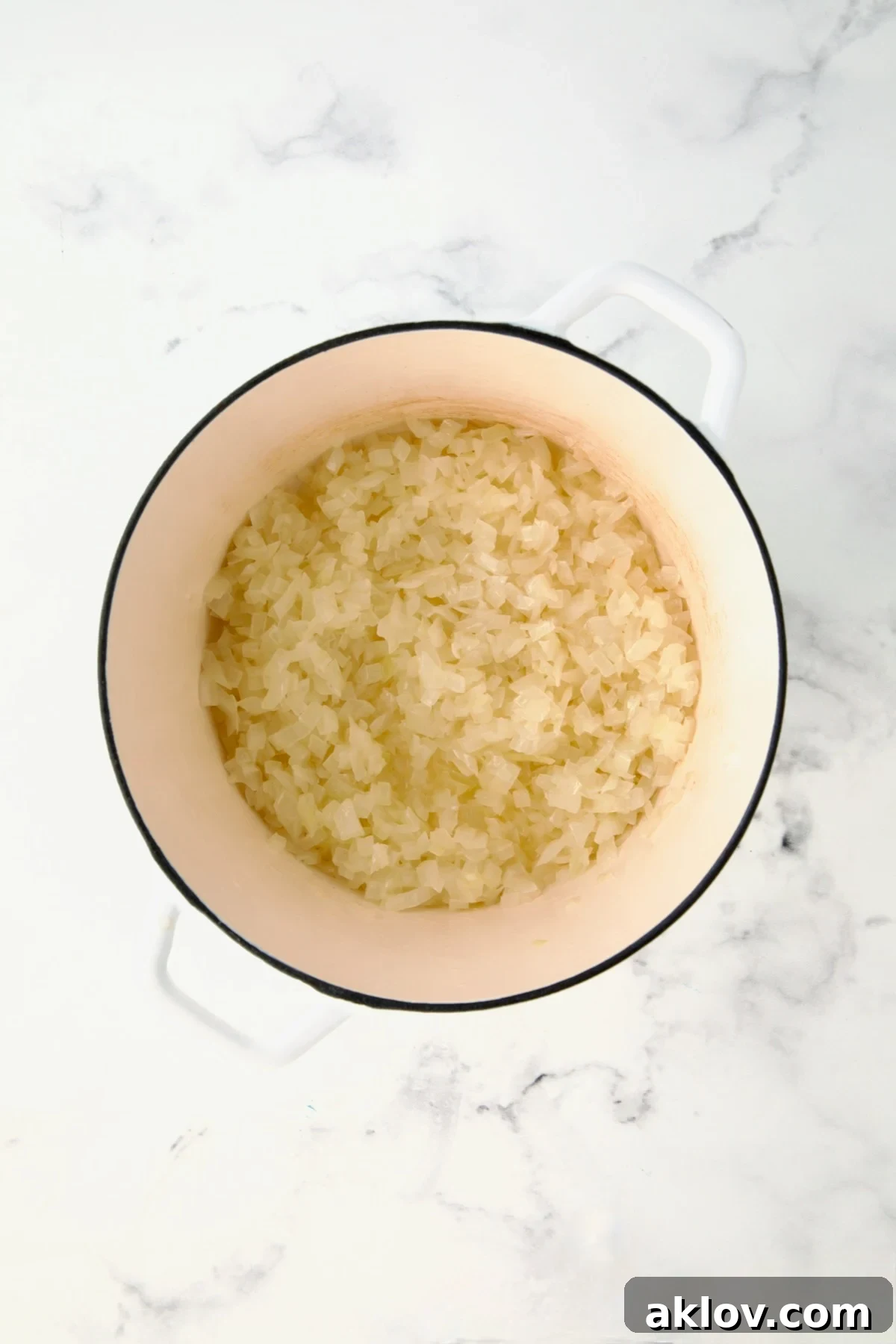
- Add the finely chopped onion to the saucepan and sauté for 4 to 5 minutes, or until it softens and becomes translucent.
- Transfer approximately HALF of the cooked onion to the large mixing bowl containing the cooked rice. Leave the remaining half of the onion in the saucepan. This division ensures both the filling and the sauce benefit from the savory onion flavor.
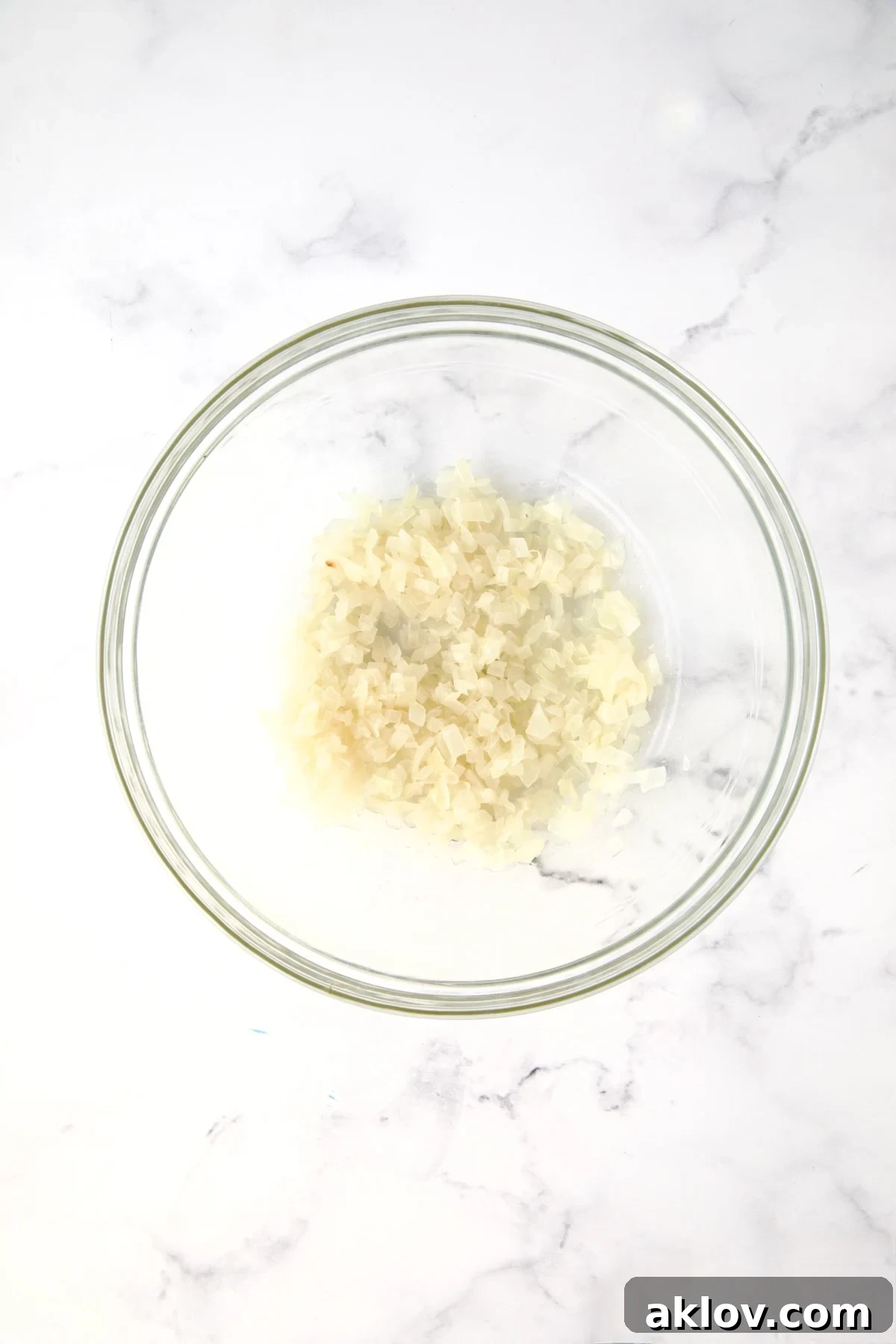
- To the onions remaining in the saucepan, add half of the chopped garlic. Cook briefly, for just 10 to 15 seconds, until the garlic becomes fragrant. Be careful not to burn it.
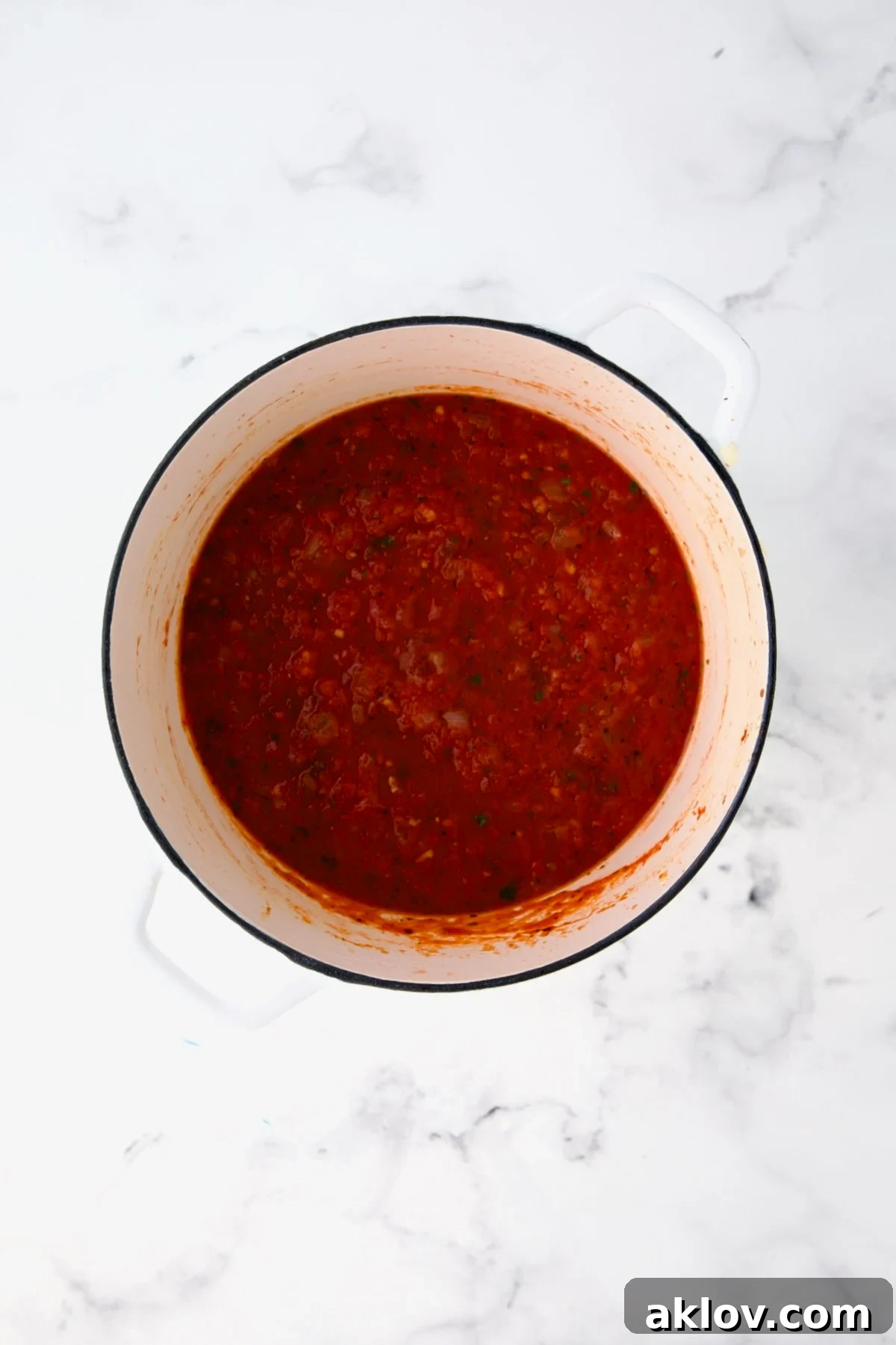
- Stir in the crushed tomatoes, the 1/2 cup of water (used to rinse out the tomato can to capture all the flavor), the dried marjoram, and the beef bouillon concentrate.
- Bring the sauce to a gentle simmer and cook for 10 to 12 minutes, allowing it to thicken slightly and for the flavors to meld. Season the sauce generously with salt and freshly ground black pepper to taste. If you prefer a slightly tangier sauce, stir in a teaspoon of red wine vinegar.
- Pour approximately 1/2 cup of this rich tomato sauce into the bottom of your prepared 13×9-inch baking dish. This creates a flavorful bed for the cabbage rolls.
- FINISH PREPARING THE FILLING: Return to the large mixing bowl containing the rice and the reserved cooked onions. Add the remaining chopped garlic, ground beef, ground pork, and the large egg. Season the mixture with 1 teaspoon of salt, 1/2 teaspoon of freshly ground black pepper, and half of the chopped fresh parsley. Mix all ingredients thoroughly until well combined. Using your hands can be the most effective way to ensure an even distribution of ingredients.
- Once mixed, divide the filling into 12 equal portions. This ensures uniform sizing for your cabbage rolls.
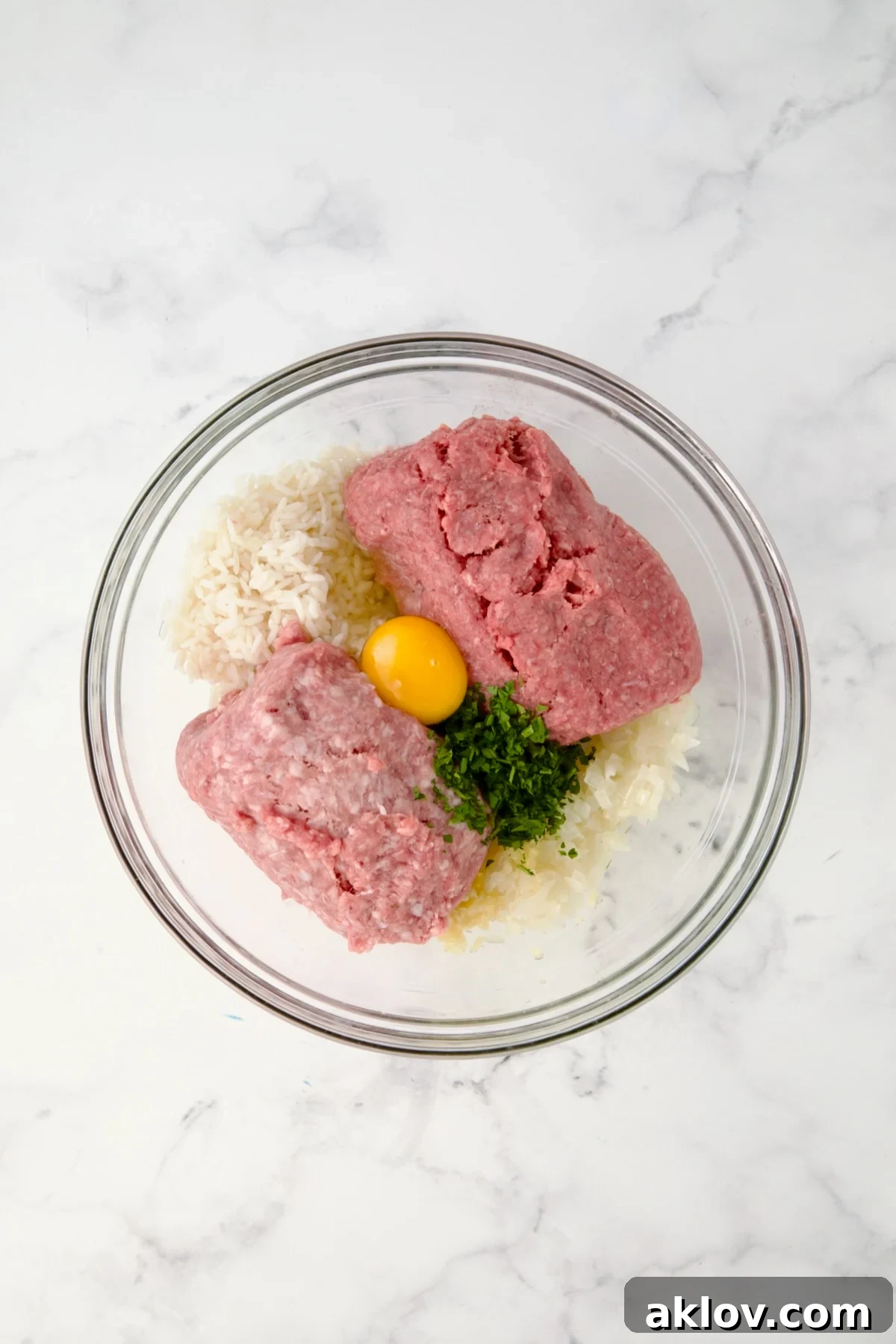
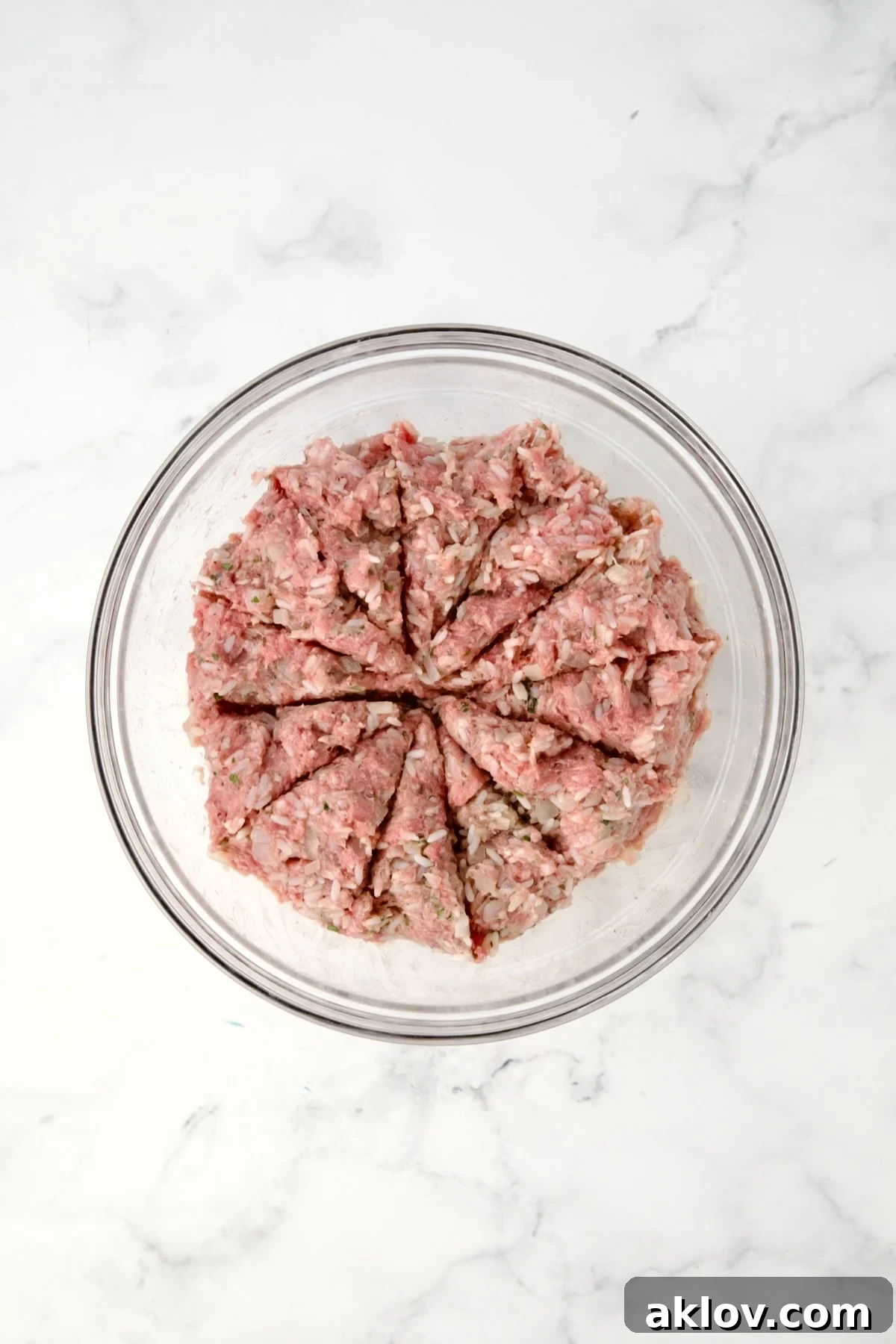
- MAKE THE CABBAGE ROLLS: Lay one prepared cabbage leaf flat on a clean work surface, with the V-cut opening facing you.
- Place one of the 1/12th portions of the filling directly above the V-cut. Fold the bottom “flaps” of the cabbage leaf over the filling, then fold in the sides, and finally, roll the leaf up tightly from the bottom to create a neat, compact roll.
- Place the finished cabbage roll seam-side down in the prepared baking dish.
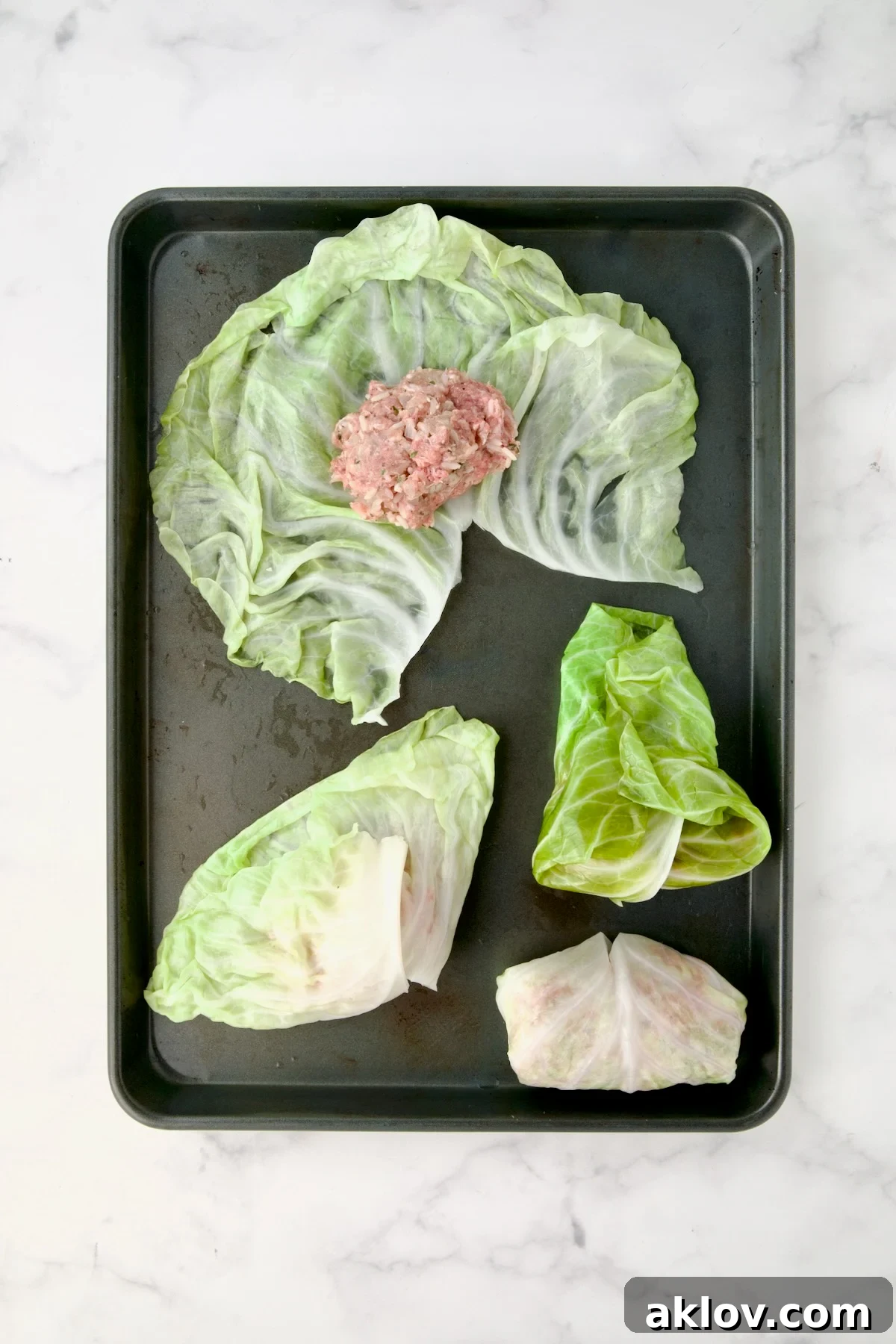
- Repeat this rolling process with the remaining 11 cabbage leaves and filling portions, arranging them snugly in the baking dish.
- Once all the rolls are assembled and arranged, pour the remaining tomato sauce evenly over them, ensuring each roll is well-coated.
- MAKE AHEAD OPTION: At this stage, your Golumpki can be prepared ahead of time. If using fresh ground meats that were just opened, you can refrigerate the assembled dish for up to 24 hours. For longer storage, freeze the assembled rolls (before baking) and then thaw in the refrigerator before baking.
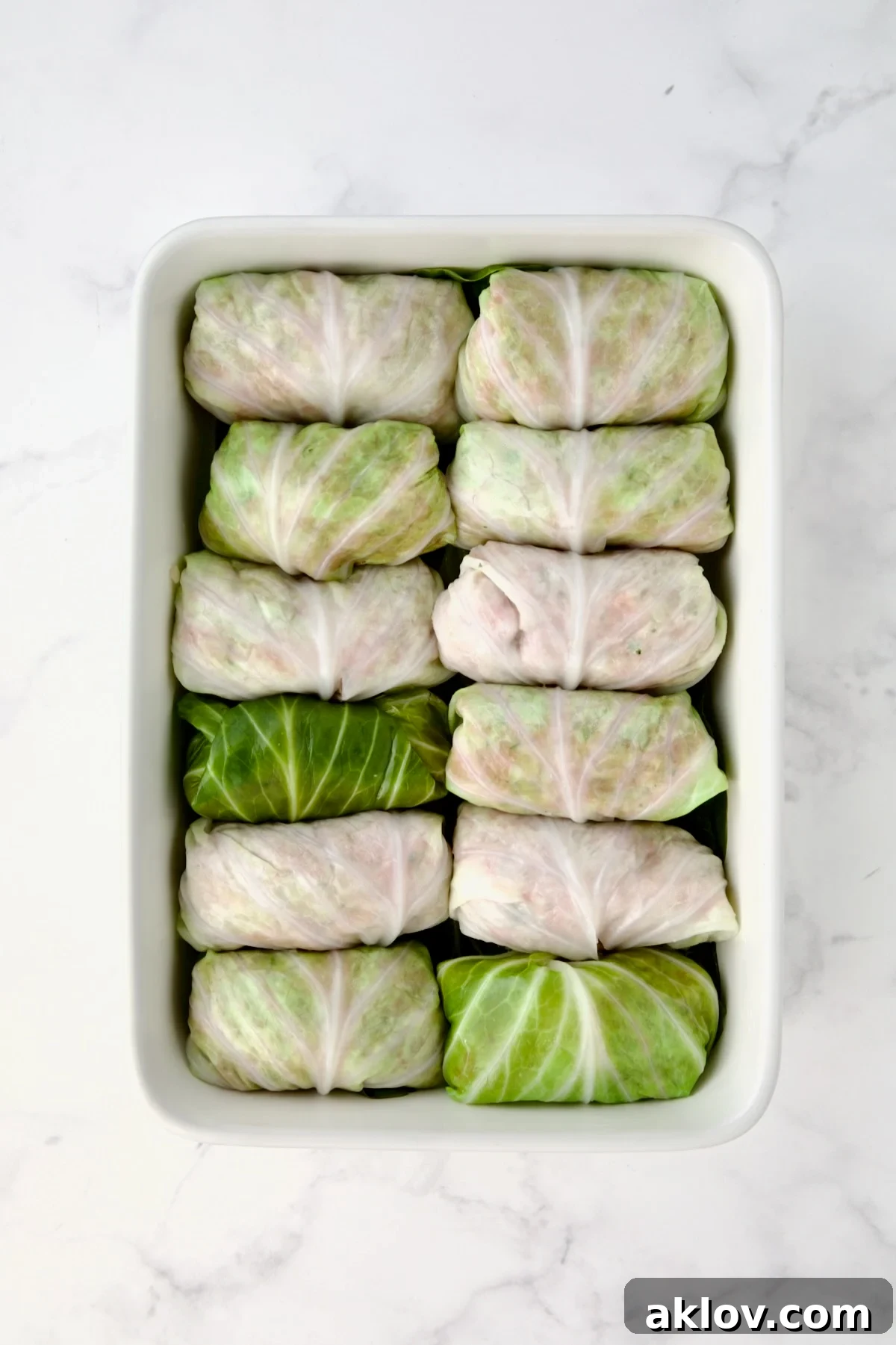
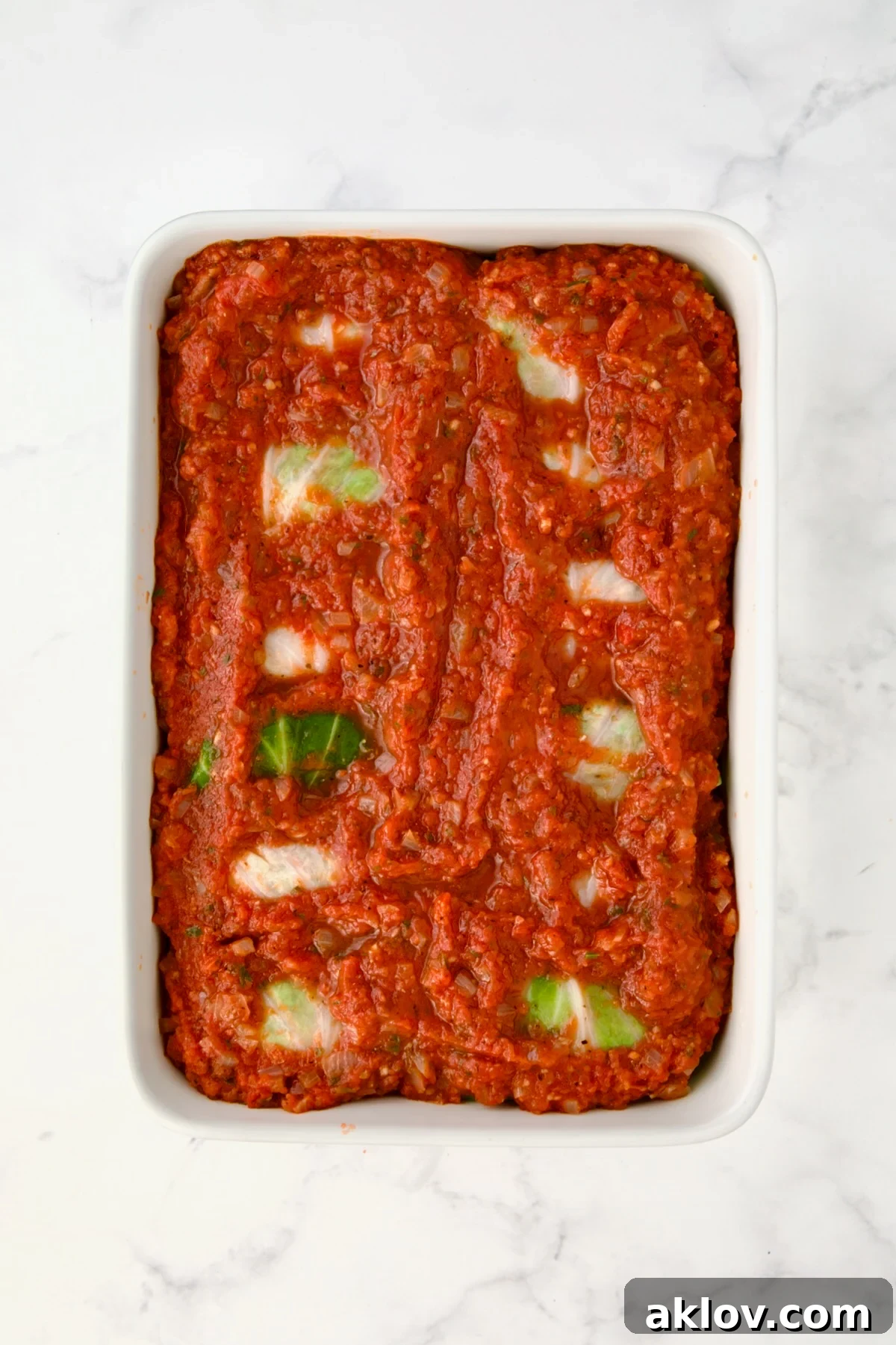
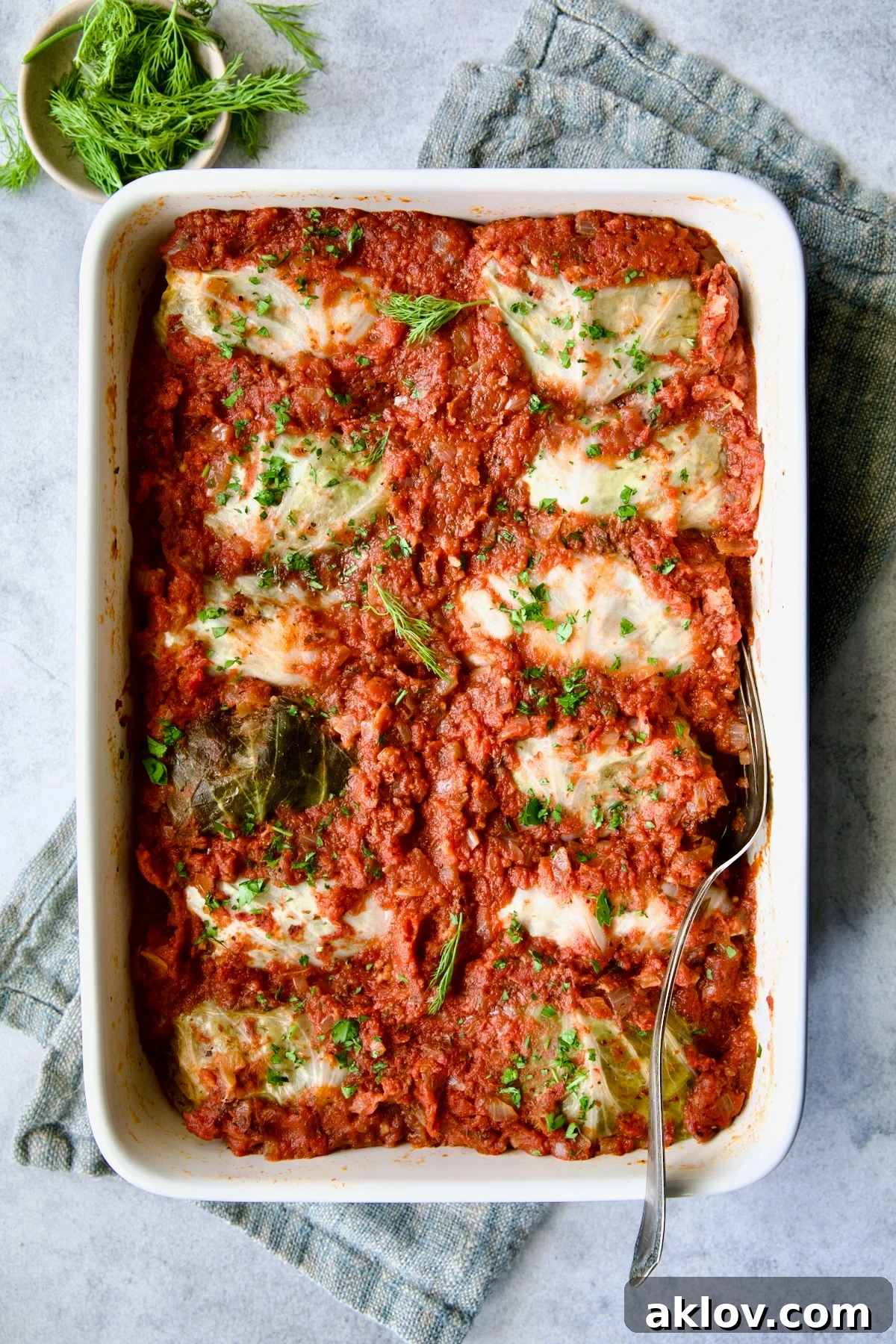
- Bake the cabbage rolls in the preheated oven for 55 to 60 minutes, or until an instant-read thermometer inserted into the center of a cabbage roll registers 165°F (74°C), indicating that the meat is thoroughly cooked.
- Once baked, remove from the oven and garnish with the remaining chopped fresh parsley and, if desired, a sprinkle of fresh dill for an added aromatic touch.
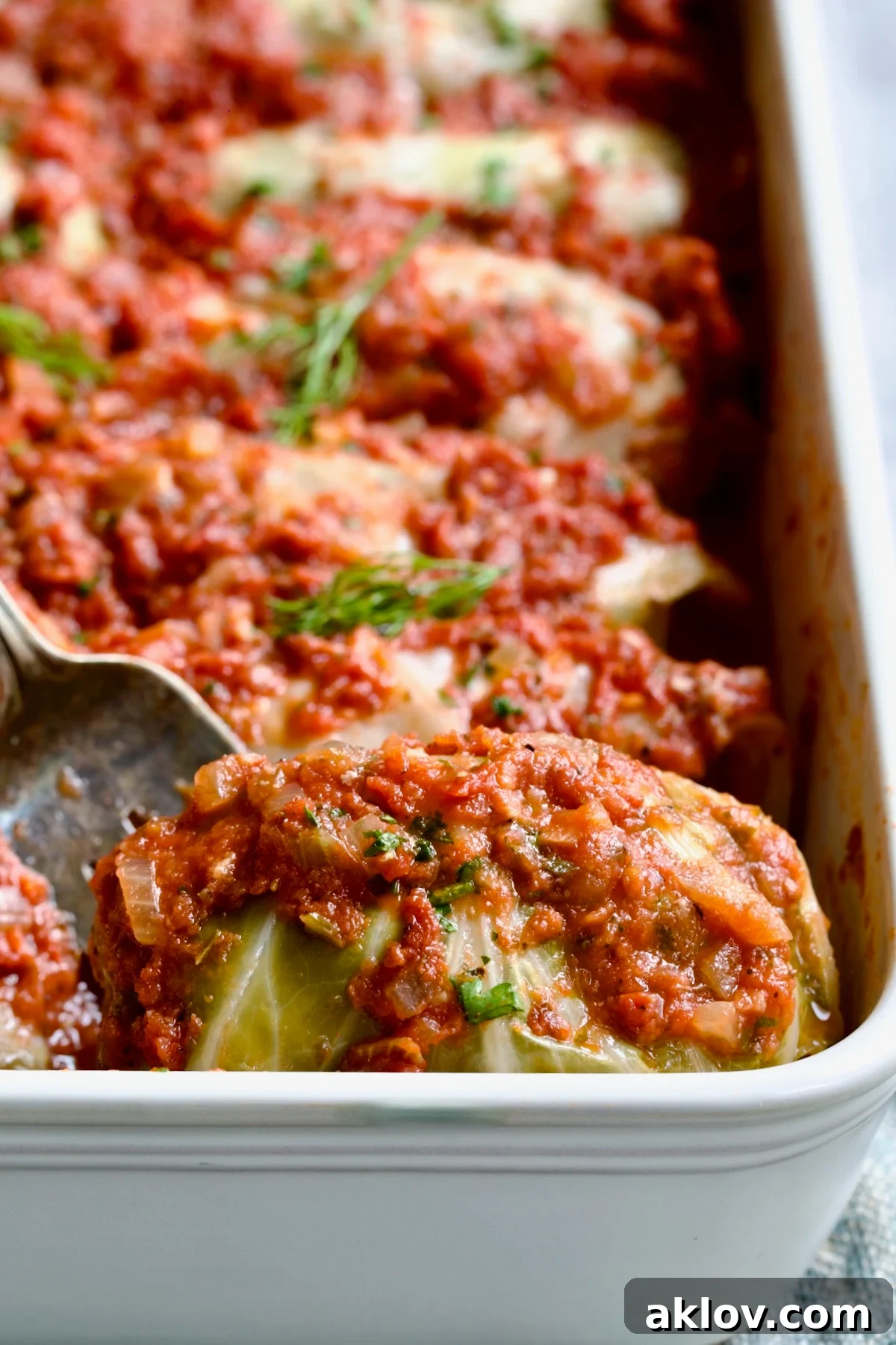
Voila! Your homemade Golumpki (Gołąbki) are ready to be savored. This comforting recipe is undoubtedly destined to become a beloved family or holiday tradition!
Chef’s Secrets for Perfect Golumpki: Expert Tips and Tricks
- Handling Hot Cabbage Leaves: When removing the cabbage leaves from boiling water, tongs are your best friend! They provide a safe distance from the heat. Don’t hesitate to use a small paring knife to gently assist in separating the leaves if they are clinging tightly to the head. This prevents tearing and ensures intact leaves for rolling.
- Choosing Cabbage Leaves: Always prioritize using the larger, outer leaves for your cabbage rolls. These leaves are sturdier and provide ample surface area to hold a generous amount of filling, contributing to beautifully shaped Golumpki. If you find yourself with smaller leaves, you can carefully piece two together, slightly overlapping them, to form a larger surface for rolling. Just be extra gentle during the rolling process.
- The Al Dente Rice Advantage: Ensuring your rice is cooked only until al dente is paramount. The rice will continue to cook and expand as the cabbage rolls bake in the oven, soaking up the savory meat juices and tomato sauce. If the rice is fully cooked initially, or if you use leftover cooked rice, it risks becoming mushy and compromising the texture of your filling. The slight resistance of al dente rice guarantees a perfectly textured filling after baking.
- The V-Cut Technique: Removing the thick center rib from each cabbage leaf by creating a V-shape is a game-changer. This simple cut not only makes the leaves significantly easier to roll and fold neatly around the filling but also ensures the cooked cabbage rolls lie flat and present beautifully in the baking dish.
- Microwave Cabbage Prep (A Friend’s Brilliant Hack!): For an alternative to boiling, a fellow chef friend shared this clever trick: Remove the core from your cabbage head. Place the head in a microwave-safe casserole dish with about 1/2 cup of water, then cover tightly with plastic wrap. Microwave on HIGH for 9 minutes, flipping the cabbage halfway through. Let it stand, still covered, for 15 minutes to steam. The leaves will be perfectly softened and easy to peel off for rolling. This method can save time and effort, especially if you’re dealing with a very dense cabbage.
Your Golumpki Questions Answered: Recipe FAQs
While not strictly mandatory, converted rice (also known as parboiled rice) is highly recommended for stuffed Polish cabbage rolls. Its unique processing helps it retain a firmer, distinct texture even after prolonged cooking, preventing the filling from becoming mushy. If converted rice isn’t available, regular long-grain white rice can be used, but ensure you cook it only until it’s al dente before adding it to the filling. Brown rice is another healthier option, which will offer a chewier texture and nutty flavor.
Absolutely! Golumpki are an excellent make-ahead dish, as their flavors often improve overnight. However, it’s crucial to be mindful of food safety regarding uncooked ground meats. If you’re assembling the rolls with raw meat, ensure they are refrigerated for no longer than 24 hours before baking. Ground meats are highly perishable. For longer storage before baking, freeze the assembled Golumpki promptly. To use, thaw them completely in the refrigerator and then bake as instructed. If you’ve already baked the Golumpki, simply allow them to cool completely, then refrigerate until you’re ready to reheat. To refresh, gently move the rolls aside, stir the sauce, and spoon it back over them. Reheat in a 350°F (175°C) oven until heated through, then garnish with fresh parsley and dill as desired.
Yes, stuffed Polish cabbage freezes beautifully, both before and after baking! If you choose to freeze them before baking, once the cabbage rolls are assembled and the sauce is added, transfer them to a freezer-safe dish, cover tightly, and freeze. When ready to bake, thaw them in the refrigerator first, then bake according to the recipe. You can even start baking them if they are still partially frozen by placing the cold dish in a cold oven and then turning the oven on, allowing the dish to heat slowly to prevent thermal shock. If freezing after baking, divide the cooked rolls into smaller, airtight containers for convenience. Thaw them in the refrigerator overnight or gently in the microwave before reheating.
Yes, you can absolutely adapt Golumpki to be vegetarian or vegan! The meaty filling can be replaced with a hearty combination of finely chopped mushrooms, which provide an umami-rich texture similar to meat, combined with various grains such as barley, farro, quinoa, or buckwheat, a grain traditional in Polish cooking. Ensure your sauce is also made with vegetable broth instead of beef bouillon and that any other ingredients like eggs are replaced with suitable plant-based alternatives for a fully vegan version.
While canned tomato soup often finds its way into many Americanized stuffed cabbage recipes, it is generally not traditionally used for authentic Polish Golumpki. Canned tomato soup itself only became widely available just before the turn of the 20th century. Polish immigrants to the U.S., or second and third-generation Polish-Americans, often adopted the convenience of canned soup in their Golumpki recipes. However, in pre-World War II Poland and during the subsequent decades of communist rule, convenience foods were a rarity. Traditional Polish cooking relies on simpler, fresh ingredients, making crushed tomatoes or homemade tomato purees the authentic choice for Golumpki sauce.
Storage and Enjoying Leftovers
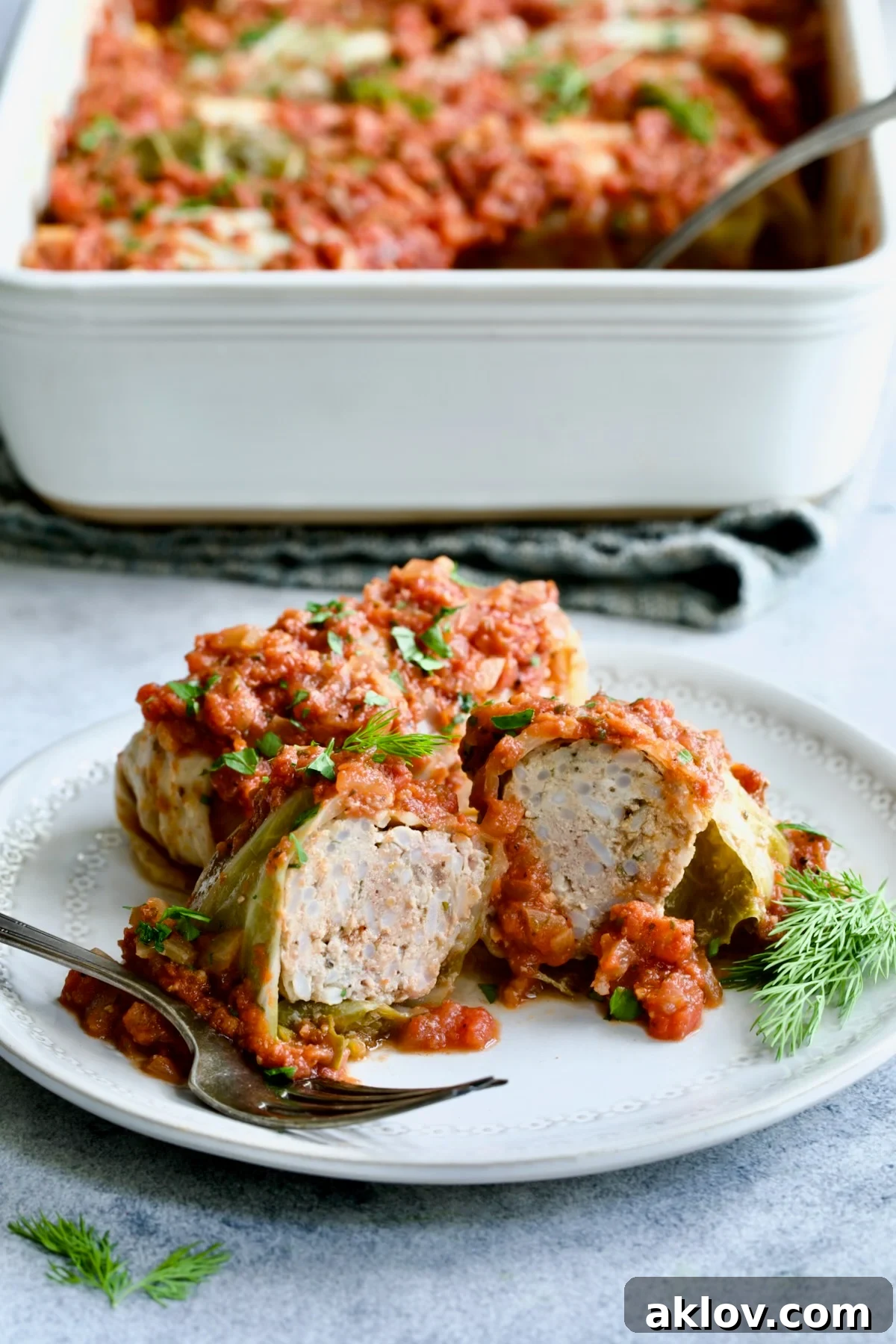
- Leftover Polish Cabbage Rolls can be stored in an airtight container in the refrigerator for up to five days. They make fantastic next-day meals!
- For longer storage, freeze the cooked and cooled Golumpki in individual portions or in a larger freezer-safe container for up to 3 months. Thaw in the refrigerator overnight or reheat gently from frozen in the oven.
Perfect Pairings: What to Serve with Golumpki
Golumpki is a complete meal on its own, but it pairs beautifully with fresh, bright side dishes that cut through its richness:
- Roasted Beet Salad: The sweetness of roasted beets offers a wonderful contrast.
- Creamy Potato Cucumber Salad: A refreshing, cool salad to balance the warm, hearty rolls.
- Roasted Onions (Muffin Pan Method): Sweet, caramelized onions complement the savory flavors.
- Creamy Cucumber Salad with Yogurt: A light and tangy option that adds freshness.
Explore More Cabbage & Cabbage Roll Creations!
If you’ve fallen in love with the versatility of cabbage, here are more exciting recipes to try:
- Spicy Asian Pork Cabbage Rolls: A vibrant, flavorful twist on the classic.
- Italian Stuffed Cabbage Rolls: Infused with bold Mediterranean flavors.
- Unstuffed Chorizo Cabbage Roll Skillet: All the flavor, less fuss, in a convenient skillet meal.
Discover a wide array of delicious meat recipes and culinary inspiration at Meat Recipes – From A Chef’s Kitchen.
Golumpki Recipe (Polish Stuffed Cabbage)
Equipment
-
Stainless Steel Stockpot
-
Wusthof Chef Knife
-
Cutting Board
-
Tongs
-
Rimmed Sheet Pan
-
Saucepan
-
Stainless Steel Mixing Bowls
-
13 x 9 Baking Dish
Ingredients
- Cooking spray
- Salt
- 1 large leafy head green cabbage, (or Savoy cabbage)
- 3/4 cup uncooked white rice, preferably converted (also called parboiled)
- 2 tablespoon canola oil
- 1 large onion, finely chopped
- 7 cloves garlic, chopped, divided
- 1 can (28-ounce) crushed tomatoes
- 1/2 cup water, to rinse out tomato can
- 1 teaspoon dried marjoram
- 2 teaspoons beef bouillon concentrate, such as Better Than Bouillon
- 1 teaspoon red wine vinegar, optional and to taste
- 1 pound ground beef, preferably ground chuck
- 1 pound ground pork
- 1 large egg
- Freshly ground black pepper
- 1/4 cup chopped fresh parsley, divided
- chopped fresh dill, optional (for serving)
Instructions
-
Preheat oven to 350°F (175°C). Spray a 13 x 9-inch baking dish with cooking spray.
PREPARE THE CABBAGE:
-
Remove as much of the core of the cabbage as possible. Place the cabbage in a large pot of salted water. Bring to a boil and cook for 5-6 minutes or until you can easily remove 12 cabbage leaves with tongs. (You may need to help the cabbage leaves off using a knife.)
-
Place the cabbage leaves on a rimmed baking sheet to cool. When cool to the touch, cut the large center rib out, creating a V-shape and flaps to fold over the filling. Set aside. Remove the remaining cabbage from the pot and set aside to cool for another use.
COOK THE RICE:
-
Using the same water from blanching the cabbage leaves, add the uncooked white rice. Bring back to a boil and cook for 6-7 minutes or until the rice is cooked al dente (to the tooth). (You should be able to bite down on a rice kernel, but there should be resistance. You don’t want it cooked entirely or too soft).
-
Drain the rice in a sieve and rinse under cold tap water to cool. Drain again. Transfer to a large mixing bowl and set aside.
PREPARE THE SAUCE:
-
Heat the oil in a large saucepan over medium-high heat. Add the onion and cook for 4-5 minutes or until it softens. Transfer HALF of the onion to the bowl WITH THE RICE, leaving half in the saucepan.
-
Add half the garlic to the onions and cook briefly, 10-15 seconds or until fragrant.
-
Add the crushed tomatoes, water from rinsing the can, dried marjoram and beef bouillon concentrate. Bring to a simmer and cook for 10-12 minutes or until thickened. Season to taste with salt and black pepper. Add a teaspoon of red wine vinegar to taste if desired.
-
Pour approximately 1/2 cup of the sauce into the prepared baking dish.
FINISH PREPARING THE FILLING:
-
To the bowl with the rice and onions, add the remaining garlic, beef, pork and egg. Add 1 teaspoon salt, 1/2 teaspoon black pepper, and half the parsley. Mix well.
-
Divide the filling into 12 even portions.
MAKE THE CABBAGE ROLLS:
-
Place a cabbage leaf on a flat work surface. Place 1/12th of the filling on the cabbage leaf right above the V-cut. Fold the flaps over the filling, then roll up. Place the cabbage roll in the baking dish.
-
Repeat with the remaining 11 leaves. Pour the remaining sauce over the cabbage rolls.
-
Bake for 55-60 minutes or until an instant-read thermometer registers 165°F (74°C) in the center of each cabbage roll.
-
Garnish with remaining chopped fresh parsley and dill (if using).
Notes
- Can also use Savoy cabbage for a milder flavor.
MAKE AHEAD:
- If ground meats are very fresh or just opened, assembled rolls can be refrigerated for up to 24 hours.
- For longer storage before baking, freeze the assembled Golumpki, then thaw in the refrigerator and bake promptly.
- If you bake the Golumpki in advance, cool completely and refrigerate. To reheat, gently move rolls, stir sauce, and spoon back over.
- Reheat in a 350°F (175°C) oven until thoroughly heated (165°F/74°C internal temperature), then garnish.
FREEZER-FRIENDLY:
- BEFORE BEING BAKED (MEAT STILL RAW): Once assembled with sauce, freeze in a freezer-safe dish. Thaw in the refrigerator before baking promptly. You can also bake if partially frozen by placing in a cold oven and then turning it on.
- AFTER BAKING (MEAT IS COOKED): Divide into smaller containers after baking. Thaw in the refrigerator or microwave before reheating.
Nutrition
Nutritional values are automatically calculated using unbranded products and are estimates only. Actual results may vary based on ingredients used and portion sizes. Adjust as needed for dietary restrictions, allergies, or health concerns.
 Like this? Leave a comment below!