
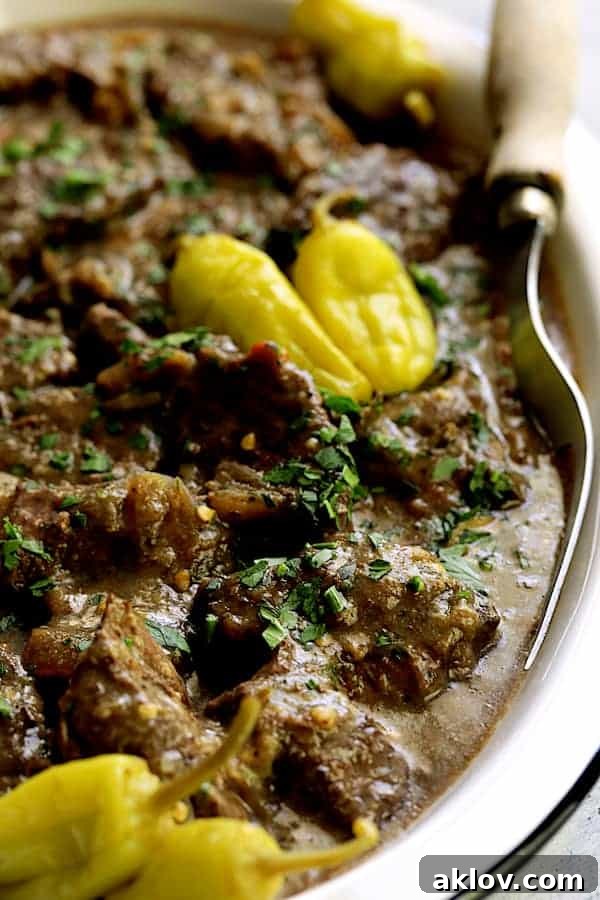
Slow Cooker Mississippi Boneless Beef Short Ribs: A Healthier, Flavorful Twist
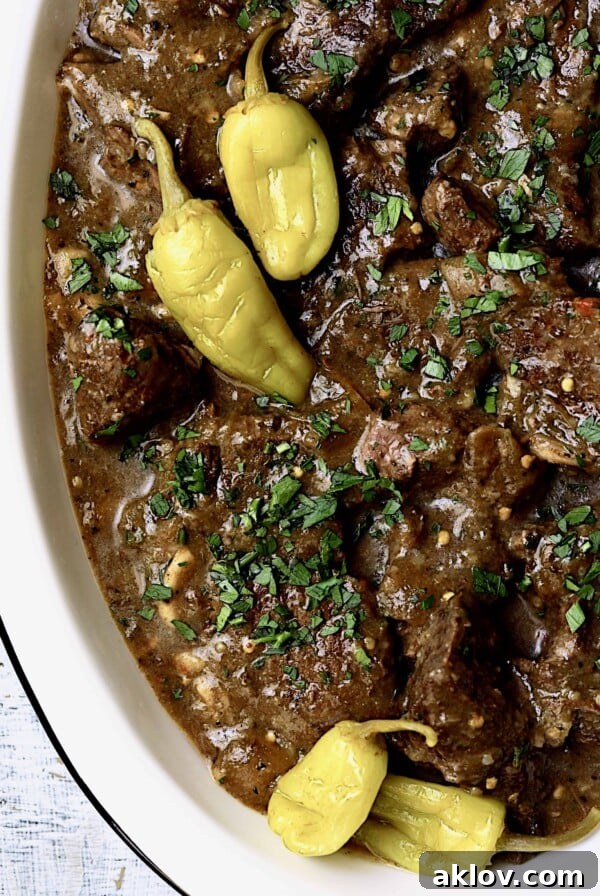
Discover a delicious and healthier way to enjoy the beloved classic: Mississippi Pot Roast. This version of boneless beef short ribs is meticulously crafted without reliance on processed, pre-packaged mixes or an unnecessary stick of butter, yet it delivers all the rich, savory flavor and unbelievably tender, melt-in-your-mouth goodness you expect. Perfect for a cozy family meal, these short ribs are incredibly versatile, pairing wonderfully with sides like mashed turnips, a vibrant succotash, or a comforting fried cabbage.
“I made this tonight for my family, who is visiting from out of town. It was a unanimous 5-star rating. Like – lick the plate delicious!”
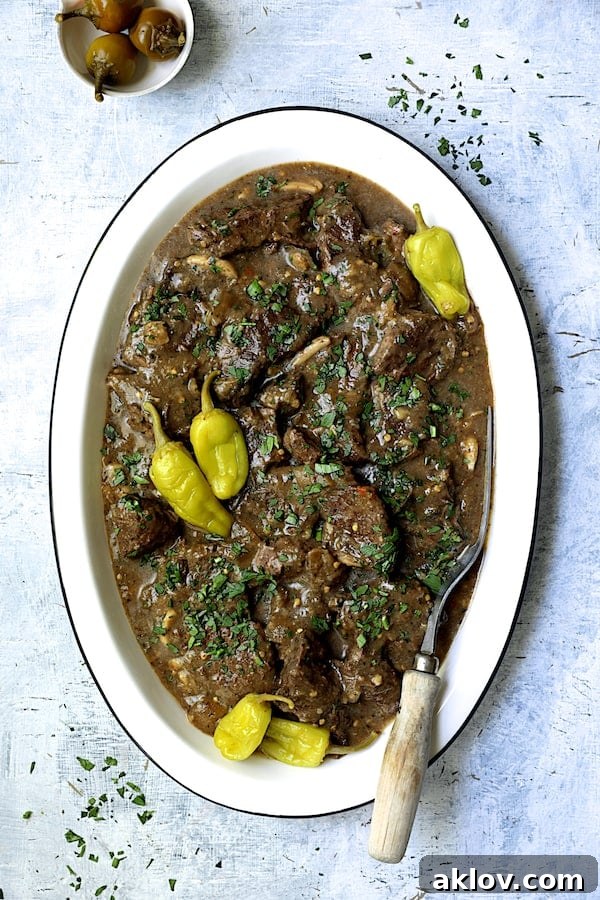
The Unforgettable Mississippi Pot Roast, Reimagined
Despite living just a few miles from the Mississippi state line for over two decades, I only encountered the “Mississippi Pot Roast” phenomenon a year ago. What immediately captured my attention was the inclusion of pepperoncini peppers. As a lover of all things pickled and tangy, the prospect of this spicy, briny kick alongside tender beef was utterly intriguing. However, a quick look at the traditional recipes revealed a common concern: a heavy reliance on processed packaged mixes and a surprising amount of butter, often a whole stick!
My culinary philosophy leans towards fresh, wholesome ingredients, minimizing processed items whenever possible. When a client requested I prepare the Mississippi Pot Roast, I opted to try the classic recipe first. While it was undeniably rich, the saltiness from the mixes proved overwhelming for my palate, though my clients still enjoyed it. This experience fueled my determination to create a “cleaner” version. I envisioned a Mississippi pot roast where the inherent flavors of high-quality beef could shine, complemented by fresh seasonings, without being masked by artificial ingredients or excessive sodium. This led to the development of this recipe, featuring succulent boneless beef short ribs, achieving that famous fall-apart tenderness and robust flavor without a single packaged mix or extra stick of butter.
A Culinary Legend: The Origin of Mississippi Pot Roast
The story of Mississippi Pot Roast is a testament to the power of home cooking and community sharing. This now-iconic dish was born in the early 2000s, credited to a home cook from Ripley, Mississippi. Her goal was simply to replicate a beloved chuck roast recipe passed down from her aunt. What started as a family favorite quickly gained local acclaim, eventually finding its way into a church cookbook. From there, its popularity exploded online, fueled by blog posts and enthusiastic sharing, transforming it into an internet sensation. Its straightforward preparation and intensely satisfying flavor profile quickly cemented its place as a modern comfort food classic across the nation.
Crafting Your Mississippi-Style Boneless Beef Short Ribs: A Step-by-Step Guide
Essential Ingredients & Thoughtful Substitutions
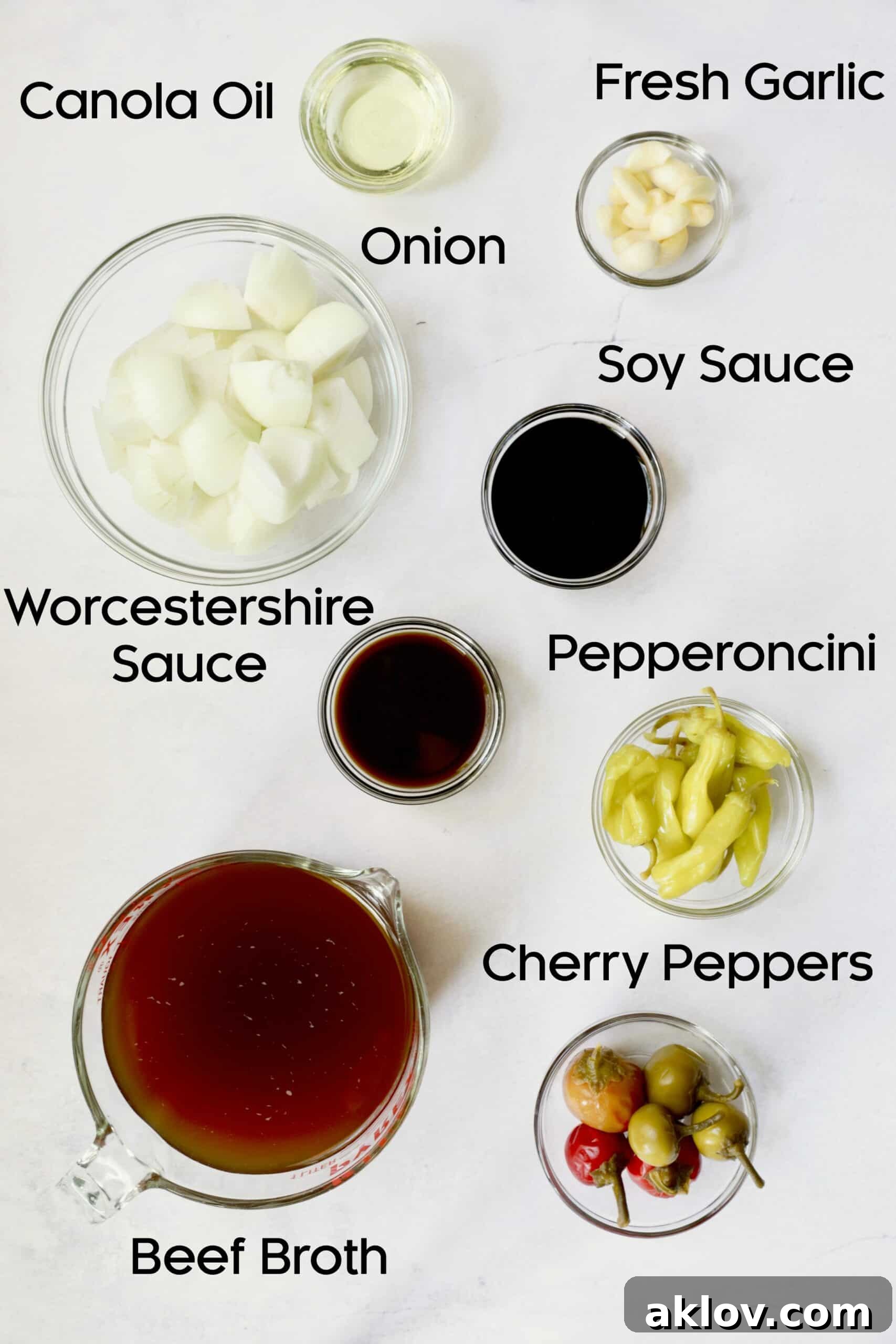
Crafting this flavorful Mississippi-style short rib recipe begins with selecting the right components. Below, you’ll find a detailed list of what you’ll need, along with insights into ingredient preparation and smart substitutions to ensure the best results. For precise measurements, please refer to the comprehensive recipe card at the end of this article.
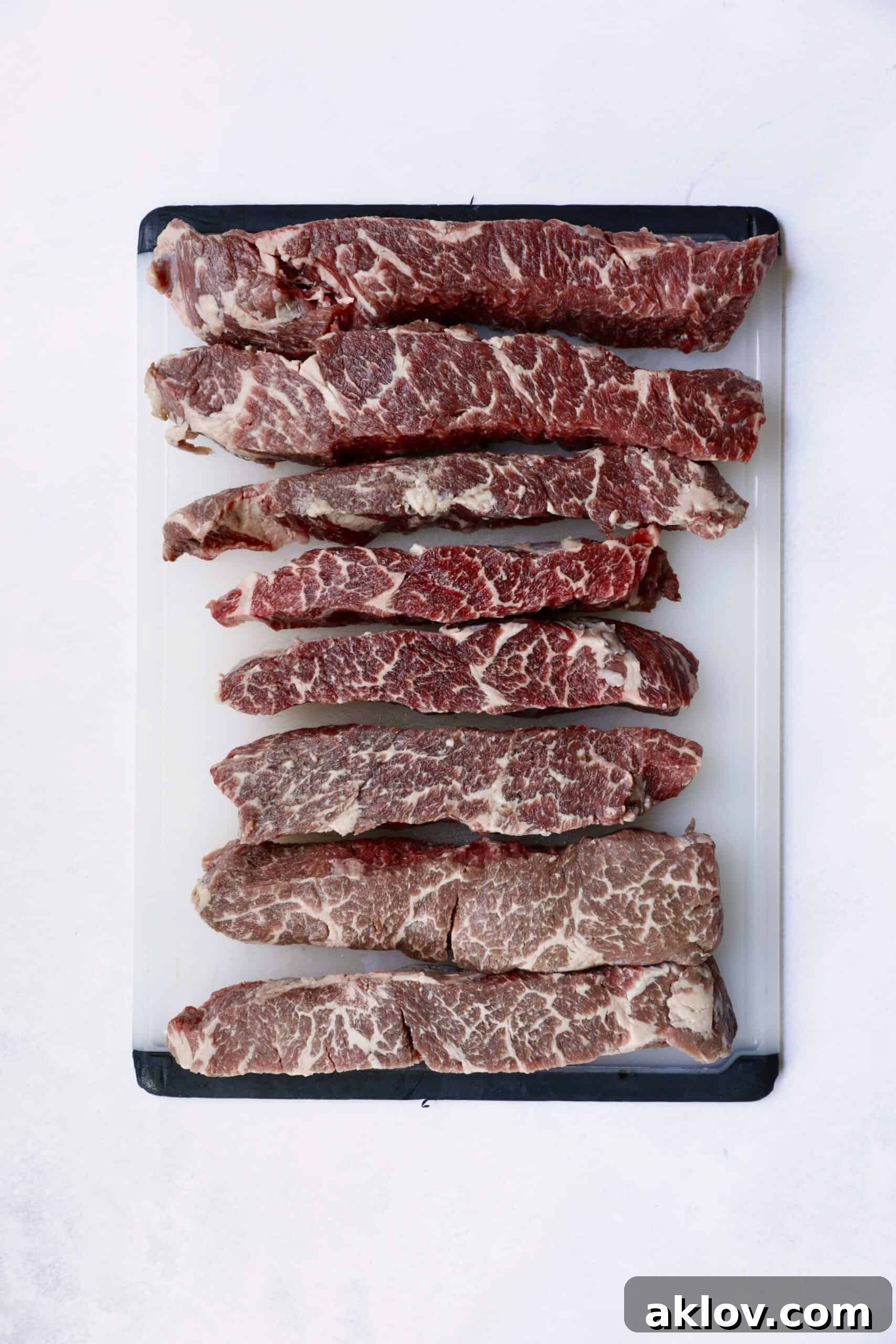
Ingredient Notes and Substitutions for a Cleaner Flavor:
- Ranch Dressing Mix Alternatives: Instead of relying on a packaged ranch dressing mix, which often contains dried and sometimes artificial flavors, we elevate this dish with fresh ingredients. Typical ranch seasonings include dried onion, garlic, dill, and parsley. Here, we opt for fresh, vibrant alternatives:
- Fresh Onion: Provides a natural sweetness and aromatic foundation.
- Fresh Garlic: Delivers a potent, savory punch that only fresh garlic can offer.
- Fresh Parsley: Added at the end, fresh parsley brightens the dish with its herbaceous notes.
- While dill is sometimes found in ranch mixes, its quantity is often minuscule, and its flavor profile doesn’t always harmonize perfectly with rich beef dishes. For this recipe, I found omitting it entirely produced a more balanced and appealing taste.
- Packaged Gravy Mix Alternatives: To achieve a rich, deeply flavored gravy without the sodium and additives of packaged mixes, we build our own savory base using:
- Beef Broth: The foundational liquid, providing a robust beefy flavor.
- Soy Sauce: Adds a crucial umami depth and a subtle saltiness that mimics the complexity of a packaged gravy mix.
- Worcestershire Sauce: This condiment is a powerhouse of savory, tangy, and slightly sweet notes, contributing significantly to the overall richness and color of the gravy. Together, the soy and Worcestershire sauces create a profound depth and natural seasoning.
- Pepperoncini and Cherry Peppers: These pickled peppers are essential for the signature tangy, mildly spicy flavor of Mississippi Pot Roast. It’s important to note that the heat level of pickled peppers can vary significantly. Choose varieties that match your family’s preference for spice. If you prefer a milder flavor, select less spicy peppers or use fewer of them. For a bolder kick, opt for hotter types.
- The Beef – Boneless Beef Short Ribs: While traditional Mississippi Pot Roast often uses chuck roast, I find boneless beef short ribs to be a superior choice for this recipe. Here’s why:
- Even Fat and Connective Tissue Distribution: Boneless short ribs typically have a more consistent marbling of fat and connective tissue throughout the cut. This even distribution means that as the meat slow-cooks, the connective tissue slowly breaks down and melts away, infusing the meat with incredible juiciness and flavor.
- Superior Tenderness: The result is an exceptionally tender, fall-apart texture that feels “buttery” in the mouth, without needing any added butter. This quality makes them truly luxurious.
- Cut Details: Boneless beef short ribs are essentially rib meat that has been skillfully separated from the bone, originating from the chuck section of the cow. They are readily available at most large grocery stores or can be cut to order by your butcher. I often find excellent quality boneless short ribs at warehouses like Costco.
Easy Step-by-Step Cooking Instructions
- Begin by gathering and precisely prepping all your ingredients as outlined in the recipe card below. This ensures a smooth cooking process.
- Lightly season your boneless beef short ribs with freshly ground black pepper. Use caution with additional salt at this stage, as many of the subsequent ingredients (like soy sauce and Worcestershire sauce) will contribute significant saltiness. It’s always best to adjust salt levels at the end of cooking.
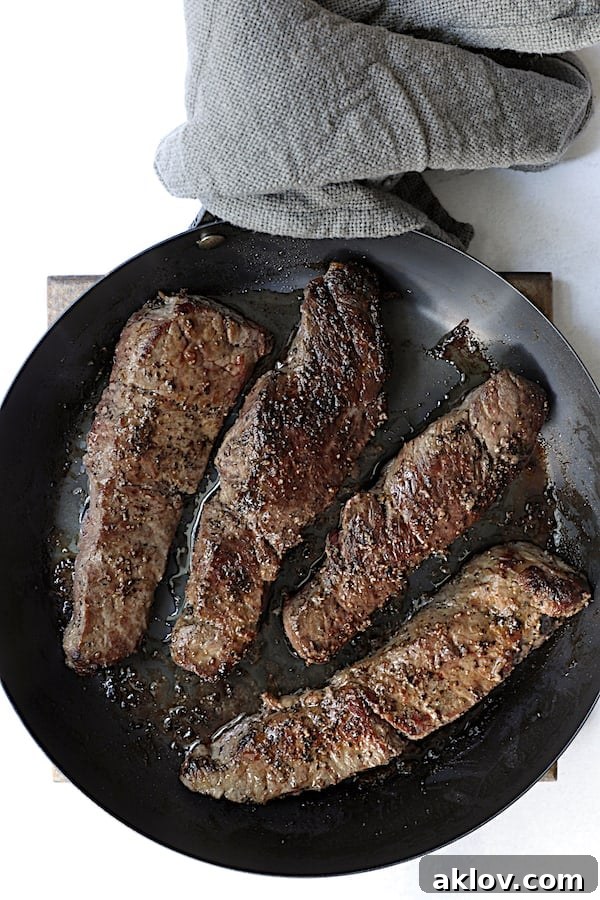
- In a large skillet, heat a tablespoon or two of canola oil over medium-high heat. Brown the short ribs thoroughly on all sides in batches. This crucial step, known as the Maillard reaction, creates a rich, caramelized crust that locks in flavor and adds incredible depth to the final dish. Do not overcrowd the pan, as this can steam the meat instead of browning it.
- Once the ribs are browned and set aside, add the chunked onions to the same skillet. Cook them briefly for 2-3 minutes, just enough to soften them slightly and remove their raw edge, allowing their sweetness to begin developing.
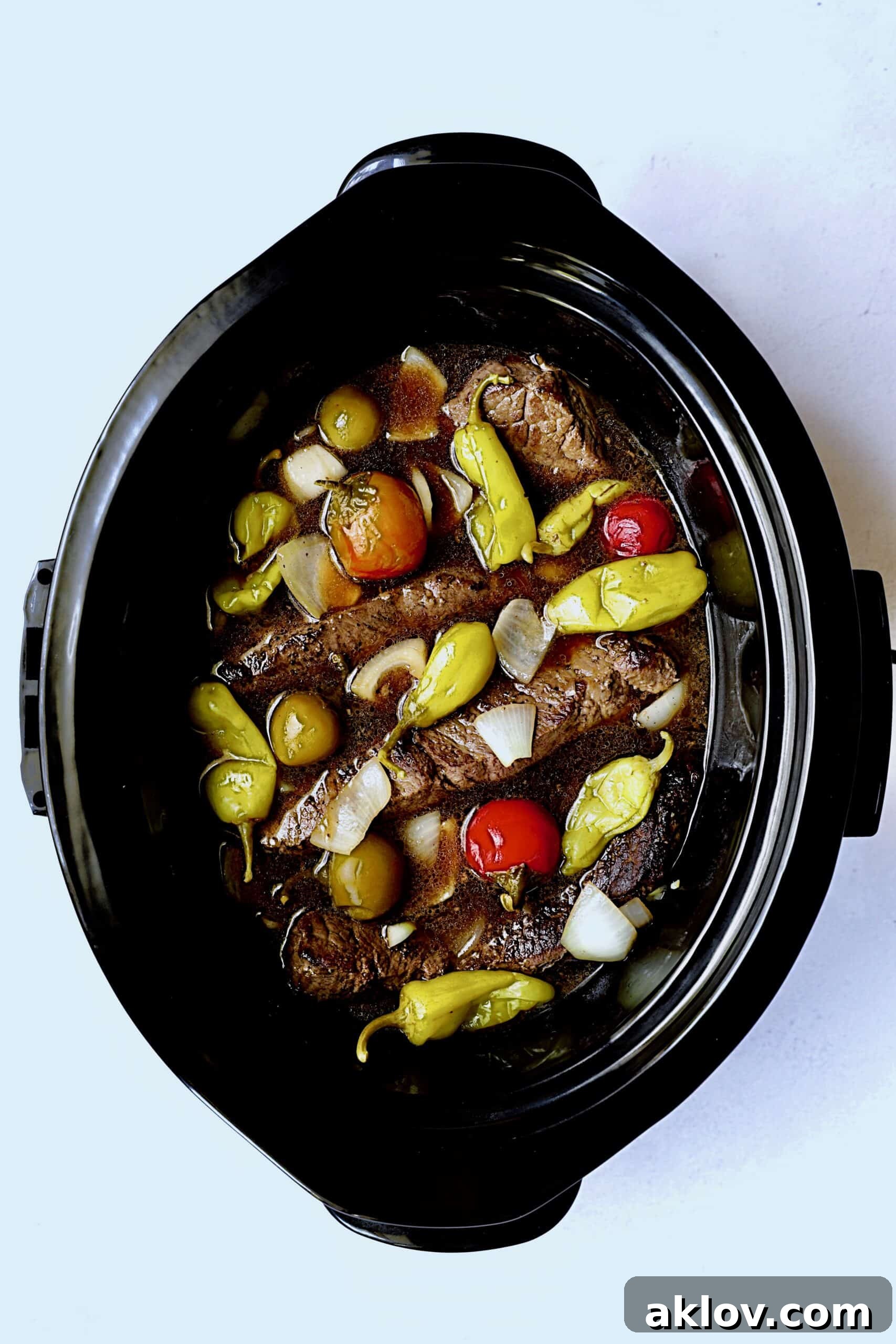
- Carefully transfer the browned short ribs, briefly cooked onions, sliced garlic, pepperoncini, and cherry peppers into a 6-8 quart slow cooker. Pour in the beef broth, soy sauce, and Worcestershire sauce mixture.
- Cover the slow cooker and cook on HIGH for 5 hours, or on LOW for 8 hours. The low and slow cooking method is key to breaking down the connective tissue in the short ribs, resulting in that desired fork-tender texture.
- After the cooking time, the gravy will likely need thickening. Proceed to the “Achieving the Perfect Gravy” section below for detailed instructions on your preferred thickening method.
- Once the gravy is thickened, taste the short ribs and gravy. Adjust the seasoning with additional salt and pepper as needed to suit your preference. Remember, it’s easier to add salt than to remove it.
Achieving the Perfect Gravy: Slow Cooker Thickening Techniques
A rich, velvety gravy is essential for Mississippi Pot Roast. Here are three effective ways to thicken your sauce directly in the slow cooker or on the stovetop, ensuring a perfect consistency every time.
Method 1: Thickening with All-Purpose Flour
This method allows you to thicken the gravy directly in your slow cooker, which is convenient, especially if you’ve been cooking on a high setting.
- This technique is most effective if your slow cooker has been set to HIGH, as the liquid will already be at a gentle simmer, which is necessary for the flour to cook and thicken properly. A minor disadvantage of using flour is that it can slightly lighten the color of your gravy.
- With about 45 minutes remaining in your total cooking time, carefully remove approximately 1 cup of the hot braising liquid from the slow cooker. Allow this liquid to cool for about 15 minutes.
- In a separate bowl, thoroughly whisk 1/3 cup of all-purpose flour into the cooled liquid until a smooth, lump-free slurry is formed. This cooling step prevents the flour from clumping when added back to the hot liquid.
- Gradually add the flour slurry to the slow cooker, incorporating it 1-2 tablespoons at a time, distributing it around the meat and stirring well after each addition. Avoid pouring the entire slurry in at once, as this can lead to uneven thickening or lumps.
- Continue cooking the pot roast uncovered on HIGH for an additional 30 minutes. This allows the flour to fully cook and the gravy to reach its desired thickness. Once thickened, you can cover the slow cooker and let it rest for a short while; the gravy will continue to thicken as it stands.
Method 2: Thickening with Cornstarch (A Gluten-Free Option)
Cornstarch is an excellent gluten-free alternative for thickening and is particularly useful if your slow cooker has been on a lower setting.
- If you’ve cooked your short ribs on LOW, cornstarch is often a better choice than flour. This is because getting the slow cooker liquid to a sufficient simmer for flour to thicken effectively can take a considerable amount of time. Cornstarch, however, requires higher heat to activate its thickening properties, which is why we transfer the liquid to a saucepan. An advantage of cornstarch is that it creates a clear, glossy sauce without altering the gravy’s original color. A minor drawback is that cornstarch-thickened sauces can become slightly gelatinous upon cooling.
- Begin by carefully removing the cooked beef short ribs from the slow cooker and transferring them to a platter. Tent the platter loosely with foil to keep the meat warm while you prepare the gravy.
- Transfer all the remaining cooking liquid from the slow cooker into a medium saucepan. You should have approximately 4 cups of gravy/sauce. For optimal thickening, you will need about 1 tablespoon of cornstarch for every cup of liquid.
- In a small bowl, combine 1-2 tablespoons of the cool gravy/sauce with an equal amount of cold water. Stir vigorously until the cornstarch is completely dissolved, forming a smooth slurry.
- Pour the cornstarch slurry into the saucepan with the gravy. Bring the mixture to a rolling boil over medium-high heat, whisking constantly. Continue to cook, stirring, for 1-2 minutes until the gravy visibly thickens to your desired consistency.
- Once thickened, pour the rich, hot gravy directly over the reserved beef short ribs on the platter and serve immediately.
Method 3: My Secret Weapon – Cornaby’s E-Z Gel
- For an effortlessly smooth and reliably thickened gravy, I highly recommend Cornaby’s E-Z Gel (Affiliate Link). While it might be slightly pricier than traditional flour or cornstarch, its performance is unparalleled, especially for a busy personal chef like myself. It’s a fantastic thickening agent that is completely gluten-free, taste-free, and won’t affect the color or clarity of your gravy. The best part? You can thicken both hot and cold liquids simply by sprinkling it in and stirring. It offers instant, lump-free results, making gravy preparation foolproof.
The Grand Finale: Garnish and Serve
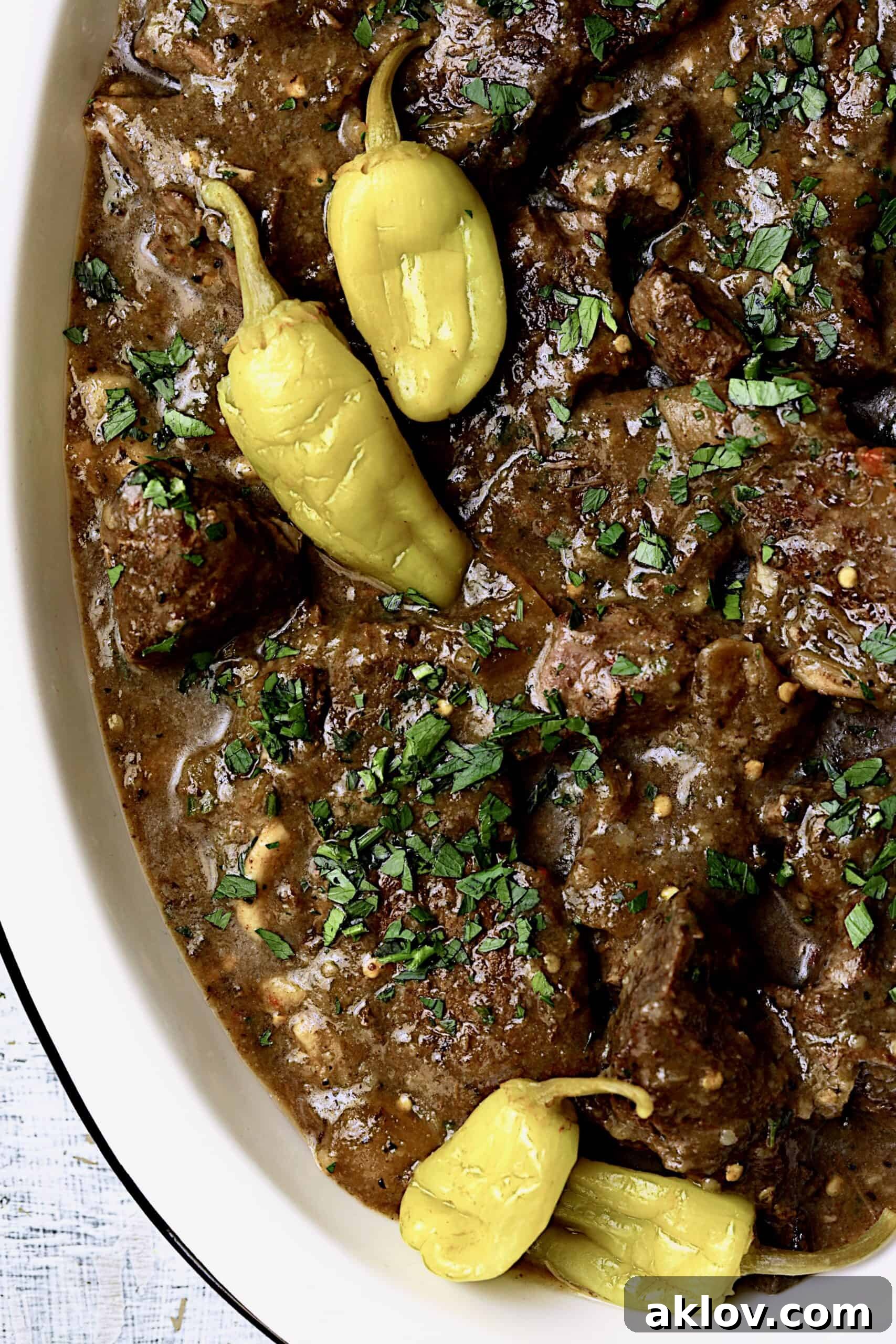
Once your boneless beef short ribs are cooked to perfection and nestled in their rich, savory gravy, a final touch of fresh parsley adds a burst of color and herbaceous freshness. Simply sprinkle a generous amount of chopped parsley over the dish just before serving. This vibrant garnish not only enhances the visual appeal but also complements the robust flavors of the pot roast. Prepare to gather your family and friends around the table to enjoy this delicious, slightly spicy, and incredibly meaty masterpiece!
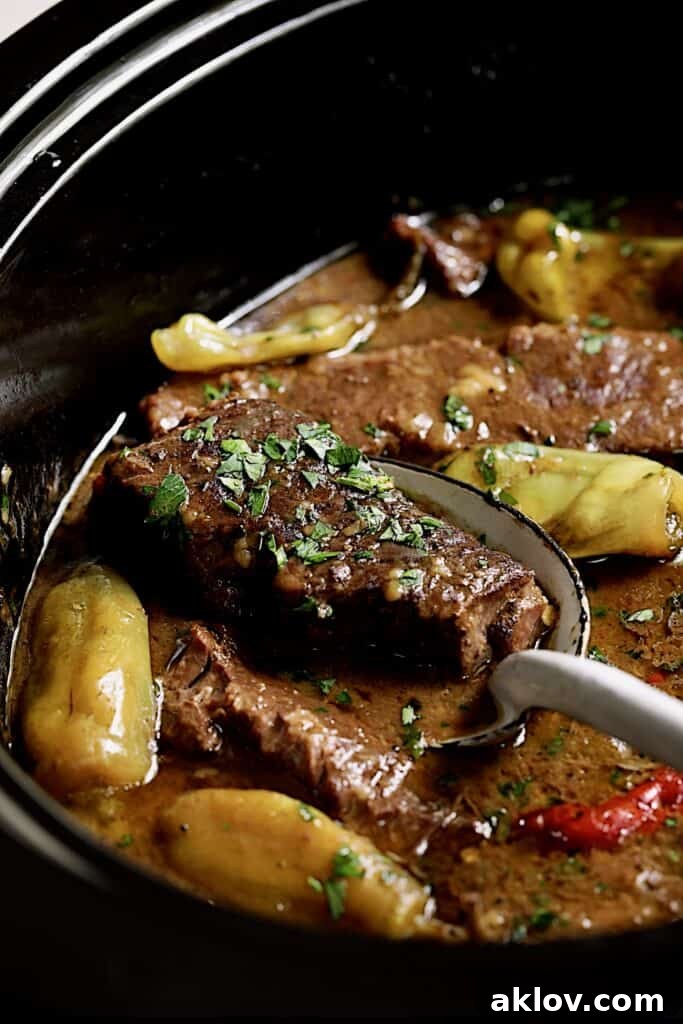
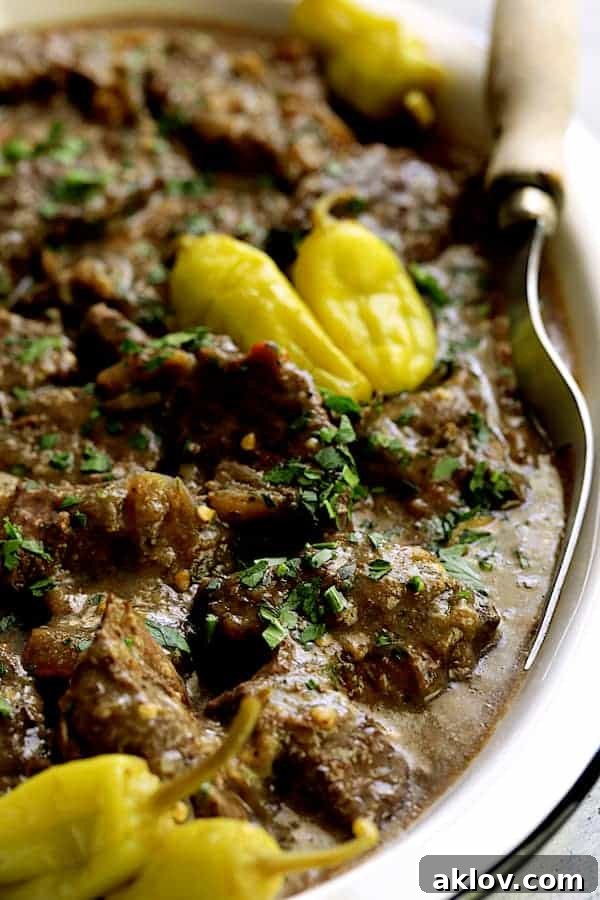
You’ve successfully created a truly delicious, slightly spicy, and incredibly tender dish. This meaty goodness is sure to become a favorite, perfect for sharing with family and friends!
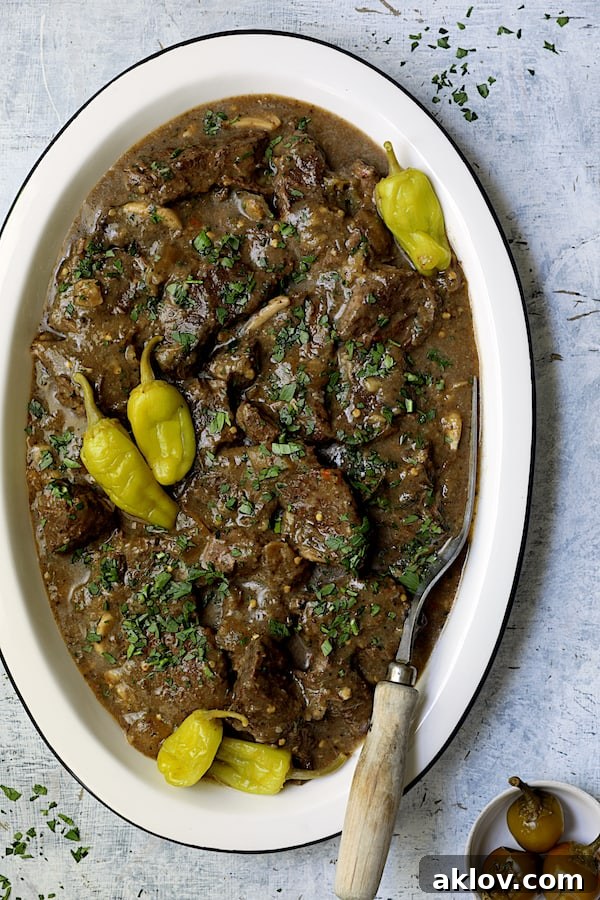
Frequently Asked Questions (FAQ) About Boneless Beef Short Ribs
While often used interchangeably in casual conversation, there’s a subtle distinction. Boneless beef short ribs are specifically cut from the chuck primal and consist of the flavorful rib meat that has been carefully separated from the bone. Conventional short ribs, on the other hand, are typically sold with the bone intact and can be sourced from various parts of the cow, including the brisket, chuck, plate, or ribs.
Yes, it is certainly possible to prepare boneless beef short ribs more quickly, akin to how you might cook a steak. When cooked to a medium-rare doneness and then thinly sliced against the grain, they will offer a slightly chewy texture, somewhat similar to a flank steak. This method is ideal if you’re looking for a faster cooking time and a different texture from the traditional braised short ribs.
They can cook faster if you opt for a quick-sear method to medium-rare, similar to steak, and then slice them thinly against the grain. However, if you are braising them, as in this tender Mississippi pot roast-style recipe, the cooking time will be approximately the same as bone-in beef short ribs. The goal for braised short ribs is a complete breakdown of connective tissue, which requires a significant amount of low and slow cooking, regardless of the bone’s presence.
If your boneless beef short ribs turn out tough, it’s most likely due to insufficient cooking time or cooking them at too high a temperature. Short ribs are rich in connective tissue, which requires prolonged, gentle heat to break down and convert into gelatin. This process is what yields that incredibly tender, “fall-apart” texture. The best approach is always “low and slow” cooking; give them more time in the slow cooker or oven, and they will eventually become succulent.
While you can adapt this recipe for an Instant Pot, providing a quicker cooking time under pressure, I personally prefer and recommend the traditional low and slow cooking methods, whether in a slow cooker or a Dutch oven in the oven. For most cuts of meat, especially those rich in connective tissue like short ribs, the gradual and extended cooking process allows for a more even and thorough breakdown of fibers, resulting in a superior depth of flavor and a consistently tender texture that is hard to replicate with high-pressure cooking.
Leftover Mississippi Boneless Beef Short Ribs can be stored in an airtight container in the refrigerator for up to 3-4 days. To reheat, gently warm them in a saucepan on the stove over low heat, or in an oven-safe dish covered with foil at 300°F (150°C) until heated through. Add a splash of beef broth if the gravy appears too thick or dry. They can also be microwaved, though the stove or oven provides a better texture.
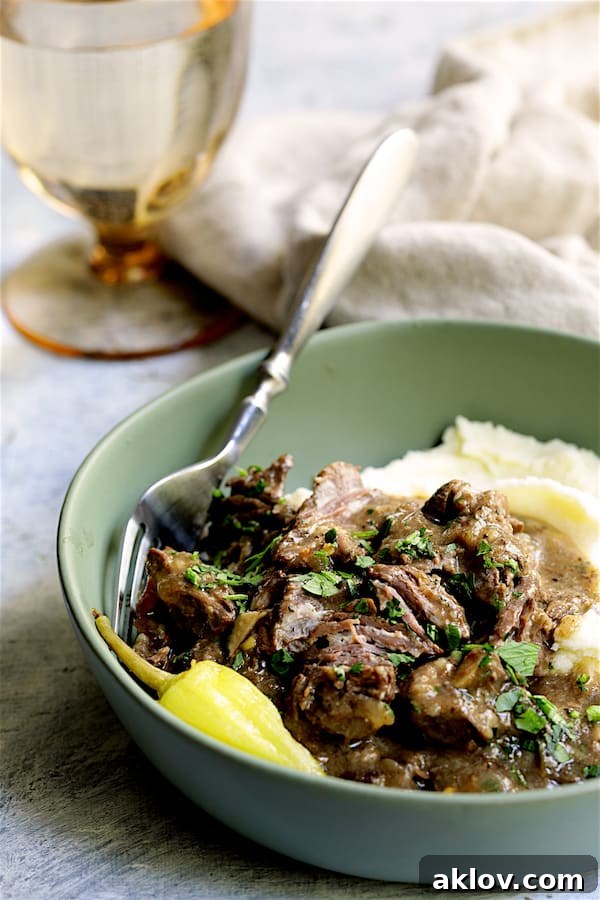
Enjoy the rich, comforting flavors of this reimagined classic!
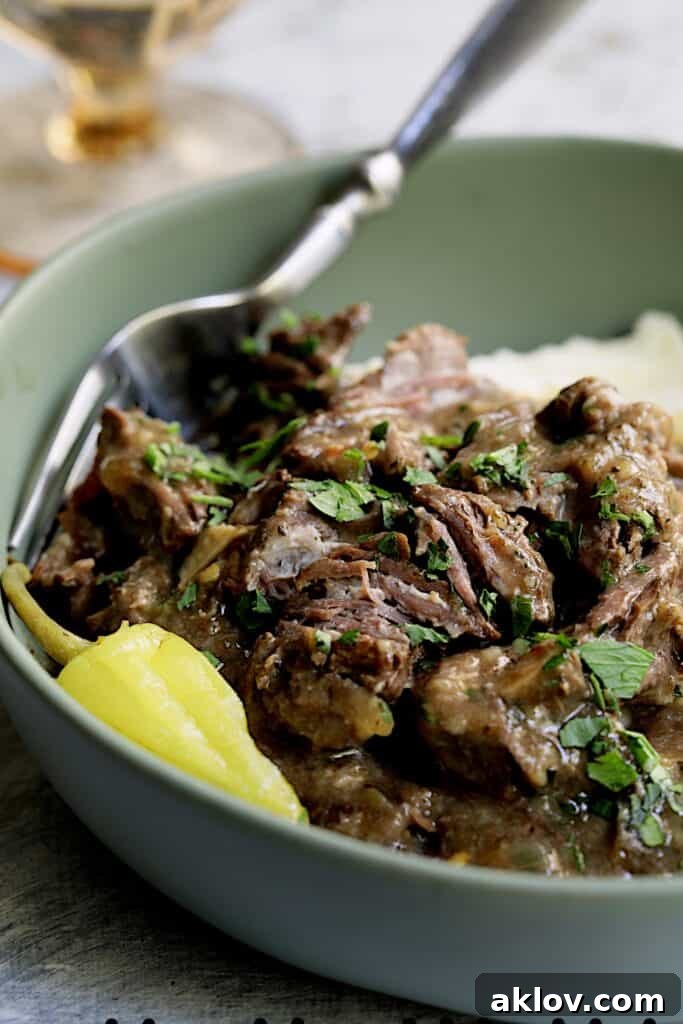
Perfect Pairings: What to Serve with Mississippi Beef Short Ribs
These rich and tender Mississippi-style boneless beef short ribs are a meal in themselves, but they truly shine when served alongside complementary side dishes that balance their savory depth. Here are some excellent choices:
- Cauliflower White Bean Puree: A light and creamy alternative to mashed potatoes, offering a delicate flavor that won’t overpower the beef.
- Celery Root Puree: Earthy and subtly sweet, this puree adds a sophisticated touch and a lovely textural contrast.
- Spinach Parmesan Ranch Twice Baked Potatoes with Parmesan Crumb Topping: For a heartier side, these twice-baked potatoes offer layers of flavor and a satisfying texture, echoing some of the “ranch” elements in the pot roast.
- Cheddar and Bacon Twice-Baked Potatoes: Another robust potato option, the smoky bacon and sharp cheddar complement the rich beef beautifully.
- Creamy Mashed Potatoes: The classic pairing! Mashed potatoes are perfect for soaking up every drop of that luscious, tangy gravy.
- Garlic Parmesan Roasted Asparagus: A simple, green vegetable side can cut through the richness of the meat, offering a fresh contrast.
Explore More Delicious Beef Short Rib Recipes!
If you love the tender, rich flavor of beef short ribs, you’re in for a treat! Here are more fantastic recipes featuring this versatile cut of meat, each offering a unique culinary journey:
- Boneless Short Ribs Recipe (Bourguignon Style): A classic French preparation, slow-cooked in red wine with mushrooms and pearl onions.
- Slow Cooker Beef Short Ribs Barbacoa with Cilantro – Lime Cauliflower Rice: Dive into vibrant Mexican flavors with these zesty barbacoa-style short ribs.
- Cabernet Braised Beef Short Ribs with Cauliflower – Leek Puree: An elegant dish featuring deeply flavored short ribs braised in Cabernet Sauvignon, served with a silky puree.
- Korean Braised Beef Short Ribs: Experience a harmonious blend of sweet, savory, and umami with these Asian-inspired short ribs.
- Stout-Braised Beef Short Ribs and Colcannon: A hearty Irish-inspired dish, perfect for cooler weather, combining rich stout with comforting colcannon.
Recipe Card: Slow Cooker Mississippi Boneless Beef Short Ribs (Without Packaged Mixes)
By Carol | From A Chef’s Kitchen
In this slow cooker version of the classic Mississippi pot roast, this boneless short rib recipe is made without processed, packaged mixes and the stick of butter. However, they’re just as flavorful and with buttery tenderness!
Prep Time: 15 mins
Cook Time: 5 hrs
Additional Time: 15 mins
Total Time: 5 hrs 30 mins
Servings: 8
Equipment
- Wusthof Boning Knife
- Nonstick Skillet
- Wusthof Chef Knife
- Cutting Board
- Crockpot Slow Cooker
- Thickener
Ingredients
- 3 cups beef broth
- 1/4 cup soy sauce
- 1/4 cup Worcestershire sauce
- 1-2 tablespoon canola oil, as needed
- 3-4 pounds boneless beef short ribs, or equivalent chuck roast or bone-in short ribs
- Freshly ground black pepper
- 1 large onion, cut into chunks
- 12 cloves garlic, sliced
- 8 pepperoncini from a jar
- 6 cherry peppers from a jar
- 1/3 cup all-purpose flour, for thickening (see notes for cornstarch option)
- 1/4 cup chopped parsley
- Salt, if needed
Instructions
- Combine the beef broth, soy sauce, and Worcestershire sauce in a 6-8 quart slow cooker and preheat on high.
- Heat canola oil over medium-high heat in a large skillet or sauté pan.
- Season short ribs generously with black pepper (and salt, if desired, remembering many ingredients are salty). Place in the skillet and brown well on all sides, working in batches if necessary to avoid overcrowding. Transfer browned ribs to the slow cooker.
- Add the chunked onion to the same skillet and cook for 2-3 minutes, just enough to soften them slightly and remove their raw edge. Transfer to the slow cooker.
- Add the sliced garlic, pepperoncini, and cherry peppers to the slow cooker with the ribs and onions.
- Cover the slow cooker and cook on high for 4 hours and 15 minutes (4.25 hours), or on low for 8 hours.
- After the cooking time, carefully remove approximately 1 cup of the hot cooking liquid and place it in a separate bowl. Let it cool for 15 minutes.
- Add the 1/3 cup all-purpose flour to the cooled liquid and stir vigorously to combine, creating a smooth slurry.
- Add the flour slurry to the slow cooker in approximately 2-tablespoon increments. Pour it in various places around the meat and stir it in carefully to evenly distribute and prevent lumps.
- Continue to cook UNCOVERED on high for an additional 30 minutes. This allows the gravy to thicken. Once thickened, let the slow cooker rest for 15 minutes, allowing the gravy to further set.
- Taste the short ribs and gravy. Adjust the seasoning with additional salt and pepper if desired.
Notes
To Thicken with Cornstarch (Gluten-Free Option):
- If you’ve cooked the ribs on low, I recommend using cornstarch over flour because getting the slow cooker up to a high simmer for flour to thicken will take a while. Cornstarch requires higher heat to thicken effectively. An advantage of using cornstarch is that it doesn’t change the color of your gravy, creating a clear, glossy sauce. A minor disadvantage is that cornstarch-thickened gravies can become slightly gelatinous when cooled.
- Remove the meat from the slow cooker to a platter, then tent it with foil to keep it warm.
- Transfer all the liquid to a saucepan. You’ll have approximately 4 cups of gravy/sauce. You will need 1 tablespoon of cornstarch per cup of liquid (so, 4 tablespoons for 4 cups).
- In a small bowl, remove 1-2 tablespoons of the cool gravy/sauce, add an equal amount of cold water, and stir in the cornstarch until a smooth slurry is formed.
- Add the cornstarch slurry to the gravy/sauce in the saucepan, bring it to a boil over medium-high heat, and cook, stirring constantly, until it thickens. Pour the thickened mixture over the beef short ribs on the platter.
Substitutions:
- You can use a chuck roast in place of boneless short ribs, which is the traditional cut for Mississippi Pot Roast.
Make Ahead:
- This dish can be prepared 1-2 days in advance. After cooking, allow it to cool completely, then refrigerate in an airtight container.
- Reheat gently in the slow cooker on a low setting or in a Dutch oven in a 350°F (175°C) oven until thoroughly warmed.
Freezer-Friendly:
- Allow the cooked pot roast to cool thoroughly. Portion it out as desired into airtight, freezer-safe containers or heavy-duty freezer bags. It can be frozen for 1-2 months.
- Thaw overnight in the refrigerator before reheating. Reheat in the oven or toaster oven at 350°F (175°C) until hot.
Nutrition
Nutritional values are automatically calculated using unbranded products and are estimates only. Actual results may vary based on ingredients used and portion sizes. Adjust as needed for dietary restrictions, allergies, or health concerns.
- Serving: 1
- Calories: 1097 kcal
- Carbohydrates: 27g
- Protein: 83g
- Fat: 74g
- Saturated Fat: 31g
- Polyunsaturated Fat: 42g
- Trans Fat: 4g
- Cholesterol: 302mg
- Sodium: 2599mg
- Fiber: 4g
- Sugar: 8g
Like this recipe? We’d love to hear your thoughts! Leave a comment below and share your experience!