
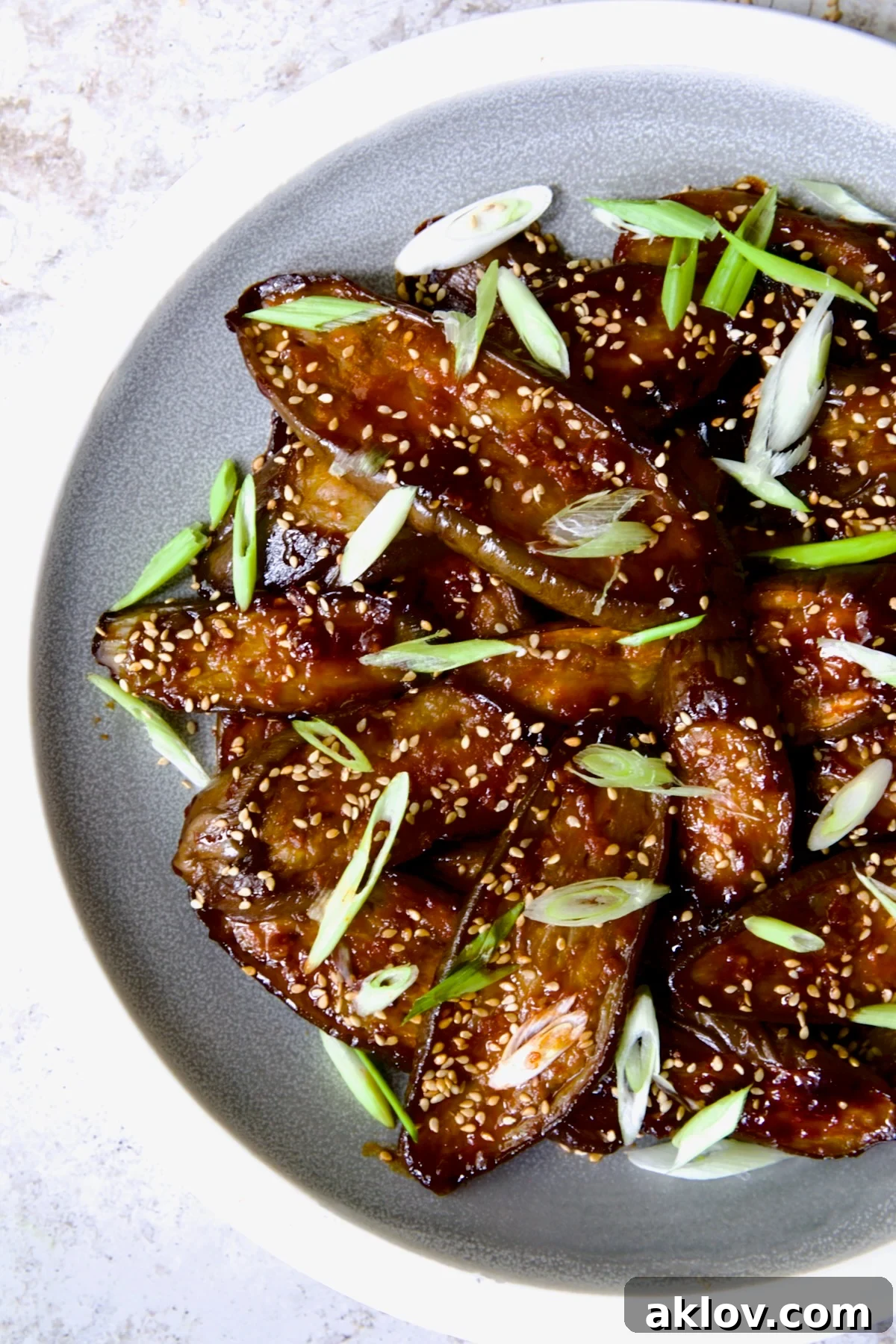
Experience a culinary revelation with Gochujang Eggplant, an extraordinary side dish bursting with vibrant, Korean-inspired flavors. This recipe transforms humble eggplant into a dazzling star, featuring a rich, bold gochujang glaze that caramelizes beautifully on the outside while keeping the interior incredibly tender and succulent. It’s the perfect accompaniment to hearty main courses like Slow Cooker Korean Short Ribs or Korean Chicken Thighs, creating a truly memorable meal.
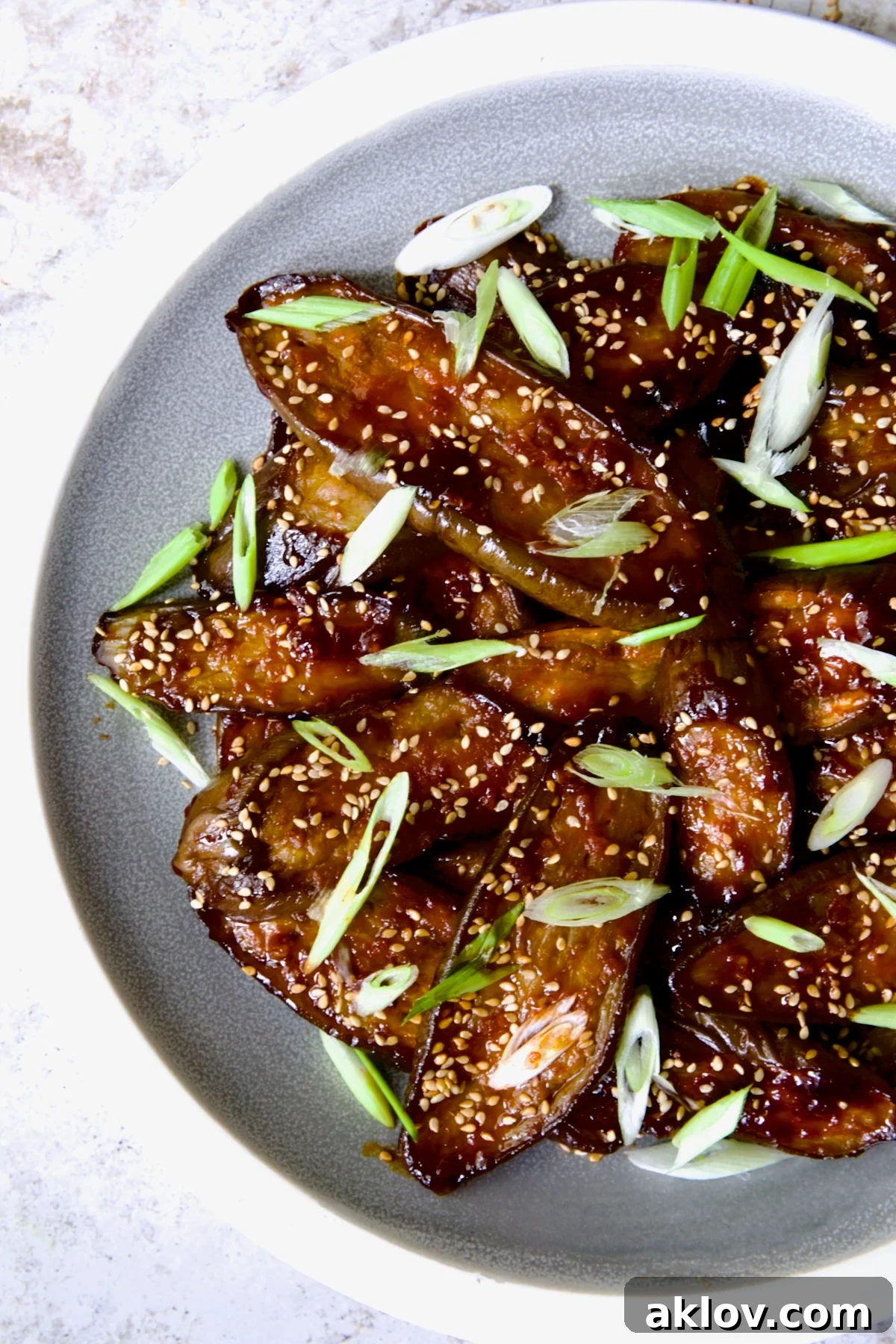
Why This Korean Gochujang Eggplant Recipe Is a Must-Try
Eggplant, with its mild flavor and unique texture, is a fantastic canvas for absorbing bold seasonings, and this Gochujang glaze is nothing short of perfection. When roasted correctly, eggplant undergoes a magical transformation, becoming wonderfully tender, almost creamy, and deeply satisfying. It’s a vegetable that truly shines when paired with robust flavors, and the sweet, savory, and spicy notes of gochujang are its ideal partner.
This recipe specifically highlights the elegance of Japanese eggplant. Its slender shape and delicate skin mean it roasts quickly, achieving that desirable tender consistency in just 15 to 20 minutes. While the eggplant bakes, the tantalizing Gochujang glaze comes together effortlessly. A harmonious blend of toasted sesame oil and sweet honey amplifies the complex flavors of gochujang, resulting in a sauce that is both sweet and profoundly savory, with a hint of spicy kick.
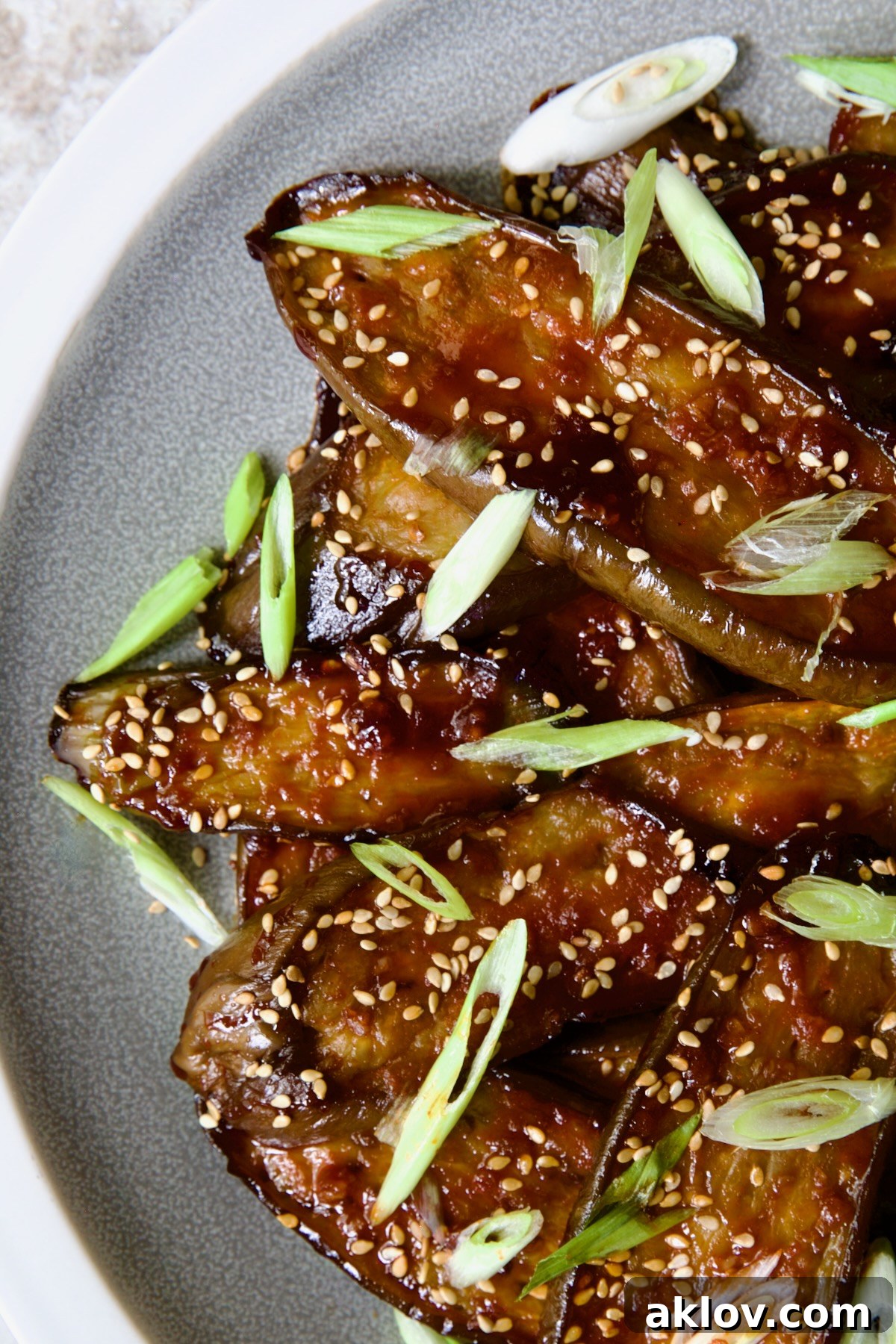
The finishing touch? A brief stint under the broiler. This crucial step is what truly sets this Gochujang Eggplant apart, creating a beautifully caramelized, slightly crispy crust that adds an irresistible textural contrast to the soft interior. This simple yet sophisticated Korean-inspired side dish is incredibly versatile, making it an excellent choice for a weeknight dinner or an impressive addition to any special occasion meal.
Beyond being a fantastic side, this Korean Gochujang Eggplant also serves as an outstanding meatless entree. Its hearty texture and rich flavor make it an excellent substitute for meat, catering wonderfully to vegetarian and vegan diets when a simple substitution is made for honey. This makes it a truly inclusive dish that everyone at your table can enjoy.
Here’s why this Gochujang Glazed Eggplant recipe deserves a permanent spot in your culinary repertoire:
- Effortless Preparation: Simply roast the eggplant slices and whisk together the straightforward, flavor-packed glaze. Minimal fuss, maximum impact!
- Unforgettable Flavor: Gochujang brings an incredible depth of umami, spice, and subtle sweetness to the eggplant, elevating it from ordinary to extraordinary.
- Naturally Vegetarian (and easily Vegan): Eggplant is a superb plant-based option, offering a satisfying texture and absorbing flavors beautifully. A simple swap makes it suitable for vegans.
- Versatile Pairing: Perfect as a side dish, or a fulfilling main course for those seeking a delicious meatless option.
Understanding Gochujang: The Heart of Korean Flavor
Gochujang, a fundamental ingredient in Korean gastronomy, is a traditional fermented chili paste that imparts a distinctive depth of flavor to countless dishes. The name itself offers a clue: “Gochu” translates to chili pepper, while “-jang” signifies a paste or fermented condiment. This vibrant red paste is meticulously crafted from gochugaru (Korean chili powder), glutinous rice, fermented soybeans (meju), salt, and various natural sweeteners.
The fermentation process is key to Gochujang’s complex profile. It creates a harmonious balance of intense spice, savory umami, delicate sweetness, and a touch of saltiness that is simply irreplaceable. Unlike many other chili pastes, Gochujang offers a unique funkiness from the fermented soybeans, adding a profound richness that elevates any recipe it touches. Its thick, viscous texture and deep red hue are as characteristic as its taste. Learning to incorporate gochujang into your cooking opens up a world of authentic Korean flavors, and this Gochujang Eggplant recipe is an excellent starting point for exploring its versatility.
Crafting Your Gochujang Eggplant: A Step-by-Step Guide
Essential Ingredients for Gochujang Eggplant
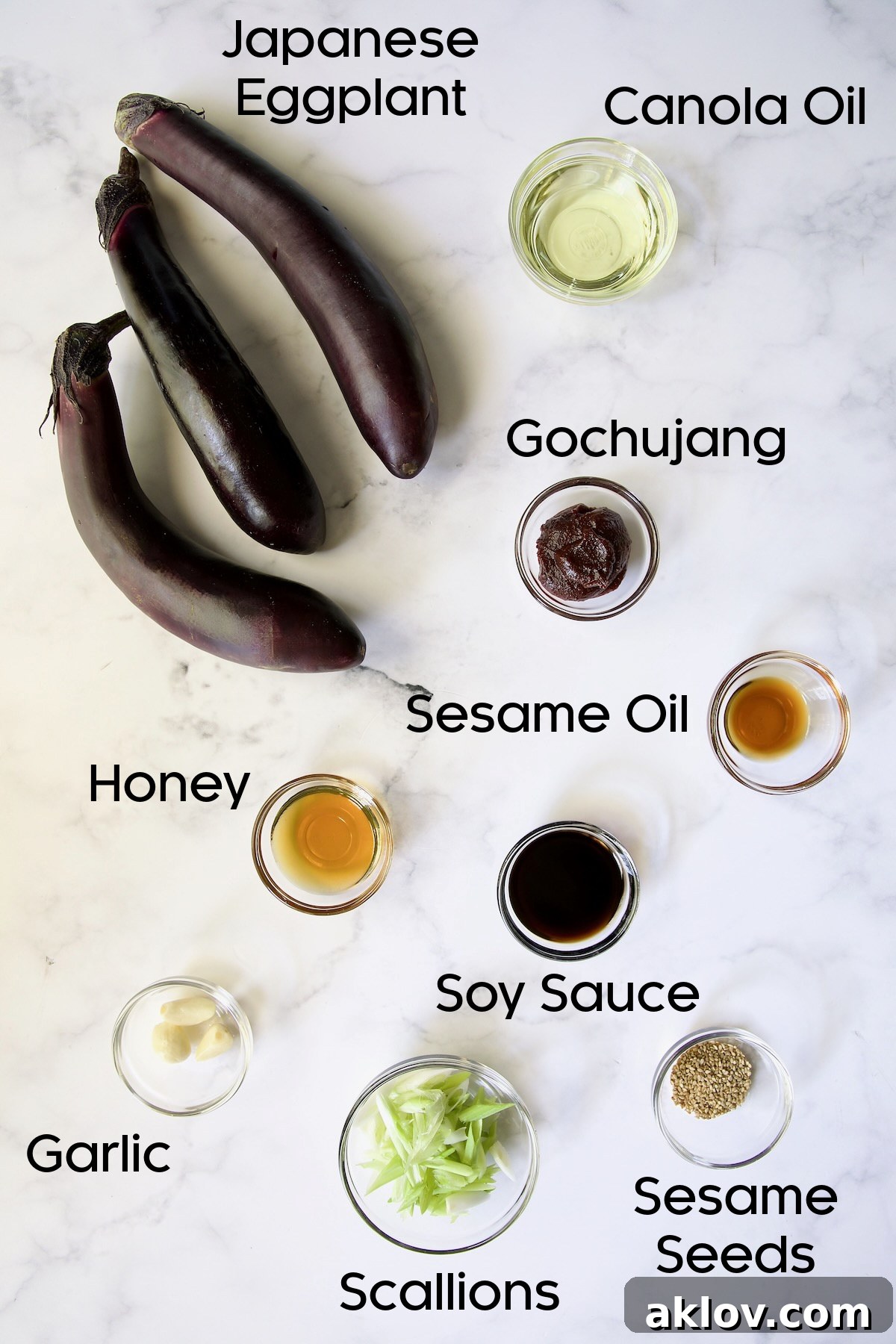
Gathering your ingredients is the first step towards creating this delectable Korean eggplant dish. Each component plays a crucial role in building the layered flavors of the Gochujang glaze and ensuring perfectly cooked eggplant. Refer to the detailed recipe card below for precise quantities and measurements.
Ingredient Insights & Clever Substitutions
- Japanese Eggplant: For this Korean eggplant recipe, we recommend Japanese eggplant. Its long, slender shape, delicate skin, and mild, sweet flavor make it ideal for quick roasting and absorbing the glaze beautifully without becoming bitter. However, if Japanese eggplant isn’t available, other varieties like globe eggplant can certainly be used. Just ensure they are sliced into consistent 1/2-inch thick pieces to ensure even cooking, and consider salting and draining larger, more common eggplants to remove excess moisture and potential bitterness before roasting.
- Gochujang: This fermented Korean red chili paste is the cornerstone of our glaze, providing its signature umami, spice, and subtle sweetness. You can typically find Gochujang in the international aisle of most well-stocked grocery stores or at Asian markets. Look for brands that are well-regarded for their quality. Store opened gochujang in the refrigerator to maintain freshness.
- Soy Sauce: We highly recommend using low-sodium soy sauce. Gochujang itself can be quite salty, and using low-sodium soy sauce allows you to better control the overall salinity of the dish. If you only have regular soy sauce, you might want to slightly reduce its quantity or dilute it with a tiny bit of water. For a gluten-free option, tamari or coconut aminos work perfectly.
- Honey: Honey adds a lovely sweetness that balances the spice of the gochujang and contributes to the glaze’s beautiful caramelization under the broiler. For a vegan-friendly version, pure maple syrup is an excellent substitute, offering a similar sweetness and a complementary flavor profile that harmonizes wonderfully with gochujang. Agave nectar could also be used.
- Sesame Oil: Crucially, use dark or “toasted” sesame oil for this recipe. This type of sesame oil is dark in color and boasts an intense, nutty aroma and flavor, making it perfect for seasoning and finishing dishes. It’s usually found in the international or Asian section of your grocery store. Avoid “light” sesame oil, which is pale and has a neutral flavor, typically used for general cooking like canola or vegetable oil. The toasted sesame oil is a flavor powerhouse here.
- Garlic: Freshly minced garlic is essential for a pungent, aromatic kick that rounds out the savory notes of the glaze. Do not substitute with garlic powder if possible; the fresh garlic truly makes a difference in flavor and aroma.
- Canola or Vegetable Oil: Used for brushing the eggplant before roasting, it helps the eggplant achieve a tender texture and prevents sticking. Olive oil can also be used here, but choose a neutral-flavored one.
- Scallions & Sesame Seeds: These are for garnish, adding freshness, a mild oniony bite, and a delightful textural crunch, enhancing both the visual appeal and taste of the finished dish.
Detailed Step-by-Step Instructions for Gochujang Eggplant
Follow these steps closely to ensure your Gochujang Eggplant turns out perfectly caramelized, tender, and incredibly flavorful.
- Step 1: Prepare Your Workspace & Preheat. Begin by gathering all your ingredients and kitchen tools. Preheat your oven to 400°F (200°C). Lining a rimmed baking sheet with aluminum foil will make cleanup a breeze, especially after the glaze caramelizes.
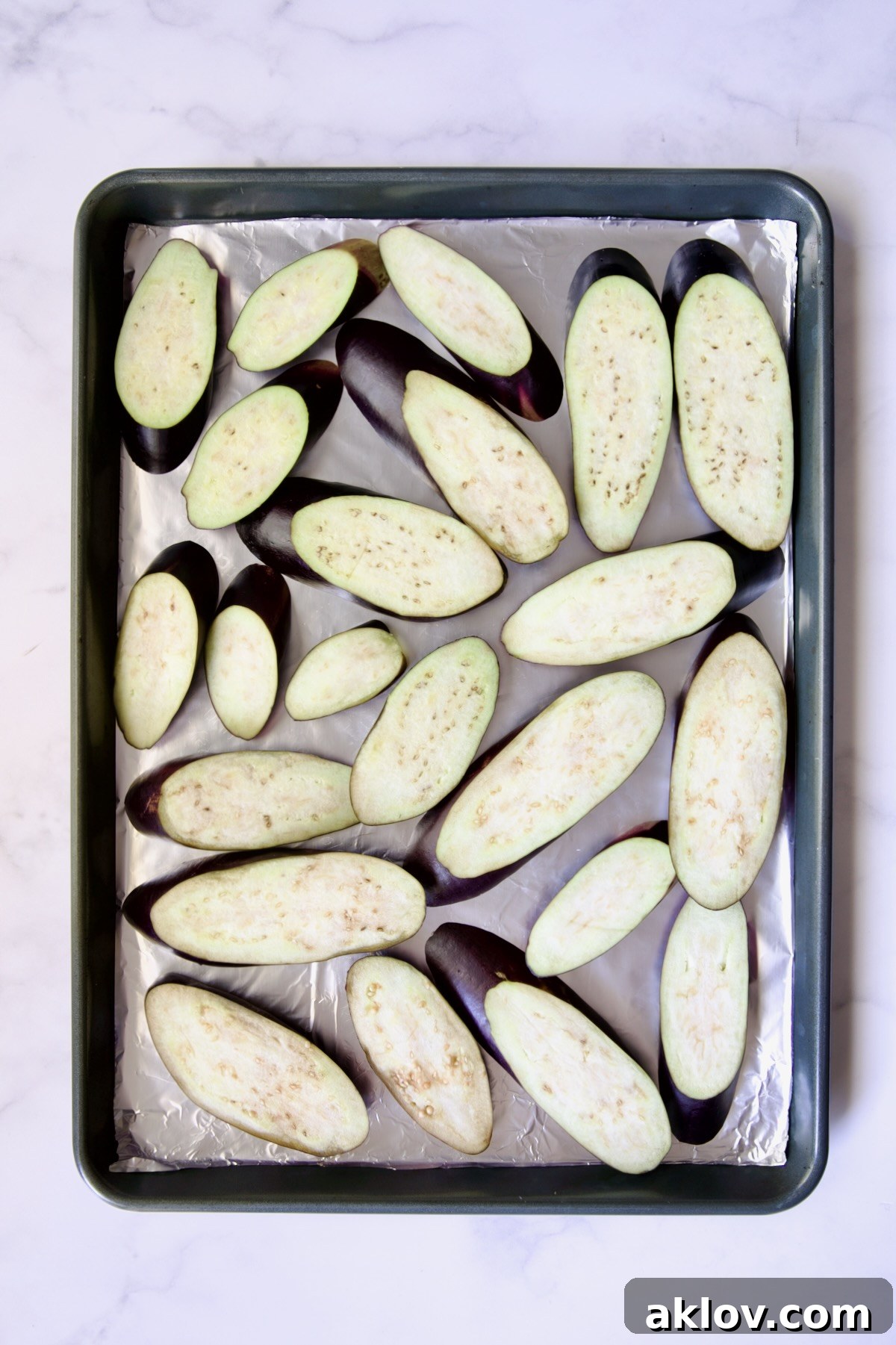
- Step 2: Prepare the Eggplant. Slice the Japanese eggplants diagonally into uniform 1/2-inch thick pieces. Consistency in thickness is key for even cooking. Arrange the sliced eggplant on the prepared baking sheet in a single layer, ensuring not to overcrowd the pan. If necessary, use two baking sheets.
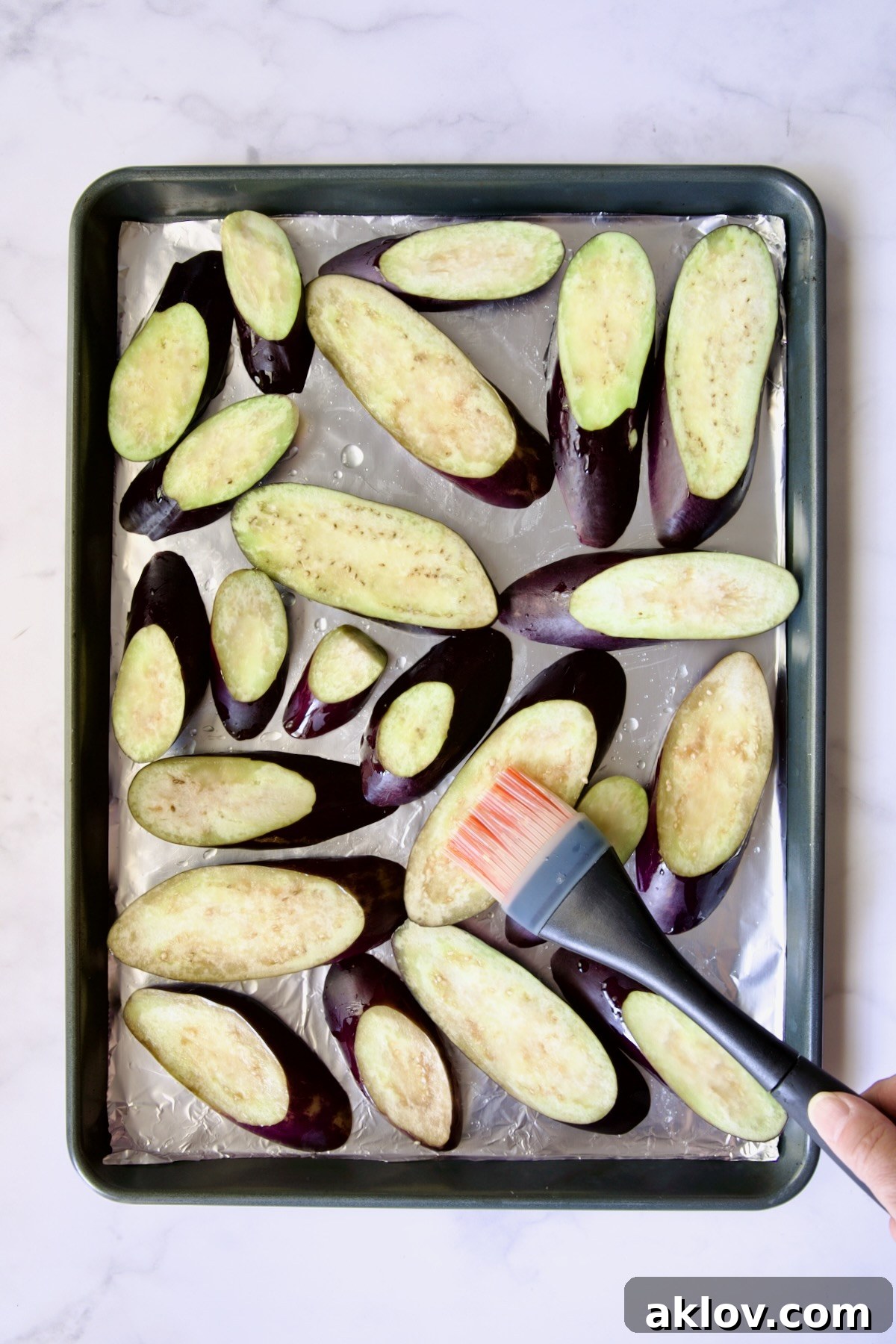
- Step 3: Oil the Eggplant. Lightly brush both sides of each eggplant slice with canola or vegetable oil. This helps the eggplant soften beautifully during roasting and prevents it from drying out.
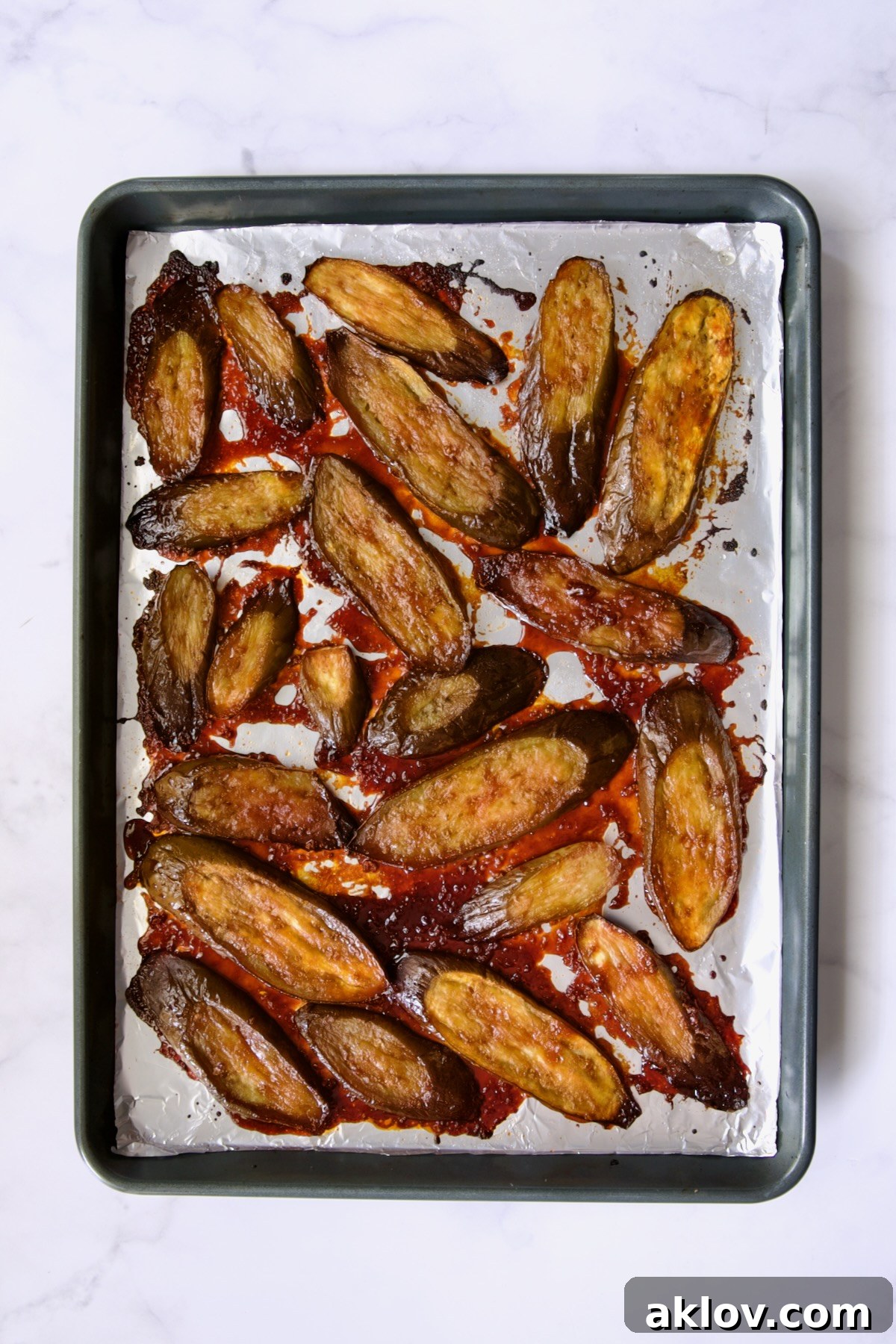
- Step 4: Roast the Eggplant. Place the baking sheet in the preheated oven and roast for 15 to 20 minutes, or until the eggplant slices are tender and can be easily pierced with a fork or the tip of a knife. They should be soft but still hold their shape.
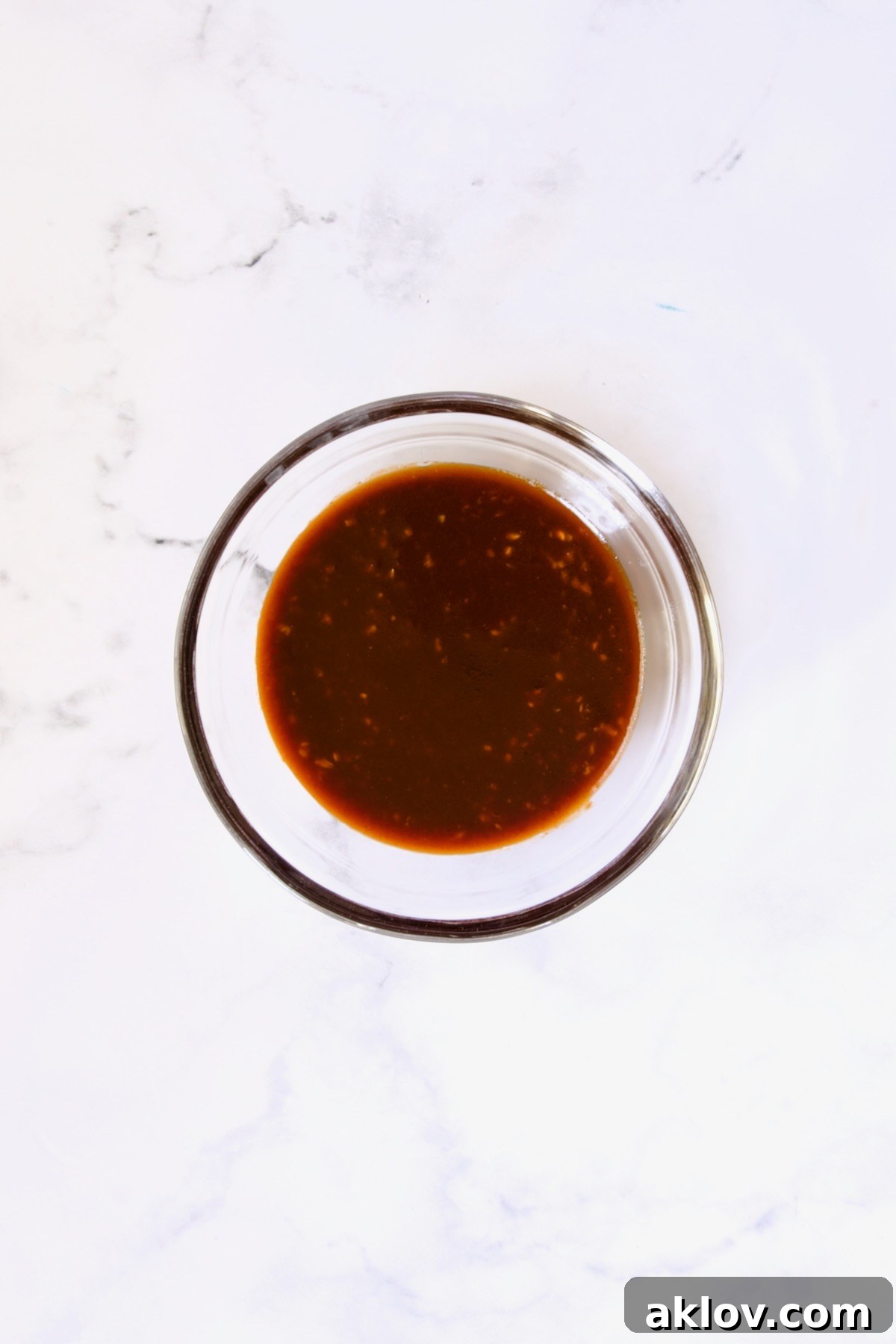
- Step 5: Prepare the Gochujang Glaze. While the eggplant is roasting, prepare the flavorful glaze. In a small bowl, whisk together the gochujang, soy sauce, honey, toasted sesame oil, and minced garlic until thoroughly combined and smooth.
- Step 6: Broil for Caramelization. Once the eggplant is tender, remove it from the oven. Position an oven rack about 9-10 inches below the broiler element and preheat the broiler.
- Step 7: First Glaze & Broil. Carefully brush one side of each eggplant slice with half of the prepared Gochujang glaze. Return the baking sheet to the oven under the broiler for approximately 2 minutes. Watch closely! The glaze can burn quickly due to its sugar content.
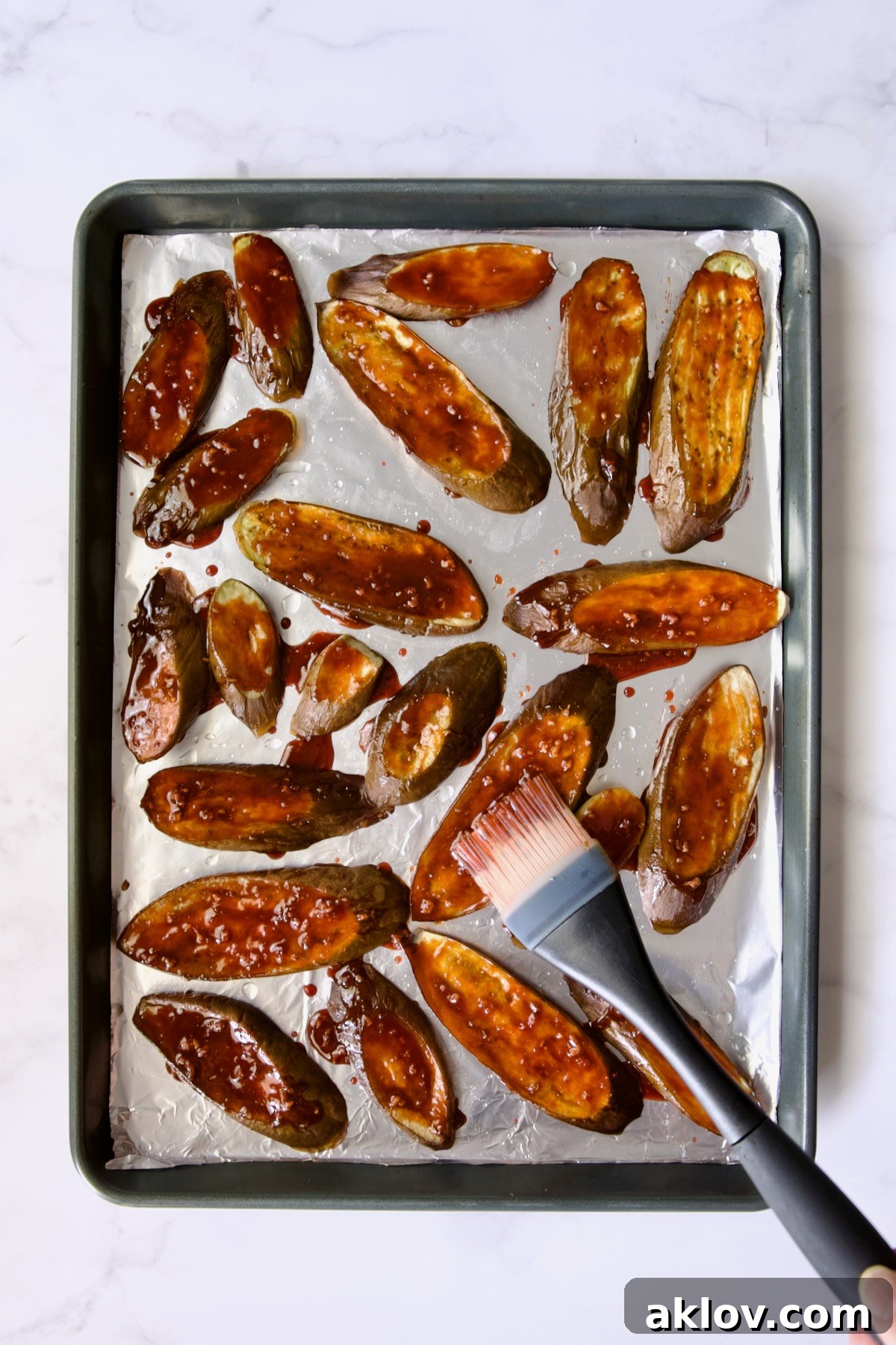
- Step 8: Second Glaze & Broil. Flip the eggplant slices over. Brush the other side with the remaining glaze. Return them to the broiler for another 3 minutes, or until the glaze is beautifully caramelized and bubbling, with slightly charred edges. Again, remain vigilant to prevent burning.
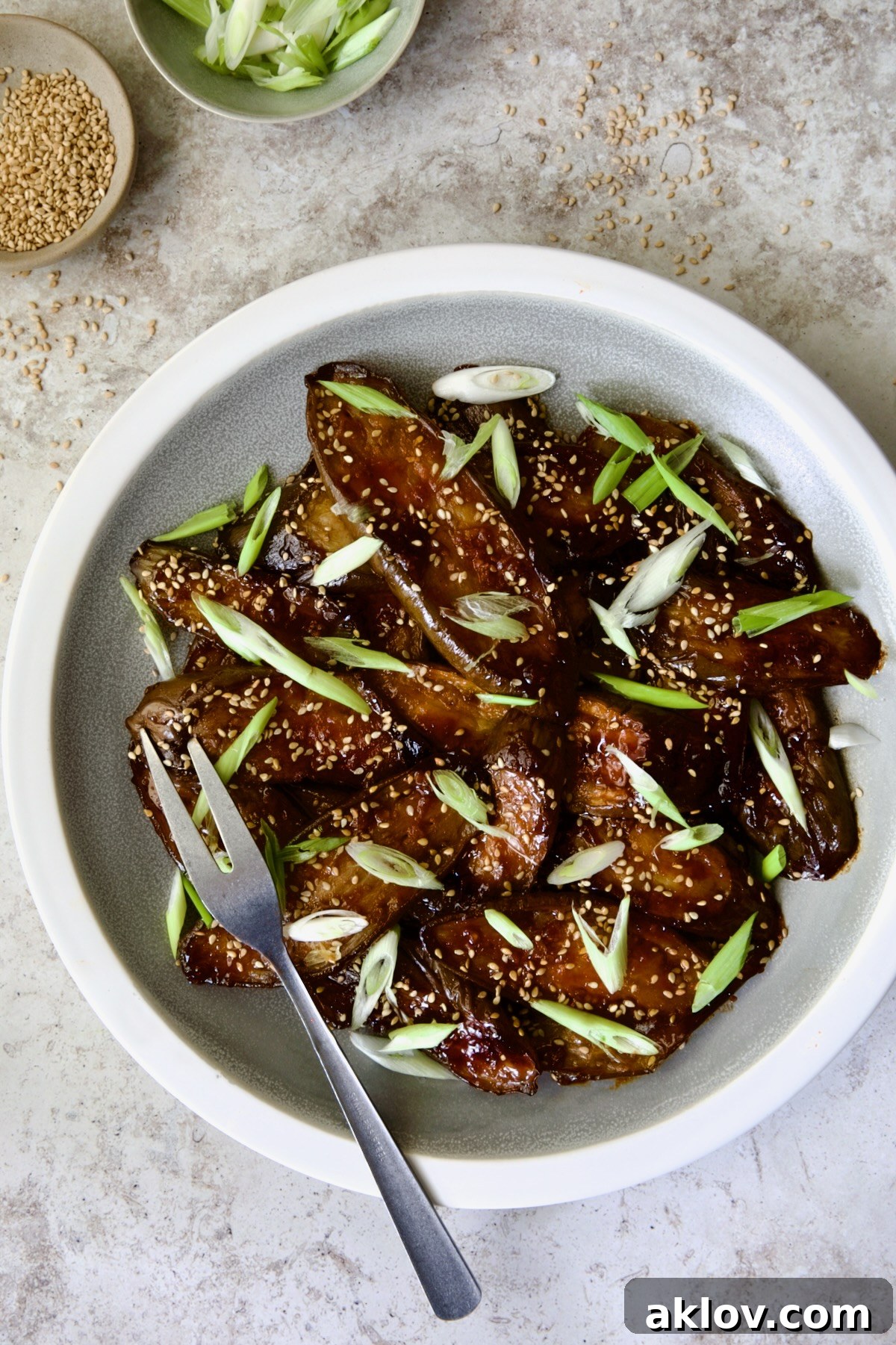
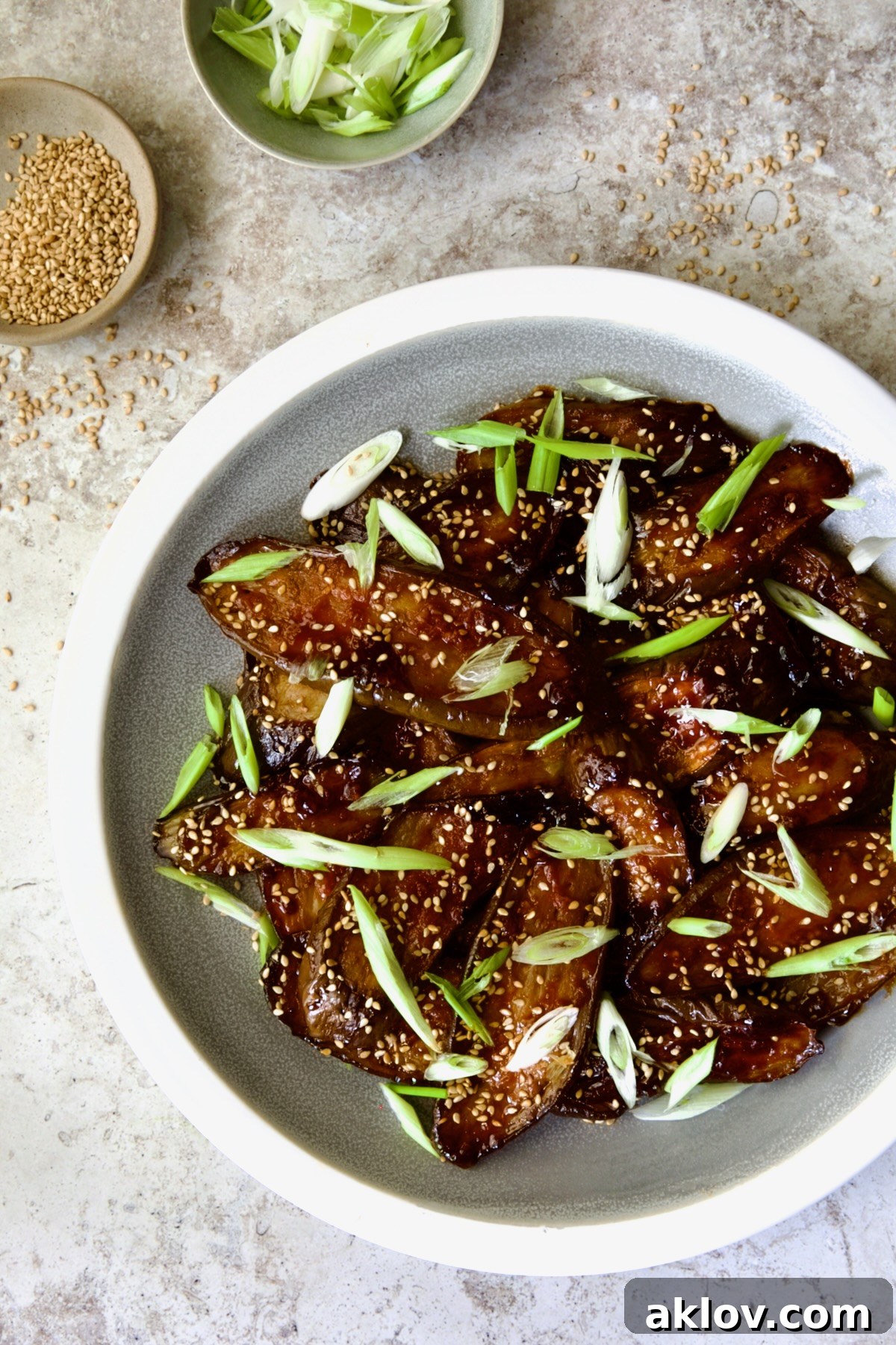
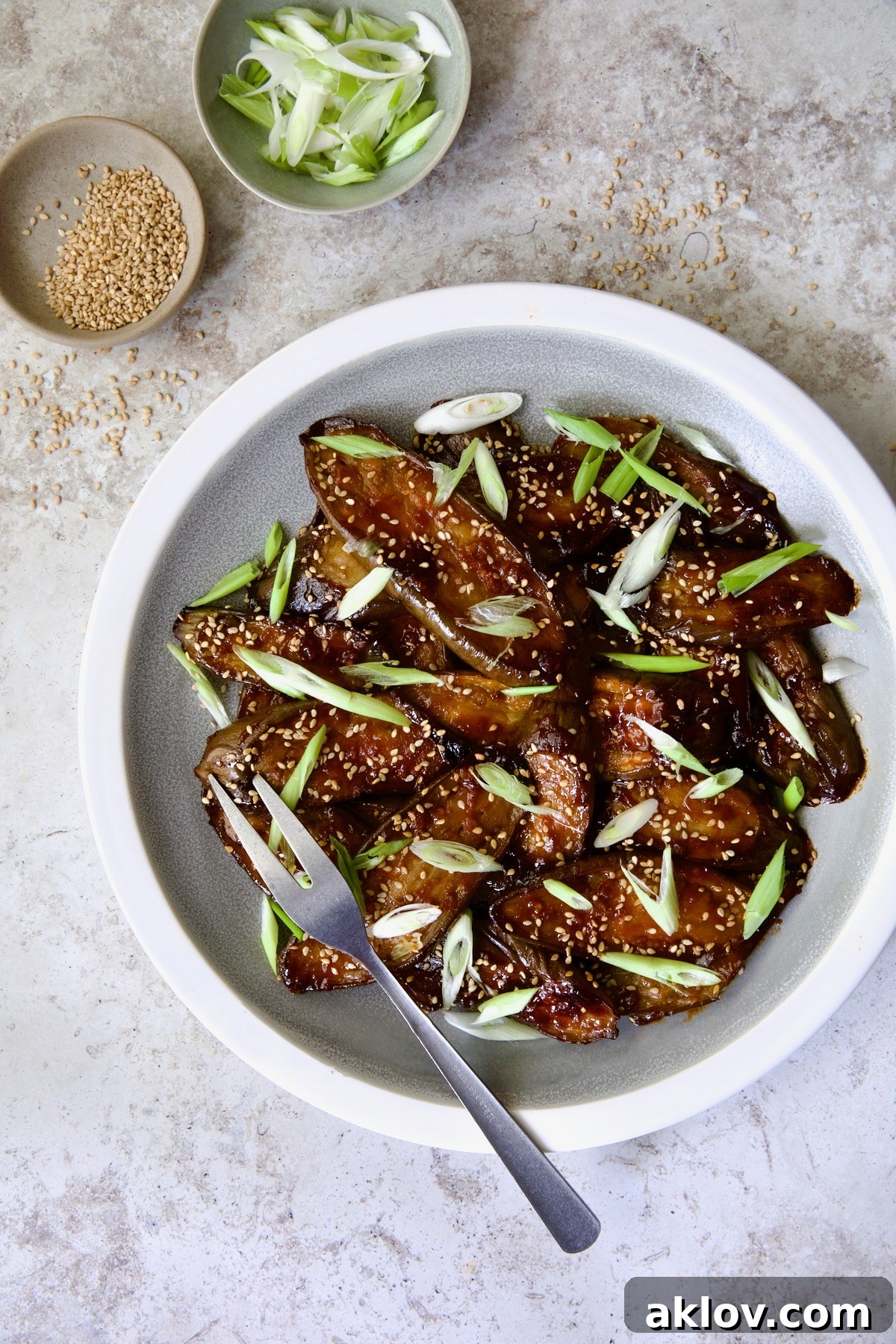
- Step 9: Garnish & Serve. Transfer the hot, glazed eggplant to a serving platter. Garnish generously with thinly sliced scallions and a sprinkle of sesame seeds for added freshness and crunch. Serve immediately to enjoy its peak flavor and texture.
Chef’s Essential Tip for Perfect Broiling
- Never walk away from the broiler! This is perhaps the most critical tip for any recipe involving broiling, especially with a sugary glaze like our Gochujang sauce. While we aim for a beautiful caramelization and a touch of char, food can go from perfectly golden to completely burnt in mere seconds under the intense, direct heat of a broiler. Every oven’s broiler element can vary in intensity and proximity, so constant vigilance is your best friend. Keep a close eye on your eggplant throughout the broiling process, and don’t hesitate to pull it out if it starts to brown too quickly. A few extra seconds can make all the difference between a delicious caramelized crust and an overcooked mess.
Delightful Serving Suggestions for Gochujang Eggplant
This versatile Gochujang Eggplant can be the star of your meal or a vibrant supporting player. Here are some ideas to inspire your menu:
- Classic Korean Pairing: Serve it alongside steamed white or brown rice to soak up every drop of that delicious glaze. It’s a natural complement to any Korean BBQ dish, such as grilled bulgogi or spicy pork belly.
- Hearty Mains: Pair it with rich, slow-cooked meats like our Slow Cooker Korean Short Ribs or Korean Braised Chicken Thighs for a complete and robust meal.
- Vegetarian Feast: For a delightful plant-based spread, serve it with Vegan Korean Tofu Lettuce Wraps, a side of kimchi, or other roasted vegetables like broccoli or bell peppers.
- Noodle Bowls: Chop the glazed eggplant and add it to a warm or cold noodle bowl with fresh vegetables and a light dressing for a quick and satisfying lunch.
- Creative Appetizer: Serve smaller pieces on skewers as an impressive appetizer at your next gathering.
- With Other Asian-Inspired Dishes: Its flavors blend seamlessly with dishes like Sweet Potato Latkes with Gochujang Mayonnaise or Asian Beef Lettuce Wraps.
- Light & Fresh: For a lighter meal, serve it alongside Grilled Mahi Mahi with Cilantro-Ginger Pesto, creating a fusion of flavors.
Common Questions About Gochujang Eggplant
Yes, gochujang does have a distinct level of spiciness, which can vary depending on the brand and chili content. However, in this Korean Gochujang Eggplant recipe, the gochujang is balanced with sweet honey, savory soy sauce, and aromatic garlic. This dilution significantly mellows the heat, making the overall dish pleasantly warm rather than overtly fiery. It typically offers a mild to medium spice level that enhances the flavor without overwhelming your palate. If you prefer more heat, you can add a pinch of gochugaru (Korean chili powder) to the glaze, or a dash of sriracha.
While Gochujang’s unique fermented flavor is hard to perfectly replicate, you have a couple of good options if you can’t find it:
- Sriracha: This popular chili sauce can serve as a decent substitute because it’s also a fermented condiment that provides both spiciness and a touch of sweetness. While Sriracha has a thinner consistency and a different flavor profile (lacking the deep umami of gochujang’s fermented soybeans), it will still add a desirable kick and some complexity to the glaze. Since it’s thinner, you might want to slightly reduce other liquid ingredients if consistency is a concern, but for a glaze that gets dissolved, it works well for flavor.
- Miso Paste + Chili: Miso paste, another fermented soybean product, can replace the umami depth of gochujang. It delivers a rich, savory, and slightly salty flavor. However, miso paste is not spicy. To achieve a similar profile to gochujang, combine white or red miso paste with Korean chili powder (gochugaru) or a splash of Sriracha. Start with a small amount of chili and adjust to your preferred spice level. This combination will get you very close to the desired flavor profile.
Historically, salting eggplant was common practice to draw out bitterness and excess moisture. However, with modern eggplant varieties, especially Japanese eggplant, bitterness is much less common, and they generally have less water content. For this recipe, salting is not strictly necessary as the Japanese eggplant is mild and cooks quickly. If using a larger, globe eggplant, you might consider it for about 30 minutes to an hour, then pat dry thoroughly before proceeding with the recipe steps.
Storage and Reheating Gochujang Eggplant
- Refrigeration: Any leftover Gochujang Eggplant can be stored in an airtight container in the refrigerator for up to three days. It makes for fantastic next-day lunch or a quick snack!
- Reheating: To best preserve the texture and flavor, we recommend reheating leftovers in a 350°F (175°C) oven. Spread the eggplant slices on a baking sheet and heat for about 10-15 minutes, or until thoroughly heated through and slightly sizzling. This method helps prevent the eggplant from becoming soggy, retaining some of its original texture. While microwaving is an option, it may result in a softer texture.
The Wonderful Versatility of Eggplant
Eggplant is a culinary chameleon, celebrated across many cultures for its ability to soak up flavors and transform textures. From the long, slender Japanese varieties to the large, globe-shaped beauties, and even the small, round Thai eggplants, each type offers a slightly different experience. Nutritionally, eggplant is a good source of fiber, vitamins B1 and B6, potassium, and manganese. It’s also rich in antioxidants, particularly nasunin, which gives its skin its distinctive purple hue.
Its spongy flesh acts like a sponge, readily absorbing oils, sauces, and spices, which is precisely why it pairs so perfectly with the robust Gochujang glaze. When cooked, its flesh becomes incredibly tender and creamy, making it a satisfying addition to both vegetarian and meat-centric meals. This Gochujang Eggplant recipe is just one delicious example of how this versatile vegetable can be elevated into an unforgettable dish.
More Great Eggplant Recipes You’ll Love!
If you’ve fallen in love with the magic of eggplant, explore these other fantastic recipes that celebrate its versatility:
- Miso Eggplant: Another Asian-inspired delight, featuring a sweet and savory miso glaze.
- Air Fryer Eggplant Fries Recipe with Garlic Basil Aioli: Crispy, guilt-free eggplant fries, perfect for snacking.
- Turkish Eggplant Casserole – Imam Bayildi: A classic Mediterranean dish, slow-cooked to perfection.
- Healthier Eggplant Parmesan Stacks: A lighter take on the Italian classic, perfect for individual servings.
- Eggplant Caviar (Caviar d’Aubergine): A rich and smoky spread, ideal for appetizers.
Discover even more delicious vegetable creations at Vegetable Side Dish Recipes – From A Chef’s Kitchen.
Final Thoughts on Gochujang Eggplant
In summary, this Gochujang Eggplant recipe offers a delightful blend of simplicity, bold Korean flavors, and satisfying textures. It’s an approachable way to introduce authentic Asian ingredients into your kitchen, delivering a dish that is equally at home as a vibrant side or a fulfilling vegetarian main. With its perfectly tender eggplant coated in a sweet, spicy, and savory caramelized glaze, this recipe promises to be a new favorite. Don’t hesitate to dive in and experience the unique magic of Gochujang Eggplant for yourself. Your taste buds will thank you!
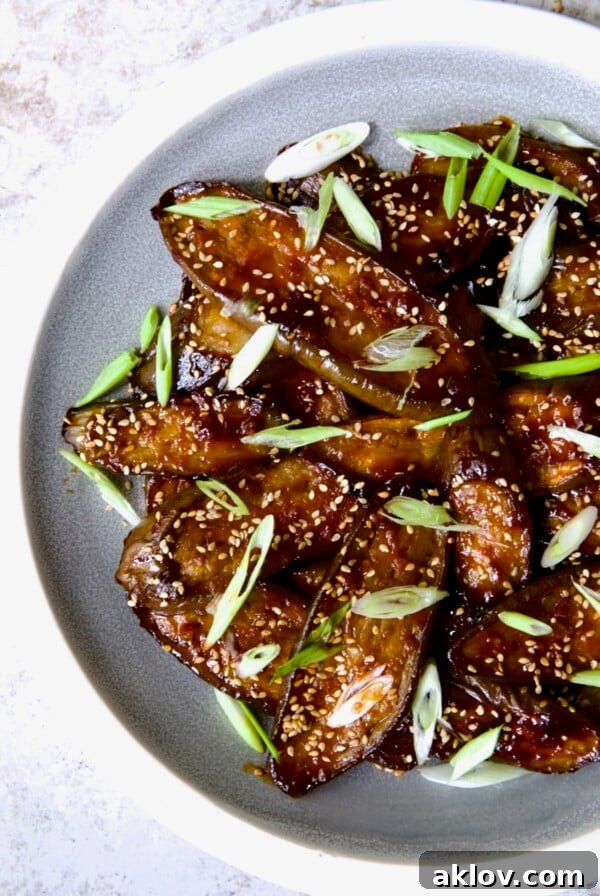
Gochujang Eggplant
Equipment
-
Wusthof Chef Knife
-
Cutting Board
-
Rimmed Sheet Pan
-
Glass Mixing Bowls
Ingredients
- 3 large Japanese eggplants, sliced diagonally into 1/2-inch thick slices
- 1/4 cup canola or vegetable oil
- 2 tablespoon gochujang, (Korean red chili paste)
- 2 tablespoons soy sauce
- 2 tablespoons honey
- 1 teaspoon toasted sesame oil
- 3 cloves garlic, minced
- 2 scallions, white and light green part only, thinly sliced diagonally
- Sesame seeds, for garnish
Instructions
-
Preheat oven to 400 degrees F (200 degrees C).
-
Arrange the eggplant slices on a rimmed baking sheet lined with non-stick aluminum foil. Brush both sides of the eggplant slices generously with canola or vegetable oil.
-
Bake the eggplant slices for 15-20 minutes, or until they are tender and can be easily pierced with a paring knife.
-
While the eggplant bakes, whisk together the gochujang, soy sauce, honey, toasted sesame oil, and minced garlic in a small bowl until smooth.
-
Remove the eggplant from the oven. Position an oven rack 9-10 inches below the broiler element and preheat the broiler.
-
Brush one side of each eggplant slice with half of the prepared glaze.
-
Place the baking sheet under the broiler for 2 minutes. Watch carefully to prevent burning.
-
Flip the eggplant slices over, brush with the remaining glaze, and broil for another 3 minutes, or until the glaze is caramelized and bubbly.
-
Garnish immediately with thinly sliced scallions and sesame seeds. Serve hot.
Notes
- As mentioned, keep a very close eye on the eggplant while it’s under the broiler! The glaze contains sugar, which can burn quickly. All ovens vary, so adjust broiling time as needed.
Nutrition Information (Estimated)
Nutritional values are automatically calculated using unbranded products and are estimates only. Actual results may vary based on ingredients used and portion sizes. Adjust as needed for dietary restrictions, allergies, or health concerns.