
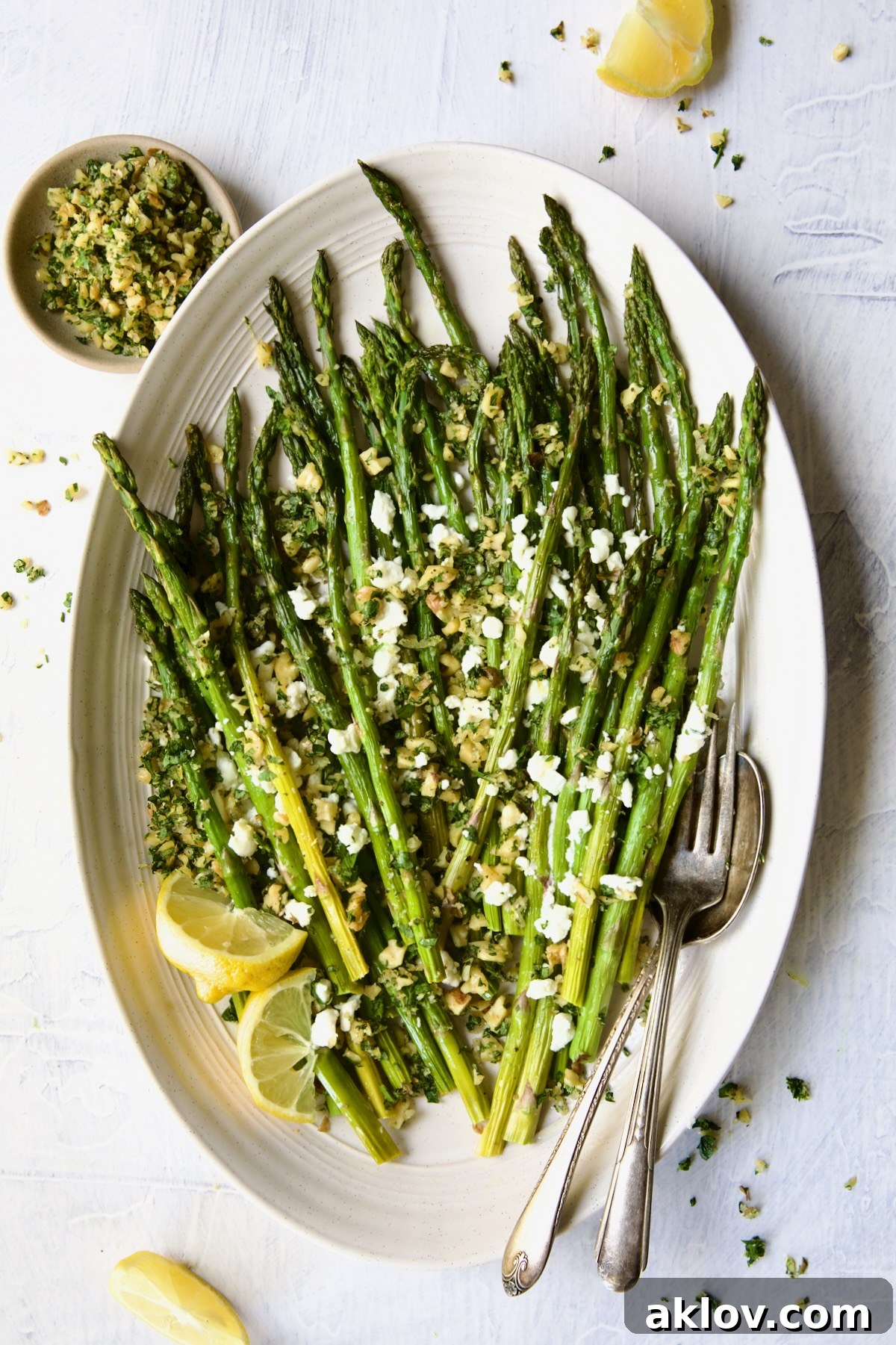
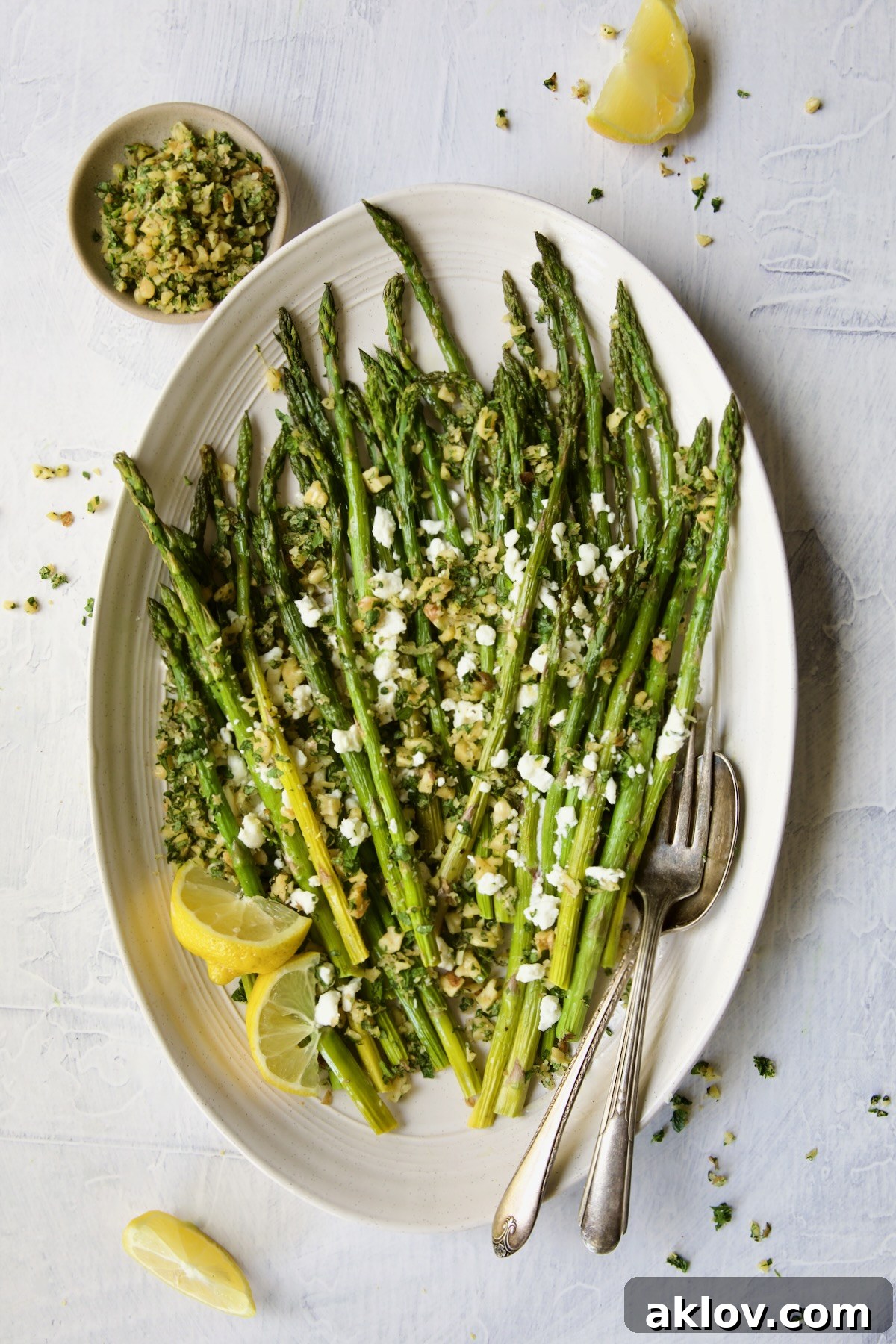
Step into the vibrant flavors of spring with this exquisite Roasted Asparagus with Walnut Gremolata and Goat Cheese. This recipe is not just a dish; it’s a celebration of fresh, seasonal ingredients, combining simplicity with an undeniable elegance that will captivate your guests and elevate any meal. Whether you’re hosting a sophisticated dinner party or simply seeking a refined side dish for a weeknight meal, this recipe promises to deliver both stunning presentation and unforgettable taste. Imagine serving this alongside Shrimp Scampi with Shallots and Artichokes for a truly impressive culinary experience that will have everyone asking for the recipe!
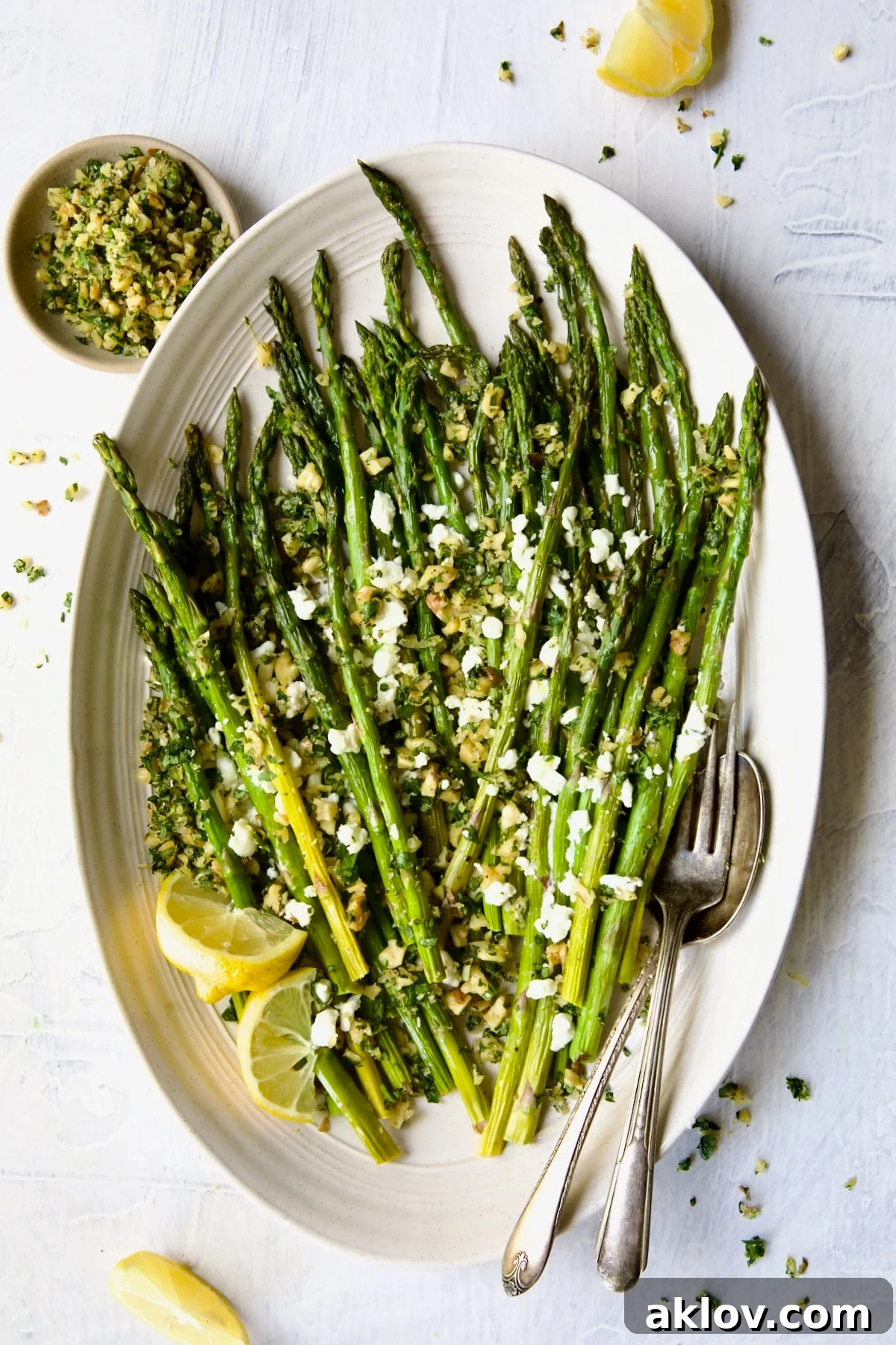
Why This Recipe is a Keeper: The Magic of Roasted Asparagus
There’s a simple reason why roasting is often hailed as the best method for preparing asparagus: it truly transforms this lean green vegetable into something extraordinary. This technique is not only incredibly quick and effortless, making it perfect for busy weeknights or elaborate holiday spreads, but it also intensely concentrates the natural flavors of the asparagus.
When asparagus spears are exposed to the high heat of the oven, a beautiful chemical reaction known as the Maillard reaction occurs. This process browns and caramelizes the natural sugars on the surface of the asparagus, especially on the delicate tips, resulting in a slightly crisp exterior and a tender, juicy interior. Unlike boiling or blanching, which can sometimes leach out flavor and nutrients into the water, roasting ensures that all that delicious goodness remains locked within each spear. The gentle evaporation of water during roasting further intensifies the vibrant, earthy taste of the asparagus, making it far more robust and satisfying.
Elevating Asparagus with Gremolata and Goat Cheese
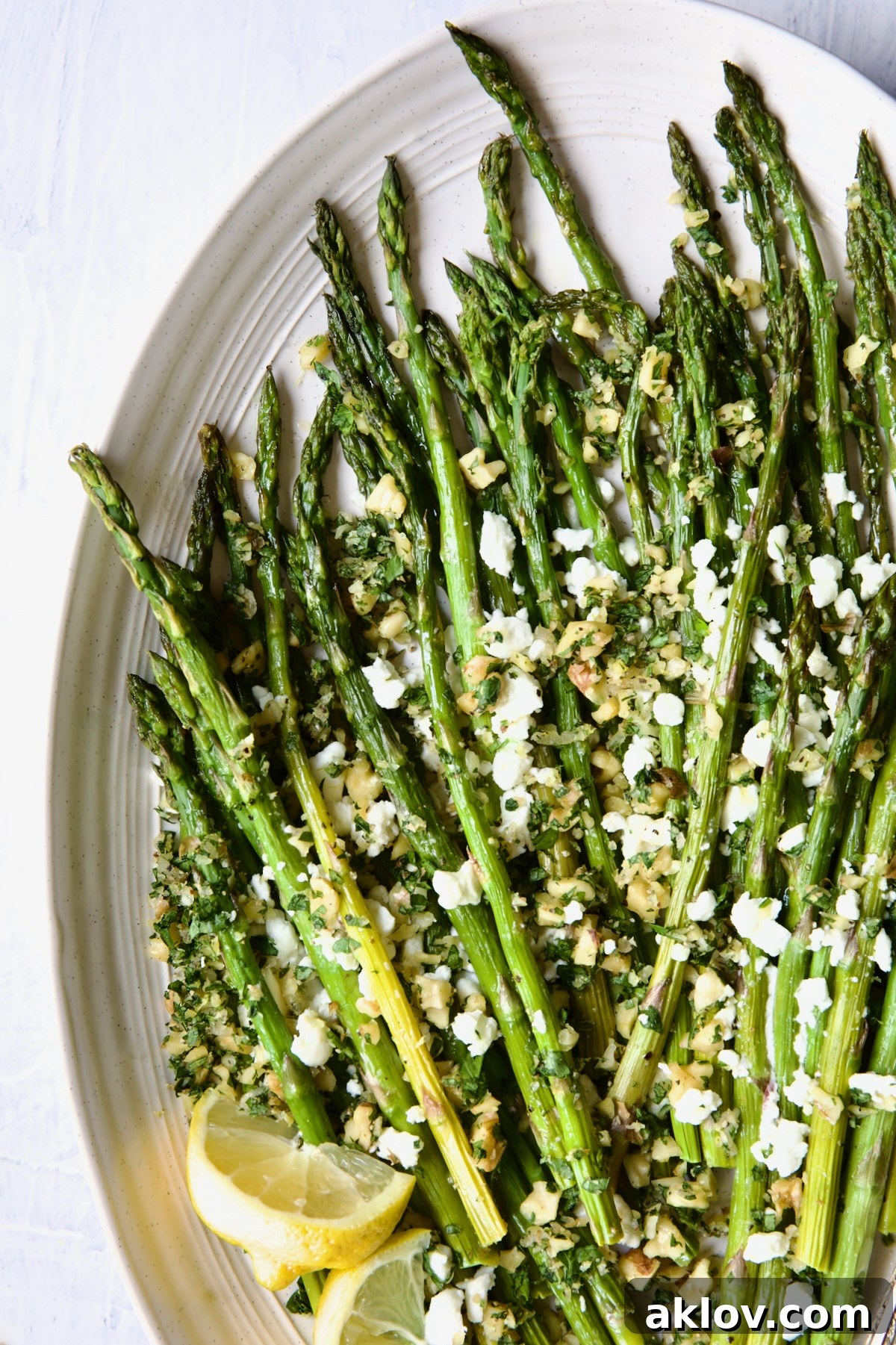
While roasted asparagus is undeniably delicious on its own, this recipe takes it to an entirely new level with the addition of a zesty Walnut Gremolata and creamy goat cheese. This inspired combination creates a symphony of textures and flavors that will delight your palate:
- The Lemon: The bright, citrusy notes of fresh lemon in the gremolata cut through the richness and provide a refreshing counterpoint to the asparagus, awakening your taste buds.
- The Walnuts: Finely chopped walnuts add an essential layer of crunch and a delicate nutty warmth, contrasting beautifully with the tender roasted spears.
- The Goat Cheese: Crumbled goat cheese melts slightly when warmed, contributing a luxurious creaminess and a delightful tangy finish that perfectly balances the other elements.
This roasted asparagus recipe is more than just a side dish; it’s a culinary experience. It’s:
- Effortlessly Easy: Minimal prep and simple cooking steps mean more time enjoying your meal.
- Incredibly Elegant: Its vibrant colors and sophisticated flavor profile make it ideal for any special occasion.
- Truly Showstopping: A dish that looks as good as it tastes, guaranteed to impress your family and friends.
What is a Gremolata and Its Role in Cuisine?
Gremolata is a vibrant, fresh, and intensely aromatic Italian condiment that serves a dual purpose: it acts as both a flavor enhancer and a beautiful garnish. Traditionally hailing from Milan, gremolata is most famously associated with the rich, slow-cooked braised veal shank dish, Osso Buco. Its classic composition includes just three key ingredients: finely minced fresh parsley, garlic, and lemon zest.
The beauty of gremolata lies in its ability to introduce a burst of freshness, acidity, and herbaceousness to dishes that might otherwise be heavy or rich. In the case of Osso Buco, the bright, piquant notes of gremolata cut through the richness of the meat and marrow, providing a much-needed lift and a lively, refreshing counterpoint. It stimulates the palate and cleanses it, making each bite as enjoyable as the first.
Beyond the Classic: Variations and Uses
While the traditional trio of parsley, garlic, and lemon zest is a timeless classic, gremolata is incredibly versatile and can be adapted to suit various culinary creations. In this particular recipe, we’ve incorporated walnuts into our gremolata, adding a delightful crunch and nutty depth that complements the asparagus and goat cheese beautifully. Other popular variations include:
- Different Herbs: Mint, basil, or cilantro can replace or complement parsley for different flavor profiles.
- Alternative Citrus: Orange or lime zest can offer a sweeter or more tart dimension.
- Added Spices: A pinch of red pepper flakes can introduce a subtle heat.
- Nuts and Seeds: Pine nuts, almonds, or even toasted breadcrumbs can add texture.
Gremolata isn’t just for braised meats! It’s a fantastic finishing touch for:
- Grilled or roasted vegetables
- Pan-seared fish or chicken
- Soups and stews
- Pasta dishes
- Even as a bright topping for bruschetta
Its ease of preparation and powerful impact make it a secret weapon for home cooks looking to add a gourmet touch to their meals.
What to Look For When Buying Fresh Asparagus: A Guide to Quality
The success of any asparagus dish starts with selecting the freshest possible spears. Asparagus is a delicate vegetable, and its quality can diminish quickly. Knowing what to look for at the market will ensure your roasted asparagus is as delicious as it can be:
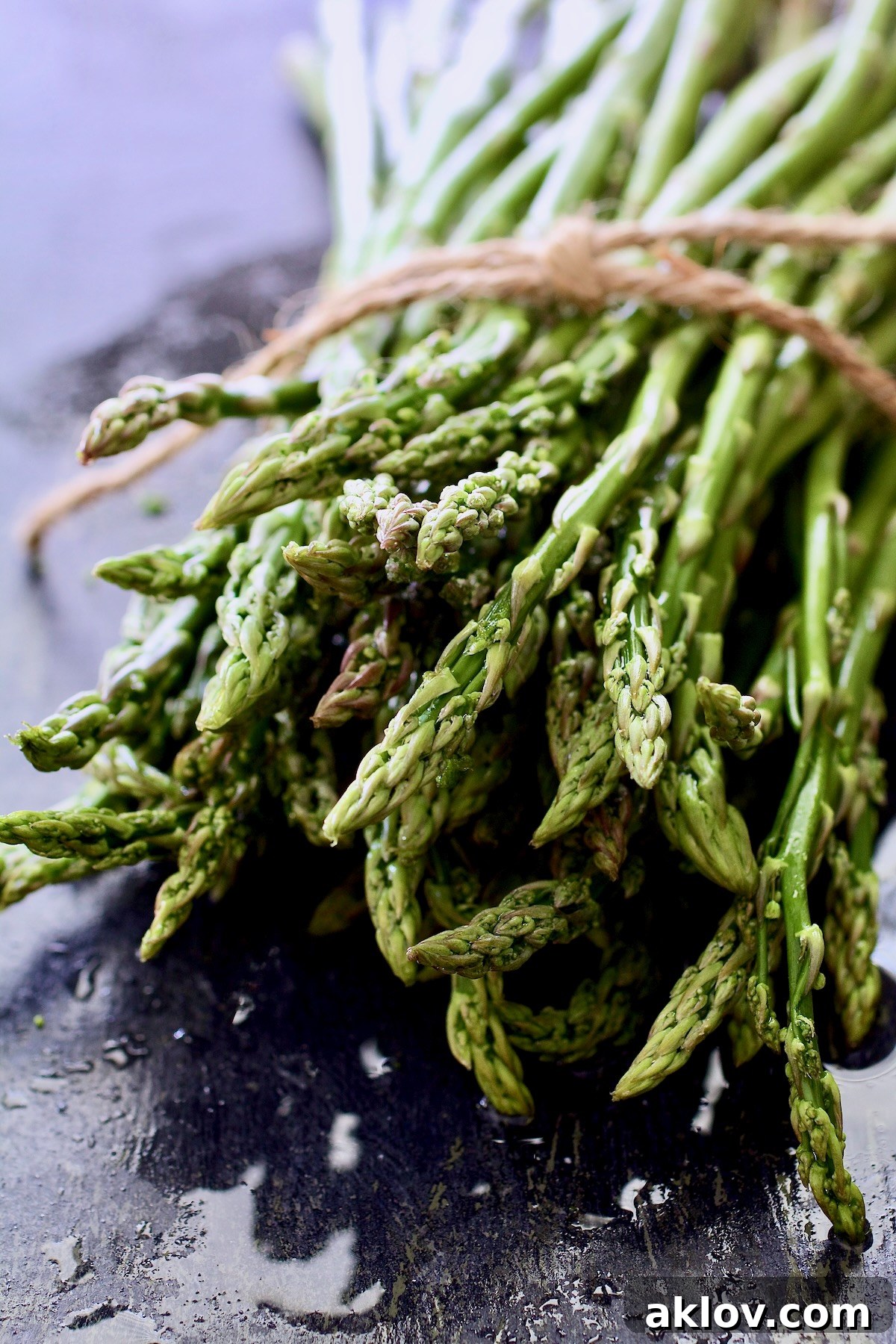
- Vibrant Green Color: Fresh asparagus should boast a bright, lively green color throughout the stalk, with possibly a purplish tinge at the tips, depending on the variety. Avoid any bunches that show signs of dullness, yellowing, or browning, as these indicate age.
- Firm and Snappy Stalks: Gently bend a spear. It should be firm and snap easily, rather than bending limply or feeling rubbery. Limp asparagus is old and has lost its moisture and crispness.
- Tight, Closed Tips: The most crucial indicator of freshness is the tip. The florets at the top should be tightly closed and compact. If the tips are splayed open, wet, mushy, or flowering, the asparagus is past its prime. Moisture can cause the delicate tips to deteriorate rapidly, so be wary if you see wetness around them, especially in grocery stores that spray their produce.
- Smooth Texture: The stalks should be smooth, not wrinkled or shriveled. Wrinkles are a clear sign of dehydration.
Storing Asparagus for Optimal Freshness
Once you’ve brought your beautiful asparagus home, proper storage is key to maintaining its crispness and flavor:
- Short-Term Storage (1-2 days): For immediate use, simply place the asparagus in the crisper drawer of your refrigerator, preferably in a plastic bag to retain moisture.
- Extended Storage (up to 5-7 days): Treat asparagus like a bouquet of flowers! Trim approximately ½ inch from the bottom of the stalks. Stand the asparagus upright in a glass or jar with about an inch of water at the bottom. Loosely cover the tips with a plastic bag or plastic wrap to create a humid environment, and store it in the refrigerator. Change the water every couple of days to keep it fresh.
How to Make Roasted Asparagus with Walnut Gremolata and Goat Cheese: Step-by-Step
Recipe Ingredients:
Gathering your ingredients ahead of time, a practice known as “mise en place,” will make the cooking process smooth and enjoyable. Here’s everything you’ll need to create this delightful roasted asparagus dish. Refer to the detailed recipe card below for precise quantities.
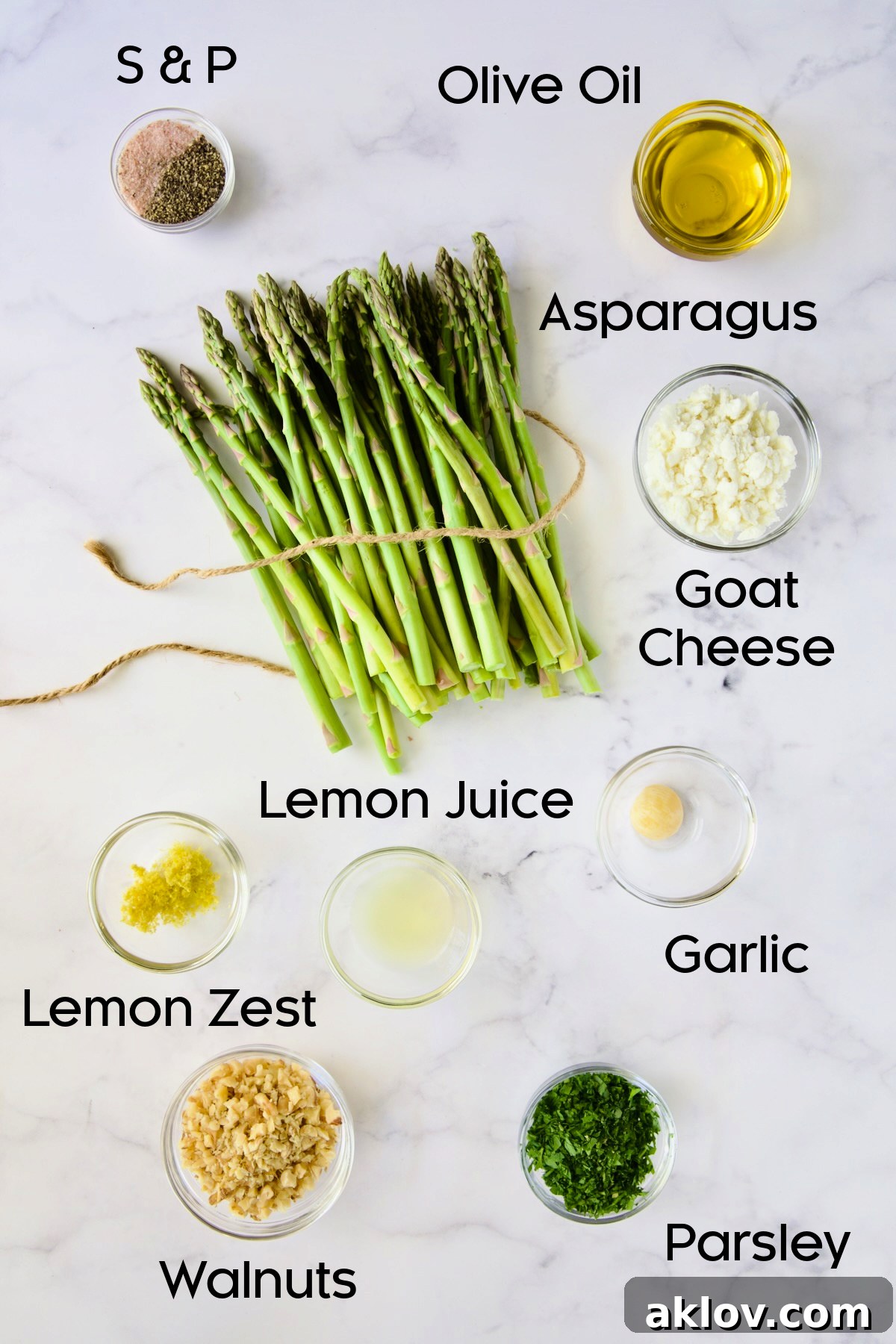
Ingredient Notes and Substitutions:
- Asparagus: For this recipe, I find that small to medium-width asparagus spears work best, offering a perfect balance of tenderness and structure. While pencil-thin asparagus (often seen early in the season) is delicious, it can cook too quickly and become overly soft. If you can only find large or very large spears, don’t worry! After trimming the tough, woody ends, use a vegetable peeler to lightly shave the bottom half of the thicker stalks. This helps them cook more evenly and tenderly. For reference, the USDA categorizes asparagus widths as follows:
- Very Small: Less than 5/16 inch
- Small: 5/16 to less than 8/16 inch
- Medium: 8/16 to less than 11/16 inch
- Large: 11/16 to less than 14/16 inch
- Very Large: 14/16 inch and up
- Goat Cheese: Opt for pre-crumbled goat cheese to save time and effort. Attempting to crumble a fresh log of goat cheese can be quite challenging and messy due to its soft, creamy texture. If goat cheese isn’t your preference, crumbled feta or a mild, soft ricotta salata could offer a similar tangy and creamy counterpoint.
- Walnuts: Walnuts are not only delicious but also packed with nutrients, making them a super healthy choice (Source: Healthline.com). Their rich, earthy flavor pairs wonderfully with asparagus and goat cheese. However, if you prefer a different nut, pistachios (for a slightly sweeter, brighter note) or macadamia nuts (for a buttery, smooth texture) would also work exceptionally well in the gremolata. Feel free to toast your walnuts lightly before chopping for an intensified nutty flavor.
- Olive Oil: Use a good quality extra virgin olive oil. Its fruity notes will enhance the overall flavor of the roasted asparagus.
- Lemon: Fresh lemon zest and juice are indispensable for the gremolata and for drizzling over the finished asparagus. Always use fresh lemons for the best flavor.
- Garlic: One clove of minced fresh garlic adds a pungent warmth to the gremolata. Adjust to your taste, using a little more if you’re a garlic lover.
- Parsley: Fresh flat-leaf (Italian) parsley is preferred for its robust flavor and vibrant color. Avoid dried parsley for this recipe.
Step-By-Step Instructions:
- Prepare Your Ingredients: Begin by gathering all your ingredients. Preheat your oven to a robust 400 degrees Fahrenheit (200 degrees Celsius). This high heat is crucial for achieving that desired caramelization and tender-crisp texture.
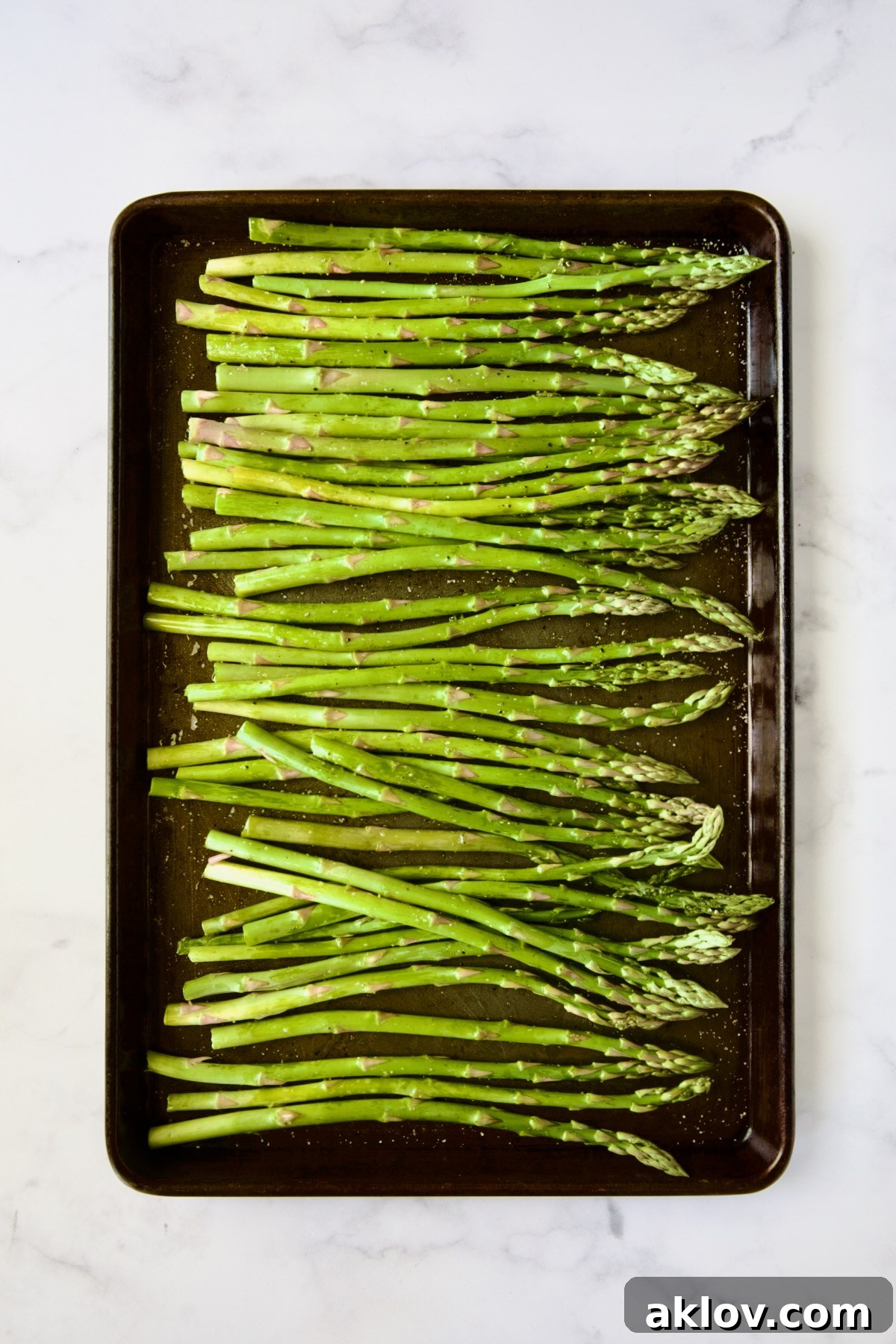
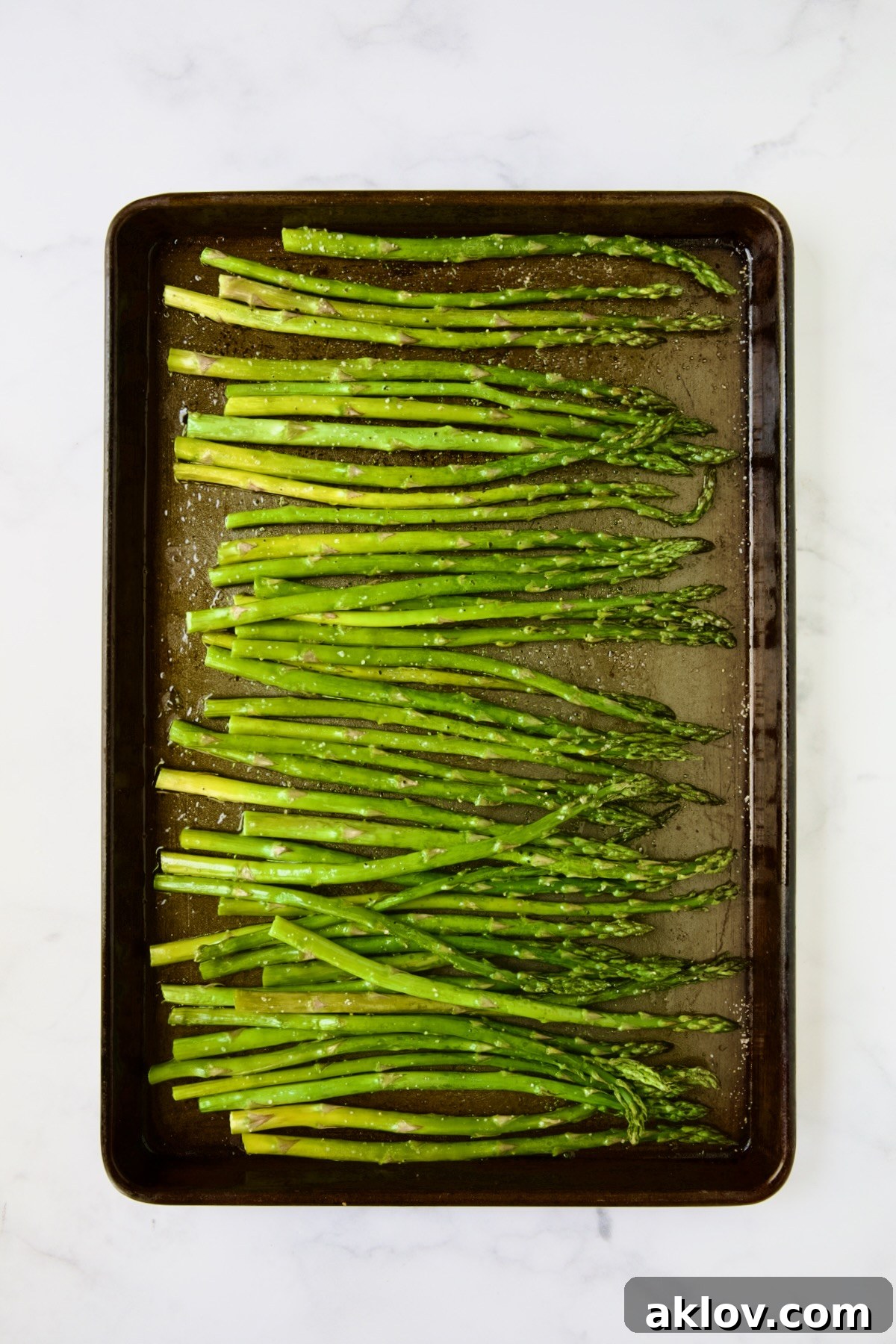
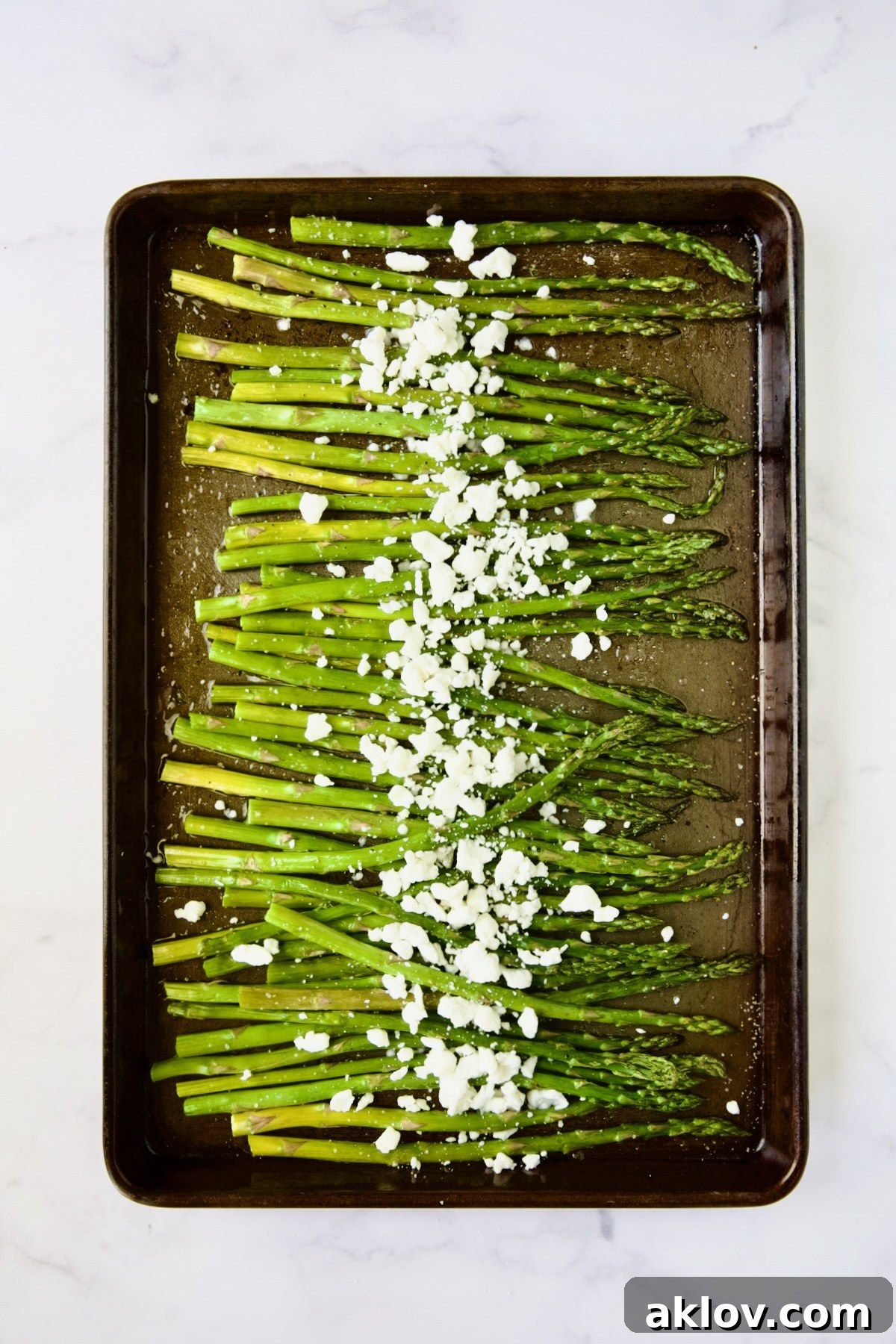
- Season the Asparagus: Arrange the trimmed asparagus spears in a single layer on a rimmed baking sheet. Drizzle them generously with olive oil, ensuring each spear is lightly coated. Season to taste with salt and freshly ground black pepper. A single layer is important to ensure even roasting and prevent steaming.
- Roast to Perfection: Place the baking sheet in the preheated oven and roast for approximately 10 minutes. The cooking time can vary based on the thickness of your asparagus spears and your oven’s calibration. Thicker spears may require a few extra minutes or a slightly higher temperature (up to 425°F/220°C). Look for spears that are tender-crisp, bright green, and slightly caramelized at the tips.
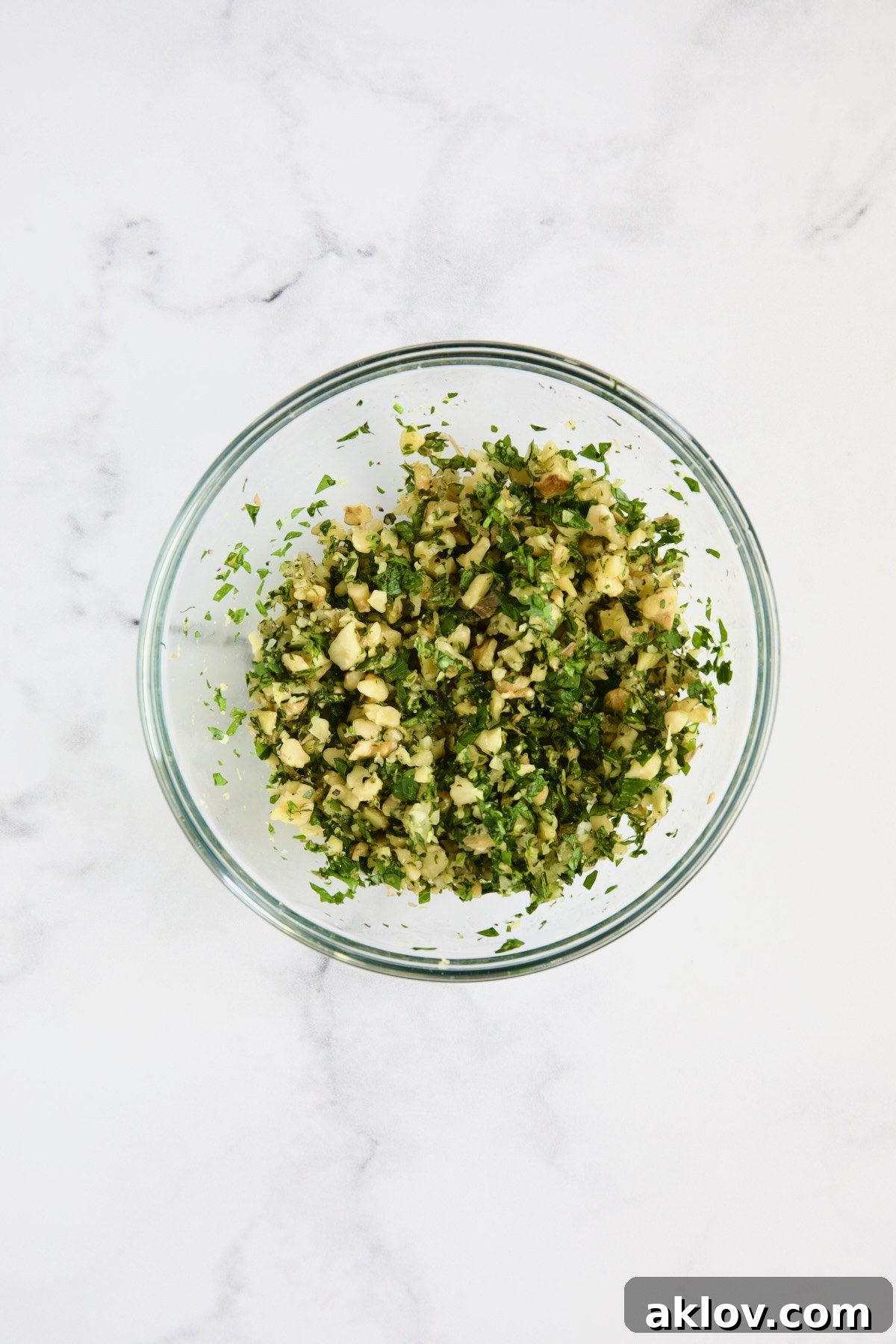
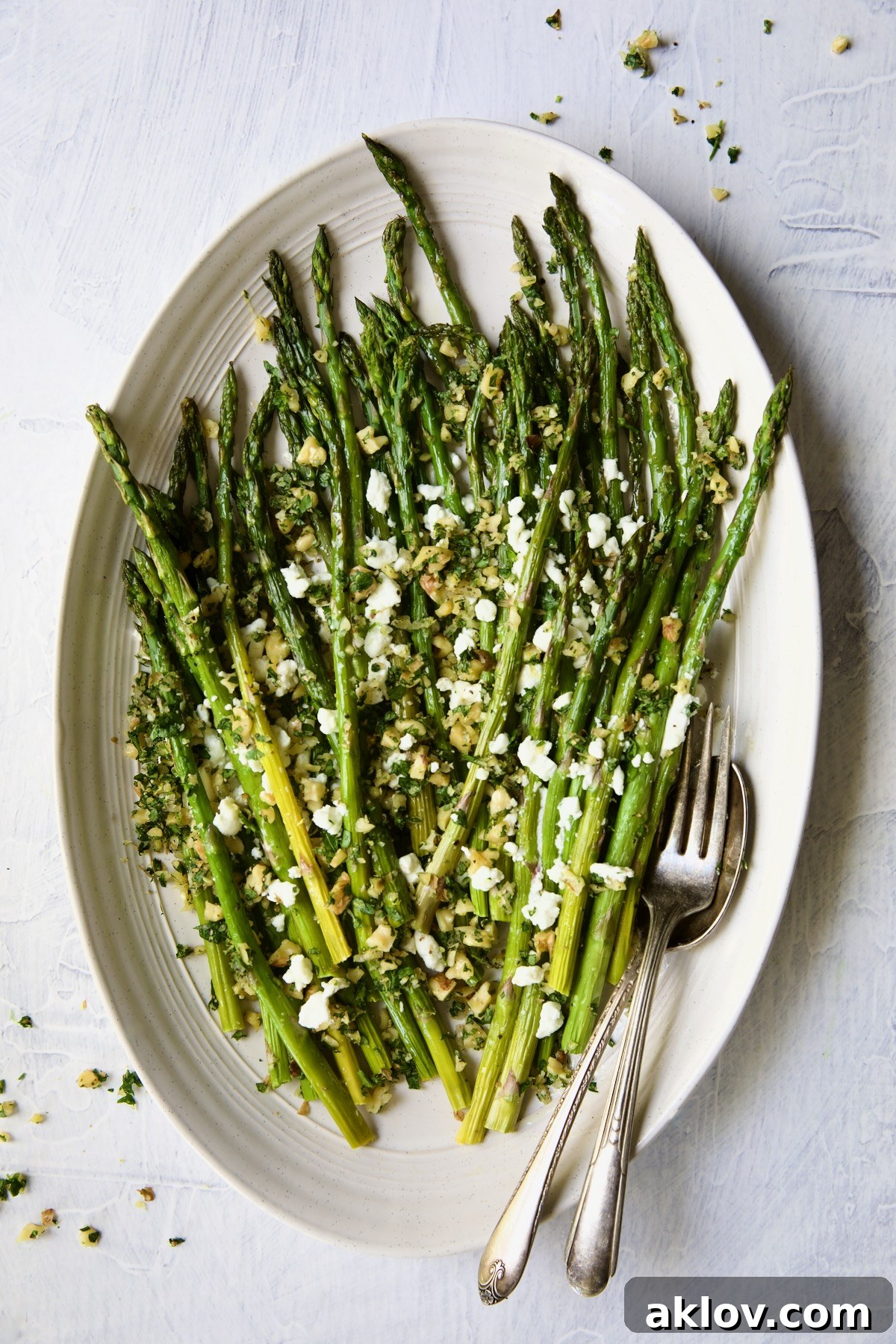
- Prepare the Walnut Gremolata: While the asparagus is roasting, combine the finely chopped walnuts, fresh parsley, lemon zest, minced garlic, and a pinch of salt and black pepper in a small bowl. Toss everything together until well combined. This can be done just before the asparagus is ready to maximize its freshness.
- Add Lemon and Goat Cheese: Once the asparagus is cooked to your desired doneness, remove it from the oven. Immediately drizzle with fresh lemon juice, which brightens the flavors and adds a tangy kick. Then, evenly sprinkle the crumbled goat cheese over the hot asparagus.
- Warm the Goat Cheese: Return the baking sheet to the oven for just 1 to 2 minutes. This brief warming period will soften the goat cheese slightly, making it wonderfully creamy and melty, allowing its tanginess to beautifully infuse with the warm asparagus.
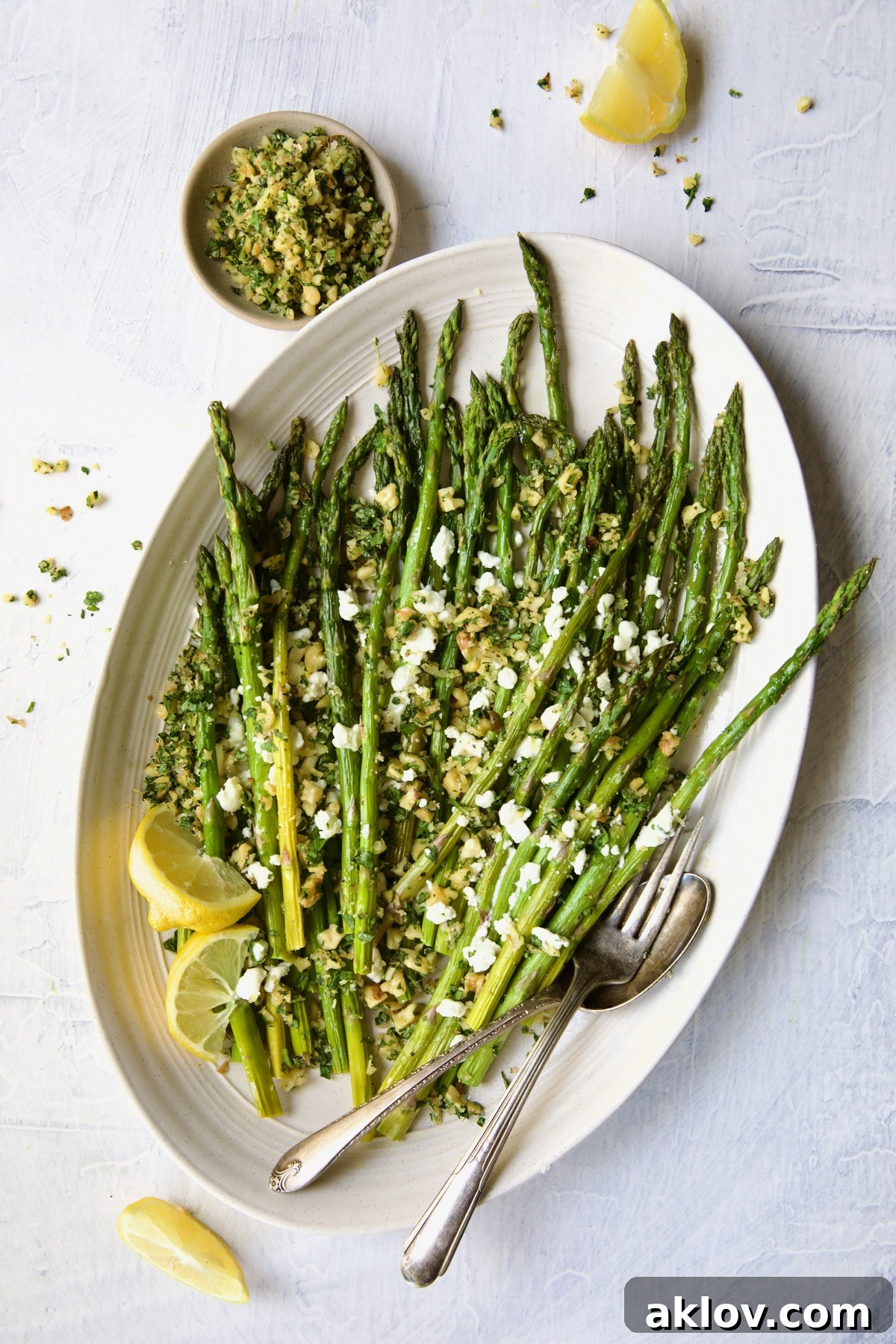
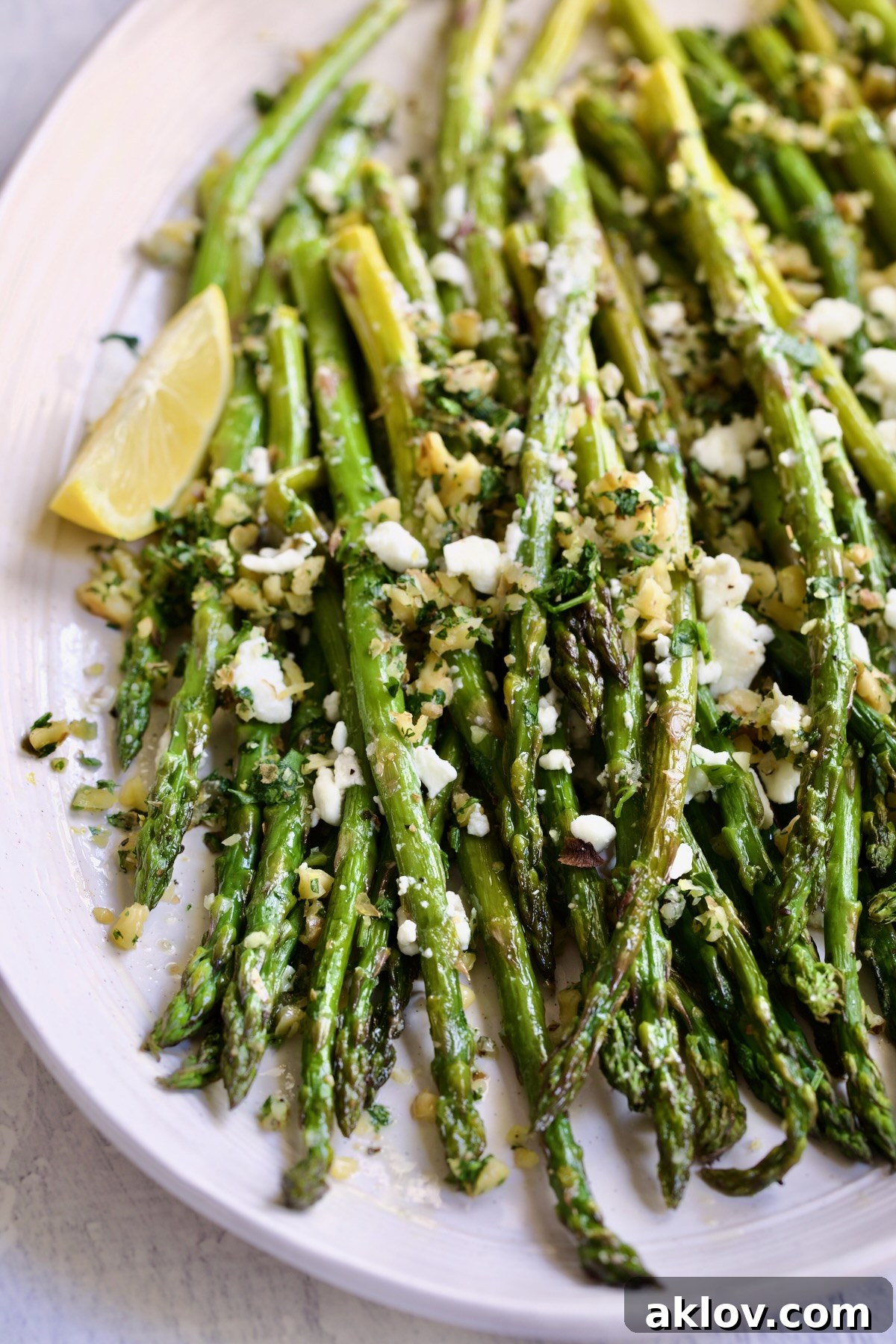
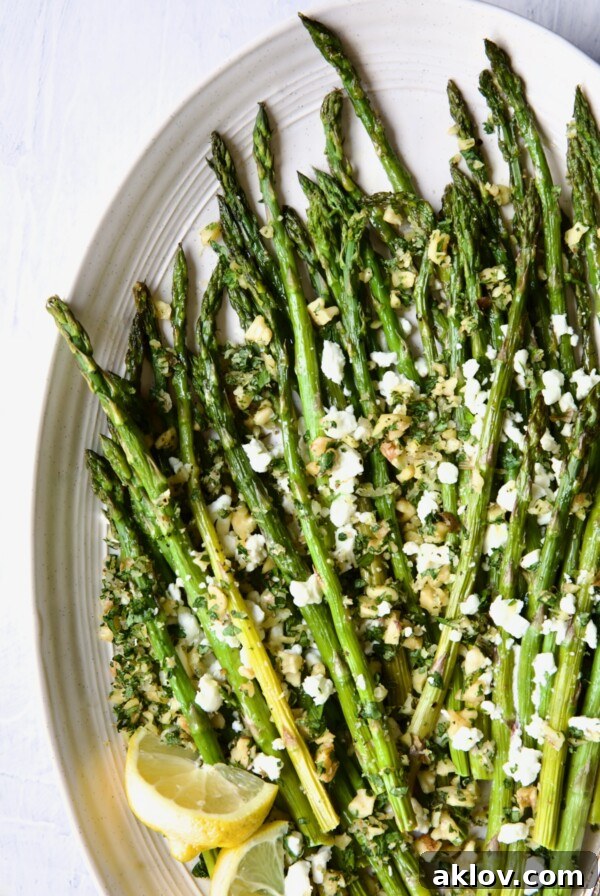
- Final Assembly and Serving: Carefully transfer the roasted asparagus with melted goat cheese to your chosen serving platter. Generously spoon the fresh Walnut Gremolata over the top, letting its vibrant colors and aromas enhance the dish. Serve immediately while warm to enjoy the full interplay of textures and temperatures.
- Garnish (Optional): For an extra touch of visual appeal and a burst of fresh lemon aroma, garnish the platter with additional lemon wedges. This also allows guests to add more lemon juice if they desire.
And there you have it! A truly lovely roasted asparagus recipe with a refreshing gremolata and creamy goat cheese. It’s not just a side; it’s a statement of simple elegance and exquisite taste!
Chef Tips and Tricks for Perfect Roasted Asparagus
- The Asparagus Snap Test: To perfectly trim asparagus and ensure you’re removing only the woody, tough ends, pick up one spear and gently bend it near the bottom. It will naturally snap at the point where the tough end meets the tender stalk. Use this snapped spear as a guide to quickly cut the ends off the rest of the bunch. This method ensures minimal waste and perfectly edible spears.
- Streamline Gremolata Prep: To save time, especially when preparing for a larger gathering, consider purchasing pre-chopped walnuts. Many grocery stores offer these in the baking aisle. For the parsley and garlic, use a food processor for a quick, fine chop, being careful not to over-process into a paste.
- Even Roasting is Key: Always arrange your asparagus in a single layer on the baking sheet. Overcrowding the pan will cause the asparagus to steam instead of roast, resulting in limp, rather than tender-crisp, spears. If necessary, use two baking sheets.
- Flavor Boost with Toasted Nuts: For an even deeper, more complex flavor in your gremolata, lightly toast the walnuts before chopping. Spread them on a dry baking sheet and toast in the preheated oven for 5-7 minutes, or until fragrant. Let them cool before chopping.
- Peeling Thicker Stalks: If you find yourself with very thick asparagus spears, consider using a vegetable peeler to lightly shave the outer layer of the bottom two-thirds of each stalk. This helps the thicker parts cook more evenly and prevents them from being stringy.
- Adjusting Seasoning: Always taste your gremolata and asparagus before serving to adjust salt and pepper. Remember that goat cheese is salty, so season the asparagus initially with a lighter hand.
- Blanching for Brightness (Optional): For an exceptionally vibrant green color, you can briefly blanch the asparagus in boiling salted water for 1-2 minutes, then immediately transfer it to an ice bath before roasting. Pat thoroughly dry before roasting to ensure caramelization. While optional, it makes the color pop!
Recipe FAQs: Your Questions Answered
I generally do not recommend fully roasting asparagus ahead of time. The roasting process is so quick that it’s best prepared shortly before you intend to serve it. Reheating roasted asparagus can easily lead to overcooking, making it soft and mushy rather than tender-crisp. To save time, you can certainly trim the asparagus and have it ready to cook, and even prepare the gremolata in advance.
Yes, absolutely! The gremolata can be prepared ahead of time, which makes assembling the final dish even quicker. I recommend making it no longer than 24 hours in advance. While it will still be flavorful, keeping it longer might cause the walnuts to soften slightly, losing some of their desired crunch. Store it in an airtight container in the refrigerator.
If goat cheese isn’t to your taste, there are several delicious alternatives. Crumbled feta cheese offers a similar salty tang, or you could try shaved Parmesan for a nutty, umami flavor. For a dairy-free option, nutritional yeast can add a cheesy flavor, or simply omit the cheese altogether and let the vibrant gremolata shine!
While fresh asparagus is highly recommended for its crisp texture and vibrant flavor, you can use frozen asparagus in a pinch. However, be aware that the texture will be softer, and it may release more water during roasting. Do not thaw before roasting; simply spread the frozen spears in a single layer on the baking sheet and roast directly. You might need to increase the cooking time slightly and ensure they are well-drained after roasting.
Asparagus can be notoriously difficult to pair with wine due to its unique compounds. However, the lemon, goat cheese, and roasting method in this recipe open up more options. Crisp, dry white wines like Sauvignon Blanc (which complements the grassy notes of asparagus and lemon), dry Rosé, or a light-bodied Pinot Grigio would be excellent choices. Their acidity and freshness will beautifully cut through the richness of the goat cheese and complement the gremolata.
Storage and Reheating Tips
- Storage: Store any leftover roasted asparagus with gremolata and goat cheese in an airtight container in the refrigerator for up to 2-3 days. While the asparagus will soften slightly, and the gremolata’s walnuts may lose some crunch, it will still be flavorful.
- Reheating: For best results, avoid reheating roasted asparagus in the microwave, as it can become soggy. Instead, gently warm leftovers in a skillet over medium-low heat for a few minutes until heated through, or briefly in a toaster oven. Keep in mind the texture will not be as crisp as freshly roasted. Leftovers are also delicious served cold in salads or as part of an antipasto platter.
Serve with: Perfect Pairings for Roasted Asparagus
This versatile roasted asparagus side dish pairs beautifully with a wide array of main courses, from poultry and seafood to hearty vegetarian options. Its bright and tangy profile complements rich flavors and adds a touch of freshness to any plate. Consider serving it with:
- Easy Skillet Mediterranean Chicken: The bright flavors of the gremolata will perfectly enhance the Mediterranean herbs and tomatoes.
- 40 Clove Garlic Chicken: A classic comfort dish that benefits from the fresh, zesty counterpoint of the asparagus.
- Chicken Spinach and Artichoke Puff Pastry Parcels: The elegance of these parcels is perfectly matched by the sophisticated asparagus side.
- Chicken Cannelloni: Offer a lighter, fresher element to this rich pasta dish.
- Baked Tilapia with Spinach Pecan Pesto: A wonderful pairing for a light, healthy, and flavorful meal.
- Braised Pork Loin Roast in Dijon Mustard Sauce: The acidity of the gremolata helps cut through the richness of the pork and mustard sauce.
- Sicilian Stuffed Pork Chops with White Wine and Caper Sauce: A harmonious blend of Italian-inspired flavors.
- Grilled Salmon: The lemon and herbaceous notes of the gremolata are a natural fit for flaky grilled fish.
- Mushroom Risotto: Adds a pop of green and a fresh texture contrast to a creamy risotto.
Love Asparagus? Explore More Delicious Asparagus Recipes!
If you’re as passionate about this versatile spring vegetable as we are, be sure to explore these other beautiful and flavorful asparagus recipes from our kitchen:
- Arugula Egg and Asparagus Salad with Creamy Lemon Vinaigrette: A light and refreshing salad perfect for brunch or lunch.
- Cream of Asparagus Soup with Curry: A comforting and exotic twist on a classic soup.
- Asparagus Cordon Bleu: An innovative and indulgent way to enjoy asparagus.
- Asparagus Onion and Fontina Tart: A rustic and elegant tart, perfect as an appetizer or light meal.
Discover a treasure trove of inspiration for all your vegetable sides at: Vegetable Side Dish Recipes – From A Chef’s Kitchen
Print Recipe
Roasted Asparagus with Walnut Gremolata and Goat Cheese
Easy and elegant Roasted Asparagus with Walnut Gremolata and Goat Cheese is a beautiful and tasty way to showcase this springtime jewel! Serve it at your next dinner party and enjoy the accolades from your guests!
Equipment
- Wusthof Chef Knife
- Cutting Board
- Rimmed Sheet Pan
- Glass Mixing Bowls
Ingredients
- 1 large bunch asparagus, approximately 1 pound, tough ends trimmed
- 2 tablespoons olive oil
- Salt and freshly ground black pepper, to taste
- 1/3 cup finely chopped walnuts, toasted if desired
- 1/4 cup chopped fresh parsley
- Zest of 1 large lemon
- 1 clove garlic, minced
- 1 tablespoon lemon juice
- 1/3 cup crumbled goat cheese
- Lemon wedges, for garnish, optional
Instructions
- Preheat oven to 400 degrees Fahrenheit (200°C).
- Place asparagus on a baking sheet, drizzle with olive oil and season to taste with salt and black pepper. Roast for 10 minutes or to desired doneness. (If your asparagus is thick, it may take longer or require a higher temperature.)
- While asparagus is roasting, combine walnuts, parsley, lemon zest, garlic, and salt and black pepper to taste in a small bowl.
- When asparagus is ready, immediately drizzle with lemon juice and top with goat cheese. Place back in the oven for 1-2 minutes for the goat cheese to warm through and slightly soften.
- Transfer to a serving platter and top with Walnut Lemon Gremolata. Serve immediately. Garnish with lemon wedges if desired.
Notes
- TIP: To determine how much to trim asparagus, bend one of the stalks near the bottom until it breaks. It breaks where you should cut the remainder, as they’re all typically the same size in the bunch and were probably growing next to each other.
- MAKE AHEAD: The gremolata can be made ahead of time. I recommend no longer than 24 hours ahead because the nuts will soften. Store in an airtight container in the refrigerator.
Nutrition
Calories: 201kcal
Carbohydrates: 6g
Protein: 8g
Fat: 18g
Saturated Fat: 4g
Polyunsaturated Fat: 5g
Monounsaturated Fat: 7g
Cholesterol: 9mg
Sodium: 74mg
Potassium: 303mg
Fiber: 3g
Sugar: 3g
Vitamin A: 1364IU
Vitamin C: 13mg
Calcium: 70mg
Iron: 3mg
Nutritional values are automatically calculated using unbranded products and are estimates only. Actual results may vary based on ingredients used and portion sizes. Adjust as needed for dietary restrictions, allergies, or health concerns.
 Like this? Leave a comment below!