
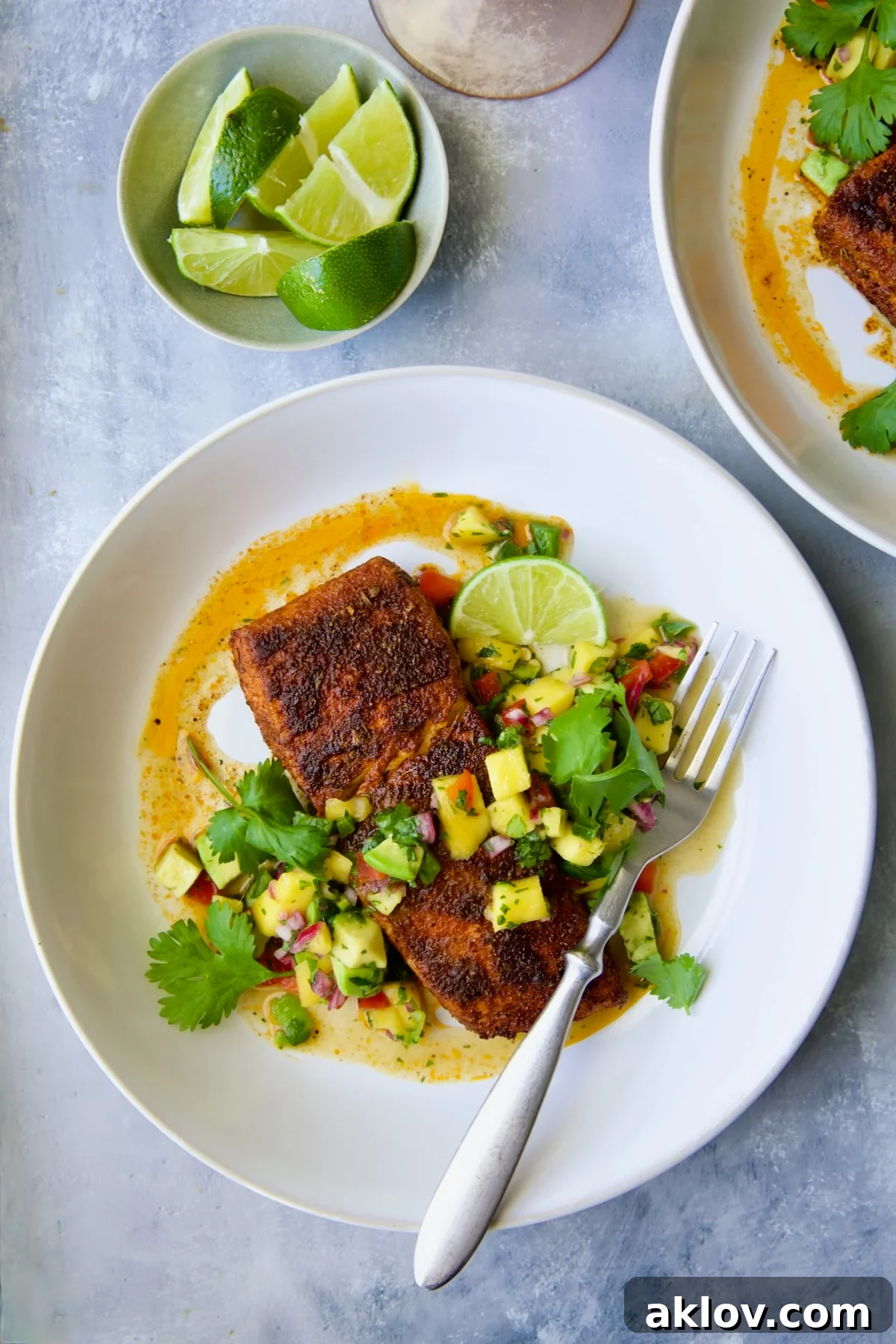
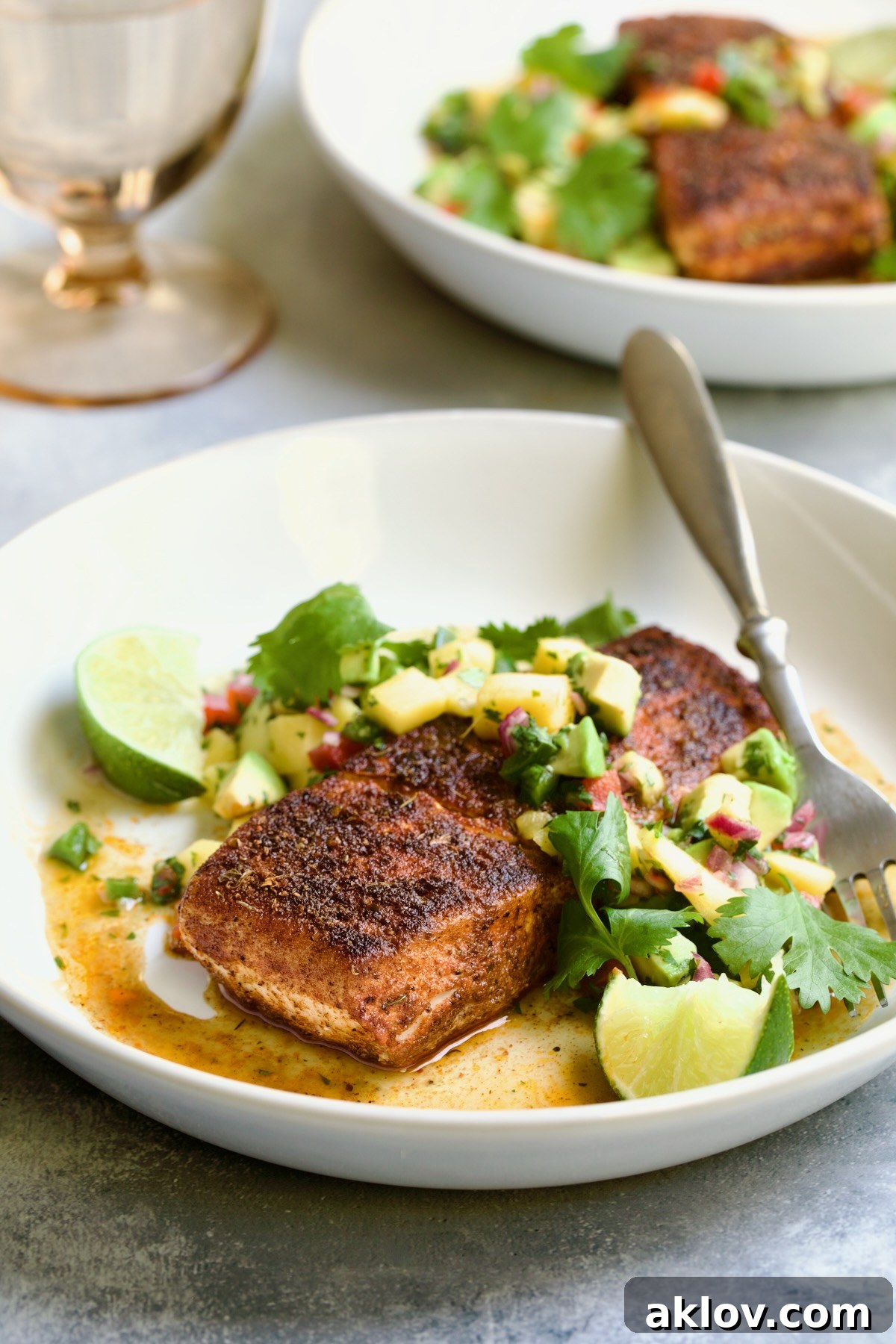
Embark on a culinary journey to the tropics with this exquisite Blackened Halibut with Mango and Avocado Salsa recipe. Perfect for a light, healthy, and exceptionally flavorful dinner for two, this dish combines the delicate, mild flavor of fresh halibut with a robust, homemade blackening spice blend. Seared to perfection, the fish develops a tantalizingly crisp, lightly charred crust that beautifully complements its tender, flaky interior. Crowned with a vibrant, zesty mango and avocado salsa, this recipe promises a symphony of flavors and textures, making it a restaurant-quality meal that’s surprisingly simple to prepare at home.
“I made this over the weekend, and it was phenomenal! It was restaurant-quality and so easy. My family raved!”
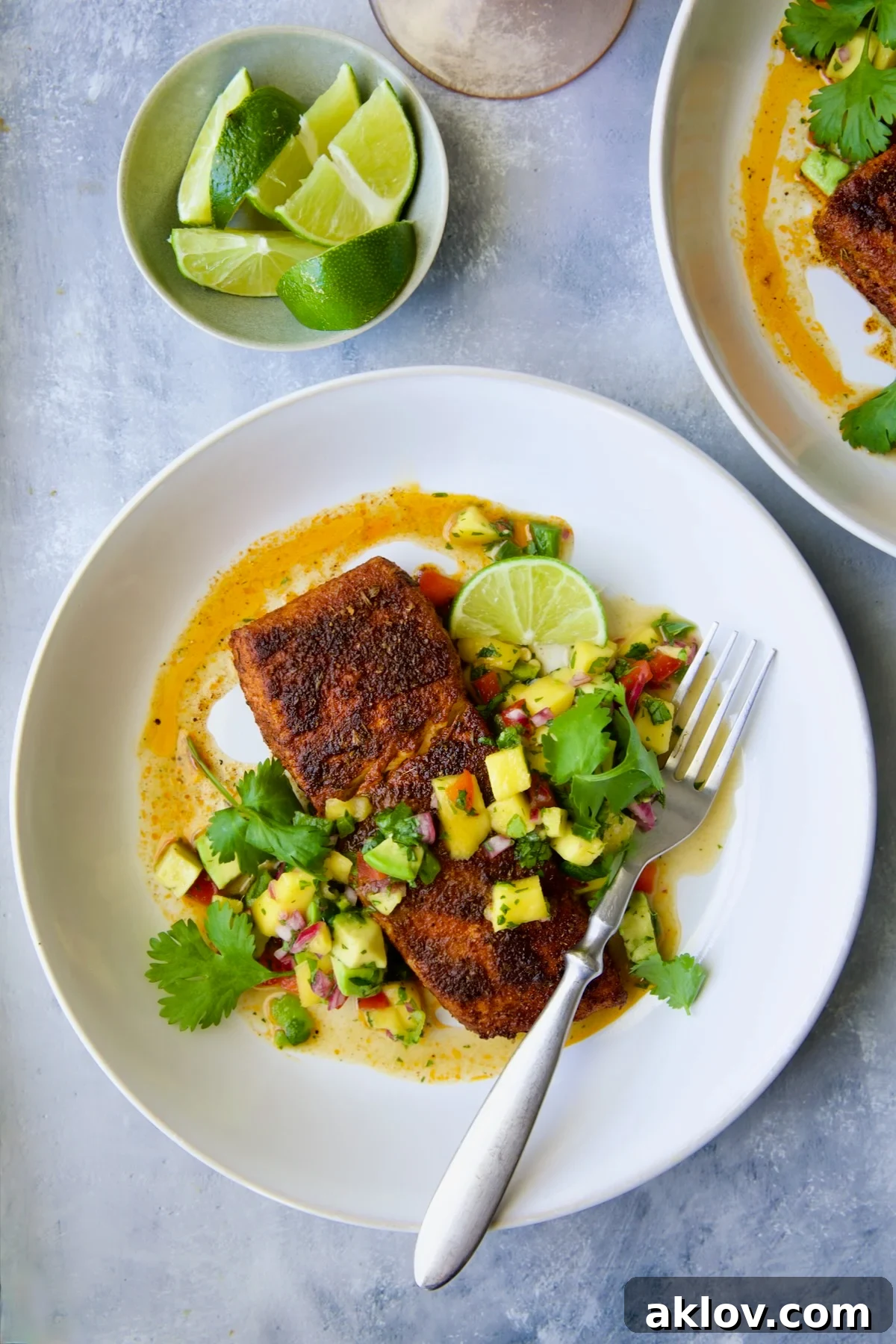
Unveiling the Art of Blackening
Blackening, as demonstrated in this tantalizing halibut recipe, is a celebrated Cajun cooking technique that involves generously coating a protein, typically fish, in a unique blend of spices before searing it at an intensely high temperature. This method is designed to rapidly cook the exterior, forming a signature dark, almost black, and lightly charred crust. This crust creates a stunning textural contrast with the moist, flaky, and tender interior of the fish, locking in its natural juices and infusing it with deep, complex flavors from the spice mixture.
The technique gained widespread popularity in the 1980s, thanks to the pioneering efforts of Chef Paul Prudhomme in New Orleans. His innovative approach to Cajun cuisine brought blackening into the culinary spotlight, showcasing its ability to transform simple ingredients into extraordinary dishes. For authentic blackening results, a well-seasoned cast-iron skillet is indispensable. Its superior heat retention and even distribution are crucial for achieving that perfect, crispy crust. While famously used for fish, blackening is incredibly versatile and can be applied to nearly any protein, including chicken, shrimp, beef, and pork, making it a valuable addition to any home cook’s repertoire.
Why This Blackened Halibut Recipe Will Become Your Favorite
Halibut, with its clean, mild flavor and firm white flesh, serves as the perfect canvas for the bold and aromatic blackening seasoning blend. This allows the intricate flavors of the spices to shine without overpowering the fish. What truly elevates this dish is the addition of a refreshing mango and avocado salsa, offering a burst of tropical brightness that beautifully balances the spice. The creamy richness of the avocado mellows the sharper notes of red onion and cilantro, while the inherent sweetness of the mango provides a delightful counterpoint to the subtle kick from the jalapeño. Each bite is a harmonious blend of sweet, spicy, savory, and tangy.
This recipe is an ideal choice for a light and healthy summer dinner. The fish cooks remarkably fast, preventing the need to heat your kitchen for extended periods. Furthermore, both the blackening seasoning and the salsa are easily customizable to suit your personal preference for heat. Whether you prefer a fiery inferno or a milder, more aromatic experience, you can adjust the spice levels with ease. While specifically portioned for two, making it an excellent option for a romantic date night or an intimate meal, the recipe can be effortlessly doubled or tripled to accommodate family dinners or entertaining guests, ensuring everyone can enjoy this exquisite culinary creation.
This Blackened Halibut with Mango and Avocado Salsa stands out for several compelling reasons:
- Lightning Fast! Achieve gourmet results in minimal time. The blackened fish is incredibly quick to cook, requiring just a brief sear on each side before a short finish in the oven. This means more time enjoying your meal and less time in the kitchen.
- Incredibly Fresh! Built on a foundation of lean, light halibut, the dish is invigorated by a bright, tropical salsa. Packed with fresh fruits and vegetables, it offers a refreshing and nutritious dining experience.
- Effortlessly Elegant! The vibrant colors and sophisticated flavor profile of this dish make for a stunning presentation. It’s perfect for impressing guests or simply elevating a warm-weather dinner into something truly special.
- Highly Customizable! Tailor the spice level in both the blackening seasoning and the salsa to match your desired heat preference. Additionally, the recipe, while designed for two, scales up beautifully, making it versatile for any gathering size from an intimate meal to a family feast.
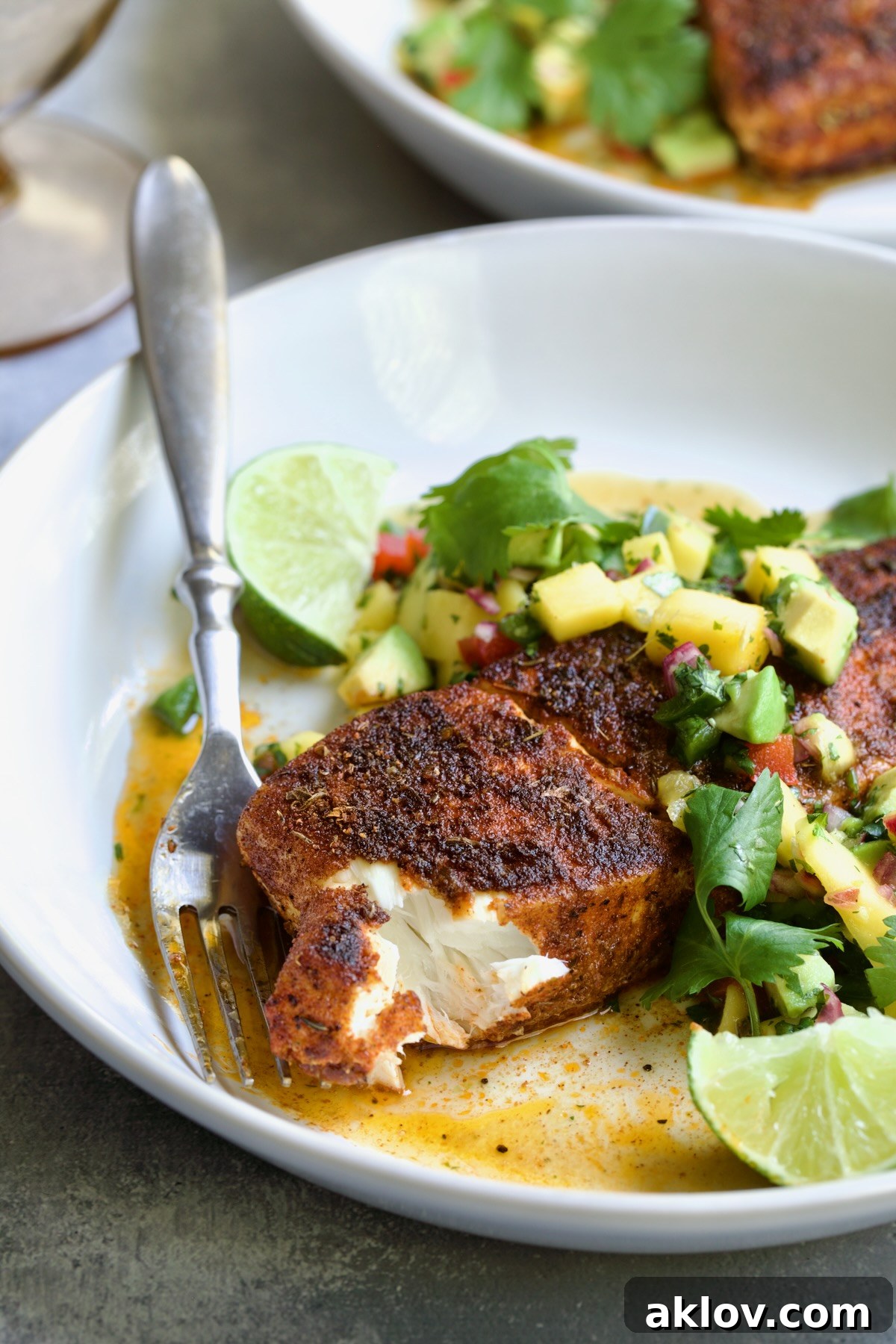
Crafting Your Blackened Halibut with Mango and Avocado Salsa
Essential Recipe Ingredients:
Here’s a detailed look at the ingredients you’ll need to create this exceptional blackened halibut recipe. For precise quantities, please refer to the comprehensive recipe card below.
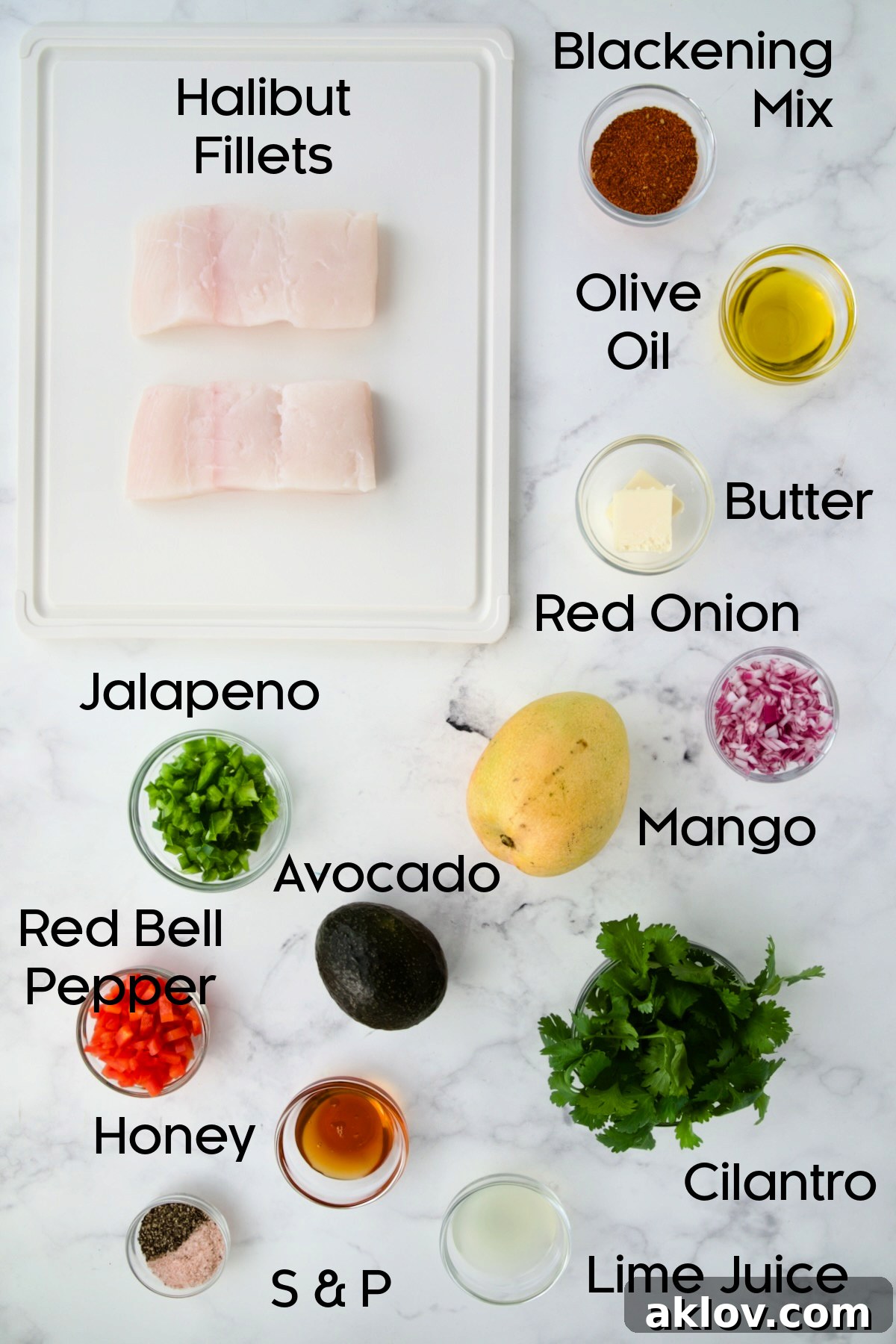
Ingredient Insights and Smart Substitutions:
- Halibut: Renowned for its mild, clean flavor and beautiful flaky texture, halibut is a premium white fish. Fresh halibut is typically in season from March through October, but you can find high-quality, previously frozen options year-round. Pacific halibut fishing is diligently regulated, making it a highly sustainable and responsible seafood choice. If halibut isn’t available or you prefer an alternative, other mild, flaky white fish like Chilean sea bass, grouper, cod, or tilapia will work beautifully. For those who enjoy a richer flavor, salmon can also be successfully blackened using this recipe.
- Blackening Seasoning: While numerous commercial blackening spice blends are available, crafting your own allows for precise control over the salt content and desired level of spiciness. Our recommended blend includes a thoughtful combination of both smoked and sweet paprika for depth, cayenne pepper for heat, dried mustard for a tangy edge, and fragrant dried herbs like thyme and oregano. This custom mix ensures an intensely flavorful final dish that perfectly coats the halibut.
- Mango: Freshly diced mango contributes a luscious sweetness and juicy texture to the salsa, providing a delightful tropical counterpoint to the blackened fish. To select a perfectly ripe mango, gently squeeze it; it should yield slightly to pressure and emit a sweet, fruity aroma near the stem. For a different but equally delicious tropical twist, fresh pineapple can be substituted for mango, as it also holds its shape well in salsa.
- Avocado: The avocado in your salsa should also be ripe but firm enough to hold its shape when diced. It should yield gently when squeezed, without feeling mushy. Avocado is essential for adding a creamy texture and balancing the more assertive flavors in the salsa.
- Jalapeño: This pepper provides a touch of heat and vibrant flavor to the salsa. If you enjoy a spicier salsa, feel free to leave some or all of the seeds intact. For a milder experience, carefully remove the seeds and white membranes before finely chopping.
- Red Bell Pepper: Primarily added for its beautiful color and subtle sweetness, red bell pepper enhances the visual appeal and fresh crunch of the salsa. Yellow or orange bell peppers are excellent alternatives if red is not available.
- Red Onion: Red onions are a superb choice for salsas due to their milder flavor compared to white or yellow onions. They offer a delicate sharpness without overpowering the fresh ingredients. Finely chopped scallions (green onions) can also be used as a gentler substitute.
Step-By-Step Culinary Journey:
- Begin by gathering and precisely prepping all your ingredients. This mise en place ensures a smooth and enjoyable cooking process.
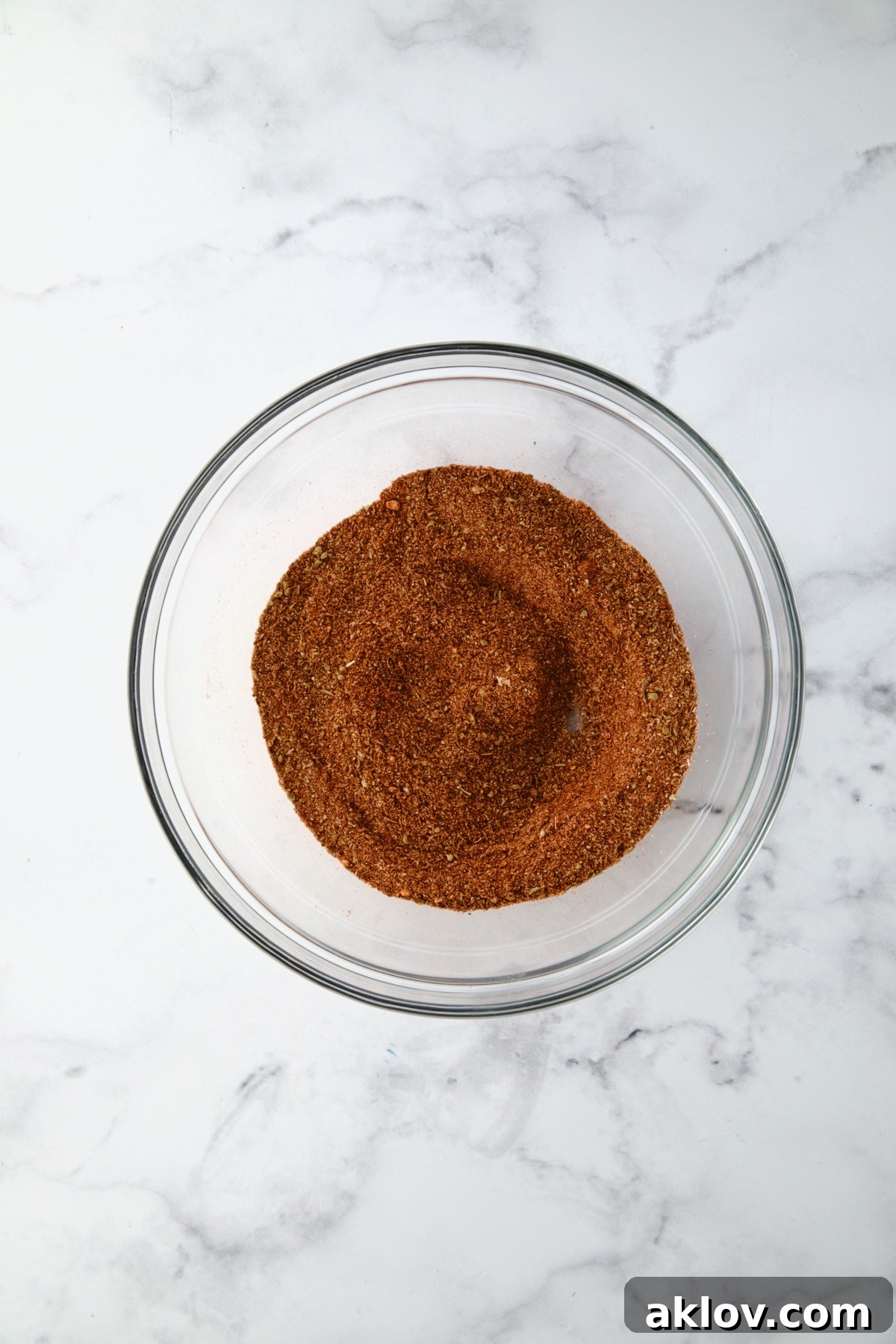
- In a small bowl, combine all the dry ingredients for your homemade blackening seasoning. Mix thoroughly until well combined, then set this aromatic blend aside.
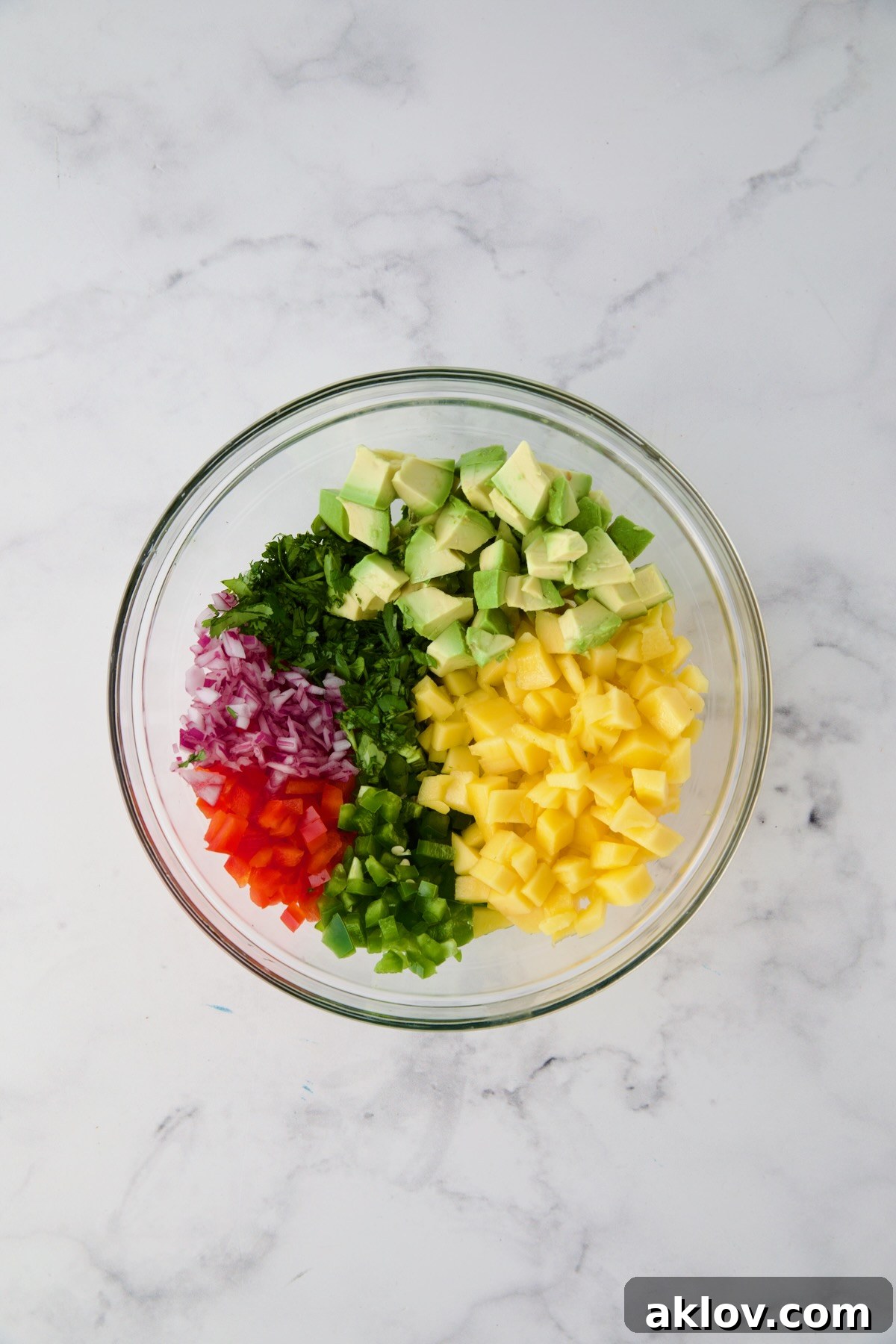
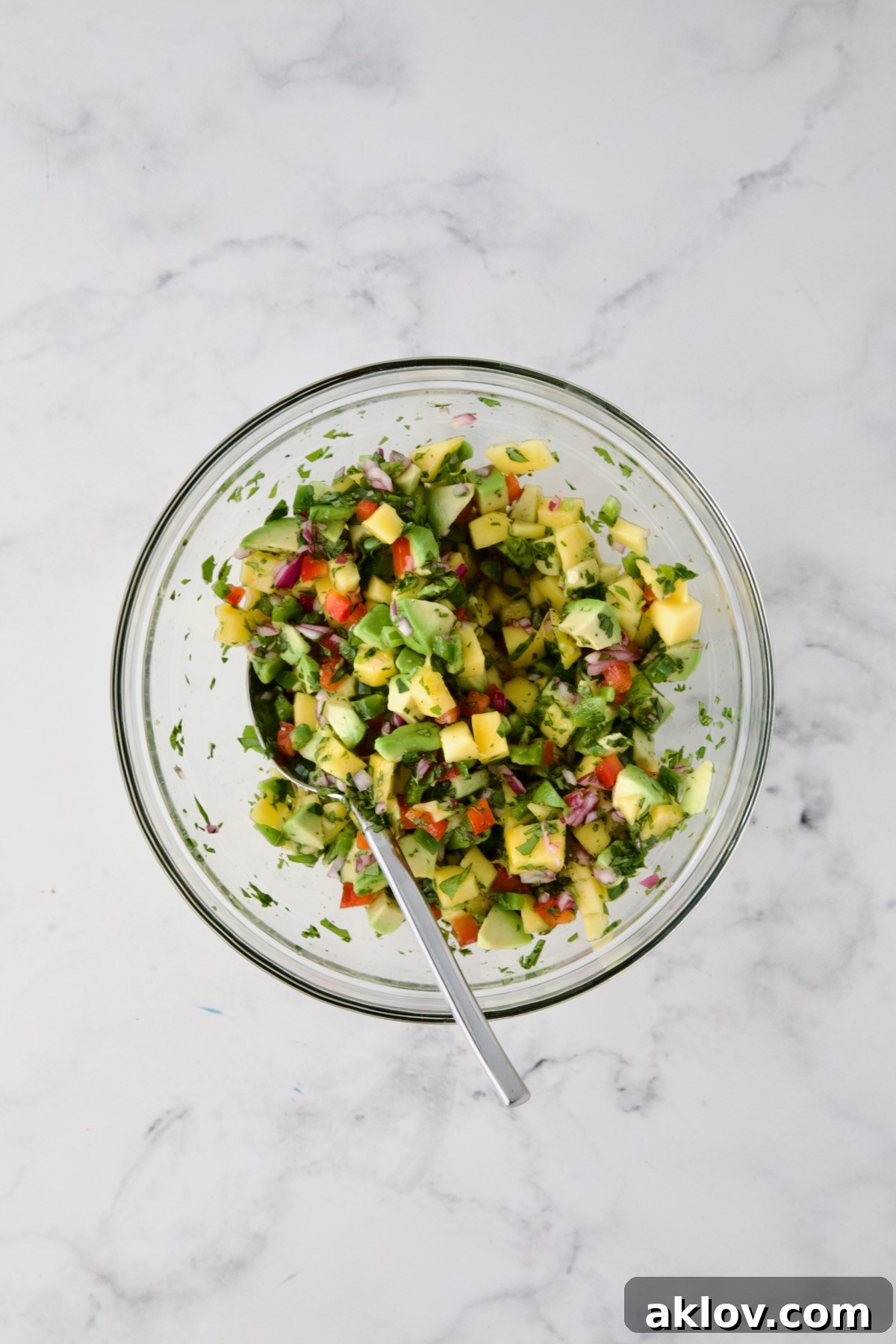
- In a separate mixing bowl, combine all the vibrant ingredients for your mango and avocado salsa. Toss gently to combine. Set the salsa aside to allow the flavors to meld while you prepare the fish.
- Preheat your oven to 350 degrees Fahrenheit (175 degrees Celsius). This will be used to finish cooking the fish after searing.
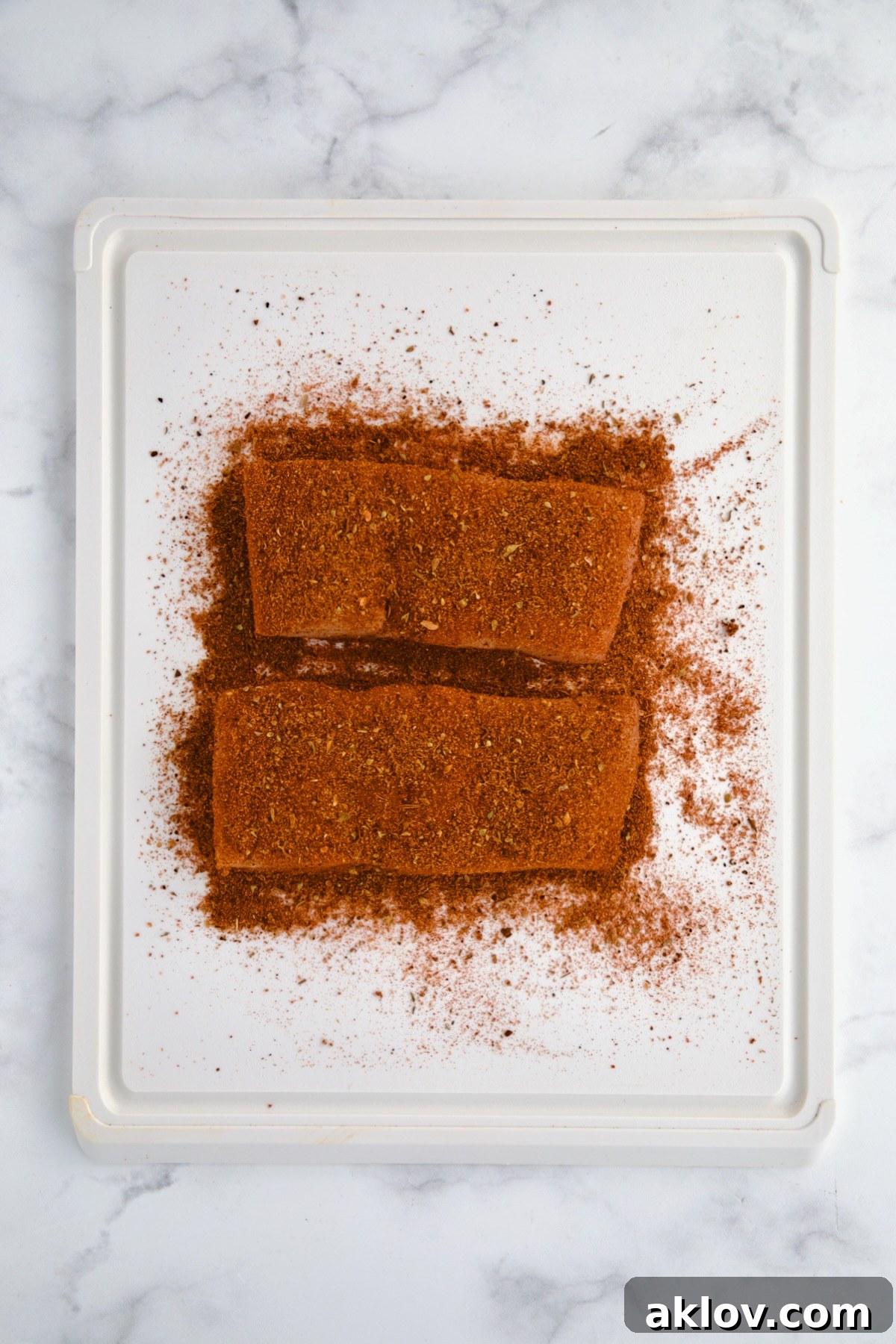
- Pat the halibut fillets thoroughly dry with paper towels. This crucial step helps the blackening mix adhere better and promotes a crispier crust. Generously season both sides of the fish with the prepared blackening mix, pressing gently to ensure an even coating.
- Place a cast-iron skillet over medium-high heat and allow it to get very hot. Achieving the right temperature is key for a successful blackening crust.
- Add the butter and olive oil to the hot skillet. The combination of butter and oil helps to prevent burning while adding richness to the crust.
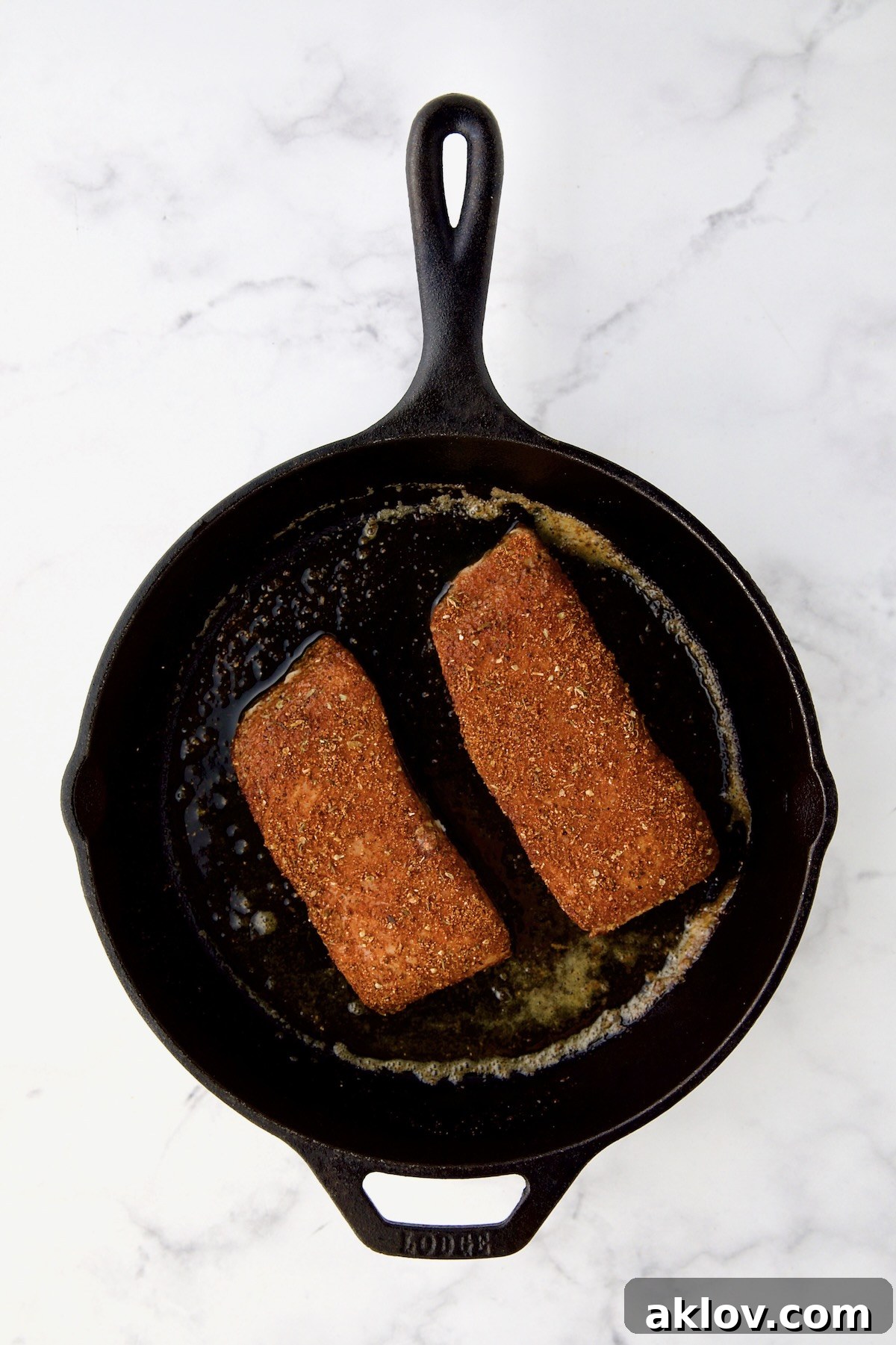
- As soon as the butter has melted and begins to sizzle, carefully add the seasoned halibut fillets to the skillet. Ensure not to overcrowd the pan.
- Sear the fish for approximately 2 minutes per side. During this step, the spices will blacken and form a beautiful, flavorful crust.
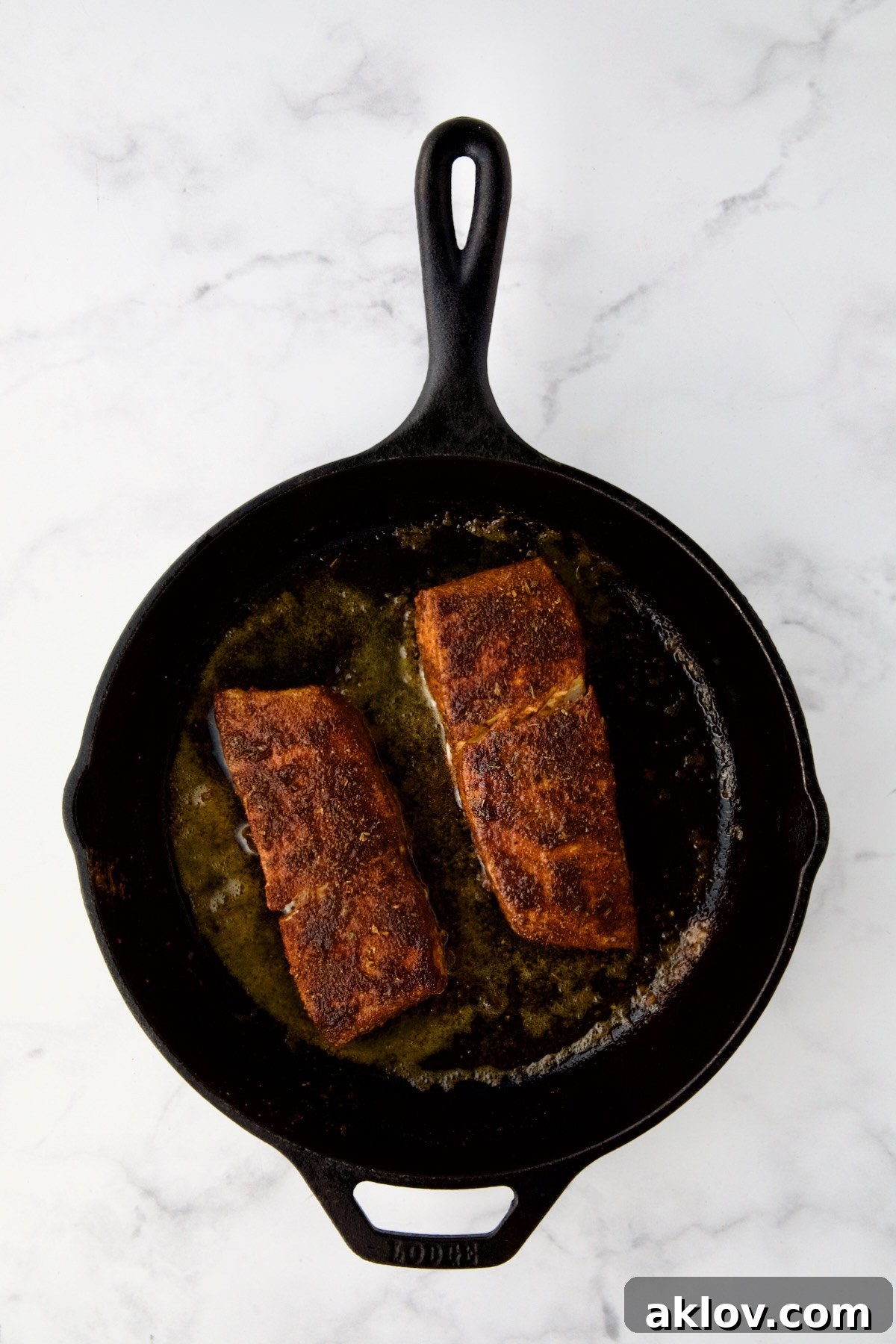
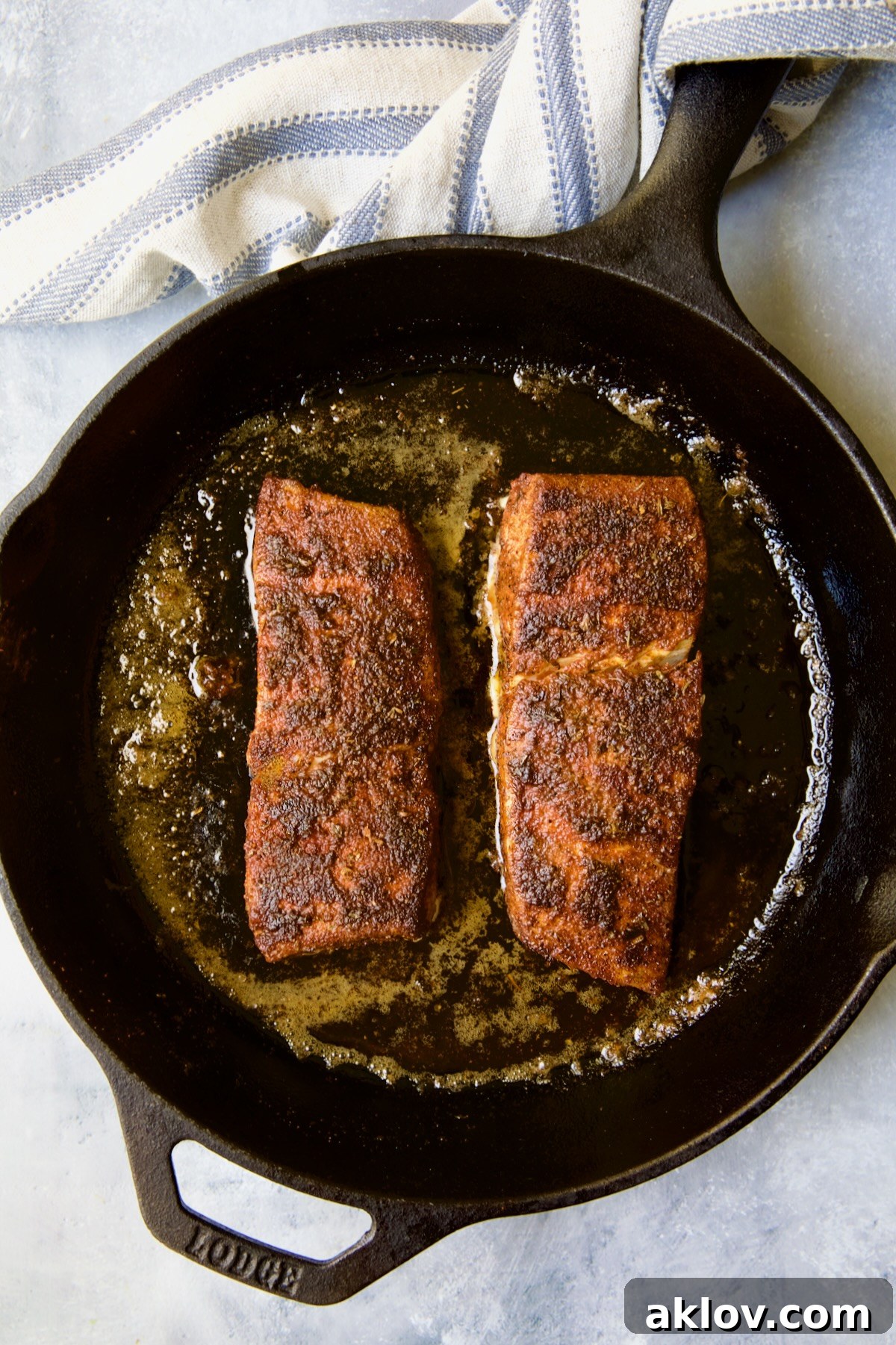
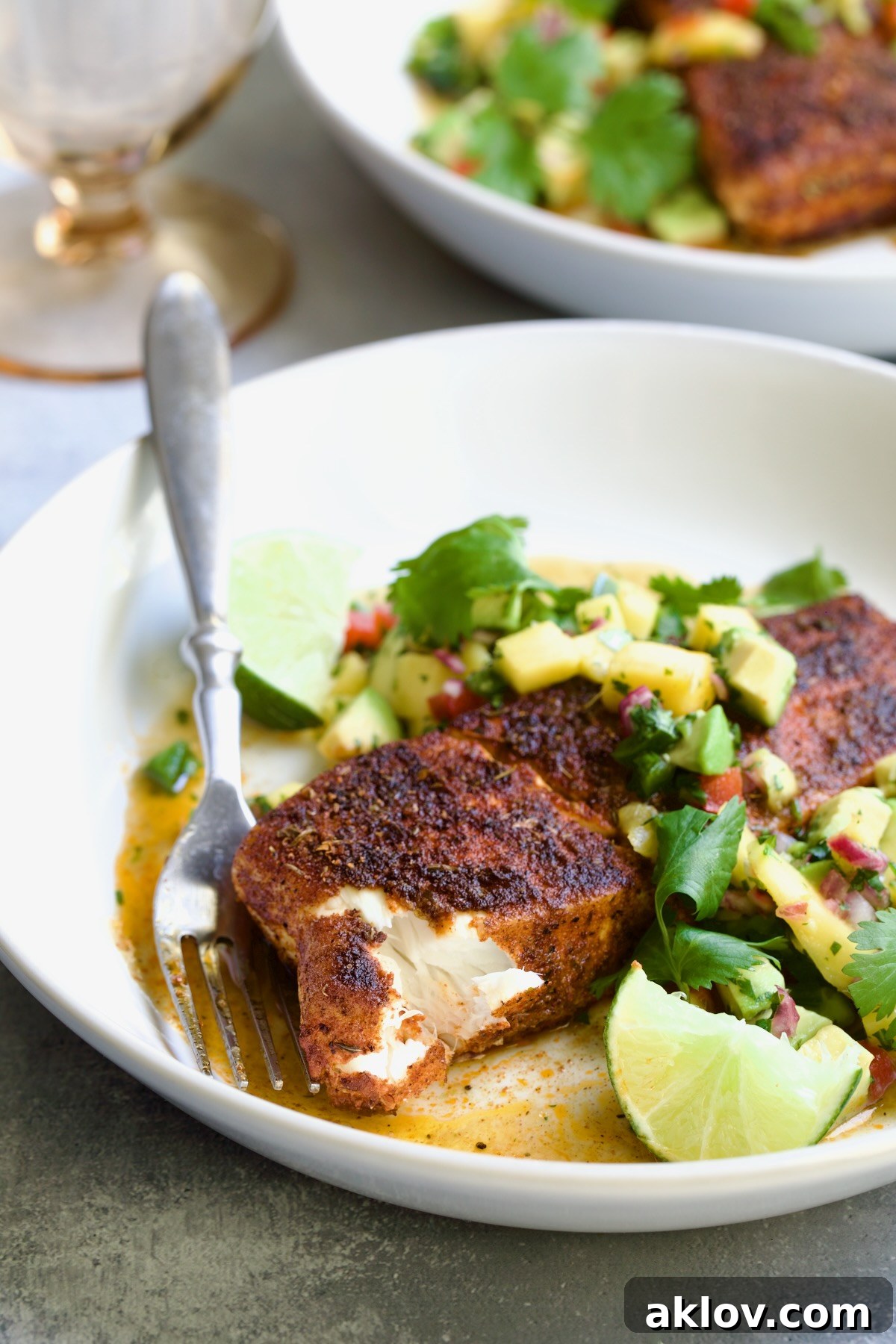
- Transfer the skillet with the seared fish into the preheated oven. Bake for an additional 4 to 5 minutes, or until the fish flakes easily with a fork.
- Exercise caution to avoid overcooking the fish! Halibut is best when cooked to an internal temperature of 145 degrees Fahrenheit (63 degrees Celsius). Overcooking can quickly lead to dry, less palatable fish, diminishing its delicate texture.
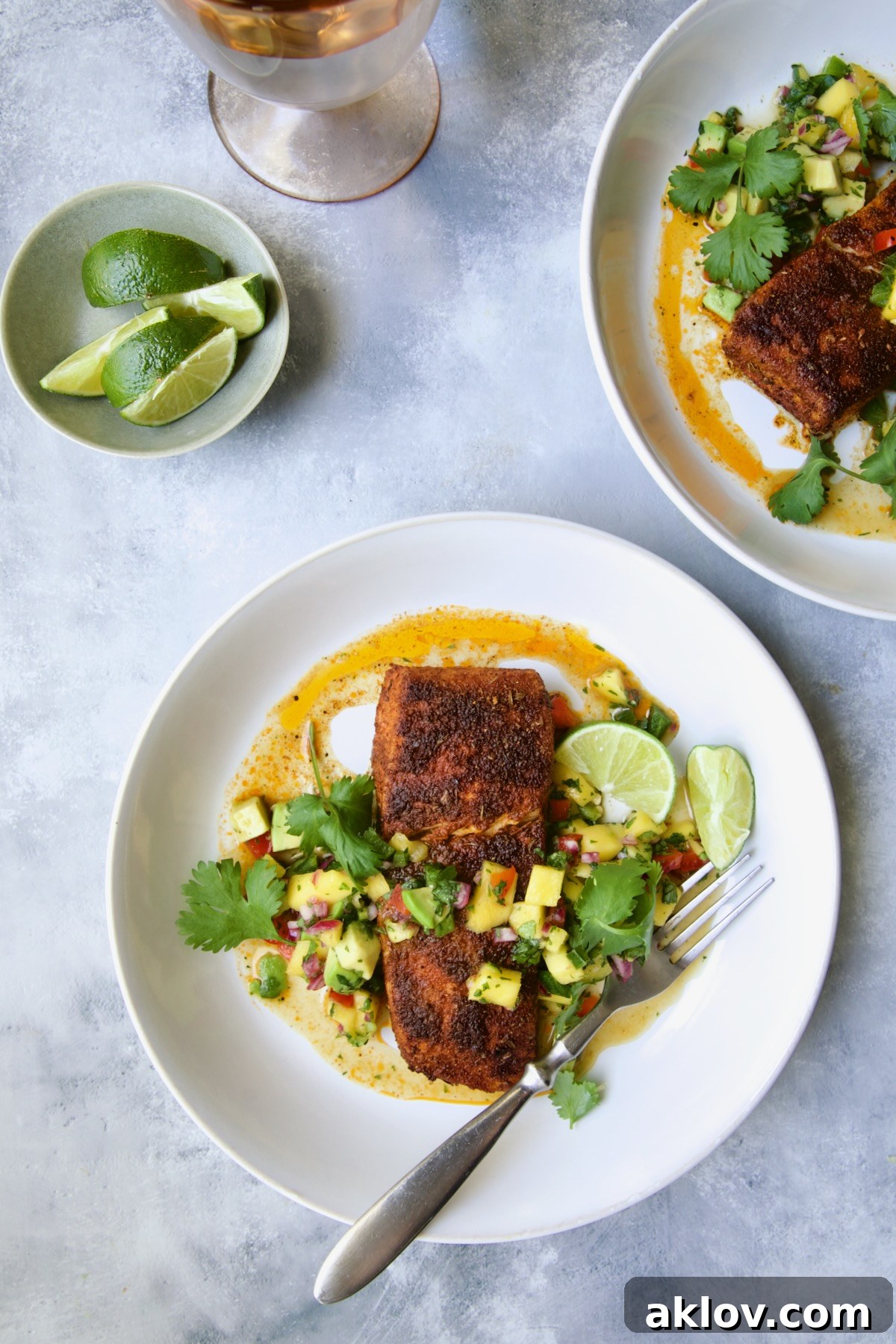
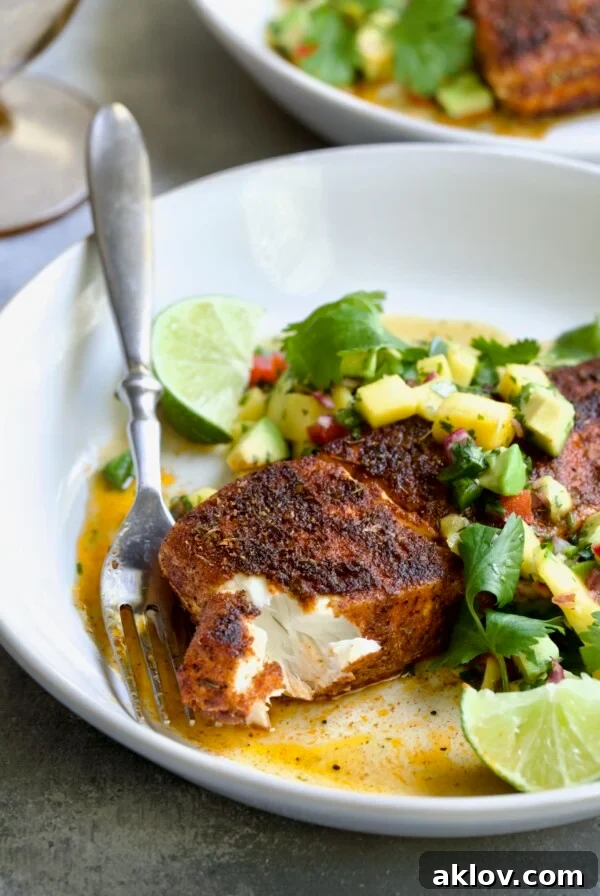
- Once cooked, remove the halibut from the oven and serve immediately, generously topped with the fresh and flavorful mango and avocado salsa. Garnish with fresh cilantro and a lime wedge for an added touch of freshness and elegance.
Expert Tip: Mastering the Mango Dice
- Dicing a mango efficiently is easier than you might think! First, carefully slice off the two large “cheeks” from either side of the flat pit. Hold one mango half (flesh-side up) and make even, narrow slices all the way across the flesh, stopping just short of piercing the skin. Rotate the mango half 90 degrees and repeat the slicing, creating a checkerboard pattern. Finally, scoop out the diced flesh from the skin using a spoon. Always exercise caution and use a sharp knife when handling fruit to prevent accidents.
Savvy Money-Saving Tip: Fish Substitutions
- Halibut can sometimes be a more expensive option, especially when fresh and in season. A fantastic and more budget-friendly substitute is cod. Cod offers a similarly mild flavor and a beautiful flaky texture that holds up well to the blackening technique, making it an excellent choice for this recipe without compromising on taste or quality. Other good options include Mahi-Mahi or Barramundi for their firm texture and mild flavor.
Pro Tips for Achieving Perfect Blackened Fish
- Ventilation is Key: Blackening produces a fair amount of smoke due to the high heat and searing. Ensure your kitchen is well-ventilated by opening windows and turning on your range hood to its highest setting. Consider temporarily disabling smoke detectors if they are particularly sensitive.
- The Right Oil and Fat: A high smoke point oil like avocado oil, grapeseed oil, or clarified butter (ghee) is crucial for blackening. Mixing it with a small amount of regular butter, as done in this recipe, adds flavor but the oil helps prevent the butter from burning too quickly. Avoid olive oil if you plan to go very high heat, as its smoke point is lower.
- Don’t Overcrowd the Pan: Cook fish in batches if necessary. Overcrowding the skillet will lower its temperature, causing the fish to steam rather than sear and preventing that desirable crispy crust.
- Seasoning Adhesion: Ensure the fish is thoroughly patted dry before applying the blackening seasoning. Moisture on the surface can hinder the spice blend from forming a tight, flavorful crust. Don’t be shy with the seasoning; a liberal coating is essential for true blackened flavor.
- The Oven Finish: For thicker fillets, finishing the fish in the oven after searing ensures it cooks through evenly without burning the crust. This two-step process guarantees perfectly cooked, juicy fish every time.
Common Questions About Blackened Halibut & Salsa
Halibut cooks incredibly quickly, so for optimal flavor and texture, it’s best to cook the fish just before serving. However, the blackening spice mixture can be prepared and stored well in advance. For the mango-avocado salsa, you can prep all the ingredients (dicing the mango, bell pepper, onion, and cilantro) up to 8 hours ahead of time. The key is to hold off on dicing and adding the avocado until just before you plan to serve, as it browns quickly once exposed to air, even with lime juice.
This vibrant salsa is truly best served immediately to appreciate the avocado’s bright green color and fresh flavors. If you happen to have any leftovers, it can be stored in an airtight container in the refrigerator for up to two days. While the avocado may begin to oxidize and turn brown despite the presence of lime juice, it remains perfectly safe and delicious to eat.
Many other mild white fish varieties make excellent substitutes for halibut in this blackening recipe. Great options include Chilean sea bass, grouper, cod, mahi-mahi, barramundi, or tilapia. These fish share a similar flaky texture and mild flavor profile that pairs wonderfully with the bold blackening spices and refreshing salsa. Consider local availability and sustainability when choosing your fish.
This flavorful dish pairs wonderfully with a variety of simple sides. For a light option, consider steamed jasmine rice, cilantro-lime rice, or quinoa. Roasted asparagus, grilled corn on the cob, or a simple green salad with a light vinaigrette also complement the tropical flavors perfectly. For a heartier meal, our Mexican Sweet Potato Wedges or a side of Riced Cauliflower would be excellent choices, adding a delightful texture and additional nutritional benefits.
Absolutely! Blackened fish, especially when made with lean white fish like halibut and served with a fresh, vibrant salsa, is a highly nutritious meal. Halibut is an excellent source of lean protein, B vitamins, and essential minerals like selenium and magnesium. The blackening method uses minimal fat for cooking and the spice blend is packed with antioxidants. The mango and avocado salsa provides healthy fats, fiber, and an abundance of vitamins from the fresh fruits and vegetables, making this a well-rounded and health-conscious dinner choice.
Storage and Reheating Recommendations:
- Store any leftover blackened halibut in an airtight container in the refrigerator for up to two days. For best results when reheating, place the leftover halibut in a 325-degree Fahrenheit (160 degrees Celsius) oven, covered loosely with aluminum foil, until just warmed through. This method helps prevent the fish from drying out and maintains its delicate texture.
Complementary Serving Suggestions:
- Mexican Sweet Potato Wedges: A fantastic, flavorful side that perfectly complements the spice and sweetness of the main dish.
- Riced Cauliflower: A light and low-carb alternative to rice, absorbing the delicious flavors of the fish and salsa.
- Southwestern Salad: A refreshing salad with a zesty dressing that enhances the tropical and spicy notes.
- Lemony Braised Greens with Olives: Adds a touch of earthy bitterness and bright acidity, offering a beautiful contrast.
Discover More Irresistible Halibut Creations!
- Halibut Ceviche: A light, citrusy, and fresh appetizer featuring the delicate flavors of halibut.
- Prosciutto-Wrapped Halibut with Herb Caper Butter: An elegant dish showcasing halibut wrapped in savory prosciutto and drizzled with a rich herb butter.
- Butter Basted Halibut with Lemon Braised Baby Vegetables: A classic preparation that highlights the natural sweetness of halibut with tender vegetables.
Explore an abundance of delicious Fish and Seafood Recipes on From A Chef’s Kitchen to inspire your next meal.
Print Recipe
Blackened Halibut with Mango and Avocado Salsa
Carol | From A Chef’s Kitchen
20 minutes
15 minutes
35 minutes
2
Equipment
-
Wusthof Chef Knife
-
Cutting Board
-
Measuring Cups and Spoons
-
Glass Mixing Bowls
-
Set of Cast Iron Skillets
Ingredients
Blackening Mix
- 2 teaspoons smoked paprika
- 1 teaspoon sweet paprika
- 1 teaspoon granulated garlic
- 1 teaspoon granulated onion
- 1 teaspoon freshly ground black pepper
- 1/2 teaspoon cayenne pepper
- 1/2 teaspoon dry mustard
- 1/2 teaspoon dried thyme
- 1/2 teaspoon dried oregano
- 1/4 teaspoon salt
Salsa
- 1 large mango, peeled, pitted and diced
- 1 small avocado, peeled, pitted and diced
- 1/2 medium jalapeno pepper, seeded if desired, finely chopped
- 1/4 cup finely chopped red bell pepper
- 1/4 cup finely chopped red onion
- 3 tablespoons chopped cilantro
- 1 large lime, juiced
- 1 tablespoon honey, or to taste
- Salt and freshly ground black pepper, to taste
Fish
- 2 pieces (6-8 ounce) halibut, skin removed
- 2 tablespoons butter
- 1 tablespoon olive oil
Instructions
Blackening Mix
-
Combine ingredients in a small bowl; set aside.
Salsa
-
Combine salsa ingredients in a bowl; serve with fish.
Fish
-
Preheat oven to 350 degrees. Pat fish dry then season liberally with blackening mix.
-
Heat a cast-iron skillet over medium-high heat until very hot. Add the butter and oil. As soon as the butter melts, add fish to skillet. Cook 2 minutes per side.
-
Place in the oven and cook for 4 to 5 minutes or until fish flakes easily with a fork. Serve with salsa.
Notes
SUBSTITUTIONS:
- Can substitute any mild white fish such as cod, Chilean sea bass, grouper, tilapia, or even salmon for a richer flavor.
- Use fresh pineapple, diced, in place of mango for a different tropical sweetness and texture.
MAKE AHEAD TIPS:
- Halibut cooks very quickly, so for the best results, cook the fish part right before you plan to serve.
- The blackening spice mixture can be prepared and stored in an airtight container for up to six months, allowing for quick meal prep.
- For the salsa, you can chop and combine all ingredients (mango, bell pepper, red onion, cilantro, jalapeño, lime juice, honey) up to 8 hours ahead. Dice and gently fold in the avocado just before cooking the fish to maintain its vibrant color and fresh texture.
Nutrition
Serving:
1
Calories:
375
kcal
Carbohydrates:
45
g
Protein:
5
g
Fat:
24
g
Saturated Fat:
4
g
Polyunsaturated Fat:
3
g
Monounsaturated Fat:
15
g
Cholesterol:
2
mg
Sodium:
322
mg
Potassium:
930
mg
Fiber:
12
g
Sugar:
27
g
Vitamin A:
3680
IU
Vitamin C:
88
mg
Calcium:
89
mg
Iron:
3
mg
Nutritional values are automatically calculated using unbranded products and are estimates only. Actual results may vary based on ingredients used and portion sizes. Adjust as needed for dietary restrictions, allergies, or health concerns.

Like this? Leave a comment below!