
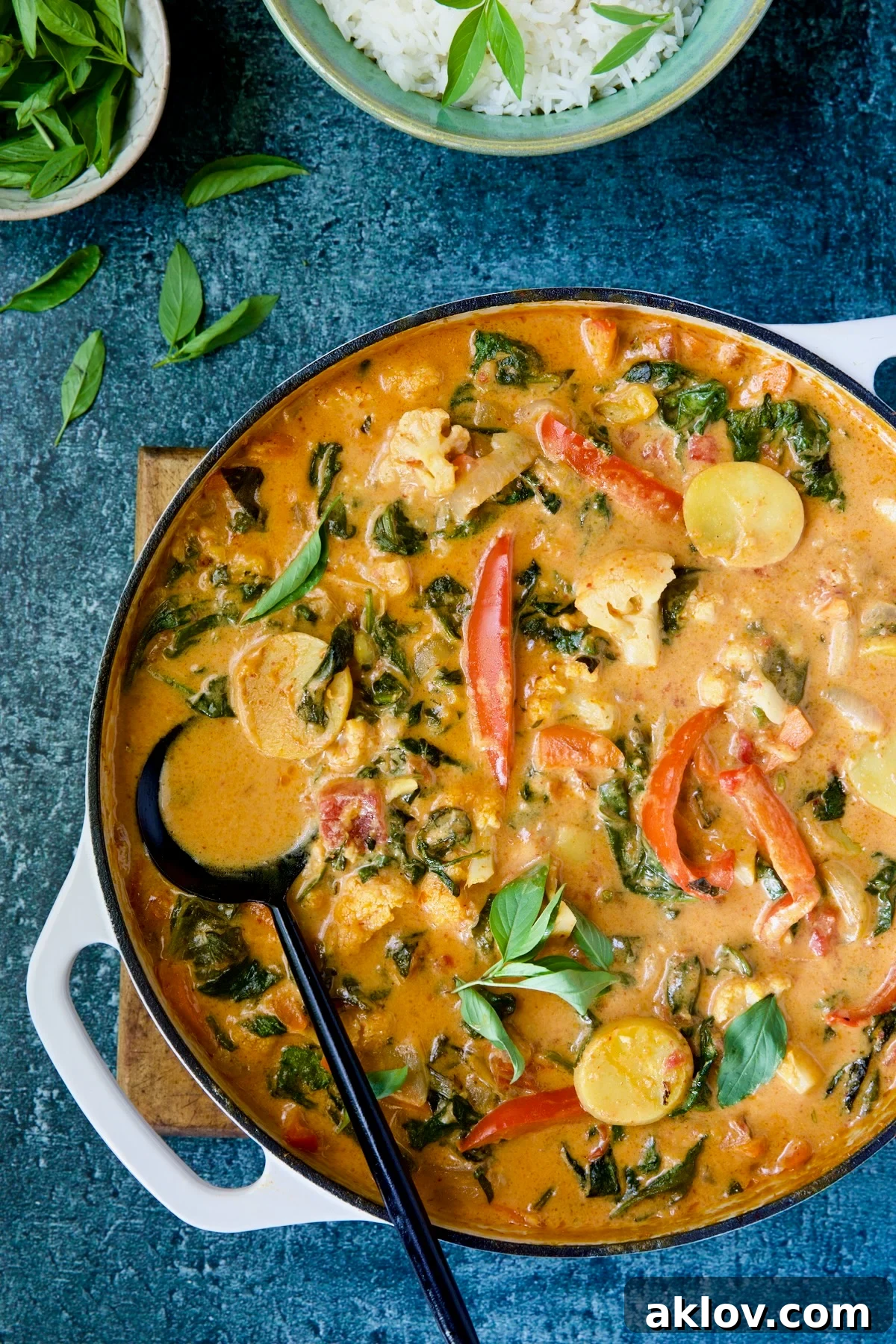
Welcome to the ultimate guide for crafting a truly exceptional Vegan Thai Red Curry! This recipe isn’t just a meal; it’s a vibrant journey for your taste buds, delivering a harmonious blend of spicy, sweet, savory, and aromatic notes in every comforting bite. Whether you’re a seasoned vegan chef or just exploring the world of plant-based cuisine, this dish promises to become a beloved staple in your culinary repertoire. It’s packed with an abundance of fresh, healthy vegetables, creating a deeply satisfying experience that nourishes both body and soul. Prepare to impress yourself and your loved ones with a meal that’s as good for you as it is incredibly delicious.
“This recipe is simply phenomenal! It’s a regular on my monthly meal plan, and my husband absolutely adores it. Everyone who tries it becomes an instant fan. Thank you for this incredible dish!”
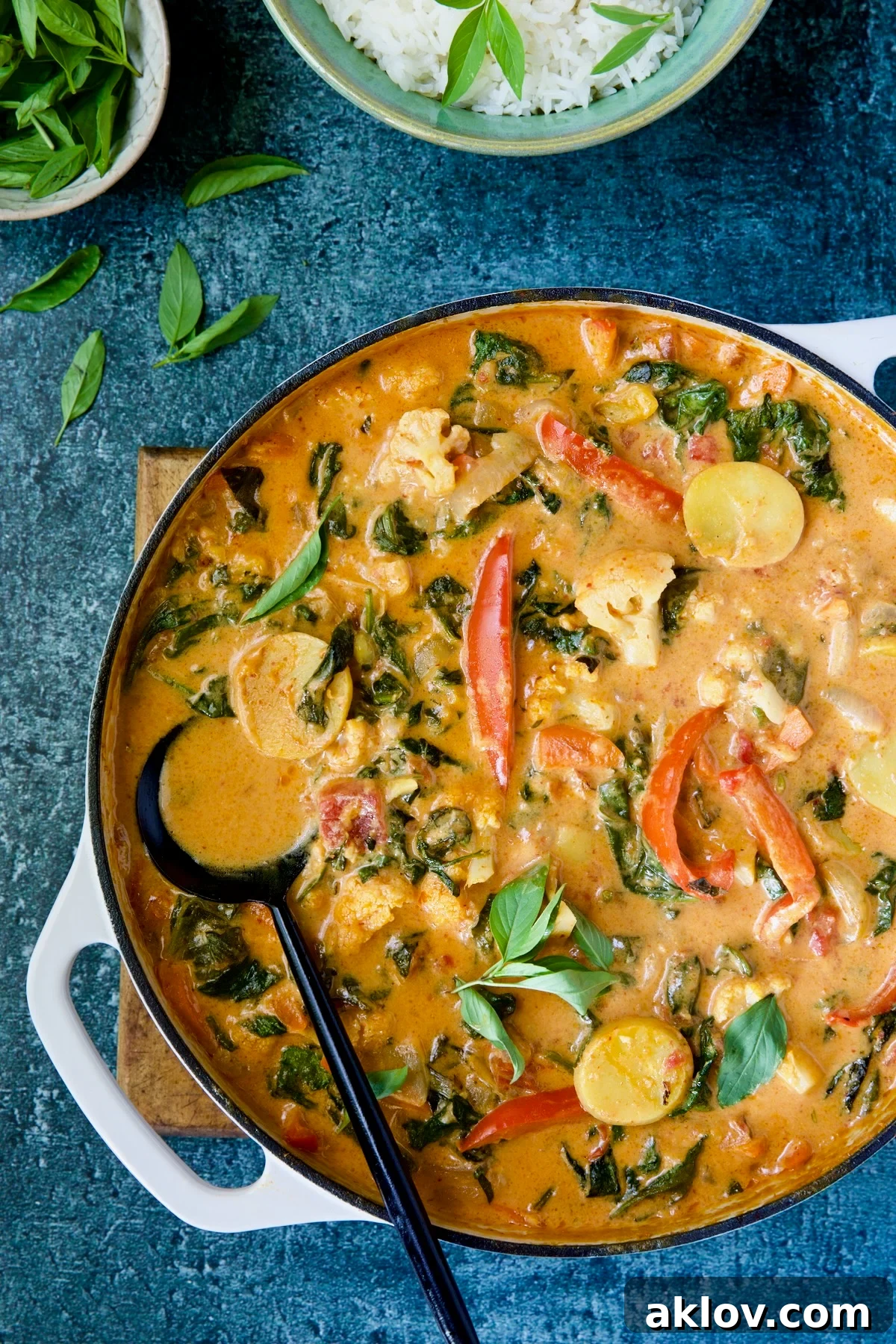
Why This Vegan Thai Red Curry Recipe Will Become Your Favorite!
Have you ever found yourself with a refrigerator overflowing with beautiful, fresh vegetables, wondering how to transform them into something truly spectacular before they lose their vibrancy? This Vegan Thai Red Curry recipe is the answer! Born from the desire to make the most of an abundant harvest, it has quickly evolved into a go-to dish for anyone craving a meal that’s both deeply flavorful and wonderfully wholesome.
This isn’t just any curry; it’s a celebration of plant-based goodness, offering a remarkable blend of health, convenience, and incredible taste. Here’s why this vegan Thai curry stands out and deserves a permanent spot in your recipe collection:
- Exceptionally Healthy: Brimming with a rainbow of fresh vegetables, this curry is a powerhouse of essential vitamins, minerals, and dietary fiber. It’s a delicious way to boost your daily nutrient intake and support a healthy lifestyle.
- Incredibly Versatile: This recipe is a blank canvas for your culinary creativity! Feel free to customize it with your favorite seasonal vegetables. Swap cauliflower for tender broccoli florets, hearty sweet potatoes for Yukon Golds, or vibrant baby kale for spinach. For an added protein boost, easily incorporate cubes of firm tofu, wholesome chickpeas, or even lentils.
- Effortlessly Easy to Prepare: Despite its complex flavors, this Thai red curry is surprisingly simple to make. With clear, step-by-step instructions, even novice cooks can achieve a restaurant-quality meal at home without any fuss.
- Perfect for Meal Prep: Planning your meals ahead is a breeze with this recipe. Vegan Thai Red Curry reheats beautifully, making it an ideal candidate for batch cooking. Enjoy a delicious, home-cooked meal throughout the week by simply warming it up on the stovetop or in the microwave.
- Naturally Gluten-Free: For those with gluten sensitivities or dietary preferences, this recipe is a fantastic choice. Made with naturally gluten-free ingredients, it ensures everyone at your table can enjoy a delightful and safe meal.
- Rich in Authentic Flavors: The strategic use of quality red curry paste, creamy coconut milk, and fresh aromatics ensures an authentic Thai taste profile that balances spice, sweetness, and umami.
Embrace the simplicity and satisfaction of a meal that truly delivers on all fronts – healthy, delicious, and easy to make!
Crafting Your Own Delicious Vegan Thai Red Curry: A Step-by-Step Guide
Essential Recipe Ingredients:
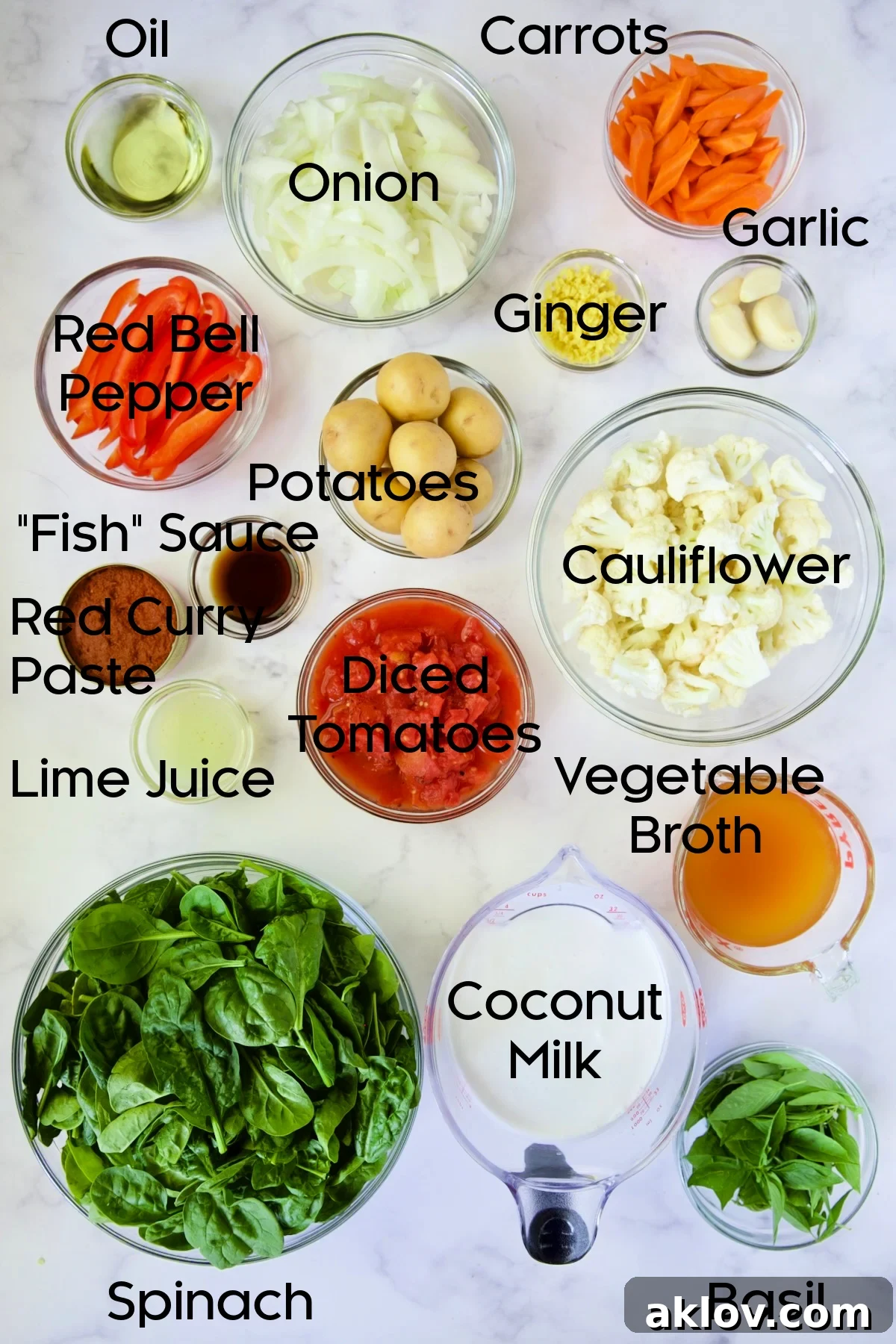
To embark on your Vegan Thai Red Curry adventure, you’ll need a selection of fresh produce and pantry staples that will infuse your dish with incredible flavor. While we provide exact quantities in the comprehensive recipe card below, remember the golden rule of cooking: flexibility is key! Feel empowered to use any vegetables you have on hand that are eager to be transformed into a culinary masterpiece. This recipe is designed to be adaptable, ensuring you can always create a delicious meal with what’s available in your kitchen.
Ingredient Notes and Smart Substitutions:
- Cooking Oil: We recommend using canola oil or coconut oil for their neutral flavor profiles and suitability for high-heat cooking. However, feel free to use your favorite cooking oil that complements Asian cuisine.
- Vegan “Fish” Sauce: This ingredient is crucial for achieving the characteristic depth and umami found in authentic Thai curries. A high-quality vegan “fish” sauce offers a fantastic plant-based alternative that delivers a rich, savory essence without any animal products. If you are not strictly vegan, traditional fish sauce can be used to achieve a similar flavor profile.
- Red Curry Paste: The backbone of this dish’s flavor! While making your own red curry paste from scratch can be a rewarding endeavor, it’s also time-consuming. Many store-bought pastes often lack the vibrant flavor and heat needed. After extensive culinary exploration, we highly recommend Maesri Red Curry Paste. It’s consistently spicy, bursting with authentic Thai flavors, surprisingly inexpensive, and, most importantly, completely vegan. It saves considerable time without compromising on taste, making it an excellent choice for a busy cook.
- Diced Tomatoes: To elevate the flavor complexity, we suggest using fire-roasted diced tomatoes. Their smoky sweetness adds another delightful layer to the curry’s profile. Regular diced tomatoes will also work perfectly if fire-roasted are unavailable.
- Vegetable Broth: A good quality vegetable broth forms the liquid base of our curry. Having a concentrated vegetable broth base, like Kitchen Accomplice, in your refrigerator is incredibly convenient. It allows you to use small amounts as needed, avoiding the waste of opening an entire carton or can for just a cup or two.
- Coconut Milk: This is what gives Thai curry its signature creamy texture. For a richer, thicker curry, opt for full-fat coconut milk. If you’re mindful of calories, reduced-fat coconut milk can be used, but be aware that it will result in a thinner consistency. You might consider adjusting the amount of broth slightly if using reduced-fat milk to maintain desired thickness.
Detailed Step-By-Step Cooking Instructions:
Follow these simple steps to create a fragrant and flavorful Vegan Thai Red Curry:
- Preparation is Key: Begin by gathering and meticulously prepping all your ingredients. This mise en place ensures a smooth and enjoyable cooking process, often referred to as “the chef’s secret.”
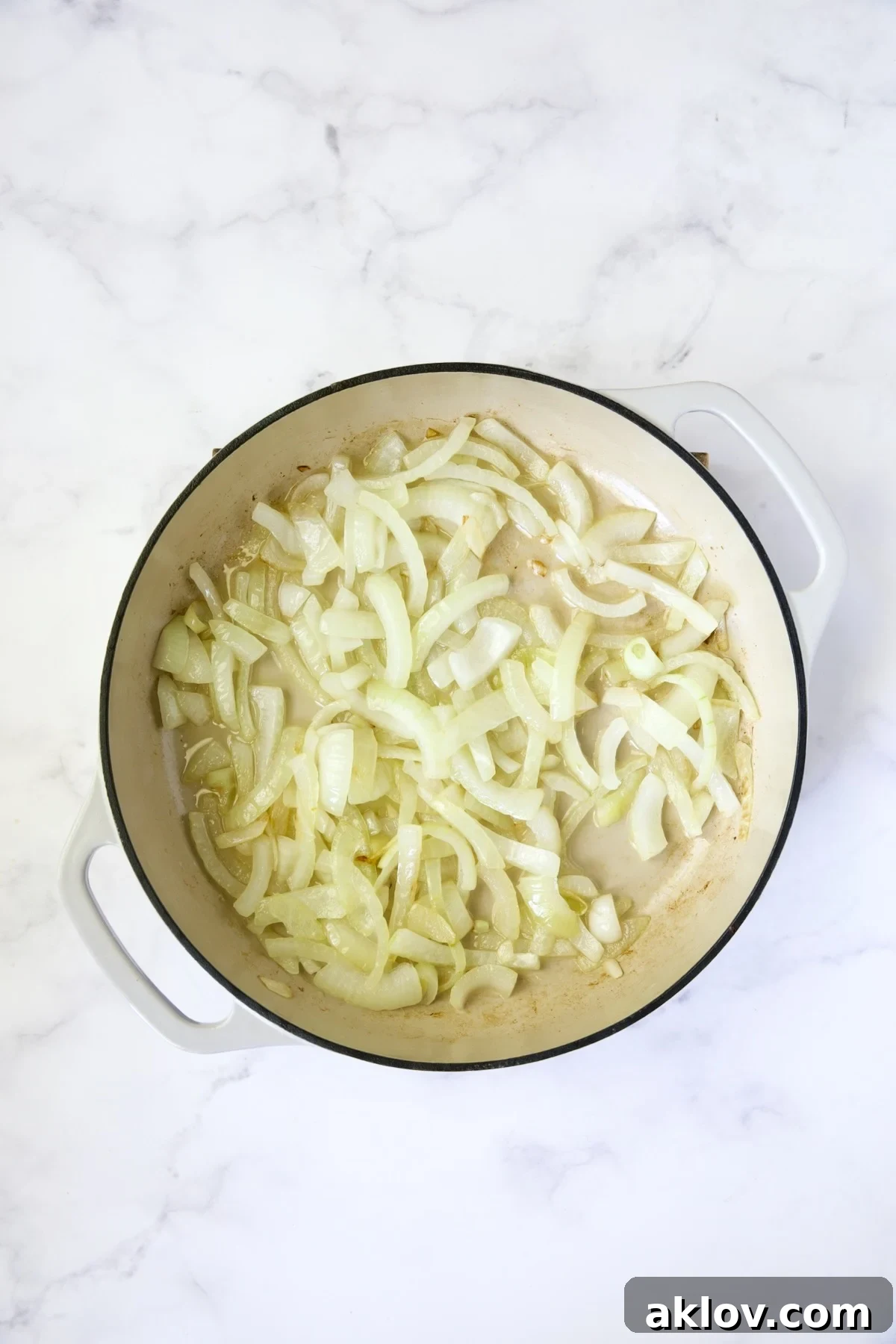
- Sauté the Aromatics: Heat your chosen cooking oil over medium-high heat in a large skillet or a deep sauté pan. Add the thinly sliced onion and cook for 3 to 4 minutes, stirring occasionally, until it begins to soften and become translucent, releasing its sweet aroma.
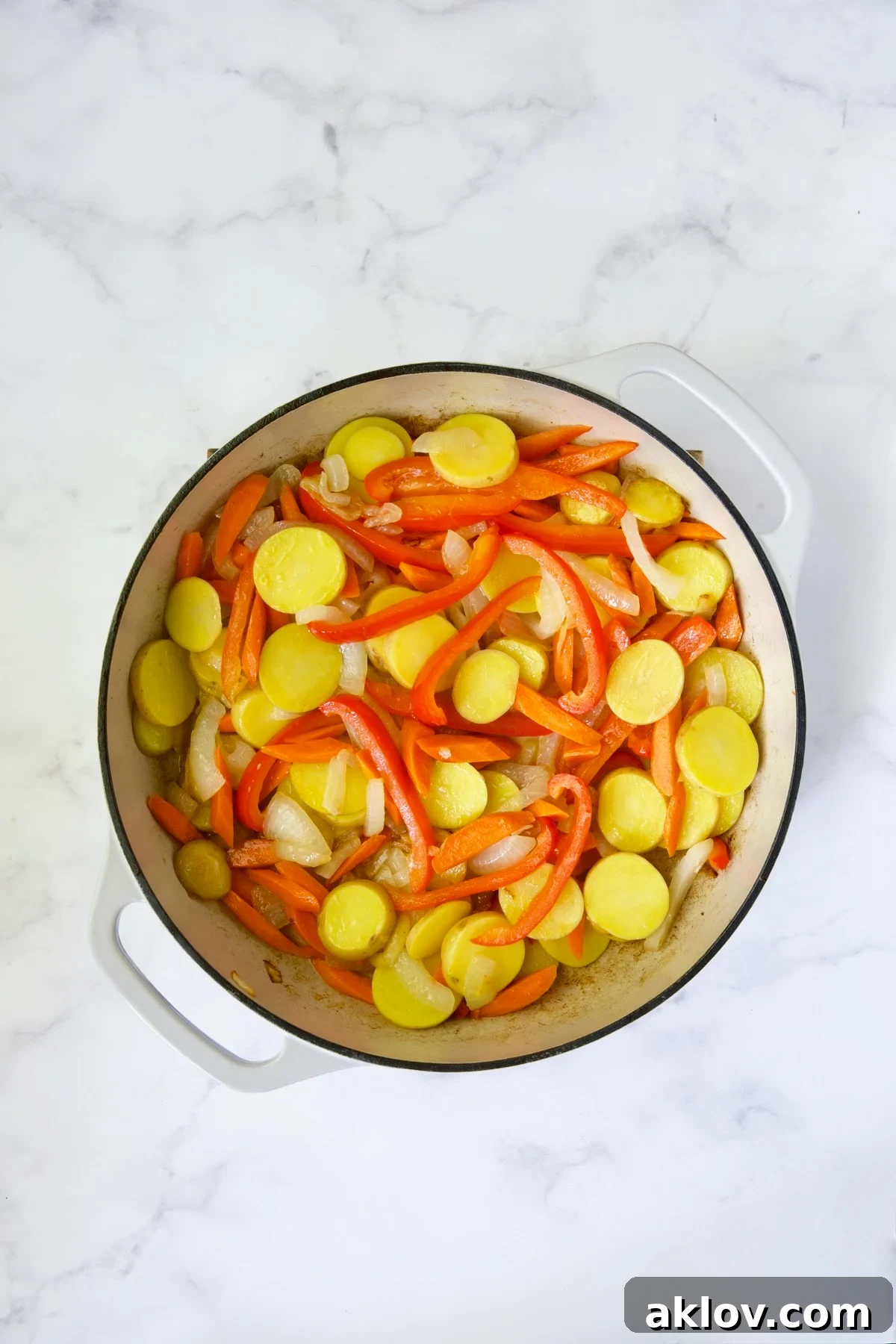
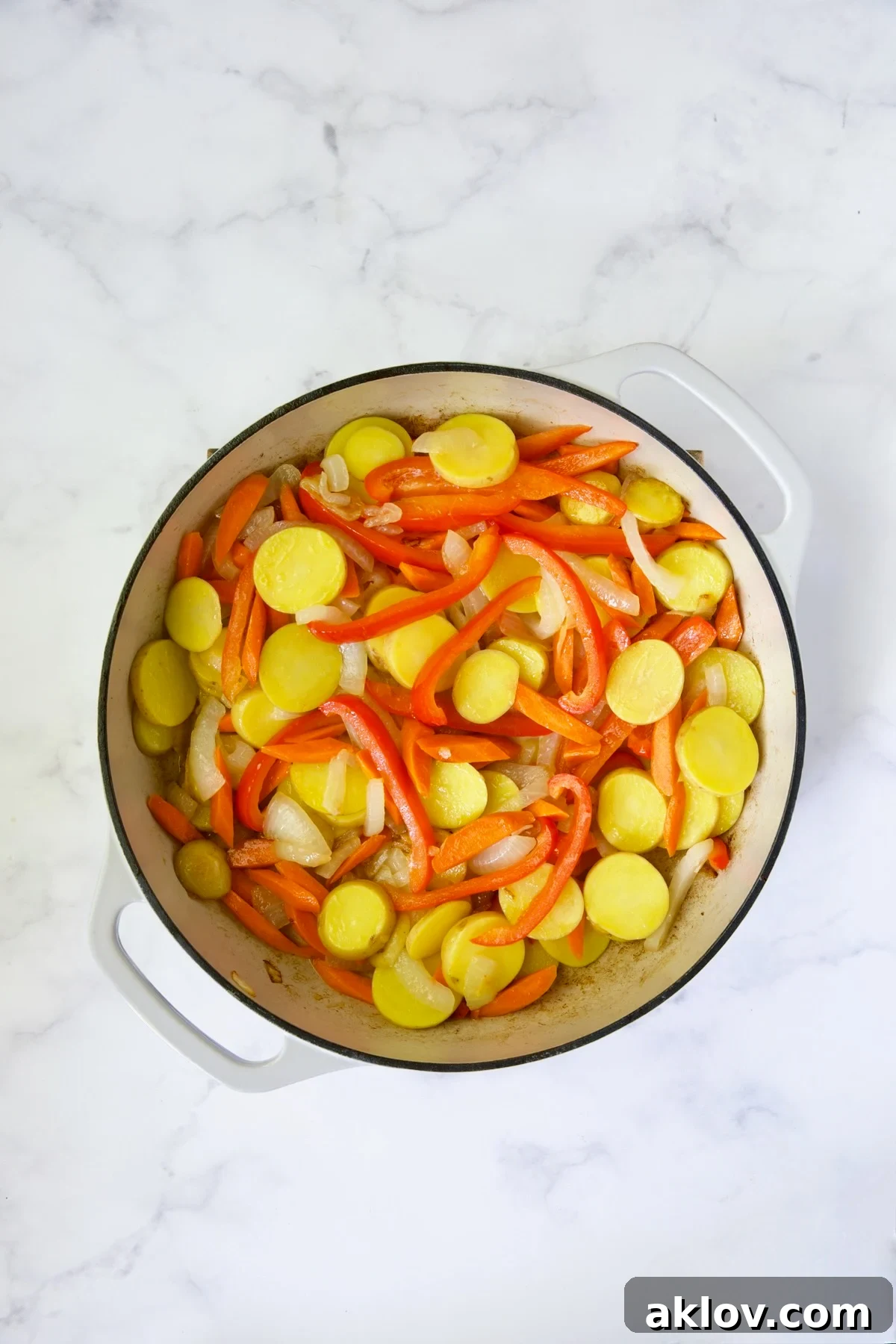
- Add Root Vegetables: Introduce the carrots, red bell pepper, and sliced potatoes to the pan. Continue to cook for another 5 to 6 minutes, stirring frequently to prevent the potatoes from sticking and to ensure even cooking. This step allows the vegetables to develop some initial tenderness and flavor.
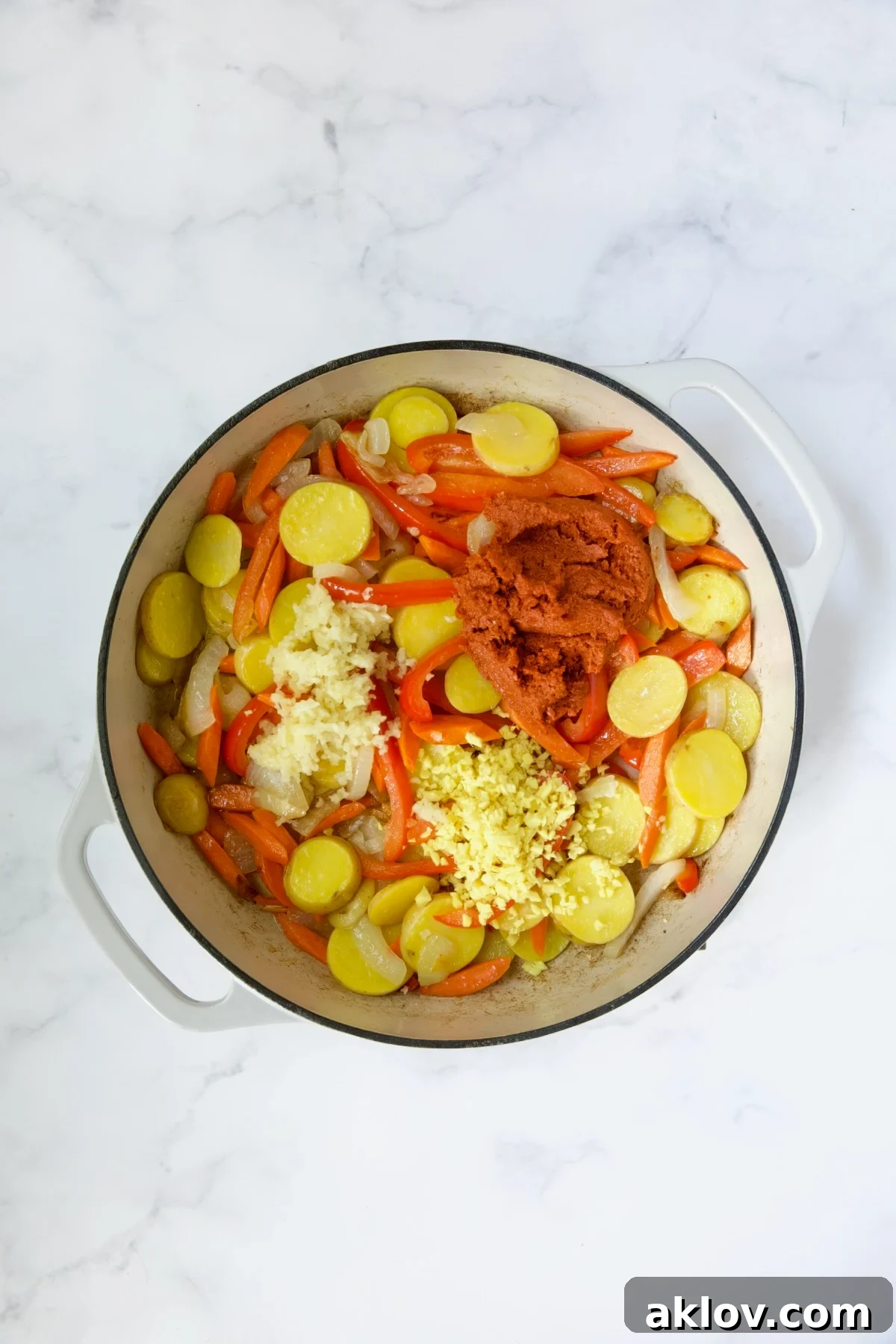
- Infuse with Spices: Stir in the red curry paste, minced garlic, and fresh minced ginger. Cook for about 30 seconds, stirring continuously. This brief cooking time helps to bloom the spices, intensifying their flavors and releasing their aromatic compounds. Be careful not to burn the garlic.
- Build the Curry Base: Pour in the creamy coconut milk, diced fire-roasted tomatoes, and vegetable broth. Bring the mixture to a gentle boil, then reduce the heat to medium-low and let it simmer for 8 to 10 minutes. At this point, the potatoes should be nearly tender, absorbing the rich flavors of the broth.
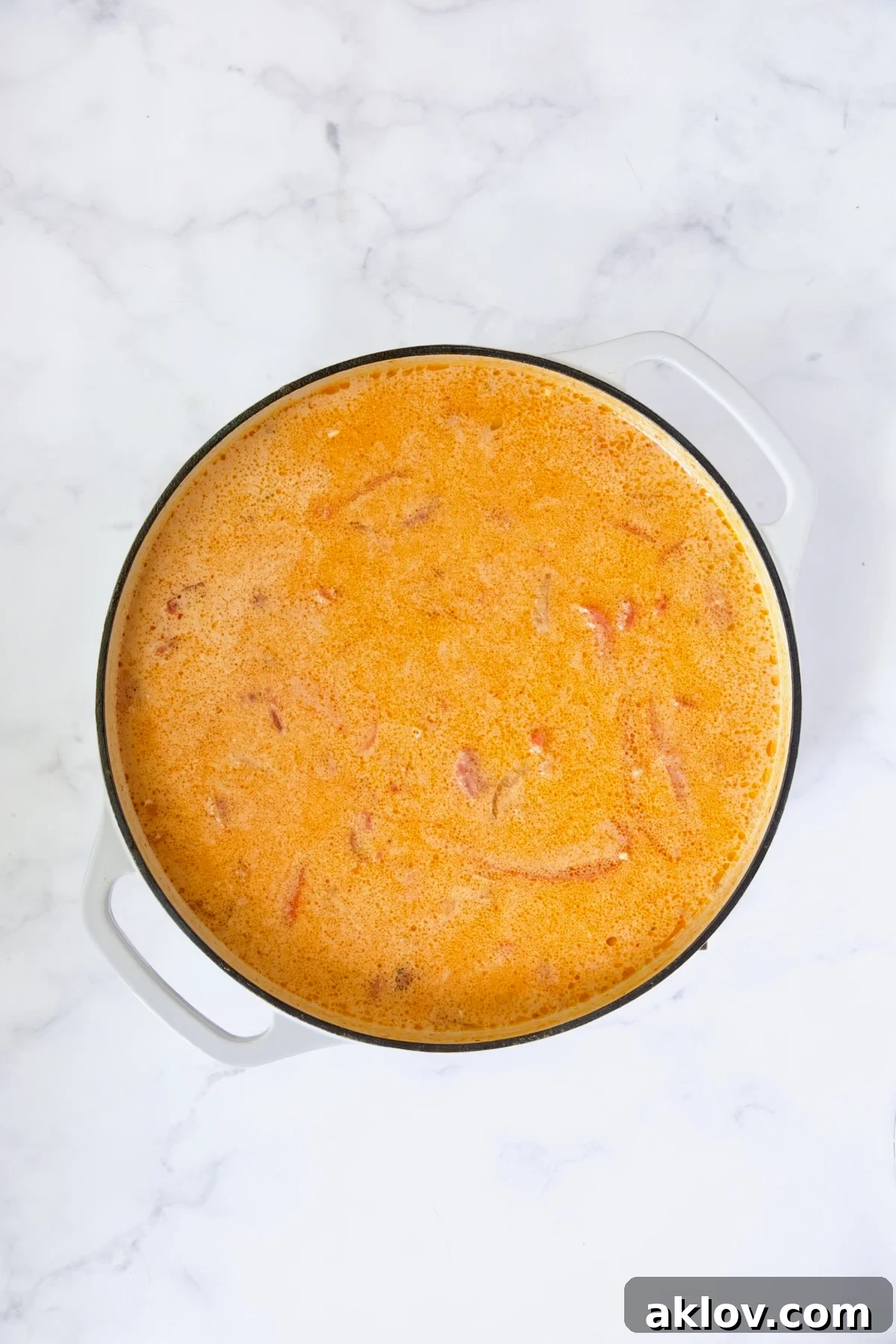
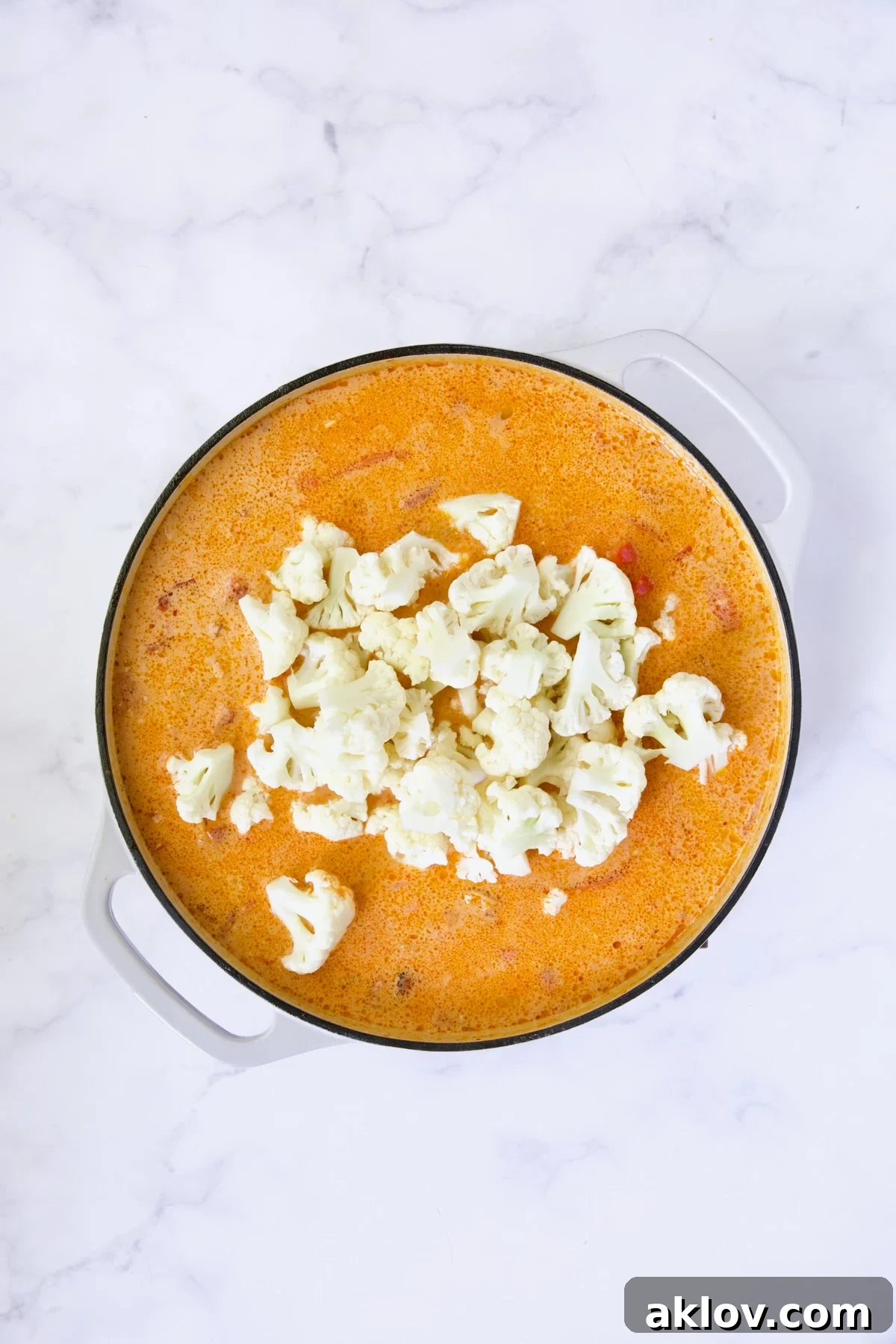
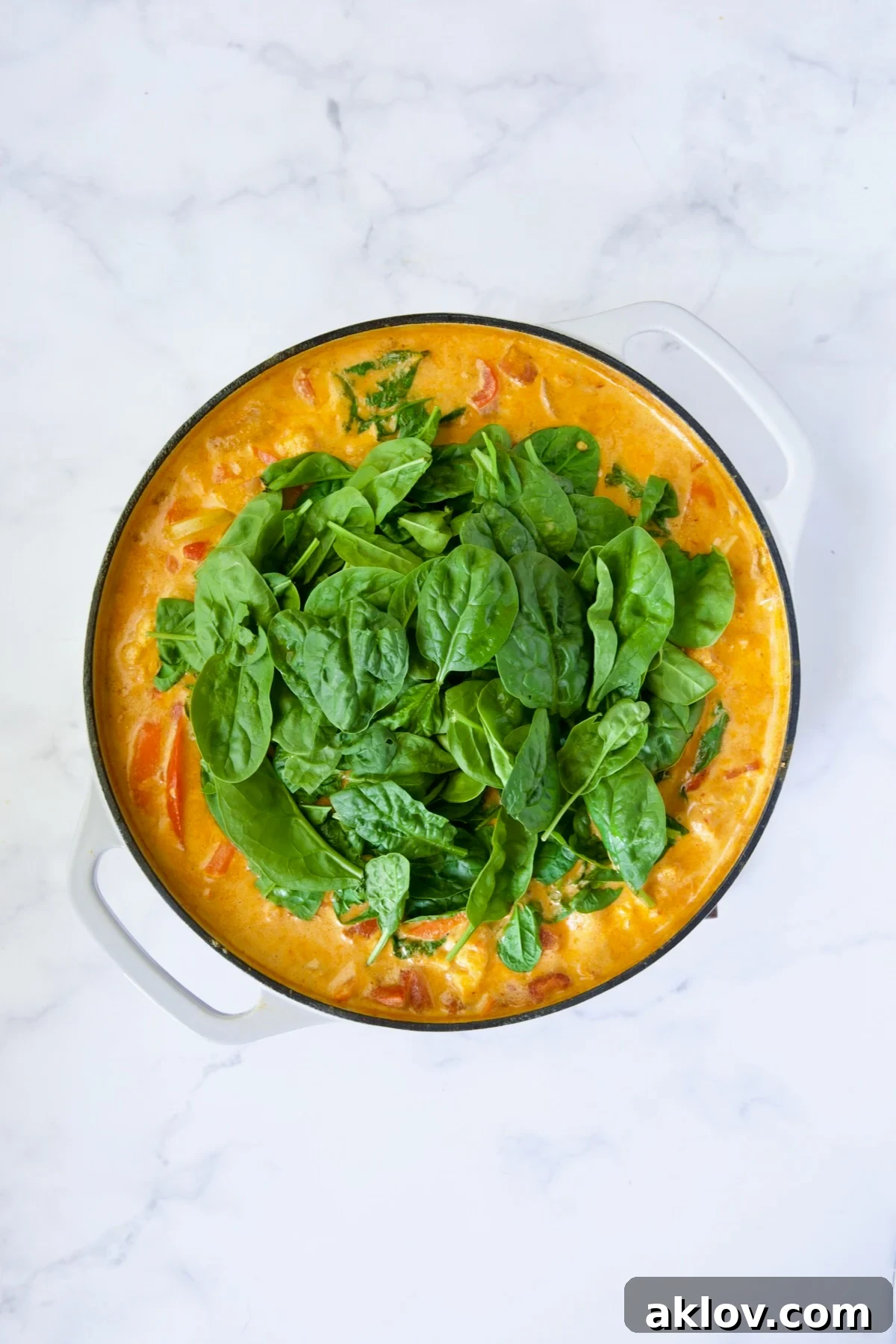
- Incorporate Cauliflower and Spinach: Add the cauliflower florets to the simmering curry and cook for another 5 minutes, or until all the vegetables are just tender and the potatoes can be easily pierced with a knife. Finally, add the baby spinach, handful by handful, stirring after each addition until it completely wilts into the luxurious sauce.
- Season to Perfection: Stir in the fresh lime juice. Taste the curry and adjust the seasoning with salt or additional vegan “fish” sauce as needed. The lime juice provides a crucial bright, tangy counterpoint to the rich and spicy flavors.
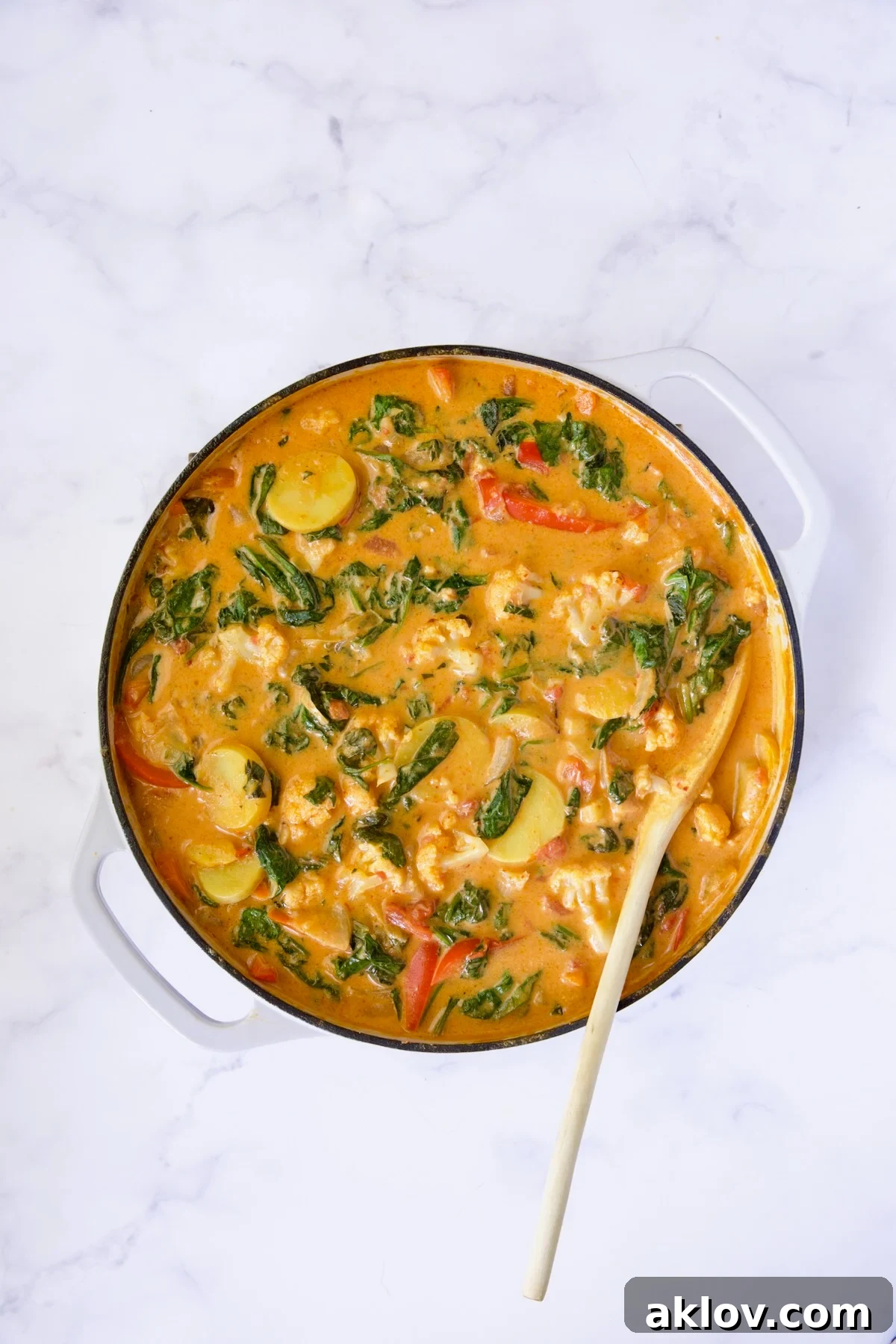
- Garnish and Serve: Garnish your exquisite Vegan Thai Red Curry generously with fresh Thai basil leaves. The vibrant aroma and peppery flavor of fresh basil truly enhance the dish.
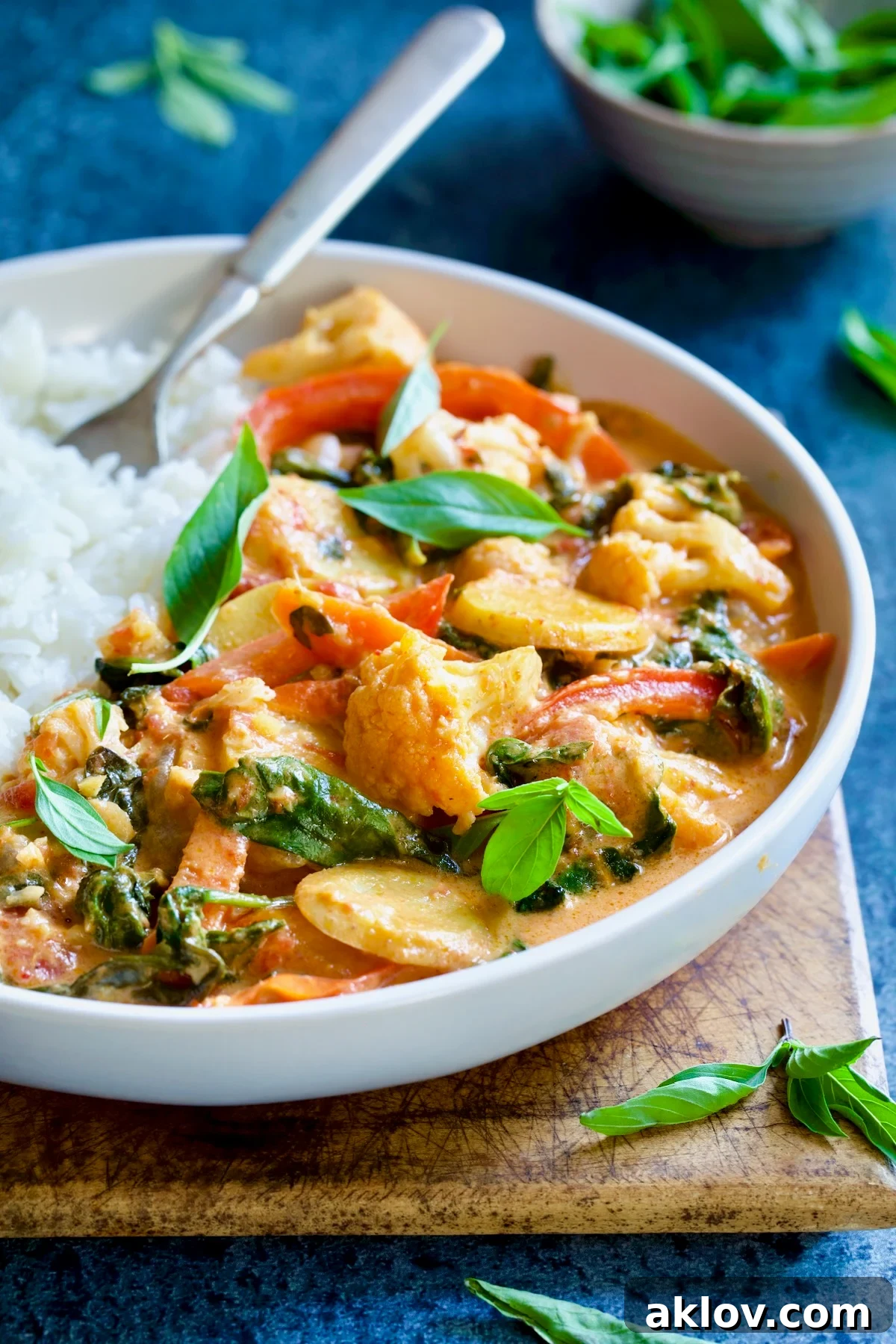
This Vegan Thai Red Curry is a spicy, healthy, and incredibly flavorful vegan dinner that you’ll feel great about enjoying. Serve it alongside fluffy brown rice or fragrant white jasmine rice for a complete and utterly delicious meal!
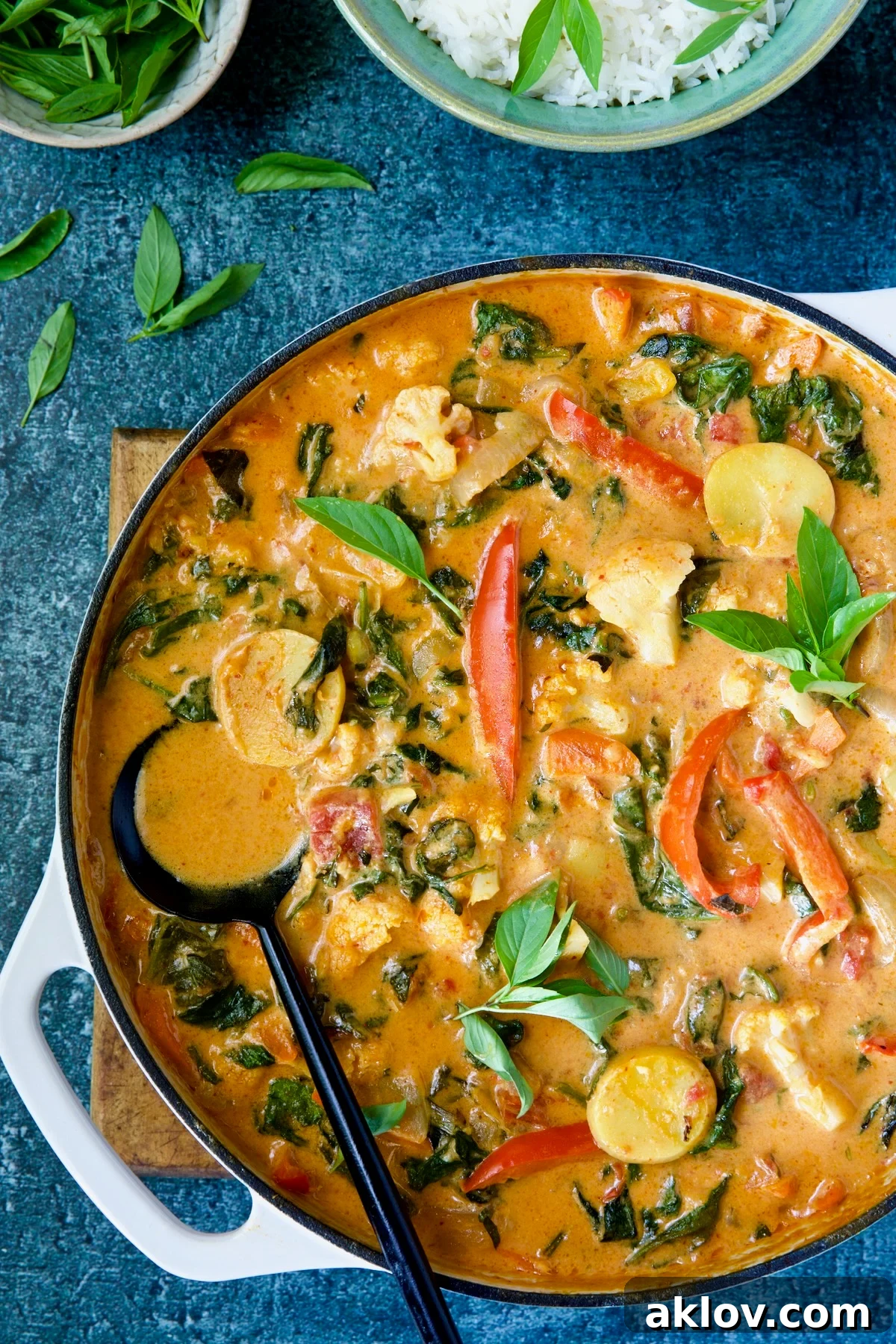
Chef’s Insider Tip for Convenience:
- To save precious time when preparing your Thai red curry with vegetables, consider purchasing pre-prepped vegetables from your grocery store’s produce section or salad bar. While this convenience comes with a slightly higher cost, it can significantly reduce your cooking time, making this delicious meal even more accessible on busy weeknights.
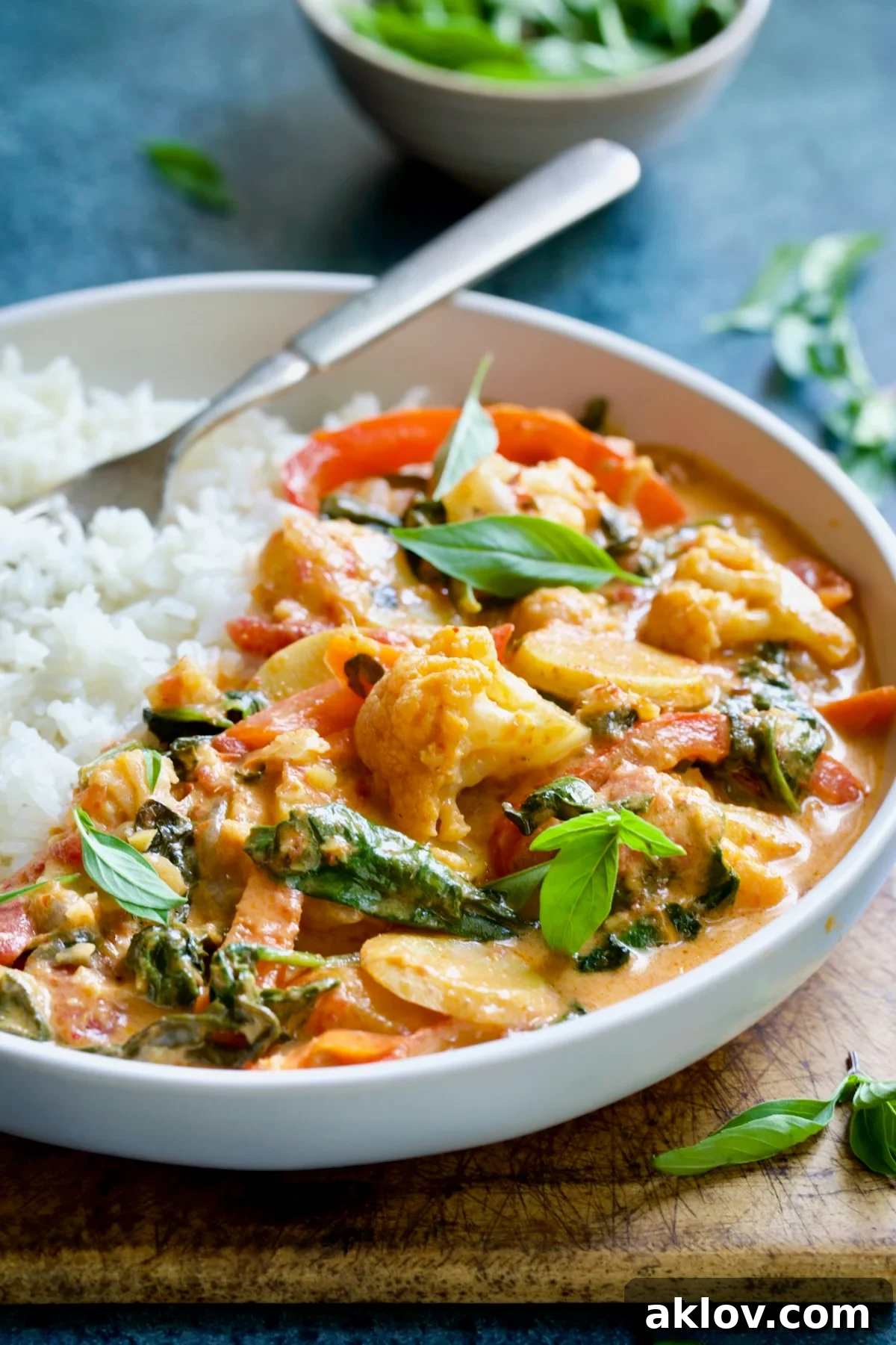
Frequently Asked Questions About Vegan Thai Red Curry:
No, not all red curry pastes are vegan. Many traditional brands contain shrimp paste or fish sauce as key ingredients. It’s crucial to always check the ingredient label. Brands like Maesri, which we recommend, explicitly state their vegan status, making them safe choices for plant-based cooking.
While formulations can vary slightly by brand, a typical red curry paste (like Maesri) includes chili pepper, garlic, shallot, salt, lemongrass, sugar, kaffir lime, galangal, and a blend of aromatic spices such as coriander seed, cumin, and cardamom. These ingredients create the complex, fragrant, and spicy flavor profile characteristic of Thai red curry.
Absolutely! This vegan red curry is an excellent candidate for meal prepping. For best results when making it ahead, avoid overcooking the vegetables initially so they retain a slight bite. This way, they won’t become mushy upon reheating. You can easily reheat the curry in the microwave or gently warm it in a saucepan on the stovetop.
Yes, this vegan curry can be frozen, but it’s important to manage expectations regarding texture after thawing. Freezing can cause vegetables to become softer and release more water, which might dilute the curry’s intense flavor. If freezing is your goal, consider adding a bit more curry paste or seasoning to the initial batch, or have extra paste on hand to stir in after thawing and reheating. Thaw the curry in the refrigerator overnight or use the defrost setting on your microwave, then reheat on the stovetop or in the microwave until thoroughly warm.
The beauty of this recipe lies in its adaptability! Beyond the suggested carrots, bell peppers, potatoes, cauliflower, and spinach, you can incorporate a wide array of vegetables. Broccoli, sweet potatoes, green beans, mushrooms, zucchini, bamboo shoots, snow peas, or even eggplant are all fantastic additions. Choose what’s fresh and in season for the best flavor.
The spice level largely depends on the red curry paste you use. If you prefer a milder curry, start with a smaller amount of paste (e.g., half a can) and add more to taste. For those who love extra heat, you can increase the curry paste, add fresh thinly sliced bird’s eye chilies, or a pinch of red pepper flakes while simmering.
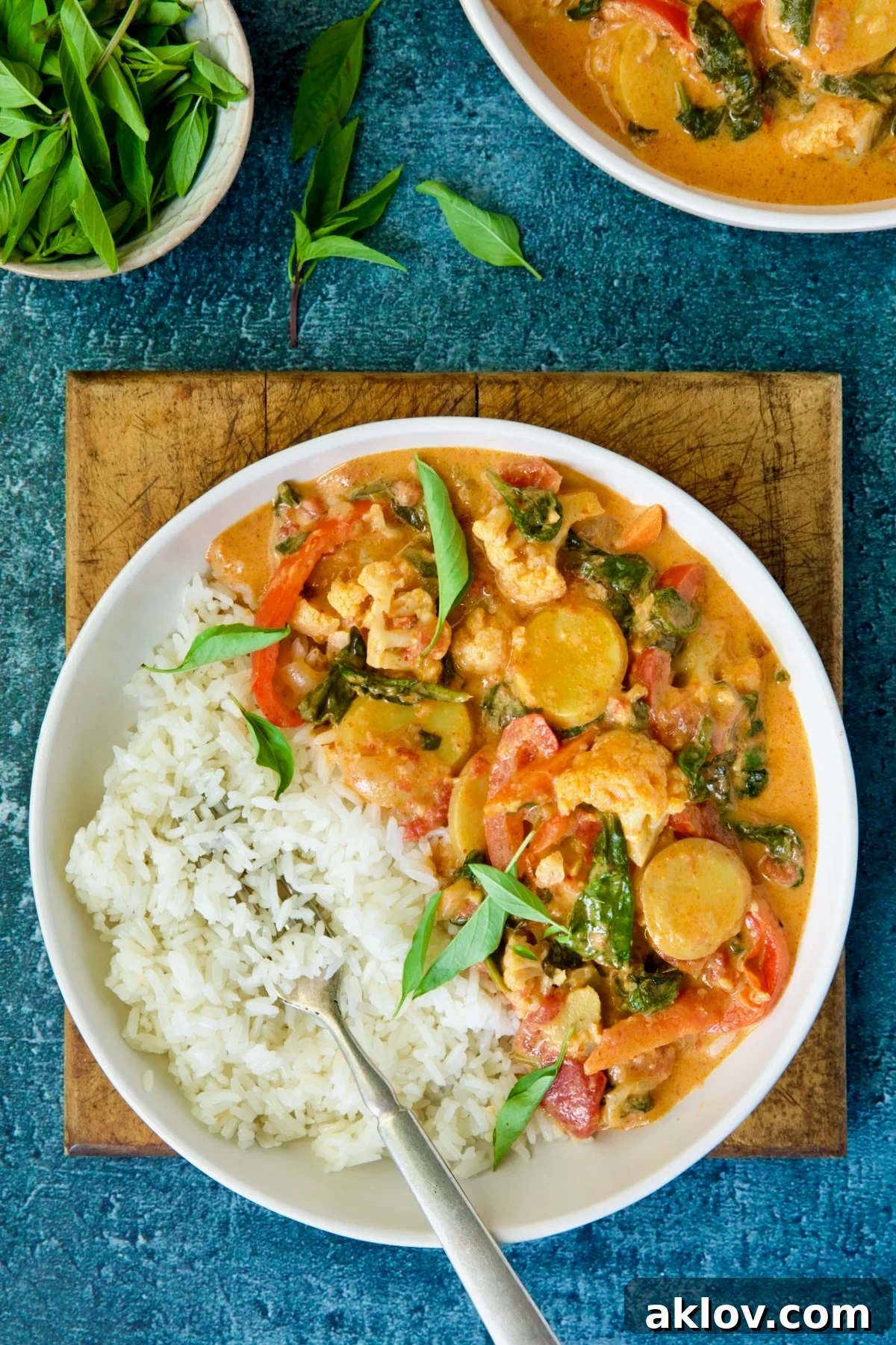
Storage and Reheating Tips:
- Refrigeration: Any leftover Vegan Thai Red Curry can be stored in an airtight container in the refrigerator for up to 3-4 days. It’s often said that curries taste even better the next day as the flavors have more time to meld. Reheat gently in the microwave or in a saucepan over medium heat on the stovetop until warmed through.
- Freezing: While possible, be aware that freezing and thawing can alter the texture of the vegetables, making them softer, and may slightly dilute the curry’s flavor due to water release. For best results, consume within 1-2 months. Thaw completely in the refrigerator before reheating. You might want to add a fresh squeeze of lime juice and a sprinkle of salt or vegan “fish” sauce after reheating to brighten the flavors.
Discover More Vegan Thai Delights:
If you’ve enjoyed this incredible Vegan Thai Red Curry, be sure to explore these other fantastic plant-based Thai-inspired recipes from our kitchen:
- Vegetables in Thai Red Curry with Sweet Potato Noodles: A delightful twist combining classic curry flavors with healthy sweet potato noodles.
- Butternut Squash in Fresh Green Curry: Experience the sweet, earthy notes of butternut squash in a creamy, aromatic green curry.
- Thai Red Curry Lentil Soup with Sweet Potatoes: A hearty and comforting soup, perfect for cooler days.
Explore More Flavor-Packed Vegan Dinners:
Our kitchen is a treasure trove of delicious vegan recipes designed to excite your palate and simplify your plant-based cooking:
- Cauliflower and Chickpea Tacos with Chipotle Lime Slaw: A vibrant and satisfying taco experience.
- Vegan Indian Cauliflower and Chickpea Curry: Dive into the rich, aromatic flavors of an Indian-inspired curry.
- Cauliflower Red Lentil and Potato Curry: A protein-rich and comforting curry, perfect for a fulfilling meal.
- Curried Roast Vegetables: A simple yet incredibly flavorful way to enjoy your favorite roasted vegetables.
Find all our inspiring vegan and vegetarian creations by visiting our dedicated section: Vegetarian and Vegan Recipes – From A Chef’s Kitchen.
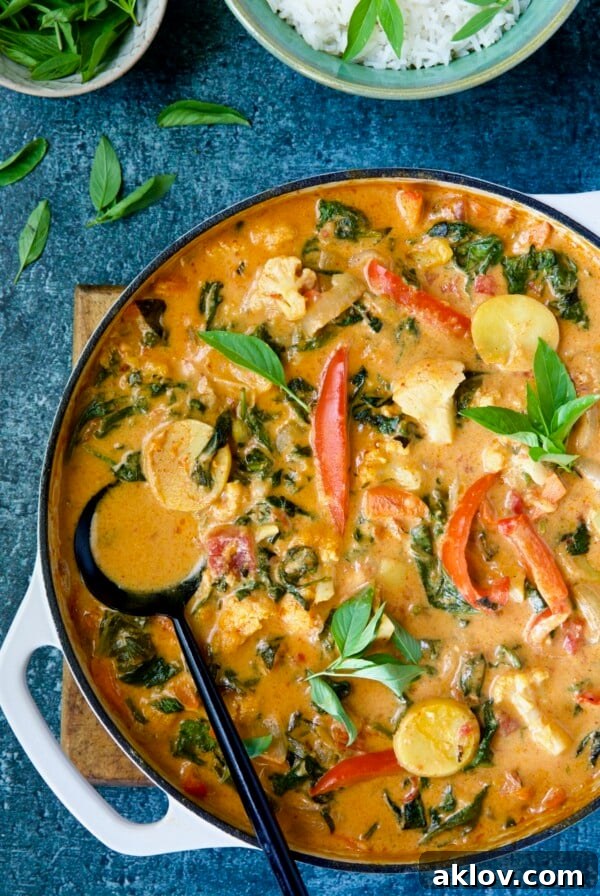
Vegan Thai Red Curry
By Carol | From A Chef’s Kitchen
This Vegan Thai Red Curry recipe is spicy, delicious, healthy, and incredibly versatile! Vary the veggies and add tofu or chickpeas for protein. It’s the perfect, satisfying veggie-packed meal that delivers comfort in every bite.
- Prep Time:
- 20 mins
- Cook Time:
- 25 mins
- Total Time:
- 45 mins
- Servings:
- 6
Equipment
- Wusthof Chef Knife
- Cutting Board
- Enameled Cast Iron Skillet
- Maesri Red Curry Paste
Ingredients
- 3 tablespoons canola oil, or coconut oil
- 1 medium onion, halved and thinly sliced
- 2 medium carrots, halved lengthwise and sliced 1/3-inch thick on the diagonal
- 1 medium red bell pepper, seeds and membranes removed, thinly sliced
- 8 small Yukon Gold potatoes, (baby potatoes) sliced
- 1 can (4-ounce) red curry paste, or to taste and tolerance
- 4 cloves garlic, minced
- 2 tablespoons minced ginger
- 1 cup vegetable broth
- 2 cans (15-ounce) coconut milk
- 1 can (15-ounce) diced fire-roasted tomatoes, undrained
- 1 small head of cauliflower, cut into florets
- 1 container (5-ounce) baby spinach
- 1 large lime, juiced
- Salt or vegan “fish” sauce, to taste
- 1/2 cup Thai basil leaves, or regular basil, coarsely chopped plus more for garnish
- 3 cups cooked jasmine rice
Instructions
- Heat canola or coconut oil over medium-high heat in a large skillet or saute pan. Add the onion and cook for 3-4 minutes or until beginning to soften.
- Add the carrots, red bell pepper and potatoes and cook for 5-6 minutes, stirring often so the potatoes don’t stick to the pan.
- Add the red curry paste, garlic and ginger and cook briefly, 30 seconds.
- Add the vegetable broth, coconut milk and tomatoes. Bring to a boil, reduce heat to medium-low and simmer for 8-10 minutes. (The potatoes should be close to done.)
- Add the cauliflower florets. Cook another 5 minutes or until vegetables are just tender and potatoes are easily pierced with a knife.
- Add the baby spinach by the handful and stir after each addition until wilted.
- Add lime juice and salt or vegan “fish” sauce to taste.
- Garnish with fresh Thai basil leaves.
- Serve with cooked jasmine rice.
Notes
SUBSTITUTIONS:
- Almost any vegetable can be used in this curry.
- Add tofu or chickpeas for protein.
- Substitute sweet potatoes for white potatoes.
TIPS:
- Save time by buying the vegetables already prepped or by visiting the store’s salad bar. Remember, however, you pay extra for the convenience.
REHEATING INSTRUCTIONS:
- Can be reheated in the microwave or a saucepan on the stovetop.
FREEZER-FRIENDLY:
- After thawing, the vegetables will be more watery, which waters down the curry’s flavor. If freezing is your objective, add more curry paste to start or have some on hand to add after thawing. Thaw in the refrigerator or microwave, then reheat on the stovetop or microwave.
Nutrition
Serving: 1
Calories: 383 kcal
Carbohydrates: 72 g
Protein: 8 g
Fat: 8 g
Saturated Fat: 1 g
Polyunsaturated Fat: 2 g
Monounsaturated Fat: 5 g
Trans Fat: 0.03 g
Sodium: 201 mg
Potassium: 1284 mg
Fiber: 8 g
Sugar: 6 g
Vitamin A: 4260 IU
Vitamin C: 98 mg
Calcium: 69 mg
Iron: 2 mg
Nutritional values are automatically calculated using unbranded products and are estimates only. Actual results may vary based on ingredients used and portion sizes. Adjust as needed for dietary restrictions, allergies, or health concerns.