
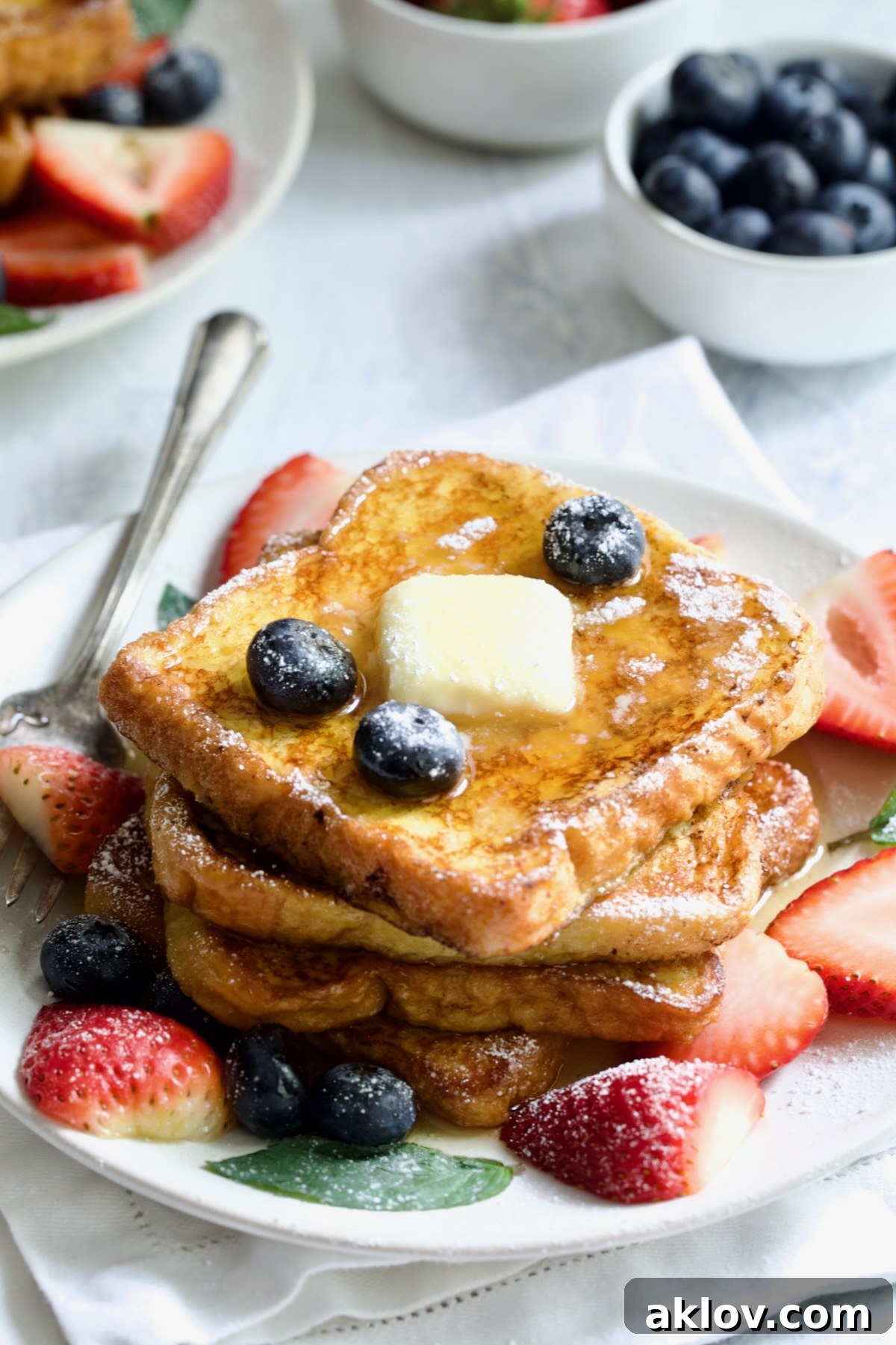
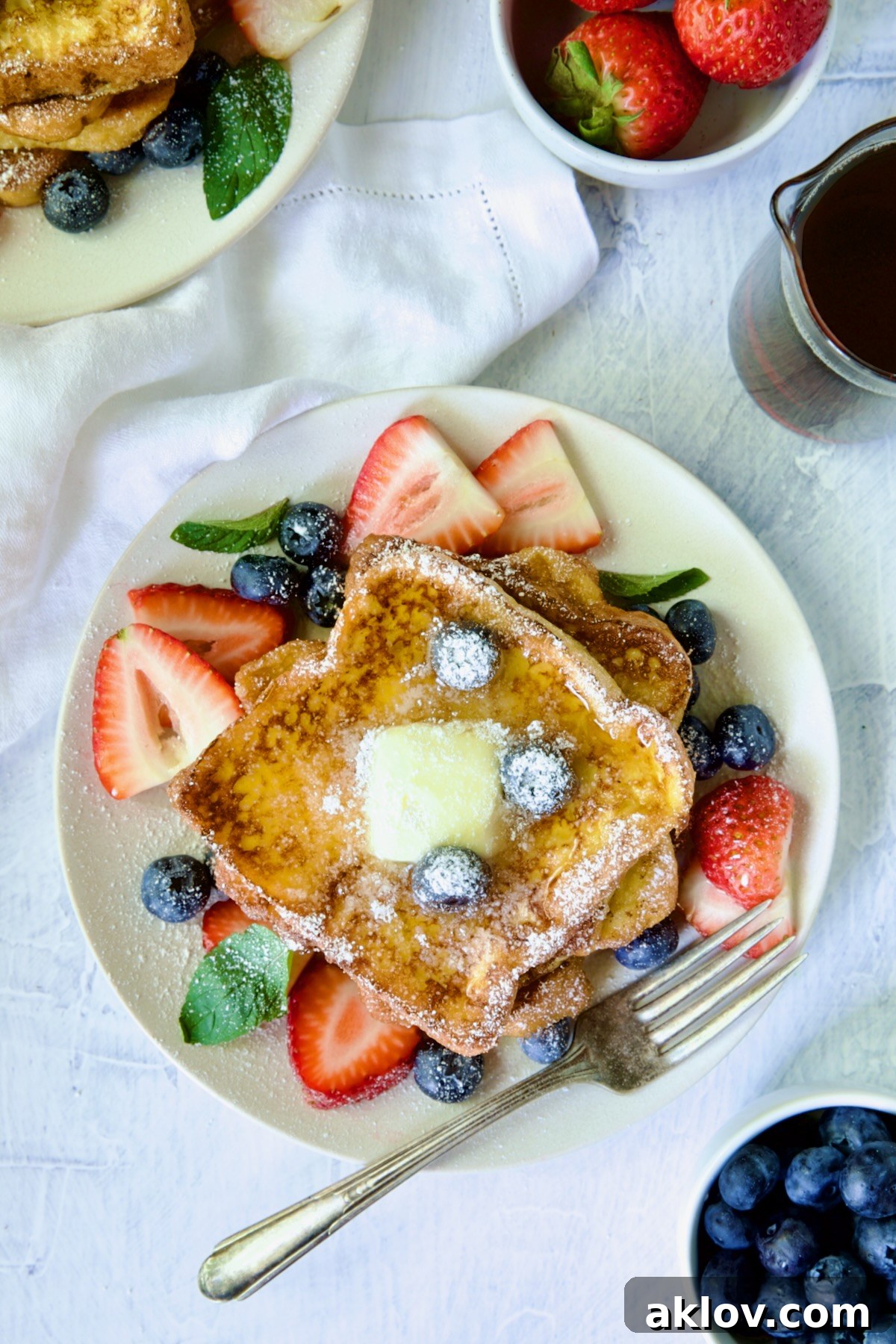
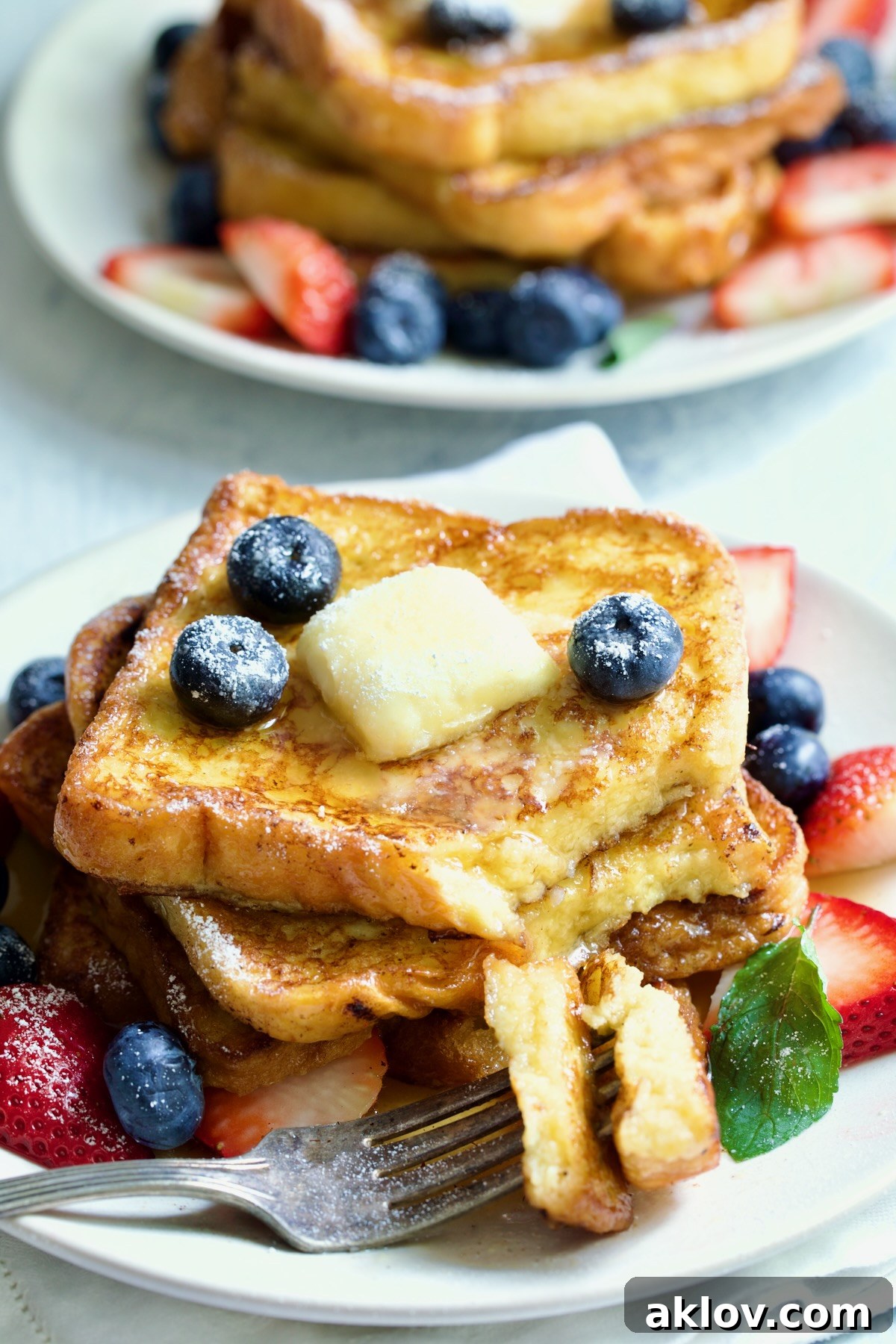
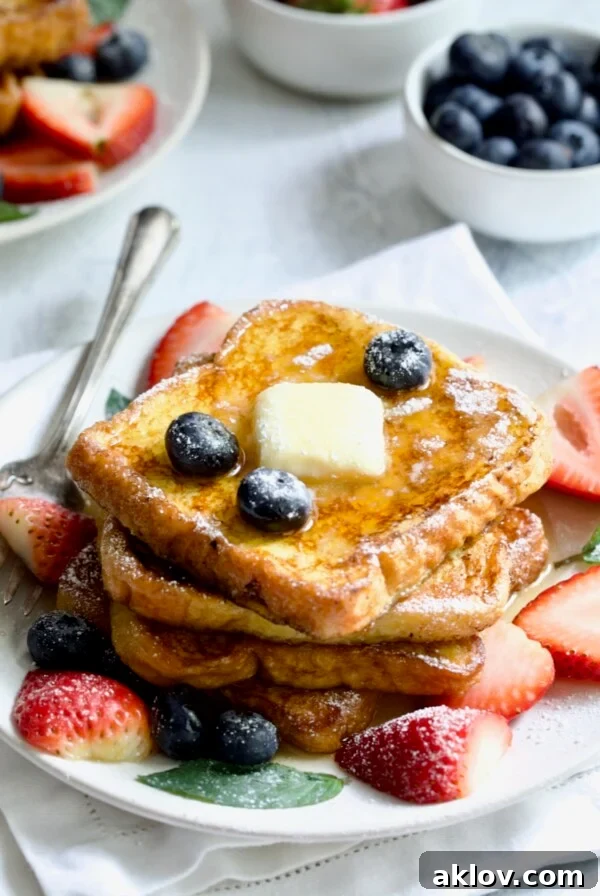
Welcome to the world of truly exceptional breakfast! This Brioche French Toast recipe is not just a meal; it’s an experience, transforming a beloved morning classic into a luxurious, melt-in-your-mouth delight. Crafted with rich, buttery brioche bread, each slice boasts an unparalleled texture and a subtly sweet, vanilla-infused flavor that will elevate your breakfast or brunch to an unforgettable occasion. Imagine sinking your teeth into a perfectly golden-brown slice, crispy on the outside, incredibly soft and custardy within. Drizzle generously with golden maple syrup, adorn with vibrant fresh berries, a delicate dusting of powdered sugar, or a dollop of freshly whipped cream, and begin your day on a truly decadent note. Get ready to impress your family and guests with this easy yet sophisticated culinary masterpiece.
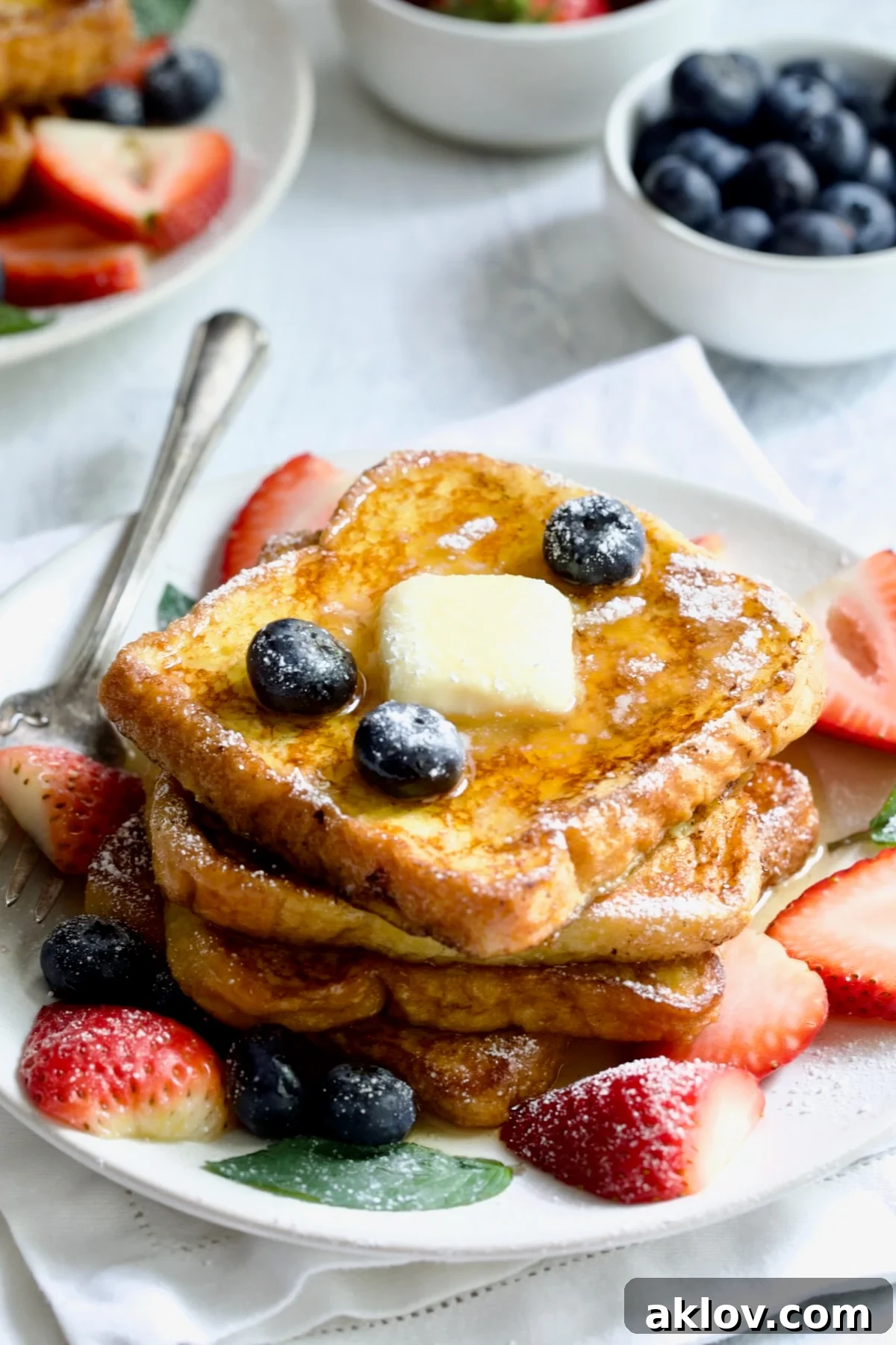
Why This Brioche French Toast Recipe is a Keeper!
At the heart of any extraordinary French toast lies the bread, and for us, brioche is the undisputed champion. Brioche is a French bread distinguished by its high egg and butter content, making it significantly richer and softer than ordinary bread. When this opulent bread is transformed into French toast, it takes the experience to an entirely new level of decadence. The resulting breakfast or brunch treat is not only incredibly satisfying but also profoundly delicious.
The magic truly happens with brioche’s unique texture. Its soft, pillowy crumb is exceptionally porous, making it perfectly suited to absorb the luscious, vanilla-infused custard in this recipe. Each slice becomes a sponge, soaking up every drop of the sweet, aromatic mixture without falling apart. Once steeped in this rich custard, the brioche is then gently cooked in melted butter, achieving a beautiful golden-brown exterior that offers a delightful, delicate crispness, contrasting wonderfully with its custardy interior. It’s the ultimate combination of luxury and comfort, making it a perfect choice for a special weekend brunch or an indulgent start to any day.
This particular Brioche French Toast recipe is celebrated for several reasons:
- Effortless Elegance: Despite its gourmet appeal, this recipe is surprisingly easy to execute, yet it will make everyone think you spent hours fussing in the kitchen. It’s perfect for both novice and experienced cooks.
- Unforgettable Flavor Profile: Brioche itself boasts a subtly sweet, slightly nutty flavor that naturally complements the warm, aromatic notes of vanilla in our custard mixture. This inherent sweetness means less added sugar is needed, allowing the natural flavors to shine.
- Perfect Texture Harmony: When pan-fried to perfection, the brioche develops a lightly crispy, golden exterior. This delightful crunch is beautifully contrasted by the tender, custardy interior, creating a sensational mouthfeel in every single bite.
- Versatile & Customizable: While exquisite on its own, this French toast serves as a blank canvas for an endless array of toppings, allowing you to tailor it to any craving or occasion.
The Art of Making Perfect Brioche French Toast: A Step-by-Step Guide
Essential Ingredients You’ll Need
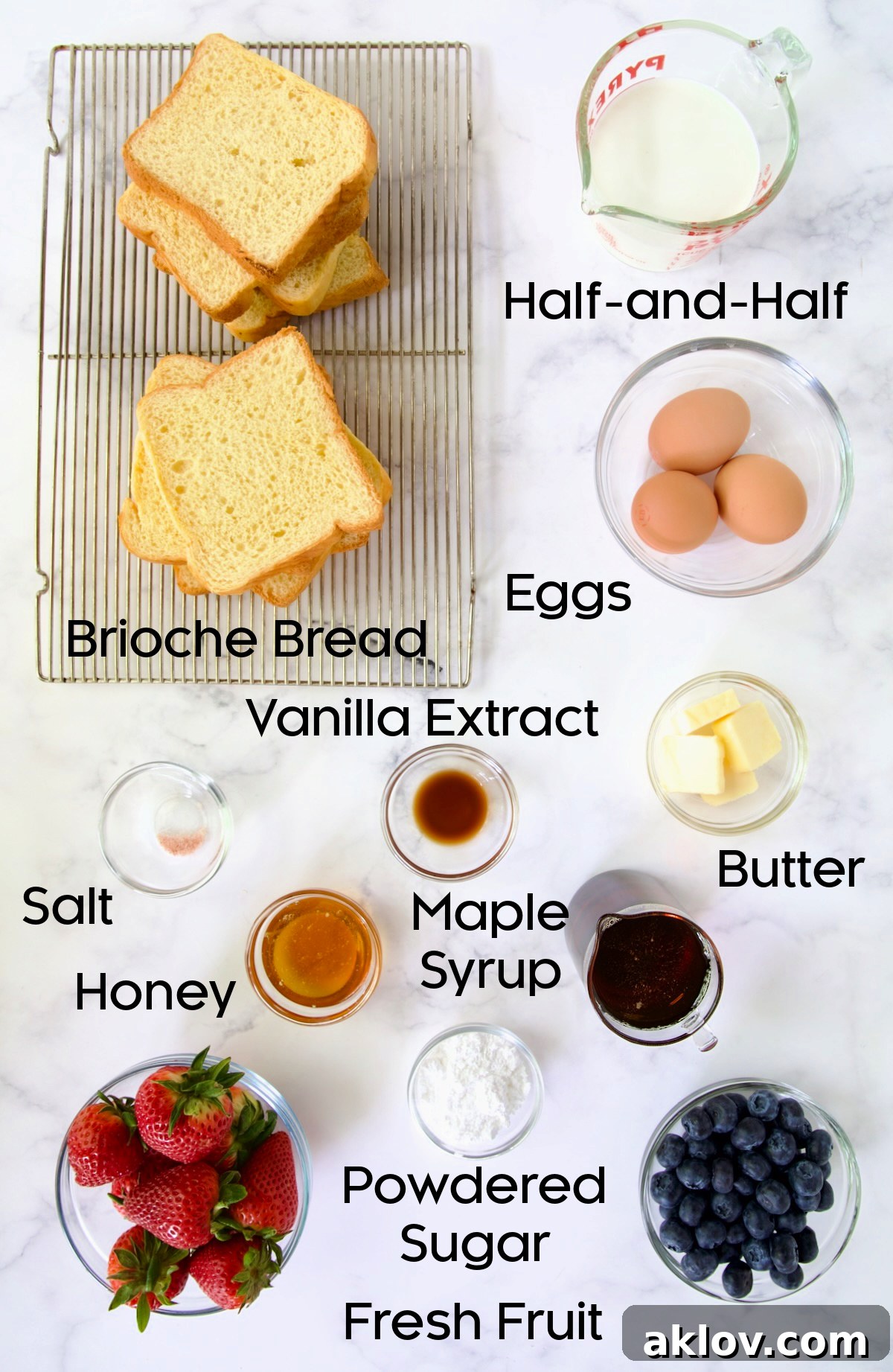
Crafting this exquisite Brioche French Toast begins with selecting the right ingredients. Each component plays a vital role in achieving that signature rich flavor and perfect texture. Below is a comprehensive list of everything you’ll need. For precise measurements, please refer to the detailed recipe card at the end of this article.
Deep Dive into Ingredients & Smart Substitutions:
- Brioche Bread: This is the star of our show! In the realm of French baking, brioche is classified as a Viennoiserie, a type of pastry-like bread made from an enriched dough. This enrichment comes from a generous addition of butter and eggs, which impart its distinctive golden hue, delicate sweetness, and incredibly decadent taste and texture. Its higher sugar content, while contributing to its deliciousness, also means it can brown (and burn) more quickly during cooking, so careful heat management is key. For best results, use stale or day-old brioche, as fresh bread can become too soggy and fall apart when soaked.
- Half-and-Half: This dairy staple is, as its name suggests, a blend of half cream and half whole milk, offering a balanced richness to our custard. If you desire an even more decadent French toast, you can substitute with heavy cream. For a lighter option, whole milk can be used, though the final product may be slightly less rich. Non-dairy alternatives like almond or oat milk can also be used, but the flavor and texture will vary.
- Large Eggs: Eggs are crucial for creating the custard base. They bind the ingredients together and give French toast its signature rich flavor and structure. Ensure you use large eggs for the ideal liquid-to-bread ratio.
- Honey: Honey provides a natural sweetness and a subtle floral note to the custard. You can substitute honey with an equal amount of maple syrup for a different flavor profile, or granulated sugar if preferred, though it may not dissolve as easily. Adjust sweetness to your personal preference.
- Vanilla Extract: We strongly recommend using pure vanilla extract over artificial vanilla flavoring. Pure vanilla extract offers a much deeper, more complex, and authentic vanilla aroma and taste, which significantly enhances the overall flavor of your French toast.
- Pinch of Salt: A small pinch of salt in sweet recipes might seem counterintuitive, but it’s a culinary secret weapon. Salt enhances and balances the sweetness of the other ingredients, bringing out the full depth of flavor in the custard.
- Unsalted Butter: Butter is essential for cooking the French toast, giving it a beautiful golden crust and rich flavor. Using unsalted butter allows you to control the overall saltiness of the dish. You’ll also want extra butter for serving, as it melts deliciously over the warm slices.
- Toppings: While optional, toppings complete the French toast experience. Fresh strawberries and blueberries add vibrant color and a burst of freshness. Maple syrup is a classic pairing, offering natural sweetness. Powdered sugar adds an elegant finish and a hint of extra sweetness. Feel free to explore other options like whipped cream, chocolate sauce, nuts, or sliced bananas.
Master the Steps: How to Cook Brioche French Toast
Follow these easy steps to create perfectly golden and irresistibly delicious Brioche French Toast:
- Step 1: Prepare Your Workspace. Begin by gathering all your ingredients and preheating your oven to 200 degrees Fahrenheit (approximately 93 degrees Celsius). This low heat will be used to keep your cooked French toast warm while you prepare subsequent batches, ensuring everything is served at the perfect temperature.
- Step 2: Set Up for Success. Place a cooling rack on a rimmed baking sheet. This setup is crucial for two reasons: it allows air to circulate around the cooked French toast, preventing the bottoms from becoming soggy, and the baking sheet will catch any drips while keeping them warm in the oven.
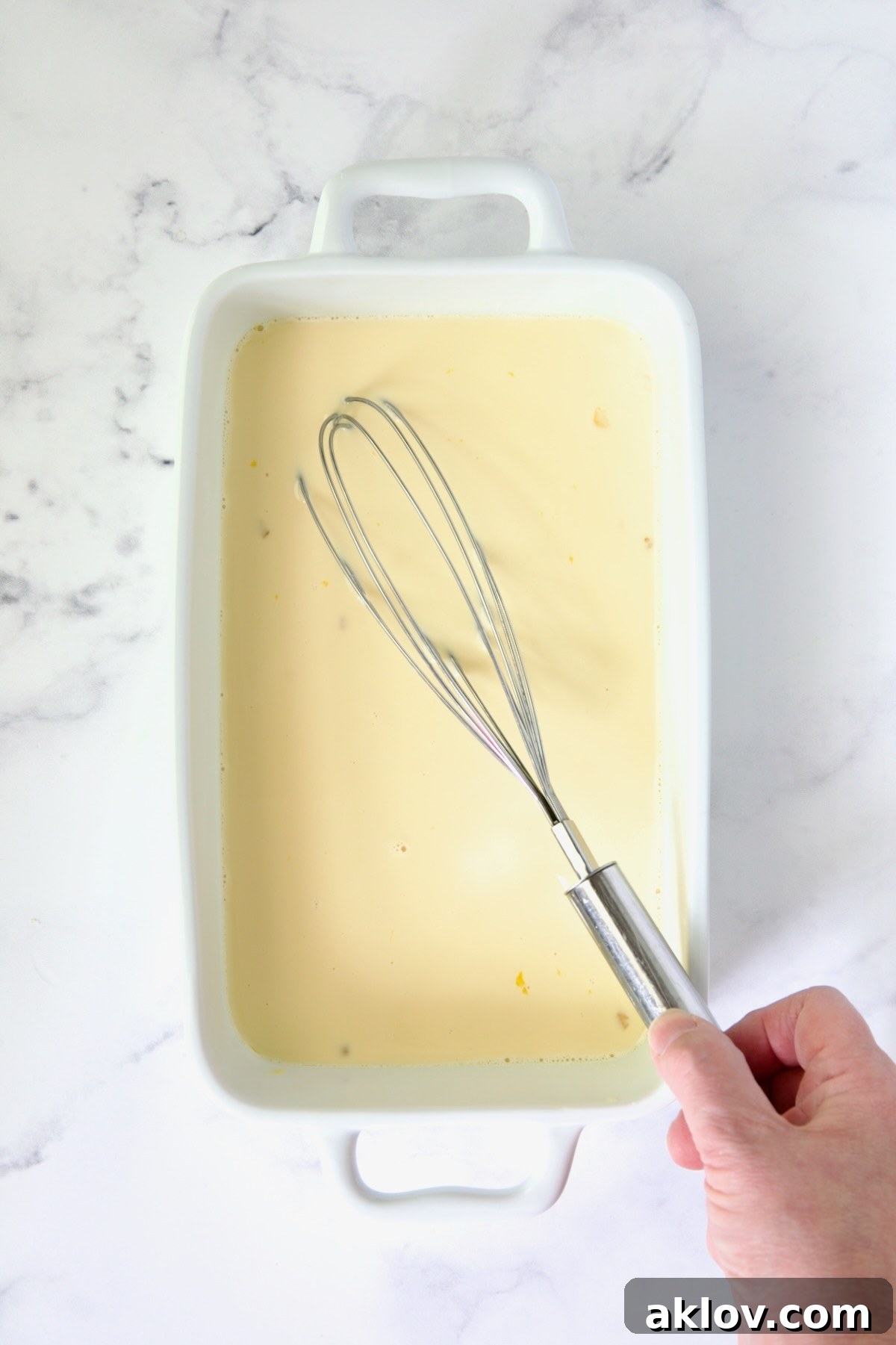
- Step 3: Craft the Custard. In a shallow dish (a pie plate or a baking dish works well), whisk the large eggs until they are thoroughly beaten and well combined. Then, add the half-and-half, honey, pure vanilla extract, and a small pinch of salt. Continue whisking diligently until the honey has completely dissolved into the mixture, creating a smooth, uniform custard.
- Step 4: Soak the Brioche. Work with two slices of brioche bread at a time to avoid overcrowding. Gently place them into the egg mixture and allow them to soak for approximately 15 seconds on each side. Brioche is highly absorbent, so this short soaking time is usually sufficient to imbue the bread with flavor without making it overly saturated and prone to falling apart.
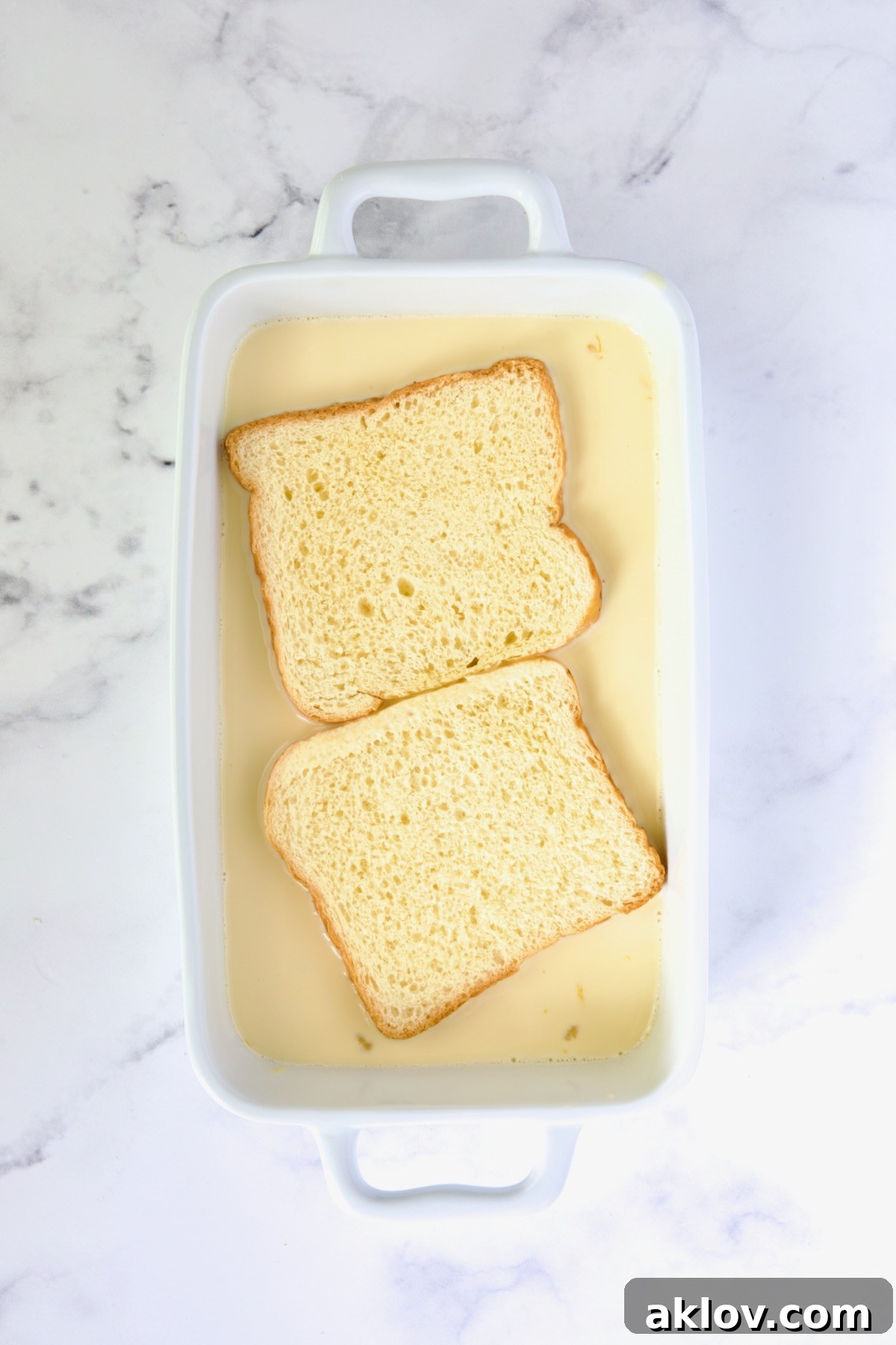
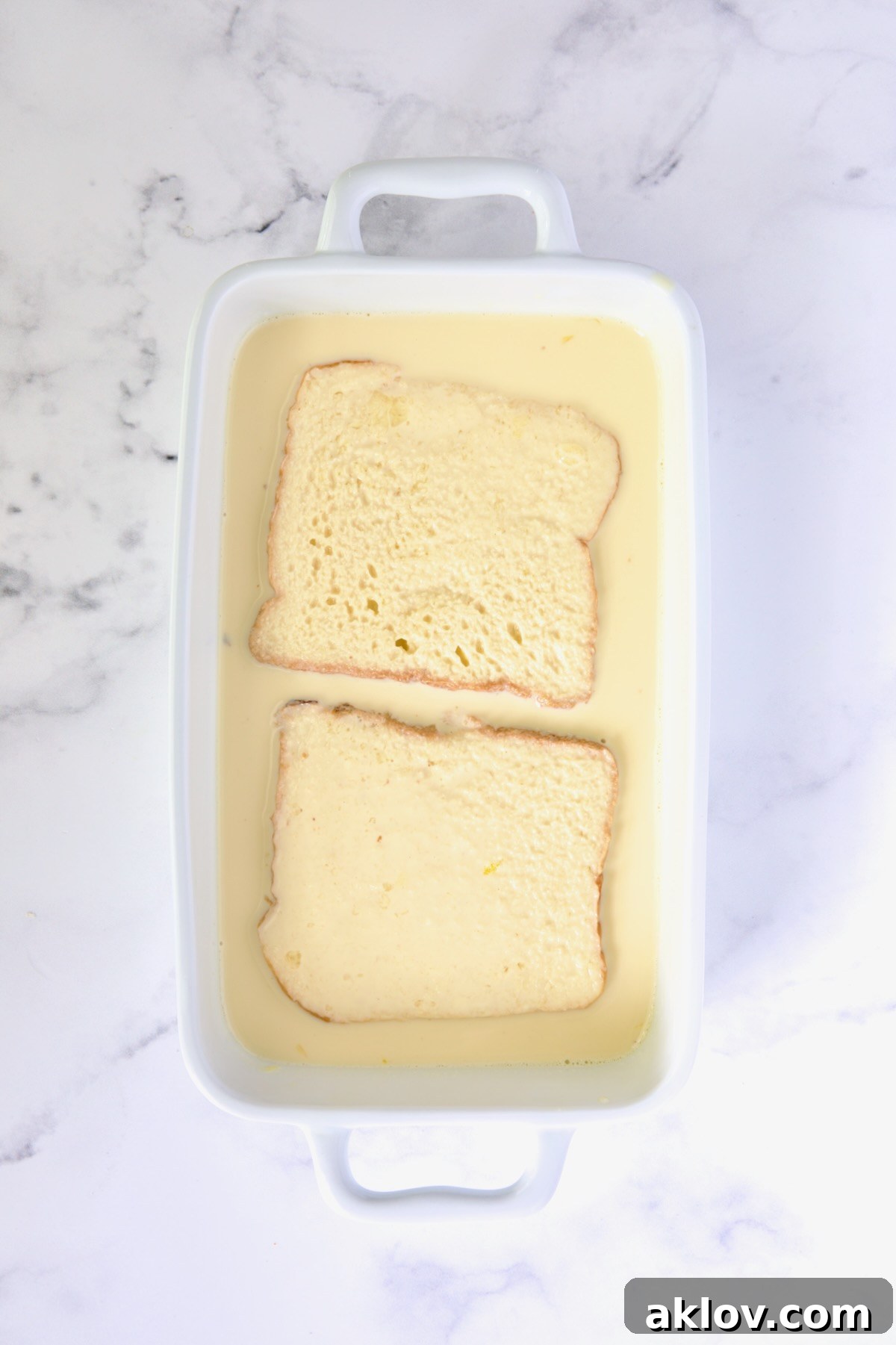
- Step 5: Heat the Skillet. Place a nonstick skillet or griddle over medium-low heat. Add about 1 tablespoon of unsalted butter. Allow the butter to melt and gently foam. The foaming indicates that the water in the butter is evaporating and the butter is ready for cooking, but be careful not to let it brown too much before adding the bread.
- Step 6: Cook to Golden Perfection. Carefully transfer the soaked brioche slices to the heated skillet. Cook them until they achieve a beautiful golden-brown color on the first side, which typically takes about 2 to 3 minutes. Then, flip the slices and cook them for another 2 to 3 minutes on the second side, until both sides are evenly golden and cooked through.
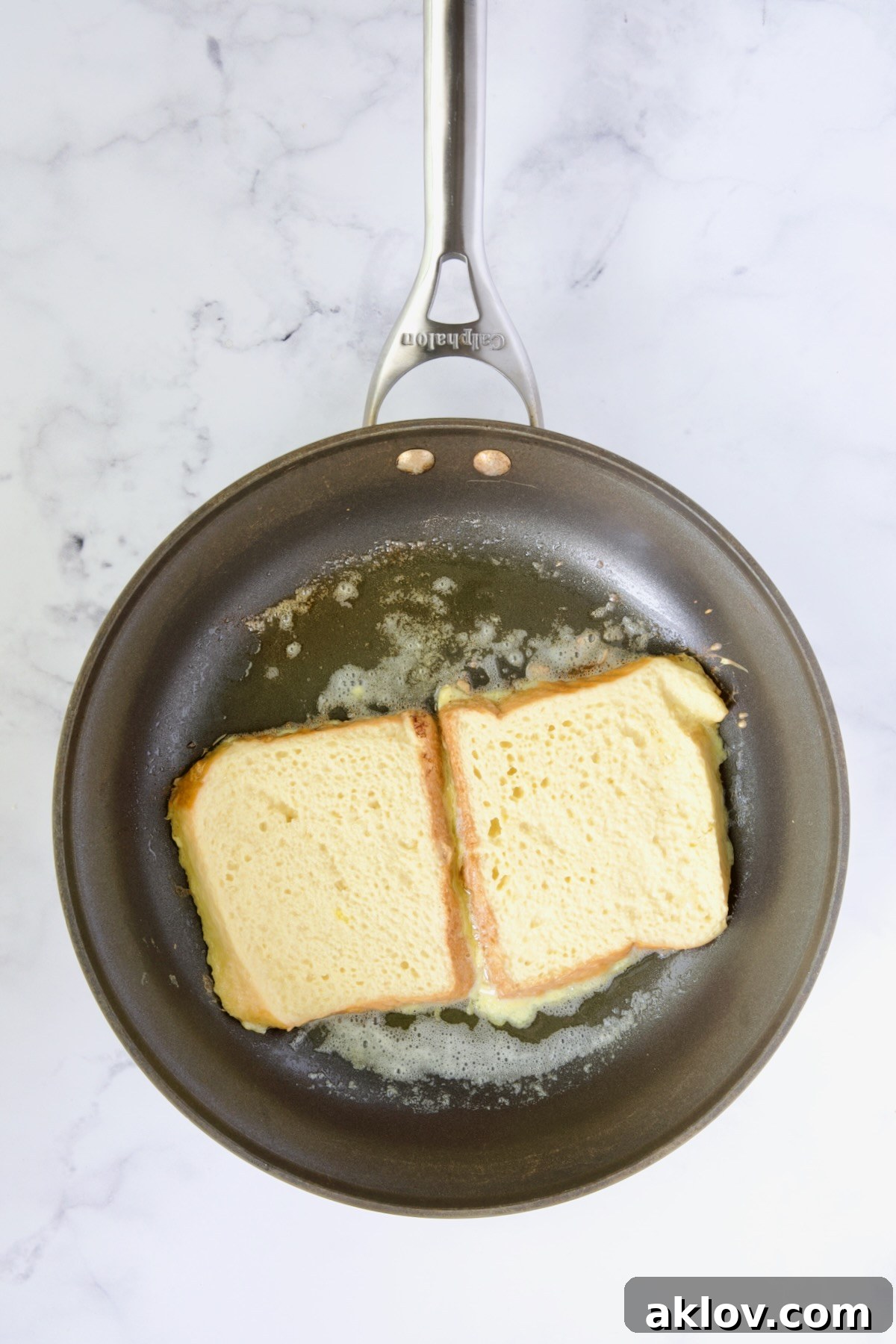
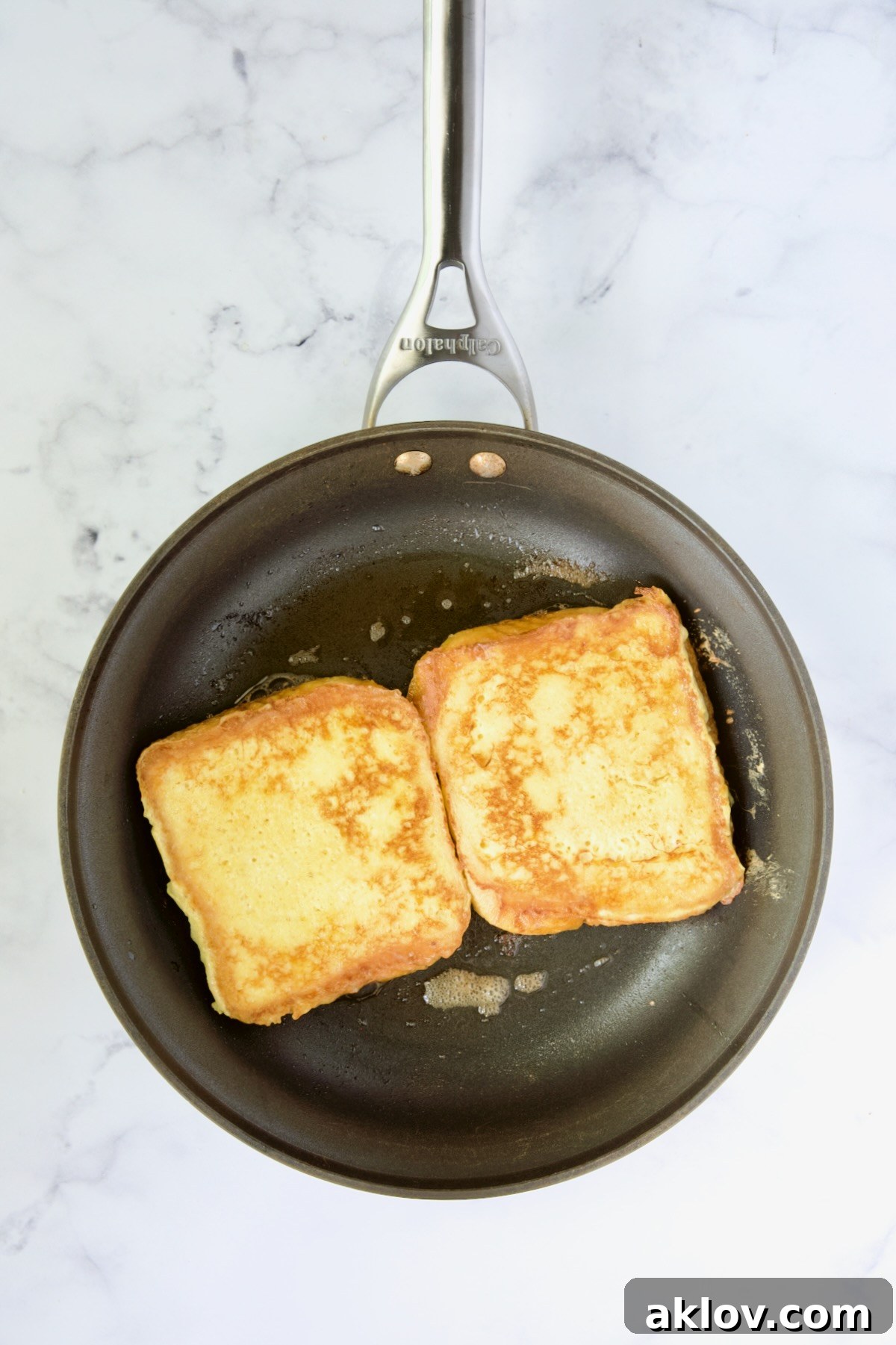
- Step 7: Keep Warm. Once cooked, transfer the finished French toast slices to the prepared cooling rack on the sheet pan and place them into the preheated 200-degree F oven. This keeps them warm and slightly crisp while you finish the remaining batches.
- Step 8: Repeat. Using a paper towel, carefully wipe out any browned butter bits from the skillet. This prevents them from burning and adhering to subsequent batches. Add another tablespoon of butter and repeat the soaking and cooking process with the remaining brioche slices and custard mixture until all your French toast is cooked.
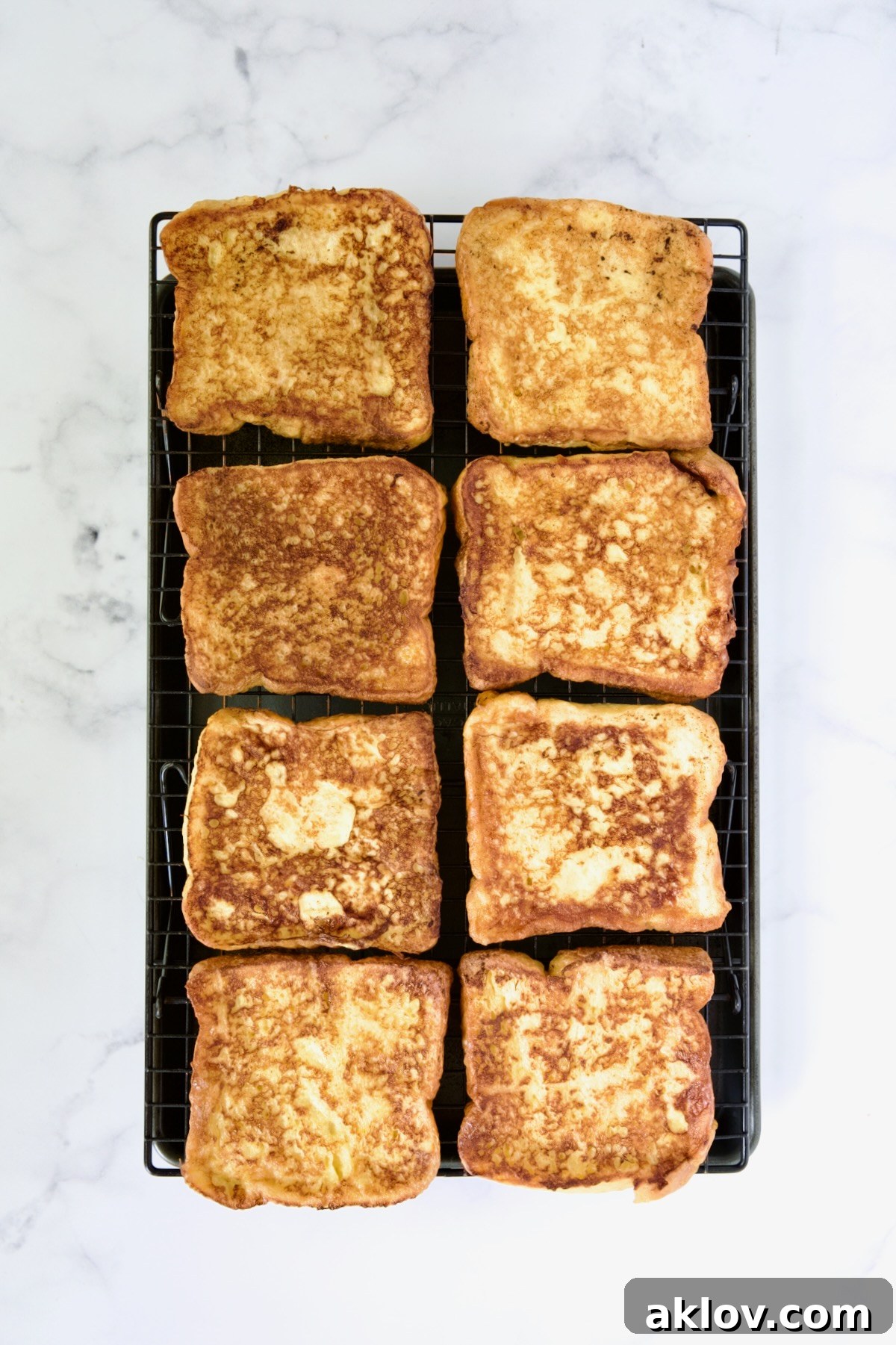
- Step 9: Serve and Enjoy! Serve your exquisite Brioche French Toast immediately. Garnish generously with a pat of butter, an abundance of fresh fruit, a generous drizzle of maple syrup, and a delicate dusting of powdered sugar. Prepare for smiles and compliments!
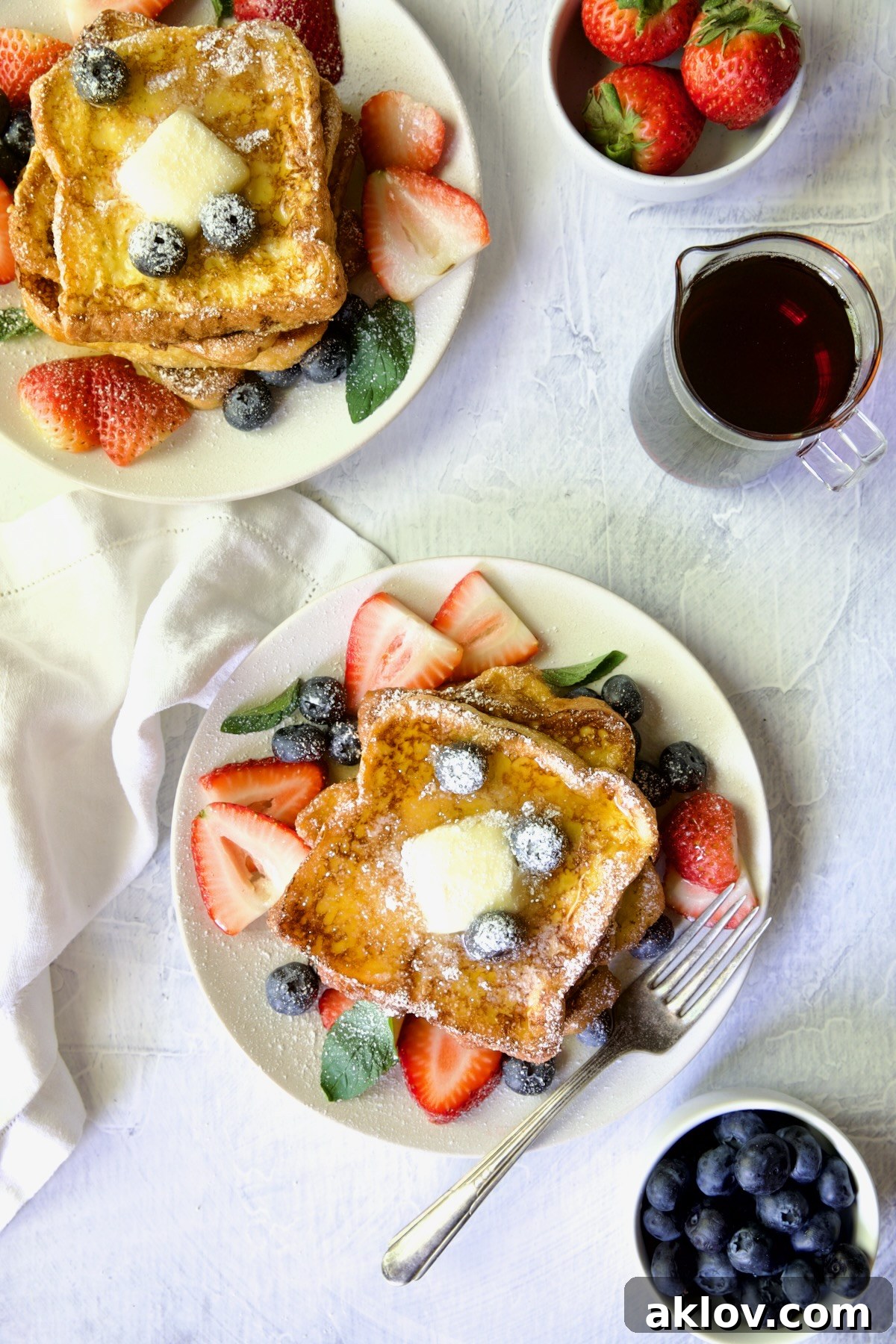
Expert Chef Tips & Tricks for Flawless French Toast
- The Power of Stale Bread: This is arguably the most important tip! Always use stale or “day-old” brioche bread. Fresh bread contains too much moisture and will quickly turn soggy and fall apart when dipped in the custard. If your brioche isn’t stale, you can quickly achieve this by laying the slices in a single layer on a baking sheet, preheating your oven to 275 degrees Fahrenheit (135°C), and baking them for 10-15 minutes, or until slightly dry to the touch. Alternatively, simply leave the brioche slices out on a cooling rack on your kitchen counter overnight.
- Mastering the Heat: The key to golden-brown perfection without burning is to maintain a consistent medium to medium-low heat on your skillet or griddle. High heat will quickly burn the exterior of the brioche (especially due to its sugar content) before the interior has a chance to cook through and become custardy. Be patient and cook gently.
- Clean Skillet, Clean French Toast: After each batch of French toast, take a moment to wipe out your skillet with a paper towel. As butter cooks, its milk solids can brown and even burn, leaving dark specks on your beautiful French toast. A quick wipe ensures each new batch cooks in clean butter, resulting in a pristine golden finish.
- Preventing Soggy Bottoms: The cooling rack set over a rimmed baking sheet is a game-changer. By placing your finished French toast on the rack and keeping it warm in the oven, you allow air to circulate around all sides. This prevents steam from condensing underneath the slices, which can lead to undesirable sogginess.
- Uniform Slices for Even Cooking: Aim for brioche slices that are about 1/2 to 3/4 inch thick. Slices that are too thin might become overly saturated and fall apart, while slices that are too thick might not cook through properly in the center, leaving a dry or unflavored core.
- Flavor Variations: Don’t be afraid to experiment! Add a pinch of cinnamon, nutmeg, or cardamom to your custard for a warmer spice profile. A touch of orange zest can also brighten the flavors beautifully.
- Prepping Ahead: While it’s best to cook French toast fresh, you can prepare the custard mixture up to 12 hours in advance. Simply cover it and refrigerate. Give it a good whisk again before dipping your bread.
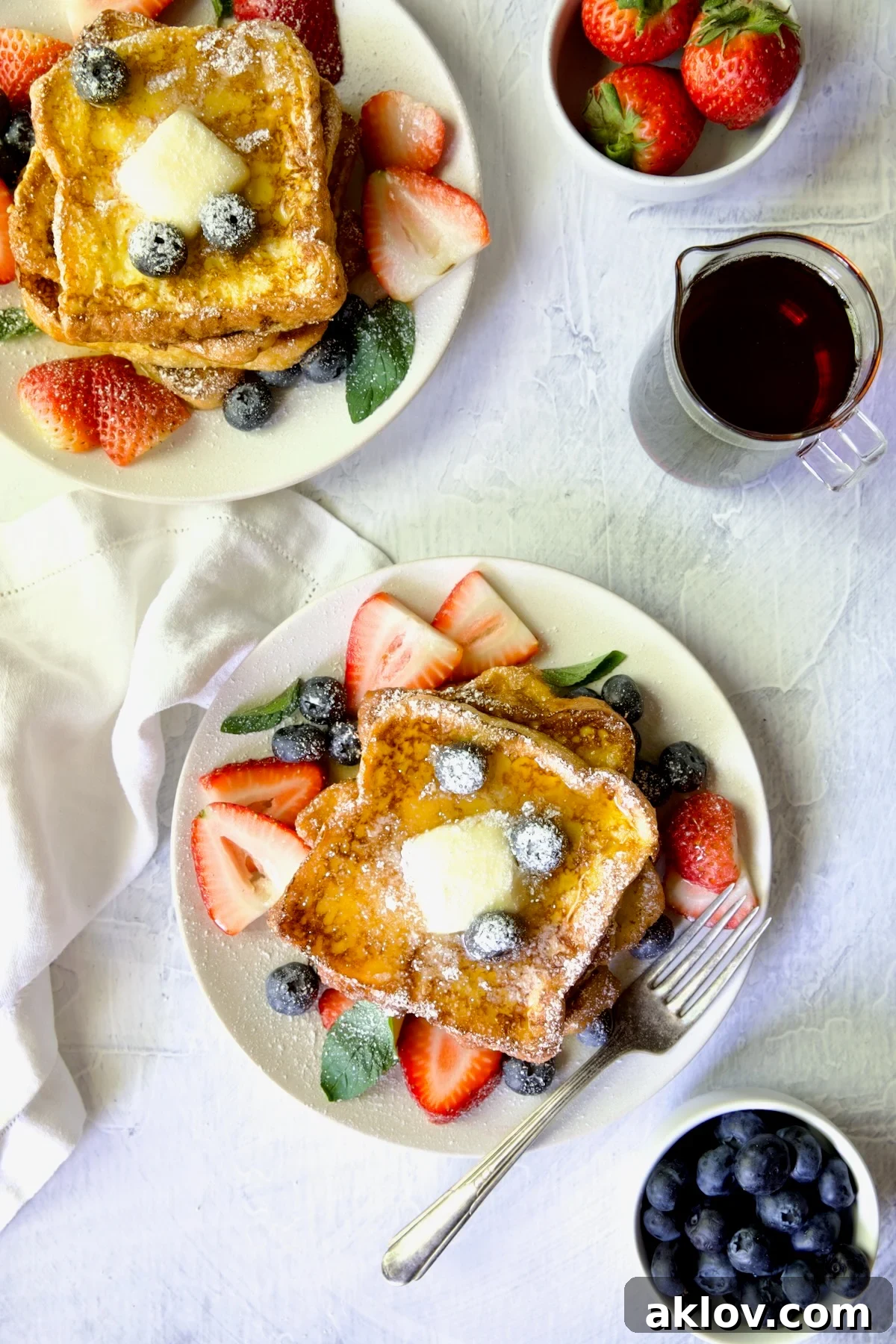
Frequently Asked Questions About Brioche French Toast
What makes brioche the best choice for French toast?
Brioche stands out due to its enriched dough, which contains a higher percentage of eggs and butter compared to standard bread. This results in an incredibly tender, soft, and slightly sweet crumb that readily absorbs the custard mixture without becoming mushy. When cooked, it develops a perfectly crisp, golden exterior and a rich, custardy interior, offering a truly decadent French toast experience that other breads often can’t match.
Can I use different types of bread for French toast?
Absolutely! While brioche is our top recommendation for its luxurious qualities, several other breads make excellent French toast. Challah bread, with its rich, eggy texture, is a fantastic alternative. A sturdy sourdough can offer a delightful tang, while Texas toast, known for its thick slices, is great for a hearty French toast. Even a good quality French baguette can work well, offering a slightly chewier texture. The key is to use slightly stale bread, regardless of the type, to prevent sogginess.
How do I prevent my French toast from becoming soggy?
Preventing soggy French toast involves a few key steps. First, ensure your brioche is stale or day-old; fresh bread absorbs too much liquid. Second, don’t oversoak the bread – 15-20 seconds per side is usually sufficient for brioche. Third, cook at medium-low heat to ensure the inside cooks fully without burning the outside. Lastly, place cooked slices on a wire rack set over a baking sheet in a warm oven (200°F/93°C) while you finish the other batches. This allows air circulation and prevents steam from making the bottoms soggy.
Can I prepare Brioche French Toast ahead of time?
Yes, there are a couple of ways! You can prepare the custard mixture up to 12 hours in advance and store it covered in the refrigerator. When ready to cook, give it a good whisk. For a make-ahead baked version, dip the bread slices and arrange them in a greased baking dish, slightly overlapping like fallen dominoes. Pour any remaining custard over the bread, cover, and refrigerate overnight. When ready to bake, preheat your oven to 350 degrees Fahrenheit (175°C) and bake for 35 to 45 minutes, or until golden brown and a knife inserted near the center comes out clean. This method is perfect for feeding a crowd!
How do you properly freeze and reheat Brioche French Toast?
To freeze, arrange cooled, cooked French toast slices in a single layer on a parchment paper-lined rimmed baking sheet. Place in the freezer until solid (about 1-2 hours). Once frozen, transfer the individual slices to an airtight container or freezer-safe zipper-top bag. They can be stored in the freezer for 2 to 3 months. To reheat, you can use a toaster, toaster oven, or conventional oven. For the oven, preheat to 375 degrees Fahrenheit (190°C), place frozen slices on a baking sheet, cover loosely with aluminum foil, and heat for 10-15 minutes, or until heated through.
What are the best toppings for Brioche French Toast?
The possibilities are endless! Classic toppings include maple syrup, powdered sugar, fresh fruit (berries, sliced bananas, peaches), and whipped cream. For an extra touch of indulgence, consider chocolate sauce, fruit compotes (like raspberry or blueberry), a sprinkle of chopped nuts (pecans, walnuts), a dollop of Greek yogurt, or even a drizzle of caramel sauce. You can also get creative with savory elements like crispy bacon or sausage for a sweet and savory balance.
Is there a way to make this recipe healthier?
While Brioche French Toast is inherently indulgent, you can make minor adjustments. Use whole milk instead of half-and-half for a slightly lower fat content. Reduce the amount of honey or use a natural sugar substitute if desired. Focus on topping with plenty of fresh fruit, and go lighter on the maple syrup or powdered sugar. Serve with a side of plain Greek yogurt for added protein and fewer calories than whipped cream. These small changes can help balance the richness without sacrificing too much flavor.
Storage Guidelines
- Refrigerator: Leftover Brioche French Toast can be stored in an airtight container in the refrigerator for up to 2-3 days. Reheat gently in a toaster, microwave, or oven for best results.
- Freezer: For longer storage, cooked French toast slices can be frozen for up to 2-3 months. Follow the detailed freezing instructions provided in the FAQ section for optimal results.
Perfect Pairings: What to Serve with Your Brioche French Toast
To complete your luxurious breakfast or brunch spread, consider pairing your decadent Brioche French Toast with these delightful additions:
- Creamy yogurt or Greek yogurt for a touch of tang.
- Crispy bacon or savory breakfast sausage for a sweet and savory balance.
- A refreshing Summer Fruit Salad with Orange-Vanilla Yogurt Dressing.
- A slice of Easy Raspberry Coffee Cake for an extra sweet treat.
- Homemade Chocolate and Zucchini Muffins.
- A freshly brewed cup of coffee or a vibrant glass of orange juice.
Explore More Delicious Breakfast & Brunch Recipes You’ll Love!
If you enjoyed this indulgent French toast, be sure to explore more of our easy and delicious breakfast and brunch creations:
- Eggs in Purgatory
- Savory Breakfast Strudel
- Sausage Egg Muffins
- Crustless Quiche with Sausage Bacon and Ham
Find all our incredible breakfast and brunch recipes at: Breakfast and Brunch – From a Chef’s Kitchen
Decadent Brioche French Toast
By Carol | From A Chef’s Kitchen
Brioche French Toast is a luxurious and indulgent twist on the breakfast classic. Made with rich, buttery brioche bread, it has a melt-in-your-mouth texture and a slightly sweet vanilla-infused flavor. Serve with a drizzle of maple syrup, fresh berries, a dusting of powdered sugar, or whipped cream to start your day on a decadent note!
Prep Time: 10 mins
Cook Time: 20 mins
Total Time: 30 mins
Servings: 4
Equipment
- Glass Mixing Bowls
- Whisk
- 11 x 7 Baking Dish
- Nonstick Griddle or Skillet
- Cooling Racks
- Rimmed Sheet Pan
Ingredients
- 8 slices (1/2-inch thick) brioche bread, stale
- 3 large eggs
- 1 cup half-and-half
- 2 tablespoons honey
- 1 teaspoon pure vanilla extract
- Pinch salt
- 4 tablespoons unsalted butter, plus more for serving
- Strawberries and blueberries or other fresh fruit (for serving)
- Maple syrup (for serving)
- Powdered sugar (for serving)
Instructions
- Preheat oven to 200 degrees Fahrenheit (93°C).
- Place a cooling rack on a rimmed sheet pan; this will hold the finished French toast and keep it warm.
- In a shallow dish, whisk the eggs until well beaten. Add the half-and-half, honey, vanilla, and a pinch of salt, then whisk thoroughly until the honey has fully dissolved.
- Working with two pieces of brioche at a time, place them in the egg mixture and let them soak for 15 seconds on each side.
- Heat 1 tablespoon of unsalted butter in a nonstick skillet or griddle over medium-low heat until the butter melts and begins to foam.
- Add the soaked brioche slices to the skillet and cook until golden brown on the first side (2 to 3 minutes). Flip and cook for another 2 to 3 minutes on the other side.
- Transfer the cooked French toast to the prepared cooling rack on the sheet pan and place it in the preheated oven to keep warm.
- Wipe the skillet clean with a paper towel and repeat the process with the remaining butter, brioche slices, and custard until all French toast is cooked.
- Serve immediately, topped with butter, fresh fruit, maple syrup, and powdered sugar.
Recipe Notes
SUBSTITUTIONS:
- You can substitute whole milk for half-and-half if you prefer a slightly lighter option.
TIPS:
- If your brioche slices are not already stale, lay them out in a single layer on a sheet pan. Preheat your oven to 275 degrees Fahrenheit (135°C) and bake the bread for 10-15 minutes, or until slightly dried. Alternatively, leave the brioche slices on a cooling rack overnight on your counter.
- Maintain medium-low heat to prevent burning, as brioche browns quickly due to its sugar content.
- Wipe the skillet clean between batches to remove browned butter solids and ensure a pristine finish.
- Using a cooling rack over a baking sheet in the oven helps keep French toast warm without becoming soggy.
MAKE AHEAD:
- The custard mixture can be prepared up to 12 hours in advance. Cover and refrigerate, then whisk well before use.
Estimated Nutrition
Nutritional values are automatically calculated using unbranded products and are estimates only. Actual results may vary based on ingredients used and portion sizes. Adjust as needed for dietary restrictions, allergies, or health concerns.
- Serving: 1 slice
- Calories: 277 kcal
- Carbohydrates: 13g
- Protein: 7g
- Fat: 22g
- Saturated Fat: 13g
- Polyunsaturated Fat: 1g
- Monounsaturated Fat: 6g
- Trans Fat: 0.5g
- Cholesterol: 194mg
- Sodium: 190mg
- Potassium: 142mg
- Fiber: 0.02g
- Sugar: 11g
- Vitamin A: 784 IU
- Vitamin C: 1mg
- Calcium: 91mg
- Iron: 1mg

Like this recipe? Leave a comment or share your thoughts!