
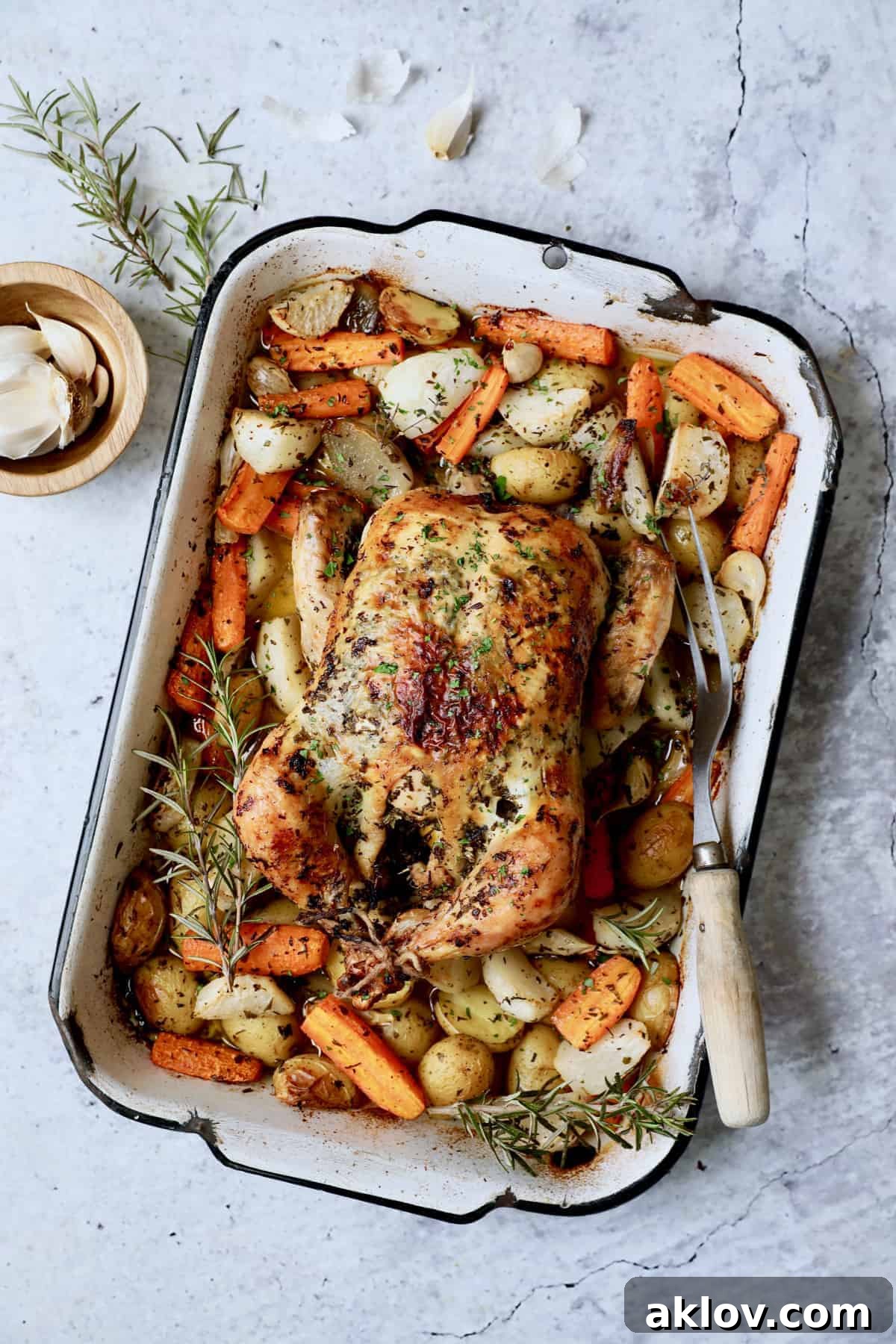
Transform your dinner table with a dish that exudes rustic elegance and incredible flavor: our Garlic Herb Butter Roast Chicken with Root Vegetables. This impressive yet delightfully simple one-pan meal features a whole chicken generously rubbed with a zesty lemon-infused herb butter, then roasted to perfection alongside a medley of earthy root vegetables. Imagine golden-crisp skin, succulent meat, and tender, caramelized vegetables all emerging from the oven in one glorious pan, promising a memorable meal with minimal fuss.
“The combination of fresh herbs, lemon, and butter was absolutely delicious. The chicken was so moist and tender, and making it all in one pan is a definite plus for busy weeknights and special gatherings alike!”
Why This One-Pan Roast Chicken is a Culinary Keeper
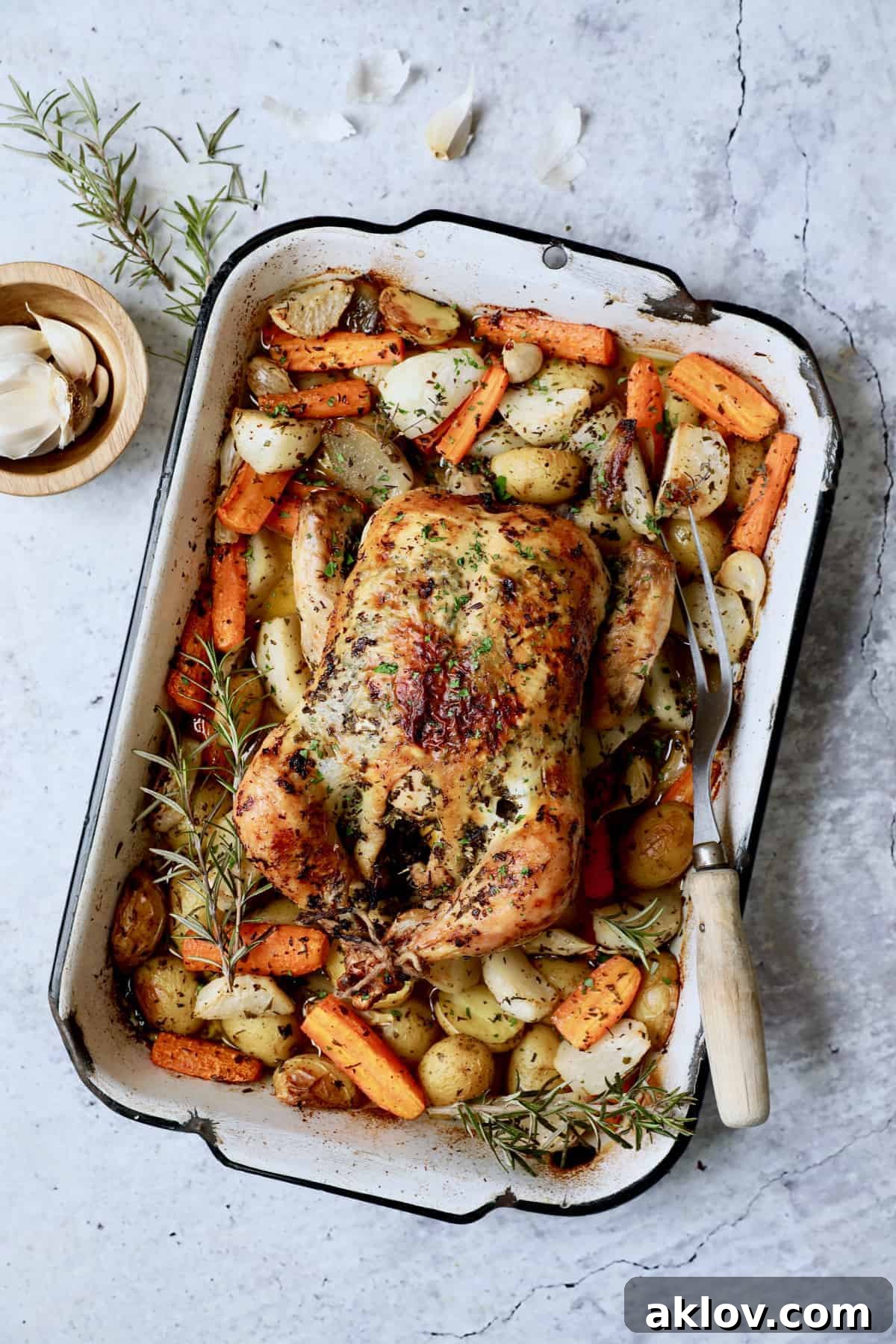
There’s an undeniable magic that happens when a whole chicken roasts in the oven. Especially during the colder months, the warmth emanating from the kitchen and the captivating aroma filling your home are truly therapeutic. This isn’t just a meal; it’s an experience – a culinary work of art that promises rich golden color, glistening juices, and the irresistible allure of crispy, crackling skin. The simplicity of a one-pan dish means less time spent on cleanup and more time enjoying the company of family and friends.
Beyond its aesthetic appeal and comforting presence, this recipe stands out for its sheer ease and remarkable versatility. Roasting a whole chicken might seem daunting, but we’ll guide you through a super easy process that anyone can master, from novice cooks to seasoned chefs. What’s more, a whole roasted chicken often yields more than just a single meal. The flavorful leftovers can be transformed into quick and delicious sandwiches, vibrant salads, hearty tacos, or comforting soups. The bones, rich with roasted flavor, can be used to create a deeply nourishing homemade chicken stock, ensuring nothing goes to waste and extending the value of your efforts.
This particular recipe draws inspiration from culinary icons, ensuring a foundation of well-balanced flavors and proven techniques that guarantee success. It’s a dish that impresses with minimal fuss, making it perfect for elegant dinner parties or a cozy family night in. The harmonious blend of tender chicken and caramelized root vegetables offers a complete meal in itself, celebrating wholesome ingredients. For those looking for a slightly scaled-back version, perhaps for a smaller gathering or a quicker weeknight meal, be sure to explore our Roast Split Chicken Breasts with Potatoes and Shallots, offering similar comforting flavors with a reduced cook time.
Choosing the Perfect Chicken for Your Roast
The success of any roasted chicken dish begins with selecting the right bird. Understanding the different types readily available at your local grocery store can significantly impact the final texture, flavor, and cooking time of your meal. Here’s a quick overview of common chicken types and why one stands out for roasting:
- Broilers: These are young chickens, typically 6-8 weeks old, weighing approximately 2.5 pounds. Their meat is very tender, making them ideal for quick cooking methods like grilling, broiling, or frying.
- Fryers: Similar to broilers in age (6-8 weeks) but slightly larger, usually weighing between 2.5 to 3.5 pounds. Like broilers, their tender meat makes them excellent for frying.
- Roasters: These chickens are generally under 8 months old and weigh between 3.5 and 5 pounds. Their larger size and more developed muscle structure mean they have a slightly higher fat content and can withstand longer cooking times without drying out. This results in a richer flavor, more succulent meat, and beautifully crispy skin, making them the superior choice for roasting whole.
- Stewing Chickens: These are older chickens, typically hens, that are over 10 months old and weigh 5-7 pounds. Their meat is considerably tougher and leaner, requiring slow, moist cooking methods like stewing, braising, or pressure cooking to become tender.
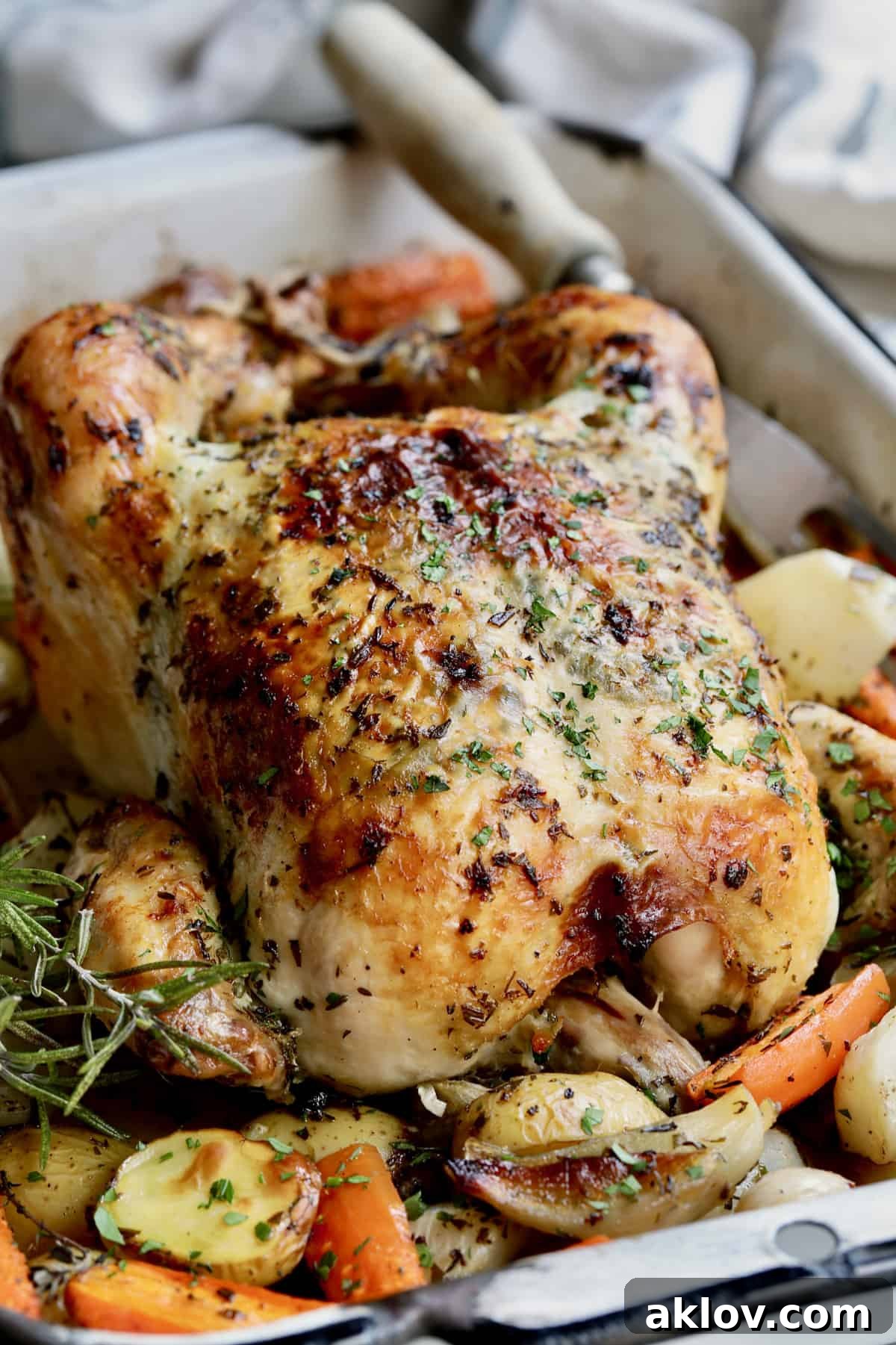
For this Garlic Herb Butter Roast Chicken recipe, we highly recommend using a 4 to 4.5-pound roasting chicken. This specific size is ideal for achieving a perfectly cooked interior and wonderfully crispy skin within a reasonable roasting time, typically between 1 hour to 1 hour 15 minutes. Opting for organic, free-range, or at the very least, hormone and antibiotic-free chicken, will not only provide superior flavor but also contributes to a more ethical and healthier meal.
It’s important to stick to the recommended size. Using a chicken that is too large (over 5 pounds) will necessitate a significantly longer roasting period. This extended time can unfortunately lead to the breast meat becoming dry and overcooked, compromising the overall juiciness of the bird. Furthermore, with a larger chicken, the root vegetables in the pan might get overcooked or even burnt unless you strategically add them later in the roasting process, which adds an extra step and detracts from the convenience of a true one-pan meal. A 4 to 4.5-pound bird strikes the perfect balance for even cooking, tender results, and an effortless roasting experience.
Mastering Garlic Herb Butter Roast Chicken with Root Vegetables
Essential Ingredients for a Flavorful Feast
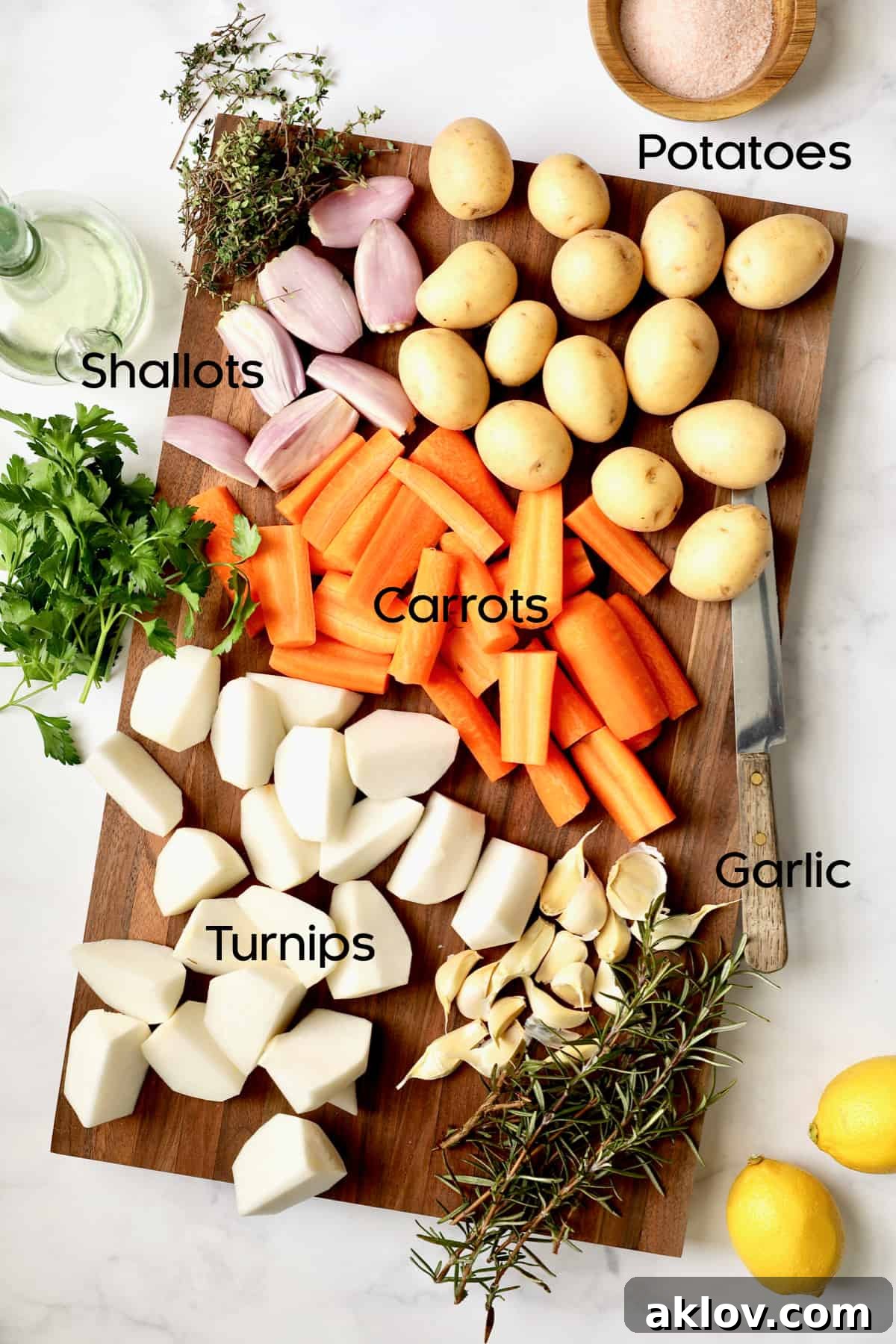
Beyond the perfectly chosen roasting chicken, a selection of fresh, high-quality ingredients is key to unlocking the full potential of this recipe. Each component plays a vital role in building the layers of flavor that make this dish truly special. Here’s a detailed look at everything you’ll need to create this magnificent roasted herbed chicken. For precise measurements and quantities, please refer to the comprehensive recipe card conveniently located further down this page.
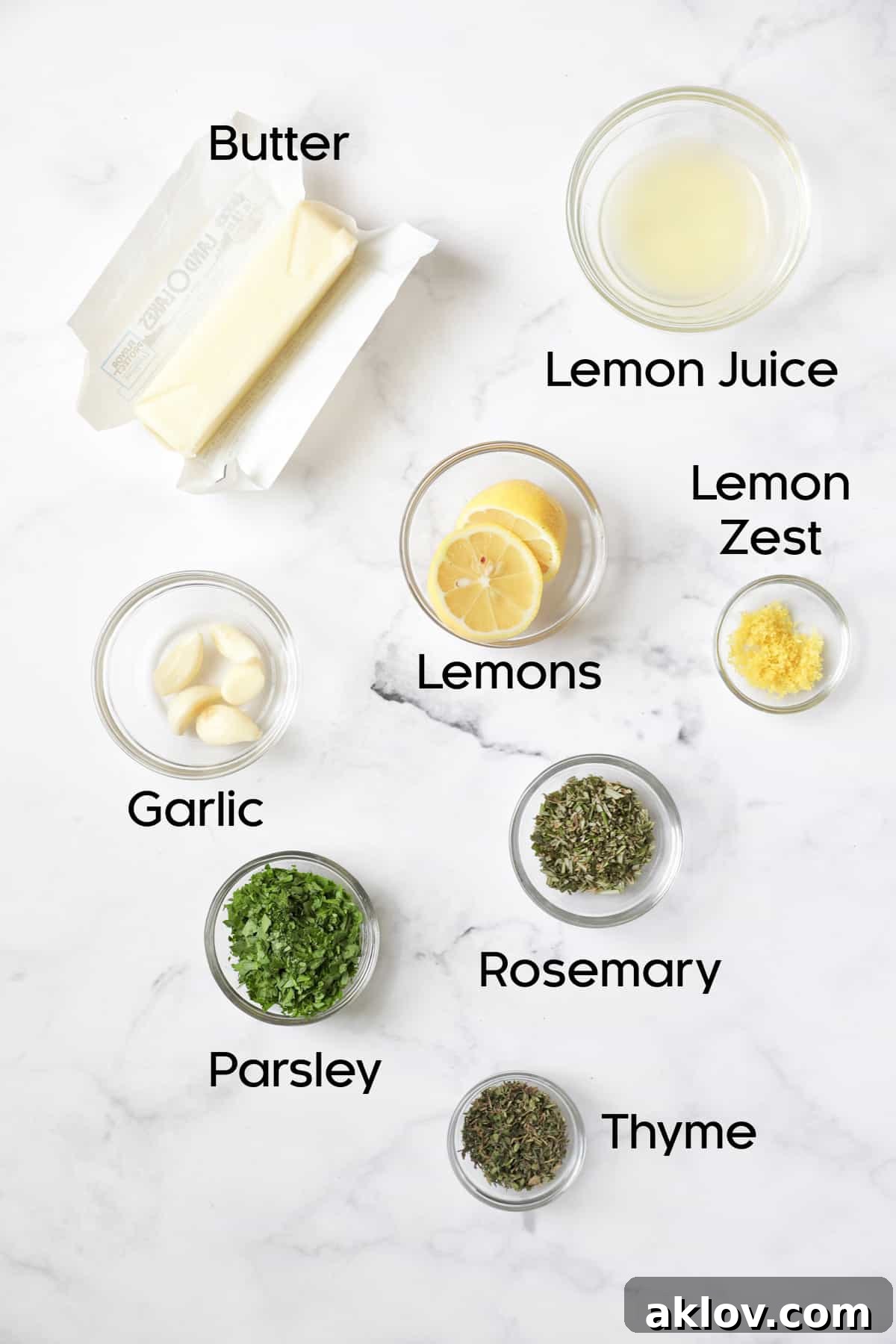
Ingredient Notes, Smart Substitutions, and Flavor Insights
- Potatoes: While we adore the creamy texture and buttery flavor of Yukon Gold potatoes, which roast beautifully and become incredibly tender, feel free to substitute them with other varieties. Red potatoes hold their shape exceptionally well and add a lovely splash of color. Russets will yield a wonderfully fluffy interior, perfect for soaking up pan juices. Delicate fingerlings offer a more gourmet touch. Whichever potato you choose, ensure they are cut into uniform sizes, ideally halved, to promote even cooking.
- Shallots: These elegant members of the onion family are a game-changer in this recipe. Shallots are subtly sweeter and far more delicate in flavor than regular onions, with a hint of garlic. Their unique composition allows them to caramelize beautifully in the oven, creating pockets of intensely sweet and savory flavor that greatly enhance the entire dish. They break down more easily during roasting, practically melting into the pan juices, contributing to a rich, complex undertone.
- Turnips: When selecting turnips, always aim for smaller, younger ones. These tend to be sweeter, have a milder, more pleasant flavor, and a more tender texture when roasted. Larger, older turnips can sometimes develop a slightly bitter aftertaste and a tougher, woodier texture, which you definitely want to avoid for the best results in this roast.
- Garlic: Beyond the five cloves of finely minced garlic incorporated into the herb butter, roasting an entire head of garlic (separated into cloves with the peel on) with the root vegetables allows the individual cloves to soften and sweeten dramatically. They become incredibly mellow and spreadable, transforming into a luxurious roasted garlic spread – a true hidden gem for garlic lovers to enjoy with crusty bread.
- Fresh Herbs: The classic trio of fresh parsley, rosemary, and thyme is chosen for a reason. These fresh herbs infuse the chicken and vegetables with an aromatic complexity and bright flavor that dried herbs simply cannot replicate. Don’t shy away from using generous amounts, as their essence is what truly defines this dish.
- Unsalted Butter: Using unsalted butter gives you complete control over the seasoning of your dish. It forms the base of the luxurious herb butter, ensuring the chicken remains incredibly moist and the skin develops a golden, flavorful crust.
- Lemon: Fresh lemon zest and juice add a crucial brightness and acidity to the herb butter, cutting through the richness of the chicken and balancing the earthy notes of the vegetables. The lemon halves placed inside the chicken cavity infuse it with a subtle citrus aroma.
- Substitutions for Root Vegetables: The beauty of a root vegetable medley lies in its flexibility. If turnips aren’t readily available or aren’t your preference, you can easily use rutabagas for a similar earthy sweetness and firm texture. Red beets will add a vibrant color and a distinct, sweet flavor, while parsnips offer their unique sweet, slightly spicy, and nutty notes. Ensure any substitute vegetables are cut to a similar size as the other components to maintain consistent cooking times.
Step-By-Step Guide to Your Perfect Roast Chicken
Follow these detailed instructions to create a show-stopping Garlic Herb Butter Roast Chicken with Root Vegetables. Precision and a little love will ensure a magnificent result that will impress everyone at your table.
Preparation of Root Vegetables
- Begin by preheating your oven to a robust 400°F (200°C). While the oven heats, allow your whole chicken to rest at room temperature on the counter for at least 30 to 60 minutes. This crucial step helps the chicken cook more evenly and efficiently, resulting in juicier meat.
- Thoroughly wash and prep your chosen root vegetables: halve small or baby Yukon Gold potatoes, peel and quarter medium turnips, peel large carrots and cut them into uniform 2-inch pieces, and peel and quarter large shallots. Separate the head of garlic into individual cloves, leaving the protective peel on each clove.
- Arrange all the prepped root vegetables, including the garlic cloves, in a single layer around the outer edge of a large, sturdy roasting pan. Ensure they are not too crowded to promote even roasting and browning, rather than steaming.
- Drizzle the vegetables generously with 3 tablespoons of olive oil, then season them with a liberal amount of salt and freshly ground black pepper. Toss gently with your hands or a large spoon to ensure all pieces are thoroughly coated.
- In a small bowl, combine 2 tablespoons of chopped fresh parsley, 1 tablespoon of chopped fresh rosemary, and 1 tablespoon of chopped fresh thyme. Take about 1 tablespoon of this aromatic herb blend and sprinkle it evenly over the seasoned root vegetables. This initial seasoning helps build layers of flavor from the start of the cooking process.
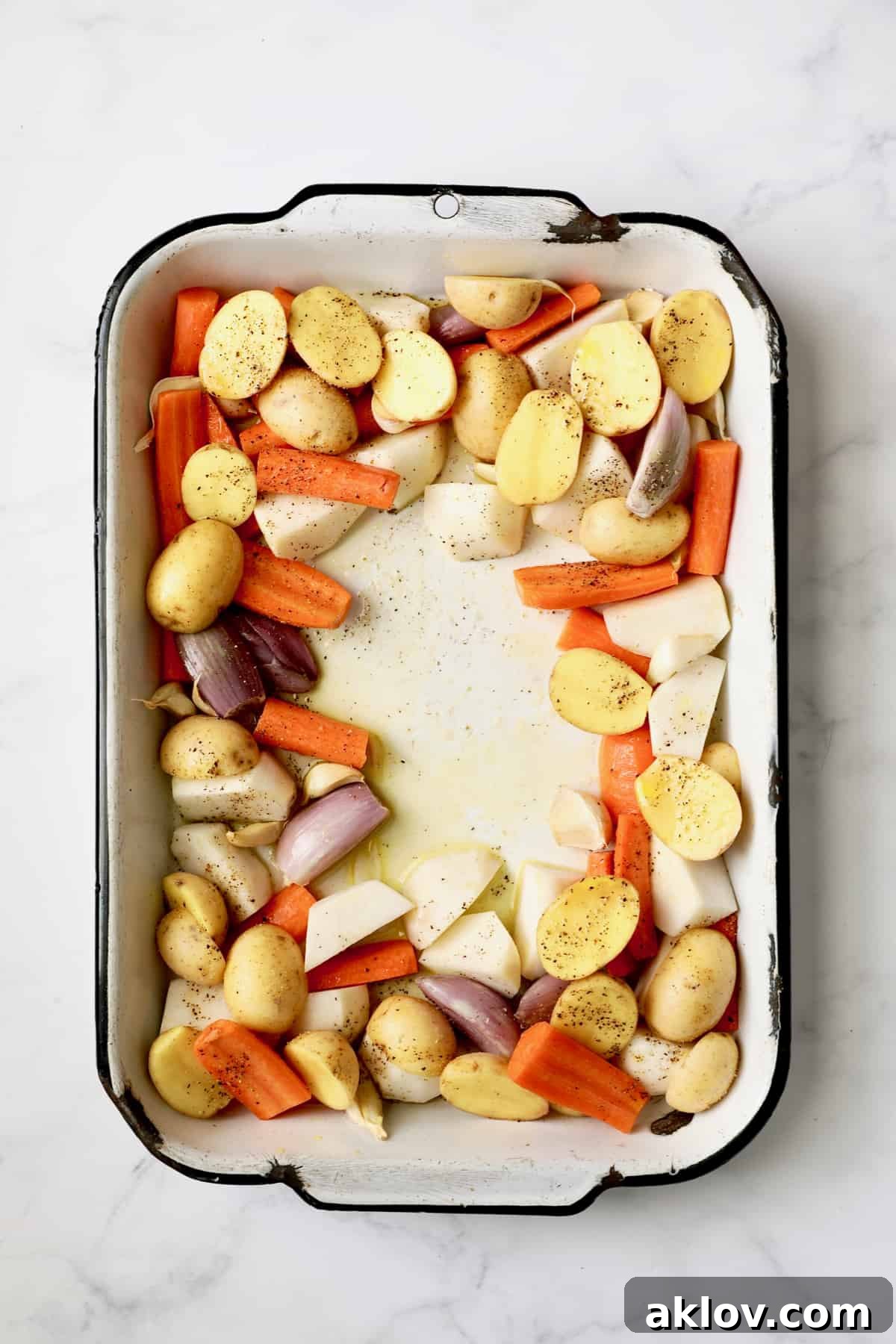
With your vegetables prepped, seasoned, and lightly herbed, it’s time to prepare the star of the show – the chicken – with its irresistible, flavor-packed herb butter coating.
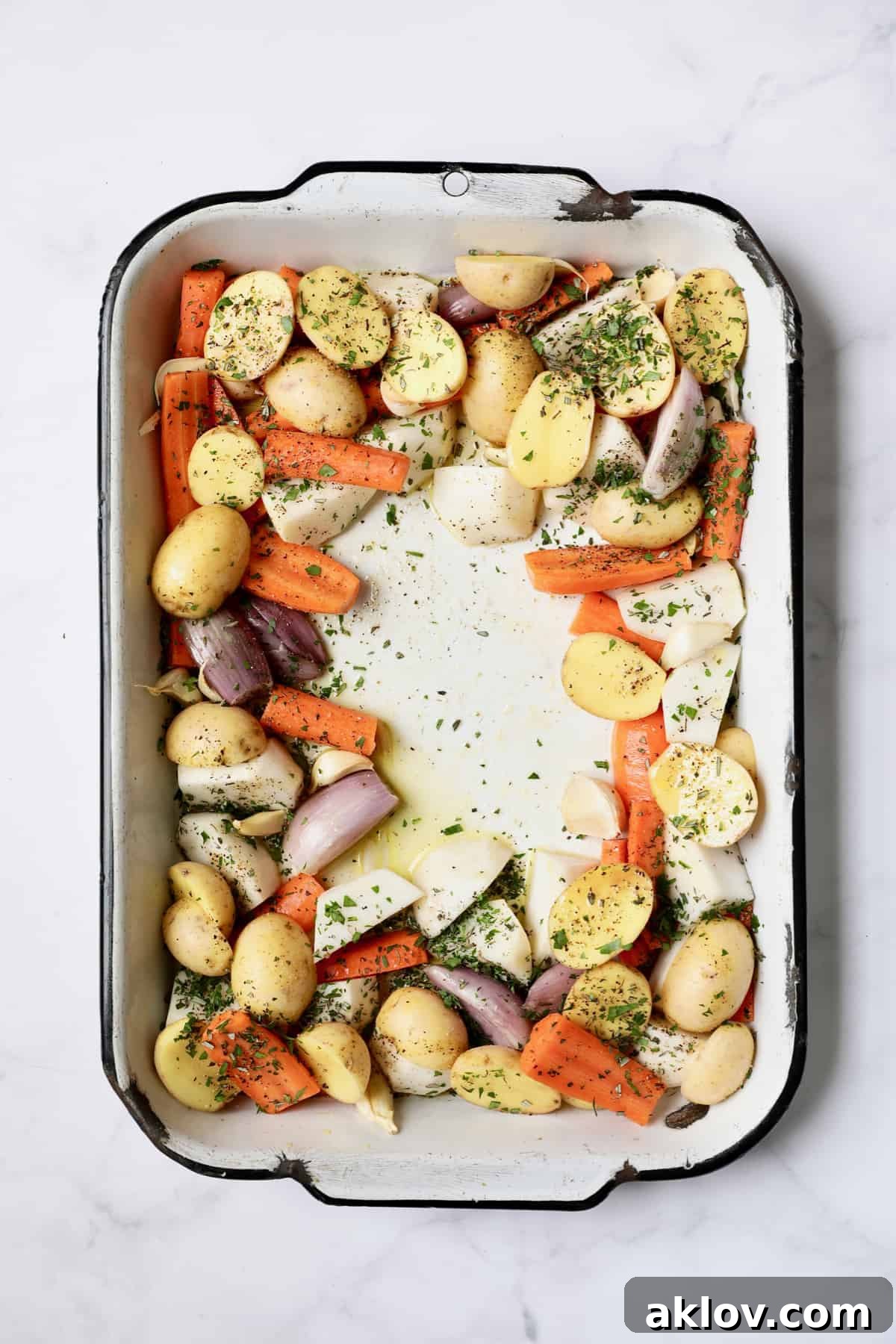
Crafting the Aromatic Herb Butter
- Take the remaining fresh parsley, rosemary, and thyme from your small bowl. To this, add the zest of one small lemon, the juice from half of that lemon, 5 cloves of finely minced garlic, one stick (8 tablespoons) of softened unsalted butter, 1 teaspoon of salt, and freshly ground black pepper to taste.
- Using a fork or a small spatula, mix all these ingredients together thoroughly until they are well combined and form a smooth, fragrant, and vibrant herb butter. This compound butter is the secret to the chicken’s incredible flavor, its beautiful golden-brown color, and its exceptional moisture.
Prepping the Chicken for Roasting
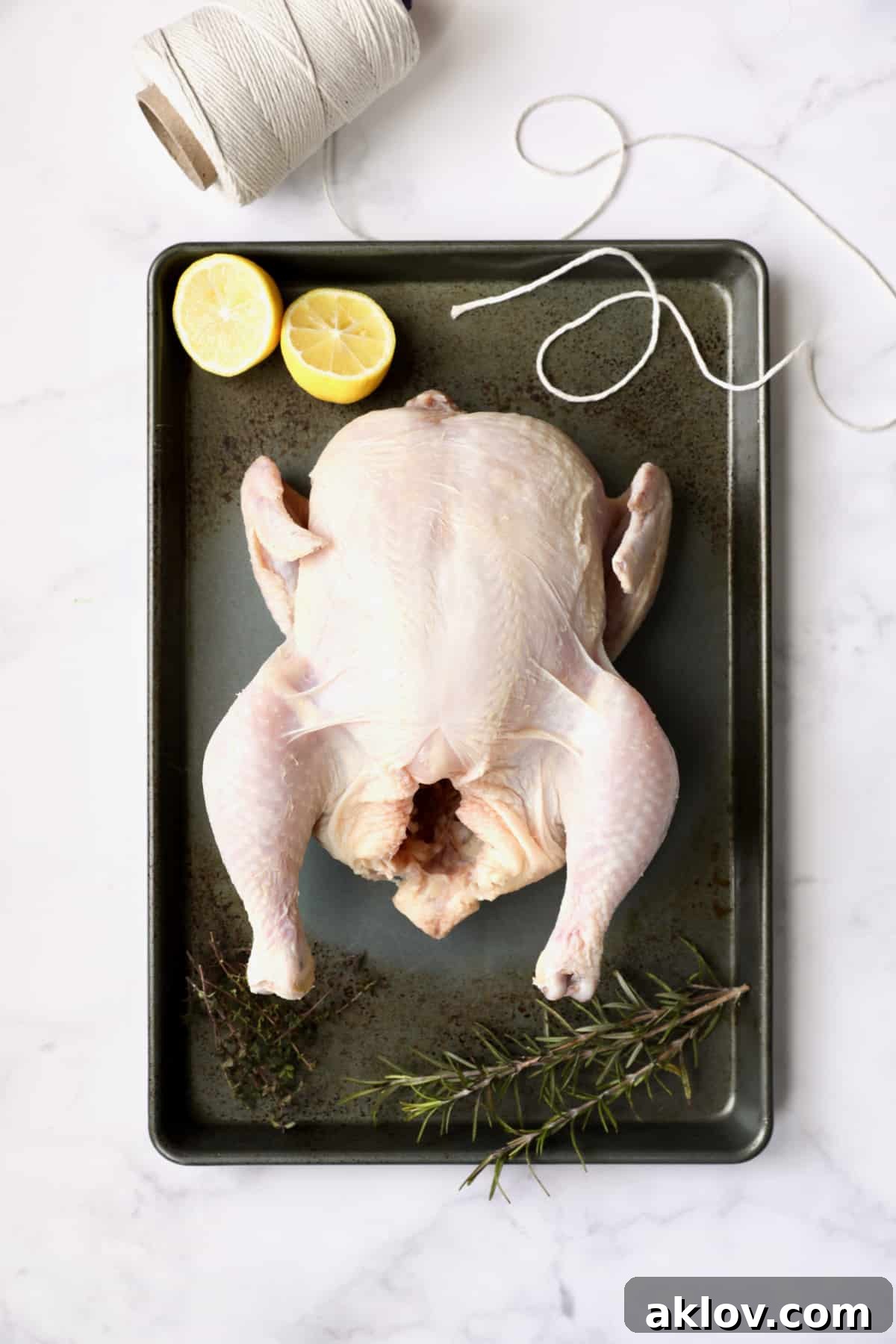
- Before seasoning, ensure your chicken is properly prepared. While some home cooks prefer to wash chicken pieces, it’s generally recommended against washing raw poultry to avoid spreading bacteria. For whole chickens, however, it’s a good practice to thoroughly inspect the cavity for any remaining giblets or “innards” and carefully check the skin for any stray pin feathers or hair-like filoplumes, removing them as necessary for a clean finish.
- Crucially, thoroughly pat the entire chicken dry, inside and out, with paper towels. A dry surface is absolutely essential for achieving that desirable crispy, golden-brown skin. Moisture on the skin will steam rather than crisp.
- Carefully fill the chicken’s cavity with the halved lemon and the sprigs of fresh rosemary and thyme. These aromatics will infuse the chicken with wonderful, subtle flavors from the inside out as it roasts, contributing to its overall deliciousness.
- For a compact and even roast, cross the legs of the chicken and tie them securely together with butcher’s twine. This simple trussing technique helps the chicken cook more uniformly and creates a neater, more appealing presentation on your serving platter.
- Tuck the wing tips under the chicken’s upper back. This prevents them from burning, keeps them moist during the long roasting process, and contributes to a more appealing, compact shape.
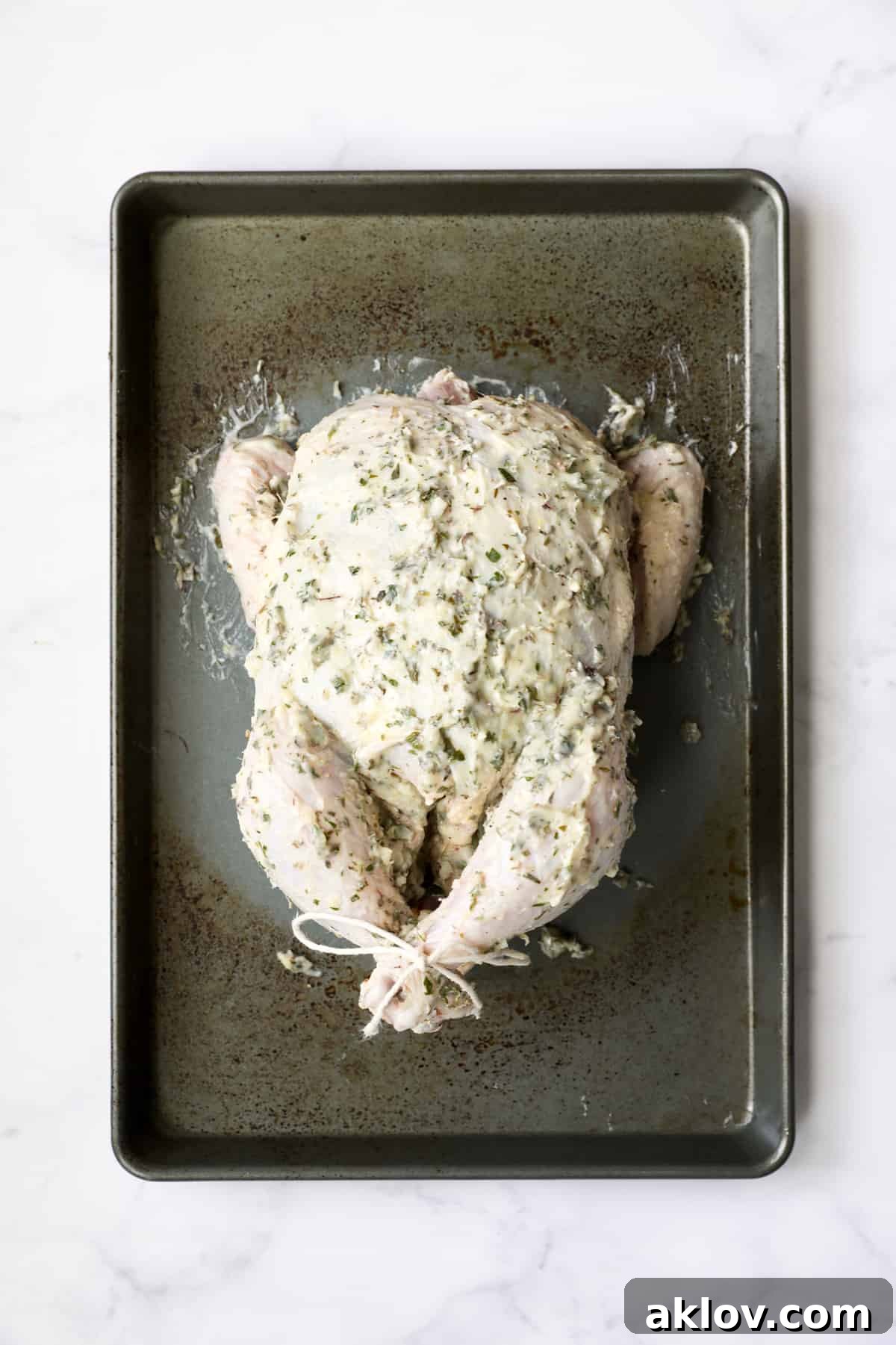
- With clean hands, gently separate the skin from the breast meat. Be careful not to tear the skin, as it will act as a protective layer and infusion vessel. Carefully tuck about half of your prepared herb butter underneath the skin, spreading it evenly over the breast meat. This direct application ensures the breast meat stays incredibly moist and flavorful.
- Spread the remaining herb butter generously over the entire exterior of the chicken, coating it evenly. This final layer will contribute to the beautiful golden crust and infuse the skin with rich, herby, garlicky flavor.
Your beautifully prepped chicken, infused with aromatic herb butter, is now ready to join the vibrant vegetables in the pan, setting the stage for a truly unforgettable meal.
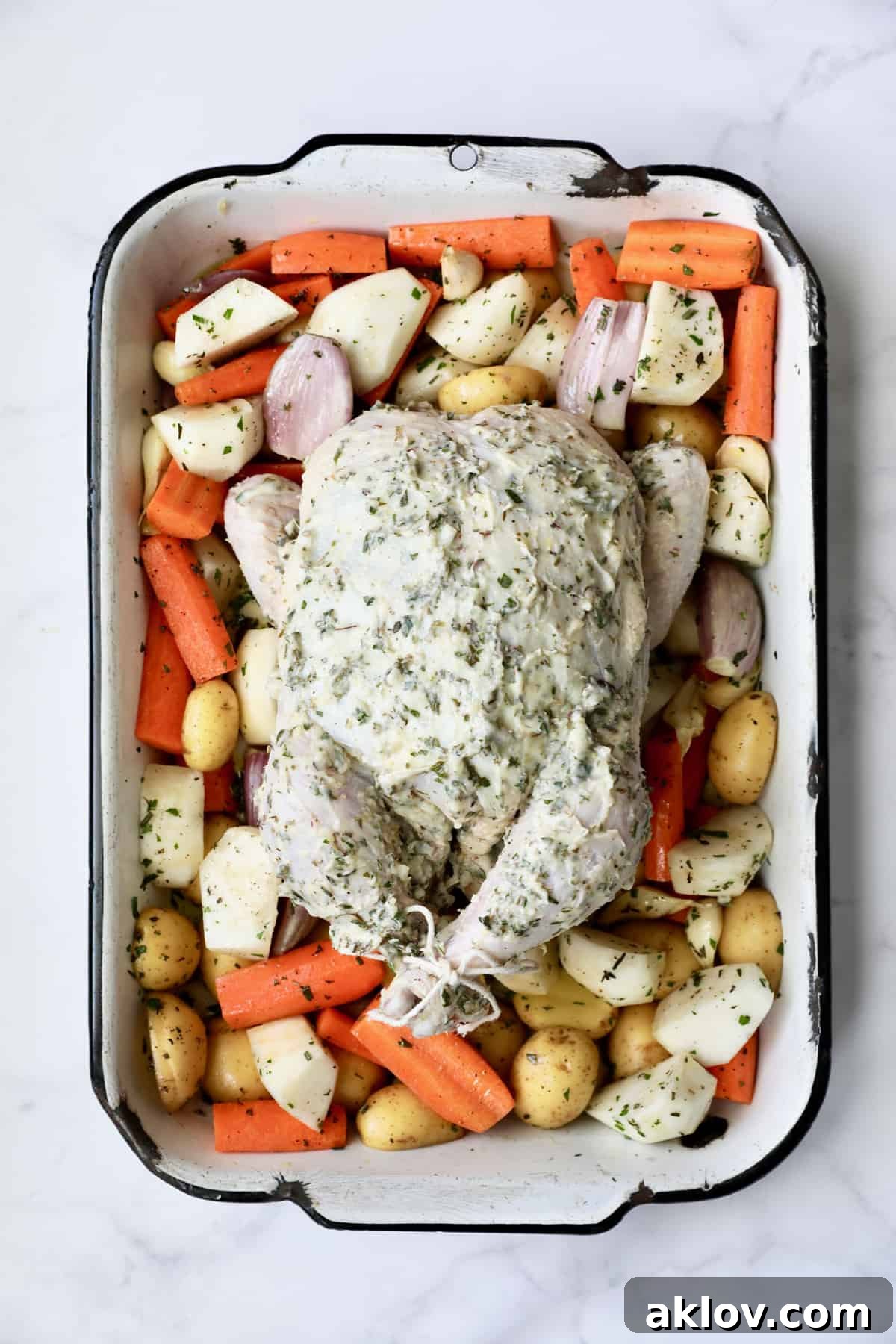
Roasting to Golden Perfection
- Gently nestle the prepared chicken into the center of the roasting pan, ensuring it sits securely amidst the seasoned root vegetables. Make sure the vegetables are still somewhat surrounding the chicken without being completely covered.
- Pour approximately 1/2 cup of chicken broth over the vegetables in the pan. This crucial step serves multiple purposes: it helps to prevent the herb butter and pan drippings from burning, adds moisture to the roasting environment, and creates a flavorful foundation for the pan juices, which will be delicious for soaking up with crusty bread later.
- Carefully transfer the roasting pan to your preheated 400°F (200°C) oven. Place it on the middle rack for optimal air circulation and even cooking.
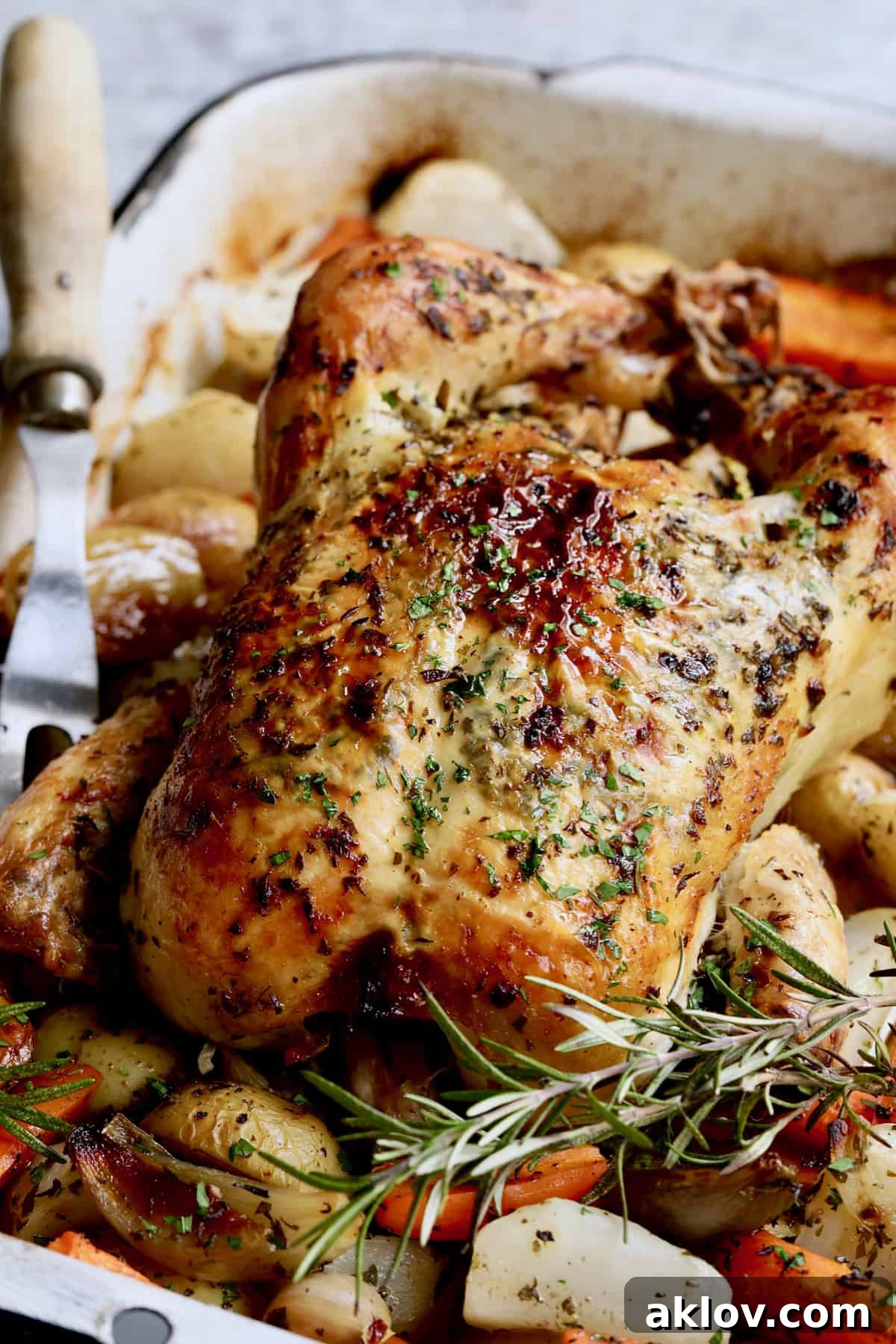
- Roast for approximately 1 hour to 1 hour and 15 minutes. The precise timing will depend on your oven and the exact size of your chicken. The chicken is fully cooked when an instant-read thermometer inserted into the thickest part of the thigh, making sure not to touch the bone, reads at least 165°F (74°C). During this time, the vegetables should become tender and beautifully caramelized, and the chicken skin will turn a glorious, irresistible golden brown.
- Once cooked, carefully remove the roasting pan from the oven. Tent the chicken loosely with aluminum foil and allow it to rest undisturbed for 10-15 minutes before carving. This resting period is absolutely vital, as it allows the juices to redistribute throughout the meat, resulting in an even more tender, succulent, and flavorful chicken.
And there you have it, friends! Your magnificent Garlic Herb Butter Roast Chicken, a true feast for the senses, delivering golden, juicy, lemony, herby, garlicky goodness with every single bite. Prepare to be amazed by the depth of flavor and ease of preparation.
Ensuring Perfect Doneness: A Guide to Roasting Success
Knowing exactly when your whole chicken is perfectly cooked is crucial for both maximizing its flavor and tenderness, and ensuring food safety. Overcooked chicken can be dry and unappetizing, while undercooked chicken poses health risks. The easiest, most accurate, and most reliable method for testing doneness is by using an instant-read thermometer.
To get an accurate reading, carefully insert the thermometer into the thickest part of the thigh, being absolutely certain that the tip of the thermometer does not touch any bone. Touching a bone can give you an artificially (and incorrectly) high-temperature reading, leading you to believe the chicken is done when it might not be. The target internal temperature for chicken is 165°F (74°C). For whole chickens, we often aim for a slightly higher internal temperature of 170-175°F (77-79°C) in the thigh, as this allows the connective tissues to break down further, resulting in incredibly tender meat, especially in the darker cuts.
In addition to relying on a thermometer, there are several visual cues that indicate doneness: the juices that run out when you pierce the thickest part of the thigh with a knife or fork should be completely clear, without any traces of pink or cloudiness. You’ll also notice that the legs and wings move more freely and are less resistant in their joints when the chicken is fully cooked. Trusting these combined methods will ensure your roast chicken is not only delicious and tender but also safe to eat every single time.
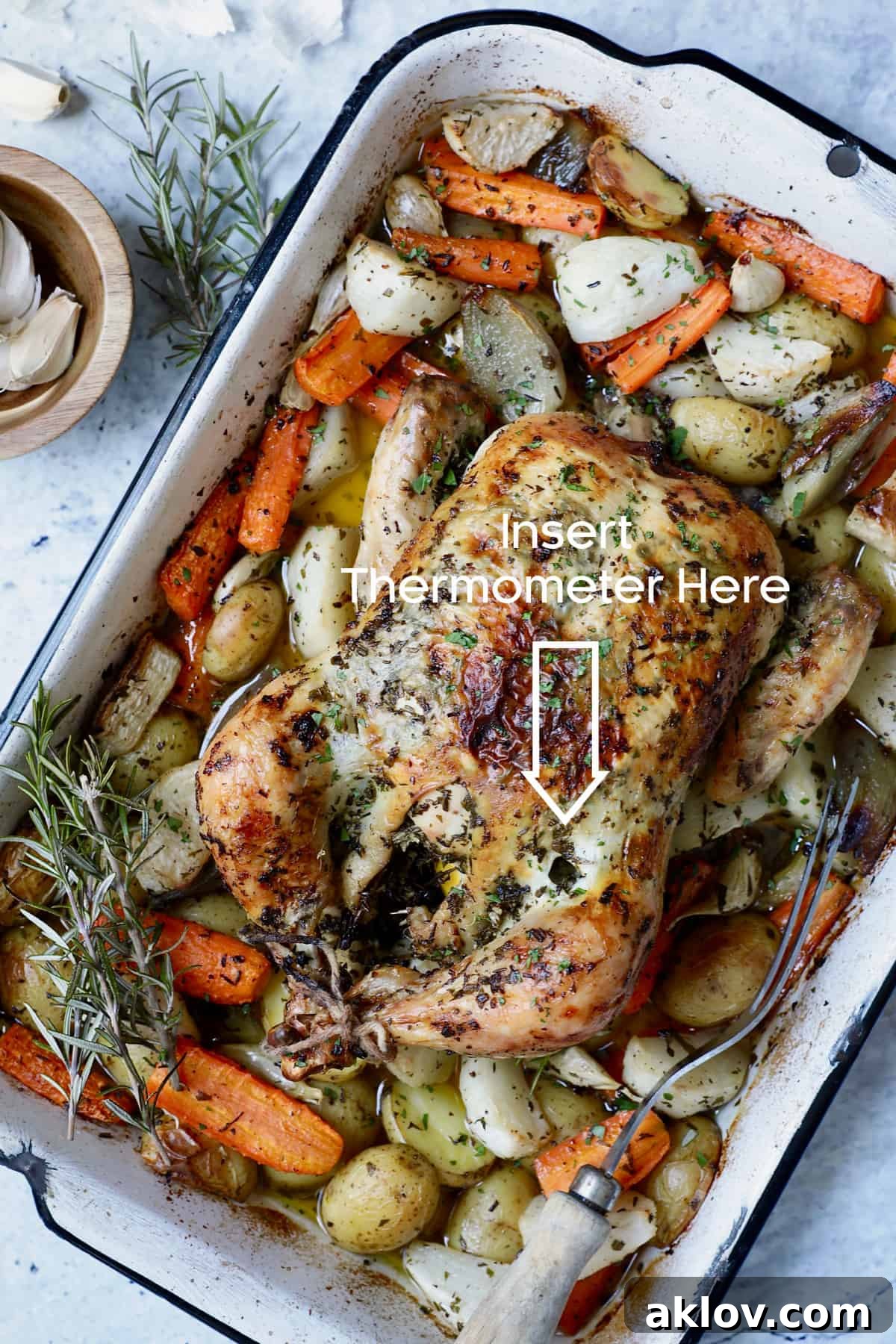
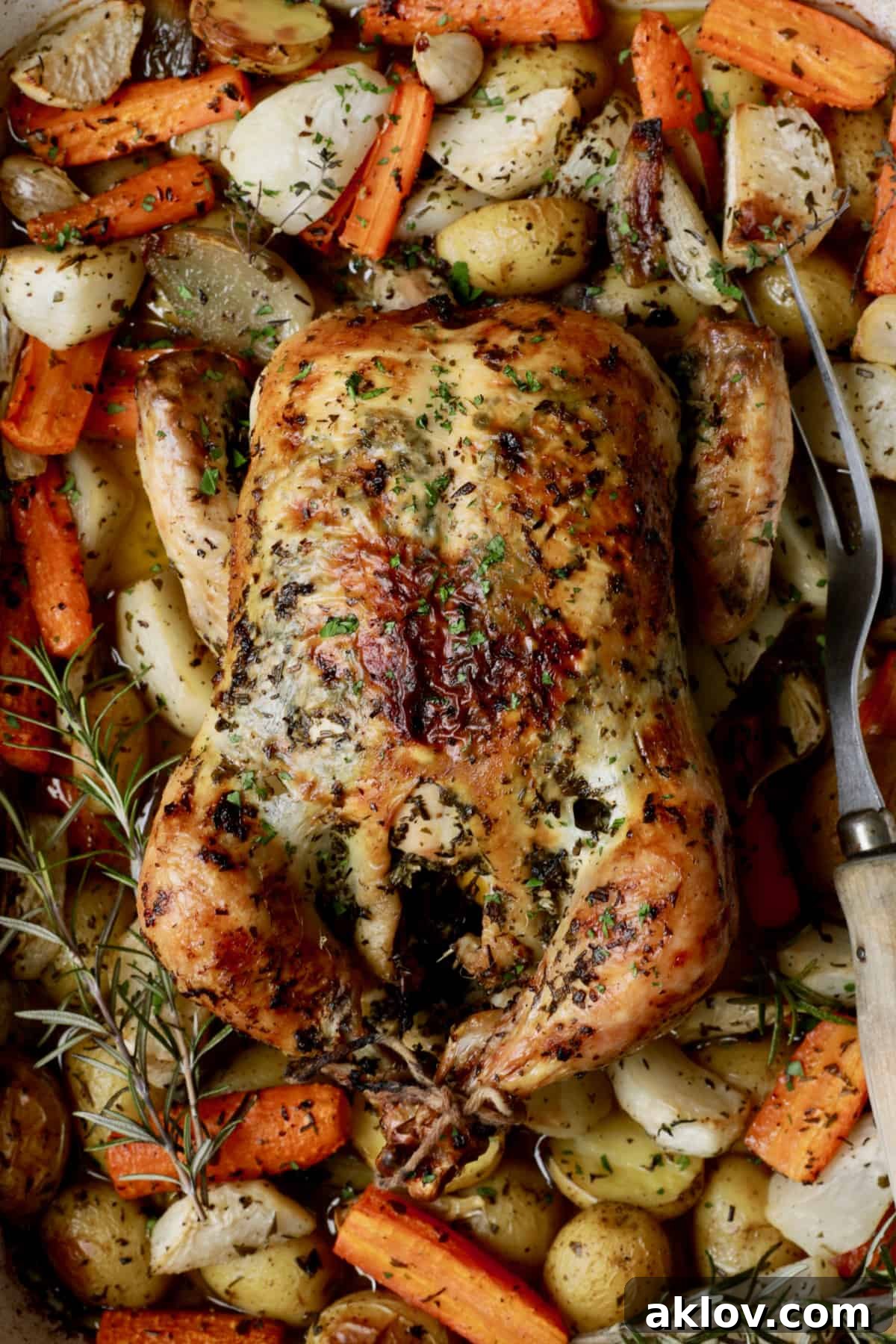
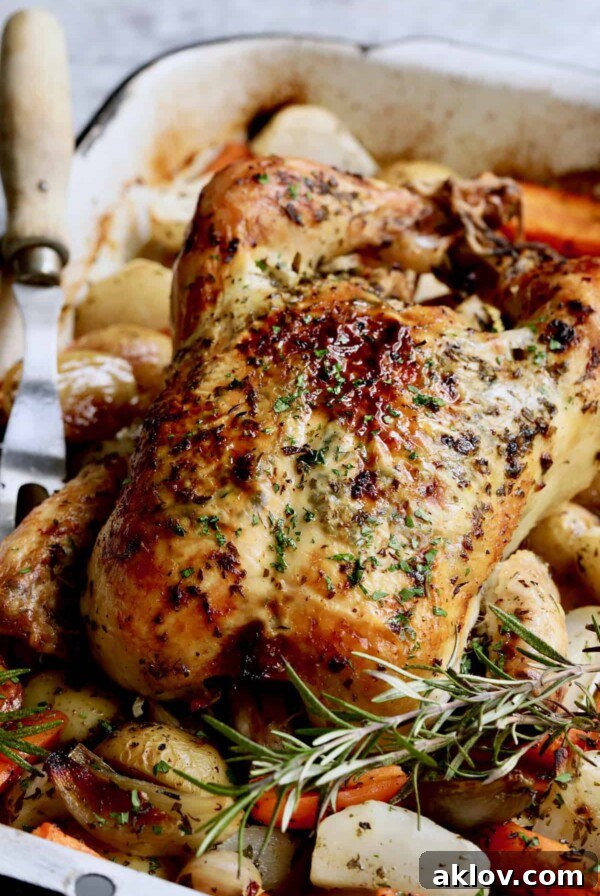
Once your Herb Butter Roast Chicken with Root Vegetables has rested, carve it as desired and prepare for a truly satisfying and memorable meal! Be sure to serve this incredibly flavorful roasted herbed chicken with plenty of crusty bread. The bread is absolutely perfect for soaking up those rich, buttery, herb-infused pan juices, which are a treasure trove of flavor. Additionally, don’t forget to squeeze out the tender, sweet, and mellow roasted garlic cloves from their peels; they become a luxurious spread that pairs wonderfully with the crusty bread. Every bite of this dish is a symphony of flavors and textures, making it an instant family favorite.
Expert Chef Tips and Tricks for a Flawless Roast
- Prevent Burning and Add Flavor with Broth: The addition of a small amount of chicken broth to the roasting pan is a critical step for multiple reasons. Not only does it add a layer of moisture and deepen the flavor of your pan drippings, but it also helps prevent the herb butter and any rendered chicken fat from burning at the bottom of the pan, which in turn protects your delicate root vegetables from charring too quickly. This ensures a beautifully caramelized, rather than burnt, outcome.
- Achieve the Ultimate Crispy Skin: For the most irresistible, golden-crisp skin, ensure your chicken is as dry as humanly possible before you even think about applying the herb butter. After patting it thoroughly with paper towels, you can take it a step further by refrigerating the chicken uncovered for a few hours, or even overnight. This allows the skin to air-dry, setting the stage for unparalleled crispiness in the oven.
- Ensure Even Cooking with Room Temperature Chicken: Allowing the chicken to come to room temperature for at least 30-60 minutes before it goes into the oven is not just a recommendation; it’s a crucial technique. A cold chicken will cook unevenly, potentially leading to overcooked exterior parts and an undercooked interior. Tempering the chicken ensures more uniform heat penetration and a juicier, more consistently cooked bird.
- Craft a Delicious Pan Sauce: Don’t let those flavorful pan drippings go to waste! After the chicken rests, transfer it and the vegetables to a warm serving platter. To make a quick and delectable pan sauce, place the roasting pan directly on the stovetop over medium heat. Deglaze the pan by adding a splash of white wine, chicken broth, or even a little lemon juice, scraping up all the savory browned bits from the bottom with a wooden spoon. Simmer briefly until the sauce slightly thickens, then strain if desired for a smoother consistency, and serve alongside the carved chicken.
- Removing Excess Fat from Drippings: If you prefer a lighter pan sauce or are conscious of fat intake, you can easily remove excess fat from the pan juices. Carefully scrape the entire contents of the roaster (juices, fat, and any small bits) into a heat-proof 4-cup measuring cup or, ideally, a fat separator. Allow the fat to naturally separate and rise to the top, then spoon it off or pour out the defatted juices from the bottom of the separator.
Frequently Asked Questions About Roast Chicken
When is chicken thoroughly cooked and safe to eat?
Chicken is considered thoroughly cooked and safe for consumption when it reaches an internal temperature of 165°F (74°C) for a sustained period of at least 15 seconds. It’s important to note that with larger pieces of protein like a whole chicken, there will be some carryover cooking after you remove it from the oven. This means the internal temperature will continue to rise by a few degrees during the resting period, helping to ensure it reaches and maintains the safe temperature throughout the meat.
At what temperature should you roast a whole chicken for best results?
You can successfully roast a whole chicken anywhere between 325°F (160°C) and 450°F (230°C), depending on your desired outcome. While 375°F (190°C) is a common average temperature for a steady roast, roasting at 400°F (200°C) – as recommended in this recipe – will contribute to that next-level crispy, beautifully browned skin. The most critical factor, regardless of the oven temperature, is to roast the chicken until it reaches an internal temperature of 165-175°F (74-79°C) in the thickest part of the thigh, as verified by an instant-read thermometer.
Is it better to roast a chicken covered or uncovered?
If your primary goal is to achieve gloriously golden, irresistibly crispy skin on your roast chicken, it is always better to roast it uncovered. Covering the chicken traps steam, which prevents the skin from crisping up and can lead to a soft, rubbery texture. However, if you notice the skin is browning too quickly or becoming too dark before the internal temperature reaches the desired doneness, you can loosely tent the chicken with a piece of aluminum foil. This protects the skin from burning while allowing the internal meat to finish cooking to perfection.
Can I stuff my chicken with bread-based stuffing?
While traditionally many recipes call for stuffing, it’s generally recommended against stuffing the main cavity with a bread-based stuffing when roasting a whole chicken. Stuffing increases the cooking time significantly and can make it difficult to ensure both the chicken and the stuffing reach a safe internal temperature (165°F/74°C) simultaneously. If you desire stuffing, it’s best to cook it separately in a casserole dish. For flavor, simply fill the cavity with aromatic elements like lemon halves, onion quarters, and fresh herb sprigs, as done in this recipe, which infuse the chicken beautifully without affecting cooking time or safety.
Do I need to baste the chicken while roasting?
Basting the chicken, while a common practice in older recipes, is not strictly necessary for achieving a moist and flavorful bird, especially when using an herb butter rub as in this recipe. The butter spread both under and over the skin melts and self-bastes, helping to keep the meat moist and the skin crispy. Opening the oven frequently to baste can actually lower the oven temperature significantly, extending the overall cooking time and potentially drying out the chicken. For this recipe, the herb butter and the chicken broth in the pan provide ample moisture and flavor without the need for constant basting.
Perfect Pairings: What to Serve with Your Roast Chicken
The delicious medley of root vegetables roasted alongside the chicken already creates a wonderfully satisfying and wholesome side dish, making this a truly complete one-pan meal. However, if you’re looking to add an extra layer of freshness, texture, or a vibrant touch of green to your meal, consider these fantastic accompaniments that beautifully complement the rich flavors of the roast chicken:
- A Fresh Green Salad: A simple, crisp green salad with a light, tangy vinaigrette provides a refreshing contrast to the richness of the roast chicken and caramelized vegetables. It cleanses the palate and adds a vibrant, fresh element.
- Mediterranean Braised Green Beans with Tomatoes: A flavorful and tender vegetable dish that brings bright, savory, and slightly tangy notes to the plate, echoing the Mediterranean influences of lemon and herbs.
- Asparagus Cordon Bleu: Elevate your greens with this elegant asparagus dish, featuring cheese and sometimes prosciutto, perfect for a more formal or celebratory presentation.
- Skillet Charred Green Beans with Goat Cheese Chipotle Butter: For a bold and smoky twist, these charred green beans offer a fantastic depth of flavor, complemented by the creamy tang of goat cheese and a hint of spice.
- Balsamic Roasted Kale Sprouts with Shaved Parmesan: A delightful combination of sweet and savory, these roasted Brussels sprouts and kale offer a sophisticated green element with a lovely textural contrast.
- Green Bean Salad Recipe with Mustard Vinaigrette: A refreshing and tangy cold salad that cuts through the richness of the main course, offering a crisp texture and bright flavor.
- Hearty Cabbage Casserole: For a more substantial and comforting side, particularly appealing in colder weather, a well-made cabbage casserole can be a wonderful and wholesome addition to the meal.
More Irresistible Chicken Recipes You’ll Love
If you’ve enjoyed the comforting flavors and straightforward preparation of this delightful roast chicken, you’re in for a treat! Our kitchen is filled with an array of delicious chicken recipes, each offering unique flavors and cooking methods to inspire your next meal. Explore some of our other cherished favorites, perfect for any occasion:
- 40 Clove Garlic Chicken: A deeply aromatic and comforting dish featuring an abundance of sweet, mellow roasted garlic that transforms during cooking, creating a surprisingly gentle and rich flavor.
- Roast Chicken Half with Fingerling Potatoes: A fantastic alternative to a whole bird, perfect for smaller gatherings or quicker weeknight meals, without compromising on that coveted roasted chicken flavor and tender results.
- Sheet Pan Roast Chicken with Potatoes and Green Beans: The ultimate easy weeknight meal, this recipe combines protein and vegetables on a single sheet pan for minimal cleanup and maximum flavor, truly a busy cook’s dream.
- Chicken Pinot Noir with Wild Mushrooms and Fresh Basil: An elegant and flavorful chicken dish braised in rich Pinot Noir wine, infused with earthy wild mushrooms and fragrant fresh basil, making it perfect for special occasions or a gourmet touch to your dinner.
Discover a world of poultry perfection and find your next favorite meal by visiting all our diverse chicken recipes at Chicken Recipes – From A Chef’s Kitchen.
Average rating: 4.69 from 32 votes
Garlic Herb Butter Roast Chicken with Root Vegetables
Carol | From A Chef’s Kitchen
45 mins
1 hr 15 mins
2 hrs
4
Equipment
-
Wusthof Chef Knife
-
Cutting Board
-
Glass Mixing Bowls
-
Roasting Pan
Ingredients
Vegetables
- 1 pound small or baby Yukon Gold potatoes, halved
- 4 medium turnips, peeled and quartered
- 4 large carrots, peeled and cut into even 2-inch pieces
- 2 large shallots, peeled and quartered
- 1 head garlic, separated into cloves (leave the peel on)
- 3 tablespoons olive oil
- Salt and freshly ground black pepper, to taste
Herb Butter
- 2 tablespoons chopped fresh parsley
- 1 tablespoon chopped fresh rosemary
- 1 tablespoon chopped fresh thyme
- 1 small lemon, zested and juiced
- 5 cloves garlic, minced
- 1 stick unsalted butter, softened
- 1 teaspoon salt
- Freshly ground black pepper, to taste
Chicken
- 1 (4 to 4 1/2 pound) roasting chicken
- 3 sprigs fresh rosemary
- 5 sprigs fresh thyme
- 1 small lemon, halved and seeded
- 1/2 cup chicken broth
- Crusty bread for soaking up the buttery juices and to spread the whole garlic cloves onto
Instructions
Vegetables
-
Preheat oven to 400°F (200°C). Let the chicken sit out at room temperature for 30-60 minutes while prepping the vegetables and herb butter.
-
Combine the peeled and chopped root vegetables (1 pound small or baby Yukon Gold potatoes halved, 4 medium turnips peeled and quartered, 4 large carrots peeled and cut into even 2-inch pieces, 2 large shallots peeled and quartered, and 1 head garlic separated into cloves with peel on) in a large roasting pan. Drizzle with 3 tablespoons of olive oil and season to taste with salt and black pepper. Toss to coat evenly.
-
Push the vegetables toward the outer edges of the roasting pan, creating a clear space in the center for the chicken.
Herb Butter
-
In a small bowl, combine 2 tablespoons chopped fresh parsley, 1 tablespoon chopped fresh rosemary, and 1 tablespoon chopped fresh thyme. Sprinkle 1 tablespoon of this herb mixture over the prepared vegetables.
-
To the remaining herbs in the bowl, add the zest and juice of one small lemon, 5 cloves of minced garlic, 1 stick (8 tablespoons) softened unsalted butter, 1 teaspoon salt, and freshly ground black pepper to taste. Mix well until all ingredients are thoroughly combined to create a fragrant herb butter.
Chicken
-
Prepare the chicken: Pat the entire 4 to 4 1/2 pound roasting chicken, inside and out, thoroughly dry with paper towels. Carefully separate the skin from the breast meat. Spread half of the prepared herb butter evenly under the skin over the breast meat. Spread the remaining half of the butter over the entire exterior of the chicken, ensuring an even coating.
-
Stuff the cavity of the chicken with the 1 small lemon (halved and seeded) and the 3 sprigs fresh rosemary and 5 sprigs fresh thyme.
-
Tie the chicken legs together with butcher’s twine and tuck the wings under the upper back of the chicken to prevent them from burning.
-
Place the buttered chicken in the center of the roasting pan, surrounded by the seasoned root vegetables.
-
Drizzle the vegetables with 1/2 cup of chicken broth. This will prevent butter from burning and add moisture to the pan drippings.
-
Place the roasting pan in the preheated 400°F (200°C) oven. Roast for 1 to 1 1/4 hours, or until a meat thermometer inserted into the thickest part of the thigh (without touching bone) reads at least 165°F (74°C). The skin should be golden brown and crispy, and the vegetables tender and caramelized.
-
Once cooked, remove the pan from the oven. Loosely tent the chicken with aluminum foil and let it rest for 10-15 minutes before carving. This resting period is essential for juicy meat. Carve as desired and serve immediately, accompanied by the roasted root vegetables and plenty of crusty bread to soak up those delicious buttery, herby pan juices. Don’t forget to squeeze out the soft roasted garlic cloves onto your bread!
Notes and Tips
SUBSTITUTIONS:
- For potatoes, red, Russets, or fingerlings can be used in place of Yukon Gold. Each offers a slightly different texture and flavor profile when roasted.
- For other root vegetables, you can also use rutabagas, beets, or parsnips. Ensure they are cut to similar sizes for even cooking to prevent some from being undercooked or overcooked.
TIPS FOR SUCCESS:
- A 4-4.5 pound chicken is highly recommended for optimal roasting time and meat juiciness. Anything larger will likely require a longer roasting time, which can dry out the meat and lead to overcooked vegetables.
- Adding a small amount of chicken broth to the pan (as per instructions) is crucial. It helps prevent the herb butter and pan drippings from burning, ensuring a flavorful and appealing final dish with delicious pan juices.
- For extra crispy skin, pat the chicken exceptionally dry with paper towels before applying the herb butter. You can also let it air-dry in the refrigerator for a few hours.
- Allowing the chicken to come to room temperature before roasting promotes more even cooking.
- To remove excess fat from the pan juices for a cleaner sauce, scrape the roaster’s contents into a 4-cup measuring cup or a fat separator. Allow the fat layer to rise to the top, then spoon it off or separate the juices.
MAKE AHEAD & STORAGE:
- This dish can be mostly assembled up to 24 hours in advance. Prepare the vegetables and rub the chicken with herb butter, then refrigerate the entire roasting pan, covered tightly, until ready to cook.
- Before roasting, remove the pan from the refrigerator and let it stand at room temperature for 20-30 minutes. This tempering allows the chicken to cook more evenly.
- Leftover roast chicken and vegetables can be stored in an airtight container in the refrigerator for up to 3-4 days. Reheat gently in the oven or microwave, though the skin may lose some crispness.
- The bones from the roasted chicken make an excellent, flavorful homemade chicken stock for future use.
Nutrition Information
Serving Size: 1
Calories: 494 kcal
Carbohydrates: 46g
Protein: 6g
Fat: 34g
Saturated Fat: 16g
Polyunsaturated Fat: 2g
Monounsaturated Fat: 14g
Trans Fat: 1g
Cholesterol: 62mg
Sodium: 1017mg
Potassium: 1146mg
Fiber: 9g
Sugar: 12g
Vitamin A: 13080 IU
Vitamin C: 93mg
Calcium: 137mg
Iron: 3mg
Nutritional values are automatically calculated using unbranded products and are estimates only. Actual results may vary based on ingredients used and portion sizes. Adjust as needed for dietary restrictions, allergies, or health concerns.
 Like this recipe? Leave a comment below!