
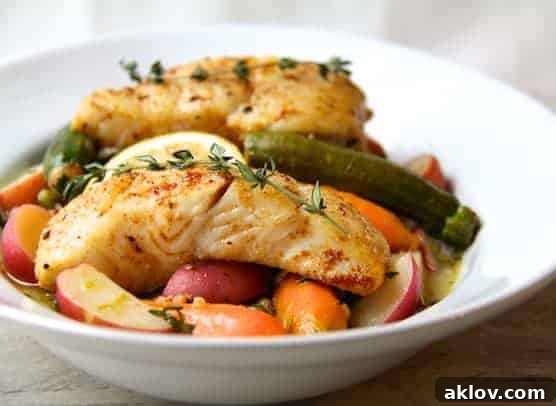
Delight in the fresh, vibrant flavors of spring with this elegant recipe for Butter-Basted Halibut with Lemon-Braised Baby Vegetables. Designed for two, this dish is a true celebration of delicate fish and tender, seasonal produce, making it an ideal choice for a romantic dinner, a special occasion, or simply a healthy, gourmet weeknight meal. It masterfully combines the rich, nutty notes of perfectly cooked halibut with the bright, zesty essence of lemon-infused baby vegetables, creating a symphony of taste and texture that is both light and satisfying. This recipe not only showcases the exquisite qualities of halibut but also offers a beautiful presentation that will impress any diner.
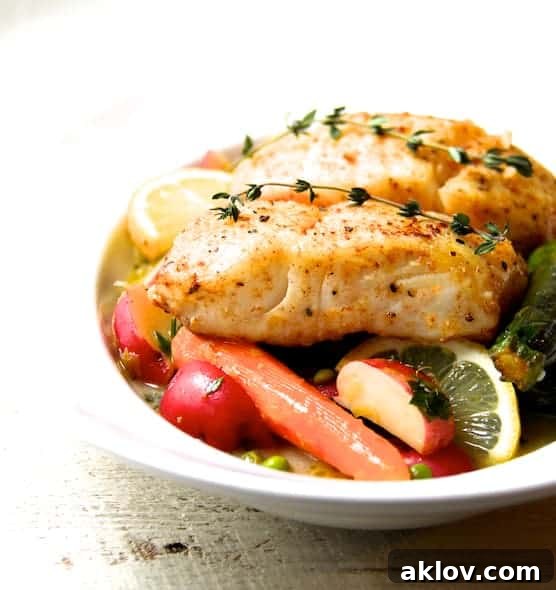
Few seafood options offer the delicate, sweet flavor and firm, flaky texture that halibut does. It’s a truly versatile fish, lending itself beautifully to a variety of cooking methods, but perhaps none so transformative as butter-basting. This technique infuses the halibut with a luxurious richness, ensuring it remains incredibly moist and develops an irresistible golden crust. Paired with a medley of tender, lemon-braised baby vegetables, this dish strikes a perfect balance, allowing the natural qualities of each ingredient to shine.
The Appeal of Halibut: A Sustainable Choice
Halibut is often considered a premium fish, and for good reason. Its mild, sweet flavor is highly prized, and its firm, white flesh cooks up beautifully, flaking effortlessly into succulent pieces. It’s a fantastic source of lean protein and essential nutrients, including Omega-3 fatty acids, B vitamins, and minerals like selenium and phosphorus, making it an excellent addition to a healthy diet.
Tips for Buying the Best Halibut
When selecting halibut, quality is key. Look for fillets that are firm, moist, and translucent, with no strong “fishy” odor. Ideally, purchase fresh halibut from a reputable fishmonger. For an environmentally conscious choice, opt for Pacific or Alaskan halibut. These fisheries are carefully regulated and recognized as some of the most sustainable seafood options available, a recommendation echoed by the Monterey Bay Aquarium’s Seafood Watch program. Choosing sustainable seafood helps protect marine ecosystems and ensures future fish populations.
Given that halibut can be on the pricier side, it’s worth noting that other mild, white fish can be successfully substituted in this recipe. Cod, snapper, or even thick cuts of tilapia can offer a similar delicate flavor and flaky texture, making the dish more accessible without compromising on taste. Always adjust cooking times slightly if using a thinner or denser fillet.
Mastering the Art of Butter Basting for Perfect Fish
The butter-basting method, sometimes referred to as pan-basting, is a classic culinary technique that elevates pan-seared dishes, especially delicate proteins like fish. You might wonder why one would introduce butter to an otherwise light and healthy fish. The answer lies in the transformative power of browned butter and the superior moisture retention it provides.
As butter melts and browns in a hot skillet, its milk solids caramelize, developing a complex, nutty flavor profile known as beurre noisette. This richly flavored butter is then repeatedly spooned over the fish as it cooks, creating several desirable outcomes:
- Enhanced Flavor: The nutty, caramelized butter infuses the halibut with incredible depth of flavor that a simple pan-fry cannot achieve.
- Perfectly Moist Texture: Constant basting ensures the fish remains wonderfully moist and tender throughout the cooking process, preventing it from drying out, which is a common pitfall when cooking fish.
- Beautiful Crust: The butter helps in forming an exquisite golden-brown crust on both sides of the fillet. Interestingly, with effective basting, you may not even need to flip the fish; the hot butter coats and browns the upward-facing side, contributing to an even cook and consistent texture.
For those who prefer less butter in the final dish, a simple solution is to drain the excess butter from the pan before serving, perhaps briefly resting the fish on a paper towel. However, for maximum flavor and richness, drizzling some of the pan butter over the finished dish is highly recommended. You can also elevate the basting experience by adding aromatics like fresh thyme sprigs, garlic cloves, or a squeeze of lemon to the butter as it browns, imparting even more intricate flavors to the halibut.
The Charm of Lemon-Braised Baby Vegetables
Complementing the rich halibut are tender, bright lemon-braised baby vegetables. The use of “baby” vegetables not only adds an appealing aesthetic to the plate but often provides a sweeter, more tender bite than their mature counterparts. However, it’s important to understand the distinction between true baby vegetables and “baby cut” vegetables.
- True Baby Vegetables: These are simply young vegetables harvested early in their growth cycle. They are naturally small, incredibly tender, and often sweeter, with a delicate flavor. Examples include young carrots with an inch or two of green tops still attached, miniature zucchini, or tiny potatoes.
- Baby “Cut” Carrots: These are mature carrots that have been peeled and machine-cut into smaller, uniform baton shapes. While convenient, they often lack the delicate flavor and texture of true baby carrots.
You can typically find true baby vegetables in the specialty produce section of larger supermarkets or, even better, at local farmer’s markets during the spring and early summer months. If you’re an avid gardener, harvesting produce at the “baby” stage is a fantastic way to enjoy their peak tenderness and flavor in this dish.
This recipe specifically calls for baby carrots, baby red potatoes, and baby zucchini, which are braised gently in a lemon-infused broth. This method allows the vegetables to become wonderfully tender while absorbing the bright, zesty flavors of the lemon and broth, creating a light yet flavorful accompaniment to the halibut.
Baby Vegetable Substitutions and Variations
Don’t limit yourself to the suggested vegetables! The beauty of this dish lies in its adaptability to whatever fresh, seasonal produce you have on hand. Consider these delightful substitutions:
- Squash: Baby pattypan squash or tiny yellow squash can replace zucchini, offering a similar tender texture and mild flavor.
- Legumes: Instead of peas, try baby lima beans or fresh fava beans for a creamy, earthy note.
- Root Vegetables: While potatoes are included, baby turnips or miniature parsnips could also be braised for a slightly different root vegetable experience.
- Artichokes: For a touch of Mediterranean sophistication, small baby artichokes (trimmed and halved) would be an excellent, albeit more labor-intensive, addition in place of potatoes.
If true baby vegetables are unavailable or not within your budget, simply use regular-sized vegetables cut into smaller, bite-sized pieces to ensure even cooking and an elegant presentation. Adjust cooking times as necessary, keeping an eye on their tenderness. The goal is crisp-tender, not mushy.
A Springtime Symphony on a Plate
This Butter-Basted Halibut with Lemon-Braised Baby Vegetables offers a complete and harmonious meal. The richness of the halibut, made even more luxurious by the butter basting, is perfectly cut by the bright acidity of the lemon and the freshness of the braised vegetables. The blend of textures – the flaky fish, the tender carrots and potatoes, the crisp-tender zucchini, and the burst of fresh peas – creates an engaging culinary experience. Serve it with a crisp glass of Sauvignon Blanc or Pinot Grigio to enhance the spring flavors, and perhaps a side of crusty bread to soak up any leftover lemon-infused broth. Enjoy the essence of spring with every delicious bite!
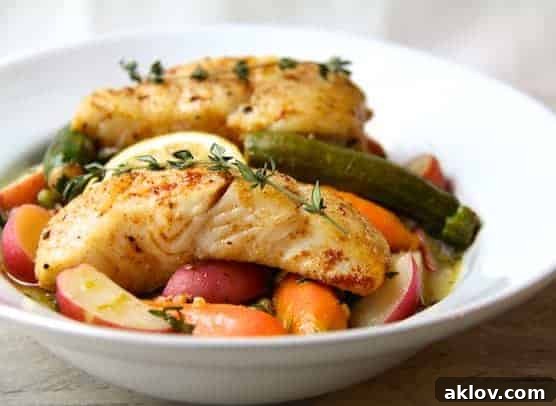
More Fish Recipes You’ll Love
If you’re a fan of delicious seafood, explore these other fantastic fish recipes that offer a range of flavors and preparations:
- Sheet Pan Thai Sweet Chili – Lime Baked Fish with Garlic Broccolini
- Baked Veracruz-Style Fish (Pescado A La Veracruzana)
- Pistachio Crusted Fish with Lemon Dill Aioli
- Indian Spiced Sea Bass with Braised Red Lentils
- Asian Vegetable Noodle Broth Bowls with Pan Seared Fish
- Blackened Halibut
- Mediterranean Fish en Papillote
- Baked Tilapia with Spinach – Pecan Pesto
- Halibut Ceviche
Print Recipe
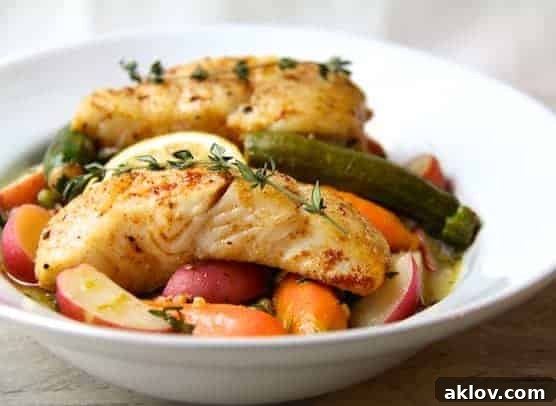
Butter Basted Halibut with Lemon Braised Baby Vegetables
Carol | From A Chef’s Kitchen
15 mins
30 mins
45 mins
2
Equipment
-
Wusthof Chef Knife
-
Cutting Board
-
Saucepan
-
Nonstick Skillet
Ingredients
- 2 cups chicken broth
- 1/2 cup water
- 1 large lemon, juiced (about 2 tablespoons) plus lemon slices for garnish
- 2 scallions, white and light green part only, chopped
- 8 baby carrots
- 6 baby red potatoes, quartered
- 10 baby zucchini
- 1 clove garlic, minced
- 1 tablespoon fresh thyme leaves, plus sprigs for garnish
- 1 handful Italian parsley leaves, about 1/2 cup loosely packed, rough chopped
- 1/2 cup peas, fresh or thawed if frozen
- Salt and freshly ground black pepper, to taste
- 2 fillets (8-ounce) halibut fillets, skin removed
- 1 tablespoon olive oil
- 3 tablespoons butter, softened
Instructions
-
Combine broth and water in a shallow saucepan and bring to a simmer over medium heat.
-
Add lemon juice, scallion and carrots.
-
Reduce heat to low, cover slightly and cook carrots 8 to 10 minutes or until you can just barely pierce the carrots.
-
Add potatoes, cover slightly and cook 8 to 10 minutes or until potatoes are almost tender.
-
Add zucchini and garlic. Cover slightly and cook 6 to 8 minutes or until zucchini is crisp-tender. Stir in thyme, parsley and peas. Season to taste with salt and black pepper. Keep warm.
-
Generously season halibut on both sides with salt and black pepper.
-
Heat olive oil in a nonstick skillet over medium-high heat.
-
Brown the halibut fillets for 2 to 3 minutes per side.
-
Add the butter to the pan and when the butter melts, tilt the skillet toward you to pool the butter.
-
With a large soup spoon, begin basting the fish constantly with the bubbling butter for 5 to 6 minutes, returning the pan to a level position over the heat several times to keep the pan evenly hot.
-
Let rest for 1 to 2 minutes for carry-over cooking to finish cooking the fish. The fish is cooked through when firm to the touch and easily flakes with a fork. (Exceptionally thick pieces may need a bit of time in a 400-degree oven.)
-
Serve over braised vegetables and drizzle with butter from pan if desired.
Notes
SUBSTITUTIONS:
- Almost any type of thick fish fillets will work in addition to halibut. Try cod, Chilean sea bass, grouper or mahi mahi.
MAKE AHEAD:
- The potatoes can be cooked one day ahead of time and refrigerated. Reheat gently with the other vegetables.
Nutrition
Calories: 493kcal
Carbohydrates: 78g
Protein: 35g
Fat: 13g
Saturated Fat: 2g
Polyunsaturated Fat: 3g
Monounsaturated Fat: 6g
Cholesterol: 3mg
Sodium: 965mg
Potassium: 5758mg
Fiber: 20g
Sugar: 8g
Vitamin A: 11108IU
Vitamin C: 439mg
Calcium: 332mg
Iron: 12mg
Nutritional values are automatically calculated using unbranded products and are estimates only. Actual results may vary based on ingredients used and portion sizes. Adjust as needed for dietary restrictions, allergies, or health concerns.

Like this? Leave a comment below!