
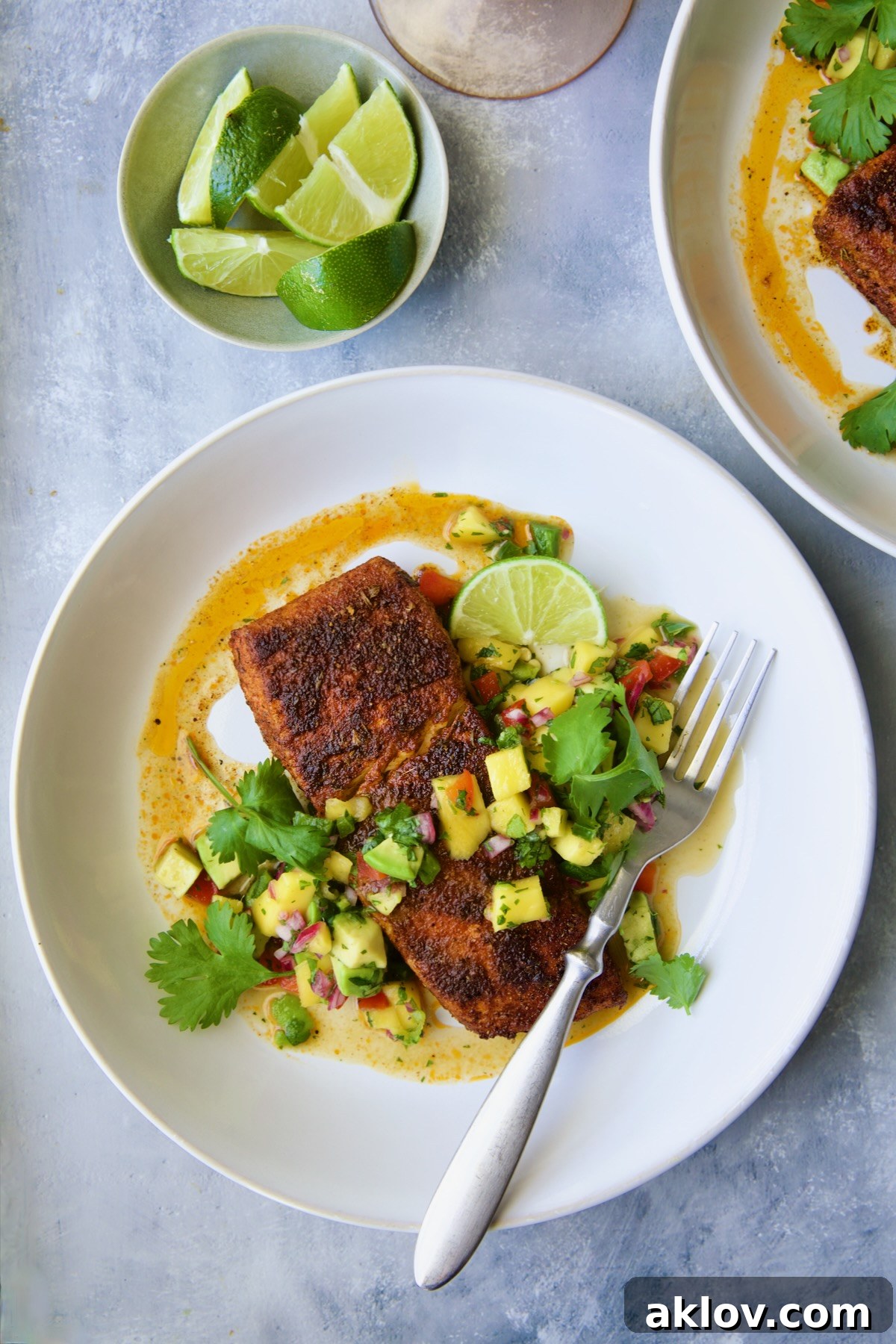
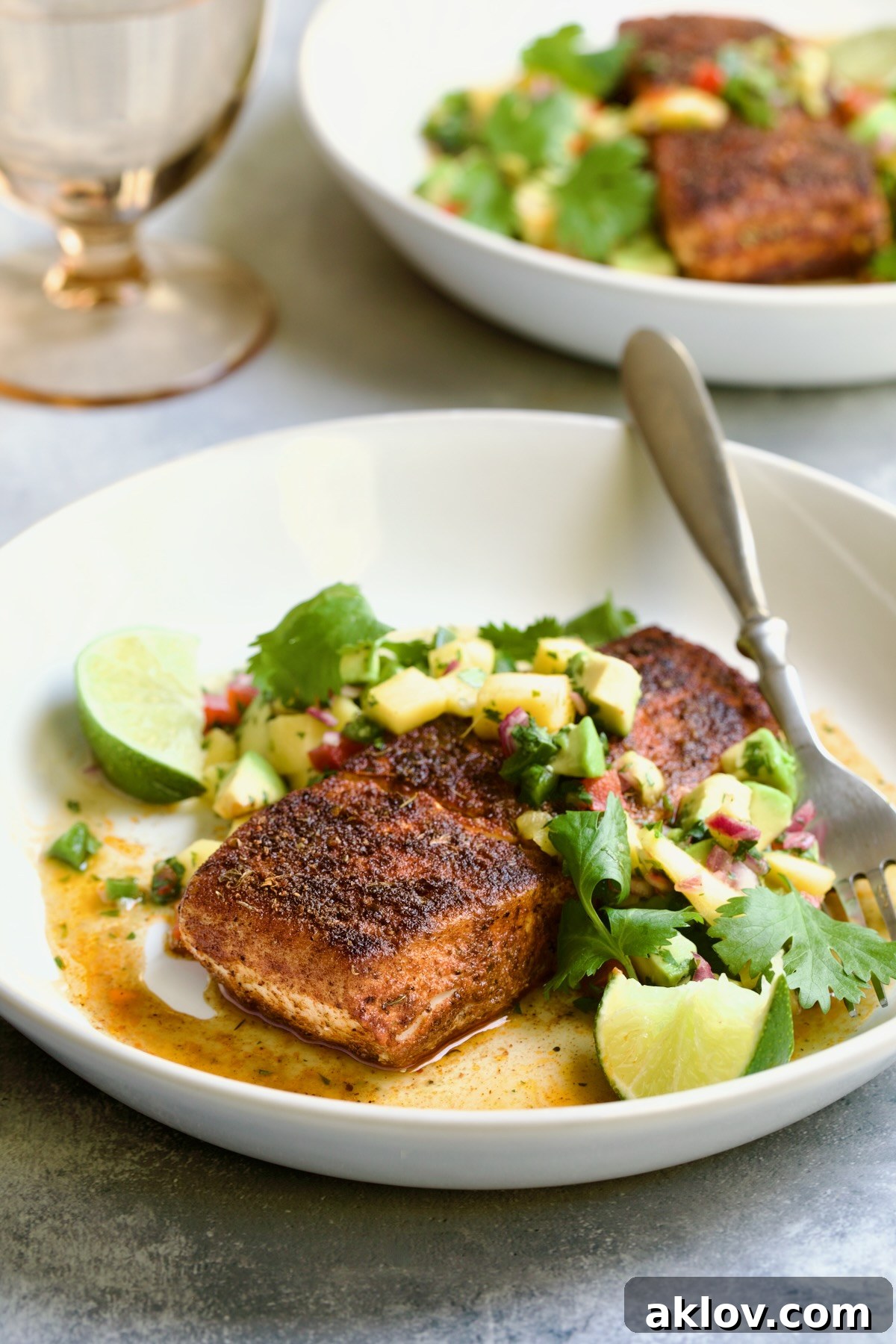
Embark on a culinary journey with this irresistible Blackened Halibut recipe, a masterpiece designed for a healthy, gourmet dinner for two with an exotic flair! Featuring succulent, fresh halibut transformed by a vibrant, homemade blackening spice mixture, it’s expertly seared to achieve a delicate, charred crust. The experience is then elevated with a refreshing, zesty mango and avocado salsa, creating a symphony of flavors and textures that tantalizes the palate.
“I made this over the weekend, and it was phenomenal! It was restaurant-quality and so easy. My family raved!”
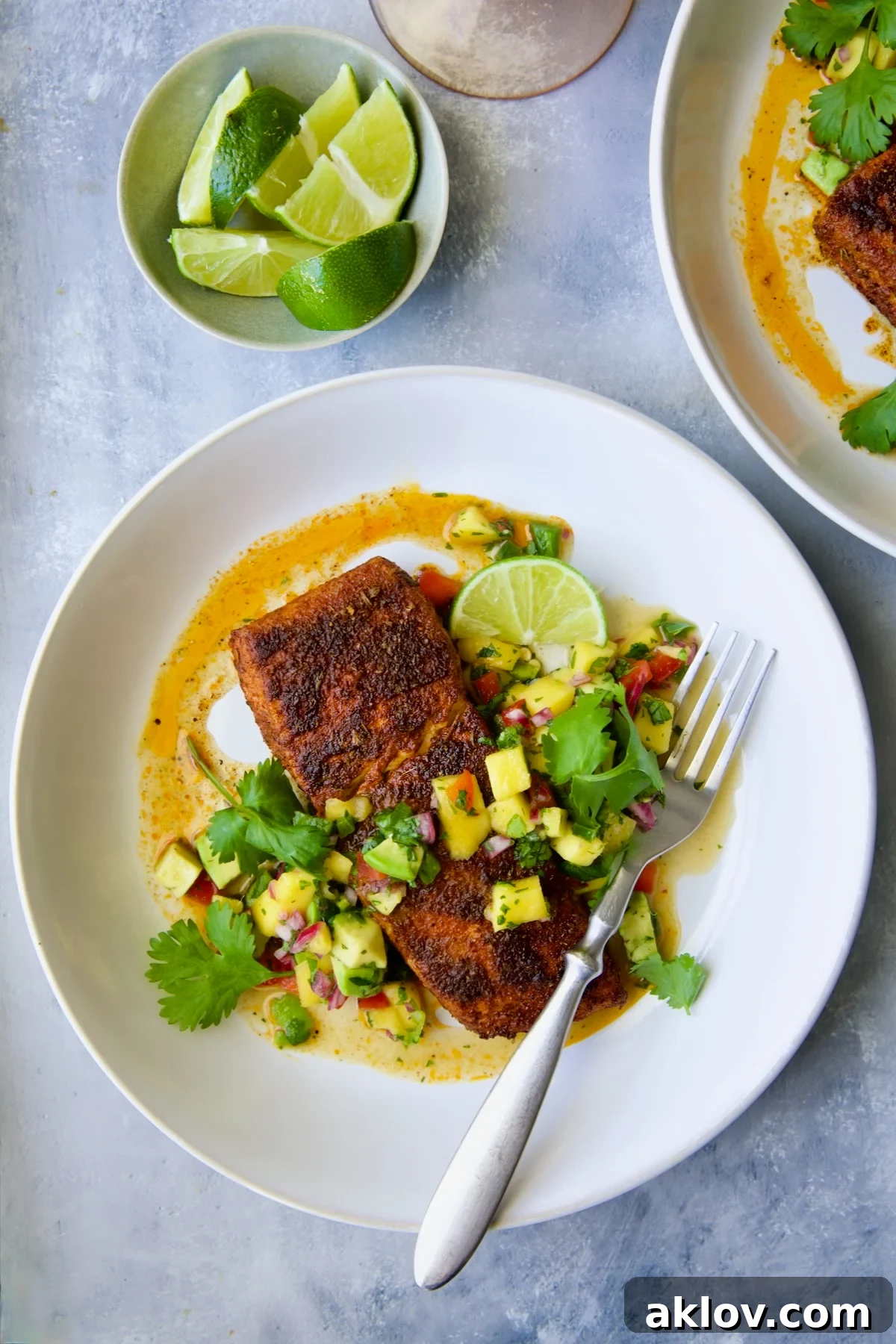
What is Blackening? Unveiling a Classic Cajun Technique
Blackening is a distinctive Cajun cooking technique, famously popularized by Chef Paul Prudhomme in New Orleans during the 1980s. As showcased in this exceptional blackened halibut recipe, the method involves generously coating fish, or other proteins, in a rich, flavorful spice mixture. This seasoned item is then seared at an intensely high temperature, typically in a smoking-hot cast-iron skillet, until a dark, lightly charred crust forms. This crust offers a magnificent textural contrast to the moist, tender, and flaky interior of the fish, delivering a deeply robust flavor profile.
The magic of blackening lies in this extreme heat, which quickly cooks the exterior of the protein, caramelizing the spices and forming that signature crust. While a well-seasoned cast-iron skillet is traditionally considered ideal for achieving the perfect blackening effect due to its superior heat retention, other heavy-bottomed skillets can also be used. Beyond fish, this versatile cooking method can be applied to a wide array of proteins, including chicken breasts, succulent shrimp, tender beef, and flavorful pork, making it a fantastic technique to master for any home cook looking to add a touch of authentic Cajun spice to their repertoire.
Why This Blackened Halibut Recipe is a Culinary Gem!
This Blackened Halibut with Mango and Avocado Salsa isn’t just another fish recipe; it’s a vibrant, wholesome, and incredibly satisfying dish that deserves a permanent spot in your rotation. Halibut, renowned for its delicate and mild flavor, serves as an impeccable canvas for the bold blackening spices, allowing the seasoning to truly shine without overpowering the natural sweetness of the fish. This makes it an ideal choice for blackened fish preparations, providing a balanced and harmonious flavor profile that even seafood skeptics will appreciate.
What truly sets this recipe apart is the refreshing and dynamic mango and avocado salsa. It’s more than just a topping; it’s a crucial element that introduces a bright, tropical kick, perfectly complementing the smoky, spicy notes of the blackened halibut. The creamy avocado mellows the sharp zest of fresh red onion and vibrant cilantro, while the inherent sweetness of the ripe mango provides a delightful counterpoint to the spicy warmth of the jalapeño. This thoughtful combination ensures every bite is an exciting blend of savory, sweet, and spicy flavors.
Moreover, easy halibut recipes like this are a dream come true for summer evenings or any time you crave a light and healthy meal. The fish cooks remarkably fast, minimizing kitchen time and avoiding the need to heat your home with a long-running oven. This quick preparation, combined with the fresh ingredients, makes it a perfect choice for nutritious weekday dinners or a relaxing weekend treat. Furthermore, both the blackening seasoning and the salsa are effortlessly customizable, allowing you to fine-tune the spice levels to your exact preference – from subtly warm to powerfully fiery. While thoughtfully scaled for two, making it an exquisite date night option, this versatile recipe can effortlessly be doubled or even tripled to gracefully accommodate family dinners or entertain guests, proving its adaptability and crowd-pleasing potential. Discover why this dish consistently earns rave reviews:
- Quick & Effortless: Enjoy a gourmet meal in under 35 minutes! The blackened halibut cooks swiftly, requiring only a brief sear on each side before a quick finish in the oven, ensuring tender, flaky results every time.
- Incredibly Fresh: Lean, pristine halibut forms the base, beautifully crowned with a vibrant, tropical salsa. This combination promises a light, invigorating, and healthy dining experience.
- Elegantly Presented: Beyond its incredible taste, this dish boasts a stunning visual appeal. Its vibrant colors and sophisticated presentation make it an ideal choice for warm-weather entertaining, impressing guests without extra effort.
- Customizable to Perfection: Tailor the heat to your liking by adjusting the cayenne in the spice blend or leaving the seeds in the jalapeño for more kick. The recipe is perfectly designed for two but can be easily scaled up for larger gatherings, offering ultimate flexibility for any occasion.
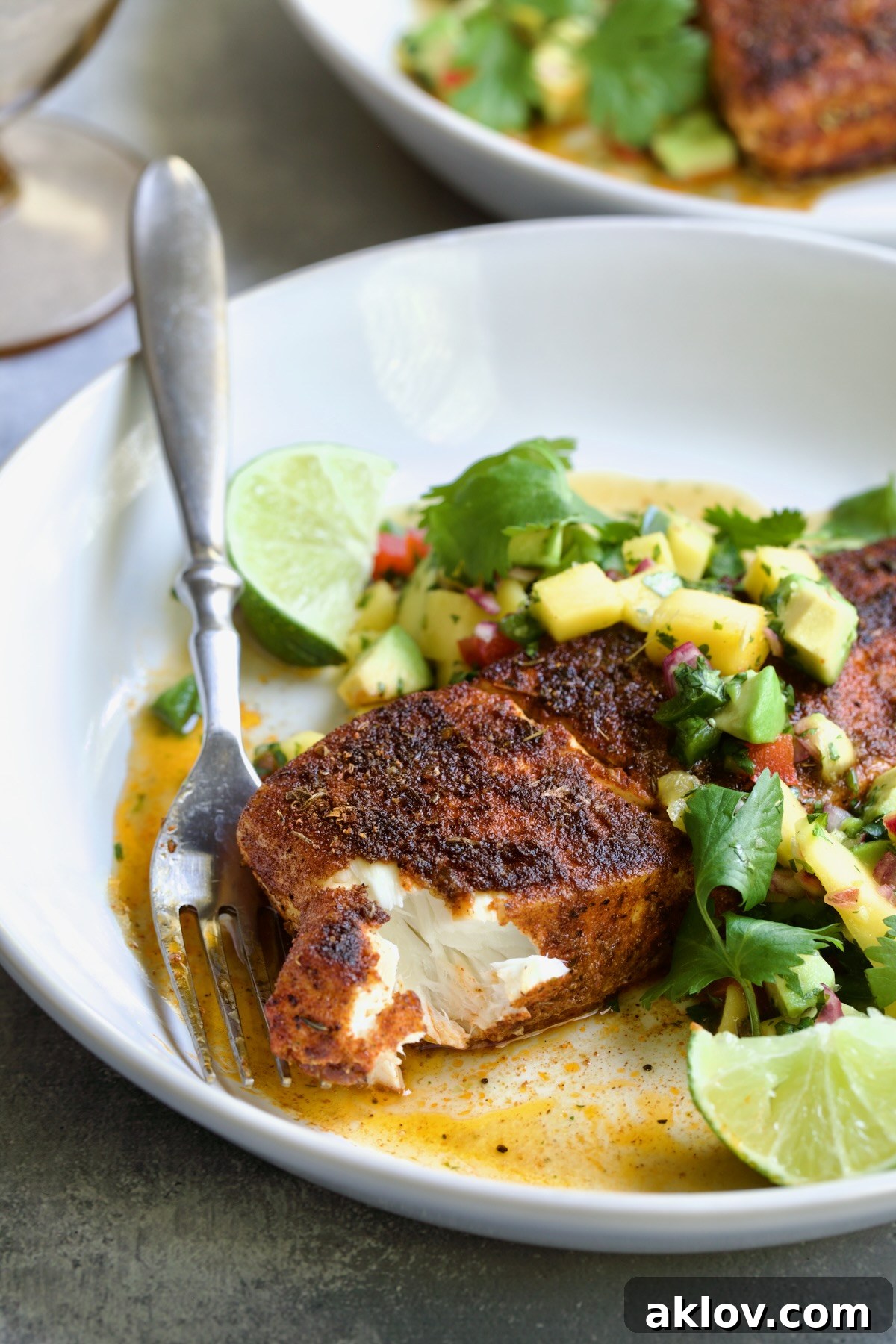
How to Make Blackened Halibut with Mango and Avocado Salsa: A Step-by-Step Guide
Recipe Ingredients: Your Fresh & Flavorful Pantry
Crafting this exquisite Blackened Halibut dish begins with selecting the finest ingredients. Below is a comprehensive list of everything you’ll need to create this culinary delight. For precise quantities, please refer to the detailed recipe card provided at the end of this article.
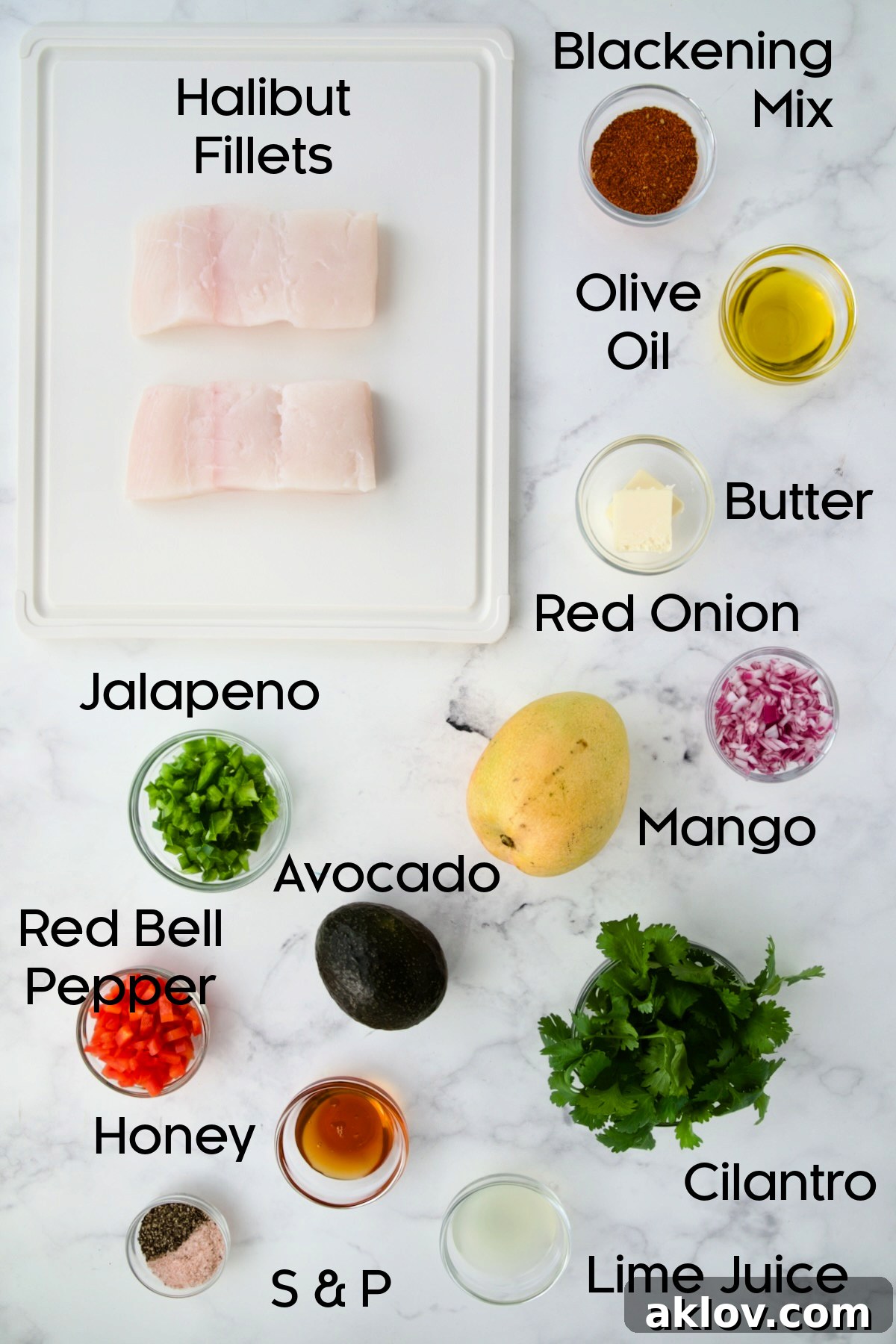
Ingredient Notes and Substitutions: Customizing Your Tropical Feast
- Halibut: This recipe truly shines with halibut, a fantastic mild, white, and flaky fish known for its delicate texture. Fresh halibut is typically in season from March through October, offering a prime window for optimal flavor and quality. For year-round enjoyment, previously frozen halibut is an excellent and readily available option. Furthermore, Pacific halibut fisheries are rigorously regulated, making it a highly sustainable choice that you can feel good about. If halibut isn’t available, or you prefer alternatives, other mild, flaky white fish like Chilean sea bass, grouper, cod, mahi-mahi, or tilapia will work beautifully. For those who enjoy a richer flavor, salmon can also be a delicious substitution, offering its own unique character to the dish.
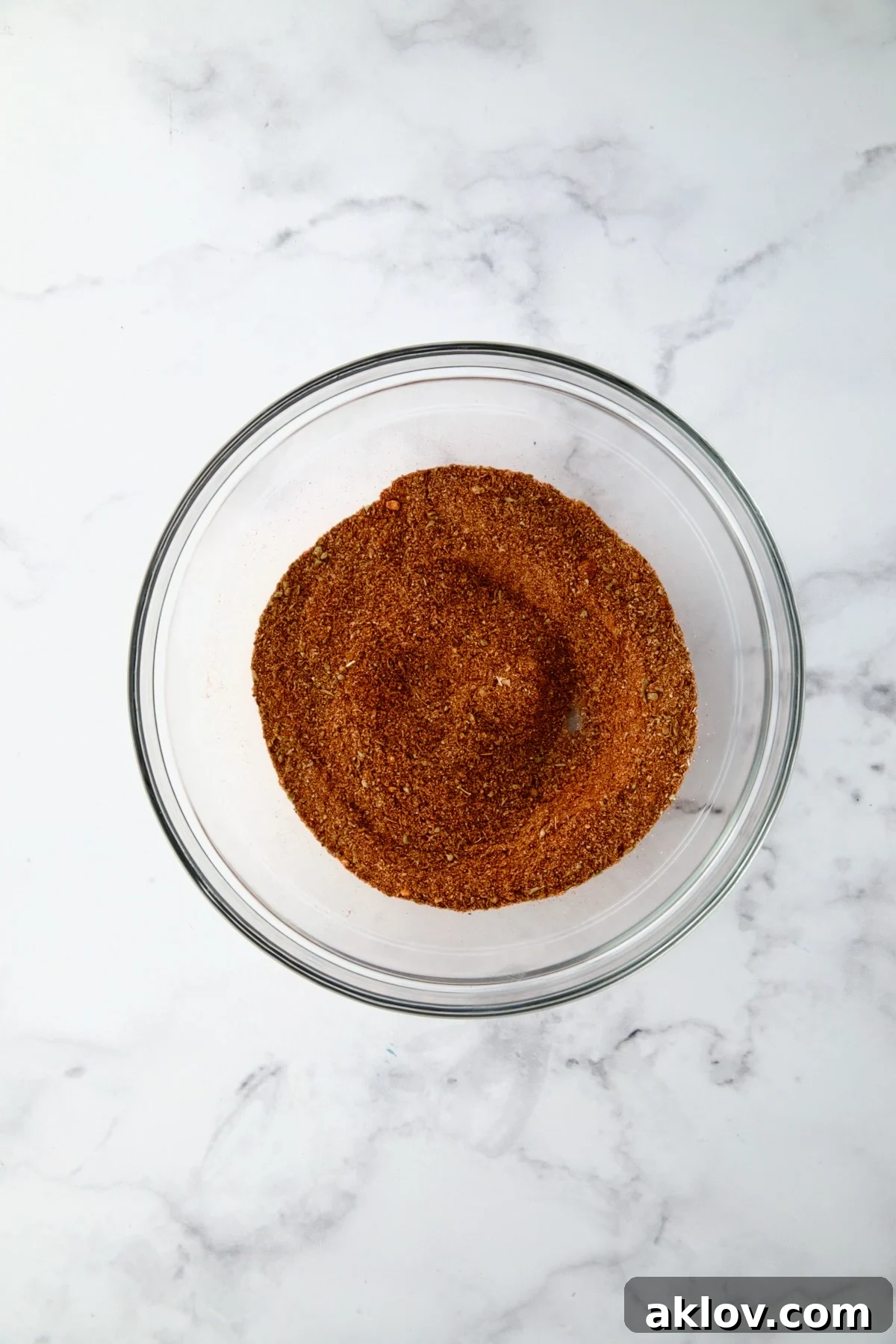
- Blackening Seasoning: While convenient commercial blends of blackening seasoning are available, I highly recommend making your own. Crafting it from scratch provides complete control over the salt content and desired level of spiciness, allowing you to tailor it perfectly to your taste. My preferred blend for this recipe includes a harmonious combination of smoked paprika for depth, sweet paprika for color and subtle sweetness, granulated garlic and onion for aromatic complexity, freshly ground black pepper, cayenne pepper for a customizable kick, dry mustard for a pungent warmth, and dried herbs like thyme and oregano for an authentic, earthy touch. This homemade mixture ensures an intensely flavorful final dish that surpasses store-bought options.
- Mango: Freshly diced mango is essential for introducing a delightful natural sweetness and vibrant acidity to the salsa. When selecting a ripe mango, gently squeeze it; it should yield slightly to pressure and emit a sweet, fruity aroma near the stem end. Avoid overly soft or bruised fruit. For a different tropical twist, diced fresh pineapple makes an excellent substitute, as it holds its shape well and provides a similar sweet-tart balance.
- Avocado: The avocado in your salsa should be perfectly ripe, offering a creamy texture that helps to balance the bolder flavors. Like mango, a ripe avocado will yield gently to pressure when squeezed. Choose one that feels substantial for its size and has no major soft spots.
- Jalapeño: This pepper adds a fantastic layer of heat and freshness to the salsa. For a spicier salsa, feel free to leave some or all of the seeds and membranes intact, as they contain most of the capsaicin. If you prefer a milder version, simply remove the seeds and white membranes before finely chopping.
- Red Bell Pepper: Beyond adding a subtle sweetness and crisp texture, red bell pepper contributes a beautiful pop of color to the salsa, making the presentation even more appealing. Yellow or orange bell peppers can be used interchangeably for similar flavor and visual impact.
- Red Onion: Red onions are a superb choice for fresh salsas due to their milder flavor profile compared to white or yellow varieties. Their delicate sharpness enhances the other ingredients without overpowering them. If red onion is unavailable, thinly sliced scallions (green onions) can serve as a suitable, milder alternative.
Step-By-Step Instructions: Creating Your Masterpiece
Follow these simple steps to prepare your Blackened Halibut with Mango and Avocado Salsa:
- Begin by gathering and precisely prepping all your ingredients (mise en place). This includes dicing your fruits and vegetables, and measuring out your spices.
- In a small bowl, combine all the ingredients for the blackening seasoning. Mix thoroughly until well combined, then set aside.
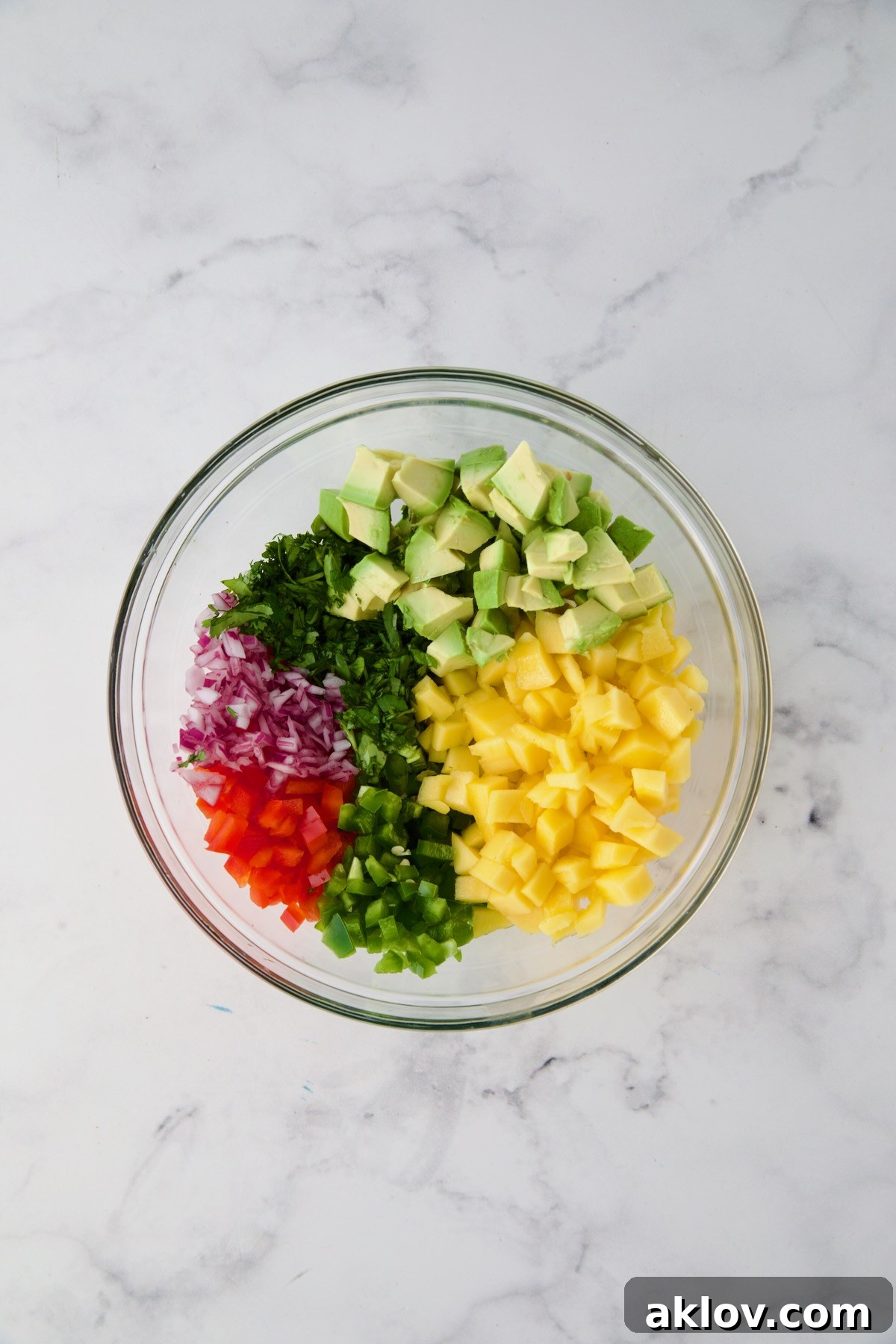
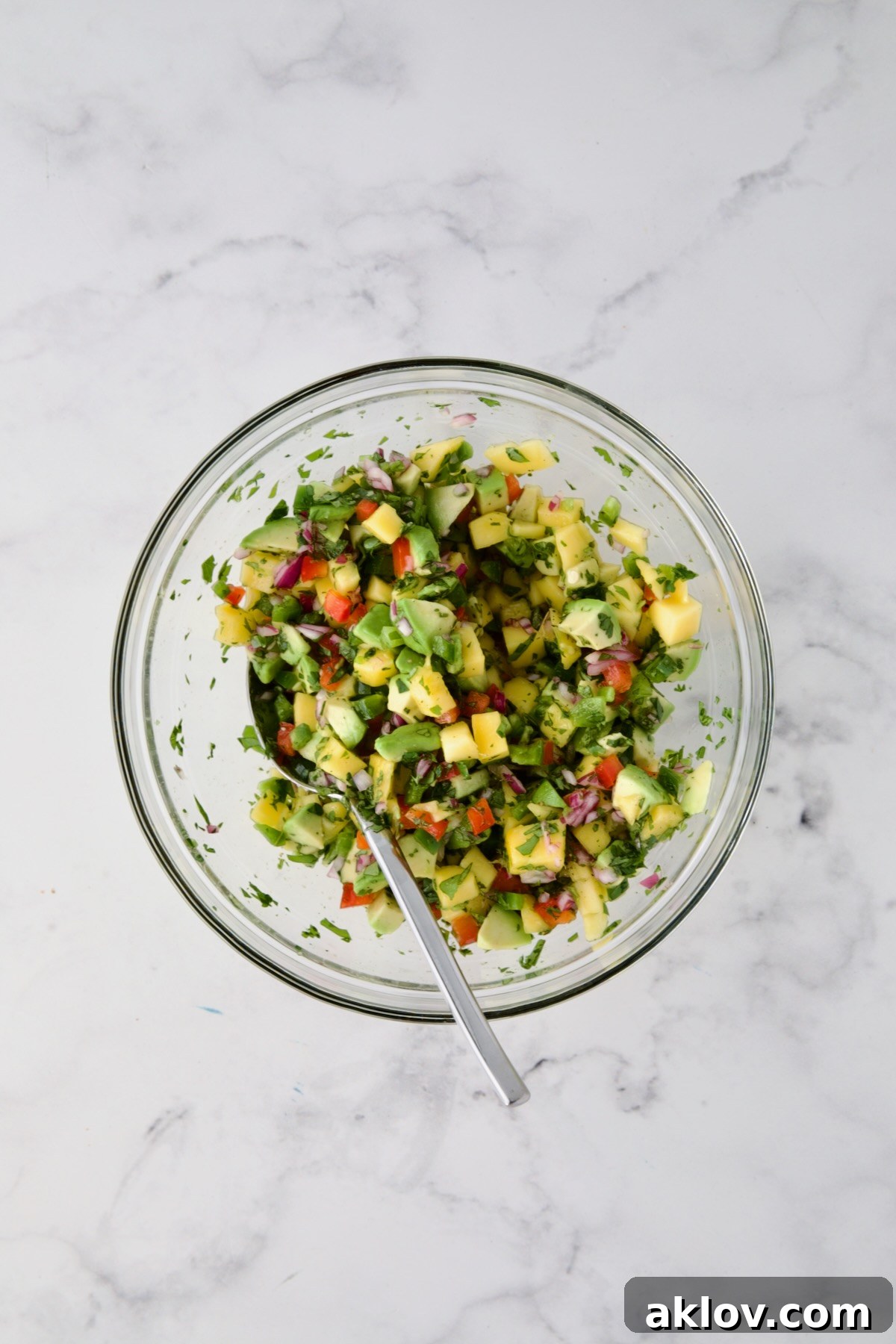
- In a separate medium-sized bowl, gently combine all the prepped ingredients for the mango and avocado salsa. Stir just enough to integrate everything without mashing the avocado. Set this vibrant salsa aside to allow the flavors to meld while you prepare the fish.
- Preheat your oven to 350°F (175°C). This will be used to finish cooking the fish, ensuring it’s cooked through without drying out.
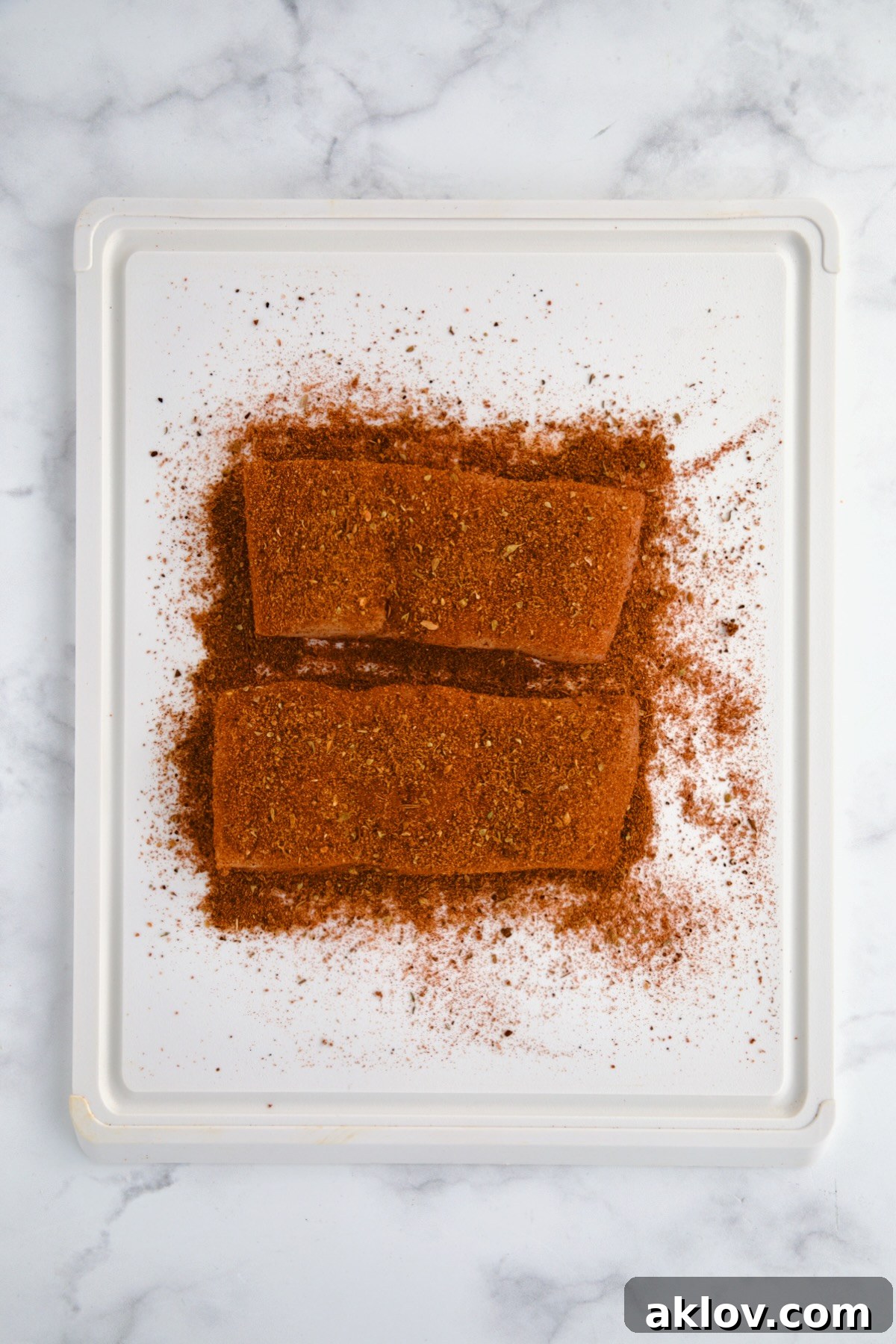
- Carefully pat the halibut fillets completely dry with paper towels. This crucial step promotes a crisp, well-formed blackened crust. Then, liberally season both sides of each fish piece with your homemade blackening mix, pressing gently to adhere the spices.
- Place a cast-iron skillet (or other heavy-bottomed pan) over medium-high heat and allow it to get very hot – nearly smoking. This high heat is key to creating the blackened crust.
- Add the butter and olive oil to the hot skillet. The combination of butter for flavor and olive oil for its higher smoke point helps prevent the butter from burning too quickly.
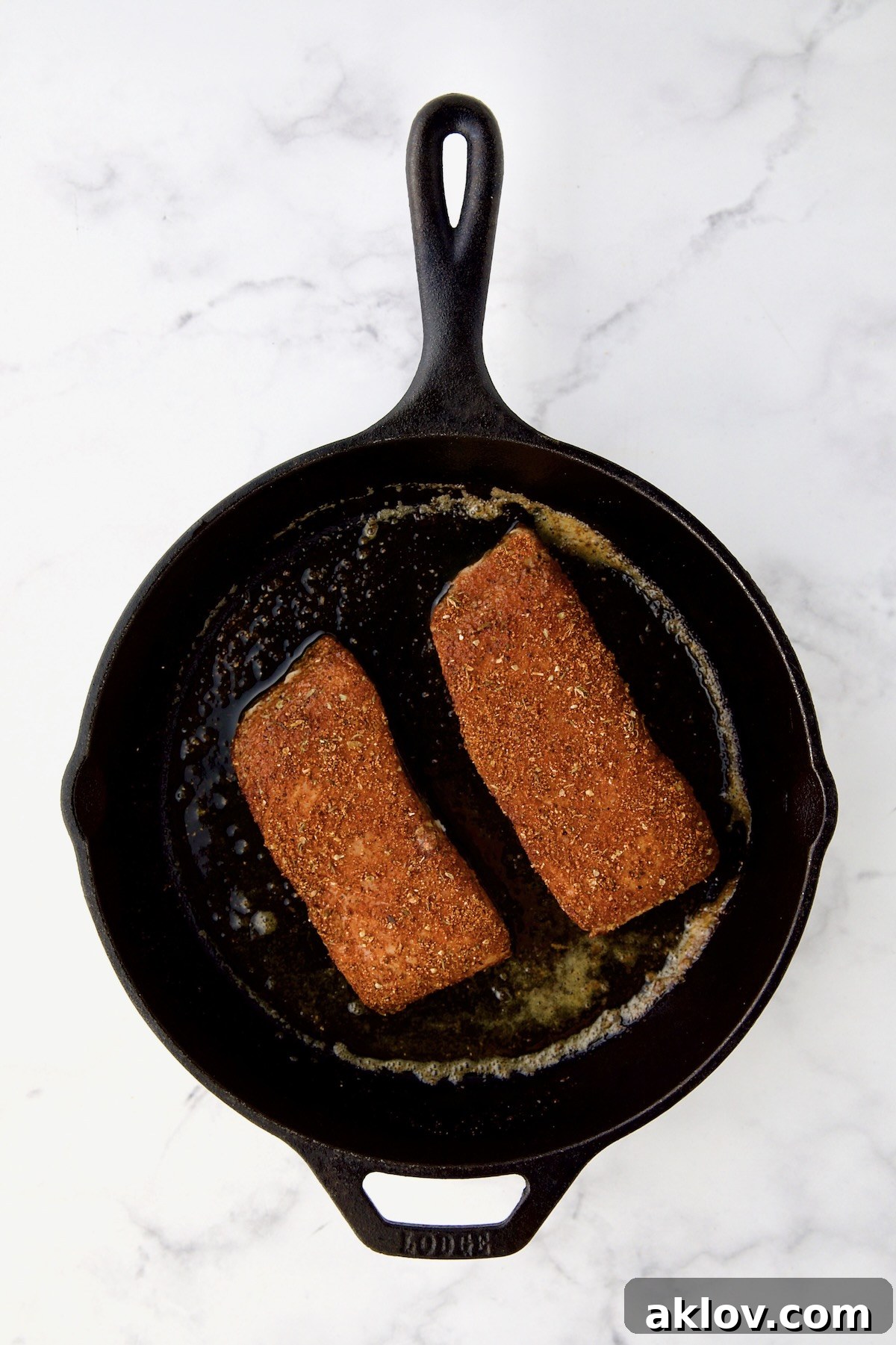
- As soon as the butter has melted and the mixture is shimmering, carefully add the seasoned halibut fillets to the skillet, ensuring not to overcrowd the pan. Work in batches if necessary.
- Sear the fish for approximately 2 minutes per side. You’re looking for a dark, charred crust to form on both surfaces.
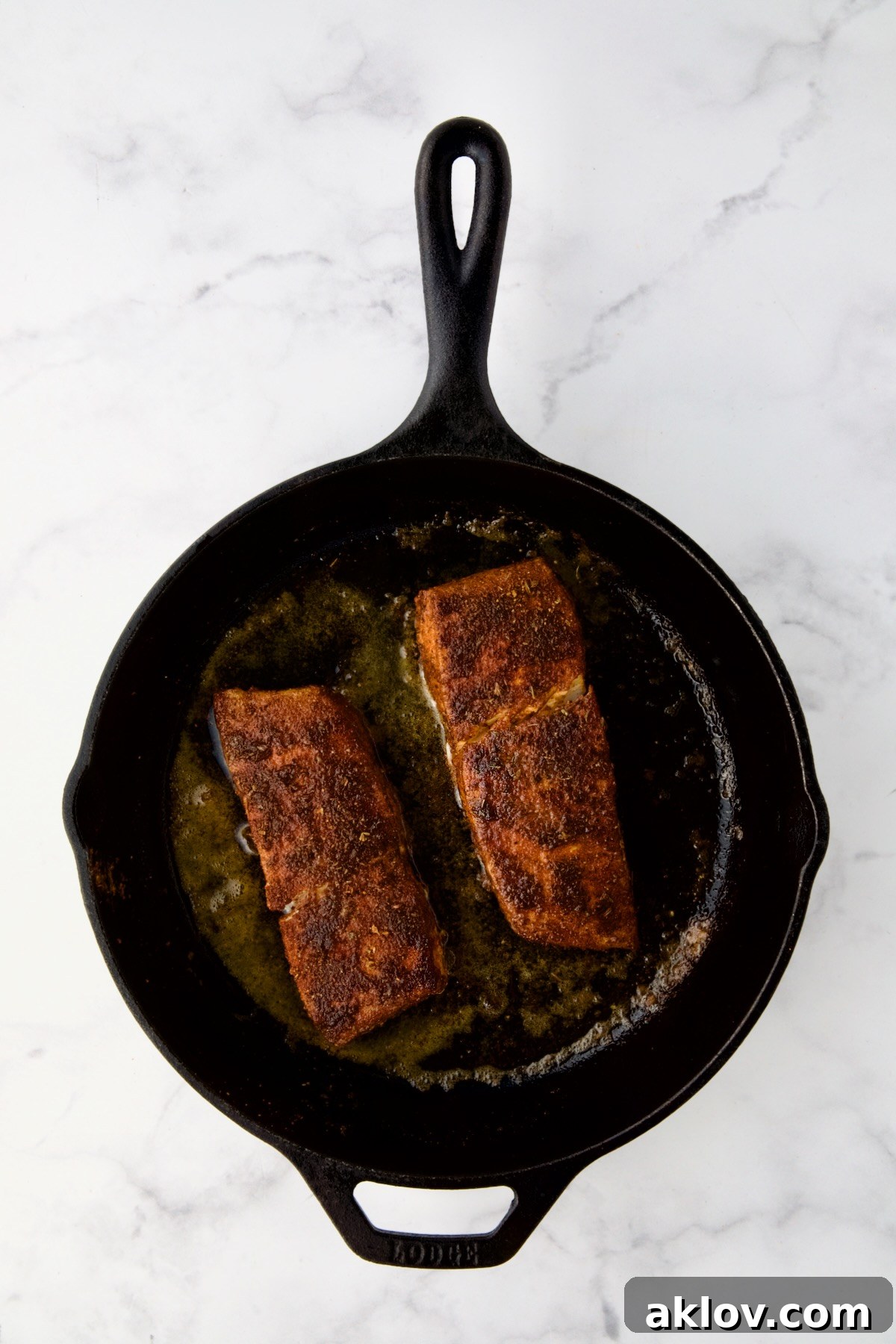
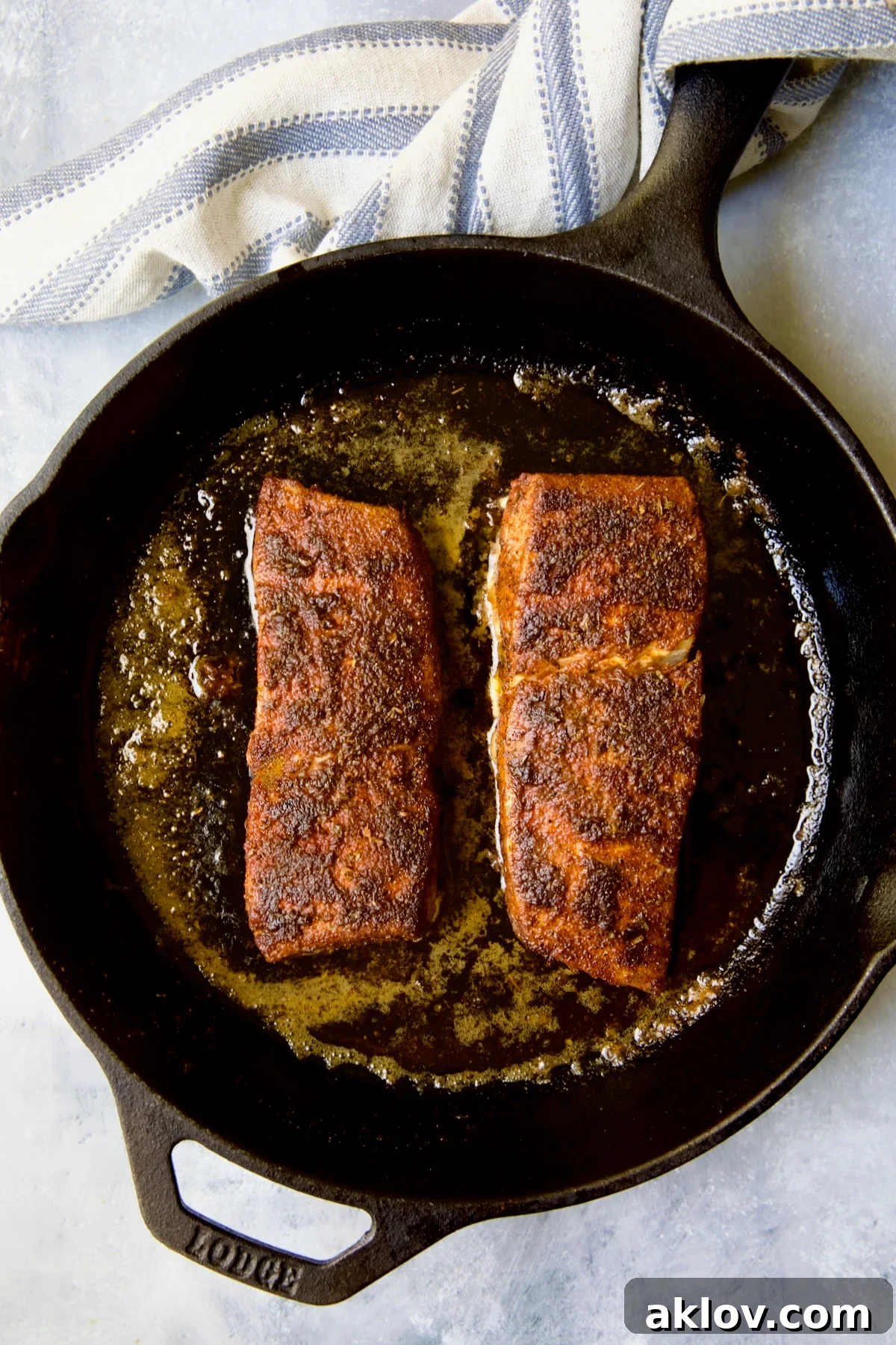
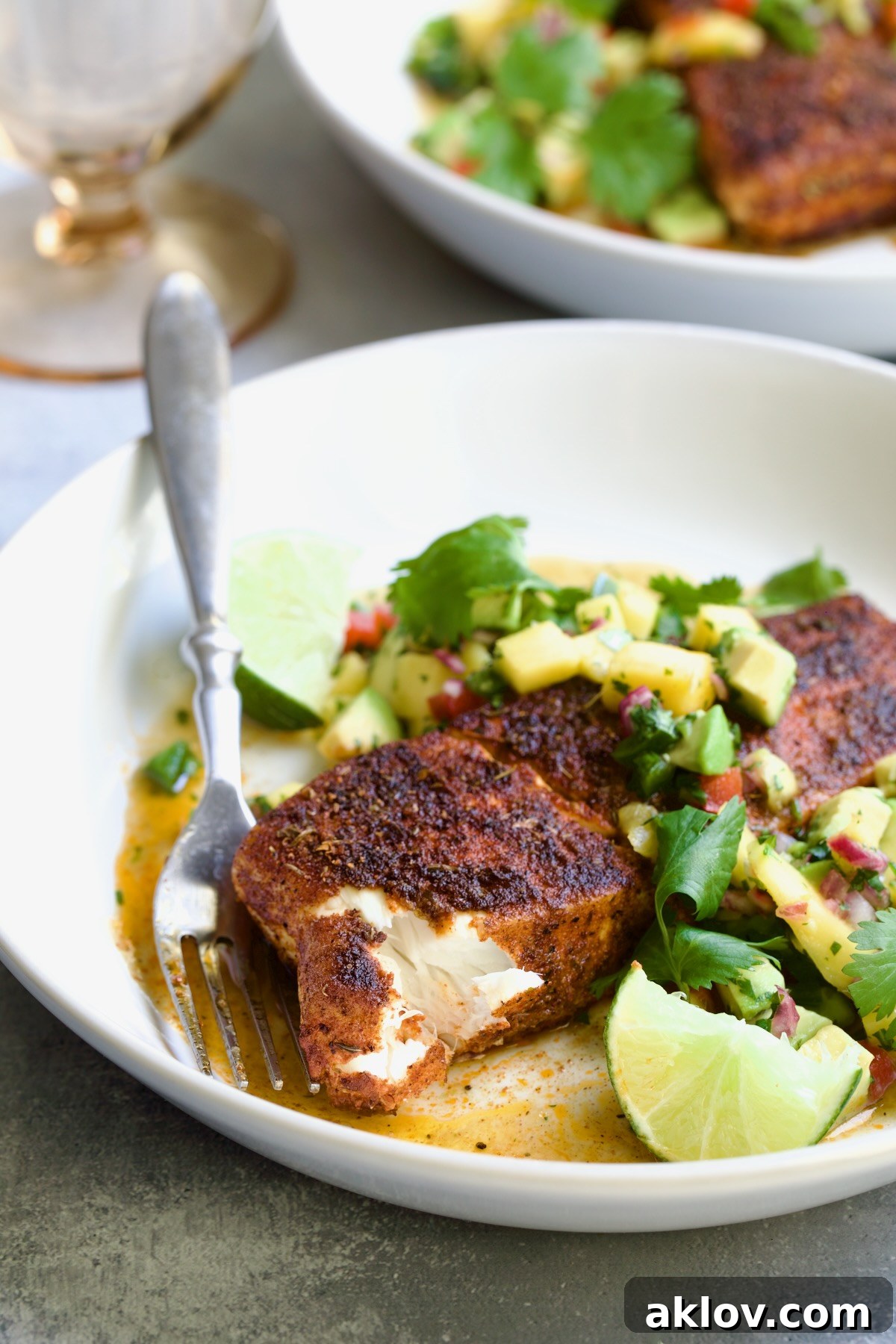
- Transfer the skillet with the seared fish into the preheated oven. Continue to cook for an additional 4 to 5 minutes, or until the fish flakes easily with a fork at its thickest part. This indicates perfect doneness.
- It is vital to be careful not to overcook the fish! Halibut, like many white fish, can become very dry and tough if cooked past its ideal internal temperature of 145°F (63°C). A meat thermometer can be a helpful tool for precision.
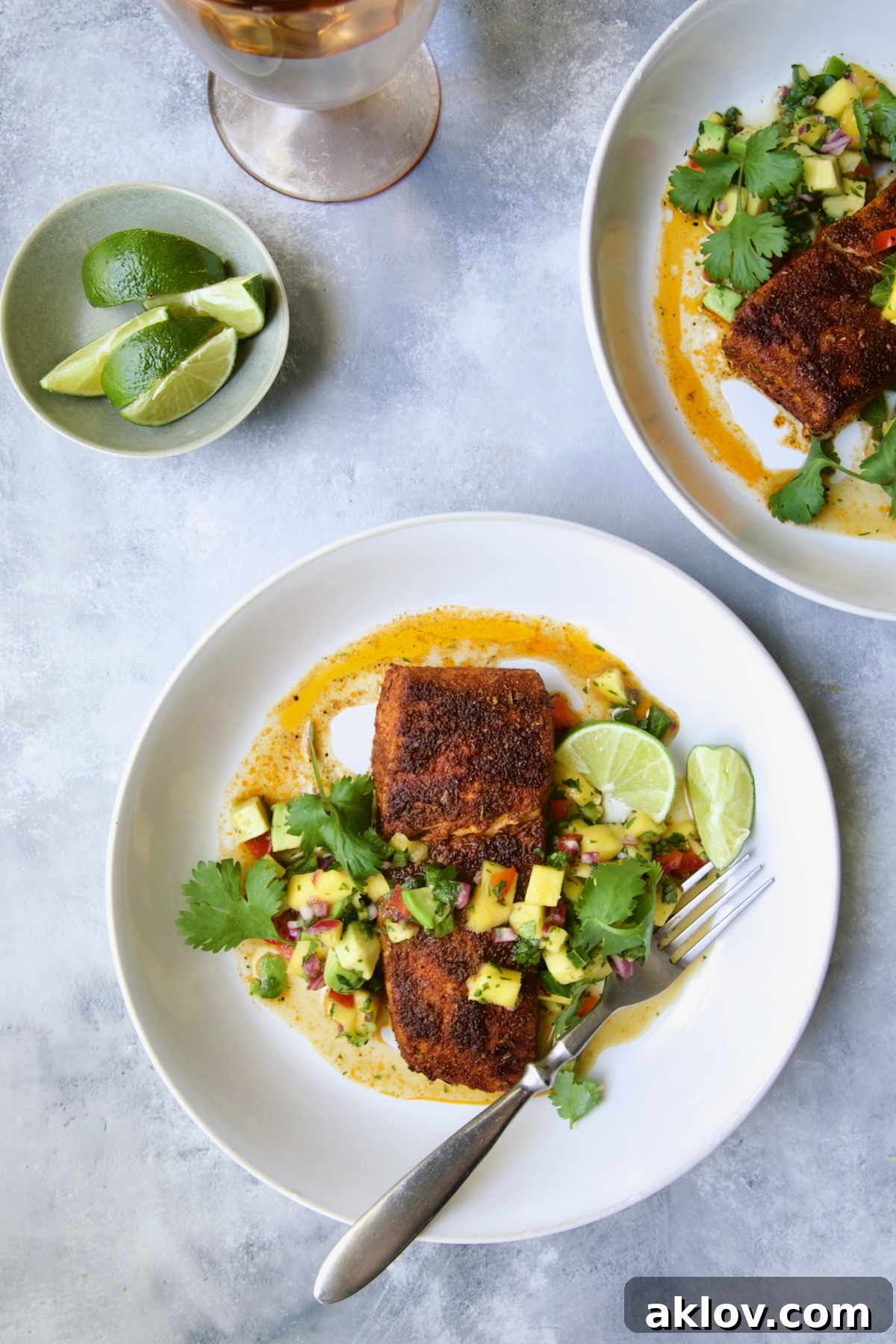
- Once cooked, carefully remove the halibut from the oven. Plate immediately and serve generously topped with the fresh and vibrant mango and avocado salsa. Garnish with a sprig of cilantro and a lime wedge for an extra touch of freshness.
How to Dice a Mango: A Quick & Safe Method
- Dicing a mango can seem tricky, but with the right technique, it’s quick and easy. First, hold the mango vertically and slice off the two “cheeks” (the widest parts) on either side of the flat, oval pit. Discard the pit. Take one mango cheek and, with the flesh facing up, make several narrow, parallel slices all the way across the flesh, being careful not to cut through the skin. Rotate the mango cheek 90 degrees and repeat the slicing, creating a checkerboard or grid pattern. Now, you can simply scoop out the diced flesh with a spoon, and you’ll have perfectly even mango cubes ready for your salsa. Always exercise caution and use a sharp knife for safety.
Money-Saving Tip: Smart Substitutions for Halibut
- Halibut is undeniably delicious, but it can often be on the pricier side. If you’re looking to enjoy this incredible dish without breaking the bank, cod is a fantastic and budget-friendly substitute. Cod offers a very similar mild flavor and flaky texture to halibut, making it an excellent alternative that will still allow the vibrant blackening spices and tropical salsa to shine. Other cost-effective white fish options like tilapia or pollock can also work well, ensuring you can enjoy this gourmet meal without compromise.
Recipe FAQs: Your Questions Answered
While the blackening spice mixture can be prepared well in advance and stored for future use, the fish itself cooks very quickly and is best prepared just before serving to ensure optimal texture and flavor. For the fresh mango and avocado salsa, you can chop all the ingredients, except for the avocado, up to 8 hours ahead of time. Dice and add the avocado just before assembling and serving the salsa to prevent it from browning and to maintain its fresh, vibrant green color.
For the best quality, I highly recommend serving this delightful salsa immediately after preparation. This ensures the avocado retains its bright green color and creamy texture. If you happen to have any leftovers, the salsa can be stored in an airtight container in the refrigerator for up to two days. Be aware that the avocado will likely begin to oxidize and turn brown, even with the presence of lime juice. While the appearance might change, the salsa will still taste perfectly fine and remains safe to eat.
Halibut is wonderful, but many other mild white fish varieties make excellent substitutes for this recipe. Fantastic options include Chilean sea bass, grouper, cod, mahi-mahi, barramundi, snapper, or tilapia. These fish share a similar mild flavor and flaky texture, which perfectly absorbs the bold blackening seasoning and pairs beautifully with the tropical salsa. Feel free to choose what’s freshest and most available to you.
Storage & Reheating Tips
- Should you have any delectable leftovers, store them promptly in an airtight container in the refrigerator for up to two days. When reheating leftover blackened halibut, to retain its moisture and delicate texture, place it in a preheated 325-degree F (160°C) oven, loosely covered with aluminum foil, until just warmed through. Avoid microwaving, as this can dry out the fish.
Elevate Your Meal: Delicious Serving Suggestions
- Pairing this Blackened Halibut with complementary sides can transform your meal into an unforgettable feast. Consider serving it alongside vibrant Mexican Sweet Potato Wedges, which offer a delightful sweetness and earthiness that perfectly complements the bold flavors of the halibut and salsa.
- For a lighter, low-carb option, Riced Cauliflower provides a neutral base that soaks up all the delicious juices.
- A crisp and refreshing Southwestern Salad will add a burst of freshness and texture.
- Alternatively, a side of bright and zesty Lemony Braised Greens with Olives can cut through the richness and provide a wonderful depth of flavor.
Discover More Great Halibut Recipes You’ll Adore!
- If you’ve fallen in love with halibut, explore these other fantastic and easy recipes that highlight its versatility:
- Halibut Ceviche with Mango and Avocado – A fresh and vibrant no-cook option.
- Prosciutto-Wrapped Halibut with Herb Caper Butter – An elegant dish bursting with savory flavors.
- Butter Basted Halibut with Lemon Braised Baby Vegetables – A rich yet light preparation for a special meal.
Find all my exquisite fish and seafood recipes at Fish and Seafood Recipes – From A Chef’s Kitchen for endless culinary inspiration.
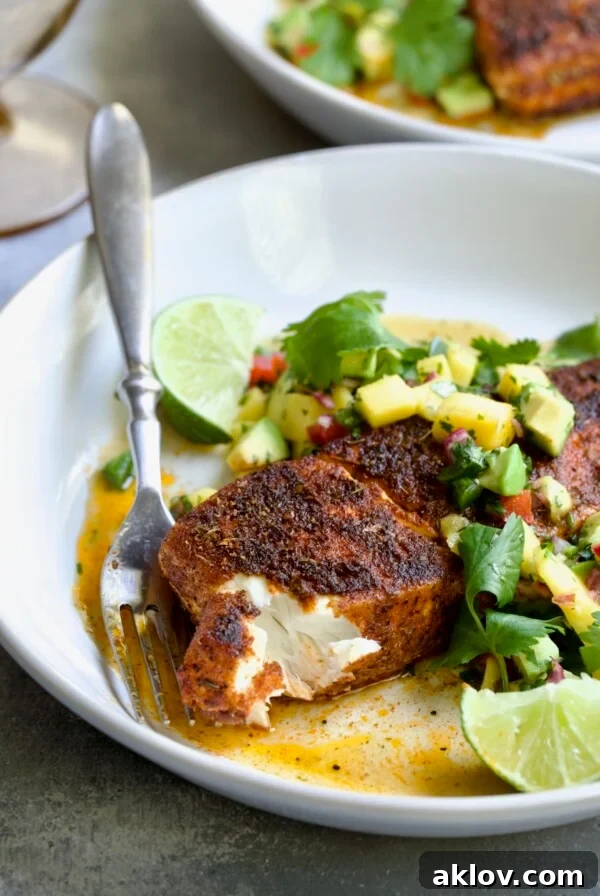
Blackened Halibut with Mango and Avocado Salsa
Equipment
-
Wusthof Chef Knife
-
Cutting Board
-
Measuring Cups and Spoons
-
Glass Mixing Bowls
-
Set of Cast Iron Skillets
Ingredients
Blackening Mix
- 2 teaspoons smoked paprika
- 1 teaspoon sweet paprika
- 1 teaspoon granulated garlic
- 1 teaspoon granulated onion
- 1 teaspoon freshly ground black pepper
- 1/2 teaspoon cayenne pepper
- 1/2 teaspoon dry mustard
- 1/2 teaspoon dried thyme
- 1/2 teaspoon dried oregano
- 1/4 teaspoon salt
Salsa
- 1 large mango, peeled, pitted and diced
- 1 small avocado, peeled, pitted and diced
- 1/2 medium jalapeno pepper, seeded if desired, finely chopped
- 1/4 cup finely chopped red bell pepper
- 1/4 cup finely chopped red onion
- 3 tablespoons chopped cilantro
- 1 large lime, juiced
- 1 tablespoon honey, or to taste
- Salt and freshly ground black pepper, to taste
Fish
- 2 pieces (6-8 ounce) halibut, skin removed
- 2 tablespoons butter
- 1 tablespoon olive oil
Instructions
Blackening Mix
-
Combine ingredients in a small bowl; set aside.
Salsa
-
Combine salsa ingredients in a bowl; serve with fish.
Fish
-
Preheat oven to 350 degrees. Pat fish dry then season liberally with blackening mix.
-
Heat a cast-iron skillet over medium-high heat until very hot. Add the butter and oil. As soon as the butter melts, add fish to skillet. Cook 2 minutes per side.
-
Place in the oven and cook for 4 to 5 minutes or until fish flakes easily with a fork. Serve with salsa.
Notes
SUBSTITUTIONS:
- Can substitute any fish such as cod, Chilean sea bass, grouper, tilapia, or salmon.
- Use pineapple in place of mango.
MAKE AHEAD:
- Halibut cooks very quickly so that part is best done right before you plan to serve.
- The blackening spice mixture can be made way in advance.
- For the salsa, you can prep the ingredients up to 8 hours ahead except for the avocado. Dice and add that just before cooking the fish.
Nutrition
Nutritional values are automatically calculated using unbranded products and are estimates only. Actual results may vary based on ingredients used and portion sizes. Adjust as needed for dietary restrictions, allergies, or health concerns.
 Like this? Leave a comment below!