
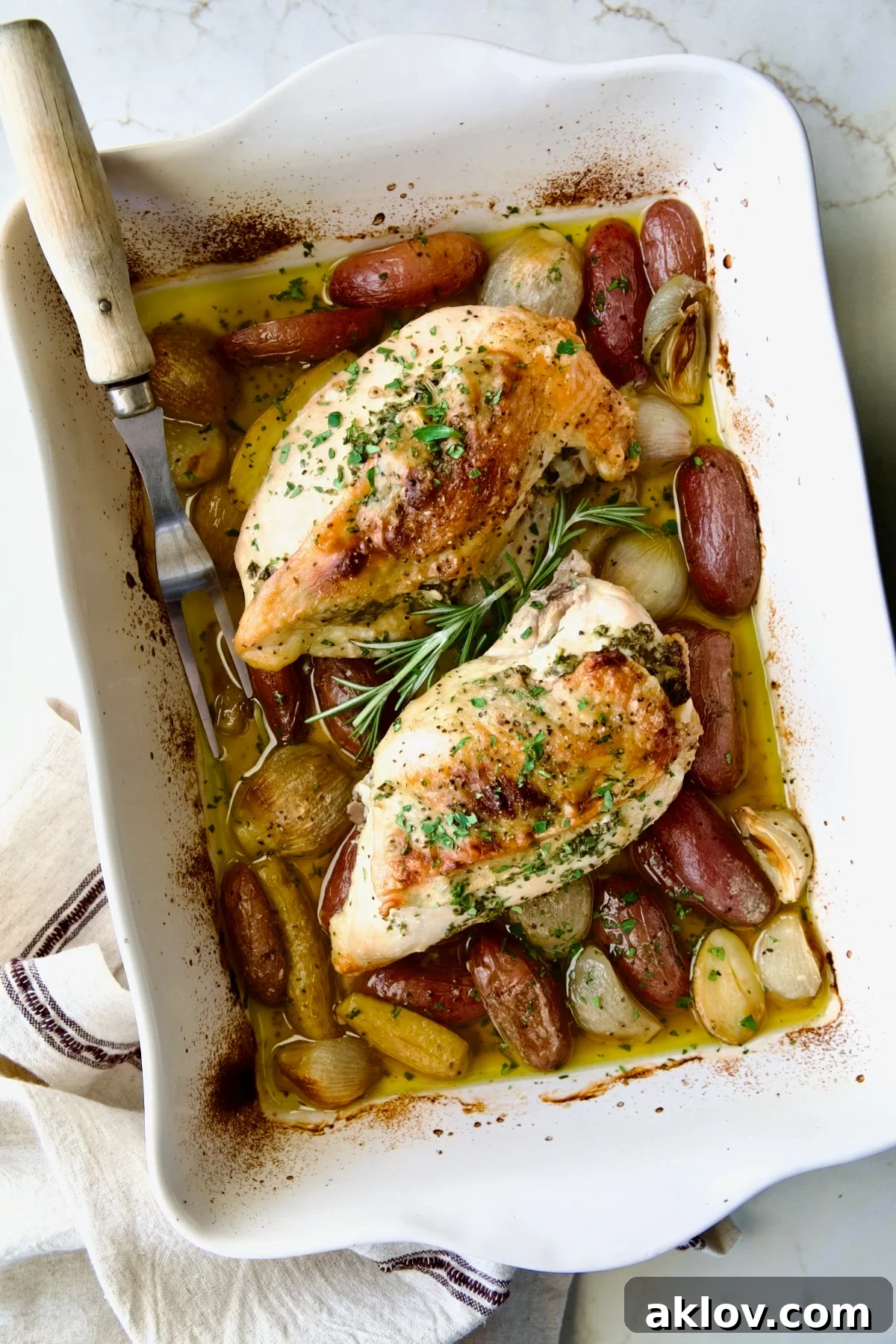
Ultimate One-Pan Roast Split Chicken Breasts with Herb Butter, Potatoes, and Shallots
Prepare to elevate your weeknight dinners or impress guests with this incredibly flavorful and surprisingly simple one-pan recipe for Roast Split Chicken Breasts. Featuring succulent, bone-in, skin-on chicken breasts infused with a rich herb butter, perfectly roasted alongside tender fingerling potatoes and sweet caramelized shallots, this dish is a true culinary triumph. It promises crispy, golden skin, juicy meat, and a medley of aromatic flavors, all achieved with minimal effort and cleanup. Whether you’re seeking a comforting Sunday supper or an elegant yet fuss-free meal, this roasted chicken and vegetable masterpiece is guaranteed to become a family favorite. Round out your meal with delightful sides like Garlic Green Beans or Baked Cabbage with Garlic and Parmesan for a truly memorable dining experience.
“This recipe led to a super moist, tasty chicken breast. Great job!”
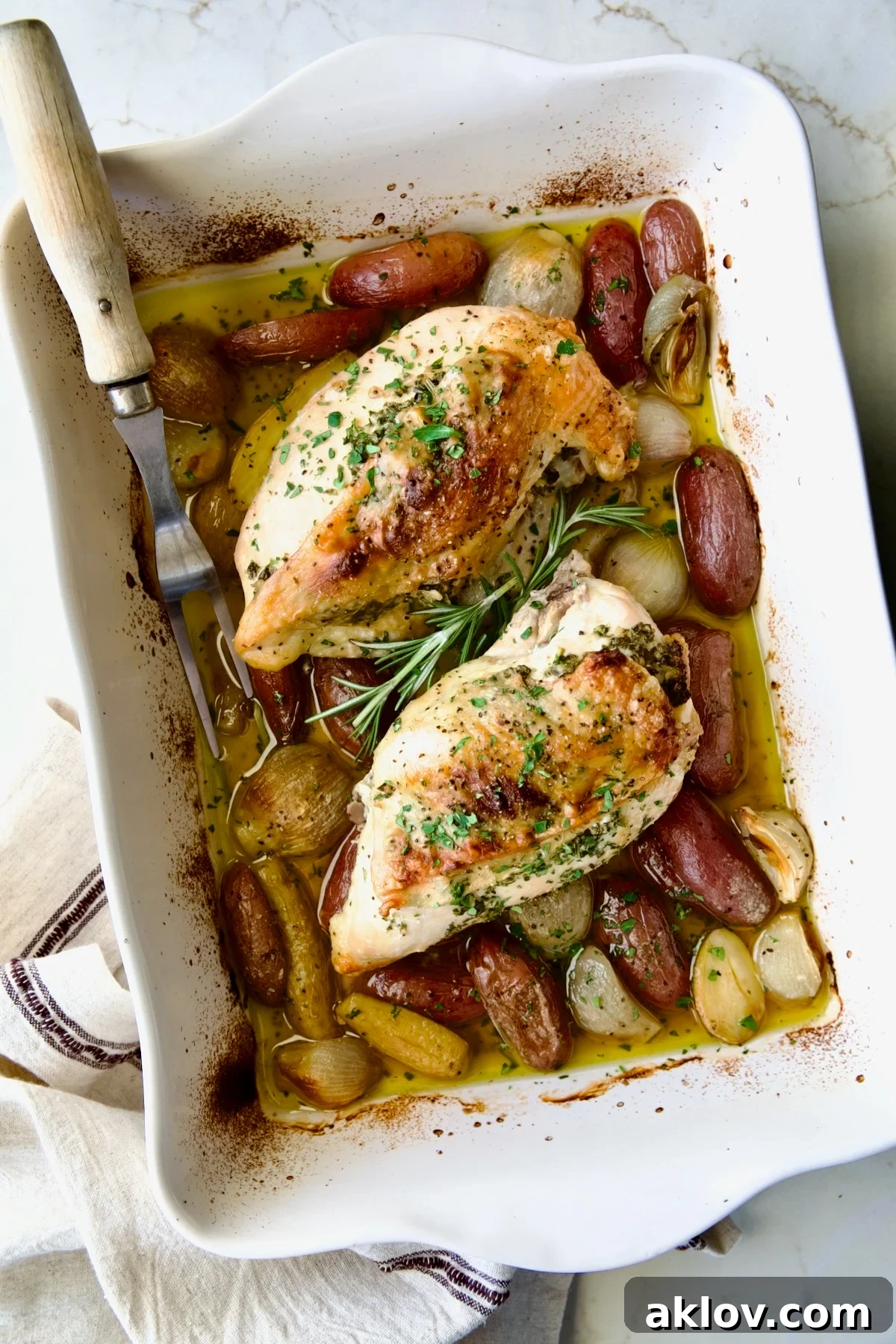
Why This One-Pan Chicken Recipe is a Must-Try!
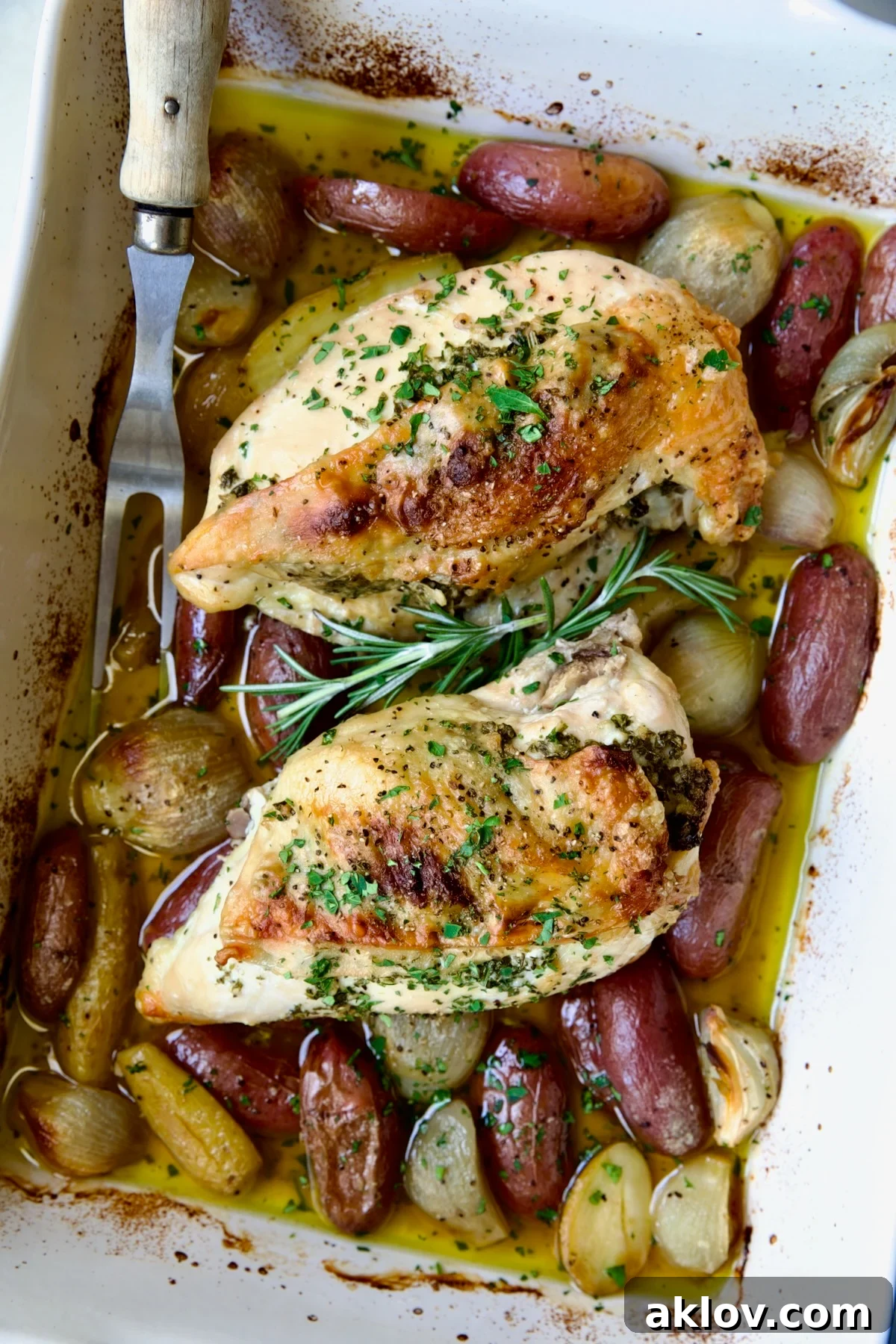
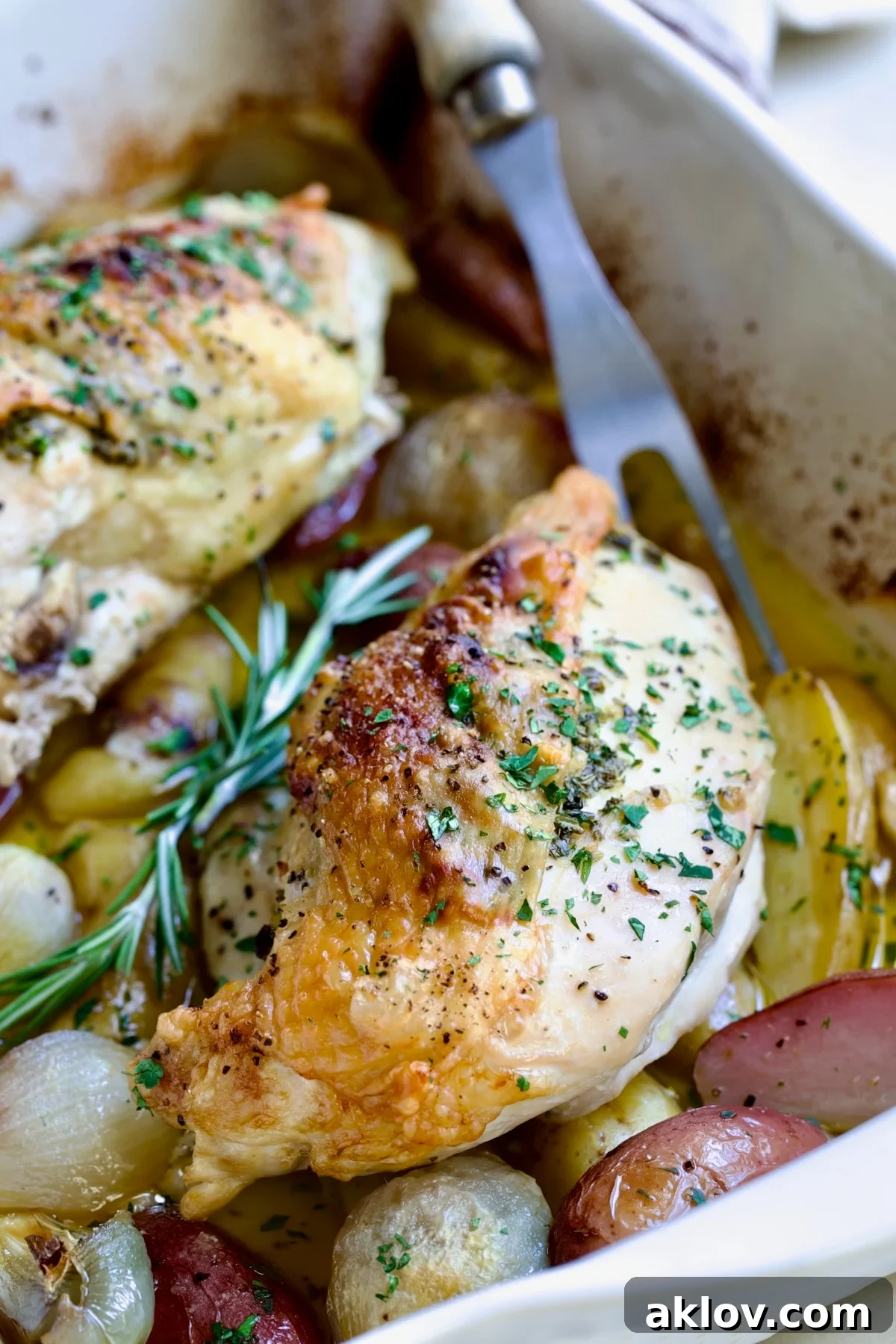
Few dishes capture the essence of comfort and culinary simplicity quite like a perfectly roasted chicken. This recipe takes that timeless appeal and enhances it, offering a showstopping centerpiece that tastes like it required hours of intricate preparation, but in reality, comes together with a handful of fresh ingredients and a little time in the oven. Imagine: incredibly juicy chicken breasts, boasting a golden-crisp, herb-seasoned skin, nestled harmoniously with tender fingerling potatoes and sweet, mellow shallots. Every component is kissed by a luxurious herb butter that melts into the meat and vegetables, creating an irresistibly rich and savory symphony of flavors.
This roast split chicken breast recipe stands out for several compelling reasons, making it a staple for both seasoned cooks and kitchen novices alike:
- Effortlessly Elegant: This dish is remarkably easy to prepare, requiring no complex cooking techniques. Yet, its vibrant presentation and incredible flavor make it impressive enough for any dinner party or special occasion.
- Superior Moisture and Flavor: By utilizing bone-in, skin-on split chicken breasts and a generous layer of herb butter tucked directly under the skin, this recipe guarantees unparalleled moisture and deep flavor. The skin crisps beautifully while protecting the delicate meat, and the bone adds an extra layer of richness to the final dish.
- Convenient Make-Ahead Options: Streamline your cooking process by prepping many components in advance. The aromatic herb butter can be prepared and tucked under the chicken skin a day ahead. Shallots can be peeled and halved, and fingerling potatoes can be washed and halved (store them in water to prevent discoloration, then drain and pat dry just before roasting). This flexibility allows for a quick assembly on cooking day, significantly reducing active kitchen time.
- Incredible Versatility: This recipe is a fantastic canvas for your culinary creativity. Feel free to vary the vegetables based on seasonal availability or personal preference. Carrots, sweet potatoes, parsnips, turnips, or even broccoli florets and bell peppers can be roasted alongside the chicken for added color and nutrients. Experiment with different herb combinations to discover new flavor profiles.
- Minimal Cleanup (One-Pan Wonder): The true beauty of this recipe lies in its one-pan nature. Cooking everything in a single roasting pan means fewer dishes to wash, making it an ideal choice for busy weeknights when you desire a hearty, wholesome meal without the aftermath of a cluttered kitchen.
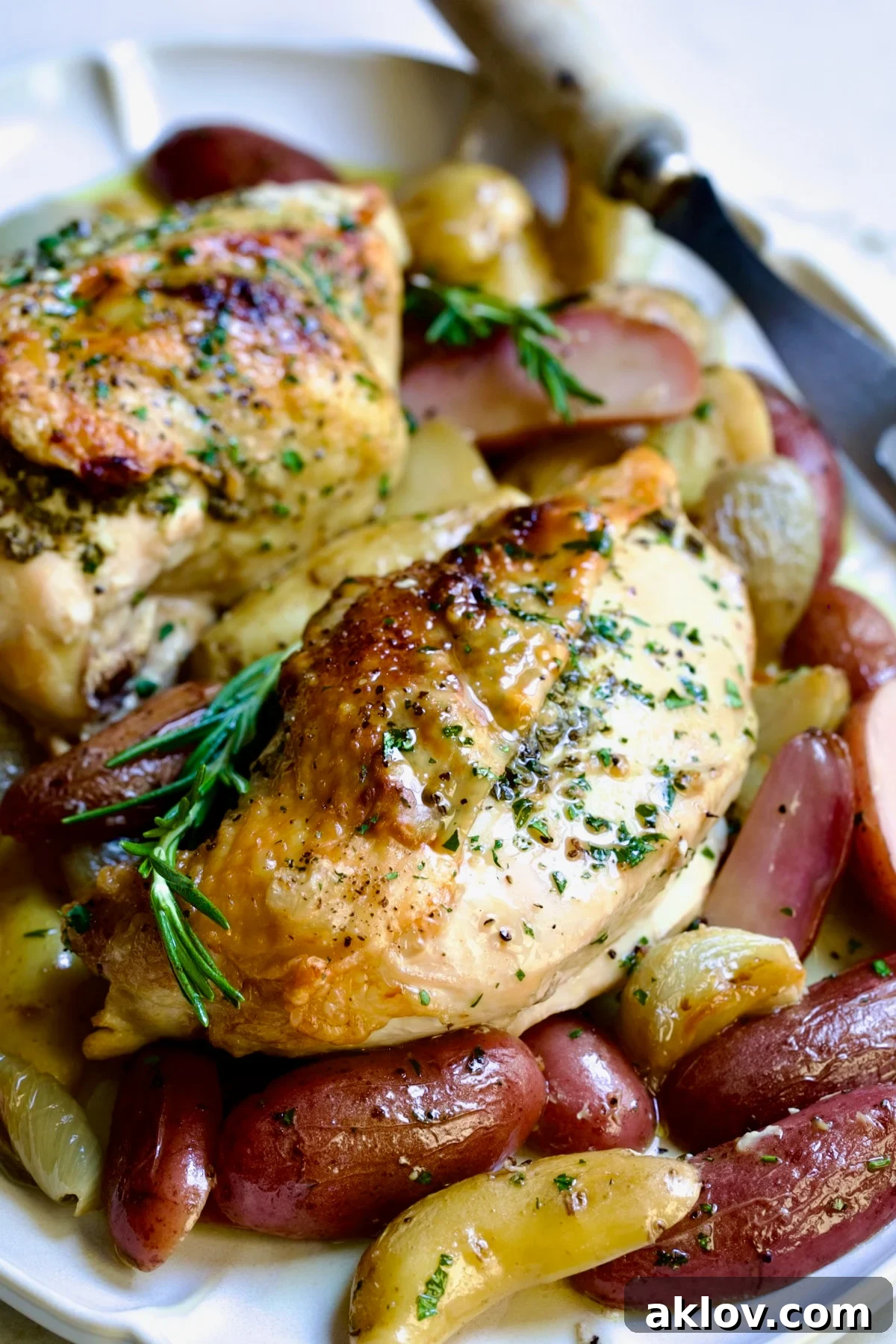
Mastering the Art of Roast Split Chicken Breasts: A Step-by-Step Guide
Creating this delectable one-pan roast chicken is straightforward and rewarding. Follow these steps for a perfect meal every time.
Essential Ingredients for Your Perfect Roast Chicken
Gathering your ingredients before you begin ensures a smooth cooking process. Here’s everything you’ll need to make this roast split chicken breast recipe. Exact quantities are listed in the recipe card below.
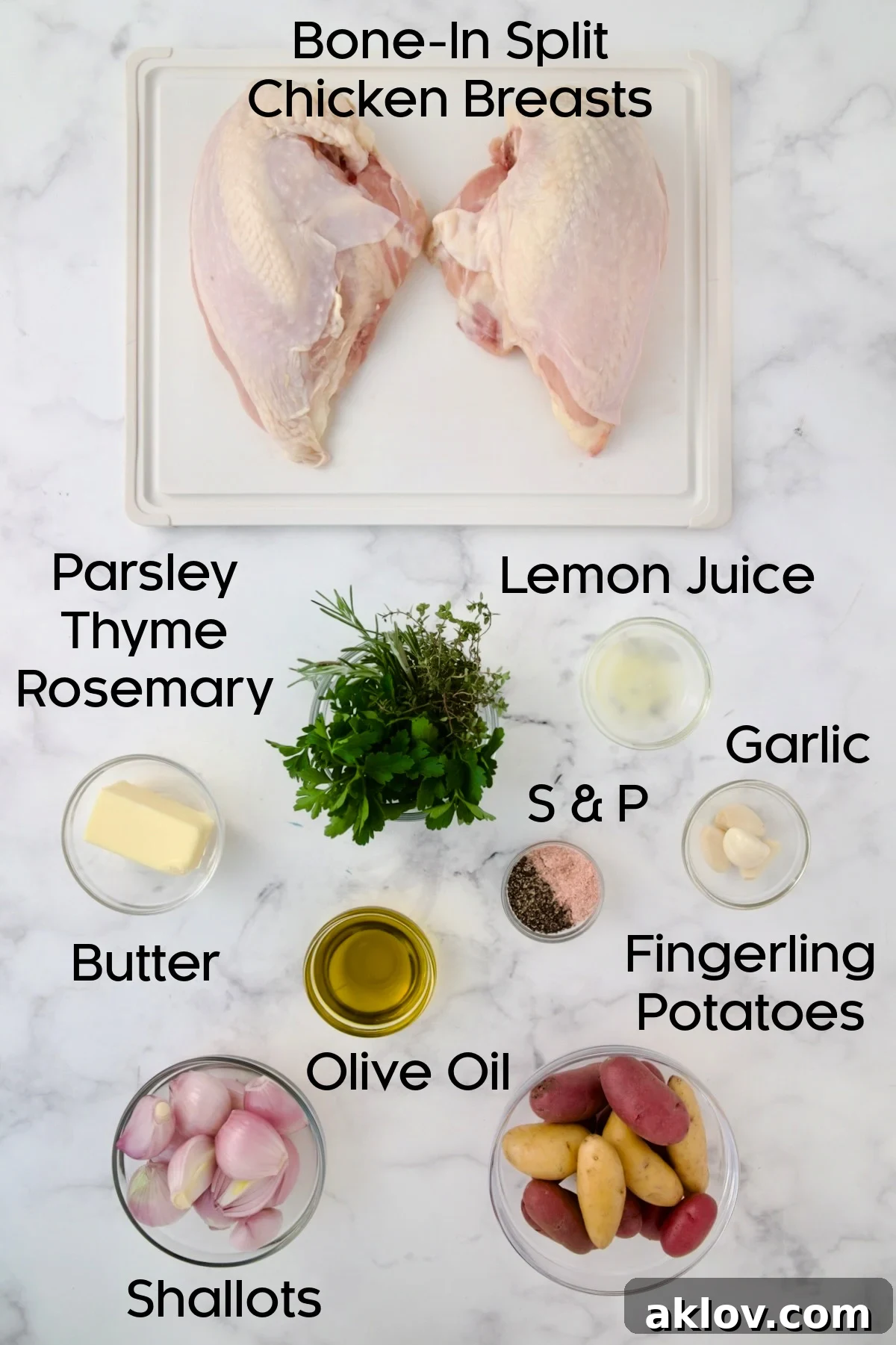
Ingredient Notes and Smart Substitutions:
- Split Chicken Breasts: These are whole chicken breasts, expertly split in two, with both the skin and bone still attached. The bone contributes significantly to the meat’s juiciness and flavor, while the skin crisps up beautifully, locking in moisture. Some split chicken breasts can be quite substantial; for smaller appetites, one breast half might be shared. For variety, bone-in, skin-on chicken thighs are an excellent substitute, offering a slightly richer flavor and similar cooking properties.
- Fresh Herbs (Parsley, Rosemary, Thyme, Garlic): The quality of your herbs makes a world of difference in this recipe. There’s truly no substitute for fresh herbs here; their vibrant aromas and flavors are key to the herb butter. Feel free to adjust the ratios or add other complementary herbs like sage or oregano. Minced fresh garlic adds a pungent depth that is irreplaceable by garlic powder.
- Butter: Use good quality salted or unsalted butter, softened to room temperature for easier mixing with the herbs. If using unsalted, you might add a tiny pinch more salt to the herb mixture. The butter is crucial for basting the chicken from within, ensuring a moist interior and a beautifully browned, crispy exterior.
- Fingerling Potatoes: These slender, elongated potatoes typically range from 2 to 4 inches long and come in various colors. They are considered “waxy” potatoes, similar to Yukon Gold or red potatoes, meaning they hold their shape well when roasted and have a creamy texture. If fingerlings aren’t available, small red potatoes or baby Yukon Gold potatoes are perfect alternatives, requiring minimal prep work beyond halving.
- Shallots: A member of the onion family, shallots are celebrated in French cuisine for their delicate, sweet, and slightly garlicky flavor—milder and more nuanced than a typical onion. They grow in clusters resembling a head of garlic but with fewer, larger cloves. When roasted, shallots caramelize beautifully, adding a wonderful sweetness and depth to the dish. If absolutely necessary, small red onions cut into wedges can be a substitute, though they will have a stronger, more pungent flavor.
- Lemon Juice & Olive Oil: Fresh lemon juice adds a bright, acidic counterpoint to the richness of the chicken and butter, enhancing overall flavor. Good quality extra virgin olive oil helps coat the vegetables for even roasting and contributes to the crispy skin of the chicken.
Simple Step-By-Step Roasting Instructions:
Follow these easy steps to create your perfect one-pan roast chicken dinner:
- Begin by gathering and preparing all your ingredients. This practice, known as mise en place, ensures a smooth and stress-free cooking experience.
- Preheat your oven to a robust 400 degrees Fahrenheit (200 degrees Celsius). This high temperature is key to achieving that desirable crispy skin and tender interior.
- Have a sturdy roasting pan or another deep baking dish readily available. A pan with higher sides is recommended to contain any buttery drippings and prevent splattering in your oven.
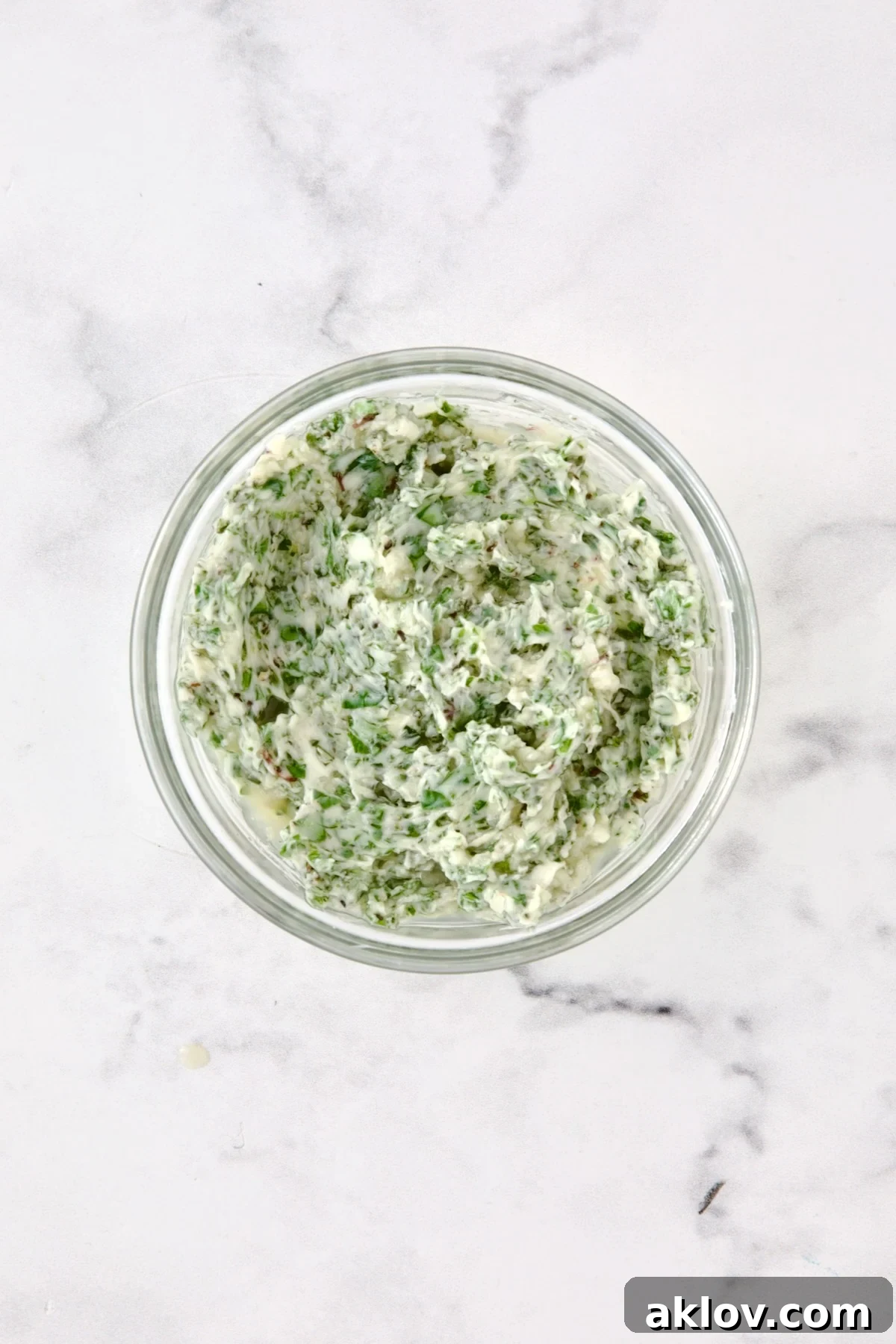
- In a medium bowl, combine the finely chopped fresh parsley, rosemary, thyme, minced garlic, half of the fresh lemon juice, 1/2 teaspoon of salt, and freshly ground black pepper to taste. Mix these ingredients thoroughly to create your aromatic herb mixture. (Note: Not all the lemon juice will be incorporated into this butter mixture; reserve the remainder for later use.)
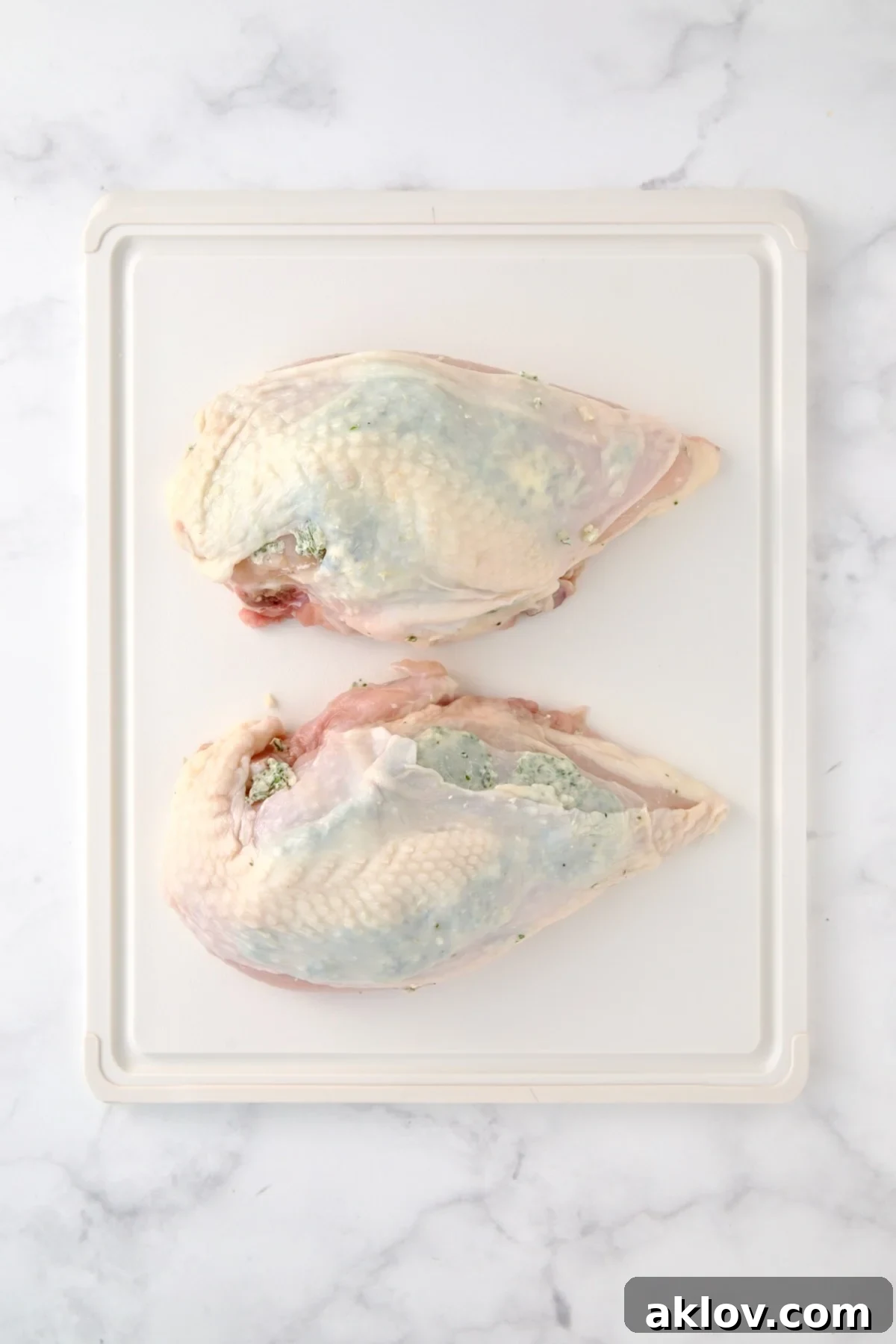
- Next, working carefully, gently separate—but do not fully detach—the skin from each chicken breast to create a pocket. This pocket is where the magic happens!
- Divide the prepared herb butter equally between the two chicken breasts. Carefully spread the herb butter evenly under the skin, pushing it around to cover as much of the breast meat as possible. This ensures the chicken is basted from the inside out, yielding incredibly flavorful and moist meat.
- Generously season the exterior of the chicken breasts with additional salt and freshly ground black pepper. This initial seasoning is crucial for a flavorful crust.
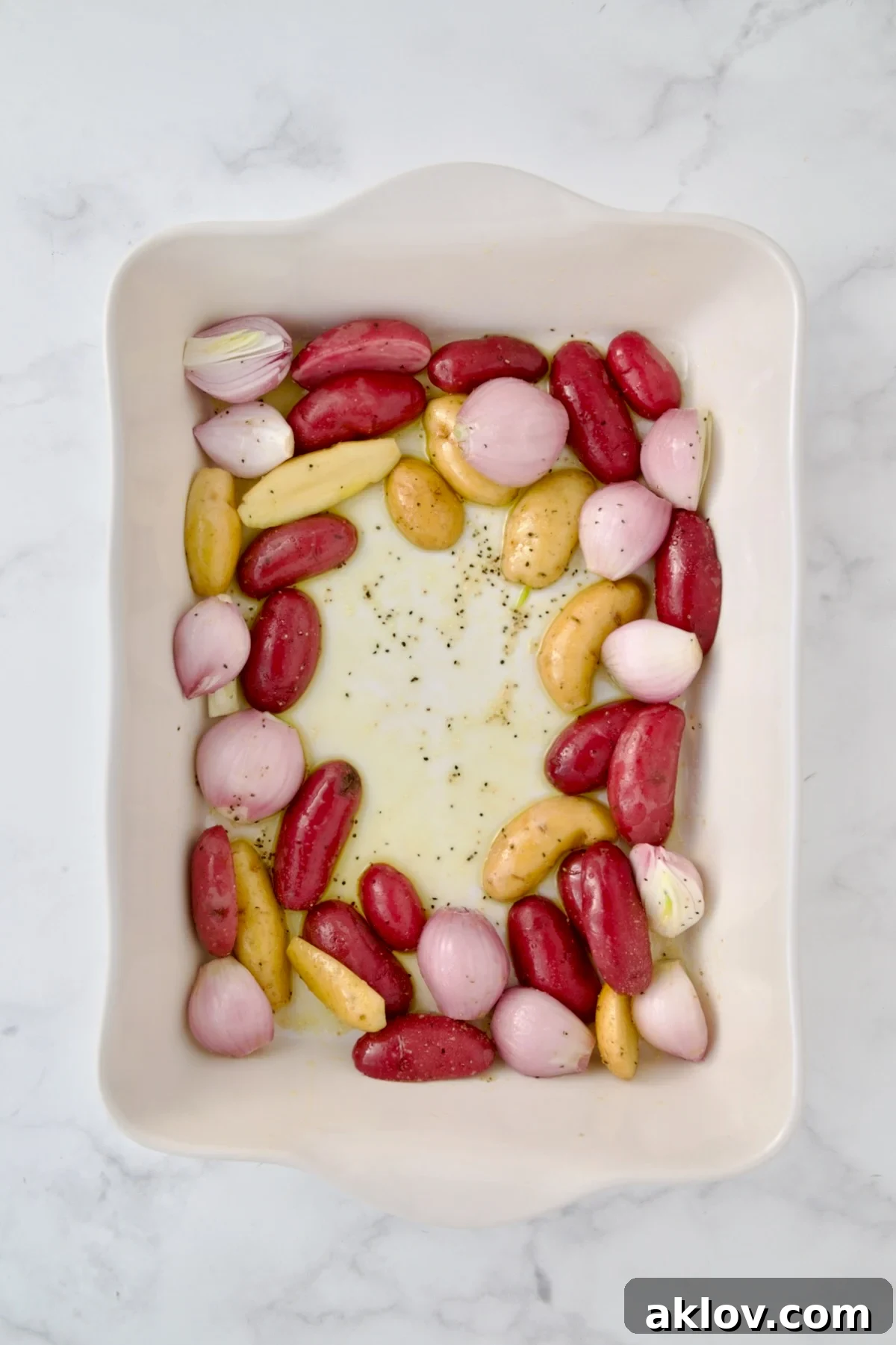
- In a separate bowl, toss the halved fingerling potatoes and peeled, halved shallots with the remaining 2 tablespoons of olive oil. Season them generously with salt and black pepper, ensuring all surfaces are lightly coated.
- Spread the seasoned potatoes and shallots evenly across the bottom of your prepared roasting pan. Push them slightly towards the outside edges of the dish, creating space in the center.
- Carefully place the herb-buttered chicken breasts in the center of the roasting pan, skin-side up, on top of the bed of vegetables.
- Drizzle any leftover lemon juice (the portion not incorporated into the butter) directly over the chicken breasts. Then, lightly drizzle the remaining 1 tablespoon of olive oil over the chicken skin. This helps promote extra crispiness.
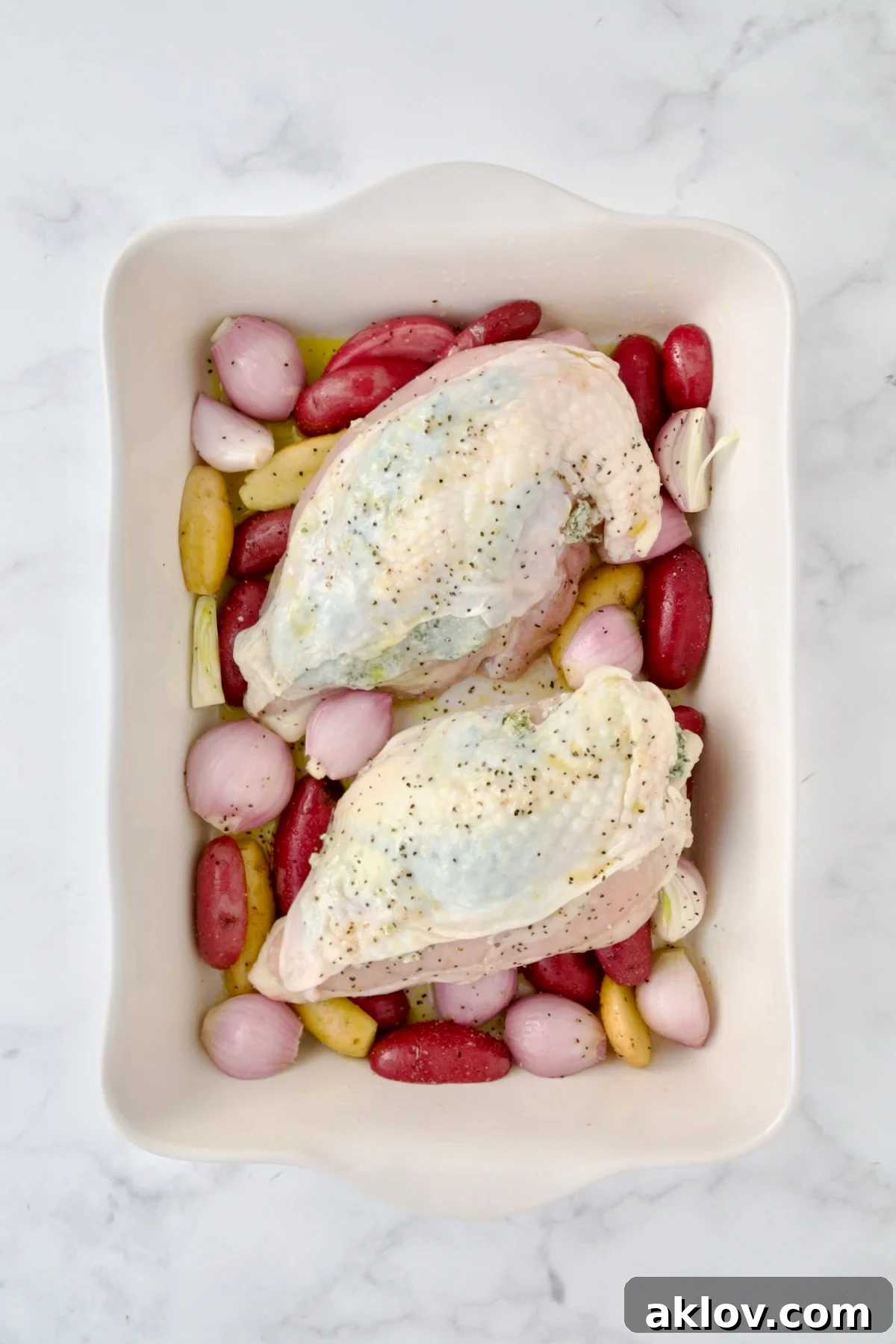
- Bake in the preheated oven for approximately 1 hour, or until an instant-read thermometer inserted into the thickest part of each chicken breast (avoiding the bone) registers a safe internal temperature of 165 degrees Fahrenheit (74 degrees Celsius). The skin should be deeply golden brown and deliciously crispy.
- Once cooked, remove the roasting pan from the oven. It is crucial to let the chicken rest for at least 5 to 10 minutes. This allows the juices to redistribute throughout the meat, ensuring every bite is incredibly tender and moist.
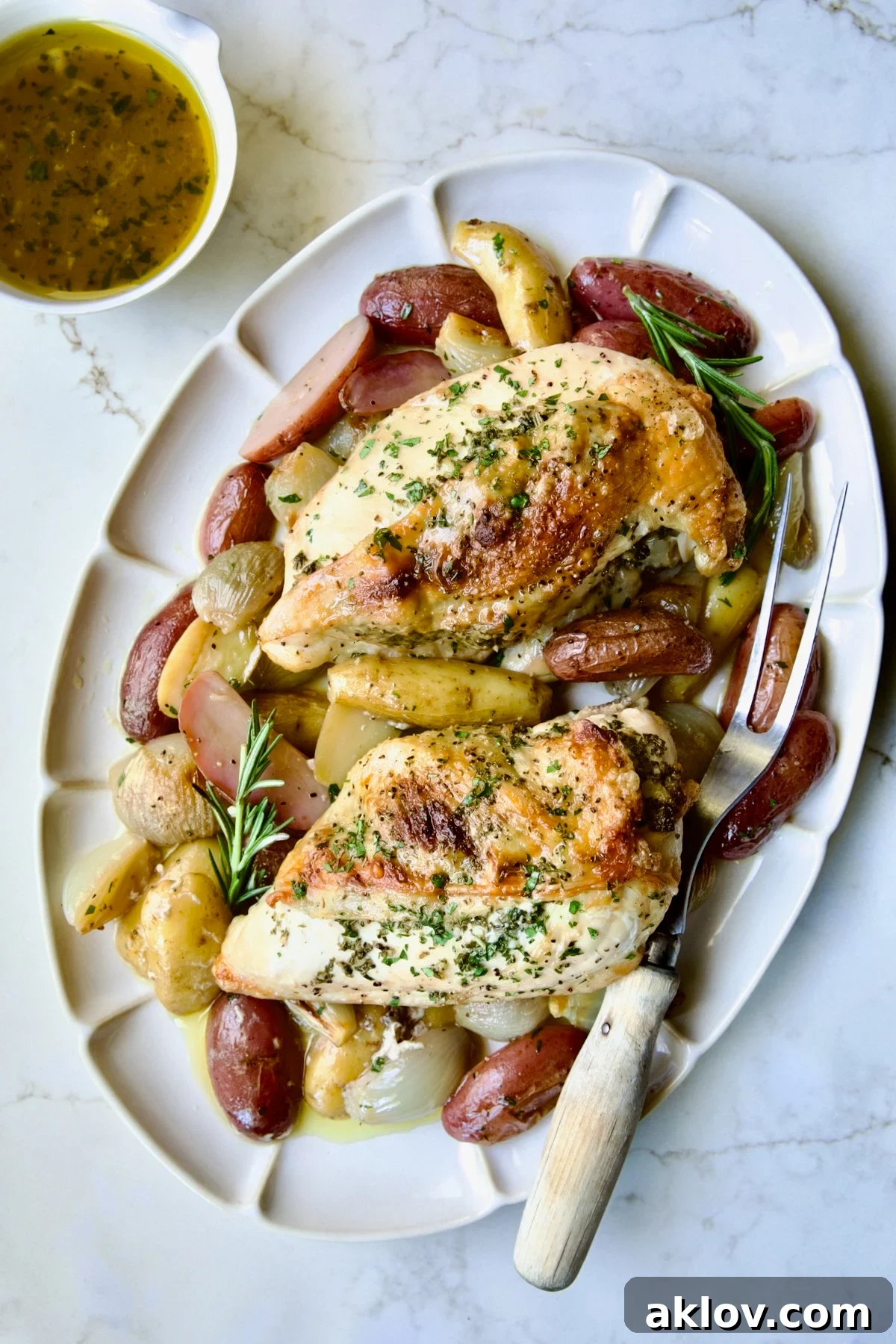
- After resting, carefully transfer the roast split chicken breasts and vegetables to a serving platter. Pour any savory, buttery drippings from the roasting pan into a gravy boat or small bowl to serve alongside the chicken. These drippings are packed with flavor and make an excellent sauce for both the chicken and potatoes. Serve immediately and enjoy!
Expert Chef Tips for Flawless Roast Chicken Every Time:
- Choose the Right Pan: While a sheet pan can work in a pinch, a roasting pan or a deep baking dish with higher sides is truly ideal for this roast split chicken breast recipe. The deeper sides help to contain the buttery drippings and prevent them from splattering all over your oven, making cleanup easier and preserving all those delicious pan juices for serving. The enclosed space also promotes more even roasting for both the chicken and vegetables.
- Don’t Skip the Resting Step: This is a non-negotiable step for juicy chicken! Allowing the chicken breasts to rest for at least 5-10 minutes after removing them from the oven is vital. During cooking, the muscle fibers contract, pushing juices towards the center. Resting allows these fibers to relax, reabsorbing those precious juices back into the meat. The result is consistently moist, tender chicken every single time.
- Pat That Skin Dry: For truly crispy chicken skin, ensure the chicken breasts are thoroughly patted dry with paper towels before applying the herb butter and seasoning. Excess moisture on the skin will steam rather than crisp, preventing that coveted golden-brown crunch.
- Room Temperature Start: For more even cooking, especially with larger split chicken breasts, it’s beneficial to take the chicken out of the refrigerator about 20-30 minutes before roasting. This allows the chicken to come closer to room temperature, preventing the exterior from overcooking before the interior is done.
- Monitor Internal Temperature: An instant-read meat thermometer is your best friend when roasting chicken. Always verify that the thickest part of the chicken breast (without touching the bone) reaches 165°F (74°C) for food safety. Relying solely on cooking time can be misleading due to variations in oven calibration and chicken size.
- Utilize the Pan Juices: Those buttery, herb-infused drippings at the bottom of the pan are liquid gold! Don’t let them go to waste. Spoon them over the chicken and vegetables when serving, or thicken them slightly with a touch of flour or cornstarch to make a quick, flavorful gravy.
Frequently Asked Questions (FAQs) About Roast Chicken:
The baking time for bone-in chicken breasts can vary significantly based on their size and your oven’s calibration. For the large split chicken breasts used in this particular roast split chicken breast recipe, approximately one hour at 400 degrees Fahrenheit (200°C) was sufficient. Smaller bone-in chicken breasts might cook in less time. The most crucial factor is always reaching an internal temperature of 165°F (74°C) in the thickest part of the meat (avoiding the bone) for safe consumption. An instant-read thermometer is highly recommended for accuracy.
Absolutely! This recipe is excellent for meal prepping. You can prepare the herb butter and carefully tuck it under the chicken skin a day in advance, storing the chicken covered in the refrigerator. Additionally, the shallots can be peeled and halved, and the fingerling potatoes can be washed and halved. To prevent the potatoes from discoloring, store them immersed in cold water in the refrigerator, then drain and pat them completely dry just before roasting. This extensive prep allows for quick assembly and roasting when you’re ready to cook.
To reheat leftover roasted split chicken breasts and maintain their moisture, first remove the chicken meat from the bone. Store the chicken meat along with any leftover buttery drippings in an airtight container in the refrigerator. When ready to reheat, you may find the drippings have solidified; allow them to come to room temperature or gently warm them to liquify. Slice the chicken into 1/3 to 1/2-inch thick pieces. Drizzle some of the warmed drippings over the sliced chicken. Reheat in an oven or toaster oven at 350°F (175°C) until the chicken reaches an internal temperature of 165°F (74°C). Reheating slowly with added moisture helps prevent the chicken from drying out.
You can certainly freeze any leftover chicken meat along with the drippings in an airtight freezer-safe container for up to 2-3 months. However, I do not advise freezing the roasted potatoes. Potatoes undergo a significant texture change when frozen and thawed, often becoming mealy or mushy, which detracts from their quality. It’s best to enjoy the potatoes fresh or consume them as leftovers within a few days from the refrigerator.
Storage & Reheating Instructions for Leftovers:
- Storage: Store any leftover roast split chicken breasts and vegetables in an airtight container in the refrigerator for up to 3-5 days. Ensure the chicken has cooled completely before refrigerating. For best results, keep the chicken meat attached to the bone, and include any buttery pan drippings as they will help keep the meat moist.
- Reheating: To reheat leftovers, first remove the chicken meat from the bone. If the pan drippings have solidified, you may need to let them come to room temperature or gently warm them to a liquid state. Slice the chicken into 1/3 to 1/2-inch thick pieces. Drizzle some of the re-liquified drippings over the sliced chicken to reintroduce moisture. Reheat in an oven or toaster oven at 350°F (175°C) until the chicken is heated through and reaches an internal temperature of 165°F (74°C). This method helps prevent the chicken from drying out, leaving you with tender and flavorful leftovers. While the potatoes can be reheated, their texture may not be as firm as when freshly roasted.
What to Serve with Your Delicious Roast Chicken:
This roast split chicken breast recipe is a complete meal on its own, but it pairs wonderfully with a variety of side dishes to complement its rich flavors and textures. Consider these additions:
- Asparagus Cordon Bleu: A fancy yet approachable vegetable side.
- Roasted Asparagus with Walnut Gremolata and Goat Cheese: A vibrant, fresh, and zesty accompaniment.
- Cream Cheese Corn Casserole: A sweet and creamy comfort food classic.
- Cheesy Green Bean Casserole: A hearty and indulgent side that complements poultry beautifully.
Explore More Easy Chicken Dinner Ideas:
If you loved the simplicity and flavor of this roast chicken recipe, you’ll be thrilled to discover other fantastic and easy chicken dishes. Expand your repertoire with these delightful options:
- Baked Cajun Chicken Drumsticks: A spicy and flavorful twist on a classic.
- Thai Red Curry Chicken Legs: For an exotic and aromatic weeknight dinner.
- Baked BBQ Chicken Thighs: Sweet, tangy, and perfect for a casual meal.
- Sheet Pan Roast Chicken with Potatoes and Green Beans: Another effortless one-pan wonder with different vegetable pairings.
Find all these and more inspiring chicken recipes at Chicken Recipes – From A Chef’s Kitchen.
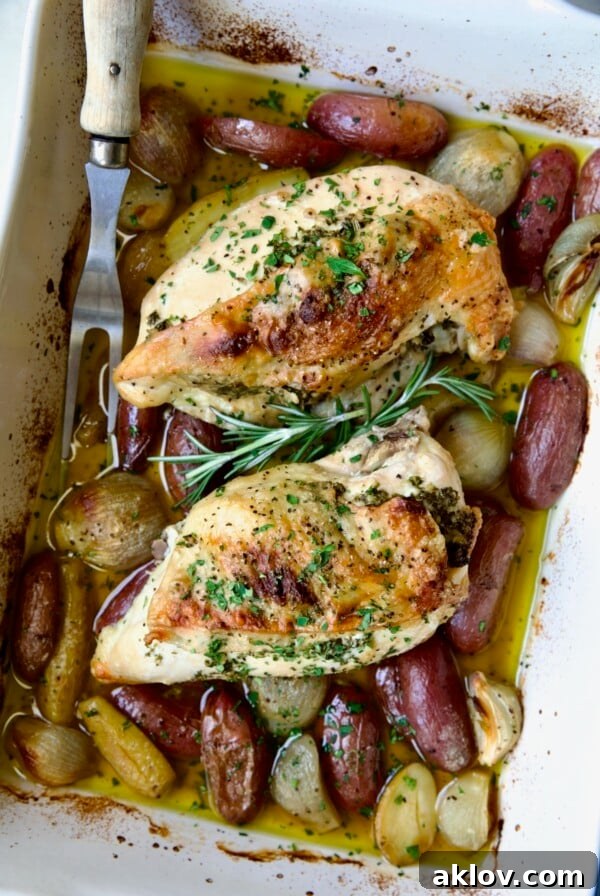
Roast Split Chicken Breasts with Potatoes and Shallots
With crispy, golden skin and a medley of herbs, buttery Roast Split Chicken Breasts with Potatoes and Shallots is a one-pan wonder that delivers a comforting, satisfying meal with minimal effort. Whether you’re preparing a cozy Sunday dinner or a fuss-free meal for guests, this easy yet elegant dish will surely impress!
Equipment
-
Wusthof Chef Knife
-
Cutting Board
-
Glass Mixing Bowls
-
Roasting Pan
Ingredients
- 2 tablespoons chopped fresh parsley
- 1 tablespoon chopped fresh rosemary
- 1 tablespoon chopped fresh thyme
- 4 cloves garlic, minced
- 1 tablespoon fresh lemon juice, (approximately 1/2 small lemon), divided
- 1/2 stick unsalted butter, softened
- 1/2 teaspoon salt, plus more to sprinkle over the potatoes and shallots
- Freshly ground black pepper, to taste
- 2 split chicken breasts, on the bone with the skin
- 3/4 pound fingerling potatoes, halved
- 5 large shallots, peeled and halved
- 3 tablespoons olive oil, preferably extra virgin, divided
Instructions
- Preheat oven to 400 degrees Fahrenheit (200°C). Prepare a roasting pan or a deep baking dish.
- In a bowl, combine parsley, rosemary, thyme, minced garlic, half of the lemon juice, salt, and black pepper. (Reserve the remaining lemon juice for later.)
- Gently separate the skin from the chicken breasts to form a pocket, without removing the skin completely. Place equal amounts of the herb butter under the skin and spread it evenly.
- In a separate bowl, toss potatoes and shallots with 2 tablespoons of olive oil, then season with salt and black pepper.
- Spread the seasoned potatoes and shallots evenly in the roasting pan, pushing them towards the sides.
- Place the chicken breasts in the center of the pan, skin-side up. Drizzle any reserved lemon juice over the chicken, then drizzle with 1 tablespoon of olive oil. Season the chicken exterior with salt and black pepper.
- Bake for 1 hour, or until an instant-read thermometer registers 165 degrees Fahrenheit (74°C) in the thickest part of each chicken breast.
- Let the chicken rest for 5-10 minutes to allow the juices to redistribute. Transfer to a platter, pour the buttery drippings into a gravy boat, and serve alongside the chicken.
Notes
SUBSTITUTIONS:
- Bone-in, skin-on chicken thighs can be used as an alternative to split chicken breasts.
- Baby red or Yukon gold potatoes are excellent substitutes for fingerling potatoes.
TIPS:
- A roasting pan or a baking dish with high sides is ideal to prevent butter from splattering in your oven.
- Allowing the chicken breasts to rest for at least five minutes after baking ensures the juices redistribute, resulting in incredibly moist chicken.
MAKE AHEAD:
- Prepare the herb butter and tuck it under the chicken skin a day in advance. Peel and halve the shallots, and halve the fingerling potatoes. Store potatoes immersed in water to prevent discoloration; drain and pat dry before assembling. Then, assemble and roast as directed.
Nutrition
Calories: 970kcal
Carbohydrates: 44g
Protein: 53g
Fat: 65g
Saturated Fat: 24g
Polyunsaturated Fat: 8g
Monounsaturated Fat: 30g
Trans Fat: 1g
Cholesterol: 205mg
Sodium: 927mg
Potassium: 1511mg
Fiber: 7g
Sugar: 7g
Vitamin A: 1433IU
Vitamin C: 54mg
Calcium: 110mg
Iron: 5mg
Nutritional values are automatically calculated using unbranded products and are estimates only. Actual results may vary based on ingredients used and portion sizes. Adjust as needed for dietary restrictions, allergies, or health concerns.
 Like this? Leave a comment below!