
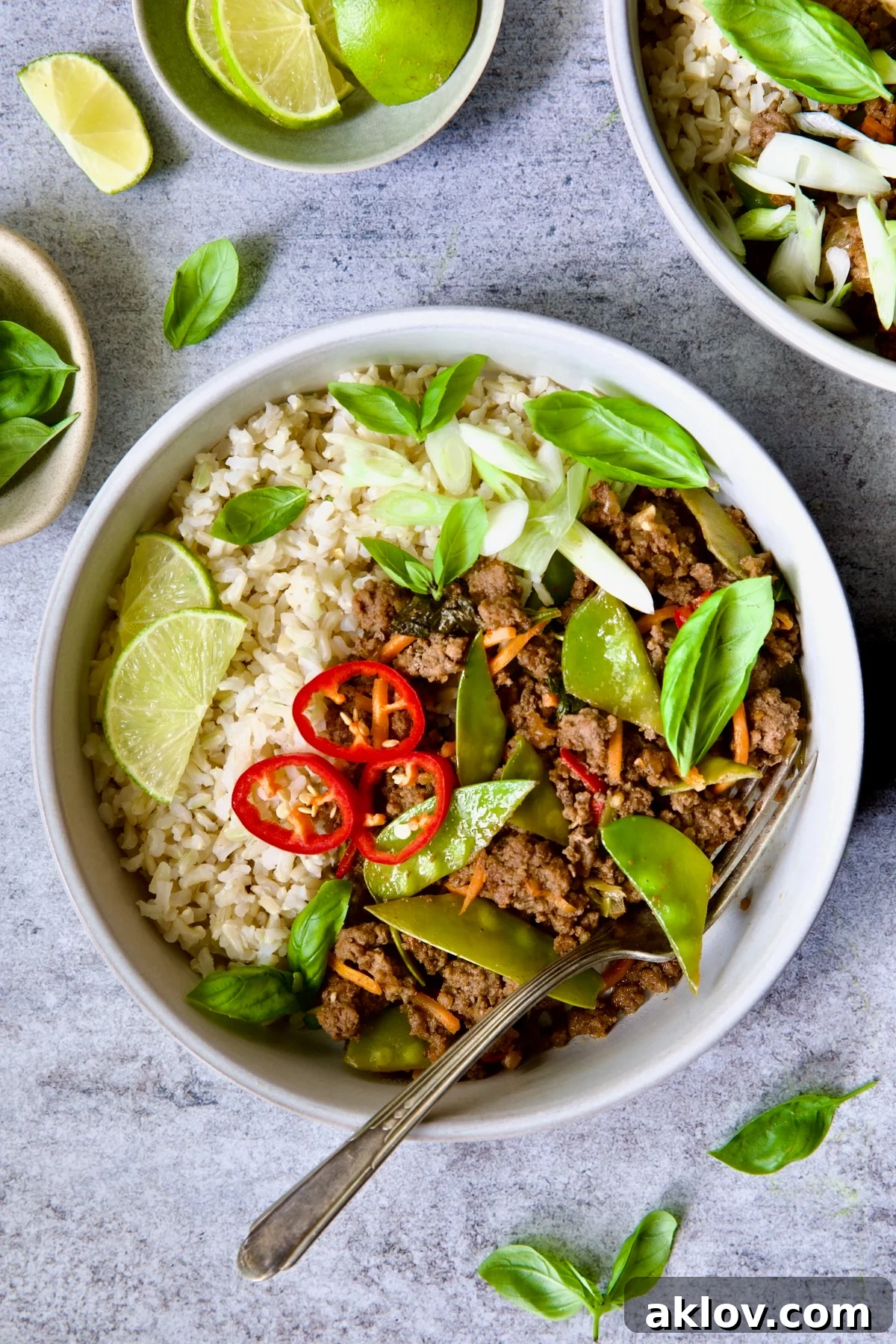
Craving the vibrant flavors of Southeast Asia? Look no further than this incredibly easy and unbelievably delicious Thai Basil Beef Stir-fry. Skip the takeout and create an authentic culinary masterpiece right in your own kitchen in just around 30 minutes! Featuring perfectly spiced ground beef, an abundance of fresh, crisp vegetables, and a bold, savory sauce that will tantalize your taste buds, this recipe is guaranteed to become a new family favorite. It’s not just a meal; it’s an experience of quick, healthy, and utterly crave-worthy home cooking.
“Absolutely delicious! My family devoured this Thai Basil Beef. A definite keeper!“
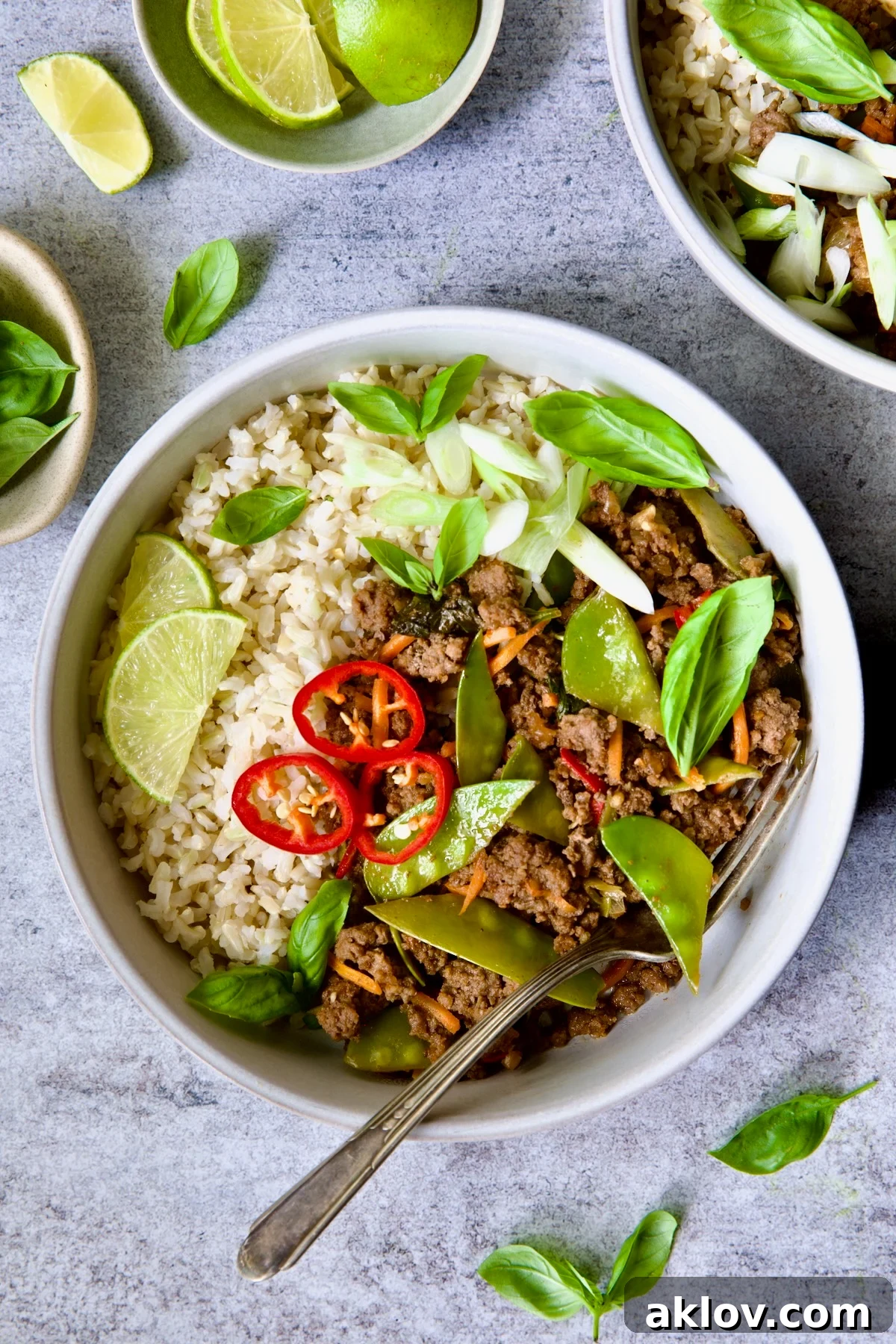
Why This Thai Basil Beef Recipe Deserves a Spot in Your Repertoire!
When that irresistible craving for Thai cuisine strikes, but you prefer the comfort and convenience of a home-cooked meal, this Thai Basil Beef recipe steps up to the plate. It’s more than just a dish; it’s a culinary solution, especially during the warmer months when fresh basil is abundant, making it a perfect summer favorite. Its remarkable ease and fantastic flavor make it a true staple for busy weeknights or relaxed weekend dinners.
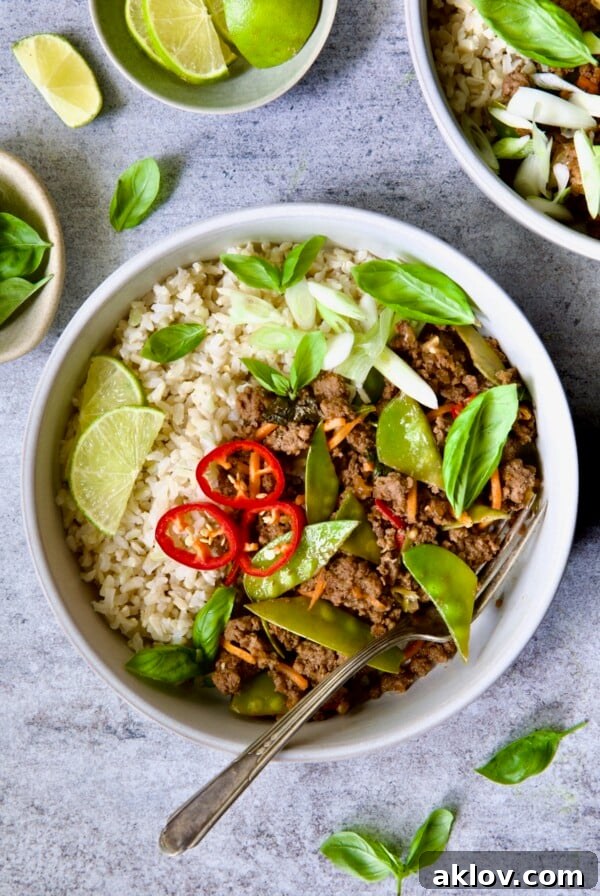
While traditional Thai basil beef often calls for thinly sliced cuts of beef, our version simplifies the process by utilizing ground beef. This thoughtful substitution not only makes the recipe incredibly approachable for home cooks of all skill levels but also allows for quicker cooking times without compromising on flavor or texture. Paired with conveniently prepped vegetables like vibrant carrot shreds and crisp snow peas, this dish offers a wholesome and healthy element. The magic truly happens with a simple yet profound sauce crafted from pantry staples, delivering an unforgettable deep, bold, and umami-rich flavor. Serve it alongside fluffy brown rice for a perfectly balanced, deeply satisfying, and complete meal.
This sensational Thai Basil Beef recipe is celebrated for being:
- Effortlessly Easy: Perfect for beginners and seasoned cooks alike.
- Unquestionably Delicious: A flavor explosion with every bite.
- Blazingly Fast: Ready in just over 30 minutes from start to finish.
- Surprisingly Healthy: Packed with fresh vegetables and lean protein.
- Budget-Friendly: Ground beef offers an economical alternative to steak.
- Customizable: Easily adapt the spice level and vegetables to your preference.
Embrace the vibrant tastes of Thailand with this accessible and delightful recipe that promises both convenience and an authentic flavor experience.
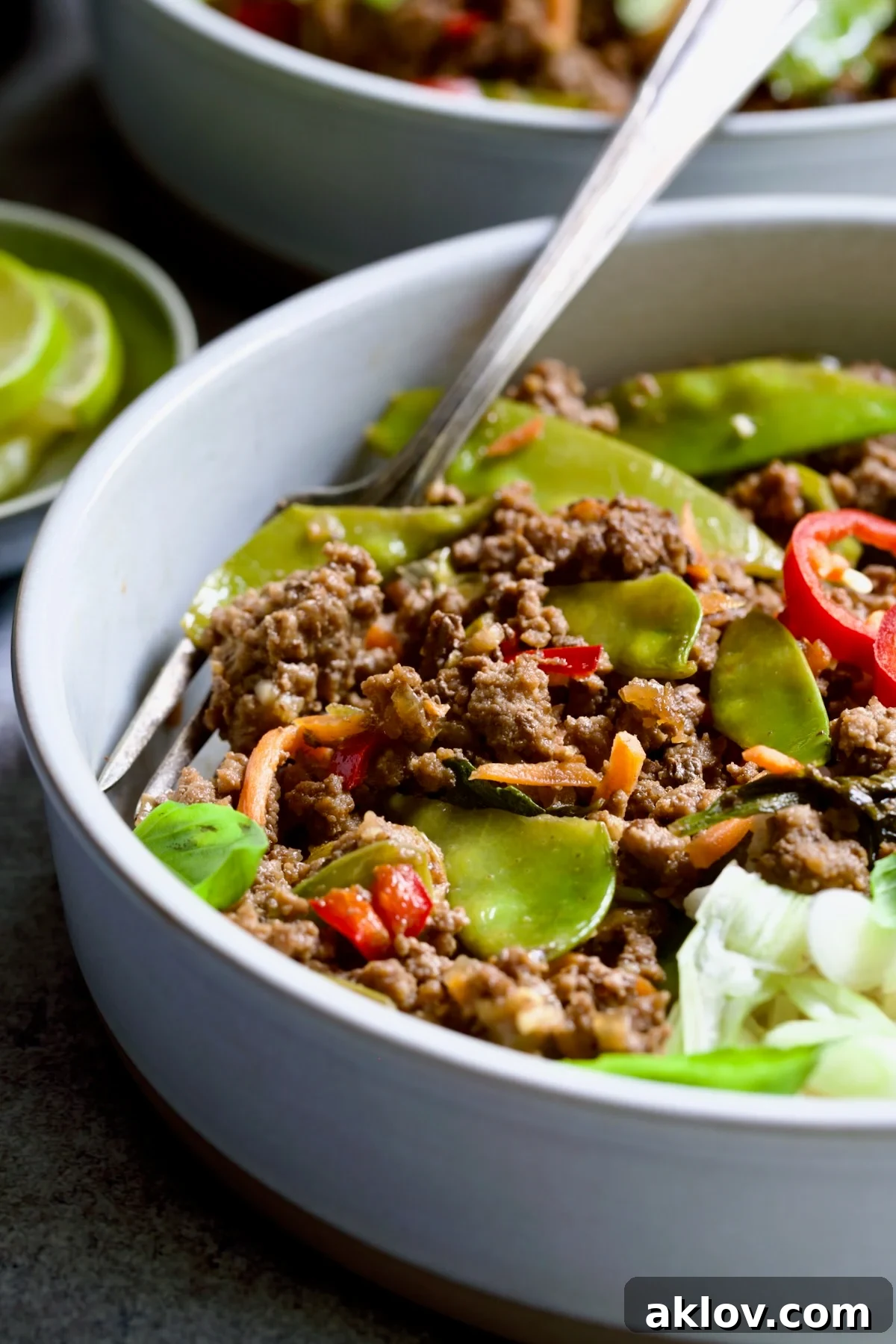
Crafting Your Own Thai Basil Beef: A Step-by-Step Guide
Essential Recipe Ingredients:
Gathering your ingredients is the first step to creating this fantastic stir-fry. While a detailed list with precise quantities can be found in the recipe card below, here’s an overview of what you’ll need to bring this authentic Thai Basil Beef to life. Freshness is key for maximum flavor!
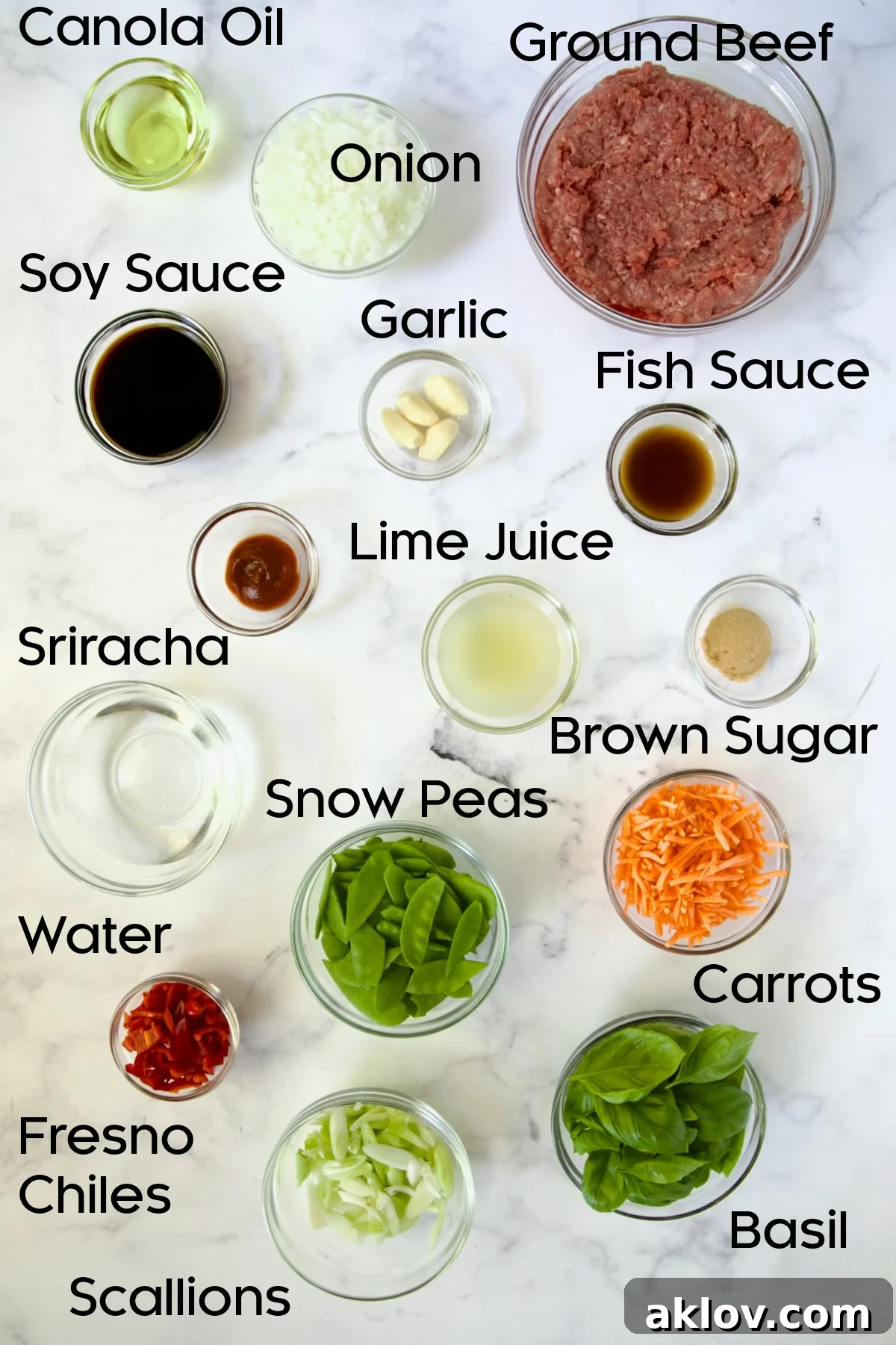
Ingredient Insights and Smart Substitutions:
Understanding your ingredients and knowing how to adapt them is crucial for culinary success. Here are some detailed notes and substitution tips for the key components of your Thai Basil Beef:
- Ground Beef: For this Thai ground beef recipe, I highly recommend using ground chuck, typically an 80% lean meat to 20% fat ratio. Ground chuck originates from the shoulder area of the cow, and its higher fat content is a secret weapon, contributing significantly to the dish’s overall taste, tenderness, and juiciness. If you’re looking to reduce fat, a leaner 90/10 ratio can be used, but be aware it might result in a slightly less tender and flavorful outcome. Feel free to experiment with ground turkey or chicken for a lighter alternative, adjusting cooking times as needed.
- Soy Sauce: This fundamental ingredient provides the savory backbone of the sauce. You can also opt for tamari, especially if you need a gluten-free option. I consistently use reduced-sodium soy sauce and tamari because they offer a smoother, lighter flavor profile that enhances the dish without overpowering it. Tamari contains little to no wheat, unlike conventional soy sauce which typically does. Always ensure your choice aligns with any dietary needs, such as gluten intolerance.
- Fish Sauce: An essential flavor enhancer in Thai cuisine, Thai fish sauce, known as “nam pla,” literally translates to “fish water.” It’s derived from a fermented mixture of fish (most commonly anchovies) and salt. This amber-hued liquid is intensely salty and imparts a distinctive umami depth to your Thai Basil Beef, meaning you’ll rarely need to add additional salt to the dish. Don’t skip it; it’s vital for an authentic taste!
- Sriracha: Affectionately dubbed “rooster sauce,” Sriracha has soared in popularity globally. It originated in Si Racha, Thailand, and is crafted from a vibrant blend of chili peppers, distilled vinegar, garlic, sugar, and salt. It provides a delightful kick and a tangy sweetness. Adjust the amount to your personal spice tolerance, from a gentle warmth to an invigorating heat.
- Snow Peas: These crisp, edible pea pods are a wonderful addition, offering a fresh crunch and a vibrant green hue. While often sold pre-prepped, I recommend taking a moment to remove the tough stem ends and any strings to ensure a more pleasant eating experience. For a suitable alternative, fresh green beans or sugar snap peas can be used.
- Fresno Chiles: Visually similar to jalapeno peppers, Fresno chiles start green and deepen in heat as they ripen to a fiery red. The majority of a chile pepper’s heat resides in its seeds and the white fleshy membrane (placenta). To temper the heat, simply remove these parts. If you prefer no heat at all, red bell pepper strips or colorful mini sweet peppers make excellent, visually appealing substitutes.
- Basil: The star herb of this dish! If you’re fortunate enough to find authentic Thai basil, its slightly spicier, anise-like notes will elevate the flavor profile. However, conventional sweet basil (often labeled as “basil” in grocery stores) works beautifully and is far more accessible. I’ve used sweet basil in this recipe, as it’s readily available to most home cooks, and its fresh, aromatic quality is still fantastic. Don’t fret if Thai basil isn’t an option; the dish will still be outstanding.
- Canola Oil: A neutral-flavored oil with a high smoke point, perfect for stir-frying. Vegetable oil or grapeseed oil are also excellent choices.
- Onion: A medium onion, finely chopped, provides a foundational aromatic base and a touch of sweetness when sautéed.
- Garlic: Freshly minced garlic is indispensable for its pungent aroma and flavor, a cornerstone of many stir-fries.
- Brown Sugar: Adds a crucial element of sweetness to balance the salty, spicy, and tangy flavors in the sauce, creating a harmonious taste.
- Lime Juice: Freshly squeezed lime juice provides a bright, zesty acidity that cuts through the richness and lifts all the flavors.
- Water or Broth: Used to thin out the sauce slightly and ensure it coats all the ingredients beautifully. Beef, chicken, or vegetable broth will add more depth than plain water.
- Scallions: Also known as green onions, their white and light green parts offer a mild oniony bite and a fresh garnish.
- Cooked Brown Rice: The ideal companion for soaking up all the delicious sauce and making this a complete meal. Jasmine rice or sticky rice also work wonderfully.
Detailed Step-By-Step Cooking Instructions:
Follow these easy steps to prepare your vibrant and flavorful Thai Basil Beef Stir-fry. Proper preparation of ingredients (mise en place) is key to a smooth stir-fry experience!
- Step 1: Prepare Your Ingredients. Begin by gathering and meticulously prepping all your ingredients. This means chopping your onion, mincing garlic, slicing chiles, julienning carrots, trimming snow peas, and roughly chopping your basil. Having everything ready before you start cooking is crucial for stir-frying success.
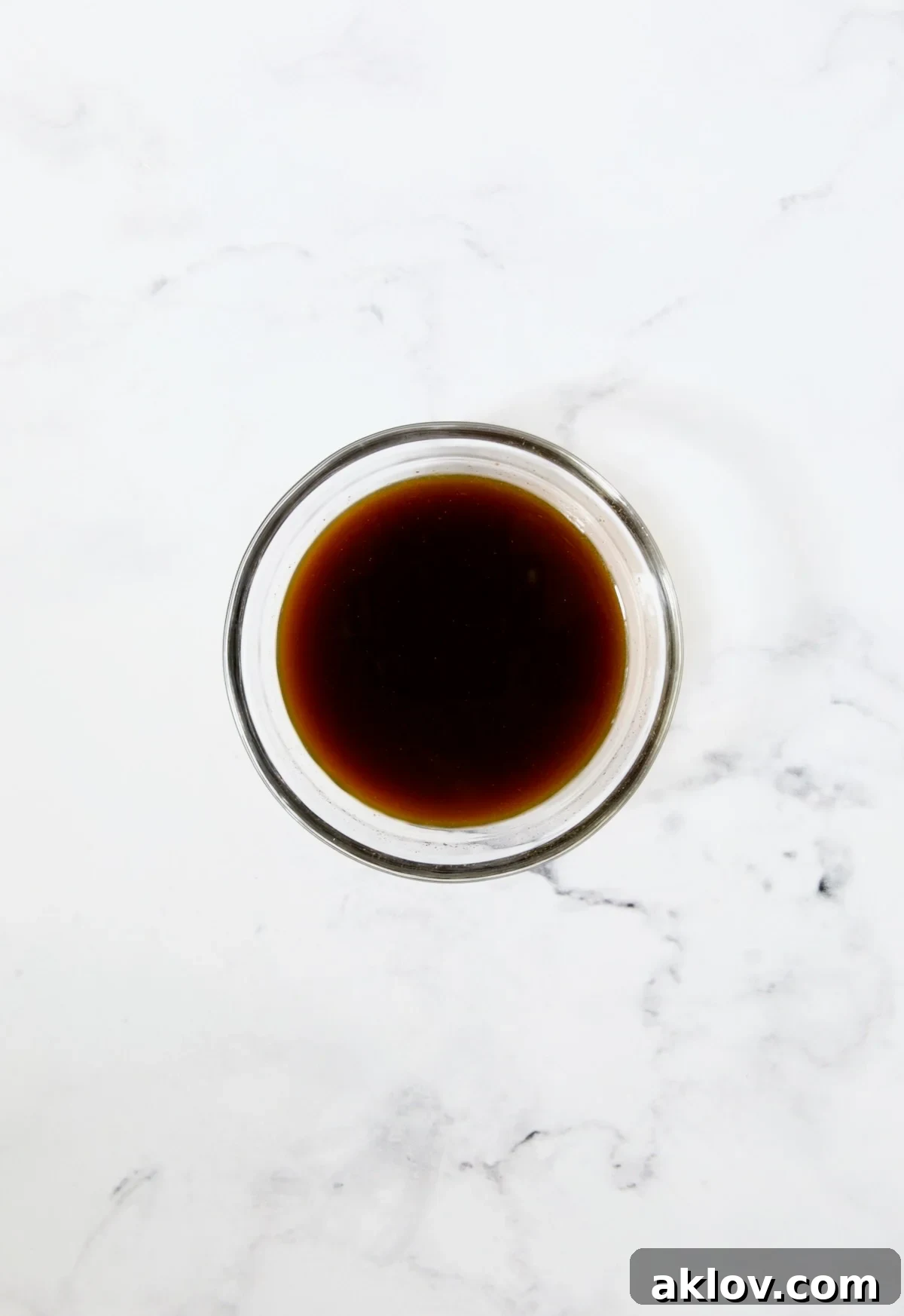
- Step 2: Whisk the Sauce. In a small bowl, combine the soy sauce (or tamari), fresh lime juice, water or broth, fish sauce, Sriracha hot sauce, and brown sugar. Whisk thoroughly until the brown sugar is fully dissolved. Taste and adjust for sweetness or spice if desired. Set this flavorful sauce mixture aside.
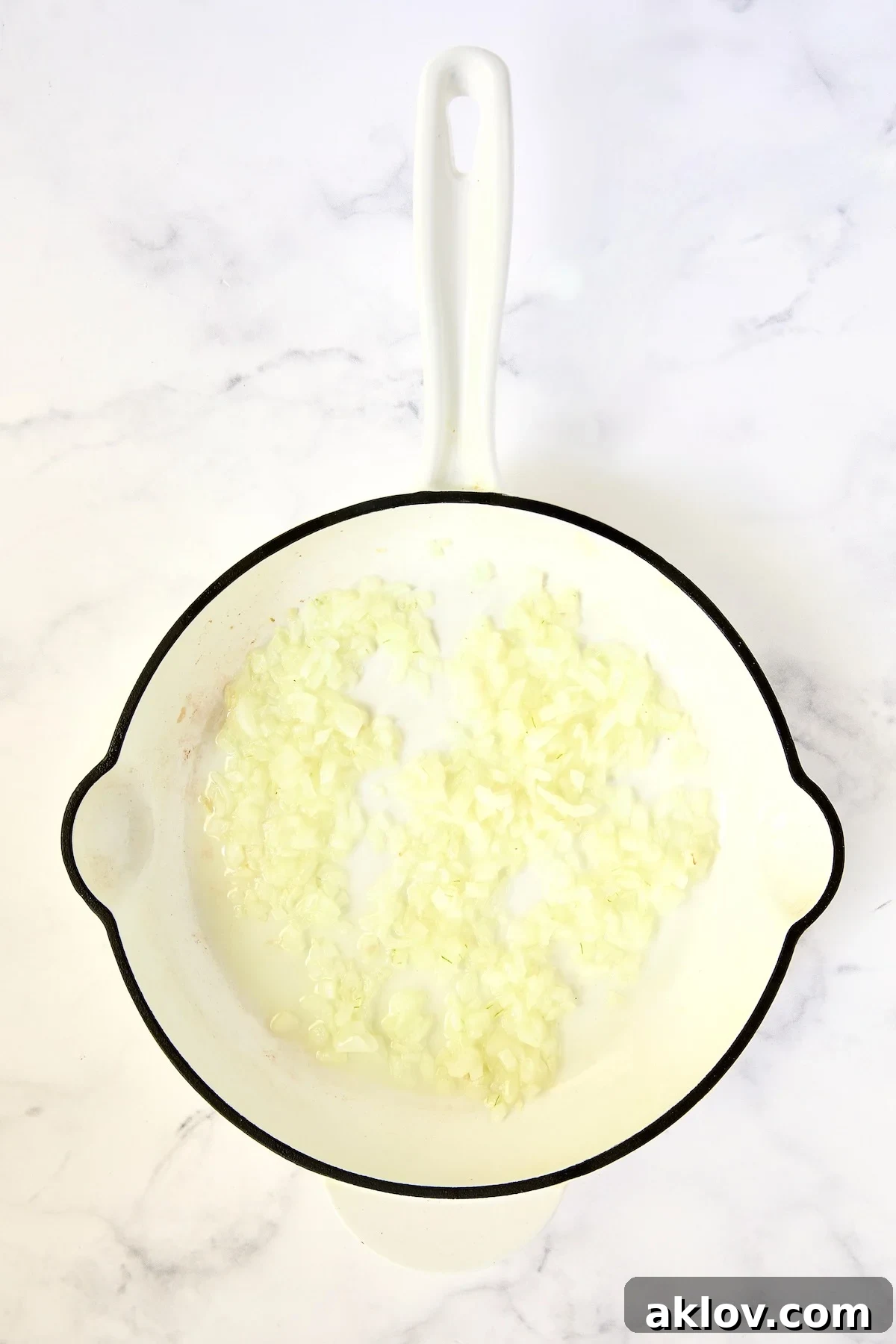
- Step 3: Sauté the Aromatics. Heat the canola oil in a large skillet or wok over medium-high heat. Once shimmering, add the chopped onion. Reduce the heat slightly to medium and cook for 3 to 4 minutes, stirring occasionally, until the onion begins to soften and become translucent, releasing its sweet aroma.
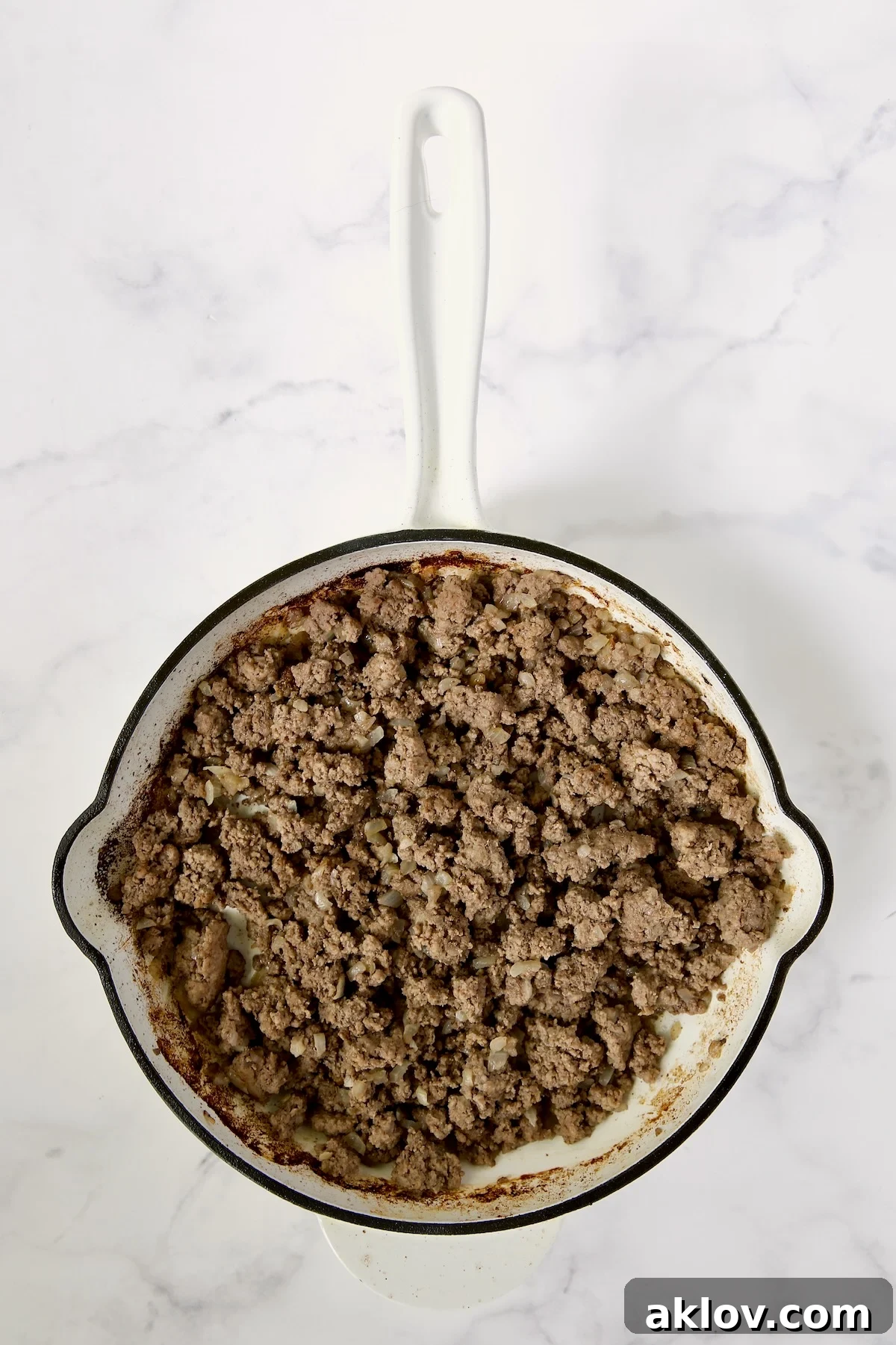
- Step 4: Brown the Ground Beef. Increase the heat back up to medium-high. Crumble the ground beef directly into the skillet, ensuring it spreads out evenly. Stir in the softened onions to prevent them from burning in the next step. Allow the beef to cook undisturbed for 2 to 3 minutes, or until it develops a beautiful crispy, browned crust on the bottom. This initial sear adds incredible depth of flavor.
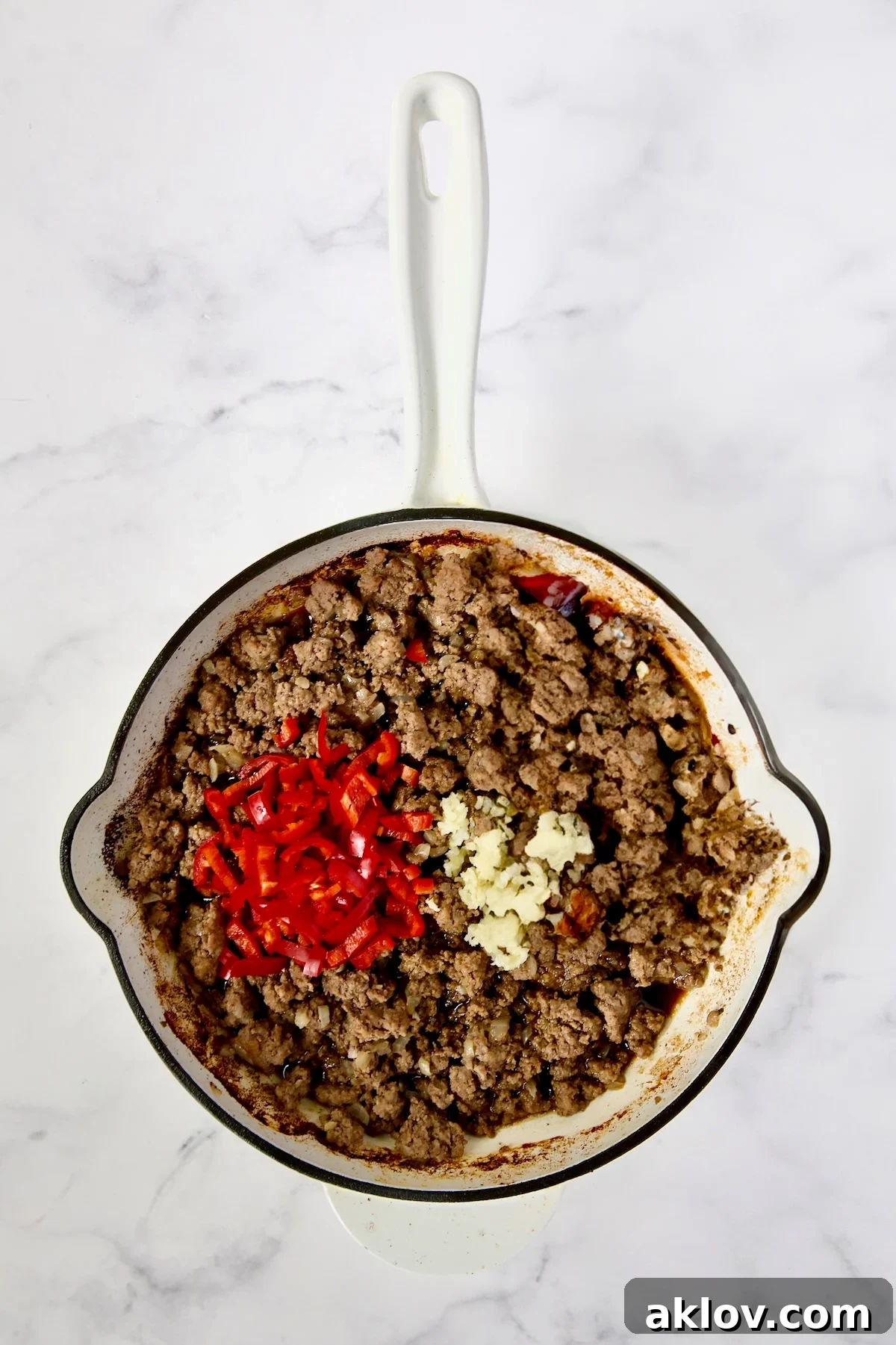
- Step 5: Cook Through and Add Spices. Stir the beef vigorously, breaking up any large pieces with a wooden spoon. Continue cooking for another 4 to 5 minutes, until the beef is thoroughly cooked through and no longer pink. Immediately add the minced garlic and thinly sliced Fresno chiles to the skillet. Cook for a brief 25 to 30 seconds, just until fragrant, being careful not to burn the garlic.
- Step 6: Drain Excess Fat. Carefully tilt the skillet and use a spoon or spatula to drain off any accumulated excess fat. This step is crucial for preventing a greasy dish and allowing the sauce to adhere properly.
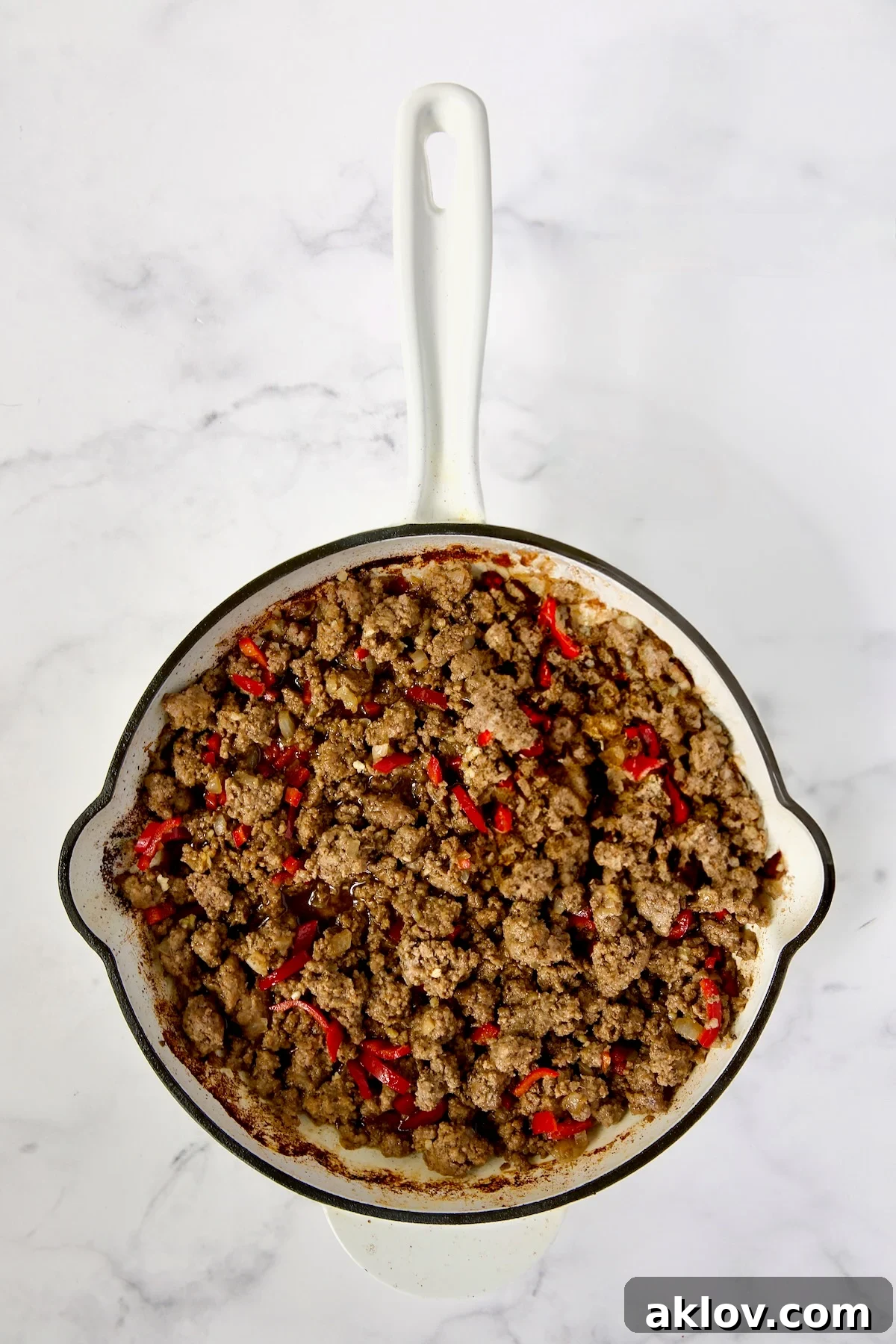
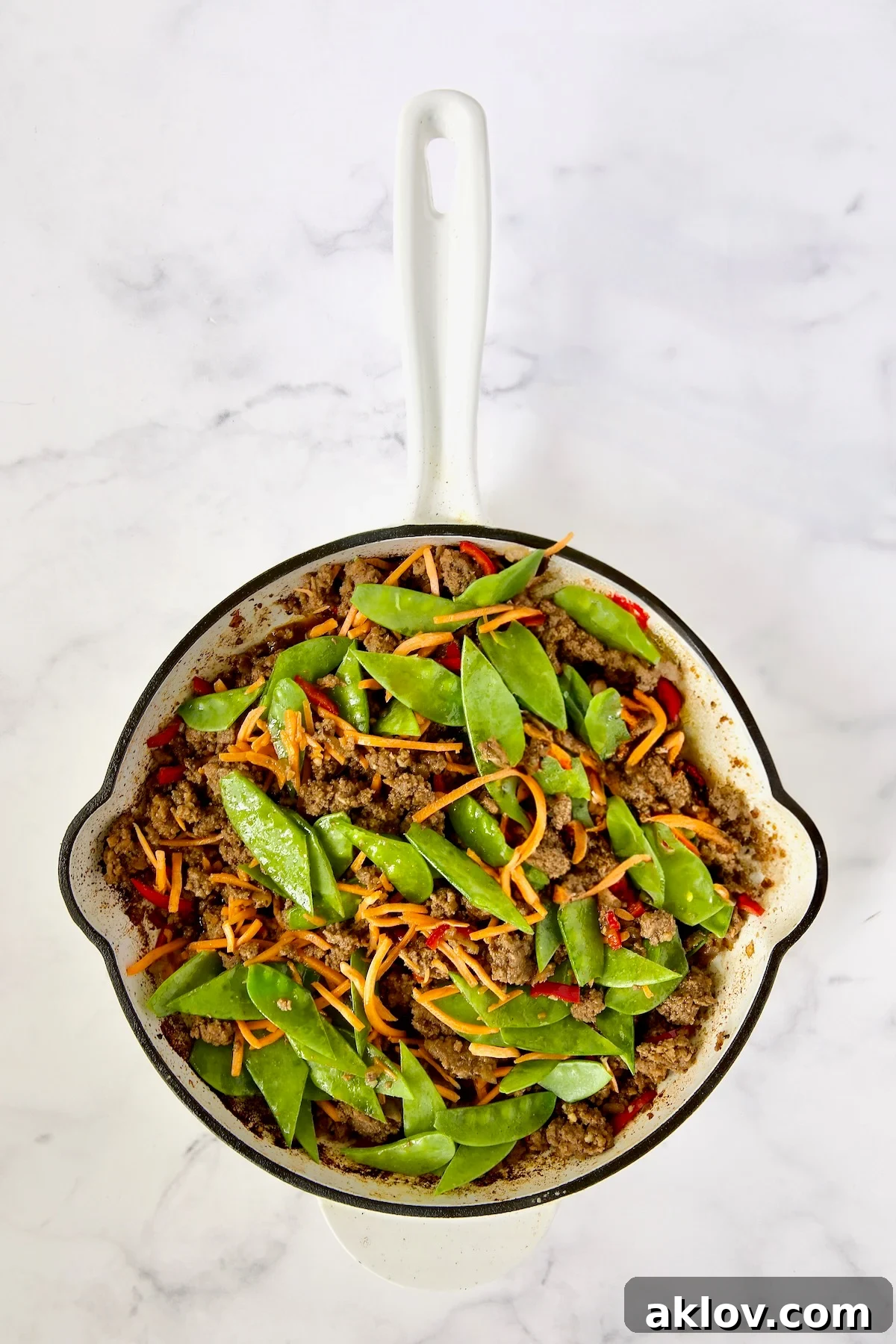
- Step 7: Introduce the Sauce and Vegetables. Pour the reserved soy sauce combination into the skillet with the beef mixture. Bring the sauce to a gentle boil, allowing it to thicken slightly. Immediately add the julienned carrots and the trimmed snow pea pods.
- Step 8: Stir-fry Until Crisp-Tender. Cook, stirring frequently, for an additional 2 to 3 minutes. The goal is for the vegetables to be crisp-tender, retaining a slight bite, and for the snow pea pods to turn a brilliant, bright green, indicating they are perfectly cooked. Overcooking will make them mushy.
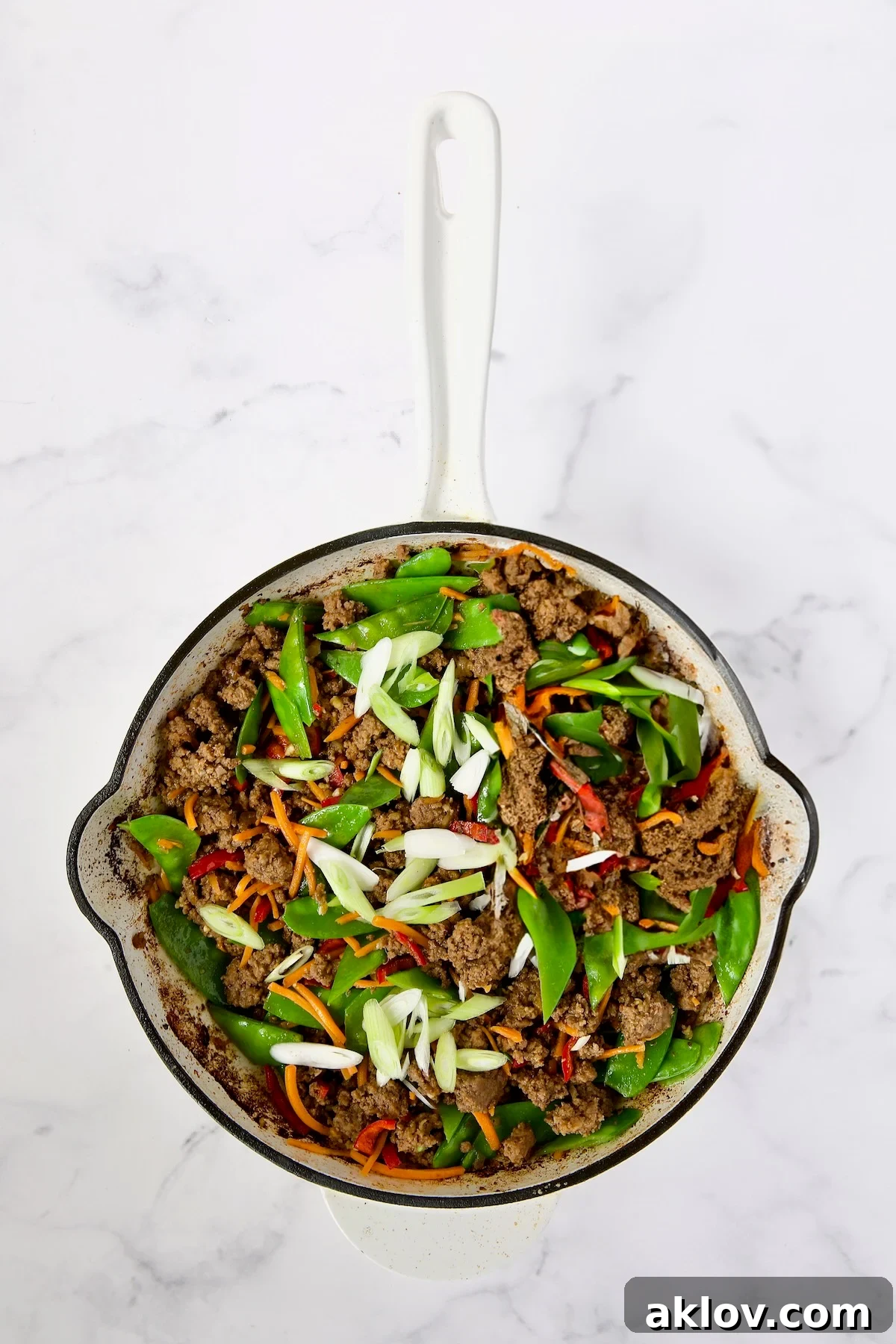
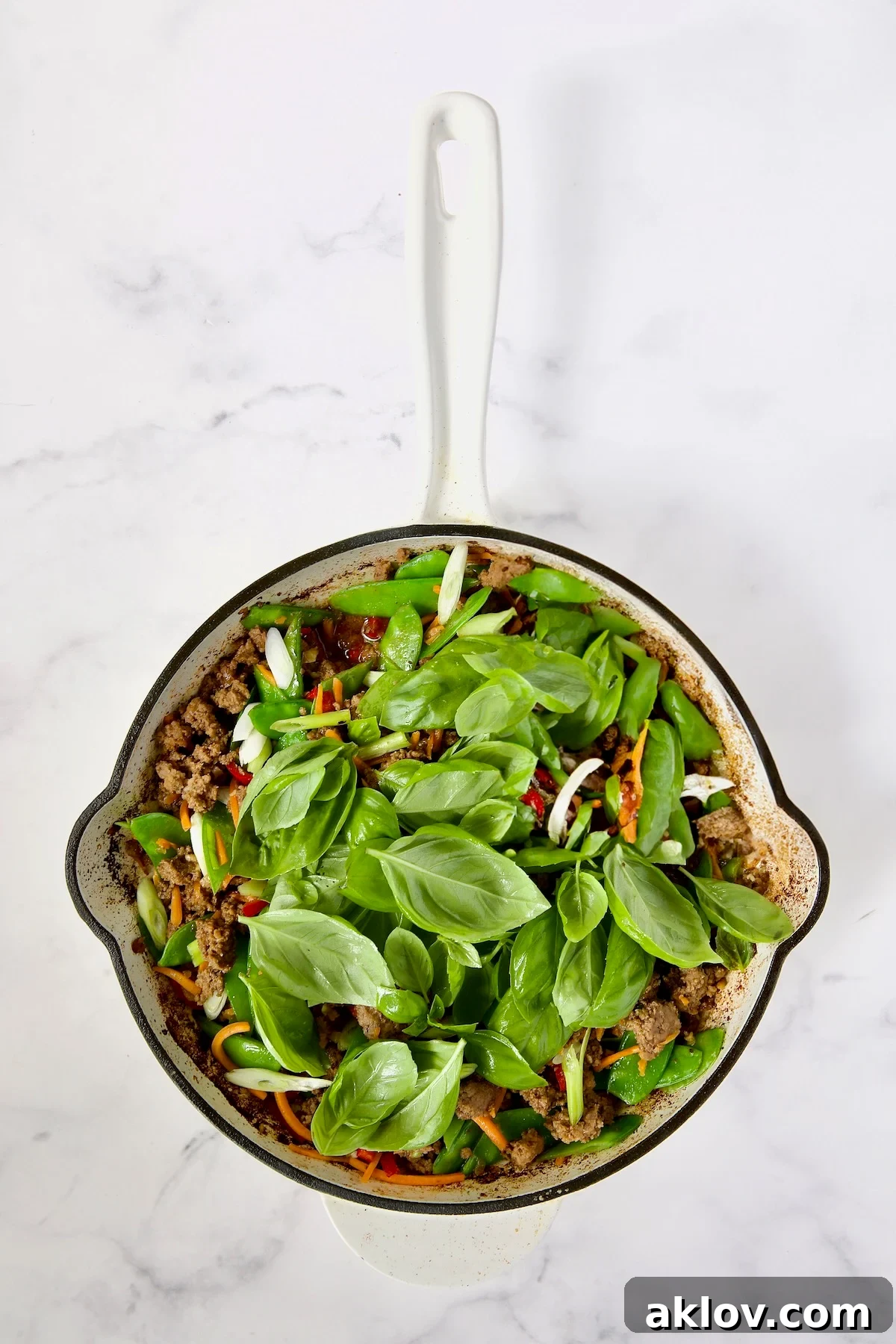
- Step 9: Fold in Fresh Basil. Remove the skillet from the heat. Add the generous heaping cup of fresh basil leaves. Gently stir the basil into the hot stir-fry until the leaves are just wilted and their fragrant aroma permeates the dish. This ensures the basil retains its freshness and vibrant color.
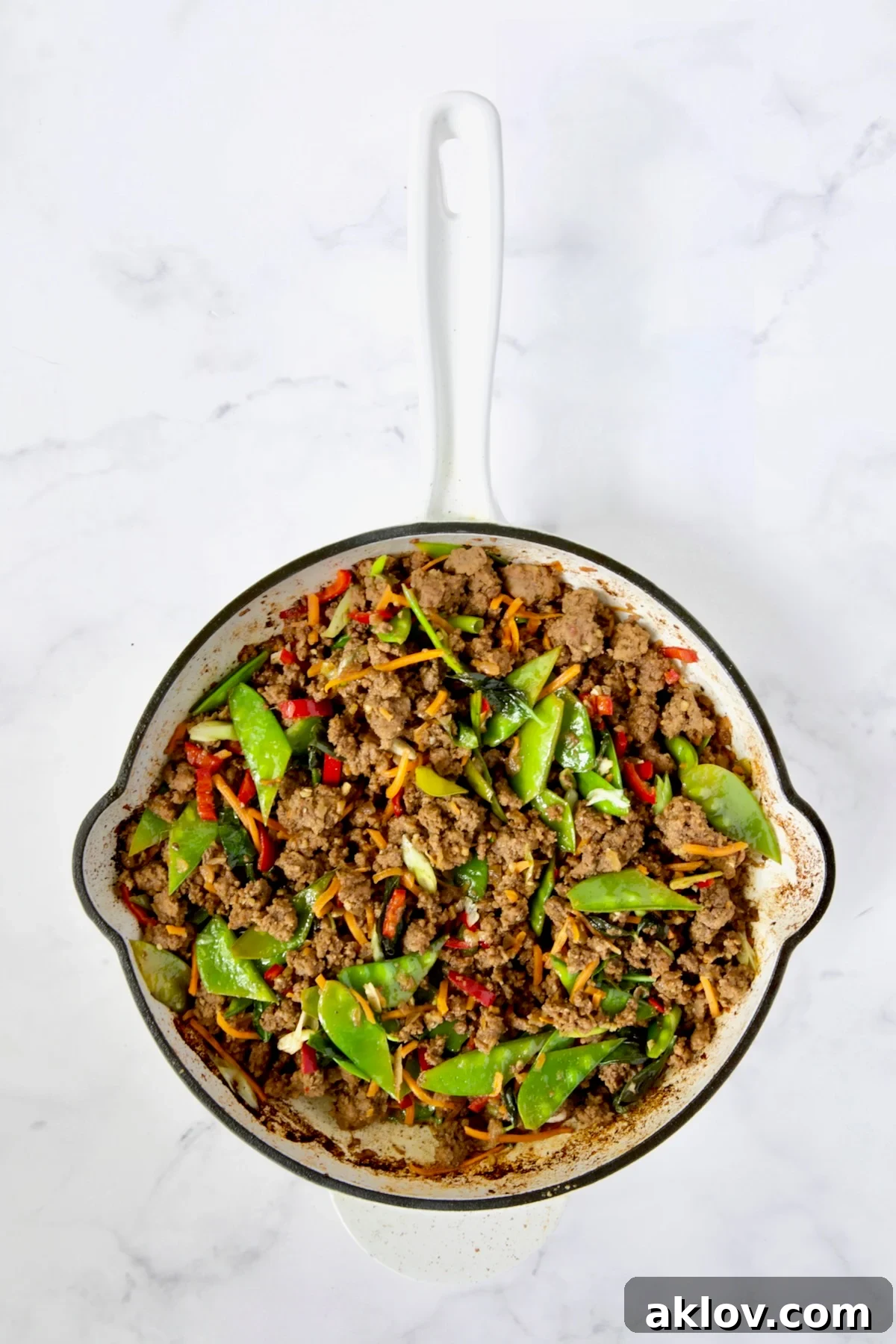
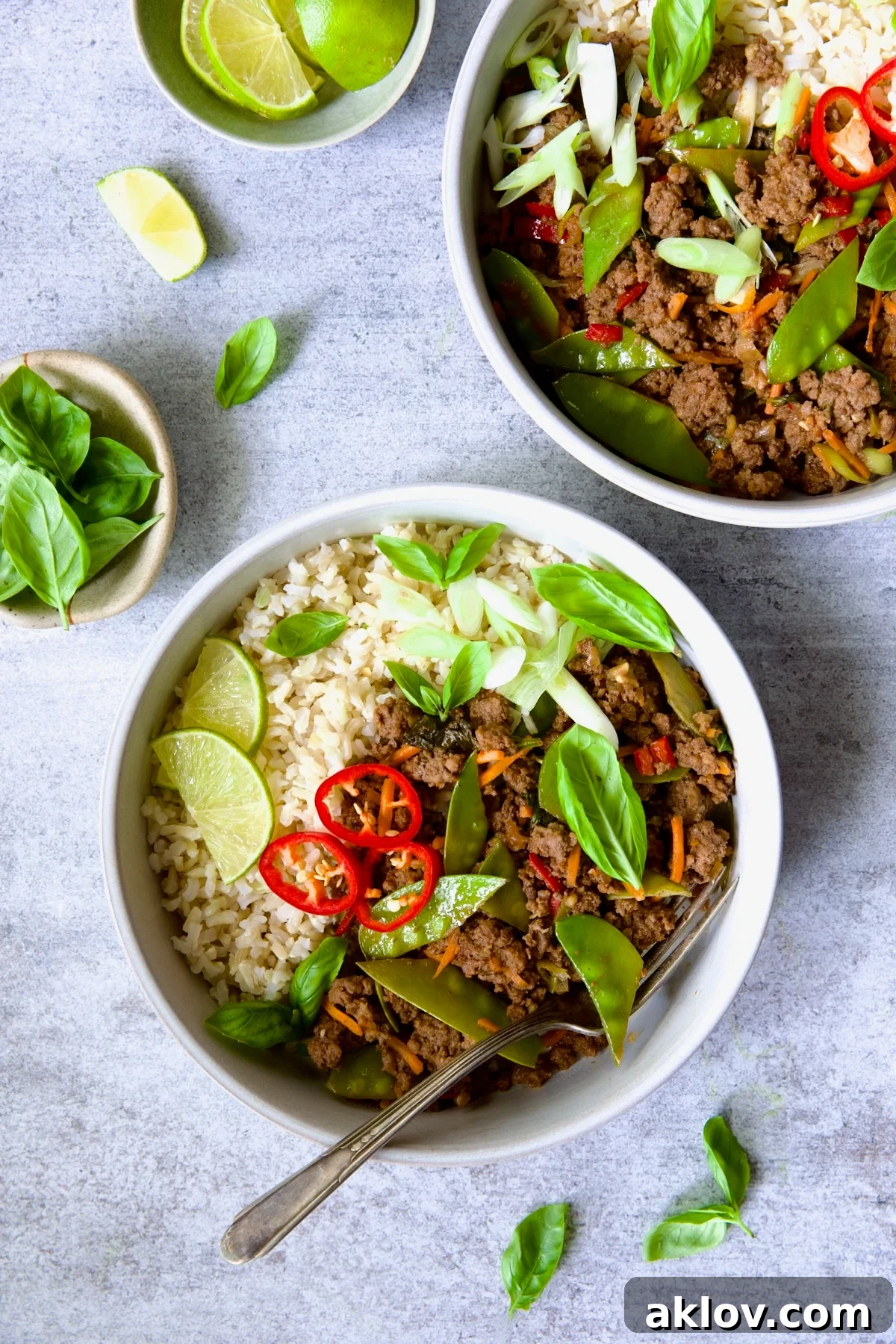
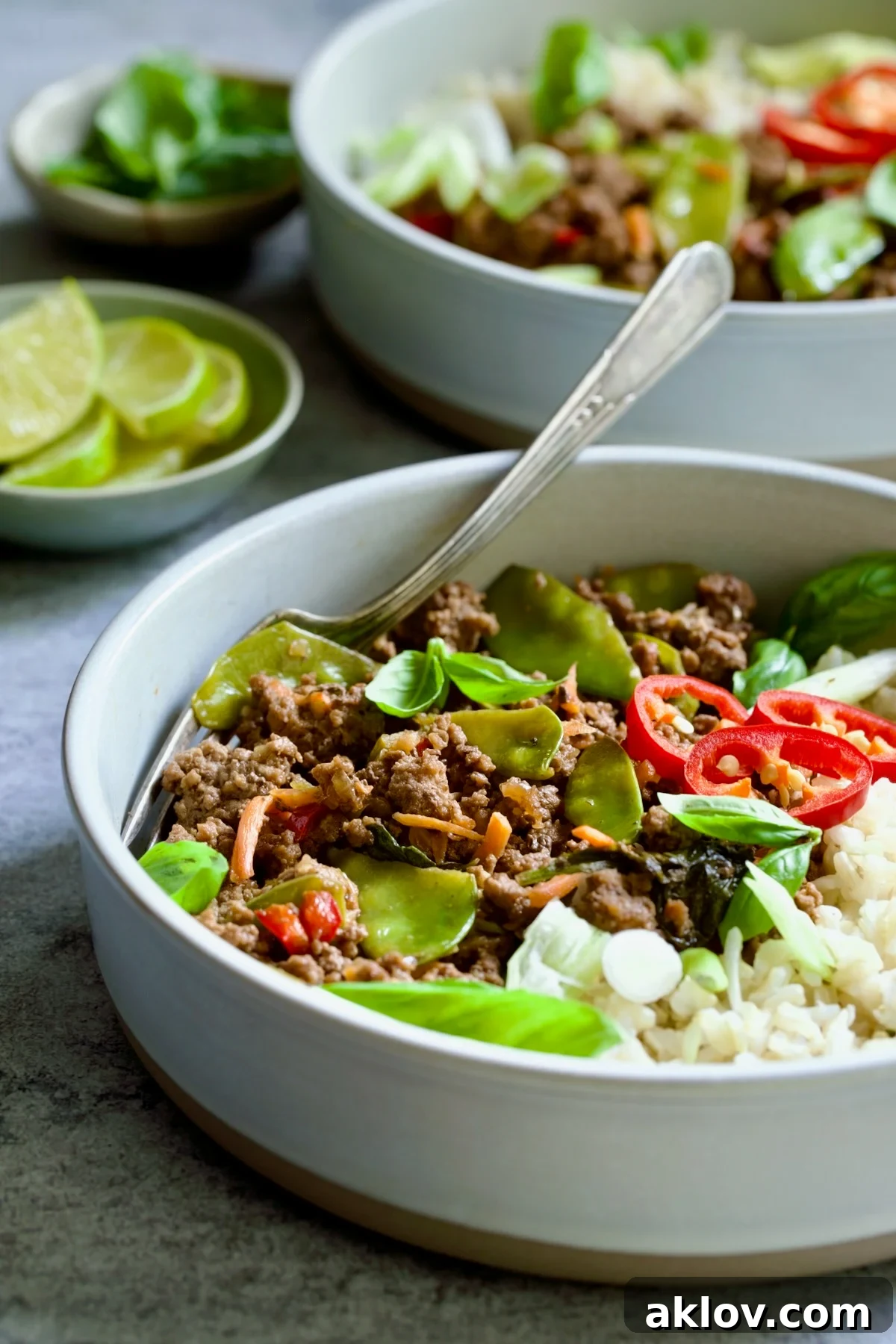
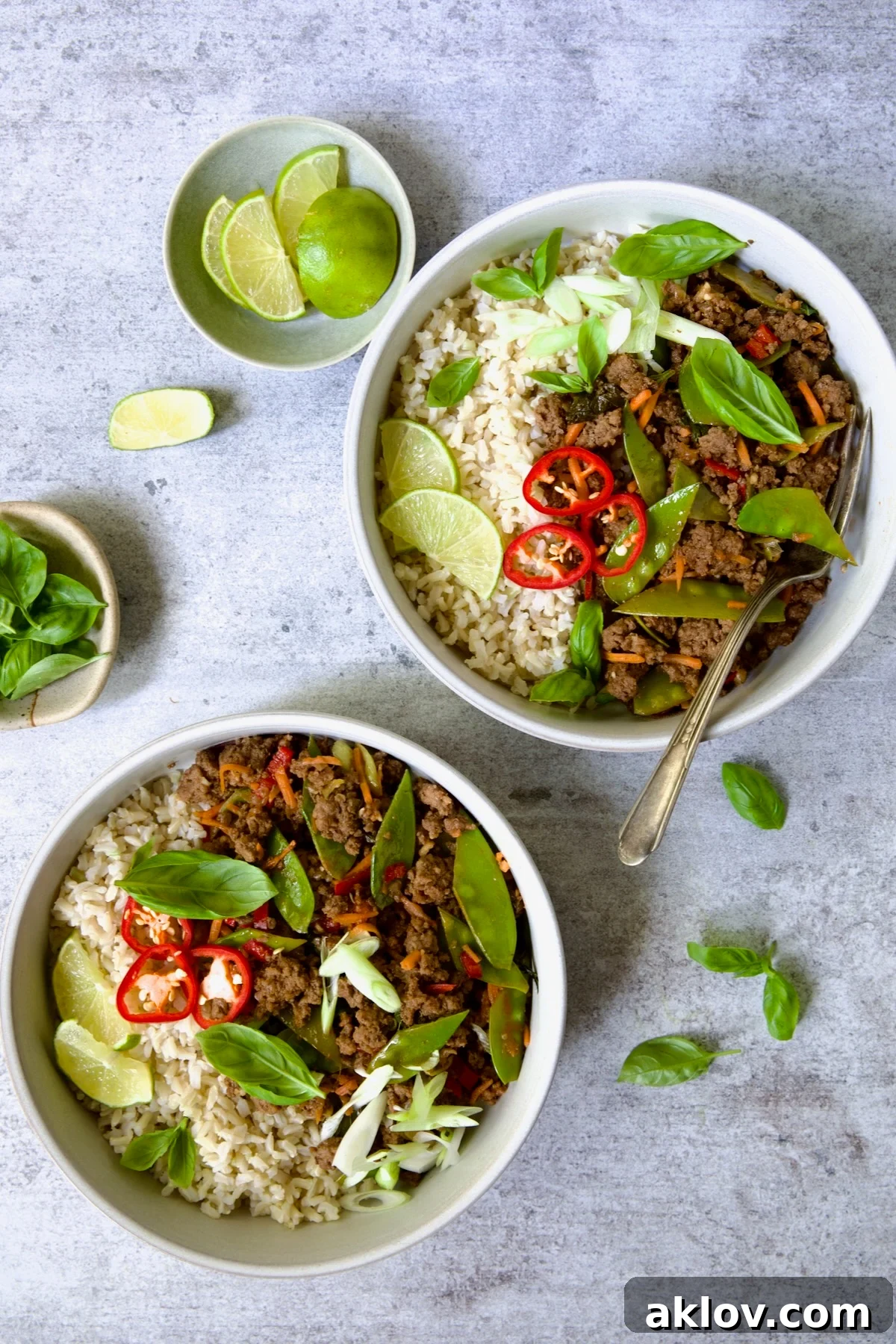
- Step 10: Serve and Garnish. Spoon the irresistible Thai Basil Beef stir-fry generously over beds of freshly cooked brown rice. Garnish with the remaining thinly sliced scallions and serve with fresh lime wedges on the side for an extra burst of citrusy brightness.
And there you have it! A wonderfully aromatic, spicy, and satisfying Thai Basil Beef stir-fry, perfect for any occasion. Enjoy!
Chef’s Secrets for the Perfect Thai Basil Beef:
Unlock even greater success with your stir-fry by incorporating these valuable chef’s tips and tricks:
- Mastering Chile Heat: Remember, the majority of the heat in any chile pepper, including Fresno chiles, resides in the seeds and the white fleshy membrane inside. If you prefer a milder dish, simply remove these parts thoroughly before slicing. Always wear gloves when handling hot chile peppers to prevent skin irritation, and be extremely careful not to touch sensitive areas of your body, especially your eyes, after handling them.
- The “Mise en Place” Advantage: Thai Basil Beef, like most stir-fries, is a rapid-cooking dish. This means speed is essential once you start cooking. Adopt the “mise en place” philosophy: have all your ingredients prepped, chopped, measured, and ready to go before you even turn on the stove. This organized approach ensures a smooth cooking process and prevents anything from burning while you’re scrambling for the next ingredient.
- Basil’s Delicate Touch: Basil is a delicate herb that wilts very quickly under heat. To preserve its vibrant green color, fresh aroma, and distinct flavor, always add it to your stir-fry last, right after removing the pan from the heat. The residual warmth of the dish will be enough to gently wilt the leaves without diminishing their essence.
- Achieving Perfect Ground Beef Browning: For beautifully browned and flavorful ground beef, avoid overcrowding the skillet. If cooking a large batch, consider browning the beef in two separate batches. Allow the beef to sear undisturbed for a few minutes on one side before breaking it up, creating those delicious crispy bits that add texture and flavor.
- Balancing Flavors: Don’t be afraid to taste and adjust the sauce before adding it to the skillet. You can tweak the level of sweetness (brown sugar), saltiness (soy/fish sauce), or heat (Sriracha) to perfectly suit your palate.
Frequently Asked Questions About Thai Basil Beef:
Absolutely! While Thai basil does impart a unique, slightly more aniseseed-like flavor to traditional Thai dishes, it can sometimes be challenging to find, especially if you don’t have access to an international market. Rest assured, conventional sweet basil (the common Italian variety) works wonderfully as a substitute. The dish will still be incredibly flavorful and satisfying, carrying the essential fresh herbaceous notes that define Thai Basil Beef.
The primary distinction lies in their flavor profiles and appearance. Thai basil typically features a more robust, spicier flavor with noticeable notes of anise or licorice, and it often has purplish stems and narrower leaves. Sweet basil, on the other hand, is the variety commonly associated with pesto and Italian cuisine, exhibiting a classic, sweeter aroma with a hint of clove. Interestingly, despite these described differences, when tasting them side-by-side, many people (including myself) find the flavor distinctions to be quite subtle, especially when incorporated into a complex stir-fry sauce. Both contribute beautifully to the dish’s freshness.
While you technically can, for the absolute best flavor and visual appeal, Thai Basil Beef is truly best served immediately, fresh from the skillet. The delicate basil leaves tend to lose their vibrant color and fresh aroma the longer they sit, becoming a duller green. Similarly, the snow peas might lose some of their crisp-tender texture and bright hue upon reheating. If you must prepare parts ahead, you can chop all your vegetables and whisk the sauce. Cook the beef and vegetables when you are ready to serve for optimal results.
Brown rice is a fantastic choice for its nutty flavor and wholesome texture, providing a great balance to the rich stir-fry. However, traditional jasmine rice is also an excellent option, offering a fragrant and slightly sticky base that beautifully complements the Thai flavors. For a lower-carb alternative, consider serving it with cauliflower rice.
Absolutely! This recipe is highly adaptable. To make it vegetarian, you can substitute the ground beef with crumbled firm tofu, tempeh, or a plant-based ground meat alternative. Ensure you press the tofu to remove excess water before crumbling and stir-frying for the best texture. For a vegan version, in addition to the protein substitution, replace the fish sauce with a vegan fish sauce alternative or a dash of extra soy sauce and a pinch of seaweed flakes for umami depth.
Storage and Reheating Instructions:
- Storage: Any leftover Thai Basil Beef can be stored in an airtight container in the refrigerator for up to 3-5 days. While best enjoyed fresh, it makes for a convenient and delicious lunch the next day.
- Reheating: To reheat, gently warm the stir-fry in a microwave-safe dish or in a small saucepan over medium-low heat on the stovetop. Adding a tablespoon or two of water or broth during reheating can help rehydrate the sauce and prevent the dish from drying out. Avoid overheating to maintain the texture of the vegetables.
Complementary Dishes to Serve with Thai Basil Beef:
Elevate your meal with these fantastic pairings that enhance the Thai-inspired flavors of your Basil Beef:
- Cold Thai Cucumber Avocado Soup with Cucumber Relish: A refreshing and cooling counterpoint to the stir-fry’s warmth.
- Sriracha Sweet Chili Brussels Sprouts: For another delightful side with a sweet and spicy kick.
- Thai Green Beans: A simple yet flavorful vegetable side that harmonizes with the main dish.
- Thai Red Curry Lentil Soup with Sweet Potatoes: A hearty and aromatic soup to complete a more elaborate Thai feast.
Discover More Thai-Inspired Recipes You’ll Adore!
If you loved this Thai Basil Beef, explore these other incredible recipes that bring the essence of Thai cuisine to your home:
- Thai Beef Lettuce Wraps: A light, fresh, and flavorful appetizer or main course.
- Shrimp Pad Thai with Zucchini Noodles: A healthier twist on a classic, perfect for a lighter meal.
- Sheet Pan Thai Baked Fish with Broccolini: Easy cleanup and vibrant flavors in one pan.
- Vegan Thai Red Curry: A rich and creamy plant-based curry that’s full of flavor.
For a comprehensive collection of diverse meat-based dishes, visit all my beef recipes at Beef Recipes – From A Chef’s Kitchen.
Thai Basil Beef
Equipment
-
Wusthof Chef Knife
-
Cutting Board
-
Nonstick Skillet
-
Enameled Cast Iron Skillet
Ingredients
- 1/4 cup soy sauce, preferably low-sodium, regular or gluten-free
- 2 tablespoons fresh lime juice (from about 1 medium lime)
- 2 tablespoons water or beef, chicken or vegetable broth
- 1 tablespoon fish sauce, or to taste
- 1 tablespoon Sriracha hot sauce, or to tolerance
- 1 tablespoon brown sugar
- 2 tablespoon canola oil
- 1/2 medium onion, chopped
- 1 1/4 pounds ground chuck (80/20 preferred)
- 4 cloves garlic, minced
- 2 Fresno chiles, halved lengthwise, seeded and thinly sliced
- 1/2 cup julienned carrots
- 1 cup snow peas, strings and stem ends removed, cut in half
- 1 bunch small/thin scallions, white and light green parts only, thinly sliced diagonally, divided
- 1 heaping cup fresh basil leaves, sweet or Thai
- Cooked brown rice, for serving
- Lime wedges, for serving
Instructions
- Combine the soy sauce, lime juice, water or broth, fish sauce, Sriracha and brown sugar in a small bowl. Set aside.
- Heat the oil in a large skillet over medium-high heat. Add the onion, reduce heat to medium and cook for 3-4 minutes or until beginning to soften.
- Increase the heat back up to medium-high, crumble the ground beef into the skillet, stir in the onions (so they don’t burn in the following step), and cook, undisturbed, until slightly crisped and browned on the bottom, 2-3 minutes.
- Stir the beef and cook until completely cooked, 4-5 minutes, breaking the meat up with a wooden spoon. Add the garlic and Fresno chiles and cook briefly for 25-30 seconds.
- Drain off any excess fat in the skillet.
- Add the soy sauce combination and bring to a boil.
- Add the carrots and snow pea pods. Cook, stirring often for 2-3 minutes or until vegetables are crisp-tender and the pea pods are bright green.
- Remove from the heat and stir in the basil until just wilted.
- Spoon over cooked brown rice, garnish with remaining scallions with lime wedges on the side.
Notes
SUBSTITUTIONS:
- Can also use ground turkey or chicken for a lighter protein option.
- Substitute red bell pepper or mini sweet peppers for the Fresno chiles if you don’t want it hot. Also, consider reducing the Sriracha for a milder flavor.
- Green beans or sugar snap peas are suitable substitutes for the snow peas.
TIPS:
- Most of the heat in any chile pepper will be in the seeds and the white fleshy membrane. Remove them to cut down on the heat.
- It’s a good idea to wear gloves when handling hot chile peppers and be careful not to touch any sensitive areas of your body–like your eyes.
- Thai Basil Beef is a quick stir-fry dish, so have all your ingredients ready to go before you start cooking (mise en place).
- Basil is a delicate herb that wilts quickly. Add them to the stir-fry last to retain their freshness and aroma.
MAKE AHEAD:
- This dish can be made ahead, but be aware that the basil will lose some flavor and vibrancy as it sits, and the snow peas may turn a drab green. Thai Basil Beef is best served fresh from the skillet for optimal taste and texture.
Nutrition Information
Calories: 475 kcal
Carbohydrates: 11 g
Protein: 27 g
Fat: 36 g
Saturated Fat: 11 g
Polyunsaturated Fat: 3 g
Monounsaturated Fat: 17 g
Trans Fat: 2 g
Cholesterol: 101 mg
Sodium: 1359 mg
Potassium: 595 mg
Fiber: 2 g
Sugar: 6 g
Vitamin A: 3041 IU
Vitamin C: 31 mg
Calcium: 60 mg
Iron: 4 mg
Nutritional values are automatically calculated using unbranded products and are estimates only. Actual results may vary based on ingredients used and portion sizes. Adjust as needed for dietary restrictions, allergies, or health concerns.
 Did you enjoy this recipe? Leave a comment below and share your experience!