
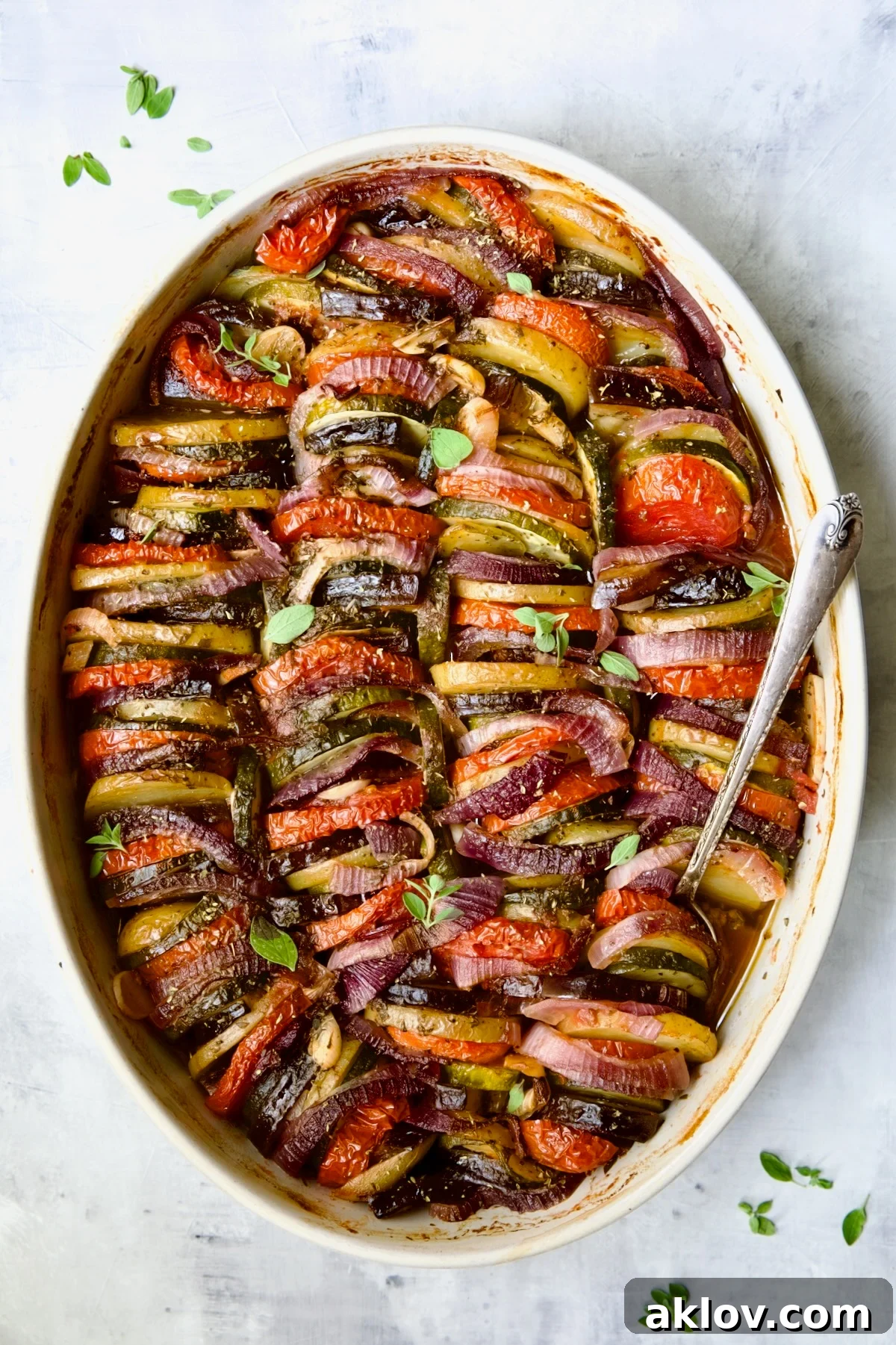
Briam, often celebrated as the quintessential Greek Roasted Vegetables, perfectly embodies the vibrant spirit of summer, much like its Mediterranean cousins, the French Ratatouille or a delightful Provençal tian. This rustic yet elegant dish features an array of garden-fresh vegetables—typically zucchini, tender potatoes, rich eggplant, and sun-ripened tomatoes—slowly roasted to perfection with fragrant Mediterranean herbs and a generous drizzle of the finest extra-virgin olive oil. The result is a profoundly nourishing, deeply flavorful, and aesthetically pleasing meal that captures the wholesome goodness of the season. Briam is incredibly versatile, whether served as a hearty vegetarian main course or a magnificent side dish. Consider pairing it with a succulent Greek Roast Chicken for an unforgettable culinary experience.
“Absolutely delicious! This Briam recipe offers a wonderful change of pace from traditional ratatouille. It’s incredibly filling and satisfying as a vegetarian main dish. It has definitely earned a permanent spot in my meal rotation!”
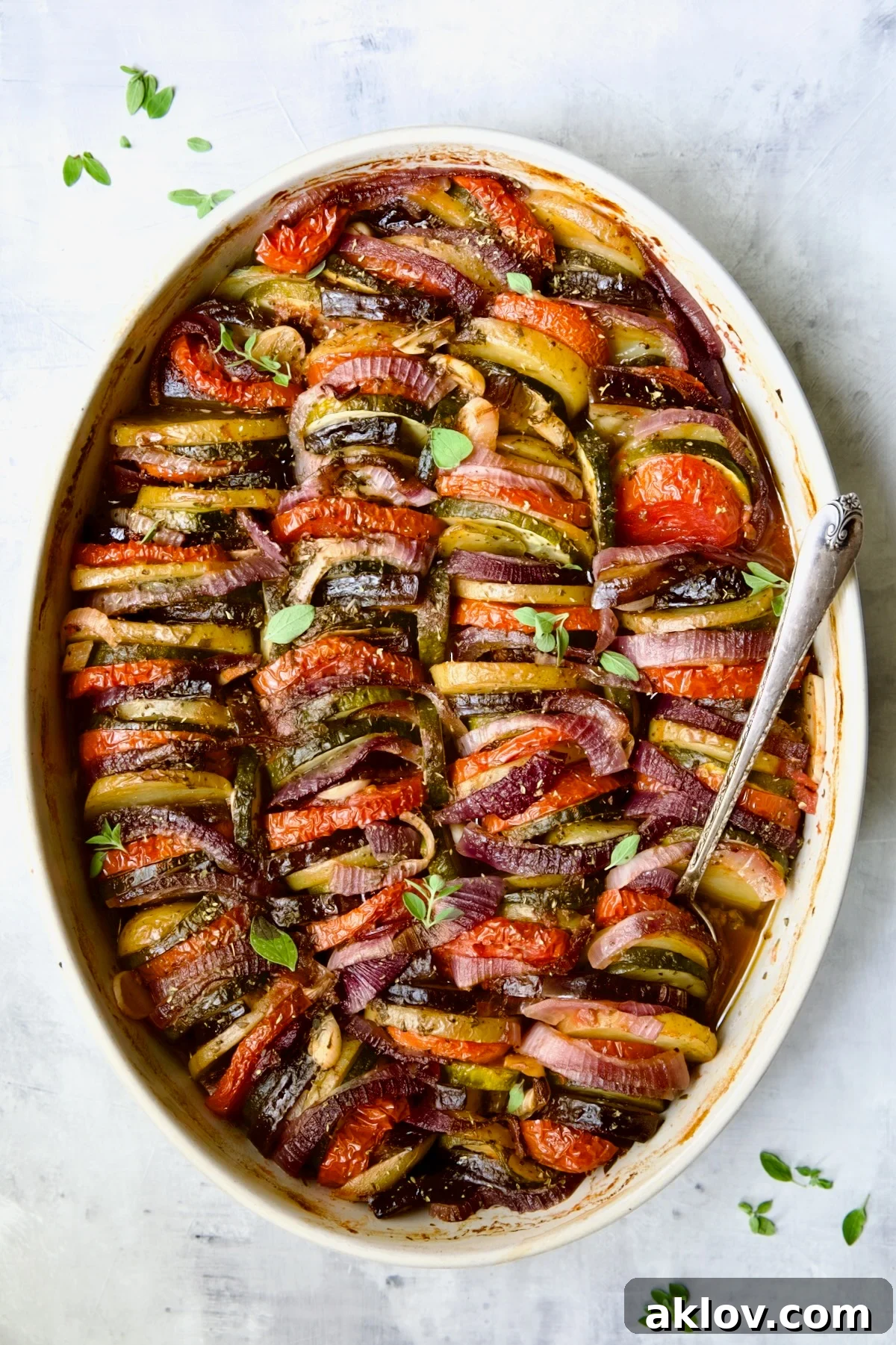
What is Briam? Discovering the Heart of Greek Roasted Vegetables
Briam (pronounced BREE-uhm), sometimes referred to as Tourlou Tourlou, is a beloved traditional Greek vegetable bake that truly comes alive during the abundant summer months when produce is at its peak. More than just a dish, it’s a celebration of simple, fresh ingredients, transforming humble garden vegetables into a harmonious symphony of flavors and textures. This recipe beautifully showcases the natural sweetness and earthiness of summer’s bounty.
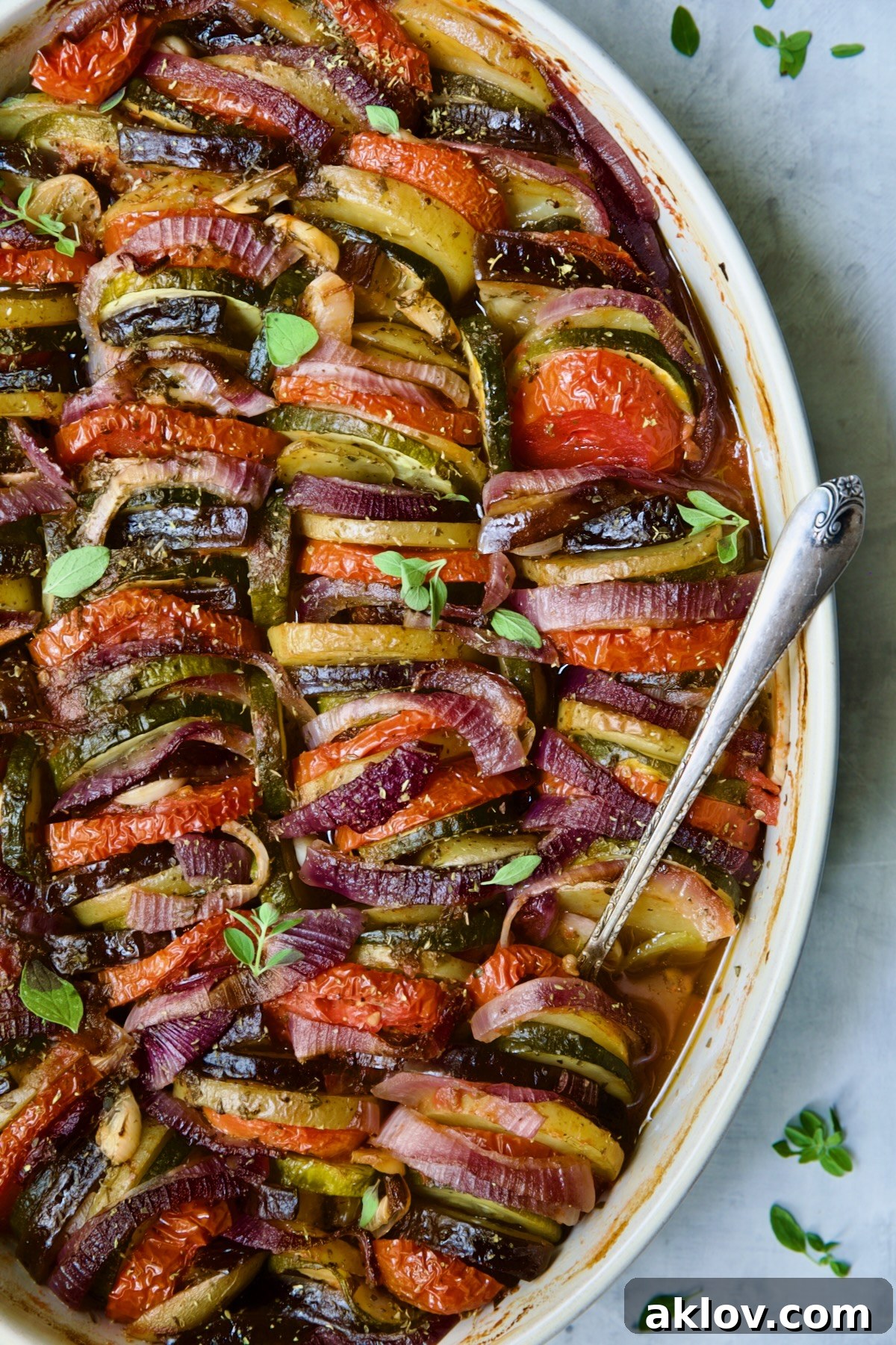
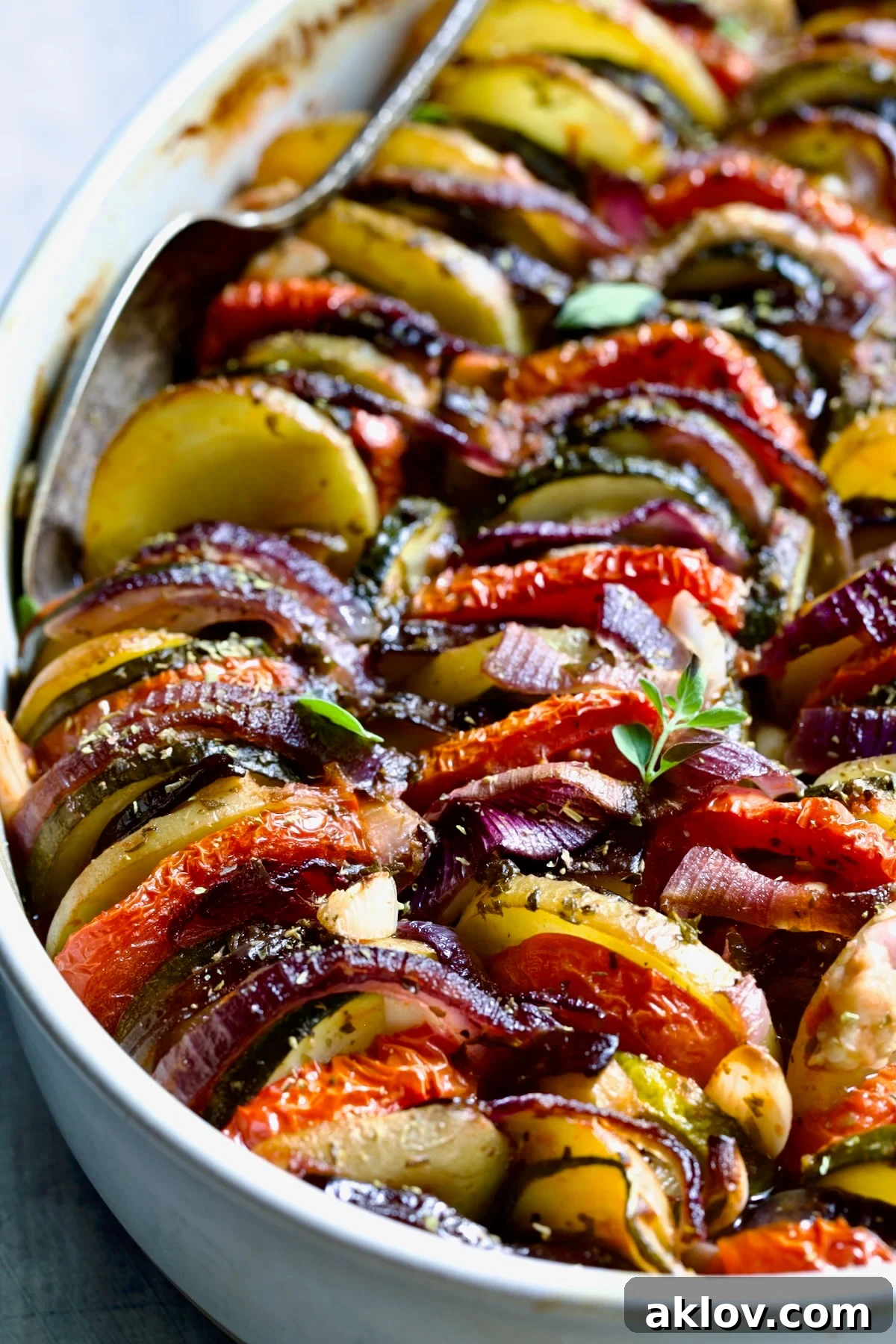
At its core, Briam typically features a medley of seasonal vegetables: vibrant zucchini, often robust eggplant, juicy tomatoes, starchy potatoes, pungent onions, aromatic garlic, and a generous assortment of fresh herbs, all lavishly coated in golden extra-virgin olive oil. The vegetables are meticulously sliced and artfully arranged in a deep baking dish or roasting pan, then slow-baked until they reach a state of melting tenderness, their flavors deepened and melded by the gentle heat of the oven.
The beauty of Briam lies in its regional variations and the personal touch of each Greek cook. Some culinary artists prefer to meticulously layer the vegetables, much like the precision seen in a classic French tian, creating distinct visual appeal and allowing each vegetable to slowly caramelize. Other interpretations adopt a more tomato-forward approach, evoking the rustic charm of ratatouille, where vegetables are gently tossed with a rich tomato base. For instance, reputable sources like America’s Test Kitchen often present versions where the vegetables are piled high and crowned with sliced fresh tomatoes before baking, allowing the tomato juices to infuse the entire dish.
Briam is remarkably versatile on the dining table. It can serve as an exquisite side dish, complementing grilled meats or fish, or stand proudly as a wholesome and satisfying vegetarian main course. For an authentic Greek experience, serve it alongside thick slices of crusty bread, perfect for soaking up the delicious, herb-infused olive oil and tomato juices, and pair it with a generous block of salty feta cheese and a handful of briny Greek olives like Kalamata. This simple combination transforms Briam into a complete, nourishing, and deeply flavorful Mediterranean feast.
Why This Briam Recipe is an Absolute Keeper for Your Kitchen
My recent travels through the captivating landscapes of Greece ignited a passionate desire to recreate the authentic Briam I savored in a quaint, family-run taverna on the sun-drenched Mani Peninsula. That meal, overlooking the azure Mediterranean Sea, was more than just food; it was an experience, a taste of genuine Greek hospitality and culinary tradition. I embarked on a quest to find a recipe that truly mirrored that unforgettable flavor profile, and I discovered a remarkably similar and equally authentic version in The World Central Kitchen Cookbook. This particular cookbook is highly regarded for its genuine recipes, as World Central Kitchen collaborated with local Greek restaurants to provide sustenance to residents affected by wildfires a few years ago. This ensures its authenticity and connection to the heart of Greek home cooking, understanding that every Greek cook proudly cherishes their unique twist on this beloved classic.
This particular Briam recipe isn’t just good; it’s truly exceptional:
- Super Easy to Prepare: Despite its gourmet taste, this recipe is incredibly straightforward, perfect for both novice and experienced cooks.
- Incredibly Healthy: Packed with nutrient-rich vegetables and heart-healthy extra-virgin olive oil, it’s a guilt-free indulgence.
- Lush and Flavorful: Each bite bursts with the natural sweetness of roasted vegetables, enhanced by aromatic herbs and savory olive oil.
- Authentically Greek: It delivers the true taste of Greece, reminiscent of sun-drenched tavernas and homemade meals.
- Versatile and Customizable: Easily adaptable to whatever seasonal vegetables you have on hand or prefer.
- Naturally Vegetarian & Vegan-Friendly: A fantastic option for those seeking plant-based meals.
- Budget-Friendly: Made with readily available and affordable ingredients.
To truly complete the experience, remember to serve this Briam with a generous basket of crusty bread, ideal for dipping into the flavorful juices at the bottom of the dish. Add a hearty chunk of creamy feta cheese and a handful of pungent Kalamata olives, and you’ll have a rustic, deeply satisfying Greek feast that, while simple in its preparation, is bursting with bold, sunny, and authentic Mediterranean flavors. It’s a meal that nourishes both body and soul, bringing a piece of Greece to your table.
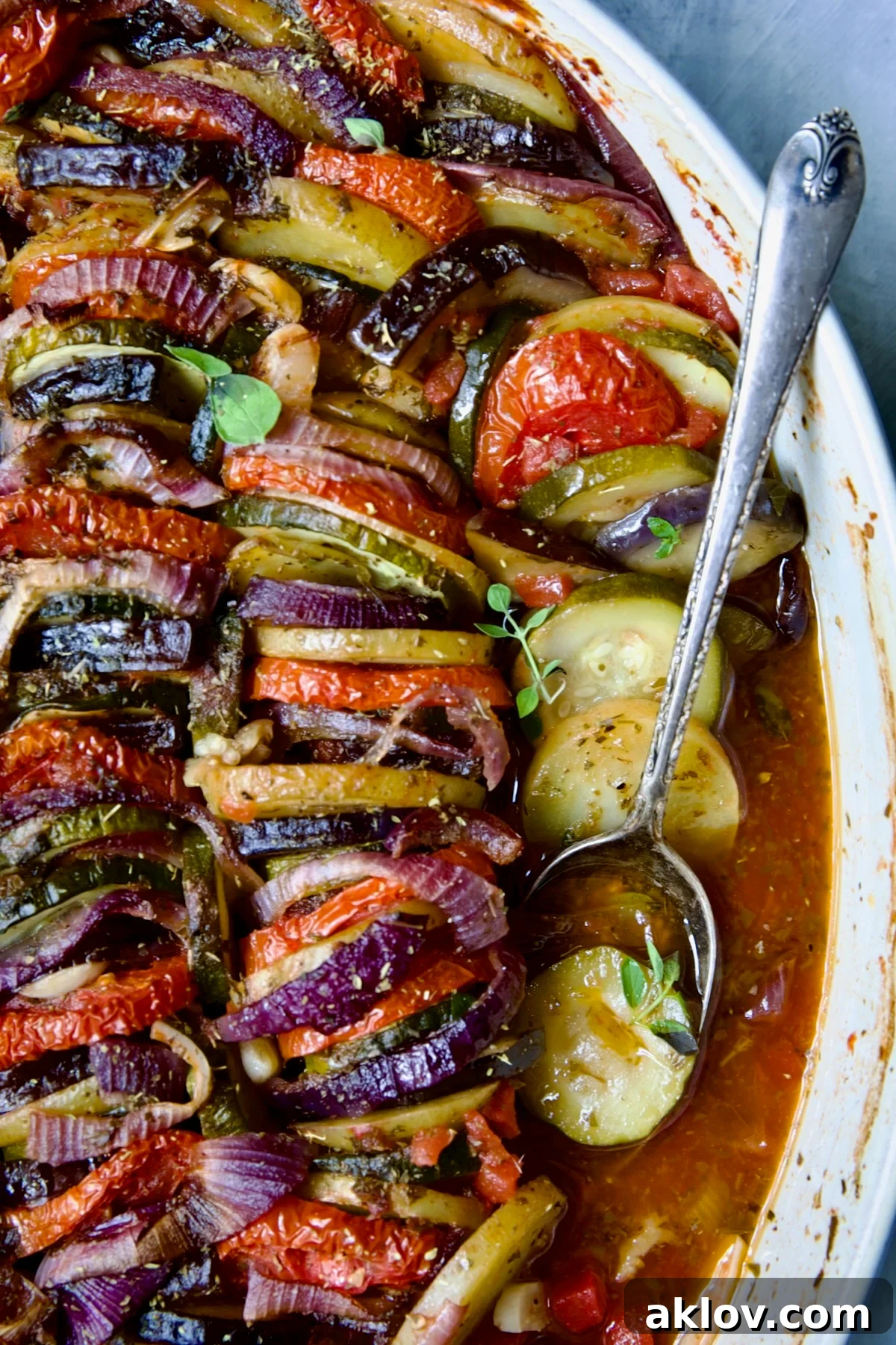
How to Make Briam (Greek Roasted Vegetables): A Step-by-Step Guide
Creating this flavorful Briam is a delightful culinary journey. Follow these instructions closely to achieve the perfect balance of tender vegetables and aromatic juices.
Essential Recipe Ingredients:
Before you begin, gather all your ingredients. The precise quantities for this mouthwatering Briam recipe are provided in the detailed recipe card at the end of this article. Make sure to use fresh, high-quality produce for the best possible flavor.
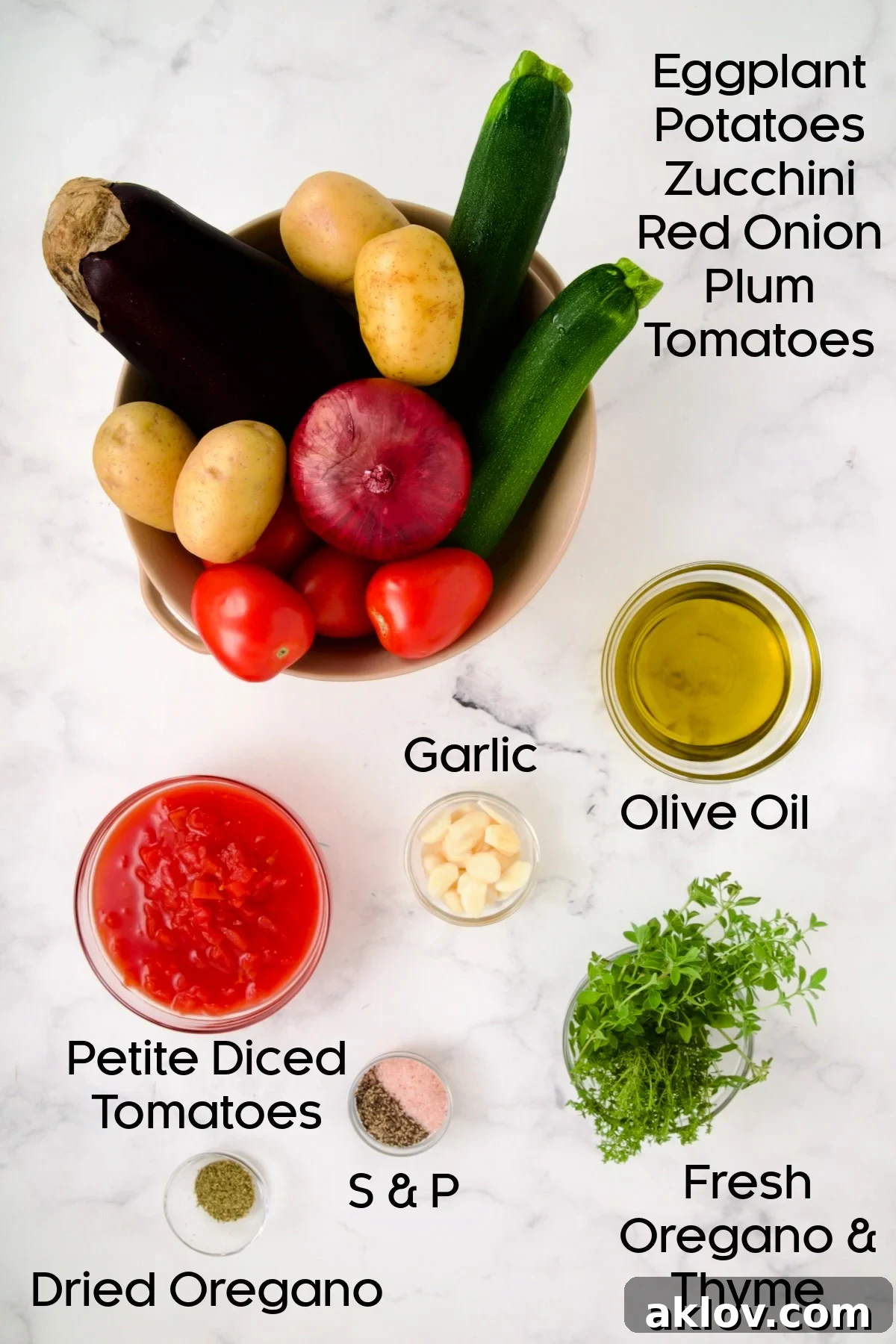
Ingredient Notes and Smart Substitutions:
- Eggplant: While the widely available globe eggplant is perfectly suitable, consider Japanese eggplant for its milder flavor and less bitter profile. When sliced into rounds, Japanese eggplant’s slender shape allows for beautiful layering, similar in size to the potatoes, tomatoes, and zucchini. If using a large globe eggplant, as I often do due to its availability, simply use half of it. Slice it lengthwise, then cut those halves into smaller, manageable pieces, reserving the remaining half for another Mediterranean-inspired dish.
- Potatoes: Yukon Gold potatoes are my preference for their creamy texture and ability to hold their shape during prolonged roasting. Red potatoes are another excellent choice for similar reasons. It’s crucial to opt for waxy potato varieties rather than starchy ones like Russets, which tend to break down and become crumbly during the slow baking process, compromising the dish’s texture.
- Zucchini: Green zucchini adds a lovely color contrast and mild flavor. However, yellow summer squash can be used interchangeably or alongside zucchini, offering a slightly sweeter note and another dimension of color.
- Tomatoes: Plum tomatoes are ideal for Briam as they are less watery than other varieties. Their firm flesh maintains its integrity during roasting, preventing the dish from becoming overly soupy while still contributing a rich, concentrated tomato flavor. Canned petite diced tomatoes also work wonderfully for the base, providing a consistent texture and flavor.
- Oregano: This recipe harnesses the full potential of oregano by using both fresh and dried forms. Fresh oregano, steeped in olive oil, imparts a bright, herbaceous fragrance that subtly flavors the entire dish. Dried oregano, with its more intense and earthy notes, is crucial for developing the deep, authentic Greek flavor that defines traditional Briam, especially during the longer cooking time.
- Thyme: Fresh thyme is highly recommended here. Unlike dried thyme, which can become bitter when subjected to extended cooking, fresh thyme retains its delicate, aromatic qualities, enhancing the overall herbal bouquet of the dish without overpowering it.
- Olive Oil: The quality of your olive oil truly makes a difference in Briam. If possible, procure a good quality Greek extra-virgin olive oil. Its fruity, robust flavor is integral to the authentic taste of this Mediterranean classic.
Detailed Step-By-Step Instructions:
Follow these steps to create a beautiful and delicious Briam:
- Begin by gathering and thoroughly prepping all your ingredients. This mise en place will ensure a smooth cooking process.
- Preheat your oven to a steady 400 degrees Fahrenheit (200 degrees Celsius).
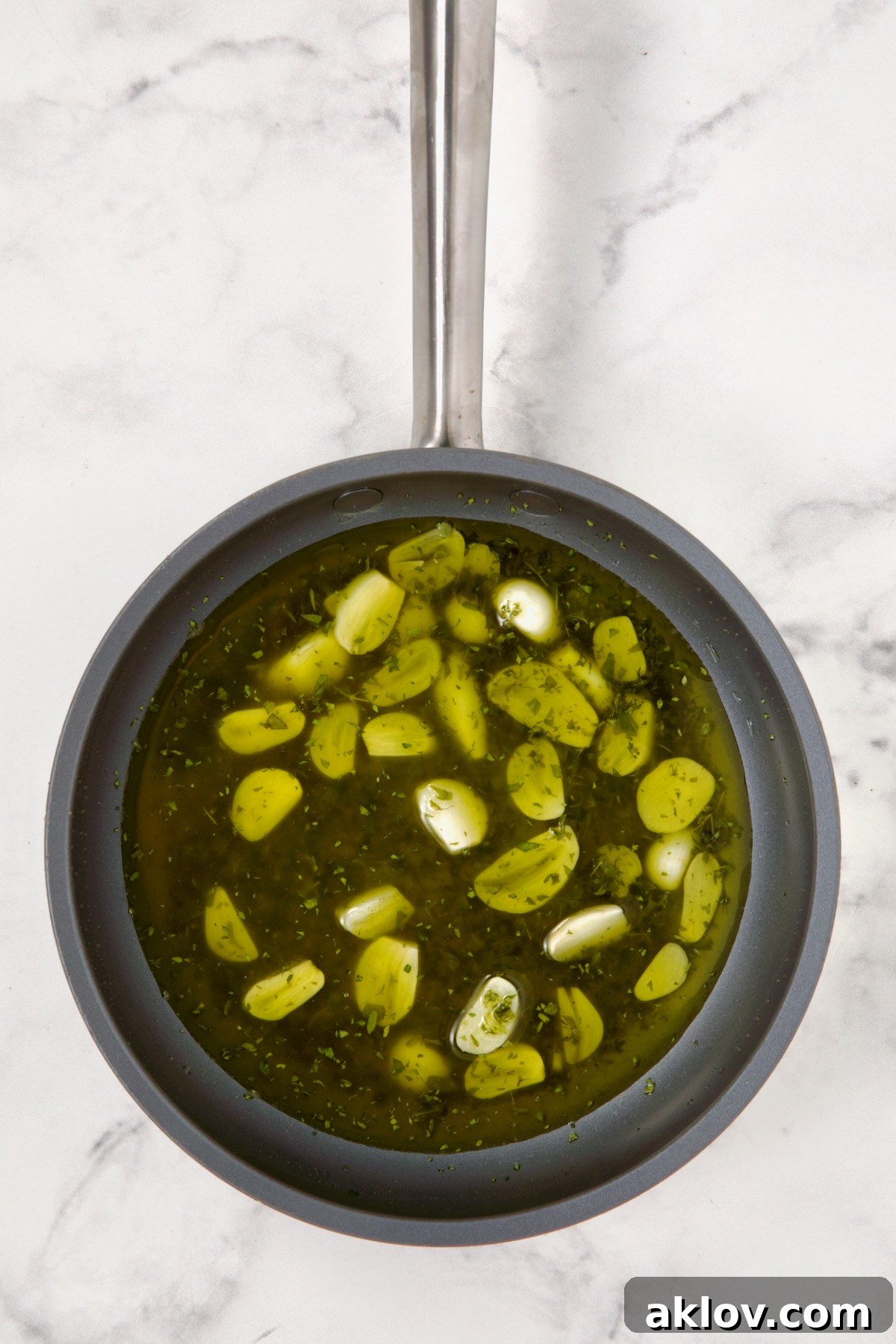
- In a small saucepan or skillet, combine the extra-virgin olive oil, thinly sliced garlic, fresh oregano, and fresh thyme. Gently heat this mixture over low heat until it reaches a very gentle simmer. Immediately turn off the heat and allow the herbs and garlic to steep in the warm oil while you prepare the other vegetables. This infusion process deepens the oil’s flavor.
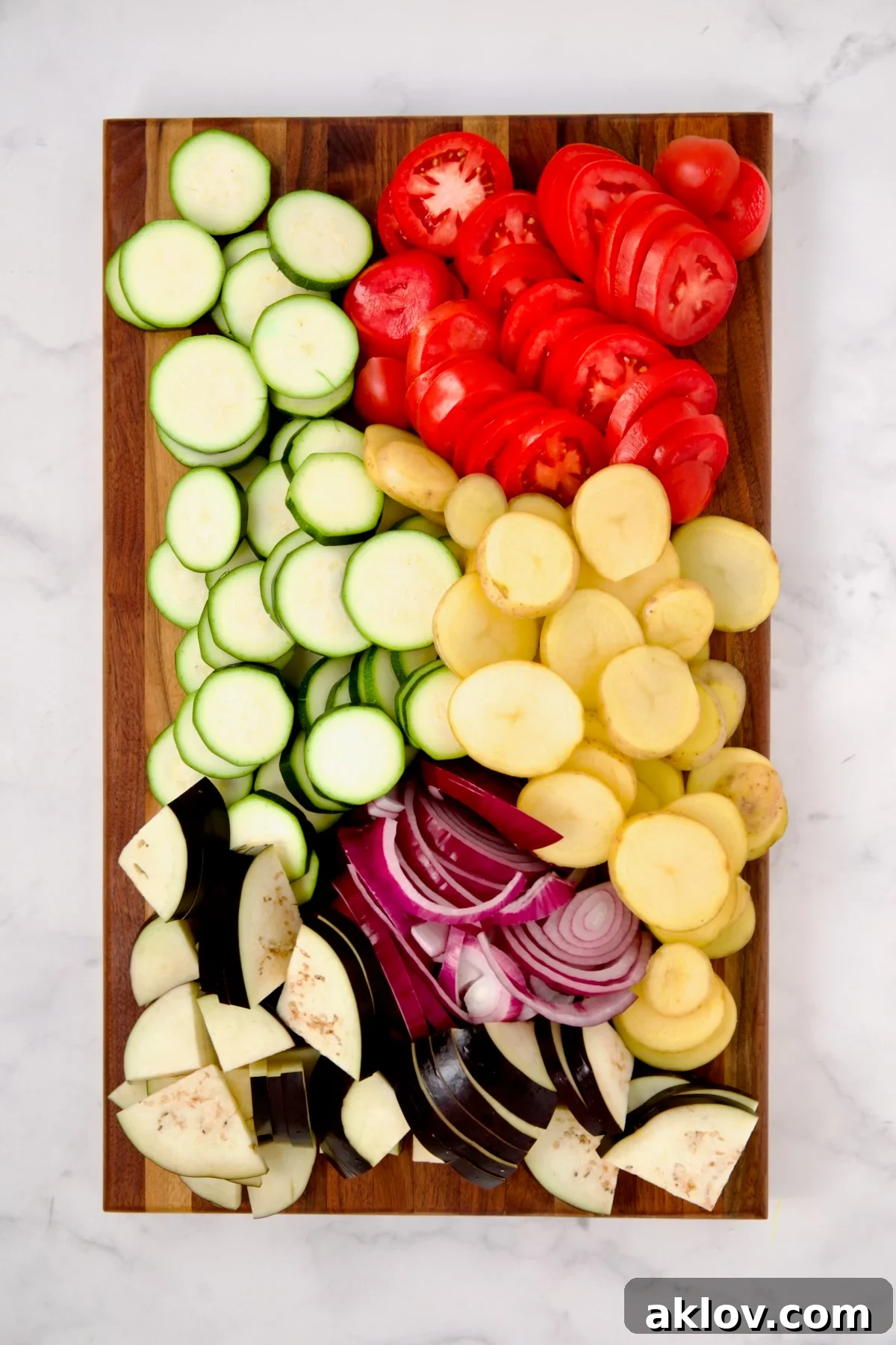
- Carefully slice the potatoes, zucchini, eggplant, and fresh tomatoes to an approximate thickness of 3/8-inch. Halve the red onion and slice it to a similar 3/8-inch thickness. Uniform slicing is key for even cooking and a beautiful presentation.
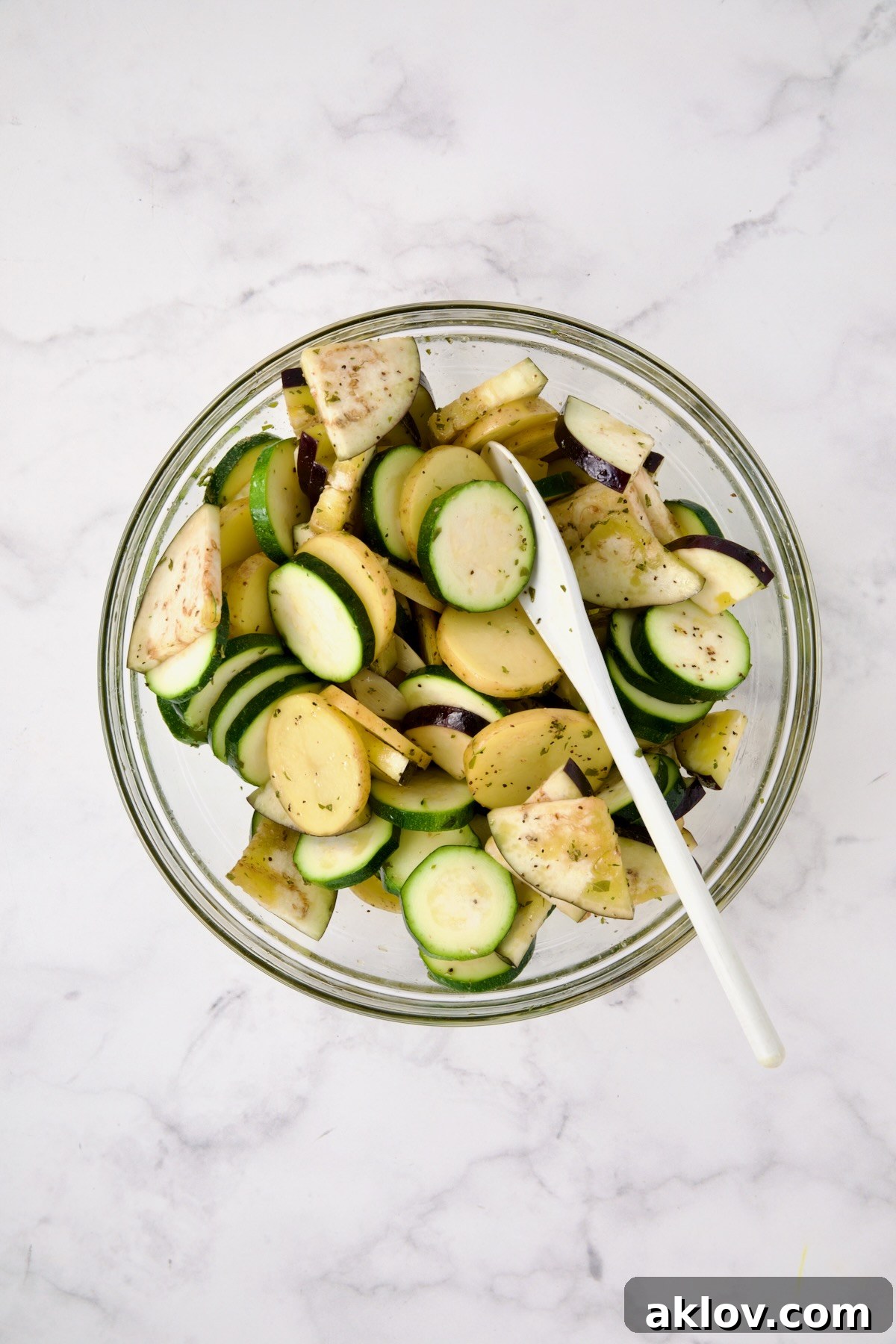
- In a large mixing bowl, combine the sliced potatoes, zucchini, and eggplant. Pour about half of the infused olive oil (ensuring the garlic slices are included) over these vegetables. Add 1/4 teaspoon of dried oregano, 3/4 teaspoon of salt, and freshly ground black pepper to taste. Toss everything gently but thoroughly until all the vegetables are evenly coated with the seasoned oil.
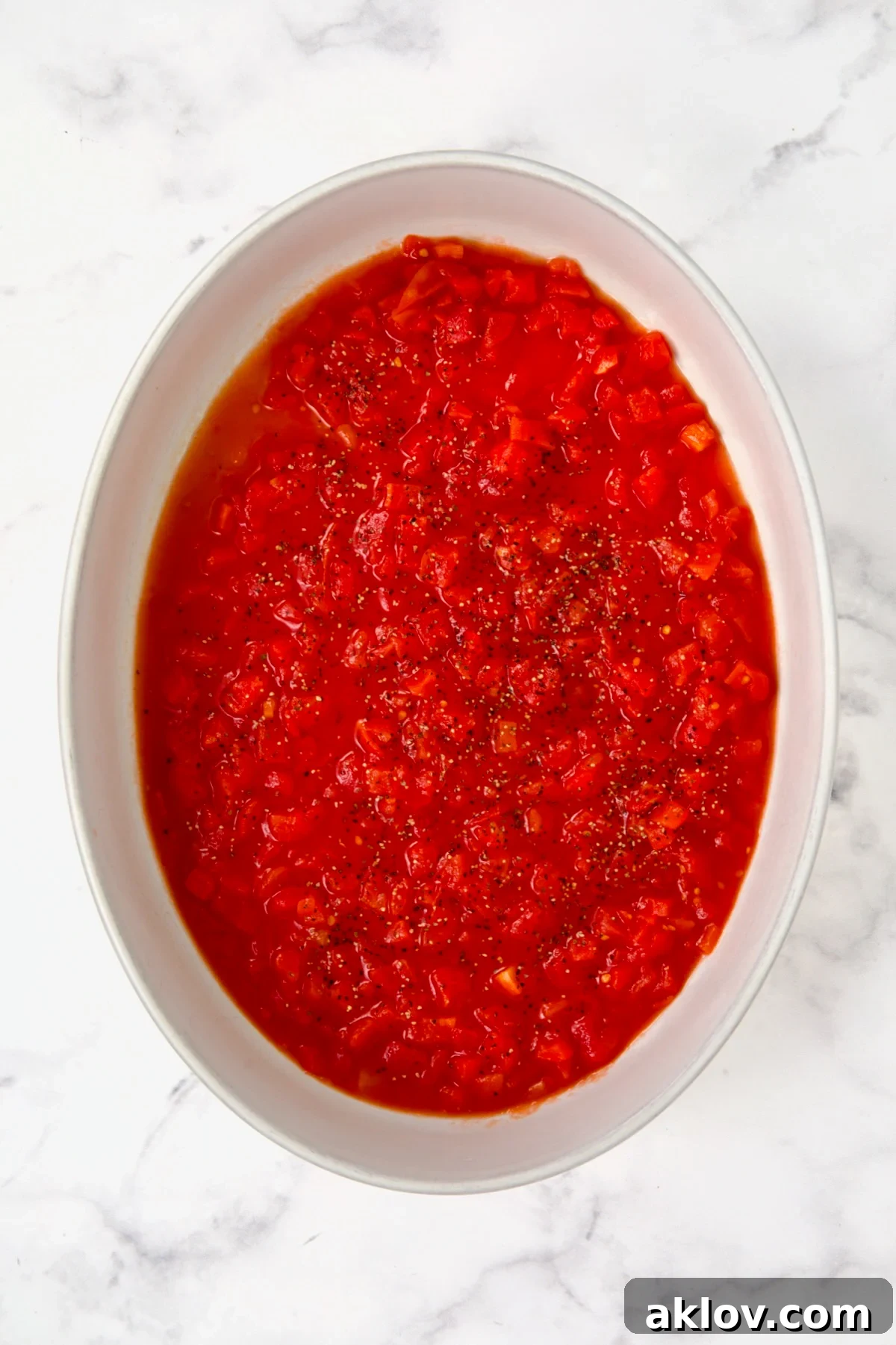
- Pour the can of petite diced tomatoes, undrained, into the bottom of a large baking dish (a 13×9-inch rectangular dish or a large oval gratin dish works perfectly). Season the tomatoes with the remaining salt, freshly ground black pepper, and the remaining dried oregano. This forms a flavorful base for the roasted vegetables.
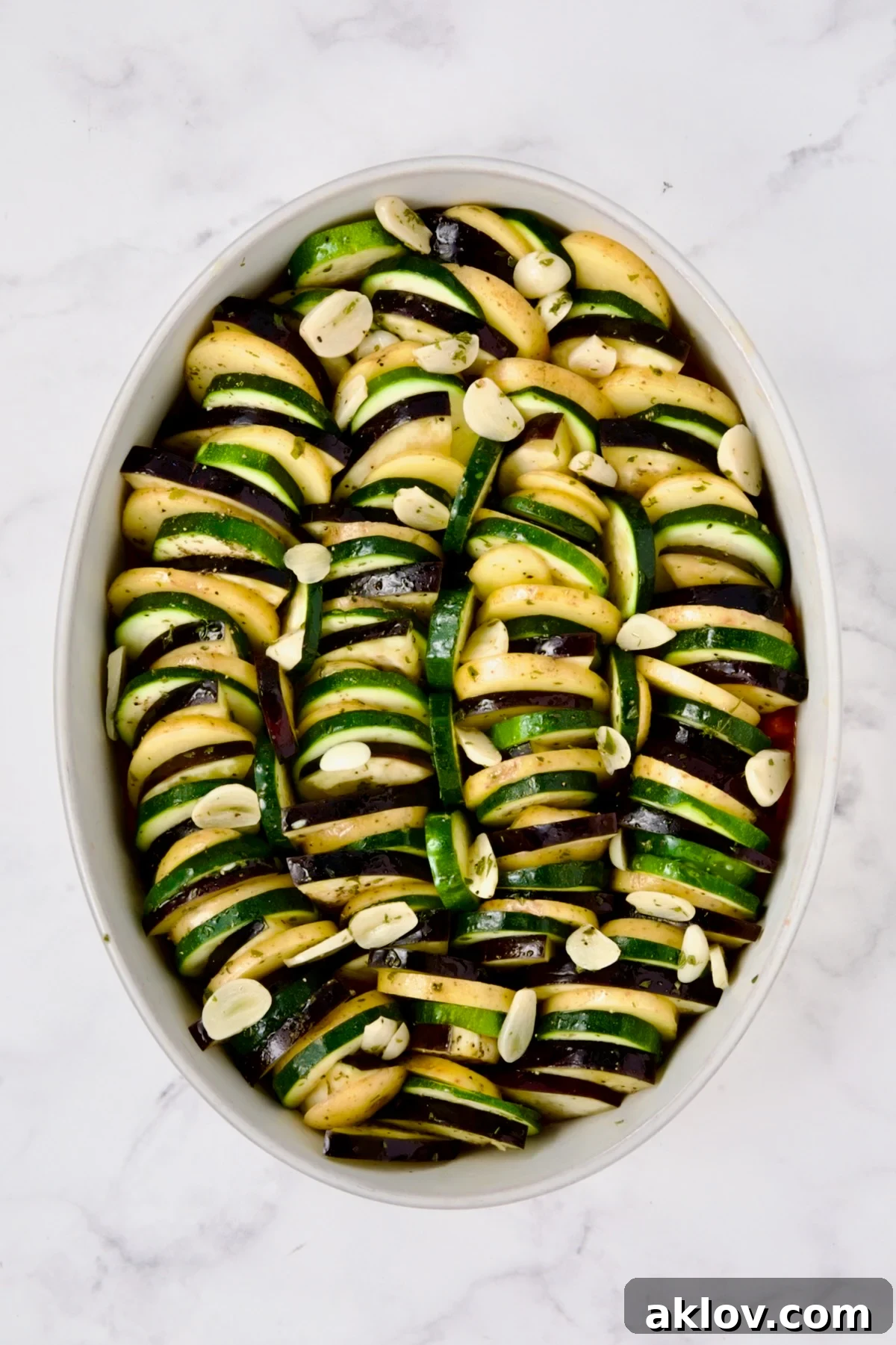
- Begin to artfully arrange the coated potatoes, zucchini, and eggplant over the diced tomato base in the baking dish. Alternate and slightly overlap the slices, working your way across the dish until all of these vegetables are used. If you have any leftover pieces, tuck them in evenly throughout the dish. Ensure that the garlic slices from the infused oil are also distributed nicely among the vegetables.
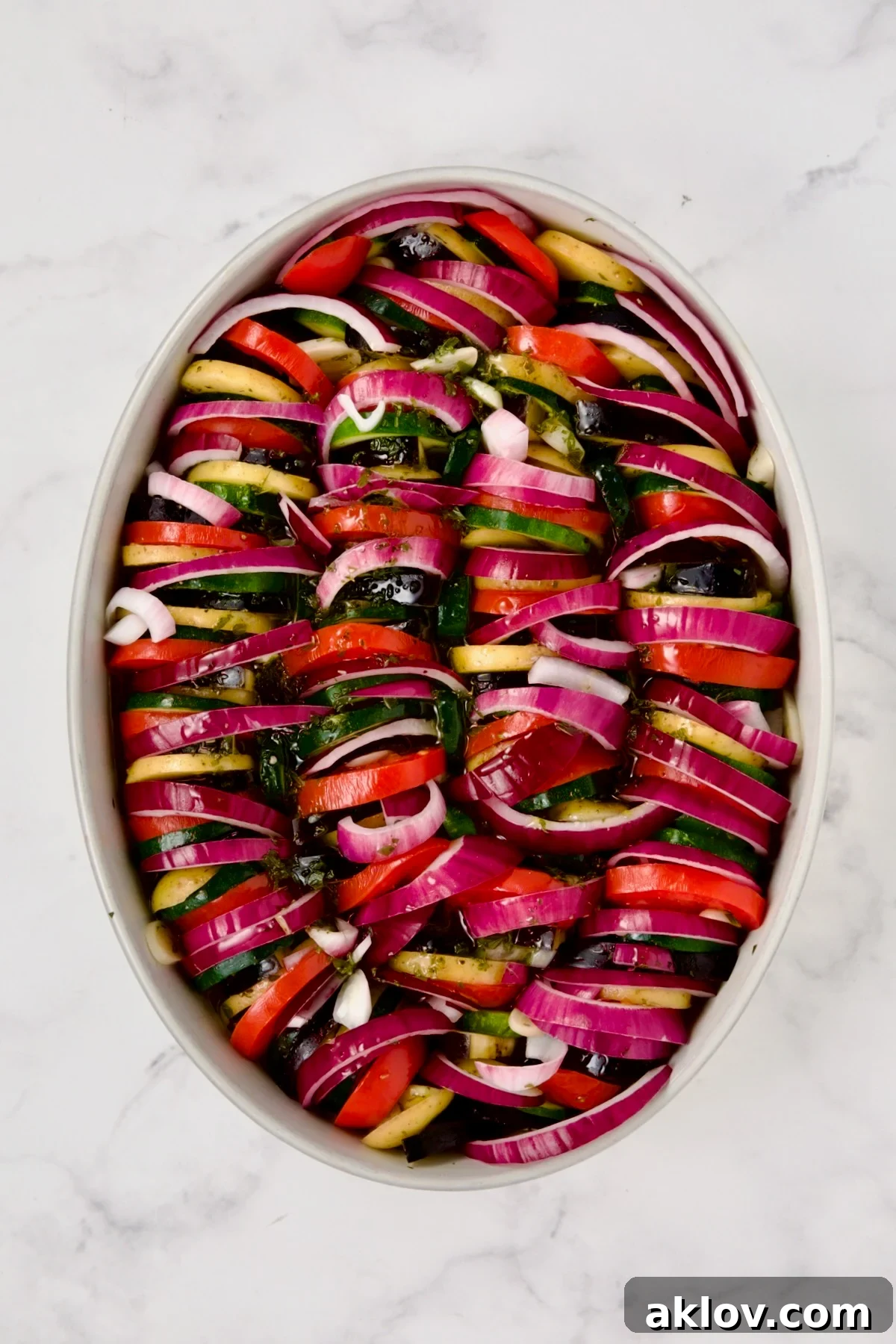
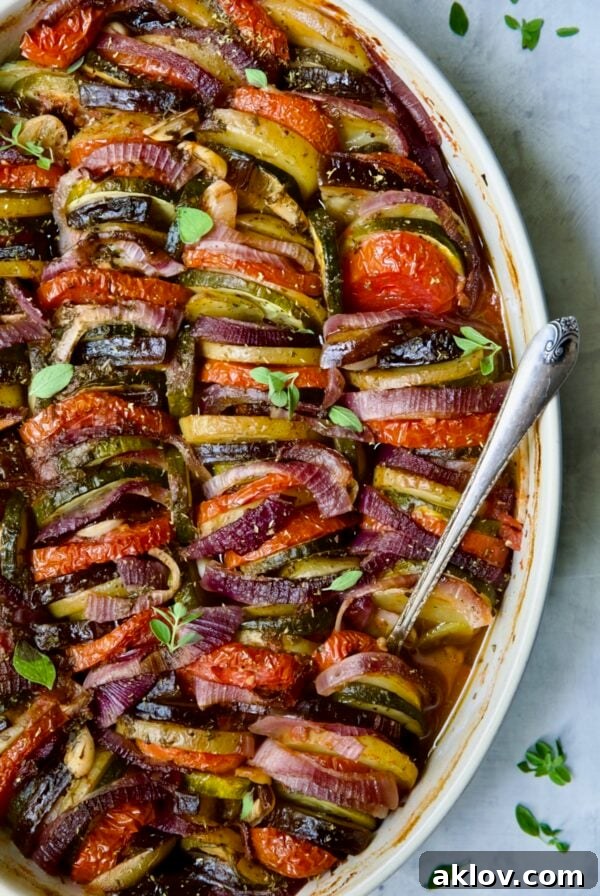
- Now, tuck the fresh tomato slices and the red onion slices among the other vegetables. The goal is to distribute them evenly throughout the baking dish, creating a visually appealing and flavorful mosaic. Drizzle the remaining infused olive oil over the top of all the arranged vegetables, ensuring you scrape any remaining flavorful oil from the bowl where the potatoes, zucchini, and eggplant were tossed. The finished arrangement should have a wonderfully rustic and abundant appearance.
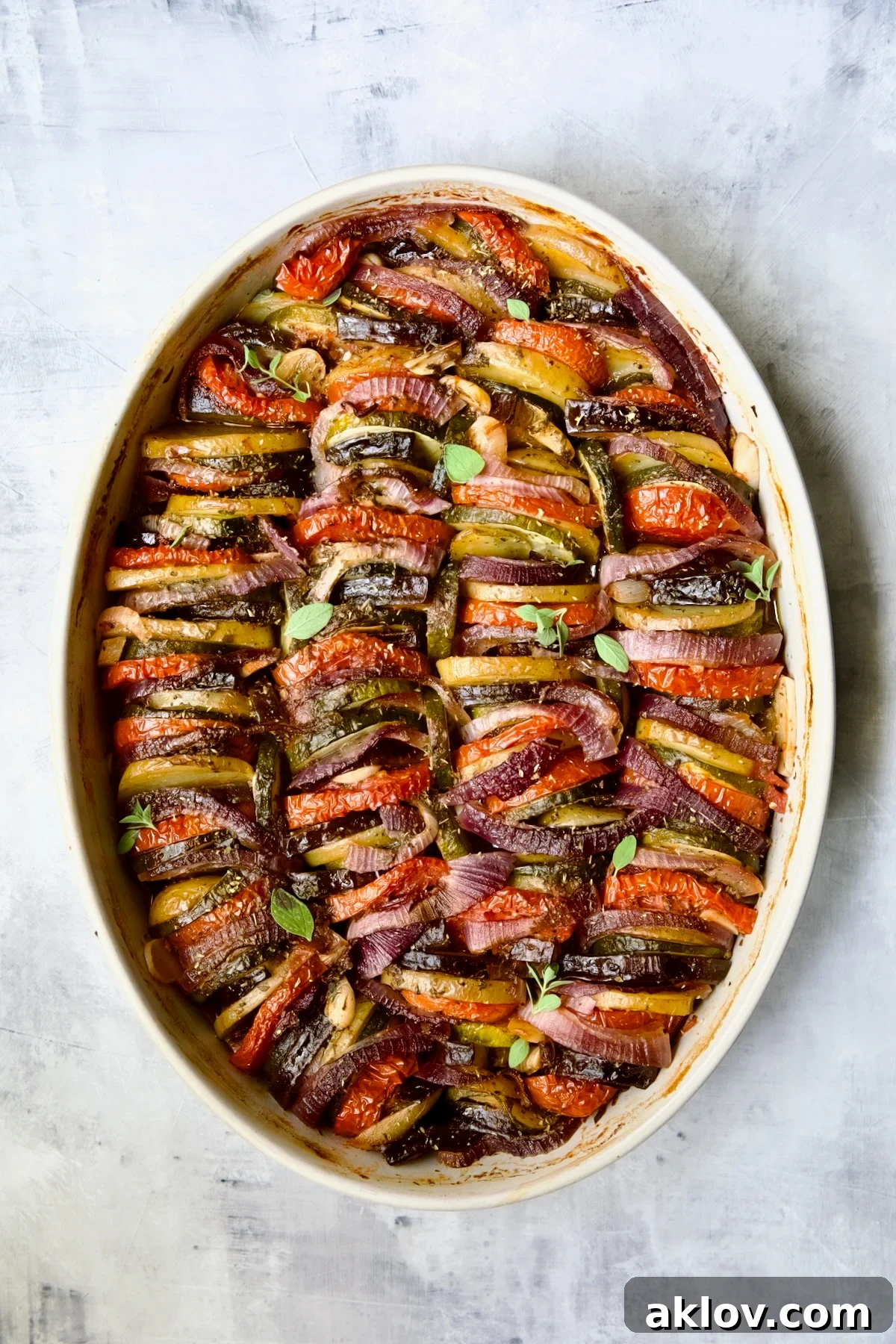
- Cover the baking dish loosely with aluminum foil. Place it in the preheated oven and bake for 30 minutes. After this initial baking period, carefully remove the foil. Continue baking uncovered for another approximately 45 minutes, or until the potatoes are fork-tender and the tops of the vegetables are beautifully golden-brown and slightly caramelized. The kitchen will be filled with an incredible aroma.
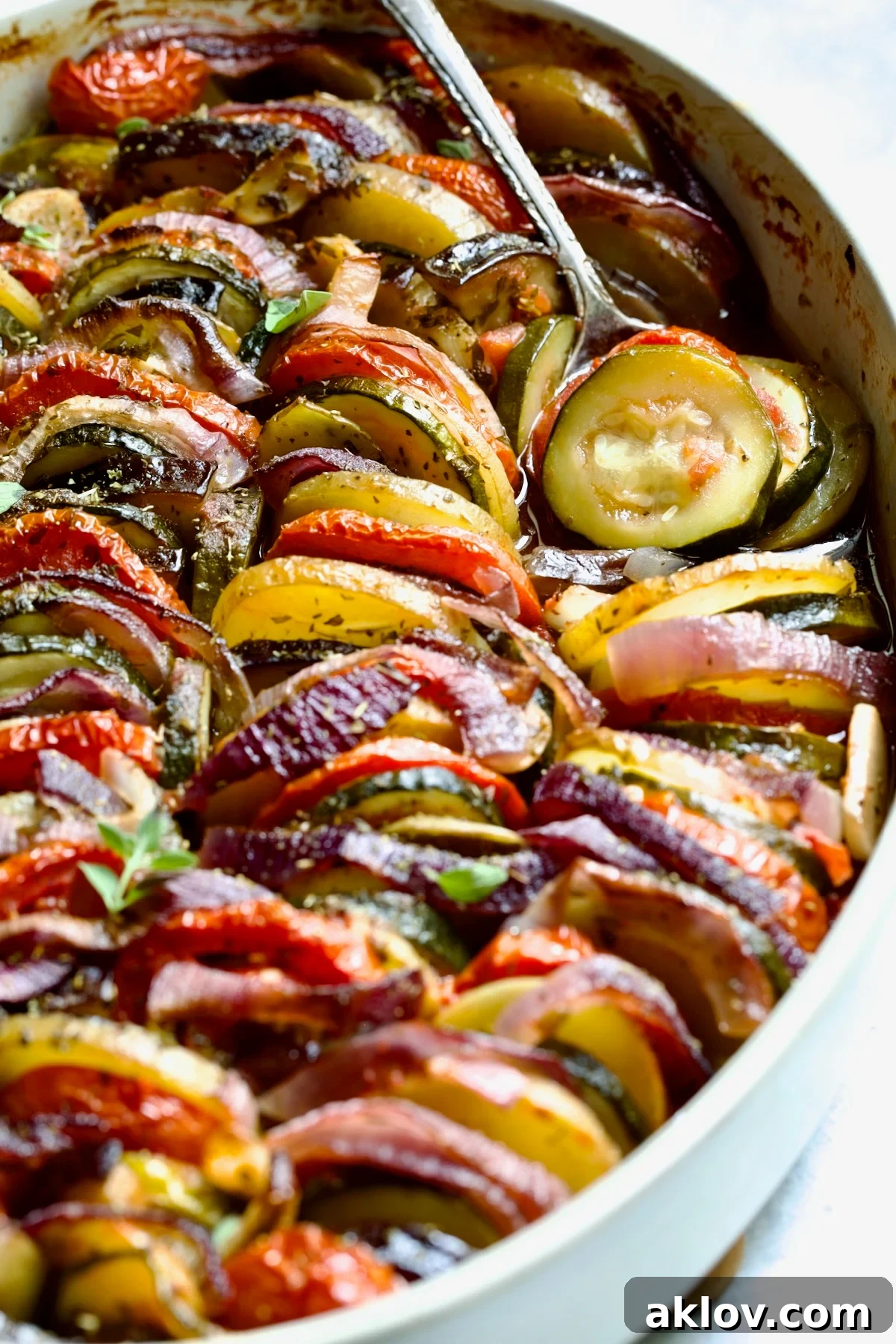
- Once baked, remove the Briam from the oven and let it rest for about 15 minutes before serving. This allows the flavors to meld further and the juices to settle. Serve this Greek delight with plenty of crusty bread, ensuring not a single drop of the flavorful vegetable, tomato, and olive oil juices goes to waste. Enjoy the taste of authentic Greece!
Chef Tips and Tricks for the Perfect Briam:
- Eggplant Selection and Preparation: An average-sized globe eggplant can sometimes be too large for this specific Briam recipe, leading to a disproportionate amount. For optimal results, consider using baby eggplant, which are smaller and have fewer seeds, or a small Japanese eggplant for its mildness and consistent shape. Alternatively, if you’re using a standard globe eggplant, follow my method: cut it in half from stem to bottom, then cut each half in half again lengthwise. Slice these quarter-circles to achieve pieces similar in size to your potatoes and zucchini. This method ensures even cooking and a beautiful presentation. Position these eggplant quarter-circles in the baking dish with their vibrant purple skin facing upwards for a visually appealing contrast. Save the remaining eggplant half for another delicious dish like a Mediterranean Vegetable Galette or a savory Green Olive Tapenade.
- Achieving Uniform Cook: The secret to perfectly cooked Briam lies in uniformly slicing your vegetables. Aim for approximately 3/8-inch thickness for all the main vegetables (potatoes, zucchini, eggplant, tomatoes, and onions). This consistent size ensures that all components cook at roughly the same rate, preventing some from becoming mushy while others remain undercooked. While visual appeal is important, always gauge the doneness by the potatoes. They are the densest vegetable and should be easily pierced with the tip of a paring knife when cooked through.
- Don’t Skimp on Olive Oil: Briam is truly a celebration of olive oil. Don’t be shy with the amount recommended; it’s essential for both flavor and for achieving that coveted tender, slow-roasted texture. The oil, infused with garlic and herbs, forms the luxurious base for the rich juices that develop during baking.
- Resting Period is Key: While tempting to serve immediately, allowing the Briam to rest for 15-20 minutes after it comes out of the oven is crucial. This resting period allows the vegetables to reabsorb some of their juices, intensifying the flavors and making the dish even more succulent.
Common Questions About Briam (Greek Roasted Vegetables):
Absolutely, Briam can be prepared in advance, making it a fantastic option for meal prepping or entertaining. While it’s truly at its peak freshness and flavor on the day it’s made, it holds up beautifully for a day or two in the refrigerator. Simply roast the Briam as directed in the recipe, allow it to cool completely to room temperature, then cover it tightly with foil or plastic wrap and refrigerate. When ready to serve, reheat it covered at 350 degrees Fahrenheit (175 degrees Celsius) until it’s thoroughly warmed through, ensuring the vegetables remain tender and the flavors re-melded.
Yes, Briam can be frozen, which is convenient for having a healthy meal on hand. However, it’s important to note that the texture of the vegetables, particularly the potatoes and zucchini, may become slightly softer after being frozen and then thawed. To freeze, allow the cooked Briam to cool completely. Transfer it to an airtight, freezer-safe container or a heavy-duty freezer bag, ensuring as much air as possible is removed. It can be frozen for up to 2 months. When you’re ready to enjoy it, thaw the Briam overnight in the refrigerator, then reheat it covered in a 350-degree Fahrenheit (175 degrees Celsius) oven until hot.
Briam is wonderfully adaptable to various vegetables, making it a perfect dish for seasonal creativity. Feel free to experiment with what’s fresh and in season! You can easily swap out yellow summer squash in place of or in addition to zucchini for a slightly different color and mild flavor. For those who enjoy a touch of sweetness and vibrant color, consider swapping out some of the eggplant with colorful bell peppers (red, yellow, or orange) or adding sliced carrots, which will roast beautifully and caramelize. Green beans, okra, or even artichoke hearts can also be excellent additions, providing new textures and flavors to this classic Greek dish. Always ensure the added vegetables are sliced uniformly to promote even cooking.
Complementary Dishes to Serve with Briam:
Briam is a versatile dish that pairs beautifully with a variety of Greek and Mediterranean fare. Enhance your meal with these delicious accompaniments:
- Skillet Spanakopita (Greek Spinach and Feta Pie): A savory, flaky pastry filled with spinach and feta, offering a delightful contrast to the soft roasted vegetables.
- Greek Quinoa Spinach Cakes with Tzatziki: Light and flavorful quinoa cakes served with a refreshing cucumber-yogurt sauce, providing a protein-rich option.
- Healthy Turkey Meatloaf with Spinach Feta Stuffing: A hearty and healthy main that pairs wonderfully with the vegetable richness of Briam.
- Spicy Feta Dip (Tirokafteri) and Pita Bread: A creamy, tangy, and slightly spicy dip that’s perfect for scooping up with warm pita alongside your Briam.
Explore More Great Vegetarian Recipes You’ll Love!
If you enjoy the wholesome and flavorful nature of Briam, you’ll love these other fantastic vegetarian dishes:
- Greek Vegetable Casserole Recipe: Another satisfying baked dish, featuring brown rice and a Mediterranean twist.
- Moroccan-Spiced Caponata: A flavorful eggplant stew with exotic spices, perfect for a global culinary adventure.
- Black Bean and Yellow Squash Enchilada Casserole: A comforting and hearty casserole with a Southwestern flair.
- Italian Summer Vegetable Casserole: A delightful baked dish highlighting the best of summer Italian produce.
Discover a wide array of plant-based culinary inspirations by exploring all my vegetarian and vegan recipes at Vegetarian and Vegan Entrees – From A Chef’s Kitchen.
Print Recipe
Briam Recipe (Traditional Greek Roasted Vegetables)
Equipment
-
Wusthof Chef Knife
-
Cutting Board
-
Saucepan
-
Gratin Baking Dish
Ingredients
- 2/3 cup extra-virgin olive oil
- 8 cloves garlic, thinly sliced
- 1 tablespoon chopped fresh oregano
- 1 teaspoon chopped fresh thyme
- 1 pound Yukon gold potatoes
- 1 pound zucchini
- 1/2 medium globe eggplant (sliced vertically)
- 8 ounces plum tomatoes, (approximately 4 medium)
- 1 medium red onion
- 1 teaspoon salt, divided
- Freshly ground black pepper
- 1 can (14.5-ounce) petite diced tomatoes, undrained
- 1/2 teaspoon dried oregano, divided
- Crusty bread, optional
Instructions
-
Preheat oven to 400 degrees Fahrenheit (200 degrees Celsius).
-
In a small saucepan or skillet, combine the olive oil, garlic, fresh oregano and thyme. Heat over low heat until it comes to a gentle simmer. Turn off the heat and let it steep while prepping the vegetables.
-
Slice the potatoes, zucchini, eggplant, and tomatoes 3/8-inch thick. Cut the onion in half and slice approximately 3/8-inch thick.
-
Combine the potatoes, zucchini, and eggplant in a large bowl. Pour half the infused oil over the vegetables including the garlic, add 1/4 teaspoon dried oregano, 3/4 teaspoon salt and black pepper to taste, and toss until coated.
-
Pour the petite diced tomatoes into the bottom of a large baking dish, such as a 13 x 9-inch or large oval gratin dish. Season with remaining salt, freshly ground black pepper and remaining dried oregano.
-
Place the potatoes, zucchini, and eggplant in the dish over the tomatoes, alternating and overlapping until they’re all used. If any are left over, tuck them evenly throughout the baking dish. Ensure the garlic slices are evenly distributed in the baking dish.
-
Tuck the fresh tomato slices in among the other vegetables so they’re evenly distributed in the baking dish. Do the same with the red onion slices. (The dish should have a rustic appearance.)
-
Drizzle the remaining infused oil over the vegetables as well as any from the bowl that held the potatoes, zucchini, and eggplant.
-
Cover loosely with aluminum foil. Bake for 30 minutes. Remove the foil and continue baking until the potatoes are tender and the vegetables are lightly browned, approximately 45 minutes.
-
Let stand for 15 minutes before serving. Serve with crusty bread to savor all the delicious juices.
Notes
SUBSTITUTIONS:
- Japanese eggplant, known for its long, slender shape, is an excellent alternative to globe eggplant due to its less bitter flavor.
- Feel free to swap out or add other seasonal vegetables like sweet bell peppers or carrots for a touch of added color and sweetness.
TIPS FOR SUCCESS:
- An average-sized globe eggplant can be too substantial for this recipe. Opt for smaller baby eggplants or a Japanese variety. If using a large globe eggplant, cut it into quarter circles (as detailed in step-by-step instructions) to ensure even cooking and distribution.
- Always check the doneness of the Briam by testing the potatoes. They should be easily pierced with the tip of a paring knife, indicating perfect tenderness throughout the dish.
MAKE AHEAD & STORAGE:
- Briam is best enjoyed fresh from the oven, but it can be prepared a day in advance. After roasting, allow it to cool completely, then cover and refrigerate.
- To reheat, simply cover the dish and bake at 350 degrees Fahrenheit (175 degrees Celsius) until warmed through.
- This dish can be frozen for up to 2 months. Thaw in the refrigerator before reheating. Note that vegetable textures may soften slightly upon thawing.
Nutrition Information
Nutritional values are automatically calculated using unbranded products and are estimates only. Actual results may vary based on ingredients used and portion sizes. Adjust as needed for dietary restrictions, allergies, or health concerns.
 Did you love this recipe? Leave a comment below and let me know your thoughts!